The global market in this supplement is worth almost £3bn – a figure set to nearly double over the next decade.


The global market in this supplement is worth almost £3bn – a figure set to nearly double over the next decade.

Deep within your gut lives a bustling world of microbes, each playing a role in digesting your food. Among them is one unusual microbe that produces methane — a gas more often associated with cows and landfills than humans. According to new research from Arizona State University (ASU), this methane-making microorganism may influence how many calories your body extracts from what you eat.
The collection of microbes living in your digestive tract is known as the gut microbiome. While everyone has one, some people’s microbiomes produce large amounts of methane, whereas others produce very little.
Microbes and the Energy Hidden in Fiber
The study found that people whose microbiomes generate more methane tend to extract more energy from high-fiber foods. This may help explain why the same meal can provide different calorie counts for different individuals once it reaches the colon.
Researchers emphasized that high-fiber foods remain beneficial. People generally absorb more calories from a typical Western diet high in processed foods, regardless of methane levels. Even so, calorie absorption on a fiber-rich diet varies depending on how much methane a person’s gut produces.
These findings suggest that gut methane could become a key factor in personalized nutrition — a future where diets are tailored to the unique microbial activity in each person’s digestive system
“That difference has important implications for diet interventions. It shows people on the same diet can respond differently. Part of that is due to the composition of their gut microbiome,” says Blake Dirks, lead author of the study and graduate researcher at the Biodesign Center for Health Through Microbiomes. Dirks is also a PhD student in ASU’s School of Life Sciences.
Meet the Methane Makers
Published in The ISME Journal, the study identifies the key players: methane-producing microbes known as methanogens. These microorganisms appear to be linked with more efficient digestion and higher energy absorption.
A major job of the microbiome is breaking down food that the body cannot digest on its own. Microbes ferment fiber into short-chain fatty acids (SCFAs), which provide a valuable energy source. During this process, hydrogen gas is released. Too much hydrogen can slow fermentation, but other microbes prevent this by consuming hydrogen — keeping the digestive chemistry in balance.
Methanogens are the hydrogen consumers. As they feed on hydrogen, they release methane as a byproduct. They are the only microbes in the human gut that produce this gas.
“The human body itself doesn’t make methane, only the microbes do. So we suggested it can be a biomarker that signals efficient microbial production of short-chain fatty acids,” says Rosy Krajmalnik-Brown, corresponding author of the study and director of the Biodesign Center for Health Through Microbiomes.
How Microbes May Shape Metabolism
The ASU researchers found that the interactions between these microbes may directly affect metabolism. Participants who produced more methane also had higher levels of short-chain fatty acids, indicating that more energy was being created and absorbed in the gut.
To test these effects, each participant followed two different diets. One included highly processed, low-fiber foods, while the other emphasized whole foods and fiber. Both diets contained equal proportions of carbohydrates, proteins, and fats.
The research was conducted in collaboration with the AdventHealth Translational Research Institute, which provided access to a specialized facility. Each participant spent six days in a sealed, hotel-like room called a whole-room calorimeter. This environment allowed researchers to precisely measure metabolism and methane output.
Unlike traditional methods that rely on a single breath test, this setup continuously captured methane released through both breath and other emissions (ahem), providing a more accurate view of microbial activity.
“This work highlights the importance of the collaboration between clinical-translational scientists and microbial ecologists. The combination of precise measures of energy balance through whole-room calorimetry with ASU’s microbial ecology expertise made key innovations possible,” says Karen D. Corbin, a co-author and associate investigator at the institute.
Tracking Energy and Microbial Activity
Data collected from blood and stool samples revealed how much energy participants absorbed from their food and how active their gut microbes were. Researchers then compared people with high methane production to those with lower levels.
Almost all participants absorbed fewer calories while eating the high-fiber diet compared to the processed-food diet. However, those with higher methane production absorbed more calories from the fiber-rich foods than those with less methane in their systems.
A Step Toward Personalized Health
The findings lay important groundwork for future studies and medical applications.
This research creates a foundation for future studies and medical treatments.
“The participants in our study were relatively healthy. One thing that I think would be worthy to look at is how other populations respond to these types of diets — people with obesity, diabetes or other kinds of health states,” Dirks says.
Although the study did not aim to induce weight loss, some participants did lose a small amount while following the high-fiber diet. Future research may explore how methanogens influence weight-loss efforts or specialized nutrition programs.
“You can see how important it is that the microbiome is personalized,” Krajmalnik-Brown says. “Specifically, the diet that we designed so carefully to enhance the microbiome for this experiment had different effects on each person, in part because some people’s microbiomes produced more methane than others.”
Other members of the ASU research team include Professor Bruce Rittmann and graduate researcher Taylor Davis.
This project was funded by the National Institute of Diabetes and Digestive and Kidney Diseases of the National Institutes of Health.

Having lower cholesterol levels may help protect against dementia, according to a large-scale international study led by the University of Bristol. The research, involving data from more than one million participants, found that people with genetic traits that naturally reduce cholesterol are less likely to develop dementia.
The work was led by Dr. Liv Tybjærg Nordestgaard during her time at the University of Bristol and at the Department of Clinical Biochemistry at Copenhagen University Hospital — Herlev and Gentofte. The findings were published in Alzheimer’s & Dementia: The Journal of the Alzheimer’s Association.
Genetic Clues and Cholesterol-Lowering Effects
Some individuals are born with genetic variants that affect the same proteins targeted by cholesterol-lowering medications such as statins and ezetimibe. To explore whether these drugs might influence dementia risk, the team used a technique called Mendelian Randomization. This method allows scientists to study how specific genetic variants mimic the effects of a treatment while minimizing the influence of outside factors like weight, diet, or lifestyle.
By comparing people with and without these cholesterol-lowering genetic variants, the researchers observed a clear difference in dementia risk. A small decrease in cholesterol levels (about one millimole per liter) was associated with up to an 80% reduction in dementia risk for certain drug-related genetic targets.
Lower Cholesterol, Lower Dementia Risk
“What our study indicates is that if you have these variants that lower your cholesterol, it looks like you have a significantly lower risk of developing dementia,” said Dr. Nordestgaard, who now works in the Department of Clinical Biochemistry at Copenhagen University Hospital — Bispebjerg and Frederiksberg hospital.
The results suggest that keeping cholesterol levels low — whether through genetics or medical treatment — may protect against dementia. However, the research does not yet confirm that cholesterol-lowering drugs themselves directly prevent the disease.
Why Studying Dementia Is So Challenging
Because dementia often develops late in life, studying its causes requires tracking participants for decades. This makes it difficult to establish cause and effect in traditional clinical trials.
It also remains unclear why high cholesterol raises dementia risk. One explanation, according to Dr. Nordestgaard, is that high cholesterol contributes to atherosclerosis — the buildup of fatty deposits in blood vessels.
How Cholesterol May Harm the Brain
“Atherosclerosis is a result of the accumulation of cholesterol in your blood vessels,” Dr. Nordestgaard said. “It can be in both the body and the brain and increases the risk of forming small blood clots — one of the causes of dementia.
“It would be a really good next step to carry out randomised clinical trials over 10 or 30 years, for example, where you give the participants cholesterol-lowering medication and then look at the risk of developing dementia,” Dr. Nordestgaard added.
Global Collaboration and Funding
The study used data from the UK Biobank, the Copenhagen General Population Study, the Copenhagen City Heart Study, the FinnGen study, and the Global Lipids Genetics Consortium.
Funding was provided by the Medical Research Council, Independent Research Fund Denmark, and Research Council at the Capital Region of Denmark (LTN).

An international team of paleontologists has identified a previously unknown dinosaur species named Khankhuuluu, believed to be the closest-known ancestor of the giant Tyrannosaurs. The discovery, led by Jared Voris and Dr. Darla Zelenitsky from the University of Calgary’s Faculty of Science, has been published in Nature.
Voris, a PhD candidate in the Department of Earth, Energy, and Environment, explains that this newly identified Tyrannosaur lived about 86 million years ago. It was a medium-sized, fast-moving predator that evolved after the extinction of other large carnivorous dinosaurs.
A Glimpse Into Tyrannosaur Evolution
According to Voris, “This new species provides us the window into the ascent stage of Tyrannosaur evolution; right when they’re transitioning from small predators to their apex predator form.” Khankhuuluu is regarded as the nearest known ancestor of the colossal Tyrannosaurs popularized by films like Jurassic Park.
The name Khankhuuluu comes from Mongolian and translates to “prince of dragons” or “the dragon prince.” The name reflects its position in the Tyrannosaur family tree — standing as the “prince” before the “king,” Tyrannosaurus rex. At roughly 750 kilograms (about the size of a horse), it was two to three times smaller than its enormous descendants but shared many of their defining traits.
Physical Traits and Hunting Style
Khankhuuluu displayed small horn-like structures on its head, features that later became more pronounced in later Tyrannosaur species such as Albertosaurus and Gorgosaurus, likely used for mating displays or intimidation. Its long, shallow skull indicates it lacked the bone-crushing bite strength of T. rex. Instead, scientists describe Khankhuuluu as a mesopredator, similar to modern coyotes, relying on speed and agility to hunt.
Fossils From Mongolia Tell a New Story
The fossils were unearthed from the Bayanshiree Formation in southeastern Mongolia and were first studied in the 1970s by paleontologist Altangerel Perle, who initially compared them to a similar species known as Alectrosaurus from China. When Voris examined the fossils in 2023 at the Institute of Paleontology in Mongolia, he noticed subtle but key differences that distinguished them from Alectrosaurus.
The Journey of Tyrannosaurs Between Continents
Dr. Zelenitsky explains that Khankhuuluu or a closely related species likely migrated from Asia to North America around 85 million years ago.”Our study provides solid evidence that large Tyrannosaurs first evolved in North America as a result of this immigration event,” she says.
The research suggests these migrations between Asia and North America were rarer and more limited than previously believed. Khankhuuluu appears to be the last known Asian ancestor of the Tyrannosaurs before their diversification in North America.
From the “Dragon Prince” to the Tyrant King
Scientists believe that Khankhuuluu, or one of its relatives, crossed a land bridge into North America, where it evolved into the formidable apex predator Tyrannosaurs. Fossil evidence shows that Tyrannosaurs thrived in North America for several million years before returning to Asia, where their lineage split into two branches: one evolved into massive predators like T. rex, while the other produced more slender, long-snouted types nicknamed “Pinocchio rexes.”
What Comes Next in the Research
Looking ahead, the team plans to study earlier and less-understood ancestors of these apex predators to fill in the remaining gaps of the Tyrannosaur evolutionary story.

According to YouGov, a third of UK adults say they feel tired about half of the time.
Some research suggests 5-7% of people who see their GP complain of fatigue, and recent surveys say the average British adult only gets three nights of decent kip a week.
Advertisement
No wonder it feels like everyone, everywhere, is constantly exhausted.
But if we’re all so wiped out, how can we be expected to tell “normal” tiredness from more concerning fatigue?
Here, we asked Dr Suzanne Wylie, GP and medical adviser for IQdoctor, when to worry.
Speaking to HuffPost UK, Dr Wylie explained that fatigue “is a very common complaint in general practice and, in most cases, is related to lifestyle factors such as lack of sleep, stress, or overwork”.
But sometimes, it can be linked to underlying health issues – and its persistence can be a red flag.
Advertisement
“As a GP, I would suggest that you should start to worry about fatigue if it is persistent, lasting more than a few weeks, or if it is unexplained by your usual activities or recent events,” she said.
Aside from longer-lasting fatigue, exhaustion with other symptoms should be investigated, too.
“You should also seek medical advice if the tiredness is accompanied by other symptoms such as unintentional weight loss, night sweats, fevers, breathlessness, chest pain, persistent cough, or changes in bowel habit,” the GP said.
Meanwhile, fatigue linked to low mood, disrupted sleep, and a loss of interest in hobbies “may indicate depression or anxiety, which also warrants assessment”.
Advertisement
She added, “Additionally, if you notice symptoms such as increased thirst or urination, palpitations, dizziness, or heavy menstrual bleeding, it could point towards conditions like diabetes, thyroid disease, or anaemia”.
Per the NHS, you should see your doctor if fatigue lasts longer than a few weeks, if it affects your day-to-day life, and/or if you’ve noticed other symptoms like unexplained weight loss or mood changes.
Advertisement
And if your partner or someone else tells you you’ve been “making gasping, snorting or choking noises when you’re asleep,” visit your doctor as this could be a sign of sleep apnoea.
“In short,” Dr Wylie ended, “while occasional tiredness is normal, persistent or unexplained fatigue, especially when associated with other symptoms, should always prompt a review with your GP”.

As soon as Lily Allen announced her return to the pop world with her fifth album West End Girl last week, it was clear the press was going to have a field day.
Lily has been a tabloid fixture since she first burst onto the pop scene more than 20 years ago, and at the height of her fame, was arguably as known for her headline-grabbing antics and personal drama as she was for her frank and confessional songwriting.
Advertisement
West End Girl is not just her first release in seven years, but the first since her much-publicised split from her second husband, Stranger Things actor David Harbour. The pair tied the knot in Las Vegas in 2020, after which they relocated to New York with Lily’s two daughters from her first marriage, and were first reported to have split at the beginning of this year, after David was spotted on the exclusive dating app Raya (which is where he and the Smile singer also first met).
In the lead-up to her new album’s release, Lily described the collection as a “mixture of fact and fiction”, telling British Vogue it was “inspired by what went on in the relationship”, with its creation seeing her go through a mix of “confusion, sorrow, grief, helplessness”.
Lily also shared that the album was both written and recorded over an “intense 10-day period” in December 2024, the same month she announced she was taking a break from the spotlight to spend time in a residential facility to rest and focus on her mental health.
Advertisement
A week after it was announced, West End Girl debuted on Friday, and as predicted, the album is truly jaw-dropping in its candour and frankness. Of course, no one but the two parties involved can really know how much artistic license was employed, but the album paints a picture of a woman whose life slowly starts to unravel when she somewhat hesitantly agrees to open her marriage to a man she’s uprooted her life and moved across an ocean for.

Charlie Denis
The sense of dread and paranoia only grows as the story unfolds and our heroine’s husband appears to “move the goalposts” and repeatedly violate the terms of the “arrangement” that he’d set in place, ultimately taking its toll on her until she finds herself struggling to carry on.
Advertisement
Naturally, much has already been made of the song’s lyrics, and understandably so – this is Lily at her most unfiltered, lifting the lid on the ugliness of a break-up in a way that even Adele or Taylor Swift daren’t.
“We had an arrangement, be discrete and don’t be blatant, there had to be payment, it had to be with strangers,” she sings on Madeline, an imagined conversation between herself and a woman she discovers her husband has been sleeping with.
On Relapse, Lily opens up about her struggles to hold onto her sobriety at the height of her personal issues, while Tennis sees her opening up about feeling like she is losing the man she loves to someone else.
Advertisement
“I can’t get my head round how you’ve been playing tennis, if it was just sex, I wouldn’t be jealous,” she claims.
Then, there’s the much-discussed Pussy Palace, when she comes back to her marital bed to find “sheets pulled off the bed, strewn on the floor, long black hair, probably from the night before”.
“Duane Reade bag with the handles tied, sex toys, butt plugs, lube inside, hundreds of Trojans, you’re so fucking broken,” Lily continues, in one of her new album’s most-cited lyrics, before questioning if she’s “looking at a sex addict”.
Advertisement

Nieves González
Still, as revealing as these lyrics are, it would be remiss to reduce West End Girl to just its more sensationalised moments. For one thing, it’s much smarter than the straightforward “woman scorned” narrative that is inevitably going to be applied to an album with song titles like 4Chan Stan, Monogamummy and the aforementioned Pussy Palace.
As the name West End Girl highlights, this is Lily’s first musical release since she embarked on her career in theatre, appearing in productions like Hedda, The Pillowman and her Olivier-nominated turn in 2:22 A Ghost Story. It’s a fitting name for the album, too, as West End Girl feels like a piece of theatre in itself.
Advertisement
A collection that’s undoubtedly intended to be enjoyed as a piece of work from start, the album runs roughly chronologically allowing the narrative of the central break-up to play out in real-time, with Lily also taking on numerous different characters (in a spoken-word interlude at the end of the first track, she recreates a phone call in which an unheard party first floats out the idea of an open relationship, while on Madeline, she adopts the titular character’s American accent to assure our protagonist that “lies are not something that I want to get caught up in”).
Early reviews have picked up on the fact that West End Girl bounces from genre to genre, encompassing everything from bossa nova to dancehall and flamenco to drum and bass, all sprinkled with the pure pop Lily best showcased on her second album It’s Not Me It’s You (which, incidentally, is a sentiment the Brit Award winner revisits on closing track Fruityloop).
As well as showing off Lily’s skills as a songwriter, the frequent genre-hopping mirrors the unpredictability and chaos of the album’s central narrative, and a feeling of not knowing what’s next. Meanwhile, some of West End Girl’s more salacious moments are also among its sweetest-sounding – few could have predicted that a song called Pussy Palace would actually be a devastating ballad more akin to Lily cuts like Three or Littlest Things than the claws-out pop she’s often associated with (it’s worth pointing out, too, that Lily has probably never been on in better voice than she is on West End Girl, which is saying something as her vocals have always been one of the more unfairly-underrated parts of her art).
Advertisement
So, while the sordid details, irreverent lyrics and tea-spilling might be what have many listeners initially hitting play on this new release from Lily, those who stick around will find there’s so much more to enjoy on West End Girl than the surface-level tabloid drama that a release like this will invariably conjure up. The fact is, Lily has set a new bar not just when it comes to her own work, the break-up album in general.



The son of actor Anthony Perkins has called out the inclusion of the Psycho star in the controversial Netflix series Monster.
Earlier this month, the third season of Monster began streaming, focussing on the horrific crimes of serial killer and grave-robber Ed Gein, whose actions inspired the murderous fictional characters in movies like The Texas Chainshaw Massacre, The Silence Of The Lambs and Psycho.
Advertisement
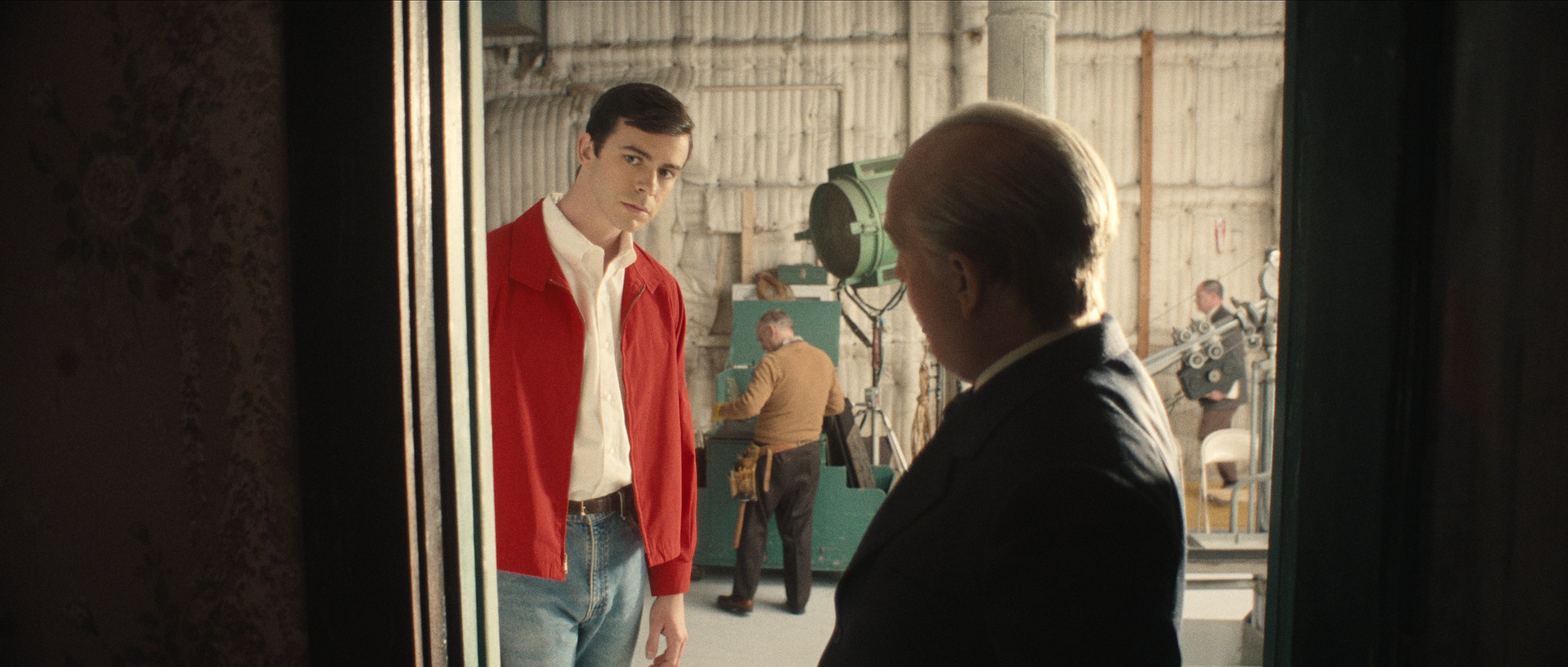
One episode centres around the creation of Psycho, with Tom Hollander and Joey Pollari playing its director and star, Alfred Hitchcock and Anthony Perkins.
Following its debut, the show received criticism from many viewers over the way the show hinted at a link between the latter and Ed Gein, because of the way the actor chose to conceal his sexuality publicly in his lifetime.

The Legacy Collection/THA/Shutterstock
Advertisement
Speaking to TMZ, Anthony’s son Osgood Perkins (the director behind recent horror movies like Longlegs and The Monkey) claimed he “wouldn’t watch” the series “with a 10-foot pole”.
He also slammed streaming platforms for “glamourising” the true-crime genre and which he said is “increasingly devoid of context”, while lamenting that “the Netflix-isation of real pain” is “playing for the wrong team”.

via Associated Press
Advertisement
Oz told People magazine last year that the way his parents concealed his father’s sexuality from him when he was growing up was part of the inspiration for his movie Longlegs.
“Everybody knew it, even my brother and I theoretically knew it, but we were never given any language for it,” he claimed.
“The idea that [my mother] could make up – not make up, it’s not a lie – but it’s like a cover, a storytime…”
Advertisement
He said that Longlegs became “the most baroque horror version of, ‘What’s going on in my household?’”, noting: “Every kid probably feels [that] to some greater or lesser extent. But if your father’s a public movie star and you don’t know who he is, that’s a little bit more profound.”
Despite the controversy around all three seasons of Monster so far, the show has continued to be popular with Netflix users, with a fourth currently in the works, based on another famous case from history.



Biology teacher Emily Henders says she understands the “scientific rationale” behind the treatment.

Imagine being able to alter a material so that it seems to transform into an entirely different one. No magic wand or special potion is needed — only light. When light interacts with the material, it excites its magnetic states, setting off collective magnetic vibrations. These vibrations can transmit and store information at terahertz speeds. The entire process happens at room temperature and produces almost no heat. Even better, it doesn’t rely on rare or exotic materials. Researchers observed the effect in common, naturally grown crystals that are widely available. Now imagine using the same approach to tap into quantum effects — phenomena so delicate they are typically observed only near absolute zero (around -270 degrees Celsius) — but doing it at room temperature, with no costly cooling systems required.
It might sound like science fiction, yet this breakthrough is real. A team of physicists at the University of Konstanz, led by Davide Bossini, has developed an experimental technique that makes it possible. By using laser pulses to coherently excite pairs of magnons (quanta of spin waves), the researchers achieved remarkable effects that could influence both information technology and quantum research. Their findings were published in Science Advances.
Technology based on magnons
Before diving deeper, it helps to understand what magnons are and why they matter. The modern world generates enormous amounts of data through artificial intelligence and the “Internet of Things.” Our current information systems are already straining under the pressure, and a data bottleneck threatens to slow technological progress.
One proposed solution is to use electron spins — or even better, waves of many spins moving together — to carry information. These collective spin oscillations are called magnons. They behave like waves and can be manipulated by lasers, potentially allowing data transmission and storage at terahertz frequencies.
So far, however, scientists have only been able to excite magnons at their lowest frequencies using light, which limits their potential. To harness magnons for future technologies, researchers must be able to tune their frequency, amplitude, and lifetime. The team at Konstanz has now found a way to do exactly that. By directly exciting pairs of magnons — the highest-frequency magnetic resonances in a material — they discovered a powerful new form of control.
A huge surprise
“The result was a huge surprise for us. No theory has ever predicted it,” says Davide Bossini. Not only does the process work — it also has spectacular effects. By driving high-frequency magnon pairs via laser pulses, the physicists succeeded in changing the frequencies and amplitudes of other magnons — and thus the magnetic properties of the material — in a non-thermal way. “Every solid has its own set of frequencies: electronic transitions, lattice vibrations, magnetic excitations. Every material resonates in its own way,” explains Bossini. It is precisely this set of frequencies that can be influenced through the new process. “It changes the nature of the material, the ‘magnetic DNA of the material’, so to speak, its ‘fingerprint’. It has practically become a different material with new properties for the time being,” says Bossini.
“The effects are not caused by laser excitation. The cause is light, not temperature,” confirms Bossini: “We can change the frequencies and properties of the material in a non-thermal way.” The advantages are obvious: The method could be used for future data storage and for fast data transmission at terahertz rates without the systems being slowed down by the pileup of heat.
No spectacular high-tech materials or rare earths are required as the basis for the process, but rather naturally grown crystals — namely the iron ore haematite. “Haematite is widespread. Centuries ago, it was already used for compasses in seafaring,” explains Bossini. It is perfectly possible that haematite will now also be used for quantum research in the future. The results of the Konstanz team suggest that, using the new method, researchers will be able to produce light-induced Bose-Einstein condensates of high-energy magnons at room temperature. This would pave the way to researching quantum effects without the need for extensive cooling. Sounds like magic, but it is just technology and cutting-edge research.
The project was carried out in the context of the Collaborative Research Centre SFB 1432 “Fluctuations and Nonlinearities in Classical and Quantum Matter beyond Equilibrium.”
Care Quality Commission warns GP, mental health and social care services lacking staff and capacity.
