Trump Hints He Will Reward Putin’s Invasion By Demanding Ukraine Give Up Land

President Donald Trump hinted he would demand that Ukraine give up territory seized by Russian dictator Vladimir Putin during his three-year invasion and once again blamed Volodymyr Zelenskyy for getting invaded.

“I get along with Zelenskyy, but, you know, I disagree with what he’s done, very, very severely disagree. This is a war that should have never happened,” Trump said at a White House press conference of Ukraine’s president, Volodymyr Zelenskyy, and his recent statement that he cannot legally cede territory.

“I was a little bothered by the fact that Zelenskyy was saying, ‘Well, I have to get constitutional approval,’” Trump said. “I mean, he’s got approval to go into war and kill everybody, but he needs approval to do a land swap because there will be some land-swapping going on.”

Trump announced last week he would host a meeting with Putin in Alaska to broker a peace agreement, and his comments to reporters Monday are the most detailed about his view of what needs to happen to persuade Putin to end the war.

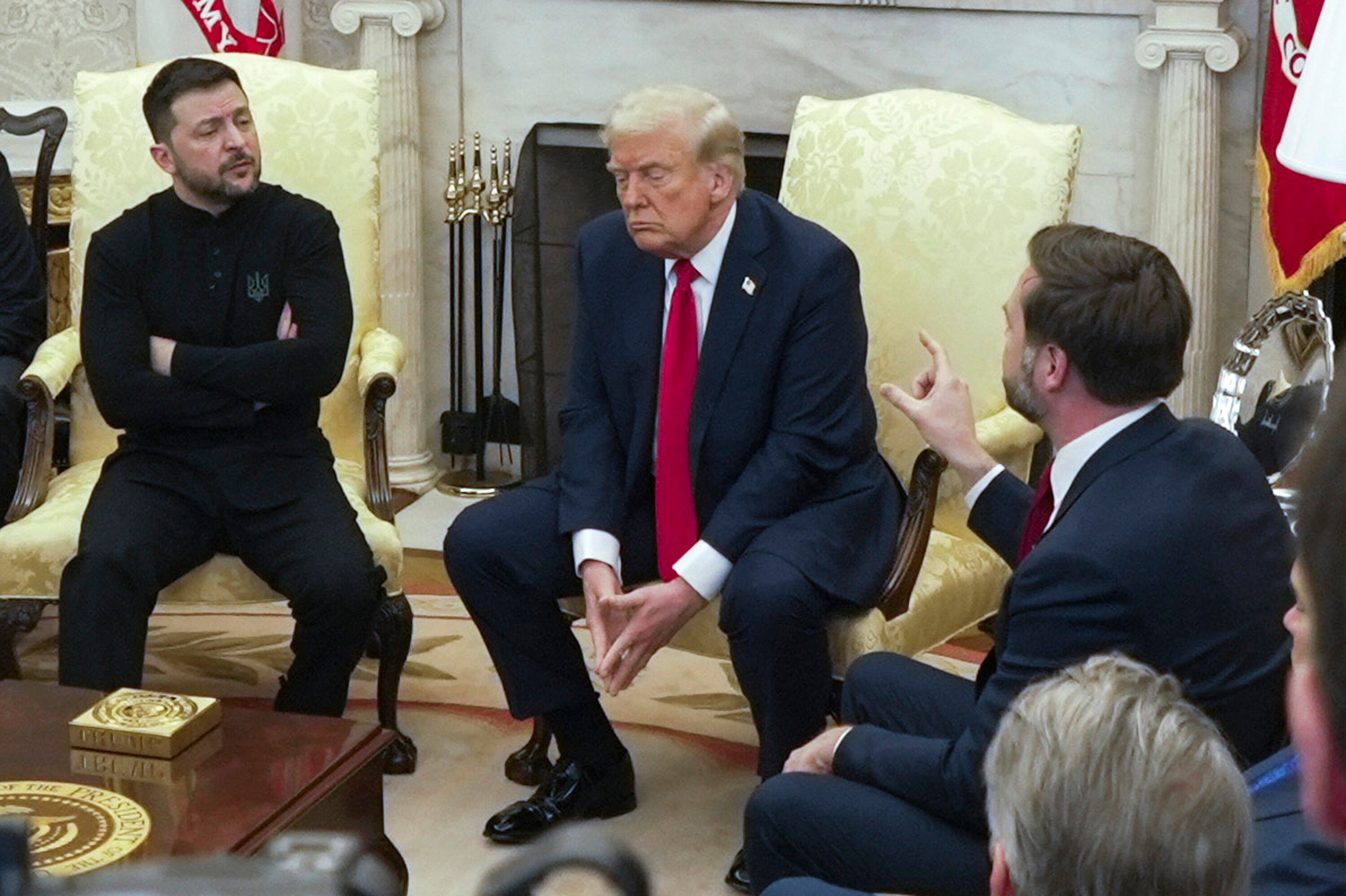
His insinuation that Zelenskyy was somehow to blame for Putin’s invasion was a repeat of his attacks on the Ukrainian president during his Oval Office visit in February.

“What you’re doing is very disrespectful to the country, this country,” Trump told Zelenskyy then. “You’re not winning this. You have a damn good chance of coming out OK because of us.”

Six weeks later, Trump outright blamed Zelenskyy for starting the war. “You don’t start a war with someone 20 times your size and then hope people give you some missiles,” he said in an Oval Office photo opportunity with Salvadoran president Nayib Bukele.

Trump called the coming summit a “feel-out meeting” and that he would afterward call Zelenskky and America’s NATO allies in Europe, who have since the 2022 invasion been eager to counter Russia and help Ukraine and even more so since Trump returned to office in January.

He added that his discussions with Russia and others led to his belief that Ukraine would have to give away land to end the war. “I know that through Russia and through conversations with everybody,” Trump said.

Trump’s special envoy, his friend from New York real estate days Steve Witkoff, met with Putin last week and apparently misunderstood what Putin was saying. Witkoff reported back that Putin was willing to give up two Ukrainian regions and keep a third, when in fact Putin’s offer was to hang on to all three in return for stopping his attacks.

Trump on Monday also repeated his lie that the US under former President Joe Biden had given far more help to Ukraine than had Western Europe. “Biden approved $350 billion. Europe has spent $100 billion,” he said.

In reality, Europe has provided more assistance to Ukraine from the start, both in weapons and economic help.

Trump is scheduled to go to Alaska on Friday for his meeting with Putin, his first such summit with him since 2018, when in Helsinki he said he took the word of the former KGB agent over his own intelligence agencies about Russia’s work to help Trump win the 2016 election.

On Monday, though, Trump, who is 79, twice conflated Alaska with Russia itself. Alaska has belonged to the United States since 1867, when it was purchased from Russia, then under the rule of Czar Alexander II.

“I’m going to Russia on Friday,” Trump said, explaining his coming trip. An hour later, preparing to leave the podium, he said it again: “We’re going to Russia.”

Share Button

‘Zone Zero’ Exercise Is The Workout You Don’t Even Know You’re Doing – Here Are Its Benefits

Good news for fellow slow runners: it turns out zone two cardio, which sees joggers plod along at a conversational pace, is incredibly good for us.

Professional runners spend about 85% of their training doing that sort of low-impact activity. It puts runners at about 60-70% of their max heart rate.

But if even that sounds a little too much, zone zero movement (yes, really) might be the under-appreciated, super-low-effort way to keep you active without a pricey gym membership or even a pair of trainers.

Never putting your heart above 50% of its max rate, it can be done accidentally – it’s that easy and approachable.

What is zone zero training?

Primary care organisation The Lanby describes zone zero training as a kind of “active rest” – it “aids in active recovery, ensuring your body is ready for the next challenge”.

It means your heart rate never goes above half its maximum level, as we mentioned above. Your max heart rate changes by age: in general, it’s calculated by subtracting your age from 220.

So, say you’re 30 years old. Your max heart rate is around 190; and zone zero training will never see your pulse go above 95 beats per minute.

It can include slow walking, gentle cycling, and yoga. But popping to the shops, doing a bit of light tidying, and pottering around in the kitchen count too.

What are the benefits of zone zero training?

Zone zero training is not only a great way to make exercise accessible to those who might find the idea of a full-on workout a bit much, but active recovery also benefits active people as it helps to flush out waste material that builds up in tired muscles.

Some experts think that those who work out might subconsciously compensate for the added load by not engaging in zone zero moves (like tapping your foot or taking an extra few steps) throughout the day. Remembering to include zone zero work in your routine might help this.

Taking a short stroll after eating, in particular, might help to even out your blood sugar, too. And some suggest that pottering can keep you alive for longer.

What are some examples of zone zero training?

These can include:

  • Stretching at your desk
  • Light walking
  • Yoga
  • Walking meetings
  • Rolling your feet on a roller or ball as you work
  • Gently yoga
  • Slow cycling
  • Tidying
  • Cooking.

Parking a couple more metres away from work than usual or popping to the shops instead of ordering in can all add up.

That’s not to say that zone zero training should replace current health guidelines – the NHS says we should stick to 75 minutes of high-intensity or 150 minutes of moderate-intensity (over 50% of your max heart rate) activity a week.

Not doing so has been linked to shorter, less healthy lives.

Still, going from no activity to some has enormous health benefits too – and whether you find yourself intimidated by intense exercise or are struggling to properly recover from your most hardcore workouts, zone zero may offer an approachable answer.

Share Button

Knee implant used by NHS known for years to be faulty

Patients say they were left immobile or addicted to painkillers after receiving the NexGen implant.

Share Button

The 1 Response To Have Up Your Sleeve When Kids Say ‘I’m Bored’

Today, 12 August, is the day that kids reach peak school summer holiday boredom, apparently – yet chances are you’ve already heard your fair share of ‘I’m bored’ and ‘can you play with me?’ comments over the six-week break.

If this resonates, parents on Reddit might just have a handy retort to try which can encourage kids to either help tick things off your daily to-do list – or go off and play with something while you get things done.

In a recent post on r/Parenting, a parent of a nine-year-old said if their son isn’t allowed on the Playstation or iPad, “he literally follows us around the house”.

“We suggest all types of things and he doesn’t want to do any of them,” said the baffled parent before listing all the toys available to him. “He just doesn’t want to do anything by himself.”

They asked Redditors (and fellow parents) for tips on how to get their child playing independently – and the top comment has been upvoted over 400 times for good reason.

“When mine follow me around while I’m doing chores, I give them a chore to do,” said the parent of a three- and five-year-old.

“I’ve told them ‘if you keep following me around while I’m doing chores, I’m gonna give you a chore to do’ and when I say that they’ll usually go find something else to do.”

“I do this, too,” said another parent. “Half the time they help. The other half, they pout and storm off into their room. Within 10 minutes or so, they miraculously remember they have toys, crayons, books, and imaginations.”

It turns out this incredibly simple response seems to encourage a lot of kids to find something else to do, sharpish.

“I started doing this when my 6 year old whines about how bored she is. She usually takes off and hides,” said one commenter.

Another affirmed it worked on them growing up: “Was raised on ‘if you tell me you are bored, I’ll find a chore for you.’ Can confirm this works.”

And it turns out getting kids involved in chores could benefit them well into adulthood.

A 75-year study from Harvard found that children who were encouraged to do chores around the house were more likely to be happier as adults, have more empathy towards others, and be more successful in their careers.

Listing the benefits, a paediatrician from Utah – known as TikTok Kid Doc – said “having your children do chores gives them a sense of self-worth and it helps them to realise that they’re contributing to a larger ecosystem”.

“They become more selfless, they become more willing and able to see the needs of other people around them.

“Chores also strengthen family bonds with siblings and with parents. And chores help to instil a better work ethic which translates pretty well into school and career success.”

Using this hack today, tomorrow and always.

Share Button

What scientists discovered about french fries and diabetes

Eating three servings of French fries a week is associated with a 20% increased risk of developing type 2 diabetes, but eating similar amounts of potatoes cooked in other ways — boiled, baked or mashed — does not substantially increase the risk, finds a study published by The BMJ on August 6.

What’s more, replacing any form of potatoes with whole grains was associated with a lower type 2 diabetes risk, but swapping them for white rice was linked to an increased risk, the results show.

Potatoes contain several nutrients including fiber, vitamin C, and magnesium, but they also have a high starch content and therefore a high glycemic index, so have been linked to a higher risk of developing type 2 diabetes.

But neither the preparation method for potatoes nor specific foods that potatoes would replace have been considered, both of which are key to evaluating the overall health impact of potatoes.

To address this, researchers investigated the association between intake of potatoes prepared by different methods (boiled, baked, or mashed versus French fries) and risk of type 2 diabetes. They also looked at the impact on health of replacing potatoes with other major carbohydrates, such as whole grains and rice.

Their findings are based on more than 205,000 health professionals from three large US studies carried out between 1984 and 2021. Participants were free of diabetes, heart disease or cancer and completed detailed food questionnaires every four years.

During almost 40 years of follow up, 22,299 people were diagnosed with type 2 diabetes.

After adjusting for lifestyle and dietary factors related to diabetes risk, the researchers found that for every three weekly servings of total potato, the rate of type 2 diabetes increased by 5% and for every three weekly servings of French fries, the rate increased by 20%. However, similar intake of baked, boiled, or mashed potatoes was not associated with a significantly increased risk.

Replacing three weekly servings of total potato with whole grains lowered the type 2 diabetes rate by 8%. Substituting baked, boiled, or mashed potatoes with whole grains lowered the rate by 4%, and replacing French fries lowered the rate by 19%.

In contrast, replacing total potatoes or baked, boiled, or mashed potatoes with white rice was associated with an increased risk of type 2 diabetes.

This is an observational study so no firm conclusions can be drawn about cause and effect and the researchers can’t rule out the possibility that other unmeasured factors may have influenced their results. Most participants were also health professionals of European ancestry, so findings may not apply to other populations.

Nevertheless, they conclude: “Our findings underscore that the association between potato intake and type 2 diabetes risk depends on the specific foods used as replacement. The findings also align with current dietary recommendations that promote the inclusion of whole grains as part of a healthy diet for the prevention of type 2 diabetes.”

So, are potatoes back on the plate? Well, it depends, say researchers in a linked editorial, who note that it is important to consider preparation method and replacement food when guiding the public or informing policy.

They point out that with their relatively low environmental impact and their health impact, baked, boiled, or mashed potatoes can be part of a healthy and sustainable diet, though whole grains should remain a priority, but say future studies from more diverse populations that account for both preparation methods and substitution analysis are needed.

Share Button

Hubble captures a wild star-birthing storm 160,000 light-years away

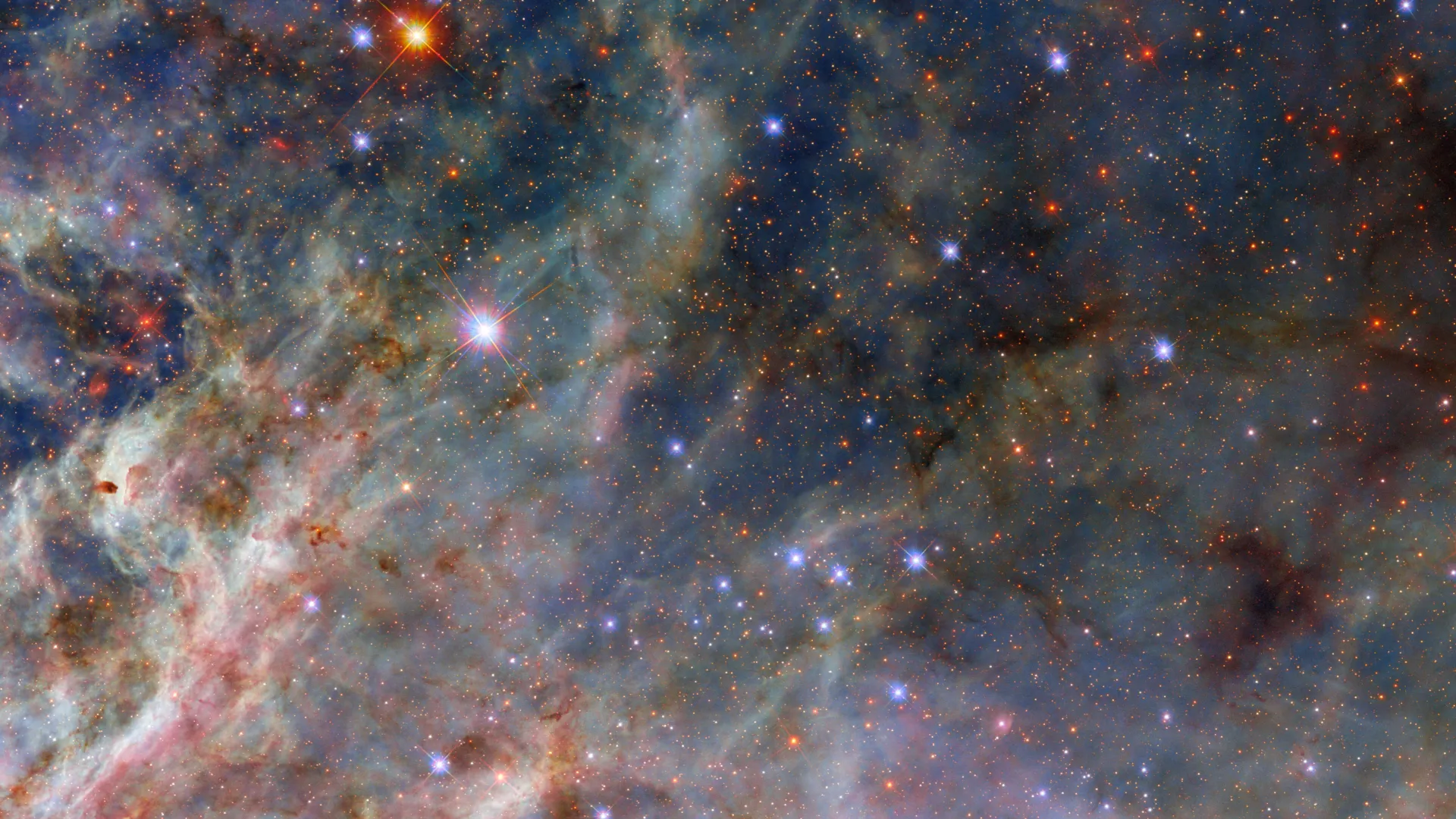
A scene from a star-forming factory shines in this NASA/ESA Hubble Space Telescope Picture of the Week. This Hubble picture captures incredible details in the dusty clouds in a star-forming region called the Tarantula Nebula. What’s possibly the most amazing aspect of this detailed image is that this nebula isn’t even in our galaxy. Instead, it’s in the Large Magellanic Cloud, a dwarf galaxy that is located about 160,000 light-years away in the constellations Dorado and Mensa.

The Large Magellanic Cloud is the largest of the dozens of small satellite galaxies that orbit the Milky Way. The Tarantula Nebula is the largest and brightest star-forming region not just in the Large Magellanic Cloud, but in the entire group of nearby galaxies to which the Milky Way belongs.

The Tarantula Nebula is home to the most massive stars known, some of which are roughly 200 times as massive as our Sun. The scene pictured here is located away from the centre of the nebula, where there is a super star cluster called R136, but very close to a rare type of star called a Wolf-Rayet star. Wolf-Rayet stars are massive stars that have lost their outer shell of hydrogen and are extremely hot and luminous, powering dense and furious stellar winds.

This nebula is a frequent target for Hubble, whose multiwavelength capabilities are critical for capturing sculptural details in the nebula’s dusty clouds. The data used to create this image come from an observing program called Scylla, named for a multi-headed sea monster from the Greek myth of Ulysses. The Scylla program was designed to complement another Hubble observing program called ULLYSSES (Ultraviolet Legacy Library of Young Stars as Essential Standards). ULLYSSES targets massive young stars in the Small and Large Magellanic Clouds, while Scylla investigates the structures of gas and dust that surround these stars.

Share Button

How NASA’s Lunar Trailblazer was lost before reaching the Moon

The small satellite was to map lunar water, but operators lost contact with the spacecraft the day after launch and were unable to recover the mission.

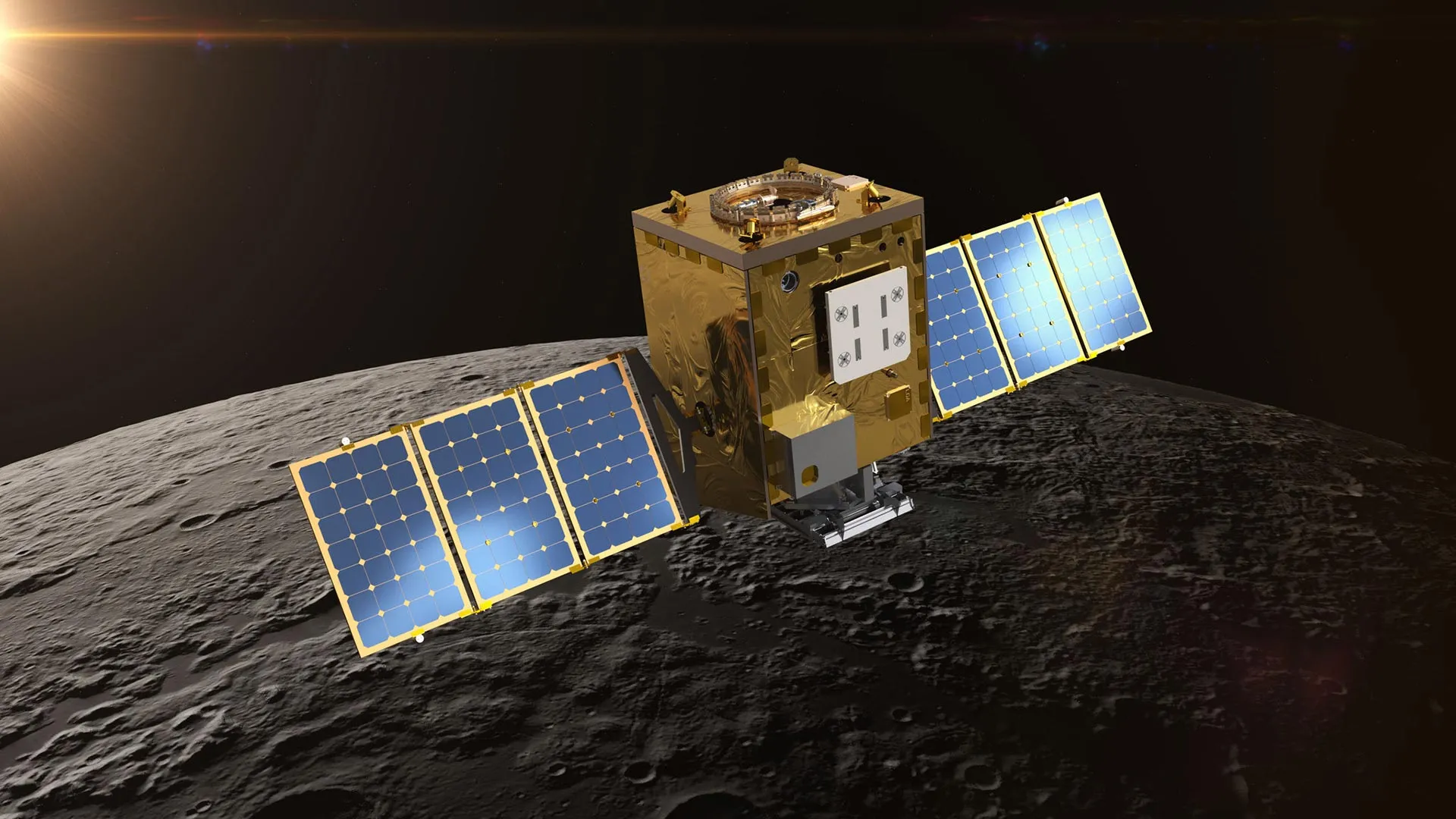
NASA’s Lunar Trailblazer ended its mission to the Moon on July 31. Despite extensive efforts, mission operators were unable to establish two-way communications after losing contact with the spacecraft the day following its Feb. 26 launch.

The mission aimed to produce high-resolution maps of water on the Moon’s surface and determine what form the water is in, how much is there, and how it changes over time. The maps would have supported future robotic and human exploration of the Moon as well as commercial interests while also contributing to the understanding of water cycles on airless bodies throughout the solar system.

Lunar Trailblazer shared a ride on the second Intuitive Machines robotic lunar lander mission, IM-2, which lifted off at 7:16 p.m. EST on Feb. 26 aboard a SpaceX Falcon 9 rocket from the agency’s Kennedy Space Center in Florida. The small satellite separated as planned from the rocket about 48 minutes after launch to begin its flight to the Moon. Mission operators at Caltech’s IPAC in Pasadena established communications with the small spacecraft at 8:13 p.m. EST. Contact was lost the next day.

Without two-way communications, the team was unable to fully diagnose the spacecraft or perform the thruster operations needed to keep Lunar Trailblazer on its flight path.

“At NASA, we undertake high-risk, high-reward missions like Lunar Trailblazer to find revolutionary ways of doing new science,” said Nicky Fox, associate administrator, Science Mission Directorate at NASA Headquarters in Washington. “While it was not the outcome we had hoped for, mission experiences like Lunar Trailblazer help us to learn and reduce the risk for future, low-cost small satellites to do innovative science as we prepare for a sustained human presence on the Moon. Thank you to the Lunar Trailblazer team for their dedication in working on and learning from this mission through to the end.”

The limited data the mission team had received from Lunar Trailblazer indicated that the spacecraft’s solar arrays were not properly oriented toward the Sun, which caused its batteries to become depleted.

For several months, collaborating organizations around the world — many of which volunteered their assistance — listened for the spacecraft’s radio signal and tracked its position. Ground radar and optical observations indicated that Lunar Trailblazer was in a slow spin as it headed farther into deep space.

“As Lunar Trailblazer drifted far beyond the Moon, our models showed that the solar panels might receive more sunlight, perhaps charging the spacecraft’s batteries to a point it could turn on its radio,” said Andrew Klesh, Lunar Trailblazer’s project systems engineer at NASA’s Jet Propulsion Laboratory in Southern California. “The global community’s support helped us better understand the spacecraft’s spin, pointing, and trajectory. In space exploration, collaboration is critical — this gave us the best chance to try to regain contact.”

However, as time passed, Lunar Trailblazer became too distant to recover as its telecommunications signals would have been too weak for the mission to receive telemetry and to command.

Technological Legacy

The small satellite’s High-resolution Volatiles and Minerals Moon Mapper (HVM3) imaging spectrometer was built by JPL to detect and map the locations of water and minerals. The mission’s Lunar Thermal Mapper (LTM) instrument was built by the University of Oxford in the United Kingdom and funded by the UK Space Agency to gather temperature data and determine the composition of silicate rocks and soils to improve understanding of why water content varies over time.

“We’re immensely disappointed that our spacecraft didn’t get to the Moon, but the two science instruments we developed, like the teams we brought together, are world class,” said Bethany Ehlmann, the mission’s principal investigator at Caltech. “This collective knowledge and the technology developed will cross-pollinate to other projects as the planetary science community continues work to better understand the Moon’s water.”

Some of that technology will live on in the JPL-built Ultra Compact Imaging Spectrometer for the Moon (UCIS-Moon) instrument that NASA recently selected for a future orbital flight opportunity. The instrument, which has has an identical spectrometer design as HVM3, will provide the Moon’s highest spatial resolution data of surface lunar water and minerals.

More About Lunar Trailblazer

Lunar Trailblazer was selected by NASA’s SIMPLEx (Small Innovative Missions for Planetary Exploration) competition, which provides opportunities for low-cost science spacecraft to ride-share with selected primary missions. To maintain the lower overall cost, SIMPLEx missions have a higher risk posture and less-stringent requirements for oversight and management. This higher risk acceptance bolsters NASA’s portfolio of targeted science missions designed to test pioneering mission approaches.

Caltech, which manages JPL for NASA, led Lunar Trailblazer’s science investigation, and Caltech’s IPAC led mission operations, which included planning, scheduling, and sequencing of all spacecraft activities. Along with managing Lunar Trailblazer, NASA JPL provided system engineering, mission assurance, the HVM3 instrument, and mission design and navigation. Lockheed Martin Space provided the spacecraft, integrated the flight system, and supported operations under contract with Caltech. The University of Oxford developed and provided the LTM instrument, funded by the UK Space Agency. Lunar Trailblazer, a project of NASA’s Lunar Discovery and Exploration Program, was managed by NASA’s Planetary Missions Program Office at Marshall Space Flight Center in Huntsville, Alabama, for the agency’s Science Mission Directorate in Washington.

Share Button

Lucy Letby’s new expert supporters claim no babies were deliberately harmed. Who should we believe?

Barrister Mark McDonald claims to have the backing of a panel of world class experts who say there is no evidence any babies were deliberately harmed

Share Button

Plan to boost jobs for newly qualified nurses and midwives

The move comes after warnings there are up to three times more graduates than vacancies in some areas of the health service.

Share Button

Trump Has Already Handed Putin A Win By Hosting Peace Talks In Alaska

Donald Trump has announced that he will be meeting Vladimir Putin in the American state of Alaska on Friday to discuss ending the Ukraine war.

It could be pivotal moment in the conflict, even though no one from Europe – including Ukrainian president Volodymyr Zelenskyy – is thought to be invited to the talks.

This has sparked major concerns that Trump will prioritise Putin’s demands to end the war over Ukraine’s.

The US president has already said there may be a land swap in exchange for peace, evidently overlooking how Russia started the war and occupies 20% of Ukraine.

While the talks themselves will have given the Kremlin a boost, choosing to hold them in Alaska will have caused further celebration in Russia.

Putin’s aide Yuri Ushakov told Russian state news agency TASS: “Russia and the US are close neighbours, sharing a common border.

“It seems quite logical for our delegation simply to fly across the Bering Strait and for the important and anticipated summit of leaders of these two countries to take place precisely in Alaska.”

They were expected to travel to neutral territory – Putin himself suggested the United Arab Emirates – but Trump has persuaded the Russian leader to come to the States.

That means the US president is allowing Putin to circumvent the arrest warrant the International Criminal Court has out for him, as he does not have to fly over hostile countries who could try and apprehend him, for the talks.

The US does not recognise the jurisdiction of the ICC so he will not risk arrest in the States.

It will be the first time he has visited the US in a decade, having last travelled to the States during Barack Obama’s second term.

It’s a small victory for Trump too, because it seems like he has the upper hand by forcing Putin to come to him on his territory.

But there’s also a historical element to the meeting place, because Alaska used to Russian territory before it was sold to the US in the 19th Century.

A Russian negotiator, Kirill Dmitriev, who attended US envoy Steve Witkoff’s recent meeting with Putin, even called Alaska “a Russian-born American” which reflects the ties between their countries.

Russian nationalists have also repeatedly called for the land to be returned to Russia over the years.

Former Russian president and Putin ally, Dmitry Medvedev – who is now a senior security official – claimed in January 2024 that the US should return Alaska to Russia.

Share Button