The hidden microbes that decide how sourdough tastes

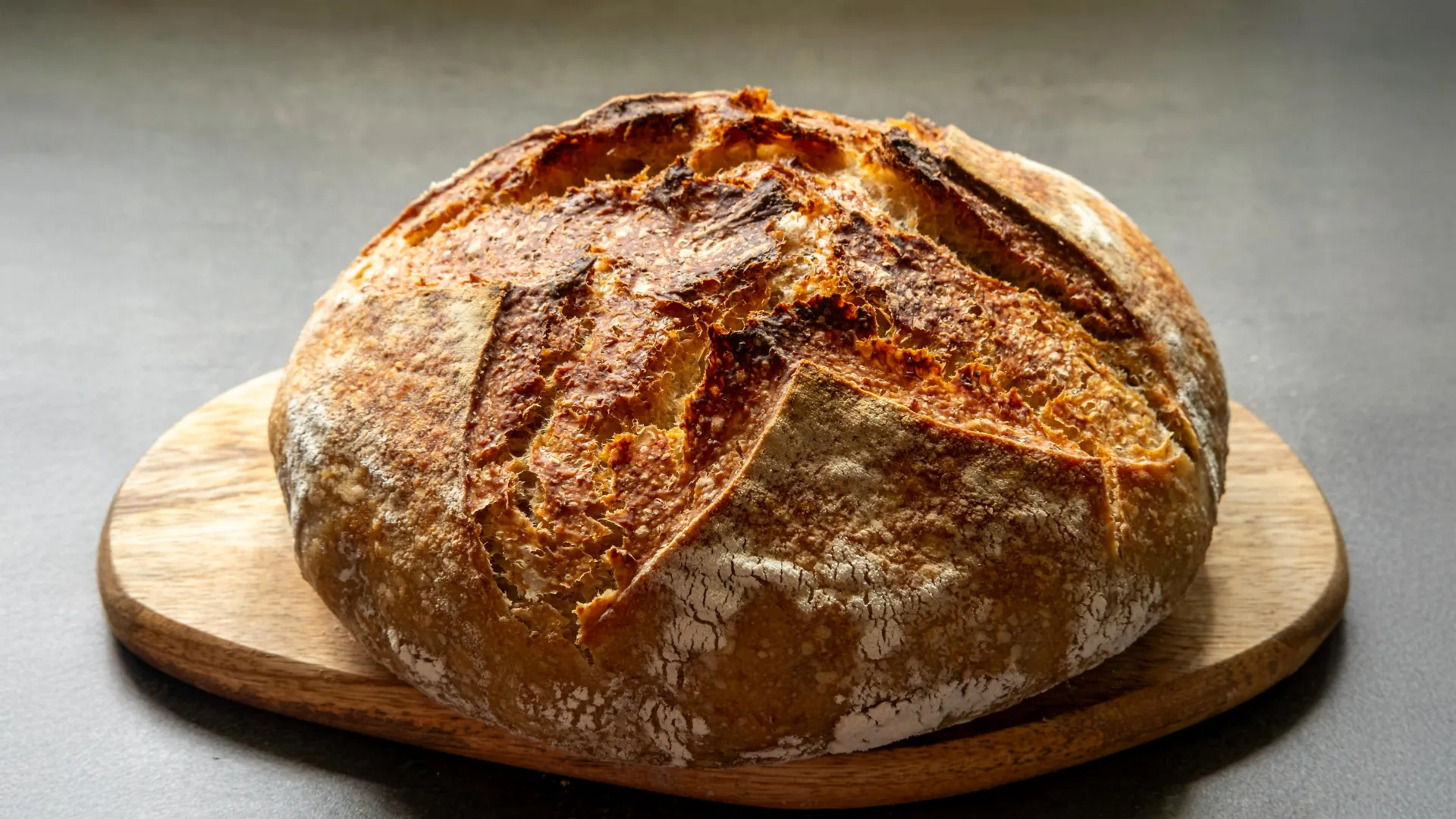
Sourdough starter is a simple blend of flour and water that bakers rely on to make bread rise. For scientists, it is also a powerful way to study how living organisms change over time. The familiar chewy texture and tangy flavor of sourdough come from a complex mix of microorganisms that ferment the dough. Research over the years has uncovered more than 60 types of bacteria and over 80 kinds of yeast in sourdoughs from different regions of the world. “We can use sourdough as an experimental evolution framework, to see what happens over time,” said evolutionary biologist Caiti Heil, Ph.D.

In a recent study published in Microbiology Spectrum, Heil and researchers at North Carolina State University in Raleigh set out to explore how flour choice affects the microbes living in sourdough starters. Their analysis showed that yeasts from the genus Kazachstania were consistently the most common across all starters. In contrast, the bacterial communities varied depending on the type of flour used.

What This Means for Bakers and Flavor

The findings suggest that changing flour types could influence the microbial makeup of a starter. “And because the microbial composition affects different traits, by altering the flour you could potentially alter how your bread tastes,” said Heil, the study’s senior author. More broadly, she explained that the results show just how responsive the sourdough microbiome is to environmental conditions.

Earlier research has shown that sourdough microbes are shaped by multiple influences, including the flour itself, the surrounding air and surfaces, and even the hands of the baker. Starters can be made with wheat, rye, barley, teff, millet, or other grains, each supplying a distinct set of nutrients that microbes depend on to grow.

A Classroom Experiment Sparks the Study

The research began with an educational project led by Enrique Schwarzkopf, Ph.D., a postdoctoral researcher in Heil’s lab and an avid sourdough baker. He created a program at a local middle school to teach students about fermentation and evolution. Schwarzkopf, who maintains a sourdough starter named Seth, encouraged students to test different flour combinations and feeding schedules to see which starter would grow the fastest.

To analyze the starters, the researchers used metabarcoding, a genetic method that quickly identifies which microbes are present in a sample. Each starter began with one of three substrates: all-purpose flour, bread flour or whole wheat flour. At the start of the experiment, the flours showed similar bacterial profiles and contained a variety of yeasts.

Unexpected Yeast Dominance

After several weeks of repeated feeding, the microbial communities shifted. The starters all ended up dominated by the same yeast, while bacteria showed greater diversity. Heil said she originally expected to find Saccharomyces cerevisiae, also known as brewer’s yeast, which is commonly used in baking and is central to much of her lab’s research.

Instead, Kazachstania emerged as the leading yeast in every starter, regardless of flour type or feeding schedule. Genetic analysis also revealed differences among bacteria. Starters made with whole wheat flour contained higher levels of Companilactobacillus, while those made with bread flour had more Levilactobacillus.

Flour as an Ecological Driver

Heil, whose work focuses on how organisms adapt to new environments and compete at the genetic level, explained that each flour type offers unique nutritional conditions. Linking those differences to the environments microbes experience, she said, can help scientists better understand how diverse microbial communities form, compete, and persist.


Share Button

‘I Was An Estranged Child. Here’s What I Wish Parents Knew About Going No-Contact’

Estrangement, and especially the estrangement of adult children from their parents, has been a big topic in the past few months.

Oprah Winfrey invited a panel of therapists to talk about the “rising trend” of estrangement on her podcast, for instance. One of the experts controversially blamed “therapy” for “inflammatory reactions” to parents’ behaviour.

And Sir David and Victoria Beckham’s relationship with their son Brooklyn has proven, well, rocky in the past year, too.

We don’t know the particulars of that case for sure.

But with so much attention around the topic of estrangement, we spoke to Dorcy Pruter, the founder of the Conscious Co-Parenting Institute, who began her business after reconnecting with her father following years of estrangement.

Here, she shared “the hard truth most [estranged] parents aren’t ready to hear (at least not at first)”.

“Going no-contact is never the first choice”

Some parents may feel blindsided by their grown-up child going no-contact.

But “going no-contact is never the first choice,” Pruter said. “It’s the last resort of a child who didn’t feel safe, seen, or sovereign in the relationship.”

She added that there is often no single moment that leads to a break.

Instead, “it begins with small moments of emotional misattunement. Dismissed feelings. Subtle control. A child becomes the parents’ emotional regulator.

“It can look like ‘loving too much’ or ‘doing everything for them,’ when in reality, the parent may have unknowingly made their child responsible for their self-worth.”

For the parent, she said, they might really feel they gave their child everything.

“So when a parent finds themselves mystified by estrangement, the most powerful question they can ask is not ‘What went wrong?’ but: ‘What truth did my child not feel safe enough to tell me?’

“Is it helpful to reflect? Yes, but only if the reflection is rooted in curiosity, not guilt or blame. Parents must be willing to trade the need to be ‘right’ for the courage to reconnect. That means listening to the silence not as a punishment, but as a message.”

How can I tell if my grown-up child is distancing themselves from me, and what can I do if they go no-contact?

Another reason parents might feel shocked by their child’s distance, Pruter told us, is that they struggle to notice early signs of disconnection for what it really is.

“There are often early signs of withdrawal, short or transactional conversations, and emotional distance, but many parents miss them because they interpret that distance as rudeness or ingratitude, rather than disconnection,” she said.

And if your child has already gone no-contact, she recommended taking that as an opportunity to “heal [your] own wounds, take radical responsibility, and become safe for their child again, even if that child never returns.

“I often tell my clients that reconnection isn’t about changing your child’s mind. It’s about transforming your own heart.”

Share Button

Families ‘failed’ by trust meet ahead of inquiry

Families and patients will discuss what want raised by an inquiry into the Tees, Esk and Wear Valleys Trust.

Share Button

How the NHS became the battleground in the trans debate facing workplaces

What’s next for employers and their staff in the aftermath of the Darlington nurses ruling?

Share Button

This new building material pulls carbon out of the air

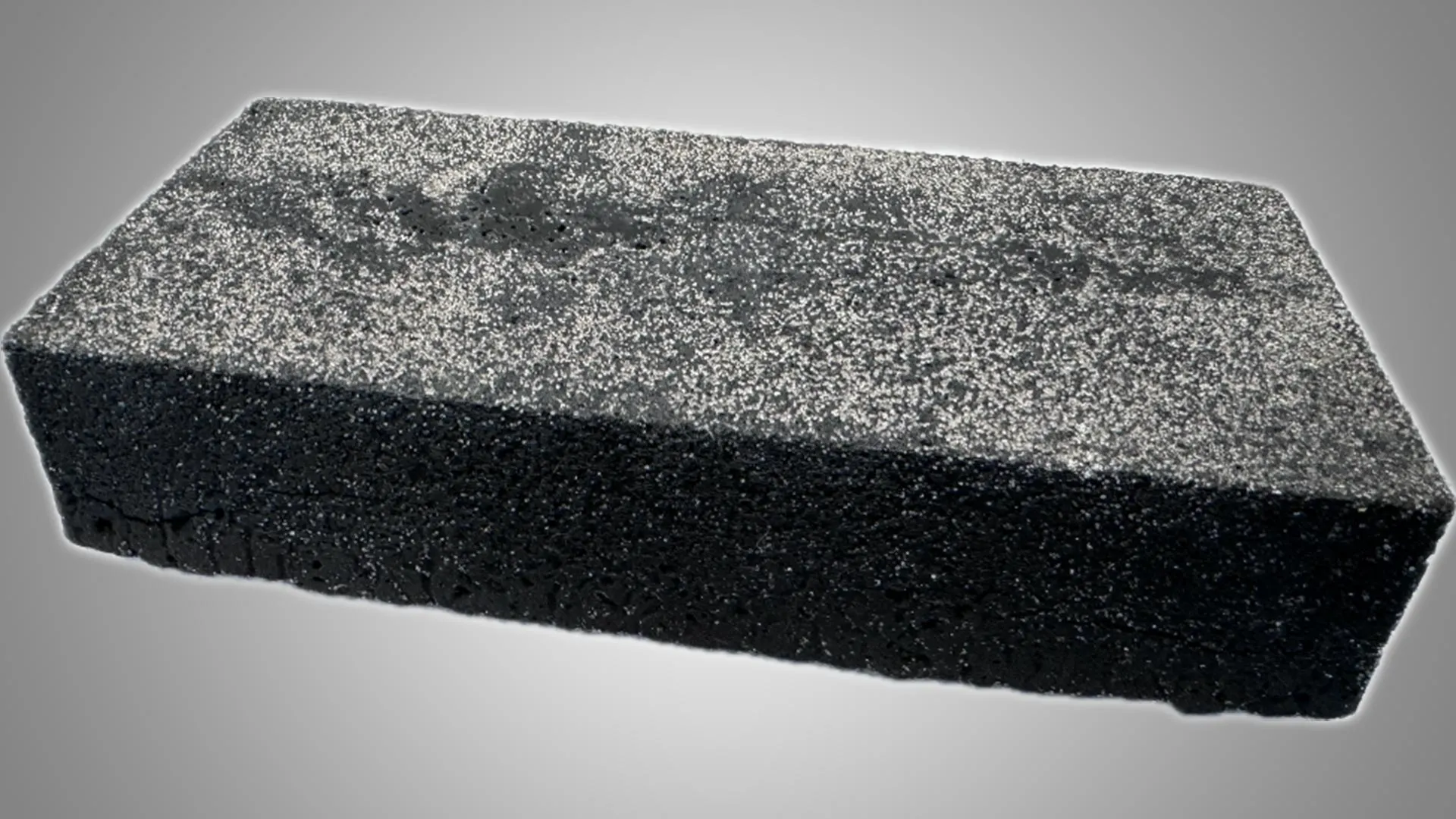
Researchers at Worcester Polytechnic Institute (WPI) have developed a new building material that removes more carbon from the atmosphere than it produces. The advance, reported in the high-impact journal Matter, describes a material called enzymatic structural material (ESM). It is designed to be strong, long-lasting, and recyclable, while requiring far less energy to make than traditional construction materials.

The project was led by Nima Rahbar, the Ralph H. White Family Distinguished Professor and head of the Department of Civil, Environmental, and Architectural Engineering. His team created ESM using an enzyme that helps turn carbon dioxide into solid mineral particles. These particles are then bonded together and cured under gentle conditions. The process allows the material to be shaped into structural components within hours.

Conventional concrete must be produced at very high temperatures and can take weeks to fully cure. In contrast, ESM forms quickly and leaves a much smaller environmental footprint.

Cutting Emissions by Capturing Carbon

“Concrete is the most widely used construction material on the planet, and its production accounts for nearly 8% of global CO2 emissions,” said Rahbar. “What our team has developed is a practical, scalable alternative that doesn’t just reduce emissions — it actually captures carbon. Producing a single cubic meter of ESM sequesters more than 6 kilograms of CO2, compared to the 330 kilograms emitted by conventional concrete.”

Built for Real-World Use

ESM combines fast curing with adjustable strength and full recyclability. These qualities make it well suited for practical applications such as roof decks, wall panels, and modular building systems. The material can also be repaired, which may lower long-term construction costs and significantly reduce how much waste ends up in landfills.

“If even a fraction of global construction shifts toward carbon-negative materials like ESM, the impact could be enormous,” added Rahbar.

Broad Potential Across Industries

Beyond standard construction, the material could support affordable housing, climate-resilient infrastructure, and disaster recovery efforts. Lightweight components that can be produced quickly may help speed rebuilding after extreme events. Because ESM relies on low-energy manufacturing and renewable biological inputs, it also supports broader goals tied to carbon-neutral infrastructure and circular manufacturing systems.

Share Button

Botched ‘Turkey teeth’ op victim warns of dangers

Leanne Abeyance, from Telford, is waiting for reconstructive surgery and remains in constant pain.

Share Button

Finger-prick blood test could be early warning for children with type 1 diabetes

A simple finger-prick blood test can find those at risk so they can get the right treatment.

Share Button

Why doing a mix of exercise could be the key to longer life

Don’t just focus on one activity – doing a variety every week gives you more health benefits, a study suggests.

Share Button

Putin Aide Proves Trump’s Greenland Threats Have Only Boosted Russia’s Ukraine Invasion

Russia’s top diplomat Sergei Lavrov has just compared Donald Trump’s bid to control Greenland to Vladimir Putin’s illegal annexation of Crimea.

Since seizing Venezuela and capturing its leader, the US president seems intent on taking full “control” of the semi-autonomous Arctic island of Greenland.

Trump appears unbothered that the land is part of the kingdom of Denmark – and therefore also part of Nato – or that Greenlanders themselves have said they do not want to become part of America.

The president claims Denmark is not protecting Greenland from potential China and Russia threats, so an American takeover is needed to protect “world peace”.

He has also not ruled out using military force to take the world’s largest island.

And, worryingly, Moscow seems rather thrilled at the chaos, especially as the president is putting Nato under strain.

In his annual press conference, Lavrov told reporters: “In Greenland there was no coup, but as President Trump said, this territory is important to the US.

“As Crimea is equally important for the security of Russia.”

Crimea is a Ukrainian peninsula which Russia illegally seized in 2014.

Many Ukrainians perceive that capture of Crimea as the real start of Russia’s ongoing invasion, and that the lack of western retaliation to that annexation emboldened Putin to invade mainland Ukraine in February 2022.

In an apparent endorsement of Trump’s aggression, Lavrov also claimed: “Greenland is not a natural part of Denmark.”

However, he added that Russia has no plans to get involved in the dispute – despite Trump’s claims that Moscow has its eyes on the territory.

“Nato is going through a period of challenges, and Russia is not interested in interfering in Greenland,” Putin’s top diplomat said.

“It was neither a natural part of Norway nor a natural part of Denmark. It is a colonial conquest. The fact that the inhabitants are now accustomed to it and feel comfortable is another matter.”

Trump’s tantrums have put a major strain on Nato – something the Kremlin has been trying to do for decades – which in turn weakens the defence alliance’s united approach to Ukraine.

Putin’s special envoy Kirill Dmitriev already welcomed the “collapse of the transatlantic union” this week, while former president Dmitri Medvedev suggested Europe is getting poorer.

He wrote on social media: “Make America Great Again (MAGA) = Make Denmark Small Again (MDSA) = Make Europe Poor Again (MEPA). Has this idea finally sunk in, dimwits?”

Putin’s spokesperson Dmitry Peskov also said: “There are international experts who believe that by resolving the issue of Greenland’s incorporation, Trump will certainly go down in history. And not only in the history of the United States, but also in world history. It’s hard not to agree with these experts.”

Trump has even threatened to slap tariffs on imports from European allies who have so far opposed the idea of an American takeover.

EU leaders will meet to discuss how to respond at an emergency summit on Thursday, although the UK’s Keir Starmer has insisted Britain will not be looking at retaliatory tariffs and that he does not want to start a trade war.

Though Trump is putting 80 years of international diplomacy in jeopardy with his Greenland warnings, allies are nervous to draw too many red lines because his co-operation is needed for security guarantees with the Ukraine war.

The president himself has been pushing for a peace deal to end the Ukraine war – even if it means giving Putin even more of Ukraine’s sovereign land.

Share Button

Dealing With A Narcissist? The ‘BIFF’ Method Could Help

You might have heard of “grey rocking”, a method which experts say can make dealing with narcissistic and high-conflict people a little easier.

It involves keeping comments and responses to antagonistic individuals short, boring, and emotionally uninvested.

And, therapist Danielle Pinals shared on her Instagram, the “BIFF” method might help those dealing with a narcissist ensure they don’t “allow you to get derailed by emotional manipulation or control”.

Here, we spoke to relationship therapist and author at Passionerad, Sofie Roos, about how (and when) to try the BIFF method.

What is the BIFF method?

Coined by Bill Eddy at the High Conflict Institute, the term stands for “brief, informative, friendly, and firm”.

In other words, don’t spend too long explaining yourself, stay courteous, make sure you relay only the relevant information, and stick to your guns.

An example, the High Conflict Institute explained, could be getting a very long, angry text accusing you of being a terrible person and mother because you asked your coparent to take the kids to your boss’s birthday during their stay.

A BIFF response, they said, would be: “Thank you for responding to my request… Just to clarify, the party will be from 3-5 on Friday at the office, and there will be approximately 30 people there.

“There will be no alcohol, as it is a family-oriented firm, and there will be family-oriented activities. I think it will be a good experience for them to see me at my workplace. Since you do not agree, then of course I will respect that and withdraw my request, as I recognise it is your parenting time.”

When should you use the BIFF method?

Aside from being useful for navigating situations like divorce and coparenting, Roos said, “it can also be helpful during conflicts at work, with relatives and your partner’s family.”

This does not have to be limited to people you suspect of narcissm, though it may be useful then too.

In fact, she added, “I would recommend people to use the BIFF method when they notice that the conversation starts to get loaded, [accusatory], or [circular and] aggressive. It’s especially useful in written communication, such as in emails or SMS.”

Following the BIFF method significantly decreases the chance of escalation, she added.

“I see this as a great way to protect both yourself and the relationship in question as it helps you set boundaries without being cold, cynical or aggressive,” she ended.

“And while it’s far from easy all the time, it’s definitely a strategy worth getting better at as it’ll help you long term with getting more peaceful, communicative and mature relationships, no matter if they’re private or professional.”

Share Button