Florida Governor Ron DeSantis, who entered the 2024 presidential race with a bankroll rivalling that of coup-attempting former President Donald Trump, dropped his bid for the Republican nomination on Sunday — and endorsed Trump on his way out.
“Nobody worked harder and we left it all out on the field,” DeSantis said in a video posted on X, formerly Twitter, before going on to say, “If there was anything I could do to produce a favourable outcome ― more campaign stops, more interviews ― I would do it.”
Advertisement
“But I can’t ask our supporters to volunteer their time and donate their resources if we don’t have a clear path to victory. Accordingly, I am today suspending my campaign.”
DeSantis then added that he was backing Trump over former South Carolina Governor Nikki Haley, the remaining major candidate in the race.
“It’s clear to me that a majority of Republican primary voters want to give Donald Trump another chance,” he said, adding, “He has my endorsement because we can’t go back to the old Republican guard of yesteryear, a repackaged form of warmed over corporatism that Nikki Haley represents.”
At a campaign stop in Seabrook, New Hampshire, Haley acknowledged DeSantis’ announcement.
“I want to say to Ron, he ran a great race. He’s been a good governor, and we wish him well. Having said that, it’s now one fella and one lady left,” she said.
Advertisement
The announcement comes just days after DeSantis claimed he had gotten his “ticket punched” to continue his campaign despite finishing a distant second to Trump in the Iowa caucuses. Late polls in that state showed that DeSantis could finish third behind Haley. When DeSantis ultimately finished just two percentage points ahead of her, he tried to spin it as a victory ― even though he had previously said he had to win Iowa to win the nomination.
DeSantis was polling even worse in New Hampshire and South Carolina than he had been in Iowa, and his campaign seemed uncertain of a strategy going forward. His first stop after Iowa was a campaign visit to South Carolina, a contest that is a full month after New Hampshire’s first-in-the-nation primary on Tuesday. He was to return to New Hampshire on Friday, but then was planning to head back to South Carolina on Saturday.
Republicans who feared Trump could not win a general election, particularly wealthy party donors, had initially lined up behind DeSantis after his nearly 20%-point reelection as governor in November 2022. That star power allowed him to continue collecting donations of unlimited size in a state account and eventually transfer more than $80 million into a federal super PAC created to support him.
But DeSantis’ high point in the campaign turned out to be just after that reelection victory, when some polls showed him actually ahead of Trump for the 2024 nomination.
Advertisement
That began to change quickly. Trump entered the race just weeks after those midterm elections and soon began attacking DeSantis in speeches, online and even in television ads.
DeSantis chose not to enter the race himself until the end of Florida’s legislative session in May, by which point he was polling only in the 20s both nationally and in Iowa and New Hampshire.
The poor polling resulted in weaker fundraising, which resulted in two rounds of staff layoffs and shakeups ― even though much of the logistical work of the campaign was effectively outsourced to the relatively flush Never Back Down super PAC.
An even bigger problem for DeSantis, though, may have been something even the best fundraising could do nothing about: his personality. Longtime Florida Republicans told HuffPost a year ago that DeSantis has never seemed to enjoy interacting with people.
That trait, as it turns out, became a major liability in a primary race that still places a high value on personal interactions with primary voters in the early voting states.
Advertisement
“His problem is that the more people see him, the less they like him,” said one influential New Hampshire Republican, speaking on condition of anonymity.
If a storm has been named, it means they pose a threat to life.
The Met Office names them in alphabetically order. Isha is the ninth storm of the winter season (which technically begins in September) so it is named after the ninth letter.
The weather has therefore become much milder in temperature, but it’s much wetter and windier, too.
And that’s why meteorologists keep saying Isha is of particular interest – the UK does not often see storms which see the whole country hit by weather warnings.
According to Sky News, Met Office forecaster Ellie Glaisyer said that the “main thing” about Isha is that it is “very widespread” – and it’s “relatively rare” to have the whole of the UK covered by a warning.
Advertisement
“That’s the main difference to previous storms we have seen,” she said.
Channel 4 weather presenter Liam Dutton echoed this, writing on X (formerly Twitter): “Storm Isha is unusual because the disruptive winds cover a very large area.”
The Met Office has already issued an amber weather warning for wind for the north and south-west of England, Wales, large parts of Northern Ireland and central and southern Scotland, from Sunday into Monday.
Another warning will be introduced for Sussex and Kent from Monday morning.
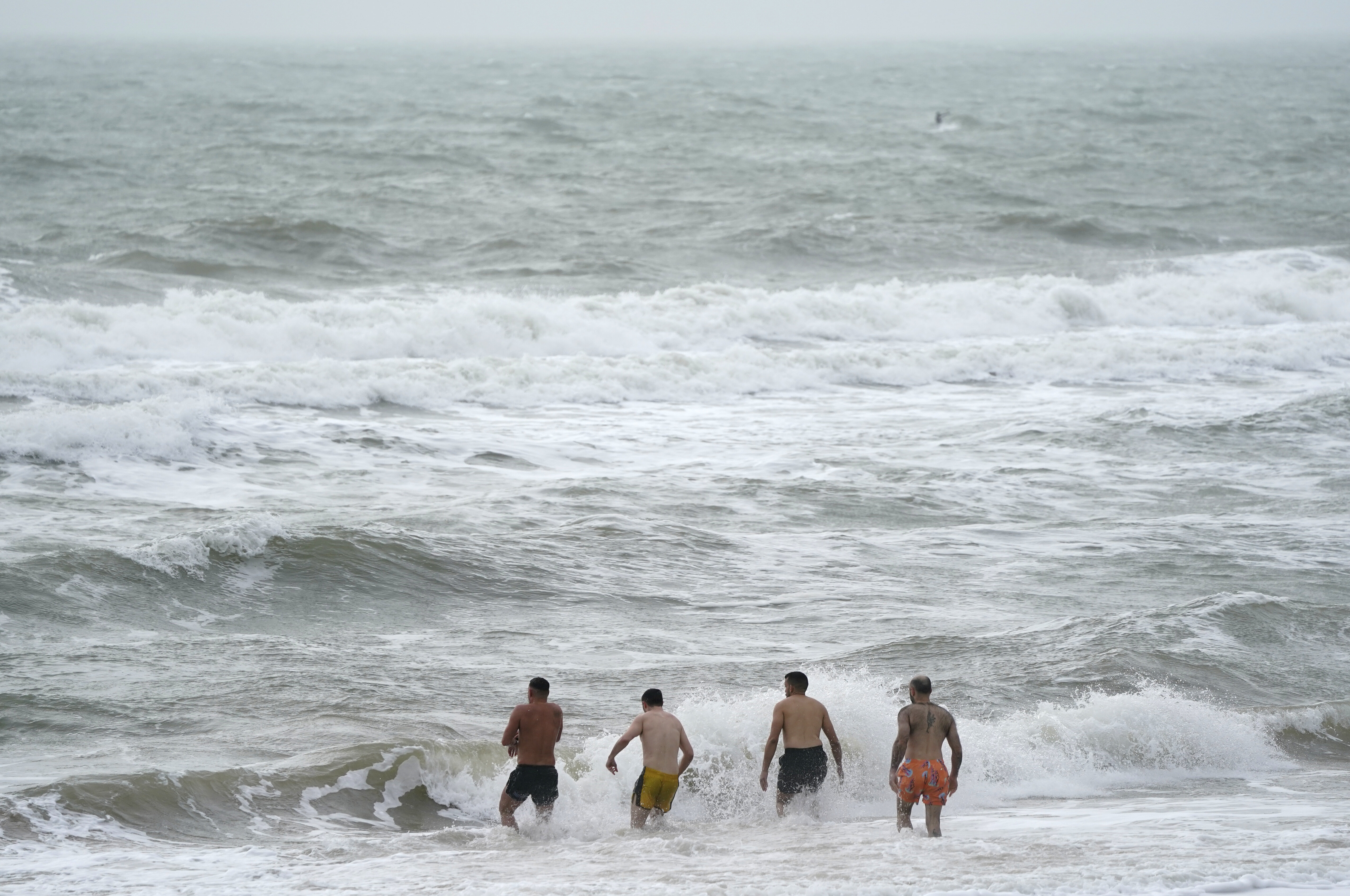
Winds of up to 80mph are expected along the UK coasts, and many places will see gusts of 50-60mph inland.
There’s a risk to life in coastal areas, and yellow flood warnings are expected for the next two days.
Advertisement
Ireland’s meteorological service, Met Eireann, has also introduced amber wind warnings for Sunday, which will escalate into a red storm warning for coastal areas in the north of the country on Monday.
Amber means there’s a good chance of power cuts, and other services could be impacts. Buildings may be damaged, journeys may be lengthened or cancelled altogether and some roads and bridges may close.
It also means injuries and danger to life likely from large waves and beach material thrown onto coastal roads, sea fronts and property.
A red weather warning means people need to seek cover and protect themselves or their properties.
A yellow wind warning will be in place covering Northern Ireland, north Wales, northern England and much of Scotland from Tuesday until midday on Wednesday.
The winds will gradually east throughout Monday, and overnight it should be a “calmer interlude” according to the Met Office – although it will be wet and windy again on Tuesday.
Defence secretary Grant Shapps was put in the hot seat on Sunday when he was questioned over the two Royal Navy warships which recently crashed into each other.
The two warships were there as part of the UK’s ongoing presence in the Gulf when they collided off the coast of Bahrain on Friday.
Advertisement
The Ministry of Defence has confirmed no one was injured in the crash.
Speaking to Shapps on Sunday morning, Sky News’ Trevor Phillips said: “In the Middle East, we have three mine hunters – and two of them collided in the last few days.
“One backed into the other, thinking it was going forward, but somebody wired the engine up in the wrong way, and instead of going forward it went into reverse.
“So now, instead of having three mine hunters, we’ve only got… one.
“It’s pretty humiliating, isn’t it?”
Shapps deflected by saying just as with “all walks of life, accidents happen”.
“This was incompetence,” Phillips said.
“You may know more about it than I do,” the defence secretary said. “I’ve spoken to the First Sea Lord [Admiral Sir Ben Key] who is in charge of the Navy, and he has assured me there is an investigation under way.
“And as with all these things, we don’t say it is incompetence when we see an aircraft come down – a very rare occasion – just as this would be a rare occasion.”
The former president – while touting the amount of supporters at the Concord, New Hampshire rally – claimed the former South Carolina governor gets crowds of “like nine people” in the state before bringing up the insurrection.
Advertisement
“By the way, they never report the crowd on January 6. You know Nikki Haley, Nikki Haley, Nikki Haley. You know they – do you know they destroyed all of the information, all of the evidence, everything, deleted and destroyed all of it. All of it,” Trump claimed.
“Because of lots of things like Nikki Haley is in charge of security — we offered her 10,000 people, soldiers, National Guards, whatever they want. They turned it down. They don’t want to talk about that. These are very dishonest people.”
Trump has previously pointed his finger at Pelosi for security breakdowns when the riot took place, claiming that the former House speaker turned down his offer to activate the National Guard as his supporters stormed the U.S. Capitol.
Advertisement
The House speaker isn’t in charge of security at the Capitol and doesn’t direct the National Guard.
Drew Hammill, a spokesperson for Pelosi, told The Associated Press last year that the former House speaker – who he noted was a “target of an assassination attempt” that day – “was no more in charge of Capitol security than Mitch McConnell was.”
“This is a clear attempt to whitewash what happened on January 6th and divert blame,” Hammill wrote of the claim.
Sign up and we’ll email you a weekly dose of parenting stories, covering everything from pregnancy and birth, to babies and toddlers. We’re in this together.
Successfully Signed Up!
Realness delivered to your inbox
By entering your email and clicking Sign Up, you’re agreeing to let us send you customized marketing messages about us and our advertising partners. You are also agreeing to our Terms of Service and Privacy Policy.
Many people use the month of January to try out lifestyle changes, like going alcohol-free for “Dry January” or abstaining from animal products for “Veganuary.” But one January movement you might be less familiar with is “Januhairy.”
A portmanteau of “January” and “hairy,” Januhairy is a movement that encourages people to put their razors down and let their body hair grow out for the month ― and then perhaps year-round if they enjoy the experience. While Movember and No Shave November aim to raise awareness around men’s health and cancer, Januhairy is about challenging societal beauty norms, especially for women and femme-presenting people.
Advertisement
“It’s a way for us to question body hair standards and why we follow these societal norms that make us feel like body hair isn’t beautiful or feminine or acceptable on a woman’s body — despite being acceptable on a man’s body — and it challenges the feeling that our body hair is innately gross when it’s just hair,” Esther Calixte-Bea, a body hair activist and visual artist, told HuffPost.
Indeed, Januhairy founder Laura Jackson launched the movement just before January 2019 to raise money for a body-image-focused organisation called Body Gossip, and to empower women to stop shaving, waxing and lasering ― or at least question why they might feel they have to.
“I think it’s an interesting way for women to try to grow out their hair in a collective way, as a form of resistance, as a form of self-experimentation, and as a playful and fun form of rebellion,” said Breanne Fahs, a professor of women and gender studies at Arizona State University and author of “Unshaved: Resistance and Revolution in Women’s Body Hair Politics.”
Advertisement
In many ways, Januhairy serves as a reminder that women removing their body hair is a relatively recent phenomenon.
“It came about in the early 1920s as a result of several different factors: the advent of fashion photography, the end of WWI and men coming home with their (mandatory) razor kits, the 1918 pandemic moved bathing from communal settings to individual household bathrooms for middle-class households, and the Gillette razor company making a conscious decision to market razors to women and sell them on the ‘grossness’ of body hair in order to make money,” Fahs explained. “Prior to the 1920s, women mostly did not remove their body hair voluntarily. This occurred only in the context of colonial conquest, etc.”
As fashion trends evolved toward sleeveless tops that showed women’s underarms and skirts that revealed a little more leg, Gillette released its “Milady Decoletté” razor for women in 1915 and marketed it as a product that “solves an embarrassing personal problem.” Although there is evidence of ancient Romans, Greeks and Egyptians removing body hair, women around the early 20th century were not so focused on hairlessness.
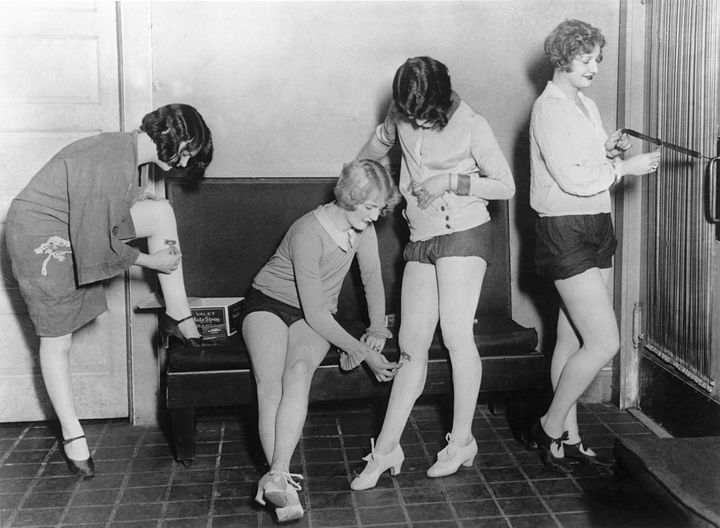
Keystone-France via Getty Images
Women shaving their legs with mechanical razors in New York City in 1927.
“As a Black woman, I was interested to read an article that shared how it was mostly white women who propagated the idea of a woman being hairless as the ideal,” Calixte-Bea said. “I’ve also heard from women from African countries that they didn’t feel obligated to shave their legs until they arrived in America or Canada. My hairiness mostly comes from my Ivorian side, and I’ve learned that in my ancestors’ time, body hair was seen as something beautiful. So i think my body hair tells the story of my family and my ancestors.”
Advertisement
While marketers might have made women see body hair as “an embarrassing personal problem,” the practice of removing it generally has no basis in medical or hygiene concerns.
“In reality, hair is normal, and having hair or choosing not to shave your hair is actually embracing what is normal,” said Dr. Susan Massick, a board-certified dermatologist at The Ohio State University Wexner Medical Center. “Not shaving and leaving hair to grow in places like the armpits, bikini area and legs is not unhygienic. Believe it or not, pubic hair, for example, serves a protective purpose, particularly for women’s vaginal health. If people choose or prefer to shave, that is fine to do. Keep in mind that for some people, shaving can actually be irritating to the skin, causing bumpy, painful breakouts and rashes.”
In recent years, there have been some shifts toward body hair acceptance in Western culture, but for the most part, the changes haven’t been as significant as many would hope.
“We’re seeing some more body hair on-screen, and some companies have even figured out how to sell razors with body-hair-positive marketing,” Conger said. “But I don’t think that’s translated into full-blown norm shifting since the vast majority of cisgender women regularly shave our legs and pits.”
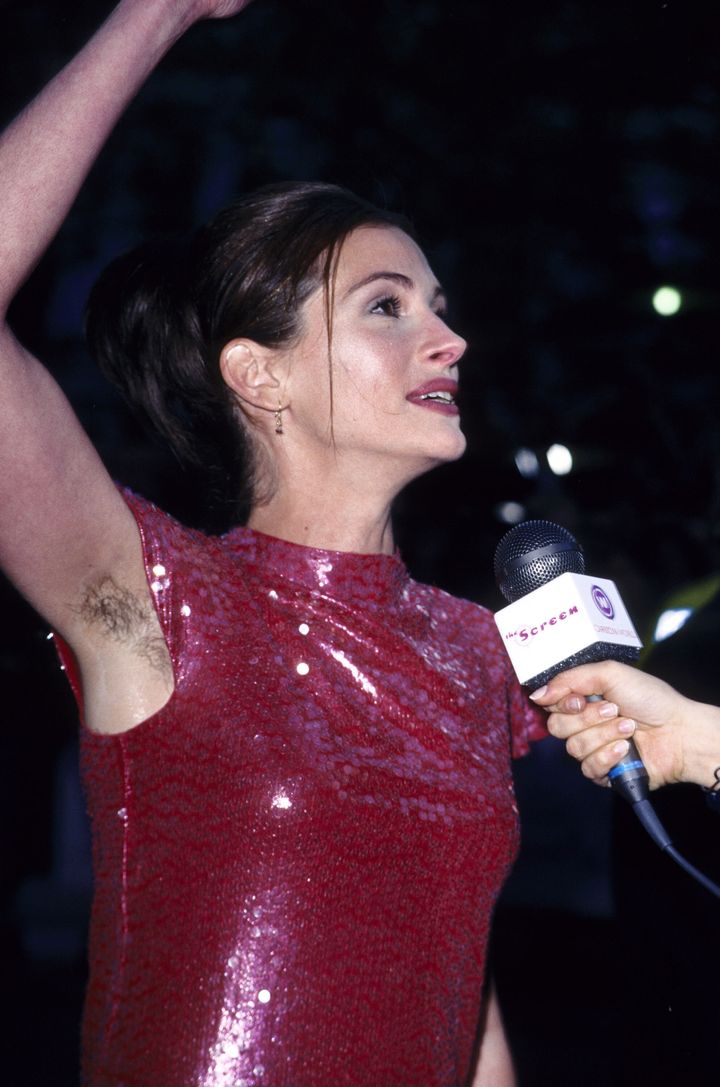
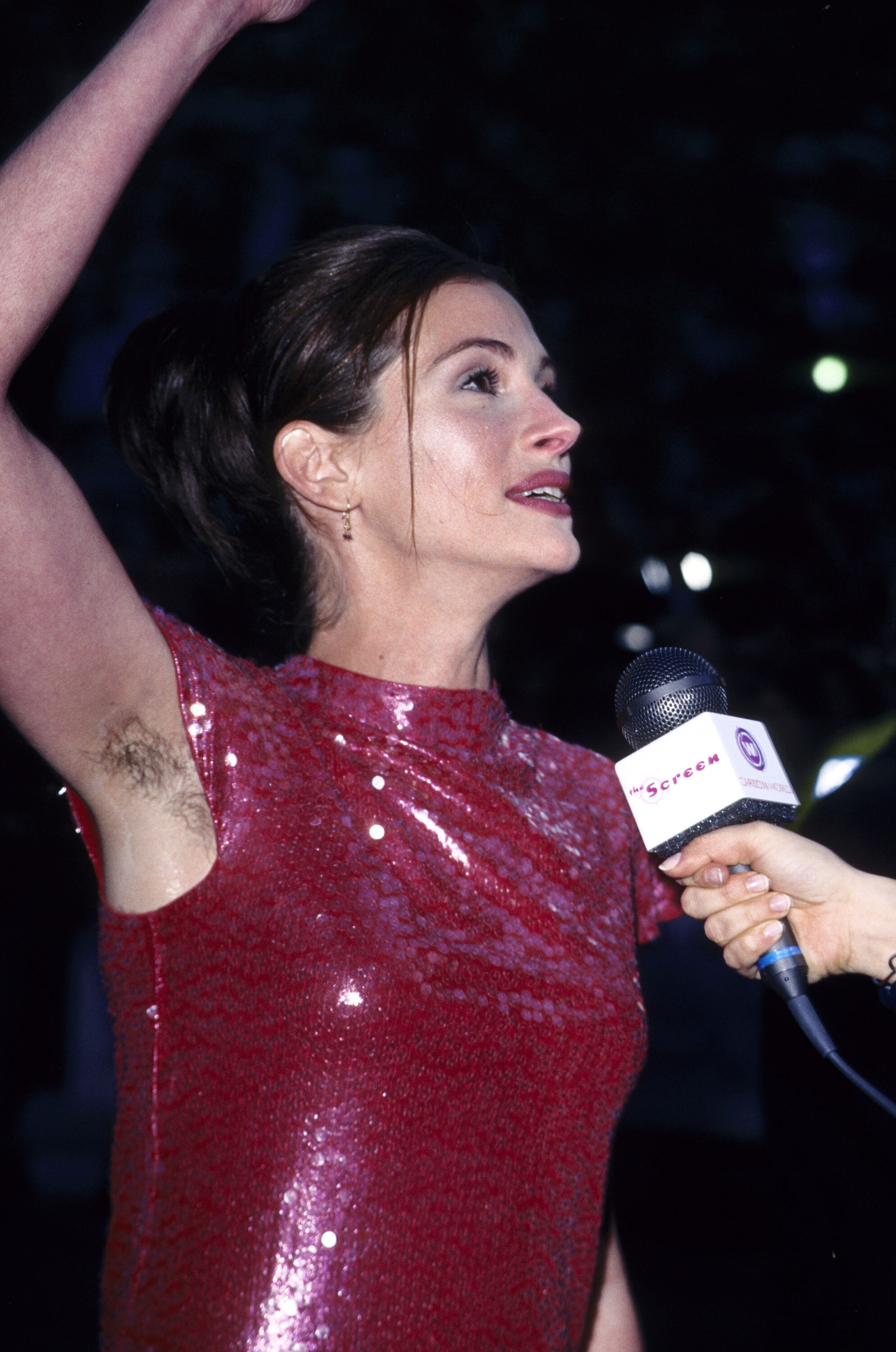
She pointed to the moment when Julia Roberts revealed her unshaved armpit hair at the 1999 premiere of “Notting Hill” and the subsequent media frenzy (though the actor later admitted that it was not intended as any sort of statement).
Advertisement
Fred Duval via Getty Images
Julia Roberts at the premiere of “Notting Hill” in London in April 1999.
“She forgot to shave once, and pop culture will never un-remember it,” Conger said. “Almost 25 years later, if say, Taylor Swift hit a red carpet with visible pit hair, the internet would probably cave in on itself. I think body hair removal is still so persistent partly because the hair-free pressure starts young, and it often comes from peers and parents alike. As long as we expect girls to start shaving, women won’t be ‘allowed’ to stop.”
Fahs agreed that notions of the norm shifting have been overstated, with some estimates saying that over 95-99% of women in the U.S., Australia and England still remove their body hair. She finds it encouraging, however, to see women use opportunities like Januhairy to try to grow out their body hair and see how it feels.
“It’s always better to see the power of a norm by breaking it, and it’s a great way to understand your body better!” Fahs said, sharing what she would say to someone considering taking part in Januhairy. “Go for it! It can teach you many things about who thinks they have a say in your body and how you present your body in the world. It can also teach you about your own biases about grooming and femininity related to body hair. Body hair is a powerful site of gender and power!”
Conger echoed this sentiment, applauding the movement’s impact in making folks reconsider this “this time-consuming, sometimes painful and expensive femininity maintenance.”
Advertisement
“Januhairy is an opportunity to opt out of a beauty norm, but more importantly, it’s a chance to check our own reactions to women’s body hair and understand how it’s different for people with polycystic ovarian syndrome, for instance, or Sikh women who keep kesh,” she added.
January is also a particularly good time of year for people to experiment with their body hair if they’re hesitant.
“If you live somewhere with a cold winter like I do in Canada, you get to grow out your body hair while covering it outside and not feeling like anyone is going to judge you,” Calixte-Bea said.
Conger believes that “Januhairy” is a catchier way to describe what many women and femme people already do during cold weather months.
“That’s the thing about body hair, right?” she said. “It’s only ‘taboo’ when other people can see it.”
Advertisement
Growing out your body hair for yourself in a cold season provides a type of safe space to push back against the norms and discourse that make us see ourselves in a negative light.
“Once you get home, you can see yourself as you are,” Calixte-Bea added. “It’s a very liberating experience to see your body as it naturally is and not once you’ve changed it. Working in retail, I’ve seen women of all ages talk about the things they hate about their bodies, but that’s not something I want for myself and other women.”
Of course, everyone is welcome to try growing out their body hair at any time of year. And if you don’t enjoy how it feels, you aren’t obligated to continue.
“I think it is important to normalise hair and having body hair in much the same way society should embrace all body types,” Massick said. “My philosophy is ‘you do you’ ― do what feels right.”
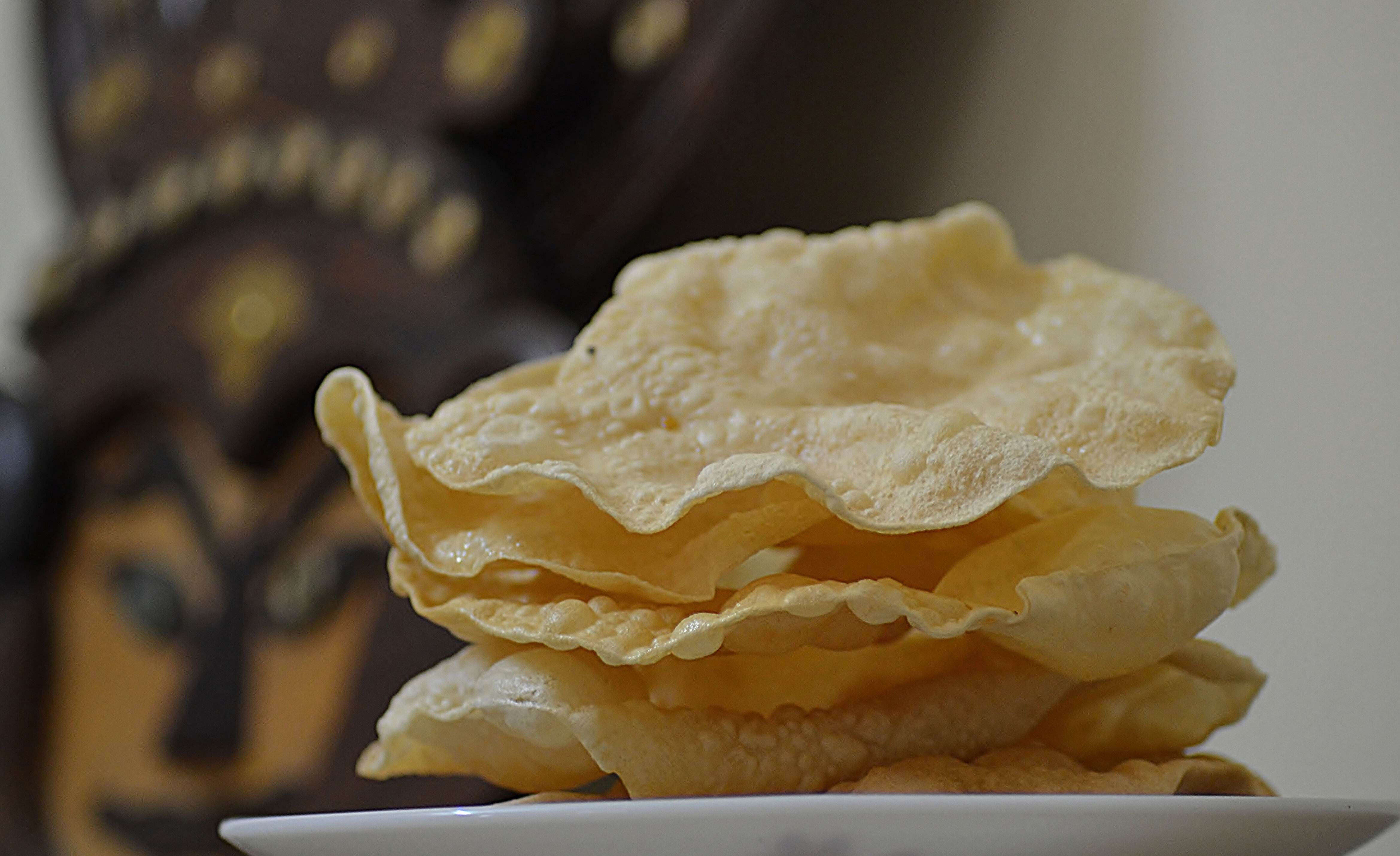
Food giant Walkers must pay VAT on its mini poppadoms after judges ruled they are actually more like crisps.
The PepsiCo-owned manufacturer hoped to escape paying the tax on its Sensations Poppadoms because, it argued, they were not made from potato and the product said poppadoms on the packet – meaning they are a food and not a snack that attracts the 20% levy.
Advertisement
But in a win for the taxman, and one that could be costly for the company, a tribunal said they were indeed crisps in all but name since 40% of the ingredients were “potato-derived”.
The judgement, dated January 10, was withering about the name on the packs.
Tribunal judges, Anne Fairpo and Sonia Gable, said: “Nominative determinism is not a characteristic of snack foods: calling a snack food Hula Hoops does not mean that one could twirl that product around one’s midriff, nor is Monster Munch generally reserved as a food for monsters.”
The case has echoes of past battles with HM Revenue and Customs.
McVitie’s successfully argued in the 1990s that Jaffa Cakes are in fact cakes and not biscuits, therefore exempt from VAT.
Advertisement
In 2008, Marks & Spencer won a protracted legal battle on overpaid VAT on its chocolate teacakes, with Europe’s highest court ruling they were cakes and not a biscuit.