Here’s Why People Think Argylle Author Elly Conway Is Actually Taylor Swift

You may have heard of the 2024 movie Argylle, starring the likes of Henry Cavill, Dua Lipa, Samuel L. Jackson and Bryce Dallas Howard, but have you also heard about the wild fan theory linking the film to global superstar Taylor Swift?

Swifties have flooded social media to perpetuate a theory that the singer-songwriter is in fact the author behind the novel of the same name, which supposedly inspired the film.

As you might imagine, it’s a convoluted theory with many clues and links, so let’s break it down a little bit, shall we?

Who is Elly Conway, the author of Argylle and the protagonist in the film?

Elly Conway is a never-before-heard-of author whose debut novel was turned into a movie before it was even published – not exactly a common trajectory for a first time writer.

Though the author has an Instagram page (where she doesn’t post pictures of her face) and an author page on her publisher Penguin’s website, virtually nothing is known about her.

This has led to many commentators speculating that either: Conway isn’t real, and the book that has been released today is the book from the film, likely written by a ghost writer. Or, Conway is a pseudonym for a very famous person who would’ve been able to secure a movie deal on whatever they wrote.

Swift is currently the favourite for a whole host of reasons, which range from sort of credible to quite a reach, but other contenders including Harry Potter author J.K. Rowling, who has published under a pen name in the past.

Why do people think Elly Conway is Taylor Swift?

Seemingly, the first person to talk about this theory is TikTok user @JessiSwiftTok, who shared her theory on 21st October 2023. In the video – which has received nearly 1 million views – she points to the cat backpack Conway wears, which appears in the trailer and on promotional artwork for the film, as something Swift herself often uses to carry around her own cats.

Another parallel between Conway, played by Bryce Dallas Howard, and Swift is their looks. As @JessiSwiftTok explains, at the end of Swift’s famous All Too Well short film, the star portrays herself as a redheaded author with a very similar appearance to that of Dallas Howard in the film.

Other clues include several pictures of Swift in the same bejewelled pattern used in the Argylle film posters, a picture of Swift on her tour in a Conway Studios jumper and lots of date synchronicities that are honestly beyond my comprehension as a casual Swiftie.

The similarities between Swift and Dallas Howard in Argylle have not gone unnoticed by Swifties

PolyGram Entertainment/Republic Records/Universal Pictures

Will we ever know who Elly Conway really is?

It’s uncertain whether we will ever know the true identity behind Conway, but since she is supposedly going to write three more books in the Argylle series, this saga could extend far into the future.

While some contend that this Conway-Swift theory is actually a clever marketing ploy by the studio behind the movie, others believe the parallels between Conway and Swift are too glaring ignore.

Indeed, Swift has been known to use a pseudonym before – hello Nils Sjöberg – but so far the Cruel Summer singer hasn’t confirmed anything. One thing I’ll say is if it turns out to be J.K. again, we’re gonna be pissed!

Argylle is scheduled to release in cinemas worldwide on 2nd February.

Share Button

Baby formula recalled over bacteria contamination fears

Reckitt are recalling batches of Nutramigen powders after finding bacteria in an “isolated overseas sample”.

Share Button

New antibiotic compound very exciting, expert says

A new antibiotic compound could help treat a bacterium the World Health Organization classes as a major threat.

Share Button

Nematode proteins shed light on infertility

We have two copies of each chromosome in every cell in our bodies except in our reproductive cells. Sperm and egg cells contain a single copy of each chromosome with a unique mix of genes from our parents, an evolutionary trick to give our offspring genetic variability. The sperm and egg are made during meiosis, the process by which cells with two chromosome copies reduce their chromosome numbers to one. For meiosis to work, the two chromosomes must align perfectly and exchange the correct amount of genetic information. Any deviation puts fertility at risk.

Enter the synaptonemal complex (SC), a zipper-like protein structure that lines up and anchors the two parental chromosomes together, end-to-end, to facilitate successful genetic exchanges. Failure to regulate this exchange is a leading cause of age-related infertility in humans and could compromise fertility across the tree of life. Humans, fungi, plants, worms and anything that reproduces sexually uses the SC to make reproductive cells, known as gametes. Despite its importance, we don’t understand how proteins within the SC regulate chromosomal interactions because this multi-step process happens in internal organs and has been impossible to recreate in a lab.

In a new study, University of Utah biologists developed a method for illuminating the intricate interactions of the SC in the nematode C. elegans. The authors identified a trio of protein segments that guide chromosomal interactions, and pinpointed the location where they interact with each other. Their novel method uses a technique known as genetic suppressor screening, which can serve as a blueprint for research on large cellular assemblies that resist traditional structural analysis.

“This is a way to lock in on systems in cells that are too ‘loosie-goosey’ to use methods that rely on crystallization,” said Ofer Rog, associate professor of biology at the U and senior author of the study. “A lot of the interactions in cells are loosely bonded together. The problem is that you can’t look at it under an electron microscope because nothing is stable enough — everything is constantly moving. Our approach allows you to study even the interactions that are relatively weak or transient.”

The study published on Dec. 6, 2023, in the journal Proceedings of the National Academy of Sciences (PNAS).

The birds and the bees… and the nematodes

Let’s dig into meiosis. Chromosomes are thread-like structures made of DNA that carry genetic information when cells divide and from generation to generation. Regular cells have a certain number of chromosomes; humans have 46 and C. elegans have 12. Chromosomes come in pairs called homologous chromosomes that carry the genes we inherited from each of our parents — one from our mom, one from our dad. When meiosis begins, homologous chromosomes arrange themselves into elongated structures organized along a backbone called the axis. The axes of homologous pairs are aligned lengthwise to each other while at the same time, the synaptonemal complex (SC) forms between the parallel axes. The homologous pairs have matching genes arranged in the same order, with small variations within the genes — these are the variations that make each individual unique.

“You can think of it like a zipper,” Rog explained. “The axes of the chromosomes are like the two sides of your shirt. The synaptonemal complex is kind of like the teeth of the zippers that lock onto each other and can pull and align the two sides of the shirt correctly.”

Scientist previously knew that the SC of C. elegans formed between homologs, but the U biologists are the first to pinpoint the exact position where the SC interacts with itself to facilitate genetic exchanges.

“When you exchange information between the chromosomes, you want to make sure that at the end you still have two complete chromosomes,” said Rog. “The way the cell does it is that the two chromosomes are perfectly aligned. So, when you exchange segments between them, you’re not losing any information in the process.

How to analyze loosie-goosey structures

The researchers bred 50,000 nematodes that had temperature-sensitive defects in the SC. At high temperatures, the worms were unable to form the SC protein zipper needed to join the chromosomes together. Without the zipper, the gene exchanges during meiosis either didn’t happen at all or didn’t occur at the right number. Lisa Kursel, postdoctoral researcher and lead author of the study ran the experiments.

“We grew the worms at the permissive, cooler temperature, then exposed them to a chemical that caused millions of mutations along their chromosomes and watched to see if any of the mutated worms could reproduce at the warmer temperature,” Kursel said. The chemically induced mutations that corrected the nematode’s infertility are known as suppressor mutations. “Then we’d know if the suppressor mutations restored their fertility.”

To identify the animals with mutations that made them fertile again, the researchers put the nematodes on agar plates filled with yummy bacteria. The agar plates that had fertile nematodes were soon empty as their progeny ate the food. The agar plates with sterile worms died off before they could clean their plate, allowing the bacteria to flourish.

Once they had fertile nematodes, they could test if the mutation “fixed” the protein zipper. They then screened every single base pair on the DNA — 100 million base pairs — and identified which mutations restored the worms’ ability to reproduce. They found that all the helpful mutations occurred in short segments of three proteins, SYP-1, SYP-3, SYP-4. Moreover, the mutations carried distinct signatures of interaction. For example, while the original mutations changed the electric charge from positive to negative, the helpful mutations flipped the charge back.

“This was a strong indication that SYP-1, SYP-3 and SYP-4 interact with each other like magnets, with positive and negative regions attracted to each other,” said Rog. Such “sticky” interactions could also help tether the chromosomes together.

Jesus Aguayo Martinez, a senior biology major and co-author of the study, looked at the behavior of the suppressor mutation in nematodes without the original SC-disrupting mutation.

“We thought that since the original mutation alone produced a fertility defect, then the nematodes with the suppressor mutation alone would also have a fertility defect. That wasn’t the case,” said Aguayo Martinez. “Surprisingly, normal worms and worms with only the suppressor mutations produced similar numbers of progeny.”

Next steps

Uncovering the SC’s role in meiosis may help to better understand fertility in humans. The SC has a similar role across all eukaryotes, from nematodes to fungi to plants to humans. Previous research by the Rog Lab at the U showed that the structure itself looks the same and acts similarly to bring in parental chromosomes to facilitate exchanges. However, the actual sequences of the protein components are different between organisms. Such a pattern is unusual: Most cellular structures that carry essential, basic functions like cell division, genome duplication or metabolism are highly conserved, and could in fact be swapped between different organisms.

“A question that we think a lot about is what is special about the SC? Why can it do the same thing and look the same way, but consist of different building blocks?” Rog asked.

Kursel, Aguayo Martinez, Rog and other members of the lab are doing more analysis on the evolution of the SC across species, and of other cellular structures that defy the common wisdom of evolution.

This work was funded by the National Institute for General Medical Sciences grant R35GM128804. Kursel was supported by the Developmental Biology Training Grant from the U.S. National Institute of Child Health and Human Development, and Aguayo Martinez was supported by a University of Utah Biology Research Scholar Award.


Share Button

The choreography connecting kelp forests to the beach

The Santa Barbara Channel’s kelp forests and its sandy beaches are intimately connected. Giant kelp, the foundation species of rocky reefs, serves as a major part of the beach food web as fronds of the giant seaweed break away from the forest and are transported to the beach. But the relationship goes deeper.

In a paper published this week in the Proceedings of the National Academy of Sciences, a team of scientists demonstrated that kelp forests can do more than supply food to tiny, hungry crustaceans living in the sand. They can also influence the dynamics of the sandy beach food web.

“The amount of kelp on the reef changes through time in a way where the peaks and low points in abundance across several kelp forests are matched together,” said lead author Jonathan Walter, a senior researcher at the University of California, Davis, and its Center for Watershed Sciences. “That’s what we refer to as synchrony. It is related to the ability of systems to persist in the face of changing environmental conditions. A little asynchrony allows systems to be resistant to fluctuations and therefore more stable.”

The study uncovers the role of synchrony in the beach food web, with broader implications as the climate shifts in ways that might change how linked ecosystems perform their functions.

Revealing synchrony’s role in these ecosystems fills a key knowledge gap in our understanding of the connection of reef and beach.

“The kelp forest and the beach are both highly dynamic ecosystems,” said co-author Jenny Dugan, a coastal marine ecologist at UC Santa Barbara. “How the dynamics of those two ecosystems interact and behave is the key question here, especially with the beach system so dependent on the kelp forest.”

In sync

Though a natural and ubiquitous phenomenon, synchrony and its implications are not yet fully understood.

The research team sought to understand whether and how kelp wrack (detritus) could affect the beach ecosystem’s dynamics. For instance, how might species respond to the changing environment, and how resilient is the beach ecosystem to disturbances?

To address these questions, the study used long-term data from UCSB’s Santa Barbara Coastal Long Term Ecological Research site, which is supported by the National Science Foundation. The team’s model was built on a time series of wind, wave, wrack, and beach-width data at five sandy beaches over 11 years.

It revealed patterns of synchrony — where the abundance of kelp wrack on beaches could be explained by kelp abundance in the forest, wave action, and beach width fluctuating together. At the longest timescales, kelp forest biomass and beach width were the biggest drivers of kelp wrack on the beaches.

Beach melodies

“We found time lags in this synchrony that were important,” Dugan said. “It wasn’t as simple as everything changing at the same time — it was like separate songs or melodies that came together in different ways. This made the patterns more complex, which is why it required the type of analyses we used.”

Importantly, the researchers found this synchrony crossed from ocean to shore. The abundance of predatory shorebirds, like sandpipers and plovers, lagged behind the deposition of wrack on beaches.

“Once on the beach, kelp wrack feeds a highly productive community of small invertebrates — crustaceans and insects — that are in turn a favorite food of shorebirds,” Dugan explained. The cross-system synchrony is particularly notable because the beach ecosystem relies so heavily on kelp subsidies, she added.

Dynamic nature

“The dynamic nature of kelp forests, in terms of their high productivity and turnover, is unique for ecosystems structured around foundation species,” said co-author and coastal ecologist Kyle Emery, a researcher in the UCSB Marine Science Institute. “It allows us to observe change many times over compared to other foundation species and gives us the ability to observe many different system states, processes and functions. This enabled us to more rapidly analyze these questions of cross-ecosystem synchrony.”

The study was funded by the Santa Barbara Coastal Long Term Ecological Research, National Science Foundation, McDonnell Foundation and Humboldt Foundation.

Share Button

Even in midlife, disrupted sleep tied to memory, thinking problems later on

People who have more disrupted sleep in their 30s and 40s may be more likely to have memory and thinking problems a decade later, according to new research published in the January 3, 2024, online issue of Neurology®, the medical journal of the American Academy of Neurology. The study does not prove that sleep quality causes cognitive decline. It only shows an association.

“Given that signs of Alzheimer’s disease start to accumulate in the brain several decades before symptoms begin, understanding the connection between sleep and cognition earlier in life is critical for understanding the role of sleep problems as a risk factor for the disease,” said study author Yue Leng, PhD, of the University of California, San Francisco. “Our findings indicate that the quality rather than the quantity of sleep matters most for cognitive health in middle age.”

The study involved 526 people with an average age of 40. They were followed for 11 years.

Researchers looked at participants’ sleep duration and quality. Participants wore a wrist activity monitor for three consecutive days on two occasions approximately one year apart to calculate their averages. Participants slept for an average of six hours.

Participants also reported bedtimes and wake times in a sleep diary and completed a sleep quality survey with scores ranging from zero to 21, with higher scores indicating poorer sleep quality. A total of 239 people, or 46%, reported poor sleep with a score greater than five.

Participants also completed a series of memory and thinking tests.

Researchers also looked at sleep fragmentation, which measures repetitive short interruptions of sleep. They looked at both the percentage of time spent moving and the percentage of time spent not moving for one minute or less during sleep. After adding these two percentages together, researchers found that participants had an average sleep fragmentation of 19%.

Researchers then divided participants into three groups based on their sleep fragmentation score.

Of the 175 people with the most disrupted sleep, 44 had poor cognitive performance 10 years later, compared to 10 of the 176 people with the least disrupted sleep.

After adjusting for age, gender, race, and education, people who had the most disrupted sleep had more than twice the odds of having poor cognitive performance when compared to those with the least disrupted sleep. There was no difference in cognitive performance at midlife for those in the middle group compared to the group with the least disrupted sleep.

“More research is needed to assess the link between sleep disturbances and cognition at different stages of life and to identify if critical life periods exist when sleep is more strongly associated with cognition,” Leng said. “Future studies could open up new opportunities for the prevention of Alzheimer’s disease later in life.”

The amount of time people slept and their own reports of the quality of their sleep were not associated with cognition in middle age.

A limitation of the study was that due to the small sample size, researchers were unable to fully investigate potential race or gender differences.

The study was funded by the National Institute on Aging and the National Heart, Lung, and Blood Institute.

Share Button

What are junior doctors paid – and how much to settle?

The longest strike in the history of the NHS is in its second day. Is there hope of a resolution?

Share Button

Junior doctors’ strike: Some hospitals request staff return to work

NHS bosses say the service is under huge pressure – but junior doctors say they are misusing the system.

Share Button

Israel-Hamas War: How The Violent Conflict Is Already Reaching Across The Middle East

The Israel-Hamas war has spilled out into the wider Middle Eastern region recently, with at least three areas now where violent skirmishes could escalate.

While the focal point of the crisis is still the Palestinian territory of Gaza, friction between Israel and its neighbouring nations have sparked fears that the whole region could be embroiled in war.

The EU’s foreign policy chief Josep Borrell has even warned that unless this war ends soon, “the entire Middle East might end up in flames”.

As the complex crisis is about to head into its third month, here’s a look at where hostilities have risen – and why.

Lebanon

According to Beirut, an Israeli drone strike targeted a Hamas office in the Lebanese capital on Tuesday, killing seven people.

The deputy leader of Hamas’ political bureau who was also involved Hamas’ military, Saleh al-Arouri, was killed.

However, Israel has not taken direct responsibility for the attack. Senior advisor to Netanyahu Mark Regev just referred to “whoever did this” and said it was “not an attack on the Lebanese state”.

Back in November, the Israeli PM Benjamin Netanyahu warned in November that Israel would “operate against Hamas leaders wherever they are”.

But, after Tuesday’s attack, he only described the move as a “surgical strike” against Hamas – and stopped short of actually taking responsibility for it.

It comes as tensions between Israel and the Lebanese militant group Hezbollah have been increasing for months.

Hezbollah, known to be sympathetic to Hamas, has been designated a terrorist organisation by Western countries, Israel, the Gulf Arab countries and the Arab League.

Hezbollah said that it was a “serious assault on Lebanon” and a “dangerous development in course of the war between the enemy and the axis of the resistance” which will “not go without a response or punishment”.

Lebanon’s PM, Najib Mikati, said the explosion was a “crime” which “aims to drag Lebanon into a new phase of confrontation with Israel” – but discouraged Hezbollah from responding themselves.

Former UK ambassador to Lebanon Tom Fletcher told the BBC this was a “moment of real jeopardy” as al-Arouri was a “big fish” and “taking him out in the heart of Hezbollah territory is a big deal”.

Some reports have suggested that Egypt, a key mediator in the Israel-Hamas negotiations along with Qatar, has suspended mediations due to the attack but there’s been no official confirmation.

Red Sea

The Red Sea shipping route is still too dangerous for many companies to use after a spate of attacks by Houthi rebels in Yemen who support Hamas – and have Iran’s backing.

The rebels claim to only aim to disrupt ships going to and from Israel, but some civilian vessels have been under threat.

The US also says Houthi rebels have fired two missiles at commercial vessels recently.

There is also a chance there global prices could rise in a few weeks because of the cost of re-routing vessels around the southern-most tip of Africa if the Red Sea becomes completely inaccessible.

Iran

Today’s unexplained explosions in the Middle Eastern country, which supports militant groups Hamas and Hezbollah, have raised further concerns that the crisis is going to escalate.

Explosions killed more than 100 people during a ceremony to mark the four year anniversary of the killing of an Islamic Revolutionary Corps general, Qassem Soleimani. He was assassinated by a US drone strike in Iraq in 2020.

There is no evidence yet to suggest Israel was behind these attacks, but as the BBC’s security correspondent Frank Gardner suggested, it will “inevitably raise tensions in the region”.

Iranian officials have also weighed in on the killing of the top Hamas official, blaming Israel for its “cowardly terrorist operations”.

Gaza

This is still the main focal point for the war and the death toll continues to rise.

According to the Hamas-run health ministry in Gaza, more than 22,000 people have been killed since October 7, when the war began.

Although some Israeli troops have been withdrawn from Gaza, the adviser to Israeli PM Benjamin Netanyahu, Mark Regev, suggested this did not mean the violence was winding down. He told Sky News on Tuesday that the war is “a marathon not a sprint”.

Comments from the Israeli finance minister Bezalel Smotrich, that emigration from Gaza needs to be encouraged so that Israeli settlers can return to the area and “make the desert bloom” have added to fears that the government wants all Palestinians to leave Gaza.

According to UN estimates, 85% of the Gaza population – 1.9 million people – have been internally displaced since the war broke out.

Meanwhile, Hamas is still holding more than 100 hostages in Gaza.

Hamas’ leader Ismail Haniyeh has said that the remaining captives taken in October will only be released under conditions set by the militants.

They have previously said no hostages will be released until the war ends, while Israel do not want a permanent ceasefire.

What else is happening?

Israel is contesting South Africa’s genocide accusation at the International Court of Justice.

Tensions remain high in the West Bank too, with the Palestinian president Mahmoud Abbas recently warning that the territory could “implode”.

EU foreign policy chief Josep Borrell called for other countries to step in to resolve the ongoing crisis.

Speaking at an event in Lisbon on Wednesday, he said: ”If this tragedy doesn’t end soon, the entire Middle East might end up in flames.”

Meanwhile, Turkey has arrested 33 people for suspected spying for Israel.

Share Button

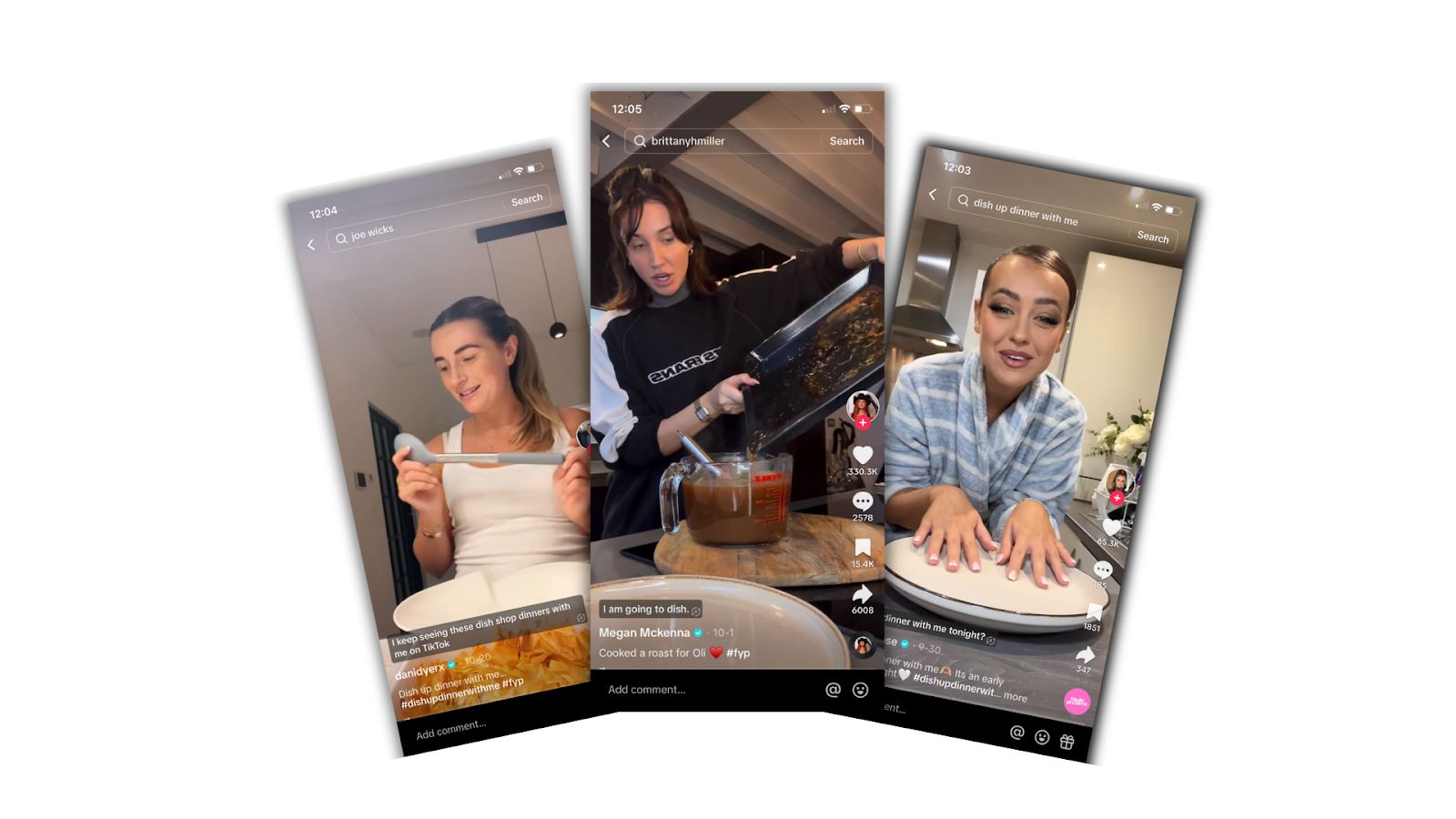
So THIS Is Why We’re All Obsessed With ‘Plate Up’ Videos On TikTok

Right, I’m going to share a secret with you and I would prefer it if you didn’t judge me. If I can’t get going with cleaning or cooking at home, I watch other people doing it on TikTok and it gives me the motivation to get moving with my own duties.

Take for example, last Sunday. I really wanted to make a roast dinner. Of course, this takes a long time, a lot of different dishes, and is a whole effort. So, to get myself in the mood, I watched some of my favourite “plate up” creators on TikTok put their meals together on the plate and somehow, between the steam of the hot food, the delicate placement on the plate and the gravy being poured over all of it just put me right in the mood.

It turns out, I’m really not alone. Lots of us can’t get enough of these videos and according to HelloFresh, 270 million of us find ourselves enchanted by these cosy videos.

Why are plate up videos on TikTok so popular?

To truly get to the bottom of the psychology behind “plate up” videos, HelloFresh asked Consultant Counselling Psychologist Dr Ritz for her thoughts on the phenomena.

“There is a huge fascination of watching people cook on social media. It could be from gaining inspiration, building confidence or relaxing through the value of cooking and food. We can understand these trends from various psychological perspectives such as social cognitive theory, belonging and coping,” she explains.

And these are the main theories she outlined behind the trend:

Social Cognitive Theory:

“Social Cognitive Theory suggests that individuals learn by observing others. Viewers may be learning new cooking techniques, recipes, or gaining confidence in cooking by watching others. The social aspect of the trend aligns with theory’s emphasis on social learning through modelling.”

Mirror Neuron System:

“The Mirror Neuron System suggests that individuals have neurons that fire both when performing an action and when observing someone else perform that same action. In the context of cooking videos, viewers might experience a form of neural resonance, feeling a connection to the actions they observe and potentially triggering positive emotions.”

Belonging to a Community:

“Participating in or observing trends can create a sense of community among individuals who share similar interests. It contributes to the development of virtual communities centred around cooking and food, where people can exchange ideas and tips.”

Coping Mechanism:

“Watching cooking or meal preparation videos can serve as a form of relaxation and distraction. The repetitive and methodical nature of the process can be soothing, providing some respite from stress or daily challenges.”

Who knew it was more than just mindless viewing?

Share Button