The sessions in December and January aim to bring people in Wolverhampton together during the colder months.


The sessions in December and January aim to bring people in Wolverhampton together during the colder months.

New findings indicate that people who do not treat obstructive sleep apnea face a greater likelihood of developing Parkinson’s disease. Using continuous positive airway pressure, or CPAP, can help lower that risk by improving sleep quality and maintaining steady airflow throughout the night.
The study was published on November 24 in JAMA Neurology and analyzed electronic health records from more than 11 million U.S. military veterans who received care through the Department of Veterans Affairs between 1999 and 2022.
Researchers from Oregon Health & Science University and the Portland VA Health Care System led the project.
Parkinson’s Risk Increases With Age
Parkinson’s is a progressive neurological disorder that affects an estimated 1 million people in the United States. The chance of developing the disease grows gradually each year after age 60.
The new research suggests that long-term, untreated sleep apnea may contribute to a higher risk of Parkinson’s.
Strong Association After Adjusting for Key Factors
Even after accounting for important contributors such as obesity, age and high blood pressure, the investigators still found a clear association between untreated sleep apnea and Parkinson’s disease. Among the millions of veterans with sleep apnea, those who did not use CPAP were nearly twice as likely to be diagnosed with Parkinson’s compared with individuals who used the therapy.
“It’s not at all a guarantee that you’re going to get Parkinson’s, but it significantly increases the chances,” said co-author Gregory Scott, M.D., Ph.D., assistant professor of pathology in the OHSU School of Medicine and a pathologist for at the VA Portland.
How Sleep Apnea Affects the Brain
Sleep apnea occurs when a person’s breathing repeatedly stops and restarts during sleep, which can keep the body from getting sufficient oxygen.
“If you stop breathing and oxygen is not at a normal level, your neurons are probably not functioning at a normal level either,” said lead author Lee Neilson, M.D., assistant professor of neurology at OHSU and a staff neurologist at the Portland VA. “Add that up night after night, year after year, and it may explain why fixing the problem by using CPAP may build in some resilience against neurodegenerative conditions, including Parkinson’s.”
Potential to Change Clinical Practice
Neilson said the results reinforce the importance of prioritizing sleep health for his patients, particularly in light of the elevated Parkinson’s risk revealed in the study.
“I think it will change my practice,” he said.
Veterans Report Clear Benefits From CPAP
Scott noted that some people with sleep apnea are hesitant to use CPAP, but he emphasized that many veterans have strongly positive experiences with the device.
“The veterans who use their CPAP love it,” he said. “They’re telling other people about it. They feel better, they’re less tired. Perhaps if others know about this reduction in risk of Parkinson’s disease, it will further convince peopel with sleep apnea to give CPAP a try.”
Study Contributors and Funding Support
In addition to Scott and Neilson, co-authors include Isabella Montano, B.A., Jasmin May, M.D., Ph.D., Jonathan Elliott, Ph.D., and Miranda Lim, M.D., Ph.D., of OHSU and the Portland VA Health Care System; and Yeilim Cho, M.D., and Jeffrey Iliff, Ph.D., of the University of Washington and the VA Puget Sound Health Care System.
The research received support from the VA through grant awards BX005760, CX00253, I01RX004822, I01RX005371, CX002022, BX006155 and Bx006155; the John and Tami Marick Family Foundation; the Collins Medical Trust; the National Institute on Aging of the National Institutes of Health, award P30AG066518; and the U.S. Army Medical Research Acquisition Activity, 820 Chandler Street, Fort Detrick, Maryland 21702-5014, under award numbers HT9425-24-1-0774 and HT9425-24-1-0775. The authors note that the opinions, interpretations, conclusions and recommendations are their own and are not necessarily endorsed by the Department of Defense, the NIH, VA or other funders.
The tribunal ruled the doctor’s posts “may impact on patient confidence” in both her and the profession.
A court found a health trust had failed to provide safe care for Ellame at Worthing Hospital.

If I told you a recent study showed that a majority of modern dog species have wolf DNA, you’d probably mutter something along the lines of “shocker: fork found in kitchen”.
Except that the research, published in Proceedings of the National Academy of Sciences (PNAS), found that just two-thirds of modern dogs have detectable wolf DNA – and it is likely not an ancient remnant from their wilder ancestor, from which they separated tens of thousands of years ago.
Advertisement
Instead, it seems that the gene may have come from more recent interbreeding between dogs and wolves within the last few thousand years.
In fact, the study reads, “Ancient [dog] genomes from the Roman era… show no evidence of wolf ancestry… nor has wolf ancestry been detected in ancient dogs in the Arctic or the pre-colonial America”.
Still, study co-author Logan Kistler, a curator of archaeobotany and archaeogenomics at the National Museum of Natural History, told AFP this doesn’t mean “wolves are coming into your house and mixing it up with your pet dog”.
Advertisement
In a statement, the study’s lead author, Audrey Lin, said: “Modern dogs, especially pet dogs, can seem so removed from wolves, which are often demonised.
“But there are some characteristics that may have come from wolves that we greatly value in dogs today and that we choose to keep in their lineage.”
Some characteristics often linked to high-wolf DNA breeds, the study reads, include:
While lower-wolf DNA breeds were more associated with being:
Traits like obedience, intelligence, being good with children, dedication, calmness, and cheerfulness seemed evenly distributed among both groups.
Advertisement
This study stressed, though, that these associations, which came from kennel clubs, could not definitely be linked to wolf genes themselves.
This research found that Czechoslovakian and Saarloos wolfdogs have the most detectable wolf DNA (up to 40%).
Advertisement
The great Anglo-French tricolour hound had an impressively high percentage for a “breed” dog – 4.7-5.7% – while Shiloh shepherds have 2.7%.
The Tamaskan, bred in the UK in the ’80s, has 3.7% wolf ancestry. Even chihuahuas have 0.2%, which, Lin joked, likely “makes sense” to their owners.
Surprisingly, bigger breeds like St Bernards have zero wolf DNA. The same goes for the Neapolitan mastiff and bullmastiff.
Advertisement
In general, detectable wolf ancestry is higher for bigger dogs and dogs bred for certain jobs, like Arctic sled dogs, “pariah” dogs, and hunting dogs.
But on average, terriers, gundogs, and scent hounds have lower wolf DNA.
As Kistler shared in a statement: “Dogs are our buddies, but apparently wolves have been a big part of shaping them into the companions we know and love today.”


Katy Perry has a message for those speculating that she relied on generative AI to create her latest music video.
Earlier this year, the Grammy nominee unveiled the stand-alone single Bandaids, alongside an accompanying music video which took inspiration from the Final Destination horror films.
In the clip, Katy plays a character who has several brushes with death over its four-minute runtime, including one sequence in which she is seen sawing through a tree-branch she’s sitting on, before falling straight to the ground.
Certain visual elements of the video led some to question if artificial intelligence tech was used to help create it, but Katy set the record straight in a behind-the-scenes Instagram post showing her on set, shared on Tuesday night.
“For those of you that thought this was AI… it wasn’t,” she wrote in the caption. “Cool dude.”
Bandaids is the first new music from Katy since her split from her long-time partner Orlando Bloom, prompting some suggestions that the lyrics were inspired by the break-up.
“It’s not what you did, it’s what you didn’t, you were there, but you weren’t,” the California Gurls star sings in the opening verse, adding: “Got so used to you letting me down, no use trying to send flowers now, telling myself you’ll change, you don’t, Band-Aids over a broken heart.”



Rachel Reeves said her Budget had “promised and delivered” everything Labour had promised to do when it won the election last year.
It would see government debt come down, NHS waiting lists cut and reduce the cost of living, she insisted.
Advertisement
But the key takeaway for voters from her second Budget is that taxes will go up by £26 billion – on top of the £40bn hike in her first one a year ago.
Around £9bn will come from her decision to maintain the freeze in income tax thresholds, something else she ruled out last year on the basis that it would hit working people.
It means nearly a million workers will start paying the higher rate of income tax, an extra 780,000 will start paying it for the first time, while 4,000 will be dragged into 45p rate reserved for the highest earners.
Advertisement
At the same time, welfare spending will continue to rise until the end of the decade, thanks in part to the chancellor’s announcement that the two-child benefit cap is to be scrapped.
Expect the Tories and Reform UK to point out this fact every day between now and the next general election.
As one senior Labour figure told HuffPost UK: “It is a disaster. We are on the wrong side of every statistic, argument, policy and public opinion.”
Advertisement
Earlier this week, the prime minister’s spokesman said that the government’s number one priority remains growing the economy.
But the Office for Budget Responsibility’s analysis of Reeves’s plans showed that while gross domestic product (GDP) will rise slightly more than expected this year, it will slow down in each of the next four years.
Labour’s attempts to tackle the cost of living are also floundering, with the OBR forecasting that inflation will be higher than expected in the next two years.
Advertisement
“We can say cost of living all we like, but people don’t really believe it,” said one gloomy Labour MP. “We can’t just keep saying ‘Liz Truss’ and pretending we have a philosophy.”
Another backbencher described the government as “politically rudderless”, but those Labour MPs happy with the Budget comfortably outnumbered the malcontents.
That was shown by the large number waving their Commons order papers as Reeves announced she was ending the two-child cap.
Advertisement
Moves to cut energy bills by £150 by reducing green levies have also been welcomed, as have inflation-busting rises in the national minimum wage and the living wage and a new mansion tax on homes worth more than £2 million.
“We’ve kept to the manifesto and kept to the fiscal rules,” an MP told HuffPost UK. “Ending the two-child benefit cap lifting isn’t a silver bullet, but is good politics within the party. Increasing the council tax levies on high value homes will go down well too.”
A minister added: “I think it was very good. Lots of public investment, great on energy prices, the cost of living and child poverty, and the fiscal rules are in place, which is the most important thing.”
Advertisement
Nevertheless, it is the wider voting public that Reeves, Keir Starmer and the rest of the party will have to convince, rather than their MPs and activists.
She is the most unpopular chancellor on record for a reason, and putting people’s taxes up by another £26 billion – having said she wouldn’t a year ago – is unlikely to turn things around.
Speculation that the Budget could trigger a leadership challenge to the prime minister can probably be put to bed, with the international bond markets so far giving it a cautious welcome.
Advertisement
But the moment of maximum danger for this iteration of the Labour government remains next May, when millions of voters will go to the polls across the UK to deliver their verdict on its performance so far.
The fear of many Labour people is that there was little in this Budget to suggest that it will be anything other than a bad night for their party.

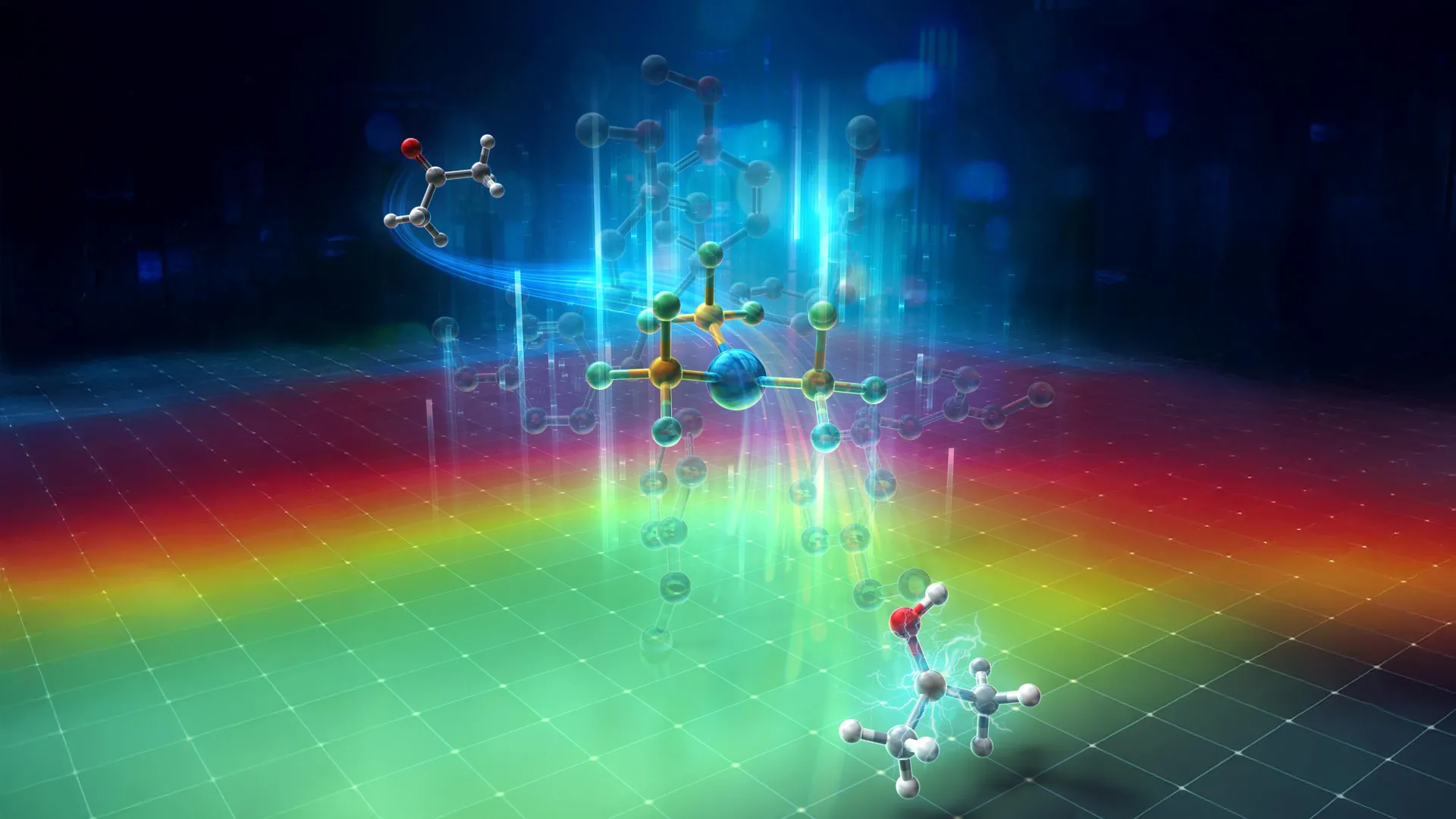
Ketones appear throughout organic molecules, which is why chemists are eager to create new reactions that take advantage of them when forming chemical bonds. One reaction that has remained especially difficult is the one-electron reduction of ketones needed to generate ketyl radicals. These radicals are highly useful intermediates in natural product synthesis and pharmaceutical research, but most available techniques are designed for aryl ketones rather than simpler alkyl ketones. Although alkyl ketones are far more common, they are also naturally harder to reduce than their aryl counterparts. With this challenge in mind, a team of organic and computational chemists at WPI-ICReDD at Hokkaido University has developed a catalytic strategy that finally enables the formation of alkyl ketyl radicals. The study appears in the Journal of the American Chemical Society and is available open access.
In earlier work, WPI-ICReDD scientists showed that a palladium catalyst paired with phosphine ligands could drive light-activated (reaction activated by shining light) transformations of aryl ketones, but the same system did not work for alkyl ketones. Their data indicated that alkyl ketyl radicals did form briefly. However, these radicals immediately returned an electron to the palladium center, a phenomenon known as back electron transfer (BET), before any useful reaction could proceed. As a result, the starting material remained unchanged.
Similar to traditional palladium-based catalysis, the behavior of photoexcited palladium catalysts is highly dependent on the phosphine ligand attached to the metal. The team suspected that choosing the correct ligand might unlock reactivity with alkyl ketones. The difficulty was scale: thousands of phosphine ligands exist, and experimentally screening them for an unfamiliar reaction would be slow, labor-intensive, and generate unnecessary chemical waste.
To overcome these limitations, the researchers turned to computational chemistry to narrow down the field of candidate ligands. They used the Virtual Ligand-Assisted Screening (VLAS) approach developed by Associate Professor Wataru Matsuoka and Professor Satoshi Maeda at WPI-ICReDD. Applying VLAS to 38 phosphine ligands, the method produced a heat map that predicted how well each ligand might promote the desired reactivity by analyzing electronic and steric properties.
Guided by these predictions, the team selected three ligands for laboratory testing and ultimately identified L4 as the most effective option — tris(4-methoxyphenyl)phosphine (P(p-OMe-C6H4)3). This ligand successfully suppressed BET, allowing alkyl ketones to generate ketyl radicals and participate in high-yield transformations.
The resulting method provides chemists with an accessible way to work with alkyl ketyl radicals and demonstrates how VLAS can rapidly guide the development and optimization of new chemical reactions.
Congleton High School wrote to staff and parents to inform them of the closure.

A new JNeurosci study led by Tian-Ming Gao and colleagues at Southern Medical University examined how adenosine triphosphate (ATP) signaling might influence depression and anxiety in male mice. ATP is best known as the cell’s main source of energy, but it also acts as a chemical messenger that helps neurons communicate. Because healthy communication between brain cells is essential for regulating emotions, the researchers focused their work on the hippocampus, a region involved in memory, stress responses, and the development of depressive symptoms.
To better understand how ATP functions in this area, the team examined signaling patterns in the hippocampus and how they changed under stress. The hippocampus has long been associated with mood disorders, in part because it is sensitive to prolonged stress and is involved in shaping emotional behavior. disruptions in this region can affect how the brain processes stress, which may set the stage for depression or anxiety.
Stress, ATP Loss, and the Role of Connexin 43
The researchers found that male mice prone to developing depressive- and anxiety-like behaviors after long-term stress had lower levels of ATP. These mice also produced less of a key protein required for ATP release (connexin 43). Connexin 43 forms channels that allow ATP to move between certain cells, making it an important part of how the brain maintains healthy energy and signaling levels.
To test whether reduced ATP release contributed to mood-related symptoms, the team genetically decreased or removed connexin 43 in cells that normally release ATP. This experiment was done in another group of mice that had not been exposed to prolonged stress. Even without a stressful environment, lowering connexin 43 triggered depressive- and anxiety-like behaviors and reduced ATP levels. This finding suggested that disruptions in ATP release alone could influence emotional behavior.
When the researchers restored connexin 43 in the hippocampus of stressed mice, ATP levels returned to normal and the animals showed noticeable improvements in their behavior. This recovery helped reinforce the idea that ATP signaling plays a central role in regulating mood.
A Shared Biological Pathway for Depression and Anxiety
Gao explains, “This is the first direct evidence that deficient ATP release in [a region of the] hippocampus drives both depressive- and anxiety-like behaviors, revealing a shared molecular pathway [for these conditions].” Identifying such a pathway is important, as depression and anxiety often occur together and can be difficult to treat simultaneously with existing therapies.
Gao notes that the link between connexin 43 and ATP release highlights a possible target for future treatments. By improving or restoring ATP signaling, scientists may eventually be able to develop interventions that address both conditions at once. The research team also plans to include both male and female mice in upcoming studies to determine whether these mechanisms operate similarly across sexes, which could broaden the relevance of their findings.
