The service says it is “under huge pressure” and is experiencing hospital handover delays.


The service says it is “under huge pressure” and is experiencing hospital handover delays.
Health Minister Will Quince advises the public not to take risks during Wednesday’s industrial action.
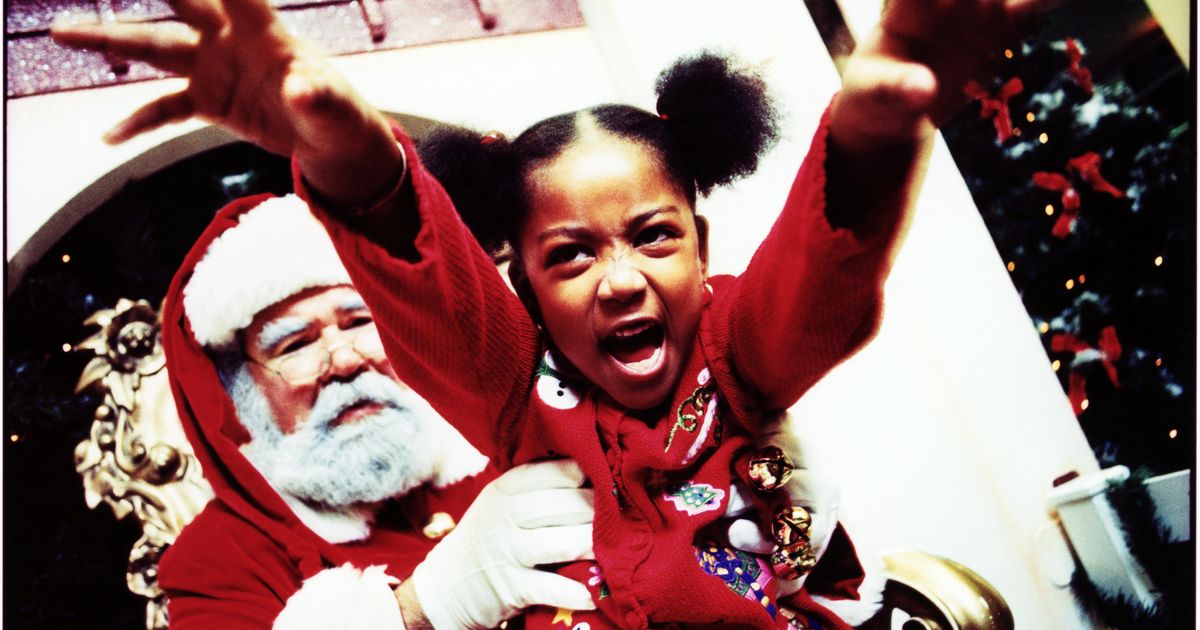
If you’ve taken your child to see Santa recently, chances are they’ll have reacted one of three ways: they’ll have been shy and a bit unsure, they’ll have been super excited and loved the experience, or they’ll have become really upset.
“If you’ve ever been to a Santa’s grotto it is very common to see kids responding fearfully when it’s their turn to see Santa,” says counsellor Chris Boobier. “The photos are not as parents expected, with many children in tears.”
Advertisement
Sometimes this fear of Saint Nick can spiral into something more. Year-on-year data reveals that Google searches for ‘Santaphobia’ have increased by 56% since last December, according to analysis by Crafted Beds, while searches for ‘fear of Santa’ have risen by 31%.
If you think about it, it makes total sense that children would be wary of this strange man dressed in a bright red outfit with fake facial hair. Especially if they’ve been warned against interacting with strangers.
Then you’ve got all the additional storylines that surround Santa. The fact he watches over kids and knows if they’ve been naughty or nice, that he can squeeze down the chimney and drop presents into their bedrooms when they’re asleep.
“It completely goes against everything that is regularly taught about safety, causing conflicted feelings,” says Boobier.
Advertisement
On top of that, come December – heck, November – Santa is everywhere. “Now that you can write to Santa, get Santa to call you, go and see Santa, track him through the air, there is a lot ‘more’ of Santa than ever before and it can be overwhelming,” says the therapist.
“He changes size and shape, has different voices and it doesn’t quite add up: kids are smart and know something is afoot, but also believe what they are told.”
Then you’ve got the over-stimulating environment in which you usually find Santa – the bright lights, loud sounds and crowds of people at his grotto.
Combine that with a couple of years of not socialising much (thanks Covid) and it’s really no wonder more kids aren’t shaking in their boots on coming face-to-face with Mr Claus himself.
“We are in a post Covid world where children under four have not been socialised as much as before because of lockdowns,” says Counselling Directory member Claire Elmes. “This is feeding into many social difficulties, including visiting Santa.”
Advertisement
The point at which being scared of Santa turns into a full-blown phobia is usually after a negative experience has occurred and the child has linked this to Santa in some way. You might find, as a parent, that anything related to Santa or Christmas then triggers your child, causing a physical and emotional reaction.
You might even notice they start to react negatively to anyone wearing similar red coats, says hypnotherapist Penny Ling: “Our brain’s pattern match for danger. A person with a phobia of spiders will jump at a tomato stalk, so it stands to reason a child phobic about Santa will respond with fear around red coats and long white beards.”
Symptoms of Santaphobia could include your child feeling more anxious than usual, not wanting to go to bed on their own or having difficulty sleeping, says Boobier.
“They may want to avoid anything too ‘Christmassy’ like grottos or certain movies, and not talk about Santa. They may request stockings are not put in their room,” he adds.
Some children, on being faced with Santa, might become agitated and want to leave, adds Ling, who is a member of Hypnotherapy Directory. They might start crying or wet themselves if they are not taken out of the situation early enough.
Advertisement
If you’ve got this far, you’ve probably established that your child has a phobia of Santa – or at the very least, is uncomfortable by his presence. So what can you do about it?
Preparation is key ahead of a trip to see Father Christmas, says Claire Elmes. She recommends discussing what is likely to happen at the grotto and showing your child pictures of Santa ahead of it so they know and are prepared for what to expect.
“Explain that some children find him a bit scary and that’s ok, you will be with them and it is all safe,” she says. Sometimes it can be helpful to go with another child who is OK with Santa.
If you do get to the grotto and they become upset, don’t force them to sit on Saint Nick’s lap or have pictures taken, it’s not going to be enjoyable for the child or help their fear.
“Acknowledge their feelings,” suggests Elmes, “and accept they may not be ready. Gently encourage them to be a safe distance and observe others if possible.”
Advertisement
Boobier adds that parents might want to find other photo opportunities where their child can be themselves and be happy.
Sometimes as parents it can be hard to put ourselves in our kids’ shoes and you might even tell your child to “stop being silly” because it’s “just Santa”. But Ling suggests this is unhelpful.
“Try to be encouraging, showing that other children are enjoying the experience and it’s just new for them,” she says.
Chris Boobier is also keen to convey that children begin to have awareness for make believe and reality between the ages of three and five, so anything up to the age of five could be completely real to them.
“The idea they are being watched and don’t want to be on the naughty list will feel very real,” he says. “Knowing to what depth our children believe this Christmas magic can help with pulling back on some on the ever-growing Christmas traditions we create (Elf on the Shelf, anyone?) and reduce the ongoing hype that Christmas has become.”
Advertisement
Elmes agrees: “As tempting as it is try not to use Santa as a bribe for being good (we’ve all been there!) telling children he is always watching can also be a bit scary.”
Let your child tell you they are afraid of Santa and really listen to how they feel, allowing them time and space to explain why, suggest therapists.
“Whilst this can feel a bit sad for parents as they go to all the effort to make Christmas magical, listening and understanding how your child feels without dismissing their feelings is the key to helping your child cope at Christmas time,” Boobier adds.
“They may tell you what would feel better for them and some traditions could be altered as they grow up.”
However you feel about your child’s response to Santa, Chris Boobier encourages parents to keep perspective: “Most children grow out of a fear for Santa past the age of five, depending on development progress, when they can confidently distinguish the difference between fantasy and reality – and they will become excited again about Santa Claus.”
Advertisement


With both Christmas and New Year’s Day falling on a Sunday this year, the following Monday and Tuesday become bank holidays – which means the day you get paid will be moving.
The majority of companies opt to move their December pay date forward in this situation, which can feel like a real festive treat for employees at the time.
Advertisement
But come January, when you’ve potentially had 40 days or more between pay cheques, the disruption to your usual budget can really hit hard.
Every year when this happens, you’ll see tweets on social media with people joking about January pay day feeling a million years away.
Advertisement
But with the cost of living so high this year and people’s finances already at breaking point, for many households this will be no laughing matter.
All this means that preparing for the inevitable Christmas pay gap is even more essential than usual.
If you’ve already been paid this month, try to avoid using those early funds to pay for last-minute Christmas gifts and extras that aren’t essential.
To help with budgeting, Mat Megens, CEO of money-saving app HyperJar, recommends dividing your December salary into five as soon as it hits your account.
“If you’re used to a monthly salary lasting four weeks you can come unstuck when you’re paid earlier than usual in December,” he tells HuffPost UK.
Advertisement
“So make sure you divide what you have by five (depending when you’re paid) – not four – to get you through to that next pay cheque at the end of January.”
If you receive Universal Credit alongside your salary, a shift in pay date can also change the benefits you receive – something to factor into any budgeting.
Advertisement
Anna Stevenson, senior benefits specialist at the charity Turn2us, explains: “Unfortunately, if you’re on Universal Credit, this can cause problems, because it might look to Universal Credit that you got twice as much pay in the month as you actually did.
“Your employer is supposed to report pay on the usual pay date, even when they pay early but it might be a good idea to remind them of this and point them to the HMRC guidance.”
If you think your Universal Credit payment has been cut in January, Stevenson advises contacting the Department for Work and Pensions (DWP) to explain what has happened.
“If it has been cut, be sure to ask for an RTI (real time information) dispute,” she says.
“This means that the DWP can investigate and re-assign your missing payment to your next month’s payment. It is worth noting this can take over a month to rectify, so it is best to talk to your employer before you are paid to prevent this happening.”
Others have shared their own tips on social media, such as setting some money aside and ‘paying yourself’ on your usual pay date.
Advertisement
Megens provides us with these further tips for staying on top of your budget when your pay date has moved:
Swap brands for supermarket own-label
Food is one of our biggest monthly expenses. You can save around £40 in January by swapping big brands for supermarket own-label equivalents.Forget regifting… resell instead
If you don’t have gift receipts, head to auction sites like eBay, or try Depop and Vinted for clothes and accessories, to get some cash back in your pocket in January.Have a strategy for the sales
Set yourself a limit if you’re spending in the Boxing Day and New Year sales and don’t get carried away. Only buy what you’ve planned for, and double check the price now so you’re sure you’re getting a genuine bargain.Take control: plan for pressure points
Use any downtime between Christmas and New Year to take your first budgeting steps into 2023. Plan for the year’s financial pinch points – those big expenses that come up every year, like house insurance, holidays and Christmas. Note when they’re due and how much you need to start putting aside to pay for them and avoid getting into debt.
And if you’re doing all that and you’re still worried about money, Stevenson says it’s worth checking whether you’re eligible for state support.
Advertisement
“Millions of people miss out on thousands of pounds each year because they’re not sure what they’re entitled to,” she says – urging people use the free Turn2us Benefits Calculator to find out what extra help may be available to you and your family at this time.

Protests over pay continue with nurses picketing today, and paramedics set to walk out on Wednesday.
An experimental treatment saves the life of baby Finley after he was born with a heart defect.
Terry Hall, the lead singer of The Specials, has died at the age of 63 following a short illness, the band has announced.
In a statement released on social media following his death, the Coventry ska-punk band paid tribute to “our beautiful friend, brother and one of the most brilliant singers, songwriters and lyricists this country has ever produced”.
Advertisement
The Specials were formed in Hall’s home city of Coventry in 1977.
During their time together, The Specials produced a string of hit records including Ghost Town, which reached number one and was hailed for its social commentary having been released during the riots across England in 1981.
The band split that year, after which Hall and two former bandmates went on to form Fun Boy Three.
Fun Boy Three achieved four UK top 10 singles during their time together, until Hall left the band in 1983 to form The Colourfield.
The band’s statement said: “It is with great sadness that we announce the passing, following a brief illness, of Terry, our beautiful friend, brother and one of the most brilliant singers, songwriters and lyricists this country has ever produced.
Advertisement
“Terry was a wonderful husband and father and one of the kindest, funniest, and most genuine of souls. His music and his performances encapsulated the very essence of life… the joy, the pain, the humour, the fight for justice, but mostly the love.
“He will be deeply missed by all who knew and loved him and leaves behind the gift of his remarkable music and profound humanity.
“Terry often left the stage at the end of The Specials’ life-affirming shows with three words…’Love Love Love’.
“We would ask that everyone respect the family’s privacy at this very sad time.”
Bandmate Neville Staples tweeted he was “deeply saddened” to hear about Hall’s death, saying: “We knew Terry had been unwell but didn’t realise how serious until recently. We had only just confirmed some 2023 joint music agreements together. This has hit me hard.”
He added: “In the music world, people have many ups and downs, but I will hang onto the great memories of Terry and I, making history fronting The Specials and Fun Boy Three together. Rest easy, Terry Hall.”
Advertisement
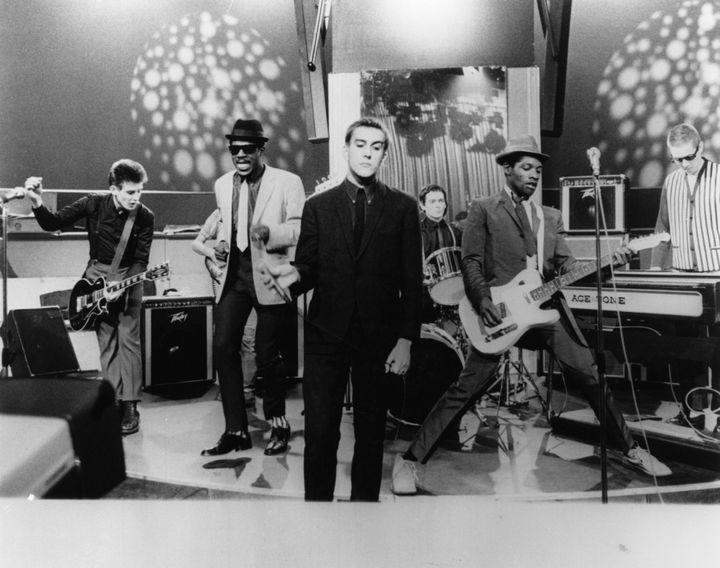
John Rodgers via Getty Images
After undertaking a variety of solo and collaborative projects, it was announced in 2008 that The Specials would be reforming for a number of tour dates and potential new music.
In September that year, Hall and five members of the band performed at Bestival music festival under the name Very “Special” Guests.
The Specials embarked on a 2009 tour to celebrate their 30th anniversary and in 2018 supported The Rolling Stones during a concert at Coventry’s Ricoh Arena.
In February 2019, The Specials released Encore, their first album of new material in 37 years.
Upon release, the album went straight to number one on the Official UK Album Chart, marking their first number one album, and the first time they had topped the charts since Ghost Town in 1981 and Too Much Too Young became a number one in 1980.
Advertisement



Spread across vast distances, the islands of the tropical Pacific Ocean are thought to have been populated by humans in two distinct migrations beginning approximately 3,330 years ago.
The first followed a northern route out of what is today the Philippines and the second followed a southern route from Taiwan and New Guinea. People arrived on the islands between these routes — now making up the Federated States of Micronesia — about 1,000 years later.
But a new finding by a Tufts sea-level researcher and his colleagues suggests that the islands in Micronesia were possibly settled much earlier than supposed and that voyagers on the two routes may have interacted with one another. They reported their research in the journal PNAS.
Andrew Kemp, an associate professor in the Department of Earth and Climate Sciences, was drawn to Micronesia to improve understanding of how climate change impacts global sea level change by collecting new data from the tropical Pacific Ocean, which is not nearly as well documented as the north Atlantic Ocean.
With support from the National Science Foundation, the research team collected cores of mangrove sediment on the islands of Kosrae and Pohnpei in the Federated States of Micronesia.
Although relative sea level — the height of the land relative to the height of the ocean next to it — fell during the past 5,000 years across much of the tropical Pacific, in Micronesia radiocarbon dating showed that relative sea level rose significantly, by about 4.3 meters (14 feet) because the islands are sinking.
Although the researchers can’t yet fully explain why the two islands are subsiding so much faster than others in the Pacific, they could clearly see the results and their meaning for understanding how people came to populate remote Oceania.
The team — including Juliet Sefton, then a postdoctoral researcher at Tufts and now an assistant lecturer at Monash University in Australia, and Mark McCoy, an associate professor of anthropology at Southern Methodist University — was struck by the implications of relative sea level for interpreting the monumental ruins of Nan Madol, a large series of stone buildings constructed on islets separated by canals filled with ocean water just offshore from the island of Pohnpei.
The ruins, now a U.N. World Heritage site, are long presumed to have been administrative or religious buildings constructed about 1,000 years ago for the island’s elite to live apart from the main population in the island.
But Kemp and his colleagues realized that long-term relative sea-level rise meant that this presumption was incorrect. When the structures were built, they were on the island itself, not separated by water. According to McCoy, the prevailing description of Nan Madol as the “Venice of the Pacific” may not have been accurate when it was constructed.
It got the researchers thinking about when these islands were in fact first settled. Kemp notes that the seafaring people who first came to the islands would probably have lived at the coastline — that’s why researchers look for archaeological evidence there, but haven’t seen it for older inhabitation.
“We propose that Pohnpei and Kosrae perhaps weren’t settled anomalously late, but rather they were settled around the same time as the other islands in the Pacific,” Sefton says. “People arrived and lived at the coast, but subsidence of the islands caused relative sea level rise, which submerged the oldest archeological evidence. It’s probably underwater, yet to be found — if it will ever be found.”
If that is the case, people on the northern and southern migrations may have interacted with one another around the volcanic islands of Micronesia — Kosrae, Pohnpei, Chuuk, and Yap.
There’s been no evidence of this before because researchers were building on the wrong assumptions about when the islands were first inhabited based on sea levels. McCoy points out that archaeologists “have been looking in the wrong place for years, because we assumed that relative sea level was falling.”
“Although we can’t prove that there was interaction between these two pathways, we can present an argument that says the data that exists now about migration in the Pacific is probably a lot more incomplete than it is thought to be,” says Kemp.
Story Source:
Materials provided by Tufts University. Original written by Taylor McNeil. Note: Content may be edited for style and length.

Traction is important. Humans have been continually interested in discovering how to better move across wet or frozen surfaces safely — whether to improve shoes for walking on sidewalks or tires to maneuver the roadways. But what makes it possible for some arctic animals to walk and run across the ice so effortlessly and gracefully without slipping and falling? Three researchers from The University of Akron (UA) took a deep dive into the paws of polar bears to find out. Their research was published in the November issue of the Journal of the Royal Society Interface.
Why polar bears?
The project team included Ali Dhinojwala, the H.A. Morton Professor of Polymer Science in the School of Polymer Science and Polymer Engineering, Nathaniel Orndorf, a 2022 Ph.D. graduate who is now employed as a senior material scientist at Bridgestone Americas, and Austin Garner, a 2021 Ph.D. graduate who is now an assistant professor of biology at Syracuse University. The project began during the height of the pandemic when things were on lockdown.
“We had an ongoing project for many years focused on ice; we were looking at the friction of materials and we were interested in this topic because we are in Akron and our national partners need to develop tires with a strong grip on the road in ice and snow conditions,” said Dhinojwala. “Nate had an interest in how nature has adapted to this solution for snow. The example that came to his mind was polar bears — and the research began from there.”
The project was very interdisciplinary, combining approaches and techniques from both biological and materials research. Orndorf and Dhinojwala are polymer scientists who integrate biology into their research, while Garner is an animal biologist who integrates materials science into his research.
The idea was to look at the paw pads of polar bears. Reviewing older literature, the team discovered that previous work studied the microstructures (papillae, the little bumps on the pad of the foot) of polar bear paws and asserted that the papillae were adaptations for improved traction on snow. The previous studies did not include other species of bear so Garner helped identify two species closely related to the polar bear (the brown bear and American black bear) and one distantly related (the sun bear) to include in the study.
“The quietness of the lab during COVID gave me the opportunity to connect with a variety of scientists and environmentalists across the country,” said Orndorf. “I reached out to museums, taxidermists and many others to collect and view actual samples and replicas of bear paw pads.”
Orndorf and Garner then prepared the paw pad samples from the bears and imaged them using a scanning electron microscope. The team also created 3D printouts of the structures to vary diameter and height of features. They were then tested in snow in the lab to see how they reacted to the conditions.
What the team discovered was that all bears (except sun bears) have papillae on their paw pads, but that the papillae on polar bears were taller — up to 1.5 times. And, that the taller papillae of polar bears help to increase traction on snow relative to shorter ones. Even though polar bears have smaller paw pads compared to the other species (likely because of greater fur coverage for heat conservation), the taller papillae of polar bears compensate for their smaller paw pads, giving them a 30-50% increase in frictional shear stress.
“Papillae are not unique to polar bears. Previous work [in that area] made the implicit assumption that papillae themselves are adaptations for enhanced traction on snow without studying the paw pads of other bears. It was fascinating for us to discover that the other North American bears have them as well and that the physical characteristics of the papillae are what matters for traction on snow,” said Garner.
Impact on traction
Now that the research has been published, other scientists and manufacturers can look at its application to their specific projects.
“If you look at snow tires you will see that they do have some deeper treads, but this research could also show various ways to design them that could have a larger impact,” said Dhinojwala.
But the interest isn’t just for tire manufacturers. “Individuals who do high altitude climbing are interested in this research, companies that specialize in the delivery of goods in bad weather would love to have better grip, etc.” he added.
The same experiments could also be performed on animals such as dogs, wolves, foxes and mountain goats to determine if specific snow/ice induced surface roughness profiles are present in different animals, [TE1] or if nature has evolved different surface roughness profiles in order to increase traction on ice and snow, and which profile has the best performance.
Building on past research
This isn’t the first research conducted in the area of traction or grip at UA. As part of the Biomimicry Research Center (BRIC) at The University of Akron, and in collaboration with faculty members in the BRIC program, Dhinojwala and his team have examined gecko adhesion, spider silk, mussel adhesion, and structural colors inspired by birds and other organisms. His research is supported by National Science Foundation, Air Force Office of Scientific Research and Industries.
His team is continuing to look at ice — how ice formation takes place, ice adhesion, etc. Research that is very helpful for the automotive and aircraft industries. His students have just begun working with NASA on a grant funded project in this area.
“It’s exciting to give our students such interesting research projects to be part of,” said Dhinojwala. “They are an asset to our team, and many go on to continue to be excellent research partners after they leave UA.”
“The Integrated Bioscience Ph.D. Program at UA provided exceptional interdisciplinary research experiences that were formative in my development as a researcher — this collaboration was certainly one of them,” said Garner. “It was a particularly unique experience for me because most of my work before this had focused on how small lizards, like geckos, attach to surfaces. So, it was an exciting and rewarding opportunity to apply my existing skills and expertise to large mammals like bears.”

A collaborative study involving Baylor College of Medicine, the University of Cambridge and the University of Exeter Medical School reveals a new gene associated with obesity and maladaptive behavior. The evidence shows that rare mutations in the gene for the serotonin 2C receptor play a role in the development of obesity and dysfunctional behaviors in humans and animal models. The findings, published in the journal Nature Medicine, have both diagnostic and therapeutic implications.
“Serotonin is a chemical produced in the brain that acts as a neurotransmitter, that is, it relays messages from one part of the brain to another. Serotonin communicates the message by binding to brain cells carrying serotonin receptors. These brain cells are involved in a variety of functions, including mood, appetite and some social behaviors, among others,” said co-corresponding author Dr. Yong Xu, professor of pediatrics- nutrition and molecular and cellular biology at Baylor.
In the current study, the Xu lab and the lab of Dr. I. Sadaf Farooqi at the University of Cambridge, collaborated to investigate the role of one of the serotonin receptors, namely serotonin 2C receptor, in weight regulation and behavior. By combining the individual expertise of each lab — basic and genetic animal studies in the Xu lab and human genetics in the Farooqi lab — the team was able to make the case that serotonin 2C receptor is an important regulator of body weight and certain behaviors.
The project started with the finding that some children diagnosed with severe obesity carried rare mutations or variants of the serotonin 2C receptor gene. The researchers identified 13 different variants associated with obesity in 19 unrelated people. Further characterization of the variants revealed that 11 of them cause loss-of-function of the receptor.
“People who carried loss-of-function variants had hyperphagia, or an extreme appetite, some degree of maladaptive behavior and emotional lability, which refers to rapid, often exaggerated changes in mood including strong emotions such as uncontrollable laughing or crying or heightened irritability or temper,” Xu said.
The researchers found that animal models carrying one of the human loss-of-function mutations also became obese, which confirmed the team’s suspicion that loss-of-function mutations of the serotonin 2C receptor gene were involved in obesity.
“This is an important discovery from the diagnostic point of view,” Xu said. “We suggest that the serotonin 2C receptor gene should be included in diagnostic gene panels for severe childhood-onset obesity.”
In addition, the team identified a mechanism by which such mutations can lead to obesity. “We found that the serotonin 2C receptor is required to maintain normal firing activity of POMC neurons in the hypothalamus,” Xu said. “When the receptor has a loss-of-function mutation, the firing activity of POMC neurons is impaired and as a result the animals overeat and become obese. A normal firing activity of these neurons is required to suppress overeating.”
The researchers also worked with a mouse model to explore the connection between the loss-of-function mutations and behavior.
“We confirmed that having the mutation led to decreased sociability and increased aggression in mice,” Xu said. “Before these findings, there was little evidence that the serotonin 2C receptor was required to maintain normal behavior and to prevent aggression. We are interested in investigating the mechanism.”
At the translational level, the findings suggest that patients who develop obesity because of a loss-of-function mutation of this gene, might benefit from compounds that can bypass the deficit in the mutated receptor, such as setmelanotide, by acting directly on downstream pathways. Further studies need to be implemented to test this approach.
Other contributors to this work include Yang He, Bas Brouwers, Hesong Liu, Hailan Liu, Katherine Lawler, Edson Mendes de Oliveira, Dong-Kee Lee, Yongjie Yang, Aaron R. Cox, Julia M. Keogh, Elana Henning, Rebecca Bounds, Aliki Perdikari, Vikram Ayinampudi, Chunmei Wang, Meng Yu, Longlong Tu, Nan Zhang, Na Yin, Junying Han, Nikolas A. Scarcelli, Zili Yan, Kristine M. Conde, Camille Potts, Jonathan C. Bean, Mengjie Wang, Sean M. Hartig, Lan Liao, Jianming Xu, Inês Barroso and Jacek Mokrosinski. The authors are affiliated with one or more of the following institutions: Baylor College of Medicine, the University of Cambridge and the University of Exeter Medical School.
This study was supported by funding from Wellcome (207462/Z/17/Z and 208363/Z/17/Z), the NIHR Cambridge Biomedical Research Centre, an NIHR Senior Investigator Award, the Botnar Foundation and the Bernard Wolfe Health Neuroscience Endowment. Further support was provided by an EMBO Longterm Fellowship, NIH grants (P01DK113954, R01DK115761, R01DK117281, R01DK120858, K01DK119471, R01CA193455, R01DK126042, R01DK114356), the USDA/CRIS (51000-064-01S), Nancy Chang Award for Research Excellence at Baylor College of Medicine, the American Diabetes Association (1-18-IBS-105), Baylor College of Medicine Bridge to Independence Award, the American Heart Association, a USDA/ARS fellowship and Research England.
