This Is What Happens To Your Brain When You’re In Back-To-Back Meetings

If you have ever felt like a full day of back-to-back meetings was draining your life force, you’re not alone.

Many of us dread a packed work calendar. Wasting too much time in meetings is a distraction preventing 67% of professionals from making more of an impact, according to a 2019 survey of nearly 2,000 people by organisational consultancy Korn Ferry.

But it’s not just that a high number of meetings can give us feelings of anxiety. There’s actually research that shows how attending too many — and seldom taking breaks — can cause our brains to work differently.

Study Finds Stress Levels Spiked Amid Back-To-Back Meetings

In 2021, researchers at Microsoft’s Human Factors Lab asked 14 people to take part in video calls while wearing electroencephalogram equipment that monitored electrical activity in their brains. On one Monday, some participants were given four half-hour meetings without breaks, while others had four half-hour meetings with a 10-minute break between each for meditation; then, on the following Monday, the two groups switched.

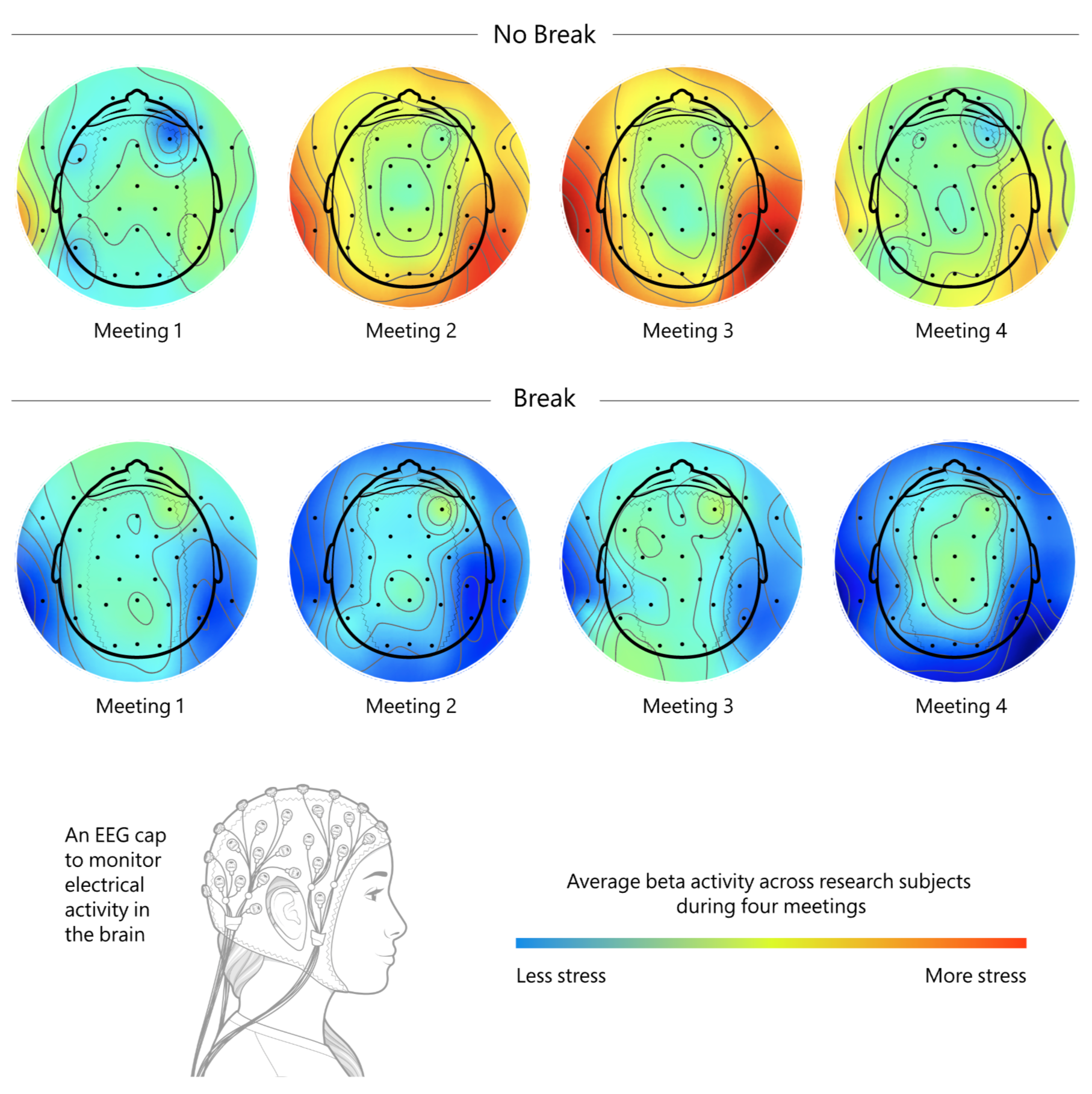
Among those who got no breaks, beta wave activity increased in the brain with each successive meeting, indicating heightened stress levels. In fact, just the anticipation of the next call caused a spike in beta activity during the transition period between meetings, researchers found.
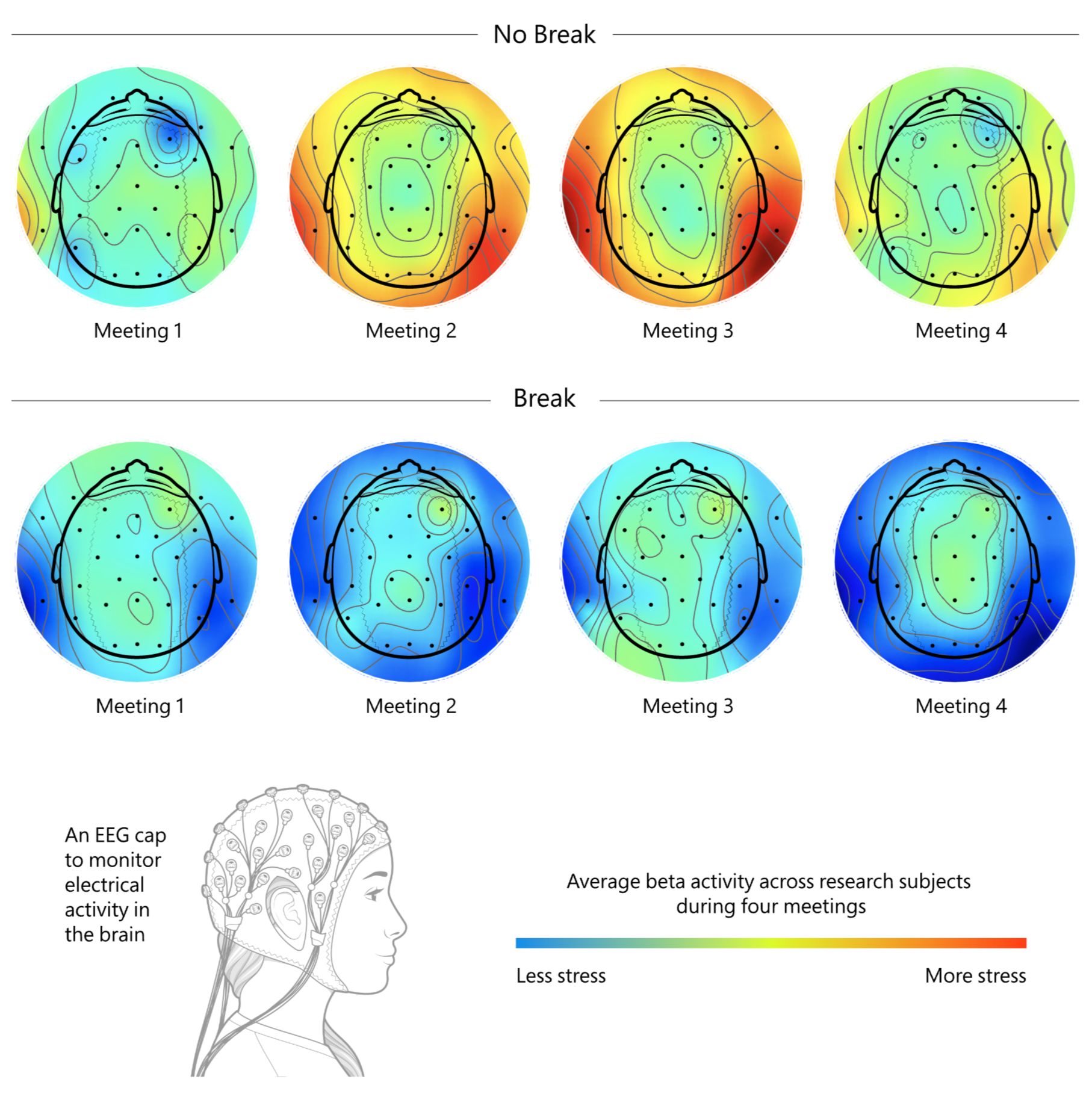
In a Microsoft study last year, beta wave activity increased in the brains of people who had successive meetings with no breaks, indicating a rise in stress. Beta activity remained stable in those who took 10-minute breaks.

Brown Bird Design

In a Microsoft study last year, beta wave activity increased in the brains of people who had successive meetings with no breaks, indicating a rise in stress. Beta activity remained stable in those who took 10-minute breaks.

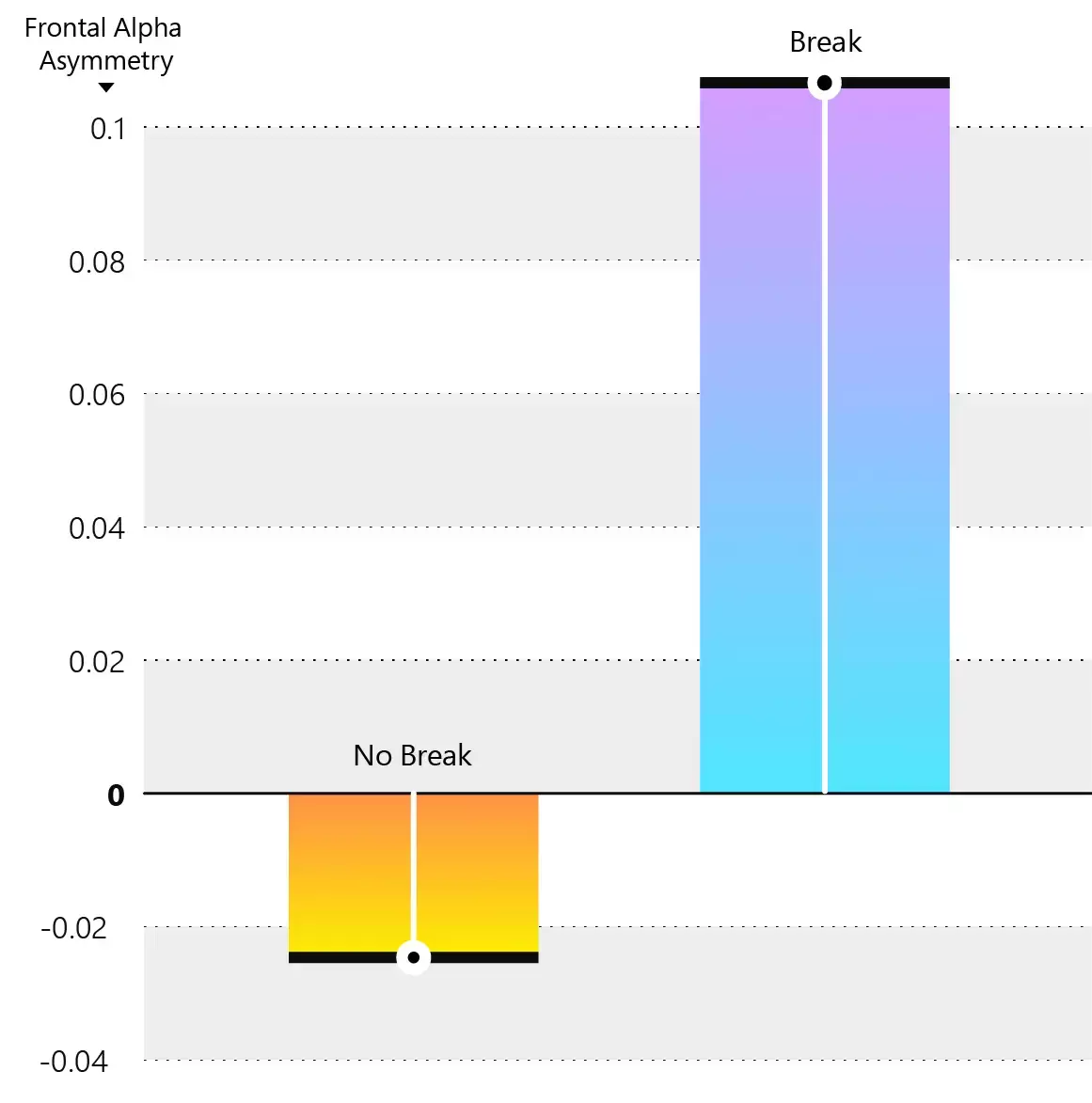
Meanwhile, the researchers also measured the difference in right and left alpha wave activity over frontal regions of the brain — known as frontal alpha asymmetry — which can indicate levels of mental engagement.

Participants who took breaks showed positive frontal alpha asymmetry, suggesting higher engagement during the meetings, while those without breaks had negative asymmetry, indicating that they were more mentally withdrawn.
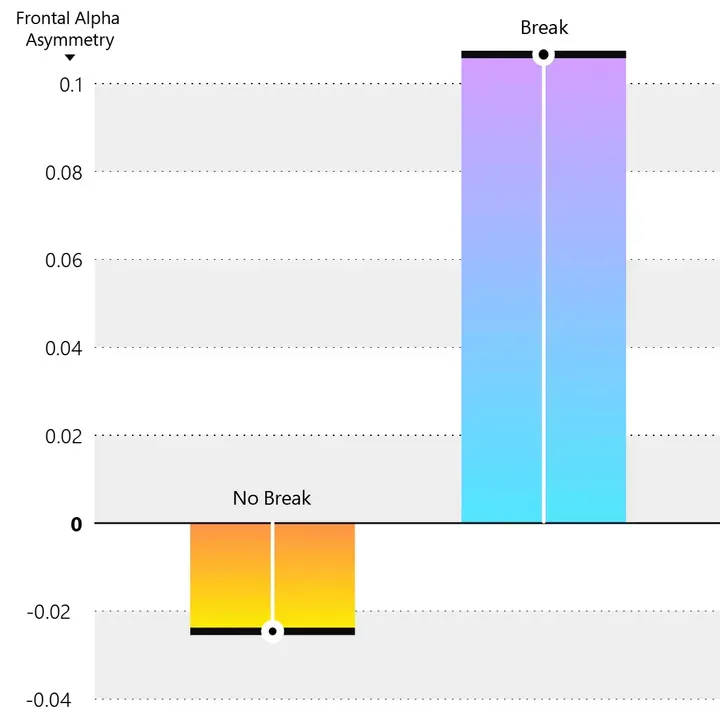
When study participants had breaks between meetings, their brains showed signs of higher engagement.

Valerio Pellegrini

When study participants had breaks between meetings, their brains showed signs of higher engagement.

“I’m not surprised that people who took breaks between meetings felt better. People who take breaks in general feel better,” said Laura Vanderkam, a time management expert and the author of “Tranquility by Tuesday: 9 Ways To Calm the Chaos and Make Time for What Matters.”

“We all take breaks one way or another; it’s just [that] many times they’re unconscious. By choosing when and how to take a break, you notice the break happening and reap the rejuvenation,” Vanderkam said.

One big caveat to Microsoft’s findings, of course, is that the sample size of participants was small. But the study aligns with a large body of other research suggesting that meeting overload causes unproductive, unhappy employees who feel like their schedule is ruling their life.

In a recent survey of 76 companies, for example, management researchers found that employee productivity more than doubled when meetings were reduced by 40%.

“This is largely because employees felt more empowered and autonomous,” the researchers wrote in March for Harvard Business Review. “Rather than a schedule being the boss, they owned their to-do lists and held themselves accountable, which consequently increased their satisfaction by 52%.”

Making The Most Of Breaks In Meeting Marathons

If you’re looking for ways to make your own breaks more impactful, try to resist scrolling on social media or reading your email, experts said.

“Many people check email between meetings as a form of a break, and I get that,” Vanderkam said. “But [it is] even better to batch email at some point in the day, or only do it between every other meeting, and use those little bits of time for something else that will add joy and meaning to your life, like a 10-minute walk outside.”

Holistic health coach and mindfulness teacher Rosie Acosta recommended a relaxation technique in which you breathe in for three seconds and out for six, repeating as necessary.

“You only need to do three to five cycles before your body starts to respond and release tension,” she said. “Most of us sit at computers a lot. So if you do sit, perhaps use this time to stand and stretch. The biggest way to reset is to shut down the distractions.”

And if you’re a manager, try setting your teams up for success by avoiding marathon meeting days and building in more breaks.

“To make 10-minute breaks work, it’s helpful for organisations to set a culture that meetings start at, say, the hour and end 10-15 minutes early,” Vanderkam said. “That allows for a break or a ‘passing period’ like in a high school for people who need to travel.”

The big takeaway? It’s better to take a short breather than to power through a slew of meetings, as even a few minutes can make a big difference in our stress levels and ability to focus.

“When we are laser-focused on a task, we tend to create tension in our body, we stop breathing, and we stay in that tension throughout the day,” Acosta said. “If we are able to take short breaks to either do some breathing or even just relaxing of your shoulders, it gives your body the space it needs to feel relaxed.”

Share Button

Our job is to keep people out of A&E

An innovative scheme in Manchester is pioneering a new way to make sure patients get the best care possible.

Share Button

Immune system of modern Papuans shaped by DNA from ancient Denisovans, study finds

Modern Papuans’ immune system likely evolved with a little help from the Denisovans, a mysterious human ancestor who interbred with ancient humans, according to a new study led by Irene Gallego Romero of the University of Melbourne, Australia, publishing December 8, 2022 in the open access journal PLOS Genetics.

Papuans, the indigenous peoples of New Guinea Island, owe up to 5% of their genome to Denisovans, an extinct group closely related to Neanderthals who are known only by their DNA and sparse remains in Siberia and Tibet. To better understand the significance of this genetic contribution, researchers searched the genomes of 56 Papuan individuals to see if they carried Denisovan or Neanderthal DNA sequences, and then predicted how those sequences might affect the functioning of different types of cells.

Based on the location of the non-human sequences, the team found that in Papuans, Denisovan DNA — but not Neanderthal DNA — appears to strongly and consistently affect immune cells and functions. Further testing in cell cultures confirmed that Denisovan DNA sequences successfully regulated nearby genes, turning their expression up or down in ways that could affect how people respond to infections.

The new study suggests that Denisovan DNA sequences altered the immune response in early modern humans living in New Guinea and nearby islands, potentially helping them adapt to their local environment. The researchers conclude that further exploring how DNA from extinct human ancestors affects gene expression may be the key to understanding the consequences of interbreeding between ancient humans and other groups. The results also support the idea that archaic DNA has had a broad impact in shaping the genetic diversity and evolution of modern humans, and has likely affected multiple characteristics in people who inherited Denisovan and Neanderthal DNA.

Dr. Davide Vespasiani, first author, adds, “We show that not only Neanderthal, but also Denisovan DNA is very likely to contribute to gene expression in human populations. Further validations will reveal whether these effects are mostly cell type specific or consistent across cells.”

Dr. Irene Gallego Romero, senior author, concludes, “Some of the Denisovan DNA that has persisted in Papuan individuals until today plays a role in regulating genes involved in the immune system. Our study is the first to comprehensively shed light on the functional legacy of Denisovan DNA in the genomes of present-day humans.”

Story Source:

Materials provided by PLOS. Note: Content may be edited for style and length.

Share Button

Arsenic-contaminated water associated with antibiotic resistance in children, study finds

In rural Bangladesh, areas with high levels of arsenic contamination in drinking water, compared to areas with less contamination, have a higher prevalence of antibiotic-resistant Escherichia coli in both water and child stool samples, according to a new study publishing December 8, 2022 in PLOS Pathogens by Mohammad Aminul Islam of Washington State University, and colleagues.

Antibiotic resistance is one of the leading causes of death and hospitalization worldwide. While the major drivers of antibiotic resistance are the overuse and misuse of antibiotics, natural elements such as heavy metals can also promote antibiotic resistance.

In the new study, researchers collected water and stool samples from both mothers and young children of 100 families in two rural subdistricts in Bangladesh. Families in the Hajiganj subdistrict use drinking water from shallow tube wells, which have a high concentration of arsenic, while Matlab families collect their drinking water from arsenic-free deep tube wells.

The median arsenic concentration in the 50 water samples from Hajiganj was 481 μg/L while the median arsenic concentration in the 50 water samples from Matlab was 0 μg/L. Overall, 84% of all water and stool samples across both sites were found to be positive for E. coli. Prevalence of antibiotic resistant E. coli was significantly higher in water in Hajiganj (48%) compared to water in Matlab (22%, p<0.05) and among children in Hajiganj (94%) compared to children in Matlab (76%, p<0.05), but not among mothers. Moreover, a higher proportion of E. coli from Hajiganj were resistant to multiple antibiotics, including penicillin, cephalosporin, and chloramphenicol.

“The positive association detected between arsenic exposure and antibiotic resistance carriage among children in arsenic-affected areas in Bangladesh is an important public health concern that warrants redoubling efforts to reduce arsenic exposure,” the authors say.

Dr. Islam adds, “Heavy metals such as arsenic are more stable than antibiotics in the environment, and they continue to exert selective pressure on bacteria over a more extended period driving the evolution and expansion of antimicrobial resistance in the community. The extent to which this phenomenon drives the observed higher rates of antimicrobial resistance, as opposed to other confounders, would benefit from further study; nevertheless, it is critical to contain this environmental driver of antimicrobial resistance along with responsible antimicrobial usage in medicine and agriculture.”

Story Source:

Materials provided by PLOS. Note: Content may be edited for style and length.

Share Button

Research links common sweetener with anxiety in mouse study

Florida State University College of Medicine researchers have linked aspartame, an artificial sweetener found in nearly 5,000 diet foods and drinks, to anxiety-like behavior in mice.

Along with producing anxiety in the mice who consumed aspartame, the effects extended up to two generations from the males exposed to the sweetener. The study is published in the Proceedings of the National Academy of Sciences.

“What this study is showing is we need to look back at the environmental factors, because what we see today is not only what’s happening today, but what happened two generations ago and maybe even longer,” said co-author Pradeep Bhide, the Jim and Betty Ann Rodgers Eminent Scholar Chair of Developmental Neuroscience in the Department of Biomedical Sciences.

The study came about, in part, because of previous research from the Bhide Lab on the transgenerational effects of nicotine on mice. The research showed temporary, or epigenetic, changes in mice sperm cells. Unlike genetic changes (mutations), epigenetic changes are reversible and don’t change the DNA sequence; however, they can change how the body reads a DNA sequence.

“We were working on the effects of nicotine on the same type of model,” Bhide said. “The father smokes. What happened to the children?”

The U.S. Food and Drug Administration (FDA) approved aspartame as a sweetener in 1981. Today, nearly 5,000 metric tons are produced each year. When consumed, aspartame becomes aspartic acid, phenylalanine and methanol, all of which can have potent effects on the central nervous system.

Led by doctoral candidate Sara Jones, the study involved providing mice with drinking water containing aspartame at approximately 15% of the FDA-approved maximum daily human intake. The dosage, equivalent to six to eight 8-ounce cans of diet soda a day for humans, continued for 12 weeks in a study spanning four years.

Pronounced anxiety-like behavior was observed in the mice through a variety of maze tests across multiple generations descending from the aspartame-exposed males.

“It was such a robust anxiety-like trait that I don’t think any of us were anticipating we would see,” Jones said. “It was completely unexpected. Usually you see subtle changes.”

When given diazepam, a drug used to treat anxiety disorder in humans, mice in all generations ceased to show anxiety-like behavior.

Researchers are planning an additional publication from this study focused on how aspartame affected memory. Future research will identify the molecular mechanisms that influence the transmission of aspartame’s effect across generations.

Other co-authors were Department of Biomedical Sciences faculty members Deirdre McCarthy, Cynthia Vied and Gregg Stanwood, and FSU Department of Psychology Professor Chris Schatschneider.

This research was supported by the Jim and Betty Ann Rodgers Chair Fund at Florida State University and by the Bryan Robinson Foundation.

Story Source:

Materials provided by Florida State University. Original written by Robert Thomas. Note: Content may be edited for style and length.

Share Button

GPs say parents need clearer strep A advice

Many surgeries are struggling to deal with increased demands as strep A cases rise, doctors say.

Share Button

Nurses bitten and screens smashed – life in A&E

A shortage of beds and huge demand is causing severe overcrowding and delays in A&E.

Share Button

Record alcohol deaths from pandemic drinking

The number of people dying rose by 27% between 2019 and 2021, to more than 9,000.

Share Button

‘My Wife Doesn’t Want Me To Go On Holiday Without Her’

You’re reading Love Stuck, where trained therapists answer your dating, sex and relationship dilemmas. You can submit a question here.

In a long-term relationship, you might start to feel like you’re doing everything with your partner. Concerts, parties, restaurants, trips, it can get to a point where you automatically bring your ‘other half’ everywhere.

Which is why some people in relationships try to regain their independence, like this week’s reader: Collin.

“I would like to travel with a friend of mine to Portugal for a surf trip without my wife,” Collin says. “She is having an issue with me going without her for various reasons. I am not sure how to navigate this issue in our 30-year marriage. We have not travelled independently much before.”

Collin doesn’t mention any issues with his wife, but he wants to have more solo experiences. Is this a problem?

Counselling Directory member Kim Lord doesn’t necessarily think so.

What would you say to this reader?

“Your decision to holiday without her may raise some insecurities in your wife, which she may not feel able to voice,” Lord says.

“This is not to suggest that your decision is wrong, or in some way harmful to her, but taking the time to gain some insight into why she has an issue would be helpful to you both.”

Lord adds that Collin has mentioned that he hasn’t done much independent travelling before, so after 30 years of marriage, a desire to travel without her may come as a surprise to his wife.

“Whilst we may like to believe that our partner will happily accept all our wishes with support and understanding, our actions can sometimes impact upon our partners’ feelings in a way we may not expect,” Lord adds.

“Your wife may feel a sense of rejection if you have always holidayed with her in the past, but this time have chosen to take a friend.”

Why might his wife have an issue with him travelling without her?

Counselling Directory member Georgina Smith asks Collin if there’s been a breach of trust, have the couple had to navigate infidelity? “If so, then it would be a big ask to request solo travel, depending on the circumstances and the couple’s timeline of difficulty,” Smith adds.

“Even if lack of trust is not an obvious issue, I would be encouraging the husband to explore those ‘various reasons’ with her and discuss together how he may provide reassurance around her insecure feelings around this trip.”

Counselling Directory member Victoria Jeffries believes that Collin’s wife is feeling insecure at the idea of him leaving her. “It could be she views this as some form of abandonment.”

“I would hazard a guess that this runs deeper with your wife; it may be that at some point in her life (most likely her childhood) she felt excluded or abandoned by those she loved, and therefore you taking a trip without her is triggering those feelings for her,” Jeffries adds.

“This may seem far-fetched (and possibly even unfair on her part), however it is not uncommon for painful feelings from the past to suddenly arise from seemingly ordinary circumstances such as a spouse simply wanting to take a surfing trip with a friend.”

What practical tips would you give this reader?

Smith encourages Collin’s wife to communicate all of her concerns and fears around this solo trip. ″Communicate and compromise on ‘ground rules’ – how often will the couple talk while he is away, what is acceptable behaviour like staying out til late and around the opposite sex for example,” Smith adds.

She also suggests making plans for another trip as a couple might help, so Collin can avoid the sense that his wife is ‘missing out’ and have a chance to reconnect. “Using empathy and good listening skills is key – try to understand the feelings behind her words. Having an issue with the trip will be about her feelings of discomfort, not just to be difficult.”

Jeffies also emphasises talking to his wife and exploring her concerns. “It may also be a good idea to explain why this trip is important to you (presuming it is),” she says. “It could be that your wife isn’t fully taking into consideration what this means for you.”

Love Stuck is for those who’ve hit a romantic wall, whether you’re single or have been coupled up for decades. With the help of trained sex and relationship therapists, HuffPost UK will help answer your dilemmas. Submit a question here.

Share Button

‘Doctors fitted a contraceptive coil without my consent’

A Danish investigation will look at a historic scandal in Greenland, but women tell the BBC of recent involuntary contraception.

Share Button