What Ever Happened To Rishi Sunak’s Summer NFT Launch?

The UK’s political landscape in April 2022 was a starkly different place for Rishi Sunak.

He was a chancellor who had enjoyed unusual popularity thanks to his support for workers during the pandemic only to be plunged into an unenviable position.

The country was facing the devastating economic fallout of Covid-19, Vladimir Putin had invaded Ukraine and the biggest squeeze on living standards since records began loomed large.

Tables were turning on the chancellor who was criticised for not doing enough to support the poorest in his Spring statement.

So it was little wonder that when he went all “crypto bro” on us in April, the government was accused of being “out of touch”.

While millions were struggling financially, Sunak announced measures for the notoriously unregulated cryptocurrency sector, which features incredibly volatile currencies.

“It’s my ambition to make the UK a global hub for cryptoasset technology,” he said.

The statement piece of the announcement was that Sunak had instructed the 1,136-year-old Royal Mint to issue a trendy non-fungible token by the summer.

NFTs can be anything digital such as a drawing or music but each one is a unique “one of a kind” asset – rather like a famous painting.

Damien Hirst and Bella Hadid are among the celebrities venturing into the NFT world.

They are stored on a blockchain – the same decentralised ledger of transactions used to buy and sell cryptocurrencies such as bitcoin.

The crypto-phenomenon has proved fashionable with celebrities, most recently supermodel Bella Hadid joined the metaverse with an NFT collection called CY-B3LLA – featuring artworks based on 3D scans of her body.

Artist Damien Hirst is also dabbling in NFTs, announcing he will burn thousands of his paintings as part of his year-long NFT project, titled The Currency.

Buyers who purchased one of the 10,000 NFTs for £1,600 each have been asked to choose whether to keep it or trade it for the physical work. If the former, the painting will now be exhibited before being burned.

However, critics of NFTs say the tokens are fundamentally valueless, unregulated and that fraud and scams are a risk.

Given the huge number of computers needed to continuously run for a blockchain to function, they argue NFTs are also bad for the environment.

Since the Treasury’s announcement there has been a major crash in cryptocurrencies and Sunak walked out of the government along with other key backers.

Sunak is now locked in a battle with foreign secretary Liz Truss to become the next Tory leader and prime minister. His team have been approached for comment.

The "Bored Ape" collection of digital images is perhaps the most well-known, having been bought and traded by celebrities for tens of thousands of dollars.
The “Bored Ape” collection of digital images is perhaps the most well-known, having been bought and traded by celebrities for tens of thousands of dollars.

Noam Galai via Getty Images

The Treasury originally said the NFT would be issued this summer, but next to nothing has been said about the initiative.

Four months since it was announced, the public is none the wiser.

Details of the project remain largely unknown and the government has never specified what image or object the Royal Mint’s NFT would confer ownership of.

But there is a new Treasury team in town, led by former vaccines minister Nadhim Zahawi, so HuffPost UK sent them a slew of questions about the NFT.

We also submitted a Freedom of Information request, asking how much taxpayers’ cash was being spent on the project.

The Treasury FoI team confirmed they held the information but refused to divulge how much they were spending on the NFT.

They said the plans were still “under development” and that ministers and officials “need space” in which plans can be refined.

Meanwhile, the Treasury’s press office remained coy about the plans, insisting they were still going ahead but unable to confirm when.

A Treasury source said it was still their “intention” to issue an NFT this summer but was unable to be more specific.

Labour’s shadow economic secretary to the Treasury Tulip Siddiq accused the government of “wasting time and money on an NFT gimmick”.

She said the Conservatives should “come clean” about how much taxpayers’ money had been “thrown down the drain” and described the lack of transparency as “shocking”.

“With the value of crypto currencies in freefall, the government must ditch its lax attitude to crypto regulation and introduce a comprehensive regulatory regime for the sector,” she said.

“The Conservative’s wild west approach to crypto has put millions of people’s savings at risk and crypto-related crime in the UK – such as fraud and money laundering – is now at record levels.”

She also said that without proper regulation the UK was at risk of falling behind global competitors in FinTech such as the EU and US.

The Royal Mint remained tight-lipped saying they were “continuing” to develop their first NFT range and would share further details in “due course”.

They did not answer a question about when it would launch.

Tulip Siddiq MP: “Instead of properly regulating the crypto sector to protect consumers and crack down on criminals, this incompetent government is wasting time and money on an NFT gimmick."
Tulip Siddiq MP: “Instead of properly regulating the crypto sector to protect consumers and crack down on criminals, this incompetent government is wasting time and money on an NFT gimmick.”

House of Commons via PA Wire/PA Images

It comes after Crypto experienced one of the worst market crashes the new industry had ever witnessed – which saw popular currency bitcoin plummeting.

In a speech last month, Bank of England deputy Governor Sir Jon Cunliffe said the majority of crypto-tokens have “no intrinsic value” and are “inherently volatile, very vulnerable to sentiment and prone to collapse”.

However, the Treasury confirmed it was still “firmly committed” to its plans to create an NFT.

A Treasury spokesperson said: “We are firmly committed to putting the UK at the forefront of cryptoasset technology and innovation by capitalising on the freedoms gained by leaving the European Union.

“Our framework will support the safe adoption of crypto whilst giving regulators the agility to respond to market developments, support innovation and protect consumers.

“Our forthcoming Financial Services and Markets Bill will set up the framework for regulating stablecoins in the UK and we will be consulting on a world-leading regime for the rest of the crypto market later this year.”

Share Button

We’ve Had Monkeypox. This Is What We Need People To Know

Jake* was having an ordinary family meal with his partner and 15-year-old son when he came down with a fever. For four days he felt exhaustion and had no appetite at all, and after a few days he developed brain fog. Twenty-four hours later, an anal lesion appeared.

“It was essentially an open wound for five days which was emitting a clear mucus and then blood,” Jake tells HuffPost UK.

“It was almost impossible to sit down and moving was very painful. Opening my bowels was pure agony and my body was making me do that eight or nine times a day. Each time was a bloodbath.”

It was late July when the World Health Organisation (WHO) declared monkeypox a world health emergency.

The US Centers for Disease Control and Prevention (CDC) has estimated there are more than 25,000 cases worldwide – predominately in Europe, though more than 7,000 in the US, and more emerging in South America, South East Asia, the Western Pacific and the Eastern Mediterranean.

The virus was first reported in humans in 1970 in the Democratic Republic of Congo, having been identified in monkeys in a Danish laboratory in 1958 (thus the name). However, prior to 2021, there had only been seven UK cases.

As of August 4, there are more than 2,700 confirmed monkeypox cases in the UK, according to government figures, most in England and “a significant majority” of those – as many as 75% – in London.

Its prior rarity means knowledge of transmission among health experts is still patchy while we await more research – a period of stasis that echoes the early stages of Covid-19.

But this week, groups from across the political spectrum in Westminster joined forces, signing a letter to health secretary Steve Barclay calling for action on a disease that’s “causing real fear and anxiety” within queer communities.

FG Trade via Getty Images

While it’s possible for anyone, including children, to catch monkeypox, 98% of current cases are in men who identify as gay or bisexual, or men who have sex with men. This was confirmed by Dr Tedros Adhanom Ghebreyesus, director general of WHO, and he advised men to reduce their number of sexual partners while health authorities tackle the outbreak.

For decades, queer men have been subjected to unfair stigma around sexual promiscuity, particularly during the AIDS pandemic, and the lack of knowledge around the rise of monkeypox has obvious parallels with AIDS for those that remember the height of that crisis.

“We need to calmly and responsibly acknowledge that this current monkeypox outbreak is predominantly affecting gay and bisexual men.”

– Greg Owen, PrEP lead at Terrence Higgins Trust

So campaigners says it’s crucial that messaging about monkeypox transmission and vaccination is handled sensitively to avoid spreading further stigma against the LGBTQ+ community.

“We need to calmly and responsibly acknowledge that this current monkeypox outbreak is predominantly affecting gay and bisexual men,” says Greg Owen, PrEP lead at the Terrence Higgins Trust.

“We need to acknowledge that it’s also mainly being spread through the skin to skin contact, which is occurring during sex. There is nothing wrong with stating that. It is very problematic if we don’t.”

Dr Mark Lawton, a sexual health and HIV consultant in Liverpool and chair of the British Association of Sexual Health and HIV (BASHH), adds the following caution: “We believe, in addition to direct skin to skin to contact, monkeypox can be transmitted through contact with contaminated clothing and bedding and by respiratory droplets in close proximity.”

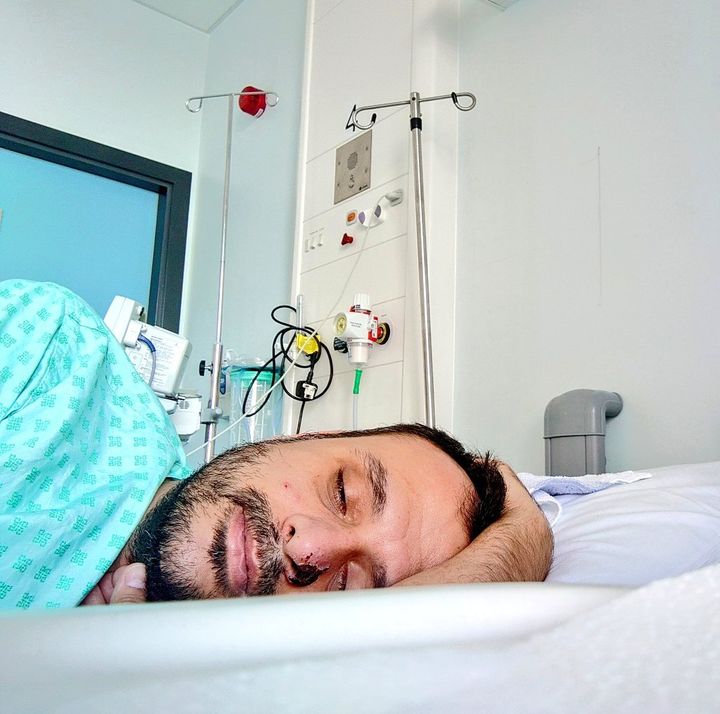
Harun Tulunay, a 35-year-old training coordinator who works with HIV/AIDS charity Positively UK, contracted a serious case of monkeypox in June.

“I was feeling like someone was ripping my flesh out of my bones,” says Tulunay of his experience. The Londoner doesn’t believe he developed monkeypox having sex, but through bodily touch, simply by lying next to a partner.

During his stint in hospital, the pain was so severe that doctors gave him opioids in an attempt to control the discomfort.

Harun Tulunay in hospital with monkeypox.

Harun Tulunay

Harun Tulunay in hospital with monkeypox.

“I wasn’t able to swallow, it was that bad,” he tells HuffPost UK. “The pain was worse than kidney stone pain. When they gave me antibiotics I was crying and kicking my bed and the doctors were holding me.”

While most monkeypox cases are much milder, there can be mental health implications for those who catch the virus.

Jake had been in close contact with his 80-year-old father in the period before his symptoms began and that, after getting a diagnosis, having to tell his family they might be at risk too gave him extra stress.

“Mentally it was very difficult,” says the professional services manager, who is bisexual, in his forties, and based in London.

“It meant my father knowing I’m in an open relationship which was stressful to share. My 80-year-old father has up until now just about managed to deal with my bisexuality by addressing it as little as possible. Now he is being contacted with offers for a vaccine as he may have been exposed.”

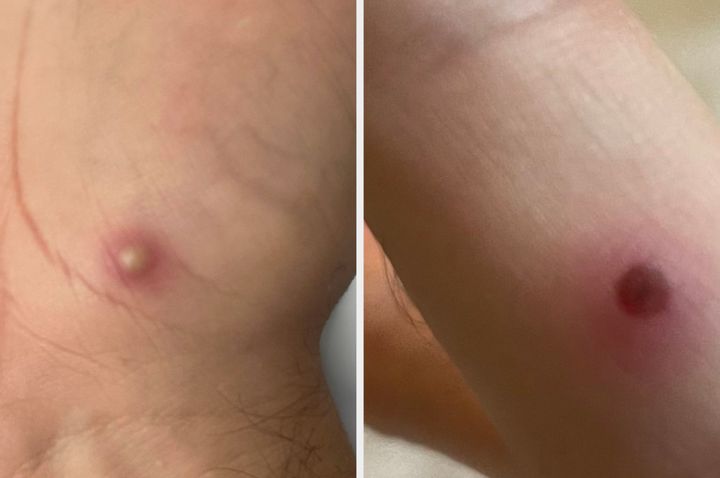
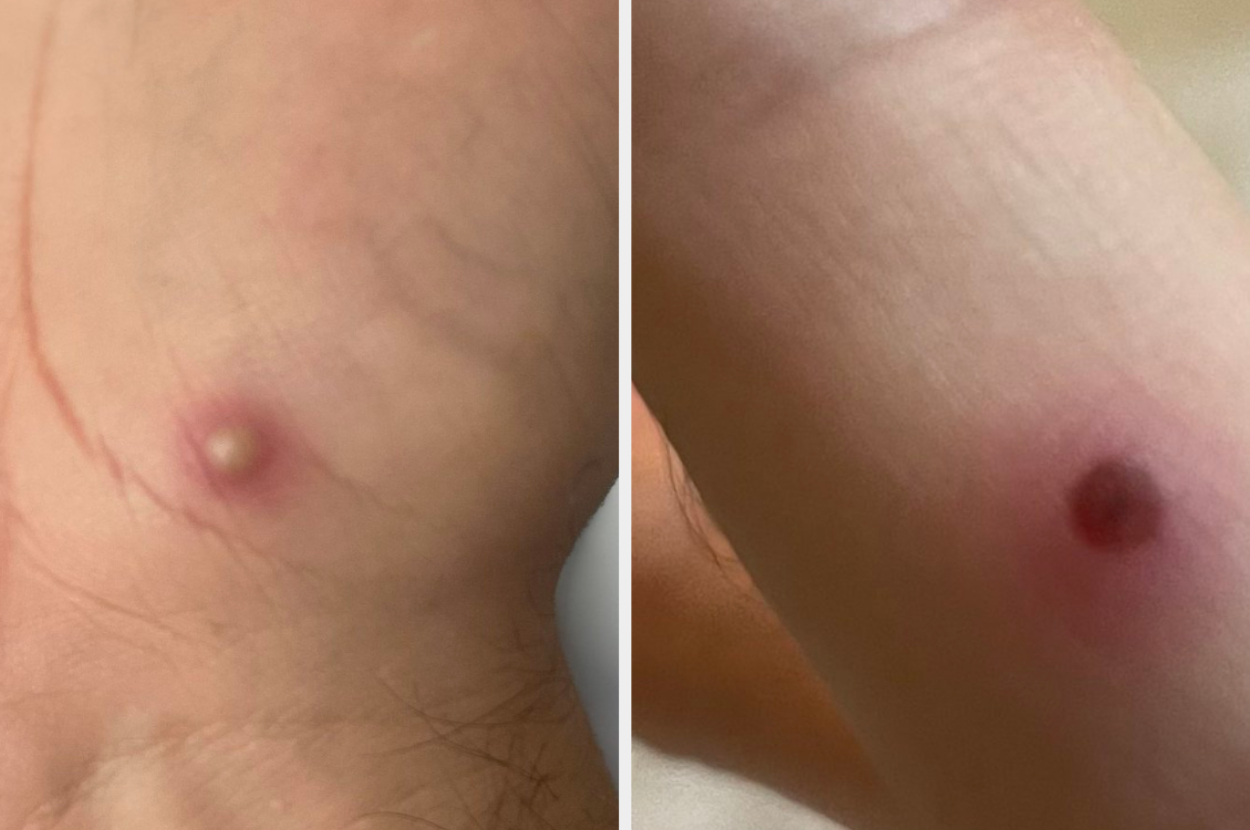
Jake's hand with signs of monkeypox (left) and his arm scabbing over (right).

Twitter/@MonkeyPoxJake

Jake’s hand with signs of monkeypox (left) and his arm scabbing over (right).

The Department of Health & Social Care (DHSC) says it is working “rapidly” to vaccinate those at risk.

Vaccinations began in July, using Imvanex – a vaccine designed for smallpox – and NHS England has confirmed that 14,000 people have already received a jab, although priority is being given to those at higher risk of contracting it.

“It’s important to emphasise that vaccination will not give instant protection against infection or disease, and can take several weeks,” the WHO director-general said on July 27. “That means those vaccinated should continue to take measures to protect themselves, by avoiding close contact, including sex, with others who have or are at risk of having monkeypox.”

The US virus declared the virus a public health emergency on Thursday. For those confirmed to have monkeypox, the US CDC is recommending a two-to-four-week isolation period.

Now campaigners are calling for similar focus in the UK. Greg Owen is among many spokespeople for queer organisations putting pressure on the government to do more to control the spread of the virus and speed up vaccine roll-out.

“We want to see a national lead appointed to hold all of those in the fragmented system to account in terms of tackling the monkeypox outbreak with the ultimate goal of preventing it from becoming endemic in the UK,” he tells HuffPost UK. Owen believes we “urgently” need to double the amount of vaccines with “an injection of cash, quickly” put into sexual health services.

The open letter signed by Conservatives, Labour, Liberal Democrat, Green and Scottish National Party representatives, as well as charities. echoed this: “We are united as LGBT+ groups from across political parties in asking that the government treat the monkeypox outbreak as a public health emergency.”

Alongside the Terrence Higgins Trust and BASSH, the British HIV Association, PrEPster and the National AIDS Trust are also rallying for government action, including £51m funding from the Department of Health and Social Care.

The call is repeated by Dr Lawton: “Crucial to this is immediate mobilisation of resources by the government to ensure sexual health clinics, who are bearing the brunt of this, are funded to deal with the additional workload and sufficient vaccine is made available for all those that need it,” he tells HuffPost UK.

The Terrence Higgins Trust has also expressed concern that access to other vital healthcare support is being stretched due to health workers being overworked and having to focus on an influx of monkeypox patients.

“Some [sexual health services are] seeing a 90% reduction in access to the HIV prevention pill PrEP and long-acting reversible contraception,” the charity writes on its website.

Anna Bizon via Getty Images

Similarly to the early days of Covid-19, monkeypox is affecting people that are otherwise fit and healthy.

“I have no underlying health conditions,” says James,* who is 36, and asked to stay anonymous. “I work out six times a week and my fitness and health is my top priority. So for this to floor me the way it did, it was really scary. I also found the isolation really difficult, three weeks from the first sign and symptom is really tough!”

Meanwhile, John Thomas only experienced mild symptoms, but believes one of the major challenges is convincing men who have non-severe cases to isolate for the benefit of others.

“I think mild cases go under reported compared to the horror stories,” he tells HuffPost UK. “If you don’t know you have monkeypox, or if you can get away without people knowing you have it, you’re free to spread the virus to others.”

He adds: “If I hadn’t been looking for symptoms I would have almost certainly gone to a club night on the Friday [around the time of his transmission], and probably on the Saturday night as well.″ I think enough isn’t known about transmission yet, or if it is, the messaging is confusing.”

Thomas is right to have thought twice about going clubbing, says Dr Lawton, who says it is possible that monkeypox could spread in an intense nightclub environment where people are wearing little clothing.

“This is certainly a potential source of infection,” he says. “It is predominantly transmitted through skin to skin contact, but this does not need to be sexual.”

While we wait for more research, campaigners like Owen are trying to stay pragmatic.

While expressing “huge concerns,” including fears around vaccine equity, he tells HuffPost UK: “I tend not to ‘worry’ – worrying can be really debilitating.”

* Some names have been changed and surnames changed to offer anonymity.

Share Button

New recommendations aim to ease patient access to lung cancer clinical trials

A clinical trial is only as powerful as its participants. For years, researchers have struggled to fill clinical trials and enroll sufficiently diverse groups of patients for results to reflect the broader population, in part because of stringent guidelines on who can participate.

In an effort to include a larger and more diverse population, an international team of researchers and policymakers has written new recommendations on how to determine eligibility criteria for lung cancer clinical trials. The group was led in part by David Gerber, M.D., Associate Director for Clinical Research at UT Southwestern’s Harold C. Simmons Comprehensive Cancer Center, along with representatives from the Food and Drug Administration (FDA), National Cancer Institute, European Medicines Agency, pharmaceutical companies, and the LUNGevity Foundation.

The recommendations, published today in JAMA Oncology, offer the first publicly available outline of upcoming FDA draft guidance on lung cancer clinical trials that are expected to make it easier to include more patients.

“This paper is the public’s first look at the FDA’s proposed changes to how we determine who can participate in a lung cancer clinical trial,” said Dr. Gerber, Professor of Internal Medicine in the Hematology/Oncology Division at UTSW. “If these changes are successful, they could make clinical trials for lung cancer as well as other cancers more powerful and more representative.”

Ensuring that people from diverse backgrounds join clinical trials is key to properly evaluating how a new treatment will work among patients of all races and ethnicities. But today, only about 5% of all cancer patients enroll in a clinical trial, and only 11% of cancer clinical trial participants identify as a racial or ethnic minority.

For patients with cancer, participation in clinical trials requires not just a decision to try an experimental treatment, but time and energy spent understanding the trial, enrolling in it, and often attending extra testing or clinic appointments. Many researchers agree that complicated, inconsistent, poorly explained, and overly strict eligibility requirements to join a cancer clinical trial exacerbate this problem and are a key reason for the low number of underrepresented minorities in clinical trials.

“So many clinical trials never finish enrollment, close prematurely, or don’t recruit a population that lets researchers generalize the results,” Dr. Gerber said. “I think there’s widespread recognition that eligibility criteria have become too stringent.”

To tackle this problem in one cancer subtype — advanced non-small cell lung cancer (NSCLC) — the LUNGevity Foundation convened a roundtable discussion with experts from academia, industry, and regulatory bodies. The team assembled a prioritized list of eligibility categories that should be included in the descriptions of all NSCLC clinical trials and recommended criteria for each category. Some suggestions were more lenient than what has typically been included in previous NSCLC trial eligibility criteria; for instance, the team recommended that most patients with prior or concurrent cancers, most patients with brain metastases, and most patients with mild liver impairment — all of whom would likely have been excluded in the past — still be included in trials.

The team also suggested that these categories be clearly laid out on public websites advertising clinical trials in an easily searchable format.

The FDA will be releasing draft guidance on NSCLC clinical trials in the near future and hold a public comment period before finalizing them. Other interdisciplinary teams have already convened to standardize eligibility requirements for clinical trials of other cancer types.

If the new guidelines are effective, Dr. Gerber said clinical trials will likely be easier to fill and provide more complete and timely data on new cancer interventions.

“If you can involve more patients in clinical trials, you’re more likely to complete those trials quickly. That’s going to lead to new treatments faster,” he said.

Other authors of the paper include Harpreet Singh and Erin Larkins of the FDA; Andrea Ferris and Upal Basu Roy of LUNGevity Foundation; Patrick M. Forde of Johns Hopkins University; and Wendy Selig of WSCollaborative LLC.

Dr. Gerber holds the David Bruton, Jr. Professorship in Clinical Cancer Research.

Share Button

The many ways nature nurtures human well-being

A systematic review of 301 academic articles on “cultural ecosystem services” has enabled researchers to identify how these nonmaterial contributions from nature are linked to and significantly affect human well-being. They identified 227 unique pathways through which human interaction with nature positively or negatively affects well-being. These were then used to isolate 16 distinct underlying mechanisms, or types of connection, through which people experience these effects. This comprehensive review brings together observations from a fragmented field of research, which could be of great use to policymakers looking to benefit society through the careful use and protection of the intangible benefits of nature.

Do you ever feel the need for a bit of fresh air to energize yourself, or to spend time in the garden to relax? Aside from clean water, food and useful raw materials, nature provides many other benefits that we might overlook or find it hard to grasp and quantify. Research into cultural ecosystem services (CESs), the nonmaterial benefits we receive from nature, aims to better understand these contributions, whether they emerge through recreation and social experiences, or nature’s spiritual value and our sense of place.

Hundreds of CESs studies have explored the connections between nature and human well-being. However, they have often used different methods and measurements, or focused on different demographics and places. This fragmentation makes it difficult to identify overarching patterns or commonalities on how these intangible contributions really affect human well-being. Better understanding them could aid real-world decision-making about the environment, which could benefit individuals and the wider society.

To try and get a “big-picture” view, graduate student Lam Huynh from the Graduate Program in Sustainability Science at the University of Tokyo and team conducted a systematic literature review of 301 academic articles. After a critical reading, they were able to identify hundreds of links. “We identified 227 unique linkages between a single CES (such as recreation or aesthetic value) and a single constituent of human well-being (such as connectedness, spirituality, or health). We knew that there are many linkages, but we were surprised to find quite so many of them,” said Huynh. “Then, through further critical reading, we could identify major commonalities.”

In particular, they identified 16 distinct underlying “mechanisms,” or types of connection, which refer to the different ways that people’s interaction with nature affects their well-being. For example, there can be positive interactions through “cohesive,” “creative” and “formative” mechanisms, but also negative interactions through “irritative” and “destructive” mechanisms. Previous studies had identified some of these mechanisms, but 10 were newly defined, including the more negative effects, clearly showing that our well-being is linked to the intangible aspects of nature in many more ways than previously thought.

According to the paper, the negative contributions to human well-being came mainly through the degradation or loss of CESs, and through ecosystem “disservices,” such as annoyance at wildlife noise, which can affect some people’s mental health in particular. However, on the other hand, the highest positive contributions of CESs were to both mental and physical health, which were generated mainly through recreation, tourism and aesthetic value.

“It is particularly interesting to note that the identified pathways and mechanisms rather than affecting human well-being independently, often interact strongly,” explained co-author Alexandros Gasparatos, associate professor at the Institute for Future Initiatives (IFI) at the University of Tokyo. “This can create negative trade-offs in some contexts, but also important positive synergies that can be leveraged to provide multiple benefits to human well-being.”

Despite the comprehensiveness of the review, the researchers acknowledge that there may still be more links that have not yet been identified, especially as the review revealed gaps in the current research landscape. “We hypothesize that missing pathways and mechanisms could be present in ecosystem-dependent communities, and especially traditional and Indigenous communities, considering their very unique relations with nature,” said Gasparatos.

“Another of the knowledge gaps we identified is that the existing literature on these nonmaterial dimensions of human-nature relationships mainly focuses on the well-being of individuals rather than on collective (community) well-being,” explained Huynh. “This significant gap hinders our capacity to identify possible synergies and trade-offs in ecosystem management research and practice.”

The team has now received a grant to explore the effects of CESs provision to human well-being in the urban spaces of Tokyo. “This project is a logical follow-up to test whether and how some of the identified pathways and mechanisms unfold in reality and intersect with human well-being,” said Gasparatos.

The researchers hope that this study and similar efforts will make it possible to apply the key findings from this complex and diverse body of knowledge to enable real-world impact. Professor Kensuke Fukushi from IFI and study co-author summarized their hope that “an improved understanding of nature’s many connections to human well-being and the underlying processes mediating them, can help policymakers to design appropriate interventions. Such coordinated action could leverage the positive contributions of these connections and become another avenue to protect and manage ecosystems sustainably.”

Share Button

UK should move to one dose of HPV jab for teens

Two doses are now given but experts say one shot is enough to give protection against cervical cancer.

Share Button

Nutrition solution can help heat-stressed cows as US warms

Rising temperatures pose major challenges to the dairy industry — a Holstein’s milk production can decline 30 to 70% in warm weather — but a new Cornell University-led study has found a nutrition-based solution to restore milk production during heat-stress events, while also pinpointing the cause of the decline.

The study, published Aug. 2 in the Journal of Dairy Science, confirmed for the first time that heat-stressed dairy cows develop gut permeability, or leaky gut, which contributes to a reduction in milk production. Researchers also found that milk production can be partially restored by feeding the cows organic acids and pure botanicals.

“This has immediate application,” said Joseph McFadden, associate professor of dairy cattle biology in the College of Agriculture and Life Sciences and senior author of the paper. “And we hope it serves as a catalyst for the field and ignites further research into dietary approaches.”

The paper’s first author is Ananda Fontoura, a doctoral student in McFadden’s lab.

The research will help maintain the efficiency and sustainability of the dairy industry as demand and temperatures both rise. Climate change is already causing reduced production and threatened health in Holsteins, by far the dominant breed in U.S. dairy farming. McFadden said the New York state dairy industry is not safe because of its relatively cool climate — heat stress in Holsteins begins to occur at 75 degrees Fahrenheit.

“In New York state, we’re projected to have an increase in heat-stress events in the next decade, but the precipitation is supposed to stay,” McFadden said. “With major droughts and water demands in other areas of the country, there may be an increased emphasis on maintaining the strength of the Northeast dairy industry, but we’ll still have more heat-stress events, and we have to be proactive and ready.”

Heat stress causes the cows to eat less, and the drop in food intake accounts for 30 to 50% of the drop in milk production — this was known. The researchers provided evidence that the remaining decline develops with an increase in intestinal permeability, which activates the immune system.

“The general working hypothesis was that an activated immune system partitions energy away from milk production to support immune function,” McFadden said. “When the gut becomes permeable, it allows bacteria to enter the cow that activate the immune system and cause inflammation. But there had never been a study that directly confirmed that heat-stressed dairy cows developed leaky gut. Prior data only inferred this possibility.”

Researchers found that cows exposed to heat-stress conditions developed leaky gut quickly, after just three days. A control group in a thermal-neutral environment, with the same reduced food intake, experienced a delay in the development of enhanced gut permeability.

The study also found that the consumption of organic acids and pure botanicals reduced the cow’s gut permeability and increased food intake and milk production, restoring about three kilograms of milk per day. The cows showed increased nitrogen efficiency as well, which can mean less nitrogen excreted into the environment.

Currently, sprinklers and fans are used to mitigate heat stress on cows, but these strategies burn fossil fuels and only restore about 60% of milk production. Economic losses due to heat-stressed dairy cows are estimated to exceed $1.5 billion a year, more than any other domestic animal production systems — in large part because of the Holstein’s intolerance for heat.

McFadden’s team is working with surgeons at the College of Veterinary Medicine, who were able to isolate samples of the cow’s intestine, and with colleagues in the College of Engineering and at Johns Hopkins University to analyze the microbiome and metabolite profile of the cow’s GI tract. These studies will help determine why gut permeability occurs under heat stress and provide further insight into how to keep cows healthy.

“The field is really lacking in dietary approaches to improve gut health; it’s an underdeveloped area,” McFadden said. “It’s very difficult to study because you need the facilities to do the heat-stress studies and the surgeons to get those precious samples. Cornell is really unique in that we have a lot of resources at our disposal to answer these questions.”

Further research could reveal the efficacy of different additives, or even recommend changes to the staple diet of cows across the U.S., through optimization of the Cornell Net Carbohydrate and Protein System, a widely used model for determining what dairy and beef cattle should eat.

“That model helps nutritionists formulate diets for cows,” McFadden said. “If we can improve that model and understand the nutrient requirements that a cow has during a heat-stress event, we can ensure she’s getting what she needs to maintain optimum health and performance.”

This study was supported by a Northeast Sustainable Agriculture Research and Education Graduate Student Research Grant, the Foundation for Food and Agriculture Research (FFAR), and Vetagro S.p.A., a FFAR industry cosponsor. Fontoura is a FFAR Research Fellow.

Story Source:

Materials provided by Cornell University. Original written by Caitlin Hayes, courtesy of the Cornell Chronicle. Note: Content may be edited for style and length.

Share Button

When a task adds more steps, this circuit helps you notice

Life is full of processes to learn and then relearn when they become more elaborate. One day you log in to an app with just a password, then the next day you also need a code texted to you. One day you can just pop your favorite microwavable lunch into the oven for six straight minutes, but then the packaging changes and you have to cook it for three minutes, stir, and then heat it for three more. Our brains need a way to keep up. A new study by neuroscientists at The Picower Institute for Learning and Memory at MIT reveals some of the circuitry that helps a mammalian brain learn to add steps.

In Nature Communications the scientists report that when they changed the rules of a task, requiring rats to adjust from performing just one step to performing two, a pair of regions on the brain’s surface, or cortex, collaborated to update that understanding and change the rats’ behavior to fit the new regime. The anterior cingulate cortex (ACC) appeared to recognize when the rats weren’t doing enough and updated cells in the motor cortex (M2) to adjust the task behavior.

“I started this project about 7 or 8 years ago when I wanted to study decision making.” said Daigo Takeuchi, a researcher at the University of Tokyo who led the work as a postdoc at the RIKEN-MIT Laboratory for Neural Circuit Genetics at The Picower Institute directed by senior author and Picower Professor Susumu Tonegawa. “New studies were finding a role for M2. I wanted to study what upstream circuits were influencing this.”

Tripping up the second step

Takeuchi and Tonegawa traced neural circuit connections that led into M2 and found that many originated in the ACC. They began to see the ACC’s role in guiding M2’s sequential decisions when they instilled a genetic manipulation in ACC cells that allowed them to suppress their activity. This “chemogenetic” disabling of the ACC had a very specific effect. When the task rules changed so that instead of having to poke their snout into just one hole to gain a little reward, rats had to poke their nose into a sequence of two holes, the rodents with silenced ACCs took much longer to realize the rule change. Compared to rats with normal ACC activity, they failed for much longer to realize the second poke was necessary. Rats had no trouble, however, going from two steps back to just one, regardless of whether their ACC was silenced.

When the scientists chemogenetically silenced the ACC cells’ terminals in M2, they got the same results as silencing the ACC overall. They also silenced other areas of the cortex, but doing that didn’t affect the ability of the rats to notice and adjust to the rule switch. Together these manipulations confirmed that it was specifically the ACC’s connections with M2 that help the rats notice and adjust to the one-step-to-two-step change.

But what effect does the ACC have in M2? Takeuchi and his co-authors measured the electrical activity of cells in M2 as the rats played their nose-poking, rule-changing game. They found that many cells were particularly activated by different task rules (i.e. one-step or two-steps). When they silenced the ACC, though, that suppressed this rule selectivity.

Within M2 Takeuchi and the team also noticed populations of neurons that responded preferentially to positive outcomes (reward for doing the task right) and negative outcomes (not getting a reward for doing the task wrong). They found that when they silenced the ACC, this actually increased the activity of the negative-outcome encoding neurons during negative feedback, particularly for the first 10-20 rounds after the rules changed from one step to two. This correlated strongly with the timing, or “epoch,” of the rats’ worst performance.

“It seems likely the epoch-specific disruption of animals’ second-choice performance is associated with the excessive enhancement of the activity of negative outcome activated neurons caused by the ACC silencing,” they wrote in the study.

The team further confirmed that the feedback, or outcomes, stage mattered by using a different technique to silence the ACC. By engineering ACC neurons to be suppressed by flashes of light (a technique called “optogenetics”) they could precisely control when the ACC went offline. They found that if they did so after the rats made an incorrect choice when the rules switched from one poke to two, they could cause the rats to continue to err. Optogenetic silencing of the ACC after rats made a correct choice didn’t undermine their subsequent behavior.

“These results indicate that ACC neurons process error feedback information following an erroneous second response and use this information to adjust the animal’s sequential choice responses in subsequent trials,” they wrote.

Too high a threshold

The evidence painted a clear picture: When the rats needed to notice that an extra step was now required, the ACC’s job was to learn from negative feedback and signal M2 to take the second step. If the ACC wasn’t available when feedback was provided, then M2 cells that emphasize negative outcomes apparently would become especially active and the rats would fail to do the required second step for a time before finally catching on.

Why would less ACC activity somehow increase the negative outcome encoding cells’ activity in M2? Takeuchi hypothesizes that what the ACC is actually doing is stimulating inhibitory cells in M2 that normally modulate the activity of those cells. With ACC activity reduced, the negative outcome encoding M2 cells experience less inhibition. The behavioral result, he theorizes, is that the rats therefore require more evidence than they should of the rule change. The mechanism isn’t completely clear, Takeuchi acknowledged, but the rats apparently need more time to experience outcome feedback from making the right decision of taking a second step before they’ll become convinced that they are on the right track doing so.

Takeuchi said that while the results demonstrate the circuit necessary for adapting to a rule change requiring more steps in a process, it also raises some interesting new questions. Is there another circuit for noticing when a multi-step process has become a one-step process? If so, is that circuit integrated with the one discussed in this study? And if the threshold model is the right one, how exactly is it working?

The implications not only matter for understanding the neural basis of natural sequential decisions but might also for AI applications ranging from game playing or industrial work, each of which can involve tasks with multiple steps.

In addition to Takeuchi and Tonegawa, the study’s other authors are Dheeraj Roy, Shruti Muralidhar, Takashi Kawai, Andrea Bari, Chanel Lovett, Heather Sullivan and Ian Wickersham.

The RIKEN Center for Brain Science, the Howard Hughes Medical Institute, the JPB Foundation and the Human Frontier Science Program Fellowship provided funding for the study.

Share Button

The value of seagrass to the planet’s future is far greater than appreciated

Experts at the forefront of efforts to restore the UK’s coastal seagrass meadows say the remarkable plant’s contribution to the most important to-do list in the history of humankind should be reassessed.

Seagrass — the world’s only underwater flowering plant — is not only vital for biodiversity, but also absorbs carbon dioxide, which helps to tackle climate change.

In a new paper, just published in the journal Science, Swansea University researchers argue for considering the value of seagrasses beyond carbon in the context of the UN Sustainable Development goals — the shared blueprint for achieving a better and more sustainable future. Conserving and restoring seagrass meadows actually contributes to achieving 16 out of the 17 goals.

The authors, including Dr Richard Unsworth and Dr Leanne Cullen-Unsworth, explain that the planetary emergency is driving interest in using seagrasses as a nature-based solution for climate change and biodiversity recovery.

However, seagrass sensitivity to stressors is acute, and in many places, the risk of loss and degradation persists.

Dr Unsworth, who leads the University’s team and is a founding director of marine conservation charity Project Seagrass, said: “With the increasing realisation of the planetary emergency that we face, there is growing interest in using seagrasses as a nature-based solution for greenhouse gas mitigation.

“But if the ecological state of seagrasses remains compromised, then their ability to contribute to nature-based solutions for the climate emergency and biodiversity crisis remains in doubt.”

The team’s latest research has examined the major ecological role that seagrasses play and how rethinking their conservation is critical to understanding their part in fighting our planetary emergency.

Dr Unsworth said: “Seagrasses are of fundamental importance to the planet but compared with terrestrial grasses, and even seaweeds, the body of research within seagrass is magnitudes smaller.

“However, there are substantial ecological, social, and regulatory barriers and bottlenecks to seagrass restoration and conservation because of the scale of the interventions required.

“Now advances in marine robotics, molecular ecology, remote sensing, and artificial intelligence all offer new opportunities to solve conservation problems in difficult environments at unprecedented global scales.

“It is only by looking beyond carbon and recognising the true value of seagrass meadows can we place it on a pathway to net zero loss and ultimately net gain.”

Story Source:

Materials provided by Swansea University. Note: Content may be edited for style and length.

Share Button

Ragweed allergy: Aggressiveness of pollen is determined by its place of origin and by the environment

The different geographic and climatic regions from which ragweed pollen originates, as well as the degree of environmental pollution, may influence the severity of allergic reactions such as hay fever and asthma. Pollen from plants in different areas exhibit different levels of aggressiveness. This is the conclusion reached by an inter-university study team led by MedUni Vienna and involving the University of Vienna and the University of Natural Resources and Applied Life Sciences. The study was recently published in the journal Frontiers in Allergy.

The research team developed an allergy model in which mice inhaled pollen from ragweed plants (Ambrosia artemisiifolia) collected in different geographic locations. They found that even a small amount of pollen (a total of 180 pollen grains) is sufficient to produce an allergic reaction, much less than the high pollen concentrations found in the air during the seasonal flowering period. As a result of climate change, the European flowering season is getting longer, and the plant is able to spread to more northerly areas. Furthermore, the regional origin of the pollen determines the severity of the allergic reaction it produces. The lead researcher and coordinator of the “Atopica” project, Michelle Epstein from MedUni Vienna, explained: “Our study shows that pollen from distinct environments can differ in its aggressiveness. So not only the concentration of the pollen in the air but also intrinsic changes (from within) related to the environment could alter the pollen’s ability to sensitise and cause more severe allergic symptoms.”

Wolfram Weckwerth, Professor at the Department of Functional and Evolutionary Ecology of the University of Vienna and one of the authors, said: “We now know that environmental factors change the aggressiveness of pollen. The next steps are further characterisation of the pollen, especially at the molecular level, to unambiguously identify the mixture of allergenic components.” Anke Bellaire, a collaborator at the Department of Structural and Functional Botany at the Department of Botany and Biodiversity, University of Vienna, and also one of the authors, added: “Following these exciting results, we plan to continue ultrastructural subcellular analysis of ragweed pollen for further characterisation.”

Gerhard Karrer, professor of botany at the University of Natural Resources and Applied Life Sciences, who was part of the team that collected the pollen in Austria, said: “The control of ragweed is a major public health concern and an adaptation strategy for mitigating and managing the impacts of climate change.”

According to the researchers, there is a high probability that climate change and other environmental factors will also affect a number of other pollen-producing plants. This applied research model now provides a strategy for further studies investigating the impacts of climate change on pollen allergy.

33 million Europeans suffer from ragweed allergy

Ragweed (Ambrosia artemisiifolia) is a highly allergenic plant whose pollen causes hay fever in sensitized people and can lead to asthma. Currently, over 33 million Europeans suffer from ragweed allergy and researchers predict an increase to 77 million cases by 2060 as a result of climate change. The EU’s annual economic burden of allergic asthma is already estimated to be as much as €151 billion. Ragweed is an invasive plant that is spreading particularly rapidly in Europe in the French Rhône Valley, in northern Italy, Hungary and Croatia. The season begins in August and extends throughout autumn. However, with global warming, the season is getting longer, and warmer temperatures will encourage ragweed plants to grow in more northerly areas and at higher altitudes. A single plant can produce about a billion grains of pollen per season, and these can travel over a thousand kilometres on the wind.

It is hoped that these study results, obtained as part of the European Union’s Seventh Framework Programme, Atopica (Atopic diseases in changing climate, land use and air quality, Grant Agreement No. 282687), will pave the way for ragweed alerts and regulations aimed at allergy prevention.

Story Source:

Materials provided by Medical University of Vienna. Note: Content may be edited for style and length.

Share Button

Finally, Some Good News From Australia’s Great Barrier Reef

The climate news of late has been terrifying. Volcanic eruptions, heatwaves and drought, to name just a few.

But, amid all the anxiety-inducing headlines, there is a spot of hope – Australia’s Great Barrier Reef appears to have recovered, ever so slightly.

What happened to the reef before?

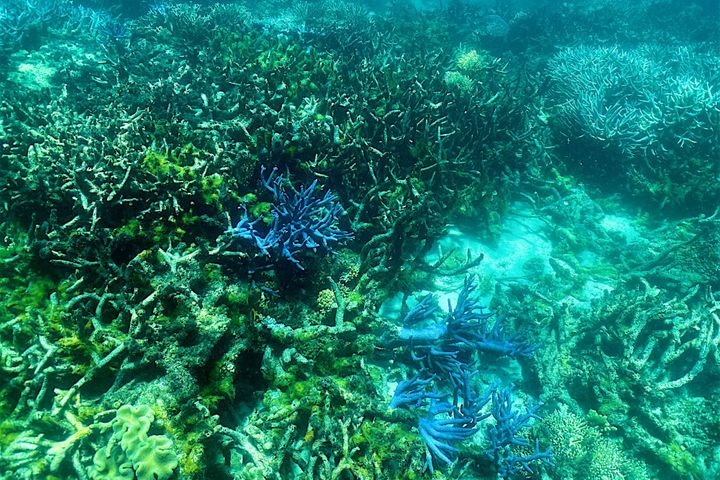
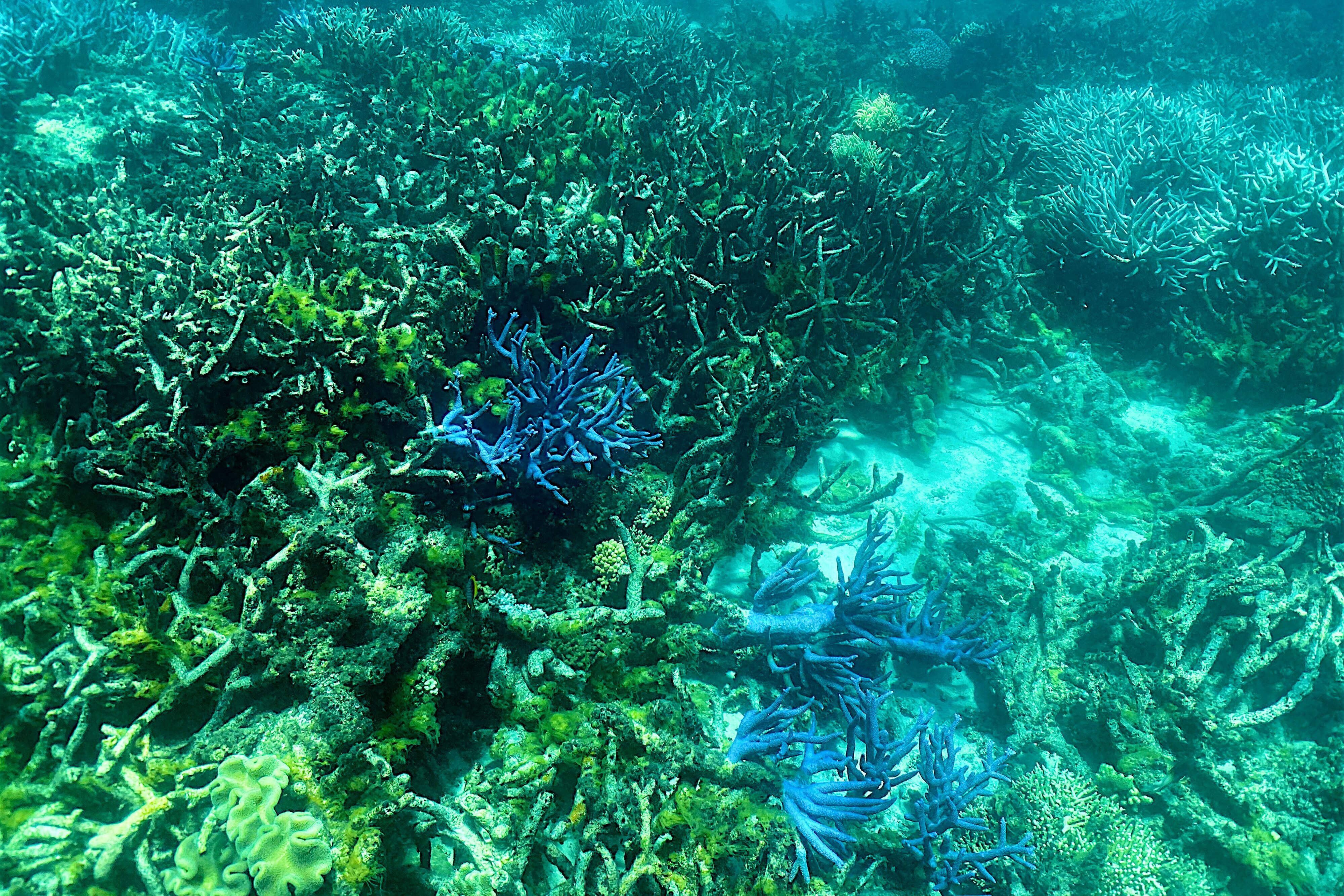
The world-heritage site has been suffering from mass bleaching, essentially killing the coral which grows there.

Mass bleaching typically happens when delicate coral polyps are effectively cooked by unusually warm waters. When coral is bleached, it turns white, although it can recover if water temperatures return to normal.

However, if the warm water stays for too long – often a consequence of the climate crisis – large areas of the reef can die.

The Great Barrier Reef Marine Park Authority has explained before that bleached coral “is stressed by still alive”.

Bleaching has occurred repeatedly since 2016.

Widespread bleaching from March 2022

GLENN NICHOLLS via Getty Images

What’s happened now?

A long-term monitoring programme has found two-thirds of the famous reef now have the largest amount of coral cover seen in 36 years, suggesting it has recovered from previous bleaching.

The progress has occurred in the central and northern stretches of the reef, although the southern region is still struggling, according to the Australian Institute of Marine Sciences.

“What we’re seeing is that the Great Barrier Reef is still a resilient system. It still maintains that ability to recover from disturbances,” programme leader Mike Emslie said.

In the northern region, the hard coral cover soared tot 36% in 2022, up from 13% in 2017.

The central region coral cover climbed to 33% from 12% in 2019.

Both of these areas are recording the highest levels since they started being monitored in 1985.

It’s not all good, though

As with all climate news right now, we still should not be complacent.

In the southern region of the reef, in 2021 the coral cover was 38%. It fell to 34% in 2022.

Emsile told Reuters that, while the recovery of the northern and central regions is encouraging, “the frequency of these disturbance events is increasing, particularly the mass coral bleaching events”.

There has been four mass bleaching incidents in the last seven years – one of which was during a La Nina event, which is an oceanic phenomenon which brings the cooling of surface ocean waters.

Even in the areas of more reassuring growth, there are concerns it will not be sustainable. The recovery has been driven by Acropora corals, which are vulnerable to wave damage, heat stress and crown of thorns starfish.

“We’re really in unchartered waters when it comes to the effects of the bleaching and what it means moving forward,” Emslie said. “But as of today, it’s still a fantastic place.”

The United Nations Educational, Scientific and Cultural Organisation (UNESCO) is still considering whether to list the site as “in danger”. The World Heritage Committee was set to discuss the fate of the reef in June in Russia, but it has since been postponed.

Share Button