Where once were black boxes, new LANTERN illuminates

Researchers at the National Institute of Standards and Technology (NIST) have developed a new statistical tool that they have used to predict protein function. Not only could it help with the difficult job of altering proteins in practically useful ways, but it also works by methods that are fully interpretable — an advantage over the conventional artificial intelligence (AI) that has aided with protein engineering in the past.

The new tool, called LANTERN, could prove useful in work ranging from producing biofuels to improving crops to developing new disease treatments. Proteins, as building blocks of biology, are a key element in all these tasks. But while it is comparatively easy to make changes to the strand of DNA that serves as the blueprint for a given protein, it remains challenging to determine which specific base pairs — rungs on the DNA ladder — are the keys to producing a desired effect. Finding these keys has been the purview of AI built of deep neural networks (DNNs), which, though effective, are notoriously opaque to human understanding.

Described in a new paper published in the Proceedings of the National Academy of Sciences, LANTERN shows the ability to predict the genetic edits needed to create useful differences in three different proteins. One is the spike-shaped protein from the surface of the SARS-CoV-2 virus that causes COVID-19; understanding how changes in the DNA can alter this spike protein might help epidemiologists predict the future of the pandemic. The other two are well-known lab workhorses: the LacI protein from the E. coli bacterium and the green fluorescent protein (GFP) used as a marker in biology experiments. Selecting these three subjects allowed the NIST team to show not only that their tool works, but also that its results are interpretable — an important characteristic for industry, which needs predictive methods that help with understanding of the underlying system.

“We have an approach that is fully interpretable and that also has no loss in predictive power,” said Peter Tonner, a statistician and computational biologist at NIST and LANTERN’s main developer. “There’s a widespread assumption that if you want one of those things you can’t have the other. We’ve shown that sometimes, you can have both.”

The problem the NIST team is tackling might be imagined as interacting with a complex machine that sports a vast control panel filled with thousands of unlabeled switches: The device is a gene, a strand of DNA that encodes a protein; the switches are base pairs on the strand. The switches all affect the device’s output somehow. If your job is to make the machine work differently in a specific way, which switches should you flip?

Because the answer might require changes to multiple base pairs, scientists have to flip some combination of them, measure the result, then choose a new combination and measure again. The number of permutations is daunting.

“The number of potential combinations can be greater than the number of atoms in the universe,” Tonner said. “You could never measure all the possibilities. It’s a ridiculously large number.”

Because of the sheer quantity of data involved, DNNs have been tasked with sorting through a sampling of data and predicting which base pairs need to be flipped. At this, they have proved successful — as long as you don’t ask for an explanation of how they get their answers. They are often described as “black boxes” because their inner workings are inscrutable.

“It is really difficult to understand how DNNs make their predictions,” said NIST physicist David Ross, one of the paper’s co-authors. “And that’s a big problem if you want to use those predictions to engineer something new.”

LANTERN, on the other hand, is explicitly designed to be understandable. Part of its explainability stems from its use of interpretable parameters to represent the data it analyzes. Rather than allowing the number of these parameters to grow extraordinarily large and often inscrutable, as is the case with DNNs, each parameter in LANTERN’s calculations has a purpose that is meant to be intuitive, helping users understand what these parameters mean and how they influence LANTERN’s predictions.

The LANTERN model represents protein mutations using vectors, widely used mathematical tools often portrayed visually as arrows. Each arrow has two properties: Its direction implies the effect of the mutation, while its length represents how strong that effect is. When two proteins have vectors that point in the same direction, LANTERN indicates that the proteins have similar function.

These vectors’ directions often map onto biological mechanisms. For example, LANTERN learned a direction associated with protein folding in all three of the datasets the team studied. (Folding plays a critical role in how a protein functions, so identifying this factor across datasets was an indication that the model functions as intended.) When making predictions, LANTERN just adds these vectors together — a method that users can trace when examining its predictions.

Other labs had already used DNNs to make predictions about what switch-flips would make useful changes to the three subject proteins, so the NIST team decided to pit LANTERN against the DNNs’ results. The new approach was not merely good enough; according to the team, it achieves a new state of the art in predictive accuracy for this type of problem.

“LANTERN equaled or outperformed nearly all alternative approaches with respect to prediction accuracy,” Tonner said. “It outperforms all other approaches in predicting changes to LacI, and it has comparable predictive accuracy for GFP for all except one. For SARS-CoV-2, it has higher predictive accuracy than all alternatives other than one type of DNN, which matched LANTERN’s accuracy but didn’t beat it.”

LANTERN figures out which sets of switches have the largest effect on a given attribute of the protein — its folding stability, for example — and summarizes how the user can tweak that attribute to achieve a desired effect. In a way, LANTERN transmutes the many switches on our machine’s panel into a few simple dials.

“It reduces thousands of switches to maybe five little dials you can turn,” Ross said. “It tells you the first dial will have a big effect, the second will have a different effect but smaller, the third even smaller, and so on. So as an engineer it tells me I can focus on the first and second dial to get the outcome I need. LANTERN lays all this out for me, and it’s incredibly helpful.”

Rajmonda Caceres, a scientist at MIT’s Lincoln Laboratory who is familiar with the method behind LANTERN, said she values the tool’s interpretability.

“There are not a lot of AI methods applied to biology applications where they explicitly design for interpretability,” said Caceres, who is not affiliated with the NIST study. “When biologists see the results, they can see what mutation is contributing to the change in the protein. This level of interpretation allows for more interdisciplinary research, because biologists can understand how the algorithm is learning and they can generate further insights about the biological system under study.”

Tonner said that while he is pleased with the results, LANTERN is not a panacea for AI’s explainability problem. Exploring alternatives to DNNs more widely would benefit the entire effort to create explainable, trustworthy AI, he said.

“In the context of predicting genetic effects on protein function, LANTERN is the first example of something that rivals DNNs in predictive power while still being fully interpretable,” Tonner said. “It provides a specific solution to a specific problem. We hope that it might apply to others, and that this work inspires the development of new interpretable approaches. We don’t want predictive AI to remain a black box.”

Share Button

Polio virus detected in London sewage samples

Health officials say parents should ensure their children have been vaccinated against the disease.

Share Button

NHS warns of scam Covid-test texts

Fake messages tell recipients they have been in contact with a Covid case and should order a test.

Share Button

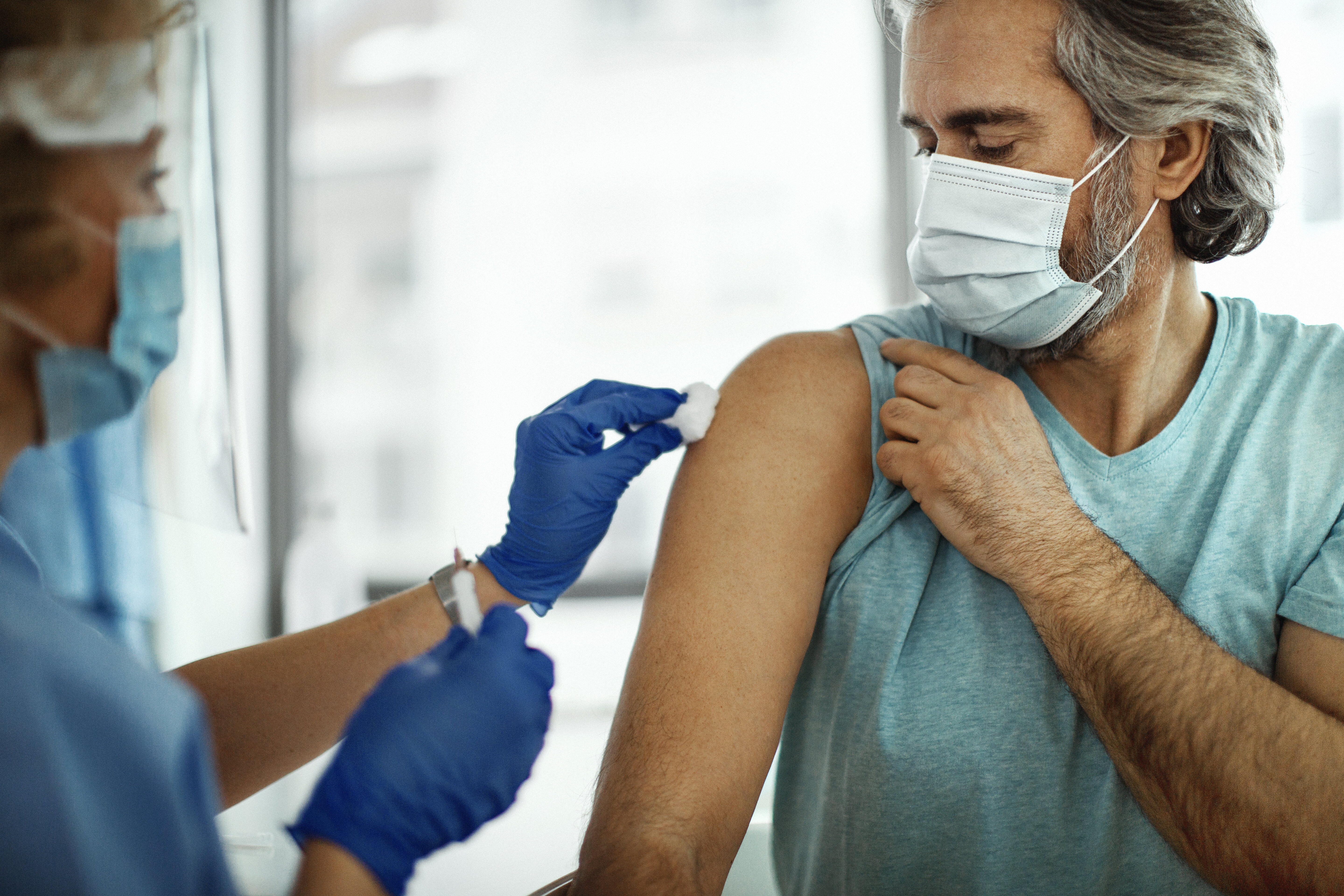
Monkeypox Vaccine: Who Will Soon Be Offered A Jab?

People who are at highest risk of catching the monkeypox virus will soon be offered a vaccine in an effort to reduce transmission.

The UK’s Health Security Agency (UKHSA) has revealed that some men who have sex with men will soon be offered the Imvanex jab – originally designed to treat smallpox – to curb the largest recent outbreak outside of Africa.

Here’s why.

Who is at high risk and why?

Monkeypox is not sexually transmitted, but can be passed on through close contact which is why it has become associated with sex.

The World Health Organisation (WHO) believes that the outbreak stemmed from sexual activity by men at raves in Spain and Belgium.

More than 99% of the current 793 reported UK cases are among men, most of whom identify as gay or bisexual.

Anyone – regardless of sexual orientation – is at risk of contracting the virus if they are in close contact with someone infected with monkeypox, or infected clothing or bedsheets.

But, men who have sex with men and who have multiple partners are considered at the highest risk – this includes those who take part in group sex, or go to venues where sex occurs on the premises – due to the origins of this particular outbreak.

The agency said data suggests there are higher levels of transmission “within, but not exclusive to, the sexual networks of gay, bisexual and other men who have sex with men”.

UKHSA’s head of immunisation Dr Mary Ramsay said: “By expanding the vaccine offer to those at higher risk, we hope to break chains of transmission and help contain the outbreak.”

Is this the first group to be offered the vaccine?

No – vaccines were offered to health workers who look after monkeypox patients as well as cleaners disinfecting areas which may have been exposed to the virus.

Close contacts of confirmed cases were also offered the vaccine.

NHS England will soon provide more details about how those who are eligible can receive a jab, although people are advised not to approach the NHS until contacted.

Vaccines have never been used in Africa to impact monkeypox, even though it is endemic in some countries.

It’s also worth noting that this vaccine is not designed specifically for monkeypox. Although Imvanex was used to eradicate smallpox worldwide, it has been found to be 85% effective against this current virus.

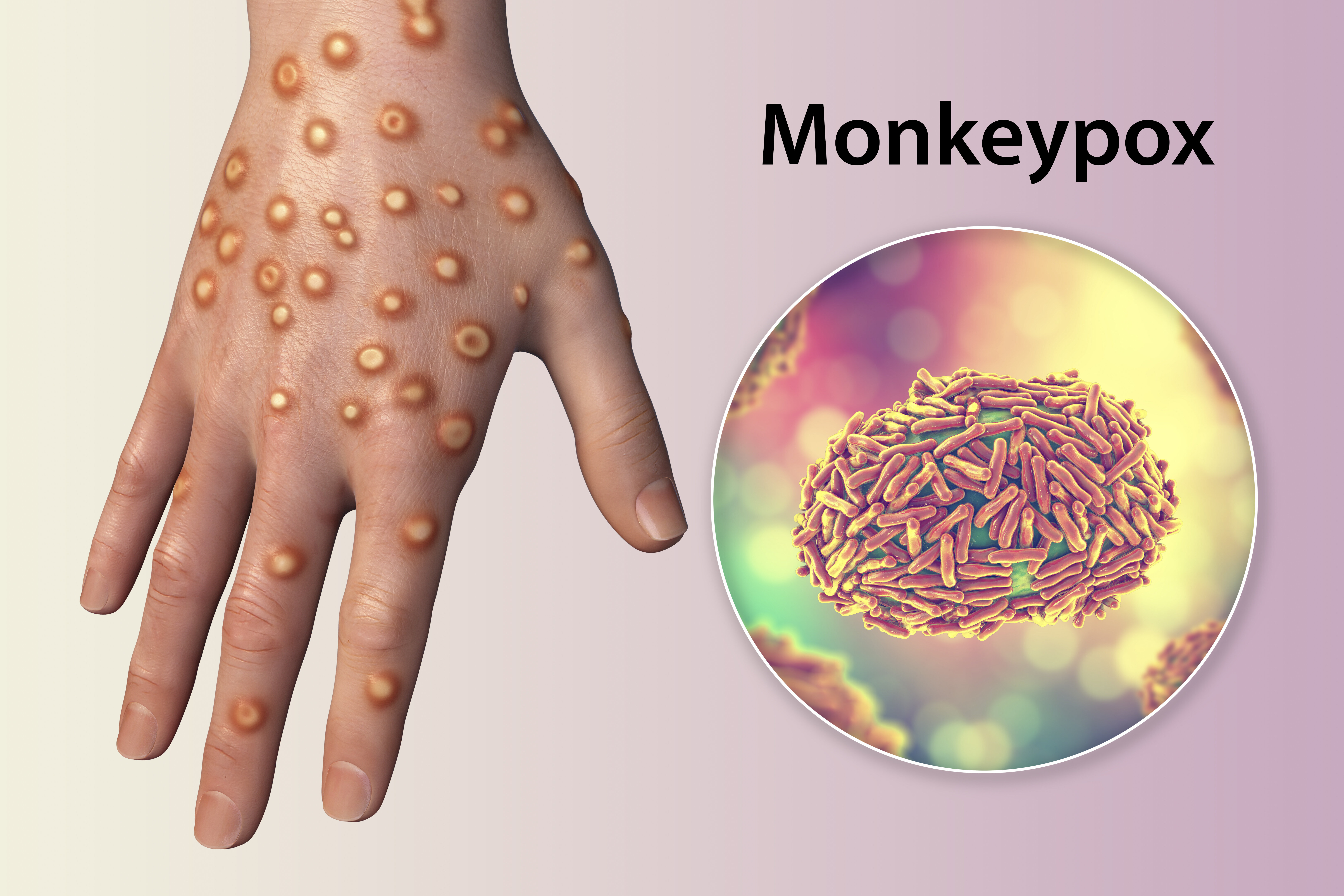
Hand of a patient with monkeypox infection and close-up view of monkeypox virus particles, computer illustration

KATERYNA KON/SCIENCE PHOTO LIBRARY via Getty Images

Hand of a patient with monkeypox infection and close-up view of monkeypox virus particles, computer illustration

Does this news mean there’s cause for concern?

Well, it’s unclear at the moment.

No deaths outside of Africa have yet been reported from this outbreak, although confirmed cases have suffered from fever, swollen glands and a rash which develops into fluid-filled lumps.

There are currently 793 cases in the UK out of more than 2,100 cases around the world – far lower numbers compared to when the Covid vaccine rollout first began.

However, the Joint Committee on Vaccinations and Immunisations (JCVI) supported the decision to start handing out the smallpox vaccine. This panel advised the government to start its vaccination programme for Covid last year.

The WHO has described the outbreak outside of the continent as “unusual and concerning”, and is considering declaring it a global emergency.

Dr Ramsay warned: “Although most cases are mild, severe illness can occur in some people, so it is important we use the available vaccine to target groups where spread is ongoing.”

Professor Paul Hunter from University of East Anglia’s school of medicine also told Sky News that vaccination was “the right thing to do”.

He added: “What we have seen with monkeypox is a significant and continuing increase of the second wave despite control measures having been in place for a few weeks.

“So it is certainly looking like the current strategy of ring vaccination is not working.

“This is probably down to difficulties in identifying cases and their contacts rapidly enough, possibly due to stigma.”

He suggested that “we should be ready to start offering the vaccine to female sex workers” as well, because the virus does not discriminate by sexual orientation or sex.

The WHO has also called for the virus to be renamed after experts appealed for a “non-discriminatory” alternative.

If you think you have monkeypox…

You’ll have to do a PCR test similar to the Covid test. For monkeypox, it involves three swabs, two for the skin, and a throat swab.

You are still allowed to travel on public transport if you suspect you’ve caught the virus, but wear a mask and cover any lesions.

If you need to isolate, do not share a bathroom if you can avoid it and isolate in one room. Make sure not to share bedding or towels, avoid contact with your pets and have no sexual contact.

Try to avoid other communal spaces, too, such as the kitchen.

Share Button

Regé-Jean Page Responds To Bridgerton Return Rumours

Regé-Jean Page has shut down reports he is set to reprise his role as the Duke Of Hastings in the third series of Bridgerton.

The actor played one of the romantic leads in the first series of the hit Netflix period drama, but did not return for the second, which was released earlier this year.

Reports recently claimed that he was in talks about reuniting with co-star Phoebe Dynevor, who plays his wife Daphne Bridgerton, in the next set of episodes.

However, those holding out hope of seeing Regé-Jean back in action as Simon Basset will be disappointed as he has said there is no truth to the rumours.

After hanging out with former co-star Jonathan Bailey, who plays Anthony Bridgerton, at Milan Fashion Week, Regé-Jean posted some snaps on Instagram, writing: “The boys are back in town (No, I’m not going back to the show btw – the papers made that one up.)

“But we had the best, and most stylish, catch up I’ve had in a while over some truly excellent Italian coffee and sunshine.”

Last month, it was revealed the love story between Colin Bridgerton (Luke Newton) and Penelope Featherington (Nicola Coughlan) will take centre stage in Bridgerton’s forthcoming series.

This is a deviation from the order of the original books, as the third instalment in the Bridgerton novel series by Julia Quinn focuses on Benedict Bridgerton’s romance with Sophie Beckett.

The couple will take the lead roles in the show's third season
The couple will take the lead roles in the show’s third season

Explaining the change in an interview with Variety, new showrunner Jess Brownell said: “I really feel like it’s Colin and Penelope’s time. Because we’ve been watching both of these actors on our screens since season one, we’ve already invested in them a little bit. We know who they are as people,” she said.

“I feel like, especially in the last season, there are these moments of tension between them where it’s like, Colin walks up to the line of almost realising that Penelope has feelings for him but doesn’t quite get there.

“Instead of treading water on that dynamic, we wanted to push it into their season. It really felt like the perfect moment to tee it up.”

The third season of Bridgerton will also see one of the Bridgerton family getting a whole new face, as one of the characters has been recast with a new actor.

Both seasons of Bridgerton are now available to watch on Netflix.

Share Button

Secamb: Bullying ‘normalised’ at ambulance service

Watchdog finds leadership at South East Coast Ambulance Service are “out of touch” with staff.

Share Button

Muscle biopsy test for biomarker could lead to earlier diagnosis of ALS

Amyotrophic lateral sclerosis (ALS) is a progressive disease of the nervous system. It affects nerve cells in the brain and spinal cord called motor neurons. Motor neurons control muscle movement and ALS causes them to deteriorate and eventually die. The motor neurons lose the ability to send messages to the muscles in the body, affecting voluntary muscle movements. There have been recent advances in treating ALS, but current treatments can only slow disease progression. That is why it is important to diagnose ALS as early as possible.

ALS is difficult to diagnose because, currently, there is no single test that can confirm the disease. Doctors look for neurological symptoms such as muscle weakness and upper and lower motor neuron symptoms. They will also do diagnostic tests to rule out other conditions like cervical spondylosis. A diagnostic test that could confirm ALS would help people get a diagnosis earlier and start treatment as soon as possible.

In a paper published on May 23 in JAMA Neurology, researchers outline preliminary research that could pave the way for a future test to diagnose ALS.

“It is difficult to diagnose ALS in its early stages because there is not a known biomarker,” said researcher Hirofumi Maruyama, a professor at the Graduate School of Biomedical and Health Sciences at Hiroshima University in Hiroshima, Japan. “Muscle is possible to biopsy, and transactive response DNA-binding protein 43 (TDP-43) accumulates in the peripheral nerves inside muscle. TDP-43 is a protein that plays a key role on motor neurons, and accumulation of TDP-43 may be a biomarker for early diagnosis of ALS.”

Previous research in mice has revealed a crucial function of TDP-43 in axons, the part of the neuron that sends signals to other neurons. This is important for ALS, because axonal degeneration causes the lower motor neuron problems that can be a symptom of ALS. Researchers hypothesized that TDP-43 accumulation in muscular nerve bundles could be an early predictor of ALS.

To test this theory, researchers first examined the muscle tissue of 10 individuals who had confirmed cases of ALS at the time of their death and 12 who did not. All 10 ALS patients had TDP-43 accumulations in their intramuscular nerve bundles, while 12 non-ALS controls had no TDP-43 accumulation.

Next, researchers targeted 114 patients who underwent a muscle biopsy and did not have a family history of ALS or another muscle or neuromuscular diagnosis. Of these, 71 had evidence of intramuscular nerve bundles and 43 did not. Among the 71 patients, axonal TDP-43 accumulations in their nerve bundles were confirmed in 33. These 33 patients with axonal TDP-43 accumulations were all later diagnosed with ALS. Among the 43 patients without nerve bundles, three were later diagnosed with ALS.

“Results of this dual case-control and cohort study suggest that axonal TDP-43 accumulations may be characteristic for patients with ALS, and consequently may be a novel diagnostic biomarker for ALS,” said Maruyama. “Early diagnosis enables patients to initiate prompt treatment. We aim to prevent the progression of ALS and will continue research into developing new medication.”

Story Source:

Materials provided by Hiroshima University. Note: Content may be edited for style and length.

Share Button

2021 heat wave created ‘perfect storm’ for shellfish die-off

It’s hard to forget the excruciating heat that blanketed the Pacific Northwest in late June 2021. Temperatures in Oregon, Washington and British Columbia soared to well above 100 degrees Fahrenheit, with Seattle setting an all-time heat record of 108 degrees on June 28.

During the heat wave, also called a heat dome, scientists and community members alike noticed a disturbing uptick of dying and dead shellfish on some beaches in Washington and British Columbia, both in the Salish Sea and along the outer coast. The observers quickly realized they were living through an unprecedented event and they organized to document the shellfish die-offs as they happened in real time.

Now, a team led by the University of Washington has compiled and analyzed hundreds of these field observations to produce the first comprehensive report of the impacts of the 2021 heat wave on shellfish. The researchers found that many shellfish were victims of a “perfect storm” of factors that contributed to widespread death: The lowest low tides of the year occurred during the year’s hottest days — and at the warmest times of day. The results were published online June 20 in the journal Ecology.

“You really couldn’t have come up with a worse scenario for intertidal organisms,” said lead author Wendel Raymond, a research scientist at UW Friday Harbor Laboratories. “This analysis has given us a really good general picture of how shellfish were impacted by the heat wave, but we know this isn’t even the full story.”

The research team leveraged existing collaborations across tribes, state and federal agencies, academia and nonprofits. They devised a simple survey and five-point rating system (1 = much worse than normal to 5 = much better than normal) and asked participants to provide ratings based on their knowledge of a species in that location. In total, they gathered 203 observations from 108 unique locations, from central British Columbia down to Willapa Bay, Washington.

“The strength of this study and what it really highlights is the value of local knowledge and also the importance of understanding natural history,” said co-author P. Sean McDonald, a UW associate teaching professor in environmental studies and aquatic and fishery sciences. “This is the first step and a snapshot, if you will, of what shellfish experienced on the beaches during the heat wave.”

The researchers found that each species’ ecology contributed to its general success or failure to survive the extreme heat. For example, some shellfish that naturally burrow deep beneath the surface, like butter clams, usually fared better than ones that typically ride out low tide just below the sand’s surface, such as cockles.

They also found that location mattered. Shellfish on the outer coast experienced low tide about four hours earlier than shellfish on inland beaches. For inland shellfish, low tide — or when the most shellfish were exposed — hit around solar noon, when the sun was directly overhead.

Additionally, air temperatures were much higher at inland sites compared to the outer coast, causing more stress on inland populations. For example, California mussels, found almost exclusively on the outer coast, mostly survived the heat while bay mussels, found in more inner coastal sites, were more likely to die from heat exposure. More water movement and wave action on the outer coast also likely helped lessen the impacts of the heat on shellfish along those beaches.

“The timing of low tide helps determine when and where organisms may be exposed to heat stress and can structure behavior and distribution. In this case, organisms at locations that are already exposed to air at the hottest time of day were very unlucky that temperatures soared so high,” said co-author Hilary Hayford, habitat research director at Puget Sound Restoration Fund.

Many shellfish don’t tend to move much on any given beach, so where they naturally live in the intertidal zone also contributed to their success or failure, the researchers found. For example, acorn barnacles that live higher on the shore generally were more impacted than clams and oysters that are lower on the beach and more likely to remain under water.

“Although this event had negative effects on marine life, there is hope that can be found in this work. Not all locations and species were affected equally, offering clues to pathways to resiliency in the future,” said co-author Annie Raymond, a shellfish biologist with Jamestown S’Klallam Tribe.

Perhaps most surprisingly, the researchers noticed interesting patterns in survival rates among shellfish on the same beach. In some locations, shellfish in the path of freshwater runoff on one section of beach survived, while others just a few miles away perished. If a tree hung over part of a beach and shaded the sand, those shellfish generally made it while others didn’t. Co-author Julie Barber, senior shellfish biologist with the Swinomish Indian Tribal Community, remembers seeing those patterns while walking the beaches of Skagit Bay and, in some locations, being surrounded by dead cockles in every direction.

“It was pretty unsettling, and I’ve never seen anything like it,” Barber said. She remembers exchanging emails with colleagues from around the region as they noticed similar mass die-offs on their local beaches, then realizing that they urgently needed to coordinate and document what was happening.

“This effort was a beautiful demonstration of how collaborators can come together with one common cause — which in our case was trying to understand what happened to these shellfish,” Barber said.

Because the heat wave occurred during the time frame when many shellfish are reproducing, the mass die-offs could impact those populations for at least several years, highlighting the need for long-term monitoring, the researchers said. And as climate change continues to produce more frequent extreme heat events, shellfish deaths like those of last summer may become more of a common reality.

“The Swinomish Indian Tribal Community is proud to be a leader in this important scientific research that assessed in real-time the devastating impacts to our shellfish resources from the unprecedented heat dome last summer. Shellfish are a priority first food that our tribal community relies on for spiritual and subsistence nourishment. Last summer’s extreme weather event reinforced to us that we must act faster to ensure climate resiliency for our community’s long-term health and well-being,” said Swinomish Tribal Chairman Steve Edwards.

“Once the effects of the heat wave started to become apparent, the collaboration that emerged was amazing as managers and scientists worked quickly to put together a rapid response to capture information,” said co-author Camille Speck, Puget Sound intertidal bivalve manager for Washington Department of Fish and Wildlife. “We still have so much to learn about the effects of the heat wave on Salish Sea marine ecosystems, and more work to do as managers to prepare for the next one and develop informed responses. These conversations are happening now, and it is our hope that we will be better prepared for whatever comes next.”

Other co-authors are Megan Dethier of the UW; Teri King of UW-based Washington Sea Grant; Christopher Harley of University of British Columbia; Blair Paul of Skokomish Indian Tribe; and Elizabeth Tobin of Jamestown S’Klallam Tribe. More than two dozen individuals contributed data to this project.

This analysis was funded by Washington Sea Grant with data contributions from tribes, state and federal agencies, academic institutions and nonprofits.

Share Button

Quantum sensor can detect electromagnetic signals of any frequency

Quantum sensors, which detect the most minute variations in magnetic or electrical fields, have enabled precision measurements in materials science and fundamental physics. But these sensors have only been capable of detecting a few specific frequencies of these fields, limiting their usefulness. Now, researchers at MIT have developed a method to enable such sensors to detect any arbitrary frequency, with no loss of their ability to measure nanometer-scale features.

The new method, for which the team has already applied for patent protection, is described in the journal Physical Review X, in a paper by graduate student Guoqing Wang, professor of nuclear science and engineering and of physics Paola Cappellaro, and four others at MIT and Lincoln Laboratory.

Quantum sensors can take many forms; they’re essentially systems in which some particles are in such a delicately balanced state that they are affected by even tiny variations in the fields they are exposed to. These can take the form of neutral atoms, trapped ions, and solid-state spins, and research using such sensors has grown rapidly. For example, physicists use them to investigate exotic states of matter, including so-called time crystals and topological phases, while other researchers use them to characterize practical devices such as experimental quantum memory or computation devices. But many other phenomena of interest span a much broader frequency range than today’s quantum sensors can detect.

The new system the team devised, which they call a quantum mixer, injects a second frequency into the detector using a beam of microwaves. This converts the frequency of the field being studied into a different frequency — the difference between the original frequency and that of the added signal — which is tuned to the specific frequency that the detector is most sensitive to. This simple process enables the detector to home in on any desired frequency at all, with no loss in the nanoscale spatial resolution of the sensor.

In their experiments, the team used a specific device based on an array of nitrogen-vacancy centers in diamond, a widely used quantum sensing system, and successfully demonstrated detection of a signal with a frequency of 150 megahertz, using a qubit detector with frequency of 2.2 gigahertz — a detection that would be impossible without the quantum multiplexer. They then did detailed analyses of the process by deriving a theoretical framework, based on Floquet theory, and testing the numerical predictions of that theory in a series of experiments.

While their tests used this specific system, Wang says, “the same principle can be also applied to any kind of sensors or quantum devices.” The system would be self-contained, with the detector and the source of the second frequency all packaged in a single device.

Wang says that this system could be used, for example, to characterize in detail the performance of a microwave antenna. “It can characterize the distribution of the field [generated by the antenna] with nanoscale resolution, so it’s very promising in that direction,” he says.

There are other ways of altering the frequency sensitivity of some quantum sensors, but these require the use of large devices and strong magnetic fields that blur out the fine details and make it impossible to achieve the very high resolution that the new system offers. In such systems today, Wang says, “you need to use a strong magnetic field to tune the sensor, but that magnetic field can potentially break the quantum material properties, which can influence the phenomena that you want to measure.”

The system may open up new applications in biomedical fields, according to Cappellaro, because it can make accessible a range of frequencies of electrical or magnetic activity at the level of a single cell. It would be very difficult to get useful resolution of such signals using current quantum sensing systems, she says. It may be possible using this system to detect output signals from a single neuron in response to some stimulus, for example, which typically include a great deal of noise, making such signals hard to isolate.

The system could also be used to characterize in detail the behavior of exotic materials such as 2D materials that are being intensely studied for their electromagnetic, optical, and physical properties.

In ongoing work, the team is exploring the possibility of finding ways to expand the system to be able to probe a range of frequencies at once, rather than the present system’s single frequency targeting. They will also be continuing to define the system’s capabilities using more powerful quantum sensing devices at Lincoln Laboratory, where some members of the research team are based.

The team included Yi-Xiang Liu at MIT and Jennifer Schloss, Scott Alsid and Danielle Braje at Lincoln Laboratory. The work was supported by the Defense Advanced Research Projects Agency (DARPA) and Q-Diamond.

Share Button

Boots criticised over pill boxes for the elderly

Some pharmacies run by the chain have stopped providing weekly pill organiser packs for patients.

Share Button