This Phone Charger Mistake Can Ruin Your Sleep In A Heatwave

As the third heatwave of the year begins in earnest, I’ve started to dread the night.

Like most of us, I find that boiling temperatures ruin my sleep.

Speaking to HuffPost UK, Dr Seeta Shah from PANDA London previously said that going to bed half an hour later might help you get some shut-eye (a 2012 paper found that heat affects slow-wave and rapid eye movement sleep, meaning the natural cycles you’re meant to go through when asleep are interrupted).

But the British Red Cross advised doing something a little simpler to control the temperature in your room at night.

Unplugging your electronics might reduce heat

The organisation suggested sleeping on the lower floors in your home, as heat rises, as well as staying hydrated and using some thin, breathable bedding.

So far, so predictable.

But I was surprised to read that “even when in standby mode, electrical items can generate heat”.

The British Red Cross therefore suggested switching them off entirely at night.

“Make sure any in the bedroom are turned off and unplugged,” the site said.

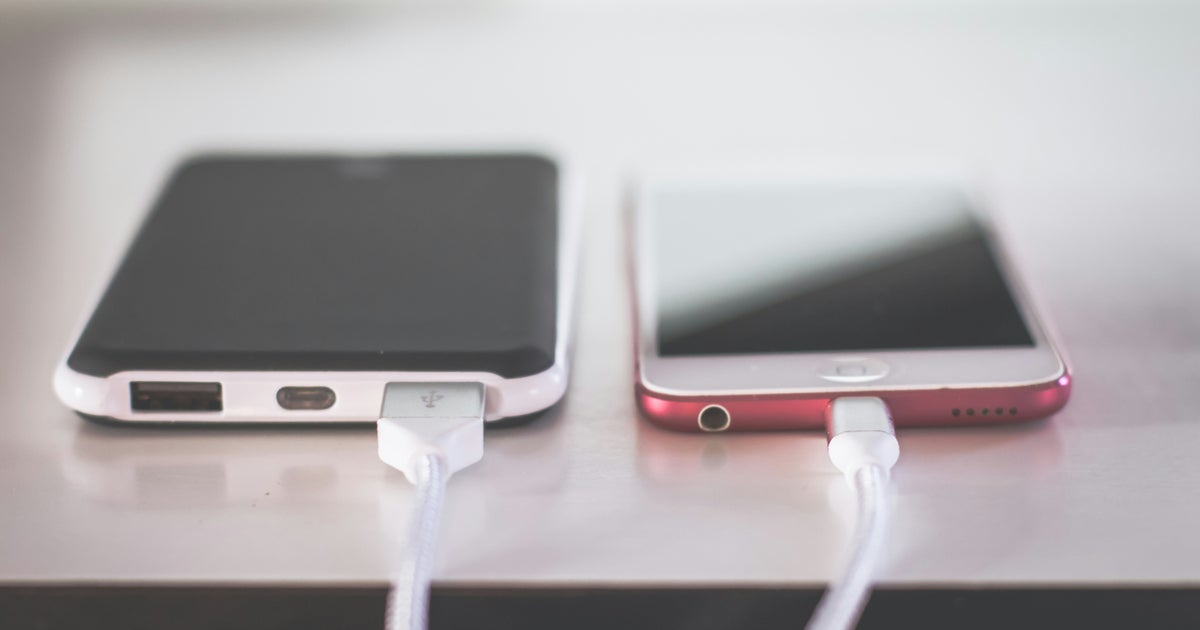
Speaking to Ideal Home, David Rees, an appliances expert from HomeSupply, explained that phone and headphone chargers might pose a particularly toasty risk.

These can “seriously overheat and use a lot of excess energy in the summer if not unplugged,” he warned, suggesting we power our devices “throughout the day, so that they can be unplugged as soon as they are fully charged… this will help to save money and prevent overheating in summer”.

Are there any other ways to keep cool?

Wearing cool socks, donning loose-fitting pyjamas, and maintaining a wind-down bedtime routine can all help, the Red Cross said.

“Many take a cold shower before bed in hot weather, but a shockingly cold shower can actually raise core body temperature as your body works to counteract the sudden cold,” Dr Shah warned.
Closing your windows and curtains or blinds at the hottest parts of the day, and opening them in the evening or early morning can help to keep your home cooler, too.
Share Button

Here’s Why You Should Place A Torch In Your Fridge This Week

Bad news for fellow heatwave haters, especially in the south and east of the UK – “hot spells remain possible” this month, the Met Office says.

The BBC has predicted temperatures as high as 31C in parts of the country this Sunday, July 13.

And according to appliance repair company Atomic Tech, that can spell bad news for your fridge (and the food in it).

“Refrigerators are sensitive to heat and may struggle to cool if they are in an environment too hot (or too cold),” they wrote.

That’s why it’s important, they shared, to “keep the doors closed and ensure the gaskets seal completely… to maintain a consistent temperature inside.”

But gasket issues (problems with the accordion-like rubber seal that closes your fridge door) can be hard to spot – unless, of course, you own a torch.

How can a torch help me to spot issues with my fridge door’s seal?

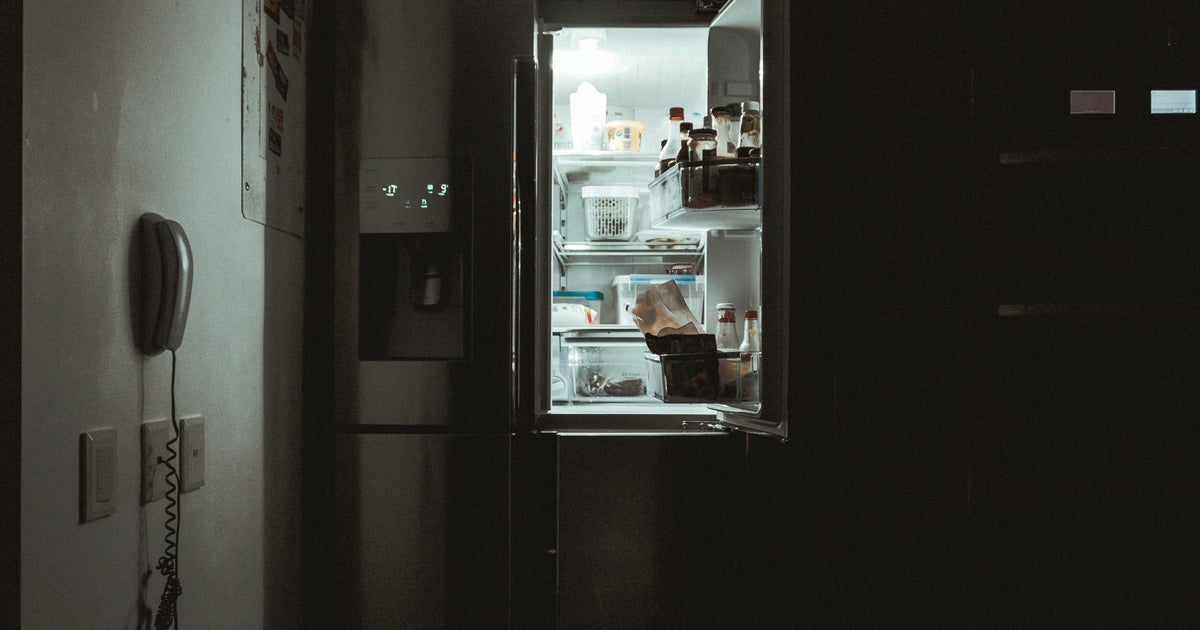
According to House Digest, placing a lit torch (or your phone’s flashlight) in the fridge and then closing the door can reveal any seal issues.

Place the light facing out.

If any light seeps through the gasket, the seal isn’t as tight as it needs to be.

That means air is escaping your fridge, making it harder to keep your food cool.

It could even raise your electricity bill as your appliance struggles to circulate cooling air around your food, the publication says.

It helps if you do this earlier or later in the day, when it’s darker in your kitchen.

Keep other lights off to make the beams easier to spot.

You can also use a sheet of paper or a pound note

Per appliance services company Bodewell, another way to test your fridge’s seal is with a pound note or a sheet of paper.

Shut your fridge’s door on the sheet or note.

Then, try to pull it out.

“You should feel some tension as you do so; if not, the gasket may be weak or broken at this point,” the experts advised.

“Repeat this test around the whole of the gasket’s length.”

If you suspect you’ve got issues with your fridge’s seal, it may be time to buy a new gasket.

Share Button

9 Cheap Ways To Keep Cool Without Air Conditioning This Summer

Tough news for fellow heatwave haters – this weekend is set to be yet another scorcher.

Speaking to HuffPost UK previously, Richard Millard, senior sustainability consultant at Building Energy Experts, explained that buildings in the UK provide uniquely uncomfortable conditions in hot weather.

Not only are they designed to hold onto heat for longer, have smaller windows, and offer less ventilation, but – crucially – “Unlike many hotter climates (and increasingly, northern European countries), air conditioning is not standard in most UK homes, workplaces, or public buildings.”

Many houses, especially older ones, in the UK are unsuitable for air conditioning (and that’s not considering the eye-watering cost).

So it’s a good thing members of r/Frugal have shared their “frugal ways to stay cool without an air conditioner.”

Here are some of the most upvoted comments:

1) “As soon as it gets cooler outside than inside the house (8-9pm), we open the windows on both sides and keep room doors open to allow for airflow.”

“In the morning, we close the windows AND curtains when it gets warmer outside than inside (9-10am).

“When it gets hotter, we will use box fans (one side of the house blowing in and one side blowing out) to encourage air to flow through.”

Credit: [deleted]

3) “Sleep in your coolest room.”

That may be north-facing since the north avoids any direct sunlight.”

Credit: u/Goge97

4) “Freeze several bags of water in freezer-safe bags (lay them flat in the freezer).”

“Once frozen, sandwich it between some towels. Rotate the block of frozen sheets when no longer cold.

“I lay on the cold towels, and my dogs lay in their dog bed with theirs too.”

Credit: u/RiverBlitz

Writer’s note: Other commenters have suggested freezing a water bottle instead, while some experts say freezing a hot water bottle filled with water works great too.

“Keep [your home] dark.”

Credit: u/slowsnale

6) “The best I could do [without air conditioning] was put a cold, damp (NOT DRIPPING WET) towel on the fan.”

“Worked for me.”

Credit: u/Uberchelle

7) “Don’t cook anything on the stove or oven on the worst days (lots of salads, sandwiches, and slow cooker meals like pulled pork on those days).”

“These have helped us tremendously.”

9) “It’s messy, but putting a source of ice in front of a fan and having a fan blow over it is also very helpful.”

Credit: u/wridergal

Do you have other tips? Let us know!

Share Button

The Most Accurate Weather App Has Finally Been Identified

If you’ve ever stepped out in what you thought were weather-appropriate clothes, only to find yourself soaked to the skin or sweating buckets, you’re likely very familiar with the feeling of being betrayed by weather apps.

It’s frustrating, especially when your friends tell you that the app that they rely on gave an entirely different forecast for the day. The absurdity! The outrage!

Thankfully, a team of researchers decided to set the record straight on exactly which app we should be using ahead of stepping outside, so that we can be more suitably prepared.

New research reveals the best weather app

In a move that adds another layer to the treasured British tradition of complaining about the weather, iNews commissioned University of Reading’s Department of Meteorology to identify which were the best sources to check, and the results actually revealed that it can differ, depending on the outlook you’re hoping for.

iNews asked Rosie Mammatt, a weather scientist at the University of Reading, to compare the performance of some of the country’s most popular weather apps.

Over a period of two weeks, Mammatt looked at BBC Weather, the Met Office, Apple Weather, the Weather Channel and AccuWeather over a two-week period.

Her research found that, as many of us know, forecasts are often wrong and surprisingly, it’s the BBC that often gives the least accurate forecasts on their app.

Mammatt reveaed that BBC Weather is often “too pessimistic” and repeatedly overestimated the amount of rainfall ahead.

So, who can we really rely on, then?

Well, if you’re heading out in the morning, you’re best to check Accuweather. If you’re going out in the afternoon, the Met Office is best.

The best overall forecaster, though, was Weather Channel, which can be relied on for any and all forecasts.

Weather apps ranked by accuracy:

  1. Weather Channel
  2. AccuWeather
  3. Met Office
  4. Apple Weather
  5. BBC Weather
Share Button

‘Pure Comedy, Chaos And Shambles’: The Best Jokes About Sunak’s Damp Start To The General Election

Rishi Sunak’s bold decision to call a general election in the middle of yesterday’s downpour has opened the floodgates on social media.

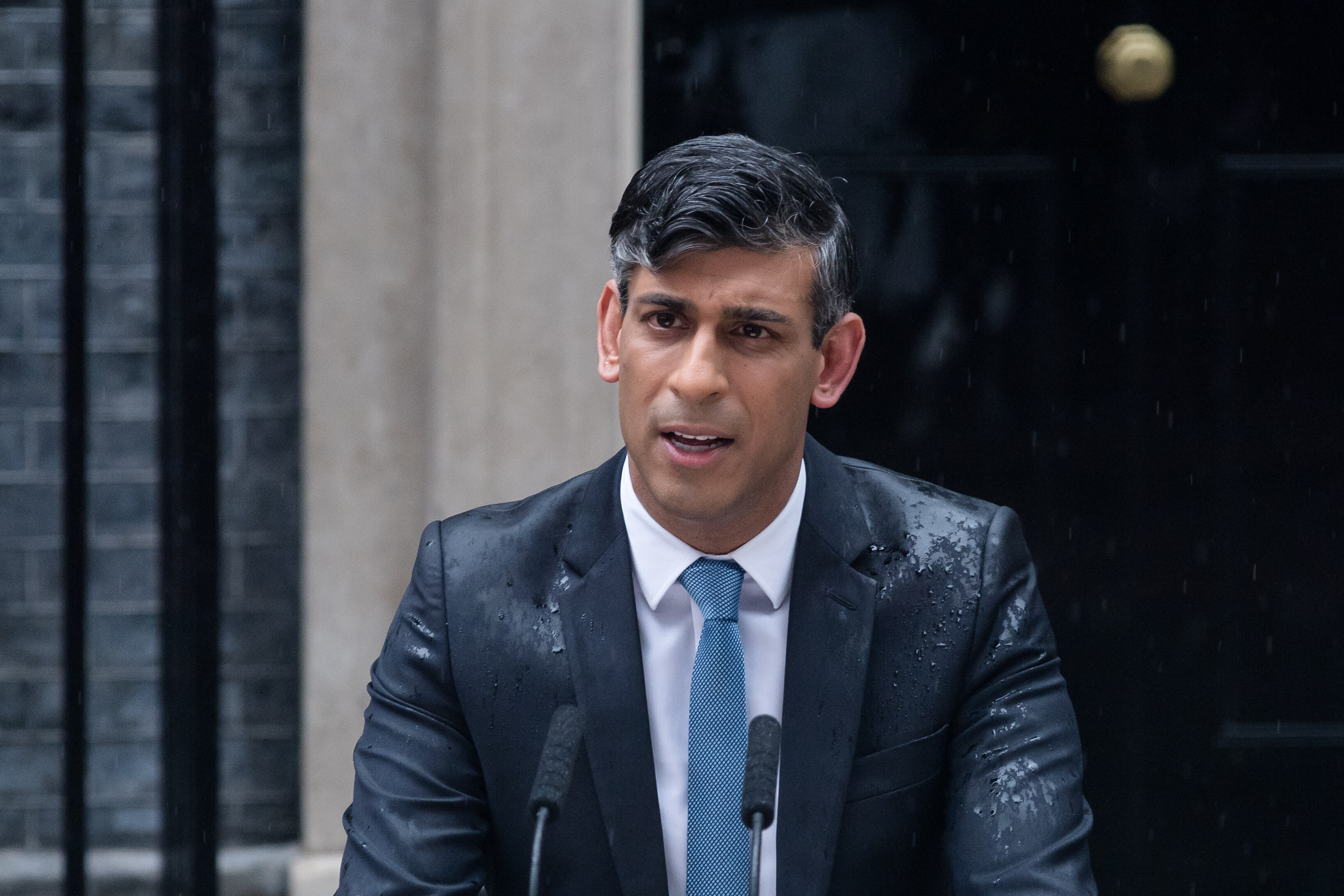
The prime minister stood outside No.10 Downing Street, in the pouring rain, and declared a general election would be held on July 4.

He then immediately tried to rally voters with a few digs at Labour over the party’s campaigns and policies.

But, no one really focused on that. Most of the attention was on Sunak’s suit, which became completely sodden within minutes.

While all the journalists there to capture the historic moment were sensibly wearing coats or carrying umbrellas, the PM’s bizarre decision to go without for such a pivotal moment, has been demolished by everyone, including today’s newspapers.

Protesters also blared Labour’s 1997 election theme tune – D:Ream’s Things Will Only Get Better – throughout the PM’s speech.

And so critics were quick to coin the phrase “Things Will Only Get Wetter” in a scathing take on Sunak’s announcement.

Considering the Conservatives are around 20 points behind Labour in the opinion polls right now, the image of a downtrodden Sunak standing in the rain was seen as an apt metaphor by many people on social media.

Others pointed out that the Conservatives actually set up an expensive press conference room within No.10, which is warm, dry and available to use.

Either way, the impact that image of a soaked Sunak has had among his online critics – and the newspapers – is clearly significant.

Here’s a round-up of social media’s best jokes about the embarrassing PR gaffe…

Share Button

3 Simple Steps To Save A Waterlogged Lawn, According To An Expert

Ah, soggy ol’ Britain. An island where your outfit on any given day should account for all possible weathers because truly, who knows what the day holds? This is especially true during spring when we don’t seem to have any consistency for three solid months.

Following a few weeks of hopeful sunshine, a lot of the country now has, predictably, downpour. Which is set to last for at least the rest of the week with flood warnings even being issued for parts of England, according to the Met Office. Yay.

Another issue that comes with this weather is that our gardens can get flooded (also known as waterlogged), which is dreadful news for those of us that were excited to finally get back into gardening after a long winter.

However, there are some things we can do to help our lawns recover.

How to fix a waterlogged lawn

Rhiannon Moore, a garden expert at Toolstation, shared her tips for tackling a flooded garden:

Remove any built-up debris

Moore advises that once the water has receded, you should immediately remove any leftover debris such as sticks and leaves to clear the surface of the lawn. She added that you shouldn’t use a metal rake for this as it’ll damage the already weakened soil surface.

Aerate the soil

Using a garden fork or aeration tool, spike holes into the soil surface that are no more than six inches deep.

Fertilise the soil

Using a feed that’s rich in phosphorus, fertilise your lawn. This will help to promote root growth as well as replace the lost nutrients in the soil.

Moore added: “It’s also important to remember not to mow a lawn after a period of extensive rain and make sure to avoid watering until the ground has dried out.”

Early signs of waterlogging

If you’re not familiar with waterlogging or are new to the world of gardening, you may not be aware of the signs of a flooded lawn. Moore shared the most important signs to look for:

  • Bare patches – As the grassroots start to die, it will result in bare patches of lawn. These first strike in the worst affected area

  • Moss patches – Whilst a small amount of moss is beneficial to a lawn, large amounts of it can cause the grass to die as the moss steals the ground nutrients

  • Excess weeds – Rogue weeds are a common sight in lawns however, they can quickly take over a weakened lawn and starve the remaining grass of nutrients

Long-lasting solutions for a waterlogged lawn

  • Level out the ground – If the flooding is only happening in isolated areas, you can add some topsoil and new turf to level out the uneven lawn

  • Add garden walkways – Each time you walk over your lawn, you compact it beneath your feet. Adding a simple paved garden walkway will help to protect your lawn from damage

  • Consider a French Drain – If flooding is a regular issue, you may want to consider installing a French drain. This is a gravel-filled ditch with a perforated underground pipe to drain away the water. It’s best to check with your local planning authority before starting any digging

Let’s hope for sunnier days soon!

Share Button

Why Are Meteorologists Saying Storm Isha Is ‘Unusual’ And ‘Rare’?

Storm Isha is on its way – but, as the ninth named storm the UK has faced since summer ended, why are meteorologists calling it “unusual”?

Why is Isha a ‘rare’ storm?

The UK has seen plenty of storms recently, particularly named ones – after all, Storm Henk was only earlier this month.

If a storm has been named, it means they pose a threat to life.

The Met Office names them in alphabetically order. Isha is the ninth storm of the winter season (which technically begins in September) so it is named after the ninth letter.

The Met Office has explained that storm was triggered by the subsiding of the cold Arctic air which had been hanging over the UK – meaning air from the Atlantic came in.

The weather has therefore become much milder in temperature, but it’s much wetter and windier, too.

And that’s why meteorologists keep saying Isha is of particular interest – the UK does not often see storms which see the whole country hit by weather warnings.

According to Sky News, Met Office forecaster Ellie Glaisyer said that the “main thing” about Isha is that it is “very widespread” – and it’s “relatively rare” to have the whole of the UK covered by a warning.

“That’s the main difference to previous storms we have seen,” she said.

Channel 4 weather presenter Liam Dutton echoed this, writing on X (formerly Twitter): “Storm Isha is unusual because the disruptive winds cover a very large area.”

What weather will Isha bring?

The Met Office has already issued an amber weather warning for wind for the north and south-west of England, Wales, large parts of Northern Ireland and central and southern Scotland, from Sunday into Monday.

Another warning will be introduced for Sussex and Kent from Monday morning.

Winds of up to 80mph are expected along the UK coasts, and many places will see gusts of 50-60mph inland.

There’s a risk to life in coastal areas, and yellow flood warnings are expected for the next two days.

Ireland’s meteorological service, Met Eireann, has also introduced amber wind warnings for Sunday, which will escalate into a red storm warning for coastal areas in the north of the country on Monday.

Amber means there’s a good chance of power cuts, and other services could be impacts. Buildings may be damaged, journeys may be lengthened or cancelled altogether and some roads and bridges may close.

It also means injuries and danger to life likely from large waves and beach material thrown onto coastal roads, sea fronts and property.

A red weather warning means people need to seek cover and protect themselves or their properties.

A yellow wind warning will be in place covering Northern Ireland, north Wales, northern England and much of Scotland from Tuesday until midday on Wednesday.

The winds will gradually east throughout Monday, and overnight it should be a “calmer interlude” according to the Met Office – although it will be wet and windy again on Tuesday.

Share Button

2023 And 2022 Were The UK’s Hottest Years On Record, Met Office Says

2023 was the second hottest year since records began in the UK, according to provisional data from the Met Office, with the hottest year still being 2022.

While the UK did not experience same kind of record-breaking heatwave we saw in 2022 – and just dodged the extreme temperatures which hit southern Europe – the weather experts looked at the average mean temperature and found the climate across the two years was not too different.

2023 had a provisional mean temperature of 9.97C, while 2022′s average mean was 10.03C.

The third highest temperature for the UK was not very long ago either – it was in 2014, when the average of 9.88C. In fact, all of the ten warmest years in the UK have occurred since 2003.

The last year was also the warmest year for a minimum temperature, according to the Met Office, and was ranked the second warmed for Central England Temperature – that’s the world’s longest instrumental series dating back to 1659.

When just looking at Wales and Northern Ireland, they had their hottest year ever, while Northern Ireland had its wettest year since 2002.

Eight of the last 12 months were warmer than average for the UK, particularly June – the hottest for the UK on record – and September, when temperatures peaked at 33.5C on September 10.

As the Met Office pointed out, human-induced climate change is behind this.

2023′s temperature would have been around a 1-in-500 year event in a climate unaffected by humans – that’s a 0.2% chance of reaching the same temperature each year.

But, due to human’s carbon emissions, there’s now a 33% chance of reaching that mean temperature each year.

By the end of this century, that likelihood could increase to 79%.

And we already know the damage it is doing to the UK environment and biodiversity – the iconic oak tree is also under threat due to the changing temperatures.

The UK was not alone in seeing temperatures rise last year – 2023 is expected to be the hottest year globally.

Meanwhile, CO2 concentrations in the atmosphere are also at their highest for at least two million years, according to the Intergovernmental Panel of Climate Change.

Met Office senior scientist Mike Kendon said: “The observations of the UK climate are clear.

“Climate change is influencing UK temperature records over the long term, with 2023 going down as another very warm year and the second warmest on record.

“Had the 2023 value occurred during the 20th Century, it would have been, by far, the warmest year on record.”

Of course, the climate crisis isn’t just about rising temperatures.

As Kendon said: “A warmer atmosphere has a greater capacity to hold moisture, so as our climate warms, we expect it to become wetter too and, while there is a large amount of annual variability, that trend is also apparent in the observations.”

We saw 11% more rain than average in 2023, with the UK’s sixth wettest March, July and joint-sixth wettest October, especially after storms like Babet and Ciaran.

December was also a particularly gloomy month – some counties in the UK only enjoyed around one hour per day of sunshine in December, according to the Met Office.

In fact the UK had just 27.9 hours of sunshine across the whole month.

Share Button

8 Clips Which Show Just How Fierce Storm Ciarán Really Is

Storm Ciarán has swept across northwestern Europe today, causing travel disruption and leaving millions without power.

It has triggered a record low for sea pressure levels around England and Wales, and a red weather warning for the Channel Islands.

The BBC has also reported windows being blown in by the storm and said a roof had been ripped off a house on Jersey.

School closures have already been announced on the island as winds have reached 104mph. Forty people have been evacuated from their homes due to damage.

Outside of the UK, 1.2 million households have been left without power in France and a red weather warning is in place in Spain.

Authorities in the French peninsula of Brittany have also encouraged people to remain indoors, at home, and avoid the winds as they crept up to 129mph, with 66ft waves off the coast.

Ciarán comes two weeks after Storm Babet, which came in from the Atlantic and was accompanied with heavy rain and winds. It caused intense flooding in Northern Ireland and the UK.

While there are fears this new storm could last for three days, Meteo France weather service has just downgraded its alerts for strong winds in Mache, Finistere and Cotes d’Armor from red to orange.

Dutch Airline KLM also cancelled flights going to and from Amsterdam. International trains from Amsterdam to Paris were also halted.

The Met Office noted that the storm came off the back of “what was provisionally the joint-sixth wettest October on record for the UK”.

The weather experts noted there’s evidence to suggest the intensity and frequency of windstorms in British winter could be increasing due to climate change – although the data is inconsistent.

It added: “Storm Ciarán is a fairly normal Autumn storm for the UK, and due to the natural year-to-year variability in strong winds and windstorm numbers, significant trends have not been detected in observations over the recent climate.”

Royal National Lifeboat Institution’s (RNLI) water safety manager Ross Macleod warned: “This rough weather could make visiting our coasts around southern England and Wales treacherous and bring very dangerous sea conditions.”

Here’s a look at some of the most jaw-dropping clips circulating on social media capturing the storm:

Share Button

So THAT’S Why Our Summer Has Come So Late This Year

Wondering why it’s suddenly so warm this week? You’re not alone.

While pretty much everyone loves a bit of sunshine and a bit of warmth, it’s hard not to feel a bit suspicious about the fact that it’s hotter now than it’s been for weeks.

And, although it was (alarmingly) the hottest Northern Hemisphere summer ever recorded, according to the World Meteorological Organisation, the UK was overcast and grey for much of August.

So why has it suddenly all changed?

Well, it comes down to a weather phenomenon called an omega block.

While yes, climate change is, of course, exacerbating these weather conditions, and the UK does regularly experience warm Septembers, the omega block is what is directly behind the 30C weather we’re enjoying right now.

What you need to know about an omega block

This is a weather block which is shaped much like the Greek letter of omega (Ω).

Weather front usually bring rain from west to east across the UK, propelled by the jet stream, the strong winds high above the Earth.

However, a block (like an omega) can disrupt this.

As the Met Office explained: “This just means that a big area of high pressure is remaining almost stationary over the same area for a long time.

“The high pressure can stop weather fronts moving past it, so that they skirt around the edges, or stay where they are for an extended period.”

At the moment, high pressure just to the east of the UK and centred over Scandinavia means hot and humid air from the south can sweep in and hover over the country.

Higher pressure means warmer and more settled conditions normally.

But, the block means there’s more unsettled weather on either side of the UK.

At the moment, there’s a tropical storm looming in the North Atlantic and storms in Europe, which has pushed the jet stream down – causing the omega shape.

Blocks can also create a heat dome, where high pressure stops it hot air from escaping, meaning it sinks, warming the ground, and in turn heating up the environment.

Overheated little child is sitting in front of electric fan trying to cool down.

simarik via Getty Images

Overheated little child is sitting in front of electric fan trying to cool down.

The block could linger for an indefinite amount of time

Weather blocks can hang about for anywhere between a few days to a few months. Once they’re established, they’re pretty hard to move.

The Met Office noted: “Exceptionally they can persist for months around mid-summer, like in 1976, or mid-winter, like in 1963.”

The UK is no stranger to having a warm September, although it’s only gone above 30C a few times. So far this year, the highest temperature is 32.2C – and forecasters expect it stay above 20C at night in many areas.

But thundery downpours will move in from the west on Wednesday, according to Sky News.

Why we might be experiencing more of these in the years to come

Sky weather producer Kirsty McCabe told Sky News that blocked weather patterns “seem to be happening more frequently in recent decades, and that could be linked to the effects of climate change on the jet stream.”

She added that the jet stream which flows over the UK may be changing because there’s less of a temperature contrast between the Earth’s equator and the Arctic.

The jet stream is driven by temperature difference. If the stream flow breaks, an area “can become separated and almost break off, taking low pressure with it and weakening its west to east movement’, the Met Office said.

Share Button