The Ring Nebula is hiding a giant structure made of iron

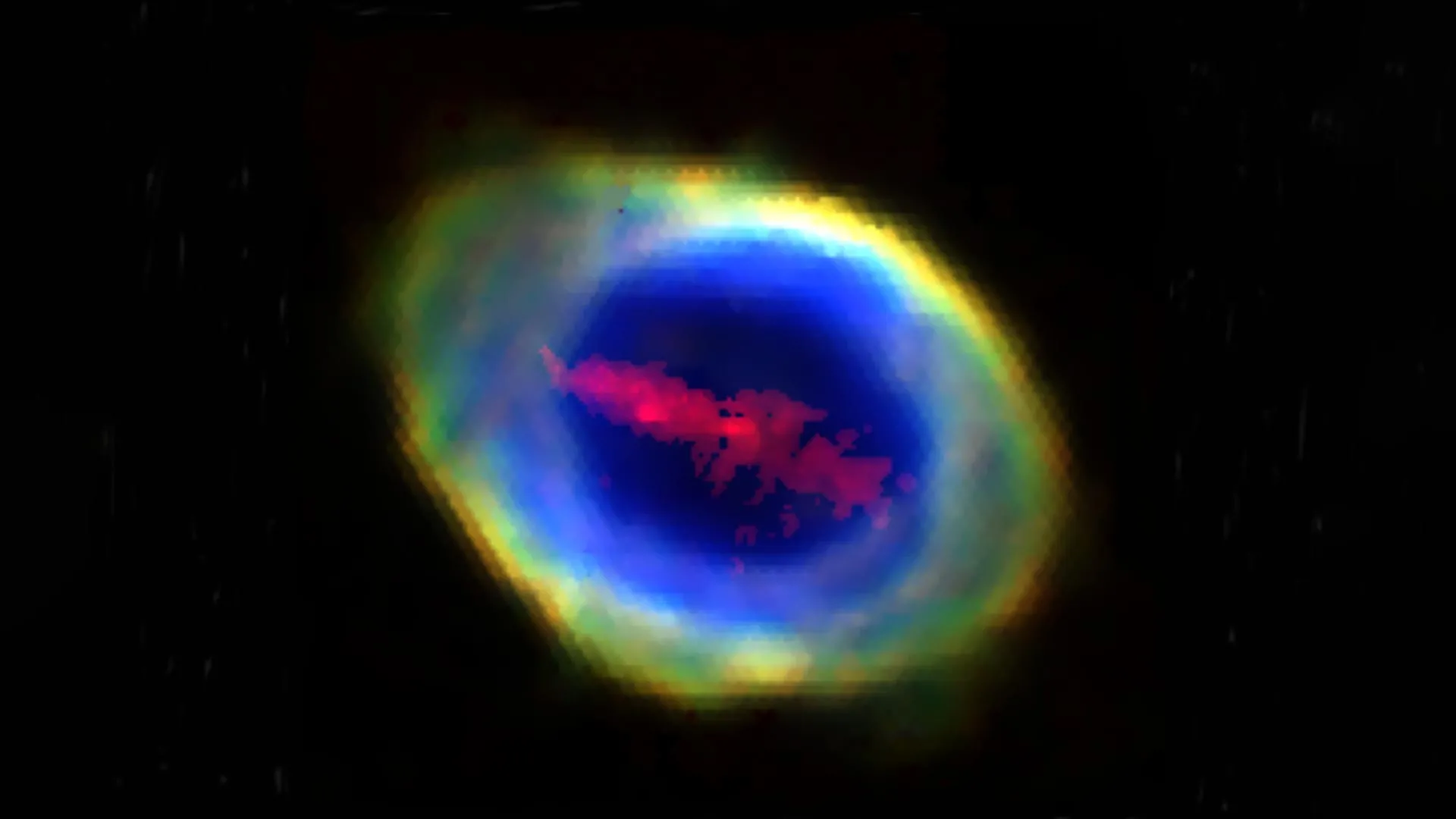
Astronomers in Europe have identified an unexpected feature hidden inside the famous Ring Nebula. The discovery was made by a team led by researchers at UCL (University College London) and Cardiff University, who found a narrow, bar shaped cloud made of iron deep within the nebula.

The iron cloud is being reported for the first time in Monthly Notices of the Royal Astronomical Society. It forms a long strip that fits neatly inside the nebula’s inner region, which has an elliptical shape seen in many well known images, including those captured by the James Webb Space Telescope at infrared wavelengths.1 The structure is immense. Its length is about 500 times greater than Pluto’s orbit around the Sun, and the total amount of iron it contains is roughly equal to the mass of Mars.

What Makes the Ring Nebula Special

The Ring Nebula was first observed in 1779 by French astronomer Charles Messier in the northern constellation Lyra.2 It is a glowing shell of gas produced when a star reaches the end of its nuclear fuel burning stage and ejects its outer layers into space. Astronomers expect the Sun to shed its outer material in a similar way several billion years from now.3

How the Iron Bar Was Found

The iron cloud was revealed through observations made with the Large Integral Field Unit (LIFU) mode of a new instrument known as the WHT Enhanced Area Velocity Explorer (WEAVE).4 WEAVE is mounted on the Isaac Newton Group’s 4.2-meter William Herschel Telescope.5

LIFU is made up of hundreds of optical fibers working together. This setup allowed the researchers to collect spectra (where light is separated into its constituent wavelengths) from every point across the face of the Ring Nebula, covering all optical wavelengths for the first time.

Seeing the Nebula in a New Way

Lead author Dr. Roger Wesson, who is based at both UCL’s Department of Physics & Astronomy and Cardiff University, described how the finding emerged. “Even though the Ring Nebula has been studied using many different telescopes and instruments, WEAVE has allowed us to observe it in a new way, providing so much more detail than before. By obtaining a spectrum continuously across the whole nebula, we can create images of the nebula at any wavelength and determine its chemical composition at any position.

“When we processed the data and scrolled through the images, one thing popped out as clear as anything — this previously unknown ‘bar’ of ionized iron atoms, in the middle of the familiar and iconic ring.”

Competing Ideas About Its Origin

The researchers say the origin of the iron bar is still unknown. More detailed observations will be needed to understand how it formed. One possibility is that the structure preserves new information about how the dying star expelled its material. Another, more speculative explanation suggests the iron could be part of a curved arc of plasma created when a rocky planet was vaporized during an earlier expansion of the star.

Co author Professor Janet Drew of UCL Physics & Astronomy stressed that key information is still missing. “We definitely need to know more — particularly whether any other chemical elements co-exist with the newly-detected iron, as this would probably tell us the right class of model to pursue. Right now, we are missing this important information.”

What Comes Next for the Research

The team is now preparing a follow up study and plans to gather new data using WEAVE’s LIFU at higher spectral resolution. These observations should help clarify how the iron bar formed and whether other elements are present alongside it.

WEAVE is scheduled to conduct eight major surveys over the next five years, studying objects that range from nearby white dwarfs to extremely distant galaxies. One part of the project, the Stellar, Circumstellar and Interstellar Physics survey led by Professor Drew, is already observing many additional ionised nebulae across the northern Milky Way.

Dr. Wesson noted that similar structures may turn out to be common. “It would be very surprising if the iron bar in the Ring is unique. So hopefully, as we observe and analyze more nebulae created in the same way, we will discover more examples of this phenomenon, which will help us to understand where the iron comes from.”

Professor Scott Trager, WEAVE Project Scientist at the University of Groningen, added: “The discovery of this fascinating, previously unknown structure in a night-sky jewel, beloved by sky watchers across the Northern Hemisphere, demonstrates the amazing capabilities of WEAVE. We look forward to many more discoveries from this new instrument.”

Notes

  1. 1 See e.g. https://www.ucl.ac.uk/news/2023/aug/second-james-webb-image-ring-nebula-hints-dying-stars-companion https://www.cardiff.ac.uk/news/view/2739414-astronomers-spy-structures-that-no-previous-telescope-could-detect-in-new-images-of-dying-star
  2. The Ring Nebula is also known as M 57 — the 57th listing in Messier’s catalogue of ‘Nebulae and Star Clusters’. John L E Dreyer also included it in his New General Catalogue, first published in 1888 by the Royal Astronomical Society, where it appears as NGC 6720.
  3. Once a star like the Sun runs out of hydrogen fuel, it expands to become an extreme red giant and sheds its outer layers, which then coast out to form a glowing shell. A shell created in this way is known in astronomy as a planetary nebula. The leftover stellar core becomes a white dwarf, which, though no longer burning any fuel, continues to shine as it slowly cools over billions of years. The Ring Nebula is a planetary nebula located 2,600 light years (or 787 parsec) away, that is thought to have formed about 4,000 years ago. Planetary nebula ejection returns matter forged in a star to interstellar space and is the source of much of the Universe’s carbon and nitrogen — key building blocks of life on Earth. Stars more than about eight times the mass of the Sun age differently, ending life abruptly in a powerful explosion called a supernova as they collapse to form a black hole or neutron star.
  4. Funding for the WEAVE facility has been provided by UKRI STFC, the University of Oxford, NOVA, NWO, Instituto de Astrofísica de Canarias (IAC), the Isaac Newton Group partners (STFC, NWO, and Spain, led by the IAC), INAF, CNRS-INSU, the Observatoire de Paris, Région Île-de-France, CONACYT through INAOE, the Ministry of Education, Science and Sports of the Republic of Lithuania, Konkoly Observatory (CSFK), Max-Planck-Institut für Astronomie (MPIA Heidelberg), Lund University, the Leibniz Institute for Astrophysics Potsdam (AIP), the Swedish Research Council, the European Commission, and the University of Pennsylvania. The WEAVE Survey Consortium consists of the ING, its three partners, represented by UKRI STFC, NWO, and the IAC, NOVA, INAF, GEPI, INAOE, Vilnius University, FTMC — Center for Physical Sciences and Technology (Vilnius), and individual WEAVE Participants. The WEAVE website can be found at https://weave-project.atlassian.net/wiki/display/WEAVE and the full list of granting agencies and grants supporting WEAVE can be found at https://weave-project.atlassian.net/wiki/display/WEAVE/WEAVE+Acknowledgements.
  5. The William Herschel Telescope is the leading telescope of the Isaac Newton Group (ING), which in turn is part of the Roque de los Muchachos Observatory on La Palma, in the Canary Islands. The ING is jointly operated by the United Kingdom (STFC-UKRI), the Netherlands (NWO) and Spain (IAC, funded by the Spanish Ministry of Science, Innovation and Universities).
Share Button

Scientists sent viruses to space and they evolved in surprising ways

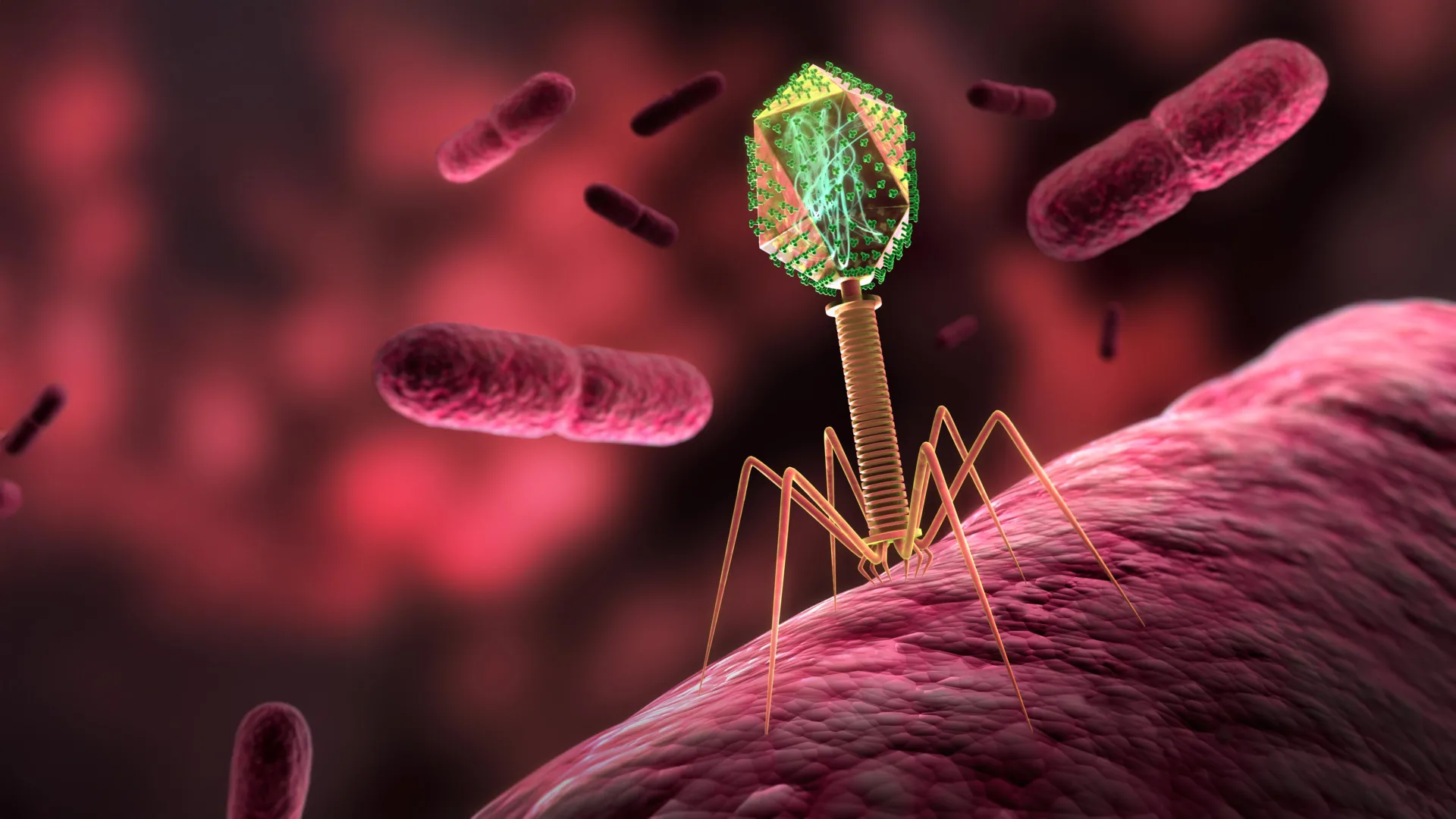
In a new study, terrestrial bacteria-infecting viruses were still able to infect their E. coli hosts in near-weightless “microgravity” conditions aboard the International Space Station, but the dynamics of virus-bacteria interactions differed from those observed on Earth. Phil Huss of the University of Wisconsin-Madison, U.S.A., and colleagues present these findings January 13thin the open-access journal PLOS Biology.

Interactions between phages — viruses that infect bacteria — and their hosts play an integral role in microbial ecosystems. Often described as being in an evolutionary “arms race,” bacteria can evolve defenses against phages, while phages develop new ways to thwart defenses. While virus-bacteria interactions have been studied extensively on Earth, microgravity conditions alter bacterial physiology and the physics of virus-bacteria collisions, disrupting typical interactions.

However, few studies have explored the specifics of how phage-bacteria dynamics differ in microgravity. To address that gap, Huss and colleagues compared two sets of bacterial E. coli samples infected with a phage known as T7 — one set incubated on Earth and the other aboard the International Space Station.

Analysis of the space-station samples showed that, after an initial delay, the T7 phage successfully infected the E. coli. However, whole-genome sequencing revealed marked differences in both bacterial and viral genetic mutations between the Earth samples versus the microgravity samples.

The space-station phages gradually accumulated specific mutations that could boost phage infectivity or their ability to bind receptors on bacterial cells. Meanwhile, the space-station E. coli accumulated mutations that could protect against phages and enhance survival success in near-weightless conditions.

The researchers then applied a high-throughput technique known as deep mutational scanning to more closely examine changes in the T7 receptor binding protein, which plays a key role in infection, revealing further significant differences between microgravity versus Earth conditions. Additional experiments on Earth linked these microgravity-associated changes in the receptor binding protein to increased activity against E. coli strains that cause urinary tract infections in humans and are normally resistant to T7.

Overall, this study highlights the potential for phage research aboard the ISS to reveal new insights into microbial adaption, with potential relevance to both space exploration and human health.

The authors add, “Space fundamentally changes how phages and bacteria interact: infection is slowed, and both organisms evolve along a different trajectory than they do on Earth. By studying those space-driven adaptations, we identified new biological insights that allowed us to engineer phages with far superior activity against drug-resistant pathogens back on Earth.”

In your coverage, please use this URL to provide access to the freely available paper in PLOS Biology: https://plos.io/4q4S9AO

Citation: Huss P, Chitboonthavisuk C, Meger A, Nishikawa K, Oates RP, Mills H, et al. (2026) Microgravity reshapes bacteriophage-host coevolution aboard the International Space Station. PLoS Biol 24(1): e3003568. https://doi.org/10.1371/journal.pbio.3003568

Author countries: United StatesFunding: This work was supported by the Defense Threat Reduction Agency (https://www.dtra.mil/) (Grant HDTRA1-16-1-0049) to S.R. C.C. was supported by a graduate training scholarship from the Anandamahidol Foundation (Thailand). The sponsors or funders did not play any role in the study design, data collection and analysis, decision to publish, or preparation of the manuscript.

Share Button

A&E Doctors Share The Most Ridiculous Sex-Related Injuries They’ve Seen

Sex should be a fun and satisfying time – not something that puts you in the emergency room. And yet, it happens more often than you think.

Emergency rooms see it all – including what happens when sex goes sideways. From objects that disappear to injuries that require surgery, doctors say the biggest problem isn’t curiosity or experimentation. It’s waiting too long to get help because you feel ashamed.

“Most sex-related injuries are preventable, and none of them should be a source of shame,” Dr. Martina Ambardjieva, a urologist and ER physician, told HuffPost.

What does cause problems is waiting too long to seek care because of embarrassment. If something feels wrong, pain, bleeding, swelling, or an object that refuses to come out, just come in. Trust me, we’ve seen it all.”

These kinds of injuries are quite common, according to doctors, but shame often keeps people from getting the help they need.

Milan Markovic via Getty Images

These kinds of injuries are quite common, according to doctors, but shame often keeps people from getting the help they need.

Two emergency physicians shared some of the most common – and most alarming – sex-related injuries they’ve treated, along with what people should know if something goes wrong.

Penile fractures are as dramatic as they sound

Ambardjieva said the “classic penile fracture” is one of the most urgent sex-related emergencies she sees.

“It’s exactly as dramatic as it sounds – a loud ‘crack,’ immediate swelling, and a lot of panic,” she explains. It most often happens when the penis slips out during thrusting and forcefully hits a partner’s pelvis.

“A penile fracture occurs when the tunica albuginea, the tough fibrous sheath surrounding the erectile tissue, tears,” she explains. “When the penis is erect, that tissue becomes thin and stretched, making it vulnerable to sudden bending or impact – even though there’s no bone inside.”

If someone delays seeking care, the torn tissue can heal improperly. “That can lead to permanent curvature, painful erections, or long-term erectile dysfunction,” Ambardjieva said. “This is the one sexual injury where time really matters.”

Objects that get ‘lost’

Ambardjieva said foreign objects getting “lost” in the body are a routine part of ER and gynaecology work.

“I’ve removed all kinds of items that weren’t designed to go inside the body – cucumbers, carrots, sprays – and I’ve also seen objects in the male urethra, like a pencil,” she said. “People are usually terrified and embarrassed, but it’s more common than they think.”

The problem often comes down to using objects without a flared base, smooth shape, or any kind of safety stop. That’s why you might run into this phrase: “If it has no flare, it shouldn’t go up there.”

Where something is inserted also matters. The vaginal canal is a closed space, so objects can get stuck but won’t travel deeper into the body. “The rectum, however, has no anatomical stop and creates suction, meaning objects can be pulled further inside,” Ambardjieva explains. “The urethra is narrow and delicate, making insertions particularly dangerous.”

If you’re embarrassed to come into the hospital because you’ve inserted something that’s become stuck, Ambardjieva hopes you’ll reconsider and not let the stigma keep you from getting care.

“It’s important to normalise this. We remove lost objects every week in the emergency and urology practice,” Ambardjieva said. “It’s a common medical issue – not something to be ashamed of.”

Vaginal tears and bleeding after sex

Small vaginal tears are another frequent reason for ER visits, especially among postmenopausal women or anyone dealing with vaginal dryness.

“Even a small tear can bleed more than people expect, which really scares them,” Ambardjieva said.

Friction, insufficient lubrication, or a tense pelvic floor can all cause micro-tears. She notes that water-based lubricants can dry out quickly, increasing friction, while silicone-based lubes stay slippery longer and can reduce tearing.

Bleeding, Ambardjieva said, becomes more concerning if it doesn’t slow, comes with large clots, severe pain, lightheadedness or difficulty urinating. In other words, head to the emergency room as soon as possible.

Testicular torsion during sex

While less common, Ambardjieva has seen testicular torsion triggered during intercourse. “It’s sudden, sharp testicular pain – and it’s an emergency until proven otherwise,” she said.

Torsion happens when the spermatic cord twists, cutting off blood flow. Without treatment within about four to six hours, the testicle can be permanently damaged or lost. Some men are more vulnerable because of anatomical variations that allow the testicle to rotate more freely inside the scrotum.

“Circulation is blocked due to the twisting of the spermatic cord,” Ambardjieva explains. “Without rapid treatment, usually within four to six hours, there is a real risk of permanently losing the testicle, because of lost lasting ischemia (insufficient blood flow).”

Condom mishaps

Broken condoms or condoms that get stuck inside are another source of anxious ER visits.

“These are usually very easy for us to remove safely,” Ambardjieva said, adding that problems tend to come from incorrect sizing, not enough lubrication, expired condoms, heat exposure, or using oil-based products that weaken latex.

Bruising from oral sex

Not all sex injuries come from penetration.

“I’ve seen bruising and swelling just from overly enthusiastic suction,” Ambardjieva said. “It’s usually harmless, but if the swelling is severe or the penis starts bending, get checked.”

Broken capillaries can leave marks that look alarming but usually fade within days. However, spreading bruising, significant pain, fever, difficulty urinating, or a bent penis should be checked out, which may indicate infection or deeper tissue injury.

When things go seriously wrong

Dr. Jared L. Ross, an assistant professor at the University of Missouri, has seen some extreme cases.

Several years ago in St. Louis, he said he treated a patient who inserted his pet gerbil into his rectum with lubrication: “He ended up in the ER with rectal bleeding. We were able to get the gerbil out, but unfortunately, the gerbil wasn’t so lucky; he had already suffocated.”

In December 2024, Ross said he treated two patients on the same Christmas shift whose wives were out of town.

“One had inserted a full-sized LED lightbulb into his rectum. It required anaesthesia and surgical removal,” he said. “Shortly after, another patient arrived with his wife’s vibrator lodged inside. Both myself and the other ER doc on shift tried again, but no luck, we had to call the surgeon back. I remember he remarked it was a pretty fancy one, rechargeable batteries. I can’t imagine how those conversations went when their wives got back in town.”

So it’s unsurprising that Ross encourages people to come to the ER if they run into an issue like this (or a less extreme one), but also to be more proactive about safety when it comes to the rear end. “If you’re into inserting things into your rectum, use devices designed for that so they don’t get lost,” he said.

The bottom line

Both doctors stress that shame is what causes the real harm, wacky hijinks aside.

“Sexual injuries and accidents are far more common than people realise,” Ambardjieva said. “Emergency clinicians truly aren’t judging. We’ve seen it all.”

Pain, bleeding, swelling, or an object that won’t come out are all signs to seek care – sooner rather than later.

“Bodies are vulnerable, sex is physical, and sometimes things go wrong,” she adds. “Getting help early is always the right, responsible thing to do.”

Share Button

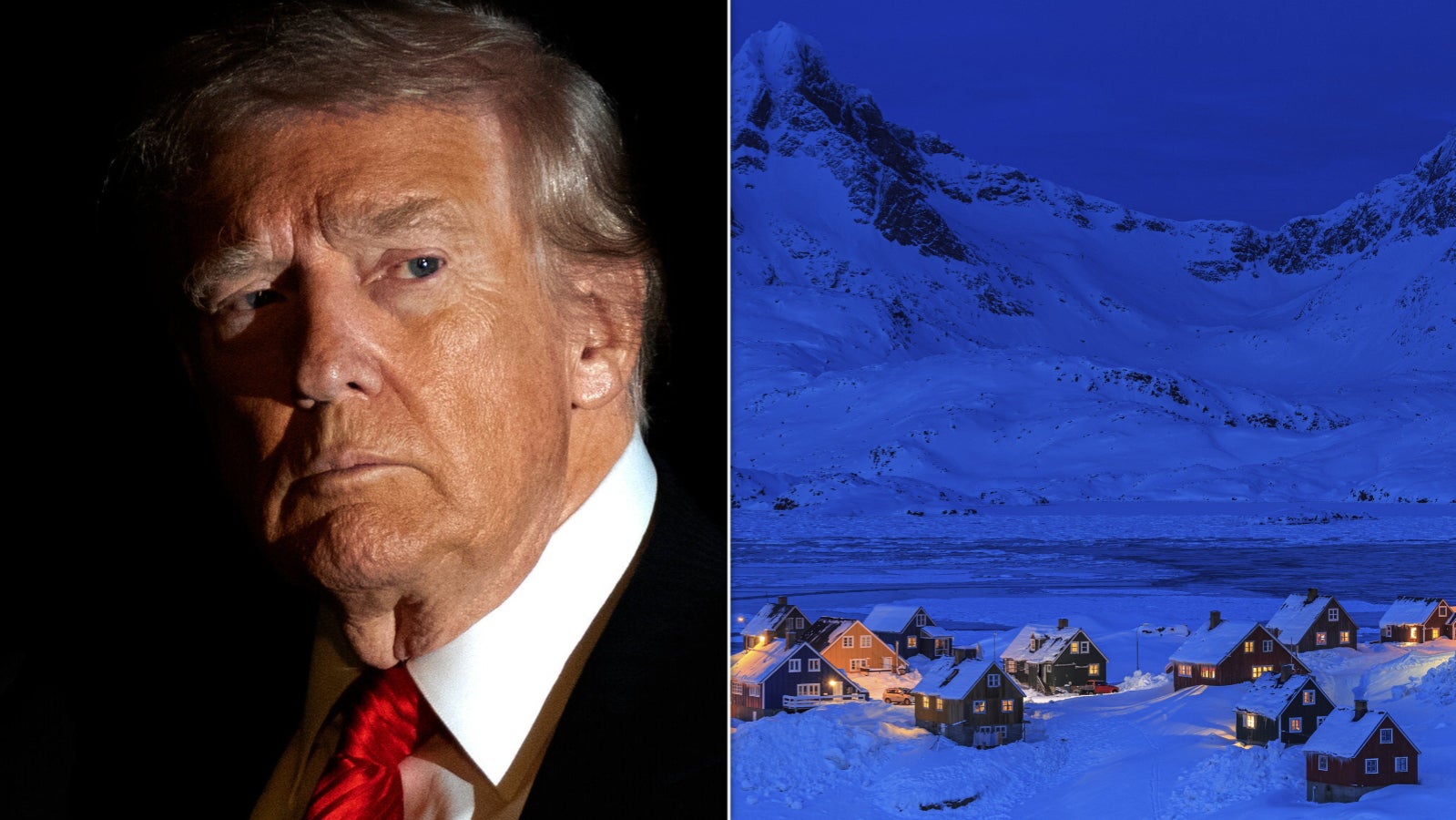
Trump Slaps Tariffs On UK And 7 Other European Countries Until US Controls Greenland

Donald Trump has slapped tariffs on the UK and seven other European countries until America controls Greenland.

In an extraordinary development, the US president said a 10% import tax will be imposed on Britain, Denmark, Norway, Sweden, France, Germany, the Netherlands and Finland from February 1.

Hitting back on Ssturday evening, Keir Starmer said Trump’s actions were “completely wrong”.

Announcing the move on Truth Social, Trump said the charge will then be increased to 25% on June 1 and remain in place “until such time as a Deal is reached for the Complete and Total purchase of Greenland” by America.

Greenland has been part of the kingdom of Denmark for more than 300 years.

But Trump said: “World Peace is at stake! China and Russia want Greenland, and there is not a thing that Denmark can do about it. They currently have two dogsleds as protection, one added recently.

“Only the United States of America, under PRESIDENT DONALD J. TRUMP, can play in this game, and very successfully, at that! Nobody will touch this sacred piece of Land, especially since the National Security of the United States, and the World at large, is at stake. On top of everything else, Denmark, Norway, Sweden, France, Germany, The United Kingdom, The Netherlands, and Finland have journeyed to Greenland, for purposes unknown.”

Earlier this week, the UK announced it had sent a military officer to Greenland as Denmark stepped up its military presence in the Arctic and High North.

Trump went on: “This is a very dangerous situation for the Safety, Security, and Survival of our Planet. These Countries, who are playing this very dangerous game, have put a level of risk in play that is not tenable or sustainable.

“Therefore, it is imperative that, in order to protect Global Peace and Security, strong measures be taken so that this potentially perilous situation end quickly, and without question.”

The president added: “The United States of America is immediately open to negotiation with Denmark and/or any of these Countries that have put so much at risk, despite all that we have done for them, including maximum protection, over so many decades.”

Keir Starmer said: “Our position on Greenland is very clear – it is part of the Kingdom of Denmark and its future is a matter for the Greenlanders and the Danes.

“We have also made clear that Arctic Security matters for the whole of NATO and allies should all do more together to address the threat from Russia across different parts of the Arctic.

“Applying tariffs on allies for pursuing the collective security of NATO allies is completely wrong. We will of course be pursuing this directly with the US administration.”

Tory leader Kemi Badenoch said it was “a terrible idea”.

She posted on X: “President Trump is completely wrong to announce tariffs on the UK over Greenland.

“People in both UK and US will face higher costs. These tariffs will be yet another burden for businesses across our country.

“The sovereignty of Greenland should only be decided by the people of Greenland. On this, I agree with Keir Starmer.”

Speaking on a visit to Westminster last week, Greenaldic Naaja Nathanielsen said the territory “felt betrayed” by Trump’s threats to take over the Arctic island.

Lib Dem leader Ed Davey branded Trump a “bully” and said the PM’s policy towards the US “lies n tatters”.

He wrote on X: “Starmer’s US policy lies in tatters. Trump is now punishing the UK and NATO allies just for doing the right thing.

“Time for the PM to stand firm against the bully in the White House, and work with European and Commonwealth allies to make him back down from this reckless plan.”

<div class="js-react-hydrator" data-component-name="Twitter" data-component-id="9884" data-component-props="{"itemType":"rich","index":30,"contentIndexByType":2,"contentListType":"embed","code":"

Starmer’s US policy lies in tatters. Trump is now punishing the UK and NATO allies just for doing the right thing.

Time for the PM to stand firm against the bully in the White House, and work with European and Commonwealth allies to make him back down from this reckless plan. https://t.co/9O0IvLKGsQ

— Ed Davey (@EdwardJDavey) January 17, 2026

","type":"rich","meta":{"author":"Ed Davey","author_url":"https://twitter.com/EdwardJDavey","cache_age":86400,"description":"Starmer’s US policy lies in tatters. Trump is now punishing the UK and NATO allies just for doing the right thing. Time for the PM to stand firm against the bully in the White House, and work with European and Commonwealth allies to make him back down from this reckless plan. https://t.co/9O0IvLKGsQ— Ed Davey (@EdwardJDavey) January 17, 2026\n\n\n","options":{"_hide_media":{"label":"Hide photos, videos, and cards","value":false},"_maxwidth":{"label":"Adjust width","placeholder":"220-550, in px","value":""},"_theme":{"value":"","values":{"dark":"Use dark theme"}}},"provider_name":"Twitter","title":"Ed Davey on Twitter / X","type":"rich","url":"https://twitter.com/EdwardJDavey/status/2012577157562728839","version":"1.0"},"flags":[],"enhancements":{},"fullBleed":false,"options":{"theme":"news","device":"desktop","editionInfo":{"id":"uk","name":"U.K.","link":"https://www.huffingtonpost.co.uk","locale":"en_GB"},"originalEdition":"uk","isMapi":false,"isAmp":false,"isMobile":false,"isAdsFree":false,"isVideoEntry":false,"isEntry":true,"isMt":false,"entryId":"696bc048e4b0c97f839eaa09","entryPermalink":"https://www.huffingtonpost.co.uk/entry/trump-slaps-tariffs-on-uk-and-7-other-countries-until-us-controls-greenland_uk_696bc048e4b0c97f839eaa09","entryTagsList":"donald-trump,keir-starmer,greenland,@ai_seo_headline,@us_huffpost_now,@widget-imported","sectionSlug":"politics","deptSlug":null,"sectionRedirectUrl":null,"subcategories":"","isWide":false,"isShopping":false,"headerOverride":null,"noVideoAds":false,"disableFloat":false,"isNative":false,"commercialVideo":{"provider":"custom","site_and_category":"uk.politics","package":null},"isHighline":false,"vidibleConfigValues":{"cid":"60afc140cf94592c45d7390c","disabledWithMapiEntries":false,"overrides":{"all":"60b8e525cdd90620331baaf4"},"whitelisted":["56c5f12ee4b03a39c93c9439","56c6056ee4b01f2b7e1b5f35","59bfee7f9e451049f87f550b","5acccbaac269d609ef44c529","570278d2e4b070ff77b98217","57027b4be4b070ff77b98d5c","56fe95c4e4b0041c4242016b","570279cfe4b06d08e3629954","5ba9e8821c2e65639162ccf1","5bcd9904821576674bc55ced","5d076ca127f25f504327c72e","5b35266b158f855373e28256","5ebac2e8abddfb04f877dff2","60b8e525cdd90620331baaf4","60b64354b171b7444beaff4d","60d0d8e09340d7032ad0fb1a","60d0d90f9340d7032ad0fbeb","60d0d9949340d7032ad0fed3","60d0d9f99340d7032ad10113","60d0daa69340d7032ad104cf","60d0de02b627221e9d819408"],"playlists":{"default":"57bc306888d2ff1a7f6b5579","news":"56c6dbcee4b04edee8beb49c","politics":"56c6dbcee4b04edee8beb49c","entertainment":"56c6e7f2e4b0983aa64c60fc","tech":"56c6f70ae4b043c5bdcaebf9","parents":"56cc65c2e4b0239099455b42","lifestyle":"56cc66a9e4b01f81ef94e98c"},"playerUpdates":{"56c6056ee4b01f2b7e1b5f35":"60b8e525cdd90620331baaf4","56c5f12ee4b03a39c93c9439":"60d0d8e09340d7032ad0fb1a","59bfee7f9e451049f87f550b":"60d0d90f9340d7032ad0fbeb","5acccbaac269d609ef44c529":"60d0d9949340d7032ad0fed3","5bcd9904821576674bc55ced":"60d0d9f99340d7032ad10113","5d076ca127f25f504327c72e":"60d0daa69340d7032ad104cf","5ebac2e8abddfb04f877dff2":"60d0de02b627221e9d819408"}},"connatixConfigValues":{"defaultPlayer":"16b0ecc6-802c-4120-845f-e90629812c4d","clickToPlayPlayer":"823ac03a-0f7e-4bcb-8521-a5b091ae948d","videoPagePlayer":"05041ada-93f7-4e86-9208-e03a5b19311b","defaultPlaylist":"2e062669-71b4-41df-b17a-df6b1616bc8f"},"topConnatixThumnbailSrc":"data:image/png;base64,iVBORw0KGgoAAAANSUhEUgAAAAEAAAABCAQAAAC1HAwCAAAAC0lEQVR42mNkYAAAAAYAAjCB0C8AAAAASUVORK5CYII=","customAmpComponents":[],"ampAssetsUrl":"https://amp.assets.huffpost.com","videoTraits":null,"positionInUnitCounts":{"buzz_head":{"count":0},"buzz_body":{"count":0},"buzz_bottom":{"count":0}},"positionInSubUnitCounts":{"article_body":{"count":3},"blog_summary":{"count":0},"before_you_go_content":{"count":0}},"connatixCountsHelper":{"count":0},"buzzfeedTracking":{"context_page_id":"696bc048e4b0c97f839eaa09","context_page_type":"buzz","destination":"huffpost","mode":"desktop","page_edition":"en-uk"},"tags":[{"name":"Donald Trump","slug":"donald-trump","links":{"relativeLink":"news/donald-trump","permalink":"https://www.huffingtonpost.co.uk/news/donald-trump","mobileWebLink":"https://www.huffingtonpost.co.uk/news/donald-trump"},"relegenceId":2789214,"section":{"title":"News","slug":"news"},"topic":{"title":"Donald Trump","slug":"donald-trump","overridesSectionLabel":false},"url":"https://www.huffingtonpost.co.uk/news/donald-trump/"},{"name":"keir starmer","slug":"keir-starmer","links":{"relativeLink":"news/keir-starmer","permalink":"https://www.huffingtonpost.co.uk/news/keir-starmer","mobileWebLink":"https://www.huffingtonpost.co.uk/news/keir-starmer"},"url":"https://www.huffingtonpost.co.uk/news/keir-starmer/"},{"name":"greenland","slug":"greenland","links":{"relativeLink":"news/greenland","permalink":"https://www.huffingtonpost.co.uk/news/greenland","mobileWebLink":"https://www.huffingtonpost.co.uk/news/greenland"},"relegenceId":3685723,"url":"https://www.huffingtonpost.co.uk/news/greenland/"}],"isLiveblogLive":null,"isLiveblog":false,"backfillRelatedArticles":[],"signInUrl":"https://login.huffpost.com/login?dest=https%3A%2F%2Fwww.huffpost.com%2Fentry%2Ftrump-slaps-tariffs-on-uk-and-7-other-countries-until-us-controls-greenland_uk_696bc048e4b0c97f839eaa09%3Fhp_auth_done%3D1","cetUnit":"buzz_body","enableIncontentPlayer":true,"bodyAds":["

\r\n\r\n HPGam.cmd.push(function(){\r\n\t\treturn HPGam.render(\"inline-1\", \"entry_paragraph_1\", false, false);\r\n });\r\n\r\n","

\r\n\r\n HPGam.cmd.push(function(){\r\n\t\treturn HPGam.render(\"inline\", \"entry_paragraph_2\", false, false);\r\n });\r\n\r\n","

\r\n\r\n HPGam.cmd.push(function(){\r\n\t\treturn HPGam.render(\"inline-2\", \"entry_paragraph_3\", false, false);\r\n });\r\n\r\n","

\r\n\r\n HPGam.cmd.push(function(){\r\n\t\treturn HPGam.render(\"inline-infinite\", \"repeating_dynamic_display\", false, false);\r\n });\r\n\r\n"],"adCount":0,"midArticleAdPartner":null},"isCollectionEmbed":false}”>

Starmer’s US policy lies in tatters. Trump is now punishing the UK and NATO allies just for doing the right thing.

Time for the PM to stand firm against the bully in the White House, and work with European and Commonwealth allies to make him back down from this reckless plan. https://t.co/9O0IvLKGsQ

— Ed Davey (@EdwardJDavey) January 17, 2026

Share Button