Experts say patients are being harmed by cancer diagnosis and treatment delays.


Experts say patients are being harmed by cancer diagnosis and treatment delays.
It’s easy to feel gloomy in winter, but here are three ways to help you manage the darker days and even embrace them.
The children’s charity Neuroblastoma UK has heaped praise on Alan Carr if he donated his hefty prize money for winning The Celebrity Traitors to them.
Last week, it was revealed that Alan had done what four weeks earlier would have been unthinkable and pulled the wool over enough of his fellow players’ eyes to make it all the way to the end of The Celebrity Traitors.
Advertisement
Because of this, he managed to snag the full £87,500 prize pot for his charity, opting to give it all to Neuroblastoma UK, of which he is a patron.
Posting on Instagram after the episode aired, the charity said: “Alan, what a moment. We can’t tell you how grateful we are.
“We’ve adored watching you over the last three weeks; all the more so with that glimmer of hope that if you did well, it might just mean something big for our small charity. And you did it.”
Advertisement

BBC/Studio Lambert/Paul Chappells
They continued: “As our faithful Patron for nine years, your commitment, compassion, and drive to bring hope to children and families facing this aggressive cancer have been nothing short of transformational. As a small charity with a big mission, you know how much this means to us.
“For many years, we’ve known you to be generous, warm, empathetic, and unfalteringly kind, and we’re so pleased the nation agrees with us on that. Now, we promise to do you proud. Our commitment to you is that through research, we will find better treatments and ultimately a cure for every child facing Neuroblastoma.”
Advertisement
Alan also said: “It’s an absolute privilege to be able to support Neuroblastoma UK, whether it’s raising awareness or funds, I’m so pleased I can use my platform to show how amazing this charity is.”
In one of the series’ more unexpectedly emotional moments, Alan broke down in tears of apparent guilt after it was revealed he’d deceived his fellow players for the duration of the game, to which they offered him assurance and reminded him to think of the charity he was helping.
Advertisement
He later told host Claudia Winkleman that Neuroblastoma UK is a “wonderful children’s cancer charity”, saying: “That money will change lives, thank you. All that lying, all that treachery, it was worth it, wasn’t it?”
After the first instalment of The Celebrity Traitors proved to be the most-watched TV moment of 2025 so far, it’s now been confirmed that a second season will arrive on our screens next year.



The cold weather can impact our bodies in so many ways, from making menopause symptoms worse to triggering arthritis flare ups.
But one little-known effect of the winter weather is that it can also trigger or worsen a range of dental problems, according to Dr Raj Juneja, principal dentist at Face Teeth Smile Dental Clinics.
Advertisement
So, in the spirit of staying informed – and preventing any issues from cropping up when the worst of the cold weather hits – here are just some of the ways cooler climes can impact your gnashers.
Dr Juneja said one of the most frequent issues dentists see during winter is tooth sensitivity.
When your tooth enamel (the outer layer of your teeth) becomes worn or thin, the underlying dentin and nerves are more exposed.
This means external stimuli – like hot or cold substances (yes, your morning coffee en route to work is very much included in that) – can reach the nerve and cause a sharp, shooting pain.
Advertisement
If you’ve noticed a bit of sensitivity, the dentist advises using a desensitising toothpaste and a soft-bristled brush, as well as avoiding acidic foods and whitening products that can thin the enamel further.
Unfortunately, cold temperatures can also make teeth and dental restorations (like fillings and crowns) more brittle, said the dentist.
This is because when you go from warm to cold environments rapidly, your teeth can expand and contract slightly. Over time, this stress may lead to micro-fractures in enamel or even damage old fillings.
Advertisement
If you notice pain when biting or temperature sensitivity in a specific area, Dr Juneja recommends scheduling a dental check-up promptly, as early detection prevents small cracks from turning into a bigger issue.
It’s not just your teeth which might be feeling the strain as the winter weather hits, as you ramp your heating up, you might notice you have a dry mouth. This can lead to bad breath, tooth decay and discomfort, said the dentist. You might notice your lips feel positively desert-like, too.
Dr Juneja’s advice? Stay hydrated, use a humidifier at home, and consider sugar-free lozenges or gum to stimulate saliva flow. He also advises applying a protective lip balm to prevent cracked lips and corners of the mouth.
Advertisement
Lastly, cold weather can cause people to clench their jaws or grind their teeth subconsciously, said the dentist, especially if you’re spending a fair bit of time shivering.
“This can worsen temporomandibular joint (TMJ) pain, lead to headaches, and wear down tooth enamel,” he said.
If you’ve noticed you’re a winter clencher, try relaxation exercises and keeping your face warm with a scarf. And don’t forget to ask your dentist about a night guard if you grind your teeth during sleep.
Advertisement
Keeping on top of dental check-ups can also help flag any signs of tooth damage or decay early on.
Good luck!


A new documentary about the last months of Caroline Flack’s live has now arrived on Disney+.
Caroline Flack: Search For The Truth was made in collaboration with the late Love Island host’s mum, Christine, and explores various various threads leading up to the presenter’s suicide in February 2020.
An official synopsis released by Disney explains: “This [documentary] follows Caroline’s mother, Christine, as she investigates the truth about her daughter’s final months – uncovering new shocking details, asking difficult questions, and exposing the misrepresentations, pressures, and failures from institutions and decision makers that shaped Caroline’s final days.
Advertisement
“With access to powerful testimony from Caroline’s inner circle and those who were there, the series tells the story she never got to share and reveals an unprecedented look at what really happened to Caroline Flack.”
Many early reactions to the two-part series have been positive, with The Guardian praising it in a five-star review.
“You may well wonder about the duty of care the programme-makers have towards Christine, and, in fact, to the whole Flack family,” the review points out.
Advertisement
“Gladly, Search for the Truth is neither exploitative nor cheap. “It’s clear that Christine wasn’t merely parachuted in to front the series: rather, the episodes offer a window into the work she has been doing since her daughter’s death.”
Good Housekeeping described the show as “the docuseries everyone should see”, while a piece in British Vogue agreed: “I’ll admit that before watching the two-part series […] I wondered whether we really needed a retelling of Flack’s tragic demise. I was wrong.
“What had been missing all along, I now realise, was her voice. For all the archival footage out there, in the final days of her life, she was entirely absent from the narrative. According to Flack’s mother, she was advised by lawyers and agents to stay quiet – so she did. It meant that the case for the prosecution was repeated endlessly in the headlines, and on Twitter, but the case for the defence – Flack’s version of events – was never heard before she took her own life.”
Advertisement
Meanwhile, Celeb Mix’s take on the doc highlights that “for many viewers”, watching Caroline Flack: Search For The Truth will be a “painful” experience as it “revisits a tragedy that remains raw in the public consciousness”.
“But,” they add. “It also offers an opportunity for reflection – for empathy, and for change.”
A piece published in The Independent also points out that it had actually been Caroline Flack’s own idea to create a documentary allowing her to put forward her side of the story, though she took her own life before she was able to make it happen.
Advertisement
The i Paper’s take agreed that the project makes for some “incredibly grim” viewing, noting: “The documentary is neither impassioned eulogy, nor sermon about the ills of social media pile-ons, nor screed against what seems now like such obvious wrongdoing – there have been many of all those in the wake of Flack’s death.
“Instead, it is a focused investigation into how Flack’s case was handled, powered by regret from her mother that she could not prevent the unthinkable.”
However, it’s worth noting, though, that not all of the coverage of the project has been so positive.
Advertisement
The Standard gave it just two stars, branding it “gruesome” and a “repellent true crime framing of a tragedy”, while describing certain sections as “tasteless”.
“In trying to clear Caroline’s name and point fingers, I fear Christine will activate the internet sleuths and their insatiable appetite for true crime,” The Standard’s critic opined.
Both episodes of Caroline Flack: Search For The Truth are now streaming on Disney+.



A new study from Intermountain Health in Salt Lake City reports that a personalized vitamin D3 treatment plan for patients who have suffered a heart attack can greatly reduce their chances of another one.
In a large randomized clinical trial, researchers found that managing patients’ vitamin D levels through a “target-to-treat” approach — where blood levels were monitored and dosages were adjusted to reach an optimal range — cut the likelihood of a second heart attack by 50%.
The findings were presented on Nov. 9 at the 2025 American Heart Association Scientific Sessions in New Orleans.
Encouraging Early Results from Intermountain Researchers
These results are very encouraging, said Heidi May, PhD, cardiovascular epidemiologist at Intermountain Health and the study’s principal investigator. “We observed no adverse outcomes when giving patients higher doses of vitamin D3 supplementation, and to significantly reduce the risk of another heart attack, which are exciting results,” said Dr. May. “We’re excited with these results but know we have further work to do to validate these findings.”
According to researchers, the results carry global importance, as between one-half and two-thirds of people worldwide have low levels of vitamin D.
In the past, most individuals received sufficient vitamin D through sunlight exposure. Today, with lifestyle changes and medical advice aimed at reducing skin cancer risk, people spend less time in the sun and must rely more on dietary supplements such as vitamin D3 to maintain healthy levels.
From Observation to Precision Treatment
Low vitamin D levels have long been linked to poor cardiovascular outcomes in observational studies. However, earlier clinical trials that provided standard supplementation doses failed to show measurable reductions in heart disease risk. Intermountain scientists wanted to test a different idea: rather than giving everyone the same dose, what if supplementation was adjusted to reach a specific, healthy vitamin D level?
“Previous studies just gave patients supplementation without regularly checking blood levels of vitamin D to determine what supplementation achieved,” said Dr. May. “With more targeted treatment, when we checked exactly how supplementation was working and made adjustments, we found that patients had their risk of another heart attack cut in half.”
Inside the TARGET-D Clinical Trial
The Intermountain study, called the TARGET-D trial, ran from April 2017 to May 2023 and included 630 patients who had suffered a heart attack within a month of enrolling. Participants were followed until March 2025 to monitor cardiovascular outcomes.
Patients were randomly assigned to one of two groups: one received no vitamin D management, and the other underwent active, targeted vitamin D3 treatment.
The goal for the treatment group was to raise blood vitamin D levels to above 40 nanograms per milliliter (ng/mL). At the start, 85% of participants had vitamin D3 levels below that threshold (<40 ng/mL).
Dosing, Monitoring, and Results
More than half of the patients receiving targeted therapy required an initial dose of 5,000 international units (IU) of vitamin D3, compared to typical supplement recommendations of 600-800 IU.
Vitamin D blood levels were checked annually for those maintaining healthy levels. Patients with lower levels were tested every three months and had their dosage adjusted until reaching the 40 ng/mL target. Afterward, their levels were monitored once a year.
Researchers tracked major cardiac events (MACE), including heart attacks, strokes, heart failure hospitalizations, or deaths. Out of 630 participants, 107 experienced such events. While there was no significant difference in the overall risk of MACE between the two groups, the chance of having a second heart attack was cut in half among those receiving targeted vitamin D treatment.
Next Steps for Heart and Vitamin D Research
Researchers plan to expand their work with a larger clinical trial to confirm and build upon these findings.
A larger study group will allow us to more fully evaluate whether targeted vitamin D management can reduce not only repeat heart attacks but also other forms of cardiovascular disease, said Dr. May.
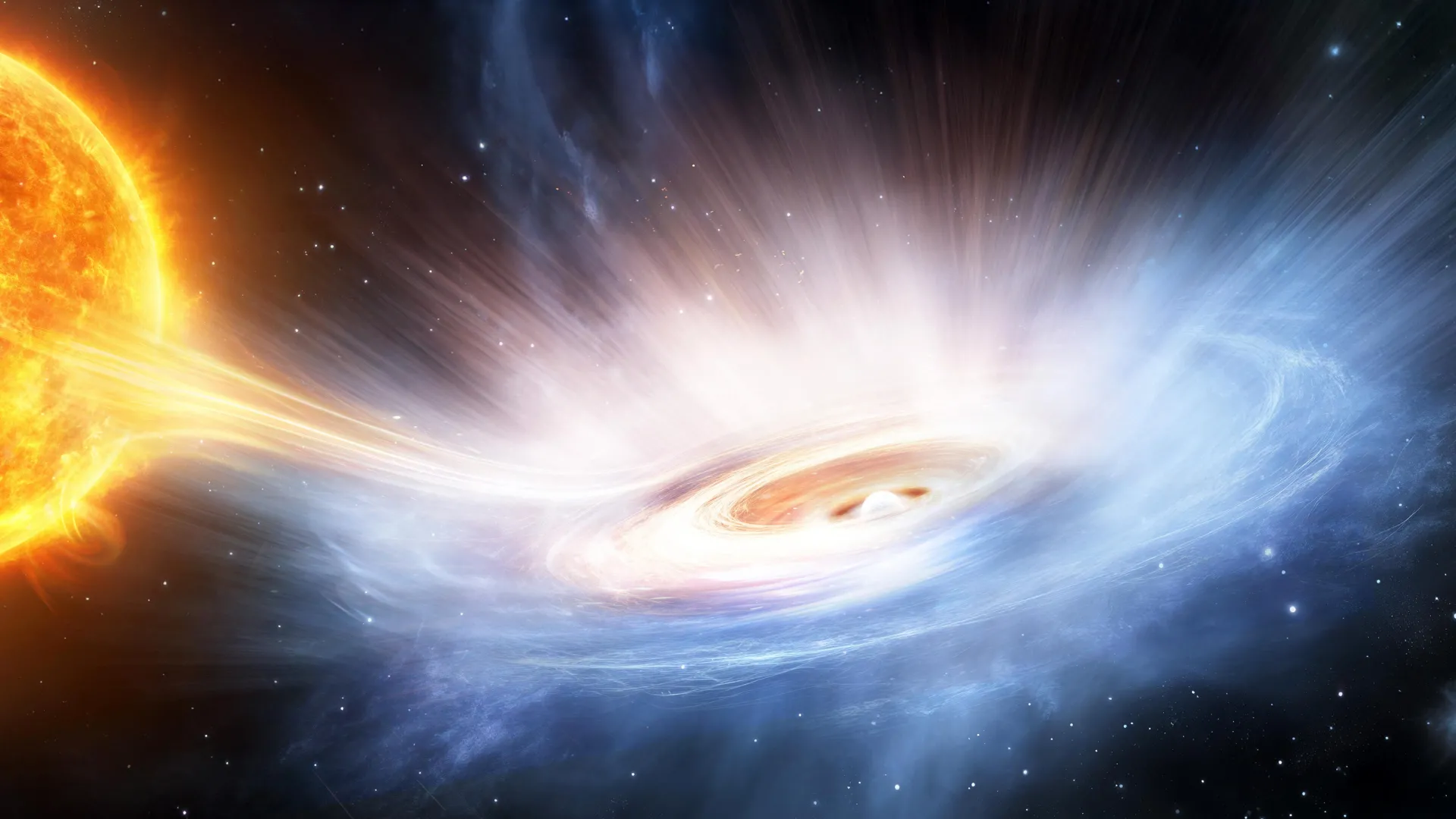
The X-Ray Imaging and Spectroscopy Mission (XRISM) has identified a surprising contrast between the winds blasting away from a disk around a neutron star and those seen near supermassive black holes. The neutron star system produces an unusually dense outflow that challenges current ideas about how these winds form and how they reshape their surroundings.
On February 25, 2024, XRISM used its Resolve instrument to observe the neutron star GX13+1, the compact remnant of a once larger star. GX13+1 shines brightly in X-rays that come from an accretion disk of superheated material spiraling inward and striking the star’s surface.
These inward flows can also launch powerful outflows that alter the space around them. How these outflows arise is still under investigation, which is why the team targeted GX13+1.
Resolve can precisely measure the energy of individual X-ray photons, so the scientists anticipated seeing fine-grained details that had never been captured before.
“When we first saw the wealth of details in the data, we felt we were witnessing a game-changing result,” says Matteo Guainazzi, ESA XRISM project scientist. “For many of us, it was the realization of a dream that we had chased for decades.”
Why cosmic winds matter
These winds are not just curiosities. They drive large-scale change in the universe.
Similar winds also blow from systems with supermassive black holes at galaxy centers. They can compress giant molecular clouds to trigger star birth or heat and disperse those clouds to halt star formation. Astronomers refer to this push and pull as feedback, and in extreme cases the wind from a central black hole can regulate the growth of its entire host galaxy.
Because the processes around supermassive black holes might mirror those near GX13+1, the team chose this neutron star system as a closer, brighter target that could reveal the underlying physics in sharper detail.
A timely surge to the Eddington limit
Just before the planned observations, GX13+1 unexpectedly brightened and reached or even surpassed the Eddington limit.
This limit describes what happens as matter falls onto a compact object such as a black hole or a neutron star. More infalling matter releases more energy. As the energy output rises, the radiation exerts pressure on the incoming material and pushes it outward. At the Eddington limit, the high-energy light being produced can drive almost all of the infalling matter back into space as a wind.
Resolve recorded GX13+1 during this dramatic phase.
“We could not have scheduled this if we had tried,” said Chris Done, Durham University, UK, the lead researcher on the study. “The system went from about half its maximum radiation output to something much more intense, creating a wind that was thicker than we’d ever seen before.”
A slow, dense wind defies expectations
Despite the intense outburst, the wind’s speed remained near 1 million km/h. That is swift on Earth but slow compared with winds near the Eddington limit around supermassive black holes, where outflows can reach 20 to 30 percent of light speed, more than 200 million km/h.
“It is still a surprise to me how ‘slow’ this wind is,” says Chris, “as well as how thick it is. It’s like looking at the Sun through a bank of fog rolling towards us. Everything goes dimmer when the fog is thick.”
Neutron star vs black hole winds
This was not the only contrast. Earlier XRISM observations of a supermassive black hole at the Eddington limit revealed an ultrafast, clumpy wind. By comparison, the outflow from GX13+1 appears slow and smooth.
“The winds were utterly different but they’re from systems which are about the same in terms of the Eddington limit. So if these winds really are just powered by radiation pressure, why are they different?” asks Chris.
Accretion disk temperature as the key
The team suggests the answer lies in the temperature of the accretion disk around the central object. Counterintuitively, disks around supermassive black holes tend to be cooler than those in stellar-mass systems with neutron stars or black holes.
Disks around supermassive black holes are much larger. They can be extremely luminous, yet that power is spread over a vast area, so the typical radiation they emit peaks in ultraviolet light. Stellar-mass systems radiate more strongly in X-rays.
Ultraviolet light interacts with matter more readily than X-rays. Chris and colleagues propose that this difference allows ultraviolet radiation to push material more efficiently, generating the much faster winds seen near supermassive black holes.
What this means for galaxy evolution
If this explanation holds, it will refine how scientists think about the exchange of energy and matter in extreme environments. It could also clarify how these processes influence the growth of galaxies and the broader evolution of the cosmos.
“The unprecedented resolution of XRISM allows us to investigate these objects — and many more -in far greater detail, paving the way for the next-generation, high-resolution X-ray telescope such as NewAthena,” says Camille Diez, ESA Research fellow.
XRISM mission at a glance
XRISM (pronounced krizz-em) launched on September 7, 2023. The mission is led by the Japan Aerospace Exploration Agency (JAXA) in partnership with NASA and ESA. It flies with two instruments: Resolve, an X-ray calorimeter that measures the energy of individual X-ray photons to deliver an unprecedented level of energy resolution (the capability of an instrument to distinguish the X-ray ‘colors’), and Xtend, a wide-field X-ray CCD camera that images the surrounding region.

The idea that our universe might be nothing more than an elaborate computer simulation has been a favorite theme in science fiction for decades. Yet new research from UBC Okanagan suggests that not only is this concept implausible — it is mathematically impossible.
Dr. Mir Faizal, an Adjunct Professor at UBC Okanagan’s Irving K. Barber Faculty of Science, and his collaborators, Drs. Lawrence M. Krauss, Arshid Shabir, and Francesco Marino, have shown that the underlying fabric of reality operates in a way no computer could ever replicate.
Their study, published in the Journal of Holography Applications in Physics, doesn’t just dispute the idea of a simulated universe like The Matrix. It goes further, demonstrating that the cosmos itself is built upon a kind of understanding that lies outside the reach of any algorithm.
The Simulation Hypothesis Meets Mathematics
“It has been suggested that the universe could be simulated. If such a simulation were possible, the simulated universe could itself give rise to life, which in turn might create its own simulation. This recursive possibility makes it seem highly unlikely that our universe is the original one, rather than a simulation nested within another simulation,” says Dr. Faizal. “This idea was once thought to lie beyond the reach of scientific inquiry. However, our recent research has demonstrated that it can, in fact, be scientifically addressed.”
The team’s findings rest on the evolving understanding of what reality truly is. Physics has moved far beyond Isaac Newton’s view of solid objects moving through space. Einstein’s theory of relativity replaced that classical model, and quantum mechanics transformed it yet again. Now, at the forefront of theoretical physics, quantum gravity proposes that even space and time are not fundamental elements. Instead, they arise from something deeper — pure information.
The Hidden Realm Beneath Reality
Physicists describe this informational layer as a “Platonic realm,” a mathematical foundation more real than the physical world we perceive. According to the new research, it is from this realm that space and time themselves emerge.
However, the scientists demonstrated that even this information-based structure cannot fully describe reality through computation alone. By applying advanced mathematical principles, including Gödel’s incompleteness theorem, they proved that any consistent and complete model of existence requires what they call “non-algorithmic understanding.”
To grasp this idea, imagine how a computer works — it follows a set of defined instructions step by step. Yet, some truths exist that cannot be reached by following any sequence of logical operations. These are known as “Gödelian truths,” and while they are real, they cannot be proven using computation.
Where Computation Fails
Consider the statement, “This true statement is not provable.” If it were provable, it would be false, contradicting logic. If it cannot be proven, then it is true, which means any logical system attempting to prove it is incomplete. In either case, computation alone falls short.
“We have demonstrated that it is impossible to describe all aspects of physical reality using a computational theory of quantum gravity,” says Dr. Faizal. “Therefore, no physically complete and consistent theory of everything can be derived from computation alone. Rather, it requires a non-algorithmic understanding, which is more fundamental than the computational laws of quantum gravity and therefore more fundamental than spacetime itself.”
Why the Universe Cannot Be Simulated
If the underlying rules of the Platonic realm seem similar to those governing a computer simulation, could that realm itself be simulated? The answer, according to the researchers, is no.
“Drawing on mathematical theorems related to incompleteness and indefinability, we demonstrate that a fully consistent and complete description of reality cannot be achieved through computation alone,” explains Dr. Faizal. “It requires non-algorithmic understanding, which by definition is beyond algorithmic computation and therefore cannot be simulated. Hence, this universe cannot be a simulation.”
Co-author Dr. Lawrence M. Krauss notes that the implications of this finding extend deep into the foundations of physics. “The fundamental laws of physics cannot be contained within space and time, because they generate them. It has long been hoped, however, that a truly fundamental theory of everything could eventually describe all physical phenomena through computations grounded in these laws. Yet we have demonstrated that this is not possible. A complete and consistent description of reality requires something deeper — a form of understanding known as non-algorithmic understanding.”
Reality Beyond Algorithms
As Dr. Faizal summarizes, “Any simulation is inherently algorithmic — it must follow programmed rules. But since the fundamental level of reality is based on non-algorithmic understanding, the universe cannot be, and could never be, a simulation.”
For years, the simulation hypothesis was regarded as untestable, confined to the realms of philosophy and speculative fiction. This new research, however, anchors it firmly in mathematical and physical theory — delivering what may be the final, definitive answer to one of science’s most intriguing questions.
A Dundee professor carried out the first remote thrombectomy on a human cadaver.
Surgical menopause is the immediate onset of menopause caused by the removal of both ovaries.
