This Nail Change Could Be A Sign Of Lung Issues

Darker streaks in your nails, horizontal ridges, and half-white, half-pink or brown nails with a clear line between the colours can all signify health issues.

And it turns out you can spot psoriasis on your nails, too.

So perhaps it shouldn’t be shocking that your nails can also show issues with your lungs and heart through another change to the area.

Cleveland Clinic writes that “nail clubbing” is most often linked to cardiovascular and pulmonary conditions, “like lung cancer, lung infections, interstitial lung disease, cystic fibrosis or cardiovascular disease”.

However, it can have other causes, like Crohn’s disease and liver conditions. It can sometimes simply be a genetic variant that isn’t anything to worry about.

What is “nail clubbing”?

Nail clubbing can start gradually, but it ends with your fingernails curving over rounded fingertips.

The nail looks wider and more bulging ― a bit like an inverted spoon ― and feels softer and “spongier”.

Your nails might feel warm and look red. Before the “clubbing” fully takes place, you might notice your nails widening at the top and beginning to wrap around your fingertips.

It often begins in your thumb and forefinger before spreading to other nails, but it can affect any nail or a few nails at once.

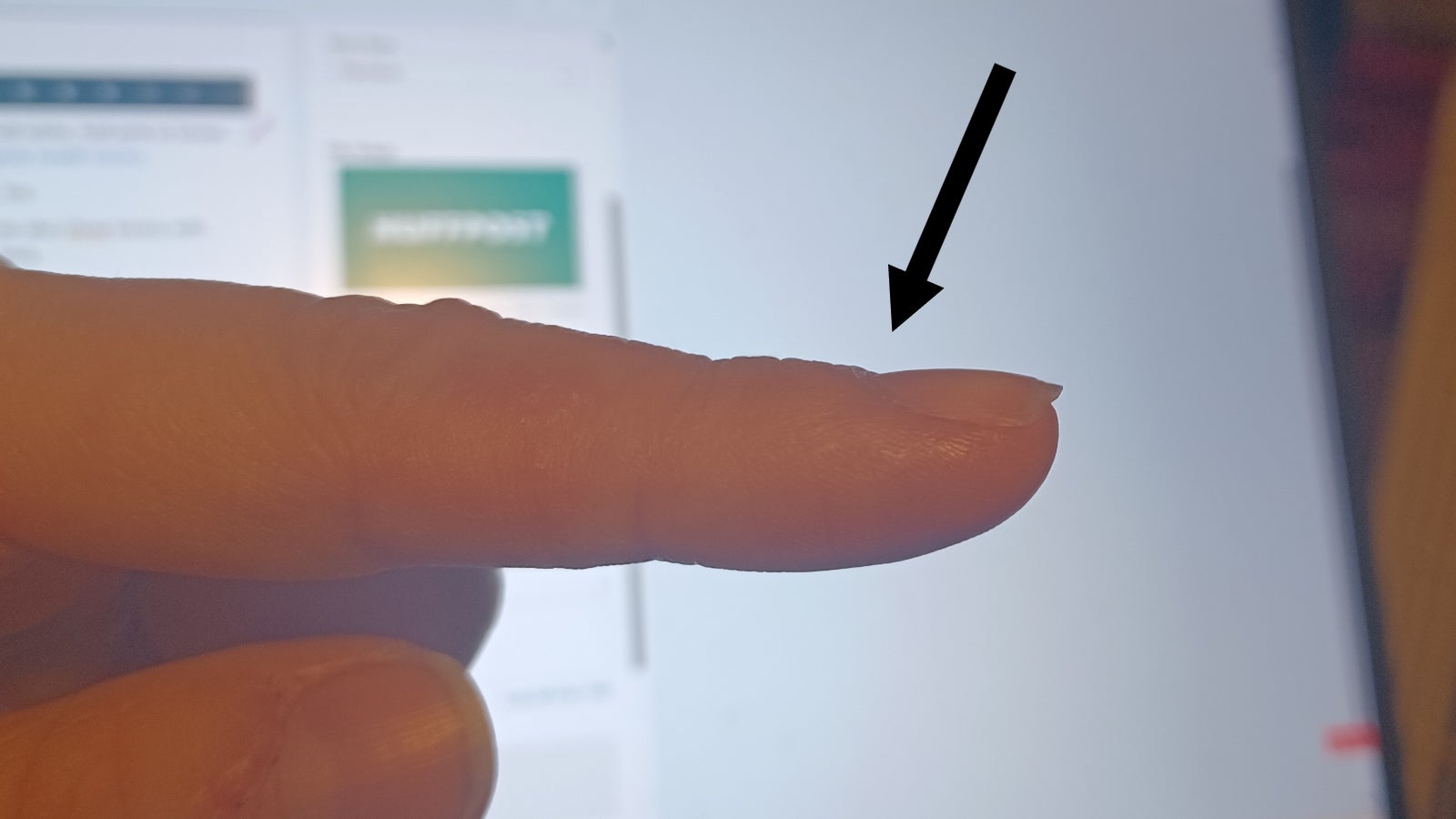
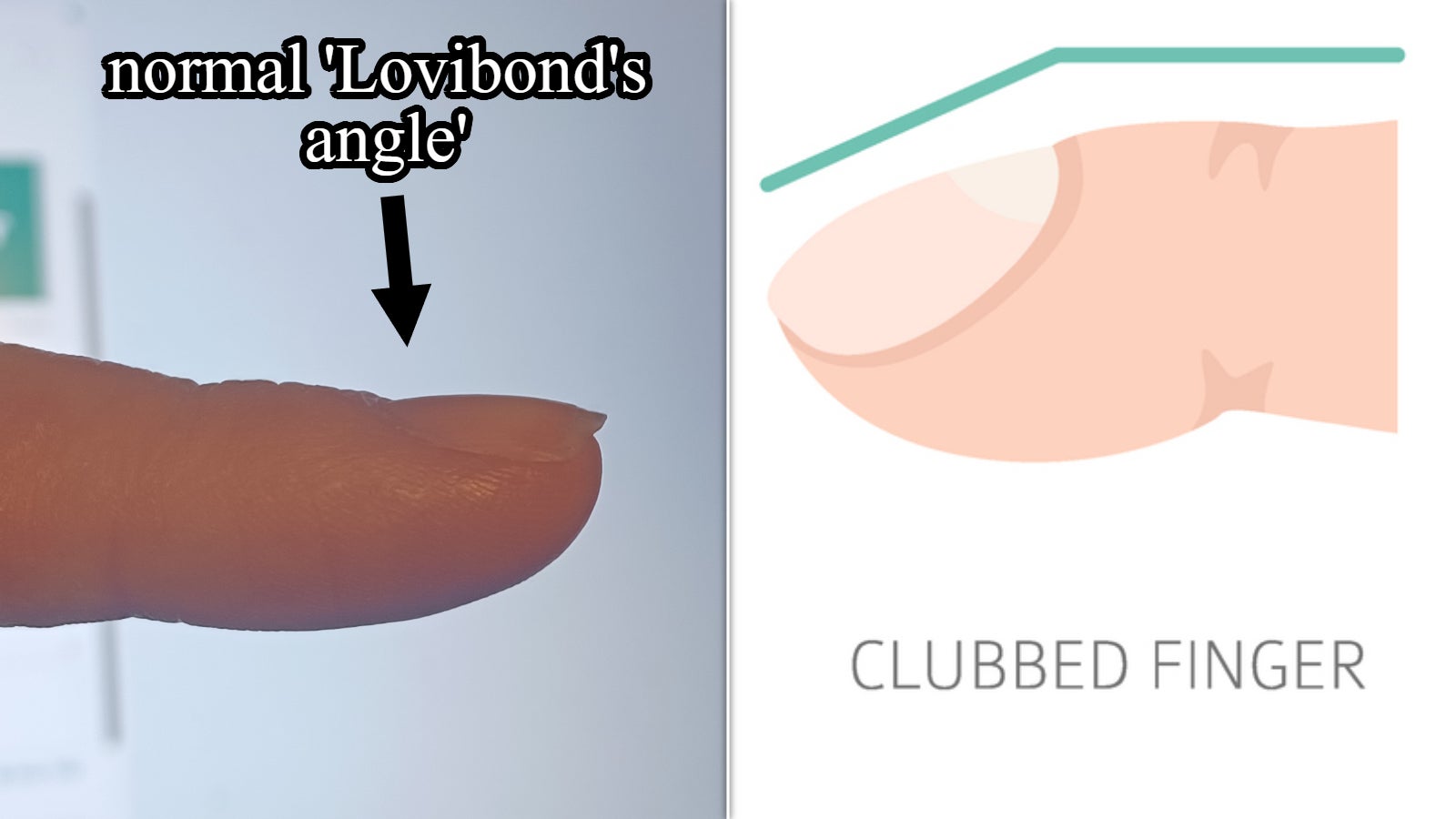
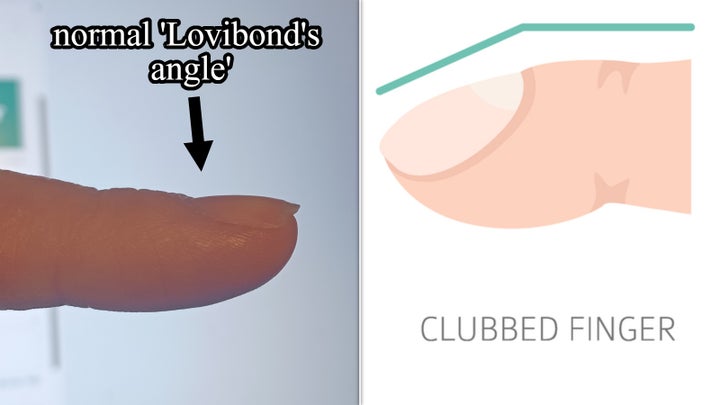
In the early stages, you might want to look out for the “Lovibond angle” sign.

The Lovibond angle is the small dent at the bottom of your nail that you can see from the side. But per the Cleveland Clinic, “In the early stages of nail clubbing, your nail and nail bed look flat from the side”.

And Mount Sinai adds that nails in the early stages of clubbing “may seem to ‘float’ instead of being firmly attached” to your nail bed.

Normal Lovibond's angle vs clubbed fingernail

Amy Glover / HuffPost UK / Getty images

Normal Lovibond’s angle vs clubbed fingernail

When should I see a doctor about suspected clubbed nails?

The change “can be a sign of many serious, long-term conditions,” the NHS says.

It is linked to “heart and lung diseases that reduce the amount of oxygen in the blood,” Mount Sinai added. Sometimes, this includes lung cancer.

So if you notice changes that suggest clubbing, speak to a doctor as soon as you can.

The condition may be harmless, but it’s improtant to get it checked out anyway.

Share Button

Brain fat, not just plaques, may be the hidden driver of Alzheimer’s

It was long thought that fat in the brain played no role in neurodegenerative diseases, but Purdue University researchers are challenging that assumption.

The research findings, published in Immunity, show that excess fat in the brain’s resident immune cells, called microglia, impairs their ability to combat disease. This insight opens a path to lipid biology-based neuroimmune therapies that could treat diseases like Alzheimer’s by enhancing microglial function and neuronal health. This work was led by Gaurav Chopra, the James Tarpo Jr. and Margaret Tarpo Professor of Chemistry and (by courtesy) of Computer Science at Purdue.

While most Alzheimer’s drug development targets the primary pathologies of the disease — plaques of a misfolded protein called amyloid beta and tangles of the protein tau — Chopra is focused on the abnormally fat-rich cells surrounding diseased regions of the brain. In earlier work published in Nature, Chopra and collaborators showed that, in the presence of disease, astrocytes — another type of cells that support neurons — release a fatty acid that is toxic to brain cells. Another collaborative work with the University of Pennsylvania, published last year in Nature, also linked mitochondrial dysfunction in neurons with fat deposits in glial cells during aging — a major risk factor for neurodegeneration.

“In our view, directly targeting plaques or tangles will not solve the problem; we need to restore function of immune cells in the brain,” Chopra said. “We’re finding that reducing accumulation of fat in the diseased brain is the key, as accumulated fat makes it harder for the immune system to do its job and maintain balance. By targeting these pathways, we can restore the ability of immune cells like microglia to fight disease and keep the brain in balance, which is what they’re meant to do.”

Chopra’s team worked in collaboration with researchers at Cleveland Clinic led by Dimitrios Davalos, assistant professor of molecular medicine. Chopra is also the director of Merck-Purdue Center and a member of the Purdue Institute for Integrative Neuroscience; the Purdue Institute for Drug Discovery; the Purdue Institute of Inflammation, Immunology and Infectious Disease; and the Regenstrief Center for Healthcare Engineering.

Chopra’s work is part of Purdue’s presidential One Health initiative, which brings together research on human, animal and plant health. His research supports the initiative’s focus on advanced chemistry, where Purdue faculty study complex chemical systems and develop new techniques and applications.

More than 100 years ago, Alois Alzheimer identified abnormalities in the brain of a woman with the disease that now bears his name, including plaques, tangles and cells filled with droplets of fatty compounds called lipids. Until recently, these lipid droplets were dismissed as by-products of disease.

But the links that Chopra and his team have found between neurodegenerative disease and fats in microglia and astrocytes — both types of glial cells that support neurons in the brain — strongly suggest otherwise. Chopra says this research lays the foundation for a “new lipid model of neurodegeneration.” He likes to call these fat accumulations “lipid plaques,” as they don’t resemble spherical droplets.

“It is not the lipid droplets that are pathogenic, but the accumulation of these droplets is bad. We think the composition of lipid molecules that accumulate within brain cells is one of the major drivers of neuroinflammation, leading to different pathologies, such as aging, Alzheimer’s disease and other conditions related to inflammatory insults in the brain. The specific composition of these lipid plaques may define particular brain diseases,” Chopra said.

The Immunity paper focuses on microglia, the “bona fide immune cells of the brain,” which clear out debris, such as misfolded proteins like amyloid beta and tau, by absorbing and breaking them down through a process called phagocytosis. Chopra’s team examined microglia in the presence of amyloid beta and asked a simple question: What happens to microglia when they come into contact with amyloid beta?

Images of brain tissue from people with Alzheimer’s disease showed amyloid beta plaques surrounded by microglia. Microglia located within 10 micrometers of these plaques contained twice as many lipid droplets as those farther away. These lipid droplet-laden microglia closest to the plaques cleared 40% less amyloid beta than ordinary microglia from brains without disease.

In their investigation into why microglia were impaired in Alzheimer’s brains, the team used specialized techniques and found that microglia in contact with plaques and disease-related inflammation produced an excess of free fatty acids. While microglia normally use free fatty acids as an energy source — and some production of these fatty acids is even beneficial — Chopra and his team discovered the microglia closest to amyloid beta plaques convert these free fatty acids to triacylglycerol, a stored form of fat, in such large quantities that they become overloaded and immobilized by their own accumulation. The formation of these lipid droplets depends on age and disease progression, becoming more prominent as Alzheimer’s disease advances.

By tracing the complex series of steps microglia use to convert free fatty acids to triacylglycerol, the research team zeroed in on the final step of this pathway. They found abnormally high levels of an enzyme called DGAT2 catalyzes the final step of converting free fatty acids to triacylglycerol. They expected to see equally high levels of the DGAT2 gene — since the gene must be copied to produce the protein — but that was not the case. The enzyme accumulates because it is not degrading as quickly as it normally would, rather than being overproduced. This accumulation of DGAT2 causes microglia to divert fatty acids into long-term storage and fat accumulation instead of using them for energy or repair.

“We showed that amyloid beta is directly responsible for the fat that forms inside microglia,” Chopra said. “Because of these fatty deposits, microglial cells become dysfunctional — they stop clearing amyloid beta and stop doing their job.”

Chopra said the researchers don’t yet know what causes the DGAT2 enzyme to persist. However, in their search for a remedy, the team tested two molecules: one that inhibits DGAT2’s function and another that promotes its degradation. The degradation of the DGAT2 enzyme was ultimately beneficial to reduce fat in the brains, improve function of microglia and their ability to eat amyloid-beta plaques, and improve markers of neuronal health in Alzheimer’s disease animal models.

“What we’ve seen is that when we target the fat-making enzyme and either remove or degrade it, we restore the microglia’s ability to fight disease and maintain balance in the brain — which is what they’re meant to do,” Chopra said.

“This is an exciting finding that reveals how a toxic protein plaque directly influences how lipids are formed and metabolized by microglial cells in Alzheimer’s brains,” said Priya Prakash, a first co-author of the study. “While most recent work in this area has focused on the genetic basis of the disease, our research paves the way for understanding how lipids and their pathways within the brain’s immune cells can be targeted to restore their function and combat the disease.”

“It’s incredibly exciting to connect fat metabolism to immune dysfunction in Alzheimer’s,” said Palak Manchanda, the other first co-author. “By pinpointing this lipid burden and the DGAT2 switch that drives it, we reveal a completely new therapeutic angle: Restore microglial metabolism and you may restore the brain’s own defense against disease.”

At Purdue, Chopra was joined in the research by Prakash, Manchanda, Kanchan Bisht, Kaushik Sharma, Prageeth R. Wijewardhane, Caitlin Randolph, Matthew Clark, Jonathan Fine, Elizabeth Thayer and Chi Zhang. Their research was produced with support from the U.S. Department of Defense and the National Institutes of Health.

Share Button

Scientists reveal pill that helps shed 20% of body weight

New research presented at the Annual Meeting of the European Association for the Study of Diabetes in Vienna, Austria (Sept 15-19) and simultaneously published in NEJM shows that daily treatment with the new once-daily GLP-1 agonist orforglipron results in substantial weight loss in people living with obesity that do not have type 2 diabetes. The study is by Dr Sean Wharton, McMaster University, Hamilton, ON, Canada and Wharton Weight Management Clinic, Burlington, ON, Canada, and colleagues. The study is sponsored by Eli Lilly, the manufacturer of orforglipron. 

Orforglipron is a small-molecule, oral glucagon-like peptide-1 (GLP-1) receptor agonist. In this phase 3, multinational, randomised, double-blind trial, the authors examined the safety and efficacy of once-daily orforglipron at doses of 6 mg, 12 mg, or 36 mg, as compared with placebo (assigned in a 3:3:3:4 ratio) as an adjunct to healthy diet and physical activity for 72 weeks. All the patients had obesity but not diabetes. The primary end point was the percent change in body weight from baseline to week 72.

A total of 3127 patients in 9 countries / jurisdictions (USA, China, Brazil, India, Japan, South Korea, Spain, Slovakia and Taiwan) underwent randomisation. The mean relative change in body weight from baseline to week 72 was −7.5% with 6 mg of orforglipron, −8.4% with 12 mg of orforglipron, and −11.2% with 36 mg of orforglipron, as compared with −2.1% with placebo.

Among the patients in the orforglipron 36 mg group, 54.6% had reduction of 10% or more of body weight, 36.0% had a reduction of 15% or more, and 18.4% had a reduction of 20% or more, as compared with 12.9%, 5.9%, and 2.8% of the patients, respectively, in the placebo group.

Other outcomes such as waist circumference, systolic blood pressure, triglyceride levels, and non-HDL cholesterol levels significantly improved with orforglipron treatment (see table 3 full paper). Adverse events (see table 4) resulted in treatment discontinuation in 5.3% to 10.3% of the patients in the orforglipron groups and in 2.7% of those in the placebo group. The most common adverse events with orforglipron were gastrointestinal effects, which were mostly mild to moderate, consistent with the GLP-1 class of medications.

The authors note that the use of medications such as GLP-1 receptor agonists (such as semaglutide) are reported to result in mean weight reductions of approximately 15% to above 20% and have shown additional health benefits, including decreased cardiovascular risk. However, most available GLP-1 based medications are administered as a subcutaneous injection, which may limit treatment initiation and adherence.

The authors say: “After 72 weeks of treatment, all the patients in the three orforglipron groups had a significant and clinically meaningful dose-dependent reduction in body weight. The patients who received the highest dose of orforglipron had an average 11.2% weight reduction; more than one third had a reduction of at least 15%, and nearly one fifth had a reduction of at least 20%. All measured cardiometabolic levels improved with orforglipron treatment as compared with placebo… A weight reduction of 10% or more is a recognised therapeutic threshold, one that has been linked to meaningful cardiometabolic benefits. In our current trial, patients who received orforglipron had a mean weight reduction of as much as 11.2%, and such reductions were associated with improvements in levels of systolic and diastolic blood pressure, as well as blood fats, blood sugar profiles, and high-sensitivity C-reactive protein – a marker of systemic inflammation.”

The authors note the trial’s limitations include the lack of comparison with currently approved obesity-management medications, the use of cutoffs for BMI inclusion criteria that have been developed in White populations and that exclude patients with lower BMI values who may also have adiposity-related risks, and the increasing availability of obesity-management medications, which could have an effect on treatment adherence and efficacy results. The strengths of the trial include a highly diverse, large population from nine countries and jurisdictions on four continents – including more than 35% enrolment of men.

They conclude: “In patients with obesity, the use of orforglipron resulted in statistically and clinically significant weight reductions and an adverse-event profile that was consistent with findings regarding other GLP-1 receptor agonists.”

Dr Wharton adds: “This could mean an expansion of obesity interventions to groups who are currently excluded due to the cost of and lack of access to injectable medications.”

Orforglipron is not yet approved by the US Food and Drug Administration (FDA) or other similar agencies worldwide. 

Share Button

Flagship NHS pledge hanging in the balance – experts

A think tank warns the 18-week waiting time target will not be hit by 2029, on current rate of progress.

Share Button

‘She doesn’t get another childhood’: The lives on hold waiting for wheelchairs

More than a thousand disabled children are waiting for wheelchairs and equipment that could transform their lives, Whizz Kidz say

Share Button

Head nurse describes ‘chaotic’ night baby died

Head nurse Ronald Carrido tells the inquest into a baby’s death about the moment he called for help.

Share Button

This forgotten king united England long before 1066

A groundbreaking new biography of Æthelstan marks 1,100 years since his coronation in 925 AD, reasserts his right to be called the first king of England, explains why he isn’t better known and highlights his many overlooked achievements. The book’s author, Professor David Woodman, is campaigning for greater public recognition of Æthelstan’s creation of England in 927 AD.

The Battle of Hastings in 1066 and the signing of Magna Carta in 1215 are two of the most famous years in English history. But very few people know what happened in 925 or 927AD. Professor David Woodman, the University of Cambridge-based author of The First King of England, a groundbreaking new biography of Æthelstan, is determined to change this and not just with his book. He – and other historians – are planning a fitting memorial for England’s first and unfairly overlooked king.

“As we approach the anniversaries of Æthelstan’s coronation in 925 and the birth of England itself in 927, I would like his name to become much better known. He really deserves that,” says Woodman, a Professor at Robinson College and Cambridge’s Faculty of History.

Woodman is working with other historians* towards a memorial for the king, which could be a statue, plaque or portrait in a location like Westminster, Eamont Bridge (where Æthelstan’s authority in 927 was recognized by other British rulers) or Malmesbury (where he was buried). Woodman is also calling for the history of Æthelstan’s reign to appear more routinely on the school curriculum.

“There has been so much focus on 1066, the moment when England was conquered. It’s about time we thought about its formation, and the person who brought it together in the first place,” Professor Woodman says.

Why isn’t Æthelstan better known?

Woodman’s book, published by Princeton University Press, blames a lack of public relations. “Æthelstan didn’t have a biographer writing up his story,” Woodman says. “His grandfather, Alfred the Great, had the Welsh cleric Asser to sing his praises. And within decades of Æthelstan’s death, a wave of propaganda ensured King Edgar became famous for reforming the church. This completely overshadowed Æthelstan’s earlier revamping of learning and religiosity.”

In modern times, historians have tended to dismiss Æthelstan’s status as England’s first king, on the basis that the kingdom fragmented soon after his death in 939AD. The focus has instead shifted to Edgar. Woodman rejects this argument.

“Just because things broke down after Æthelstan’s death doesn’t mean that he didn’t create England in the first place,” Woodman says. “He was so ahead of his time in his political thinking, and his actions in bringing together the English kingdom were so hard-won, that it would have been more surprising if the kingdom had stayed together. We need to recognise that his legacy, his ways of governing and legislating, continued to shape kingship for generations afterwards.”

Woodman cites a wealth of evidence to resurrect Æthelstan’s reputation.

Military success

“Militarily, Æthelstan was supremely strong,” Woodman says. “He had to be very robust to expand the kingdom and then to defend it.”

Æthelstan had to contend with major Viking settlement in the north and the east. In 927AD, he acquired authority over the Viking stronghold at York, and, in bringing Northumbria within his dominion, became the first to rule over an area recognizable as ‘England’.

As Æthelstan expanded his kingdom, he drew Welsh and Scottish kings into his royal assemblies. Large-scale surviving original diplomas, housed in the British Library, list the very many nobles he compelled to attend. The meetings of Æthelstan’s assemblies must have been incredibly grand affairs, involving hundreds of people in total.

“These Welsh and Scottish kings must have bitterly resented being brought so far out of their territories,” Woodman says. “An incredible tenth-century Welsh poem, The Great Prophecy of Britain, calls for the English to be slaughtered. It’s difficult to date, but it may be a direct response to this expansion of Æthelstan’s power.”

Then, in 937AD, at the famous Battle of Brunanburh, Æthelstan brutally crushed a formidable Viking coalition, supported by Scots and the Strathclyde Welsh, determined to overthrow him.

“Brunanburh should be as well-known as the Battle of Hastings,” Woodman says. “Every major chronicle, in England, Wales, Ireland and Scandinavia took note of this battle, its outcome and how many people were slaughtered. It was a critically important episode in the history of the newly-formed English kingdom.”

Numerous locations have been proposed for the battle. Woodman is confident that it happened at what is now Bromborough on the Wirral. “That location makes sense strategically and the etymology of the name fits,” he says.

Revolution of government

Æthelstan’s most powerful legacy rests in his “revolution of government,” Woodman suggests. Legal documents from Æthelstan’s reign survive in relative abundance and, Woodman argues, take us right to the heart of the type of king he was.

“King Alfred must have been a role model for his grandson,” Woodman says. “Æthelstan saw that a king should legislate and he really did. He took crime very seriously.”

Once Æthelstan had created the English kingdom, royal documents known as ‘diplomas’ (in essence a grant of land by the king to a beneficiary) were suddenly transformed. Formerly short and straightforward, they were transformed into grandiose statements of royal power.

“They’re written in a much more professional script and in amazingly learned Latin, full of literary devices like rhyme, alliteration, chiasmus,” Woodman says. “They were designed to show off, he’s trumpeting his success.”

But Woodman also argues that government became increasingly efficient during Æthelstan’s reign. “We can see him sending law codes out to different parts of the kingdom, and then reports coming back to him about what was working and what changes needed to be made.”

“There is also some of the clearest evidence we have for centralized oversight of the production of royal documents, with one royal scribe put in charge of their production. No matter where the king and the royal assembly traveled, the royal scribe went too.”

Woodman points out that Æthelstan brought England together just as parts of continental Europe were fragmenting. “Nobles across Europe were rising up and taking territory for themselves,” he says. “Æthelstan made sure that he was well placed to take advantage of the unfolding of European politics by marrying a number of his half-sisters into continental ruling houses.”

Learning and religion

Woodman argues that Æthelstan reversed a decline in learning brought by the Vikings and their destruction of churches. “Æthelstan was intellectually curious and scholars from all over Europe came to his court,” Woodman says. “He sponsored learning and was a keen supporter of the church.”

Two of Woodman’s favorite pieces of evidence relate to Saint Cuthbert. The first, the earliest surviving manuscript portrait of any English monarch, appears in a 10th-century manuscript now cared for by The Parker Library at Corpus Christi College, Cambridge. Æthelstan’s head is bowed as he stands before the saint. “Everyone should know about this portrait, it’s one of the most important images in English history,” says Woodman.

The manuscript was originally designed as a gift for the Community of Saint Cuthbert. “Æthelstan had just expanded into Northumbria and this manuscript cleverly includes a life of Saint Cuthbert,” Woodman says. “He was trying to win them over to his cause.”

Woodman felt even closer to Æthelstan while studying the Durham Liber Vitae. Begun in the ninth century, this manuscript chronologically lists the people who had a special connection to the Community of Saint Cuthbert, in alternating gold and silver lettering.

“If Æthelstan is going to appear, he should be many pages in, but in the tenth century someone visited Saint Cuthbert’s Community and wrote ‘Æthelstan Rex’ right at the top. Seeing that was breathtakingly exciting. It’s feasible that someone in his entourage was responsible. We know they visited the Community in 934 and this manuscript may have been on prominent display there, perhaps on its high altar.”

Notes

*The group has been convened by Alex Burghart MP, and incudes the historian-broadcasters, Tom Holland and Michael Wood.

Reference

David Woodman, The First King of England: Æthelstan and the Birth of a Kingdom is published by Princeton University Press on 2nd September 2025 (ISBN:9780691249490)

Share Button

Huntington’s disease successfully treated for first time

One of the most devastating diseases finally has a treatment that can slow its progression and transform lives, tearful doctors tell BBC.

Share Button

I’m A Sweaty Sleeper. This Mattress And Duvet Combo Have Changed Everything

We hope you love the products we recommend! All of them were independently selected by our editors. Just so you know, HuffPost UK may collect a share of sales or other compensation from the links on this page if you decide to shop from them. Oh, and FYI – prices are accurate and items in stock as of time of publication.

As you will have noticed stepping out your door this morning – it is now bloody cold! The Autumnal equinox has come and gone and summer is well and truly over.

I look forward to spending the next month simultaneously boiling and freezing at various points during the day. (Layering clothing is more complicated than you’d think.) For many of us, the colder weather also prompts a new bedding dilemma.

For some of us this means wondering if now is the time to swap our duvet for a heavier tog, or turning our mattresses over to let them breathe a bit as we enter central heating season.

But for me, the effort and decision is minimal as I’ve finally found the most comfortable mattress ever, and the most convenient and comfortable duvet, as well.

The best duvet for all seasons (and sweat levels)

For those of us who are sweaty sleepers – whether naturally, or perimenopause-induced – the Simba Hybrid 3-in-1 Duvet really is a lifesaver.

As an American who has lived in the UK for nearly 20 years, it has taken me a very long time to get used to sleeping without a top sheet. (I tried again recently, and decided I think I actually hate it.)

I could never really get on with the idea of sleeping with a duvet in the warm, late summer months until I started using this duvet. Basically, it does what it says on the tin.

There are two parts to the duvet – one layer for the warmer months that’s only 3.5 tog, and another for the cooler months that’s 7 tog. If you’re terrible at fast maths, that’s a total of 10.5 tog if you’re wanting the warmest option available. Together, the layers become one fluffy, warm, cloud of a duvet. And on their own, still delightful.

The layers simply snap together with the little poppers on the edges of the duvet. This week I swapped the 3.5 tog for the 7 tog, and it’s the perfect weight and warmth for these funny months where it’s still warm in the day, and then brisk in the evenings and early mornings.

I’m also a big fan of sleeping with the window open – what’s more pleasant than a cool room and snuggling under a warm duvet? – so this is ideal for me.

The best mattress for hot sleepers

I usually find mattress shopping to be a stressful event. How do you choose without laying on a hundred different mattresses? How do you really know which ones are comfortable? How can you ever be sure?

This is where honest reviews come in handy, so when I say that I absolutely LOVE the Simba Hybrid Pro Mattress, I genuinely mean it.

This is the first mattress I’ve been able to decide on as a newly single person, and it felt like a very big deal. I got to choose the firmness and size that I wanted – and I have to say I feel like a genius for deciding on this one. I went for a King, and what I love about this mattress is that it has a breathable layer and I don’t feel like I’m being boiled alive by a hot hob when I’m sleeping (which some mattresses genuinely feel like).

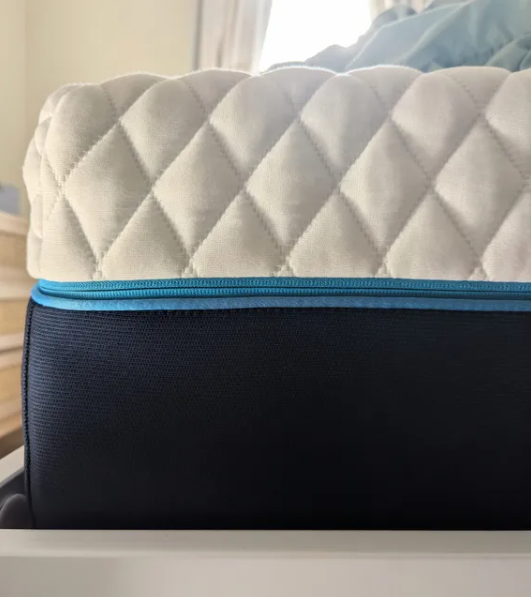
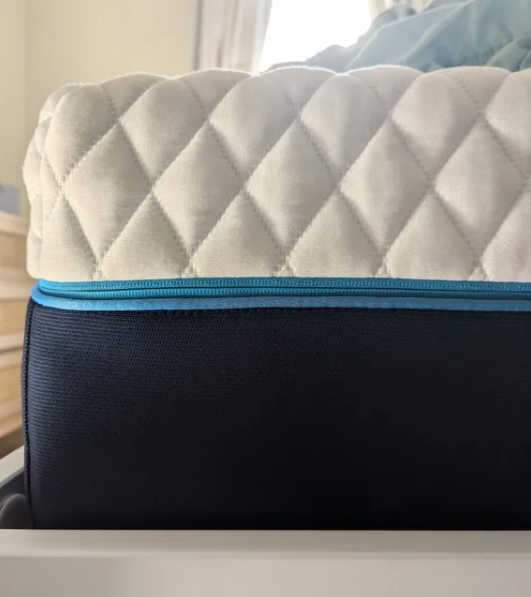
It’s hard to believe when you first pull a rolled-up mattress out of a box that it’s going to actually unfurl into something that’s both comfortable and also thick enough to support you in your slumber – but it truly is. Because of how my move into my flat happened, I only had a few hours of the mattress being out of the box before I slept on it, and it was absolutely fine. By the next night, it was heavenly.

I continually find the height of this mattress to be really impressive. It has several fancy layers that I can’t exactly pretend to explain or understand all that they do, but crucially I know I can take off the top layer to have it washed, and that there’s a breathable wool layer, as well.

Firmness wise, this is excellent. As an elder millennial who just turned 40 – and spends a lot of money on physiotherapy – I can confirm that this is neither too hard, nor too soft. It’s comfortable and sturdy for all manner of nocturnal activities, and it doesn’t leave you with new cricks in your neck or kinks in your back when you wake. Ideal.

The combination of the Simba Hybrid 3-in-1 Duvet and Simba Hybrid Pro Mattress really have helped give me the most comfortable and supported sleep I’ve had in months. I can’t recommend either enough – particularly if you run hot overnight or like to have options when it comes to your duvet tog.

Share Button

Dua Lipa Clarifies Reports Suggesting She Fired Her Former Agent Due To His Pro-Israel Stance

Dua Lipa has spoken out after recent reports about the parting of ways between herself and her former agent.

Over the weekend, the Daily Mail published a story linking Dua ending her professional relationship with David Levy and the fact he had reportedly signed a letter over the summer calling on Glastonbury organisers to drop Kneecap from their line-up amid controversy surrounding comments the group had made about Israel and the ongoing conflict in the Middle East.

Posting on her Instagram story on Tuesday evening, the Houdini singer – who has previously expressed solidarity with Palestine – maintained that while she does “not condone the actions of David Levy or other music executives toward an artist speaking their truth” she also “cannot ignore how this has been handled in the press”.

“Not only was the story completely false but the language used by the Daily Mail has been deliberately inflammatory, crafted purely for clickbait, clearly designed to fuel online division,” she insisted.

Dua added: “It is always Free Palestine but exploiting a global tragedy in order to sell newspapers is something I find deeply troubling.”

<div class="js-react-hydrator" data-component-name="Twitter" data-component-id="720" data-component-props="{"itemType":"rich","index":8,"contentIndexByType":1,"contentListType":"embed","code":"

Dua Lipa calls out the Daily Mail for sharing a false story which involved the singer firing David Levy as her manager:

“It is always Free Palestine but exploiting a global tragedy in order to sell newspapers is something I find deeply troubling.” pic.twitter.com/sPGKy1FsJA

— Pop Base (@PopBase) September 23, 2025

","type":"rich","meta":{"author":"Pop Base","author_url":"https://twitter.com/PopBase","cache_age":86400,"description":"Dua Lipa calls out the Daily Mail for sharing a false story which involved the singer firing David Levy as her manager:“It is always Free Palestine but exploiting a global tragedy in order to sell newspapers is something I find deeply troubling.” pic.twitter.com/sPGKy1FsJA— Pop Base (@PopBase) September 23, 2025\n\n\n","options":{"_hide_media":{"label":"Hide photos, videos, and cards","value":false},"_maxwidth":{"label":"Adjust width","placeholder":"220-550, in px","value":""},"_theme":{"value":"","values":{"dark":"Use dark theme"}}},"provider_name":"Twitter","thumbnail_height":2048,"thumbnail_url":"https://pbs.twimg.com/media/G1jlQa5XMAAFKCW.jpg:large","thumbnail_width":2048,"title":"Pop Base on Twitter / X","type":"rich","url":"https://twitter.com/PopBase/status/1970576913086152966","version":"1.0"},"flags":[],"enhancements":{},"fullBleed":false,"options":{"theme":"news","device":"desktop","editionInfo":{"id":"uk","name":"U.K.","link":"https://www.huffingtonpost.co.uk","locale":"en_GB"},"originalEdition":"uk","isMapi":false,"isAmp":false,"isMobile":false,"isAdsFree":false,"isVideoEntry":false,"isEntry":true,"isMt":false,"entryId":"68d3c375e4b0ae58bfe9e4f4","entryPermalink":"https://www.huffingtonpost.co.uk/entry/dua-lipa-addresses-reports-fired-agent-israel_uk_68d3c375e4b0ae58bfe9e4f4","entryTagsList":"uk-celebrity,ukmusic,dua-lipa","sectionSlug":"entertainment","deptSlug":null,"sectionRedirectUrl":null,"subcategories":"","isWide":false,"isShopping":false,"headerOverride":null,"noVideoAds":false,"disableFloat":false,"isNative":false,"commercialVideo":{"provider":"custom","site_and_category":"uk.entertainment","package":null},"isHighline":false,"vidibleConfigValues":{"cid":"60afc140cf94592c45d7390c","disabledWithMapiEntries":false,"overrides":{"all":"60b8e525cdd90620331baaf4"},"whitelisted":["56c5f12ee4b03a39c93c9439","56c6056ee4b01f2b7e1b5f35","59bfee7f9e451049f87f550b","5acccbaac269d609ef44c529","570278d2e4b070ff77b98217","57027b4be4b070ff77b98d5c","56fe95c4e4b0041c4242016b","570279cfe4b06d08e3629954","5ba9e8821c2e65639162ccf1","5bcd9904821576674bc55ced","5d076ca127f25f504327c72e","5b35266b158f855373e28256","5ebac2e8abddfb04f877dff2","60b8e525cdd90620331baaf4","60b64354b171b7444beaff4d","60d0d8e09340d7032ad0fb1a","60d0d90f9340d7032ad0fbeb","60d0d9949340d7032ad0fed3","60d0d9f99340d7032ad10113","60d0daa69340d7032ad104cf","60d0de02b627221e9d819408"],"playlists":{"default":"57bc306888d2ff1a7f6b5579","news":"56c6dbcee4b04edee8beb49c","politics":"56c6dbcee4b04edee8beb49c","entertainment":"56c6e7f2e4b0983aa64c60fc","tech":"56c6f70ae4b043c5bdcaebf9","parents":"56cc65c2e4b0239099455b42","lifestyle":"56cc66a9e4b01f81ef94e98c"},"playerUpdates":{"56c6056ee4b01f2b7e1b5f35":"60b8e525cdd90620331baaf4","56c5f12ee4b03a39c93c9439":"60d0d8e09340d7032ad0fb1a","59bfee7f9e451049f87f550b":"60d0d90f9340d7032ad0fbeb","5acccbaac269d609ef44c529":"60d0d9949340d7032ad0fed3","5bcd9904821576674bc55ced":"60d0d9f99340d7032ad10113","5d076ca127f25f504327c72e":"60d0daa69340d7032ad104cf","5ebac2e8abddfb04f877dff2":"60d0de02b627221e9d819408"}},"connatixConfigValues":{"defaultPlayer":"16b0ecc6-802c-4120-845f-e90629812c4d","clickToPlayPlayer":"823ac03a-0f7e-4bcb-8521-a5b091ae948d","videoPagePlayer":"05041ada-93f7-4e86-9208-e03a5b19311b","defaultPlaylist":"2e062669-71b4-41df-b17a-df6b1616bc8f"},"topConnatixThumnbailSrc":"data:image/png;base64,iVBORw0KGgoAAAANSUhEUgAAAAEAAAABCAQAAAC1HAwCAAAAC0lEQVR42mNkYAAAAAYAAjCB0C8AAAAASUVORK5CYII=","customAmpComponents":[],"ampAssetsUrl":"https://amp.assets.huffpost.com","videoTraits":null,"positionInUnitCounts":{"buzz_head":{"count":0},"buzz_body":{"count":0},"buzz_bottom":{"count":0}},"positionInSubUnitCounts":{"article_body":{"count":8},"blog_summary":{"count":0},"before_you_go_content":{"count":0}},"connatixCountsHelper":{"count":0},"buzzfeedTracking":{"context_page_id":"68d3c375e4b0ae58bfe9e4f4","context_page_type":"buzz","destination":"huffpost","mode":"desktop","page_edition":"en-uk"},"tags":[{"name":" uk celebrity","slug":"uk-celebrity","links":{"relativeLink":"news/uk-celebrity","permalink":"https://www.huffingtonpost.co.uk/news/uk-celebrity","mobileWebLink":"https://www.huffingtonpost.co.uk/news/uk-celebrity"},"url":"https://www.huffingtonpost.co.uk/news/uk-celebrity/"},{"name":"ukmusic","slug":"ukmusic","links":{"relativeLink":"news/ukmusic","permalink":"https://www.huffingtonpost.co.uk/news/ukmusic","mobileWebLink":"https://www.huffingtonpost.co.uk/news/ukmusic"},"url":"https://www.huffingtonpost.co.uk/news/ukmusic/"},{"name":"dua lipa","slug":"dua-lipa","links":{"relativeLink":"news/dua-lipa","permalink":"https://www.huffingtonpost.co.uk/news/dua-lipa","mobileWebLink":"https://www.huffingtonpost.co.uk/news/dua-lipa"},"relegenceId":6429350,"url":"https://www.huffingtonpost.co.uk/news/dua-lipa/"}],"isLiveblogLive":null,"isLiveblog":false,"backfillRelatedArticles":[],"cetUnit":"buzz_body","enableIncontentPlayer":false,"bodyAds":["

\r\n\r\n HPGam.cmd.push(function(){\r\n\t\treturn HPGam.render(\"inline-1\", \"entry_paragraph_1\", false, false);\r\n });\r\n\r\n","

\r\n\r\n HPGam.cmd.push(function(){\r\n\t\treturn HPGam.render(\"inline\", \"entry_paragraph_2\", false, false);\r\n });\r\n\r\n","

\r\n\r\n HPGam.cmd.push(function(){\r\n\t\treturn HPGam.render(\"inline-2\", \"entry_paragraph_3\", false, false);\r\n });\r\n\r\n","

\r\n\r\n HPGam.cmd.push(function(){\r\n\t\treturn HPGam.render(\"inline-infinite\", \"repeating_dynamic_display\", false, false);\r\n });\r\n\r\n"],"adCount":0,"midArticleAdPartner":null},"isCollectionEmbed":false}”>

Dua Lipa calls out the Daily Mail for sharing a false story which involved the singer firing David Levy as her manager:

“It is always Free Palestine but exploiting a global tragedy in order to sell newspapers is something I find deeply troubling.” pic.twitter.com/sPGKy1FsJA

— Pop Base (@PopBase) September 23, 2025

Meanwhile, Dua’s agency WME also issued a statement to BBC News, which read: “Reports suggesting that Dua Lipa or her management dismissed one of our agents because of his political views are categorically false”.

Pointing out that Dua and David worked together in her “early career”, the company’s statement said that the pair officially stopped working together as far back as 2019, although he remained “in an advisory role” on her team until “earlier this year”, at which point they said he moved on to other projects.

The Mail’s online article has now been updated to reflect this, as well as correcting an error suggesting that David had at one point served as Dua’s manager, which is not the case.

So far, 2025 has seen Dua touring the UK in support of her latest album Radical Optimism, notably including two sold-out Wembley Stadium shows, and announcing her engagement to the British actor Callum Turner.

Share Button