The hidden mental health danger in today’s high-THC cannabis

Science News

from research organizations


Date:
August 12, 2025
Source:
Canadian Medical Association Journal
Summary:
THC levels in cannabis have soared in recent years, raising the risk of psychosis—especially in young, frequent users. Studies reveal a strong connection between cannabis-induced psychosis and schizophrenia, making early cessation and treatment essential.
Share:

FULL STORY


“Cannabis from the 2000s is not the same as in 2025,” said coauthor Dr. Nicholas Fabiano, MD, resident and researcher with the Department of Psychiatry, University of Ottawa, Ottawa, Ontario. “THC content has increased by 5 times. This is likely a significant driver in the increasing link between cannabis use and schizophrenia.”

the last 20 years in Canada from about 4% to 20% in most legal dried cannabis.

  • High-potency and regular cannabis use is linked to increased risk of psychosis — The risk of psychosis is increased in people using high-potency THC (more than 10% THC), people using it frequently, and those who are younger and male. A history of mental disorders (depression, anxiety, etc.) also appears to increase the risk.
  • Cannabis-induced psychosis and cannabis use disorder increase the risk of schizophrenia — A recent study of 9.8 million people in Ontario found a 14.3-fold higher risk of developing a schizophrenia-spectrum disorder in people visiting the emergency department for cannabis use and a 241.6-fold higher risk from visits for cannabis-induced psychosis.
  • Treatment requires stopping cannabis and taking medication — Continued use of cannabis after a first episode of cannabis-induced psychosis is linked to greater risk of returning symptoms. Antipsychotic medication can help people with severe and prolonged symptoms.
  • Behavioral options may help with cannabis cessation — Motivational interviewing or cognitive behavioral therapy by a physician or psychologist can help build skills to resist cravings and follow treatment recommendations.
  • “Cannabis from the 2000s is not the same as in 2025,” said coauthor Dr. Nicholas Fabiano, MD, resident and researcher with the Department of Psychiatry, University of Ottawa, Ottawa, Ontario. “THC content has increased by 5 times. This is likely a significant driver in the increasing link between cannabis use and schizophrenia.”


    Story Source:

    Materials provided by Canadian Medical Association Journal. Note: Content may be edited for style and length.


    Journal Reference:

    1. Sophie Li, Marco Solmi, Daniel T. Myran and Nicholas Fabiano. Cannabis and psychosis. CMAJ, 11 August 2025 DOI: 10.1503/cmaj.250659

    Cite This Page:

    Canadian Medical Association Journal. “The hidden mental health danger in today’s high-THC cannabis.” ScienceDaily. ScienceDaily, 12 August 2025. <www.sciencedaily.com/releases/2025/08/250811104237.htm>.

    Canadian Medical Association Journal. (2025, August 12). The hidden mental health danger in today’s high-THC cannabis. ScienceDaily. Retrieved August 12, 2025 from www.sciencedaily.com/releases/2025/08/250811104237.htm

    Canadian Medical Association Journal. “The hidden mental health danger in today’s high-THC cannabis.” ScienceDaily. www.sciencedaily.com/releases/2025/08/250811104237.htm (accessed August 12, 2025).

    Explore More

    from ScienceDaily


    RELATED STORIES


    Share Button

    Scientists detect virus traces in blood that may unlock long COVID’s mystery

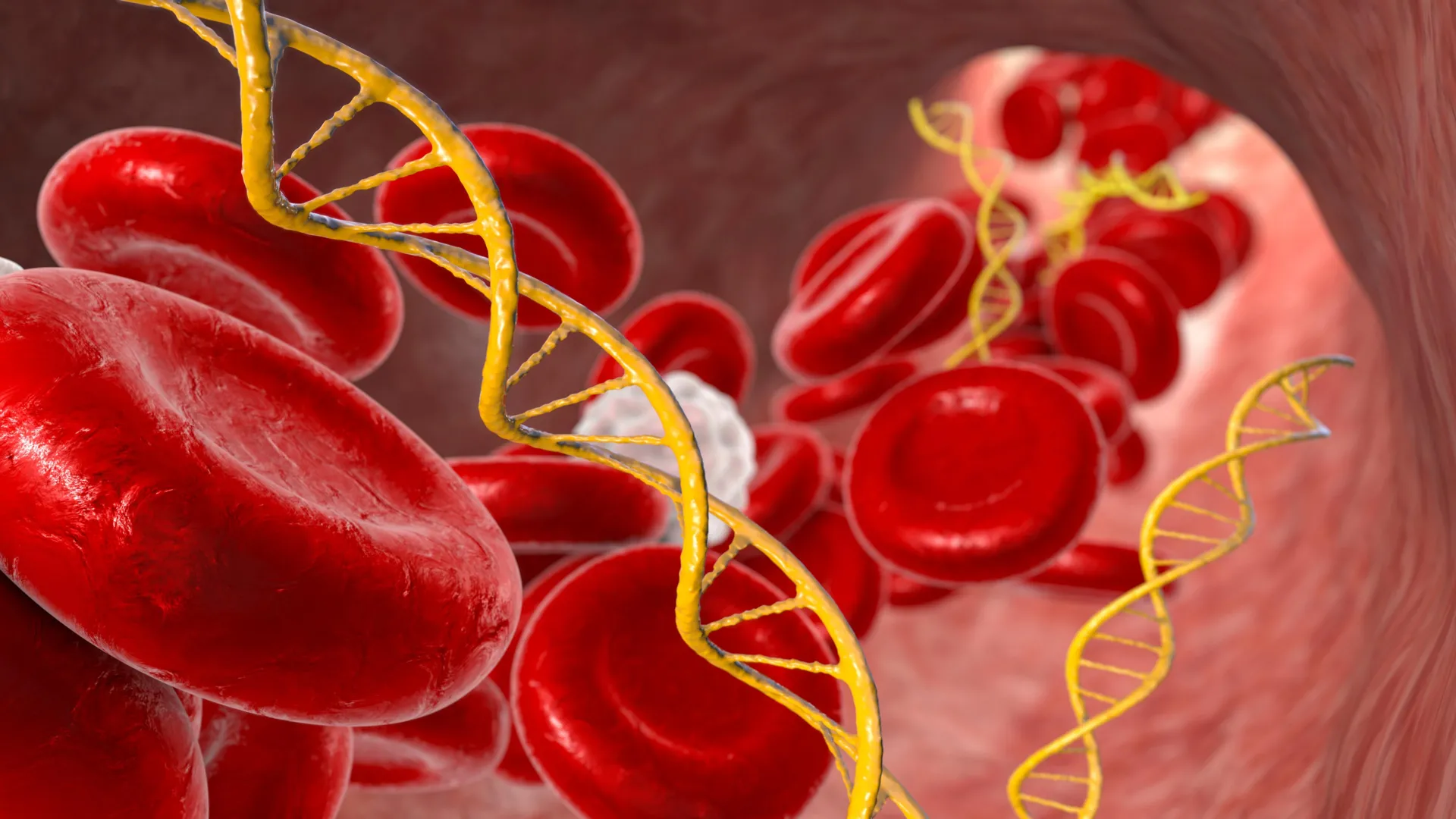
    Researchers from the Translational Genomics Research Institute (TGen), part of City of Hope, and the Lundquist Institute for Biomedical Innovation at Harbor-UCLA Medical Center have identified a potential biomarker for long COVID.

    If the findings of their study are confirmed by other research centers, the biomarker could be the first specific and quantifiable indicator for confirming long COVID. Currently, clinicians confer a diagnosis of long COVID based upon a collection of symptoms that patients develop after SARS-CoV-2 infection.

    “If a patient arrives in clinic and they relate the persistence of typical signs and symptoms of long COVID, 12 weeks or more after COVID -19 infection, I give them a presumptive diagnosis, but I don’t have any blood tests or biomarkers to confirm this diagnosis,” said William Stringer, M.D., a Lundquist Institute investigator and senior author on the study.

    The study results, reported in the journal Infection, detail the detection of SARS-CoV-2 protein fragments within extracellular vesicles (EVs) — tiny, naturally occurring packages that help cells share proteins, metabolites, and other materials. The researchers collected and analyzed blood samples from 14 patients over 12 weeks of aerobic exercise training (56 samples in all) in a clinical trial led by Stringer in long COVID.

    The researchers found 65 distinct protein fragments from SARS-CoV-2 inside the EVs. These fragments come from the virus’s Pp1ab protein, an RNA Replicase enzyme which is key to how the virus copies itself and makes other viral particles. This protein is found uniquely in SARS-CoV-2, and not in uninfected human cells, noted Asghar Abbasi, Ph.D., a Lundquist Institute investigator and first author of the study.

    Significantly, the researchers found that these viral peptides were demonstrated in each subject, but not each blood draw, in the EVs of Long COVID patients and were not detected in a separate control group of pre-pandemic EV samples.

    These findings add to growing evidence that suggests that SARS-CoV-2 may persist in certain body tissues long after the initial infection. Some groups hypothesize these lingering viral reservoirs could play a role in Long COVID. How the virus reaches tissues without its usual entry points — such as the brain — remains an open question, and may be related to EV particles.

    “We thought that maybe if the virus is circulating or moving in the body, we should try to see if EVs are carrying those viral fragments,” Abbasi explained.

    This idea became part of an ongoing clinical trial led by Drs. Abbasi and Stringer, which was already studying EVs to see if they are linked to changes in immune function related to exercise and post-exertional malaise, a common symptom in these patients.

    “While promising, the molecular signal of the viral peptides within the study samples was observed to be subtle and not consistently detected at every blood collection time point,” said Patrick Pirrotte, Ph.D., associate professor at TGen, director of the Integrated Mass Spectrometry Shared Resource at TGen and City of Hope, and co-senior author of the study. “There’s still a lot to unpack that we don’t know at this point.”

    For instance, he added, the researchers don’t know if the exercise itself drives the expression of viral programs intracellularly, and then those viral programs result in proteins that are going to be shed, or if there is a permanent reservoir in those cells, and it’s just a matter of detecting it at a certain time point. Although the identified peptides originated from one of the virus’ largest proteins, the researchers did not detect other comparably large proteins indicative of active viral replication. It’s possible that the peptides contained in the EVs are just molecular “trash” leftover after the formation of new viral proteins.

    “We haven’t run [our tests] on people without long COVID symptoms who are currently, or who were, infected with COVID,” said Stringer. “This raises the question: is this just continuing to take out the trash from the COVID infected cell or is this really ongoing replication someplace? I think that’s the mechanistic issue that needs to be resolved in future studies.”

    The Pulmonary Education and Research Foundation (PERF) and the UCLA David Geffen School of Medicine (DGSoM)-Ventura County Community Foundation (VCCF) funded this research.

    Share Button

    Cats develop dementia in a similar way to humans

    Scientists in Edinburgh believe the discovery could help their research into new treatments for Alzheimer’s.

    Share Button

    When is it too hot to walk your dog?

    How to make sure your pets are cool and comfortable during periods of hot weather.

    Share Button

    Scientists discover the pancake secret that makes vegan eggs irresistible

    As the demand for plant-based meat and dairy options grows, vegan burgers, nuggets, and beverages have been in the spotlight for sustainable protein alternatives. But unlike their meatless burger counterparts, plant-based eggs haven’t received the same attention from researchers — until now.

    Enter Da Eun Kim, a doctoral student at the University of Illinois Urbana-Champaign, and Brenna Ellison, a professor at Purdue University. Together, they set out to answer a deceptively simple question: What makes someone willing to purchase a vegan egg?

    Their new study is one of the first to examine this question. Using an experimental method known as a vignette design, researchers tested how factors such as price, product type, and setting influence people’s behavior.

    “We wanted to measure the consumer’s perception about plant-based eggs,” said Kim, who is a graduate student in the Department of Agricultural and Consumer Economics, part of the College of Agricultural, Consumer and Environmental Sciences at Illinois. “A vignette experiment allowed us to create hypothetical scenarios and isolate what consumers really think.”

    Instead of directly asking people if they would purchase a plant-based egg, the vignette method asked participants to imagine they were about to eat breakfast. This meal would take place either at home or in a restaurant, and consumers had a choice between scrambled eggs or pancakes made with plant-based eggs.

    The results were both surprising and informative.

    “We expected the setting to be more important, as we thought the novelty of the plant-based egg product would lead people to want to eat it in a restaurant where chefs know how to prepare the product in a way that tastes good,” Ellison said. “Surprisingly, the location of where you were eating, whether it be at a restaurant versus at home, didn’t have as much of an effect as we imagined.”

    Additionally, consumers were more likely to purchase plant-based eggs when they were mixed into something familiar, like pancakes, instead of served on their own.

    The team also asked participants to rate how plant-based eggs would compare to traditional ones. Unsurprisingly, expected taste and appearance still favor the classic egg. But the plant-based version came out on top for environmental impact and animal welfare. This reflects a broader trend in food science, where ethical motivations are beginning to influence consumer choices.

    Does this mean every consumer will want to purchase plant-based eggs? “Probably not,” Ellison said. “However, we did find that consumers who had previous experience trying plant-based eggs were more likely to purchase them compared to people without that experience. This suggests that consumers had a positive experience with the product previously.”

    While familiarity with plant-based eggs is helpful, familiarity with the end product, such as pancakes, may also be key. “Introducing them as an ingredient, especially in a product that consumers are comfortable with, is a way to get people over any ‘mental hurdles’ associated with trying plant-based eggs,” Ellison said.

    These results offer a clear message for the industry: give people an easy, tasty, and recognizable way to try something new.

    “There are still sensory barriers,” Kim said. “I’ve tried the liquid version that comes in a bottle, like egg whites. The taste was different, but I was surprised the texture was very similar to traditional eggs.”

    That firsthand experience echoes the study’s findings; while taste and texture still matter, many consumers just need a nudge to take the first bite. And the best way to do that may be through a subtle swap in a familiar dish.

    While plant-based eggs might not be ready to replace the classic scramble at every breakfast table, they are finding their niche. Science shows that people may not be ready to eat them plain — but mix them in, make it easy, and meet consumers where they are.

    Share Button

    Men being over-treated for prostate cancer, says charity

    More low-risk cancers could be monitored rather than treated, avoiding significant side effects, says a charity.

    Share Button

    Trump Hints He Will Reward Putin’s Invasion By Demanding Ukraine Give Up Land

    President Donald Trump hinted he would demand that Ukraine give up territory seized by Russian dictator Vladimir Putin during his three-year invasion and once again blamed Volodymyr Zelenskyy for getting invaded.

    “I get along with Zelenskyy, but, you know, I disagree with what he’s done, very, very severely disagree. This is a war that should have never happened,” Trump said at a White House press conference of Ukraine’s president, Volodymyr Zelenskyy, and his recent statement that he cannot legally cede territory.

    “I was a little bothered by the fact that Zelenskyy was saying, ‘Well, I have to get constitutional approval,’” Trump said. “I mean, he’s got approval to go into war and kill everybody, but he needs approval to do a land swap because there will be some land-swapping going on.”

    Trump announced last week he would host a meeting with Putin in Alaska to broker a peace agreement, and his comments to reporters Monday are the most detailed about his view of what needs to happen to persuade Putin to end the war.

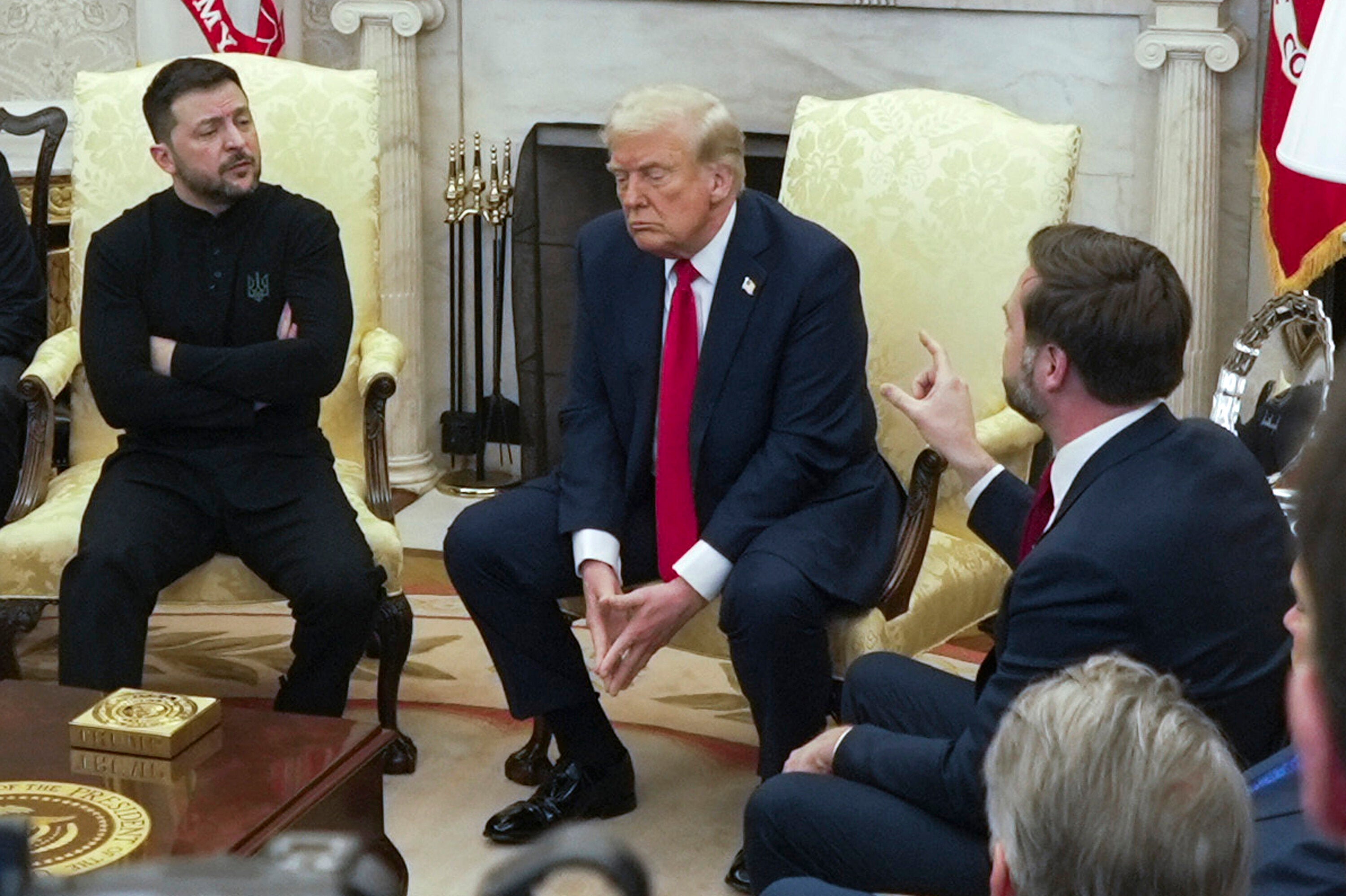
    His insinuation that Zelenskyy was somehow to blame for Putin’s invasion was a repeat of his attacks on the Ukrainian president during his Oval Office visit in February.

    “What you’re doing is very disrespectful to the country, this country,” Trump told Zelenskyy then. “You’re not winning this. You have a damn good chance of coming out OK because of us.”

    Six weeks later, Trump outright blamed Zelenskyy for starting the war. “You don’t start a war with someone 20 times your size and then hope people give you some missiles,” he said in an Oval Office photo opportunity with Salvadoran president Nayib Bukele.

    Trump called the coming summit a “feel-out meeting” and that he would afterward call Zelenskky and America’s NATO allies in Europe, who have since the 2022 invasion been eager to counter Russia and help Ukraine and even more so since Trump returned to office in January.

    He added that his discussions with Russia and others led to his belief that Ukraine would have to give away land to end the war. “I know that through Russia and through conversations with everybody,” Trump said.

    Trump’s special envoy, his friend from New York real estate days Steve Witkoff, met with Putin last week and apparently misunderstood what Putin was saying. Witkoff reported back that Putin was willing to give up two Ukrainian regions and keep a third, when in fact Putin’s offer was to hang on to all three in return for stopping his attacks.

    Trump on Monday also repeated his lie that the US under former President Joe Biden had given far more help to Ukraine than had Western Europe. “Biden approved $350 billion. Europe has spent $100 billion,” he said.

    In reality, Europe has provided more assistance to Ukraine from the start, both in weapons and economic help.

    Trump is scheduled to go to Alaska on Friday for his meeting with Putin, his first such summit with him since 2018, when in Helsinki he said he took the word of the former KGB agent over his own intelligence agencies about Russia’s work to help Trump win the 2016 election.

    On Monday, though, Trump, who is 79, twice conflated Alaska with Russia itself. Alaska has belonged to the United States since 1867, when it was purchased from Russia, then under the rule of Czar Alexander II.

    “I’m going to Russia on Friday,” Trump said, explaining his coming trip. An hour later, preparing to leave the podium, he said it again: “We’re going to Russia.”

    Share Button

    ‘Zone Zero’ Exercise Is The Workout You Don’t Even Know You’re Doing – Here Are Its Benefits

    Good news for fellow slow runners: it turns out zone two cardio, which sees joggers plod along at a conversational pace, is incredibly good for us.

    Professional runners spend about 85% of their training doing that sort of low-impact activity. It puts runners at about 60-70% of their max heart rate.

    But if even that sounds a little too much, zone zero movement (yes, really) might be the under-appreciated, super-low-effort way to keep you active without a pricey gym membership or even a pair of trainers.

    Never putting your heart above 50% of its max rate, it can be done accidentally – it’s that easy and approachable.

    What is zone zero training?

    Primary care organisation The Lanby describes zone zero training as a kind of “active rest” – it “aids in active recovery, ensuring your body is ready for the next challenge”.

    It means your heart rate never goes above half its maximum level, as we mentioned above. Your max heart rate changes by age: in general, it’s calculated by subtracting your age from 220.

    So, say you’re 30 years old. Your max heart rate is around 190; and zone zero training will never see your pulse go above 95 beats per minute.

    It can include slow walking, gentle cycling, and yoga. But popping to the shops, doing a bit of light tidying, and pottering around in the kitchen count too.

    What are the benefits of zone zero training?

    Zone zero training is not only a great way to make exercise accessible to those who might find the idea of a full-on workout a bit much, but active recovery also benefits active people as it helps to flush out waste material that builds up in tired muscles.

    Some experts think that those who work out might subconsciously compensate for the added load by not engaging in zone zero moves (like tapping your foot or taking an extra few steps) throughout the day. Remembering to include zone zero work in your routine might help this.

    Taking a short stroll after eating, in particular, might help to even out your blood sugar, too. And some suggest that pottering can keep you alive for longer.

    What are some examples of zone zero training?

    These can include:

    • Stretching at your desk
    • Light walking
    • Yoga
    • Walking meetings
    • Rolling your feet on a roller or ball as you work
    • Gently yoga
    • Slow cycling
    • Tidying
    • Cooking.

    Parking a couple more metres away from work than usual or popping to the shops instead of ordering in can all add up.

    That’s not to say that zone zero training should replace current health guidelines – the NHS says we should stick to 75 minutes of high-intensity or 150 minutes of moderate-intensity (over 50% of your max heart rate) activity a week.

    Not doing so has been linked to shorter, less healthy lives.

    Still, going from no activity to some has enormous health benefits too – and whether you find yourself intimidated by intense exercise or are struggling to properly recover from your most hardcore workouts, zone zero may offer an approachable answer.

    Share Button

    Knee implant used by NHS known for years to be faulty

    Patients say they were left immobile or addicted to painkillers after receiving the NexGen implant.

    Share Button

    The 1 Response To Have Up Your Sleeve When Kids Say ‘I’m Bored’

    Today, 12 August, is the day that kids reach peak school summer holiday boredom, apparently – yet chances are you’ve already heard your fair share of ‘I’m bored’ and ‘can you play with me?’ comments over the six-week break.

    If this resonates, parents on Reddit might just have a handy retort to try which can encourage kids to either help tick things off your daily to-do list – or go off and play with something while you get things done.

    In a recent post on r/Parenting, a parent of a nine-year-old said if their son isn’t allowed on the Playstation or iPad, “he literally follows us around the house”.

    “We suggest all types of things and he doesn’t want to do any of them,” said the baffled parent before listing all the toys available to him. “He just doesn’t want to do anything by himself.”

    They asked Redditors (and fellow parents) for tips on how to get their child playing independently – and the top comment has been upvoted over 400 times for good reason.

    “When mine follow me around while I’m doing chores, I give them a chore to do,” said the parent of a three- and five-year-old.

    “I’ve told them ‘if you keep following me around while I’m doing chores, I’m gonna give you a chore to do’ and when I say that they’ll usually go find something else to do.”

    “I do this, too,” said another parent. “Half the time they help. The other half, they pout and storm off into their room. Within 10 minutes or so, they miraculously remember they have toys, crayons, books, and imaginations.”

    It turns out this incredibly simple response seems to encourage a lot of kids to find something else to do, sharpish.

    “I started doing this when my 6 year old whines about how bored she is. She usually takes off and hides,” said one commenter.

    Another affirmed it worked on them growing up: “Was raised on ‘if you tell me you are bored, I’ll find a chore for you.’ Can confirm this works.”

    And it turns out getting kids involved in chores could benefit them well into adulthood.

    A 75-year study from Harvard found that children who were encouraged to do chores around the house were more likely to be happier as adults, have more empathy towards others, and be more successful in their careers.

    Listing the benefits, a paediatrician from Utah – known as TikTok Kid Doc – said “having your children do chores gives them a sense of self-worth and it helps them to realise that they’re contributing to a larger ecosystem”.

    “They become more selfless, they become more willing and able to see the needs of other people around them.

    “Chores also strengthen family bonds with siblings and with parents. And chores help to instil a better work ethic which translates pretty well into school and career success.”

    Using this hack today, tomorrow and always.

    Share Button