Dr Oscar is back with the latest health headlines.


Dr Oscar is back with the latest health headlines.
A new report highlights growing demand and long waits in child mental health services.

Researchers have found another clue that diet may influence how the brain ages. In a study of more than 2,000 older adults in Japan, people with lower levels of vitamin C in their blood tended to have less gray matter and weaker connections within an important brain network involved in memory and attention. While the findings do not prove that vitamin C protects the brain, they strengthen evidence that good nutrition could play a role in maintaining cognitive health later in life.
The research, led by Haruka Nagaya of Hirosaki University in Japan, was published on June 10, 2026, in the open access journal PLOS One.
Vitamin C and Brain Structure
Earlier studies have suggested that people who consume more vitamin C are less likely to experience cognitive impairment as they get older. However, relatively little research has examined whether vitamin C levels measured directly in the blood are associated with physical changes in the brain.
To investigate that question, the researchers analyzed magnetic resonance imaging (MRI) scans and blood plasma samples from 2,044 Japanese adults over the age of 64.
Using the MRI scans, they measured the volume of gray matter and white matter in each participant’s brain while accounting for differences in overall brain size. They also examined connectivity within the default mode network, a group of interconnected brain regions that plays an important role in attention, autobiographical memory, and other cognitive functions.
Lower Vitamin C Linked to Smaller Gray Matter
After adjusting for factors that can also influence brain health, including age, education level, and physical activity, the researchers found a consistent pattern. Participants with lower plasma vitamin C levels tended to have reduced gray matter volume and weaker connectivity within the default mode network.
The results suggest that maintaining healthy vitamin C levels could potentially help support cognitive function and healthy brain aging. However, the researchers emphasize that this was an observational study, meaning it cannot determine whether vitamin C directly causes these differences in brain structure or function. More research will be needed to uncover the biological mechanisms behind these statistical associations.
Future studies could strengthen the evidence by measuring vitamin C levels repeatedly over time, considering additional lifestyle and dietary factors, and including participants from a wider range of ethnic and socioeconomic backgrounds.
Everyday Diet and Brain Health
Tomohiro Shintaku adds: “Our study demonstrates that higher plasma vitamin C levels are associated with better preserved structural connectivity of the default mode network (DMN), a key brain network involved in cognitive function. This finding generates the exciting hypothesis that a diet rich in vitamin C might play a supportive role in maintaining brain health and mitigating age-related cognitive decline in older adults.”
He continued: “What I found most fascinating about this research is that we were able to detect these subtle but significant associations between a single nutritional factor and large-scale brain networks by utilizing a robust, community-based cohort of over 2,000 older adults. It truly highlights the potential impact of our everyday dietary habits on our brain structures.”
Funding: The KAGOME CO., LTD. provided support in the form of salaries for authors D.K. and Y.U., but did not have any additional role in the study design, data collection and analysis, decision to publish, or preparation of the manuscript. The specific roles of these authors are articulated in the ‘author contributions’ section. Additionally, this research was supported by the Japan Agency for Medical Research and Development (AMED) under Grant Numbers JP16dk0207025 and JP21dk0207053.

Scientists at the University of Pittsburgh School of Medicine have identified a crucial missing piece in the long standing mystery of how melanoma tumors avoid death and continue growing.
Writing this week in Science, Jonathan Alder, Ph.D., and colleagues describe a combination of genetic changes that allows melanoma cells to dramatically extend their lifespan while fueling rapid tumor growth. The discovery could reshape how researchers understand melanoma and may point to new treatment strategies.
“We did something that was, in essence, obvious based on previous basic research and connected back to something that is happening in patients,” said Alder, assistant professor in the Division of Pulmonary, Allergy and Critical Care Medicine at Pitt’s School of Medicine.
Telomeres Help Control a Cell’s Lifespan
Telomeres are protective caps located at the ends of chromosomes that help keep DNA from breaking down. Every time a healthy cell divides, its telomeres become a little shorter. Eventually, they shrink to the point where the cell can no longer divide.
Keeping telomeres at the proper length is critical for health. Telomeres that become too short can cause disorders linked to premature aging and early death. On the other hand, unusually long telomeres are often associated with cancer.
Scientists have long known that melanoma tumors contain exceptionally long telomeres, especially compared with many other types of cancer.
“There’s some special link between melanoma and telomere maintenance,” said Alder. “For a melanocyte to transform into cancer, one of the biggest hurdles is to immortalize itself. Once it can do that, it’s well on its way to cancer.”
The Missing Genetic Link Behind Melanoma
The enzyme telomerase lengthens telomeres, helping protect chromosomes and preventing cells from dying. In most healthy cells, telomerase remains inactive. Many cancers, however, activate the enzyme through mutations in the telomerase gene known as TERT, allowing cancer cells to keep dividing.
Melanoma is particularly dependent on this strategy. Roughly 75% of melanoma tumors carry TERT mutations that increase telomerase production and activity.
Yet there was a mystery. Even after researchers introduced TERT mutations into melanocytes, they still could not recreate the unusually long telomeres found in melanoma tumors. That suggested another important factor was missing.
Pattra Chun-on, M.D., an internist pursuing her Ph.D. in Alder’s lab, set out to uncover that missing link. Drawing on her background in cancer biology and growing interest in telomeres, she investigated why TERT mutations alone were not enough.
“The fun part of this story is when Pattra joined my lab,” Alder said. “She contacted me and told me that she was interested in studying cancer. I told her that I study short telomeres and not long telomeres. This went on until I realized that Pattra would never take ‘no’ for an answer.”
TPP1 Completes the Puzzle
Earlier work from Alder’s laboratory had identified frequent mutations in a telomere binding protein called TPP1 while analyzing cancer mutation databases.
Chun-on discovered that these TPP1 mutations closely resembled the TERT mutations. They occurred in the newly annotated promoter region of TPP1 and boosted production of the protein. That finding immediately caught Alder’s attention because scientists had already shown that TPP1 enhances telomerase activity.
“Biochemists more than a decade before us showed that TPP1 increases the activity of telomerase in a test tube, but we never knew that this actually happened clinically,” he said.
Chun-on, who is also enrolled in a Ph.D. program in the Department of Environmental and Occupational Health at Pitt’s School of Public Health, then introduced the mutated forms of both TERT and TPP1 into cells. Working together, the two proteins produced the exceptionally long telomeres that characterize melanoma tumors.
The results revealed that TPP1 was the long sought missing factor, one that had been hidden in plain sight.
New Target for Future Melanoma Treatments
The findings offer a new explanation for how melanoma develops and survives. They also identify a cancer specific telomere maintenance system that could become a promising target for future therapies.
Additional authors of the study are Angela M. Hinchie, Agustin A. Gil Silva, Ph.D., Elizabeth Rush, Cindy Sander, Brittani K.N. Seynnaeve, M.D., M.S., John M. Kirkwood, M.D., all of Pitt, UPMC or both; Holly C. Beale, Ph.D., and Olena M. Vaske, Ph.D., both of the University of California, Santa Cruz; Carla J. Connelly, of Johns Hopkins University; and Carol W. Greider, Ph.D., of the University of California, Santa Cruz and Johns Hopkins University.
The research was supported by National Institutes of Health grants R35CA209974 and R01HL135062.
Despite affecting millions of women in the UK, PMOS is still under-diagnosed and inconsistently managed, say experts.
Dr Bill Kirkup says he resigned from a government-commissioned review into NHS maternity services over the omission.

Scientists have uncovered a previously unknown way that sea anemones defend themselves against viruses, revealing that the evolution of animal immune systems may be far more diverse than previously believed. The newly identified defense relies on a protein that closely resembles one of the most important antiviral proteins in humans, yet performs the opposite function while still being essential for protecting the animal from infection. The findings suggest that evolution produced more than one successful strategy for fighting viruses across the animal kingdom.
The research, led by PhD candidate Ton Sharoni and Prof. Yehu Moran at the Hebrew University of Jerusalem in collaboration with scientists from the University of North Carolina at Charlotte, was published in Nature Ecology & Evolution. It challenges the long standing idea that animals inherited a single core antiviral system from a common ancestor and instead points to multiple evolutionary solutions for resisting viral infections.
An Ancient Animal Offers New Clues About Immunity
Viruses have threatened living organisms throughout evolutionary history. In humans and other vertebrates, one of the body’s key antiviral defenses depends on a protein called MAVS. When a virus is detected, MAVS helps trigger the immune system so it can respond to the infection.
To investigate how old this defense system might be, the researchers studied sea anemones. These ancient marine animals split from the evolutionary line that eventually led to humans more than 600 million years ago. Because they are close relatives of corals and jellyfish, sea anemones provide scientists with a valuable glimpse into the early evolution of animal immunity.
During the study, the team discovered a previously unknown protein they named CARDIB (CARD Inhibitor Binding protein). At first, CARDIB looked remarkably similar to MAVS, leading researchers to believe it might perform the same antiviral role found in humans.
That assumption quickly fell apart.
“Everything about CARDIB suggested it should function like MAVS,” said Prof. Yehu Moran, head of the Department of Ecology, Evolution and Behavior at the Hebrew University. “Instead, we discovered that it does the exact opposite. Rather than activating antiviral defenses, CARDIB normally suppresses them.”
A Surprising Protein That Protects by Slowing the Immune System
The discovery immediately raised an important question. Why would an animal deliberately suppress its own immune response?
To find out, the researchers used CRISPR gene editing to remove the CARDIB gene from sea anemones before exposing them to viruses.
The results were unexpected. Sea anemones without CARDIB became much more susceptible to infection. Viruses multiplied more rapidly, the animals failed to properly activate their antiviral defenses, and their ability to fight infection dropped dramatically.
“The results were completely counterintuitive,” said Sharoni. “Although CARDIB acts as a brake on the immune system under normal conditions, that brake turns out to be essential for mounting an effective antiviral response.”
Overall, the experiments showed that sea anemones rely on an antiviral pathway that is fundamentally different from the one used by humans, even though both systems contain molecular components that look strikingly alike.
Natural Environment Confirms the Discovery
The researchers also wanted to determine whether this newly identified immune pathway mattered outside carefully controlled laboratory conditions.
To answer that question, genetically modified sea anemones were moved from laboratory aquaria into outdoor marine mesocosms supplied with natural estuarine water in South Carolina. This exposed the animals to the wide variety of viruses and microorganisms found in their normal environment.
The difference became obvious within days. Sea anemones lacking CARDIB and related antiviral genes accumulated substantially more viruses than unmodified animals. Researchers also found that one immune gene that appeared only moderately important in laboratory tests became clearly important under natural environmental conditions.
“This demonstrated that the pathway we discovered is not simply a laboratory phenomenon,” said Moran. “It plays a crucial role in helping these animals cope with the viral challenges they face in nature.”
Multiple Evolutionary Solutions to Fighting Viruses
The findings suggest that evolution did not settle on a single universal antiviral strategy. Instead, different groups of animals may have independently developed distinct molecular systems for detecting viruses and preventing them from spreading.
“Humans and sea anemones both need protection from viruses, but this work shows that evolution can organize those defenses in fundamentally different ways,” Moran added.
The research also underscores the importance of looking beyond traditional laboratory animals. Ancient organisms such as sea anemones can preserve evolutionary innovations that would remain hidden if scientists focused only on humans, mice, and other commonly studied species.
As researchers continue exploring the remarkable diversity of life, discoveries like this are revealing that evolution has repeatedly found unexpected ways to solve some of biology’s most fundamental challenges.
Serious skin care doesn’t have to cost serious prices. Case in point: Rosen Apothecary’s anti-aging retinol body lotion designed to smooth and brighten skin — for under $20. This “Holy Grail of lotion” is currently 28% off, making it under $18, the lowest price it’s been since May. Reviewers love how soft and light the cream is, saying it glides on “like water,” absorbs quickly and offers a light mango scent that’s perfect for summer. Though, it’s mainly loved for how effective it is, with reviewers reporting softer, smoother, brighter skin just days after using it.
Advertisement
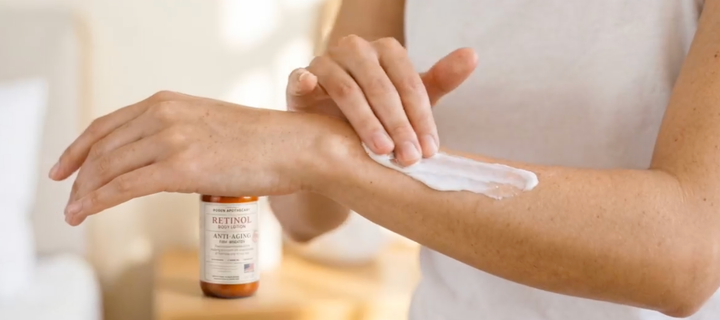
Designed for use on your body, this powerful cream works to reduce the appearance of fine lines and wrinkles, while keeping your skin supple and soft. The brand says the retinol boosts collagen production to keep your skin plump and smooth (a process dermatologists have confirmed in previous HuffPost reporting), while the caffeine brightens and tightens (another expert-confirmed process you can read previous HuffPost reporting about).
Advertisement
“This is the most amazing body lotion I’ve ever used,” shopper S. Melissa Reaves writes. “I lotion in the morning and before bed and I can see such a difference in my skin. I am 59 years old, but I feel like my skin looks 40. That’s a big deal. HIGHLY recommend.”
Reviewers say the cream has helped smooth crepey skin on their arms, “they look so much better using this,” one wrote, with others calling it the “perfect body lotion.” “I’ve been using this for 6 weeks,” one shopper said. “I’ve noticed less crepe in my legs, neck, arms and face.” Others say the cream has worked wonders on fine lines and wrinkles, even tone and texture and generally “makes my skin look younger and healthy.” “I have only used it three days and I have noticed a difference in my skin,” Ann-Marie wrote. “It made my skin soft already!”
“I live in South Georgia and it gets HOT! I needed a lotion that would not be greasy, be lightweight, absorb FAST and help with the look of aging,” shopper Jessica wrote. ”..It checks ALL the boxes! After putting this one I can put on bug spray and sunscreen without worrying that it’s all going to get gross.” (Editor’s note: experts have told us that retinol makes your skin more sensitive to sun, so using an SPF with this is a must.)
Shoppers appreciate how creamy and silky the lotion is, without feeling heavy or greasy, but still keeping their skin nourished. “I find that my arms look nicer when I use this product,” one wrote, “I like how my arms look hydrated instead of dry.”
Shopper Tara says the cream has a “velvety-smoothness” similar to hair conditioner, that’s not sticky on the skin. “This actually gets absorbed but also continues to work for so long,” they said, noting the cream “keeps my skin hydrated & [smelling] great all day.” “I love it. Great price for the size of the bottle. The smell is very light & “summer-ish”🙂🖤.”
Advertisement
“Goodbye Crepey Skin―Hello Youthful Softness! This is the most amazing body lotion I’ve ever used. I even bought two more bottles to just have because I KNOW I will use them. I lotion in the morning and before bed and I can see such a difference in my skin. I am 59 years old, but I feel like my skin looks 40. That’s a big deal. HIGHLY recommend” — S. Melissa Reaves
“Holy grail of lotion. I live in South Georgia and it gets HOT! I needed a lotion that would not be greasy, be lightweight, absorb FAST and help with the look of aging. I don’t do a ton of reviews, usually just when something really catches my attention…I should probably change that lol but this lotion…it checks ALL the boxes! After putting this one I can put on bug spray and sunscreen without worrying that it’s all going to get gross. I am 35 years old and a woman at the store today thought I was 25! I know I don’t look old but this stuff took away what little lines I was getting and it’s only been a month. Just ordered my second bottle….oh and I use it on my face too and I have super sensitive skin. Everything makes me break out but this doesn’t!” — Jessica
“This lotion feels and smells ammazing. I use it on my hands and decolletage and it left my hands feeling so smooth and moisturized. I have used on my decolletage area as well and the texture feels better but no visible changes yet. I foresee this stuff only getting better for me. Highly recommend…did I mention how great it smells? 😀” — Terrell
“I’ve been using this for 6 weeks. I love that it is an all over body cream. I’ve noticed less crepe in my legs, neck, arms and face.” — Amazon customer
“This stuff works and fast. I noticed a difference in Just 2 days. I’ll keep using it. My skin is softer and I’ve seen dark patches of skin getting less noticeable. I’ll keep working on wrinkles, but it’s helped and I’ve used it for just a week.” — K M
Dermstore
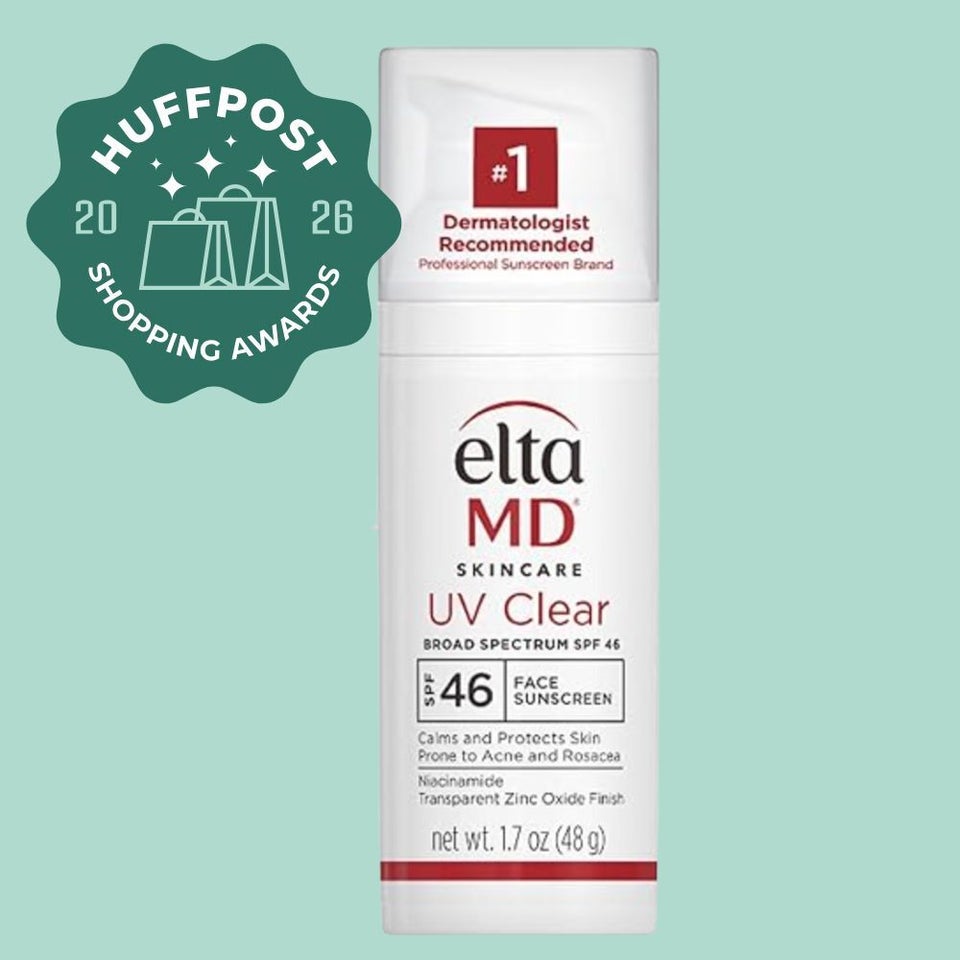
Dr. Sonia Badreshia-Bansal, MD, board-certified dermatologist, says that “the best SPF for daily use is one that you’ll actually wear — lightweight, invisible and comfortable under makeup.”
She recommends a mineral SPF with low irritation potential, like this cult-fave SPF that is beloved by both HuffPost readers and editors alike. It’s formulated with hyaluronic acid to deeply moisturize skin while the inclusion of lactic acid lightly exfoliates skin and can help to reduce hyperpigmentation and shine. It’s a great option for people like me with sensitive and acne-prone skin. I turn to it anytime I’m going to be spending a lot of time in the sun, or when I’m post-procedure and want to protect my skin without irritating it.
Amazon
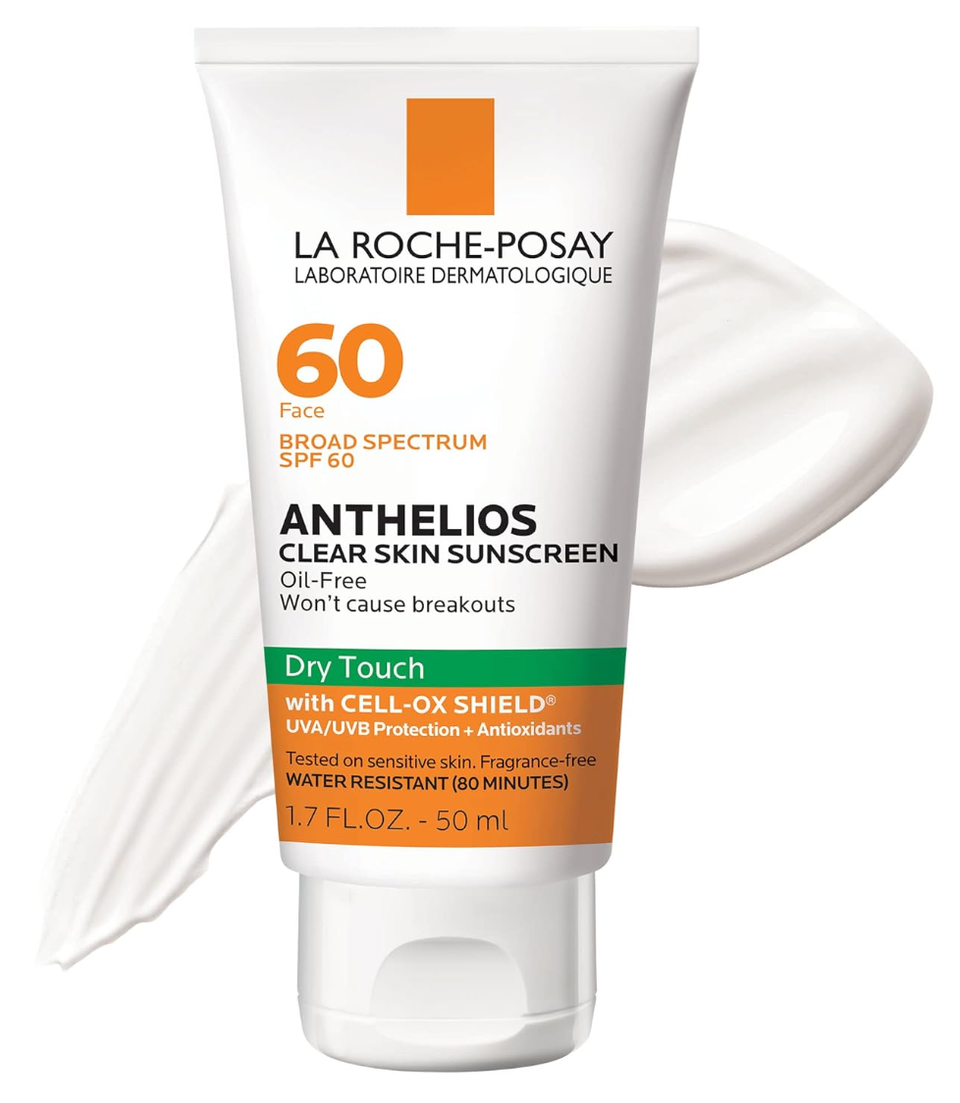
Having earned The Skin Cancer Foundation’s Seal of Recommendation, this La Roche-Posay is Dr. Alexander Witkowski, MD, PhD, board-certified dermatologist and Melanoma Research Alliance Dermatology Advisor’s personal favorite and “go-to” sunscreen, both for daily use and for days with extended sun exposure. It’s also what he uses on his 4-year-old child on beach days, bike rides or hikes. He noted that this oil-free SPF is very popular among dermatologists and is formulated with antioxidants that can help protect the skin from environmental damage. He also noted it contains senna alata, “a tropical leaf extract known for its ability to combat oxidative stress and support the prevention of premature skin aging.” You can’t go wrong with this non-comedogenic, water-resistant formula that is also well-suited for sensitive skin.
Sephora
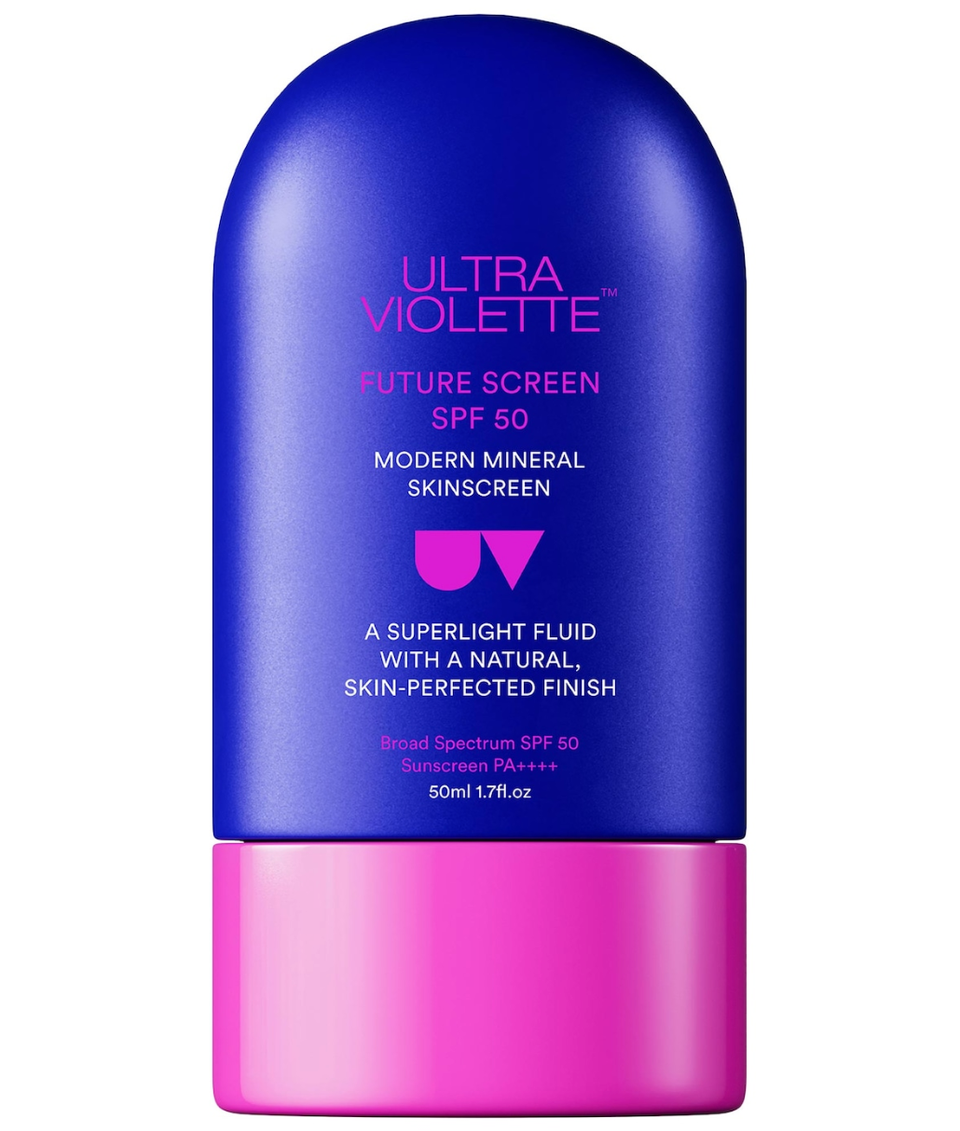
The cult-fave Australian brand Ultra Violette is finally available in the U.S. at Sephora! If anyone knows how to protect their skin from harmful rays, it’s Southern Hemisphere-dwelling Australians. I stock up on their sunscreens and lip balms every time I’m Down Under, and this development is a real thrill for skincare lovers. Board-certified dermatologist Dr. Jessie Cheung of Chicago’s Cheung Aesthetics & Wellness told HuffPost that this must-have SPF is “packed with mineral blockers to protect from the harsh Aussie sun, but feels silky and lightweight.”
Advertisement
The Real Deal: We use deal trackers and commerce experience to sift through “fake” hike-and-drop deals and other deceptive sales tactics. Products will usually be rated at least 4 stars with a minimum 15% discount. (And when there’s an exception, we’ll tell you why.)
Advertisement
We hope you love the products we recommend! All of them were independently selected by our editors. Just so you know, HuffPost UK may collect a share of sales or other compensation from the links on this page if you decide to shop from them. Oh, and FYI — prices are accurate and items in stock as of time of publication.
If there’s one thing I’m awful at doing (apart from laundry) it’s remembering to track my workouts. I got to the gym two to three times per week, but every time it simply slips my mind to write down what I’ve done.
It’s a trait I find myself endlessly ruminating over every time I remember, but obviously not enough to do anything about it.
That’s why, when I discovered Huawei had released a new fitness watch, I knew this could be my opportunity to change.
Now, I’ve tested fitness devices before, but none of them have ever quite worked for me.
I often find they prioritise active fitness over anything else, or gamify relaxing or sleeping so much that they end up having the opposite of the intended effect and stressing me out.
Fitness trackers also give me awful throwbacks to being scorned by the sternest of school sports teachers, which makes me avoidant and want to exercise even less.
And, I’m sorry, but I don’t need to know that I’ve not been sleeping enough for the whole week because I already know! I’m tired, godammit.
Considering the Huawei website promises that the Watch Fit 5 Pro blends style with ‘smart’, I had high hopes.
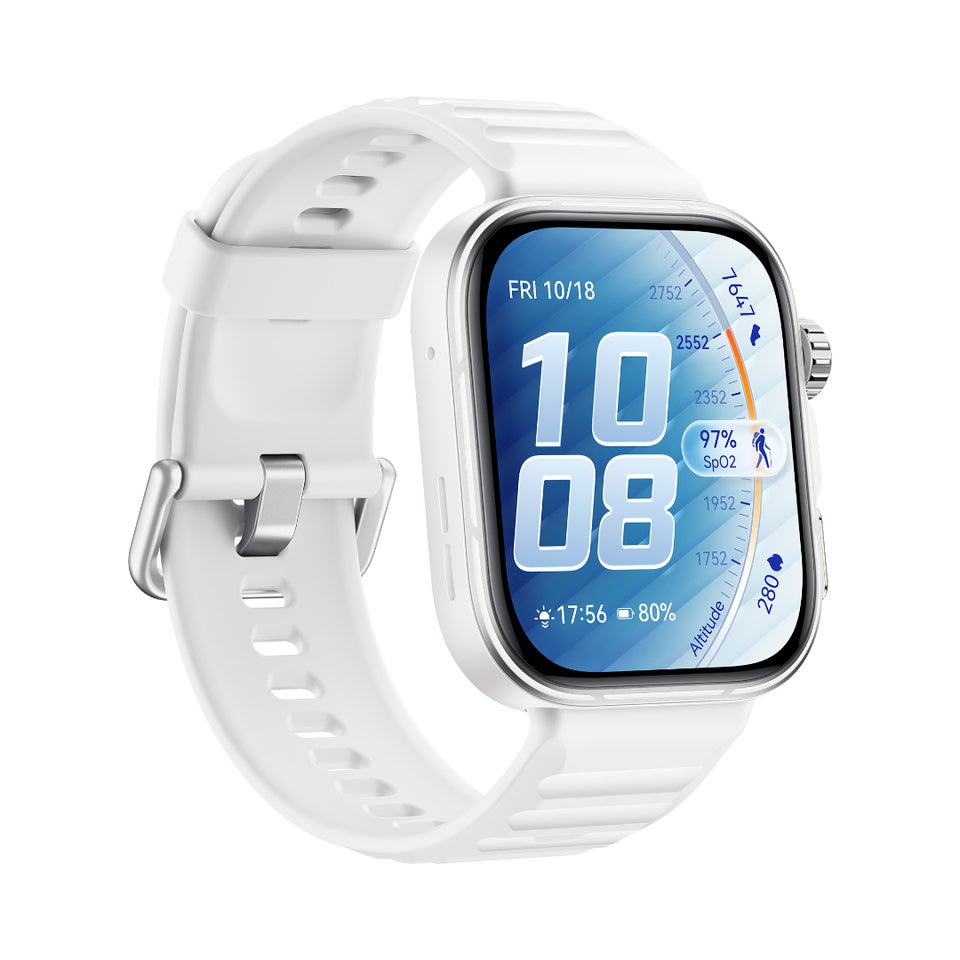
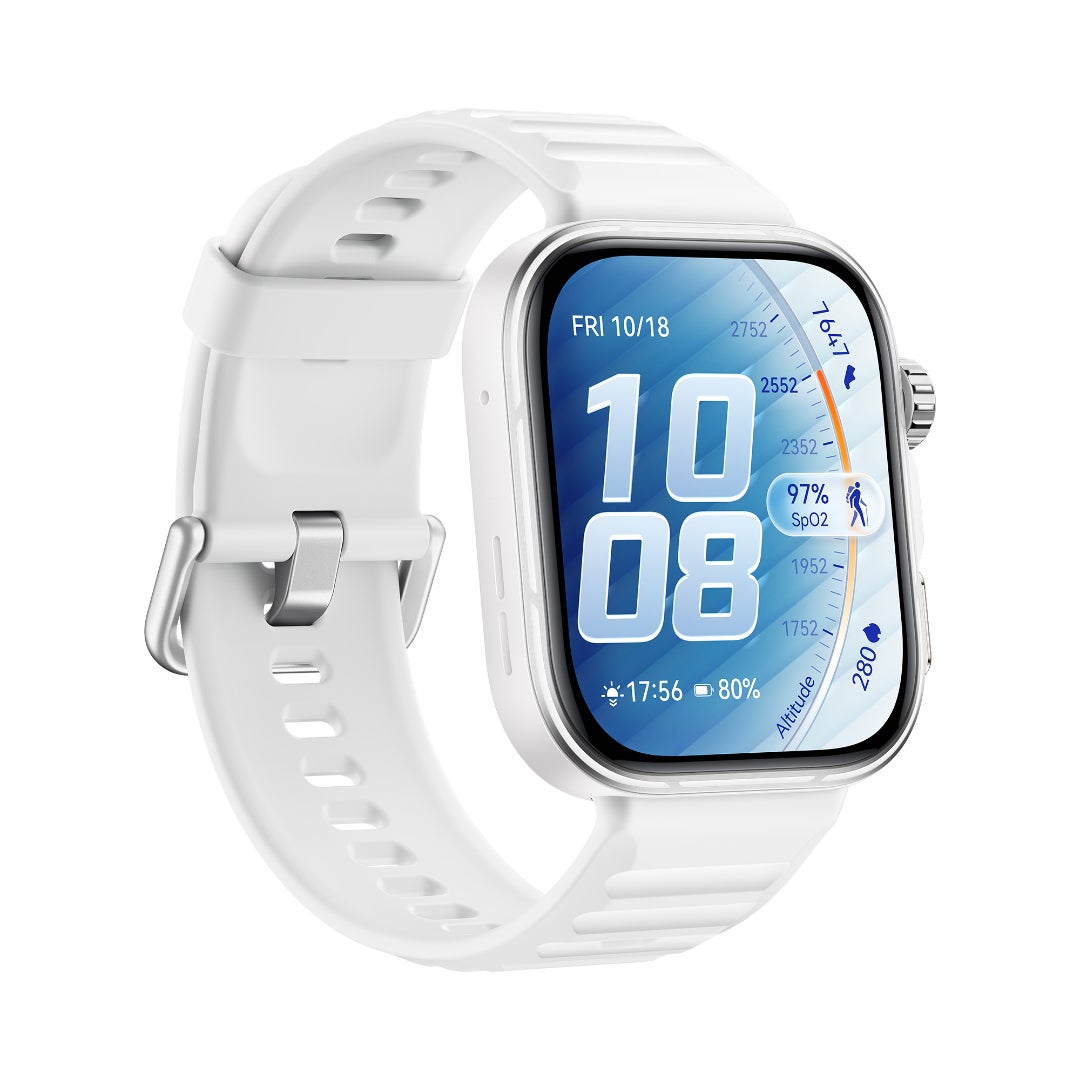
Although the watch comes in three colours: black, white, and orange, I went for the white because, well, it’s summer.
You can choose from a range of different coloured straps, including nylon and rubber options, but I went for a simple matchy matchy moment.
After all the boring stuff was out of the way, it was time to sync it with the Huawei Health app. You get three months of Huawei Health+ for free when you buy a watch, which gives you access to a range of workout masterclasses, personalised workout plans and nutritional analysis – or you can choose to stay on the free plan for fewer options.
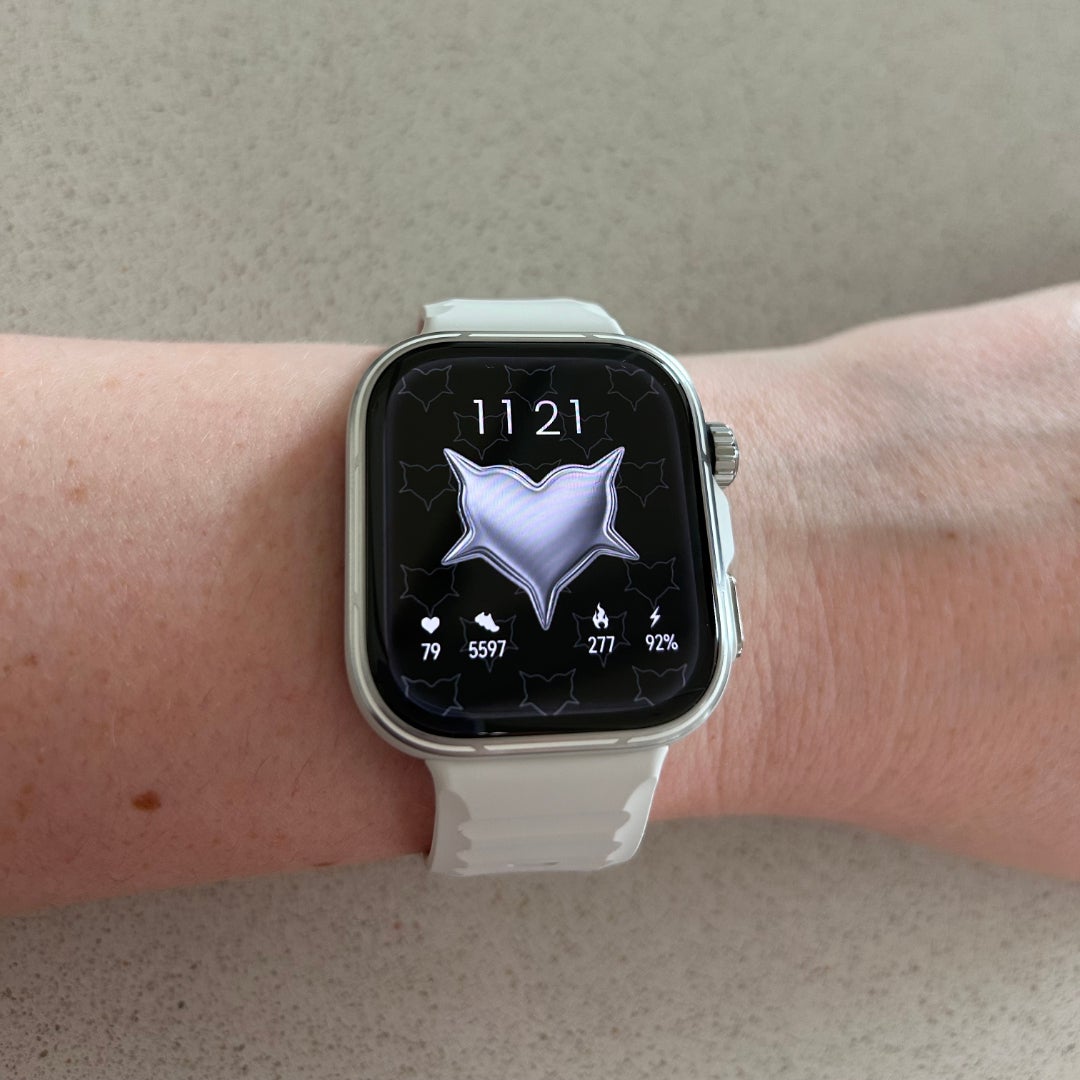
Downloading the app also lets you customise your watch face – a feature I personally love because it means you can match your watchface to your outfit! I currently have mine on one with a spiky metallic silver heart on a black background to match my silver jewellery, but there are plenty of free and paid options available.
From the get go, it’ll ask for permissions to access your health data, including your heart rate, skin temperature, sleep data, and step count.
Once you’re all set up, you can completely personalise the kind of data you want your watch to give you – as well as other basic features you’d expect from a smart ring, like contactless payments, contact syncing so you can call or text, calendar syncing, timers, voice recording, and features.
Fitness monitoring
Just like other fitness devices, the Fit 5 Pro tracks your essential health data and allows you to set goals for movement and nutrition.
Personally, I’m not bothered about setting nutrition goals because I kind of CBA, crucially, and also I find it makes me obsessive about my eating habits.
However, I do need help tracking my workouts. As someone who goes to the gym two to three times a week, I often forget just where I’m up to with my strength training.
Also – and this might just being a woman at the gym – I find myself doubting whether I’m doing something right.
One thing about the Fit 5 Pro I love is that you can start a fitness training programme to help you keep on track, whether that’s running, golfing, strength training, yoga or pilates.
You’ll also have access to classes with personal trainers so you can check your form. or the watch can be connected with third-party apps like Fiit, Komoot, and URUNN, depending on the kind of exercise you enjoy.
The only downside of this is you’ll need to remember to turn the volume on your watch down, so it doesn’t blast your business to everyone in a five-mile vicinity (read: it’s loud).
If you’re already a pro or prefer to wing it, the watch lets you track any kind of workout you could possibly think of so you can keep an eye on your training times. There is truly an option for everything, down to the nichest of sports – think: belly dancing, hula hoop, bobsleigh, bungee jumping.
But for some of the more popular options like cycling (which I can’t say I do on the reg) it it loaded with state-of-the-art tracking that stops recording when you stop at a traffic light, or draws a custom run route in the shape of a lion (or trophy cup) to keep things interesting.
But it’s not just exercise the watch keeps track of – it also prioritises living a holistically healthy life, which is what would make me more loyal to it in the long run.
As someone who exercises out of necessity, not for the love of the game, I’m not particularly interested in a watch or ring that bullies me into exercising five times a week – I more need something to keep me on track and to offer positive reinforcement throughout the day.
I’m yet to find a fitness tracker that does this better than Huawei. Rather than send me 50 alerts when I’ve not reached my step count, it sends a few notifications to encourage me to keep moving throughout my day.
Plus, there’s even an option for a ‘mini workout’ where an adorable little panda leads you through a series of quick stretches and standing exercises to remind you to step away from your screen every now and again.
I get quite severe eye strain, and also work probably way too much, so this is a welcome feature to keep me grounded.
It doesn’t stop there, though: you can also listen to focus white noise music through the Huawei app, or ask it to run a quick meditation or breathing exercise with you.
One of my favourite features is that the watch tracks your mood throughout the day; while I have absolutely no idea what it bases this information off, it always makes me laugh when I look at the watch face and it tells me I’m in a ‘pleasant’ (or even ‘unpleasant’) mood. Because… thanks?
Of course, it’ll also track your sleep, including your breathing stability, how much deep sleep you get compared to light sleep, and you can listen to sleep music through the app.
Honestly, though, I’ve been sleeping better than ever now that the watch prompts me to walk that little bit extra.
It’ll even prompt you to be social: you can create groups with other Huawei watch users to hold yourself accountable, or share your statistics on social media.
Rating: 4.7/5
Overall, this is the best fitness device I’ve tried. I don’t feel as though I’m being pestered by a perniciously petulant personal trainer who wants me to be the skinniest mini in the room.
Instead, the Huawei Fit 5 Pro encourages you to keep an eye on your holistic health, and encourages you rather than berates you when you’re behind on your goals.
There are no red marks or angry notifications telling you off, and there is plenty built into the app to teach you how to have a healthier lifestyle, whether that’s by exercising, winding down before bed, or taking a break from your desk in the middle of the day.
The fact the interface is easy to use and customisable means it would be suitable for anyone, from a 50+ year old, to a teenager. The price point is reasonable for what it is and, best of all, the charge lasts for up to 10 days, so you really never have to take it off (apart from when you’re having a bath or shower).
I’d recommend this to anyone, from those who are simply trying to level up their lifestyle and be more health-conscious, to hardcore cyclists and athletes.



Speaking to HuffPost UK previously, etiquette expert and author William Hanson, who paired with Hotels.com to create a Grand Etiquette Hotel guide, shared the worst way to treat hotel staff.
“The height of rudeness is treating staff as though they are invisible, or worse, beneath you,” he shared with us.
Advertisement
“Snapping fingers, avoiding eye contact, or issuing demands without a ‘please’ or ‘thank you’ is quite beyond the pale”.
Hanson explained that includes leaving your room in a “reasonable” state for cleaning staff when you finish your stay. But what’s the etiquette when you’re still in there?
Here, we asked him whether we should vacate the area when it’s due a clean.
The etiquette expert’s answer was pretty definitive: “You should vacate the room while it is being serviced. It is simply more considerate”.
Advertisement
He added, “Most housekeepers will wait until you are out and will always knock and announce themselves first.
“If you are inside and would like the room cleaned, answer promptly, greet
them politely, and make your exit. Linger not.”
And, Hanson stressed, it’s important to leave your room in decent nick throughout your stay, rather than just rushing through it at the end.
Advertisement
“As I note in Rule Five of my Grand Etiquette Hotel Guide… ‘Housekeeping Is Not an Archaeological Activity.’ They are there to clean, not excavate,” he stated.
Yes – Hanson has a “golden rule” when it comes to hotel staff.
“If you wouldn’t speak that way to a colleague, don’t do so in a hotel simply because you are paying to be there. Good manners, one finds, are often quietly rewarded,” he said.
Advertisement
A hotel etiquette study commissioned by Hotels.com found that 90% of Brits think our hotel manners are pretty perfect.
But the same research also found that over a third of us have tried to sneak in an extra guest after booking, and about the same amount say they’ve snuck out breakfast buffet food to eat later.