Why are women’s bodies impacted by heat differently to men’s?


Why are women’s bodies impacted by heat differently to men’s?
Probably not, according to Eric Schwitzgebel, a distinguished professor of philosophy at the University of California, Riverside.
In a new working paper, Schwitzgebel and Jeremy Pober, a former UCR graduate student who is now a postdoctoral researcher at the University of Lisbon, argue that conscious beings may be possible even if they are built from materials very different from those found in life on Earth. One example comes from the recent blockbuster “Project Hail Mary,” which features a five-limbed alien with a rock-like exterior.
Rather than trying to define consciousness itself, the researchers begin with the assumption that consciousness is a real and recognizable phenomenon. Their focus is on a narrower question: Does consciousness have to depend on Earth-style biology?
The paper arrives at a time when debates about conscious artificial intelligence are becoming increasingly common. While the authors briefly address AI, they do not take a shared position on whether current systems are conscious. In fact, they disagree with each other on some aspects of the issue. Still, their broader argument leaves open the possibility that consciousness could one day emerge in AI, even if today’s systems do not possess it.
The Idea of “Substrate Flexibility”
A central concept in the paper is what philosophers call “substrate flexibility.”
The idea is simple. Some properties can exist in many different materials. A cup, for example, can be made from glass, plastic, metal, or other substances. A book can exist as printed pages or as a digital file. Likewise, records can be stored on vinyl or compact discs.
Schwitzgebel and Pober argue that consciousness belongs in this category as well.
In their view, consciousness is not necessarily tied to any single physical substance.
“The universe may contain minds stranger than we can imagine,” Schwitzgebel said.
Alien Life May Take Many Forms
Astronomers estimate that the observable universe contains roughly 1 trillion galaxies. Planets appear to be abundant, and most likely have environments that differ dramatically from Earth’s.
For their argument, Schwitzgebel and Pober estimate that at least 1,000 behaviorally sophisticated extraterrestrial civilizations have existed somewhere in the universe. They describe this figure as conservative and point to research suggesting that the median scientific estimate is greater than one civilization per galaxy at some point during a galaxy’s lifetime.
Meanwhile, astrobiologists have explored the possibility that life elsewhere could be built from different materials than life on Earth. Researchers have considered alternative amino acids, alternative solvents, and even entirely different chemical structures.
Andy Weir’s novel “Project Hail Mary” offers a vivid fictional example. In the book, readers encounter an alien species with a shell made of oxidized minerals, mercury blood, two circulatory systems, steam-powered muscles, and a crystal brain. The creature comes from an extremely hot world with an atmosphere saturated with ammonia.
The philosophers are not claiming that such exotic life definitely exists. Instead, they argue that if life can emerge under a wide range of chemical conditions, and if the universe provides countless opportunities for life to develop, it would be surprising if every successful evolutionary pathway arrived at the exact same biological ingredients.
Earth itself offers evidence of nature’s creativity. Octopuses, bees, and dogs all process information differently. Even on our own planet, evolution has produced a wide variety of nervous systems rather than a single blueprint. According to the authors, the rest of the universe may display even greater diversity.
The Copernican Principle of Consciousness
The authors’ main argument draws inspiration from the Copernican tradition in astronomy.
Over time, discoveries associated with Nicolaus Copernicus and later astronomers revealed that Earth is not the center of the solar system, the solar system is not the center of the galaxy, and the Milky Way is not the center of the universe. Humanity has repeatedly learned that its place in the cosmos is less special than once believed.
Schwitzgebel and Pober suggest that consciousness may deserve the same treatment.
If many behaviorally sophisticated species exist throughout the universe and possess very different biological structures, then assuming that consciousness belongs only to organisms like us would reflect what the authors call “terrocentrism” — unjustified treatment of Earth life as uniquely privileged. They refer to this broader idea as the “Copernican principle of consciousness.”
The researchers are not arguing that every advanced species must be conscious. Instead, they contend that if consciousness occurs among behaviorally sophisticated beings, it would be odd to conclude that only organisms with biology resembling ours could experience it.
History has repeatedly shown that humans are not as unique or central as we once assumed.
The same lesson may apply to consciousness. Rather than being a rare feature restricted to one specific type of biological organism, consciousness could emerge whenever evolution — or something like it — generates the right level of complexity.
What About Artificial Intelligence?
The paper naturally raises questions about AI, but the authors stop short of claiming that current AI systems are conscious.
Pober argues that the possibility of multiple conscious substrates does not mean every substrate can support consciousness. In his view, there is no reason to assume that today’s computer hardware gives rise to conscious experience.
Schwitzgebel is somewhat more receptive to the possibility. He argues that once we reject the idea that consciousness requires human biology, it becomes harder to dismiss silicon-based systems simply because they are made of silicon rather than organic tissue.
More broadly, Schwitzgebel believes the debate has focused on the wrong question.
“It’s focused too much on whether silicon can duplicate a human brain and not enough on the broader question of what kinds of systems can be conscious,” he said.
The paper distinguishes between highly specific properties and broader categories. Asking whether human consciousness can be reproduced in a different substrate is a very specific question because human consciousness may depend on many details of human biology. Consciousness as a general phenomenon is a broader concept.
The authors compare this distinction to flight. Asking whether another creature can replicate an eagle’s exact style of flight is different from asking whether flight itself can occur in other forms. Hummingbirds, bats, and insects all fly, but they do so in different ways.
Similarly, consciousness may take many forms throughout the universe without necessarily resembling human consciousness.
Does consciousness depend on flesh and blood?
The answer is almost certainly no, according to Eric Schwitzgebel, a distinguished professor of philosophy at the University of California, Riverside.
Scientists have identified a group of neurons located in an ancient region of the brain that plays a key role in helping animals focus. These cells appear to improve attention by filtering out distractions and directing the brain toward the most important information.
The discovery, made in mice by researchers at Johns Hopkins University, points to a brain system that is shared by all vertebrates, including humans. The findings could eventually help researchers develop more precise treatments for attention-related disorders.
“A hallmark of ADHD is that even faint distractors draw attention away — and that’s exactly what we see here when these neurons are silenced,” said senior author Shreesh Mysore, a neuroscientist who studies neural circuits tied to behavior. “But the very next day, when the neurons are turned back on, the same animal can ignore distractors again, even very strong ones.”
The federally funded study was recently published in Nature Communications and selected as an editorial highlight.
Ancient Brain Region Linked to Attention
Humans and other animals constantly sort through competing information, focusing on what matters most while ignoring less important signals. This ability, known as selective spatial attention, allows people to follow a conversation in a noisy room or spot a friend in a crowded space. Difficulties with this process are associated with conditions such as autism and Attention-Deficit/Hyperactivity Disorder (ADHD).
For many years, scientists believed that attention was controlled primarily by the prefrontal cortex, a brain region that is especially developed in humans and other primates. However, that explanation leaves an important question unanswered. Many animals can also focus their attention despite lacking a highly developed prefrontal cortex.
“If we really go back in evolution, for hundreds of millions of years, birds have had this ability, fish have had this ability. And they do not typically have a highly developed prefrontal cortex, so how does the brain solve this problem?” said lead author Ninad Kothari, a postdoctoral fellow in the university’s Department of Psychological and Brain Sciences. “We were able to identify an evolutionarily old region in the brainstem which affords this ability.”
Brainstem Neurons Act as a Focus Filter
The researchers found that attention in mice is also regulated by a network of inhibitory neurons located in the brainstem. These neurons are present across vertebrate species, including birds and fish. The decision to investigate these cells in mice grew out of earlier work by Mysore and other researchers studying birds, frogs, and turtles.
To test the neurons’ role, the team designed an attention task similar to those used in human studies. Mice viewed visual cues on a screen and were rewarded when they correctly responded to information displayed directly in front of them while ignoring distracting cues appearing off to the side.
The mice performed the task successfully until researchers temporarily switched off the brainstem neurons.
“When we inactivate these neurons, the mice become hyper distractable,” Kothari said.
Distraction Increases When Neurons Are Disabled
The scientists conducted additional tests to determine whether the mice were failing because of vision problems or movement difficulties. Those possibilities were ruled out.
Instead, the experiments showed that the animals specifically lost the ability to evaluate competing information and focus on the most relevant signal.
“The only thing impaired was their ability to take the competing pieces of information, compare them, and pay attention to the location with the most important information,” Mysore said. “This part of the brain is like an attentional selection engine. It helps solve the question: ‘What is most important information I should pay attention to right now?'”
Potential Implications for ADHD and Autism
The researchers now want to better understand exactly how these neurons influence spatial attention across vertebrate species and whether they serve a similar function in humans.
“All the evidence to date suggests that these neurons exist in humans too,” said Mysore. “But are they responsible for selective spatial attention in humans? An exciting hypothesis is that they play a crucial role.”
Future studies may examine the activity of these neurons in people with ADHD and autism. If researchers find that the cells function differently in those conditions, the discovery could help guide the development of more targeted medications and therapies.
The study’s authors also include Arunima Banerjee, Qingcheng (Jessica) Zhang, and Wen-Kai You of Johns Hopkins University.
Families will continue to be failed unless the NHS makes meaningful changes, BBC’s Michael Buchanan writes.

Kemi Badenoch accused Bridget Phillipson of “destroying children’s lives” during an extraordinary bust-up after prime minister’s questions.
Badenoch had earlier been reprimanded by Speaker Lindsay Hoyle after she called Phillipson, the education secretary, a “spiteful class warrior” for adding VAT to private school fees.
Advertisement
A Tory source said: “Labour MPs confronted Kemi, including Bridget Phillipson. Kemi replied: ‘I will never stop fighting you. You’re destroying children’s lives’.”
An ally of Phillipson told HuffPost UK: “Badenoch has once again disgraced herself.
“She and her putrid party can’t stand working class women who do well.
“If standing up for the 94% of kids in state schools makes Bridget a spiteful class warrior then she’ll wear it with pride.”
The Conservative leader stunned many within the Labour Party with her visceral attack on Keir Starmer and his most senior ministers in the Commons today.
Advertisement
Speaking during Starmer’s first PMQs since he announced his resignation on Monday, Badenoch even accused Labour MPs of sticking “400 knives” in the prime minister’s back.
Speaker Lindsay Hoyle ended up cutting in, telling the Commons: “Let us think about the language that we use.
“When we leave this chamber, don’t be surprised when constituents think they can use the same language against each other. Let us show a little bit more decorum and respect to each other.”
Advertisement
Listen to Commons People, the podcast that makes politics easy. Every week, Kevin Schofield and Kate Nicholson unpack the week’s biggest stories to keep you informed. Join us for straightforward analysis of what’s going on at Westminster.


Unfortunately, this is how my week goes: I buy my groceries on Sunday, enjoy them until Wednesday, and then realise that I’ve bought way too many fresh fruits and veggies that have now turned brown in the bowl.
The worst culprit is bananas. And while I love using the older ones for banana bread, sometimes I wish I could keep them firm and yellow for longer than two poxy days.
Advertisement
But it turns out I could have been enjoying their creamy, unblemished centres for longer – if only I’d wrapped the stalks in tinfoil.
It’s down to a gas called ethylene. This is responsible for the enzymatic browning (basically, “going off”) of bananas.
It’s the same substance that causes fruit to ripen, which is why placing unripe fruit in the same bag as a banana can encourage them to mature.
Advertisement
Bananas have a lot of ethylene, and one ripe banana can affect the others in the bunch.
Trapping the gas with tinfoil may help to stall the ripening process, which leaves bananas brown and mushy over time.
The American Statistical Association checked to see whether cling film or tin foil did a better job – and tinfoil won.
If you’re out of tinfoil, according to fruit company Dole, simply chucking your bananas in the fridge can stall the ripening process.
Advertisement
They say that the anti-browning effects are so strong, you should only place your bananas in the fridge when they’re at a perfect ripeness.
Martha Stewart’s site suggests that “bananas can be stored on a kitchen counter until they are ripe, and then they can be stored in the refrigerator for at least two days more or until the skin becomes black”.
This is because while refrigerating bananas will keep their flesh from ripening, it may also blacken their skin prematurely.
Advertisement

You may already know the real reason flight attendants greet you when you come on board, or what’s actually going on when you’re barred from returning to the plane when you’ve left something behind.
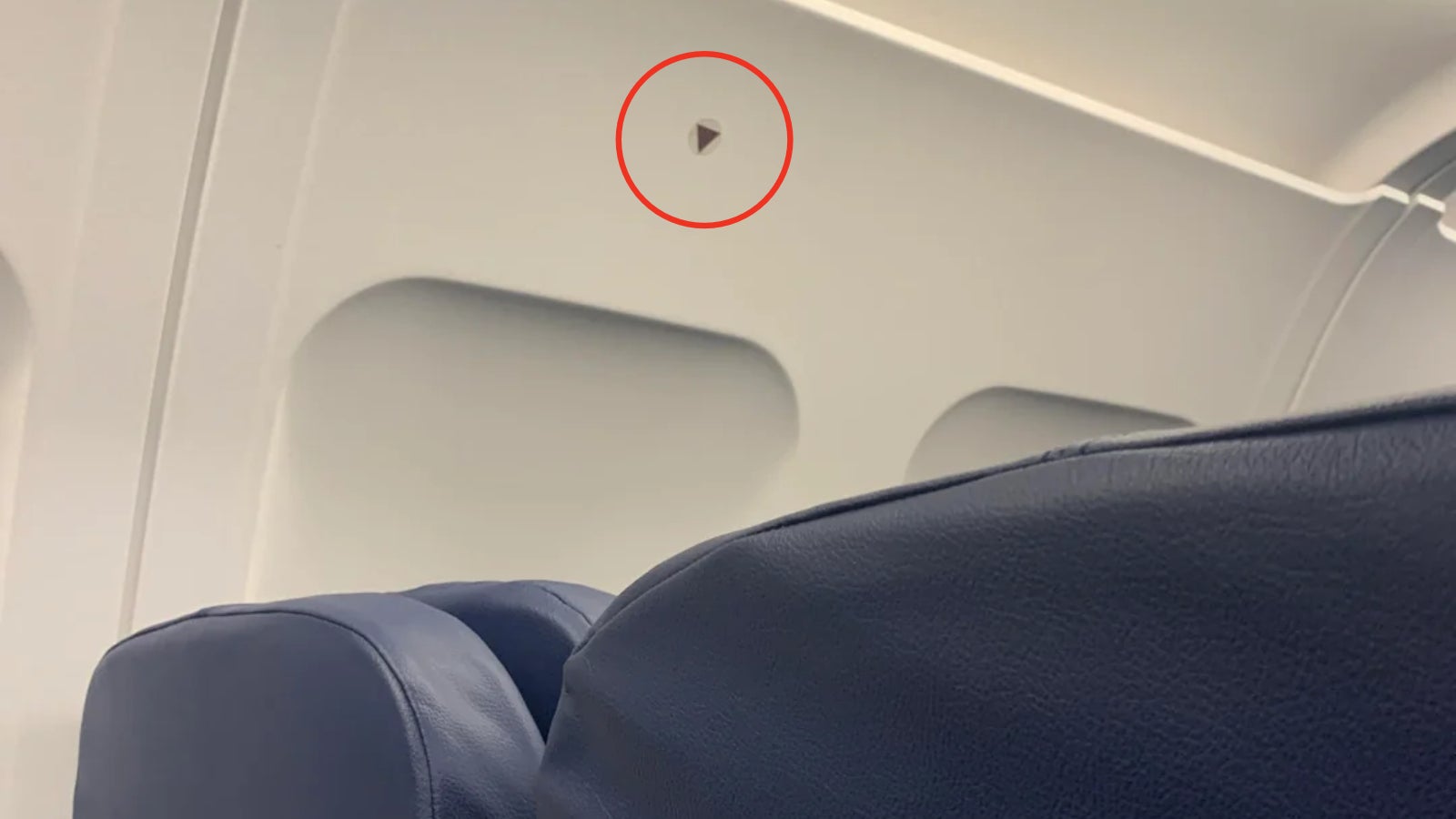
But if you’ve ever noticed some mysterious black triangles above certain plain windows, they might have left you stumped.
Advertisement
Luckily, people like u/altrightobserver over on Reddit’s r/todayilearned, a subreddit dedicated to surprising trivia.
“TIL about the ‘William Shatner’ seat, a term for the seat on an aeroplane providing the clearest view of the wings, allowing flight attendants and other crew easier inspection. It is denoted with a black triangle,” they wrote.
Advertisement
On TikTok, a flight attendant for Cebu Pacific, Henny Joyce Lim, agreed.
“Passengers sitting next to the triangles get the best view of the wings,” she added.
“If the flight crew need to check the wings, these triangles let them know the best vantage points for the slats and flaps outside.”
In other words, if something seems to be wrong with the wings of the plane, either mid-flight or on the runway, this is the vantage point from which staff assess the situation. It can also help to check for ice on the wings.
The pro suggested picking seats beneath these tiny triangular stickers if you get the option to select your row on board, because the scenery it offers is stunning.
Advertisement
She also advised that “those triangle-marked seats are either at number 10 or at 18, but it still depends on the type of aircraft one is travelling in.”
The area is sometimes nicknamed the William Shatner seat because of the actor’s scene in the Twilight Zone – the episode Nightmare At 20,000 Feet, to be specific.
In this scene, his character saw something suspicious on the wing of the plane, leading to the iconic line: “There’s something on the wing!”.
Advertisement
While the premise is pretty terrifying, his character’s clear view could have only come from one seat: the black triangle zone.
“I always wondered what that little black triangle above the windows was for. Makes so much sense now,” Redditor u/Far_Caterpillar_6819 wrote.
Advertisement
“I’ve never noticed the little triangle, but every flight where I could see the wing, I’ve thought of that episode,” u/Darth_Jinn added.
As some commenters noted, not all planes will have the tiny mark. They seem to be more common in Airbus planes.
Personally, though, I’ll keep my eyes peeled for them forever more…

Animals of the same species don’t always look the same. From birds with different beak shapes to mammals that vary in size or color, populations living in different places can often look very different.
What’s much harder to pin down is why these differences arise. Are they shaped by local environments? Or driven by natural or sexual selection? Or are they simply the result of the random loss of gene variants as populations become isolated and slowly diverge over time?
I’m part of a team of leopard conservationists and researchers who set out to answer some of these questions when we investigated a remarkable population of fewer than 1,000 leopards in South Africa’s Cape Floristic Region, an area that covers the country’s Western Cape, and parts of the Eastern Cape and Northern Cape.
These leopards are much smaller than leopards elsewhere on the continent – in some cases only half the body mass. For decades, researchers and conservationists have debated whether the leopards of this region are truly a separate population in terms of their genes, and if so, what might be driving that difference.
Previous genetic studies offered only limited answers. Most relied on a small number of genetic markers – specific spots in the DNA where mutations tend to happen more. This is useful in finding out large-scale patterns, but misses the finer details needed to understand how populations evolve.
To fill this gap in the research, we turned to whole-genome data. This means that instead of looking for small regions of the DNA where we expect variation, we analyzed the full sequence of paired DNA bases that make up the leopard’s genome (2.57 billion base pairs or roughly 19,000 genes in total). Together with local leopard experts and evolutionary biologists, we collected muscle or skin tissue of the leopards and compared them with genomes of leopards from other parts of Africa.
We found that leopards of the Cape are genetically different from other African leopards. This is because they’ve been isolated from other leopards for a long time and have adapted to one region. This has important implications for conservation.
Leopards are among the most widespread large carnivores in the world, found across Africa and parts of Asia. Eight subspecies are currently recognized, including the African leopard (Panthera pardus pardus).
The African leopard found across most of sub-Saharan Africa shows extraordinary variation in coat colour, body size and skull shape. In general, leopards living in open habitats tend to be larger and paler, while those in forested areas are often smaller and darker.
The leopards of the Cape Floristic Region (a biodiverse area rich in plants found nowhere else in the world) are an exception to the pattern. They’re relatively small in mass, but until now, no one knew the reason for their distinctive appearance.
Our research found that the leopards of the Cape are not just smaller than other African leopards, they’ve also formed their own genetic group, clearly separated from leopards elsewhere in southern and eastern Africa.
A similar pattern emerged for leopards from Ghana in west Africa. In both cases, there was little evidence of recent genetic mixing with neighboring populations.
Leopards occur and move all along the length of the Cape Fold Belt mountain chain, which serves as a refuge for the cats. Beyond the northern and eastern edge of this mountain chain, it appears that leopard movement stops – the apparent barriers being very dry semi-desert in the north and high human activity in much of the Eastern Cape.
Looking back in time helped explain why this population is genetically unique. Our analyses suggest that these leopards began diverging from populations further east around 20,000-24,000 years ago, during the Last Glacial Maximum (the coldest phase of the last ice age).
We estimated this by analysing whole-genome DNA to reconstruct when populations split and how much they exchanged genes in the past. (We effectively read their shared evolutionary history, written in the genome.)
During this time, southern Africa became cooler and drier, with fewer grasslands and less food, making it harder for animals to move and survive and causing populations to become separated. More recently, leopard numbers fell sharply in the 1800s and 1900s, likely due to human hunting, habitat loss, and bounty systems that encouraged farmers to kill leopards. In 1968 the leopard bounty ended and the leopard population began to recover as conservation efforts grew.
Because they’d been isolated from other leopards and hunted, we expected our research to show that the leopards of the Cape were genetically depleted (when small populations inbreed and lose genetic diversity). Low genetic diversity makes it harder for populations to adapt to new threats like climate change, disease and human pressure. However, we found they have only slightly lower genetic diversity than other African populations – a really positive finding.
We also wanted to find out why the leopards of the Cape are smaller in size.
We found about 90 genes that were more common in these leopards, linked to body size, muscles, bones and energy use. These differences made sense given that the environment they live in has much smaller, more sparsely distributed prey than other leopard habitats. Leopards in the Cape feed mostly on species like rock hyrax (Procavia capensis), klipspringer (Oreotragus oreotragus) and Cape grysbok (Raphicerus melanotis).
Together, these genomic signals suggest that these leopards are small because they’ve adapted that way, and not only because of isolation or genetic drift.
Populations that are genetically distinct and locally adapted are often described as evolutionarily significant units. This means they represent a unique branch of a species’ evolutionary history and need specific protection so that they can continue to adapt to future change.
Leopards in the Cape Floristic Region occupy a landscape unlike any other in southern Africa, shaped by low prey availability, unique vegetation, and rapidly expanding human populations. Large fenced reserves are rare, and leopards frequently move through agricultural and urban-edge landscapes, where conflict with people is common.
To conserve these leopards, their habitats need to be connected so that they can move around unrestricted and safe from persecution. Poaching and road mortalities are two further threats that need to be addressed to ensure the persistance of leopards in the landscapes. Working in partnership with landowners and communities is essential to protect leopards.
By conserving these leopards, we are not only saving an iconic predator, but also preserving an evolutionary legacy shaped over thousands of years by one of the most distinctive landscapes on the African continent.

Scientists have uncovered new evidence that early human ancestors were using fire in South Africa’s Wonderwerk Cave between 1.07 and 1.79 million years ago. The discovery pushes back one of the earliest known records of fire use linked to hominins and offers fresh clues about how our ancestors first learned to harness fire.
Using a newly developed technique that can detect signs of burning in fossilized bones, researchers identified repeated evidence of fire deep inside the cave. Because these traces were found far beyond the reach of natural wildfires, the findings suggest that early humans were deliberately bringing naturally occurring fire into the cave and keeping it burning.
The research was carried out through an ongoing collaboration led by Dr. Liora Kolska Horwitz of the Hebrew University of Jerusalem’s National Natural History Collections (co-director of the Wonderwerk Cave project with Prof Michael Chazan, University of Toronto) together with an international team of scientists from Spain, Argentina, Canada, USA, South Africa, Portugal and Israel. The project combines archaeology, paleontology, geology, and other scientific approaches to investigate one of the most important developments in human evolution: the use of fire.
Earlier Evidence of Fire Use
The new study builds on earlier work at Wonderwerk Cave, located in South Africa’s Kalahari Desert. In 2012, members of the research team reported evidence of fire dating to about ~1 million years ago (published by members of the team in 2012 in PNAS), which was considered the oldest known evidence of intentional fire use anywhere in the world.
Continued excavations and analysis have now extended that timeline. Researchers identified traces of fire use in archaeological deposits dating from 1.07 to 1.79 million years ago, making Wonderwerk Cave one of the oldest known sites associated with hominin fire use. The findings, published in PLOS One, provide new insight into how ancient human ancestors may have interacted with fire long before they learned how to produce it themselves.
Fire offered many advantages, including warmth, protection from predators, light after dark, and eventually the ability to cook food. Even so, determining when humans first began using fire has remained one of archaeology’s most difficult questions.
“Evidence of fire from such ancient sites is often subtle and difficult to detect,” said the Dr. Kolska Horwitz. “Our study provides new tools for identifying traces of ancient burning and reveals that fire was repeatedly present deep inside Wonderwerk Cave.”
New Technique Detects Burned Fossil Bones
The study also introduces a new approach based on the light-emitting properties of burned bone.
When exposed to specific wavelengths of light, bones that have experienced intense heating produce a distinctive glow. Researchers combined this non-destructive luminescence method with established chemical analyses, allowing them to identify burned animal bones with a high level of confidence.
The technique is portable, non-invasive, and can be used on large fossil collections without causing damage.
To test the method, the team examined hundreds of tiny fossil bones left behind by owls that once roosted inside the cave. Because these remains accumulated naturally over time, they provide an independent, non-anthropogenic record of past events preserved on the cave floor.
Fire Deep Inside Wonderwerk Cave
The researchers discovered clear evidence of burning within an archaeological layer associated with early Acheulean artifacts, likely linked to Homo erectus. The burned remains were found approximately 30 meters inside the cave, far beyond the area that could have been affected by natural wildfires. They were also located in a layer that lacked guano deposits, ruling out spontaneous combustion as an explanation.
The evidence does not suggest that these early humans were capable of creating fire whenever they wanted. Instead, the findings indicate that they likely collected fire from natural sources, such as lightning strikes or wildfires on the African savanna.
According to the researchers, these ancient humans brought fire into the cave on multiple occasions and maintained it for a period before it eventually went out. The team also suggested that owl pellets may have served as fuel, which could explain why the tiny rodent bones contained within them show signs of burning.
Even so, the ability to transport fire and keep it burning inside a cave represents a major behavioral milestone.
“These discoveries show that early humans were not simply passive observers of natural fires,” Dr. Kolska Horwitz explained. “They were actively engaging with fire and incorporating it into their lives.”
A New Window Into the Origins of Fire
In addition to extending the timeline of fire use, the study provides archaeologists with a valuable new tool for exploring when and how humans first began using fire.
As scientists apply this technique to archaeological sites around the world, it could help answer long-standing questions about the origins and evolution of one of the most transformative technologies in human history.
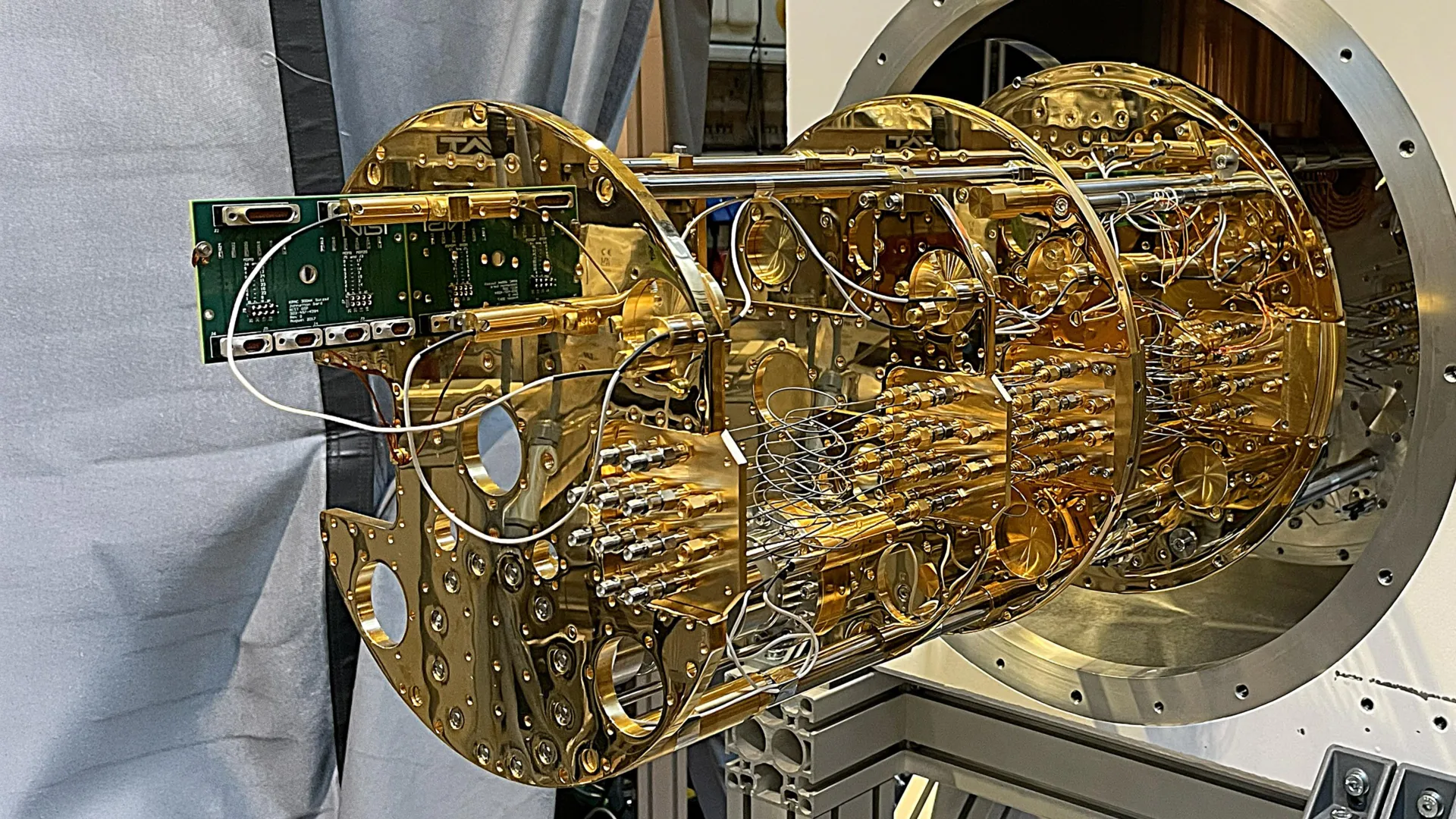
A major new tool for X-ray research has entered service at BESSY II. Developed through a collaboration between HZB, MPI-CEC (Mühlheim-an-der-Ruhr, Germany), and NIST (Boulder CO, USA), the instrument is the first and only TES spectrometer operating at a synchrotron facility in Europe.
The new system delivers a dramatic improvement in photon detection efficiency, outperforming conventional wavelength-dispersive X-ray emission spectrometers by a factor of 100 to 1000. Researchers plan to use it to study the electronic properties of atomically thin materials, nanostructures, and highly diluted atomic and molecular samples. The team is now inviting research proposals from the scientific community.
Bringing Greater Sensitivity to X-Ray Spectroscopy
Facilities such as BESSY II generate extremely bright and intense synchrotron X-rays that allow scientists to analyze a wide range of materials. Yet techniques such as X-ray emission spectroscopy (XES) and Resonant Inelastic X-ray Scattering (RIXS) face a significant challenge. Because these methods rely on detecting photons emitted by the sample, they require large numbers of photons to produce useful measurements.
As a result, XES and RIXS experiments have traditionally been limited to concentrated samples and bulk materials.
“The superconducting Transition Edge Sensor (TES) array photon detector that we have now put into operation at BESSY II is around 100 to 1000 times more efficient to detect photons than conventional XES and RIXS spectrometers,” says Régis Decker, HZB, responsible scientist of the new instrument.
Exploring Quantum Materials and Ultra-Thin Systems
The increased sensitivity opens the door to experiments that were previously difficult or impossible to perform.
“This can provide new insights into molecular chemistry or molecular biology, but also into the quantum properties of systems in reduced dimension such as atomic monolayers, nanostructures and impurities. The TES spectrometer complements methods such as ARPES, which scans the electronic band structures of such systems,” says Régis Decker.
The instrument can also dramatically reduce data collection times. Some XES and RIXS experiments that would normally require hours can now be completed in just minutes.
248 Superconducting Sensors Working Near Absolute Zero
At the heart of the TES array spectrometer are 248 sensors that become superconducting when cooled to 25 milli-Kelvin. To achieve this temperature, researchers use a He4-He3 dilution refrigerator similar to those employed in quantum computing systems.
When X-rays interact with a sample, the sample emits photons. These photons strike individual sensors within the TES array, producing a sudden increase in temperature. That brief warming disrupts the superconducting state and increases the sensor’s electrical resistance. The change is then measured using circuitry based on an array of Superconducting Quantum Interference Devices (SQUIDs).
Advanced Sample Handling and Future Upgrades
The spectrometer is connected to a custom ultra-high vacuum sample chamber that supports sample transfer, preparation, and measurement. The chamber also provides precise temperature control ranging from 10 K to room temperature.
The complete system is installed at the BESSY II UE52-SGM beamline, which offers full polarisation control. Planned upgrades include enhanced sample preparation capabilities and the ability to study materials in magnetic fields for X-ray Magnetic Circular Dichroism in absorption (XMCD) and emission (RIXS-MCD).
Europe’s Only Synchrotron TES Spectrometer
TES spectrometers were originally created for astrophysics applications, where detecting extremely weak photon signals is essential. Before the installation at BESSY II, only five TES spectrometers were operating at X-ray facilities worldwide, including four in the United States and one in Japan.
BESSY II now hosts the only synchrotron TES spectrometer in Europe.
“We are looking forward to receiving exciting research proposals from our user community,” says Decker.
