‘Keir Starmer’s Going To Kick Me’: Wes Streeting Embarrassed After Forgetting One Of Labour’s 6 Pledges

He said: “Economic stability, cut NHS waiting lists, 6,500 extra teachers, Secure Border Command, Great British Energy and … what’s the one I’ve missed? I’ve put them out of order.”

As Kuenssberg and her other guests laughed, Streeting pulled a card containing the pledges out of his jacket pocket and said: “Crack down on anti-social behaviour.

“The annoying thing is I was preparing for that question and I still fluffed it. I might as well just go home now.”

Asked about his gaffe while appearing later on LBC, Streeting said: “Don’t even go there. You have no idea how hard I’ve been kicking [myself].

“I knew that question would come up, you spend time preparing for it, in the moment I had a total brain freeze. I think Keir Starmer is going to kick me on Monday.”

Share Button

Wes Streeting Rejects Archbishop Of Canterbury’s Call To Axe Two-Child Benefit Cap

Wes Streeting has rejected the Archbishop of Canterbury Justin Welby’s call for the “cruel” two-child benefit cap to be scrapped.

The shadow health secretary said that although he personally opposed the policy, he could not promise that an incoming Labour government would end it.

The two-child cap was brought in by the Tories as part of their efforts to slash the welfare bill.

It means that families only receive Universal Credit or child tax credit payments for the first two children they have.

Welby told The Observer: “The two-child limit falls short of our values as a society. It denies the truth that all children are of equal and immeasurable worth, and will have an impact on their long-term health, wellbeing and educational outcomes.

“Shamefully, children from ethnic minorities and homes where someone is disabled are most affected.

“Children should grow up in families and households where they can flourish and be supported to find their place in the world. Yet the two-child limit prevents many from accessing the resources they need.

“This cruel policy is neither moral nor necessary. We are a country that can and should provide for those most in need, following the example of Jesus Christ, who served the poorest in society. As a meaningful step towards ending poverty, and recognising the growing concern across the political spectrum, I urge all parties to commit to abolishing the two-child limit.”

Appearing on Sunday Morning with Trevor Phillips on Sky News this morning, Streeting said he “really welcomed” the Archbishop’s intervention, but could not commit to agreeing to his request.

He said: “One of the consequences of the Conservatives’ disastrous
handling of the economy is the public finances are in a mess and there are harder choices to make.

“So unless and until I can sit on your programme and say we will do X by funding it through Y, that’s not a commitment I’m able to make today.”

Streeting added: “I voted against the two child limit, so by definition, I wish it
wasn’t there. But as we’ve seen across the board, it’s a lot easier to get rid of stuff that is to put stuff back.

“And that’s the frustrating thing about the vandalism we’ve seen through
14 years of conservative government.”

Share Button

Yet Another Senior Tory MP Is Quitting Parliament As The Party Heads For Defeat

A cabinet minister has become the latest Tory MP to announce they are quitting parliament as the party braces itself for election defeat.

Northern Ireland secretary Chris Heaton-Harris said it had been an “honour and a privilege” to represent Daventry since being elected in 2010.

But in a letter to Rishi Sunak, he said: “I feel the time is right for me to look for new challenges.”

That total is edging ever-closer to the 75 Tory MPs who said they were standing down ahead of the 1997 Labour landslide.

Announcing his decision on X (formerly Twitter), Heaton-Harris, who was a Tory MEP for 10 years before entering the Commons, said: “After 24 years in politics I won’t be standing at the next election.

“It’s been an honour and a privilege to serve and I’d like to thank the good people of Daventry, Theresa May, Boris Johnson, Liz Truss and Rishi Sunak for putting their trust in me.

“I started as a campaigner and I’ll be out campaigning for Conservatives at the next election because we are the only party that has and can deliver for the whole of the United Kingdom.”

In his letter to the prime minister, Heaton-Harris said he planned to remain as Northern Ireland secretary “but obviously would understand if you feel it best to replace me”.

His announcement comes as the Tories continue to trail well behind Labour in the opinion polls and with election experts unanimous in their view that the party is heading for a heavy defeat when the election takes place later this year.

Share Button

Hepatitis C tests spike after blood scandal news

More than 12,000 people asked for tests in England after the BBC found 1,700 cases are undiagnosed.

Share Button

Su and Steve fought for justice, but didn’t live to see it

Su Gorman and Steve Dymond helped to expose an NHS scandal – but they died without seeing justice.

Share Button

Water firm criticised over ‘scary’ outbreak

A caretaker from Brixham says it is “probably the worst ailment” he has had in his adult life.

Share Button

Bridgerton Season 3 Gives Us The Complexity We’ve Been Waiting For

The carriage wheels are spinning as they return the fashionable set to their London homes, delivery boys are selling the latest copy of Lady Whistledown’s Society Papers, and a new set of young ladies prepares to enter society. In other words, after two long years, Bridgerton has returned with the first four episodes of its much-anticipated third season (helmed by new showrunner Jess Brownell).

Since the trailer premiered in April, the chemistry between Colin Bridgerton (Luke Newton) and Penelope Featherington (Nicola Coughlan) has set the internet ablaze as fans prepared themselves for the friends-to-lovers trope with a side of a She’s All That-esque makeover. And this season does not disappoint. It may even exceed fans’ already-high expectations.

While I loved the fake dating storyline of Daphne and Simon in season one and Anthony and Kate’s evolution from enemies to lovers in season two, the rom-com tropes in Season 3 are even better.

This season follows the tradition of the first two and opens with a Bridgerton — the sparkling Francesca (Hannah Dodd) — making her debut. However, despite its similar construct, this season is heightened in almost every way.

From the period-inspired but mostly fantastical costumes (lots of ombre, embellishments and layered fabrics) to the whimsical, floral-filled sets to the complicated interpersonal drama, everything fans love about Bridgerton has been exaggerated to create a fuller, more colourful, bejewelled world. A world that is clearly not meant to be a rendition of the past or a mirror of our present moment, but a place to live in some imaginary in-between space.

In this place, the events of last season have changed everyone. The most obvious transformation is Colin, who has returned from another adventure abroad looking muscular and tan, and, as his brother Benedict (Luke Thompson) describes him, “sturdy”. Colin has a new confidence and hair that rivals that of Shondaland favorite Dr. McDreamy. His new social ease helps him glide into rooms and flirt with countless groups of debutantes.

But this new façade will not help him with Penelope, his oldest friend, who is still enraged after overhearing him tell a group of men at the end of last season that he would never court her. The new armour he has donned to re-enter society will also make it even harder for Colin to process the possibility that he may have feelings for Penelope that go beyond friendship.

The second big transformation occurs on screen after Penelope has decided she must marry to escape her mother’s household. To achieve any hope of accomplishing this, Penelope realises she must step out of the shadows and safety of the walls of ballrooms she has hidden alongside. She replaces her citrus wardrobe with stunning gowns in blue and green, gowns that flatter her figure, showcase her fair complexion and highlight her stunning eyes.

In a Laney Boggs-esque moment – which has been teased in the trailer – Penelope descends the staircase at Lady Danbury’s ball, the momentous first ball of the season (fans of Queen Charlotte know exactly what it entailed for Lady Danbury to achieve this honour), to reveal her new aesthetic. However, Penelope’s social anxiety and awkwardness quickly make it clear that, to secure a husband, changing her appearance is not enough. She will have to embody the confidence and strength of her alter ego, Lady Whistledown.

Cue a gentleman – it should surprise no one that the duty-driven man is Colin – with an offer to help Penelope do so. The next three episodes explore the complications that are bound to ensue after his help works and she captures the interest of the eccentric but very eligible Lord Debling (Sam Phillips).

What makes this season so special is that it’s not only Colin and Penelope who are grappling with their identities. Every character is wrestling with change, with the growing pains that come from both necessary and self-imposed evolution and the internal conflict that is often the byproduct of denying a part of oneself.

Violet Bridgerton is navigating a new world in which Kate (Simone Ashley) has returned (much to fans’ delight) and is now the viscountess. Kate is supposed to step into Violet’s role, and Violet is expected to move away from her children and into the dowager house. With two daughters out at the same time, Violet is also trying to avoid the maternal overstepping that she believes contributed to Anthony almost marrying the wrong person last year and Eloise’s dangerous friendship (and possibly more) with Theo Sharpe (Calam Lynch), the boy from the printshop.

However, Violet will learn that stepping back may not always be the right thing, because children, even grown ones, sometimes need their mothers’ guidance. Also, as fans of Queen Charlotte know, Violet’s garden is “in bloom”, and she may be ready to open herself up to a new suitor, especially if that man has impeccable timing when picking up a dropped glove and has a gift for conversation.

Simone Ashley as Kate Sharma and Jonathan Bailey as Anthony Bridgerton in the first episode of Season 3 of "Bridgerton."
Simone Ashley as Kate Sharma and Jonathan Bailey as Anthony Bridgerton in the first episode of Season 3 of “Bridgerton.”

Liam Daniel/Netflix

Other Bridgertons are also going through a time of great change. Benedict is trying to figure out who he is after giving up art, Francesca is hoping to find a husband and move into her own, quieter household, and Eloise is still recovering from the relationship that put her family at risk and the shock of discovering Penelope’s lies.

Even though Eloise is trying to conform to society’s expectations – she wears more ornate dresses and ties bows in her hair – and befriends the unlikeliest of people – Cressida Cowper (Jessica Madsen) º she still must grapple with her belief system and the truth that her former best friend is Lady Whistledown.

Though some change is reactionary, others are necessary because of the rules that regulate the ton. Portia Featherington (Polly Walker), Alice (Emma Naomi) and Will Mondrich (Martins Imhangbe) must face the pressures of the crown and the implications of the rules imposed to ensure that “the lines of succession run smoothly”.

All this interpersonal conflict is also taking place within a paradoxical system that simultaneously “feeds on the nouveau” and rejects social change. This tension sets up season three to have a level of complexity that the first two lacked.

Last May, I wrote about the beautiful depth of Queen Charlotte, the Bridgerton spin-off that explores the realities and consequences of marriage and the ways women (Queen Charlotte, Lady Danbury and Violet Bridgerton) fight for agency within the constraints that society has imposed upon them. There was a complexity in Queen Charlotte that — as much as I have enjoyed watching Bridgerton — was missing from the first two seasons of the show. But its absence will be felt no longer.

In Julia Quinn’s book series upon which the show is based, the novels themselves are very insular. Each focuses primarily on the experiences of the Bridgerton sibling and the person they will eventually marry. Since the beginning, the show has been building out the world Quinn created, adding secondary characters and giving them larger, ongoing storylines with their own arcs. Now, after two seasons and a spin-off, Bridgerton is using the foundation it has laid to its advantage, adding layers of meaning to every scene and lines of dialogue that allow it to explore the same rich themes as Queen Charlotte.

This effect is felt most acutely with Brimsley (Hugh Sachs), Queen Charlotte (Golda Rosheuvel) and Lady Danbury (Adjoa Andoh), whose backstories elicit sympathy and give all their interactions — even the queen’s seemingly silly game with Whistledown — greater meaning.

And, unlike Queen Charlotte, which was beautifully done but also had moments that were torturous to endure, Bridgerton accomplishes this feat with a fun, fanciful romance.

It also helps that, unlike seasons one and two, which relied on flashbacks to create emotional depth (the abuse Simon’s father inflicted because of his stutter and the traumatic death of Anthony’s father), Bridgerton is relying on fans’ pre-existing investment in Colin and Penelope. We’ve watched Penelope pine for Colin from her window. We’ve listened to Lady Crane (Ruby Barker) tell Colin that he is taking Penelope for granted. Our hearts broke with Penelope’s when she overheard Colin’s mean comment at the end of the last season after they had finally danced together. All of these moments have been building toward this season, and we are ready for it.

In the opening sequence, Lady Whistledown (Julie Andrews) says: “Whoever it is that makes the finest match this year, let us hope that their pairing brings some titillation.” I can attest that these first four episodes lay the groundwork to do exactly that, especially for those who read the book and are hoping for a steamy scene (perhaps in a carriage).

Also, in true Shonda Rhimes fashion, viewers can be certain the fourth episode will end in such a way that you will be screaming at the TV, wondering why Netflix is forcing you to endure an entire month to finish a season that you’ve already spent two years waiting for.

I don’t know Netflix’s reason, dear viewer, but I can attest that these four episodes are an immersive delight because, yes, the chemistry between Colin and Penelope is electric, but the larger world their romance takes place in is becoming even better.

Bridgerton Season 3, Part 1, is streaming on Netflix. Part 2 begins on June 13.

Share Button

Olivia Rodrigo Laughs Off Wardrobe Malfunction: ‘I Almost Flashed You Guys’

Olivia Rodrigo handled an “embarrassing” wardrobe malfunction like a pro.

While performing her song Love Is Embarrassing during a London stop of her Guts world tour on earlier this week, Olivia suffered an unexpected wardrobe crisis when her bra top began to come undone.

In a viral clip shared on TikTok, the Grammy-winning singer is seen clutching her top after realising it’s come loose. A backup dancer then approaches her and tries to refasten the item as they continue dancing through the blunder.

“This is fucking embarrassing,” Olivia said with a laugh as she finished performing the song.

Fans reacted over the mishap in the comments section, with many joking about how the timing lined up perfectly with the aptly named tune.

“This malfunction happening to love is embarrassing is so true,” one person wrote.

“This was actually the perfect song for this to happen to,” another said.

Another TikTok video from the concert shows the Vampire crooner reemerging on stage after fixing her top. She tells the crowd: “I almost flashed you guys, but we’re OK now!”

Watch Olivia keep a cool head in the clip below:

Share Button

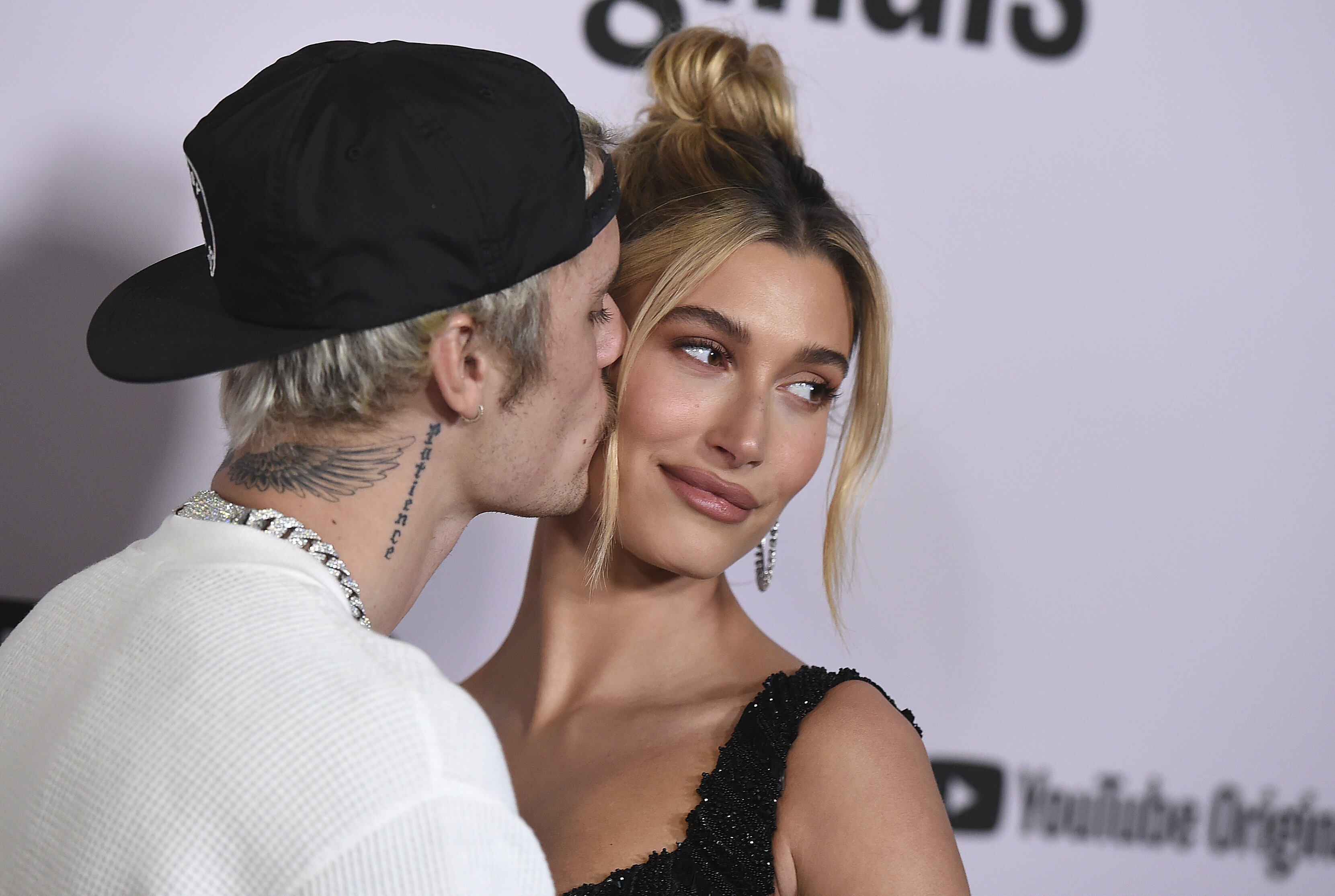
Hailey Bieber Reveals Her Biggest Pregnancy Craving: ‘You’re Not Allowed To Judge’

While that recipe might turn some stomachs, a 2014 study in the Frontiers in Psychology journal concluded that more than half of all pregnant women experience cravings for specific foods, due to rapid hormonal changes or the additional blood production during pregnancy.

Still, biological explanation or no, some fans couldn’t bring themselves to approve of Hailey’s meal.

“Hailey is so pregnant. Egg salad on a pickle with hot sauce. Girllllll,” wrote one user on X, the platform formerly known as Twitter. Another commented: “‘Trying hailey bieber’s egg salad on top of pickle’ will soon be a trend on tiktok.”

“This will be the next important project for him. He’s so excited to raise his baby. They have a name that they think is perfect … They can’t wait.”

Share Button

Better medical record-keeping needed to fight antibiotic overuse

A lack of detailed record-keeping in clinics and emergency departments may be getting in the way of reducing the inappropriate use of antibiotics, a pair of new studies by a pair of University of Michigan physicians and their colleagues suggests.

In one of the studies, about 10% of children and 35% of adults who got an antibiotic prescription during an office visit had no specific reason for the antibiotic in their record.

The rate of this type of prescribing is especially high in adults treated seen in emergency departments and in adults seen in clinics who have Medicaid coverage or no insurance, the studies show. But the issue also occurs in children.

Without information about what drove these inappropriate prescriptions, it will be even harder for clinics, hospitals and health insurers to take steps to ensure that antibiotics are prescribed only when they’re really needed, the researchers say.

Overuse and misuse of antibiotics raise the risk that bacteria will evolve to resist the drugs and make them less useful for everyone. Inappropriately prescribed antibiotics may also end up doing more harm than good to patients.

“When clinicians don’t record why they are prescribing antibiotics, it makes it difficult to estimate how many of those prescriptions are truly inappropriate, and to focus on reducing inappropriate prescribing,” said Joseph Ladines-Lim, M.D., Ph.D., first author of both of the new studies and a combined internal medicine/pediatrics resident at Michigan Medicine, U-M’s academic medical center.

“Our studies help contextualize the estimates of inappropriate prescribing that have been published previously,” he added. “Those estimates don’t distinguish between antibiotic prescriptions that are considered inappropriate due to inadequate coding and antibiotic prescriptions truly prescribed for a condition that they can’t treat.”

Ladines-Lim worked with U-M pediatrician and health care researcher Kao-Ping Chua, M.D., Ph.D., on the new studies. The one on outpatient prescribing by insurance status is in the Journal of General Internal Medicine and the one on trends in emergency department prescribing is in Antimicrobial Stewardship and Healthcare Epidemiology.

Building on previous research

Chua and colleagues recently published findings about trends in inappropriate antibiotic prescribing in outpatients under age 65, suggesting about 25% were inappropriate. But that number includes antibiotic prescriptions written for infectious conditions that antibiotics don’t help, such as colds, and antibiotic prescriptions that aren’t associated with any diagnoses that could be a plausible antibiotic indication.

The new studies add more nuance to that finding, by looking more closely at these two different types of inappropriate prescriptions.

Most antibiotic stewardship efforts to date have focused on reducing the use of the first type of inappropriate prescription — those written for infectious but antibiotic-inappropriate conditions like colds. The new studies show such patients still account for 9% to 22% of all antibiotic prescriptions, depending on the setting and age group.

But since doctors and other prescribers aren’t required to run a test for a bacterial infection or list a specific diagnosis in order to prescribe antibiotics, symptoms provide potential clues to why they might have written a prescription anyway.

So some of those 9% to 22% of all people receiving antibiotics may have also had a secondary bacterial infection that the clinician suspected based on symptoms.

However, it’s impossible to know.

As for those with no infection-related diagnoses or symptoms in their records who got antibiotics, the researchers suggest that clinicians may not have bothered to add these diagnoses or symptoms to the patient record inadvertently — or even deliberately, to try to avoid the scrutiny of antibiotic watchdogs.

But the researchers also speculate that the lower rate of diagnosis documentation in patients in the healthcare safety net may also have to do with the way healthcare organizations are reimbursed.

Often, clinics and hospitals receive a fixed amount from Medicaid to care for all their patients with that type of coverage. So they aren’t incentivized to create records that are as detailed as for privately insured patients, whose care traditionally is reimbursed under a fee-for-service model.

“This could actually be a matter of health equity if people with low incomes or no insurance are being treated differently when it comes to antibiotics,” says Ladines-Lim, who has also studied antibiotic use related to immigrant and asylum-seeker health and will soon begin a fellowship in infectious diseases.

He said that private and public insurers, and health systems, may need to incentivize accurate diagnosis coding for antibiotic prescriptions — or at least make it easier for providers to document why they’re giving them.

That might even include steps such as requiring providers to record the reason for antibiotic prescribing before prescriptions can be sent to pharmacies through electronic health record systems.

After all, Ladines-Lim said, physicians often have to list a diagnosis that justifies tests they order, such as CT scans or x-rays. With antibiotic resistance posing an international threat to patients who have antibiotic-susceptible conditions, similar steps to justify prescriptions of antibiotics might be advisable.

In addition to Ladines-Lim and Chua, the other authors of the two articles are Michael A. Fischer, M.D., M.S. of Boston Medical Center and Boston University, and Jeffrey A. Linder, M.D., M.P.H. of Northwestern University Feinberg School of Medicine.

The research was funded by a Resident Research Grant from the American Academy of Pediatrics, a Physician Investigator Award from Blue Cross Blue Shield Foundation of Michigan, and a Research Grant from the National Med-Peds Residents’ Association.


Share Button