I Didn’t Have Sex For 10 Years. When I Finally Did, It Sent Me To A&E.

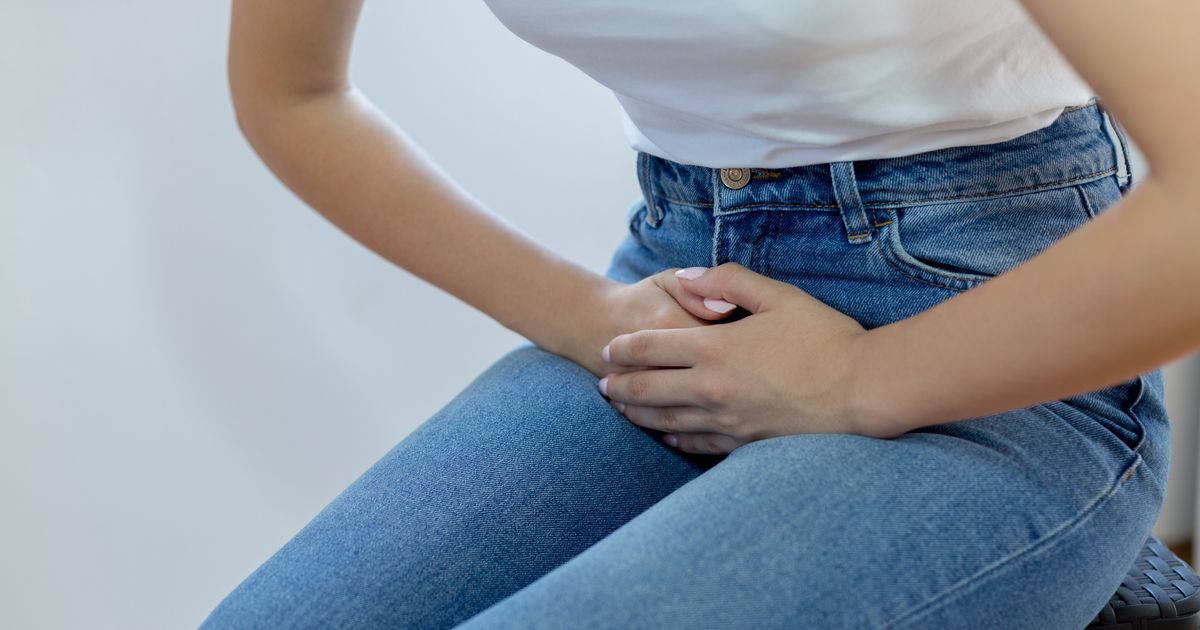
I lay on my side, cradling my iPhone, looking up “bleeding after sex” and dabbing a piece of toilet paper between my legs. I thought about whether or not I should wake my new boyfriend up.

The Healthy Woman website stated, “It’s common for women of all ages to have bleeding after sex at one time or another. In fact, up to 9 percent of all women experience post coital bleeding (outside of first sex) at some point in their lives. Most of the time it’s nothing major and goes away on its own. But bleeding after sex can also be a sign of something more serious.” SIGN OF SOMETHING SERIOUS?

Great. I had already had acute myeloid leukaemia multiple times, and now, when things were looking up, WebMD said this new symptom could mean I have pelvic organ prolapse (when pelvic organs, like the bladder or uterus, jut beyond the vaginal walls).

I found a site where someone asked, “Could my uterus fall out?” No, it couldn’t. At least I had that.

“The most important thing to pay attention to is the rate and volume of bleeding,” the article read. “Most bleeding after sex is fairly light. Heavy bleeding — where you’re soaking through a pad every hour or passing clots larger than the size of a quarter — warrants a visit to the emergency room.”

I didn’t have a quarter, but I did have a clock that showed it had been two hours. The doctor on call for my internist’s office, around 2 or 3 a.m., sounded annoyed.

“You should have called your gynaecologist,” he said. But he called ahead to the ER. I shook my boyfriend awake, and off we went into the spring night that had held so much promise. Intellectually I knew it wasn’t my fault, but I was more embarrassed than if I had been wearing white shorts and gotten my period in gym class.

On the TLC series, ”Sex Sent Me to the ER,” worse things happen, such as objects stuck where they shouldn’t be. My issue was more mundane, but I found out also very common: lack of information after my cancer treatment.

Nobody told me that chemotherapy, which I’d undergone after my diagnosis in 2003 and again after relapses in 2007 and 2008, could cause a sudden loss of oestrogen production in my ovaries, and that this could lead to symptoms of menopause such as a thinning vagina and vaginal dryness. (Actually, the first round put me into early menopause at 48.) Nobody told me that vaginal dryness can cause pain and bleeding during intercourse.

Yet data shows that the incidence of sexual dysfunction among female cancer survivors is somewhat common. Common sexual side effects are difficulty reaching climax, less energy for sexual activity, loss of desire, reduced size of the vagina, and pain during penetration.

For my part, it had been a 10-year dry spell. You shouldn’t need a reason for not having sex, but I had good ones: treatment in 2009 for relapsed leukaemia, life-threatening infections after a rare fourth stem cell transplant, a coma, a four-month hospitalisation and a year just to get back on my feet.

My 13-year marriage, long over, had consisted of 10 good years and three downhill all the way along a road full of land mines. Afterward, a four-year relationship with an English professor ended in fitting dramatic form when he rediscovered his childhood sweetheart while I was mourning the death of my father. Pulling his hands through his long grey hair, he declared, “We’re like Heathcliff and Cathy. I love her more than I love you!” I had to brush up on my “Wuthering Heights” to get it. Heathcliff and Catherine were soulmates.

My soulmate was nowhere to be found. He was not the guy who walked into a restaurant looking pale and pasty and nothing like the photo of the fit guy on his online profile, making me think of climbing out the bathroom window. He was not the guy I met at a Matzo Ball, where Jewish singles go on Christmas Eve to comport themselves like eighth graders at a school dance; we lasted for about six months until he complained that he was lower on the totem pole than my three children. I thought he might be the tennis player who strung my rackets and said he was falling in love with me, but he disappeared, in a feat I later learned had a name: hanging you out to dry.

“’Please tell me you’ve seen worse than this,’ I said to the nurse as I lay on the exam table.”

I decided to follow the advice of friends who were tired of hearing me talk about heartbreak and disappointment: Live your best single life. I stopped paying for dating websites but left a profile on a free one.

Stop trying to find something, and then if you’re lucky, you will find it, or it will find you. A nice guy wrote that he liked my profile (ugh, I hated writing those things). He thought we had a lot in common (running, kids, reading, similar politics) and would love to have a conversation. Is it corny to say that as we walked toward each other in front of the restaurant where we were to meet, we were being pulled together? Maybe it was just relief that he seemed normal and resembled his profile photo.

We sat at a high table in the bar. Our fingertips brushed together when we held up our phones to show each other photos; his, of places he had traveled, and mine, of kids and dogs. The next day, we went for a walk, and he passed a big test: meeting my chocolate Labrador retriever. She got a crush on him. I think it’s the soft voice. It works on me, too.

I had been using a vaginal eostrogen cream, Estrace (generic name estradiol), twice a week, to reduce symptoms of menopause such as vaginal dryness, burning, and itching. Though I was concerned about side effects, my doctor said the small amount was not absorbed outside the vagina, unlike hormone replacement therapy, which goes into the bloodstream. She said it was also OK to use Estrace once a week and Replens, a nonhormonal moisturiser, the rest of the time if I wanted to.

I remembered hearing that I would need to up the dosage if I wanted to have sex again. I made an appointment with my gynaecologist to see if I should do anything else to prepare for physical intimacy.

The physician’s assistant who saw me said, “Go to the toy store.” I was confused. My children were grown. Why did I need a toy store? I learned that she meant the sex toy store tucked behind a doorway next to a pizza place.

I got a set of six pink dilators. They started pinky-sized and increased by gradations up to a dauntingly large one. They didn’t come with instructions regarding how long to leave them in. The small one went in OK. I kept it in for a few minutes and then put in the next larger one, increasing in size until I had had enough. There’s not much you can do when you’re lying around with a fake pink penis in your vagina.

When it finally came time for real sex, I liked it. It hurt after a while, so we stopped, but I thought that was normal. Next I felt something sticky on my legs. It was blood. Blood on the sheets, blood on our legs. We got in the shower, changed the sheets, and got back into bed. It couldn’t have been less romantic.

The emergency room was even worse ― grungy and poorly lit. He sat with me, holding my hand and looking as upset as I was, until a nurse called me in and he went to sleep in the car.

“Please tell me you’ve seen worse than this,” I said to the nurse as I lay on the exam table feeling raw, emotionally and physically. She said she had. The doctor did an internal examination and said the blood had likely come from chafing. It was dawn when we finally got out of there. We went out to breakfast. Ordering my traditional blueberry pancake with an egg over hard brought a sense of normalcy to the misadventure.

The next week, I returned to the doctor’s office and this time saw the gynaecologist herself.

“Let’s start from scratch,” she said. I was to leave a dilator in for between 15 and 30 minutes, while doing diaphragmatic breathing. She sent me to pelvic floor therapy to learn relaxation exercises. I used the Estrace for two weeks straight. By the time we had sex again, it didn’t hurt, but I nervously checked the sheets for a long time afterward. I figured if we could get through a post-coital visit to the ER, we could get through most anything.

I may not have known much about sex after cancer, but it’s a topic that’s starting to be talked about more. I learned that after years of dismissing women’s sexual function as just one of those things that cancer takes away, many see women’s sexual health as a survivorship issue. An expert who I interviewed for a story on sex after cancer even called the dearth of information for female cancer survivors “a health equity issue.”

Many cancer centres are beginning to open sexual health programs. My own cancer centre was among them. “You missed us by about a year,” the director told me.

Luckily, I’m no worse for the wear and am still with the nice guy. I use Estrace (and sometimes Replens) twice a week and a lubricant when having sex. Doctors say that one of the best ways to treat vaginal dryness is to have more sex, because increased blood flow stimulates lubrication.

Now that memory of the ER visit is almost three years in the past, that seems like a fine idea to me.
Share Button

The Funniest Tweets From Parents This Week (Jan. 6-12)

Share Button

Sophie Ellis-Bextor Soars Even Further Up The UK Singles Chart Thanks To Saltburn

Her 2001 hit Murder On The Dancefloor is featured prominently in the divisive film’s final scene, which has led to the song ricocheting back into the top 10, landing at number eight last week.

On Friday afternoon, the Official Charts Company confirmed that Murder On The Dancefloor had risen even further this week, missing out on the top spot by just one place.

This puts the track in the same chart position it reached upon its release more than 20 years ago, when it was held off the top spot by Daniel Bedingfield’s Gotta Get Thru This.

Can the continued popularity of Saltburn push Sophie’s track to a new peak next week, and finally hit number one? We’ll have to wait and see.

Sophie previously said of her song’s renewed chart success: “One thing I’ve always loved about my work is its ability to surprise me.

“Murder On The Dancefloor is a song I’ve been singing for 20 years, and I’m on really good terms with it. I love singing it, I love performing it and what’s happening at the moment is kind of magical, actually.”

But Murder On The Dancefloor isn’t the only 2000s hit that Saltburn has helped propel into the charts.

Saltburn is available to stream now on Amazon Prime.

Share Button

Tories Slammed Over UK’s ‘Nose-Diving Domestic Human Rights Record’

The Conservative government has been criticised over the UK’s “nose-diving” record after a “dismal year for human rights”.

Human Rights Watch (HRW) has just torn into the UK over the government’s policy decisions from the last year, demolishing its action (or inaction) on migration, LGBTQ+ rights and its foreign policy – to name just a few.

In its 740-page World Report 2024, released on Friday, the specialists left no stone unturned – and concluded that the UK government “eroded domestic human rights protections and reneged on important international obligations.”

The UK director at the organisation, Yasmine Ahmed, added: “The UK had another dismal year for human rights in 2023.”

The report pointed to the government’s 2023 legislation criminalising protesters, the Public Order bill, and its attempts to introduce anti-boycott laws.

HRW criticised the parts of the Conservative Party which are still trying to pull out of the European Convention on Human Rights, so that it does not obstruct the Rwanda bill.

Then the scathing report moved onto the new legislation meant to ban those who arrive “irregularly” to the UK – the Illegal Migration Act.

It said this was a “flagrant breach of the UK’s international obligations, including under the UN Refugee Convention”.

“The UK had another dismal year for human rights in 2023.”

– Yasmine Ahmed, UK Director at Human Rights Watch

It also lashed out at the Tories for failing to “take meaningful steps to tackle institutional racism and address past wrongs” within the UK, including those still waiting for compensation from the Windrush scandal.

HRW noted the government had “failed to set social security payments at a level that ensures recipients can enjoy their rights and live with dignity” even amid an ongoing cost of living crisis. It noted how food bank usage, and homelessness, have increased, too.

It then moved onto women’s rights, noticing how the gender pay gap was still a problem, that there have been recent campaign efforts for the government to overhaul outdated abortion laws in England and Wales.

The specialists recognised that there’s been a surge in anti-LGBT violence in the UK too, and called out the “government’s undermining of protections for the rights of trans women and over-representation of LGBT people among the unhoused population.”

PM Rishi Sunak was slammed over the decision to backtrack on key climate policies too, and called to do more to “tackle racial disparities of climate change effects in the UK”.

Britain was praised for its actions highlighting Russia’s invasion of Ukraine – but HRW was swift to then criticise it for appearing to be “turning a blind eye to ongoing abuses” in Rwanda amid the plan to deport asylum seekers who arrive “illegally”.

The report added: “UK anti-immigrant policies at home have contributed to the government’s failure to resettle vulnerable Afghans.”

Finally, it touched on the UK’s abstention from a UN Security Council resolution in October calling for full humanitarian aid to Gaza, and the release of Hamas hostages amid the ongoing Israel-Hamas war.

And so, the specialists concluded: “The UK’s nose-diving domestic human rights record undermined its efforts to promote the rule of law and human rights globally.”

These findings come as the Conservatives continue to trail significantly behind Labour in the polls, and less than a year before voters are expected to head to the ballot box.

Share Button

I noticed a bulging lump sensation in my vagina

When Natashja Wilson noticed symptoms of pelvic organ prolapse she had no idea what was happening.

Share Button

Dog attacks: Victims double since pandemic, surgeon says

An NHS consultant surgeon in West Sussex says he is treating dog attack victims every day.

Share Button

Oxfordshire man with diabetes ‘in limbo’ after benefits refusal

Ashley Hall has also been diagnosed with bile acid malabsorption, which leaves him in constant pain.

Share Button

Even the oldest eukaryote fossils show dazzling diversity and complexity

The sun has just set on a quiet mudflat in Australia’s Northern Territory; it’ll set again in another 19 hours. A young moon looms large over the desolate landscape. No animals scurry in the waning light. No leaves rustle in the breeze. No lichens encrust the exposed rock. The only hint of life is some scum in a few puddles and ponds. And among it lives a diverse microbial community of our ancient ancestors.

In a new account of exquisitely preserved microfossils, researchers at UC Santa Barbara and McGill University revealed that eukaryotic organisms had already evolved into a diverse array of forms even 1.64 billion years ago. The paper, published in the journal Papers in Paleontology, recounts an assemblage of eukaryotic fossils from an era early in the group’s evolutionary history. The authors describe four new taxa, as well as evidence of several advanced characteristics already present in these early eukaryotes.

“These are among the oldest eukaryotes that have ever been discovered,” explained lead author Leigh Anne Riedman, an assistant researcher in UCSB’s Department of Earth Science. “Yet, even in these first records we’re seeing a lot of diversity.”

Eukarya forms one of the major domains of life, encompassing the plant, animal and fungi clades, as well as all other groups whose cells have a membrane-bound nucleus, like protists and seaweeds. Many scientists had thought early eukaryotes were all fairly similar during the late Paleoproterozoic, and that diversification took place around 800 million years ago. But Riedman and her co-authors found fossils of a delightfully diverse, and complex, cast of characters in rock nearly twice as old.

Scientists knew from previous studies that eukaryotes had evolved by this time, but their diversity in this era was poorly understood. So Riedman headed to the Outback in late 2019. Within one week, she had collected about 430 samples from eight cores drilled by a prospecting company; they now reside in the library of the Northern Territory Geological Survey. The two cores used for this study spanned roughly 500 meters of stratigraphy, or 133 million years, with around 15 million years of significant deposition.

Riedman returned to the United States with shale and mudstone: remnants of an ancient coastal ecosystem that alternated between shallow, subtidal mudflats and coastal lagoons. A dip in hydrofluoric acid dissolved the matrix rock, concentrating the precious microfossils which she then analyzed under the microscope.

“We were hoping to find species with interesting and different characteristics to their cell walls,” Riedman said. She hoped that these features could shed light on what was happening within the cells during this time period. Reaching any conclusions about the cellular interior would require a great deal of sleuthing, though, since the fossils preserve only the exterior of the cells.

The researchers were surprised by the diversity and complexity preserved in these fossils. They recorded 26 taxa, including 10 previously undescribed species. The team found indirect evidence of cytoskeletons, as well as platy structures that suggest the presence of internal vesicles in which the plates were formed — perhaps ancestral to Golgi bodies, present in modern eukaryotic cells. Other microbes had cell walls made of bound fibers, similarly suggestive of the presence of a complex cytoskeleton.

The authors also found cells with a tiny trapdoor, evidence of a degree of sophistication. Some microbes can form a cyst to wait out unfavorable environmental conditions. In order to emerge, they need to be able to etch an opening in their protective shell. Making this door is a specialized process. “If you’re going to produce an enzyme that dissolves your cell wall, you need to be really careful about how you use that enzyme,” Riedman said. “So in one of the earliest records of eukaryotes, we’re seeing some pretty impressive levels of complexity.”

Many people in the field had thought this ability emerged later, and the evidence for it in this assemblage further emphasizes how diverse and advanced eukaryotes were even at this early juncture. “The assumption has always been that this is around the time that eukaryotes appeared. And now we think that people just haven’t explored older rocks,” said co-author Susannah Porter, an Earth science professor at UC Santa Barbara.

This paper is part of a larger project investigating early eukaryote evolution. Riedman and Porter want to know in what environments early eukaryotes were diversifying, why they were there, when they migrated to other places, and what adaptations they needed in order to fill those new niches.

A big part of this effort involves understanding when different characteristics of eukaryotes first arose. For instance, the authors are quite interested to learn whether these organisms were adapted to oxygenated or anoxic environments. The former would suggest that they had an aerobic metabolism, and possibly mitochondria. Every modern eukaryote that’s been found descends from ancestors that possessed mitochondria. This suggests that eukaryotes acquired the organelle very early on, and that it provided a significant advantage.

Riedman and Porter are currently working on a fresh account of eukaryote diversity through time. They’ve also collected even older samples from Western Australia and Minnesota. Meanwhile, their geochemist collaborators at McGill are spearheading a study on oxygen levels and preferred eukaryote habitats, aspects that could shed light on their evolution.

“These results are a directive to go look for older material, older eukaryotes, because this is clearly not the beginning of eukaryotes on Earth,” Riedman said.

Share Button

Beaches and dunes globally squeezed by roads and buildings

Beaches and dunes are becoming increasingly trapped between rising sea levels and infrastructure. Dutch researchers found that nowadays, when dropped on a random beach around the world, you only need to walk 390 meters on average to find the nearest road or building. And while that short walking distance may seem convenient if you want a day at the beach, it’s bad news for our protection against rising sea levels, drinking water supplies and biodiversity. But there is hope; the researchers found that by designating nature reserves, beaches and dunes can be successfully protected.

The value of wide beaches and dunes

Beaches and dunes are vital to society. They protect us from flooding, are an important source for our drinking water, and are an important habitat for numerous plant and animal species. They are also indispensable when we spend a day at the beach or walk through the dunes. When beaches and dunes are given enough space, they can fulfill all these functions. But, if dune areas become too narrow, natural flood protection, drinking water extraction and biodiversity are threatened. Yet beaches and dunes are increasingly squeezed by infrastructure on the one hand and rising sea levels on the other, write researchers from the Netherlands Institute for Sea Research, University of Groningen, Utrecht University, TU Delft and the Dutch Forestry Commission in the leading journal Nature Communications.

A quarter million measurements

To map this coastal squeeze, the researchers combined measurement data from previous work of TU Delft with Open Street Map data. They then measured the straight-line distance from the coastline to the nearest paved road or building. They took this measurement every kilometer, along all the sandy beaches in the world, yielding a total of 235,469 measurements.

Less than 400 meters

These measurements showed that human infrastructure is generally located very close to the sea. On average, the first building or paved road is found at 390 meters from the sea. In the densely populated Netherlands this is even at 210 meters, and in France the space is even tighter with 30 meters from the sea. Of all continents, Europe appears to have the most trapped beaches and dunes with an average distance of 130 meters, while Oceania is the least squeezed with an average distance of 2.8 km.

Rising sea levels

In the future, coastal squeeze is likely to increase worldwide. Rising sea levels will further narrow the space between buildings and the sea. In a natural situation, beaches and dunes would migrate inland, but buildings and roads impede this process. Therefore, researchers expect that 23 to 30 percent of beaches and dunes will be washed away or drowned by 2100.

Protection

Hopeful is the important role of nature protection. The researchers found that, when dune areas have a protected status, buildings and roads are found to be four times more distant than in unprotected areas. However, currently only 16% of the world’s sandy coasts are protected. The researchers therefore emphasize that it is important to better protect beaches and dunes.

Share Button

Scientists identify how dietary restriction slows brain aging and increases lifespan

Restricting calories is known to improve health and increase lifespan, but much of how it does so remains a mystery, especially in regard to how it protects the brain. Buck scientists have uncovered a role for a gene called OXR1 that is necessary for the lifespan extension seen with dietary restriction and is essential for healthy brain aging.

“When people restrict the amount of food that they eat, they typically think it might affect their digestive tract or fat buildup, but not necessarily about how it affects the brain,” said Kenneth Wilson, Ph.D., Buck postdoc and first author of the study, published online on January 11, 2024 in Nature Communications. “As it turns out, this is a gene that is important in the brain.”

The team additionally demonstrated a detailed cellular mechanism of how dietary restriction can delay aging and slow the progression of neurodegenerative diseases. The work, done in fruit flies and human cells, also identifies potential therapeutic targets to slow aging and age-related neurodegenerative diseases.

“We found a neuron-specific response that mediates the neuroprotection of dietary restriction,” said Buck Professor Pankaj Kapahi , Ph.D., co-senior author of the study. “Strategies such as intermittent fasting or caloric restriction, which limit nutrients, may enhance levels of this gene to mediate its protective effects.”

“The gene is an important brain resilience factor protecting against aging and neurological diseases,” said Buck Professor Lisa Ellerby, Ph.D., co-senior author of the study.

Understanding variability in response to dietary restriction

Members of the team have previously shown mechanisms that improve lifespan and healthspan with dietary restriction, but there is so much variability in response to reduced calories across individuals and different tissues that it is clear there are many yet to be discovered processes in play. This project was started to understand why different people respond to diets in different ways.

The team began by scanning about 200 strains of flies with different genetic backgrounds. The flies were raised with two different diets, either with a normal diet or with dietary restriction, which was only 10% of normal nutrition. Researchers identified five genes which had specific variants that significantly affected longevity under dietary restriction. Of those, two had counterparts in human genetics.

The team chose one gene to explore thoroughly, called “mustard” (mtd) in fruit flies and “Oxidation Resistance 1” (OXR1) in humans and mice. The gene protects cells from oxidative damage, but the mechanism for how this gene functions was unclear. The loss of OXR1 in humans results in severe neurological defects and premature death. In mice, extra OXR1 improves survival in a model of amyotrophic lateral sclerosis (ALS).

The link between brain aging, neurodegeneration and lifespan

To figure out how a gene that is active in neurons affects overall lifespan, the team did a series of in-depth tests. They found that OXR1 affects a complex called the retromer, which is a set of proteins necessary for recycling cellular proteins and lipids. “The retromer is an important mechanism in neurons because it determines the fate of all proteins that are brought into the cell,” said Wilson. Retromer dysfunction has been associated with age-related neurodegenerative diseases that are protected by dietary restriction, specifically Alzheimer’s and Parkinson’s diseases.

Overall, their results told the story of how dietary restriction slows brain aging by the action of mtd/OXR1 in maintaining the retromer. “This work shows that the retromer pathway, which is involved in reusing cellular proteins, has a key role in protecting neurons when nutrients are limited,” said Kapahi. The team found that mtd/OXR1 preserves retromer function and is necessary for neuronal function, healthy brain aging, and lifespan extension seen with dietary restriction.

“Diet is influencing this gene. By eating less, you are actually enhancing this mechanism of proteins being sorted properly in your cells, because your cells are enhancing the expression of OXR1,” said Wilson.

The team also found that boosting mtd in flies caused them to live longer, leading researchers to speculate that in humans excess expression of OXR1 might help extend lifespan. “Our next step is to identify specific compounds that increase the levels of OXR1 during aging to delay brain aging,” said Ellerby.

“Hopefully from this we can get more of an idea of why our brains degenerate in the first place,” said Wilson.

“Diet impacts all the processes in your body,” he said. “I think this work supports efforts to follow a healthy diet, because what you eat is going to affect more than you know.”

Kapahi is founder and a member of the scientific advisory board at Juvify Bio. The other authors have no conflicts of interest.

Share Button