I’m Almost 30 And I’ve Never Even Had A Crush. I Finally Figured Out Why.

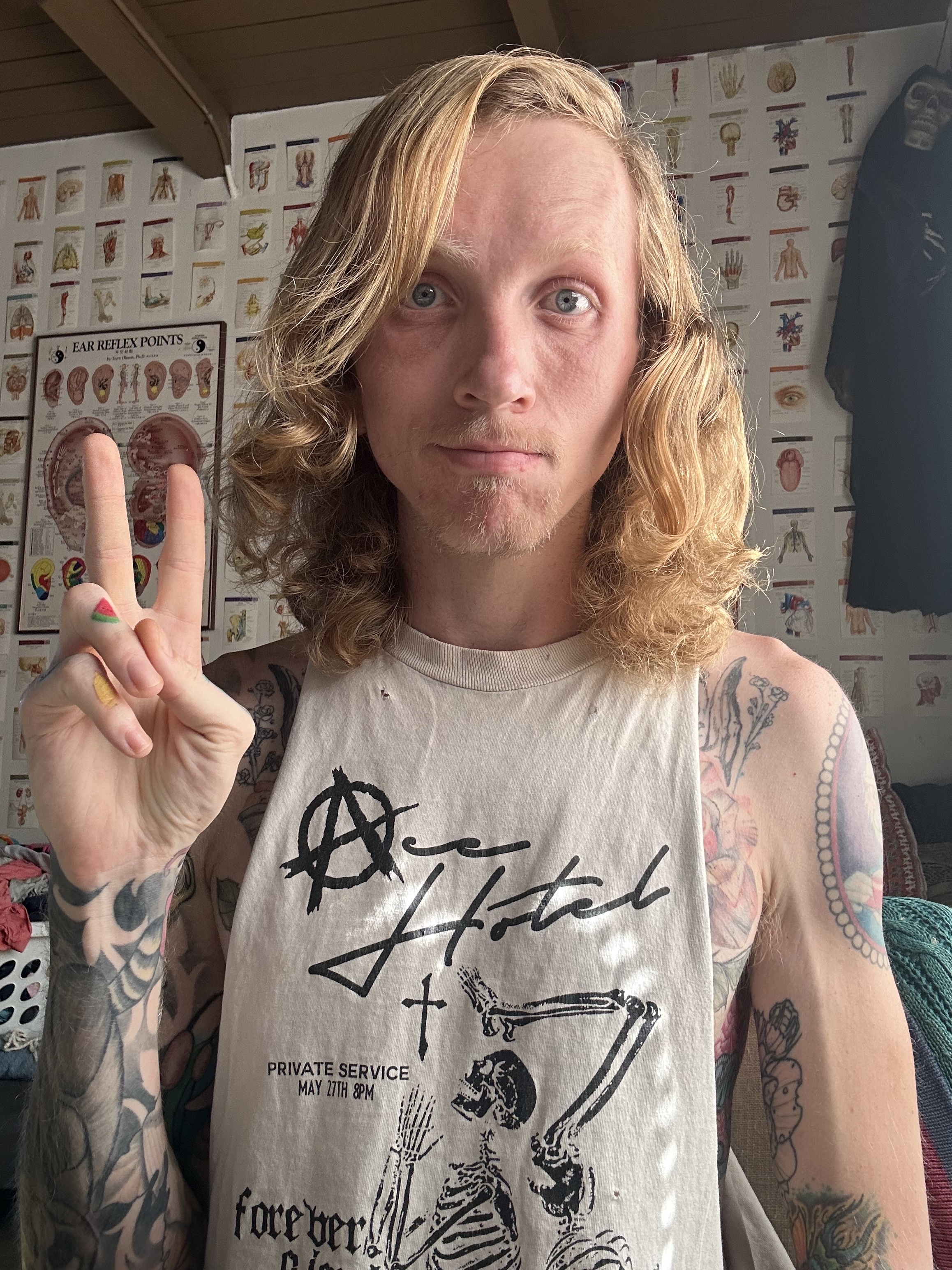
I turn 30 in less than two weeks and I’ve only been in one “relationship.”

I was 19 when I met Greg on Grindr. I understand now that the way I felt about Greg is the way I often feel about intimate partners: We enjoyed each other’s company, I found him physically attractive and I could be physically and emotionally intimate with him, but we lacked that “spark” I so often hear about when it comes to romantic partnerships.

I never had even had a crush on Greg; I just enjoyed his company and was excited to finally be in a relationship, this thing that so many people seemed to be after.

We were together for just shy of three months before he broke it off. Right before we split, my dad asked me if I loved Greg. I struggled with the question because it wasn’t something I had even considered. I wavered for a while before I finally said, “maybe … probably” — less because it was how I felt and more because it seemed like the correct answer.

I’ve tried dating a number of times since, but I could never find that warm, gushy feeling, the romance that I’d heard others describe as they pursued new relationships. I enjoyed talking with new suitors and was sometimes attracted to them, but the idea of being in a romantic relationship felt stifling and inauthentic.

Eventually, I realised I was aromantic, which means having little or no romantic attraction to others.

Romance, like gender and sexuality, can be understood as a spectrum. There are folks who fall hard and quickly, easily developing crushes on others, and there are people like me, who simply don’t gravitate to those feelings easily or at all. I am open to the possibility that one day I will have a crush or fall in love, but so far it hasn’t happened.

Not all aromantic people are asexual. I’m surely not. And aromantic people still have love in their lives; they just get it outside of romantic relationships. My life is full of love from my friends, family, even my intimate partners — it’s just not romantic love, that special bond that’s so difficult to put into words (especially as a person who’s never experienced it).

The fact that I have gone the entire decade of my 20s without being in a traditional romantic relationship is often met with a sense of confusion from my peers. This used to feel alienating, but today I know that it isn’t because of some personal fault. The traditional approach to committed relationships just isn’t for everyone.

Since I still crave physical intimacy and sex, I enjoy having partners I can explore those elements of myself with. But our relationships don’t come with many of the same feelings or tethers that a romantic relationship typically would.

I find it challenging to date in a traditional sense. In my mid-20s, after recognising that I was aromantic, I found the term “quasiplatonic relationship.” Quasiplatonic relationships are not romantic but still involve a close connection, often beyond what we may see in a friendship. They may or may not involve sex.

While these might not look like the “traditional” versions, some aromantic people have long-term partners. Some cohabitate and even get married. Seeking out this kind of relationship was a challenge for me, however. Trying to find another person who was a good fit, and who was also looking for a relationship that wasn’t traditionally romantic, started to feel just as restrictive as shooting for a committed romance.

Over time, the idea of seeking out and being with a single monogamous partner also began to feel extremely limiting. Nonmonogamy wasn’t really a conscious choice I made; rather, it eventually clicked that there was no other option for me. As an aromantic person with different relationship needs than most, having multiple partners who could offer me a number of different things felt most conducive to my identity as I was beginning to understand it.

Eventually, I stumbled upon the phrase “relationship anarchy,” which to me means my relationships have a more fluid structure, without hierarchical differentiation between sexual, romantic and platonic relationships.

After a decade of trying to fit inside one specific box society deemed “correct,” I’ve found solace in stepping outside of it and creating my own box, one that works for me.

Today, I have a number of relationships in which I embrace varying levels of intimacy. Some are mostly physical; others feel more like close friendships. We’re invested in each other’s lives, we hang out together ― some on a regular basis, and others simply when we can make it work ― and sometimes we share physical intimacy. I now understand that I operate best by simply letting things flow and figuring out naturally how a person fits into my life.

This year I started a relationship with a man who is in an open marriage. This dynamic feels comfortable for me, in that we can share a connection without there being broader romantic expectations — we aren’t necessarily aiming for anything bigger. We’re focused on the now, whatever we end up cultivating together. We talk intimately about our lives and goals. We do things that friends would do together. Sometimes we have sex, but it’s not an integral part of our relationship either.

I consider myself single, and I prioritise my relationship with myself first and foremost. After the one with myself, some of the most valuable relationships in my life are those I have with my platonic friends. Most of my spare time goes to my best friend, and my relationship with her often feels the most profound and connected.

As a queer nonbinary person who is attracted to folks of all gender identities, I’ve begun to see the idea that we are all meant to have a single romantic partner in our lives as outdated, part of a rigid cisheteronormative system that exists to uphold traditional family structure.

I don’t want children and I’m not sure I ever want to get married, so for me that concept has often felt fraudulent. There’s nothing wrong with preferring traditional monogamous relationships, but humans are complicated, and the idea that all 8 billion of us should treat relationships in this one limited way ignores how expansive our identities can be. It’s selling our species short to insist we all conform to such stringent guidelines, and it ignores history and culture to claim that this has always been the case.

I currently have no desire to date, as I pretty much have everything I need. I am always open to new relationships, but I don’t have guidelines for what they “need to” offer me. It’s simply up to me and that other person to decide what works best for us.

As I write this essay, I am preparing to fly to my home state of Colorado to celebrate the weddings of two longtime friends. I love to see those I hold close find what they need and affirm it. I think romantic love is beautiful, and I’d love to experience it for myself one day. I also accept that maybe it just isn’t in the cards for me.

I am open about my journey to give others like me, who have struggled with the standard relationship models, permission to venture out and explore their own paths. If there’s one thing my 20s have taught me, it’s that many of the rules and guidelines we have in society are arbitrary. I get so much validation from those in the younger generations who decided early on that they would go their own way, and from older folks who throw away the rulebook they’ve lived by for the majority of their adult lives.

I also admit that I don’t have it all figured out. I’ve settled on a dynamic that works for me today, but I leave myself open to any possibilities that present themselves as I journey through life, rather than comparing my experience to that of others. I can’t wait to see what lies ahead.

Share Button

Britney Spears Reveals How ‘Terrifying’ VMAs Duet With Giant Snake Really Was

Britney Spears is reflecting on one of the most iconic moments of her career.

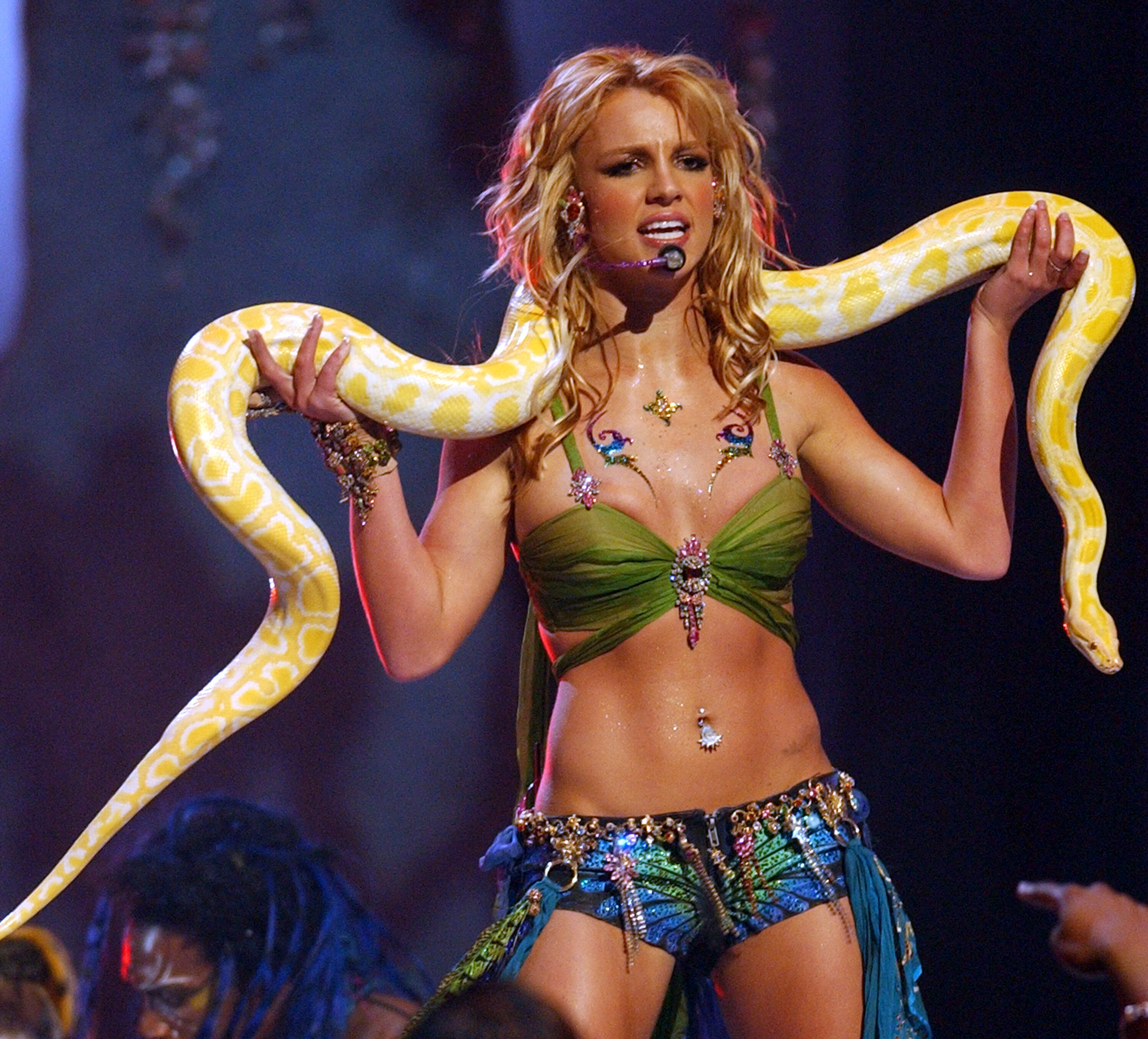
While fans undoubtedly remember her performing “I’m a Slave 4 U” with an albino Burmese python wrapped around her shoulders, Spears shares in her upcoming memoir what that iconic moment at the 2001 MTV Video Music Awards actually felt like — and says it was genuinely “terrifying.”

“The plan was for me to sing ‘I’m a Slave 4 U,’ and we decided I would use a snake as a prop,” writes Spears in an excerpt of her memoir, “The Woman in Me,” published Tuesday by People.

“It’s become an iconic moment in VMAs history, but it was even more terrifying than it appeared,” she continues. “All I knew was to look down, because I felt if I looked up and caught its eye, it would kill me.”

Despite a surprise appearance by Michael Jackson, Spears and her seemingly effortless snake-charming stole the show.

“In my head I was saying, Just perform, just use your legs and perform,” Spears, who was 19 at the time, writes in her memoir. “But what nobody knows is that as I was singing, the snake brought its head right around to my face, right up to me, and started hissing.”

She continues: “I was thinking, Are you fucking serious right now? The fucking goddamn snake’s tongue is flicking out at me. Right. Now. Finally, I got to the part where I handed it back, thank God.”

The snake itself was, hilariously, named Banana.

Her performance appeared effortless to millions, but Spears was genuinely terrified.

Kevin Mazur/WireImage/Getty Images

The moment is clearly visible around the 3-minute mark in official footage from MTV. But die-hard fans won’t have to rely on old recordings for new Spears stories much longer — she is set to candidly dish on her life and career in “The Woman in Me,” which hits shelves Oct. 24.

The millennial pop star has been on an extensive promotional run for the upcoming memoir, which her publisher says will explore “the impact of sharing her voice” in court battles over her controversial conservatorship and how “it changed the course of her life.”

Spears has already shared a handful of illuminating excerpts from the book, writing about the drinking habits of her parents, why she really shaved her head in 2007 — and saying ex-boyfriend Justin Timberlake once urged her to get an abortion.

The audiobook version will be narrated by Oscar-nominated actor Michelle Williams.

Share Button

Robert F Kennedy Jr Is Destroying Donald Trump’s Election Chances, Poll Says

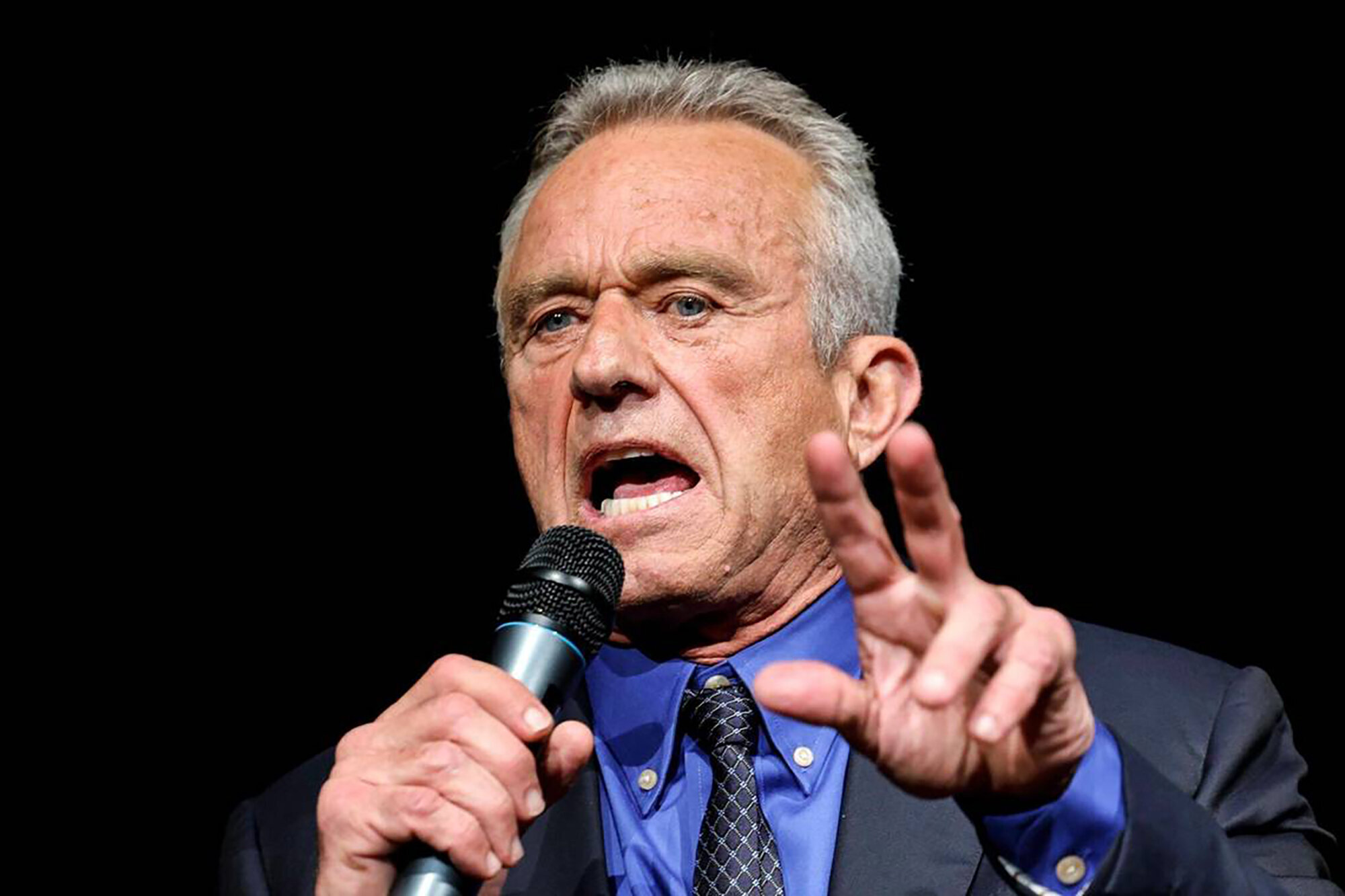
But an NPR/PBS NewsHour/Marist National Poll released on Tuesday offered an early prediction: Biden would beat Trump by 7 percentage points when Kennedy is factored in.

If the election were held today, Biden would snag 44% of the vote to Trump’s 37%, followed by Kennedy’s 16% with 3% undecided, according to the survey.

Kennedy, whose anti-vaccine views appeal to some conservatives, is simply siphoning off more votes from Trump than Biden.

With the political scion on the ballot, Biden loses 5 percentage points among Democrats while Trump loses 10 points among Republicans, according to the poll.

Kennedy, who has received significant air time on Fox News and other conservative outlets, has been denounced by his own family, but come November 2024, he might just end up a darling for Democrats anyway.

“Although it’s always tricky to assess the impact of a third-party candidate, right now Kennedy alters the equation in Biden’s favour,” Lee M Miringoff, director of the Marist College Institute for Public Opinion, said. “What this does speak to, however, is that about one in six voters are looking for another option, especially independents.”

The poll, conducted on October 11 among 1,313 American adults, shows Biden leading Trump by 3 percentage points in a head-to-head contest.

Share Button

Team finds a stem-cell derived mechanism that could lead to regenerative therapies for heart damage

A UCLA-led team has identified an essential internal control mechanism that can promote the maturation of human stem cell-derived heart muscle cells, offering a deeper understanding of how heart muscle cells develop from their immature fetal stage to their mature adult form.

The findings, published in the peer-reviewed journal Circulation, could lead to new therapies for heart disease and cardiac damage.

The collaborative effort with Duke-NUS Medical School in Singapore and other institutions identified an RNA splicing regulator named RBFox1, which was considerably more prevalent in adult heart cells than in newborns, based on a preclinical model. The sharp rise in RBFox1 during the maturation of heart cells was also confirmed through analyses of existing single-cell data.

“This is the first piece of evidence suggesting that RNA splicing control plays a vital role in postnatal heart cell maturation,” said study lead Jijun Huang, who conducted this research during his postdoctoral training in anesthesiology at UCLA. “While RBFox1 alone may not be sufficient to push mature fetal heart muscle cells all the way to fully matured adult cells, our findings uncover a new RNA-based internal network that can substantially drive this maturation process beyond other available approaches.”

The transformation of heart muscle cells from birth until they reach full maturity involves significant shifts in their structure, functionality, and physiological properties. The mechanisms overseeing this comprehensive maturation have been poorly understood thus far.

Although the precise mechanics associating RBFox1-mediated RNA splicing with ensuing maturation procedures and characteristics still require further exploration, the study provides proof-of-concept that modulating RNA splicing can profoundly affect cardiomyocyte maturation. This newfound knowledge hints at future therapeutic applications, pending additional research to expand upon these initial findings.

“For the first time, we’ve shown that by merely altering RNA splicing, we can encourage the significant maturation of heart cells derived from human stem cells,” said senior author Yibin Wang, director of the Cardiovascular & Metabolic Disorders Program at Duke-NUS. “These findings present a potential molecular approach to enhance heart cell maturation, which could address a major challenge in the domains of cardiac regenerative therapy and disease modeling.”

The study was funded by an American Heart Association Postdoctoral Award (18POST33990469) the National Institutes of Health (R01 HL148714, R00 HL141626) and a Department of Defense Award (PR171540).

Study co-authors are Josh Lee, Christoph Rau, Dr. Arash Pezhouman, Tomohiro Yokota, Hiromi Miwa, Tsz Kin Kong, Shreya Udani, Chen Gao, Linsey Stiles, Dr. Orian Shirihai, Dr. Reza Ardehali, and Dino Di Carlo of UCLA and others from Baylor College of Medicine, Vanderbilt University School of Medicine, Meharry Medical College, Forcyte Biotechnologies, the University of Cincinnati, the University of North Carolina, and the Agency for Science, Technology and Research (A*STAR) in Singapore.

Share Button

Founder personality could predict start-up success

The stats don’t lie — the overwhelming majority of start-up companies fail. So, what makes the seemingly lucky few not only survive, but thrive?

While good fortune and circumstances can play a part, new research reveals that when it comes to start-up success, a founder’s personality — or the combined personalities of the founding team — is paramount. The study, published today in Scientific Reports, shows founders of successful start-ups have personality traits that differ significantly from the rest of the population — and that these traits are more important for success than many other factors.

“We find that personality traits don’t simply matter for start-ups — they are critical to elevating the chances of success,” says Paul X. McCarthy, lead author of the study and adjunct professor at UNSW Sydney. “A small number of astute venture capitalists have suspected this for some time, but now we have the data to demonstrate this is the case.”

Personality key to start-up success

For the study, the team, which also included researchers from Oxford Internet Institute, the University of Oxford, University of Technology Sydney (UTS), and the University of Melbourne, inferred the personality profiles of the founders of more than 21,000 founder-led companies from language and activity in their publicly available Twitter accounts using a machine learning algorithm. The algorithm could distinguish successful start-up founders with 82.5 per cent accuracy.

They then correlated the personality profiles to data from the largest directory on start-ups in the world, Crunchbase, to determine whether certain founder personalities and their combinations in cofounded teams relate to start-up success — if the company had been acquired, if they acquired another company, or listed on a public stock exchange.

The researchers found that successful start-up founders’ core Big Five personality traits — the widely accepted model of human personality measuring openness to experience, conscientiousness, extraversion, agreeableness, and neuroticism — significantly differ from that of the population at large.

advertisement


The facets distinguishing successful entrepreneurs include a preference for variety, novelty and starting new things (openness to adventure), like being the centre of attention (lower levels of modesty) and being exuberant (high activity levels).

“The greater presence of these and other personality traits in founders are related to higher chances of success,” says Dr Fabian Braesemann, co-author of the study from the Oxford Internet Institute, University of Oxford.

“We can see how this plays out in many notable examples,” Prof. McCarthy says. “The adventurousness and openness to experience of Melanie Perkins, the assertiveness and confidence of Steve Jobs, the exuberance and energy of Richard Branson, the calm under pressure Jeff Bezos, the discipline and focus of Mark Zuckerberg, and the trustworthiness of Larry Page and Sergey Brin underpin their company’s success.”

Dr. Marian-Andrei Rizoiu, a senior lecturer leading the Behavioural Data Science lab at UTS says: “We used machine learning and a variety of advanced statistical tests to reveal that there is not just one type of successful founder but indeed six types.”

“Our findings clearly show there’s not one ideal ‘founder-type’ personality,”says Associate Professor Margaret (Peggy) Kern, senior author of the study from the University of Melbourne.”Instead, the Big Five personality traits of successful start-up founders, which we can break down further across 30 dimensions, reveal six distinct types: fighters, operators, accomplishers, leaders, engineers and developers.”

While personality is crucial, Prof. McCarthy says many other factors still play a role in the ultimate success of founder-led companies, including luck, timing, and connections.

advertisement


“Startups, especially during their earliest stages, before there’s any demonstrable customer traction rely to a large extent on social proof,” Prof. McCarthy says. “In other words, trust in the founders, which can sometimes present barriers for many groups including women, people who have not worked in tech before, or attended prestigious universities.”

Melanie Perkins, the co-founder of design powerhouse Canva, faced all three of these hurdles in the early days of the company, and was turned down by more than 100 investors before securing the funding they needed to build their product. In an interview, she described herself as “determined, stubborn and adventurous.”

Large, personality-diverse founding teams

The researchers also undertook multifactor modelling to measure the relative significance of personality on the likelihood of success versus other firm-level variables. They discovered a founder’s personality was more predictive of success than the industry (5 times) and the age of the start-up (2 times).

They also found start-ups with diverse and specific combinations of founder types — an adventurous’ leader’, an imaginative ‘engineer’, and an extroverted ‘developer’, for example — had significantly higher odds of success.

“Firms with three or more founders are more than twice as likely to succeed than solo-founded start-ups,” says Dr Fabian Stephany, co-author of the study from the Oxford Internet Institute, University of Oxford. “Furthermore, those with diverse combinations of types of founders have eight to ten times more chance of success than single founder organisations.”

“While all start-ups are high risk, the risk becomes lower with more founders, particularly if they have distinct personality traits,” Prof. McCarthy says. “Largely founding a start-up is a team sport and now we can see clearly that having complementary personalities in the foundation team has an outsized impact on the venture’s likelihood of success, which we’ve termed the Ensemble Theory of Success.”

The researchers say the findings have critical applications for entrepreneurs, investors, and policymakers and can inform thecreation of more resilient start-ups capable of more significant innovation and impact.

“By understanding the impact of founder personalities on start-up success, we can make better decisions about which start-ups to support and help fledgling companies form foundation teams with the best chances of success,” Prof. McCarthy says.

OpenAI cofounder Sam Altman recognised this when he led the storied start-up accelerator, Y-Combinator, observing in a lecture at Stanford University that “cofounder relationships are among the most important in the entire company.”

The findings also have implications beyond founder-led companies, highlighting the benefits of personality diversity in teams. For example, many fields, such as construction, engineering and the film industry, rely on project-based, cross-functional teams that are often new ventures and share many characteristics of start-ups.

“There are lessons here for organisations of all kinds about the importance of having a diversity of personality types in teams, which can lead to stronger performance and impact,” Prof. McCarthy says.

Just as occupation-personality maps derived from data can provide career guidance tools, information about successful entrepreneurs’ personality traits can also help people decide whether becoming a founder may be a good move for them.

“It’s not part of this study, but we estimate 8 per cent of people worldwide may have personality traits that could make them successful founders,” Prof. McCarthy says. “Likely, many are not in the entrepreneurial field right now.

“Identifying these misfits and people in roles unsuited to their personalities will be the focus of some of our follow-up studies.”

Share Button

Nitrous oxide: Laughing gas possession to be illegal in three weeks

Those who repeatedly misuse nitrous oxide will face up to two years in prison, the Home Office said.

Share Button

Experts call for tighter limits on ‘forever chemicals’ in water

A group of leading scientists have said the current levels of PFAS could be damaging to human health.

Share Button

Strokes: Offer patients three hours a day of rehab, NHS urged

Experts welcome the recommendation but ask if it is feasible for such a stretched health service.

Share Button

Mimicking a bird’s sticky spit to create cellulose gels

Using a small bird’s nest-making process as a model, researchers from North Carolina State University have developed a nontoxic process for making cellulose gels. The freeze-thaw process is simple, cost-effective, and can create cellulose gels that are useful in a number of applications, including tunable gels for timed drug delivery. The process also works with bamboo and potentially other lignin-containing plant fibers.

Cellulose is a wonderful material for making hydrogels — which are used in applications ranging from contact lenses to wound care and drug delivery. But creating hydrogels from cellulose is tricky, and often the processes used to create the hydrogels are themselves toxic.

“Normally, you have to first dissolve the cellulose and then induce it to crosslink or form the structure of interest, which often requires the use of difficult to handle, unstable, or toxic solvents,” says Lucian Lucia, professor of forest biomaterials and chemistry at NC State and co-corresponding author of the work.

Enter the Swift family of birds — small birds who use their saliva to hold twigs in place when building their nests.

“My then Ph.D. student Zhen Zhang noted that when birds do this, the saliva acts like a natural resin that holds the nest together and encourages the fibers within the nest to interconnect or crosslink,” Lucia says. “Which is exactly what we want the dissolved cellulose to do when making hydrogels. So we asked ourselves, ‘what if we mimic the birds?'”

Zhang, currently a postdoc at Texas Tech University, is a co-corresponding author.

The researchers added a water soluble cellulose called carboxymethyl cellulose (CMC) to an acid solution and dissolved the CMC. Then they added powdered cellulose fiber to the solution and subjected it to four rounds of freezing and thawing. The result was cellulose gel.

advertisement


“Think of it as adding a thickener to water, like you would a pie filling,” Lucia says. “By changing the pH of the CMC, the water essentially becomes sticky. Freezing and thawing the solution causes the cellulose to compact and interweave itself into the sticky network, giving you a more organized structure, just as Swifts do when they create their nests. Only we don’t have to use beaks and saliva to do it.”

Freeze drying the gels resulted in cellulose foam. The researchers repeated the process with bamboo fibers as well, which suggests that it could be useful with many other lignin and cellulose containing fibers.

“The cellulose gels are robust, stable at room temperature and can be tuned to degrade on a schedule, so would be useful in drug delivery applications, among others,” Lucia says. “This opens a promising new window for using biomimicry to process these insoluble cellulosic materials in a greener way.”

The work appears in Advanced Composites and Hybrid Materials. Noureddine Abidi of Texas Tech University is a co-corresponding author of the work.

Share Button

Big Brother Just Confirmed A Major Tweak To This Week’s Nominations Ahead Of Second Eviction

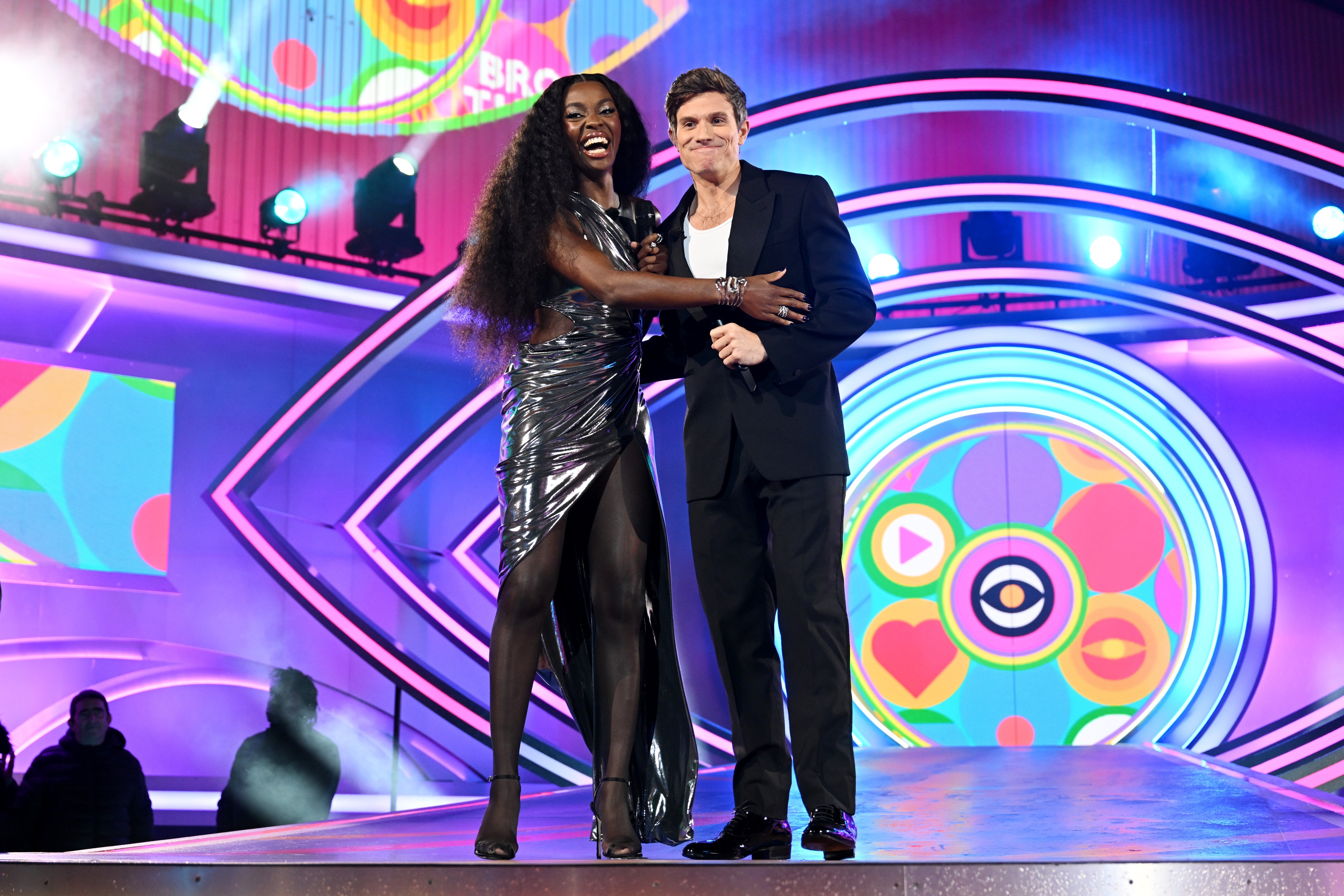
Big Brother is set to introduce a big change to the nominations process this week, ahead of the show’s second eviction.

Following a five-year hiatus, the reality series returned to our screens earlier this month, after landing a new home on ITV2.

Last week saw Farida become the first contestant to be evicted from the newly-revamped house, after all 16 of the new additions each nominated one housemate they wanted to face the public vote.

For this weeks’ eviction, however, Big Brother has announced they will rever to the show’s original format, which will see housemates nominate two of their counterparts to face being evicted.

Nominations will be made on Tuesday (17 October), before viewers learn the results on Wednesday, at which point they’ll be given their say on who stays and who goes.

The results of the vote will air during this Friday’s live eviction.

Big Brother hosts AJ Odudu and Will Best

James Veysey/Shutterstock

Meanwhile, since Big Brother’s return to screens earlier this month, fans have been wondering whether a Celebrity Big Brother will soon follow suit.

Fans were delighted to see reports in the media outlet Broadcast claiming that ITV is, indeed, set to revive the celebrity version of the reality show next year.

The last instalment of Celebrity Big Brother aired in 2018, sparking controversy when Roxanne Pallett falsely accused housemate Ryan Thomas of deliberately punching her in the ribs, despite cameras showing this was not the case. She later issued an apology and expressed her regret.

Ryan, who played Jason Grimshaw on Coronation Street, ultimately went on to win the series.

Big Brother first premiered in 2000, with Davina McCall, Brian Dowling and Emma Willis on presenting duties over the years before AJ Odudu and Will Best stepped into the role for the revamped series.

Big Brother airs from Sunday to Friday at 9pm on ITV2.

Share Button