For five decades, psychologists Dr John Gottman and Dr Julie Schwartz Gottman of the Gottman Institute (GI) have studied couples and the issues that affect them.
This experience led them to develop their “four horsemen” theory of divorce, which found evidence to suggest that criticism, contempt, defensiveness, and stonewalling usually precede separation.
Advertisement
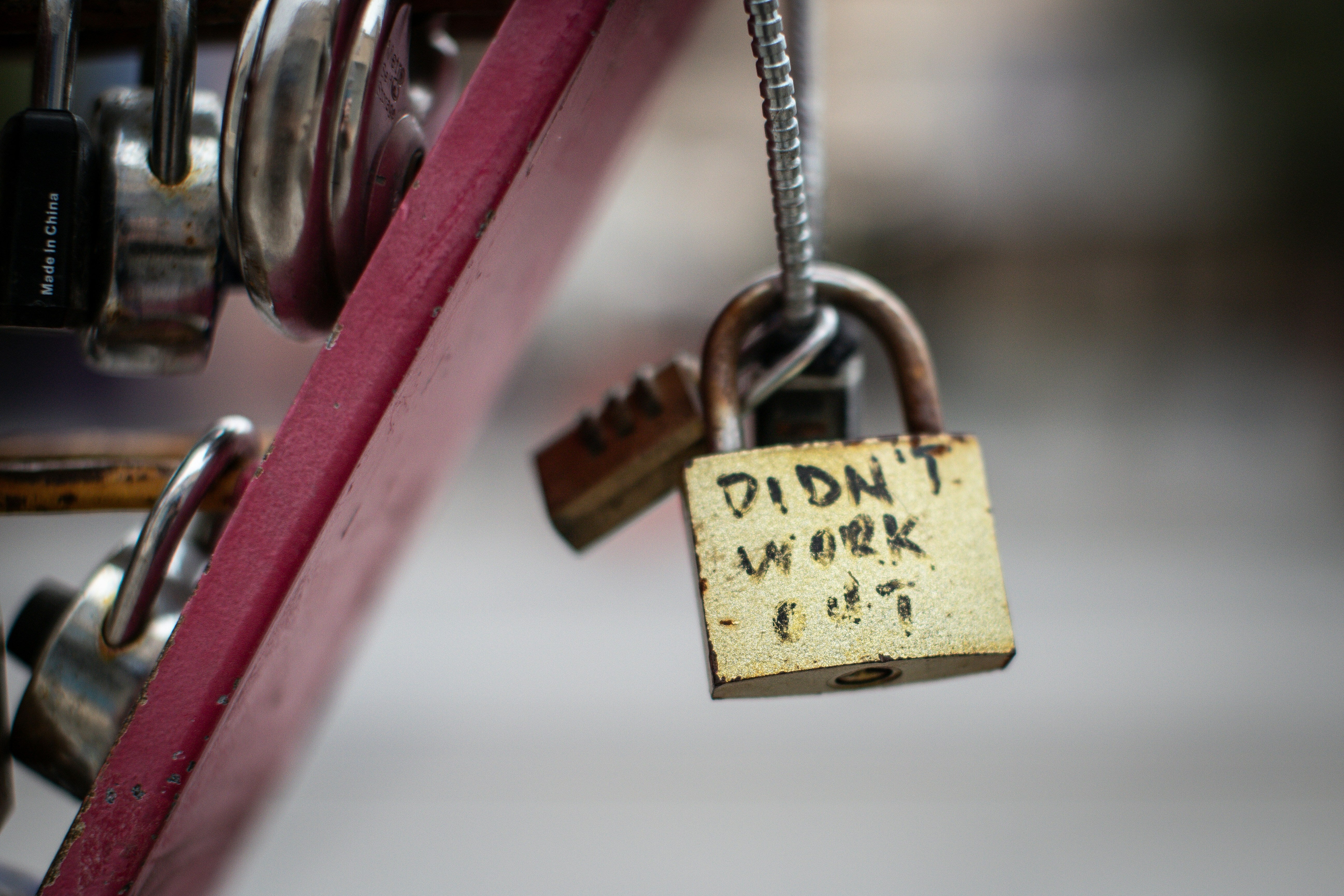
Their research also showed that couples’ problems tended to split into three groups: solvable problems and perpetual problems.
Working out which one you and your partner are arguing about, the GI says, can help you identify the kinds of resolution you need.
What are solvable problems?
Solvable problems come about due to situational issues that don’t feel integral to a person’s character. That might mean one person is taking on the lion’s share of the housework, or you might disagree on a specific issue with your child.
Advertisement
GI notes that solvable problems in one couple might be perpetual problems (more on those later) for another. But the difference is in how the pair feels about it: “The conflict is simply about that topic, and there may not be a deeper meaning behind each partner’s position”.
Happily, solvable problems can usually be, well, solved through conversation and careful planning.
Maybe you can assign certain household domains to one another, for instance, or agree to compromise on where to spend Christmas.
Advertisement
What are perpetual problems?
These make up most (69%) of the arguments, the psychologists found.
Perpetual problems are ongoing differences or misalignments that are fundamental to you or your partner’s needs or lifestyles. For instance, maybe your beau values the financial benefits that can come with working hard over a fulfilling work-life balance.
So, you two might keep having what seems like the same argument about late nights and missed dinners.
Because they reflect core parts of each member in the relationship, perpetual problems will recur. If you like to see your family twice a week and they need more “me” time, compromise might leave both parties feeling like they’re denying a big part of themselves pretty regularly.
Advertisement
In this case, the goal should be to “establish a dialogue about the perpetual problem that communicates acceptance of your partner with humour, affection, and even amusement”.
Identify the drive, identity, belief, or “dream” behind each of your behaviours: this can make discussing the problem easier. Ask your partner to do the same, and try to get curious about their feelings instead of trying to “solve” the issue: this can create a healthier dialogue.
This will be an ongoing conversation, so try to get good at – and respectful in – having it.
During my senior year of college, I dated a boy who was tall, dark-haired, and smoked a lot of weed. (If I’d had a checklist, those would have been the boxes on it at the time.)
We talked easily, about everything from medieval art to music, and I found his lanky limbs and soulful eyes very appealing. But despite how much we enjoyed each other’s company, both in bed and out of it, I didn’t, fundamentally, feel anything. If he’d told me he never wanted to speak to me again, I wouldn’t have cared, except that I’d have needed to get my weed from someone else.
That’s when I came up with the theory of the third thing.
The premise is that there are three things that make you fall for someone. The first is a physical connection. The second is an intellectual connection. And then there’s the third thing… whatever mysterious ingredient makes you imagine a future together. My friends and I spent hours sitting on the floor of my dorm room, listening to Matchbox 20 and drinking diet Snapple with vodka, trying to unravel what the third thing could be.
Advertisement
I was a good student. I was naturally shy and awkward, but I was also used to thinking things through and figuring them out. In middle school, I’d analysed my classmates’ social interactions, realising that when someone told a story about themselves, you were supposed to respond with a story on a similar topic.
In high school, I’d made a checklist of all the things I needed to do to be cool (start reading Seventeen magazine, stop walking around with a book in front of my face, keep gum in my backpack and offer it to my classmates after lunch).
In college, I’d turned my attention to boys. It was easy to kiss them on sticky bar dance floors and meet them for coffee dates at the student centre. But I wanted to fall in love, and I wasn’t sure how to do it. If I could figure out the third thing, then I’d know the formula. I’d know how to find someone who I was really excited about.
Advertisement
I dated regularly throughout my 20s, but nothing lasted. Then, following another breakup, I found myself spending a lot of time on the phone with my friend Dan. We’d dated briefly when we first met years before on study abroad. He was awkwardly, gawkily handsome, and was one of the smartest people I’d ever met, dropping references to Byzantine emperors into casual conversation. However, at that time, there just wasn’t that third thing.
Then, suddenly, eight years later, there was. I wasn’t sure what had changed. I still didn’t know what the third thing was, but something was different, even if I couldn’t identify it. For years we’d just been friends – albeit friends who drunkenly made out occasionally when we ended up in his car together late at night. And now we were spending all our time thinking about each other. How had this happened? And what were we going to do about it?
As it turned out, we were going to get married. Three years later, we found ourselves holding hands and saying vows in a historic library in Providence. We ate cupcakes, drank prosecco, and spent the night dancing with our friends and family among the stacks. It was the happiest day of my life; I’d found a smart, handsome man whom I loved, and who loved me. We had chemistry; we could spend hours talking, and most importantly, we had the third thing. I felt like I’d gotten exactly what I wanted.
Advertisement
Except that after 10 years of marriage, it wasn’t what I wanted anymore. Dan’s brooding moroseness, which I’d found appealing, had begun to seem whiny. My quest for self-improvement, which he’d found admirable, had begun to seem exhausting. It had started to drive me crazy that he sang to himself. It had started to drive him crazy that I left the cupboard doors open. These were things that we’d lived with for years. They hadn’t been a problem. And now, suddenly, they were, and I wasn’t sure why.
There were other, bigger issues. We were politically divided. We wanted to spend our time in very different ways. My marriage didn’t end just because we no longer had the third thing. But that was part of it. We were still attracted to each other. We still talked about everything as easily as we always had. But we no longer had that ineffable thing that made us feel romantic about each other.
We tried. We left our son with his grandparents over the 4th of July weekend, went to a local brewery for IPAs and pepperoni pizza, shared a joint and had sex in front of a mirror. We sat side by side, feeling miles away from each other, and watched fireworks explode into distant sparks of light. We went to two different couples’ therapists. They gave us worksheets. We did the worksheets. We still didn’t love each other anymore.
Advertisement
The hardest thing about the end of the marriage wasn’t the loss of the present. At the time, we were sleeping on separate floors of our old suburban house, trying not to touch when we passed each other in the stairway. But in my imagined future, we were going to be one of those elderly couples who travelled around the country in an RV, who went to see independent films and had season tickets to the local symphony. We were going to sit side by side at our son’s graduation, and when he crossed the stage, unimaginably tall but still wild-haired and bright-eyed, we were going to squeeze each other’s hands.
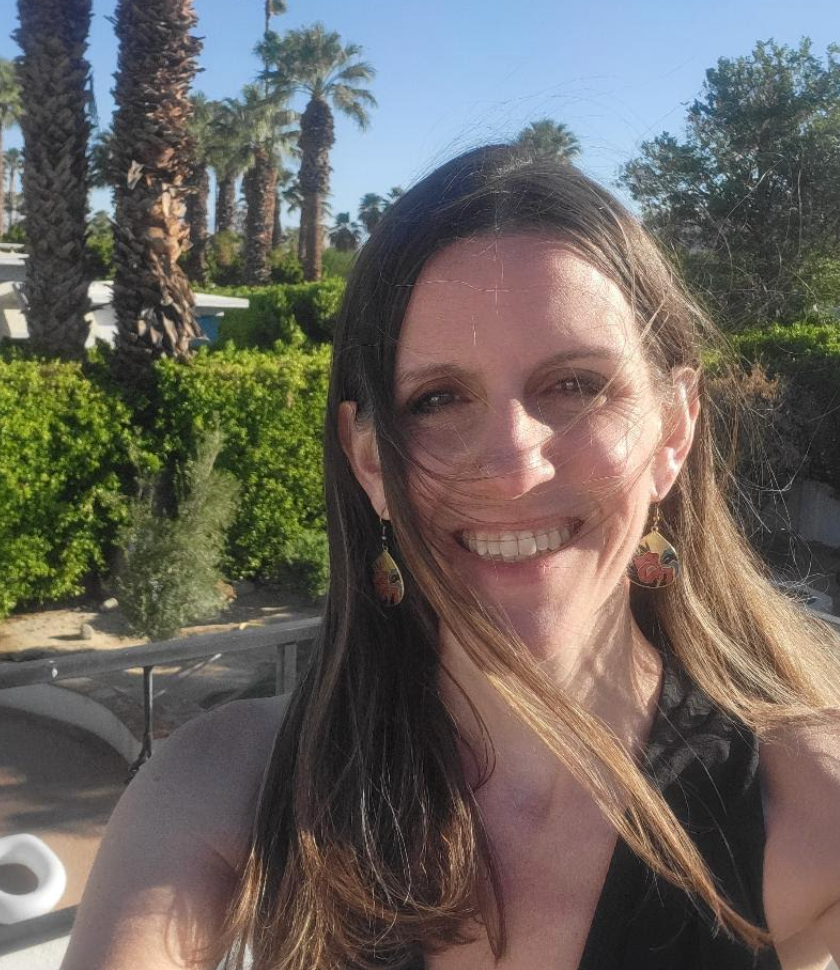
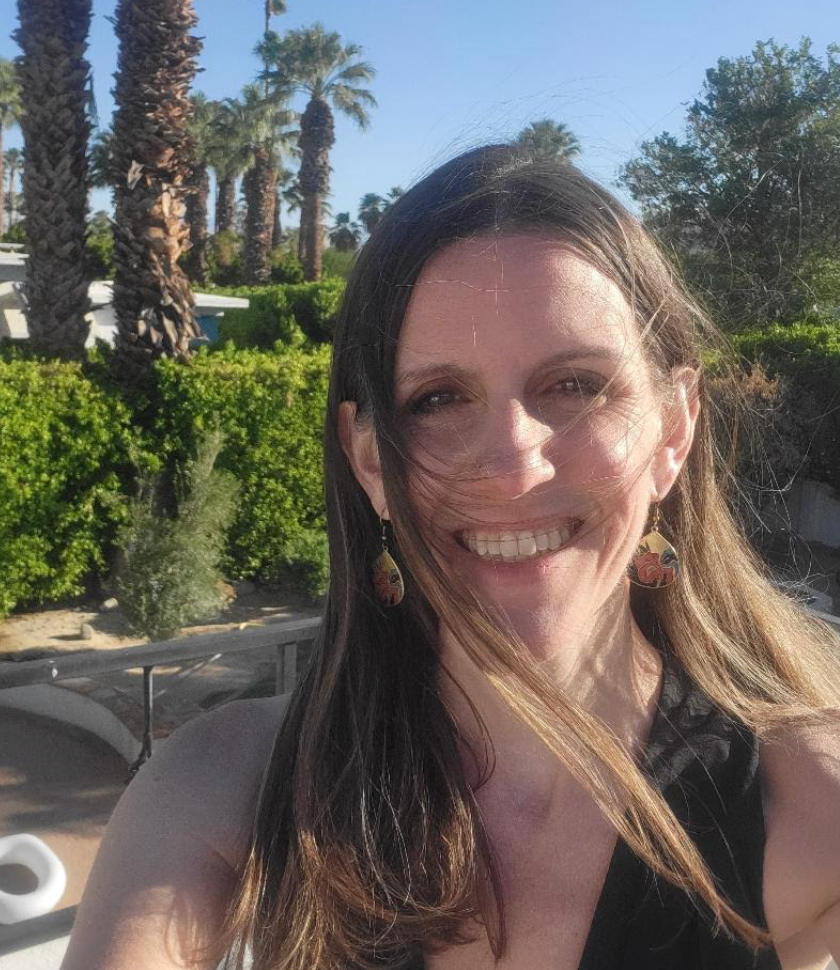
Courtesy of Lia Romeo
The author on vacation in Palm Springs.
Instead, I was single and dating again in my 40s. From everything I knew about ageing while female, I figured that dating at that age would be some kind of barren wasteland. Instead, I discovered that the apps had come along and made it easy. I could go on a date with someone new every night if I wanted, and for a while I did. I was doing things I thought I’d never do again, like kissing strangers at the entrance to the subway. And for the first time, I was dating women, which was something I’d always wondered about. When I was younger, I’d gone from one man to another, and suddenly I wondered if maybe the reason I’d had trouble figuring out the third thing was that I didn’t want to be with a man. Maybe my newfound queerness held the answer I’d been seeking.
Advertisement
I started dating a beautiful woman with long blonde hair, tattoos and a sweet smile. We sent each other passages from books, we talked about theatre, we spent hours making out. Still, despite how much we enjoyed each other’s company, both in bed and out of it, there was no third thing. We were mutually unserious, and after a few months things came to an end.
I think someday I’d like to fall in love again, but I’m also terrified because I’m finally coming to understand that there isn’t a formula. I’m realising that the third thing is different at different times, or for different people. That it’s something that can appear out of nowhere… and can disappear, too. That sometimes love just goes away, and if I find it again, it might go away again, no matter how hard I try not to let that happen.
I’ve finally figured out that I might never figure it out. If the third thing comes my way again, it’s just going to be because I’m lucky. I can’t control whether I find it; I can only control whether I’m brave enough to say yes to it. I don’t know whether I will be.
Advertisement
For now, I write, I teach and I worry about the world, and I watch my son use Magna-Tiles to build rainbow castles reaching up towards the sky. Sometimes I swipe right on strangers, and meet them for hikes or cups of coffee. I walk my dog around the neighbourhood in the spring and watch the crabapples bursting into improbable, extravagant bloom. The flowers drift down from the trees as I walk underneath them. I reach out my hands to catch them, and I end up empty-handed, but later, when I get home, I find myself picking delicate pink petals out of my hair.
Lia Romeo is a playwright, essayist, novelist, and screenwriter. Her plays have been produced off-Broadway, as well as regionally and internationally, and her essays have appeared in the Washington Post, the New York Times, and other national publications. She is currently at work on a screenplay.
Three years ago, I stood beside my husband Al’s bed and prepared to say goodbye.
After 25 years of marriage, cancer was taking him where I could not follow. Before he died, he looked at me and said something that shocked me at the time.
“Diane, you’ll need another man.”
I immediately dismissed the idea. I was 80 years old. I had already experienced a full life. What on earth would I need another man for? I certainly wasn’t looking for one.
Advertisement
Then life did what life often does. It ignored my plans.
Just a few months after Al died, friends introduced me to a man named Bob. I welcomed it because I was experiencing what I later discovered, after many late-night Google searches, was called “widow’s fire,” a fierce longing for intimacy and closeness after losing a spouse that, despite being surprisingly common, few people talk about.
Some people, including some of my children, thought it was too soon for me to begin dating. But grief doesn’t follow a timeline.
I wasn’t looking to replace Al. No one could. But for 25 years of marriage, I had been part of a pair. Suddenly, I was standing alone. The silence and loneliness were overwhelming.
Advertisement
What I realised was that I didn’t want to spend the rest of my life alone. I wanted companionship, laughter, conversation and, yes, physical attraction. And to my surprise, I found that in Bob, a kind, funny and handsome man who understood that loving him didn’t mean I loved Al any less.
Bob and I have been together for more than two years. We are deeply committed to one another, but marriage isn’t part of our equation. At our age, we’ve learned that relationships don’t need to look a certain way to be meaningful. What works for us is love, honesty and a healthy dose of practicality.
That practicality was put to the test recently when Bob and I embarked on a 22-day adventure through Norway, France and Spain. With me at 82 and Bob at 83, travelling halfway around the world requires a little more planning than it did a few decades ago.
Advertisement
Before we left, I sent an email introducing my daughter and son-in-law to Bob’s brother and sister. Not because we were planning a family reunion. Because we were 82 and 83 years old and about to cross an ocean together.
“Should we get lost along the way and need your assistance,” I wrote, “you now can connect with one another and try to retrieve, grieve or rejoice from our far distant travels.”
I also informed everyone that I had travel insurance in case my body needed to be shipped home and that Bob had thoughtfully prepared his own end-of-life arrangements. My children thought it was hilarious. Bob’s family may have thought I was crazy. They’re not entirely wrong.
Advertisement
But if you’re going to travel the world in your 80s, you learn to laugh about the realities that come with it. Like money. People don’t like talking about finances in matters of romance, but they should.
In our case, I happen to have a larger wallet than Bob. Before we left, we talked openly about expectations. I agreed to pay for the trip itself, including the airline tickets. Bob was perfectly willing to fly economy. I was perfectly unwilling to sit in first class without him. The good Lord knows I’m spoiled, and I wasn’t going to be up front sipping champagne while the man I loved was squeezed into seat 34B. Besides, I like him next to me.
We agreed that he would cover many of the extras along the way, including meals, excursions and spontaneous treats. There were no complicated contracts. Just two adults having an honest conversation.
Advertisement
Widowhood taught me many things. Like I wish more people understood that discussing money isn’t unromantic. Avoiding it is.
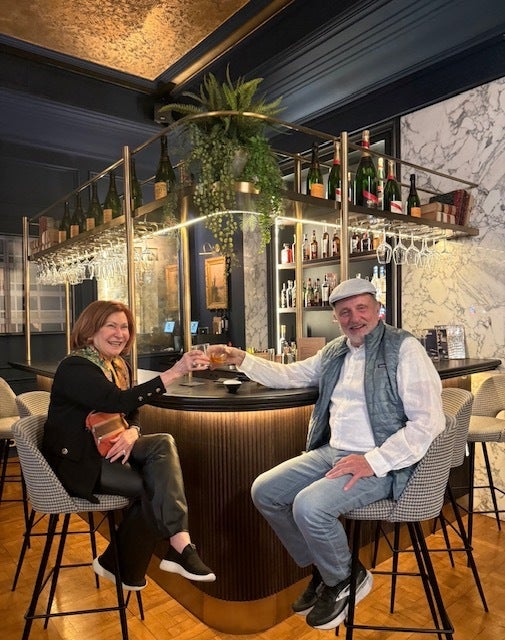
Photo Courtesy Of Diane Heiler
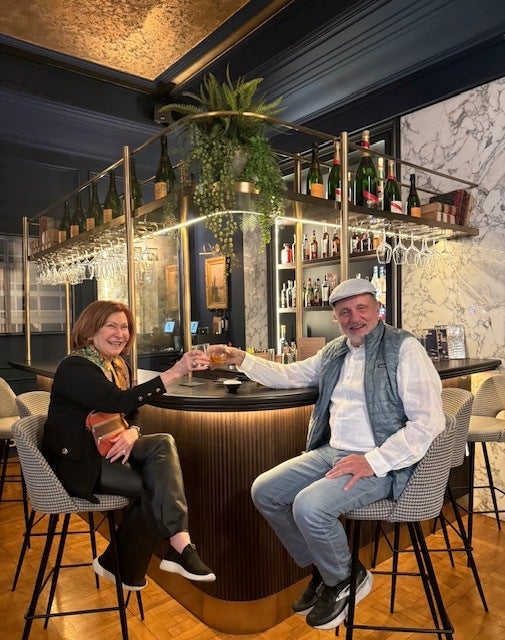
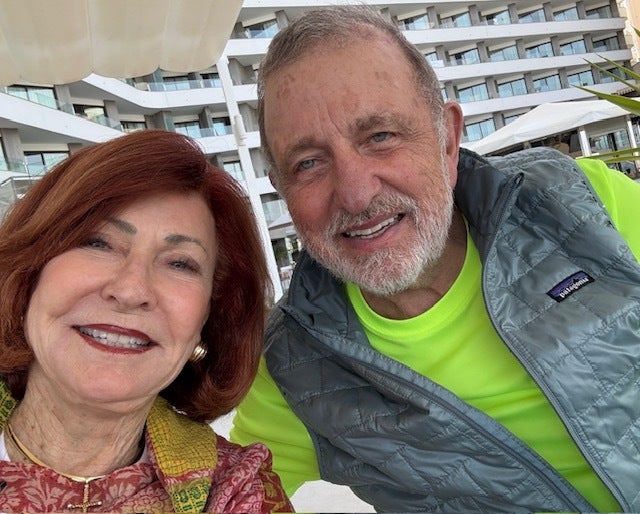
The author and Bob ending a long day at the hotel bar with their favorite drink, Old Fashioneds.
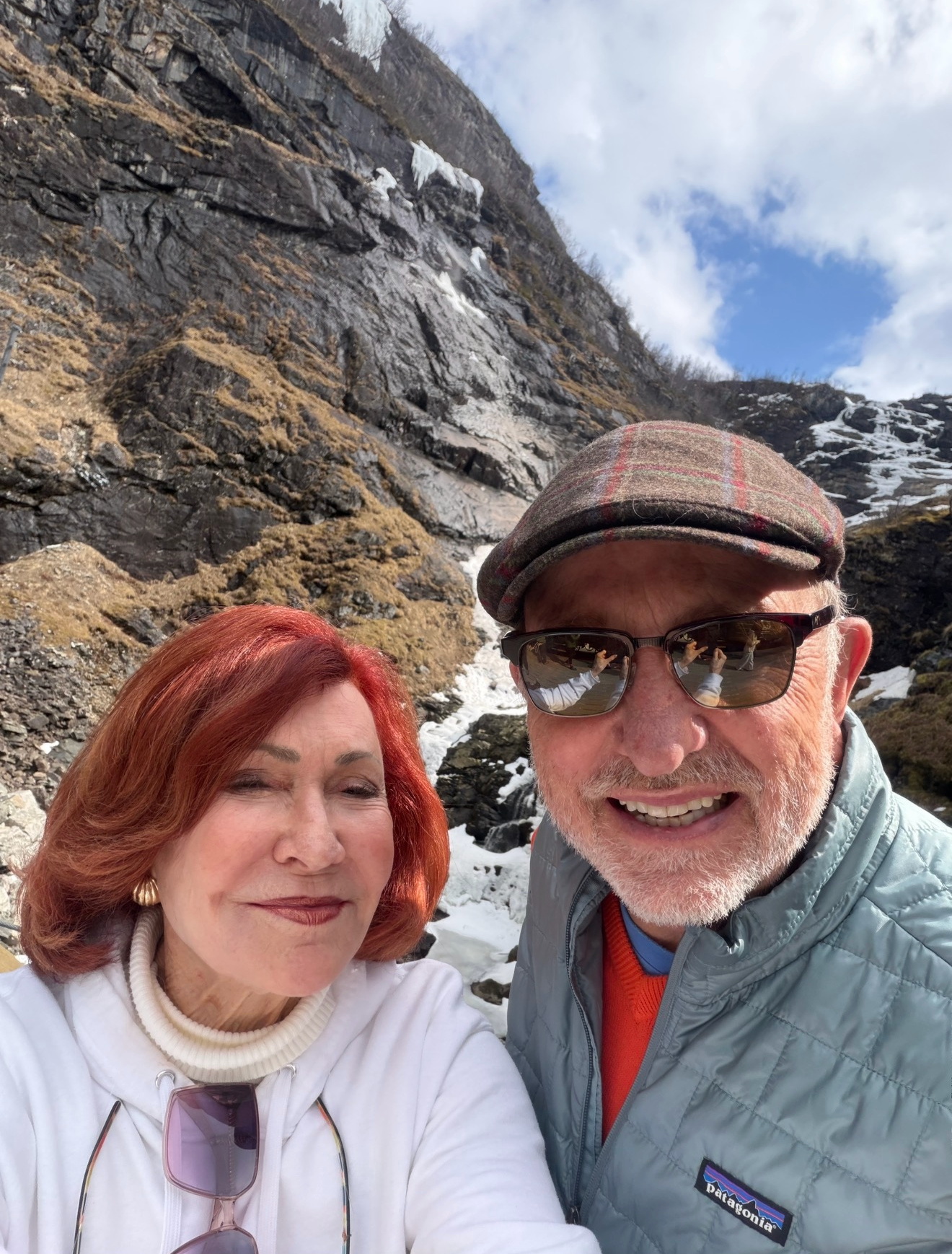
The trip itself became a lesson in something even bigger. Standing in Norway, surrounded by glaciers that looked as though they belonged on another planet, I found myself thinking about Al. He loved to travel.
Advertisement
The glacier train rides were breathtaking. The scenery was so beautiful it almost didn’t seem real. It was colder than a witch’s teat but magnificent. Al and I had never made it to Norway together, and I couldn’t stop thinking about how much he would have loved it.
Unexpectedly, I didn’t feel guilty. For a long time, widows are made to feel that happiness somehow betrays grief. It doesn’t. Missing Al and loving Bob can occupy the same space. Both things are true.
Bob understood that. He never tried to compete with my memories. He simply stood beside me while I carried them. That’s one of the many reasons I love him.
Advertisement
Norway also introduced me to two things I never expected: iced cider and brown cheese.
The cider was delicious.
The cheese was downright addictive.
I liked it so much that I packed half a pound of it in my suitcase and hauled it through France, Spain and all the way back home to Florida.
At 82 years old, apparently, I travel internationally with contraband cheese.
Photo Courtesy Of Diane Heiler
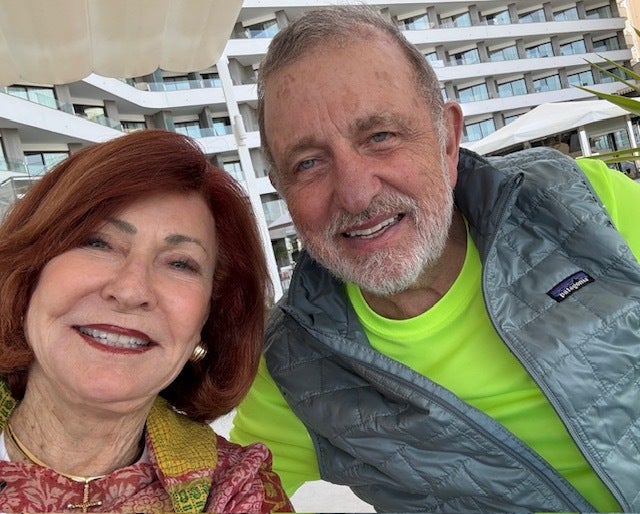
The author and Bob sailing on a catamaran through Sognefjord, Norway’s largest and one of its most breathtaking fjords.
Then there was Bergen.
The minute we arrived, I announced to Bob, “I could live here.”
It had everything I love: beauty, charm, walkability and friendly people. We spent our days wandering old streets, taking in spectacular views and pretending, just for a moment, that we belonged there.
Advertisement
Next came France.
Of all the places we visited, Normandy affected me the most.
Standing among the endless rows of white crosses at the American Cemetery overlooking Omaha Beach, I felt humbled in a way that is difficult to describe.
The older I get, the more familiar loss becomes. Friends die. My spouse died. Parents die. Even pieces of ourselves disappear. The woman I was at 40 no longer exists. Neither does the woman I was before widowhood.
Yet there I was, halfway around the world, still creating memories. Still laughing. Still planning. Still living.
Advertisement
Spain brought its own lessons.
I use wheelchair assistance because of a painful foot. Bob uses a cane. Airport assistance services managed to leave us at the wrong gate on two separate occasions, causing us to miss our flights.
After missing our second flight, I told Bob I could have learned to become a professional tango dancer in less time than it took airport personnel to move my behind through that airport. For two days we were shuffled from gate to gate while trying not to lose our sense of humour. Thankfully, we succeeded.
By the time we reached Mallorca after nearly three weeks abroad, we realised something. We may have been tourists, but we didn’t particularly want to be around tourists anymore.
Advertisement
Maybe we were tired. Maybe we missed our own beds. Or maybe we had officially become old people. Either way, home was sounding awfully good.
Traveling at 82 also comes with one unexpected advantage: I no longer care about impressing anyone.
Photo Courtesy Of Diane Heiler
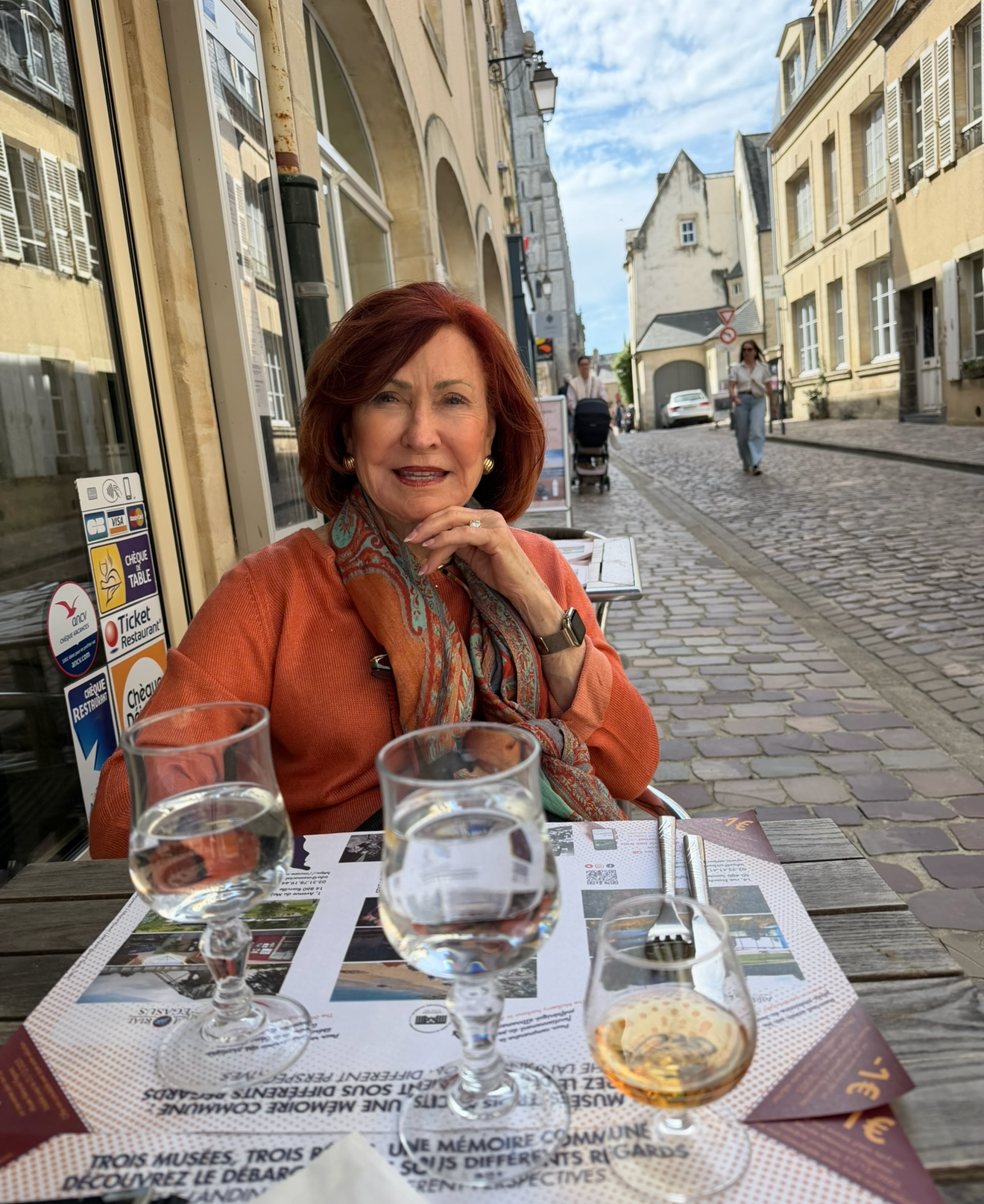
The author having a delicious meal at Le Marsala in the heart of beautiful Bayeux, France.
When I was younger, I packed as though every day required a completely different outfit, matching shoes, jewellery and accessories. These days, I pack for comfort, practicality and the occasional nice dinner.
Advertisement
For 22 days abroad, Bob and I shared one checked suitcase, and we each carried a small bag. It wasn’t because we were trying to prove anything. It’s simply that we’ve learned what matters and what doesn’t.
I’ve discovered that one scarf, one pair of comfortable shoes and a little confidence can carry you remarkably far. That’s one of the gifts of ageing. You spend less time worrying about how you look and more time enjoying where you are.
At this age, I’ve learned that nobody really cares what you’re wearing, whether your hair is perfect or if you’ve packed the right shoes. What people remember is whether you laughed, loved, showed up and enjoyed the journey.
Advertisement
And that’s true whether you’re standing on a glacier in Norway, wandering the streets of Barcelona or simply sitting beside a koi pond at home with someone you love.
The greatest surprise of the trip wasn’t Norway’s glaciers, Normandy’s history or Barcelona’s architecture. It was realising how comfortable I have become with this unexpected chapter of my life.
If you had told me three years ago, while I was sitting beside Al’s hospital bed, that I’d be crossing Europe with another man, I would have told you that you were out of your mind.
Advertisement
If widowhood has taught me anything, it’s that we don’t honour those we’ve lost by stopping our lives. We honour them by continuing to live them.
When Al died, I thought my story was winding down. Instead, it simply changed genres.
Photo Courtesy Of Diane Heiler
The author and Bob enjoying a drink by their hotel’s pool, overlooking the beautiful yacht basin in Mallorca.
These days, I’m perfectly content sitting beside that pond with Bob discussing books, sports, grandchildren, politics or whatever we’re streaming on Netflix. Twenty years ago, I would have called that boring. Now I call it happiness.
Advertisement
One of the most damaging myths about ageing is that life becomes smaller. I’ve found the opposite. Life becomes more precious. At some point, every one of us realises our time is finite. The horizon becomes visible. Oddly enough, that’s what makes each day matter more.
At 82, the future looks different than I imagined. It includes a new love. A few more aches and pains. Occasionally a wheelchair. And gratitude for every single day I still get to wake up and see what comes next.
Al knew all this before I did. He knew I would need companionship. He knew I would need laughter. He knew I would need someone to sit beside me on airplanes and hold my hand during life’s inevitable turbulence. Most of all, he knew I would need a future.
Advertisement
As it turns out, he knew me better than I knew myself.
Diane Heiler is the author of “A Widow’s Fire: An Intimate Memoir of Heartbreak, Survival and Moving On.” Widowed in 2023 after caring for her husband through his battle with cancer, she writes about grief, resilience and finding joy again after profound loss.
A parent has sparked debate over their choice to address their son’s sexuality with him directly – after finding out he had been romantically involved with another man.
The 62-year-old said their wife died a decade ago and, in her absence, he’s tried “to be a more nurturing presence for my kids”.
Advertisement
When attending church, he found out through a friend that his son, who’s in his twenties, had become romantically involved with another man.
“At first I was just surprised, but after I digested the news I was concerned that he clearly didn’t feel able to share this important part of his life with me,” said the parent in a Reddit post.
“We live in a more conservative part of the US and I am an active churchgoer, and we had never really discussed sexuality as a family. As such, I was concerned that he thought I would disown him or something: when in reality, I just love him and want him to find the happiness I had with his mother, whatever form that takes.”
Advertisement
Rather than wait for his son to approach him about it, he decided to address it directly with him, “so he knew I loved and supported him and he didn’t have to worry about telling me”.
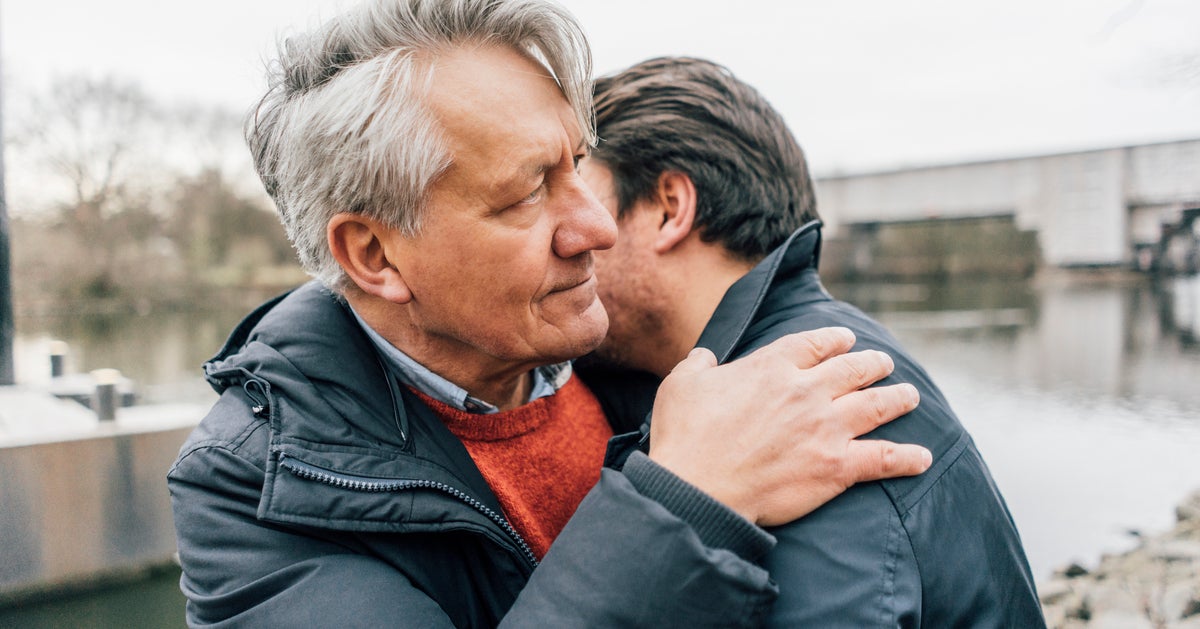
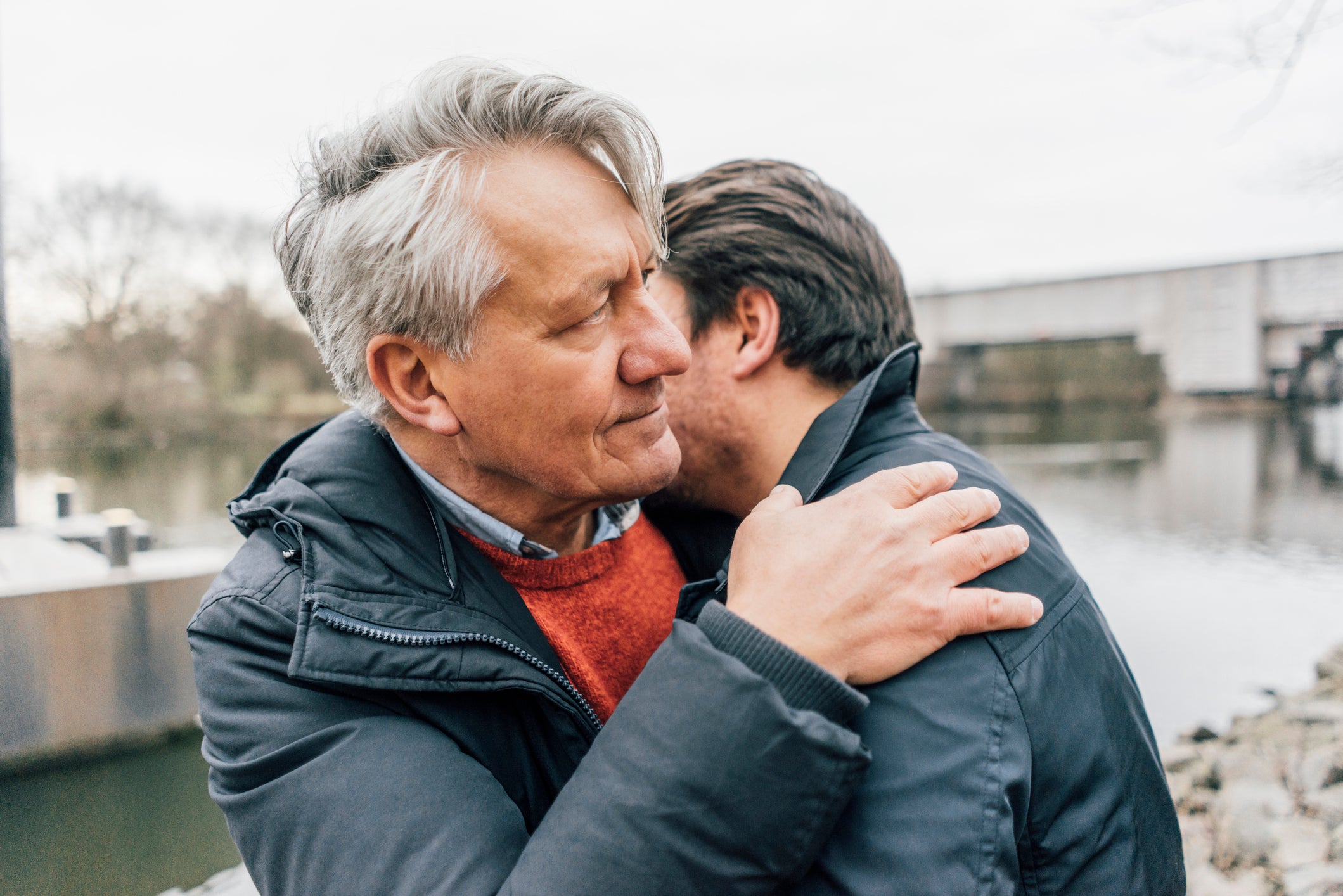
“I invited him over for a beer, told him what I knew, and expressed as best I could that it wasn’t something he needed to hide from me,” said the parent, who noted that after his son’s initial shock, he hugged him and told him he appreciated it.
Advertisement
“I felt like the conversation went well and I was closer to him,” he added.
The story doesn’t end there however, as when his daughter found out what had happened, she told him he’d made “a big mistake” and warned that he’d “robbed” his son of the opportunity to come out in his own time.
“I really didn’t get the impression my son felt that way about our conversation, and she didn’t hear from him that he feels that way, but she says it’s obvious he’d be upset,” said the parent.
“So now I’m wondering if I’ve been an asshole telling him I knew? And if so, what I should do next?”
Was he in the wrong to approach his son about this?
Society’s default setting is often to assume someone is heterosexual, which means anyone who isn’t might feel they have to “come out” and share their sexuality with others. This can bring with it a range of emotions, including fear and anxiety, but also relief and excitement.
Advertisement
Whether someone comes out or not is their own personal choice – and they shouldn’t feel the need to do this before they’re ready.
That said, some have praised the father for how he handled this scenario.
One Redditor said: “Personally, as a lesbian who has really religious parents who I was terrified to come out to, I think what you did was lovely.”
Gay men also commented to say he “did good”. One person replied: “Gay here. NTA [not the asshole]. Robbing someone of coming out? That’s like robbing me of being drunk driver hit with a car. You didn’t rob anything. You did a great thing.”
Advertisement
Another respondent said: “Being forced out by someone else is unsettling (trust me, I know) and often dangerous. But this isn’t that. This is just a father saying to a son ‘I love you, gay, straight or purple dinosaur’ and sister needs to stay the hell in her lane.”
What a therapist thinks…
Bhavna Raithatha, BACP accredited psychotherapist and author, said there is “no manual for how to approach such a situation”.
“We don’t know the son’s reaction or response, however from experience, both personally and professionally, there can be immense relief in such a situation as for many, it is hardest for them to come out to their parents due to a variety of reasons including culture, religion, societal norms for them,” she said.
Advertisement
“For this father, he did what he felt was supportive. His intervention will have provided a safe place for his son – albeit sooner than the son might have felt ready, and that is something that can be discussed in due course.”
She noted that for parents in this position, another approach could be to wait until your child approaches you, while creating a safe space. So, if sexuality comes up in the media, on a show, or in conversation, her advice is to be open to discussing it, show that you are supportive, and use affirmative language.
The therapist acknowledged that there may also “be a myriad of emotions that come up as well as concerns, [as] the world still has an issue with LGBTQ+ people”.
Advertisement
“There are a huge number of variables to consider for a parent – their own feelings around sexuality, their religion, culture, family dynamics and their OWN sexuality which may be hidden, etc.”
She advised seeking out resources to educate yourself, such as through support groups like fflag.org.uk.
As for what the father should do now, BACP member Dr Paul C. Mollitt said the important thing is to continue being there for his son. “For now, it helps to centre his feelings, not your own – however difficult that might be. What matters most is that he feels safe, loved, and accepted as he is,” he said.
Advertisement
“In time, when he does talk to you, there may be space to explore what made it hard for him to open up.
“But for now, relating to him with warmth and genuine interest in his life, language that signals openness, and affection that doesn’t change will provide the conditions for him to share more about his personal life when he is ready.”
But “Banksying,” a dating trend which Dr Matthew Leahy, psychologist and the Director of Group Programming at Momentous Institute, describes as a kind of “emotional avoidance, spurred on by technology,” can be especially rough.
Speaking to HuffPost UK, Dr Leahy shared that the behaviour can leave people feeling lost and confused.
Advertisement
Here’s what the term means, how to spot it, and why the psychologist thinks it happens.
What is “Banksying”?
Named after the graffiti artist Banksy, whose artworks often pop up out of nowhere, “Banksying” refers to a breakup that leaves one party completely blindsided.
Though the person who breaks up with the other person may have been planning it for months, they can stay loving, attentive, and kind while planning their exit. For the other person, it seems the relationship was fine one day, but over the next.
Dr Leahy told us, “Dating apps have changed the game… our technological lives have created distance in actual human connection. We condition ourselves to view ourselves as more important than others and look at others as pieces in a game.
Advertisement
“We learn socialisation and dating etiquette in different ways now, and it’s become very easy to view others in a less empathetic and sincere way.”
This, he said, can lead us to avoid guilt and confrontation.
“Banksying,” the expert added, becomes a “mechanism to circumvent… having difficult conversations. ‘If I remove myself from someone, I don’t have to face their emotions,’ and ‘out of sight, out of mind’ kicks in.
“A big issue with this is that closure doesn’t occur. And that’s what has changed in the last 20 years. When I ghost, ‘Banksy,’ or vanish, the victim… is left to their own devices and thoughts to manage what happened and find meaning, which is often hard.”
Advertisement
How can I spot “Banksying”?
The point of “Banksying” is that the other person plans their exit without giving you any hints at all, if possible. That can make spotting it difficult.
Still, Dr Leahy said, “Human communication is just as much non-verbal as verbal, and your brain will notice subtle changes in your partner… Maybe they sigh a bit more often when you go in for a hug, or perhaps they’re sitting further away on the couch when you watch a show.”
Advertisement
A very rushed relationship can be a red flag, too, he added. “Often, a quick buildup means someone may try to exit quickly as well.”
Additionally, “Partners who quickly brush aside conflict or avoid discussions when issues arise may also be quick to leave or might already be wandering.”
Examine what happens when you two have disagreements. “Do they shut down until it goes away, or are they willing to face it and work with you?,” the psychologist asked.
Advertisement
“Those who avoid conflict might be showing signs that avoidance is how they handle their relationships, which could mean a fast exit and avoidance of those emotions as well.”
How can I handle a breakup that came out of nowhere?
It’s not an easy situation to be left in – your mind can run wild if you’ve been “Banksied” as you scramble to work out what went wrong and why.
As hard as it may be, though, Dr Leahy said, “Don’t allow your mind to create its own stories. It’s always good to reflect on our own experiences, but don’t let your brain assume that you did something wrong.
Advertisement
“Rely on trusted others, take a breath, and realise that people leave for many reasons.”
The most difficult step, he added, is accepting you may never know what went wrong. He says he spends many sessions working with people to embrace this.
“Brains want clarity with everyone and in every situation, and life doesn’t always work out that way. Learning to sit with uncertainty is a huge skill.”
Lastly, Dr Leahy said it’s important not to let “Banksying” affect your view of dating in the long-term.
Advertisement
“Don’t allow yourself to shut off from future relationships and vulnerability! Don’t let avoidance take hold of you! Get back out there,” he ended.
We’ve written before at HuffPost UK about “tolyamory,” where one or both partners silently permits the infidelity of another without ever explicitly addressing it.
We’ve covered the “orange peel” and “Dorito” dating tests, too. But what’s “pebbling” ― a penguin-inspired dating trend I keep seeing on my For You Page?
Advertisement
A viral TikTok from @jakeyboiarts describes it as giving “someone a bunch of something because you’re thinking about them, for example, a penguin that gives a pebble to another penguin they love.”
The video, which has earned over 640k views as of the time of writing, explained that “pebbling online is like someone who gets videos, memes, whatever, and you send them to someone.”
What’s that got to do with dating?
It doesn’t have to. Another TikTok video by autism-specialising therapist @myautistictherapist suggested that “the way [many autistic people] share love is through giving information” ― “pebbling” facts, as it were.
And that love can be for friends and family as well as partners. “A lot of the autistic people on this app are showing the world love by sharing what they know,” the therapist said; of course, the same goes for anyone else. It’s a little gift for those you love.
Advertisement
But seeing as the Gentoo penguin-based habit it’s based on is used for amorous avian couples, the trend has taken on a romantic hue on social media ― and the pros seem to approve.
Older forms of “pebbling,” like giving someone a gift, bringing them home a snack, or even telling them about a part of your day that made you think of them have existed for as long as love has, Psychology Today points out.
But relationship expert Gigi Engle told Metro.co.uk that the newer, online application is great for couples; “I think it’s the cutest thing ever because memes are a love language these days,” she said.
“Pebbling started with the advent of meme sending as a form of creating a connection with people… It can definitely strengthen a relationship because it’s similar to sending a message saying, ‘I saw this and thought of you,’” the romance expert added.
So… it’s always good?
As with anything else, you can have too much of a cute thing.
App user @jakeyboiarts’ TikTok references opening your phone to “hundreds” of notifications ― that might be overwhelming to some (it’s me, I’m ‘some’).
Advertisement
Engle also told Metro that, “Pebbling does have the potential to set an expectation of communication you’re going to have throughout your relationship, so that’s something to keep in mind.” Your partner may feel hurt if you’re unable to keep up the pebble pace for long.
And in the same article, dating expert Drew Wyllie of Pure dating app, advised that “What is deemed sweet and thoughtful for someone, may be irrelevant for someone else” and suggested pebblers “make a mental note of your partner’s likes and dislikes as well as their daily behaviours so you can make your presents more relevant.”
“Pebbling alone is not going to get you far,” Psychology Today adds, stating that the memes should be a jumping-off point for deeper connections and not your main romantic meeting point.
Still, though, if you are your beau have a sweet meme exchange going, then take it from the Gentoo gents and keep it rolling.
Professionals will tell you to be on the lookout for lots of green flags when it comes to romance. Patience? Check. Consistency? Double check.
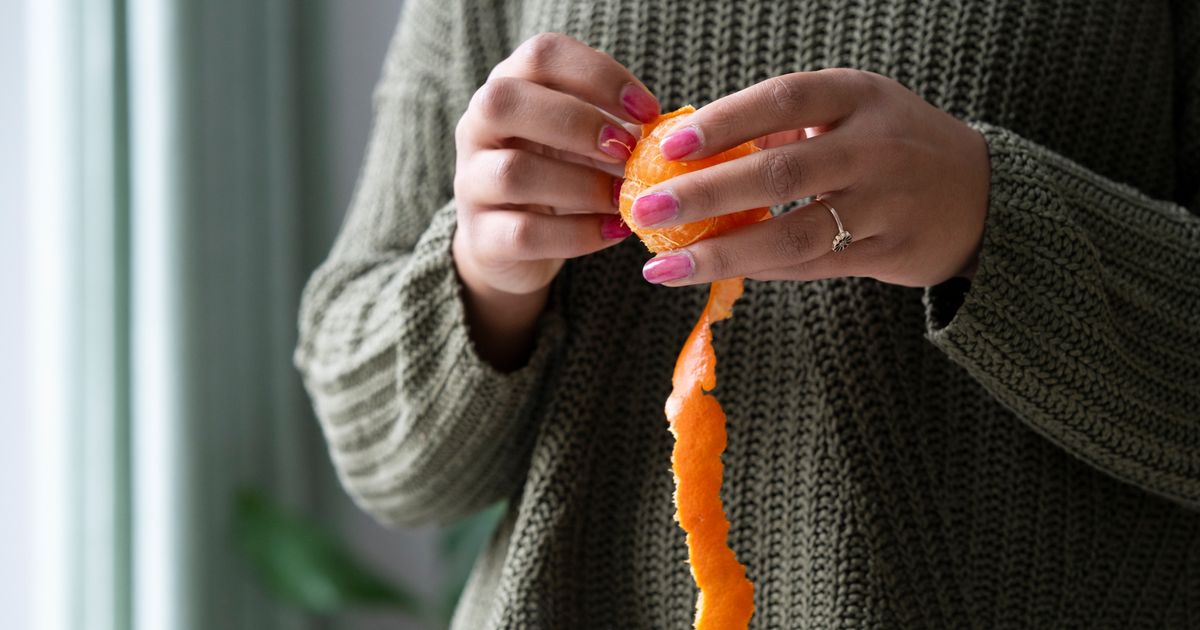

But now, TikTokers have added another sign of true love to look out for ― and it involves orange peel.
Advertisement
If you’re not familiar yet, the orange peel theory “is pretty much how it sounds,” TikToker @neanotmia explains.
“You may really like eating an orange, but some people find peeling the orange to be an unpleasant task,” they shared (*nods in long nails*.)
So, you might ask someone ― your partner, a friend, a family member ― to peel it for you. And how they react can indicate where your relationship stands, some TikTokers think.
How? It’s just an orange
Well, that’s sort of the point ― it’s all about how your loved ones respond to the tiny, everyday problems we all encounter.
Advertisement
“The possible reactions are, ‘no, you can peel the orange yourself,’ or ‘(scoff) fine, like, you’re welcome,’ or ‘I’d be happy to peel your orange for you, no problem,’” the TikToker continued.
“Or maybe they proactively peel the orange for you because they already know that’s a task you don’t like to do.”
She then points out that you, yourself, might be bewildered by such a request, wondering why the person asking for your help can’t handle such a seemingly small deal.
But, as she says, “it’s not literally about the peeling orange ― they’re asking you for a small favour to see your reaction, to see if later, they can ask you for bigger favours.”
It’s about how you make each other feel when you’re in need, @neanotmia says. “It may be baby steps to building that trust.”
Advertisement
Some app users called a woman who went viral for sharing that her boyfriend brought home egg whites after learning she hated separating them for her baking a prime example of the theory.
In short, it’s all about making your partner’s life a little easier, and anticipating your needs when you can ― be it egg whites or orange peels. Aww.
I turn 30 in less than two weeks and I’ve only been in one “relationship.”
I was 19 when I met Greg on Grindr. I understand now that the way I felt about Greg is the way I often feel about intimate partners: We enjoyed each other’s company, I found him physically attractive and I could be physically and emotionally intimate with him, but we lacked that “spark” I so often hear about when it comes to romantic partnerships.
I never had even had a crush on Greg; I just enjoyed his company and was excited to finally be in a relationship, this thing that so many people seemed to be after.
Advertisement
We were together for just shy of three months before he broke it off. Right before we split, my dad asked me if I loved Greg. I struggled with the question because it wasn’t something I had even considered. I wavered for a while before I finally said, “maybe … probably” — less because it was how I felt and more because it seemed like the correct answer.
I’ve tried dating a number of times since, but I could never find that warm, gushy feeling, the romance that I’d heard others describe as they pursued new relationships. I enjoyed talking with new suitors and was sometimes attracted to them, but the idea of being in a romantic relationship felt stifling and inauthentic.
Eventually, I realised I was aromantic, which means having little or no romantic attraction to others.
Romance, like gender and sexuality, can be understood as a spectrum. There are folks who fall hard and quickly, easily developing crushes on others, and there are people like me, who simply don’t gravitate to those feelings easily or at all. I am open to the possibility that one day I will have a crush or fall in love, but so far it hasn’t happened.
Advertisement
Not all aromantic people are asexual. I’m surely not. And aromantic people still have love in their lives; they just get it outside of romantic relationships. My life is full of love from my friends, family, even my intimate partners — it’s just not romantic love, that special bond that’s so difficult to put into words (especially as a person who’s never experienced it).
The fact that I have gone the entire decade of my 20s without being in a traditional romantic relationship is often met with a sense of confusion from my peers. This used to feel alienating, but today I know that it isn’t because of some personal fault. The traditional approach to committed relationships just isn’t for everyone.
Since I still crave physical intimacy and sex, I enjoy having partners I can explore those elements of myself with. But our relationships don’t come with many of the same feelings or tethers that a romantic relationship typically would.
I find it challenging to date in a traditional sense. In my mid-20s, after recognising that I was aromantic, I found the term “quasiplatonic relationship.” Quasiplatonic relationships are not romantic but still involve a close connection, often beyond what we may see in a friendship. They may or may not involve sex.
While these might not look like the “traditional” versions, some aromantic people have long-term partners. Some cohabitate and even get married. Seeking out this kind of relationship was a challenge for me, however. Trying to find another person who was a good fit, and who was also looking for a relationship that wasn’t traditionally romantic, started to feel just as restrictive as shooting for a committed romance.
Advertisement
Over time, the idea of seeking out and being with a single monogamous partner also began to feel extremely limiting. Nonmonogamy wasn’t really a conscious choice I made; rather, it eventually clicked that there was no other option for me. As an aromantic person with different relationship needs than most, having multiple partners who could offer me a number of different things felt most conducive to my identity as I was beginning to understand it.
Eventually, I stumbled upon the phrase “relationship anarchy,” which to me means my relationships have a more fluid structure, without hierarchical differentiation between sexual, romantic and platonic relationships.
After a decade of trying to fit inside one specific box society deemed “correct,” I’ve found solace in stepping outside of it and creating my own box, one that works for me.
Today, I have a number of relationships in which I embrace varying levels of intimacy. Some are mostly physical; others feel more like close friendships. We’re invested in each other’s lives, we hang out together ― some on a regular basis, and others simply when we can make it work ― and sometimes we share physical intimacy. I now understand that I operate best by simply letting things flow and figuring out naturally how a person fits into my life.
This year I started a relationship with a man who is in an open marriage. This dynamic feels comfortable for me, in that we can share a connection without there being broader romantic expectations — we aren’t necessarily aiming for anything bigger. We’re focused on the now, whatever we end up cultivating together. We talk intimately about our lives and goals. We do things that friends would do together. Sometimes we have sex, but it’s not an integral part of our relationship either.
Advertisement
I consider myself single, and I prioritise my relationship with myself first and foremost. After the one with myself, some of the most valuable relationships in my life are those I have with my platonic friends. Most of my spare time goes to my best friend, and my relationship with her often feels the most profound and connected.
As a queer nonbinary person who is attracted to folks of all gender identities, I’ve begun to see the idea that we are all meant to have a single romantic partner in our lives as outdated, part of a rigid cisheteronormative system that exists to uphold traditional family structure.
I don’t want children and I’m not sure I ever want to get married, so for me that concept has often felt fraudulent. There’s nothing wrong with preferring traditional monogamous relationships, but humans are complicated, and the idea that all 8 billion of us should treat relationships in this one limited way ignores how expansive our identities can be. It’s selling our species short to insist we all conform to such stringent guidelines, and it ignores history and culture to claim that this has always been the case.
I currently have no desire to date, as I pretty much have everything I need. I am always open to new relationships, but I don’t have guidelines for what they “need to” offer me. It’s simply up to me and that other person to decide what works best for us.
As I write this essay, I am preparing to fly to my home state of Colorado to celebrate the weddings of two longtime friends. I love to see those I hold close find what they need and affirm it. I think romantic love is beautiful, and I’d love to experience it for myself one day. I also accept that maybe it just isn’t in the cards for me.
Advertisement
I am open about my journey to give others like me, who have struggled with the standard relationship models, permission to venture out and explore their own paths. If there’s one thing my 20s have taught me, it’s that many of the rules and guidelines we have in society are arbitrary. I get so much validation from those in the younger generations who decided early on that they would go their own way, and from older folks who throw away the rulebook they’ve lived by for the majority of their adult lives.
I also admit that I don’t have it all figured out. I’ve settled on a dynamic that works for me today, but I leave myself open to any possibilities that present themselves as I journey through life, rather than comparing my experience to that of others. I can’t wait to see what lies ahead.
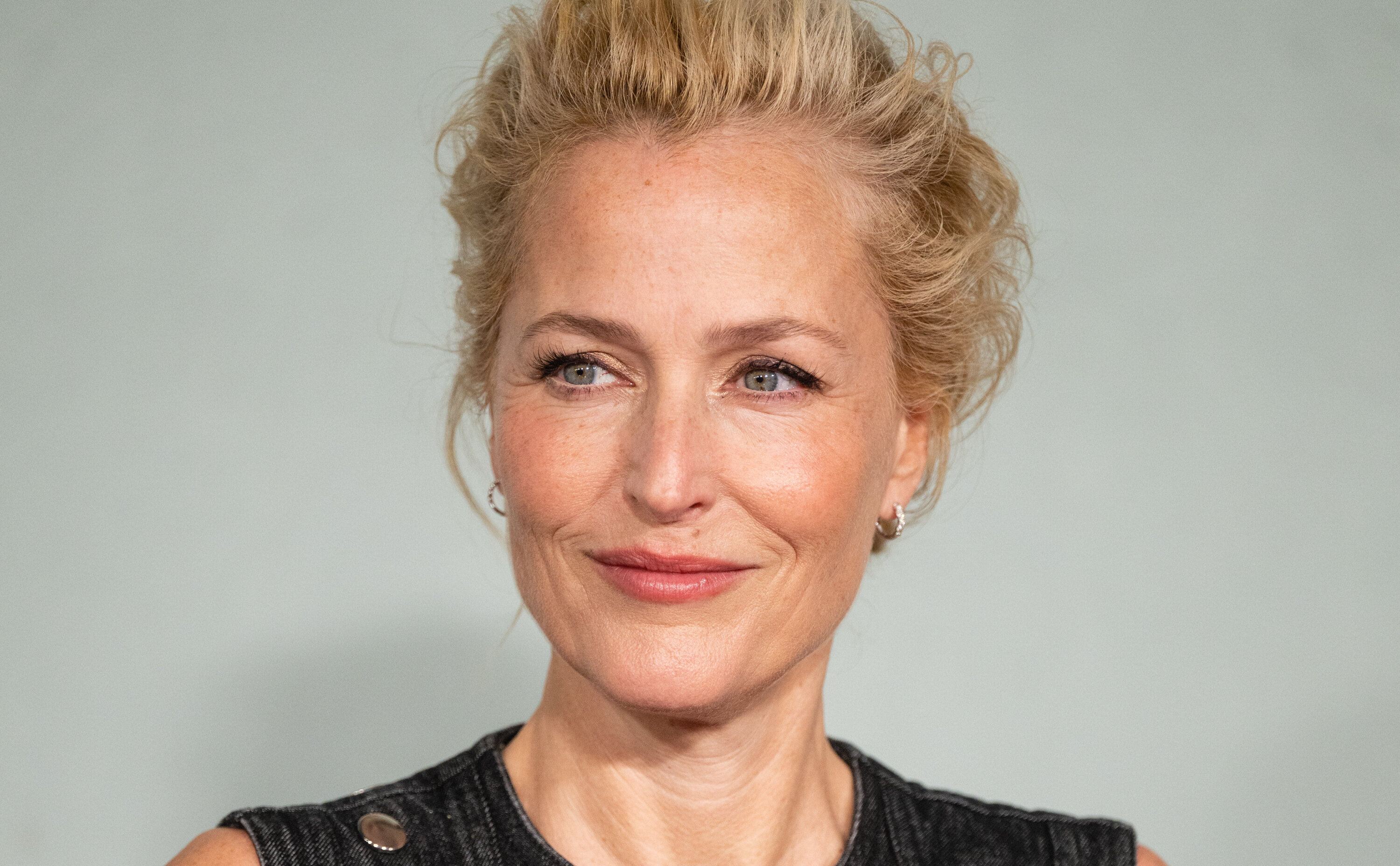
Sex – everyone is doing it, but why are women in particular so shy to talk about it? Well, Gillian Anderson wants to give women the opportunity to write about their most intimate sexual fantasies.
She’s launching the ‘Dear Gillian’ project. A generation-defining book, where women will write anonymous letters to Gillian, exploring what they really think about sex. “I am asking for letters of around 1,000 (but no more than 2,500) words, in any language, describing your most intimate, private sexual fantasies,” Anderson says.
Advertisement
“Simply open your letter with ‘Dear Gillian,’ and let your imagination run wild. I will, of course, also share my own,” she adds.
Writing in the Guardian, Anderson spoke about reading My Secret Garden: Women’s Sexual Fantasies’ to prepare her for her role as a sex therapist, Jean Milburn in the Netflix series, Sex Education. “I’d always heard people talk about My Secret Garden, and so in preparation, I read it for the first time,”
“Its unfiltered and painful honesty shook me. These letters and interviews were incredibly intimate and very raw. They weren’t necessarily over polished, or trying to be literary; they seemed to come straight from the mysterious heart of the women’s innermost yearning.”
Whilst reading the book Anderson recalls feeling sad at the amount of sexual frustration the women in the book were experiencing. “I’d always heard people talk about My Secret Garden, and so in preparation, I read it for the first time,” Anderson says.
Advertisement
“Many had never experienced an orgasm. Some didn’t know what a sexual fantasy was; others could not acknowledge that they had them,”
She now wants to write the 21st-century version of My Secret Garden. “Let’s create an era-defining text that cuts right to the heart of what it is to be a woman today. A book that will hopefully inspire women for generations to come,” she says.
The book will be published by Bloomsbury Publishing. Submit your letters here by midnight, 28 February.
You’re reading Love Stuck, where trained therapists answer your dating, sex and relationship dilemmas. You can submit a question here.
By the time we reach our mid-twenties, it can feel like most people have been in a few relationships – but what if this isn’t your reality? You want love but you’re ashamed to admit it hasn’t quite happened yet. You ask yourself if something is wrong with you, and more urgently, if you’ll ever find love.
Advertisement
This is the case for this week’s reader, Patricia. “I’m 26 years old, and I’ve never had a boyfriend,” she writes. “This wouldn’t be a problem in itself, but ever since I moved to a new country/became independent, I feel more pressured to find a significant other.”
This pressure, she says, comes not just from her family but from casual acquaintances, even strangers, who throw out comments such as “you’re such a nice girl, how come you’re single’? or “we weren’t made to be alone”.
“This paired with the fact that I only managed to have flings so far, which never developed into serious/meaningful relationships,” Patricia says. The story goes more or less like this: I meet someone, we spend time together getting to know each other, and after a couple of weeks they say they’re not ready for a serious relationship.”
These experiences have left Patricia questioning if there’s something wrong with her and if she’s worthy of a relationship. “I know that romantic love is an experience that many humans never have and that it is still possible to live a fulfilling life in spite of that, so I have been trying to accept that it might never happen to me,” she says. “However, I must admit that sometimes I feel like I’m missing out on something major that seems to be natural to most people.”
Counselling Directory member Laila Fish shares her advice for Patricia.
Why can there be so much pressure to get into a relationship and how can you release herself from this pressure?
There are a range of pressures on people to embark on relationships, says Fish, including family and societal expectations.
“Family members may have good intentions, they may have experienced this pressure themselves, and would like to see you in a relationship as maybe they are worried about you moving to a new country – despite how frustrating this sounds for you!” she says.
The next time a family member or friend asks Patricia about relationships, Fish wants her to pay attention to herself – “does it make you feel sad or frustrated – this can often tell us a lot” – and take a deep breath before responding. Meanwhile, to release herself from societal pressures, Fish says it’s helpful to avoid comparing herself to other people her age.
“Embrace your independence. It sounds like you are doing amazingly and enjoy all the opportunities ahead of you,” she advises Patricia. “Knowing what you want allows you to tune out society’s messages that don’t reflect your desires currently.
Advertisement
“It can be tough seeing everyone you know meeting someone romantically, but that doesn’t mean it is something that you necessarily want and that’s OK.”
How can you hold on to hope you’ll find someone special?
“Patricia sounds confident and independent and needs to believe in herself that when the time is right she will find the right person, and until then to enjoy meeting new people,” Fish says.
“Patricia says that the people she meets only last a short while. I would advise reframing this perspective into thinking how interesting and great an opportunity to meet new people is. Then, if one day a relationship happens, it does.”
Fish recommends she focuses on herself first and works on her self-esteem.
“Don’t be afraid of feeling like you are missing out on something – that something is ‘you’ and independence right now is your best friend. Also, be kind to yourself and challenge your negative beliefs that you may not be worthy.”
What practical tips would you give this reader to get into a relationship?
Expanding your interests and social activities can provide opportunities to meet different people, Fish says, but it’s important to start with what you want to do.
Advertisement
“Spending time thinking about your likes and dislikes as well as your goals can enable you to be clearer about who you are,” she explains. “Discovering other goals to focus on such as your professional life, your health, alongside meeting someone, can help you feel more confident and empowered if/when you do.”
She suggests Patricia ‘dates herself’ to get to know herself. “Go for a walk in the park, journal about your values and aims in life, go to that museum and see that film – this will all help towards you developing your self-esteem and consequently feeling worthy.”
In the end: “Focusing on finding happiness in your own life will pay dividends to avoid any relationship escalator your family or society is rushing you towards.”
Love Stuck is for those who’ve hit a romantic wall, whether you’re single or have been coupled up for decades. With the help of trained sex and relationship therapists, HuffPost UK will help answer your dilemmas. Submit a question here.