Inquiry Needed Into What Boris Johnson Knew About Peter Bone Allegations, Say Lib Dems

Boris Johnson’s decision to make Tory MP Peter Bone a minister despite an ongoing inquiry into allegations of sexual misconduct must be formally investigated, the country’s most powerful official has been told.

Bone faces a six-week suspension from the Commons and losing his seat in a by-election after a Westminster ethics watchdog found he bullied and sexually harassed a member of his staff.

The Lib Dems have demanded Simon Case, the cabinet secretary, access Johnson and Liz Truss’ emails and text messages about the Wellingborough MP to avoid a “Conservative Party cover up”.

In one incident, Bone “trapped” a young male employee in a Madrid hotel room and indecently exposed himself.

Bone was found by the independent expert panel inquiry to have “verbally belittled, ridiculed, abused and humiliated” the man, who was in his early 20s.

He has denied the allegations. In a statement Bone said: “None of the misconduct allegations against me ever took place. They are false and untrue claims. They are without foundation.”

A complaint was first raised about the behaviour in 2015 when David Cameron was prime minister and again in 2017 when Theresa May was in No.10. The Conservative Party opened an investigation in 2018.

Bone, who was first elected in 2005, has spent the majority of his career as a backbencher.

But in July 2022, Johnson appointed Bone to the job of deputy Commons leader. It involved handling how complaints of bullying in parliament are dealt with.

When Liz Truss’ became PM, she sacked Bone and abolished the role entirely.

Christine Jardine, the Lib Dem Cabinet Office spokesperson, said on Tuesday: “We need an urgent inquiry to understand what Conservative ministers knew about the allegations against Peter Bone when these complaints were made.

“Boris Johnson must also be held accountable for his decision to appoint Peter Bone as deputy leader of the Commons despite the complaints made against him.”

She added in a letter to Case: “There are serious questions to be answered about what Boris Johnson, Liz Truss and other Conservative ministers knew about these allegations including when Peter Bone was appointed to a ministerial position.

“It is therefore crucial that any inquiry has full access to communications sent by Johnson and other ministers at the time, including emails, text messages and other electronic and written correspondence.”

Asked if an inquiry would be launched into Bone’s appointment as a minister, Rishi Sunak’s spokesperson said: “I am not aware of any plans for that, no.”

Bone has been one of most notorious backbenchers for many years, and often a thorn in the side to his own party leaders. An unashamed eurosceptic, he had described Ukip as a “good thing for British politics”. And also called the idea of introducing same-sex marriage “completely nuts”.

Share Button

So THAT’s When We Should Start Preparing For Menopause

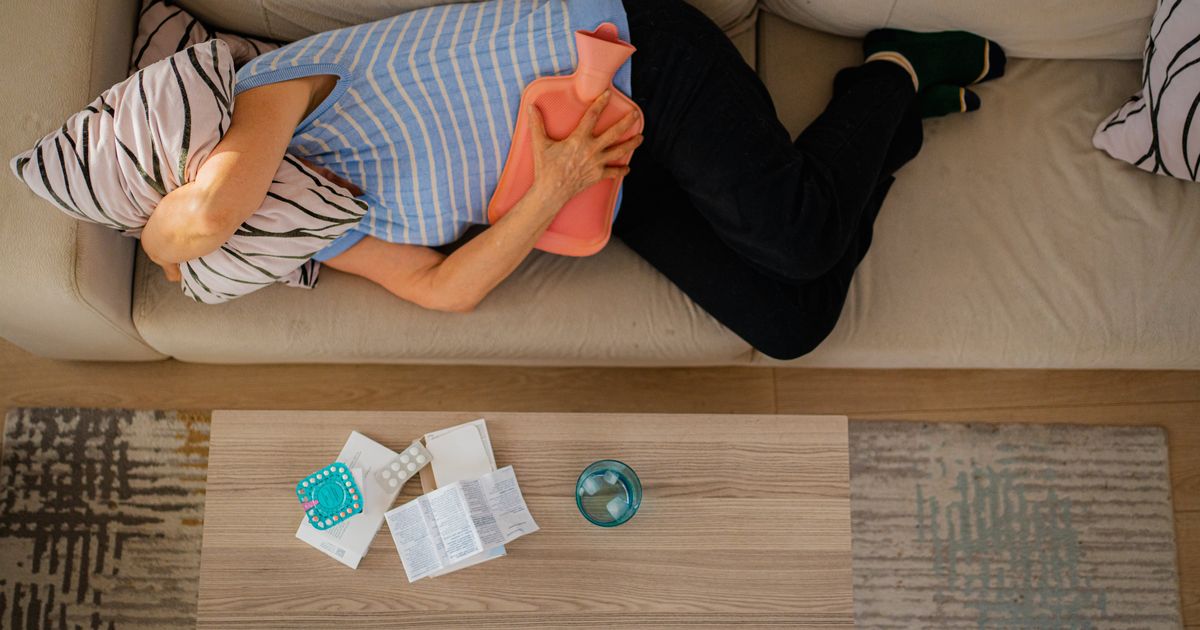
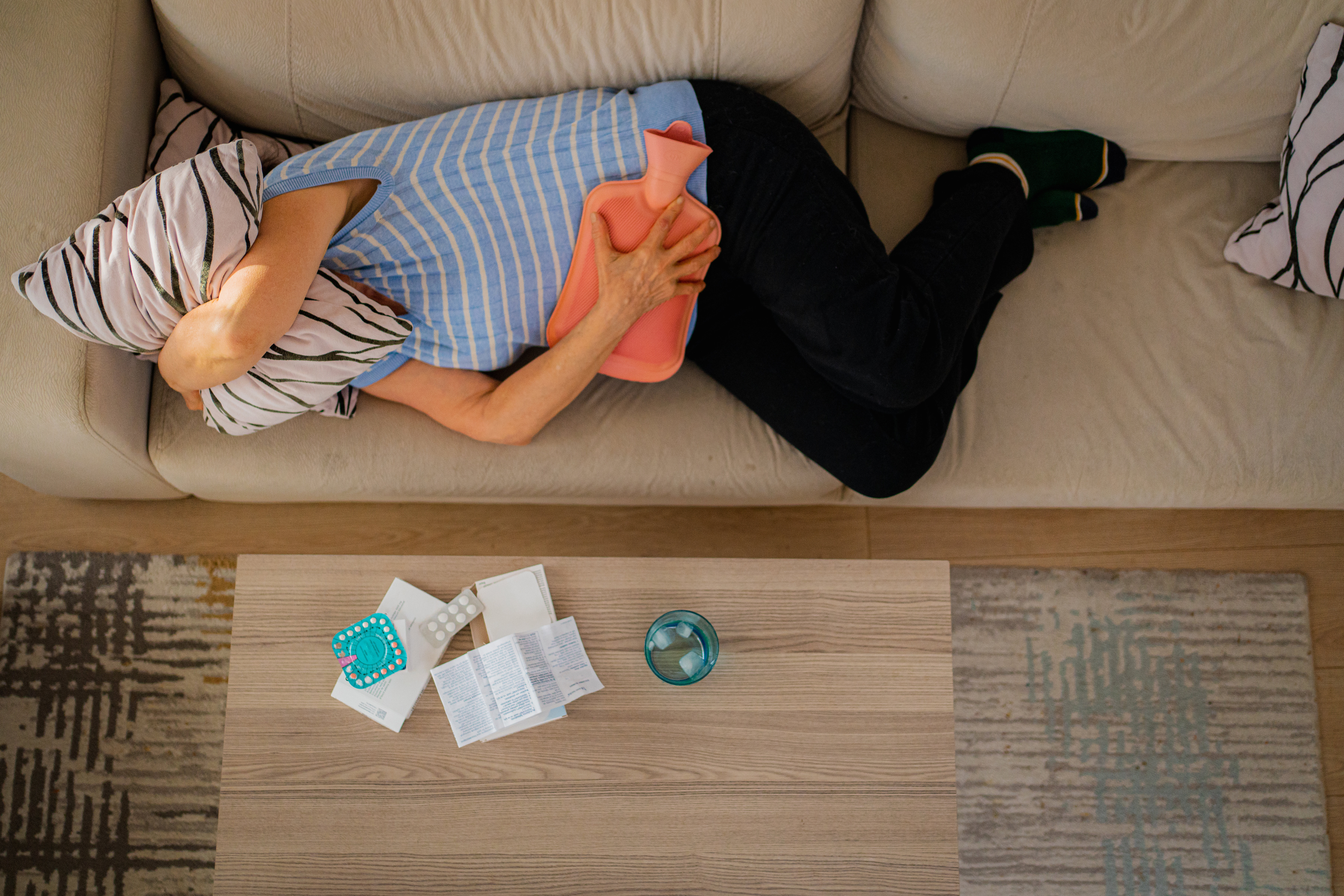
Picture this. Lately, you’ve not been feeling yourself, sex has become painful and your periods are haywire. You’re feeling anxious, depressed and all ’round things just don’t feel right. Your hair is thinning, you’re forgetting things, having heart palpitations, migraines and hot flushes. The worst part, you don’t know why.

Menopause usually begins between the ages of 45-55, with perimenopause (the period of time before menopause where symptoms begin) starting up to 15 years beforehand. While menopause usually hits in middle age, some people will experience it before the age of 40 – this is known as early menopause and affects 5% of women.

A recent study conducted by the Women’s Health Journal in 2022 found that a staggering 90% of participants had never been taught a single thing about menopause. As a result, 60% reported feeling unprepared and uninformed.

Common themes emerged in the study relating to knowledge gaps and the impact and severity of symptoms. Being unaware of menopause comes from a lack of education and social taboo surrounding “women’s troubles”. Those of us who experience menopause are more likely to speak to a friend about symptoms than their partner, or even a doctor.

It’s perhaps unsurprising, then, when HuffPost UK sat down to speak with Dr Shirin Lakhani, an award-winning cosmetic doctor and intimate health specialist, that she tells us; “When I was growing up, my grandma, and my mom never talked about going through menopause, they never talked about the symptoms they experienced.”

Menopause is caused by the natural biological decline in female fertility. Egg reserves run out, oestrogen production fizzles as the ovaries become less functional and, slowly but surely, the female reproductive organs cease to function the way they used to. Periods stop and pregnancy is no longer possible.

Dr Helen O’Neill, CEO and Founder of Hertility Health, says that; “The main perimenopausal symptoms are changes in menstrual cycles, often accompanied by hot flushes and night sweats (known as vasomotor symptoms).”

But this natural wind down doesn’t end in a soft landing for everyone.

“For men, hormones decline like a gentle stroll down a hill. For women, we fall off a cliff,” says Dr Lakhani.

The sudden onset of menopause symptoms can be debilitating.

“Perimenopause and menopause affect many other parts of the body, and cause symptoms such as mood changes, memory issues, joint pain, vaginal dryness and sexual dysfunction,” says Dr O’Neill.

For many menopausal people, it can have a huge impact on their relationships and careers.

Shelly Hatfield, Middlesbrough Manager at LUSH and Menopause CN Chair, tells me that for her, menopause almost made her resign. “At one point I was going to throw in the towel and pack in my job because I was having a hard time,” she says, “And then I realised it was just that I wasn’t being open enough about it.”

Shelly isn’t alone in this. Shame can prevent many women from reaching out to employers for help. Up to 10% of people leave the workplace because of menopause despite the fact that those in this age group are typically at the peak of their careers. This is because employers are failing those experiencing menopause. Eight out of ten women say their employer hasn’t shared information, trained staff, or put in place a menopause absence policy.

Shelly knew she would have to take it upon herself to make change happen. “I started talking to the right people, and people were listening and very interested so we set up the menopause network community and soon we had 66 members,” she tells HuffPost UK.

Her proactive thinking has now meant LUSH sales assistants have received specialist training on menopausal symptoms and are able to recommend products that can help with symptoms like restless leg syndrome, general aches and pains and sleep disturbances.

This training has normalised conversations surrounding menopause, creating space for their customers to feel supported and seen. Additionally, staff at LUSH now have access to training materials and internal support systems that create something of a safety net for menopausal employees.

Education on menopause is seriously lacking, and the workplace is only one location that needs more resources. Dr Lakhani tells HuffPost UK that, in her opinion, schools should be teaching menopause as part of the sex education curriculum. “I think you need to have the education in place to understand what’s happening to your bodies,” she says.

And yet, menopause isn’t something we learn about in school, despite 86% of women reporting that they would very much like it to be.

Truth is, little is done proactively to assist those experiencing menopause symptoms across the board. Sometimes this is because of cultural taboos, but there is also discrimination at play.

One 2023 study found that doctors were significantly more likely to prescribe HRT (hormone replacement therapy) for white women than for other ethnicities. Highlighting the need for more education surrounding racial bias and menopause amongst GPs.

So, when should I start prepping? And, how do I prepare?

“You’re never too young to start learning about menopause,” says Dr Lakhani, who is of the belief that having as much knowledge as possible on what symptoms can look like, and being in tune with how those symptoms appear in your body is of great importance.

She says that most people think of hot flushes and the absence of periods when they think of menopause. But, when it comes to seeking support, these symptoms are the last thing on their mind. She explains that while the physical symptoms can be an inconvenience for her patients, and in some cases quite debilitating, most of them can take it in their stride.

“What they’re not prepared for, is the mental health issues that go along with the hormonal changes. Anxiety, depression, losing all their confidence, feeling like they don’t belong in the environment that they’re in, they get impostor syndrome,” Dr Lakhani lists.

Explaining further, Dr Lakhani says that the best way to prepare is to get to know your base level of normal and monitor any symptoms you feel creeping up on you. Be that achy joints or sudden feelings of anxiety or depression (especially if you’ve never experienced these things in the past).

If you’re concerned you’re beginning perimenopausal, the best thing to do is speak with your GP about your symptoms. “A thorough medical evaluation and discussion of symptoms with a healthcare professional are vital steps in understanding your menopausal transition,” advises Dr O’Neill.

Dr O’Neill explains that there are several tests that can provide valuable information on where you’re up to. “Hormone level testing, such as measuring follicle-stimulating hormone (FSH) can help determine if you’re approaching menopause. Other hormones (such as oestradiol and luteinising hormone) can also be helpful to assess whether you are going through menopause,” she says.

Continuing, she states that, importantly, these tests should be analysed along with your menstrual cycle patterns and symptoms. “This is why you cannot diagnose menopause in people who are using hormonal contraception, as these medications skew natural levels of FSH as well as affect your menstrual cycles,” she says.

Her advice to anyone worrying about menopause, or wanting to know more, is to learn about the symptoms, available treatments and lifestyle adjustments you can make.

“They will empower you to manage this phase effectively,” she encourages. “By fostering open dialogue and eradicating the stigma associated with menopause, we empower women to take charge of their health and well-being during this significant life transition.”

Share Button

Signatures of the Space Age: Spacecraft metals left in the wake of humanity’s path to the stars

The Space Age is leaving fingerprints on one of the most remote parts of the planet — the stratosphere — which has potential implications for climate, the ozone layer and the continued habitability of Earth.

Using tools hitched to the nose cone of their research planes and sampling more than 11 miles above the planet’s surface, researchers have discovered significant amounts of metals in aerosols in the atmosphere, likely from increasingly frequent launches and returns of spacecraft and satellites. That mass of metal is changing atmospheric chemistry in ways that may impact Earth’s atmosphere and ozone layer.

“We are finding this human-made material in what we consider a pristine area of the atmosphere,” said Dan Cziczo, one of a team of scientists who published a study on these results in the Proceedings of the National Academy of Sciences. “And if something is changing in the stratosphere — this stable region of the atmosphere — that deserves a closer look.” Cziczo, professor and head of the Department of Earth, Atmospheric, and Planetary Sciences in Purdue’s College of Science, is an expert in atmospheric science who has spent decades studying this rarefied region.

Led by Dan Murphy, an adjunct professor in the Department of Earth, Atmospheric, and Planetary Sciences and a researcher at the National Oceanic and Atmospheric Administration, the team detected more than 20 elements in ratios that mirror those used in spacecraft alloys. They found that the mass of lithium, aluminum, copper and lead from spacecraft reentry far exceeded those metals found in natural cosmic dust. Nearly 10% of large sulfuric acid particles — the particles that help protect and buffer the ozone layer — contained aluminum and other spacecraft metals.

Scientists estimate that as many as 50,000 more satellites may reach orbit by 2030. The team calculates that means that, in the next few decades, up to half of stratospheric sulfuric acid particles would contain metals from reentry. What effect that could have on the atmosphere, the ozone layer and life on Earth is yet to be understood.

Scientists have long suspected that spacecraft and satellites were changing the upper atmosphere, but studying the stratosphere, where we don’t live and even the highest flights enter only briefly, is challenging.

As part of NASA’s Airborne Science Program, Murphy and his group fly a WB-57 airplane to sample the atmosphere 11.8 miles (19 km) above the ground in Alaska, where circumpolar clouds tend to form. Similar measurements were made by Cziczo and his group from an ER-2 aircraft over the continental United States. Both groups use instruments hitched to the nose cone to ensure that only the freshest, most undisturbed air is sampled.

advertisement


The sheltering sky

Like the view of the unruffled surface of the ocean, the stratosphere appears untroubled — at least to human eyes. Life and civilization take place mostly on the planet’s surface and in the troposphere, the atmosphere’s very lowest layer. The stratosphere is a surprisingly stable and seemingly serene layer of the atmosphere.

The stratosphere is also the realm of the ozone layer: that gaseous marvel that acts as a global tent to shield the planet and all life on it from the searing, scorching rays of ultraviolet radiation. Without the ozone layer, life would likely never have arisen on Earth. And without it, life is unlikely to be able to continue.

The last decades have been eventful for the stratosphere. The ozone layer came under threat from chlorofluorocarbons in the 1980s, and only coordinated, sustained global efforts of governments and corporations have begun to bear fruit in repairing and replenishing it.

“Shooting stars streak through the atmosphere,” Cziczo said. “Often, the meteor burns up in the atmosphere and doesn’t even become a meteorite and reach the planet. So the material it was made from stays in the atmosphere in the form of ions. They form very hot gas, which starts to cool and condense as molecules and fall into the stratosphere. The molecules find each other and knit together and form what we call meteorite smoke. Scientists recently started noticing that the chemical fingerprint of these meteoritic particles was starting to change, which made us ask, ‘Well, what changed?’ because meteorite composition hasn’t changed. But the number of spacecraft has.”

What goes up

Spacecraft launches, and returns, were once international events. The launches of Sputnik and the Mercury missions were front-page news. Now, a quickening tide of innovation and loosening regulation means that dozens of countries and corporations are able to launch satellites and spacecraft into orbit. All those satellites have to be sent up on rockets — and most of that material, eventually, comes back down.

advertisement


Like the wakes of great ships trolling through the ocean, rockets leave behind them a trail of metals that may change the atmosphere in ways scientists don’t yet understand.

“Just to get things into orbit, you need all this fuel and a huge body to support the payload,” Cziczo said. “There are so many rockets going up and coming back and so many satellites falling back through the atmosphere that it’s starting to show up in the stratosphere as these aerosol particles.”

Of course, shooting stars were the first space-delivery system. Meteorites fall through the atmosphere every day. The heat and friction of the atmosphere peel material off them, just as they do off human-made artifacts. However, while hundreds of meteors enter the Earth’s atmosphere every day, they are increasingly being rivaled by the mass of metals that comprise the tons of Falcon, Ariane and Soyuz rockets that boost spacecraft into space and return again to Earth’s surface.

“Changes to the atmosphere can be difficult to study and complex to understand,” Cziczo said. “But what this research shows us is that the impact of human occupation and human spaceflight on the planet may be significant — perhaps more significant than we have yet imagined. Understanding our planet is one of the most urgent research priorities there is.”

Share Button

Parents of elementary-aged children may engage in more helicopter parenting than they think

As they grow, children start doing certain activities without their parents watching over them, including trick-or-treating with friends, staying home alone or biking to a friend’s house.

And while most parents agree that kids benefit from opportunities to be independent, they may be engaging in more “helicopter parenting” than they realize, suggests a new University of Michigan Health C.S. Mott Children’s Hospital National Poll on Children’s Health.

“There’s a sizable gap between parent attitudes about promoting children’s independence and what they actually allow or encourage their children to do without supervision,” said Mott Poll co-director Sarah Clark, M.P.H.

“This suggests some parents may be missing opportunities to guide their children in tasks of autonomy and unintentionally hindering kids’ development of independence and problem-solving skills.”

Four in five parents of children ages 9-11 agree that it’s good for children to have free time without adult supervision. But fewer report their child actually does certain things without an adult present, the poll suggests.

About three in five parents have let their tween-aged child stay home for 30-60 minutes while half say their child has separated from them to find an item at another aisle in the store. Less than half say their child has waited in the car while the parent runs a quick errand, walked or biked to a friend’s house or played at the park with a friend, and less than a sixth of parents have let their child trick-or-treat with friends.

The top reason behind parents’ hesitancy to promote such independent milestones was safety. Yet, while a little more than half worried someone might scare or follow their child, just 17% of parents say their neighborhood is not safe for children to be alone.

advertisement


“To some extent, worrying about your child is natural. But some parents are limiting their child’s independent activities due to highly publicized media reports, even if those outcomes are very unlikely to occur or cannot be prevented,” Clark said.

“Parents can ease in with small steps such as letting their child spend time with a friend at a familiar public place. Discussions before and after can help parents assess if their kids understand the importance of following safety rules.”

Other parents say they keep children from taking on such tasks alone because they don’t believe they’re ready while some parents believe state or local laws don’t allow children that age to be alone and that someone might call the police. A little more than one in 10 parents also think others will think they are a bad parent if their child is seen unsupervised.

Over half of parents say that unsupervised children cause trouble while a quarter have criticized another parent, and 13% have been criticized for not adequately supervising their child.

“Parents may be affected by ‘blame culture’ — the expectation that they will be criticized if something happens to their child,” Clark said.

The poll report also suggests a disconnect between what parents of younger children ages 5-8 say and what they do in fostering independence.

advertisement


Nearly three quarters say they make it a point to have their child do things themselves. But less than half of these parents say their child regularly engages in actions such as talking with the doctor or nurse at health visits, deciding how to spend allowance or gift money, speaking to unfamiliar adults in business situations, such as ordering at a restaurant, or preparing their own meal or snack.

Among reasons were safety, getting stuck in habits, the parent belief that their child doesn’t want to do things themselves or isn’t mature enough, thinking it will take too long or that it won’t be done in the parent’s preferred way.

The elementary school years, Clark notes, is an important phase for developing independence with parental guidance.

“Becoming independent is a gradual process of allowing children increasing amounts of freedom, with parents there to teach skills and help the child understand the consequences of their choices,” Clark said.

“As children become more experienced and comfortable with tasks, they can assume responsibility for doing them regularly. Research shows encouraging independence fosters a child’s self-confidence, resilience, problem-solving ability, and mental health.”

The nationally representative poll is based on responses from 1,044 parents of children 5-11 years surveyed in August.

Share Button

Neutrons see stress in 3D-printed parts, advancing additive manufacturing

Using neutrons to see the additive manufacturing process at the atomic level, scientists have shown that they can measure strain in a material as it evolves and track how atoms move in response to stress.

The automotive, aerospace, clean energy and tool-and-die industries — any industry that needs complex and high-performance parts — could use additive manufacturing,” said Alex Plotkowski, materials scientist in ORNL’s Materials Science and Technology Division and the lead scientist of the experiment. Plotkowski and his colleagues reported their findings in Nature Communications.

ORNL scientists have developed OpeN-AM, a 3D printing platform that can measure evolving residual stress during manufacturing using the VULCAN beamline at ORNL’s Spallation Neutron Source, or SNS, a Department of Energy Office of Science user facility. When combined with infrared imaging and computer modeling, this system enables unprecedented insight into material behavior during manufacturing.

In this case, they used low-temperature transformation, or LTT, steel, physically measuring how atoms move in response to stress, whether it’s temperature or load, using the OpeN-Am platform.

Residual stresses are stresses that remain even after a load or the cause of the stress is removed; they can deform a material or, worse, cause it to fail prematurely. Such stresses are a major challenge for fabricating accurate components with desirable properties and performance.

The scientists conceived and, over the course of two years, produced this experiment that can measure strain in the material as it evolves, which determines how stresses will be distributed.

“Manufacturers will be able to tailor residual stress in their components, increasing their strength, making them lighter and in more complex shapes. The technology can be applied to anything you want to manufacture,” Plotkowski said.

advertisement


“We have successfully shown that there is a way to do that,” he said. “We are demonstrating we understand connections in one case to anticipate other cases.”

The scientists recently earned a 2023 R&D 100 Award for this technology. R&D World magazine announced the winners in August. Plotkowski and other winners will be recognized at the organization’s award ceremony Nov. 16 in San Diego.

The scientists used a custom wire-arc additive manufacturing platform to perform what’s called operando neutron diffraction of an LTT metal at SNS. Using SNS’s VULCAN beamline, they processed the steel and recorded data at various stages during manufacturing and after cooling to room temperature. They combined diffraction data with infrared imaging to confirm results. The system was designed and built at the Manufacturing Demonstration Facility, or MDF, a DOE Advanced Materials and Manufacturing Technologies Office user consortium, where a replicate system of the platform was also constructed to plan and test experiments before executing at the beamline.

SNS operates a linear particle accelerator that produces beams of neutrons to study and analyze materials at the atomic scale. The research tool they developed allows scientists to peer inside a material as it’s being produced, literally observing the mechanisms at work in real time.

The LTT steel was melted and deposited in layers. As the metal solidified and cooled, its structure transformed in what is called a phase transformation. When that happens, atoms rearrange and take up different space, and the material behaves differently.

Normally, transformations that happen at high temperatures are hard to understand when looking at a material only after processing. By observing the LTT steel during processing, the scientists’ experiment shows that they can understand and manipulate the phase transformation.

advertisement


“We want to understand what these stresses are, explain how they got there, and figure out how to control them,” Plotkowski said.

“These results provide a new pathway to design desirable residual stress states and property distributions within additive manufacturing components by using process controls to improve nonuniform spatial and temporal variations of thermal gradients around key phase transformation temperatures,” the authors write.

Plotkowski hopes scientists from around the world come to ORNL to do similar experiments on metals they would like to use in manufacturing.

This research was funded by ORNL’s Laboratory Directed Research and Development program, which supports high-risk research and development in areas of potential high value to national programs.

Share Button

Sir Patrick Vallance says release of full diary entries would breach human rights

Ex-chief scientist says only extracts of his evening notes should be released to the Covid inquiry.

Share Button

Adele Is All Of Us As She Discusses The New David Beckham Documentary

<div class="js-react-hydrator" data-component-name="YouTube" data-component-id="715" data-component-props="{"itemType":"video","index":0,"contentListType":"embed","code":"

","type":"video","meta":{"author":"Weekends with Adele","author_url":"https://www.youtube.com/channel/UCLfLGggysunEKOddVN3fjBg","cache_age":86400,"description":"Weekends with Adele in Las Vegas – Weekend 30, show 60!\n\nThe Colosseum at Caesars Palace.\n\nAdele talking to the audience in Las Vegas about David Beckham’s new documentary on Netflix and her love for Victoria Beckham and being a fan of the Spice Girls. \n\n————\n\nPhotos from the show: https://www.flickr.com/photos/weekendswithadele/albums/72177720311770549","options":{"_cc_load_policy":{"label":"Closed captions","value":false},"_end":{"label":"End on","placeholder":"ex.: 11, 1m10s","value":""},"_start":{"label":"Start from","placeholder":"ex.: 11, 1m10s","value":""},"click_to_play":{"label":"Hold load & play until clicked","value":false}},"provider_name":"YouTube","thumbnail_height":480,"thumbnail_url":"https://i.ytimg.com/vi/2dvM24wiiiI/sddefault.jpg","thumbnail_width":640,"title":"Adele talking about David Beckham (October 7, 2023)","type":"video","url":"https://www.youtube.com/watch?v=2dvM24wiiiI","version":"1.0"},"flags":[],"enhancements":{},"fullBleed":false,"options":{"theme":"news","device":"desktop","editionInfo":{"id":"uk","name":"U.K.","link":"https://www.huffingtonpost.co.uk","locale":"en_GB"},"originalEdition":"uk","slideshowAd":{"scriptTags":[],"otherHtml":""},"slideshowEndCard":{"scriptTags":[],"otherHtml":""},"isMapi":false,"isAmp":false,"isVideoEntry":false,"isEntry":true,"isMt":false,"entryId":"652d013be4b0da897ab49665","entryPermalink":"https://www.huffingtonpost.co.uk/entry/adele-david-beckham-documentary-netflix-vegas-show_uk_652d013be4b0da897ab49665","entryTagsList":"uktv,ukmusic,we-love-tv,netflix,adele,david-beckham","sectionSlug":"entertainment","deptSlug":null,"sectionRedirectUrl":null,"subcategories":"","isWide":false,"headerOverride":null,"noVideoAds":false,"disableFloat":false,"isNative":false,"commercialVideo":{"provider":"custom","site_and_category":"uk.entertainment","package":null},"isHighline":false,"vidibleConfigValues":{"cid":"60afc140cf94592c45d7390c","disabledWithMapiEntries":false,"overrides":{"all":"60b8e525cdd90620331baaf4"},"whitelisted":["56c5f12ee4b03a39c93c9439","56c6056ee4b01f2b7e1b5f35","59bfee7f9e451049f87f550b","5acccbaac269d609ef44c529","570278d2e4b070ff77b98217","57027b4be4b070ff77b98d5c","56fe95c4e4b0041c4242016b","570279cfe4b06d08e3629954","5ba9e8821c2e65639162ccf1","5bcd9904821576674bc55ced","5d076ca127f25f504327c72e","5b35266b158f855373e28256","5ebac2e8abddfb04f877dff2","60b8e525cdd90620331baaf4","60b64354b171b7444beaff4d","60d0d8e09340d7032ad0fb1a","60d0d90f9340d7032ad0fbeb","60d0d9949340d7032ad0fed3","60d0d9f99340d7032ad10113","60d0daa69340d7032ad104cf","60d0de02b627221e9d819408"],"playlists":{"default":"57bc306888d2ff1a7f6b5579","news":"56c6dbcee4b04edee8beb49c","politics":"56c6dbcee4b04edee8beb49c","entertainment":"56c6e7f2e4b0983aa64c60fc","tech":"56c6f70ae4b043c5bdcaebf9","parents":"56cc65c2e4b0239099455b42","lifestyle":"56cc66a9e4b01f81ef94e98c"},"playerUpdates":{"56c6056ee4b01f2b7e1b5f35":"60b8e525cdd90620331baaf4","56c5f12ee4b03a39c93c9439":"60d0d8e09340d7032ad0fb1a","59bfee7f9e451049f87f550b":"60d0d90f9340d7032ad0fbeb","5acccbaac269d609ef44c529":"60d0d9949340d7032ad0fed3","5bcd9904821576674bc55ced":"60d0d9f99340d7032ad10113","5d076ca127f25f504327c72e":"60d0daa69340d7032ad104cf","5ebac2e8abddfb04f877dff2":"60d0de02b627221e9d819408"}},"connatixConfigValues":{"defaultPlayer":"8b034f64-513c-4987-b16f-42d6008f7feb","clickToPlayPlayer":"5a777b9b-81fe-41a6-8302-59e9953ee8a2","videoPagePlayer":"19654b65-409c-4b38-90db-80cbdea02cf4"},"customAmpComponents":[],"ampAssetsUrl":"https://amp.assets.huffpost.com","videoTraits":null,"positionInUnitCounts":{"buzz_head":{"count":0},"buzz_body":{"count":0},"buzz_bottom":{"count":0}},"positionInSubUnitCounts":{"article_body":{"count":20},"blog_summary":{"count":0},"before_you_go_slideshow":{"count":0}},"connatixCountsHelper":{"count":0},"buzzfeedTracking":{"context_page_id":"652d013be4b0da897ab49665","context_page_type":"buzz","destination":"huffpost","mode":"desktop","page_edition":"en-uk"},"tags":[{"name":"uktv","slug":"uktv","links":{"relativeLink":"news/uktv","permalink":"https://www.huffingtonpost.co.uk/news/uktv","mobileWebLink":"https://www.huffingtonpost.co.uk/news/uktv"},"relegenceId":4255579,"section":{"title":"Entertainment","slug":"entertainment"},"topic":{"title":"UK TV","slug":"uktv","overridesSectionLabel":false},"url":"https://www.huffingtonpost.co.uk/news/uktv/"},{"name":"ukmusic","slug":"ukmusic","links":{"relativeLink":"news/ukmusic","permalink":"https://www.huffingtonpost.co.uk/news/ukmusic","mobileWebLink":"https://www.huffingtonpost.co.uk/news/ukmusic"},"url":"https://www.huffingtonpost.co.uk/news/ukmusic/"},{"name":"we love tv","slug":"we-love-tv","links":{"relativeLink":"news/we-love-tv","permalink":"https://www.huffingtonpost.co.uk/news/we-love-tv","mobileWebLink":"https://www.huffingtonpost.co.uk/news/we-love-tv"},"section":{"title":"Life","slug":"lifestyle"},"topic":{"title":"We Love TV","slug":"we-love-tv","overridesSectionLabel":false},"url":"https://www.huffingtonpost.co.uk/news/we-love-tv/"},{"name":"Netflix","slug":"netflix","links":{"relativeLink":"news/netflix","permalink":"https://www.huffingtonpost.co.uk/news/netflix","mobileWebLink":"https://www.huffingtonpost.co.uk/news/netflix"},"url":"https://www.huffingtonpost.co.uk/news/netflix/"},{"name":"Adele","slug":"adele","links":{"relativeLink":"news/adele","permalink":"https://www.huffingtonpost.co.uk/news/adele","mobileWebLink":"https://www.huffingtonpost.co.uk/news/adele"},"url":"https://www.huffingtonpost.co.uk/news/adele/"},{"name":"david beckham","slug":"david-beckham","links":{"relativeLink":"news/david-beckham","permalink":"https://www.huffingtonpost.co.uk/news/david-beckham","mobileWebLink":"https://www.huffingtonpost.co.uk/news/david-beckham"},"url":"https://www.huffingtonpost.co.uk/news/david-beckham/"}],"isLiveblogLive":null,"cetUnit":"buzz_body","bodyAds":["

\r\n\r\n HPGam.cmd.push(function(){\r\n\t\treturn HPGam.render(\"inline-1\", \"entry_paragraph_1\", false);\r\n });\r\n\r\n","

\r\n\r\n HPGam.cmd.push(function(){\r\n\t\treturn HPGam.render(\"inline\", \"entry_paragraph_2\", false);\r\n });\r\n\r\n","

\r\n\r\n HPGam.cmd.push(function(){\r\n\t\treturn HPGam.render(\"inline-2\", \"entry_paragraph_3\", false);\r\n });\r\n\r\n","

\r\n\r\n HPGam.cmd.push(function(){\r\n\t\treturn HPGam.render(\"inline-infinite\", \"repeating_dynamic_display\", false);\r\n });\r\n\r\n"],"adCount":0},"isCollectionEmbed":false}”>

Adele is known to enjoy a natter on stage during a show, but a recent discussion about the new David Beckham documentary is possibly her most relatable yet.

The revealing new Netflix documentary, titled Beckham, gives viewers an unprecedented look into the football legend’s career and personal life – from his highlights with Manchester United and captaining for England, to his marriage and family life with Victoria in her Spice Girls days.

It turns out that Adele – who is currently performing her Weekends With Adele residency in Las Vegas – was a massive fan of the new four-part series.

During a performance at The Colosseum at Caesars Palace earlier this month, the Easy On Me singer took a moment to share her love of Posh and Becks with the crowd.

“To us, because I’m British, Beckham and Posh are literally like our king and queen,” she enthused. “For real – we absolutely love them. It feels like my whole life I’ve been watching them and loving everything that they do. So I watched it and it made me feel very nostalgic.”

Adele, a woman of our own heart, went on: “I just love a bit of Beckham, really. He’s absolutely the national worldwide treasure to me.”

Adele
Adele

Kevin Mazur via Getty Images

The Grammy-winning singer told her fans that if they haven’t seen it “you should watch it”, before warning: “It is very British though – although the person that’s talking to him [filmmaker Fisher Stevens] is American, which is a bit strange. Only because [David’s] so British.”

In another clip from a recent show, Adele was filmed confessing that she was awake until 3.30am the previous night watching the documentary.

She said: “Yesterday I started the Beckham documentary, have any of you started? And I finished it last night and I didn’t want to go to sleep. I absolutely loved it. I thought it was wonderful. It was very nostalgic and very moving and it made me very homesick.”

The British singer enlightened the US crowd, noting: “They’re absolute legends to us, Beckham and also Posh. Especially when I was a kid, she was a Spice Girl and he was the captain of England. Can you imagine?”

Adele also shared that she “absolutely loved it”, while adding that she’s not always a fan of documentaries, “because normally it’s someone who has six months under their belt of doing something and they want to do a documentary, and I’m like, ‘wow’. But that’s a 25-year career”.

David Beckham
David Beckham

Karwai Tang via Getty Images

Adele put in a final plug for the documentary, telling fans: “Even if you’re not into football, or soccer, it’s actually really beautiful, so I’d really recommend it, especially as there’s a lot of you flying home tomorrow or the day after, so it’s a nice little easy watch on the plane.”

Upon the release of the new documentary, David made a rare public appearance at the premiere with all four of his children – 24-year-old Brooklyn, 21-year-old Romeo and 18-year-old Cruz, as well as their 12-year-old daughter Harper.

In the documentary, David’s intervention when he heard Victoria discussing her “working class” roots sparked a hilarious viral moment. Meanwhile, people are only just realising how hilarious Victoria is.

At the documentary’s UK premiere, however, David responded to the criticism levelled at him for accepting an ambassador role for Qatar during last year’s World Cup.

The director also later addressed the decision not to include the backlash faced by the former footballer.

All four episodes of Beckham are now streaming on Netflix.

Share Button