Trump Piles Pressure On Zelenskyy To End The War Putin Started In Bizarre Truth Social Rant

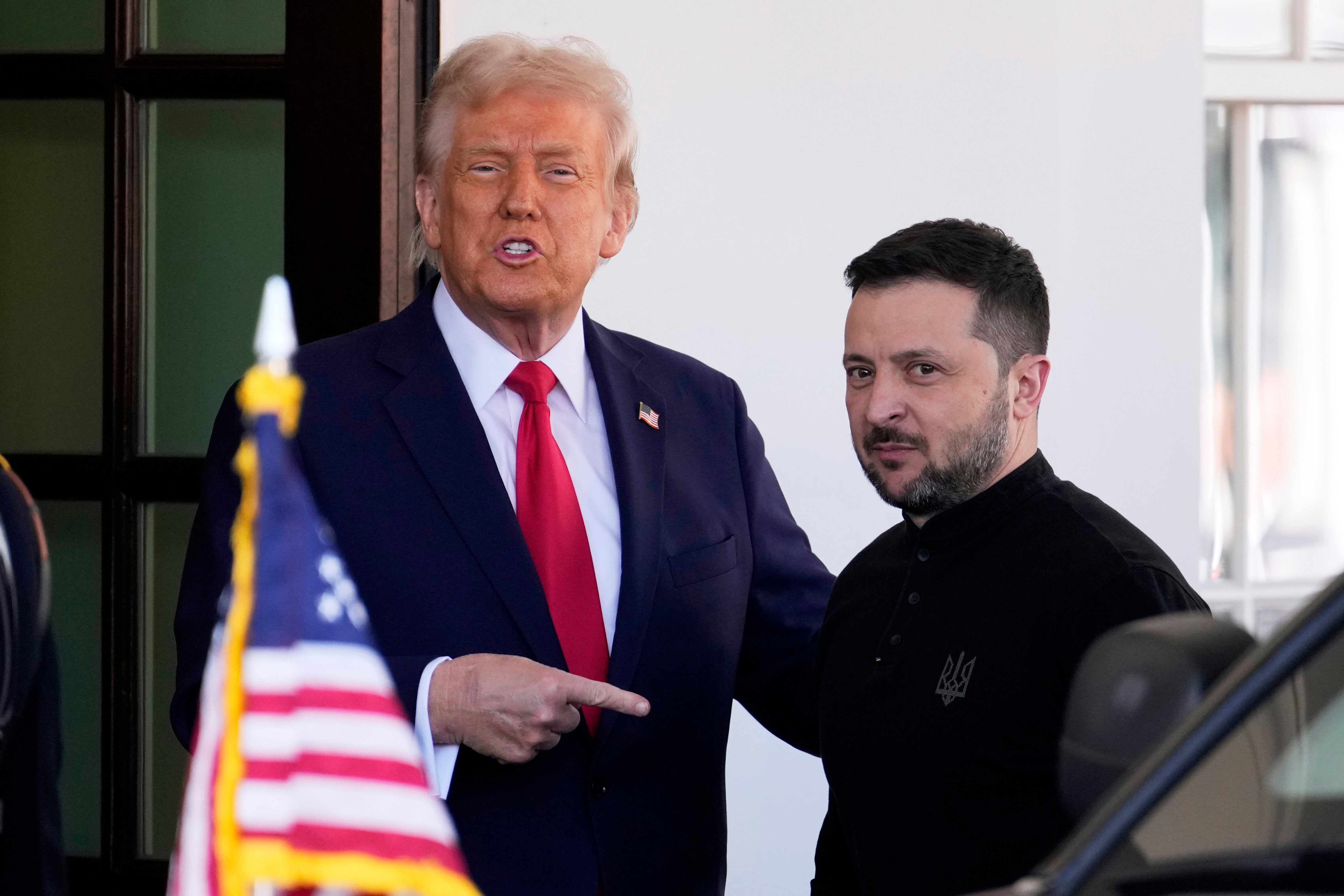
Donald Trump has piled pressure on Volodymyr Zelenskyy to end the war in Ukraine – even though it was started by Russia’s invasion of his country more than three years ago.

In a bizarre rant on his Truth Social platform, the US president said the Ukrainian leader “can end the war with Russia almost immediately if he wants to”.

Trump said Ukraine must give up any hope of regaining Crimea, which was annexed by Russia in 2014, and said Kyiv should also give up on its ambition of joining Nato.

His tirade came as he prepares to meet Zelenskyy in the White House later today.

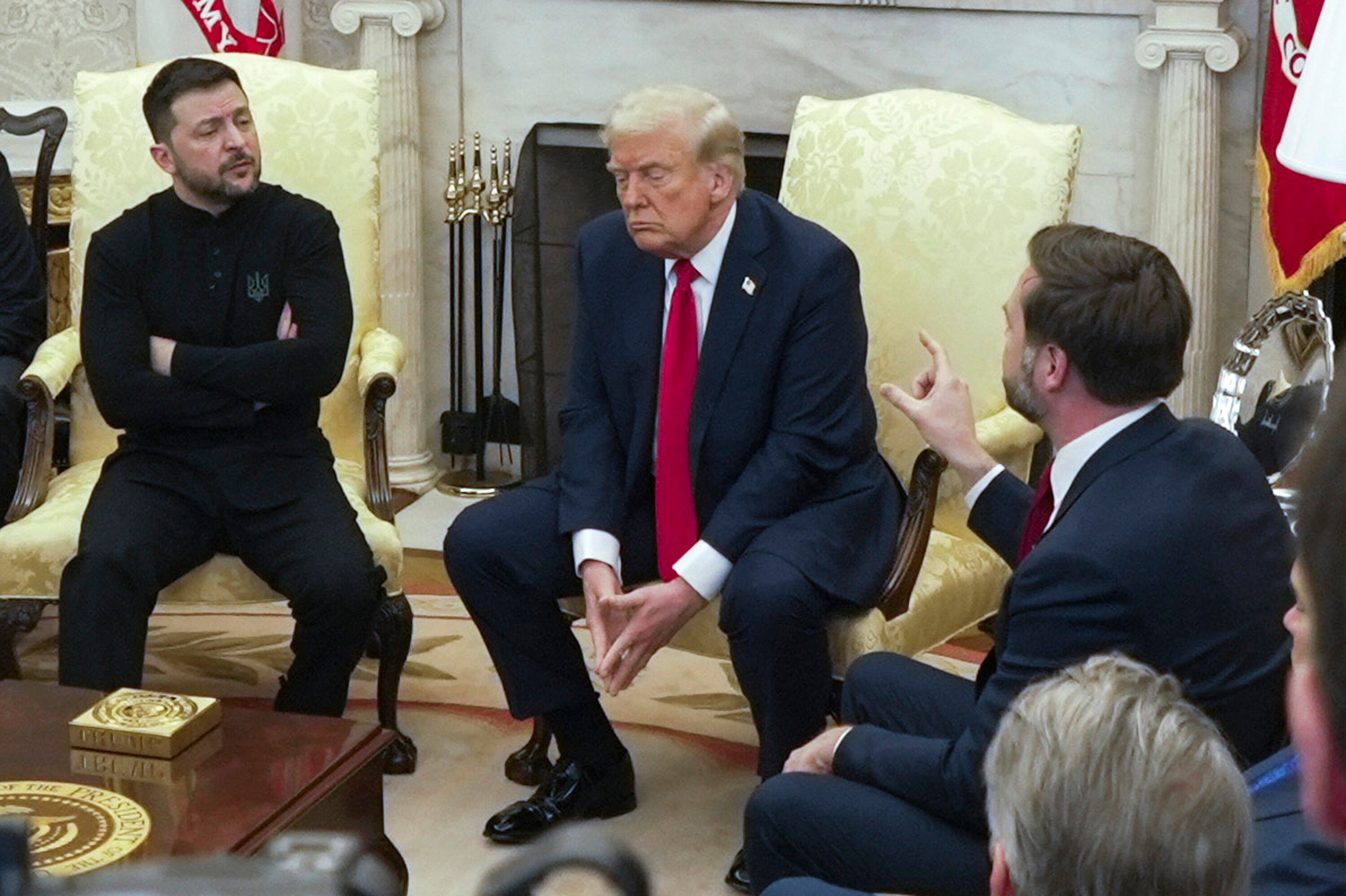
The last time the pair met in the Oval Office six months ago, the Ukrainian president was ambushed by both Trump and his deputy, JD Vance.

Trump’s comments will be warmly welcomed by Vladimir Putin, who held talks with his American counterpart in Alaska on Friday.

Russia is vehemently opposed to Ukraine’s aim of becoming a Nato member.

Putin told Trump that he wants Ukraine to give up the Donbas region of Ukraine as the price of any peace deal.

According to the Reuters news agency, that would see Kyiv fully withdraw from the eastern Donetsk and Luhansk regions in return for a Russian pledge to freeze the front lines in the southern regions of Kherson and Zaporizhzhia.

Trump said after the summit that he and Putin “has largely agreed” on land transfers and security guarantees for Ukraine.

In another win for the Russian president, Trump also U-turned on his previous calls for a ceasefire in the war before a full-blown peace deal.

But speaking in Brussels on Sunday, Zelenskyy said that was unacceptable.

He said: “We have to stop the killing. Putin has many demands, but we do not know all of them, and if there are really as many as we hear, then it will take time to go through them all.

“It’s impossible to do this under the pressure of weapons, so it’s necessary to ceasefire and work quickly on a final deal. Putin does not want to stop the killing, but he must do it.”

On Russian demands for Ukrainian territory, Zelenskyy said: “The constitution of Ukraine makes it impossible to give up territory or trade land. ”

Share Button

UK Reveals Deadly Reason Why Putin Wants Ukraine To Hand Over Unoccupied Land To End War

The Ministry of Defence has revealed why Vladimir Putin wants Ukraine to hand over large swathes of its unoccupied land to end the war.

In its latest intelligence update on the conflict, the MoD said Russia would be forced to fight for more than four years and suffer nearly two million casualties if it had to fight for it.

The analysis came as Putin set out his peace plans at a summit with Donald Trump in Alaska.

According to the Reuters news agency, the proposed deal would see Ukraine fully withdraw from the eastern Donetsk and Luhansk regions in return for a Russian pledge to freeze the front lines in the southern regions of Kherson and Zaporizhzhia.

But the MoD said: “Based on the rate of Russia’s incremental battlefield advances so far in 2025, it would take Russian forces approximately 4.4 more years to gain 100% of the four Ukrainian oblasts’ territory.

“Based on Russia’s average daily casualty rate in 2025 so far, as reported by Ukrainian general staff, 4.4 more years of war would lead to approximately 1,930,000 further Russian casualties (killed and wounded).

“This is in addition to the approximately 1,060,000 casualties Russia has already likely sustained since launching the full-scale invasion of Ukraine in 2022, including around 250,000 killed or missing (presumed dead).”

After his talks with Putin, Trump told Sean Hannity on Fox News: “I think we’re pretty close to a deal. Ukraine has to agree to it. Maybe they’ll say ‘no’.”

But speaking following talks with European Commission president Ursula von der Leyen in Brussels today, Ukrainian president Volodymyr Zelenskyy said: “The constitution of Ukraine makes it impossible to give up territory or trade land. ”

He said any such moves would need to be discussed at a three-way summit involving him, Putin and Trump.

Von der Leyen, also insisted that “international borders cannot be changed by force”.

Share Button

Trump Writes Post About Moscow That’s Absurd Even For Him

President Donald Trump on Sunday really reached to criticise outlets for their coverage of his peace talks with Russian President Vladimir Putin.

“If I got Russia to give up Moscow as part of the Deal, the Fake News, and their PARTNER, the Radical Left Democrats, would say I made a terrible mistake and a very bad deal,” he wrote on Truth Social. “That’s why they are the FAKE NEWS!”

Trump also said on Truth Social Sunday that an announcement on “BIG PROGRESS” in the negotiations was forthcoming, but some observers were still cracking wise over his sarcastic Moscow gripe.

Share Button

So THAT’s Why You’re Meant To Wash Jeans Inside Out

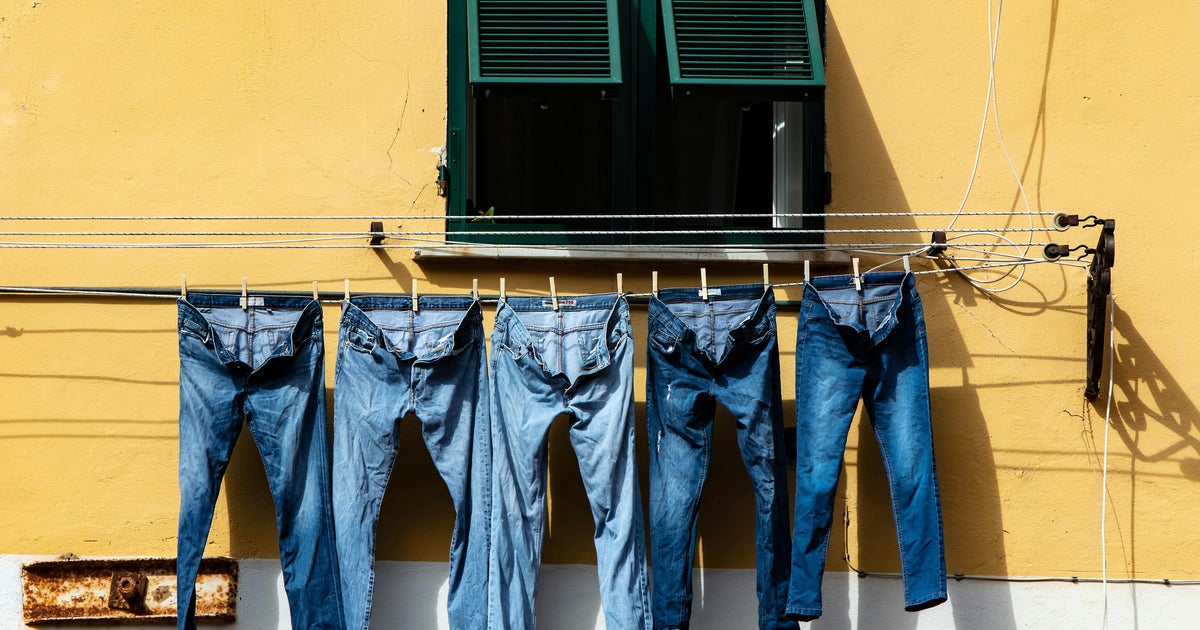
I never used to wash my jeans inside out, until I met my other half who – it turns out – knows quite a lot about laundry. He was adamant that jeans (and indeed many items of clothing) should be washed inside out.

But I never really understood why. It turns out I’m not the only one.

In a question submitted to The Guardian recent, reader Paul Williams asked: “Why does my wife make me turn my jeans inside out before they go in the wash? She doesn’t know either.”

There were 44 responses from other readers, at the time of writing, including this gem: “In Malaysia, I learnt to turn washing inside out to dry so that the hot sun could really get to any damp loving bugs lurking in the thicker seams.”

Another person said they’d assumed it was to stop the zips rubbing against, or catching on, other garments.

Why should you wash jeans inside out?

It’s actually to do with preserving the look of your jeans, according to Levi’s.

The denim brand advises to always turn jeans inside out before putting them in the washing machine.

“This simple (but usually neglected) step protects the outer colour from fading and minimises direct contact with chemicals and detergents,” the brand explained.

“This step is especially important for dark-wash and black jeans that are more prone to colour loss or transfer.”

Similarly, Guardian reader ‘rigoletto’ explained: “Denim is yarn dyed in such a way that the colour is only on the surface of the yarn. The dye particles are vulnerable to abrasion, which is why the fabric goes white at the stress points, where the original colour of the yarn starts to show through.

“Washing inside out reduces the chance of abrasion against the drum of the machine and premature fading.”

Makes sense.

Any other tips for washing jeans?

Yes! Levi’s suggested we should be washing jeans after roughly 10 wears, “unless they are visibly dirty or start to smell”.

Consumer watchdog Which? puts it at six to 10 wears.

When you go to wash your jeans, make sure all the zips and buttons are done up (to help maintain shape and prevent snagging) and use a mild detergent, avoiding fabric softeners (which can “leave a residue” on denim) where possible.

The best temperature to wash on is the coolest one, as higher temperatures can shrink your jeans and result in colour loss.

Happy laundering!

Share Button

Research Just Confirmed Why Bluey Is A Great TV Show For Kids *And* Parents

I’m not sure who loves Bluey more: my kids or, well, me.

No, actually, I do. It’s me. I know the names of most of the characters; Sleepytime is flat-out my favourite episode (I cry every time I watch it); and when I heard there was a Bluey movie in production, I actually gasped.

The show is often praised for it’s progressive approach to parenting – and for being entertaining, even for adults.

And it turns out there’s yet another reason to tune in to the Australian children’s TV show…

While the parenting lessons are great (they’re often either highly amusing, or heart-wrenchingly relatable), so too are the lessons kids can take away from the show – in particular, the themes of resilience, according to a new study.

Why is resilience important?

Resilience is the ability to cope when something difficult or bad has happened – it’s important for kids to learn and build on throughout their lives.

With one in five young people (aged 8-25 years old) in England thought to have a mental health disorder, and a health service that’s struggling to cope with demand, a lot of talk in the UK has recently shifted to improving children’s resilience as a solution.

Experts believe that encouraging better resilience in children and young people would help equip those with low-level mental health problems with improved coping skills.

You can read more on building resilience in kids, here.

If you haven’t yet watched the cartoon series, it follows a blue dog called (yep, you guessed it) Bluey, her younger sister Bingo and their parents as they try to navigate life’s highs and lows.

Researchers had the enviable task of watching 150 episodes (all three seasons) and found almost half of the episodes (48.7%) featured resilience as either a primary or secondary theme.

Bluey, the main character, featured in 54.8% of resilience storylines. Parents were the main facilitators (64.4%), with Bluey’s mum Chilli being the most common (46.6%).

Researchers concluded that the popular TV show frequently portrays resilience-building behaviours, especially through family relationships and coping strategies.

“These findings highlight Bluey as a strong example of how children’s television can support emotional learning and model adaptive behaviours relevant to real-life challenges,” the researchers said.

In a linked piece for The Conversation, one of the study’s authors, Bradley Smith, senior lecturer in Psychology at CQUniversity Australia, pointed out that research shows “the earlier we support resilience-building, the better”. And that early interventions can help build healthy coping skills.

He added: “Storytelling in films, books and TV can show children how to navigate challenges – not through lectures, but by modelling behaviours like emotional regulation, problem-solving and empathy.”

While TV shows can’t replace parenting and real relationships, Smith encouraged parents to watch episodes with their kids and to use them as conversation starters to discuss themes of resilience.

For example, he suggested you could ask them: what do you think Bluey felt then? Or, what would you do in that situation? Or how would you feel if that happened to you?

“Talking about what kids see on screen can help them reflect, process, and build the skills they need to cope, adapt and grow,” he added.

Share Button

‘My Boys, 8 And 11, Still Bath Together – My Friends Think It’s Inappropriate’

A parent has asked if they should be enforcing separate bath times now their sons are eight and 11 years old – and it’s proven to be a divisive topic.

Writing on Mumsnet’s Am I Being Unreasonable forum, the parent said their sons “adore each other and are pretty much inseparable, which also includes bath time”.

“I have never had a problem with them bathing together as that’s what they choose to do, but some of my friends who have children of a similar age have started making comments that it isn’t appropriate,” they said.

In particular, the parent’s friends have taken issue with the eldest son sharing a bath because he is approaching the age of puberty (the average age for girls to start puberty is 11, while for boys it’s 12).

The parent pointed out that they’re not making their children share a bath – they simply like bathing together. “I give them [the] option to bathe alone if that’s what they’d prefer, but they don’t want to,” they added, before asking if they should be enforcing separate baths.

Some commenters were of the opinion that their comes a certain age – usually when kids start secondary school or hit puberty – where it might be wise to start implementing privacy around bathing.

“I think this is [a] time where as their parent you start encouraging them to bathe alone. I do think it’s too old now and your eldest needs to start having some privacy,” said one respondent.

Another said: “I’d be enforcing separate bath times. I’d do it in a gentle way rather than make them feel they were wrong for it but they do need to know that bathing together isn’t appropriate.”

But there were also many commenters who didn’t see any issue. “Personally I think as long as they are happy, it is fine,” said one respondent.

“In the UK we are quite conservative about nudity, which influences people’s views. It would seem odd if you prevented then having a bath together when they are used to it. I imagine your eldest will decide to stop soon enough without your interference.”

Another said: “I imagine your elder son will decide soon enough that he doesn’t want to share anymore. I think if the boys are both happy with it then it’s fine.”

Is there an age when siblings should stop bathing together?

First up, consider safety

There is no strict clinical or legal age when children should start bathing independently, Dr Patapia Tzotzoli, clinical psychologist and founder of My Triage Network, told HuffPost UK.

“Readiness depends more on maturity, motor skills, and safety awareness than age, and parents should adjust for each child’s needs,” she explained.

In the UK, safety guidance states children under the age of five must never be left alone in the bath. Yet “between about five and eight years, parents need to stay nearby for supervision”, warned Dr Tzotzoli.

You can be gradually handing over tasks, such as teaching them how to properly wash themselves and wash their hair, during this time.

“The goal is to build autonomy and competence over time. Parents can start by framing bath time as their private time, important for relaxation and self-care. They should talk about privacy and use correct anatomical terms when discussing private parts with their children,” said Dr Tzotzoli.

“By around 8-10 years, many children can manage the full routine independently with an adult nearby and periodically checking on them,” the psychologist said.

A survey found the average age that adults believed a child could bathe alone was 7.5 years old.

Former sex education teacher Kathleen Hema suggests parents can start offering separate baths once safety isn’t a concern. “This age can be different for each child and when parents feel there is no safety risk,” she explained.

See how your kids feel about it

Once they’ve reached an age where safety is less of an issue, it’s worth telling your children they can bathe separately if they want – perhaps to gauge how they would feel about it, and whether they would want to.

“There’s nothing inherently wrong with siblings bathing together. Nor is there anything wrong with siblings bathing separately,” Hema told HuffPost UK.

“If the kids aren’t respecting each other during bath time (not respecting boundaries), then there is a reason to end it. Or if one kid says they want to bathe separately, then there is a reason to end it.”

It’s important to set boundaries from a young age around not touching other people’s genitals – including siblings.

“Ensuring safety and comfort for all siblings is the parent’s job,” Hema continued. “Parents can check in with their kids by reminding them they can shower separately whenever they want.

“They can also discuss privacy and what that means to them and let their kids know that they can request privacy at any time.”

Erica Miller, clinical psychologist and director at Connected Minds NYC, previously told Scary Mommy in her experience, children “begin to express more of a desire for privacy around 10 years old”.

Although she noted “this may come earlier for girls than boys who often begin puberty earlier”.

Ultimately, the time when siblings might no longer want to have a bath together can depend on a range of things – a child’s comfort levels, maturation, desire for more privacy, or simply wanting more space (it can be a tight squeeze in the tub as kids get bigger!).

If a child decides they no longer want to bathe with siblings, the important thing for us to do as parents is respect that wish.


Share Button

Trump Hints He Will Reward Putin’s Invasion By Demanding Ukraine Give Up Land

President Donald Trump hinted he would demand that Ukraine give up territory seized by Russian dictator Vladimir Putin during his three-year invasion and once again blamed Volodymyr Zelenskyy for getting invaded.

“I get along with Zelenskyy, but, you know, I disagree with what he’s done, very, very severely disagree. This is a war that should have never happened,” Trump said at a White House press conference of Ukraine’s president, Volodymyr Zelenskyy, and his recent statement that he cannot legally cede territory.

“I was a little bothered by the fact that Zelenskyy was saying, ‘Well, I have to get constitutional approval,’” Trump said. “I mean, he’s got approval to go into war and kill everybody, but he needs approval to do a land swap because there will be some land-swapping going on.”

Trump announced last week he would host a meeting with Putin in Alaska to broker a peace agreement, and his comments to reporters Monday are the most detailed about his view of what needs to happen to persuade Putin to end the war.

His insinuation that Zelenskyy was somehow to blame for Putin’s invasion was a repeat of his attacks on the Ukrainian president during his Oval Office visit in February.

“What you’re doing is very disrespectful to the country, this country,” Trump told Zelenskyy then. “You’re not winning this. You have a damn good chance of coming out OK because of us.”

Six weeks later, Trump outright blamed Zelenskyy for starting the war. “You don’t start a war with someone 20 times your size and then hope people give you some missiles,” he said in an Oval Office photo opportunity with Salvadoran president Nayib Bukele.

Trump called the coming summit a “feel-out meeting” and that he would afterward call Zelenskky and America’s NATO allies in Europe, who have since the 2022 invasion been eager to counter Russia and help Ukraine and even more so since Trump returned to office in January.

He added that his discussions with Russia and others led to his belief that Ukraine would have to give away land to end the war. “I know that through Russia and through conversations with everybody,” Trump said.

Trump’s special envoy, his friend from New York real estate days Steve Witkoff, met with Putin last week and apparently misunderstood what Putin was saying. Witkoff reported back that Putin was willing to give up two Ukrainian regions and keep a third, when in fact Putin’s offer was to hang on to all three in return for stopping his attacks.

Trump on Monday also repeated his lie that the US under former President Joe Biden had given far more help to Ukraine than had Western Europe. “Biden approved $350 billion. Europe has spent $100 billion,” he said.

In reality, Europe has provided more assistance to Ukraine from the start, both in weapons and economic help.

Trump is scheduled to go to Alaska on Friday for his meeting with Putin, his first such summit with him since 2018, when in Helsinki he said he took the word of the former KGB agent over his own intelligence agencies about Russia’s work to help Trump win the 2016 election.

On Monday, though, Trump, who is 79, twice conflated Alaska with Russia itself. Alaska has belonged to the United States since 1867, when it was purchased from Russia, then under the rule of Czar Alexander II.

“I’m going to Russia on Friday,” Trump said, explaining his coming trip. An hour later, preparing to leave the podium, he said it again: “We’re going to Russia.”

Share Button

‘Zone Zero’ Exercise Is The Workout You Don’t Even Know You’re Doing – Here Are Its Benefits

Good news for fellow slow runners: it turns out zone two cardio, which sees joggers plod along at a conversational pace, is incredibly good for us.

Professional runners spend about 85% of their training doing that sort of low-impact activity. It puts runners at about 60-70% of their max heart rate.

But if even that sounds a little too much, zone zero movement (yes, really) might be the under-appreciated, super-low-effort way to keep you active without a pricey gym membership or even a pair of trainers.

Never putting your heart above 50% of its max rate, it can be done accidentally – it’s that easy and approachable.

What is zone zero training?

Primary care organisation The Lanby describes zone zero training as a kind of “active rest” – it “aids in active recovery, ensuring your body is ready for the next challenge”.

It means your heart rate never goes above half its maximum level, as we mentioned above. Your max heart rate changes by age: in general, it’s calculated by subtracting your age from 220.

So, say you’re 30 years old. Your max heart rate is around 190; and zone zero training will never see your pulse go above 95 beats per minute.

It can include slow walking, gentle cycling, and yoga. But popping to the shops, doing a bit of light tidying, and pottering around in the kitchen count too.

What are the benefits of zone zero training?

Zone zero training is not only a great way to make exercise accessible to those who might find the idea of a full-on workout a bit much, but active recovery also benefits active people as it helps to flush out waste material that builds up in tired muscles.

Some experts think that those who work out might subconsciously compensate for the added load by not engaging in zone zero moves (like tapping your foot or taking an extra few steps) throughout the day. Remembering to include zone zero work in your routine might help this.

Taking a short stroll after eating, in particular, might help to even out your blood sugar, too. And some suggest that pottering can keep you alive for longer.

What are some examples of zone zero training?

These can include:

  • Stretching at your desk
  • Light walking
  • Yoga
  • Walking meetings
  • Rolling your feet on a roller or ball as you work
  • Gently yoga
  • Slow cycling
  • Tidying
  • Cooking.

Parking a couple more metres away from work than usual or popping to the shops instead of ordering in can all add up.

That’s not to say that zone zero training should replace current health guidelines – the NHS says we should stick to 75 minutes of high-intensity or 150 minutes of moderate-intensity (over 50% of your max heart rate) activity a week.

Not doing so has been linked to shorter, less healthy lives.

Still, going from no activity to some has enormous health benefits too – and whether you find yourself intimidated by intense exercise or are struggling to properly recover from your most hardcore workouts, zone zero may offer an approachable answer.

Share Button

The 1 Response To Have Up Your Sleeve When Kids Say ‘I’m Bored’

Today, 12 August, is the day that kids reach peak school summer holiday boredom, apparently – yet chances are you’ve already heard your fair share of ‘I’m bored’ and ‘can you play with me?’ comments over the six-week break.

If this resonates, parents on Reddit might just have a handy retort to try which can encourage kids to either help tick things off your daily to-do list – or go off and play with something while you get things done.

In a recent post on r/Parenting, a parent of a nine-year-old said if their son isn’t allowed on the Playstation or iPad, “he literally follows us around the house”.

“We suggest all types of things and he doesn’t want to do any of them,” said the baffled parent before listing all the toys available to him. “He just doesn’t want to do anything by himself.”

They asked Redditors (and fellow parents) for tips on how to get their child playing independently – and the top comment has been upvoted over 400 times for good reason.

“When mine follow me around while I’m doing chores, I give them a chore to do,” said the parent of a three- and five-year-old.

“I’ve told them ‘if you keep following me around while I’m doing chores, I’m gonna give you a chore to do’ and when I say that they’ll usually go find something else to do.”

“I do this, too,” said another parent. “Half the time they help. The other half, they pout and storm off into their room. Within 10 minutes or so, they miraculously remember they have toys, crayons, books, and imaginations.”

It turns out this incredibly simple response seems to encourage a lot of kids to find something else to do, sharpish.

“I started doing this when my 6 year old whines about how bored she is. She usually takes off and hides,” said one commenter.

Another affirmed it worked on them growing up: “Was raised on ‘if you tell me you are bored, I’ll find a chore for you.’ Can confirm this works.”

And it turns out getting kids involved in chores could benefit them well into adulthood.

A 75-year study from Harvard found that children who were encouraged to do chores around the house were more likely to be happier as adults, have more empathy towards others, and be more successful in their careers.

Listing the benefits, a paediatrician from Utah – known as TikTok Kid Doc – said “having your children do chores gives them a sense of self-worth and it helps them to realise that they’re contributing to a larger ecosystem”.

“They become more selfless, they become more willing and able to see the needs of other people around them.

“Chores also strengthen family bonds with siblings and with parents. And chores help to instil a better work ethic which translates pretty well into school and career success.”

Using this hack today, tomorrow and always.

Share Button

Trump Has Already Handed Putin A Win By Hosting Peace Talks In Alaska

Donald Trump has announced that he will be meeting Vladimir Putin in the American state of Alaska on Friday to discuss ending the Ukraine war.

It could be pivotal moment in the conflict, even though no one from Europe – including Ukrainian president Volodymyr Zelenskyy – is thought to be invited to the talks.

This has sparked major concerns that Trump will prioritise Putin’s demands to end the war over Ukraine’s.

The US president has already said there may be a land swap in exchange for peace, evidently overlooking how Russia started the war and occupies 20% of Ukraine.

While the talks themselves will have given the Kremlin a boost, choosing to hold them in Alaska will have caused further celebration in Russia.

Putin’s aide Yuri Ushakov told Russian state news agency TASS: “Russia and the US are close neighbours, sharing a common border.

“It seems quite logical for our delegation simply to fly across the Bering Strait and for the important and anticipated summit of leaders of these two countries to take place precisely in Alaska.”

They were expected to travel to neutral territory – Putin himself suggested the United Arab Emirates – but Trump has persuaded the Russian leader to come to the States.

That means the US president is allowing Putin to circumvent the arrest warrant the International Criminal Court has out for him, as he does not have to fly over hostile countries who could try and apprehend him, for the talks.

The US does not recognise the jurisdiction of the ICC so he will not risk arrest in the States.

It will be the first time he has visited the US in a decade, having last travelled to the States during Barack Obama’s second term.

It’s a small victory for Trump too, because it seems like he has the upper hand by forcing Putin to come to him on his territory.

But there’s also a historical element to the meeting place, because Alaska used to Russian territory before it was sold to the US in the 19th Century.

A Russian negotiator, Kirill Dmitriev, who attended US envoy Steve Witkoff’s recent meeting with Putin, even called Alaska “a Russian-born American” which reflects the ties between their countries.

Russian nationalists have also repeatedly called for the land to be returned to Russia over the years.

Former Russian president and Putin ally, Dmitry Medvedev – who is now a senior security official – claimed in January 2024 that the US should return Alaska to Russia.

Share Button