Most Voters Want A General Election By Next Summer, New Mega-Poll Reveals

Most voters want a general election by next summer – with one in three demanding one as soon as possible.

A new mega-poll also shows that just 17% want to wait until next autumn to give their verdict on Rishi Sunak’s government.

The prime minister confirmed earlier this month that the general election will definitely take place in 2024.

However, it is still unclear whether the PM will opt to go to the country in the spring or wait until the autumn.

The latest the election can possibly be is January, 2025 – an option supported by just 9% of the public.

According to the poll of more than 10,000 by Focaldata for the Best for Britain group, 61% want it to be held by June. Of those, 36% want it to be as soon as possible.

The findings echo a separate poll by the More in Common think-tank, which found that 73% want an election my next May.

The Focaldata poll also found that 38% of voters would consider voting tactically to change the government, with just 13% saying they would do so to keep Sunak in No.10.

Rishi Sunak must decide whether to go to the country in the spring or autumn.

JACOB KING via Getty Images

Meanwhile, Keir Starmer is the most popular choice to be prime minister in 390 of the country’s 650 constituencies, including Sunak’s seat of Richmond.

The poll also showed that three-quarters of Brits believe that Brexit has increased the cost of their weekly shop, while nearly two-thirds think it has stunted the UK’s economic growth.

Naomi Smith, chief executive of Best for Britain, said: “The message in our polling from voters is clear – they want an election, they think Brexit has hurt them in their pockets, and they’re prepared to vote tactically for change.

“Labour may be on course for a victory, but under our broken electoral system nothing can be taken for granted.

“With the possibility of Nigel Farage’s party offering a life raft to his vulnerable friends on the Conservative right, tactical voting will be more important than ever.”

Share Button

4 Ways The Global Political Landscape Could Change Dramatically In 2024

A staggering proportion of the world’s population will be able to head to the ballot box for major elections next year – a fifth, in fact – meaning the international stage as we know it could look very different next year.

Of course, politicians will probably still be grappling with many of the global issues which appeared in 2023 – the international cost of living crisis; the IsraelGaza war; the UkraineRussia war; post-pandemic recovery; the climate crisis; among plenty of other geo-political issues – and that’s before we even look at domestic politics.

But, new faces in positions of power could help trigger incremental changes, which ripple around the world.

The first election will kick off in Taiwan, in January, but there will be total of 40 national elections, representing 41% of the world’s population (and 42% of GDP, according to Bloomberg) throughout the year.

So, just changes could a batch of newly elected political leaders bring – if any at all?

Here’s a look at just a handful of the elections which could have major consequences for international diplomacy.

1. UK’s general election

Rishi Sunak, right, and Keir Starmer, left, will go head to head

WPA Pool via Getty Images

Looking at the most immediate change next year’s elections may bring, let’s start with the UK’s general election.

Technically, the Conservatives could choose not to call a slightly early election and hold on until January 28, 2025.

However, PM Rishi Sunak has said, “2024 will be an election year,” and there is speculation the Tories will call a snap election for May, after the date of the spring budget was announced.

The Conservatives are trailing in the polls though, meaning Labour’s Keir Starmer is widely expected to get into office. That would be the first time the party has been in Downing Street since 2010.

He is expected to improve the relationship between the UK and the rest of Europe in the wake of Brexit, and has vowed to provide 100% clean power by 2030 – following serious backlash over the Tories’ decision to water down green pledges – and plans to bring in 1.5 million new homes over the course of he next five years.

Labour want to invest an extra £1.1 billion in the NHS, too.

It’s perhaps not surprising then, that an Ipsos poll from October found voters think a Starmer-led Labour government is more likely to improve public services, offer a fresh start for the country, act with integrity and reduce regional inequalities.

2. US’s presidential election

US president Joe Biden and his Republican predecessor Donald Trump are expected to run as opponents again in November

via Associated Press

Looking further afield, people in North America head to the polls on November 5, 2024 – the last election of the year. The winner will serve four years from their inauguration on January 20, 2025.

The Republican Party is yet to choose their final candidate, but it is widely expected that former US president Donald Trump will be on the Republican ticket against the incumbent Joe Biden will be on the Democrats – just like in the 2019 race.

Trump has been charged in four separate criminal cases and could be put on trial as soon as March. He has pleaded not guilty in all cases, but two states have already removed him from the primary ballot, Maine and Colorado.

However, if he does still manage to get into the Oval Office again, he has already hinted he would be even more controversial than in his previous stint.

He has accused immigrants of “poisoning the blood of our country” and has called “communists, Marxists, fascists and the radical-left thugs” “vermin”.

Trump has announced plans to “dismantle the deep state” too.

On the international stage, there’s a chance his presence in the White House could impact the Ukraine-Russia war in Vladimir Putin’s favour, while US-China tensions could skyrocket, too.

3. Russia’s presidential election

Vladimir Putin is almost certainly going to be re-elected in the Russian presidential election

DMITRY ASTAKHOV via Getty Images

Vladimir Putin is almost definitely expected to win this election with a staggering proportion of the vote. As an authoritarian leader, he has been in office since 1999.

Set to take place in March 2024, the Russian election is not exactly going to be a level playing field.

Putin’s press secretary Dmitry Peskov told the New York Times that the “presidential election is not really democracy, it is costly bureaucracy”, and that Putin would be “re-elected next year with more than 90% of the vote”.

However, Peskov later claimed his comments had been interpreted “in an absolutely the wrong way”.

Still, Putin has no main political opposition – his primary opposition, Kremlin critic Alexi Navalny, in currently in a penal colony beyond the Arctic Circle as part of his 19-year sentence for extremism charges.

Another candidate, former TV journalist and anti-war campaigner Yekaterina Duntsova, has been banned for running against Putin supposedly after errors were discovered on her application.

That doesn’t mean there’s no risk for Putin, though.

As Chatham House pointed out, elections where there’s just one contender up for office again and again means they still have to “match or beat their own results in prior votes to maintain a winning image” – that could be a challenge, considering the fatigue towards the Ukraine war creeping into Russia.

Still, a fifth term of Putin would strengthen and legitimise his efforts in Ukraine, especially as this will be the first presidential election since he ordered the invasion back in February 2022.

In that time, Putin has been declared a war criminal by the International Criminal Court, thousands have fled the country and at least 300,000 mobilised to fight in the war.

4. Taiwan’s presidential election

Taiwan's Vice President William Lai and frontrunner in the presidential elections
Taiwan’s Vice President William Lai and frontrunner in the presidential elections

via Associated Press

Taiwan may not be a huge country but the results of its presidential election in January could rock the boat for both China and the US.

Taiwan, split from China in a civil war in the 1940s, has since become self-governed with democratically elected leaders and around 300,000 active troops in its armed forces.

Beijing, however, thinks Taiwan should still be part of China – and has repeatedly hinted at seizing the island.

The US has irked China by offering Taiwan the means to defend itself, even if the White House insists that it does not officially recognise the state’s independence.

China has warned it will use force if Taiwan ever formally declares independence, while Taiwan has maintained it is still an independent state and it will still protect itself.

So, tensions are pretty high ahead of Taiwan’s January 13 elections – especially as the island plays an essential role in the global economy because of its supply of microchips.

China is expected to look for means to undermine the ruling Democratic Progressive Party in any possible.

Right now, Tsai’s DPP vice-president William Lai, is the frontrunner and known for pushing for formal Taiwan independence, which means Beijing is desperately hoping he does not get into office.

Meanwhile, his main opposition, the candidate for the nationalist group Kuomintang, Jaw Shaw Kong, is looking to build a relationship with China by suggesting one day the two can be reunited again, without any form of war.

There are domestic issues at play, too, such as rising costs and a housing crisis, which has helped populist candidate Ko Wen-je of the Taiwan People’s Party win support. He has also promised to build a better relationship with Beijing.

Lai and the DPP are expected to win an unprecedented third term, but on a narrow margin – and the election itself could still mean China gets a chance to strengthen anti-DPP propaganda on social media.

Share Button

Manager Of Rishi Sunak’s Favourite Football Team Delivers Brutal Snub To PM

The manager of Rishi Sunak’s favourite football team has delivered a brutal snub to the prime minister.

Sunak was at the St. Mary’s Stadium yesterday to cheer on Southampton as they beat Plymouth Argyle 2-1.

But speaking afterwards, Southampton boss Russell Martin said he had “no interest” in meeting the PM.

Sunak has often spoken about his love for the Saints, who are currently third in the Championship.

He was pictured being greeted by fellow supporters at yesterday’s match.

In his post-match interview, Martin was asked if the prime minister had come down to meet the team after the game.

The manager replied: “He might have come down, I’ve got no interest in saying ‘hello sir’. How’s that for honesty?”

Martin was praised on social media for his comments.

One user on X (formerly Twitter) described him as “an absolute legend”.

Share Button

I Hid My Disability At Work For 6 Years. When I Stopped, My Entire Life Changed.

In 2002, I planned a monthlong solo trip to Australia.

On my second day on the trail, while crossing an ankle-deep stream, I slipped and my body flipped 180 degrees. I hit my head and then rolled off the side of a waterfall. The waterfall was about 3 feet high and I landed in a reservoir pool. A German tourist, who happened to be there, dragged me out of the pool.

After the fall, I sat on the riverbank — stunned, confused and very concussed — while my tour leader climbed down the bank to meet me.

“Do you want medical attention?” the 20-something tour leader asked.

My mind flashed back to the medical insurance I had booked for the trip. “Emergency helicopter evacuation costs an additional $250,000,” it read.

“I’m OK,” I replied quickly.

On the short hike to our base camp, I repeatedly tripped and bumped into things. My clothes were covered in blood and my body had cuts and bruises everywhere. I stayed at camp and skipped the hikes for the remaining two days. When I finally got back into Sydney, I walked into the hotel lobby and a guest looked at me before loudly announcing, “Can someone get this woman medical attention?”

With my cuts, bruises, disoriented demeanour, and the same muddy and torn trail pants, I can only imagine how alarming I looked.

At this point, I was too concussed to evaluate what my medical insurance would or wouldn’t cover. And so I refused medical attention and assured the staff I just needed to rest.

A few days later, I flew back to the States.

As my bruises and cuts healed, I thought the worst of it was over. I saw a doctor in New York who ran some tests.

“Everything looks clear to me. You’ve just had a bad concussion,” he said.

Before the accident, a regular day of my life included a 5 a.m. workout, working my corporate marketing job until 10 p.m., and then attending weekday drinks out with co-workers, friends or clients. Somehow, among all that, I maintained a social life and part-time freelance gigs.

A few months after returning from Australia, my co-workers and I were invited on a yacht trip hosted by Forbes magazine. As the boat left the dock, I knew something wasn’t right. I felt disoriented, unwell, and struggled to hold a conversation. I sat in one spot for the whole trip.

When we got back to the harbour, I held onto the rail as I took careful, unbalanced steps. “Wow Jill, it seems like you didn’t hold back on those cocktails,” a co-worker teased.

I hadn’t drunk at all. One of my colleagues helped me into a cab, and I assumed I was seasick.

A few more months went by and I attended a business lunch where something similar happened. I was looking out the windows of the restaurant watching the curtains float in the breeze and cyclists zoom past. I felt woozy and as if I were underwater. I couldn’t concentrate on what my colleagues were saying. When I tried to go to the bathroom, I struggled to stand up. My body flopped back into the chair like a rag doll.

“I think I need to leave,” I said. Strangely, I returned to the office for the rest of the workday. Somehow, I made it back in one piece.

“I don’t know what’s wrong with me but I’m seriously not right,” I remember thinking. I was scared.

I booked countless doctor appointments. Whenever a specialist realised they didn’t know how to help me, they stopped answering my phone calls. I had no answers. I was determined to figure it out so I started tracking my triggers: constant movement in my line of sight, flickering lights, loud ambulance sirens, the brakes of the New York City subway screeching to a stop, loud baritone voices — and the list went on. In other words, New York City had transformed itself from a bustling wonderland to a total vestibular nightmare.

Even though I was noticing triggers, I still had no explanation for regularly appearing drunk, slurring words, being unable to concentrate and exhausting easily.

Without a diagnosis or even the vocabulary to describe what was happening to me, I felt a tremendous amount of shame and guilt. I must have done something wrong. How could I be so dumb? I also feared what my injury would mean for my job security. It felt like everyone around me associated value only with high levels of productivity. I had reason to believe that my worth was based on my output. Who wants someone with an undiagnosed head injury on their team?

It is estimated that 10% of people in the United States have an invisible or non-apparent disability. I’d like to think that corporate culture has more awareness and training on disabilities than it did in the early 2000s. However, research shows that there’s still a long way to go. According to Harvard Business Review, most people with non-apparent or invisible disabilities choose not to disclose these to their managers for fear of being seen as less capable and having their career progress stalled.

In the years following my injury, my brain’s default was: If they know, I will lose out on opportunities. Eventually they will fire me. And if I lost my job, then the unthinkable would happen: I’d lose my employer-sponsored health insurance.

Outside of rent and food, all my income was going to medical practitioners that weren’t covered by insurance. Some years, I was paying $50,000 in medical bills (half my salary). I resented that I worked just as hard but I didn’t have the same financial freedom my co-workers had. (I was often asked why I didn’t own an apartment yet and the implication was that I must have spent all my money on shoes.) But without a steady income and health insurance, the diagnosis and treatment plan I desperately wanted would never happen.

For six years, I didn’t tell anyone at work, including HR. As the years went on, I occasionally opened up to a boss whom I saw as an “ally.” Most of the time, they didn’t really listen to me (or my admission was viewed as an inconvenience or it was a “private matter” like getting my period).

And so, I stopped speaking up. I tried to manage triggers as best I could to hide my disability. But “sucking it up” was slowly killing me. My symptoms were getting worse and my vestibular attacks were becoming longer and more frequent.

My catalyst to change my circumstances was a horrible appointment with a neurologist.

This doctor informed me that — to prevent continued deterioration — I needed to avoid all forms of transport or I’d eventually be completely bedridden because, after all, he had “seen this before.”

“Enough! You don’t get to tell me how my life is going to play out” was my primary thought. I resolved to figure out a solution for myself, since health care had failed me.

I read every book, web forum and magazine on brain health. Learning about vestibular disorders and accessing the vocabulary to describe my condition was my ultimate breakthrough. I realised it wasn’t all in my head. I learned why certain triggers caused vestibular attacks.

Discovering clinical language empowered me to be able to describe what I was experiencing. It also gave me evidence of triggers to avoid.

At this point, I had advanced to a higher level of leadership in corporate. My role in the company coupled with my deep knowledge of brain injuries meant I was able to advocate for myself.

I was no longer asking for permission to have my accommodations met.

Instead, I would simply ask people if they could stop swaying their bodies so we could finish our conversation. Or I’d ask them to please quit shaking their leg, which vibrated the floor and therefore me. Or to please cease pounding the conference room table when they wanted to make their point. I clearly explained that these actions created vibrations that triggered my vestibular disorder. It was not easy for people to understand or remember.

My entire life changed.

I started setting healthier work boundaries. I unequivocally prioritised my health. When I was working, I was fully present. Eventually, I transitioned into entrepreneurship, because I knew my skill set could be expertly translated to coaching and helping people working in corporate with their career strategy ― and I could maintain higher quality health on my own schedule.

From my own informal research, so many people with disabilities work for themselves because it’s often a more predictable environment than working for an employer.

Looking back, I wonder if my journey would have been different if I had felt comfortable telling people about my disability. Perhaps it would have if there was more awareness and compassion toward people with non-apparent and invisible disabilities. If employer handbooks mentioned non-apparent and invisible disabilities, maybe I would have felt safe speaking up. Or maybe when I did address my disability with leadership, my condition would have been met with compassion rather than criticism.

Instead of living in hiding for six years, perhaps it would have taken me one year to own my disability. Or a few months. Instead of living with shame and guilt, maybe I would have experienced a more inclusive experience.

I often describe my head injury as a gift. Because of it, I am a better leader. I have heightened empathy, I have more compassion, I seek diversity and inclusion in all spaces, and I have a totally positive outlook on life. Anything is possible. But it took me decades to realise this truth.

I truly hope to live in a society that makes this journey easier for anyone else who is born with — or acquires — a non-apparent or invisible disability. This all starts with a culture of support, openness and compassion.


Share Button

Are Onions The Reason For Your Stomach Issues?

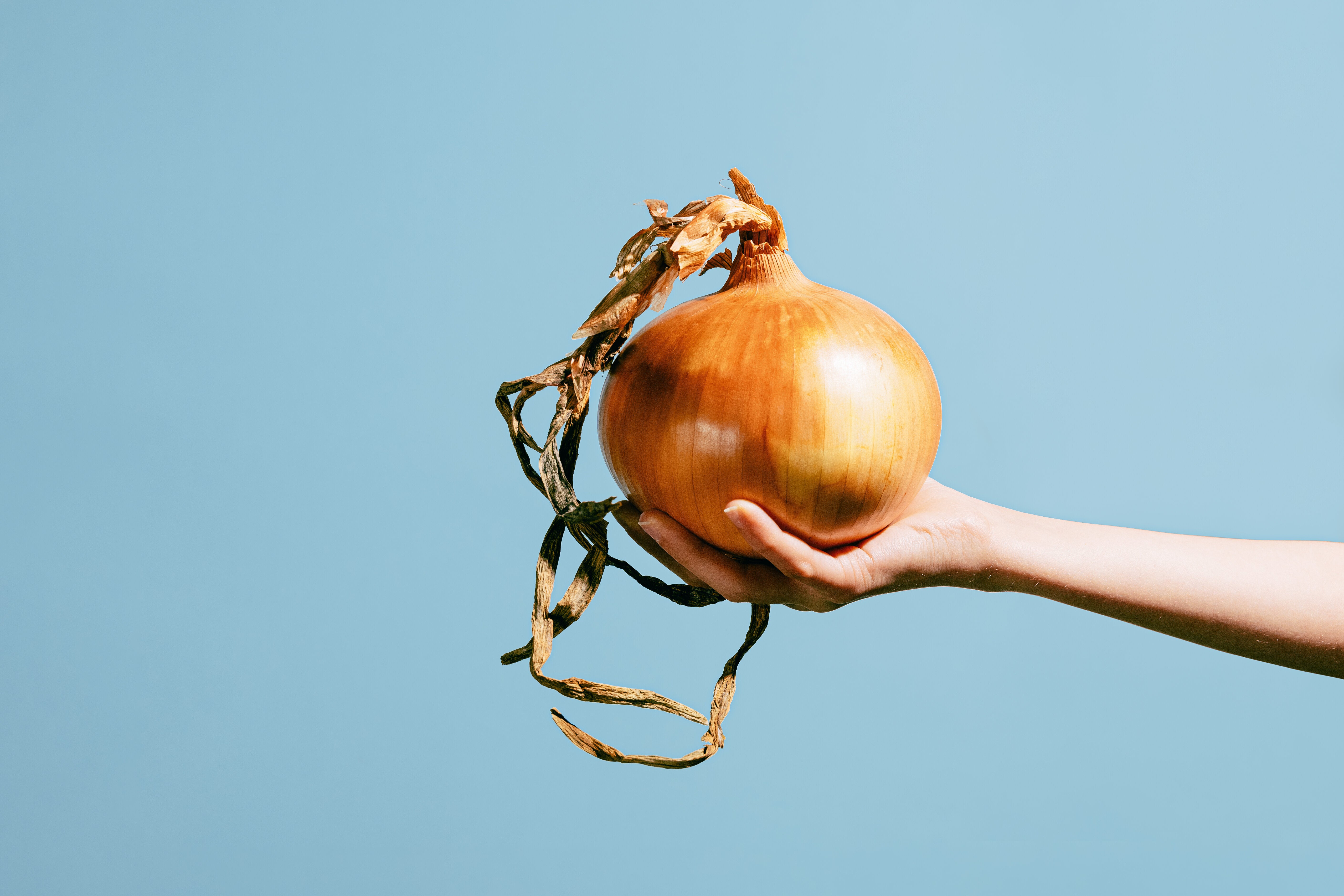
Onions are found in most cuisines across the world. They’re cheap, they have a good shelf life and they grow year-round. About 6.75 billion pounds of onion are produced each year just in the United States, according to Colorado State University’s food source database, and global production reaches as high as 105 billion pounds per year. You probably have onions in your pantry, and they could even be in the food you are eating right now.

But did you know onions may make a large portion of the population feel sick?

Yes, the onion and its relatives (chives, shallots and even garlic) can cause a wide range of symptoms including gastrointestinal distress, migraines and, though rare, anaphylactic shock. And yet onions are found everywhere. U.S. consumption has grown 70% since 1982, according to the National Onion Association.
But for some people, onions can be part of a recipe for disaster. For patients with irritable bowel syndrome, or IBS, onions are “one thing most of our patients can’t tolerate,” said Dr. Jane Muir, associate professor and head of translational nutrition science at Monash University. Onions and garlic are high in fructan, a carbohydrate found in many fruits and vegetables that many people cannot digest well and can cause bloating or diarrhoea. The Cleveland Clinic estimates that 10% to 15% U.S. adults have IBS, so that’s a lot of folks who may have issues with onion and garlic.

Some people may even have an allergic response to onion, but that is far rarer. In a patient registry maintained by the organisation Food Allergy Research and Education, “139 of 11,411 individuals (or 1.2%) self-report as having an onion allergy,” said Dr. Bruce Roberts, chief research strategy and innovation officer at FARE. While you have to take the numbers with a grain of salt since they are self-reported, a 2020 Spanish study of garlic and onions had similar results, with 1.1% of people reporting an onion and garlic allergy.

While it may be a rare allergy, it is more common as a food intolerance. “Onion and garlic are common [food intolerances] that I definitely hear” from patients, said Dr. Kara Wada, assistant clinical professor in allergy and immunology at Ohio State University. The other two common categories of food intolerances that she regularly sees are lactose intolerance and fructose intolerance.

Dr. Sai Nimmagadda, attending physician and clinical assistant professor of allergy and immunology at Northwestern University, estimated that 1%-5% of his patients have reported some kind of onion sensitivity. When asked, Wada said that figure was comparable to her practice. But the actual number of people with an onion and garlic food intolerance in the U.S. or elsewhere is not currently known due to challenges in testing for it, and is likely to be higher.

However, cases of food intolerance, along with food allergies, are rising according to all the doctors interviewed in this article. Given the significant amount of onions and garlic consumed, it’s not something to sniff at. The Spanish study mentioned above concluded, “Allergic hypersensitivity to garlic and onions should not be underestimated and, given their high consumption, should be included in the diagnostic food allergy battery.”

So what’s the difference between a food allergy and food intolerance? The latter is “a condition when the body is unable to digest or absorb certain nutrients,” explained Dr. Ruslan Medzhitov, professor of immunobiology at Yale University and chief scientific officer at the Food Allergy Science Initiative. The offending nutrient then builds up in the gut and draws in water, which causes bloating and diarrhoea.

Then there are allergies. These involve the immune system, which attacks the noxious food in the gut. There are two types, Roberts noted: IgE mediated response and non-IgE mediated response. The former is what most people think of as an allergy; when someone ingests, inhales or comes into contact with an allergen, the entire body reacts, involving multiple organs like your skin and your cardiovascular and respiratory systems. It’s pretty immediate and can be lethal.

Non-IgE mediated responses tend not to be quite as potent and are less likely to be life-threatening. The reaction tends to be delayed by a few hours and can cause nausea, vomiting and/or diarrhoea.

While food reactions can cause headaches, Roberts noted, “The question concerning migraines is challenging because patients can experience headaches due to sinus congestion in the case of IgE mediated food allergy or anxiety but not a true migraine. The literature suggests food intolerance is more likely to trigger a migraine.”

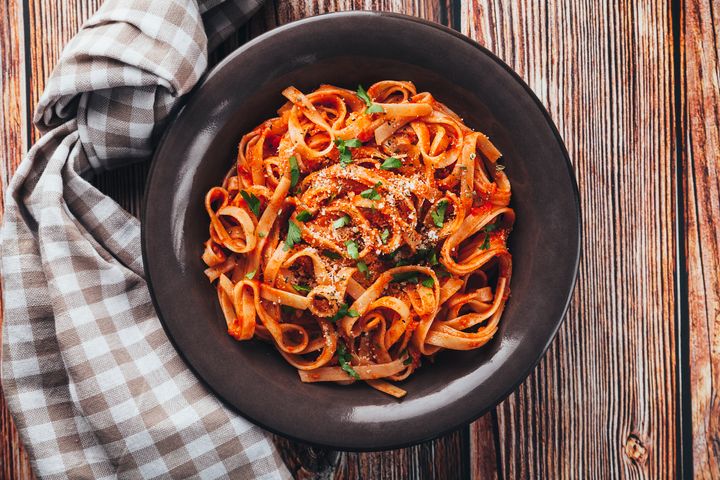
See that marinara sauce? It's probably has onions in it.

Cris Cantón via Getty Images

See that marinara sauce? It’s probably has onions in it.

As to why food intolerance could cause migraines, Roberts noted that the gut-brain connection is strong. There are sensory receptors in our guts that will send up signals to the brain that “there’s something amiss,” he explained.

“And so that’s when you have things like nausea, headaches and other things,” Roberts said.

Getting To The Root Cause

While it stinks to have a true onion allergy, researchers and medical professionals know a lot more about IgE mediated allergic reactions since they are something that can be tested for and possibly treated. Non-IgE mediated allergic response and food intolerance are a lot harder to uncover, Roberts pointed out. There’s “no reliable testing [for food intolerances] worth spending your time, energy or money on,” Wada added.

So it’s a challenge to know exactly how many people have an intolerance to onion or garlic without an easy way to evaluate for it.

On top of it all, Nimmagadda said the challenge is that “there’s a lot that we don’t understand about foods.” Food is so complex, filled with all sorts of proteins, carbohydrates, lipids and more; humans are all different, including the microbiome in our stomach. For instance, he noted, “I’ve had some patients that cannot have Chilean wine, but they’re fine with Italian wine.” And of course, there’s such a spectrum of reactions on top of it all. Wada noted that someone may have issues with fructan in the onions and garlic, or something else like the sulfites in it.

The symptoms and root causes of food intolerances can also differ from person to person. For instance, people with food intolerances may be able to tolerate a certain quantity of onions, or cooked onions. But when the person eats over that threshold or eats raw onions, that’s when all bets are off. Nimmagadda noted that cooking onions can degrade some of the proteins that cause people trouble. However, he said cooking food can sometimes make the reaction even stronger, such as with peanuts. (Raw peanuts are less potent than cooked peanuts.)

It’s important to note that people with a food allergy cannot tolerate any amount of the allergen.

You may not know what is actually causing your upset stomach or your migraine. It could be the sauce that you put in your favorite dish or maybe the ingredient not even listed on the restaurant menu.

So how do you figure it out? All the doctors recommended seeking medical professionals if you suspect a certain food or foods are bothering you. Nimmagadda recommends keeping a food diary so that you may be able to correlate your symptoms with the foods you eat and even the quantity of food. Working with a doctor and a reliable food allergy may help to figure out which food is problematic for your system. Perhaps it’s a single restaurant that’s causing all your digestive problems.

For people medically diagnosed with IBS, there’s the FODMAP diet, developed by Muir and her colleagues at Monash University. FODMAPs are a variety of carbohydrates that are naturally found in food that can trigger symptoms; onions and garlic are one of the offending foods.

The basic idea is that for two to six weeks you swap out high-FODMAP foods with low ones and then gradually introduce them back into your diet one at a time. Muir said, “It’s a learning diet or process where people have to learn which of their FODMAPs [are causing problems] because everyone is different.” But she noted that this diet is intended only for people medically diagnosed with IBS and collaborating with a dietitian.

Hold The Onions

For many people, avoiding the offending food might be the best practice, but that’s not always possible when we eat food that we haven’t cooked ourselves. Nimmagadda said you can talk to the chef about what’s in the food to get in front of any unpleasant surprises. Or maybe find restaurants that you’ve had a favourable history with. Definitely let people who cook for you know about it.

If you have been feeling less than stellar after eating, it may be time to investigate whether you have an intolerance, or worse, an allergy to onions or other food. Nimmagadda summed it up best: “Educate yourself; know your body, know your symptoms, and then seek out treatment. Get evaluated. You can find solutions. You don’t have to live with this.”

Share Button

The Best Cocktails To Make For Your New Year’s Parties

The holidays traditionally are for getting together with the people you love most. Tradition also holds that it’s the season of office parties and other semi-mandatory affairs. Whether you’re attending the next cocktail (or ugly sweater) party excitedly or begrudgingly, a good cocktail is likely to improve the evening.

While there’s nothing wrong with hot toddies or spiked eggnog (actually — I take it back, there’s plenty wrong with eggnog), an expert-designed seasonal cocktail could be a nice change of pace. Warm your bones with one of these recipes, shared by some of New York’s most impressive bars and restaurants, and give your guests the gift of a good, stiff drink.

You may have to make a trip to a bar specialty store, or, you know, the internet, to pick up some of the requisite ingredients, but we’ve included tips for substitution whenever possible. You’ll want a basic bartending set with a cocktail shaker, strainer and muddler to make these. We’ve also suggested glassware and garnishes for each cocktail, if you’re going all out. Also, flavoured syrups aren’t a bad investment — they’ll taste great in your coffee on Christmas morning.

When Smokey Sings

Courtesy of Casa Ora

Not into eggnog? Good news: You can offer your guests something comfortingly creamy that isn’t glorified boozy custard. Ivo Diaz, the co-owner, beverage director, and chef at Casa Ora, a stylish Venezuelan restaurant in Brooklyn’s East Williamsburg, shared this recipe for a rich and delicately spiced drink that’s sure to warm up your insides.

There is some prep involved, but you can make the chicha de arroz and cinnamon syrup hours or even days before guests arrive. To make things even easier, you can grab a bottle of premade cinnamon simple syrup online or at a kitchen specialty store.

Once you have your syrup and chicha on hand, you’re really only working with three ingredients, so it should be easy enough to shake these up for guests and still enjoy your party. For a really professional look, invest in a jumbo ice tray to make cocktail bar-ready ice blocks.

To make your own cinnamon simple syrup:

In a pot, muddle about 3/4 ounce (by weight) of cinnamon bark, and add 2 cups of water and 2 cups of Domino superfine sugar. Bring to a boil, stirring occasionally, then cover and reduce heat to a simmer for 15 minutes. Strain with a fine strainer before storing.

To make the chicha de arroz:

Combine 16 ounces rice milk, 1 can sweetened condensed milk, 1 can evaporated milk, and 1/2 teaspoon cinnamon powder in a blender until smooth. Store in a container and keep refrigerated.

To make the cocktail

Combine cinnamon simple syrup, chicha de arroz and mezcal in a shaker with ice. Double strain into a rocks glass over a jumbo rock block and garnish with mint leaves.

Nashi Sour

Courtesy. of Ophelia

Treat your loved ones to a partridge in a nashi pear tree — or at least a creative and pear-flavored take on a classic whiskey sour. The Nashi Sour, by bar director Amir Babayoff of Ophelia in Manhattan’s Midtown East, features spiced winter fruit flavours frothed up with egg white.

We suggest you buy liquid egg whites rather than having to deal with cracking eggs and separating yolks while you’re trying to entertain company. For the most faithful version of this drink, try to stick to Babayoff’s suggested liquors as much as possible. Again, you can find ginger and cinnamon syrups online, if not at your local HomeGoods; or, you could go full elf and make your own.

Add all ingredients, dry shake, add ice, shake and double strain into a Nick and Nora glass. To garnish like the restaurant does, cover half of the top of the glass with a square white paper and spray or sprinkle chai powder on just half of the foam.

Cranberry Cup

Courtesy of Lindens

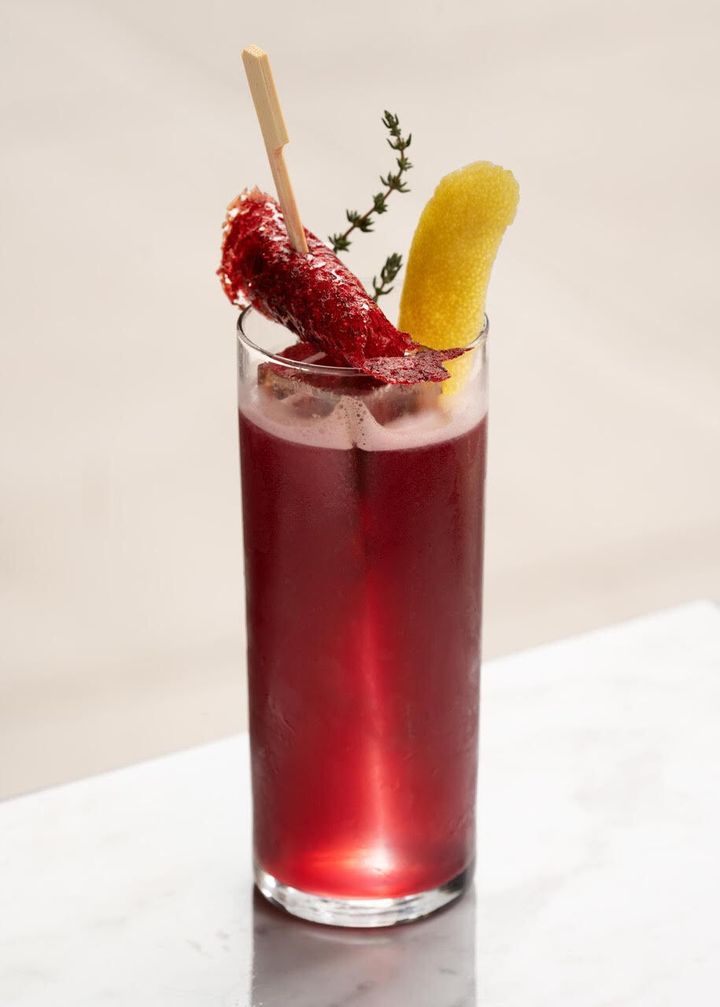
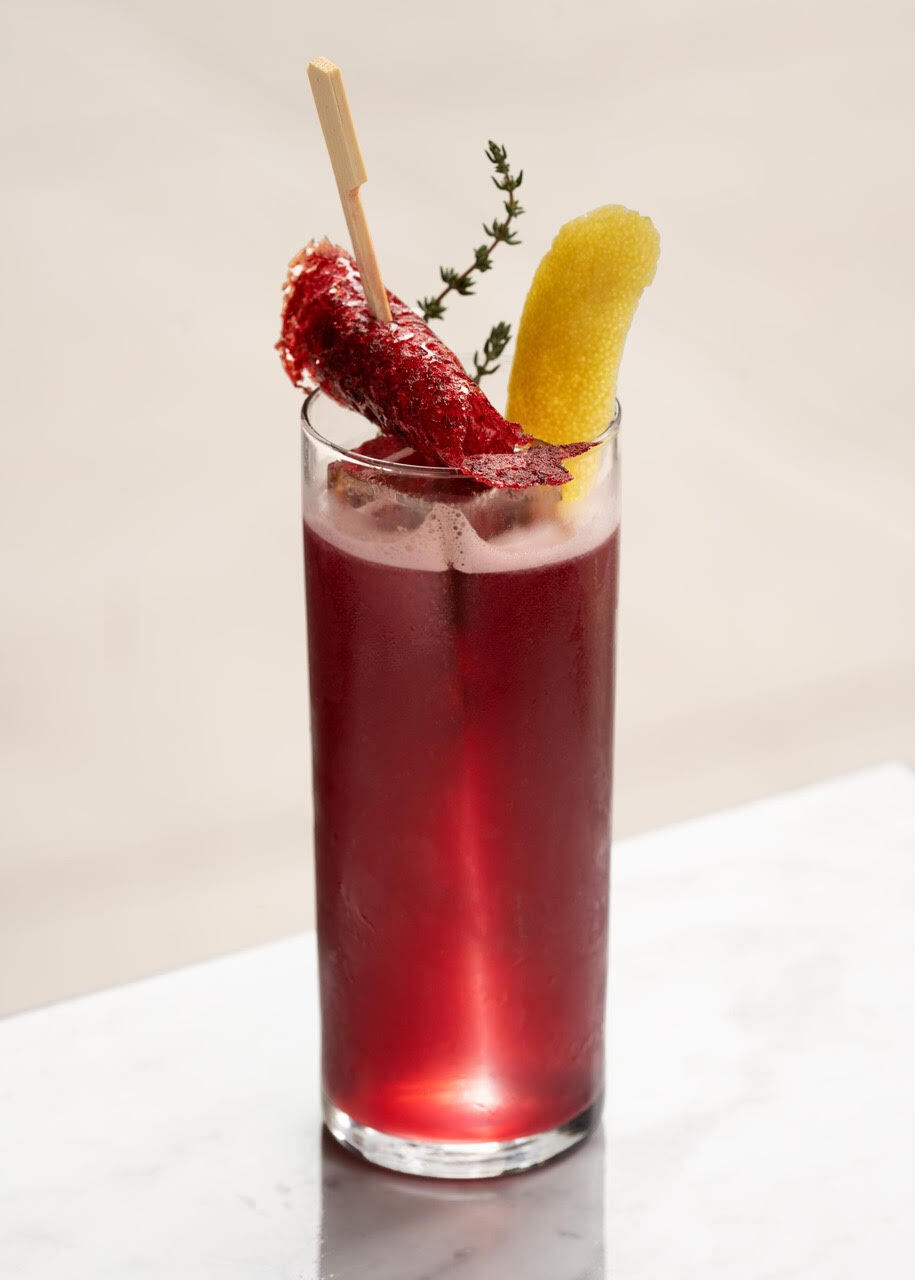
If you haven’t yet had your fill of cranberry sauce (I know I haven’t), this vodka-wine spritzer by Gary Wallach, beverage director at Lindens, could be your new party signature. The bar, newly opened at the Arlo Soho in New York, serves theirs in a highball glass, dressed with an elaborate garnish of fresh thyme, lemon zest and a roll of dried cranberry leather.

If you can’t find thyme and apple liqueurs at your local liquor store, snag them online. Same goes for the spiced cranberry shrub — a traditional mixer made with sugar and vinegar for a tangy-sweet taste. You can make your own if you’re feeling ambitious. But if you’re normal, you can find inexpensive craft shrub online — here are a couple of options we found.

Once you’ve shaken all the other ingredients together, top it off with Lambrusco, a sparkling and often sweet red wine, to taste.

  • 1 dash angostura bitters

  • 1 teaspoon thyme liqueur

  • 1/2 ounce spiced cranberry shrub

  • 3/4 ounce lemon juice

  • 1/4 ounce apple liqueur

  • 1.5 ounces vodka (Belvedere is suggested)

  • Lambrusco, free pour

  • Optional: thyme sprig, lemon twist, cranberry fruit leather, and/or grated nutmeg, to garnish

Add all ingredients except for Lambrusco into a small cocktail shaker. Add ice and shake vigorously. Strain into a highball glass over fresh ice, top with Lambrusco and garnish. Lindens uses a thyme sprig, lemon twist, cranberry fruit roll-up and grated nutmeg.

Raspberry Mint White Chocolate Holiday Cocktail

Courtesy of Mala Project

From Christmas cookies to candy canes, December is the time when your sweet tooth is likely to reign supreme. If you’re hoping for a cocktail that will fulfill your candy cravings, Irene Li of New York’s MáLà Project restaurants has one that combines chocolate, peppermint — and some raspberry for good measure. You’ll probably have to buy a few new liqueurs for your stash, so consider getting nice ones that you’ll be excited to experiment with all winter.

Combine white chocolate liqueur, peppermint schnapps, raspberry liqueur, vanilla extract and vodka in a shaker. Fill the shaker with ice and shake until all ingredients are well incorporated.

Pour into a chilled rocks glass. Top off with crushed candy cane pieces and a peppermint stick or two (or three … we’re not counting).

Holiday Manzarita

Kartrite Resort

This light and fruity drink comes from the Kartrite Resort located in the Catskills in New York state, and it’s a great way to use up the last apples of the season.

Your first step is to muddle your fresh apple chunks, so if you don’t already have a muddler on your bar cart, now’s the time to pick one up. Or, you can simplify that step by just using your favourite store-bought apple cider.

And if you don’t already have St-Germain on hand, you won’t regret picking up a bottle. The herbal, elderflower-flavoured liqueur is a great cocktail staple that you’ll find uses for well into the spring. As for the garnish, Kartrite serves the Manzarita with a flaming cinnamon stick — but you can feel free to leave yours unsinged.

  • 1 1/2 ounces blanco tequila

  • 1/2 ounce St-Germain

  • 1/2 ounce cinnamon syrup

  • 3/4 ounce fresh-squeezed lime juice

  • 3-4 small cubed apple pieces (or 3/4 ounce of apple cider)

  • Cinnamon stick, to garnish

In your cocktail shaker, muddle the apple. Add all remaining ingredients to the shaker with ice. Shake for 6-8 seconds. Double strain into a rocks glass over ice. Garnish with cinnamon stick and serve.

Share Button

When To Use Aluminium Foil, Parchment Paper, Wax Paper And Freezer Paper

Whether you’re new to cooking or you’ve been doing it for decades, it’s entirely possible you have no idea what you’re doing in certain areas. One particular topic that home cooks struggle with is understanding the differences between parchment paper, wax paper, aluminium foil and freezer paper, and when to use which one.

And trust us, mixing them up could legitimately ruin your recipe in some cases.

What’s the difference, and which materials are interchangeable? We talked to the experts to clear up any confusion you might have. Read on for the inside scoop on exactly when to use parchment paper, aluminium foil, wax paper and freezer paper — and exactly when you shouldn’t.

Parchment Paper

Parchment paper is a godsend for baking, when you want cookies to slide right off the cookie sheet.

FreshSplash via Getty Images

Parchment paper is a godsend for baking, when you want cookies to slide right off the cookie sheet.

Thanks to its versatility, parchment paper is the shining star of the kitchen. It’s an odourless paper made from cotton fibre and pure chemical wood pulps that’s been coated with silicone. In addition to being nonstick, it’s heat- and moisture-resistant.

Parchment can be used for many kitchen tasks, but it’s best known for acting as a liner for baking sheets and pans, helping to promote even cooking and food not sticking. And according to Laura Ritterman, the cook behind the food blog Recipe Fairy, it also makes cleanup a whole lot easier. Think: being able to slide roasted veggies, cookies, fish and more right off the baking sheet with no mess.

“You can also line parchment paper on your kitchen counter to aid in cleanup,” said Christina Musgrave, a professional recipe developer. Because it’s nonstick and moisture-repellent, you can do all of your chopping, mixing, kneading and rolling on top of a layer of parchment, then toss it when you’re done, saving you the trouble of scrubbing down your countertops later.

Despite being super-versatile, parchment paper can only be used up to a certain temperature. “You can normally use parchment paper up to around 420 degrees Fahrenheit,” Musgrave said. “Heating it over that temperature can risk it catching on fire.” For safety purposes, always know the heat limit of the brand of parchment paper you’re using while cooking.

As for what to use as a substitute if you find yourself out of parchment paper, that depends on what you’re planning to use it for.

“Foil can be used to help prevent food from sticking, so long as it’s well-greased,” Ritterman said. (Or, if you’re specifically using a nonstick foil.) “It’s not as good as parchment paper, but can be used in a pinch if you don’t have any.” For easier cleanup, wax paper is a good choice for covering countertops.

Aluminium Foil

MirageC via Getty Images

Runner-up in the versatility department is aluminium foil, which is made of over 98% aluminum ― the balance of which consists mainly of iron and silicon for added strength and puncture resistance. During the final rolling, two layers of foil are passed through the mill at the same time. The side that comes into contact with the polished steel rollers becomes shiny, the other side dull.

This is why, despite popular belief, it doesn’t matter which side of the foil contacts your food. (The only exception to this is nonstick foil, which does have a dull side that’s nonstick ― perfect for cooking foods that are cheesy or sticky.)

Where aluminum foil really shines (pun totally intended) is with high-heat cooking, like grilling and broiling. Any recipes that require cooking foods at a higher temperature than your parchment paper can hack, that’s where foil comes in.

Another handy skill? “Aluminium foil helps with even cooking or baking in the oven, mitigating the burning of food before it has finished cooking,” Ritterman said. “This is great for things like casseroles, roasts or pies.”

Say you don’t want your turkey or casserole to over-brown ― make a foil tent by placing a sheet of foil over your roasting pan or casserole dish, leaving a 1-inch gap between the top of your food and the foil tent for heat circulation, then crimp the foil onto the long sides of the pan so it stays put.

To keep your pie crust from burning while the centre bakes, foil to the rescue: Take a 12-inch foil square and fold it into quarters. Cut out the centre and round off the edges so you’re left with a ring that’s two inches wide. Unfold the ring and place it over your pie, removing it for the final 20 minutes of baking time.

“Because foil easily holds its shape, you can also wrap foods (meat, potatoes) to prevent them from losing moisture as they cook, as well as make foil packs of food to pop in the oven or on the grill,” Kyrie Luke, recipe developer and blogger at Healthfully Rooted Home, told HuffPost. (It’s an especially effective strategy for more delicate foods, like veggies and fish.)

But you should never use aluminium foil in the microwave. “Since aluminium foil is metal, it can heat so quickly that it can cause a spark and catch on fire,” Musgrave warned.

The best replacement for foil is parchment paper — specifically, for oven cooking and making food packs. For high-heat cooking, however, aluminium foil is difficult to replace, with the closest options being grilling papers and oven and barbecue bags.

If you’re not sure whether to go with aluminum foil or parchment paper, just remember: Grill or broil, go with foil.

Wax Paper

Wax paper is a good idea if you're decorating already-baked cookies, but you should never bake cookies on it.

picture alliance via Getty Images

Wax paper is a good idea if you’re decorating already-baked cookies, but you should never bake cookies on it.

Wax paper is tissue paper that’s triple-waxed with a food-safe paraffin coating. It’s best known for covering countertops ― you can measure dry ingredients, such as flour, over wax paper and avoid a messy countertop during baking and cooking.

“It’s similar to parchment paper in that it can be used to keep food from sticking to surfaces, such as allowing chocolate-covered strawberries to harden or delicate artwork for cakes and pastries,” Ritterman said. It can even line pans for non-baked items, such as fudge or no-bake desserts to make cleanup easier.

Unlike parchment, wax paper shouldn’t be used in cooking situations that require heat. “Never use wax paper in the oven, microwave, grill or anything that conducts heat,” Luke said. “The wax will melt and it may cause a fire.”

The only exception to this rule is that wax paper can be used for lining cake pans for baking cakes. Because the cake batter completely covers the wax paper and absorbs much of the heat, the wax paper won’t smoke or melt.

The easiest way to remember whether to go with parchment or wax paper is to picture a burning candle as a reminder that wax melts. “The last thing you want is waxy food ― or a kitchen fire,” Luke said.

Freezer Paper

Freezer paper is a thicker paper that’s used for, you guessed it, freezing food. “It’s best known for wrapping meats and seafood for freezing to seal in juices and protect them from freezer burn,” Musgrave said.

One side of the paper is coated with either wax or plastic and provides a barrier to air and moisture that helps prolong the freshness, flavor and nutrition of your food while frozen, helping it last in your freezer for up to one year. Because the other side of the paper isn’t coated, it can be used to mark down the contents and pack date of the wrapped food.

Since freezer paper has a wax or plastic coating, it shouldn’t be heated ― otherwise, the wax or plastic will melt and ruin your food.

In a pinch, you can use heavy duty aluminium foil as freezer wrap, but because it can be torn and punctured easily, it’s best to use an overwrap, too.

“Wax paper can also replace freezer paper if you plan on eating the stored food in a short period of time,” Ritterman said. It’s not moisture-vapour resistant the way freezer paper is, though, so for longer storage times, freezer paper all the way.

Share Button

Why This Iconic English Tree Is Facing Particular Pressure From Climate Change

The National Trust has warned that an iconic English tree is already struggling due to climate change.

Yes, the English oak, which pops up repeatedly throughout our national history, is said to support more life than any other native tree species in the UK and creates one of the hardest timbers on the planet, is under strain due to our shifting climate.

In fact, climate change is exacerbating a phenomenon already known as acute oat decline, caused by a non-native pest.

The oak processionary moth damages the tree’s foliage and increases its susceptibility to other diseases – and climate change means the pest is sticking around for much longer these days, due to shorter winters.

John Deakin, head of trees and woodland at the National Trust “cold snaps [are] just not long enough to kill off diseases such as oak processionary moth, whose caterpillars infest oak trees, leaving them vulnerable to other threats.”

And the moth’s spread northwards through Europe away from their traditional home in the Mediterranean “is a tangible consequence of our warming climate,” Deakin added.

Deakin explained that growing any new trees – not just oak – is especially difficult in periods of drought, too, with up to 80% of saplings dying in some areas of the country.

While experts have devised techniques using wood mulching and sheep fleeces to help keep moisture in the soil and prevent grass growth, they are now looking at how trees will need different environments in the next 50 years.

For instance, beech trees and woodlands – typically found in the south – may soon only suit the north of England.

Deakin explained: “Our traditional thinking of where certain species like English oak and Sessile oak may thrive geographically is also likely to change as we are already seeing the huge impact of Acute Oak Decline on English oak in the south east and midlands, previously their stronghold, now being compromised.”

Ben McCarthy, head of the Trust’s nature and restoration ecology, also noted that shifting weather patterns in the UK mean many trees were constantly under stress.

Sometimes they can end up producing too much berries and nuts, without the chance to “rest”.

And while these are “incremental shifts”, these changes build up over a decade to cause serious changes in our wildlife.

McCarthy said: “It’s these baseline changes that we’re seeing that are really worrying and what we should be taking more notice of, particularly when combined with extreme weather events, which makes things even more challenging.”

Meanwhile, the national climate change consultant at the Trust, Keith Jones, said the UK must not be “lulled into any sense of false security” when it comes to our weather.

“We are likely to experience a combination of drought and high temperatures as well as high rainfall and floods – and we need to get ready for this new ‘norm’,” Jones explained.

Share Button

Fans Increasingly Concerned As Paramore Delete Website And All Social Media

Fans of pop-punk act Paramore haven’t had the most restful holiday period since the band erased all of their social media presence and taken down their website this week.

While this could mean any number of things as artists are more often using their online presence to hype up new releases by wiping their Instagram grids, some fans are concerned that this is the beginning of the end for the trio.

Others have pointed out that Paramore are due to tour in the coming weeks and let’s not forget that they’re supporting Taylor Swift on her UK leg of the Eras Tour next summer.

Paramore’s last album release was This Is Why in February of this year and alongside it, the band released songs This Is Why and Running Out Of Time.

While their Instagram and X (formerly Twitter) accounts are still live, they’ve been completely scrubbed and left with links to the Paramore website which returns a 404: Not Found message.

“All three members agreed that there’s a level of uncertainty”

Paramore recently did an interview with UpRoxx which concluded with: “Now that Paramore has spent the year touring behind This Is Why (and making sure to take better care of themselves while they’re at it), a chapter of the band’s career has come to a close.

“They’ve now fulfilled all label obligations and are effectively free agents. As for the future of Paramore, all three members agreed that there’s a level of uncertainty.”

In a move that concerned fans, lead singer Hayley Williams shared that excerpt in an Instagram story which really adds credence to the theory that the band are preparing to say goodbye after 20 years together.

I hope not, though.

Share Button

This Is The Secret To How Celebrities Get Through Airports Unnoticed

Ever find yourself in an international airport, wondering why you haven’t seen a single celeb? It’s no secret that a lot of celebrities fly first class on commercial planes, but how come we never see them in the queue to board?

Well, it turns out that for the biggest stars in the world, there’s another secret way for them to travel through airports so that they aren’t confronted with fans.

During a Q&A session on Twitter, Chrissy Teigen was asked in a now deleted tweet): “How the frick do most celebrities travel on planes? Are you ever just hustling through the airport trying to make it to your gate on time?”

It’s hard to imagine an A-Lister doing the same airport shuffle that we all do but with the strict regulations within airports, what else should we expect?

Well, it turns out that there’s a terminal a mile away from the airport that celebs pay membership for. They go through the same security that we do, though privately, and then they’re escorted to this terminal, before being driven to the plane in a car.

According to Women’s Health, Chrissy was likely referring to the Private Suite terminal at LAX which describes itself as being “far away from the traffic and bustle of the public terminal”.

Oh, how the other half live.

This terminal in particular offers, “a back door to your commercial aircraft, private TSA and Customs clearance, luxury spaces and white-glove service before and after your flight.”

Full membership for this service costs $4,850 for the year with an extra $3,550 for up to four travellers for private pick-up and drop-off to the suite though a membership that doesn’t include priority reservations or 30 night complimentary valet parking comes in at just (!) $1,250 for the year.

What are Private Suite terminals like?

Well, they are literally suites meaning that they come with bathrooms, minibars, a two-person daybed and a view of the runway.

Once the flight is boarding, a car will drive members to their plane, where the travellers will get priority boarding.

According to Women’s Health, “most other airports have private or VIP terminals as well, like Heathrow in London, the Jetex FBO Terminal in Dubai, and Schiphol VIP in Amsterdam.”

I’ll probably stick to a pint in Spoons before my flight, tbh.

Share Button