Facts Are Facts – Four Day Working Weeks Work, So Give Us Them

The world’s largest trial of a four-day workweek is complete and there’s good news – it had such a positive outcome the majority of companies said they would be happy to offer a shorter working week to their staff.

61 companies from different sectors were involved in the trial, which ran for six months starting from June of last year.

Managers ensured that salaries stayed the same for staff who participated in the study.

″There’s been a decline in the number of sick days taken during the period of the trial. Before the trial, on average, each person would take four or five sick days per year – that’s down to less than two,” Chief Executive Mark Downs says.

So can we finally admit that we don’t need to work five days a week? When news of a possible four-day working week first emerged, people were skeptical.

“The combination of industry time commitments varying so greatly across the board, as well as close to universal workforce shortages across the board, creates an ecosystem simply incapable of supporting the continued running of certain businesses with working hours under 37.5 hours a week,” Sarah Austin, founder, and director at the Lloyd’s Bank British Business Excellence Awards, previously told HuffPost UK.

“However, this does not mean employee wellbeing should be shelved – businesses that can’t, at this time, adapt to a four-day work week model, can still promote and initiate employee mental health holiday allowances, childcare flexibility and, where possible, hybridisation to not only support their employees, but to also allow them to remain competitive in the current job seeker-led market.”

Nichola Johnson-Marshall, co-founder of cultural transformation consultancy, Working Wonder, is also skeptical this will work for every workplace.

“It’s also great to see commitment and actual trials for a new format of working pattern around a four day (paid for five) working week,” she says, “but we believe that this should be approached as a starting point rather than the end goal and not introduced universally.”

Lockdown has shown us that there are better ways of working than “just how we have worked before”, she adds. So simply cutting working hours might not be the best solution to better work-life balance.

Employers were concerned that a shorter working week wasn’t feasible. Would workers be able to complete goals and meet their targets in a four-day working week? The results from the trial show it’s possible.

It turns out people stop pulling sickies too. The number of sick days taken by 2,900 staff involved a study surveyed by the University of Cambridge and Boston College dropped by around two-thirds.

39% of employees reported that they were less stressed. Two-day weekends come and go, it feels like you don’t have enough time to rest. “Weekends can be quite hectic, so it has been quite nice to have that extra day to see your friends and family, and then you get that extra day off during the week to do all your chores or to have that time to relax,” Tessa Gibson, a senior accreditation officer at the Royal Society of Biology, said.

Overall, it looks like the four-day working week can work. “This is a major breakthrough moment for the movement towards a four-day working week,“Joe Ryle, Director of the 4 Day Week Campaign, says.

“Across a wide variety of different sectors of the economy, these incredible results show that the four-day week with no loss of pay really works.”

Share Button

Watch Out – This Pancake Making Mistake Can Cost You Hundreds

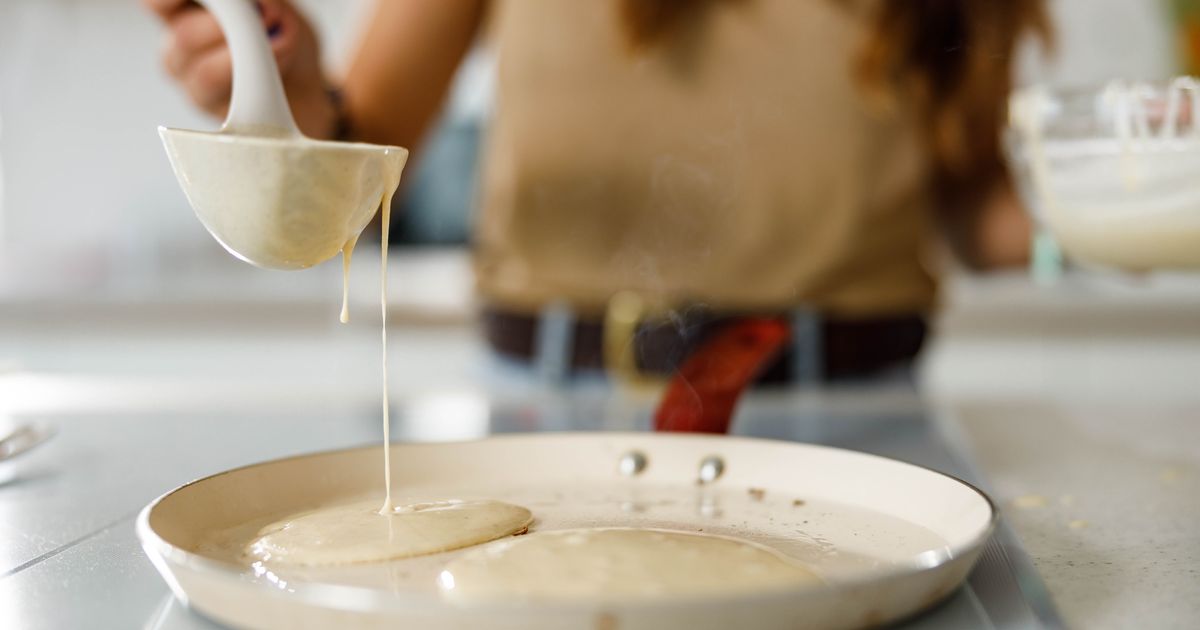
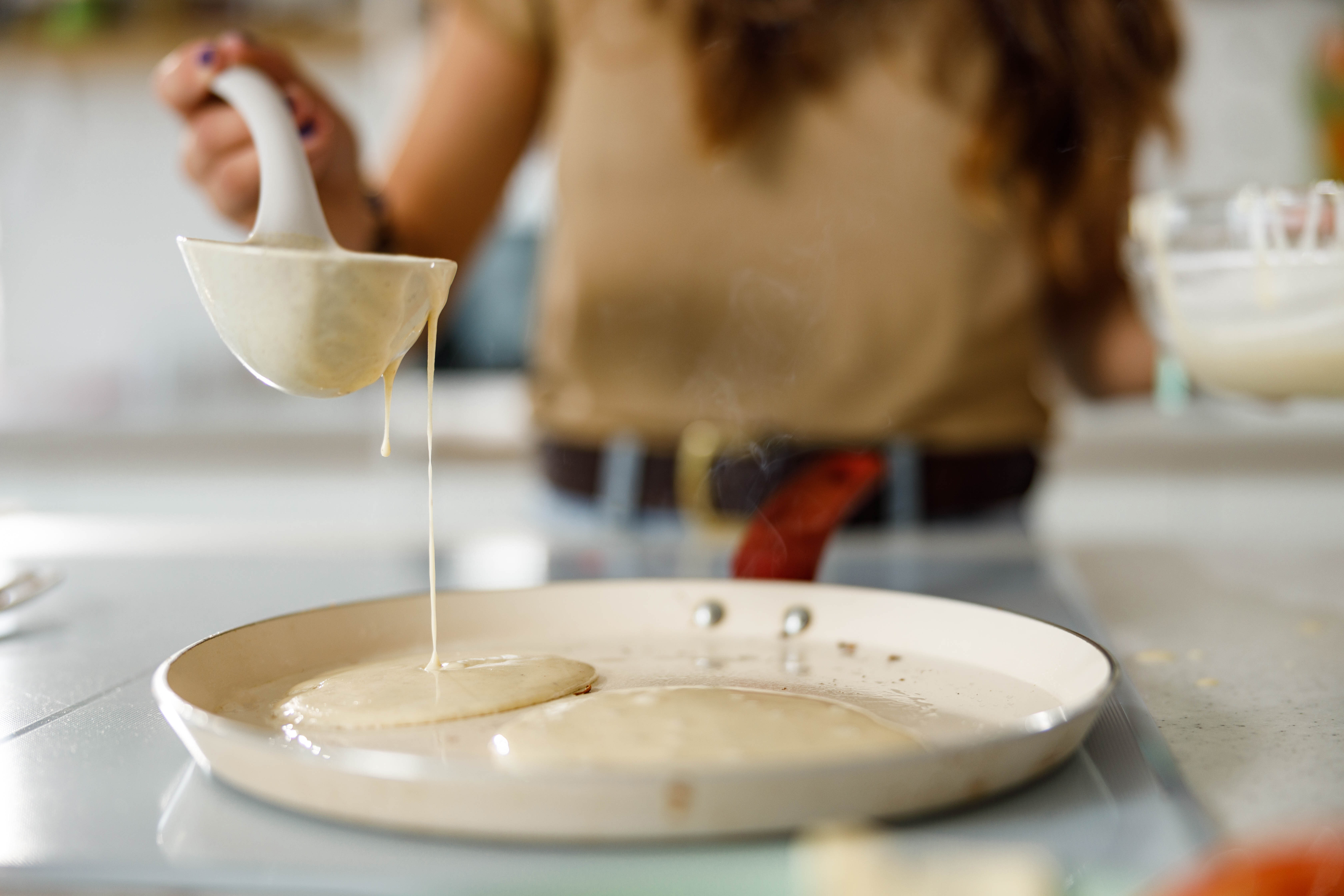
It’s Pancake Day, which means most people in the country will eat a pancake (or five) during some part of the day.

But there is one mistake you can make while preparing your meal that can end up costing you quite a lot of money.

If you’re like me and can never measure anything right (I still don’t know how to make the right amount of pasta for one), you’ll inevitably have some pancake batter leftover from your Pancake Day adventures.

And you might think nothing of pouring all of it down the kitchen sink. But that one mistake can cost you over £300 to fix.

According to plumbing experts at Rated People, pouring pancake mix down the drain can cause pipe bursts: “Pancake batter contains flour, fat and oil and this is a recipe for disaster when it comes to drains as it can quickly harden in pipes and lead to blockages and burst pipes which can be costly to repair.”

It can also cause complications in sewers, causing fatbergs to form in them. Fatbergs are formed when fat and grease combine with unflushable items (such as wet wipes and cotton buds), preventing water from going through.

Depending on how easy it is to access the pipe, the plumbing cost can be anywhere from £150 to £300, which is more than probably most of us may have bargained for while making pancakes.

“Leaking or fully burst pipes caused by increased pressure from blockages can cause damage to your property and possessions, which means fixing the broken pipework could only be part of the repair cost,” they say.

“Whether it’s a plastic or copper pipe, the solution will likely involve replacing the section of the pipe that’s damaged. Fixing a burst water pipe that’s easy to access will cost around £150, but with no visible access, the job is trickier and that can set you back by around £300 on average.”

So what can you do to avoid annihilating your drainage system when making pancakes? Some solutions include disposing the batter off in the food waste bin, freezing the batter to make it last for a good few months or making your own version of fish and chips takeaway.

And if none of this appeals to you, you can always turn the batter into Yorkshire pudding. At least it’s better than having to spend £300 in a cost of living crisis.

Share Button

This 72-Hour No Phone Digital Detox Is Not For The Weak

72 hours without a phone. No constant messages from the WhatsApp group chat, no doom-scrolling on Instagram, and no spoilers on Twitter from last night’s Love Island episode. Sound like a dream come true? You might need to opt for a digital detox.

Unplugged is the UK’s original ‘off grid cabin’ escape which invites anyone who is a self-proclaimed busy body the ultimate break to switch off by embracing a ‘digital detox’ to help improve their overall well-being.

Let’s be honest, most of us are constantly connected, if not glued to digital devices, inundated with notifications, and stuck in the trend of being fashionably ‘busy’ all the time.

It’s ideal for people who are constant busybodies, workers, parents, and couples. Whilst at Unplugged, visitors will spend 72 hours without any screen time. Within that time, guests will reap the benefits of a true digital detox by improving problems associated with high screen time, such as brain fog, poor sleep quality and anxiety.

Cabin at Unplugged
Cabin at Unplugged

On arrival, guests will be asked to lock their digital devices, including mobile phones, in a lockbox for three days. These are then swapped for an old-school Nokia mobile (Snake included), a physical map to explore the scenic surroundings, and an instant camera with film.

Also within the cabins include; books, board games, and a functioning kitchen for cooking and dining with no WIFI available.

“What happens when you remove all distractions from the equation and truly switch off and relax? The result: a recharged mind, a clearer perspective, and a sense of calm that has been missing,” co-founder Hector Hughes says.

“50% of the adult UK population spend 11 hours a day behind the screen so we’re offering them a truly unique opportunity to spend less time distracted by their devices and give them the time to think, create & achieve.”

Unplugged currently have sixteen beautiful cabins around London and Manchester, with plans confirmed to expand this number to 50 in other UK locations by the end of 2023.

Can you give up all things digital for three days? You can book your digital detox here.

Cabin at Unplugged.
Cabin at Unplugged.
Share Button

Broadcaster Dan Walker ‘Glad To Be Alive’ After Road Accident While Out On His Bike

News anchor Dan Walker has said he feels “glad to be alive” after being involved in a road accident that saw him being knocked off his bike by a motorist.

Dan – best known for his work on BBC Breakfast and, more recently, Channel 5 News – tweeted grisly photos of himself on Monday morning, which showed him in the back of an ambulance with a swollen and bloodied face.

“Bit of an accident this morning,” the former Strictly Come Dancing contestant explained. “Glad to be alive after getting hit by a car on my bike.”

He insisted that while his face was in “a mess”, this appeared to be the extent of his injuries, and he “[doesn’t] think anything is broken.”

Referring to the paramedics in one of his selfies, he continued: “Thanks to Shaun and Jamie for sorting me out and the lovely copper at the scene.”

Dan also joked that the pictures included his attempts at a smile, and voiced his gratitude for the NHS.

Until last year, Dan was known for his six-year stint at the helm of the BBC’s flagship breakfast show, as well as his contributions to the sports show Football Focus.

After leaving Football Focus in 2021, he went on to appear on that year’s series of Strictly, making it all the way to the quarter-finals alongside professional partner Nadiya Bychkova.

He later announced his resignation from BBC Breakfast, and made the jump to Channel 5, where he now fronts the channel’s daily news show.

Share Button

Rishi Sunak Condemns Decision To Rewrite Roald Dahl Books For Modern Readers

Rishi Sunak has condemned the decision to re-write Roald Dahl’s books to appeal to modern-day readers.

The prime minister’s spokesman quoted much-loved Dahl character the BFG by insisting people should not “gobblefunk around with words”.

The intervention followed reports the latest editions Dahl’s children’s books have been edited to remove language which could be deemed offensive.

Sunak’s spokesperson said on Monday: “It’s important that works of literature and fiction are preserved and not airbrushed.

“When it comes to our rich and varied literary heritage, the prime minister agrees with the BFG, you shouldn’t gobblefunk around with words.”

Gobblefunk is the language Dahl created, used in his books including The BFG.

According to the Daily Telegraph teferences within the classic children’s books relating to weight, mental health, violence, gender and race have been cut and rewritten.

Edits reportedly include removing the word “fat” from every book, Augustus Gloop in Charlie And The Chocolate Factory is now described as “enormous” and The Cloud-Men in James And The Giant Peach have become Cloud-People.

The Roald Dahl Story Company confirmed it began a review into the books alongside publishers Puffin in 2020, and that any changes made were “small and carefully considered”.

A spokesperson for the Roald Dahl Story Company said: “We want to ensure that Roald Dahl’s wonderful stories and characters continue to be enjoyed by all children today.

“When publishing new print runs of books written years ago, it’s not unusual to review the language used alongside updating other details including a book’s cover and page layout.

“Our guiding principle throughout has been to maintain the storylines, characters, and the irreverence and sharp-edged spirit of the original text. Any changes made have been small and carefully considered.”

The company added that it had worked alongside Inclusive Minds, a collective for people working towards inclusion and accessibility in children’s literature.

Philip Pullman, the author of his Dark Materials, told BBC Radio 4′s Today programme, Dahl’s books should be let to “go out of print” rather than edited.

Share Button

Putin Using Spy Balloons Over Ukraine, Says British Intelligence

Vladimir Putin is likely to be responsible for balloons spotted over Kyiv, British intelligence has said.

Last week Russia again pummelled Ukraine with a barrage of cruise and other missiles, hitting targets from east to west.

In its latest intelligence update on Sunday, the UK Ministry of Defence (MoD) said: “On 15 February 2023 Ukrainian armed forces spotted several balloons with radar reflectors suspended beneath them over Kyiv.

“Ukrainian officials reported that they shot down at least six of these. Earlier, on 12 February 2023, Ukraine’s Air Force reported sighting balloons over eastern Dnipropetrovsk.

“It is likely that the balloons were Russian. They likely represent a new tactic by Russia to gain information about Ukrainian air defence systems and compel the Ukrainians to expend valuable stocks of surface to air missiles and ammunition.

“On 14 February 2023, sighting of a ‘balloon shaped’ object led to the closure of Moldovan airspace for several hours.

The MoD added: “There is a realistic possibility that this was a Russian balloon that had drifted from Ukrainian airspace.”

Britain’s assessment matches that made earlier by Ukraine, which said Russian troops had launched balloons with corner reflectors to deceive air defences.

It came as Rishi Sunak told world leaders they must arm Ukraine now and set about boosting its long-term future against further Russian aggression.

The prime minister, in a speech at the Munich Security Conference on Saturday, had a two-fold message for the West.

He said that Ukraine needed military backing by allies to counter any spring offensive by Putin’s troops.

But he argued the West must also start to put in place the foundations to strengthen Kyiv’s security in the long term.

Share Button

Ed Sheeran Responds To Claims He Turned Down King Charles’ Coronation Concert

Ed Sheeran has dismissed claims he turned down an offer to perform during a celebratory concert in honour of King Charles’ upcoming coronation.

Last month, it was revealed that a televised concert featuring “global music icons and contemporary stars” will take place on Sunday 7 May, the day after Charles is officially crowned.

Over the weekend, the Mail On Sunday reported that organisers had been hoping that both Ed and fellow chart-topping British singer Adele would take part in the event, but were dealt a “huge blow” when both musicians were unavailable due to previous commitments.

However, a spokesperson for Ed Sheeran has insisted this is not the case.

King Charles III at a reception in support of action on global biodiversity at Buckingham Palace earlier this week

WPA Pool via Getty Images

According to the Metro, a representative for the Shape Of You said that neither he “nor his team” have been “approached” about performing during the show.

Ed is currently scheduled to perform in Arlington, Texas on 6 May, the day before the event, but this is then followed by a week-long gap in tour dates.

HuffPost UK has contacted Adele’s representatives for comment.

Adele on stage in Las Vegas last year

Kevin Mazur via Getty Images

The Mail On Sunday has also listed Harry Styles, Lionel Richie and the Spice Girls among those it’s hoped will appear at the concert.

It was previously revealed that musical theatre composer Andrew Lloyd Webber had been commissioned to create a new anthem in honour of the King’s coronation.

A balcony appearance at Buckingham Palace and a day of volunteering will all form part of celebrations for the coronation between 6 and 8 May, in addition to the star-studded musical event.

Share Button

Adele Reveals She’s Seen What We’ve All Been Saying About Her In That Viral Super Bowl Meme

Adele has joked that it’s “hard work being a constant meme” after going viral with her appearance at the Super Bowl last week.

When Adele was shown on camera, her laidback attitude and her complete unbothered-ness became an instant meme – but what she probably didn’t bank on was that people would try and lip-read what she was saying.

Many claimed that it looked like the Grammy winner was telling her pals that Rihanna would “have some weed and be fab” ahead of her much-anticipated performance.

Well, it turns out that’s exactly what Adele was saying, which she confirmed on stage during her Vegas residency on Friday night.

“I don’t know what it is about my fucking face, but every time I slip out my house [I become a meme],” she told the audience.

“Maybe it’s because I don’t have any Botox or anything and my face just moves so much, I don’t know what it is.”

“I was saying, ’she’s gonna be fine, she’s gonna, like, have some weed and be fine, but clearly she couldn’t have any weed because she’s pregnant!” Adele added with a cackle.

Share Button

Are You A Giver Or A Taker? There Are Two Types Of Talkers, Researcher Suggests

We’ve all been stuck in conversations in which it feels like we’re talking to a wall.

“Why isn’t he asking me any questions?” we may grumble to ourselves. “Why are they forcing me to carry this conversation?” we may silently judge.

A recent essay from a researcher who studies conversations offers a fascinating possible answer as to why these frustrating interactions happen.

Post-doctoral research scholar Adam Mastroianni of Columbia Business School explained in an essay published on Substack that there are two types of conversationalists: You can be either a “giver” or a “taker,” and these types don’t always assume the best of each other.

“Givers think that conversations unfold as a series of invitations; takers think conversations unfold as a series of declarations. When giver meets giver or taker meets taker, all is well,” Mastroianni wrote. “When giver meets taker, however, giver gives, taker takes, and giver gets resentful (‘Why won’t he ask me a single question?’) while taker has a lovely time (‘She must really think I’m interesting!’) or gets annoyed (‘My job is so boring, why does she keep asking me about it?’).”

In other words, givers typically end up asking more questions in a conversation, because they believe that’s how to foster the best conversation, while takers believe it’s best to make more declarative statements to ramp up the conversation to its most interesting place.

How to really tell if you are a giver or a taker

Beyond the differences between inviting and declaring, there are other telltale signs that can help you determine if you are giving or taking.

One is how you feel when there are silences in a conversation, Mastroianni told HuffPost. “Givers feel like ‘Oh no, I’ve done something wrong,’” when there are conversational lulls, he said, while takers believe “someone should make something happen” and that that person is them.

Emily Rosado-Solomon, an assistant professor of management at Babson College who researches workplace communications, read the essay and said she buys Mastroianni’s explanation of givers and takers ― and whether or not you are a giver or taker could also be culturally specific, citing the late social psychologist Geert Hofstede’s research on individualism and collectivism.

“People from cultures with very low individualism are probably not going to be as likely to take the spotlight and talk about themselves; they are probably going to be more givers, whereas people from cultures with very high individualism are probably much more likely to talk about themselves,” she said.

Being a giver or a taker can matter a lot at your job

Once you start seeing conversations in terms of givers and takers, you can start to see how it matters in workplaces, too.

Rosado-Solomon said that because all of us carry different cultural perspectives, “What is most important in the workplace specifically is being ambidextrous so that you can communicate with people from different cultural backgrounds.” People have a universal need to feel seen.

She said she can switch between taking and giving styles at work depending on the needs of her conversation partner.

“If asking questions makes that person feel seen, then that is what I will do. I am genuinely curious about other people, which is why I spend my life studying people at work,” she said. “But at the same time, some people are uncomfortable with that, and it becomes an awkward interview inquisition and so I find that I try to switch then to more disclosure and sort of a taker style. And not necessarily intimate disclosure, just sort of taking the pressure off of them.”

Mastroianni said he also sees the giver-taker dynamic come into play when more junior employees are speaking with senior staff.

“Typically, if you’re in the low-power position, you’re going to have to be the one giving, because basically you have more of a reason to talk to the high-power person than the high-power person has to talk to you,” he said. “If you approach that interaction purely in the taking sense, then it might end very quickly. If you don’t invite their participation, they might go do something else, because it’s like, ‘OK we’re done here.’”

Of course, employees in positions of power should be aware of that dynamic and do more giving, too. That’s only fair.

Mastroianni said when he finds himself in the higher-status role, he knows “it’s very easy for me to just let them ask me questions.” He tries instead to take responsibility for keeping up the conversation by either asking the other person questions as well, or giving them something to respond to.

“Neither givers nor takers have it completely right.”

Mary Abbajay, president of Careerstone Group, a leadership development consultancy, agreed that it’s important for any leader to “learn to be a little bit more of a giver, which is really making sure that they are inviting conversation and then that they are listening.”

She noted that the givers-and-takers framework could also relate to how introverts and extroverts clash in the workplace.

“In meetings, the introverts tend to get talked over because the extroverts tend to be takers and they have rapid-fire conversation, but that doesn’t leave space for the introvert to respond,” she said. That’s why it’s important for work meetings to accommodate both styles and for leaders to be in charge of making that happen.

Could gender also play a role? When I asked Mastroianni, he noted he did not have empirical data on the question, but he said he would bet £100 that if people completed a giver-and-taker questionnaire, women would be more likely to be givers, and men would be takers.

“Part of that could be reflected in the power dynamics in society and part of that could be reflected in who do we take our cues from when we are growing up, and who do we learn from in terms of how to talk, who do we listen to.”

Abbajay said she believes women are more likely to be givers at their jobs as a survival mechanism to meet gendered giving expectations.

“Science and research shows that women are often talked over more in the workplace. They’re often mansplained. When you get mansplained, you’re not going to speak up very much,” she said. “I do think women tend to be more givers than takers, and I think a lot of that is based in gender bias in the workplace.”

Neither a giver or taker is inherently bad. But to be a more thoughtful speaker and listener, you need to be self-aware

Regardless of whether you think you have the heart of a giver or a taker, you can learn from the other side.

That’s because neither givers nor takers have it completely right. Takers misunderstand that their “declarations” aren’t guaranteed to be interesting, while givers misunderstand that asking questions is not always the most generous thing you can do in a conversation — and can, at times, be exhausting.

As Mastroianni put it in his essay, “It’s easy to remember how lonely it feels when a taker refuses to cede the spotlight to you, but easy to forget how lovely it feels when you don’t want the spotlight and a taker lets you recline on the mezzanine while they fill the stage.”

Both sides can learn to be aware of “conversational affordances,” he explained in the essay, which are opportunities to help keep the conversation moving forward in an exciting and engaging way.

In practice, for takers, this could mean they ask more questions that the other person would be actually interested to answer. That way, the conversation gets closer to the unexpected, interesting, fun and weird places of how someone really feels and thinks, he said.

And if you’re a giver who finds yourself being steamrolled by a taker, try toning down the questions and playing the taker’s game of responding, Mastroianni suggested. “Sometimes there are fun conversations that can be had that way, because you put less pressure on yourself to be like, ‘Oh, the conversation succeeds because I am pushing it.’”

Being a giver who starts to take more is a way to test the strength of your relationships, too.

“Give them the thing that they are giving. That’s what they deserve. Then you’ll be able to tell the difference between someone who intends to be a generous taker and someone who is a taker because they are selfish,” Mastroianni said.

And if a taker continuously keeps ignoring your cues to share, that may be your sign to leave the conversation “and speak to somebody else,” he added.

Share Button

Here’s Everything You’ve Ever Wanted To Know About Squirting

There’s a whole lot of curiosity about squirting — in fact, “how to squirt” is one of the most-Googled sex queries, according to search data. This sexual act is still a bit of mystery, one that continues to flummox sex experts and regular people alike.

Here’s what we know: Squirting occurs when fluid is expelled through the urethra during sexual stimulation or orgasm. It’s sometimes referred to as “female ejaculation,” but it can happen to trans and non-binary people, too.

While many people use the terms squirting and female ejaculation interchangeably, some experts believe they are actually two distinct phenomena that produce different fluids. However, research on the subject is lacking, and the studies we do have involve very small sample sizes.

“What one source says is often contradicted by another,” sexuality educator Susan Milstein, co-author of “Human Sexuality: Making Informed Decisions,” told HuffPost.

Those who differentiate between the two say squirt is a large amount of clear liquid that is chemically similar — but not identical — to diluted urine (more on that later). Ejaculate, on the other hand, is a smaller quantity of a thicker, milky substance.

“Squirting involves fluid coming from the bladder. And female ejaculation involves fluid that comes from the Skene’s glands,” Milstein said. Also known as the “female prostate,” these glands are located near the opening of the urethra.

Female ejaculate has been found to contain a high concentration of prostate-specific antigen (PSA), while squirt may also contain PSA, but in a lower concentration. It’s worth noting that squirting and ejaculation can also happen simultaneously.

The release of fluid during female arousal or climax may be a fairly common occurrence. Some studies have put the prevalence at between 10% and 54% of women.

“We pee when we’re peeing, we squirt when we’re squirting, and sometimes we pee during sex. All separate events.”

– Luna Matatas, sex and pleasure educator

Sex therapist Nazanin Moali, host of the “Sexology” podcast, said she receives “tons of questions” about squirting from clients and listeners. They often fall into two camps.

“The first group of people idealise squirting and romanticise it as the only way to experience a deep satisfaction,“ Moali told HuffPost. “The other group includes women who feel embarrassed by it.” If it happens during sex, she said, they worry “their partner may assume they’re urinating.”

Sex experts address these common concerns, and others, below.

First off, squirting is not just peeing.

Let’s clear one thing up. Squirting may occur via the urethra — the tube that connects the bladder to the outside of the body — and the fluid may contain urine, but it’s not the same as urinating during sex.

“We pee when we’re peeing, we squirt when we’re squirting, and sometimes we pee during sex,” sex and pleasure educator Luna Matatas told HuffPost. “All separate events. I think the big concern is more about body and sexual shame than it is about squirting facts.”

Science “doesn’t center the pleasure of vulvas in research,” she added, “so we are way behind on understanding the pleasure anatomy and its functions.”

A sex toy reviewer who goes by the name Epiphora — and runs the blog Hey Epiphora — pointed to the studies that have found prostate-specific antigen in squirt, as well as her own experience with squirting, as evidence that it’s not “just urine,” as some claim.

“An army of vagina-owners, including myself, know the stuff they ejaculate does not look, smell or taste like pee,” she told HuffPost.

Squirting can feel good, but it’s not the be-all, end-all of sexual pleasure.

Despite what porn and other media might have you think, squirting is not a measure of how much a person enjoyed a given sexual activity.

“Some women may love the sex play, and yet never squirt,” Milstein said. “And some women may squirt every time they’re sexually aroused. That doesn’t mean that every time they have sex, it’s the best sex of their lives.”

Similarly, some people consider squirting “the pinnacle of sexuality,” said Moali. If they’re unable to do it, they feel like they’re missing out, their body is letting them down or their partner is falling short.

While squirting “can be pleasurable, it’s not a necessity for experiencing pleasure during sexual encounters,” Moali said. “If you’re interested in trying it, squirting can be fun. But if you’re not, your sex life can still be very hot.”

Nor do squirting and orgasms always go hand in hand. And when squirting orgasms do happen, they’re not necessarily more satisfying than other types of orgasms.

“Bombastic media coverage loves to claim that squirting equals bigger, better orgasms,” Epiphora said. “This is an insidious lie. Squirting is not a life requirement in any way, shape, or form. If you want to pursue it, great! Your sexual explorations should be dictated by you, not pressure from culture.”

Can you teach yourself to squirt?

There’s some disagreement as to whether you can learn how to squirt, Milstein said. However, if you have a vulva, you “can probably experience it with enough practice,” said Moali.

Again, squirting is by no means necessary for a fulfilling sex life, and you shouldn’t feel pressured — by a partner or yourself — to do it. However, if you’re interested in getting to know your body better and uncovering new sensations, read on. (Just know that not everyone enjoys the feeling, Epiphora noted.)

First, lay down a towel or sex blanket to prepare for any potential mess. Then, take a deep breath and relax. Our experts agreed that if you want to squirt, taking the stress out of the endeavor is essential. When you’re so focused on a particular outcome, it’s difficult to enjoy the experience.

“Stop trying so hard,” Matatas said. “Our body relies on our nervous system being in a receptive and relaxed state in order to open up the flow for arousal and for muscle contractions to happen. When we focus too hard on a goal like squirting or orgasm, it takes us into our heads and often results in more tension and less relaxation.”

Another tip? Slow things down and leave plenty of time for foreplay.

“People learning to squirt will want to allow at least half an hour to get fully turned on and stimulated,” Moali said.

Matatas recommended getting the body “super aroused” with 20 minutes or more of an activity you know you respond well to. That might be making out, watching porn or using sex toys.

Pay special attention to the G-spot; the erogenous zone located along the anterior vaginal wall is key for many people who squirt.

“Give G-spot-specific stimulation with a firm and curved G-spot sex toy,” Matatas said. “G-spots like firm and continuous stimulation, so rocking instead of thrusting might work better for building pleasure. Don’t hold your breath, remember to breathe, and notice any tension anywhere in the body. Take breaks if it is taking too long for you, and remember you can always try again.”

You may still find “mind-blowing pleasure” with these kinds of toys “even if you don’t actually squirt,” said Milstein.

You can also stimulate the G-spot by pressing with the fingers, Moali said.

“You can pinpoint the exact spot that you or your partner likes,” she said. “Plus, they are flexible enough to try different motions until you learn what your partner needs to squirt.”

“Your sexual explorations should be dictated by you, not pressure from culture.”

– Epiphora, sex toy reviewer and blogger at Hey Epiphora

When Epiphora squirted for the first time 15 years ago, it didn’t “just happen” to her — she “had to pursue it,” she said. She had read online that intense G-spot stimulation could lead to squirting and that the initial feeling would be like the one you get when you need to pee. One day, she was using a curved dildo when she felt that sensation and followed it, she said.

“I sped up, thrusting as quickly as I physically could, until a warm sensation washed over my vulva and fluid poured out of me. It was an intense moment. I was in awe,” Epiphora said. She credits sex toys with her “G-spot awakening,” which helped her enjoy penetration for the first time in her life. (The best sex toy for squirting, in her opinion? The njoy Pure Wand.)

Over time, squirting became easier for her to achieve. These days, her orgasms are “regularly accompanied by a small gush,” but “full-on squirting is a once-in-a-while thing” because it’s “too messy,” she said.

The G-spot may often be associated with squirting, but you don’t need to stimulate that area in order to squirt, Matatas said.

“You can stimulate other erogenous zones like nipples, anuses, lips, etc.,” she said. “Explore fuller body pleasure by giving attention to under-served erogenous zones like necks, scalps, thighs, bellies, backs.”

And while squirting can be an enjoyable addition to your sexual repertoire, “it may happen sometimes and not others,” Milstein said. “Or it may not happen at all.”

“Regardless, don’t let the focus on squirting get in the way of you enjoying what you’re doing,” she said.


Share Button