Surprise Stripping And Watermelon Crushing: Has This Morning Just Aired Its Strangest Show Ever?

Over the years, This Morning has been responsible for more weird and wonderful moments than we could possibly begin to count, but Tuesday’s instalment was definitely up there aas one of the most random ever.

During the show, presenters Holly Willoughby and Phillip Schofield led a discussion with three members of the stripping troupe the Dreamboys about how the government’s delay to easing coronavirus restrictions.

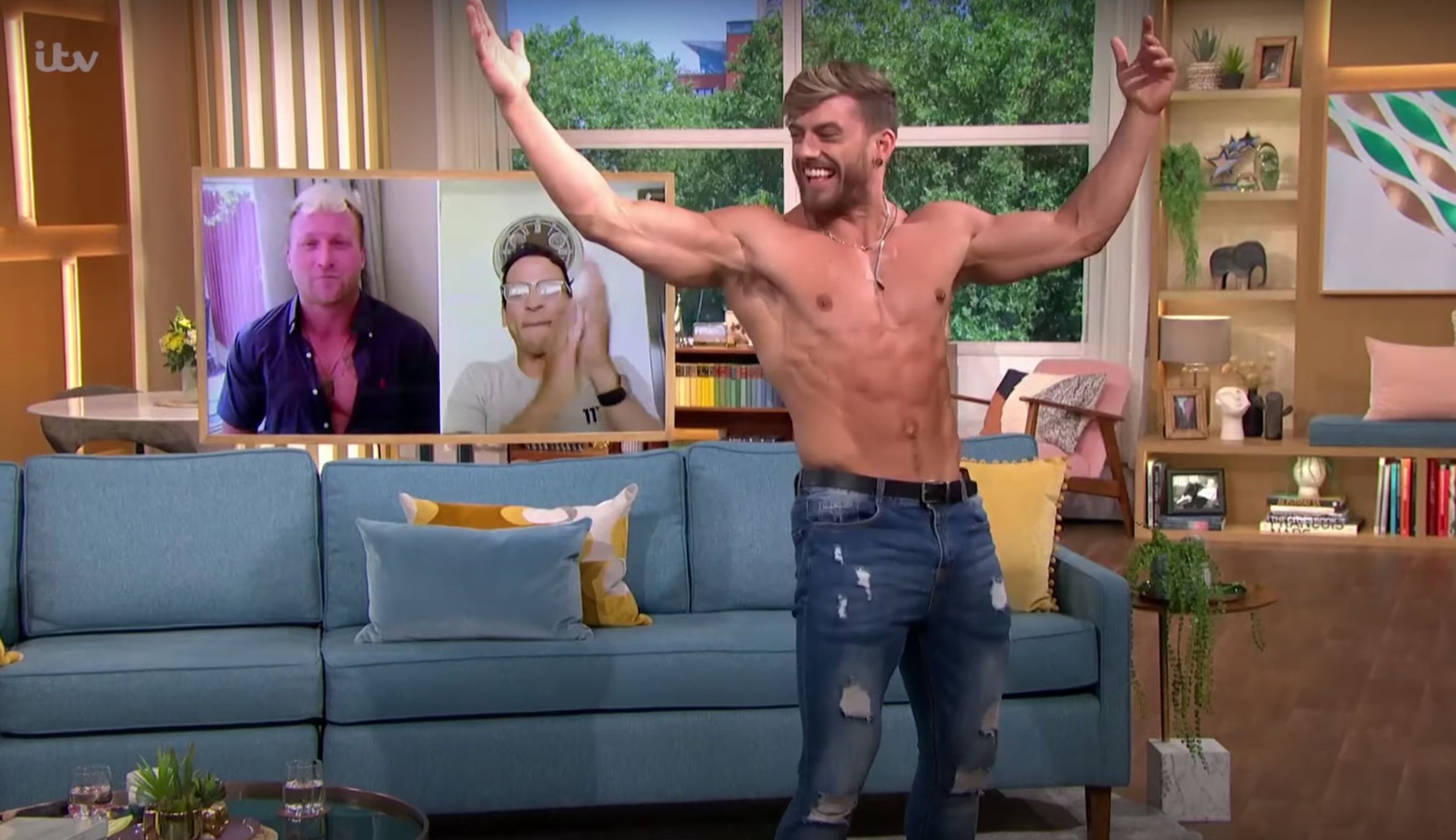
However, things took a bit of a turn when performer Zac Smith decided to seize the opportunity of being on telly to show off his *ahem* talents.

“Hold on a second,” he told Holly and Phil, as they tried to wrap up the interview. “I’ve been in a cage for a year, and I’m sure I won’t have any objections if I just let my hair down a little bit.”

“Feel free,” Holly then urged him, at which point he ripped open his shirt and declared: “With all due respect, this is what a Dreamboy is.”

Bringing his point home, he then leapt into a backflip, while his fellow dancers applauded via video-link on the screen behind him.

ITV

Believe it or not, things only got stranger from this point on.

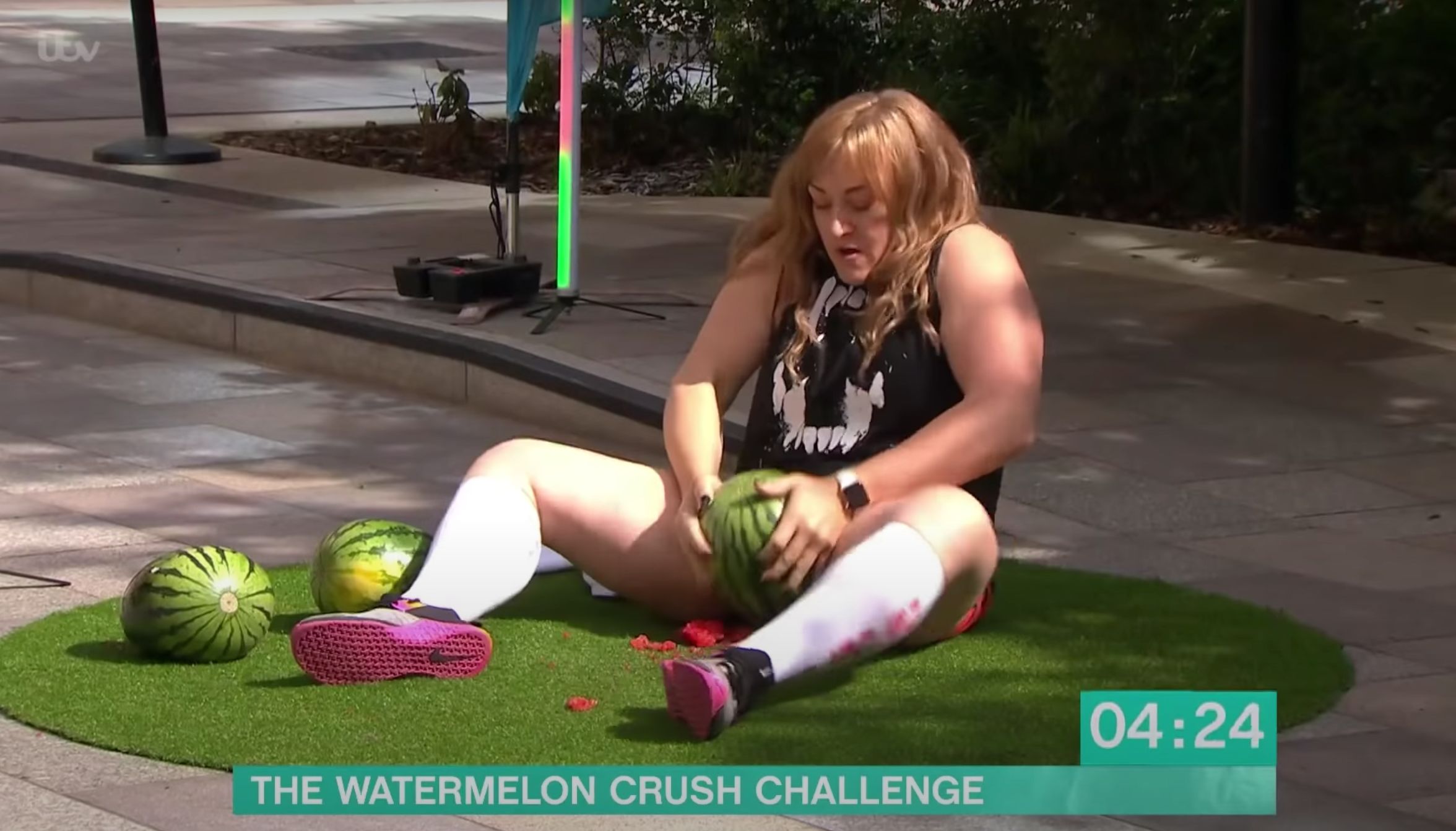
Believe it or not, things then got even more surreal later in the episode, when Holly and Phil threw it back to 2015, when Olga Liashchuk broke the world record for crushing three watermelons between her thighs in under 15 seconds live on This Morning.

The duo then introduced Emmajane Smith, who said she wanted to break Olga’s record six years on.

“What I love about it is that it’s something everyone can relate to,” Emmajane explained. “It’s a great way to show everyone how strong women can be. And everyone knows what a watermelon is, so…” 

Although Guinness officials weren’t able to be present for Emmajane’s attempt due to Covid restrictions, she appeared to smash Olga’s record with almost two seconds to spare.

The fact the whole thing was accompanied by the sound of what appeared to be construction work as Emmajane sat on the pavement outside Television Center crushing watermelons with her thighs only added to the strangeness.

ITV

Emmajane appeared to set a new world record when she crushed three watermelons with her thighs live on ITV

We know This Morning is famous for its wacky segments, but we really think there might be something in the water at the moment, as the week started with Phil frightening Holly with some class of haunted doll.

In Monday’s show, Phil presented his co-host with an old doll, telling her: “This is allegedly absolutely rabid with spirits and ghosts.”

“And you thought you’d bring this… why?” Holly questioned, shifting even further away than the current two-metre requirement.

Oh, This Morning. Please never change. 

This Morning airs every weekday from 10am on ITV.

Share Button

Will Boris Johnson Come To Regret Making July 19 The Terminus Of His Roadmap?

You’re reading The Waugh Zone, our daily politics briefing. Sign up now to get it by email in the evening.

Just when you think you’ve got it beat, Covid-19 somehow comes back stronger. Like Arnold Schwarzenegger but without the charm, this Terminator of a virus has an “I’ll be back” menace that risks undoing all the hard work of the UK’s stunning vaccine rollout.

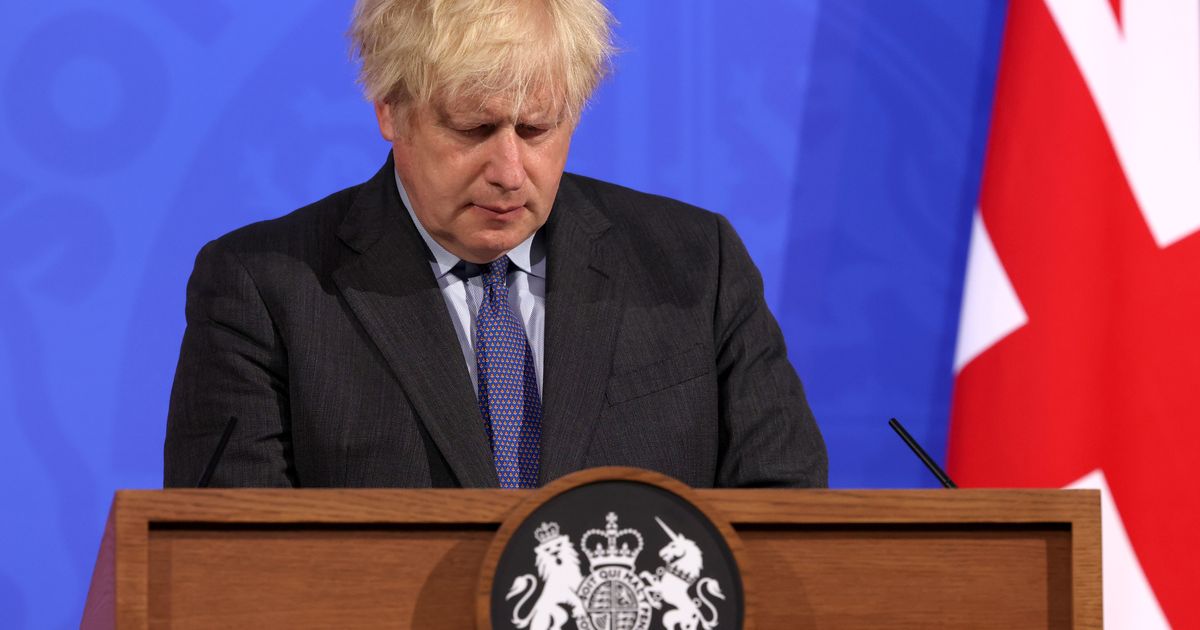
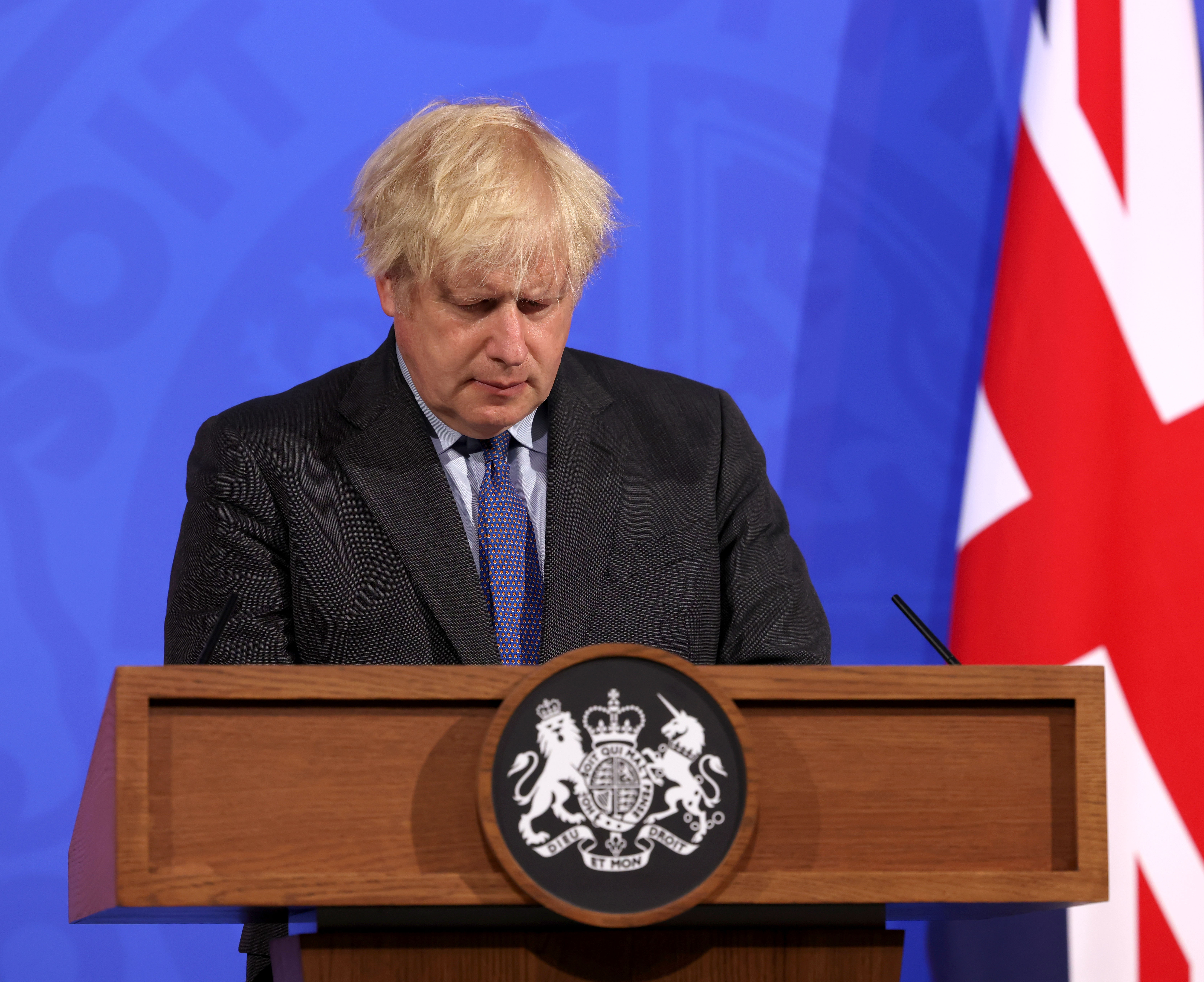
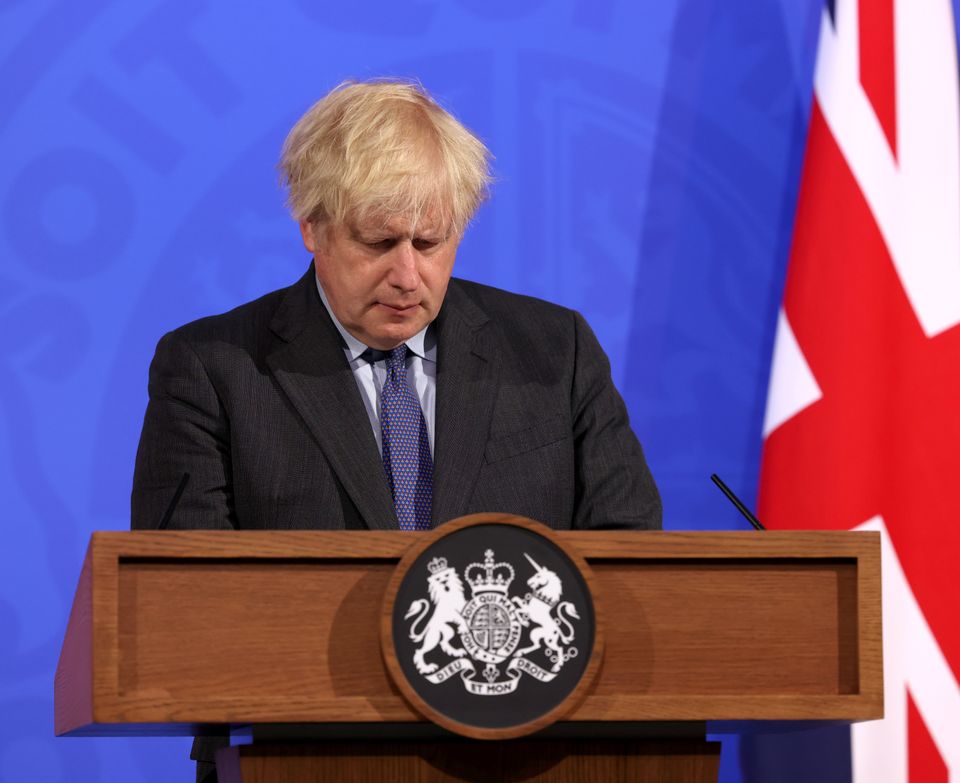
The epic battle between the vaccines and the virus certainly has high stakes. Perhaps that’s why Boris Johnson sounded unusually nervous as he announced he would indeed be postponing ‘Freedom Day’ by another four weeks. Instead of the sunshine of Midsummer Merrie England, there was a blizzard of scary charts of projected hospitalisations.

Fluffing his lines, the PM referred to “the adults of this company” (he meant “country”) and then wrongly declared the new unlocking date was July 29th (correcting it later to July 19th). Polling shows most of the public are relaxed about a delay, but Johnson is acutely aware that the 24% who are unhappy include several of his own backbenchers, and it showed.

Nowhere was this more telling than in his repeated reassurance that the Freedom Day Mk II was the real deal. He was “pretty confident” that July 19 will be “the terminus date” (he said “terminal date” too). June 21 was always a “‘not before’ date”, whereas this was much firmer, he suggested. This was not a defeat for lockdown sceptics, it was a victory, he seemed to imply.

That spin may or may not work on Tory MPs, but it could paint the PM into a corner for the first time in months. Ever since he bowed to Chris Whitty and Patrick Vallance’s plan for a cautious roadmap, he has been able to fall back on their insistence that all four tests have to be met (the new variant test was particularly shrewd) and that “data not dates” will drive his decisions.

But now with talk of “terminal” and fixed timelines, it feels like dates not data is the new approach. Steve Baker, Mark Harper and Sir Charles Walker, who will probably vote against the delay, have much more concrete evidence of a breach of faith should that July 19 date somehow slip again.

Whitty and Vallance gave the PM invaluable backing at the press conference. The chief medical officer in particular pointed out that even without the Indian variant, the very restoration of unrestricted indoor mixing of “households that are unrelated” was always going to lead to an uptick in cases. He added there had to come a point where fatalities switched from “deaths averted” to deaths delayed”, as with flu.

Patrick Vallance even suggested that locking down beyond July 19 would be counter-productive. And he made the case for that date containing the Goldilocks calculation of just how hot or cold to make the roadmap porridge. Giving over-18s their first jab and pushing unlockdown closer to the school holidays certainly added some sugar, as did a lifting of the cap on wedding numbers.

Still, for Keir Starmer, the talk of 19 July as a “terminal” date is an opportunity for a Judgement Day on Johnson’s competence. If the vaccination programme can’t sufficiently flatten the Delta variant spike, he is sure to step up his own attack line that Johnson’s failure to stop flights from India is the real culprit. Already today, the Labour leader hardened his rhetoric to say it was a “pathetic” border policy that had postponed freedoms.

Starmer’s clear aim is to drive a big wedge between the excellence of the NHS vaccine rollout and the government’s wider failures. It’s unclear whether it was the PM’s desire to keep alive post-Brexit trade talks with Narendra Modi that prompted his inaction, but the suggestion that he recklessly undermined both the NHS’s programme and public sacrifices is a toxic one.

Today’s failure to offer extra financial support to businesses added extra political risk too. Those firms which were hanging on by their fingertips will now face having to pay their share of furlough bills, with no extra income to fund them. Add in the self-employed already upset and an Opposition that was pro-enterprise could make inroads.

To oversee one Covid wave is a misfortune, to allow two begins to look like carelessness. But to trigger a third wave, squandering all the good work of your own vaccine success story, could be seen as unforgivable by a public which has to date been incredibly forgiving of its prime minister.

Share Button

Wedding Restrictions After June 21: What You Need To Know

The 30-guest limit at weddings in England has been lifted, despite a four-week delay to the ending of lockdown.

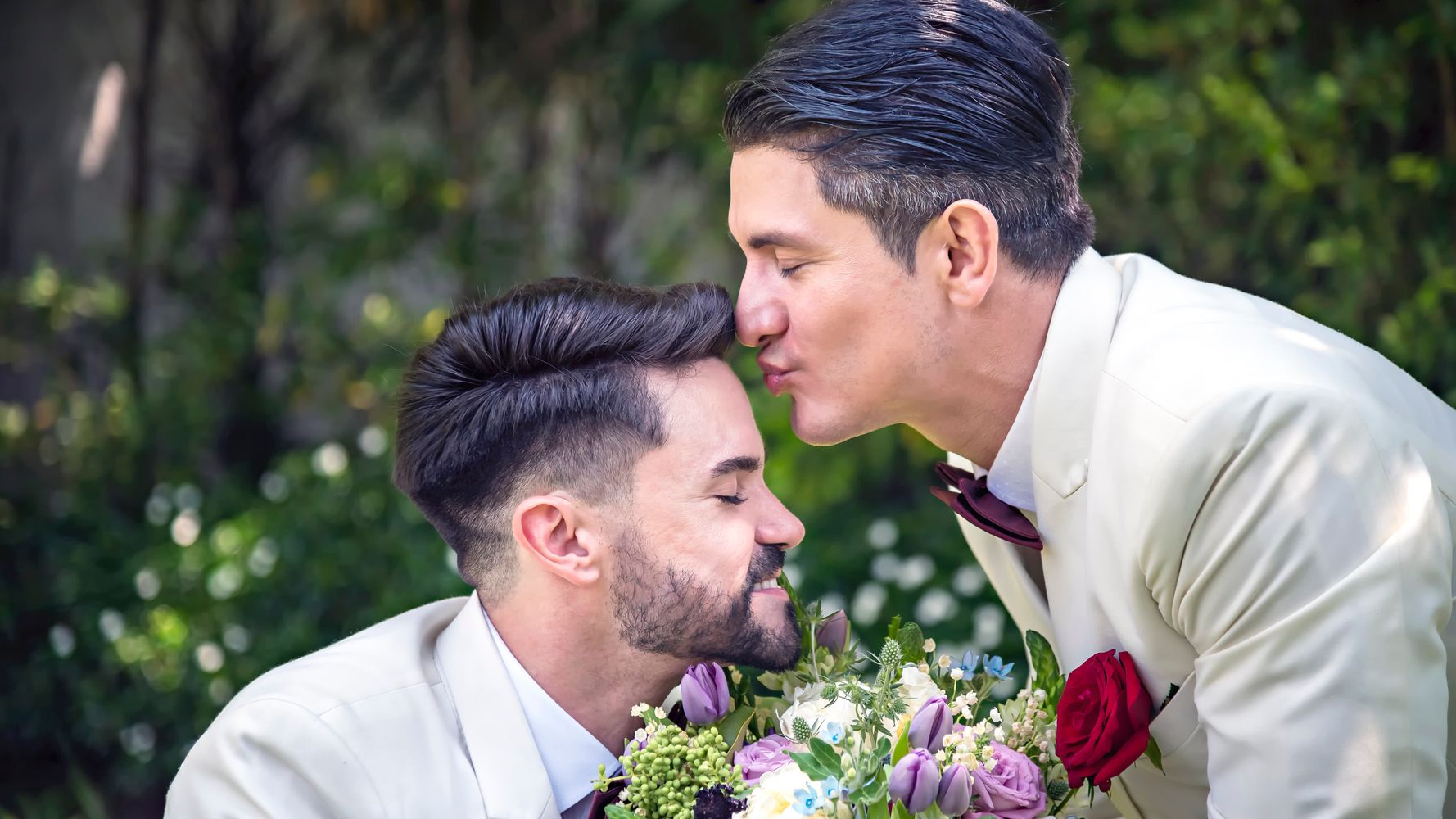
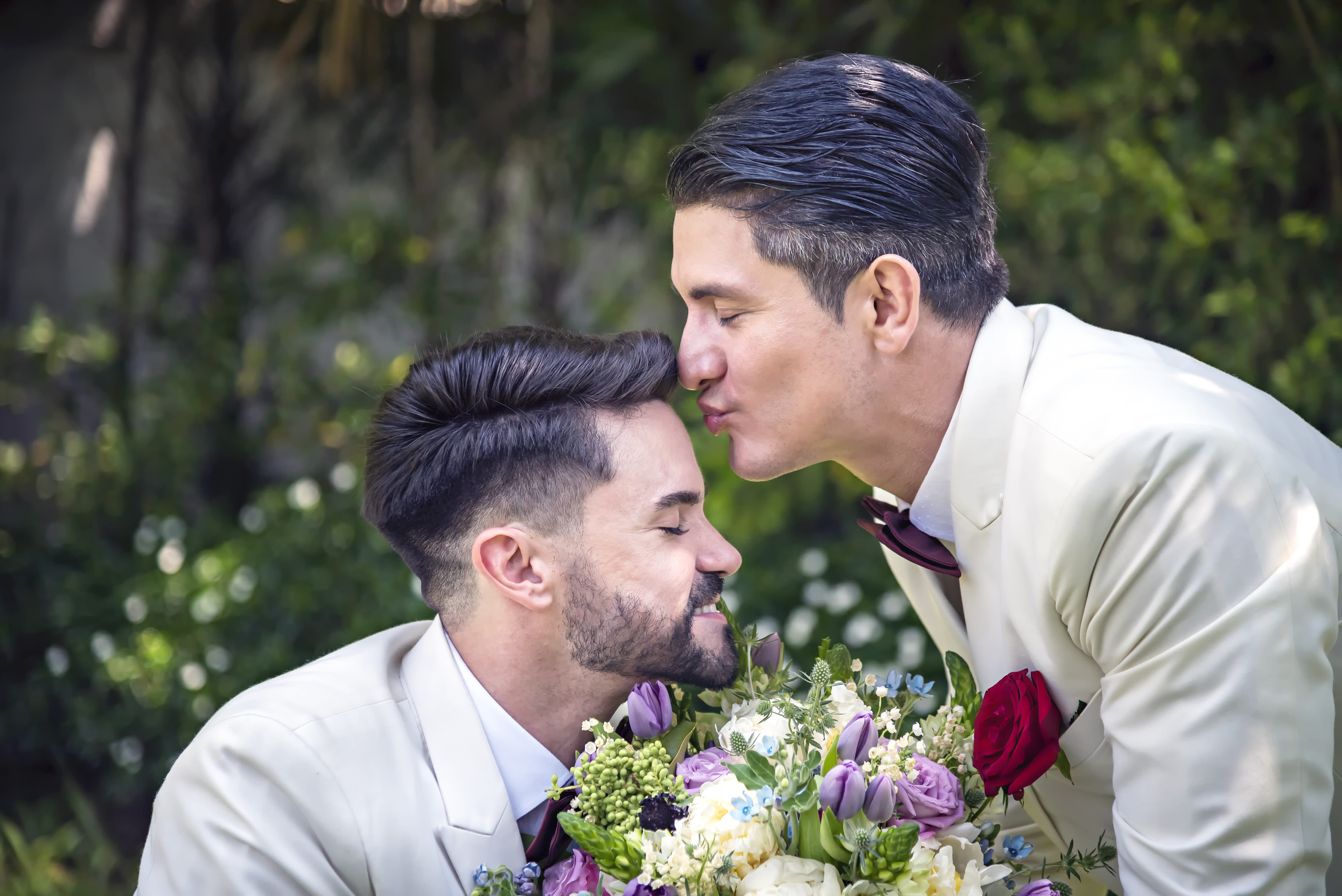
From June 21, people can have more than 30 guests at a wedding, “provided social distancing remains in place”, Boris Johnson announced at a Downing Street press conference on Monday – welcome news to the many couples who have postponed their celebrations time and time again.

He told the Downing Street press conference that the spread of the Delta variant meant the government and public “faced a very difficult choice” between continuing with Step 4 of the roadmap on June 21 or giving the NHS “a few more crucial weeks” to get all remaining vaccinations administered.

“And since today I cannot say that that we have met all our four tests for proceeding with Step 4 on June 21, I think it is sensible to wait just a little longer,” he said.

It is not yet confirmed if there will be an upper limit on guest numbers, but the Mirror has reported that capacity limits may be the highest number of people wedding venues can accommodate while still being Covid-secure.

“I am sorry for all the disappointment that’s going to be caused by going a bit slower as we are today,” the prime minster told a journalist and bride-to-be who said she had already twice postponed her wedding.

The reporter had questioned why testing and vaccination status could not be used to open up weddings in the same way as football matches, and said weddings felt “bottom of the priority list despite being significant life events without which some people cannot progress with their lives.”

Boris Johnson, who married his wife Carrie in a secret ceremony in Westminster Cathedral on May 29 attended by 30 people, said he was sorry for the “many, many businesses” affected by delays – adding “it’s a few weeks that I think is worth it to get those jabs in”.

Share Button

Lockdown Extension: The New Roadmap For Lifting Covid Restrictions In England

England’s long-awaited exit from lockdown has been delayed, with Boris Johnson warning a spike in cases of the Delta variant could lead to a surge in hospitalisations.  

This is the new timeline for reaching stage 4 of the government’s roadmap.

Stage 4 – July 19

The prime minister had hoped to lift the remaining social distancing rules on June 21.

But speaking at a press conference on Monday, he confirmed this date has been pushed back to July 19.

There will be a check point on June 28, where the government will review the infection data, if it still looks bad then the current Covid rules will be kept in place until July 19.

Confirmation, or otherwise, of the July 19 unlocking will be made on July 12.

The previous three stages of the unlocking, were as below.

Stage 1 – March 8 

Two people were allowed to meet for a coffee or picnic and were allowed to meet one other from another household outdoors.

All schools and colleges returned.

Care home visits indoors resumed, with residents allowed one regular named visitor.

The government’s ‘stay at home’ order remained in place. 

March 29 

The rule of six on socials gathering returned. It allowed six people from up to two households to meet outside or in private gardens. 

The stay at home advice was replaced by new guidance to “stay local where possible”.

People were asked to work at home if they could, however, and the overseas travel ban remained in place. 

People were allowed to travel to meet someone but not stay overnight. 

Outdoor facilities such as tennis courts, golf courses and basketball courts reopened.  

Stage 2 – April 12 

Non-essential retail and personal care businesses, such as hairdressers and nail salons, reopened. 

Pubs and restaurants reopened but only for outdoor hospitality, although table service was compulsory.

Public buildings, including libraries, reopened.

People were allowed begin to exercising indoors with the reopening of gyms and swimming pools.

Driving lessons resumed. Weddings and funerals resumed with guests of up to 30 and wakes could include 15 people. 

People were allowed to stay in self-contained holiday lets or camp sites where facilities are not shared, but only with members of their own household.  

Stage 3 – May 17

Pubs and restaurants could begin hosting people indoors.

Gatherings outdoors were allowed for up to 30 people. 

The rule of six/group comprised of two households was also extended to include indoor settings.

Overnight stays were permitted. 

The ban on international travel was lifted, replaced with a traffic light system with different destinations rated green, amber or red.

Hotels and museums could reopen. 

There were also new rules on entertainment venues, such as cinemas and theatre, and indoor sports venues. 

Indoors venues could host 1,000 people or be half full, whichever number was lower. Outdoors, a maximum capacity of 4,000, or half full whichever was lower, was allowed. 

For larger football stadiums, such as Wembley, the crowd could be as large as 10,000 or the venue be a quarter full. 

Exercising indoors in larger groups was allowed, so, for example, exercise classes could resume. 

Share Button

It’s Official: More Gay And Bi Men Can Now Give Blood

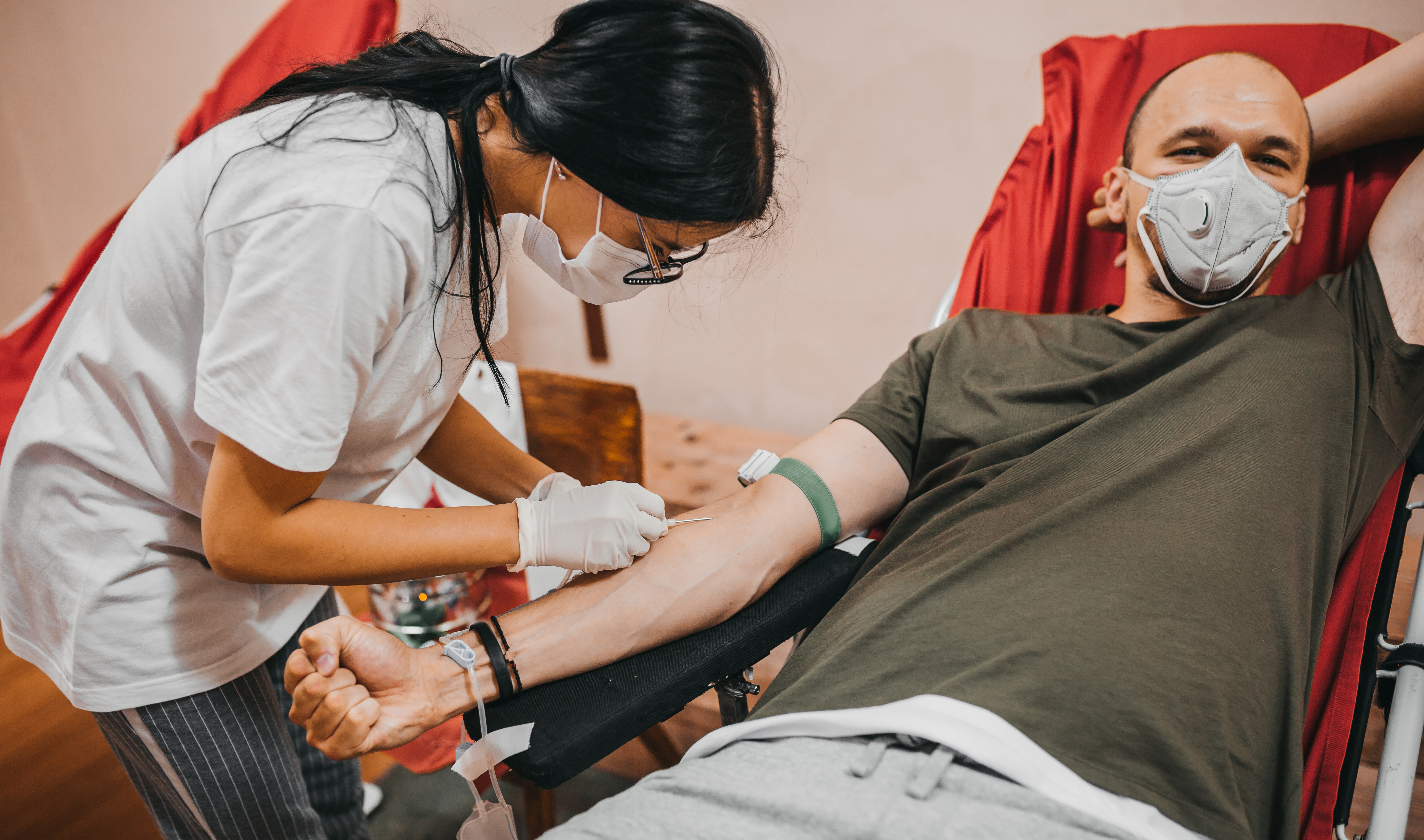
After a long wait, gay and bisexual men are able to donate blood more freely, following an overhaul of “dehumanising” blood donation rules.

Under the old rules, gay and bi men were unable to donate blood unless they’d abstained from sexual activity for more than three months. They were also specifically asked about their sexuality on donation forms.

The reasoning given was that “at a population level, men who have sex with men are at an increased risk of acquiring certain infections through sex”.

But under the new rules in England, Scotland and Wales, eligibility to give blood will be based on individual circumstances surrounding health, travel and sexual behaviours instead.

What does the rule change mean?

Any individual who attends to give blood – regardless of gender – will be asked if they’ve had sex and, if so, about recent sexual behaviours.

Those who’ve had the same sexual partner for the last three months will be eligible to donate – regardless of gender or sexuality.

People will also be able to donate if they have a new sexual partner with whom they’ve not had anal sex and there is no known recent exposure to an STI or recent use of PrEP or PEP.

To mitigate risks, those who’ve had anal sex with a new partner or with multiple partners in the last three months will not be able to give blood, but may be eligible in the future.

Donors who have been recently treated for gonorrhoea will be deferred and anyone who’s ever received treatment for syphilis will not be able to give blood.

Wasn’t this rule change announced last year?

Yes, but it’s only just coming into play from June 14.

The changes follow an evidence-based review by the FAIR (For the Assessment of Individualised Risk) steering group led by NHS Blood and Transplant.

The new donor selection system is designed to be fairer and will also maintain the UK’s status as one of the safest blood supplies in the world. Data around the impact of the donor selection changes will be kept under review and assessed 12 months after implementation to determine if changes are needed.

How do people feel about it?

Commenting on the rule changes when they were first announced in December, Adam Bloodworth wrote for HuffPost UK: “What people may not realise is that dehumanising rules like these reinforce feelings of shame that many LGBTQ people carry around with them as a heavy mental burden each day.

“By being discounted from an activity most people are encouraged to do, we’re reminded that we are perceived to be ‘different’ by some in society – no matter how many times people tell us we aren’t.”

Ethan Spibey was prevented from donating blood due to his sexuality – he’d wanted to do his bit and donate after a blood donor saved his grandfather’s life, but was unable to do so. Spibey, who has since been campaigning for a change to donation rules and founded FreedomToDonate, said: “The work of the FAIR steering group shows that simply being a man who has sex with men is not a good enough reason to exclude someone from donating blood.

“This is more than just about a fairer and more inclusive system, it’s about those who rely on blood, and giving blood literally saves lives. I can’t wait to finally repay that first pint. I would encourage anyone who is able to safely donate blood to register to do so.”

How to donate blood

Gay and bi men who’ve previously been turned away for blood donation can call NHS Blood and Transplant on 0300 123 23 23, which can review the new guidelines with you and, if eligible, book your next appointment.

Robbie de Santos, from the charity Stonewall, welcomed the “historic change”.

“We want to see a blood donation system that allows the greatest number of people to donate safely and we will continue to work with government to build on this progress and ensure that more people, including LGBT+ people, can donate blood safely in the future,” he said.

Share Button

Will Lockdown Be Extended? What We Know About Covid Rules On June 21

After weeks of ‘will they won’t they’ debate about whether Boris Johnson will delay the June 21 final lifting of Covid restrictions, we are finally about to find out what happens next.

The prime minister will deliver a press conference on Monday evening at which he will set out his plan for step four of the road map out of lockdown.

A delay is widely expected, amid a spike in Covid cases driven by the Delta variant first detected in India.

But there remain questions over how long it will be, whether rules for weddings or other activities could be relaxed, and what a delay means for the government’s pandemic strategy.

Here’s what we know so far:

What is happening with England’s lockdown?

The prime minister will meet senior ministers and officials on Sunday evening to make a final decision about whether to proceed with the June 21 unlocking.

He is then expected to deliver his verdict to the nation during a Monday evening press conference from Downing Street, after racing back from the Nato summit in Brussels.

Will lockdown easing be delayed?

Johnson looks almost certain to delay the widespread easing of restrictions, admitting over the weekend there are “grounds for caution”.

Reports suggest that he is mulling over a two or four-week delay.

But the smart money looks on the latter with England’s chief medical officer Chris Whitty reportedly favouring a longer delay.

Scientists advising the government have also now predicted that the PM will announce a delay on Monday.

Why will the June 21 unlocking be delayed?

The latest figures from Public Health England (PHE) on Friday showed there have been 42,323 cases of the Delta variant confirmed in the UK, up by 29,892 from the previous week.

It estimates the strain is 60% more transmissible compared with the previously dominant Alpha, or Kent, variant, and that cases are doubling every four-and-a-half days in some parts of England.

The Delta variant also now accounts for 96% of new infections.

Johnson said on Saturday that cases and hospitalisations are now going up and that he has “serious concern” about this potentially feeding through to more deaths.

Foreign secretary Dominic Raab said on Sunday that ministers would be looking at whether vaccinations have “broken the link” between rising cases and rising hospitalisations, “not just severed or weakened it”.

Professor Andrew Hayward, a member of the Nervtag group which advises ministers on new respiratory diseases, said it was clear the country was facing a “substantial” third wave of the disease.

He said the key issue was the extent to which that led to more people becoming seriously ill and requiring hospital treatment.

“We still don’t know how bad it could be,” he told BBC’s The Andrew Marr Show.

But what about Covid vaccines?

More than three quarters (78.9%) of adults have now had their first dose of the vaccine.

But the latest PHE estimates suggest that one dose of Pfizer or AstraZeneca is only around 33% effective against the Delta variant, compared with around 50% against the previously dominant Alpha variant.

Encouragingly though, once people have two jabs the vaccines’ effectiveness is only slightly reduced – from around 88% to 80%.

The problem is only 56% of adults have had both jabs, so a delay would give the NHS more time to give more people their second dose, and so reduce the risk of rising hospitalisations that could put the NHS under pressure.

Johnson said on Saturday that “we need to make sure we give the vaccines extra legs.”

On the plus side, deaths are still very low, although there is always a lag between rising cases feeding through to more deaths.

Could a lockdown delay last longer than four weeks?

WPA Pool via Getty Images

Boris Johnson has refused to say whether the June 21 schedule could be pushed back. 

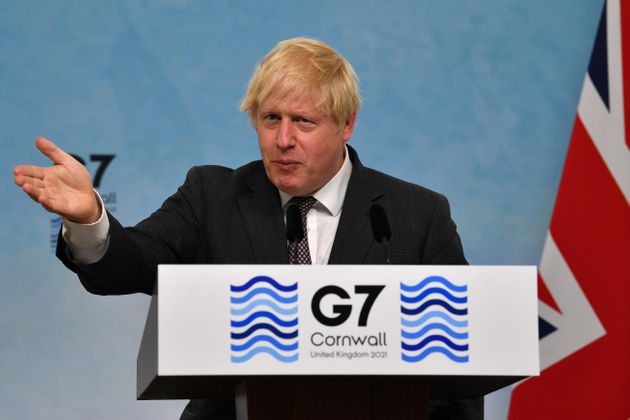
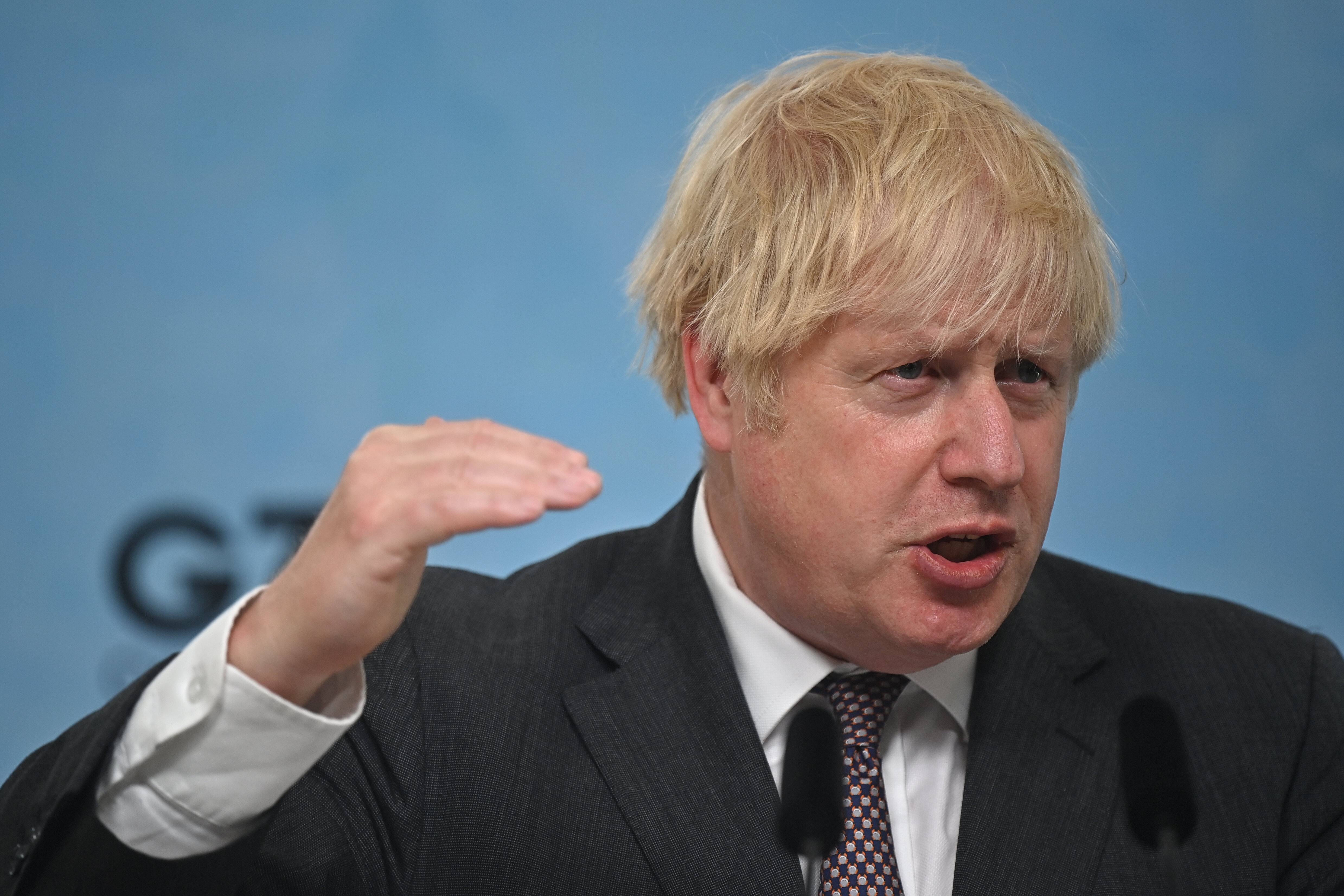
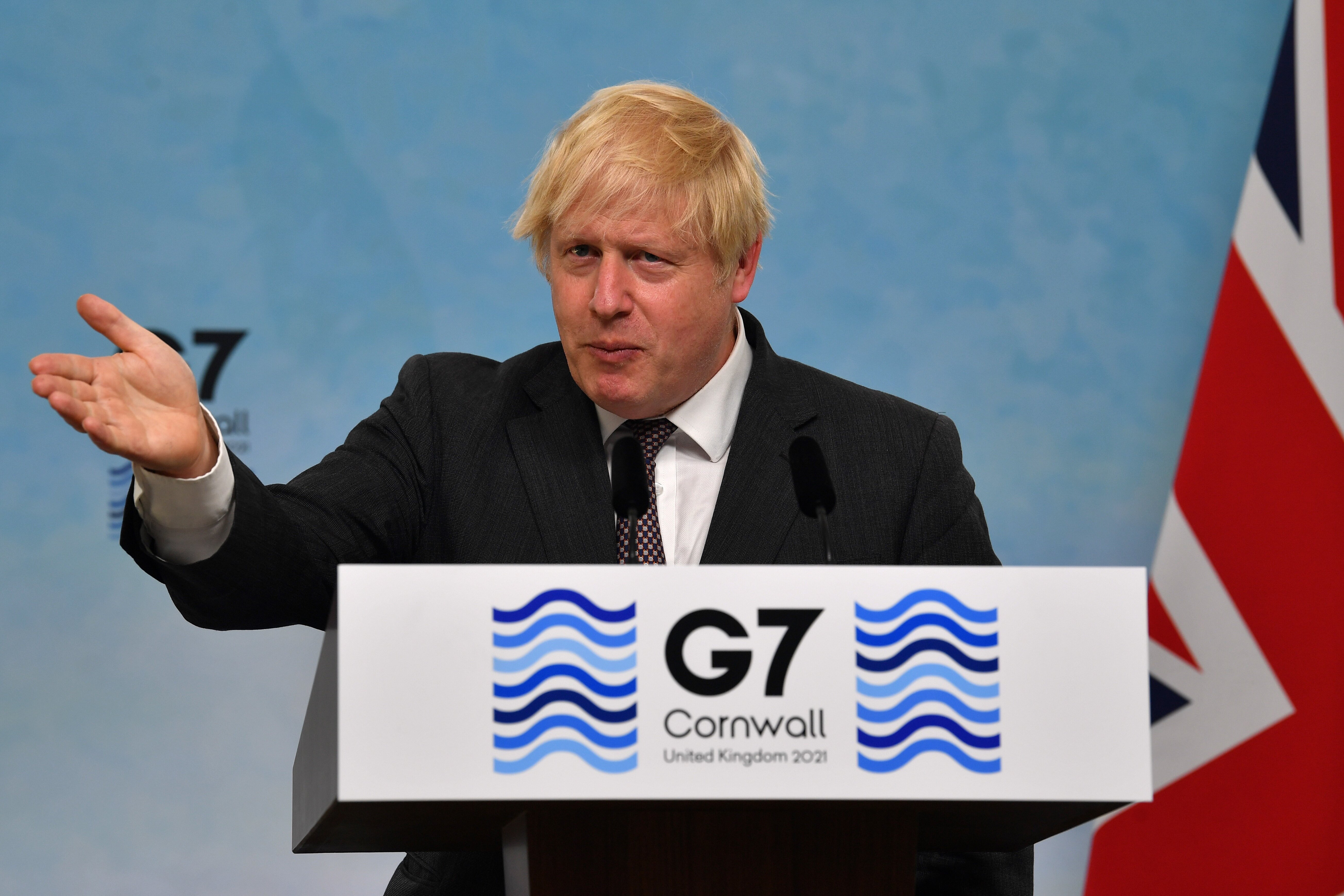
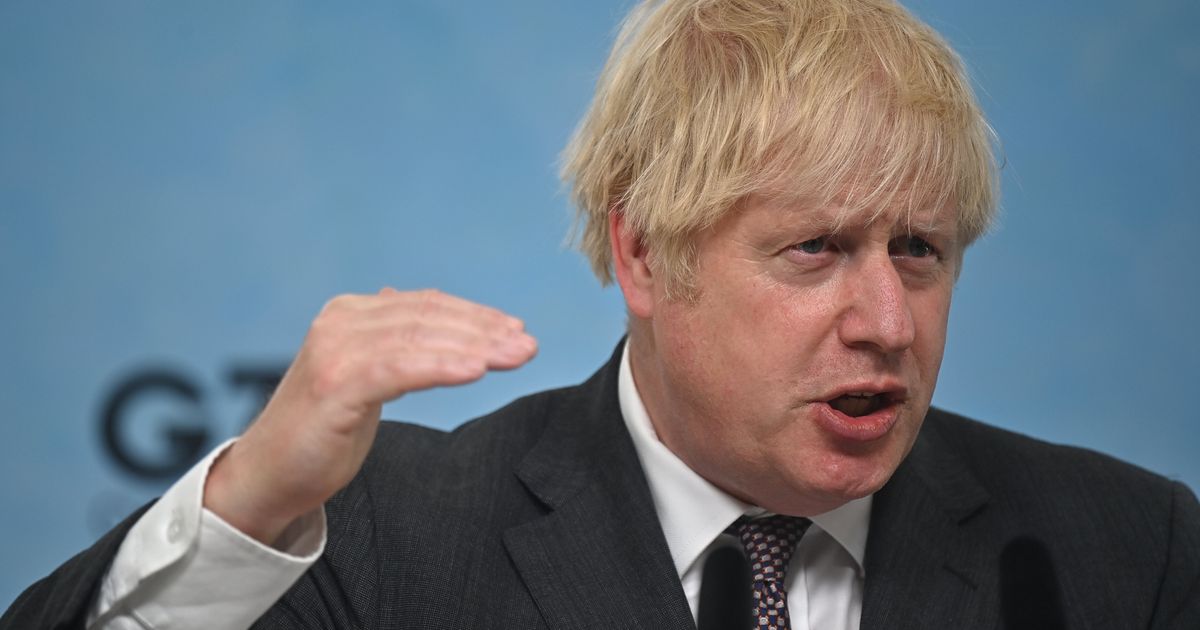
At a Sunday press conference to close the G7 summit in Cornwall, Johnson refused to say whether the June 21 schedule could be pushed back longer than four weeks.

Foreign secretary Dominic Raab meanwhile said that unlocking needed to be “irreversible” and so the government needed to proceed “carefully and cautiously”.

“We don’t want to yo-yo back in and out of measures,” he said.

He also refused to rule out the possibility that restrictions could stay in place beyond the end of July.

“We want to be irreversible so we have just got to be careful that we are there in terms of data,” he said.

Professor Stephen Reicher, a member of the Scientific Pandemic Insights Group on Behaviours (Spi-B), has meanwhile warned that there is a risk the Covid situation could go “backwards”.

He called on the government to provide more financial support to help people self isolate to stop the spread of the virus.

Could there still be some relaxation of Covid rules?

HuffPost UK last week revealed that Michael Gove said he would “bet” on some kind of “relaxation” of restrictions.

Reports suggest that Johnson may delay most of the roadmap, but lift the cap on the number of people who can attend weddings, which is currently at 30.

The PM may also choose to relax rules around attendance of large events to enable at least half-full stadiums at Euro 2020 games hosted at Wembley, including the final.

Will there be a backlash?

Polling by Opinium suggested broad public support for the government’s approach, with 54% in favour of a delay and 37% against.

But there is frustration among some Conservative MPs – already unhappy over the impact on the economy and on civil liberties – at the prospect of further delay.

Writing in the Mail on Sunday, Sir Graham Brady, the influential chairman of the backbench Tory 1922 Committee, said that it must be the final time.

“On any reasonable assessment we should be still on target for lifting restrictions on June 21,” he wrote.

“There is no excuse for this further catastrophic delay. It is unacceptable to restrict people’s most fundamental rights. And it must never ever happen again.”

Share Button

G7 Leaders Fall Short Of Directly Sharing 1bn Vaccine Doses Around The World

Leaders of the G7 group of wealthy nations have fallen short of directly providing one billion Covid vaccine doses to poorer countries over the next year.

The final communique of the Boris Johnson-hosted summit in Cornwall revealed that the leaders only managed to commit to sharing 870m spare doses over the next year, despite a high profile commitment to a billion.

The document insists that taken together with separate financial commitments it would mean the G7 has shared more than two billion doses since the start of the pandemic, and has met the 1bn target for the next year.

But the leaders are facing criticism from the likes of Oxfam, which accused leaders of “cooking the books” with its vaccine figures.

“A billion vaccine doses would have been a drop in the bucket, but they didn’t even manage that,” the charity said.

Earlier, former UK prime minister Gordon Brown said the summit will go down as “unforgivable moral failure” as the World Health Organisation (WHO) estimates that 11bn doses – more than ten times the number pledged – are needed to stamp out the pandemic.

At his closing summit press conference, Johnson rejected Brown’s criticism, highlighting US president Joe Biden’s commitment to providing 500m Pfizer vaccines for 92 low and lower-middle income countries and the African Union.

 “This is another billion made up of a massive contribution by the United States and other friends,” the UK prime minister said.

He said the UK’s contribution is another 100m from now to next June of the vaccines.

He said: “Already of the 1.5bn vaccines that have been distributed around the world, I think that people in this country should be very proud that half a billion of them are as a result of the actions taken by the UK government in doing that deal with the Oxford scientists and AstraZeneca to distribute it at cost.”

He added: “We are going flat out and we are producing vaccines as fast as we can, and distributing them as fast as we can”. 

The target to vaccinate the world by the end of next year will be done “very largely thanks to the efforts of the countries who have come here today”, according to Johnson.

But Oxfam’s head of inequality policy Max Lawson said leaders had “cooked the books” on vaccines and “completely failed” to meet the challenge of the biggest health emergency in a century.

“This G7 summit will live on infamy,” he concluded.

Edwin Ikhuoria, of the anti-poverty campaign One, said: “Throughout the summit we have heard strong words from the leaders but without the new investment to make their ambitions a reality.

“Crucially, the failure to get life-saving vaccines to the whole planet as fast as possible, means this was not the historic moment that people around the world were hoping for and leaves us little closer to ending the pandemic.”

What else was agreed at the G7 summit? 

Covid

G7 leaders renewed calls for a further investigation into the origin of Covid-19, following Biden’s surprise decision to order US intelligence agencies to continue probing the Wuhan “lab leak” theory.

The final summit communique called for a “timely, transparent, expert-led, and science-based WHO [World Health Organisation]-convened phase 2 Covid-19 origins study” including in China.

Johnson said that the best advice available to him remained that the virus jumped species from an animal.

However he said that it was important to keep an open mind as to what exactly happened.

“At the moment, the advice that we have had is that it doesn’t look as though this particular disease of zoonotic origin came from a lab,” he said.

“Clearly anybody sensible would want to keep an open mind about that.”

China

America’s wariness of China is continuing despite Biden replacing Donald Trump in the White House.

The president managed to convince leaders to sign up to a rival to Beijing’s influential Belt and Road investment programme in an effort to counter growing Chinese influence.

The Build Back Better World (B3W) programme will fund infrastructure, including green technology, and support growth in developing countries.

Leaders meanwhile pledged to call on China to “respect human rights and fundamental freedoms”, including in Xinjiang where Uighurs are believed to be suffering brutal human rights abuses that some say amount to genocide.

It also raised the situation in Hong Kong, calling on Beijing to respect its “rights, freedoms and high degree of autonomy”.

But reports suggest that there were some disagreements over how strong the language on China should be.

Environment

The G7 is committed to supporting a green revolution that creates jobs, cuts emissions and seeks to limit the rise in global temperatures to 1.5 degrees

Leaders set out the action they will take to slash carbon emissions, including measures like ending the use of unabated coal power – although they were unable to set a deadline for this.

The leaders did commit to ending funding for carbon-emitting overseas projects by the end of the year but the failure to agree a timeline may worry Johnson in the run-up to the Cp26 climate summit in Glasgow at which he is hoping to strike a much bigger global deal.

The G7 also set a goal of conserving or protecting at least 30% of their land and marine areas by 2030 as part of a push to reach that level of protection globally.

But Oxfam criticised the failure to make new pledges of climate finance, arguing that developing nations were looking for progress ahead of Cop26.

“Vague promises of new financing for green development projects should not distract from this goal,” the charity said.

Share Button

Christian Eriksen, Danish Team Captain, Collapses On Field At The Euros

A European Championship match between Denmark and Finland came to an abrupt halt on Saturday when Danish team captain Christian Eriksen collapsed on the field. 

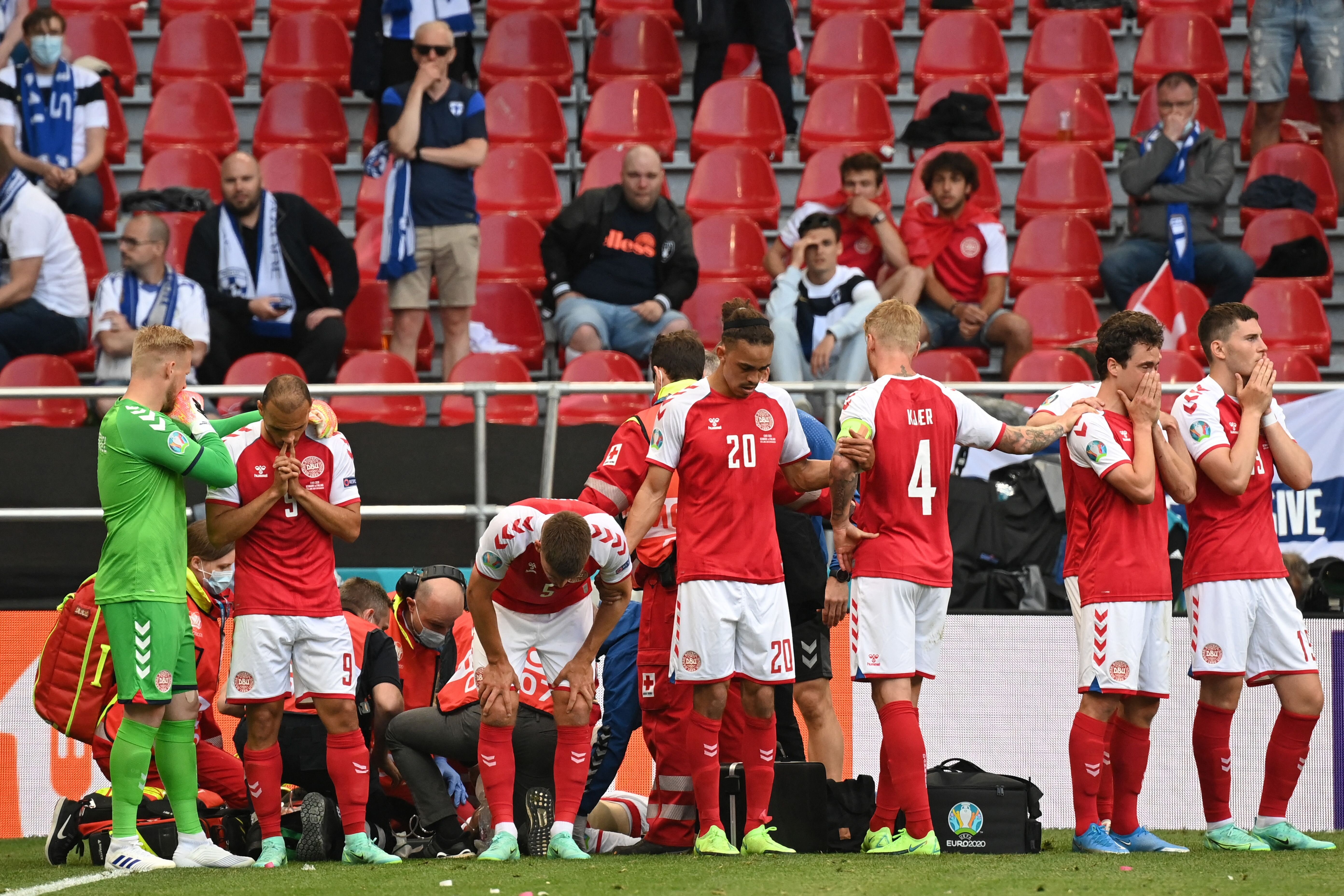
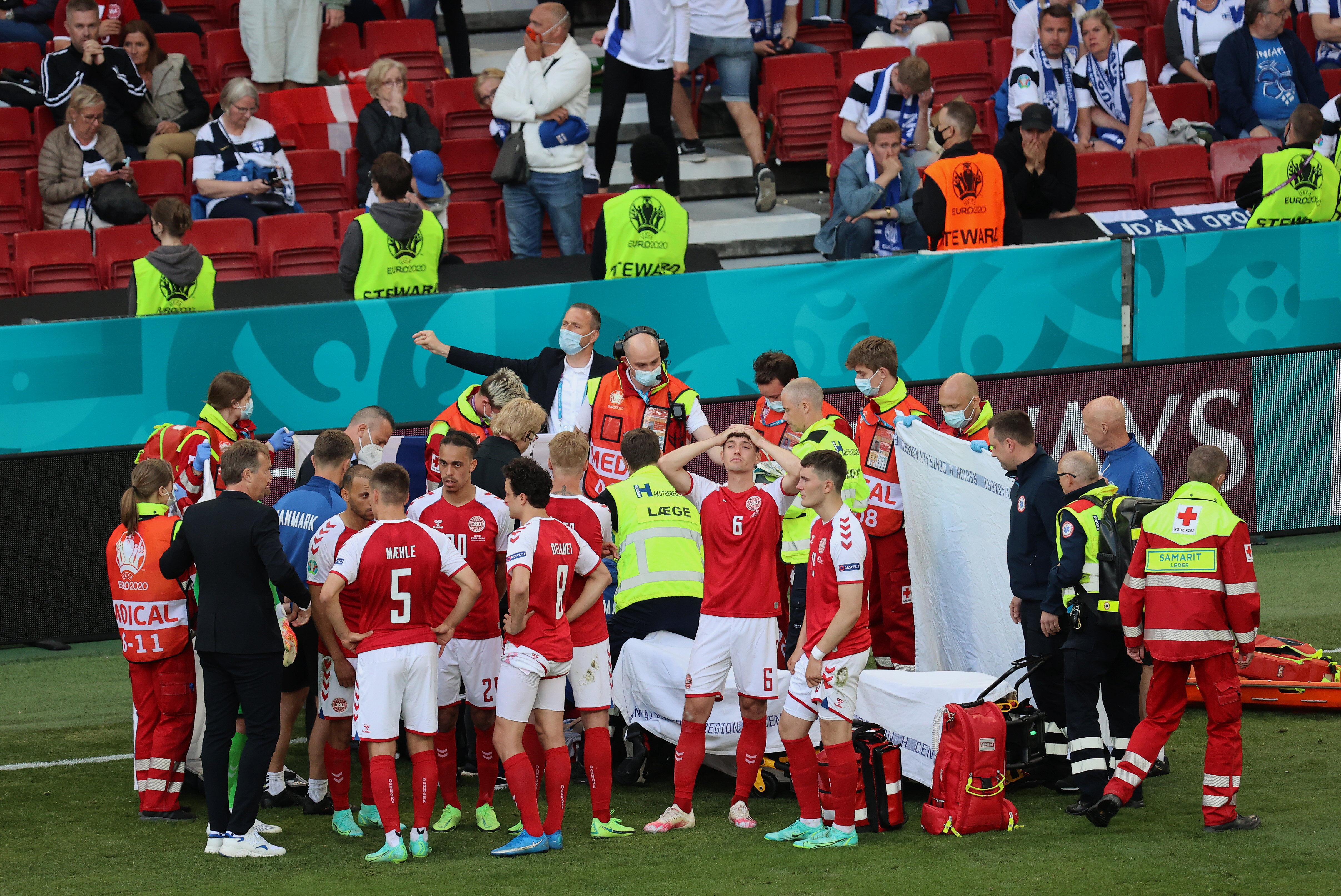
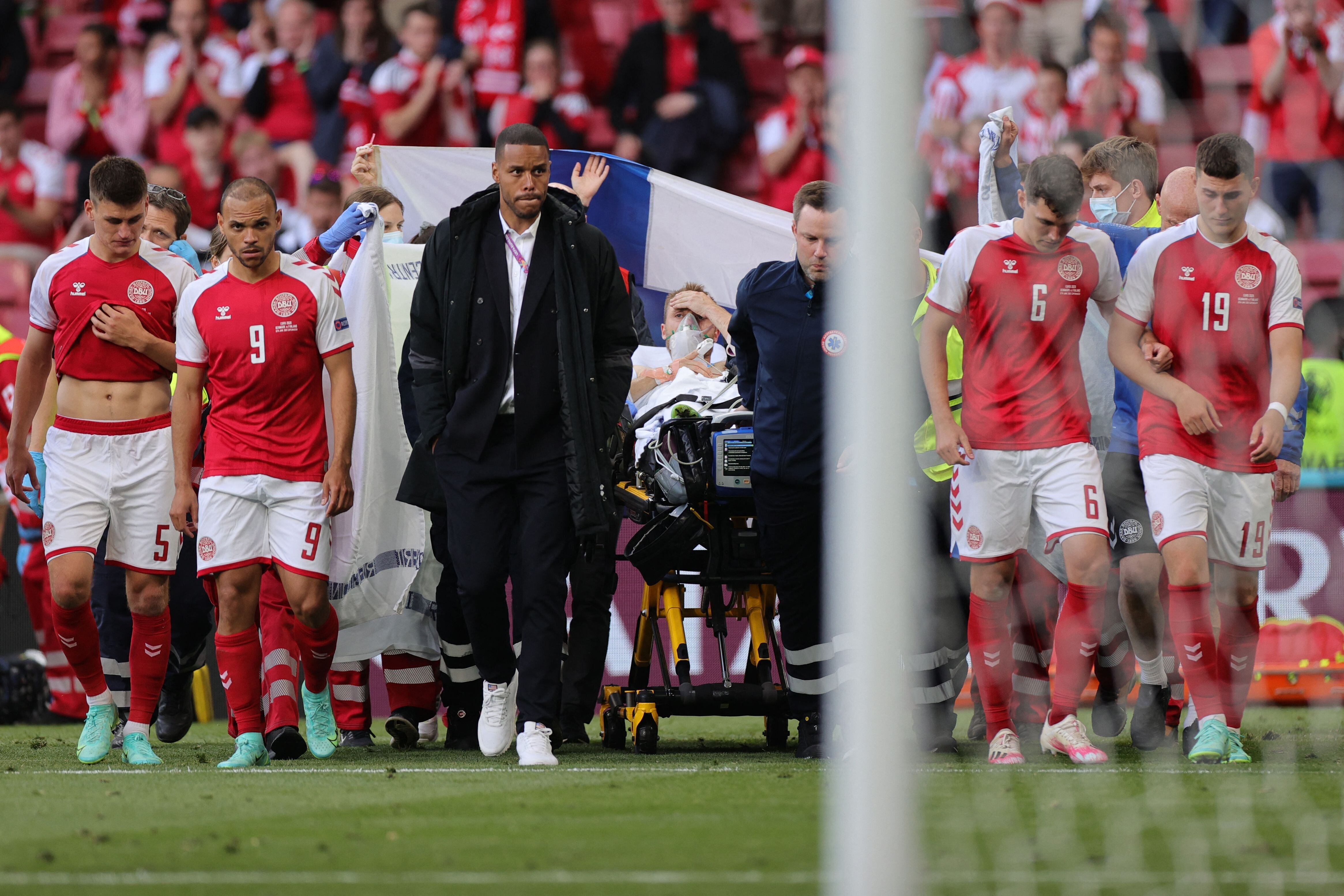
Players swiftly called over medical personnel and ― with some in tears ― formed a human shield around Eriksen as he received chest compressions and other aid at Parken Stadium in Copenhagen. 

Eriksen, a star midfielder, was taken away on a stretcher after about 10 minutes of medical attention.

He has been stabilised and transferred to a hospital for tests, according to an announcement from the Union of European Football Associations, which organises the tournament held every four years. 

The match then resumed at the request of both teams.

Players were in the first half of the game when Eriksen appeared ready to receive a pass but instead collapsed near the sideline. 

“Moments like this put everything in life into perspective,” UEFA President Aleksander Čeferin said in a statement. “At these times, the unity of the football family is so strong and he and his family carry with them the good wishes and prayers of everyone.”

Eriksen reportedly spoke to his teammates on a video call to reassure them he felt okay.

Wolfgang Rattay – Pool via Getty Images

Denmark’s players gather around teammate Christian Eriksen, who collapsed on the pitch during a match between Denmark and Finland at the Parken Stadium in Copenhagen on Saturday.

As spectators awaited further update on Eriksen’s condition, tributes poured infrom fans, journalists and football clubs around the world. 

“Incredible effort from the paramedic team,” tweeted Google CEO Sundar Pichai.

“My god, thinking of Eriksen and his family and sending all the love and strength available,” Team USA star player Megan Rapinoe said.

FRIEDEMANN VOGEL via Getty Images

Denmark’s players escort Eriksen off the field.

Video from the stadium showed the fans shouting “Christian” and “Eriksen” back and forth in solidarity during the pause in the game, which lasted roughly 90 minutes.

The next match, between Belgium and Russia, will go forth as scheduled, the UEFA said.

Share Button

G7 Leaders Discussed The ‘Lab Leak’ Covid Origin Theory, WHO Chief Reveals

G7 leaders discussed the theory that Covid-19 leaked from a laboratory in the Chinese city of Wuhan, the head of the World Health Organisation (WHO) has revealed.

WHO director-general Tedros Adhanom Ghebreyesus said leaders discussed the so-called “lab leak” theory during talks on Covid on Saturday.

It comes after a leaked draft communique for the summit seen by Bloomberg suggested G7 leaders will call for a new investigation into the origins of coronavirus.

Most experts believe that Covid jumped to humans from an animal host naturally.

But US president Joe Biden surprisingly last month decided to expand an American investigation into the virus’s origins, with one of the country’s intelligence agencies leaning towards the lab leak theory, while two others believe it had natural origin.

G7 leaders are likely to have discussed the theory Covid leaked from the Wuhan Institute of Virology at the instigation of Biden.

At a summit media briefing, Tedros was asked: “In today’s whole summit of the G7 did the origin of Covid come up, in particular the Wuhan lab leak theory?”

Tedros replied: “It was raised.

“We discussed… the origins.

“What we discussed was on the future and the challenges of sharing information, sharing data, sharing pathogens or in sharing biological materials and in sharing technology like vaccines.

“Now we are having vaccine equity problems and we are seeing a two-track pandemic – some countries are doing well while others are actually in trouble because of lack of access to vaccines.

“So we are going to address all these problems and address the origin issues for the future, we need to have a binding pandemic treaty so there will be rules of the game and we have countries abiding to laws and so we can have all the challenges we are facing now addressed.

“So the origins was discussed in relation to now, but more in relation to how this should be handled in the future.”

Barcroft Media via Getty Images

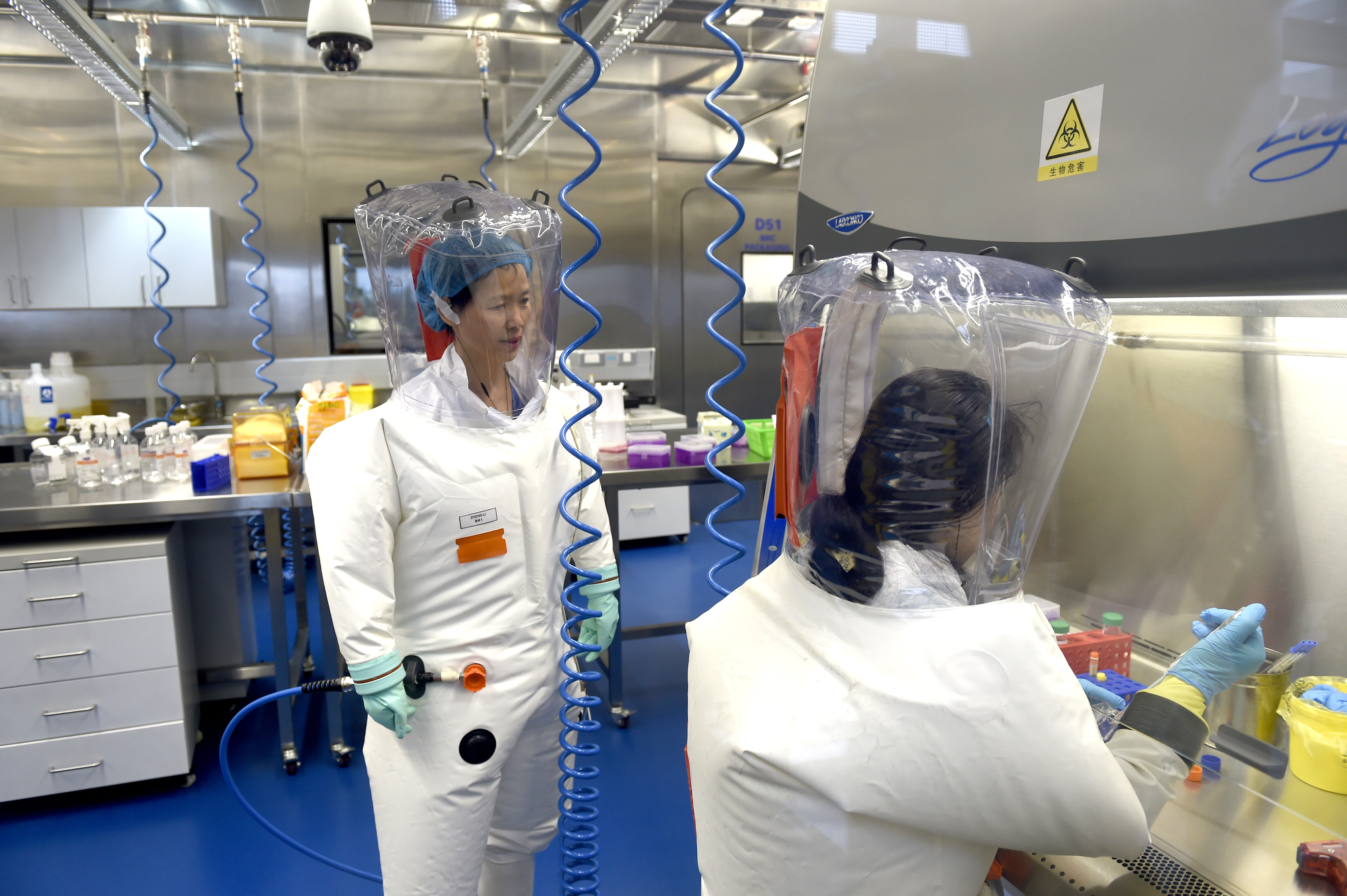
Scientists work at the Wuhan Institute of Virology

Tedros meanwhile urged China to be more transparent when the WHO begins the second phase of its Covid origins inquiry.

“More than 174m people have been confirmed [with] Covid illness, this is actually an underestimate, it could be more,” he said.

“And so far 3.75m people have died.

“This is very tragic and I think the respect these people deserve is knowing what the origin of this virus is so that we can prevent it from happening again.

“The origin study is something the WHO takes really seriously.

“We are preparing for the second phase.

“We will need cooperation from the Chinese side, we need transparency in order to understand or find the origin of this virus.”

Share Button

Boris Johnson Threatens To Suspend Key Brexit Deal Over Sausage War

Boris Johnson has threatened to suspend a key Brexit deal on Northern Ireland in an increasingly bitter row with the EU.

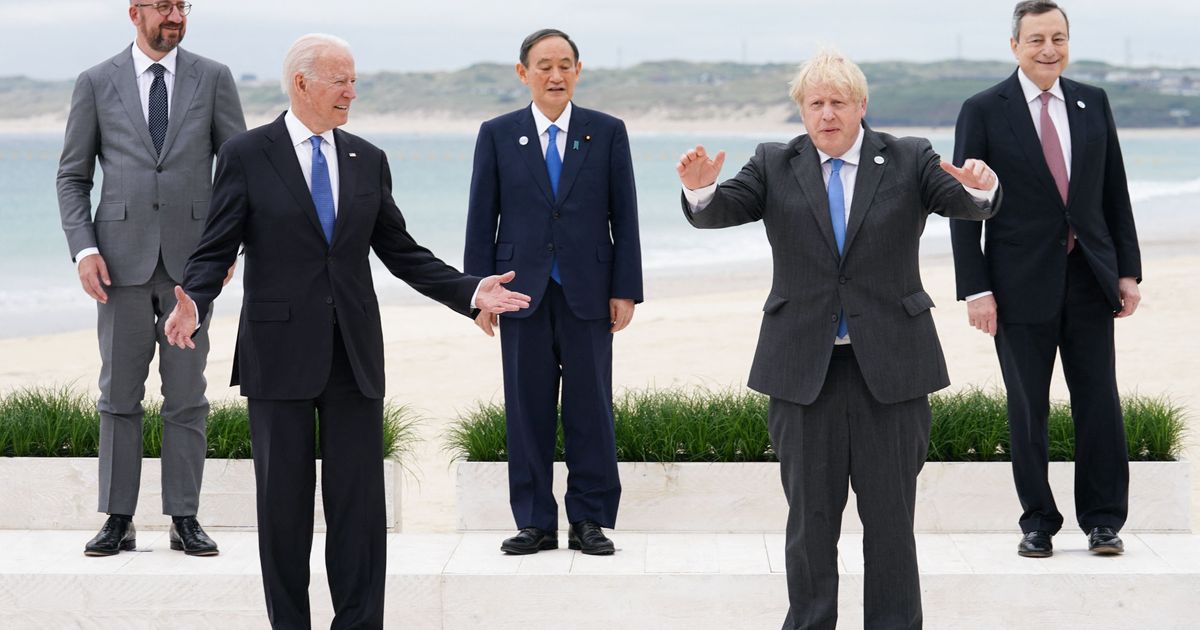
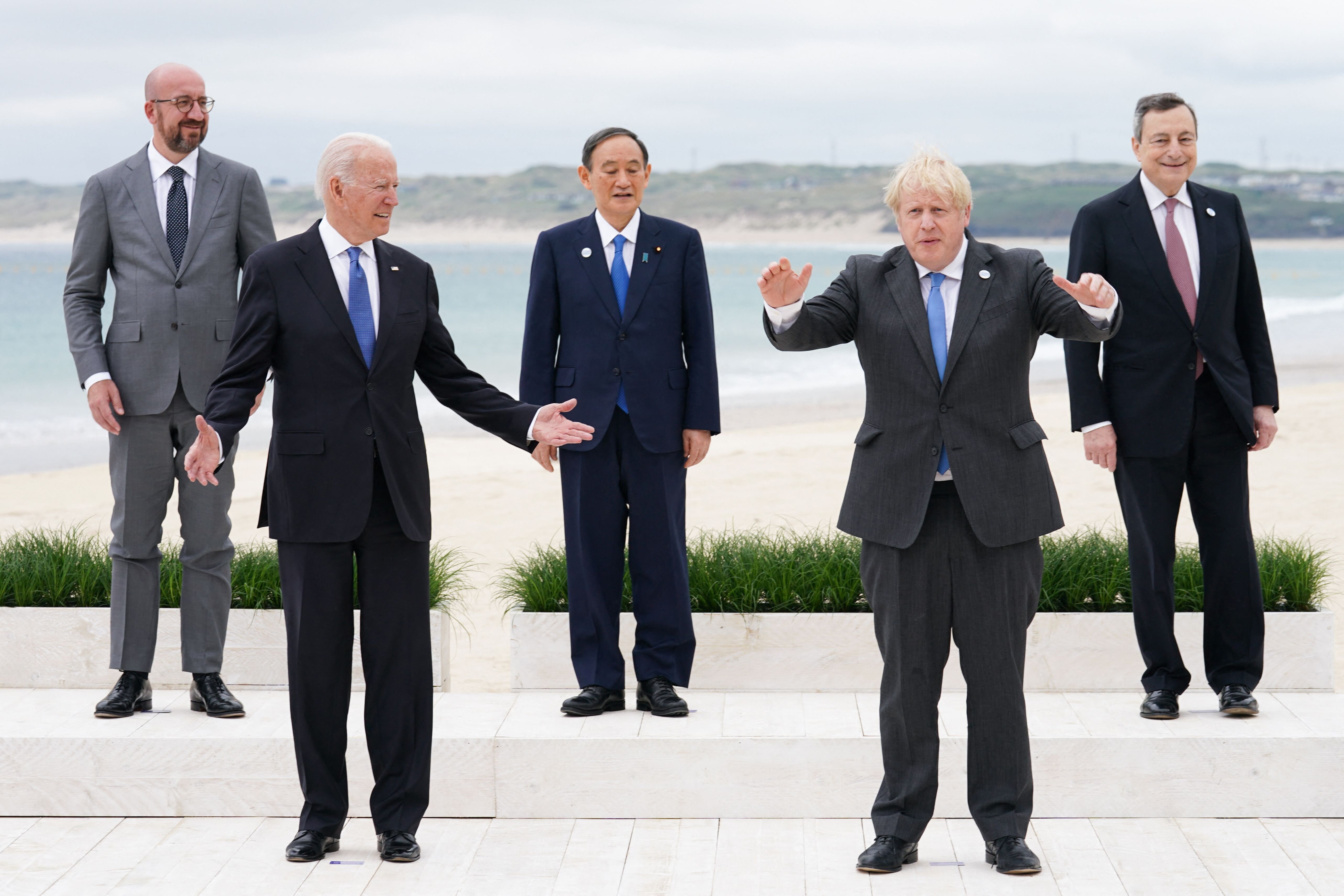
The prime minister spoke after meeting key EU players in the margins of the G7 summit in Cornwall, as wrangling over the Northern Ireland protocol threatened to overshadow the gathering.

French president Emmanuel Macron on Saturday morning urged Johnson to “keep his word” and apply the protocol in full, while European Commission president Ursula von der Leyen and European Council leader Charles Michel told him to “implement what we agreed on”.

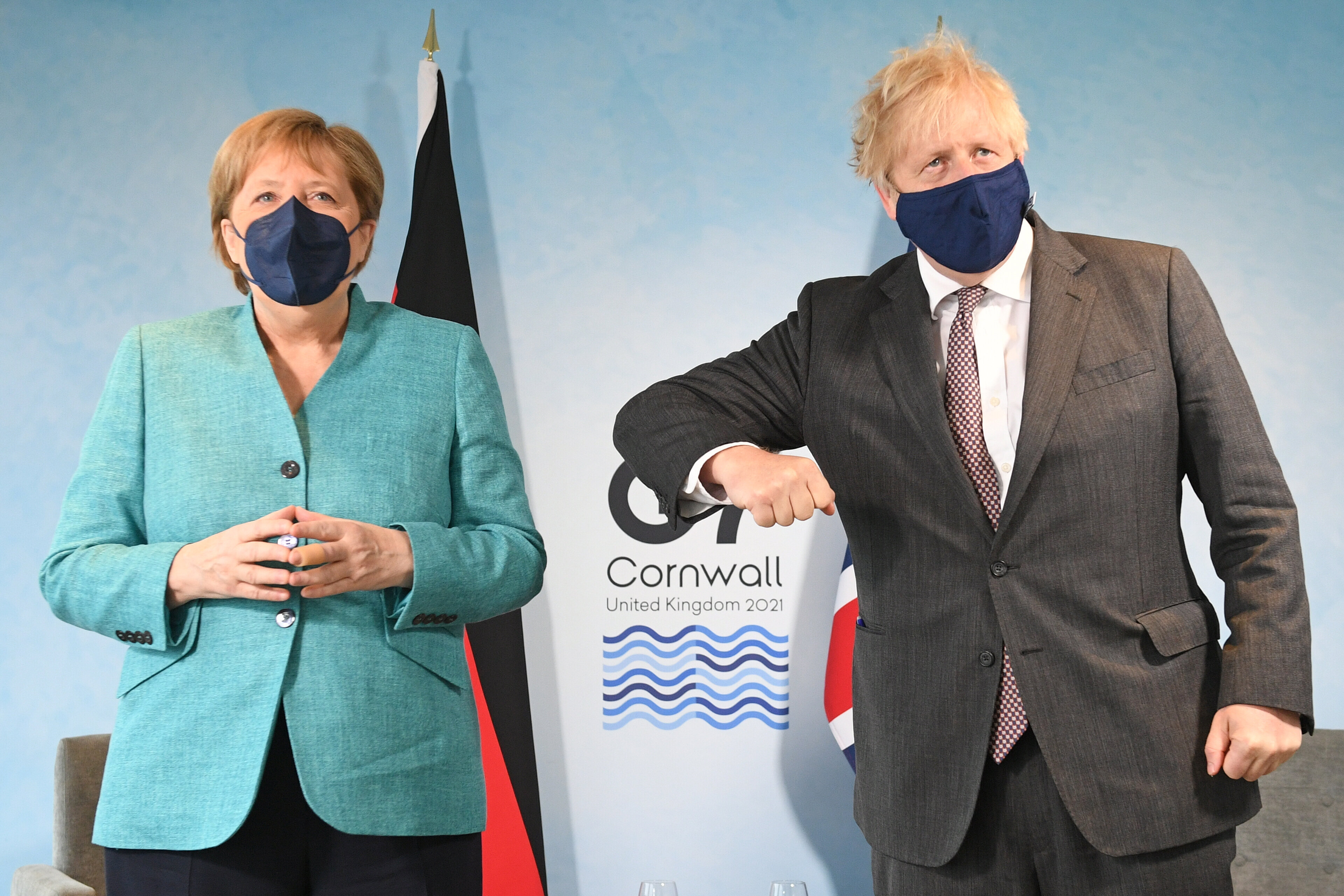
German chancellor Angela Merkel also discussed the issue in talks with Johnson, who has now hit back with a complaint that the EU was being “theologically draconian” about the deal.

EXPLAINED Why A Brexit Sausage War Risks Overshadowing The Entire G7 Summit

Downing Street has indicated the UK would be prepared to unilaterally delay the full implementation of the protocol to prevent a ban on chilled meats crossing the Irish Sea from Great Britain.

Restrictions on British-produced chilled meats entering Northern Ireland are due to come into force at the end of the month, triggering talk of a so-called “sausage war”.

Johnson has now warned that unless there was a solution he would invoke Article 16 of the protocol which allows either side to take unilateral action to suspend the deal if its implementation were to lead to “serious economic, societal or environmental difficulties”.

Explaining his position, the PM told Channel 4 News: “It’s stated abundantly in the text that the protocol should be implemented in such a way as to ensure free trade, free movement of goods between Great Britain and Northern Ireland and all parts of the UK.

“It’s not working like that at the moment. We need to make sure it’s applied in a sensible way.

“There’s no reason at all to have prohibitions or barriers to the movement of potted plants, tractor parts, guide dogs for the blind, chilled meats – you name it – from Great Britain to Northern Ireland.”

On Sky News, he added: “I think we can sort it out but… it is up to our EU friends and partners to understand that we will do whatever it takes.

“I think if the protocol continues to be applied in this way, then we will obviously not hesitate to invoke Article 16, as I have said before.

“Don’t forget, the EU themselves invoked Article 16 in January, to disapply the protocol, so they can stop removal of vaccines from the EU to the UK.

“I’ve talked to some of our friends here today, who do seem to misunderstand that the UK is a single country, a single territory. I just need to get that into their heads.”

Johnson used the meetings with EU leaders to call for “pragmatism and compromise on all sides”, repeating his call to “minimise the impact [of the protocol] on the day-to-day lives of people in Northern Ireland”.

“I certainly think that the protocol is capable of being used and interpreted – by the way, up to the EU – in a pragmatic way or a theologically draconian way,” he told Channel 5.

“At the moment we are seeing… a lot of unnecessary difficulties. I think we can sort it out, with goodwill.

“What we don’t want to see is any more unnecessary barriers to trade and we want to sort it out as fast as we can, I’m sure with goodwill we can.”

Asked if there would be a trade war if agreement could not be reached, Johnson said: “The UK will do whatever we need to do to protect the UK internal market.”

“I don’t happen to think that a trade war is a very sensible or likely way forward. 

“I just think that we need some pragmatic solutions.”

Share Button