Russia’s Reaction To Trump’s New National Security Strategy Is Deeply Worrying

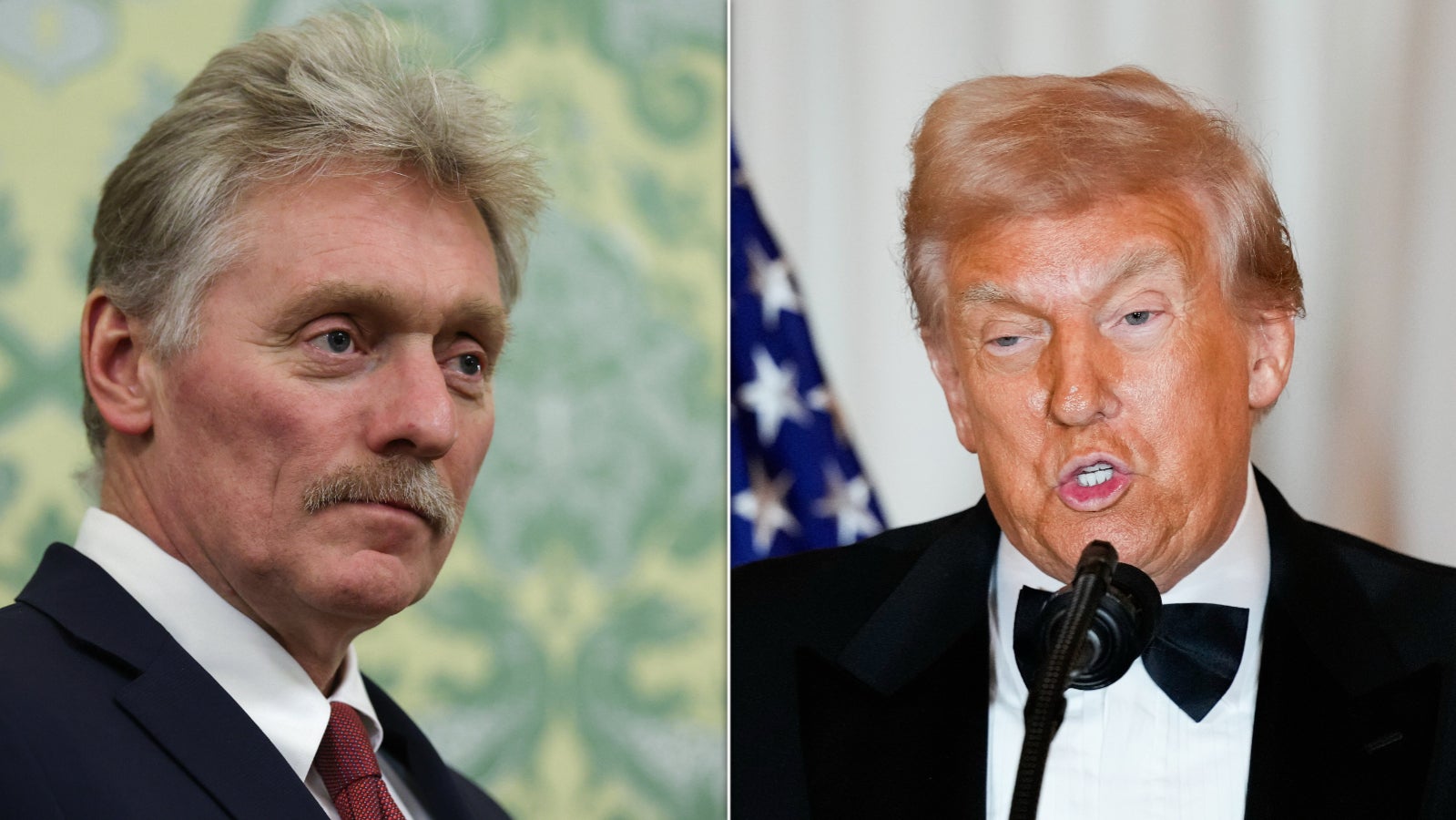
The Kremlin has welcomed Donald Trump’s new National Security Strategy document and claimed it is “largely consistent with our vision”.

The US president unveiled a new framework for his administration’s foreign policy and defence priorities on Friday, at a time when many in Europe hold wider concerns that Washington has a pro-Russia bias.

The NSS largely ignores the threat Russia poses to the west and instead concentrates a lot of its content on targeting America’s allies in Europe.

It claims economic decline in the continent is “eclipsed by the real and more stark prospect of civilisational erasure” – while also claiming the EU’s activities “undermine political liberty and sovereignty”.

The NSS calls for the US to be “cultivating resistance to Europe’s current trajectory within European nations” and praises the “growing influence of patriotic European parties”.

Certain Nato members may become “majority non-European” because of immigration, according to the document, asking if those countries will “view their place in the world, or their alliance with the United States the same way as those who signed the Nato charter”.

It said negotiating an “expeditious” cessation of the war was a “core interest” of the US – even though the president’s own son, Donald Trump Jr, recently warned Trump may walk away from Ukraine.

The document argued managing European relations with Russia – which are “deeply attenuated” due to the Ukraine war – will need significant US diplomatic engagement to “mitigate the risk of conflict between Russia and European states”.

Vladimir Putin’s spokesperson Dmitry Peskov told Russian journalist Pavel Zarubin: “The adjustments we’re seeing, I’d say, are largely consistent with our vision.”

He said Russia hoped this would be a “modest guarantee” they will be able to continue joint constructive work.

Moscow also supports the language used in the document, according to Peskov, which contained statements “against confrontation and in favour of dialogue and building good relations” with Russia.

He said: “Overall, these messages certainly contrast with the approaches of previous administrations.”

Since starting his second term in office, Trump’s administration has taken a much firmer stance towards Europe and a softer approach towards Russia.

His vice-president JD Vance shocked allies at the Munich Security Forum in February by claiming Europe faced a greater risk from its own democratic failings than from Russia – even though Putin continues to wage war in Ukraine.

Much like the new NSS, Vance said it was time for allies to step up defence spending and reduce their reliance on the US.

In response to the document, Polish president Donald Tusk said: “Dear American friends, Europe is your closest ally, not your problem. And we have common enemies. At least that’s how it has been in the last 80 years. We need to stick to this, this is the only reasonable strategy of our common security. Unless something has changed.”

German foreign minister Johann Wadephul also hit back, saying Europe did not “need outside advice”.

Share Button

FIFA Awards Trump Peace Prize Clearly Created Just For Him

During the 2026 World Cup draw on Friday, FIFA awarded President Donald Trump its first-ever “FIFA Peace Prize” — a gold medal and large trophy that are absolutely, totally not a consolation prize after he lost out on the Nobel Peace Prize earlier this year.

FIFA President Gianni Infantino lavished praise on Trump while handing over the award “in recognition of his exceptional and extraordinary actions to promote peace and unity around the world.”

A video that played before Trump took the stage described him as “a dynamic leader who has engaged in diplomatic efforts that created opportunities for dialog, de-escalation and stability, and who has championed the unifying power of football on the world stage.”

Earlier in the day, when reporters asked about the upcoming award, the president repeated a version of his misleading claim, saying he has settled “eight wars.”

Trump gave a short acceptance speech after he was awarded FIFA’s obsequious new award, calling it “one of the great honours” of his life before pivoting to ticket sales for the upcoming FIFA World Cup, which he claimed are moving well.

“The numbers are beyond any numbers,” the president observed.

This year’s Nobel Peace Prize was awarded to Venezuelan opposition leader María Corina Machado. Trump claims Machado called him afterward and said she accepted the prize in Trump’s honour because he was the one who “really deserved it.”

Infantino and Trump are close allies. So close, even, that in July, Infantino let Trump keep the Club World Cup’s 24-karat-gold-plated trophy, forcing FIFA to give a replica to the tournament’s actual winning team.

Trump’s acceptance of a peace prize coincides with rising furor over actions being looked at as a potential war crime carried out by his administration during an attack on alleged drug smugglers in September.

The president also recently pardoned a former Honduran president who had been sentenced to decades in prison for swamping the United States with hundreds of tons of cocaine.

Share Button

I Just Learned Why All Thoroughbred Racehorses Share A Birthday, And I Had No Clue

You could fill a book with all the things I don’t know about racehorses (and they probably have; I imagine it’s called something like ’Basic Racehorse Facts For Newly-Landed Aliens, The Simplified Edition’).

But I reckon that even people more horse-savvy than me will be surprised to learn that thoroughbreds all share the same birthday.

Yup – Barbara Wrathall, a horse expert at Discount Equestrian, said, “every thoroughbred racehorse, including those in the Royal Stud breeding programme, is officially considered to be born on 1 January”.

Here’s why.

Why do thoroughbred racehorses all share a birthday?

Obviously, not all of the horses actually enter the world on the first day of whatever year they were born.

But the New Year date was chosen, Wrathall said, “because the racing world needs a single, standardised date for age categories”.

The age of a horse is really important in racing, she continued, because “a few months can mean a noticeable difference in strength, development and training readiness”.

The Jockey Club stated that, because flat racehorses can begin their careers at just two years old, this can mean a big discrepancy between a horse born in the early months of the year versus those born later.

But most horses don’t enter the most prestigious flat races until at least three years old, while jump horses don’t even begin participating until they’re four or older.

And, prior to the Jockey Club decree in 1834, which set Jan 1 as the horses’ new “birthday”, owners were racing horses with vast age gaps against each other – partly because birth records were so poorly kept.

Wrathall said: “The universal birthday ensures fairness and consistency across the sport, especially important for elite breeders like the Royal Stud.”

And, the expert continued, “at the Royal Studs, where bloodlines are planned years in advance, having a single ‘birthday’ for every foal makes breeding, training schedules, and race eligibility far easier to manage”. Huh!

Thoroughbred horses have different “birthdays” across the world

Prior to the Jockey Club ruling, thoroughbred horses in the UK shared a “birthday” of 1 May, reported Horse Racing Nation.

But it’s 1 August in southern hemisphere spots like Australia.

“That date is set so that mares will begin foaling from early August and in some cases, may still be going in December,” veterinary surgeon Glenn Robertson-Smith told Victoria Racing Club.

“But despite the disparity or distance of, say, August 3 and December 2, the December foal, while some five months behind the August foal, both will be categorised by the same age.”

Share Button

The Job Market Is Tough, So Naturally People Are ‘Lily Padding’

You’re probably sick of hearing about it, but yes, the UK job market is tough right now.

Either you know it because you’re in the process of job hunting, or you’re scared to leave your old-and-unsatisfying job after hearing the horror stories from those applying for hundreds of roles, only to hear back from none.

And now it seems “lily padding” is the latest career trend to come out of this difficult working situation.

What is ‘lily padding’?

“Lily padding” is when you strategically climb the career ladder, focusing on building experience over seeking a higher salary. It’s about supercharging your employability, according to targetjobs.

People who “lily pad” look for temporary roles and use each one to springboard into the next, going for a similar field and role to boost their experience. Almost like becoming an expert at that specific job.

As Forbes puts it: “Rather than climbing rung by rung, they [“lily padders”] move laterally, diagonally, and sometimes across industries altogether, collecting skills and experiences with every leap.”

It’s no coincidence this comes at a time when the security of certain jobs is being questioned, thanks to the rise in popularity of artificial intelligence (AI).

The hope is that after a few career jumps, people could move into a longer term role and have a better chance of going for that higher salary and more senior job title, with a wealth of experience in their back pocket.

“Lily padding” might also suit those who are happy with their salary range and title, and aren’t looking to take on extra responsibility, but want to boost their CV.

The trend is particularly popular among Gen Z candidates, and it’s even helping them to avoid imposter syndrome, said targetjobs. Unlike job hopping, “lily padding” is more targeted and focused on skill-boosting over pay.

It might look like sidestepping from the outside, but this is often more of a planned career game, and while people who sidestep might stay in a job for a number of years, “lily padders” jump more frequently and prioritise temp roles.

While job hopping is usually spurred on by being unhappy in a workplace, “lily padding” is spurred on by wanting to see growth in confidence and skillset, said the job experts.

But it’s important to not play it safe like this for too long – once you’ve mastered the skills you need, move upwards, otherwise staying at the same level might become a bit too comfortable and not that challenging.

Until then, “lily pad” away.

Share Button

Reform’s Zia Yusuf Sparks Strong Response After Clash With BBC Question Time Audience Member

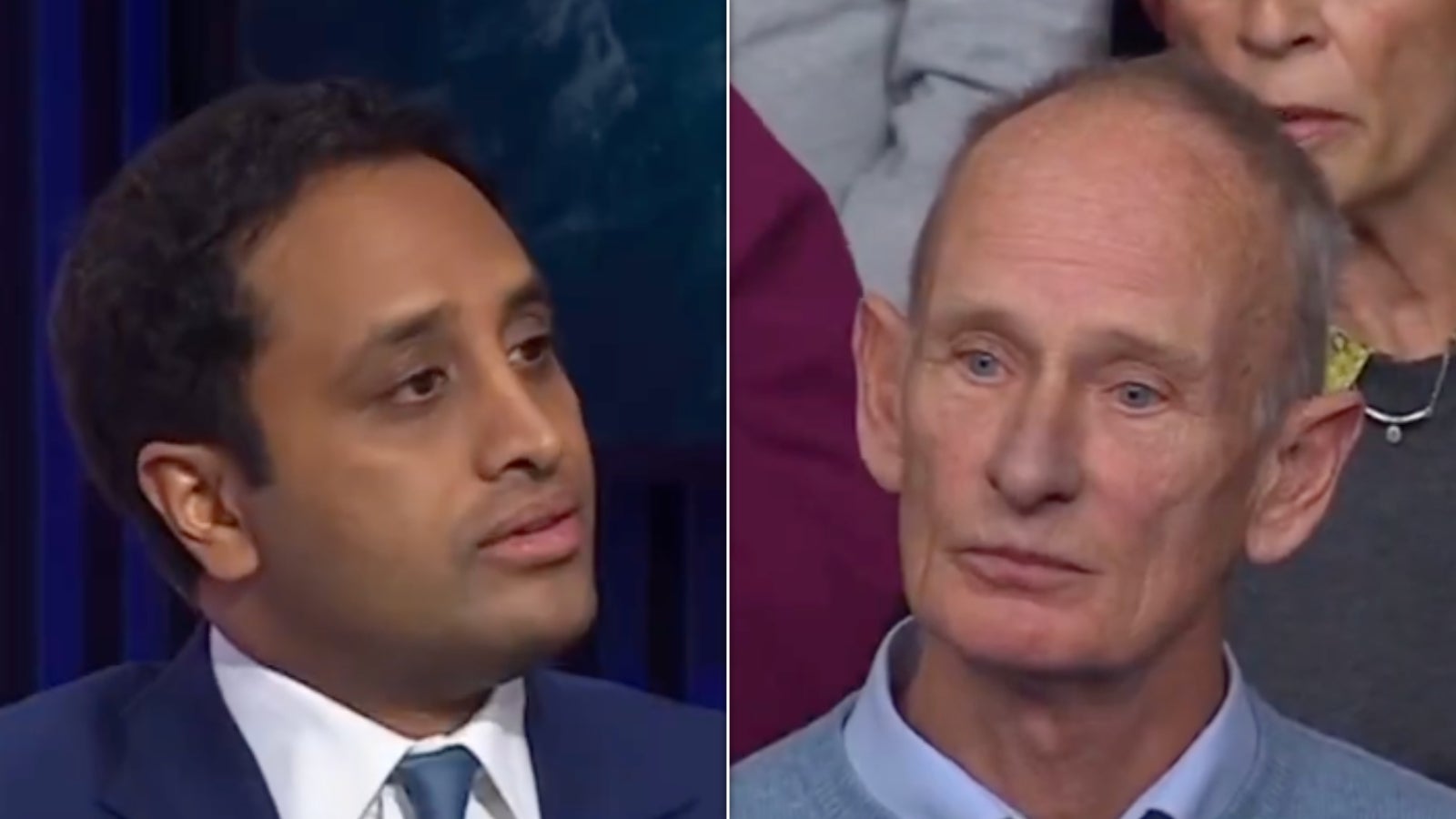
Reform’s head of policy Zia Yusuf startled BBC Question Time audience members on Thursday with his curt response to a question.

During an immigration special, one member of the crowd took issue with the anti-immigration party’s claim that there are enough people in the UK to “not need foreign doctors”.

The man in the audience said: “I joined the NHS as a student in 1974. We’ve been totally reliant on doctors from Asia initially, and the care sector is totally dependent on care workers from abroad, despite nine million people not being in work.”

He said population growth and a shortage of funds for hospitals has gone down, telling Yusuf: “So you’re conflating lots of different things to make your argument.”

He pointed out that Reform has promised migrant workers will lose their indefinite leave to remain if they get into government.

“So if you’ve worked as a care worker in nursing home for 40 years, you are already since last year not allowed to bring your children over,” the man said.

“When you get to 65, you’ll be sent back to where you came from, is that what you’re suggesting?”

Yusuf said: “No. It’s not at all. And if you’d paid attention to what we are announcing, you would not have that view.”

A surprised “ooh” went around the hall at that response, but Yusuf continued: “My mother is a care home worker –”

Migration minister Mike Tapp then chimed in: “Typically rude. Be polite to people at the same time. They’re not decent, that’s the problem.”

Yusuf ignored the response to his tone and said Reform have announced they will have an “acute skills shortage visa specifically for sectors like the care home sector”.

The Reform representative also hit out at the show later, criticising the BBC for supposedly “planting” small boat migrants in the audience.

Yusuf told GB News: “How on earth it should be deemed appropriate that people who have broken into this country illegally should have a seat at the table in a discussion about illegal immigration… it is bewildering.”

Share Button

Pact Or No Pact, Reform May Already Turning Into The Tories 2.0

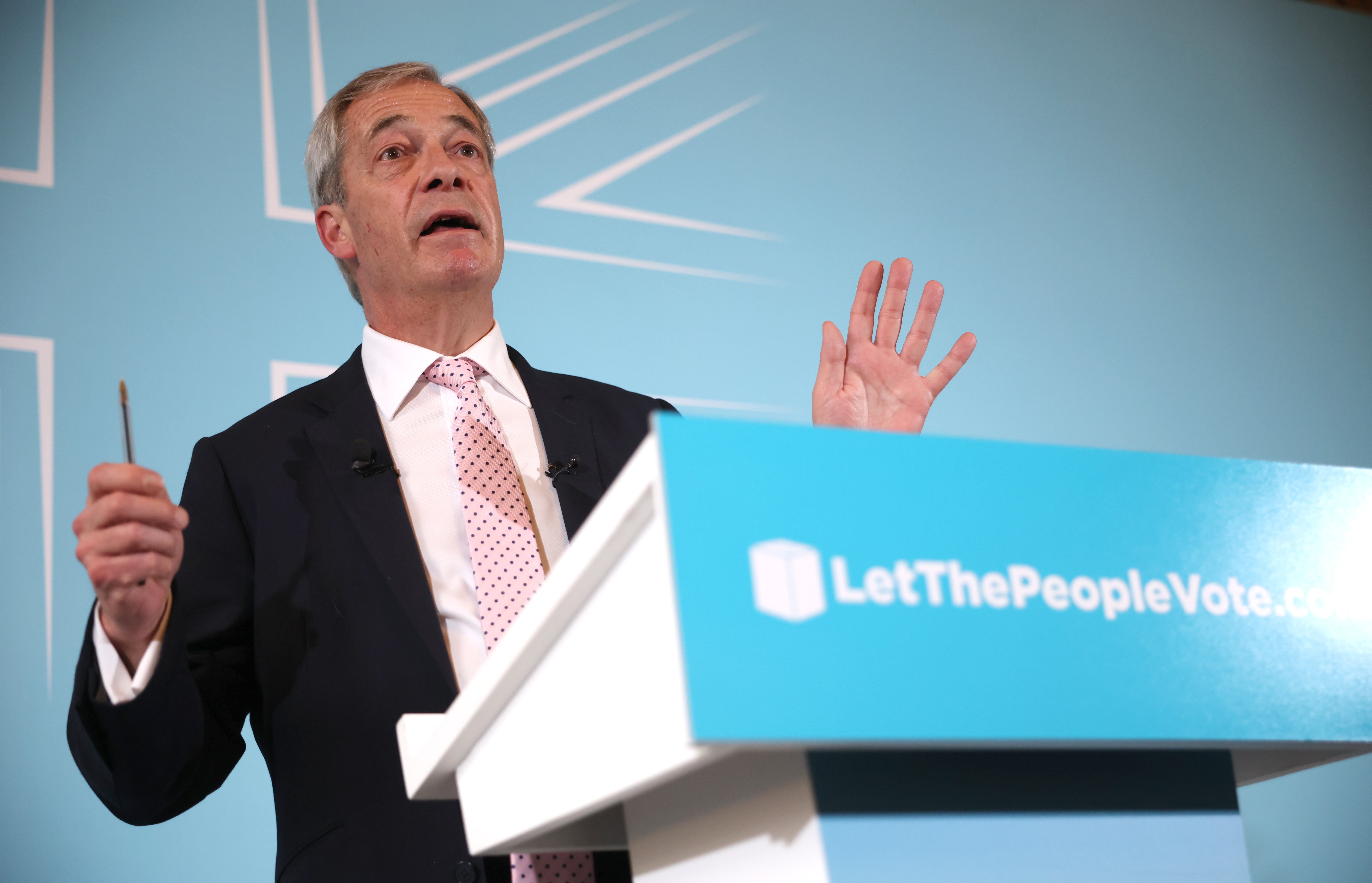
Nigel Farage seemed to attract even more attention than usual this week – and not exactly the kind he likes.

Not only has the Guardian revealed 28 witnesses have now accused him of making anti-semitic and racist remarks while he was at school but, according to the Financial Times, he told donors he expected to make a merger or a pact with the Tories before the next election.

When it comes to the allegations against him, the Reform leader has only admitted to engaging in “banter in a playground” and rebuffed the FT’s story completely.

But the reports evidently got to him. Farage stunned journalists on Thursday with a furious rant against the BBC and ITV in a press conference, accusing them of “hypocrisy”.

He also claimed there would be no deal with the Conservatives, and that any such allegations were “ludicrous”.

But, he did suggest Reform could engineer “reverse takeover” where he would absorb the party by winning over defectors.

But Farage insisted: “A deal with them as they are would cost us votes.”

Reform are indeed still ahead in the polls. More in Common predicted in a September mega-survey of 20,000 Brits that the next general election looks like it might be theirs to lose.

And the racism row is yet to put a major dent in their consistent poll lead: YouGov found the party is still ahead on 25% as of December 1, with Labour on 22% and the Tories on 19%.

If it did not scare off too many supporters, a combined the Tory and Reform votes would give a joint right-wing party a very generous lead in the polls (44%, according to YouGov).

But Farage’s apparent dismay over the idea of working with the Conservatives ignores an obvious fact that his party is already made up of former Tories.

“There’s a chance that Reform begin to look like the same sort of political party the public are so keen to break away from.”

He has accepted 21 individuals who have previously been elected as Conservative MPs to his party just since the 2024 general election.

Danny Kruger was serving in the shadow cabinet when he crossed the floor to join Reform in September.

Former Tory minister Andrea Jenkyns became Reform’s first mayor when she was elected to represent Greater Lincolnshire in April, while ex-culture secretary Nadine Dorries joined earlier this year.

Former MPs, Ee-deputy party chair Jonathan Gullis, Lia Nici and Chris Green, also joined just this week.

In fact, the party’s first MP was Lee Anderson, the former deputy chairman for the Tories who defected to Reform in early 2024.

Reform’s deputy Richard Tice was a Conservative donor and party member up until 2019, and Farage himself was a Tory until 1992.

The party leader even failed to rule out accepting right-wing Conservative shadow justice secretary Robert Jenrick into the fold at some point in the future.

He justified accepting former Tory MPs by admitting people who have been in government just help strengthen the party, and seems to position Reform’s success directly against the Conservatives’ decline – even if unintentionally.

Just this week, when playing down reports of a merger, he said: “We will ensure [the Tories] cease to be a national party in May.”

But one more prominent voice has tried to clear a distinct line between the two blue parties.

Reform’s head of policy Zia Yusuf even had to tell supporters on X grassroots would get priority over “washed up” ex-Tory MPs.

He said: “I’ve had many messages from Reform grassroots worried about former Tory MPs joining our party.

“I want to be clear to our Reform grassroots: YOU will be prioritised in candidate selection for our next class of MPs, NOT failed former Tory MPs.”

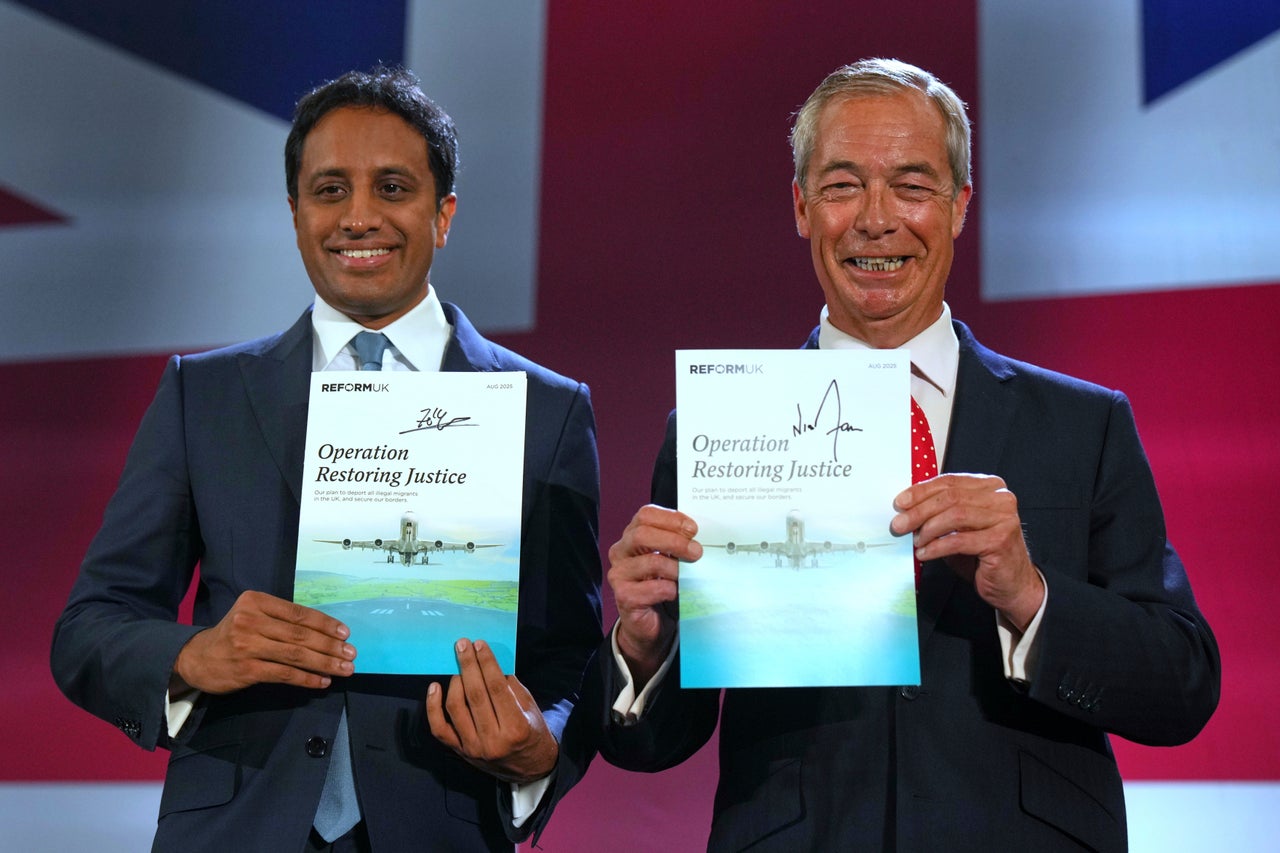
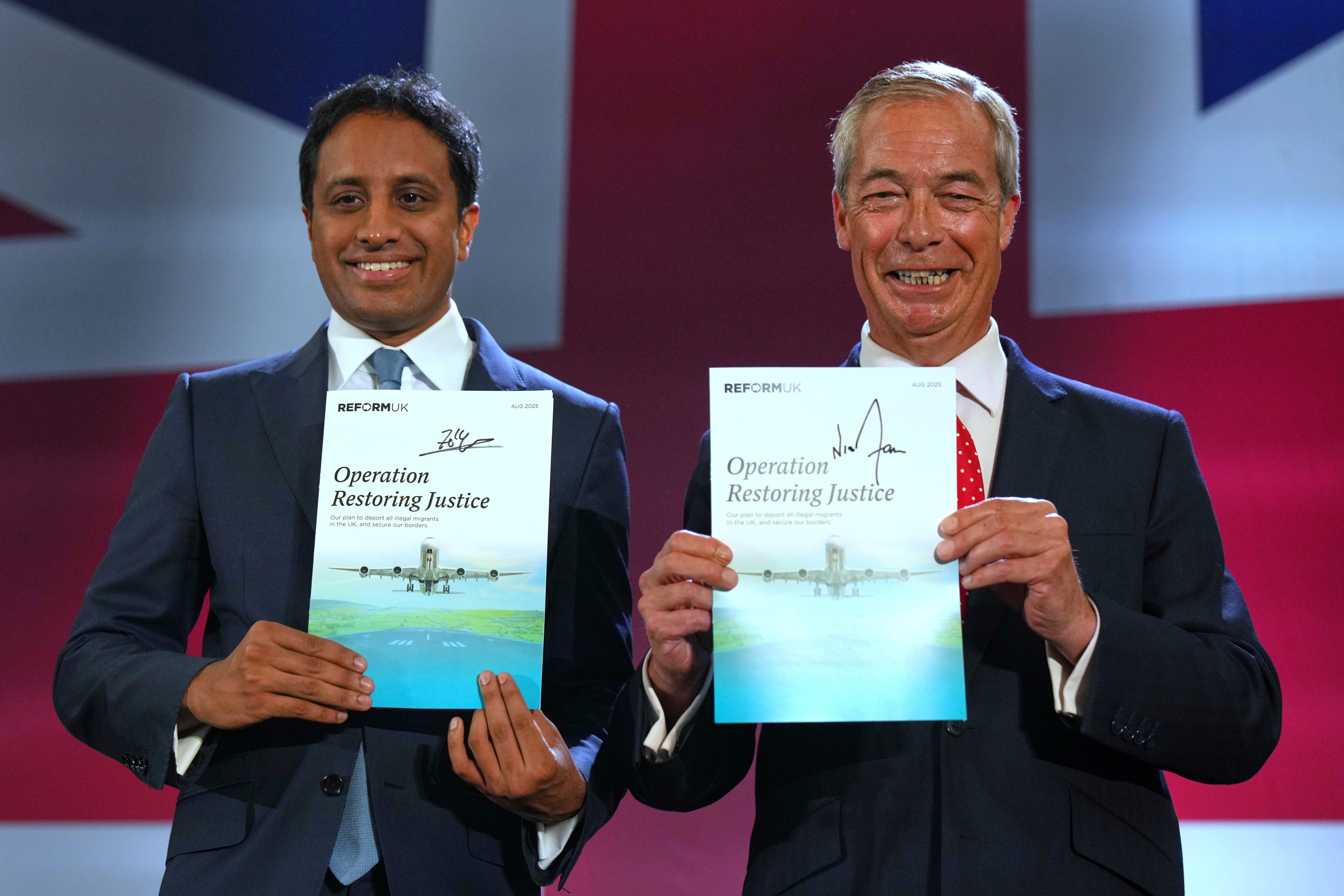
British Reform party leader Nigel Farage and Zia Yusuf, left, show the program Operation Restoring Justice during a press conference in a hangar at Oxford Airport in Kidlington, England, Tuesday, Aug. 26, 2025.

via Associated Press

This wariness from Yusuf about becoming the Tories 2.0 may be well-placed.

Political research director of pollsters at Savanta, Chris Hopkins, told HuffPost UK Reform risk starting to look like the sort of party the public are rejecting.

“Nigel Farage remains Reform’s greatest, and arguably sole, electoral weapon. It is he, and not really the infrastructure behind him, increasingly comprising of former Tories, that cements Reform’s appeal as an anti-establishment force,” Hopkins said.

“Providing he remains dominant at the top of the party, Reform will continue to be strong, but if a cabal of ex-Tories behind the scenes seek to undermine him, there’s a chance that Reform begin to look like the same sort of political party the public are so keen to break away from.”

The polling expert said that as a new party, Reform’s broadest appeal is that they no longer present a great electoral risk.

He said: “If they can’t trust the Tories to be competent after 14 years in government, and they can’t trust Labour after 18 months to have done any better, then why not roll the dice on something completely different. In short, how bad could they actually be?

“But that still relies on Reform UK looking different to the Tories.

“Minor defections don’t really move the needle with the public, but if there does become a sense that Reform UK are just the Conservatives 2.0, I’m less convinced of their appeal compared to what they have cultivated so far, which is a clean break and an alternative from the Con-Lab status quo.”

“”The last thing this country needs is a rinse and repeat of the last Conservative government.”

Their political opponents have been quick to criticise the idea of a merger, too, no matter how much Reform deny it.

Keir Starmer dubbed the idea of a Tory-Reform pact an “unholy alliance of austerity and failure” during prime minister’s questions on Wednesday.

A Labour Party spokesperson told HuffPost UK that Reform was becoming an “unsavoury cocktail of ex-Tories”.

“The Tories were responsible for breaking our public services and hammering family finances while in power. Now they are the recycled face of Nigel Farage’s party,” the representative said.

“Reform can’t fool the public. This unsavoury cocktail of ex-Tories want to inflict that damage all over again. It’s a risk working people simply can’t afford. ”

The Liberal Democrats called Reform a “Tory tribute act only separated by a slightly different shade of blue”.

The last thing this country needs is a rinse and repeat of the last Conservative government,” a spokesperson said.

Meanwhile the Green Party told HuffPost UK: “Conservative MPs defecting to Reform doesn’t concern us, we don’t want to intrude on the private grief of the right wing parties of inequality battling it out.”

While Reform has not taken any huge Tory figures yet, what the party chooses to do next – before the big test of the local elections in May – could define it in terms of its place on the political stage.

Will Farage play it safe by officially stepping into right-wing vacuum left by the Tories’ decline – or will he firmly establish Reform as an entirely new entity?

Share Button

Wes Streeting Is Wrong. ADHD Is Not Overdiagnosed, I Should Know.

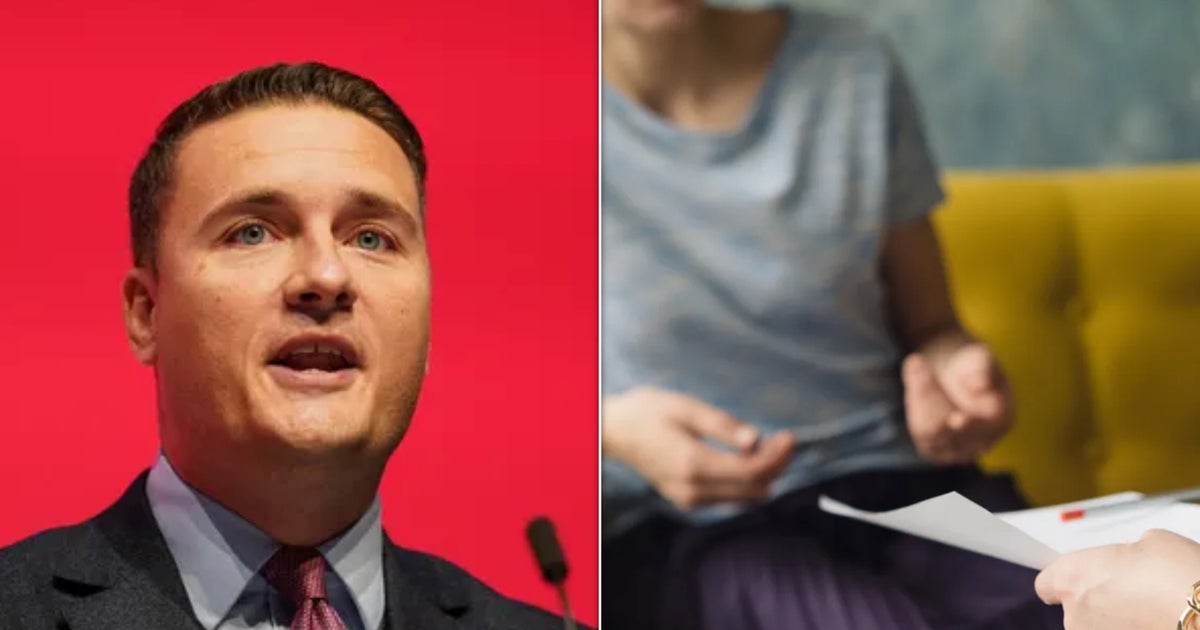
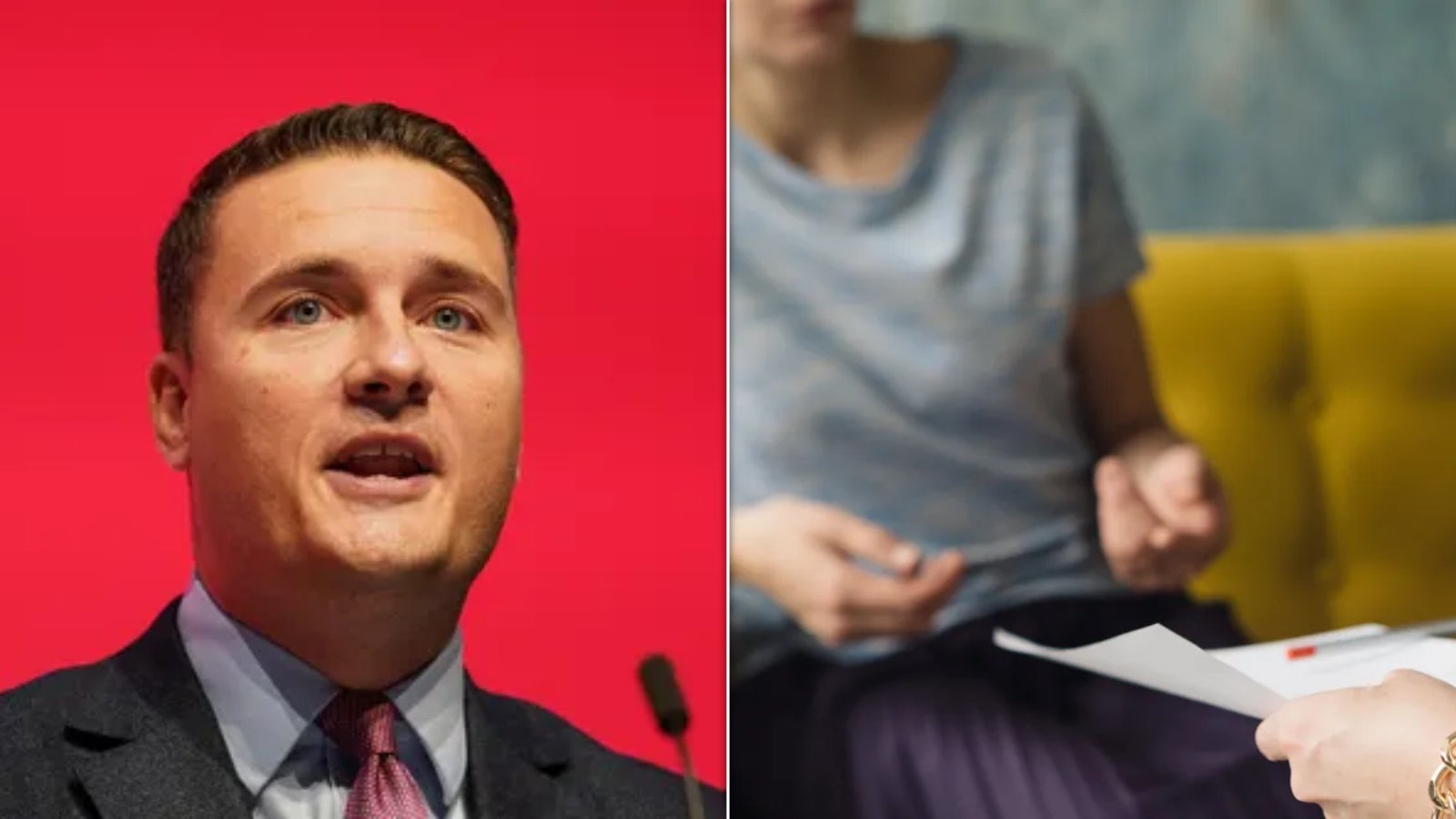
Yesterday (Dec 4), Health Secretary Wes Streeting announced that he would be launching an independent review into rising demand for mental health, ADHD, and autism services in England.

On the surface, this might seem like a good thing – mental health and neurodivergence healthcare is stretched thin in the UK, people are crying out for help, so what we need to do is find a way to improve those services so that people can get the support they need, right?

Unfortunately, no.

In fact, the headline aim of this review is to see whether there is evidence of over-diagnosis, with the BBC reporting that the government “believes there are people being referred onto waiting lists who do not need treatment.”

Streeting himself said these conditions were being over-diagnosed earlier this year, though he has since claimed in a piece for The Guardian that those remarks were “divisive” and had “failed to capture the complexity of this problem”.

He wrote: “The truth is there has been a massive growth in mental health and behavioural issues and there isn’t a consensus within the mental health clinical community on what is driving it. We must look at this through a strictly clinical lens to get an evidence-based understanding… That’s the only way we can ensure everyone gets timely access to accurate diagnosis and effective support.”

But, despite Streeting’s attempts to roll back his earlier comments about over-diagnosis, an emphasis on questioning what is “driving” an increase in mental health and neurodivergent diagnoses rather than how to support that increase is both erroneous and borderline offensive.

There is already widespread and growing stigma about conditions like ADHD, with regular discourse online and among politicians about whether those diagnosed are “truly” struggling, and language about finding “evidence” for what is behind this surge in demand only adds to that rhetoric.

I was diagnosed with ADHD nearly two years ago, after waiting 1.5 years for a diagnosis. To many, that might not sound like too long – in some places, there can be up to a 10-year wait for diagnosis – but I was battling with my symptoms long before I was first referred to a Right to Choose provider for assessment. I spent years struggling with basic household tasks, relationships, and school and work, finding myself unable to focus for long periods, and berating myself for not being “normal” like everyone else around me.

This was particularly bad during university when I had a lack of structure and was forced to discipline myself – something that people with ADHD notoriously find difficult – leading to me being diagnosed with severe anxiety and depression. It turns out that the deterioration in my mental health was a result of not knowing about my ADHD and therefore not dealing with it in the right way.

I also battled with internalised stigma about having ADHD, overrun by narratives that people are lying about having the condition, conning themselves into believing they have ADHD, or that it’s not so serious that it even requires diagnosis and intervention.

Many people with ADHD grapple with similar difficulties, meaning they are reluctant to seek a diagnosis or are not believed when they do. Receiving a formal diagnosis was important to me both to feel validated in how I approached work, relationships, and life itself in the past as well as to ensure that I was legally entitled to receive specialist support for the condition. Without a diagnosis, that can be much harder.

At one previous job, for example, I was unable to obtain reasonable adjustments – and received zero empathy from my line manager – until I received a formal diagnosis, meaning I was protected under the 2010 Equality Act.

The current system we operate under does leave many people being “written off”, like Streeting said, but not in the way he might think. It is not due to over-diagnosis but rather chronic underfunding and complex healthcare systems that are not fit-for-purpose, that leaves people in the dust.

Streeting’s review is also looking to “raise the healthiest generation, increase healthy life expectancy, and reduce suicide”, but further stigmatisation of these conditions is in direct conflict with that goal.

People with ADHD are in fact more at risk of suicide and have a lower life expectancy than those who are neurotypical, with 1 in 4 women, and 1 in 10 men, with ADHD will at some time try to take their own lives, while people with ADHD are likely to die between seven and nine years younger than their peers. This is why it is so important for people to be able to access mental health and neurodivergent diagnoses and support.

For Streeting to suggest that the rise in demand requires any intervention apart from additional funding as well as empathy for those struggling, is ridiculous.

I am not the only one who thinks so. Henry Shelford, CEO of campaigning organisation ADHD UK, told HuffPost UK: “ADHD is not overdiagnosed. A recent Lancet study published research that analysed 9 million GP records and showed just 0.32% of patients have a diagnosis of ADHD. That’s nudging just 10% of the 3-4% of the population who have ADHD.

“We’re underdiagnosed, not overdiagnosed. In addition, a BBC study showed the average wait for an ADHD diagnosis in England is 8 years. The idea that you can achieve overdiagnosis with an average wait of nearly a decade is just preposterous.”

If Streeting wants fewer people to be struggling with ADHD, autism, and associated mental health conditions, then the answer is to invest in those services and support the people who need it rather than blaming them for getting diagnosed in the first place. Focusing on “overdiagnosis”, and refusing to acknowledge just how broken our system is, will push more and more people to breaking point – and the whole country will be worse-for-wear as a result.

Share Button

What We Know Now About The Novichok Poisonings, Seven Years Later

A long-awaiting report into the shocking and deadly novichok poisonings from 2018 has finally been published – and it lays the blame squarely at Vladimir Putin’s feet.

After an £8.3 million inquiry, here’s what you need to know.

What happened in 2018?

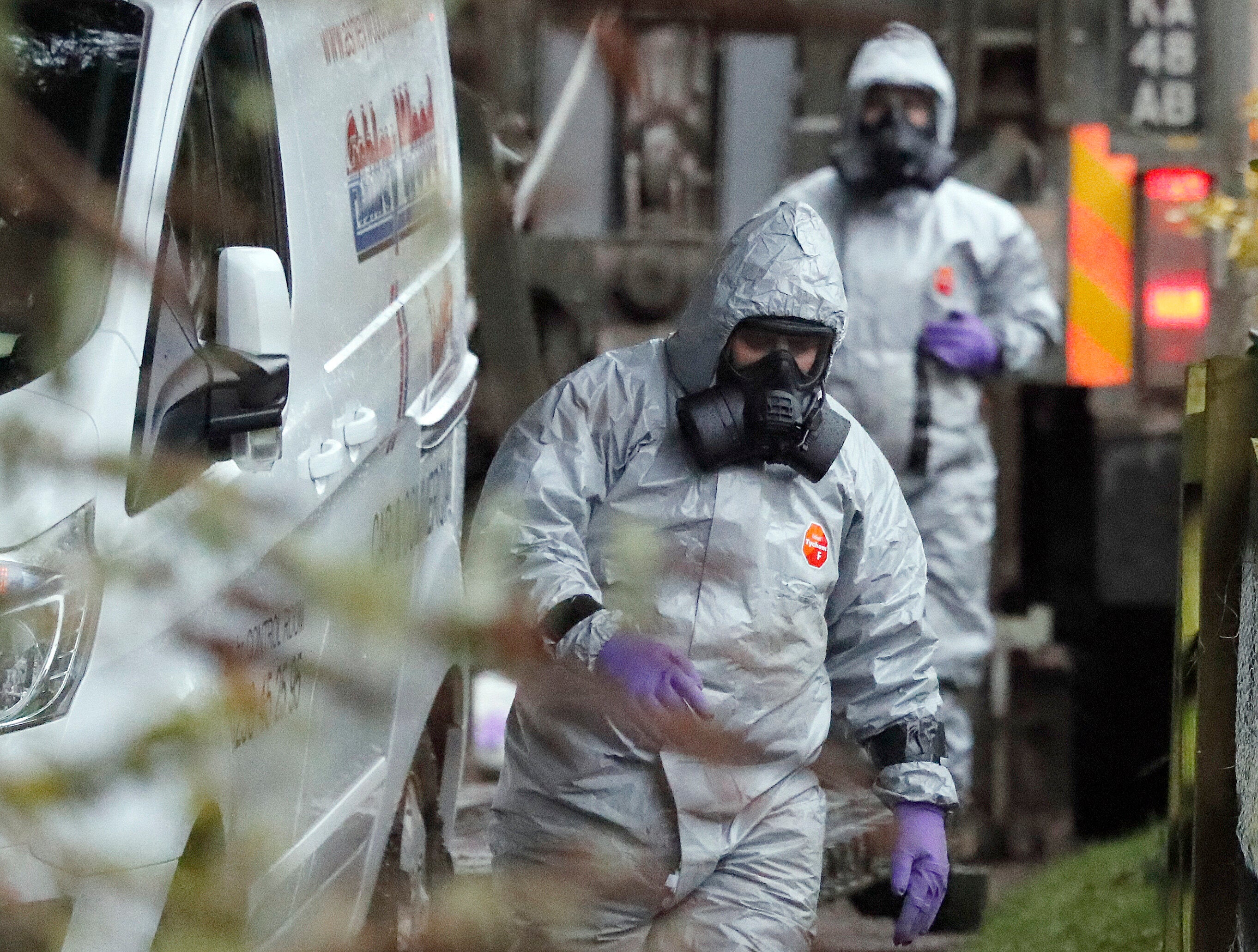
A former Russian spy Sergei Skripal and his daughter Yulia were hospitalised after coming into contact with a nerve agent at their home in Salisbury.

The ex-spook had been settled in a suburban cul-de-sac after a previous spy exchange.

While the Skripals survived their near-death encounter, Russian agents inadvertently poisoned more people by casually disposing of the novichok nerve agent, which was stored in a fake perfume bottle.

An unconnected individual, Dawn Sturgess, later died after spraying the same substance over herself while at the home of her boyfriend Charlie Rowley in Amesbury, on June 30, 2018.

It’s thought Rowley gave the bottle to his partner after he found it abandoned.

He too fell ill and went into a coma after coming into contact with the poison, but later recovered.

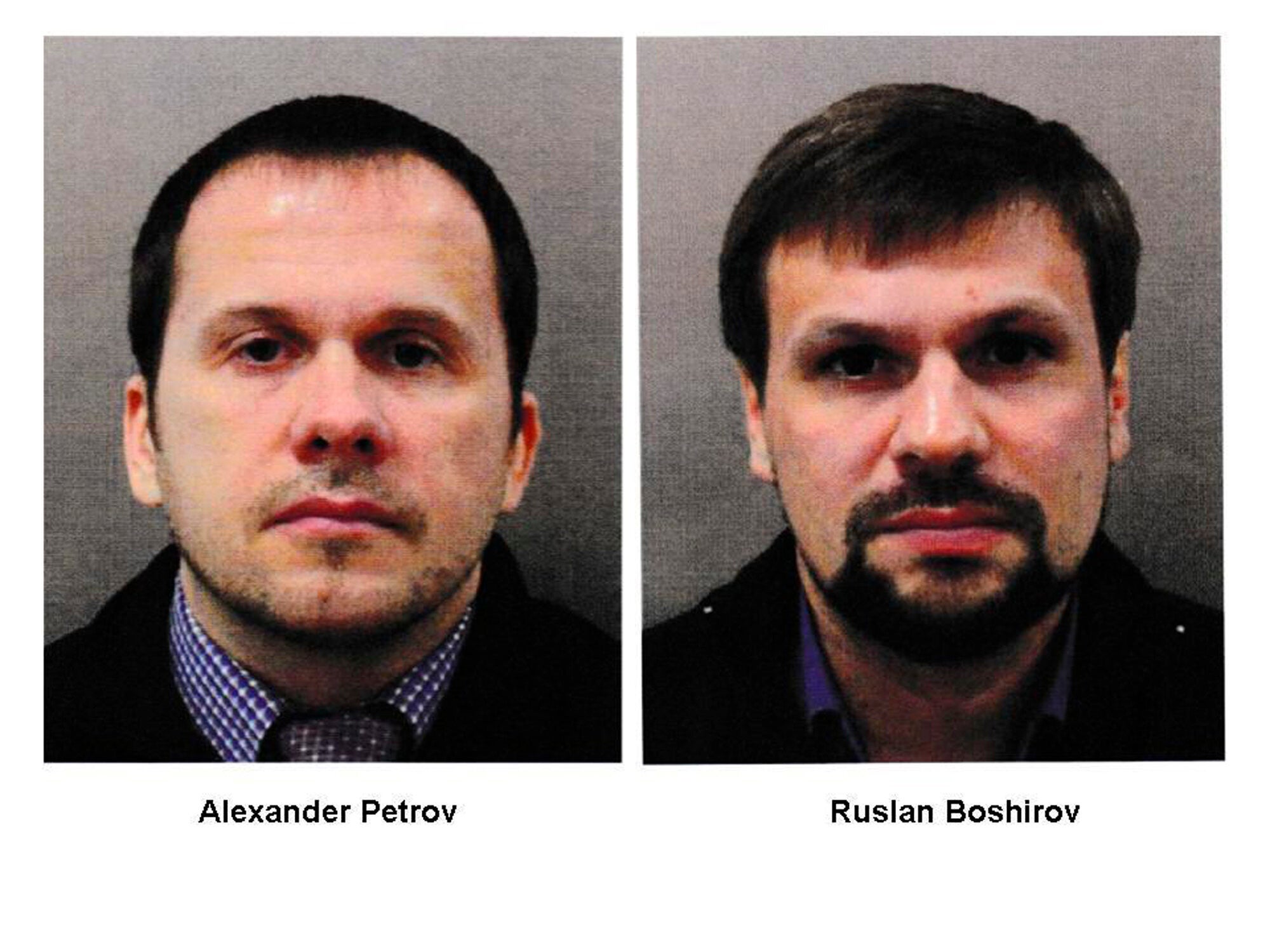
Two Russian men who were named as suspects that September claimed to have been visiting Salisbury Spire as tourists and were supported by Vladimir Putin who claimed there was “nothing criminal about them”.

The incident was instrumental in souring UK-Russian relations.

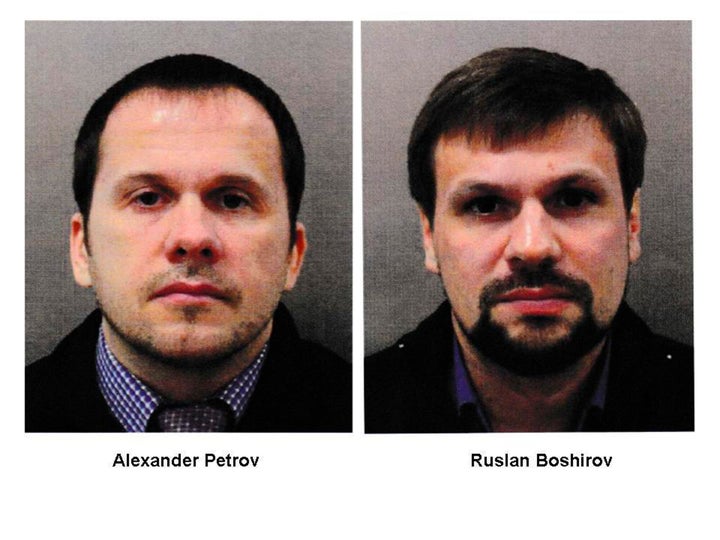
Men identified as Alexander Petrov, left, and Ruslan Boshirov, were accused of being involved with the poisonings.

via Associated Press

What did the report conclude?

The inquiry concluded Putin is “morally responsible” for Sturgess’s death and that the poisoning was meant to be a “public demonstration of Russian power”.

Lord Hughes, the inquiry chair, said the Russian president must have authorised the assassination attempt on former spy Sergei Skripal in Salisbury.

He said: “I am sure that in conducting their attack on Sergei Skripal, they were acting on instructions. I have concluded that the operation to assassinate Sergei Skripal must have been authorised at the highest level, by President Putin.”

He also criticised the “astonishingly reckless act” of the Russian men who filled a fake perfume bottle with novichok.

Hughes said: “They recklessly discarded this bottle somewhere public or semi-public before leaving Salisbury. They can have had no regard for the hazard thus created, of the death of, or serious injury to, an unaccountable number of innocent people.”

Sturgess suffered from “very serious brain injury” after her heart stopped for “an extended period of 30 minutes or so immediately after she was poisoned”.

The report also found three Russian operatives had arrived in London from Moscow on March 2, intending to kill the double agent Skripal.

Novichok was later placed on the handle of his front door, according to the inquiry.

<div class="js-react-hydrator" data-component-name="Twitter" data-component-id="8909" data-component-props="{"itemType":"rich","index":26,"contentIndexByType":1,"contentListType":"embed","code":"

🗣️ \"I’ve concluded that the operation to assassinate Sergei Skripal must have been authorised at the highest level, indeed by President Putin,\" says Lord Hughes, public inquiry chairman of the assassination attempt on a former Russian spy.https://t.co/I2JfwwmGE9

📺 Sky 501 pic.twitter.com/WS3iwN4lP9

— Sky News (@SkyNews) December 4, 2025

","type":"rich","meta":{"author":"Sky News","author_url":"https://twitter.com/SkyNews","cache_age":86400,"description":"🗣️ \"I’ve concluded that the operation to assassinate Sergei Skripal must have been authorised at the highest level, indeed by President Putin,\" says Lord Hughes, public inquiry chairman of the assassination attempt on a former Russian spy.https://t.co/I2JfwwmGE9📺 Sky 501 pic.twitter.com/WS3iwN4lP9— Sky News (@SkyNews) December 4, 2025\n\n\n","options":{"_hide_media":{"label":"Hide photos, videos, and cards","value":false},"_maxwidth":{"label":"Adjust width","placeholder":"220-550, in px","value":""},"_theme":{"value":"","values":{"dark":"Use dark theme"}}},"provider_name":"Twitter","thumbnail_height":634,"thumbnail_url":"https://abs.twimg.com/rweb/ssr/default/v2/og/image.png","thumbnail_width":1202,"title":"Sky News on Twitter / X","type":"rich","url":"https://twitter.com/SkyNews/status/1996562378989699201","version":"1.0"},"flags":[],"enhancements":{},"fullBleed":false,"options":{"theme":"news","device":"desktop","editionInfo":{"id":"uk","name":"U.K.","link":"https://www.huffingtonpost.co.uk","locale":"en_GB"},"originalEdition":"uk","isMapi":false,"isAmp":false,"isMobile":false,"isAdsFree":false,"isVideoEntry":false,"isEntry":true,"isMt":false,"entryId":"69317b92e4b0cee44382a909","entryPermalink":"https://www.huffingtonpost.co.uk/entry/what-we-know-now-about-the-novichok-poisonings-seven-years-later_uk_69317b92e4b0cee44382a909","entryTagsList":"russia,salisbury,novichok","sectionSlug":"politics","deptSlug":null,"sectionRedirectUrl":null,"subcategories":"","isWide":false,"isShopping":false,"headerOverride":null,"noVideoAds":false,"disableFloat":false,"isNative":false,"commercialVideo":{"provider":"custom","site_and_category":"uk.politics","package":null},"isHighline":false,"vidibleConfigValues":{"cid":"60afc140cf94592c45d7390c","disabledWithMapiEntries":false,"overrides":{"all":"60b8e525cdd90620331baaf4"},"whitelisted":["56c5f12ee4b03a39c93c9439","56c6056ee4b01f2b7e1b5f35","59bfee7f9e451049f87f550b","5acccbaac269d609ef44c529","570278d2e4b070ff77b98217","57027b4be4b070ff77b98d5c","56fe95c4e4b0041c4242016b","570279cfe4b06d08e3629954","5ba9e8821c2e65639162ccf1","5bcd9904821576674bc55ced","5d076ca127f25f504327c72e","5b35266b158f855373e28256","5ebac2e8abddfb04f877dff2","60b8e525cdd90620331baaf4","60b64354b171b7444beaff4d","60d0d8e09340d7032ad0fb1a","60d0d90f9340d7032ad0fbeb","60d0d9949340d7032ad0fed3","60d0d9f99340d7032ad10113","60d0daa69340d7032ad104cf","60d0de02b627221e9d819408"],"playlists":{"default":"57bc306888d2ff1a7f6b5579","news":"56c6dbcee4b04edee8beb49c","politics":"56c6dbcee4b04edee8beb49c","entertainment":"56c6e7f2e4b0983aa64c60fc","tech":"56c6f70ae4b043c5bdcaebf9","parents":"56cc65c2e4b0239099455b42","lifestyle":"56cc66a9e4b01f81ef94e98c"},"playerUpdates":{"56c6056ee4b01f2b7e1b5f35":"60b8e525cdd90620331baaf4","56c5f12ee4b03a39c93c9439":"60d0d8e09340d7032ad0fb1a","59bfee7f9e451049f87f550b":"60d0d90f9340d7032ad0fbeb","5acccbaac269d609ef44c529":"60d0d9949340d7032ad0fed3","5bcd9904821576674bc55ced":"60d0d9f99340d7032ad10113","5d076ca127f25f504327c72e":"60d0daa69340d7032ad104cf","5ebac2e8abddfb04f877dff2":"60d0de02b627221e9d819408"}},"connatixConfigValues":{"defaultPlayer":"16b0ecc6-802c-4120-845f-e90629812c4d","clickToPlayPlayer":"823ac03a-0f7e-4bcb-8521-a5b091ae948d","videoPagePlayer":"05041ada-93f7-4e86-9208-e03a5b19311b","defaultPlaylist":"2e062669-71b4-41df-b17a-df6b1616bc8f"},"topConnatixThumnbailSrc":"data:image/png;base64,iVBORw0KGgoAAAANSUhEUgAAAAEAAAABCAQAAAC1HAwCAAAAC0lEQVR42mNkYAAAAAYAAjCB0C8AAAAASUVORK5CYII=","customAmpComponents":[],"ampAssetsUrl":"https://amp.assets.huffpost.com","videoTraits":null,"positionInUnitCounts":{"buzz_head":{"count":0},"buzz_body":{"count":0},"buzz_bottom":{"count":0}},"positionInSubUnitCounts":{"article_body":{"count":3},"blog_summary":{"count":0},"before_you_go_content":{"count":0}},"connatixCountsHelper":{"count":0},"buzzfeedTracking":{"context_page_id":"69317b92e4b0cee44382a909","context_page_type":"buzz","destination":"huffpost","mode":"desktop","page_edition":"en-uk"},"tags":[{"name":"Russia","slug":"russia","links":{"relativeLink":"news/russia","permalink":"https://www.huffingtonpost.co.uk/news/russia","mobileWebLink":"https://www.huffingtonpost.co.uk/news/russia"},"relegenceId":3691301,"section":{"title":"Politics","slug":"politics"},"topic":{"title":"Ukraine","slug":"ukraine","overridesSectionLabel":false},"url":"https://www.huffingtonpost.co.uk/news/ukraine/"},{"name":"salisbury","slug":"salisbury","links":{"relativeLink":"news/salisbury","permalink":"https://www.huffingtonpost.co.uk/news/salisbury","mobileWebLink":"https://www.huffingtonpost.co.uk/news/salisbury"},"url":"https://www.huffingtonpost.co.uk/news/salisbury/"},{"name":"novichok","slug":"novichok","links":{"relativeLink":"news/novichok","permalink":"https://www.huffingtonpost.co.uk/news/novichok","mobileWebLink":"https://www.huffingtonpost.co.uk/news/novichok"},"url":"https://www.huffingtonpost.co.uk/news/novichok/"}],"isLiveblogLive":null,"isLiveblog":false,"backfillRelatedArticles":[],"signInUrl":"https://login.huffpost.com/login?dest=https%3A%2F%2Fwww.huffpost.com%2Fentry%2Fwhat-we-know-now-about-the-novichok-poisonings-seven-years-later_uk_69317b92e4b0cee44382a909%3Fhp_auth_done%3D1","cetUnit":"buzz_body","enableIncontentPlayer":false,"bodyAds":["

\r\n\r\n HPGam.cmd.push(function(){\r\n\t\treturn HPGam.render(\"inline-1\", \"entry_paragraph_1\", false, false);\r\n });\r\n\r\n","

\r\n\r\n HPGam.cmd.push(function(){\r\n\t\treturn HPGam.render(\"inline\", \"entry_paragraph_2\", false, false);\r\n });\r\n\r\n","

\r\n\r\n HPGam.cmd.push(function(){\r\n\t\treturn HPGam.render(\"inline-2\", \"entry_paragraph_3\", false, false);\r\n });\r\n\r\n","

\r\n\r\n HPGam.cmd.push(function(){\r\n\t\treturn HPGam.render(\"inline-infinite\", \"repeating_dynamic_display\", false, false);\r\n });\r\n\r\n"],"adCount":0,"midArticleAdPartner":null},"isCollectionEmbed":false}”>

🗣️ “I’ve concluded that the operation to assassinate Sergei Skripal must have been authorised at the highest level, indeed by President Putin,” says Lord Hughes, public inquiry chairman of the assassination attempt on a former Russian spy.https://t.co/I2JfwwmGE9

📺 Sky 501 pic.twitter.com/WS3iwN4lP9

— Sky News (@SkyNews) December 4, 2025

What about the implications for the UK?

Hughes said Wiltshire police wrongly characterised Strugess as a dug user after she was poisoned.

He said there was “no alert” that could have stopped Sturgess’s death or improved her treatment,

But he noted it was reasonable public health officials had not given the public advice not to pick anything up, because it was not clear where the poison came from at the time.

He also said there were mistakes in the way the British state ought to have taken steps to prevent the poisoning, particularly in the way Skripal was managed as an exchanged prisoner.

While Hughes admitted more security would not have helped anything, he added: “The only such measures which could have avoided the attack would have been such as to hide him completely with a new identity.”

The inquiry also called for a new process to be set up to alert local police if anything happens to individuals with “sensitive backgrounds”.

What happens now?

Immediately after the report was released, the Foreign Office (FCDO) declared that it is cracking down on the Russian intelligence agency linked to the poisonings – the GRU, Russia’s military intelligence agency – in its entirety.

The FCDO claims the UK has sanctioned and exposed 11 actors behind Russian state sponsored hostile activity, including those working for the GRU.

The Russian ambassador has also been summoned to the Foreign Office to answer for Russia’s ongoing campaign of hostile activity against the UK.

The new sanctions will also zero in on eight cyber military intelligence officers working for the GRU.

Starmer said: “Today’s findings are a grave reminder of the Kremlin’s disregard for innocent lives.”

However, the Russian agents named as suspects are unlikely to ever face justice as they are protected by the Kremlin.

Share Button