Try as I might (and believe me, I’ve tried), I constantly manage to wake up hot and sweaty at 3am.
I’ve always attributed that to my insomnia. But hormone and sleep specialists have shared my issues might be partly down to my biology.
We know it’s crucial to keep bedrooms cool (experts recommend 16-18°C) to be able to sleep well – and this is perhaps even more important for women.
Advertisement
When a study found rising temperatures are impacting sleep globally, it also revealed women were impacted more than men. The Guardian noted “women’s bodies cool earlier in the evening than men’s when going to sleep, meaning higher night time temperatures may have a bigger impact on women”.
Women’s slightly higher core body temperatures can also make us “feel” external cold and warmth more intensely, Dr Karan Rajan previously shared.
Women appear to wake up overheated more often than men – but why?
Dr Renee Young, an endocrinologist and founder of the Young Naturopathic Centre For Wellness, told Pretty You London that “hormones like oestrogen and progesterone play a central role in how the brain regulates body temperature”.
Advertisement
She added: “Even slight fluctuations can confuse the body into thinking it needs to cool down. That often looks like a hot flush or a sudden sweat episode, especially at night.”
These are not exclusive to menopause or perimenopause, though both of these can lead to similar symptoms.
“Women in midlife often have a lower stress threshold… Higher cortisol levels, especially when they don’t follow their normal rhythm, can interfere with sleep and make overheating worse,” she shared.
Advertisement
How can I stop overheating at night?
Though you might be tempted to take a cooling shower before settling down, NHS GP Dr Hana Patel said this may not be the answer.
“A cold shower can cause your body to generate more heat as a response,” she advised, while the cool-down period following a warm shower “tells your brain it’s time to sleep”.
Wearing thinner pyjamas, avoiding heavy bedding, and even keeping your partner out of your bed (if needed) may help, The Sleep Foundation said.
Advertisement
Whatever the cause, though, you should see your GP if your sleep is consistently interrupted.
“Menopause and hormonal changes don’t have to steal your sleep,” Dr Fogarty-Draper stressed. “When we understand the cause, we can take back control.”
If you’re into podcasts, you’ve probably heard of the hugely popular Mel Robbins Podcast, which is currently the No. 1 podcast on Apple podcasts and is in the Top 10 podcasts on Spotify.
If you aren’t familiar, Robbins is a motivational author, speaker and podcast host who regularly talks about mental health topics such as anxiety, stress and confidence, as well as physical health topics such as disease prevention and women’s fitness.
Advertisement
Her podcast episodes often inspire lots of conversations and even lifestyle changes, and a March episode of the podcast was no different.
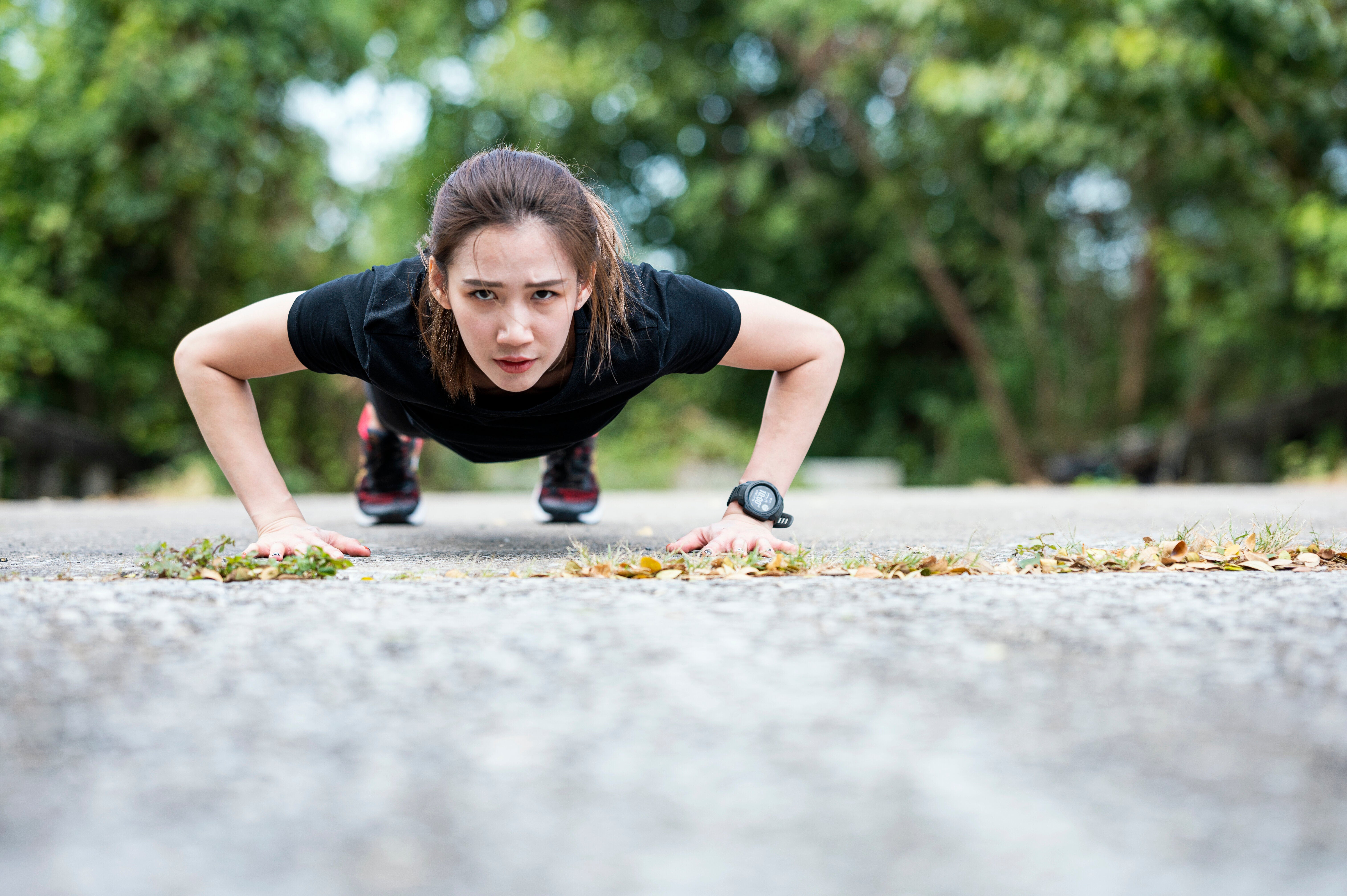
On the episode, podcast guest Dr. Vonda Wright, who is an orthopedic surgeon and longevity expert, shared with Robbins the weekly exercise regimen that all women should follow: It included walking a total of three hours each week (broken up over at least four days), lifting heavy weights at least twice a week, and learning “to lift your own bodyweight” — which according to Wright means all women should be able to do 11 push-ups. Robbins asked if those push-ups can be on your knees, and Wright replied “no.”
The 11 push-up idea quickly caught the attention of women across the country who took to social media to try the challenge. But do all women really need to be able to do 11 push-ups? Or are there better measures of fitness?
Advertisement
Below, trainers share their honest thoughts on this 11 push-up challenge:
No, all women should not be able to do 11 push-ups
According to Katie Gould, thefounder of KG Strong, a strength-training gym in Philadelphia, the idea that all women should be able to do 11 push-ups likely comes from a 2019 study of 1,100 male firefighters that found that men who could do more than 40 push-ups had a lower risk of cardiovascular disease compared to men who could do fewer than 10 push-ups.
“So, these findings aren’t really directly … applicable to women,” Gould noted.
Danielle Repetti, the founder and head coach at Iron and Mettle, a women’s strength training gym in San Francisco, agreed and said the 11 push-up number feels arbitrary.
Gould also questioned how fast people were doing the push-ups, which can make them easier to do, or if they were doing them with resistance, which can make them tougher, and if they even had proper form.
Advertisement
“If you’re doing three super slow push-ups, to me, I would say that that’s an even greater indicator of strength than doing 11 improper form fast push-ups,” Gould said.
“I’ve had clients that can bench press 100, 125 pounds, and they aren’t able to do 11 push-ups on their toes, and that doesn’t mean that they’re not strong, and it doesn’t really mean anything about them as people in a body,” Repetti said.
Both Repetti and Gould said there are many reasons why a fit, strong person can’t do a chest-to-floor push-up. Maybe they just had a baby, have wrist issues, have larger bodies or are older, Repetti said.
Advertisement
“I’m not going to ask them to do a full-range push-up. It doesn’t feel good, it hurts. So that’s not how we’re necessarily going to strengthen their upper body,” said Gould.
“We’re going to do single-arm floor press, or we’re going to do a plank and hold that. There’s so many other exercises that can build your upper body if a full-range hands-on-floor push-up isn’t accessible to you,” Gould noted.
Your strength goals should be personal and should make you feel good
While it’s important to have benchmarks when it comes to bettering your health and fitness, it doesn’t mean one across-the-board benchmark is right for everyone, noted Gould.
Advertisement
“Your personal goals are really going to be the determining factor for what your benchmark should be. Not everybody’s goal is going to be to do 11 push-ups,” Gould said.
“Strength goals should be personalised, and while push-ups are a really valuable measure of upper body and core strength, they’re not the only indicator of fitness, and they’re not a sole indicator of health conditions,” Gould added.
Plus, your strength goal shouldn’t make you feel bad. That will only discourage you from returning to a workout class or personal training session in the future.
Advertisement
“Any time we embark on a strength journey, I think it’s really important to feel good about your body while you’re doing it, and not look at it from the lens of ‘Oh, I failed and that means something about me and my body,’” Repetti added.
An 11 push-up challenge is a fast-track way to feel discouraged if you can’t hit the number.
Everyone expresses strength in different ways, and everyone has different places where they excel and where they struggle, Repetti said.
“If you go and do the push-ups and you can’t do it … I just really want women to know that doesn’t mean anything about you and your own strength,” Repetti noted.
Advertisement
In strength training, you’ll find the movements that you’re great at and not so great at. “It’s important that women don’t think of the push-up as being the end all be all,” Repetti added.
Hiraman via Getty Images
The most important strength training regimen is one you’ll stick to.
But push-ups do have benefits when it comes to healthy aging and building strength
“So, push-ups work pretty much all the muscles in the upper body — chest shoulders, triceps, those are all parts of the horizontal pressing motion, and then push-ups also challenge our core,” Repetti said.
Advertisement
Push-ups benefit your posture, your functional strength, and can help with daily activities like lifting things, pushing things away, pulling yourself up and even boosts your bone density (which is crucial for women as they age and bone density drops), said Gould.
Push-ups can also help you have the strength to push yourself off the ground, whether you’re playing with your grandkids, your pets, or if you fall down, both experts said.
Like all strength training, push-ups can help you continue to do the things you want to do as you get older, such as move around your home, go up and down stairs, even dance.
Advertisement
“How you feel in 50 years is kind of dependent on some of the things you’re doing now,” Repetti said. “We really want to build as much strength as we can so that … we don’t have to be one of those people who are like, ‘Oh, I used to do that, and now I don’t anymore because my body doesn’t feel good when I do that.’”
If you do want to be able to do push-ups, there are steps you can take to get there
So, not being able to do a push-up (let alone 11) on your toes doesn’t mean anything about you or your fitness, but if you do have a goal to be able to do some push-ups, the trainers who spoke with HuffPost have some tips.
For this type of push-up, you’ll want to put your hands on an elevated surface like a bench or box, said Repetti. Or, you can even do it with your hands on your couch.
This way, you’re moving less of your body weight while still maintaining a push-up position. You can also see your progress as you move to lower and lower surfaces, said Gould, “and that is a big thing for me with my clients.”
These modifications allow you to “train the full range of motion and get the most out of learning that movement,” noted Repetti.
Advertisement
“So, once you strengthen some of those muscles, then the push-ups in and of themselves get easier,” Repetti said. “We want to essentially make the movement easier at first, so that our body can learn how to do it, and then slowly and gradually over time, make that movement more and more challenging.”
“I would consider a push-up on your toes one of the more challenging variations of the push-up,” Repetti said ― and noted that you can make a push-up even harder by adding weight.
“But, for most people, I think learning some of the easier variations and then slowly building up to push-ups on your toes is the best way to get better at push-ups,” she said.
Advertisement
And, if you find that you can’t hit 11 push-ups even with some additional training, that’s OK. There are other ways to get strong and stay strong – what matters most is that you find a sustainable strength regimen that makes you feel good and keeps you moving.
But in a recent episode of his podcast Dr Karan Explores, surgeon Dr Karan Rajan spoke to doctors Dean and Ayesha Sherzai, neurologists and codirectors of the Brain Health and Alzheimer’s Prevention Programme at Loma Linda University Medical Centre, who shared that there may be other factors at play too.
Why might women have higher instances of dementia?
“We know that lipid metabolism and how women’s bodies respond to vascular risk factors, whether it’s an abnormal cholesterol panel or abnormal blood pressure, is different” than men’s, Dr Ayesha Sherzai said.
Advertisement
Cleveland Clinic says that women “face unique risks, largely due to differences in anatomy and hormones,” such as narrower blood vessels and fewer red blood cells, when it comes to heart issues.
“We also know that in the perimenopausal period, the woman’s body goes through a lot of physiological and neurological changes, because oestrogen is a very important factor in memory creation and in brain health,” the doctor added.
The combination of increased effects of vascular issues and the decline in oestrogen as women age “may increase the risk factors” of dementia for women, the expert says.
Any other reasons for the gender gap?
Harvard Health says that aside from the age difference, women are way more likely to develop Alzheimer’s than men. But they are not more likely to develop other kinds of dementia when you adjust for age.
Advertisement
Part of the reason for that may be that women are far more likely to experience autoimmune disorders than men.
That might be because women’s immune system is stronger, which may have the effect of creating more amyloid plaques in the body. These plaques have been linked to dementia.
The university’s site recommends taking aerobic exercise, like swimming, jogging, or dancing up for 30 minutes a day, at least five days a week, sleeping well, socialising, and eating well to mitigate the potential risks.
Before becoming a parent, I often heard from other mums about how self-aware you become when you have kids, but I never imagined how something as simple as a passing comment could ignite such deep reflection — and even make me fearful.
In early December, my daughter and I flew back to Colombia to visit my family. It was the kind of day I’ve come to cherish when raising a child abroad. But in the midst of all the warmth, I heard a phrase that made my heart sink.
Advertisement
“Don’t ask for too much; be grateful for what you have,” my grandmother said to my mum.
It wasn’t the first time I’d heard her say it. She had said it to me when I started many of my jobs, and she meant it with the best intentions of a caring grandma. In all of those instances, I didn’t think much of it. This time, however, it hit differently. This time, I pictured my 10-month-old daughter hearing those words one day, and the thought terrified me.
Beliefs like this one are not unique to my grandmother; many of us have them. However, working with female entrepreneurs to overcome financial trauma has taught me that phrases like these create a turmoil of mixed signals between pursuing what you want and staying where you are.
Why this phrase is so limiting
I’ve learned that every phrase reflects a belief system that makes sense for the season and context in which you grew up. For my grandmother, “don’t ask for too much” represented humility, gratitude and holding on to what she had accomplished with much effort. But it also discouraged her from taking further risks and continuing to nurture her ambition — and, consequently, my mum’s ambition.
Advertisement
I remember my mum once telling me how she had wanted to become a flight attendant when she was younger. Her face lit up when she talked about it.
Still, she never pursued it because, while deciding whether to stick with her current career — which offered security — or take a leap and pursue her dream, the phrase “don’t ask for too much; be grateful for what you have” echoed in her head.
How that phrase shaped me
I was only able to grasp the extent of how this phrase had shaped me when I left home at 19 years old and started living on my own. I started noticing the same patterns in my own life, and whenever I felt I wanted to reach for something different, aim higher, dream bigger, or ask for what I deserved, I had a little voice in the back of my mind that would make me hesitate to take the step. I’d feel as though I wasn’t being grateful enough or was asking for too much if, for instance, I wanted to ask for a raise.
Advertisement
This inner conflict only worsened when I started my business. I had to dream more significantly to create the kind of movement I wanted for female entrepreneurs and finances; I needed to ask for more. Although I had been very blessed to have already experienced things that nobody else in my social circle was experiencing — like traveling around the world — that inner hesitation made me question if I truly deserved and was capable of the career and lifestyle I was pursuing.
It wasn’t until much later — through my studies of financial trauma, therapy, self-reflection and the building of my frameworks for helping entrepreneurs achieve wealth — that I began to unpack how deeply ingrained those beliefs were.
Surrounding myself with ambitious, like-minded women also helped me see that those beliefs weren’t mine. They had been passed down, generation after generation, like an heirloom I never asked for.
Advertisement
Breaking the cycle for my daughter
Now, as a mum, I’m determined to rewrite what was once a subconscious narrative. I want my daughter to grow up with a mindset that supports her in her dreams and growth and encourages her to seek as many opportunities as she desires. I want her to believe — and genuinely know — that she can dream big, ask for what she wants and deserves, and take up space in any room she enters.
But breaking the cycle isn’t easy. It starts with unlearning my subconscious beliefs, so I don’t unintentionally pass them on to her. For instance, when she asks for something — whether it’s a new toy or a more significant goal down the road — resist the urge to say, “you don’t need that” or “you already have enough.” Instead, I try to understand her context, explore what she wants, and help her determine what makes sense in her environment.
It also means modelling what I preach. I can’t tell my daughter to be ambitious while shrugging off opportunities myself. So, I’ve made it a point to dream big and take risks, even when they scare me.
Did you know only 40% of Britons have read a book or listened to an audiobook in the past year?
Yup ― according to a recent YouGov poll, two-fifths of us didn’t engage with the hobby at all in the past 12 months, despite half of us buying a new book in that time.
The average Brit read or listened to three books last year, they add. A further 10% read between six and 10 books; 10% read between 10-20; and a tiny 4% tore through more than 50 titles.
Advertisement
Those numbers changed according to gender, age, and class.
Women are more likely to read than men
The research found that 66% of women have read or listened to a book in the last year, compared to just over half (53%) of men who said the same.
Of people who read in that period, women were more likely to read fiction for some or all of their titles (63%) than men (46%).
Though most people who read do so once a week, women were twice as likely as men (27% vs 13%) to read every day, too.
Advertisement
Additionally, women seem to get their books from a broader variety of sources: they’re almost twice as likely to have borrowed books from their family or friends than men (37% vs 19%) or from a library (24% vs 13%).
And women were likelier to buy second-hand books (46% vs 32%).
Of course, those weren’t the only differences in reading habits. 65% of people over 65 read or listened to a book in the last year compared to 53% of 18-24-year-olds.
Class seemed to have informed how much people read too; 66% of those in middle-class households had finished a title in the last year, compared to 52% of people in working-class households.
Advertisement
Why might men read less often than women?
Vox pointed out that an oft-repeated stat ― that “80% of women” buy all fiction units ― doesn’t seem to have a reliable, current source.
But lots of data suggest that men do read at least a little less often than women, and also read less fiction.
Writing for The Guardian, author of The Authority Gap, MA Sieghart, says her research found that men are far less likely to read a book they know is by a woman than women are to read a book they know is by a man OR a woman.
Advertisement
NPR found that by 2020, the majority of all newly published books ― both fiction and non-fiction ― began to be written by women, which might play a small role in the disparity.
With that said, contemporary hits are far from the only option for men (men had the biggest slice of the publishing pie for most of history), and even new titles are not monopolised by women.
Perhaps, as a GQ writer speculated, reading is seen as anti-“hustle culture” and against some ideas of masculinity; though as they added, “there’s no concrete answer.”
Cleveland Clinic explains that we “can’t prevent it because it’s your body’s way of keeping your vagina clean and healthy”.
The fluid helps to prevent us from infection and stops the area from drying out (which would leave it vulnerable to bacteria).
Advertisement
What’s considered a “normal” amount of discharge varies from person to person, but it’s usually nothing to worry about.
However, some colour, smell, or texture changes can indicate an infection.
What are the signs my discharge is abnormal?
According to the NHS, “normal” discharge is clear or white in colour. It shouldn’t have a strong smell, and should usually be slippery – but can be thicker and sticky.
Discharge that smells fishy can be a sign of bacterial vaginosis; thick and white cottage cheese-like discharge can reveal thrush.
Advertisement
Green, yellow or frothy discharge can be a sign of something called trichomoniasis ( a sexually transmitted parasite), while discharge that comes with pelvic pain or bleeding can be a sign of gonorrhoea or chlamydia.
Discharge that comes with blisters or sores can be a symptom of genital herpes.
Your discharge can be heavier when you’re sexually active, pregnant or on the contraceptive pill. It can even fluctuate throughout your menstrual cycle.
When should I see a doctor about my discharge?
You should see your GP if you notice changes to your discharge’s colour, smell, or texture.
You should also speak to a doctor if you notice more discharge than usual, if you feel sore or itchy, bleed between periods or after sex, get pain when peeing, or notice pain between your thighs and stomach.
Advertisement
Otherwise, though, discharge is completely normal ― avoid using perfumed gels or soaps in the area or wash inside your vagina (douching), as this can get rid of the protective effect that discharge offers.
In an Instagram Reel that’s been viewed over 70 million times, site user Hannah Stocking put a book above her loo’s cistern, placed a seat cover on the toilet, and walked out to her partner.
“I have to go,” he said forlornly; “I love you,” they both whispered as he entered the WC.
Arms on a clock span as he played games, scrolled, and generally hung out in there, pants around his ankles. He eventually emerges, bearded and disoriented.
Advertisement
“When your man goes to the bathroom,” the caption reads.
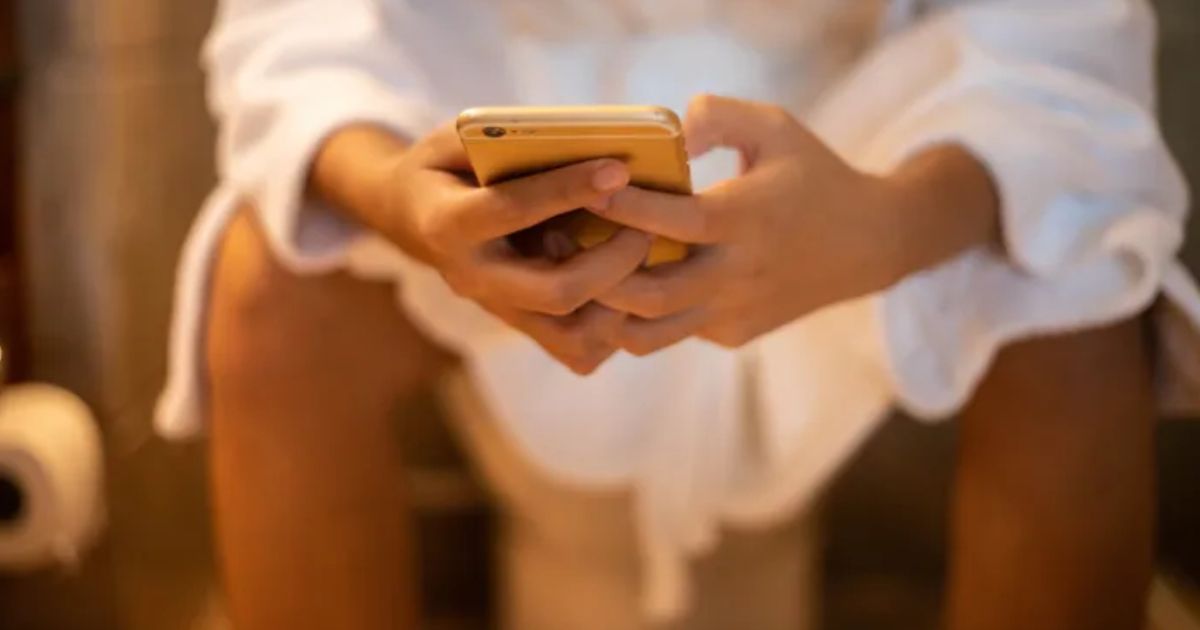
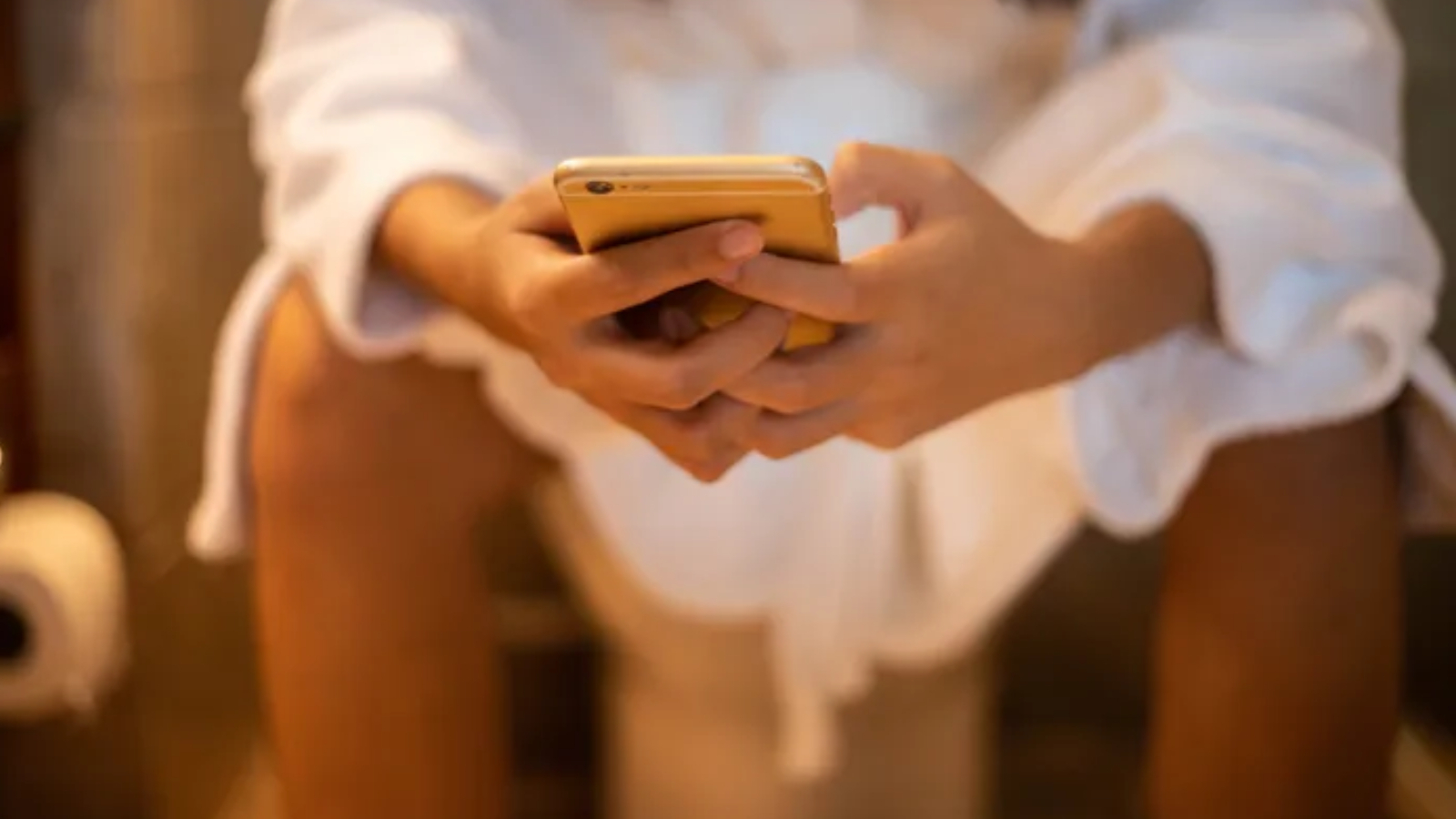
It’s not just an anecdotal thing or a funny post, though; according to a survey run by UK Bathrooms, men spend, on average, one hour and 35 minutes perched on the toilet each week compared to women’s 55 minutes.
Why?
It’s not usually stomach issues; or at least, it’s less likely to be that than it is for women.
Dr. Kyle Staller, a gastroenterologist, told Yahoo Life: “It’s true that men do spend longer in the toilet or on the toilet than women do, but in reality are much less likely to have bowel issues and chronic constipation than women are.”
A 2017 study from the University of Oxford and the University of Canberra found that not only are men more likely than women to scroll on the loo (20% vs 26.5%).
A YouGov study also found women feel more nervous about going number two in public loos, where lines are generally also longer than men’s.
But if we’re being real, I reckon we all know the true answer ― a lot of men admit to looking for a bit of an escape and some “me time” on the porcelain throne.
: “Now that I live with my girlfriend, I often use that alone time to plan dinners for the both of us and just generally take stock of the days ahead and what I’ve got going on.”
But doesn’t everyone like some me time?
Well, yes.
“I’ve had some clients tell me that the bathroom allows for the perfect escape from parenting duties,” Jonathan Alpert, a psychotherapist and author, told LiveScience.
Advertisement
“It can be a hideout for people because no one ever asks what you’re doing in there, even if you take a long time. It can truly be a safe place.”
That’s despite Office of National Statistics data that showed fathers of children aged five to 10 enjoyed five hours more leisure time than women per week, and “consistently took more leisure time than women regardless of how old the child in their household was.”
A 2023 Mumsnet post from a poster whose husband took several half-hour-long loo breaks daily reads, “The house would [be] chaos, the family wouldn’t eat and nothing would get done if I took 20 minutes out several times a day.”
Of course, if medical issues are to blame, ensure you see a doctor. And if it’s not a real cause of contention, hey ― scroll away.
Just don’t stay seated while, er, exposed for longer than five minutes (that can cause piles); and if you dash to the bog every time you need an escape, you might want to consider other, less pungent sources of “me time.”
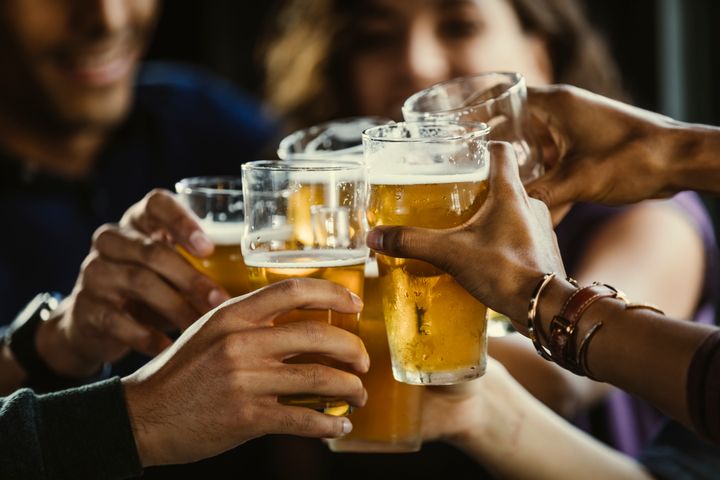
Now, there’s another heart health reason to be wary of alcohol, particularly for women.
In new research involving 432,265 people — roughly 243,000 men and 189,000 women between 18 and 65 — experts discovered that women who had on average more than one alcoholic drink daily were at higher risk of developing coronary heart disease. The research was conducted by Kaiser Permanente Northern California.
Advertisement
Coronary heart disease, also referred to as coronary artery disease, is a condition in which the “major blood vessels that supply the heart (coronary arteries) struggle to send enough blood, oxygen and nutrients to the heart muscle,” according to the Mayo Clinic.
Symptoms include shortness of breath and chest pain. But for many people, a heart attack is the first noticeable sign of coronary heart disease.
Women who drink 8 or more alcoholic beverages each week are at higher risk of heart disease.
For the Kaiser Permanente study, participants reported their alcohol use between 2014 and 2015. In the four years that followed, researchers analysed their coronary heart disease incidence and found that 3,108 participants were diagnosed with the condition.
Those who had one to two drinks each week were categorised as having low alcohol consumption; three to seven drinks for women and three to 14 for men were categorised as moderate consumption; and 15 or more drinks for men and eight or more for women were categorised as high consumption.
Advertisement
While definitions of binge drinking vary, in this study, it was defined as having more than three drinks a day for women and more than four for men. Researchers noted whether participants had taken part in binge drinking in the past three months. People who do not drink were not included in the study.
Researchers found that drinking eight or more alcoholic beverages each week was linked to a 33% to 51% higher chance of developing coronary heart disease in young to middle-aged women when compared with women who drank less, according to the Kaiser Permanente Division of Research. Those most at risk, though, were women who took part in binge drinking, which was linked to a 68% higher chance of developing coronary heart disease.
Alcohol’s negative impact on heart health has to do with a few factors. “Alcohol has been shown to raise blood pressure and lead to metabolic changes that are associated with inflammation and obesity, both of which increase the risk for heart disease,” senior study author Stacy Sterling told the Kaiser Permanente Division of Research.
While the worst impact was seen in women, men who engaged in binge drinking were 33% more at risk of developing coronary heart disease compared with those who were moderate drinkers.
“Women also process alcohol differently than men due to biologic and physiologic differences, and this may contribute to the increased heart disease risk we found,” said Sterling. “It’s concerning because there has been an increasing prevalence of alcohol use among young and middle-aged women, including in the number of women who binge drink.”
Advertisement
This research is set to be presented at the American College of Cardiology’s Annual Scientific Session in early April, and it has not yet been peer-reviewed.
The Good Brigade via Getty Images
People, especially women, who took part in binge drinking were at high risk of developing coronary heart disease.
If you want to drink less, here are some expert-backed tips.
With emerging research like this, it’s no wonder that concepts like “mindful drinking” and “damp lifestyles” — both of which decentre drinking — are popular.
If you are looking to curb your drinking habits, it’s a good idea to know some of the U.S. government’s guidelines for moderate alcohol consumption. If you choose to drink, the guidelines recommend no more than one drink per day for women and two for men. Once you know the guidelines, you can track your consumption habits to determine how much you drink. (The amount that people actually drink is often underestimated.)
If you like to have a different beverage after work or to break up the week, you can make mocktails or purchase nonalcoholic beers, wine and spirits. “The quality of nonalcoholic drinks and beers are much better than they were in the past,” Vanessa Kennedy, the director of psychology at Driftwood Recovery in Texas, previously told HuffPost. Having these kinds of drinks at the ready can help you reduce the amount of alcohol you consume.
Advertisement
Experts say that it’s also helpful to track why you’re drinking. Are you doing it because you’re stressed, or because you’re bored? Once you determine the reason that you’re turning to booze, you can think of different things to fill that void.
“If you are saying, ‘Well, I just need this drink because I just need to relax’ … that alcohol itself isn’t actually what helps you relax,” registered dietitian Sumner Brooks previously told HuffPost. A bubble bath or workout class may help you relax more than a glass of wine.
Most importantly, if you are worried about your drinking habits or think they’re problematic, it’s important to seek support from an expert. You can find a therapist who’s trained in substance abuse to help you move forward.
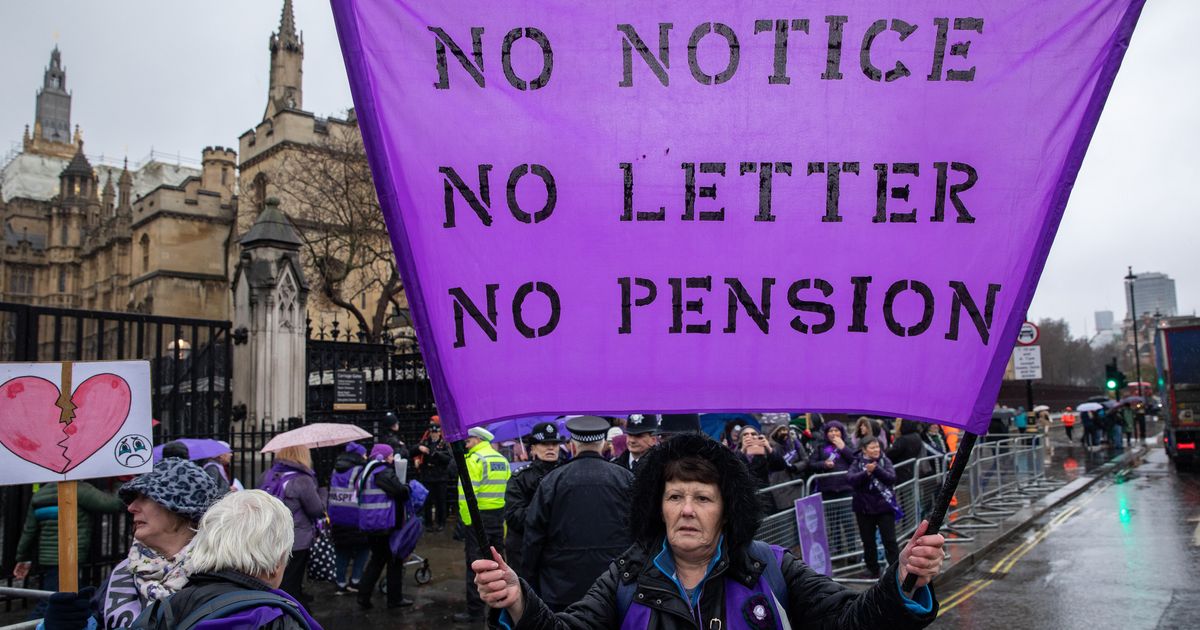
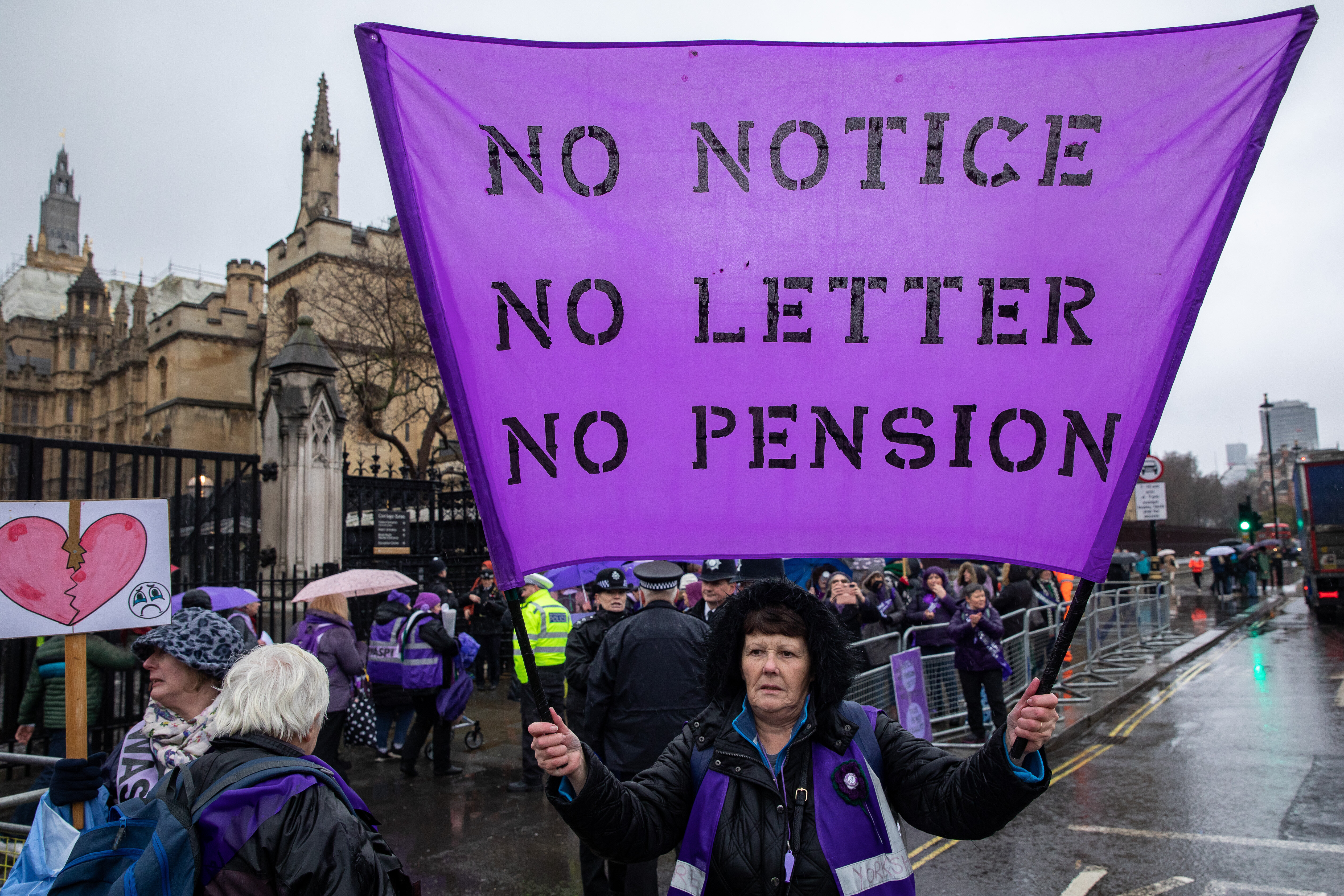
A Conservative MP has criticised the government over its handling of the group known as the WASPIs, saying it “should be ashamed”.
Backbencher Tim Loughton called for action after a major report – released last week – found the government should compensate those women impacted by changes to the state pension age.
Advertisement
He told Times Radio “a lot of women” in the Waspi group – Women Against State Pension Inequality – have suffered” due to this incident.
The Waspi campaign is made up of women born in the 1950s who were impacted by increases to their state pension age (from 60 to 65) so it was equal with men’s.
The change happened between 2010 and 2018. Many say they were not adequately informed about the shift, and so ended up losing out on several years of their state pension.
According to Waspi, more than a quarter of a million women have died since the campaign began.
Loughton said: “A lot of women have suffered over a long period of time, and many of them have died in quite tragic circumstances, which is why we need recognition for what they’ve gone through.”
Advertisement
“I think they [the Department for Work and Pensions] should be ashamed. The government has got to take note,” the Tory MP – who used to co-chair an All-Party Parliamentary group on the issue – said.
“The Ombudsman clearly found the DWP were guilty of maladministration, that they’ve not properly communicated these changes with a great number of women.”
The Parliamentary and Health Service Ombudsman published its second report into the issue on Thursday, and found those affected were not adequately informed – and therefore need an apology and payouts.
But during Sunday morning media rounds, neither the Conservatives nor Labour committed to compensating those impacted.
Chancellor Jeremy Hunt said the issue was “genuinely more complicated” than other schemes were compensation was now being handed out, adding: “There’s no secret vault of money.”
Advertisement
Labour Party chair Anneliese Doddssaid, “those women deserve respect, that’s the most important [thing],” but did not make any promises.
Sign up and we’ll email you a daily dose of lifestyle stories, covering sex, relationships, health, wellness, money, and green living.
Successfully Signed Up!
Realness delivered to your inbox
By entering your email and clicking Sign Up, you’re agreeing to let us send you customized marketing messages about us and our advertising partners. You are also agreeing to our Terms of Service and Privacy Policy.