A Little Bit Of Good News About The NHS Offers A Glimmer Of Hope About Its Future

The NHS has managed to address its huge Covid backlog in a significant moment of celebration for the struggling service.

NHS England revealed on Tuesday that it had cut the number of patients waiting more than years for a routine operation from 22,500 – the number from the start of the year – to 168.

This includes scans, checks and surgeries, and the 51,000 people who would have passed the two-year mark by the end of July.

Three NHS regions also had no patients waiting two years or longer for this routine treatment, with another three getting it down to single figures.

The stats show remarkable progress although it does exclude more complex cases and those who deferred treatment.

Still, 220,000 patients with Covid have been treated in the last six months, too.

The NHS has pointed to its elective recovery plan, which aimed to take on Covid backlogs back in February, for its success.

The service has been redirecting patients to other hospitals across the country as well, so they could be treated more quickly, while covering travel and accommodation costs “where appropriate”.

NHS chief executive Amanda Pritchard also claimed this achievement was only possible because the NHS continues to reform how it provides care, including using new tech like robot surgery.

It comes after the health service announced it would eliminate the two-year waiting lists by July earlier this year.

There are still worrying signs though

This statistic is only one small portion out of the whole Covid backlog. Only on Monday, there were fears over declining dentistry care across the whole country.

The BBC reported that 6.6 million people were still waiting for hospital treatment in total.

Meanwhile, ambulance response times for the most urgent incidents climbed to nine minutes and six seconds according to the NHS England in June. This is far from the target of seven minutes.

This is just one example where health care is still struggling, as it was even before the pandemic began.

On top of this, fears over its workforce shortage and long-term underfunding mean the future of the NHS still looks precarious, despite this small bit of good news about cutting waiting times.

Those at the top of the NHS still have grand plans for progress, though.

Pritchard said: “The next phase will focus on patients waiting longer than 18 months, building on the fantastic work already done, and, while it is a significant challenge, our remarkable staff have shown that, when we are given the tools and resources we need, the NHS delivers for our patients.”

Health secretary Steve Barclay said: “This is testament to NHS staff who have worked incredibly hard to get us here – despite the significant challenges.”

The government plans to remove the 18-month waiting list by April 2023.

Share Button

4 Bits Of News You May Have Missed Due To The Tory Civil War

It’s difficult to stay across all of the news at the best of times, never mind when a Tory civil war is unfolding.

Boris Johnson’s resignation and the battle for his place in No.10 has definitely dominated the news cycle for the last two weeks.

And while the appointment of the new prime minster is important, the government turmoil means other stories may have slipped under the radar.

So here are four other bits of news that you may have missed.

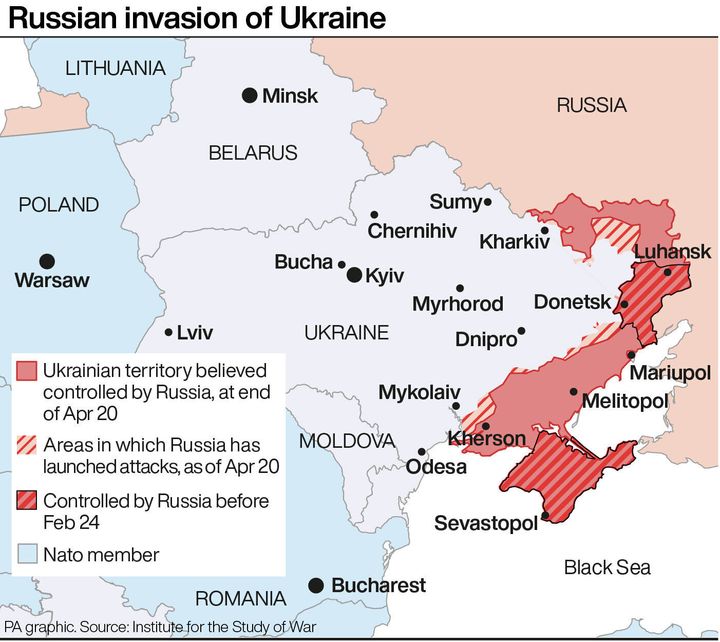
1. Russia makes progress in Ukraine

On Thursday, Russia targeted a densely populated area in Kharkiv, killing at least two people and injuring 21 more. It looks as though the shelling him a market, a bus stop, a gym and a residential building.

It comes after Moscow’s foreign minister Sergei Lavrov announced that Russia was expanding its military objectives in Ukraine on Wednesday.

This means it is essentially looking to take control of the entire southern regions of Ukraine, and that the Russian Armed Forces are moving beyond the so-called “People’s Republics” of Donestk and Luhansk in the east.

The invasion is now in its fifth month, and continues to take much longer than Russia initially predicted. But, despite the slow start and the strong resistance from Ukrainian forces and the repelling of Russian troops from other corners of the country (including the capital Kyiv), it seems Putin is not giving up.

Meanwhile, Ukrainian foreign minister Dmytro Kuleba tweeted in response to the expansion of the Kremlin’s military aims that “Russians want blood, not talks”, and called for more help from allies.

Lavrov has warned the West that the Kremlin will continue expanding its objectives if Nato allies continue supplying the country with long-range weapons.

Russian invasion of Ukraine

PA Graphics via PA Graphics/Press Association Images

2. Worker strikes continue

The summer of discontent is still rolling on, with Royal Mail workers voting to go on strike over pay on Tuesday.

More than 115,000 employees who are part of the Communication Workers Union supported the action, which – if it goes ahead – could amount to the largest walkout ever by its members.

When Royal Mail tweeted that it was “disappointed” by the strike action, the CWU replied: “Dry your eyes mate.”

Disputes over pay are affecting industries across the UK, with railway workers and airport employees pushing back against their current salaries due to the cost of living crisis.

CWU is just one of many unions to ballot for strikes recently, as inflation climbs to highest rate in 40 years.

3. Annual grocery bills climb by £454

Shoppers across the UK will soon see their annual grocery bills for the year jump up by £454 due to food and drink inflation.

Grocery price inflation increased to 9.9% in the four weeks leading up to July 10, according to retail research firm Kantar, having been at 8.3% the previous month.

Fraser McKevitt, the head of retail and consumer insight at Kantar, told PA news agency that he expects the record for grocery inflation to be broken “come August”.

4. NHS not coping with Covid

While the worst of the heatwave has passed (for now), the health service is still having to grapple with Covid infections, more than two years on from the first lockdown.

Editor of the British Medical Journal, Dr Kamran Abbasi, and Health Service Journal editor, Alastair McLellan, wrote an alarming editorial on Monday, warning that the NHS might buckle under the ongoing Covid pressures.

This is down a range of factors, including periods of underfunding over the last decade, “lack of an adequate workforce plan” and “a cowardly and short-sighted failure to undertake social care reform”.

Now, it seems the government’s “living with Covid” strategy might be the final straw with yet another wave of infections washing across the UK.

Abbasi and McLellan claimed that the government is “pretending it is not happening or implying it is all under control”, and said the health service was actually “dying” from Covid.

They called for the government to “stop gaslighting the public” and be honest that the pandemic is still very much looming over the NHS.

Share Button

Why You Might Be Asked To Travel Across The Country For Surgery

People who remain on the waiting list for health treatments are being asked whether they are prepared to travel to receive treatment.

NHS England is set to “virtually eliminate” the list of those who have waited more than two years for treatment, the chief executive has said, as patients are given the option to be treated more quickly at hospitals in different parts of the country.

Of course, this plan will do little to help those without access to transport, those who need to juggle healthcare alongside care responsibilities, and those on zero hours contracts or self-employed, who need to take limited time off work to avoid pay losses.

The number who have waited for two years or more to receive treatment has fallen from a peak of 22,500 in January to 6,700, after the Covid-19 pandemic caused waiting lists to mount.

People who remain on the waiting list are being asked whether they are prepared to travel to receive treatment. More than 400 have agreed, with 140 booked in for surgery at a different hospital.

NHS chief executive Amanda Pritchard said: “As part of the biggest and most ambitious catch-up programme in NHS history, staff are now on track to virtually eliminate two-year waiters by the end of July.

“But the NHS will not stop here, from delivering one million tests and checks through our newly rolled-out community diagnostic centres to new state-of-the-art same-day hip replacements, staff are constantly looking for new and innovative ways to treat patients quicker, especially those who have been waiting a long time.”

The NHS has said it will cover travel and accommodation costs to patients “where appropriate”.

Three patients who had been waiting to receive treatment at University Hospitals of Derby and Burton NHS Foundation Trust went on to receive treatment at Northumbria Healthcare Foundation Trust more than 100 miles away, with a further two booked in.

Meanwhile, South West London Elective Orthopaedic Centre has treated 17 patients from the South West of England, and a further 11 are expected to receive treatment in the coming weeks.

Patients who opt to wait longer, or patients in highly-specialised areas that may require a tailored plan, however, will not necessarily have been treated by the end of July, the NHS warns.

The fall in waiting list numbers comes after the busiest ever May for emergency care, with 2.2 million A&E visits and almost 78,000 of the most urgent ambulance call-outs.

Pritchard added: “One of the benefits of the NHS is that hospitals can work together to bring Covid backlogs down together and so if people can and want to be treated quicker elsewhere in the country, NHS staff are ensuring that it can happen.

“Once again, NHS staff are demonstrating the agility, resilience and compassion that shows when they are given the tools and resources they need, they deliver for our patients.”

Health Secretary Sajid Javid said: “Innovations like this are helping to tackle waiting lists and speed up access to treatment, backed by record investment, and there are over 90 community diagnostic centres delivering over one million checks and scans in the last year.”

Saffron Cordery, interim chief executive of the NHS Providers organisation, said the health service is “nearing the target” of clearing the backlog of all people who have been waiting for more than two years for hospital care.

She told BBC Breakfast: “The NHS is doing incredibly well and we are seeing those figures coming down significantly week by week. I never like to say ‘Yes, it will definitely happen’, but I think it’s testament to the hard work of trust leaders up and down the country that that we are nearing that point.”

Asked abut the call for more nurses, she said: “We’ve known for a very long time that workforce is a significant challenge.

“I think one of the things we have to remember is that the challenges we are facing now, post-pandemic, were there before the pandemic and the pandemic has simply exacerbated them.

“So we’ve got funding challenges that have come from a decade’s worth of a funding squeeze; demand was already going up before the pandemic; we had challenges in terms of social care which we’ve got now and they are increasing significantly.

“But we’ve also got this workforce shortage, which is incredibly serious.

“We’ve called on the Government to establish a fully funded and costed long-term workforce plan so we can sort this out once and for all but we know there are big challenges there across the nursing workforce, across the doctor workforce and other parts of the NHS staffing structure.”

Share Button

NHS Start4Life Slammed For Advising Breastfeeding As A ‘Weight Loss Hack’

The NHS has been telling new mums to breastfeed in order to lose weight and get back into shape after giving birth. Yes, really.

On its Start4Life website – a programme that supposedly supports pregnant women and new mums – the health service told women about ‘seven things you might not expect when your baby’s born’.

Number seven on the list was the fact that you might look pregnant for a while after giving birth.

“It can take six weeks for your womb to go back to the size it was, and even longer to lose any extra weight,” the site said. “Breastfeeding is a great way to get your body back, as it burns around 300 calories a day, and helps your womb to shrink more quickly. Also try to eat healthily and take gentle exercise.”

The advice sparked outrage online after it was shared by London-based writer Maggy Van Eijk, who has a three-year-old daughter and is 38 weeks pregnant with a baby boy.

“Toxic AF from the NHS’s week by week pregnancy guide,” she tweeted ”[Breastfeeding] is not a weight loss tool. Your body never went anywhere – you don’t need to get it ‘back’, it’s just changing, evolving and growing and it will keep doing so until you’re deceased.”

HuffPost UK contacted the Department of Health and Social Care about the criticism and the wording on the NHS site has now been changed.

Still, it’s worth asking how something like this made it onto the NHS website in the first place.

Speaking to HuffPost UK, Van Eijk says she’s found most of the week-by-week guide helpful during pregnancy, but it was “such a shock” to see Start4Life include breastfeeding as a “weight loss hack”.

“It was such outdated language, really steeped in diet culture which new mums especially really don’t need,” she says. “I did breastfeed with my first but it was hard work and I pumped at first because I was so adamant to keep trying. The pumping and feeding became an obsession.

“Instead of letting go and opting for formula I filled my fridge and freezer with milk. Basically equating the amount I could produce with how good of a mother I was being. It wasn’t healthy and there are so many other signifiers of good parenting we should be showing new mums. Not how you feed your baby and especially not what your body looks like.”

Other women share her view, with many on Twitter pointing out that this “tip” only added to the shame some women feel if they can’t breastfeed.

Start4Life was initially a Public Health England initiative, which now falls under the UK Health Security Agency (UKHSA). Start4Life content is published on the NHS website, with NHS-branded leaflets also given to pregnant women.

HuffPost UK contacted each of the bodies, as well as the Department of Health and Social Care, for response to the criticism.

A Department of Health and Social Care spokesperson said: “The Start4Life website provides guidance and advice for new and expectant families.

“Our insight has shown that some women find this information helpful, however, we keep the wording of public health initiatives under review, and in response to some of the feedback received we have updated the website today.”

The Start4Life advice now reads: “It can take six weeks for your womb to go back to the size it was. Breastfeeding can speed this process up as it makes your womb contract. Find out more about your body after the birth on the NHS website.”

Still, the response from women is clear: new parents are already under enough pressure to be “perfect mums” and “snap back into shape” after giving birth. The language used by a publicly-funded initiative really does matter.

Keeping a tiny human alive is a huge achievement – it doesn’t matter what size you are or how many packets of biscuits you consume in the process.

Update: This article has been updated to reflect that the Start4Life website has amended its advice.

Share Button

People Are Pointing Out The 2 Obvious Problems With The New Nightingale Surge Hubs

NHS England will be setting up Nightingale surge hubs to cope with high numbers of Covid hospitalisations – but people have spotted a particular problem with this new strategy.

These “surge hubs” will be set up in eight hospitals across England in preparation for the expected rise in Omicron admissions in the coming months.

Each temporary unit will house around 100 patients and construction is set to begin this week.

Additional sites for 4,000 more beds may also be on the cards as hospitalisations in England have risen above 10,000 for the first time since March this year.

NHS medical director Professor Stephen Powis said the new hubs are part of the health service’s response to Omicron and that the UK is now on a “war footing”, while health secretary Sajid Javid said the hubs might not need to be used but it’s good to prepare.

The hubs will be placed at the Royal Preston hospital in Lancashire, in St James’ University Hospital in Leeds, in Stevenage’s Lister Hospital, Tooting’s St George’s Hospital, North Bristol Hospital, Solihull Hospital, William Harvey Hospital in Ashford, and University Hospitals Leicester.

But there are two clear flaws with this new strategy.

Firstly, many have noticed that introducing Nightingale surge hubs to cope with increasing infections and hospital admissions seems at odds at the government’s refusal to introduce new restrictions before Christmas and New Year’s Eve.

Restrictions are likely to be introduced in January when the government has access to more data about how severe Omicron symptoms can be, but the festive season is expected to have accelerated the variant’s transmission across the country.

The other major pressing is the shortage of employees to look after Covid patients.

NHS staff absences in London increased by 150% week-on-week in the seven days leading up to December 19, according to the health service’s data.

Critics have asked why the government is focusing on providing hospital beds rather than prioritising the NHS staff shortages.

Pat Cullen, the Royal College of Nursing general secretary, also asked how these units would work with so many members of staff self-isolating.

She told Sky News this week: “You can set up all the hubs that you wish to set up but if you don’t have the nursing staff to actually care for the patients that are going to be placed in those hubs, that places more challenges on the nursing workforce.”

The NHS was already being squeezed after the health secretary made Covid vaccinations mandatory for all staff.

A shortage of rapid lateral flow tests is causing further concern as it means people will be unable to test themselves before socialising.

However, the government has promised to make eight million Covid tests available before Friday, December 31, which could help stop some transmission on New Year’s Eve.

Share Button

How To Prove You’re Vaccinated With The NHS Covid Pass

You might have got a “I’ve had my Covid vaccination” sticker after getting your jab – or a small card with your name and the date – but there’s a more official way to prove you’ve been double jabbed.

Foreign secretary, Grant Schapps, has announced those who have been double jabbed will be able to travel home from amber list countries without quarantining from later this summer. So how can you prove it?

How to prove you’ve had two Covid vaccinations in England

For travel, if there’s a requirement to have had two Covid vaccinations to the country you’re going to, or coming back from, you’ll be asked to show your vaccination status by officials.

You can request an NHS Covid Pass to prove this on the NHS website or on the NHS app. This app is different to the NHS Covid-19 app, which you use to check into venues. To use the NHS app, you’ll need to be registered with a GP surgery and create a login. You’ll need your NHS number to do this, which is pretty easy to access online.

Once logged in to the app, choose the ‘Get your NHS Covid Pass’ button. You can then press ‘travel’. It will take you to a screen that has details of your Covid-19 records. Press ‘show details’ and you’ll be shown a QR code, that will expire 30 days from the date of issue. To get a new one, you just log back in.

You can also request an NHS Covid Pass letter on the NHS website. You’ll be asked some questions, so they can find your vaccine record, and then they’ll send a letter to to the address you have registered with your GP surgery. You should get this letter within five working days.

And finally, people who have had both their jabs can also request an NHS Covid Pass letter by calling 119. This won’t show test results, and has no expiry date.

What about in the rest of the UK?

Those in Scotland aged 16 and over can request a paper copy of their vaccine status via the NHS inform website. You can also call 0808 196 8565.

In Wales, there isn’t yet a digital pass to show vaccine status. There is a paper one, though and you can request one of these by calling 0300 303 5667. You need to have had at least five days since your second dose.

In Northern Ireland, they are working on a paper-based Covid pass. It’s hoped it will be available by July, with digital passes available by summer.

How to bring forward your second jab

Many people initially had their second jab booked for 12 weeks after their first. However, it’s now possible to move your second jab earlier – to eight weeks after your first. This is to ensure maximum protection against the Delta variant.

It’s best to do this by going on the NHS website and filling out your details. Some people have had to cancel their existing second jab appointment to be able to view earlier appointments and rebook. Other people have been able to view available earlier appointments, and rebook, without having to cancel their first. If you’re worried about rebooking an appointment, call 119 free of charge.

Share Button

Matt Hancock Broke Ministerial Code Over Shares In Sister’s Firm, Ethics Adviser Says

Health secretary Matt Hancock broke the ministerial code by failing to declare a significant stake in his sister’s company when it won an NHS framework contract, the government’s ethics adviser has said.

Hancock holds a 20% stake in Topwood Limited, which is owned and run by the health secretary’s older sister Emily Gilruth and brother-in-law.

The firm was awarded a framework contract with NHS Shared Business Services (NHS SBS) in February 2019, when Hancock was health secretary and had a stake in the company.

But he failed to declare an interest in the firm at the time and therefore breached the ministerial code, the independent adviser on ministers’ interests found.

Lord Geidt however said that the failure to declare the interest was “was as a result of [Hancock’s] lack of knowledge [of the contract] and in no way deliberate, and therefore, in technical terms, a minor breach of the ministerial code.”

The adviser went on: “In coming to this finding, I recognise that Hancock has acted with integrity throughout and that this event should in no way impugn his good character or ministerial record.”

But the revelation will only add to the pressure on Hancock following accusations that he wrongly told Dominic Cummings and others in government that people would be tested before being transferred into care homes during the early stages of the Covid pandemic.

WPA Pool via Getty Images

Hancock at a Downing Street Covid press conference on Thursday

Lord Geidt’s finding comes after Health Service Journal found Topwood secured a place on the NHS SBS framework for “confidential waste destruction and disposal” in 2019, just months after Hancock became secretary of state.

The framework is effectively a shortlist of providers available to the local NHS.

In March, Topwood also won two NHS Wales contracts worth £150,000 each to carry out waste disposal services, including the shredding of confidential documents. 

In his first speech as health secretary, Hancock spoke about how the NHS saved his sister’s life after a horse riding accident and how that informed his love for the NHS. 

“I have never had a moment where somebody so close has been at a risk of dying,” he said.

He added: “I love my sister and the NHS saved her life, so when I say I love the NHS, I really mean it. My commitment to the health service and the fundamental principles that underpin it is not just professional, it is deeply personal.”

Share Button

Two Thirds Of Agency Nursing Staff Still Waiting For Second Covid Jab

GEOFF CADDICK via AFP via Getty Images

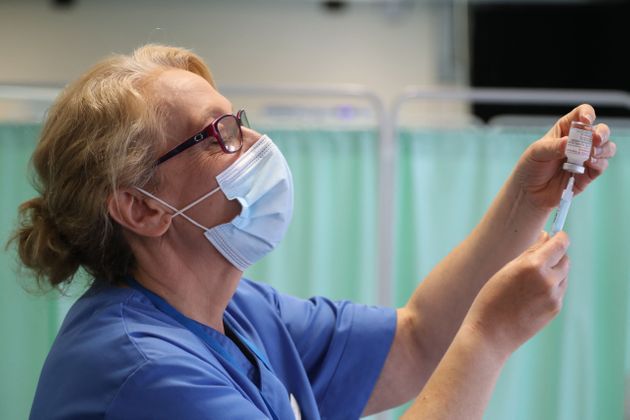
A nurse fills a syringe with the Moderna Covid-19 vaccine at a vaccination centre in Llanelli, South Wales.

Nursing staff working outside the NHS are half as likely to have received a full coronavirus vaccine dose as their NHS colleagues, a new study reveals.

Just under a third of agency staff have been given both of their jabs, compared with two-thirds of permanent staff, according to the survey by the Royal College of Nursing (RCN) of 20,000 members.

It also found that 5.6% of agency nursing professionals (one in 18) have not been offered a single dose of a Covid-19 vaccine, compared with only 1.3% of permanent staff (one in 77).

Frontline health and social care workers, who are second on the Joint Committee on Vaccination and Immunisation (JCVI) priority list alongside people aged 80 and over, should have all received an invitation to receive a second dose of a Covid-19 vaccine by now.

Vaccinations for people in the top two priority groups began in December. People next on the list, those aged over 75, were invited from early January. On February 14, the government said it had offered all 15m people in the top four priority groups their first dose.

Latest figures published by the government show more than 7.4m people have received their second dose and more than 32m people have received a first dose. More than 32m doses should be enough to cover everyone in the UK over the age of 50, all health and care workers and those with pre-existing conditions.

But the survey revealed that as of April 6, only 94% of nursing staff have actually received at least one dose of a vaccine and 62% had received both doses.

Nearly half (46%) of nursing staff outside of the NHS, including permanent employees in non-NHS settings such as care homes, were still waiting for their second jab, compared to just under 24% of those working in the NHS.

The most worrying finding was that about one in 50 members reported having not been offered a vaccine at all. Those included nursing staff who work in hospitals, care homes and in the community, the RCN said. 

The results were an improvement from a previous survey conducted in February, which found “a concerning disparity” between vaccination rates among NHS and non-NHS staff, with non-NHS staff accounting for 70% of the nursing staff who had yet to be vaccinated.

JACOB KING via POOL/AFP via Getty Images

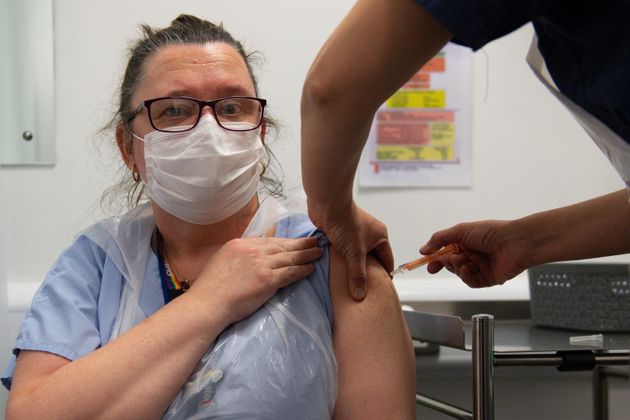
A nurse is given the Oxford/AstraZeneca Covid-19 vaccine in Coventry on January 7.

Nursing staff not working directly for the NHS include professionals who are employed by agencies, or who work in local communities, in care homes and people’s own homes with some of the most vulnerable people in society.

Tthe RCN said more still needed to be done to ensure all nursing staff are given their jabs. “The gap has narrowed significantly yet those outside the NHS are still behind their NHS colleagues when it comes to receiving their second jab,” it warned.

The union has called on the government to ensure vaccines are offered to all nursing staff to stop them from “slipping through the net”.

Jude Diggins, RCN director of nursing, policy and public affairs, said: “The gap between NHS and non-NHS staff having their first dose has closed but there remains more work to be done to ensure all nursing staff, whatever setting they work in, are given the protection they need.

“Every effort must be made to prevent nursing staff from slipping through the net. Their safety has to be the government’s top concern and that cannot be compromised.”

The government must make sure people who should have already received their vaccinations do so “without delay”, Labour said following the RCN survey.

Shadow health minister Justin Madders said: “As restrictions begin to ease ministers must do all they can to ensure that those who should have received the vaccination already are given this without delay. 

“This should include targeted work to drive up vaccinations in all who work in the NHS, including agency and bank staff.” 

In response to HuffPost UK’s request to explain why some nursing staff have yet to be invited for vaccination, a DHSC spokesperson claimed: “We have visited every eligible care home in England, offered vaccines to all staff, and continue to work closely with the care sector, independent healthcare providers and local leaders, to maximise vaccination numbers and save thousands of lives.

“The vaccines are safe and effective and we want everyone to take up the offer of a jab when they’re called forward.”

They added: “Our vaccination programme is the biggest in NHS history, and so far our heroic health and care staff have helped administer more than 39m vaccines.”

Share Button

Boris Johnson Lies About Labour Voting Against Nurses’ Pay Rise

Press Association

Prime minister Boris Johnson

Boris Johnson has refused to apologise after falsely claiming Labour voted against a pay rise for nurses. 

The prime minister, who is under fire for his offer to give hard-pressed NHS staff a 1% pay rise, had claimed that Keir Starmer’s party had opposed earlier government plans to give health workers a 2.1% hike. 

The move, part of the NHS funding bill, was never put to a vote but Johnson’s aides have rejected calls for the PM to say sorry or even correct his mistake. 

During prime minister’s questions on Wednesday, Johnson told MPs: “The last time we put it to a vote, he (Starmer) voted against it.” 

Shadow health secretary Jonathan Ashworth raised a point of order with Commons speaker Lindsay Hoyle after the session. 

He said: “The prime minister twice from that despatch box said that the Labour opposition voted against the NHS Funding Bill and the 2.1% increase for NHS staff – this is not the case.

“Indeed, in the debate, as Hansard will show, I was explicit that we would not be dividing the House.” 

Hoyle ruled that it was “certainly a point of clarification” but by that point Johnson had left the chamber. 

Johnson’s press secretary Allegra Stratton, who later faced questions from journalists, refused to offer any apology from the PM. 

She said: “The speaker addressed it in the House immediately after the shadow health secretary and the speaker regarded it as a point of clarification, and he regarded it as having been dealt with.” 

Pressed more than 10 times on whether Johnson would accept he was wrong about claiming there was a vote, Stratton repeated the line and said simply said it was “appropriate” for the speaker to clarify the point. 

She insisted that Johnson was “concerned about the truth of these matters”, she added “it would be difficult if the speaker had not addressed it”. 

Asked about the ministerial code, which says government ministers should correct any error “at the earliest opportunity”, Stratton insisted that “the system worked”, suggesting the speaker corrected the mistake. 

During PMQs, Johnson hinted nurses may be in line for a bigger rise than the 1% proposed by the government. 

Labour has called for a larger rise for all NHS staff and has demanded the government put plans to a vote. 

Share Button

Boris Johnson Defends 1% NHS Pay Rise By Saying Times ‘Tough’

Press Association

Prime minister Boris Johnson

Boris Johnson has claimed ministers gave NHS workers “as much as we can” as the angry backlash over the government’s proposed 1% pay rise offer continues. 

Speaking on a visit to a vaccination centre in Brent in north London, the prime minister would not be drawn on whether he would perform a U-turn over the proposed hike in pay for healthcare staff, who have been on the frontline during the Covid pandemic

Nurses and other staff who could be affected by the “insulting” rise were preparing to protest outside Downing Street, in London, and in Manchester, on Sunday afternoon. 

Pressed on the issue, Johnson said: “I’m massively grateful to all NHS staff and indeed to social care workers who have been heroic throughout the pandemic.

“What we have done is try to give them as much as we can at the present time.

“The independent pay review body will obviously look at what we’ve proposed and come back.” 

Asked if ministers could be forced into a U-turn over the pay offer, which is being looked at by an independent pay review board, Johnson said: “Don’t forget that there has been a public sector pay freeze, we’re in pretty tough times.

“We’ve tried to give the NHS as much as we possibly can and that means, in addition to the £140 billion of annual money, we’ve got another £62 billion we’ve found to help support the NHS throughout the crisis.

“My gratitude is overwhelming and I’m so grateful particularly to the nurses, and thankfully we are seeing more nurses now in our amazing NHS – there are 10,000 more nurses this year than there were last year.”

Speaking earlier on Sunday, education secretary Gavin Williamson said the offer was “part of a process”, suggesting the government could rethink the rise. 

Shown a video of prime minister Boris Johnson and Sunak clapping for carers during the pandemic, as hospitals and care homes were struggling to cope with the pandemic, BBC One presenter Andrew Marr put it to Williamson that the minuscule hike was “frankly an insult” to staff. 

“What we are having to deal with is incredibly challenging economic circumstances,” the education secretary said. 

Press Association

Ministers have offered NHS staff a 1% pay rise

“We have put forward a proposal. We have put forward what we believe that we can afford and it’s part of a process and that will sort of be looked at.

“But really, our focus is on making sure we recover from this pandemic.”

Pressed on a possible U-turn, he added: “We’ve stated that this is very much part of the process – what the government has put forward has been passed to an independent review.”

The “insulting” pay rise, reportedly insisted on by chancellor Rishi Sunak’s Treasury department, has provoked widespread anger. 

The British Medical Association (BMA), the Royal College of Midwives, the Royal College of Nursing and Unison have said in a letter to ministers that the pay deal “fails the test of honesty and fails to provide staff who have been on the very frontline of the pandemic the fair pay deal they need”.

The letter adds: “Our members are the doctors, nurses, midwives, porters, healthcare assistants and more, already exhausted and distressed, who are also expected to go on caring for the millions of patients on waiting lists, coping with a huge backlog of treatment as well as caring for those with Covid-19.”

Shadow foreign secretary Lisa Nandy said it was “reprehensible” for ministers not to recommend putting NHS pay up by more than 1%.

The senior Labour politician told Sky News” “The government, to be clear, is not planning a pay rise.

“That is a real-terms pay cut because it doesn’t keep up with inflation and for nurses to be offered a pay cut is just reprehensible in our view.

“In the NHS long-term plan, the government budgeted for a 2.1% pay rise – that is what nurses were promised and last year they legislated for that in order to give nurses a cast-iron guarantee that after years of seeing their real-terms pay fall, that the Government would finally reverse that decision and start to see their pay increase.

“We think they ought to go into these negotiations at a bare minimum of honouring that promise of a 2.1% (increase) and then consider what more they can offer to our NHS staff who have done so much to put their families and themselves at risk every day going into work – some of them have died.”

Share Button