I Swapped 10,000 Steps A Day For 30 Minutes Of ‘Japanese Walking’ – I’ve Never Been More Active

Even though I love running and regularly go to the gym, facts are facts; I work from home and don’t love a long evening ramble. As a result, I regularly fail to get 10,000 steps a day, even though that’s been my goal for years.

All my “Jeffing,” VO2 max training, and treadmill interval sessions were not enough. I average around 6,500 steps daily, and my ongoing attempts to hit the 10k target have proven unsuccessful and inconvenient.

I tried walking after work (a non-starter), taking a lunch-break stroll (sometimes useful, but mostly impossible due to the Endless Kitchen Tasks working from home seems to highlight).

So, you can imagine how happy I was to read about “Japanese walking,” the strolling style said to be as good for us as 10,000 steps, while taking a fraction of the time.

Ironically, despite spending less time walking, my average steps are up to 8,100 a day.

What is “Japanese walking”?

Japanese walking, also known ‘the 3-3 walking workout’, is essentially the interval training of the walking world. It was developed by Professor Hiroshi Nose and Associate Professor Shizue Masuki at Shinshu University in Matsumoto, Japan.

Like “Jeffing,” which sees runners intersperse periods of high-intensity running with walking, Japanese walking packs bursts of intense stepping into a stroll.

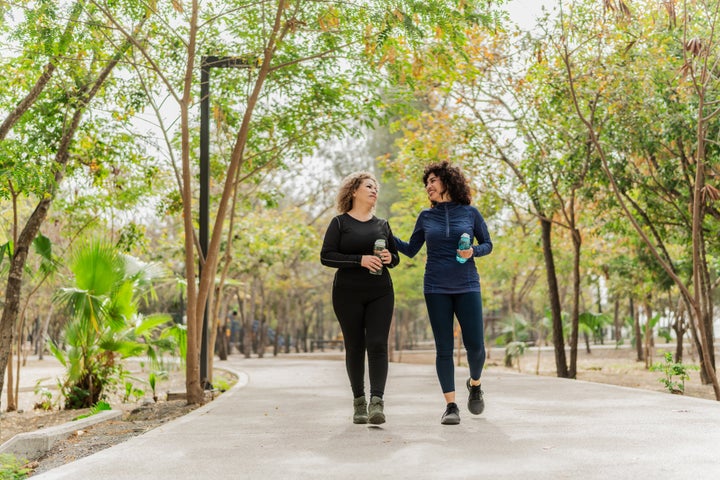
Specifically, it asks you to walk for three minutes at a fast pace and slowly for another three minutes. Repeat this five times for a 30-minute workout.

The 2007 paper that the method’s inventors wrote found that, among middle-aged participants, those who tried “Japanese walking” left with lower blood pressure, stronger thigh muscles, and better aerobic ability than those who either did not walk or walked 8,000 steps a day at a moderate pace.

“High-intensity interval walking may protect against age-associated increases in blood pressure and decreases in thigh muscle strength and peak aerobic capacity,” the paper reads.

Dr Suzanne Wylie, a GP and medical adviser for IQdoctor, told HuffPost UK: “Even a modest 30-minute walk delivers remarkable cardiovascular benefits, reducing the risk of heart disease and stroke whilst improving blood pressure control.

“Regular movement helps maintain a healthy weight and strengthens muscles and bones – a crucial factor as we age, to help prevent osteoporosis and preserve mobility.”

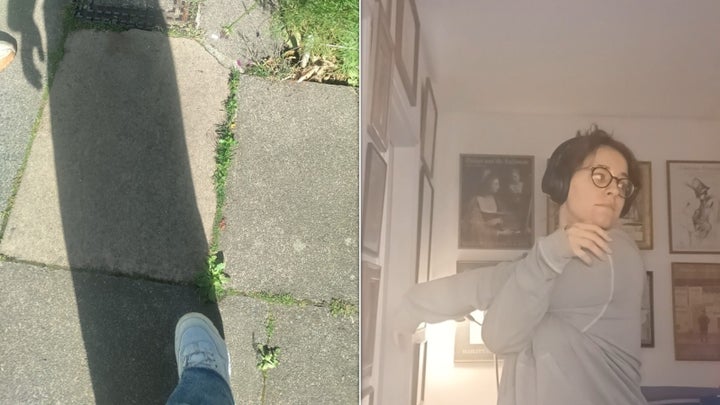
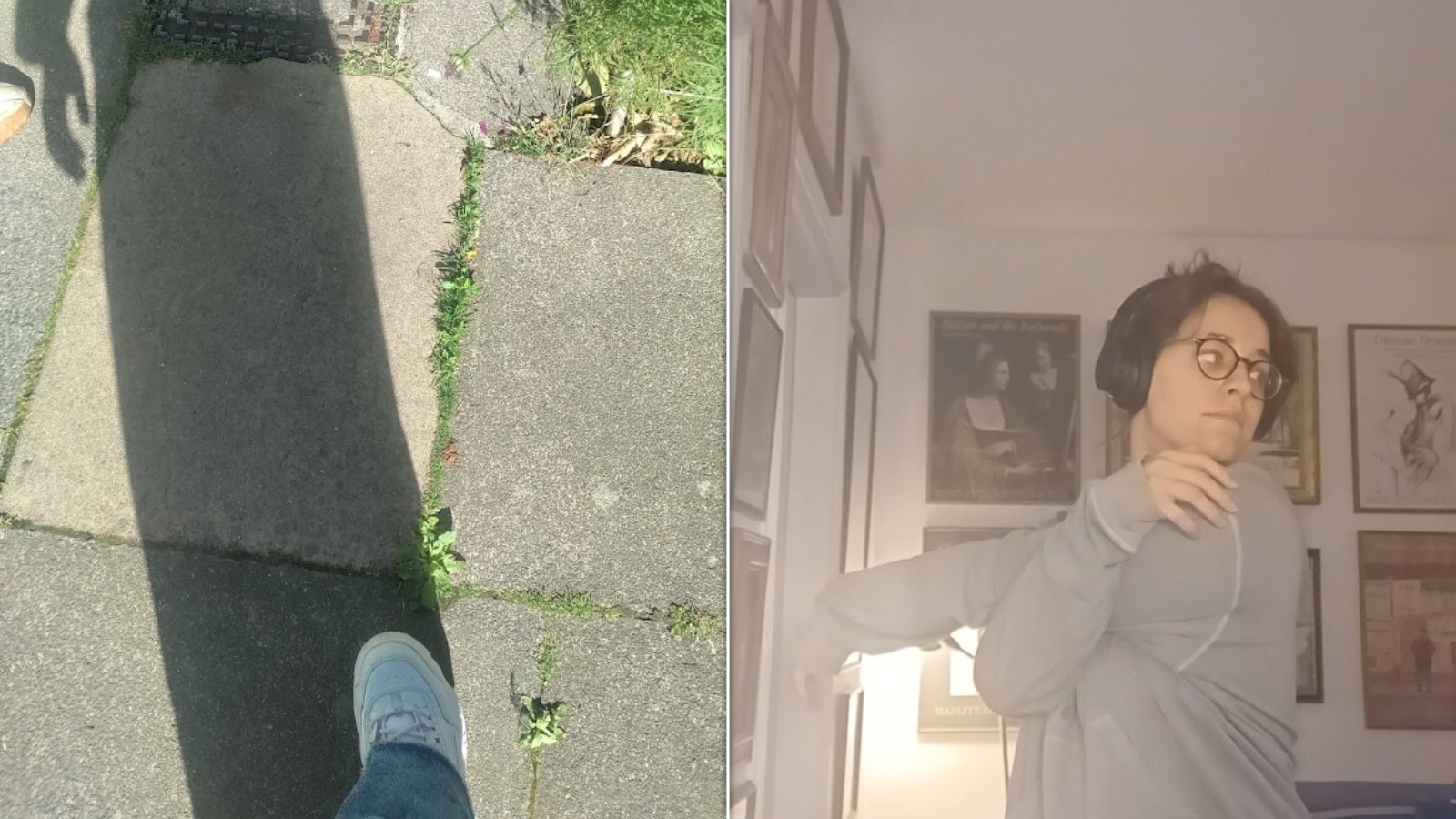
A recent early walk (I usually hate them, but Japanese walking made it more bearable)

Amy Glover / HuffPost UK

A recent early walk (I usually hate them, but Japanese walking made it more bearable)

I’ve never found walking easier or more fun

Having tried the method myself, it’s safe to say I’m never going back.

Somehow, knowing the walk is going to take a maximum of half an hour means I’m much more open to the idea.

I walk more often, enjoy the time more (I think that the three-minute-on, three-minute-off approach makes the exercise go by much faster), and have even upped my step average by a couple of thousand per day.

“From a clinical perspective, any form of consistent, moderate-intensity walking, especially if it incorporates posture, breathing, or mindfulness as Japanese walking sometimes does, can further enhance cardiovascular and mental health,” Dr Wylie shared.

As a recent convert, I couldn’t agree more.

Share Button

Half-Assing Workouts Changed My Life – And It Could Work For Your Goals, Too

If you know me, you’re probably tired of hearing me rattle on about my running, walking, and strength training adventures (sorry, loved ones).

That’s partly because I’m insufferable. But it’s also because I never imagined I’d get into sports – before the age of 23, I hated the idea.

Now, though, I worry I’ve become a victim of the same conscientiousness some research suggests might have put me off physical activity for years. Until about two months ago, I found myself skipping as many as three workouts a week – if I wasn’t giving it 100%, I reasoned, I’d better not go at all (this, despite knowing that any exercise is better for you than none).

But recently I’ve been enjoying the delights of the “crappy,” half-assed workout, and my exercise routine has never been more consistent.

I spoke to Anna Mathur, psychotherapist and author of the upcoming book The Good Decision Diary, about the joys of doing something badly instead of skipping it altogether.

Unrealistic goals can lead to burnout

The author told me that ambition isn’t a bad thing, but goals rooted in shame or unrealistic expectations can set you on a fast path to disappointment.

“This leads to feelings of stress, pressure, unease, burnout, etc.,” she shared.

“Lofty goals often fail because they ignore the gritty reality of life, our fluctuating energy, ever-changing resources, the unexpected curveballs, responsibilities in other areas of our lives, and our nervous system state.

“We might set out with ‘I’ll wake up at 5am and run every day’ and when we inevitably miss a day because we’re sick, exhausted or had a late night at work, we feel like we’ve failed.”

As someone who used to bail from my beloved jogs unless I felt I could finish a record-beating 10k, I found myself nodding at her advice.

To combat unfair and inflexible goals, be they for a new squat PR or a crochet project, the therapist sticks to what she calls “the 70% rule… if a choice feels 70% good enough, it’s probably time to act.

“Waiting for the perfect moment or plan can keep us in a state of paralysis and stop us from starting. Half-doing something (going for a 10-minute walk instead of a 45-minute workout, writing a messy journal entry instead of none at all) is often how momentum builds and we take the pressure off.”

I have at least 70% conviction to work out most days, and if that only leads to a 45% effort, well, so be it.

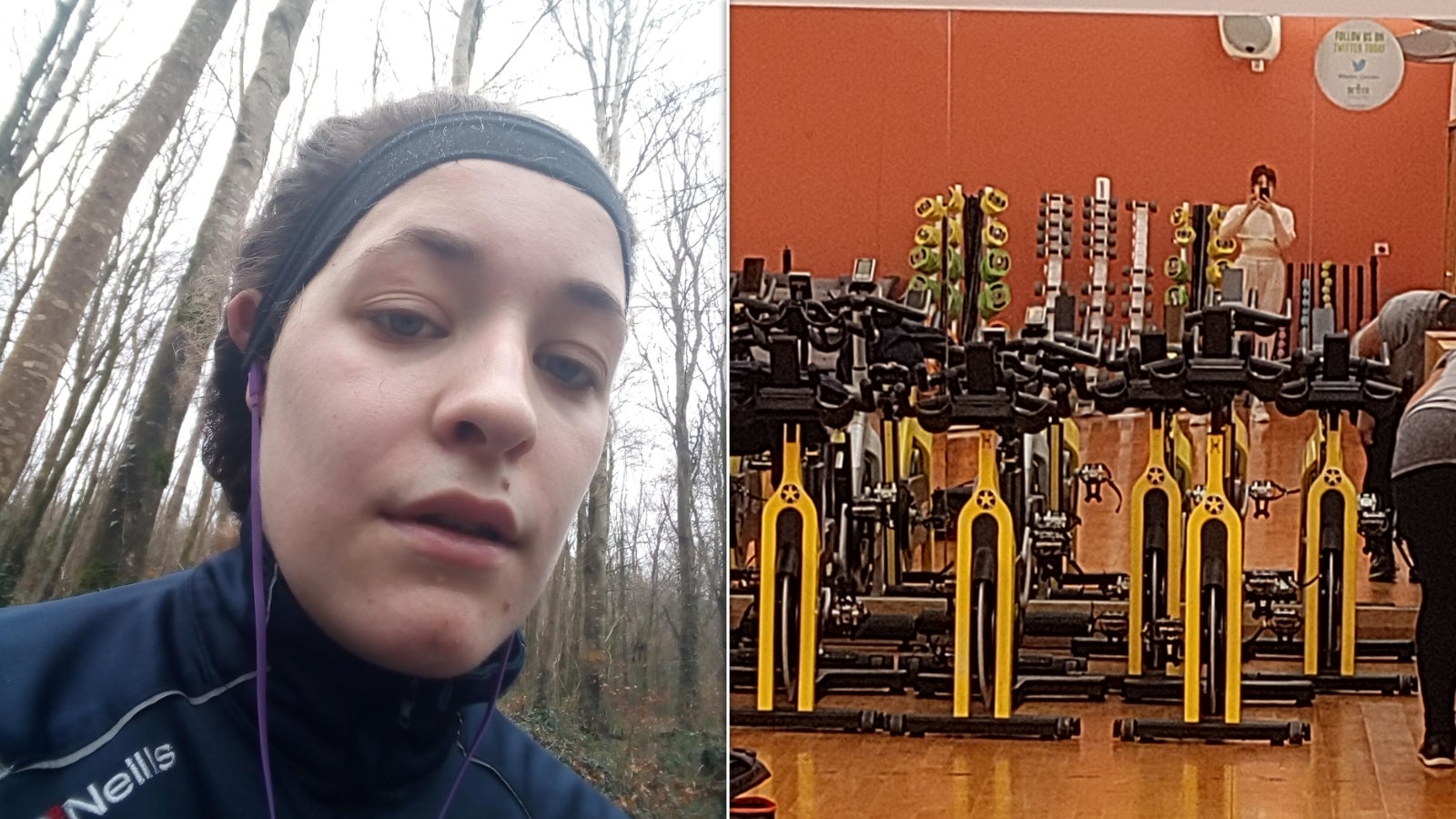
In fact, even my 10-minute walk to the gym is so much better than nothing than I realise in the moment – even if I turn around and leave once there.

How can I tell that a goal is backfiring?

A few weeks ago, I spent three days pretty much solely in bed, dreading the prospect of my newly adopted gym routine.

This, despite the fact that my running PR was the best it had ever been, and my squats were the heaviest I’d tried.

That’s because, Mathur cautioned, “Good decisions aren’t just about the outcome (although that’s where we’re culturally taught to focus: on the external, the deliverables, the achievements) – they’re about how they make you feel on the way there too, how you grow as you go, whether you resent the aim, burn out trying to get there.

“One sign that a goal is backfiring is when it starts creating more anxiety than momentum,” she added.

“Maybe it’s affecting your sleep, mood, or relationships. Maybe it’s fuelling rumination, shame, or a harsh inner critic, or you keep falling short or ‘failing.’”

Though a backfiring goal might look impressive from the outside, she continues, it might be time to reconsider or reconfigure it once it leaves you feeling disconnected from yourself.

“A good decision feels like something you can return to, that doesn’t carry that all-or-nothing, walking-on-a-tightrope quality, and is not something you’re constantly bracing against,” she ended.

My new, more flexible routine (if I miss my previous early-or-nothing morning slot, fine; I’ll do something a little less machine-heavy in my crammed 6pm gym) is one example, but the approach works for a far wider range of goals too.

The Good Decision Diary by Anna Mathur publishes 7 August 2025 (Penguin Life, £16.99)

Share Button

This Low-Impact Exercise May Land You 2 Extra Hours Of Sleep

Though exercising too close to your bedtime may actually harm your sleep more than it helps, the NHS says that getting enough movement in your day is key to consistently good slumber.

Johns Hopkins Medicine writes that we don’t actually know why physical activity helps you snooze. It might be because working out releases “happy chemicals”, endorphins, or because it raises your body’s core temperature, they suggest.

A half-hour of exercise is linked to better sleep that same night, nonetheless.

And now, a new review has been published in the journal BMJ Evidence-Based Medicine that has named the low-impact exercise that could improve the sleep of insomniacs like me by almost two hours.

Yoga might give you two hours of extra sleep

The scientists looked at 22 previous randomised controlled trials involving over 1,300 people with insomnia.

They found that while cognitive behavioural therapy (CBT) was helpful for managing the condition, so too was exercise.

“Among the various modalities examined, yoga, Tai Chi, and walking or jogging appear to be particularly effective,” they wrote.

Not only did yoga improve sleep time by just under two hours on average, but it also helped participants to nod off half an hour earlier than usual.

The review found that the positive sleep effects of Tai Chi and CBT combined may last for as long as two years for people with insomnia, while those associated with aerobic activity or aerobic activity with strength training seemed to last for seven months.

Of the activities included in the research, though, yoga won out in sheer added minutes of kip.

The scientists encouraged more research into the topic

As we mentioned above, the relationship between sleep and exercise is still not fully understood.

Perhaps that’s why this study didn’t recommend an exact amount of yoga or time at which to do it.

“To confirm and extend these findings, future research should prioritise large-scale, high-quality RCTs with standardised intervention protocols,” they wrote in their paper.

The more data we have, the more exercise and sleep scientists can rest easy (sorry….).

Share Button

Keep Getting Running Injuries? The ‘UHBE’ Test Could Reveal Why

You may already know how many sit-ups and push-ups you’re meant to be able to do by age and gender, as well as how long you’ll ideally be able to hold a plank or stand on one leg.

These can measure everything from your biological age to your dementia risk.

But what about your balance and stability – factors Harvard Health says can influence your risk of falling and injury, and which are key to pain-free running?

The key to ensuring those are in the best possible nick, they add, is strengthening your core (a group of muscles that extends far beyond the six-pack abs you may associate with a strong core).

As it turns out, the best way to test your core strength also seems to reveal the strength of your hip flexors too – all key muscles to prevent running injury.

Try a unilateral hip bridge endurance test (UHBE)

A 2016 paper sought to find the best way to measure core strength at a clinical level.

The scientists assessed two common core stability tests: the trunk stability test (TST) and the unilateral hip bridge endurance test (UHBE).

The TST is essentially a push-up test. It asks participants to lie face down on the ground and push their body up with their hands planted on the floor.

Their back, shoulders, and knees should not sag or dip. This test is scored from 0-3, with 0 meaning they failed to complete the move and had pain (3 is a perfect, pain-free push-up).

The unilateral hip bridge endurance test asks people to lie down flat and lift their hips up from the surface they’re lying on, lifting one leg.

They are asked to keep their hips straight, avoiding dipping up buckling, for about 10 seconds. Pain, inability to complete the move to the full 10 seconds, and not feeling the move in your glutes can all be signs of issues.

Researchers found that compared to the TST, the UBHE test seemed to be far better at gauging your core strength, especially as it relates to your lower body.

It’s also a great way to assess your glute and hip strength, and because it’s a unilateral move, you can see whether one side is weaker than the other.

<div class="js-react-hydrator" data-component-name="YouTube" data-component-id="3154" data-component-props="{"itemType":"video","index":19,"contentIndexByType":1,"contentListType":"embed","code":"

","type":"video","meta":{"author":"RunDNA","author_url":"https://www.youtube.com/channel/UC-xAU5AQTq434VNHNd5Bi2Q","cache_age":86400,"description":"Unilateral Hip Bridge Endurance \n\nThe Unilateral Hip Bridge Endurance (UHBE) test is part of the gait capacity screen, designed to assess core stability and endurance necessary for walking. \n\nTo perform the UHBE test: \nThe participant lies on their back with knees bent and feet flat on the ground, bringing their heels as close to their bottom as possible. \n\nThe participant crosses their arms over their chest. \n\nInstruct the participant to lift their hips as high as possible, then extend one leg straight without letting the hips drop. \n\nKey observations: \nThe participant should maintain this position for 10 seconds without losing height or rotating the hips. \n\nMonitor if the participant feels the effort predominantly in their glutes rather than their back or hamstrings. If the effort is felt mainly in the back or hamstrings, the test is marked as unable. \n\nEnsure there is no pain during the test. \n\nThe leg that remains on the ground is the one being scored. \n\nThis test helps evaluate core and gluteal muscle endurance, which are crucial for maintaining stability and proper gait mechanics during walking.","options":{"_cc_load_policy":{"label":"Closed captions","value":false},"_end":{"label":"End on","placeholder":"ex.: 11, 1m10s","value":""},"_start":{"label":"Start from","placeholder":"ex.: 11, 1m10s","value":""}},"provider_name":"YouTube","thumbnail_height":720,"thumbnail_url":"https://i.ytimg.com/vi/7IS0C5L6HUo/maxresdefault.jpg","thumbnail_width":1280,"title":"Unilateral Hip Bridge Endurance Test","type":"video","url":"https://www.youtube.com/watch?v=7IS0C5L6HUo","version":"1.0"},"flags":[],"enhancements":{},"fullBleed":false,"options":{"theme":"life","device":"desktop","editionInfo":{"id":"uk","name":"U.K.","link":"https://www.huffingtonpost.co.uk","locale":"en_GB"},"originalEdition":"uk","isMapi":false,"isAmp":false,"isAdsFree":false,"isVideoEntry":false,"isEntry":true,"isMt":false,"entryId":"6842f49de4b043146daa7436","entryPermalink":"https://www.huffingtonpost.co.uk/entry/hip-bridge-test-running-injuries_uk_6842f49de4b043146daa7436","entryTagsList":"health,fitness,running","sectionSlug":"lifestyle","deptSlug":null,"sectionRedirectUrl":null,"subcategories":"","isWide":false,"isShopping":false,"headerOverride":null,"noVideoAds":false,"disableFloat":false,"isNative":false,"commercialVideo":{"provider":"custom","site_and_category":"uk.lifestyle","package":null},"isHighline":false,"vidibleConfigValues":{"cid":"60afc140cf94592c45d7390c","disabledWithMapiEntries":false,"overrides":{"all":"60b8e525cdd90620331baaf4"},"whitelisted":["56c5f12ee4b03a39c93c9439","56c6056ee4b01f2b7e1b5f35","59bfee7f9e451049f87f550b","5acccbaac269d609ef44c529","570278d2e4b070ff77b98217","57027b4be4b070ff77b98d5c","56fe95c4e4b0041c4242016b","570279cfe4b06d08e3629954","5ba9e8821c2e65639162ccf1","5bcd9904821576674bc55ced","5d076ca127f25f504327c72e","5b35266b158f855373e28256","5ebac2e8abddfb04f877dff2","60b8e525cdd90620331baaf4","60b64354b171b7444beaff4d","60d0d8e09340d7032ad0fb1a","60d0d90f9340d7032ad0fbeb","60d0d9949340d7032ad0fed3","60d0d9f99340d7032ad10113","60d0daa69340d7032ad104cf","60d0de02b627221e9d819408"],"playlists":{"default":"57bc306888d2ff1a7f6b5579","news":"56c6dbcee4b04edee8beb49c","politics":"56c6dbcee4b04edee8beb49c","entertainment":"56c6e7f2e4b0983aa64c60fc","tech":"56c6f70ae4b043c5bdcaebf9","parents":"56cc65c2e4b0239099455b42","lifestyle":"56cc66a9e4b01f81ef94e98c"},"playerUpdates":{"56c6056ee4b01f2b7e1b5f35":"60b8e525cdd90620331baaf4","56c5f12ee4b03a39c93c9439":"60d0d8e09340d7032ad0fb1a","59bfee7f9e451049f87f550b":"60d0d90f9340d7032ad0fbeb","5acccbaac269d609ef44c529":"60d0d9949340d7032ad0fed3","5bcd9904821576674bc55ced":"60d0d9f99340d7032ad10113","5d076ca127f25f504327c72e":"60d0daa69340d7032ad104cf","5ebac2e8abddfb04f877dff2":"60d0de02b627221e9d819408"}},"connatixConfigValues":{"defaultPlayer":"16b0ecc6-802c-4120-845f-e90629812c4d","clickToPlayPlayer":"823ac03a-0f7e-4bcb-8521-a5b091ae948d","videoPagePlayer":"05041ada-93f7-4e86-9208-e03a5b19311b","defaultPlaylist":"2e062669-71b4-41df-b17a-df6b1616bc8f"},"topConnatixThumnbailSrc":"data:image/png;base64,iVBORw0KGgoAAAANSUhEUgAAAAEAAAABCAQAAAC1HAwCAAAAC0lEQVR42mNkYAAAAAYAAjCB0C8AAAAASUVORK5CYII=","customAmpComponents":[],"ampAssetsUrl":"https://amp.assets.huffpost.com","videoTraits":null,"positionInUnitCounts":{"buzz_head":{"count":0},"buzz_body":{"count":0},"buzz_bottom":{"count":0}},"positionInSubUnitCounts":{"article_body":{"count":17},"blog_summary":{"count":0},"before_you_go_content":{"count":0}},"connatixCountsHelper":{"count":0},"buzzfeedTracking":{"context_page_id":"6842f49de4b043146daa7436","context_page_type":"buzz","destination":"huffpost","mode":"desktop","page_edition":"en-uk"},"tags":[{"name":"Health","slug":"health","links":{"relativeLink":"news/health","permalink":"https://www.huffingtonpost.co.uk/news/health","mobileWebLink":"https://www.huffingtonpost.co.uk/news/health"},"section":{"title":"Life","slug":"lifestyle"},"topic":{"title":"Health","slug":"health","overridesSectionLabel":false},"url":"https://www.huffingtonpost.co.uk/news/health/"},{"name":"fitness","slug":"fitness","links":{"relativeLink":"news/fitness","permalink":"https://www.huffingtonpost.co.uk/news/fitness","mobileWebLink":"https://www.huffingtonpost.co.uk/news/fitness"},"relegenceSubjectId":979690,"section":{"title":"Life","slug":"lifestyle"},"topic":{"title":"Fitness","slug":"fitness","overridesSectionLabel":false},"url":"https://www.huffingtonpost.co.uk/news/fitness/"},{"name":"running","slug":"running","links":{"relativeLink":"news/running","permalink":"https://www.huffingtonpost.co.uk/news/running","mobileWebLink":"https://www.huffingtonpost.co.uk/news/running"},"relegenceSubjectId":6375567,"url":"https://www.huffingtonpost.co.uk/news/running/"}],"isLiveblogLive":null,"isLiveblog":false,"cetUnit":"buzz_body","bodyAds":["

\r\n\r\n HPGam.cmd.push(function(){\r\n\t\treturn HPGam.render(\"inline-1\", \"entry_paragraph_1\", false, false);\r\n });\r\n\r\n","

\r\n\r\n HPGam.cmd.push(function(){\r\n\t\treturn HPGam.render(\"inline\", \"entry_paragraph_2\", false, false);\r\n });\r\n\r\n","

\r\n\r\n HPGam.cmd.push(function(){\r\n\t\treturn HPGam.render(\"inline-2\", \"entry_paragraph_3\", false, false);\r\n });\r\n\r\n","

\r\n\r\n HPGam.cmd.push(function(){\r\n\t\treturn HPGam.render(\"inline-infinite\", \"repeating_dynamic_display\", false, false);\r\n });\r\n\r\n"],"adCount":0},"isCollectionEmbed":false}”>


How can I improve my core and hip strength?

Ironically, the move UBHE test emulates – a single-leg hip bridge – can help to grow and stabilise your lower core and hip flexors.

Trying a front plant with a banded hip extension or trying a standing knee lift can also help, Runner’s World says.

Harvard adds that something as mundane as housework and gardening can strengthen your key stability muscles too.

Whichever weakness or imbalance you need to address, though, the UBHE test may be an underrated way to find out about it in the first place.

Share Button