Ever find yourself in an international airport, wondering why you haven’t seen a single celeb? It’s no secret that a lot of celebrities fly first class on commercial planes, but how come we never see them in the queue to board?
Well, it turns out that for the biggest stars in the world, there’s another secret way for them to travel through airports so that they aren’t confronted with fans.
Advertisement
During a Q&A session on Twitter, Chrissy Teigen was asked in a now deleted tweet): “How the frick do most celebrities travel on planes? Are you ever just hustling through the airport trying to make it to your gate on time?”
It’s hard to imagine an A-Lister doing the same airport shuffle that we all do but with the strict regulations within airports, what else should we expect?
Well, it turns out that there’s a terminal a mile away from the airport that celebs pay membership for. They go through the same security that we do, though privately, and then they’re escorted to this terminal, before being driven to the plane in a car.
there is a terminal a mile from the airport that you pay membership for. they do the same security privately and take you to the plane in a car. I know. I know. https://t.co/BtFaTBaMKh
According to Women’s Health, Chrissy was likely referring to the Private Suite terminal at LAX which describes itself as being “far away from the traffic and bustle of the public terminal”.
Oh, how the other half live.
This terminal in particular offers, “a back door to your commercial aircraft, private TSA and Customs clearance, luxury spaces and white-glove service before and after your flight.”
Full membership for this service costs $4,850 for the year with an extra $3,550 for up to four travellers for private pick-up and drop-off to the suite though a membership that doesn’t include priority reservations or 30 night complimentary valet parking comes in at just (!) $1,250 for the year.
What are Private Suite terminals like?
Well, they are literally suites meaning that they come with bathrooms, minibars, a two-person daybed and a view of the runway.
Once the flight is boarding, a car will drive members to their plane, where the travellers will get priority boarding.
Advertisement
According to Women’s Health, “most other airports have private or VIP terminals as well, like Heathrow in London, the Jetex FBO Terminal in Dubai, and Schiphol VIP in Amsterdam.”
I’ll probably stick to a pint in Spoons before my flight, tbh.
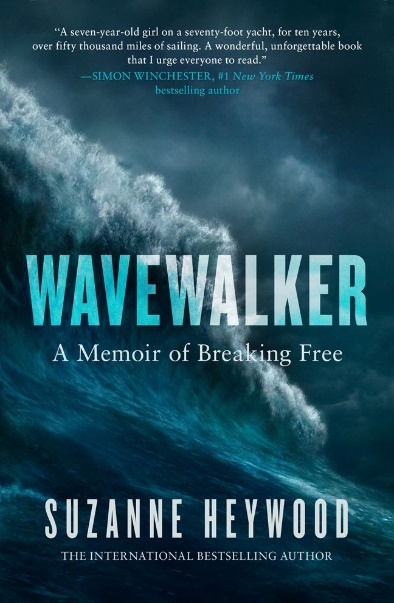
It has taken me decades to be ready to tell this story. Until I reached the safety of adulthood and created my own family, I wasn’t able to confront my parents’ story about my past. In their telling, I was “privileged.” After all, I grew up on a beautiful boat called Wavewalker, sailing around the world.
Of course I knew their story wasn’t true. Although I had grown up on Wavewalker from the age of seven for almost a decade, I was trapped there — unable to go to school or have friends. While my brother was allowed to help out on deck, I was expected to cook and clean down below for hours each day.
Advertisement
My normal life in England ended when I was six years old and my father announced that we were going to sail around the world. He wanted to recreate Captain Cook’s third voyage, which would take three years. This was a long time – but we would be back, he promised, before I was 10. That meant that even though I was leaving my best friend Sarah, my beloved water spaniel Rusty, and my dollhouse behind, they would all be waiting for me when we returned.
Except that wasn’t what happened. We set sail from England a year after that announcement, and it was a decade before I returned alone at the age of 17. Most of the time in between I lived on Wavewalker andwas unable to go to school. We often ran out of fresh food – and sometimes almost ran out of water – on longer voyages. When that happened, we relied on canned and dried food, and my father allowed us each a cup of water a day for drinking and washing.
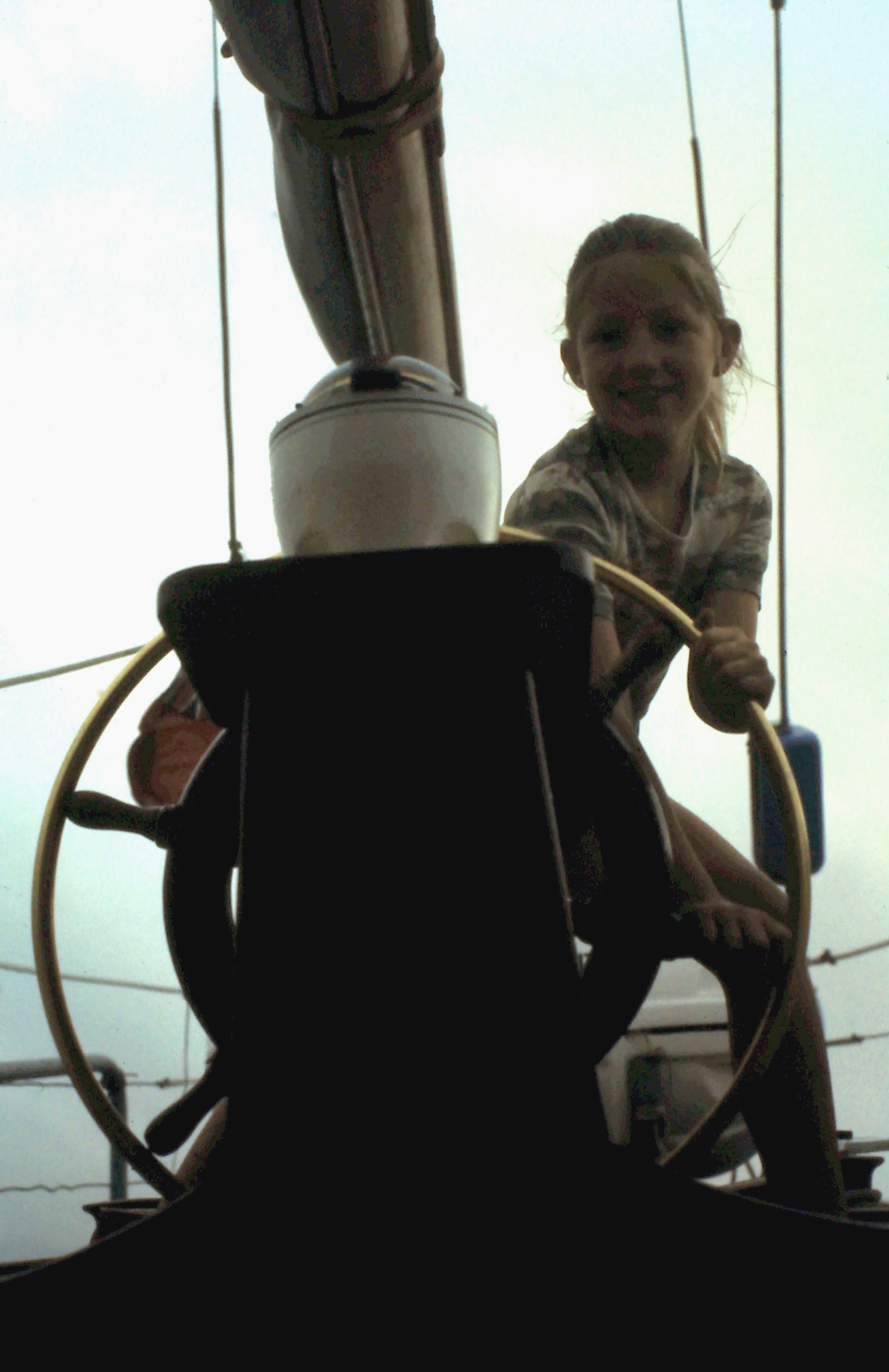
Photo Courtesy Of Suzanne Heywood
The author on Wavewalker.
One of the challenges of my childhood, I grew to understand, was that my parents’ narrative looked true – we seemed to be living a privileged life by being able to sail to gorgeous places like Vanuatu and Fiji in the South Pacific. But the reality was very different.
Advertisement
For a start, I learned early on our voyage how dangerous the ocean could be. A few months after we left England, we were hit by an enormous wave when my father attempted to cross the Southern Indian Ocean accompanied only by two novice crew members, my mother (who didn’t like sailing) and his two small children. I fractured my skull and broke my nose in that accident and had to endure multiple head operations without anaesthesia on the small atoll that we eventually found in the middle of the ocean.
But my life on Wavewalker wasn’t just physically dangerous. Living on a boat for a decade meant that I could rarely have friendships, I had little or no access to medical care and I couldn’t attend school.
As I turned into a teenager, I had no private space. Instead I had to share the one working toilet we had on board with my family and up to eight or nine crew, and to share a cabin with adult crew members.
As the years went on, it became clear that my parents had no intention of fulfilling their promise to return home. I had no way of leaving the boat — I had no passport or money. But more than that, I had nowhere to go.
We’d set sail when I was a small child, and after that I never saw any of my relatives again. Apart from my parents, I had no other adults in my life apart from the crew members who came and went. The only people I saw in authority were the customs and immigration officials who boarded our boat when we arrived in each new country, and they never expressed any interest in the welfare of the two children they found there.
Advertisement
While Wavewalker represented freedom for my parents — they could pull up the anchor and sail away whenever they wanted — it was a prison for me.
I eventually realised that the only way I would ever escape Wavewalker was if I found a way to educate myself. I tried to convince my parents to let me go to school, and six years after setting sail, they finally agreed to allow me to enroll in an Australian correspondence school. I was 13 years old.
While it was clear to me that my only possible escape was through education, studying by correspondence on a boat was very difficult. By this time my father had turned our boat into a sort of “floating hotel” to pay for our endless voyage, and my parents wanted me to work rather than spending my days with my nose in my books.
There were also more practical issues. I had no postal address and I had no space in which to study apart from the one small table in our main cabin. Sometimes I would hide myself inside a sail at the front of the boat to study, knowing no one would come looking for me there. I had to fight my father for paper, which was an expensive commodity in the South Pacific. Whenever we reached a major port, I sent off the lessons I’d completed and asked the school to send them back to the post office at our next port of call, but if my father decided to change course, my lessons went astray.
I found the correspondence lessons very challenging, partially because I had missed a lot of education and because it was very difficult to learn remotely without being able to talk to a teacher. I knew, however, that I had no choice ― it was my only way out.
Advertisement
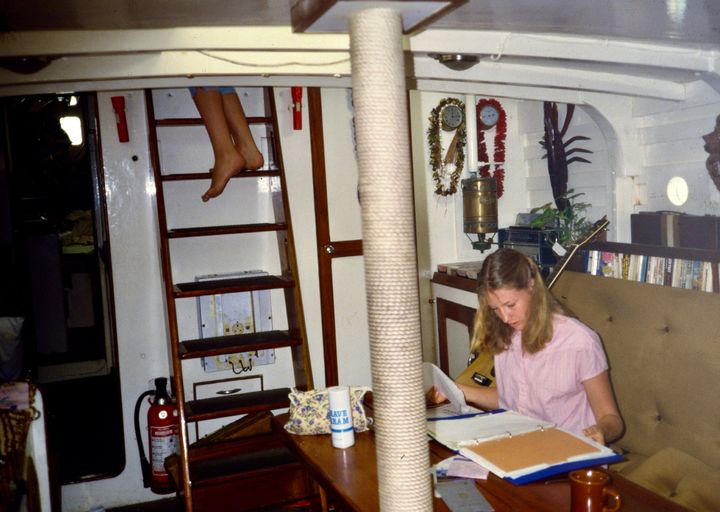
Photo Courtesy Of Suzanne Heywood
The author studying on Wavewalker.
After three years of studying by correspondence while at sea, when I was 16 and my brother was 15, my parents decided to put my brother into a school in New Zealand. (As my father once explained it to me, my education was less important since I would never have to support a family.)
When my parents sailed away, I was left behind to look after my brother, doing the shopping, cooking and cleaning while he went to school each day and I tried to keep studying by correspondence. For nine months, we lived alone in a small hut beside a lake in a country in which I only knew one adult (who lived several hours away). My father left a small amount of money in a bank account that I could only access by forging his signature.
I kept working through my correspondence lessons, posting them off each week. I also wrote to every university I’d ever heard of, asking them if they would let me apply to be a student. Most wrote back saying that they would not consider me.
The local universities wouldn’t consider me because I was an English citizen, and the English ones wouldn’t consider me because they thought my qualifications were too hard to assess. But eventually Oxford University wrote back and ― after I sent them two essays – offered to interview me if I could find some way to get myself back to England. So I used money I’d earned picking kiwis, together with a small contribution from my father, to buy a one-way plane ticket, betting everything on that meeting.
Advertisement
Amazingly, Oxford gave me a place, and I went to university the following year. By that time, however, my relationship with my parents was tenuous. I really struggled that first year at university — not only because I had almost no money and survived mainly on cans of tomatoes and dried pasta, but also because I found it hard to fit in socially after so many years of isolation.
The good news is that after that tough first year, I started to make friends, and with access at last to libraries and laboratories, I thrived academically. After finishing my degree, I went on to do a Ph.D. at Cambridge University and then joined the U.K. government, working in the Treasury. It was there that I met my wonderful husband, Jeremy. When I became a parent myself — Jeremy and I had three lovely children ― I was determined to treat my children very differently. I make it clear to them that my love will always be unconditional, and that I will always be there for them if they need me.
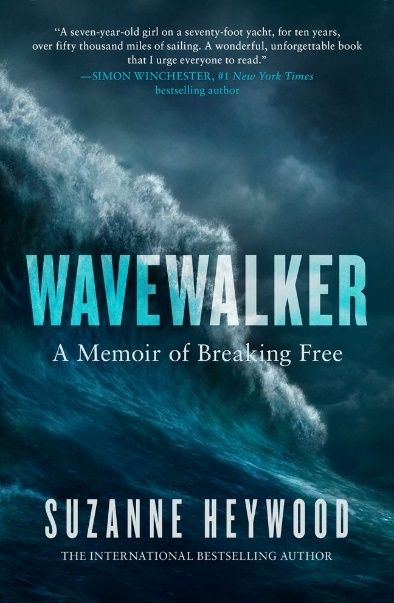
Harper Collins
The author’s book about her time on the boat.
When my parents eventually returned to the UK, I tried several times to talk to them about the past, but they always reacted defensively, stating that it had “all worked out fine in the end.”
I knew I would probably lose the remaining relationship I had with them when I told the true story about my childhood. However, I never doubted that I would write about my time on Wavewalker.
Advertisement
When my children reached the same age I was when I was struggling with my loneliness and lack of access to education, I at last saw my childhood through a mother’s eyes. I knew that I no longer had an obligation to maintain my parents’ narrative: My childhood was certainly unusual, but it was never privileged.
Author’s Note: This essay is an account of my childhood as I experienced it, and based on extensive diaries and other documents from the time. Others who were present may have experienced it differently. But this is my story.
Do you have a compelling personal story you’d like to see published on HuffPost? Find out what we’re looking for here and send us a pitch.
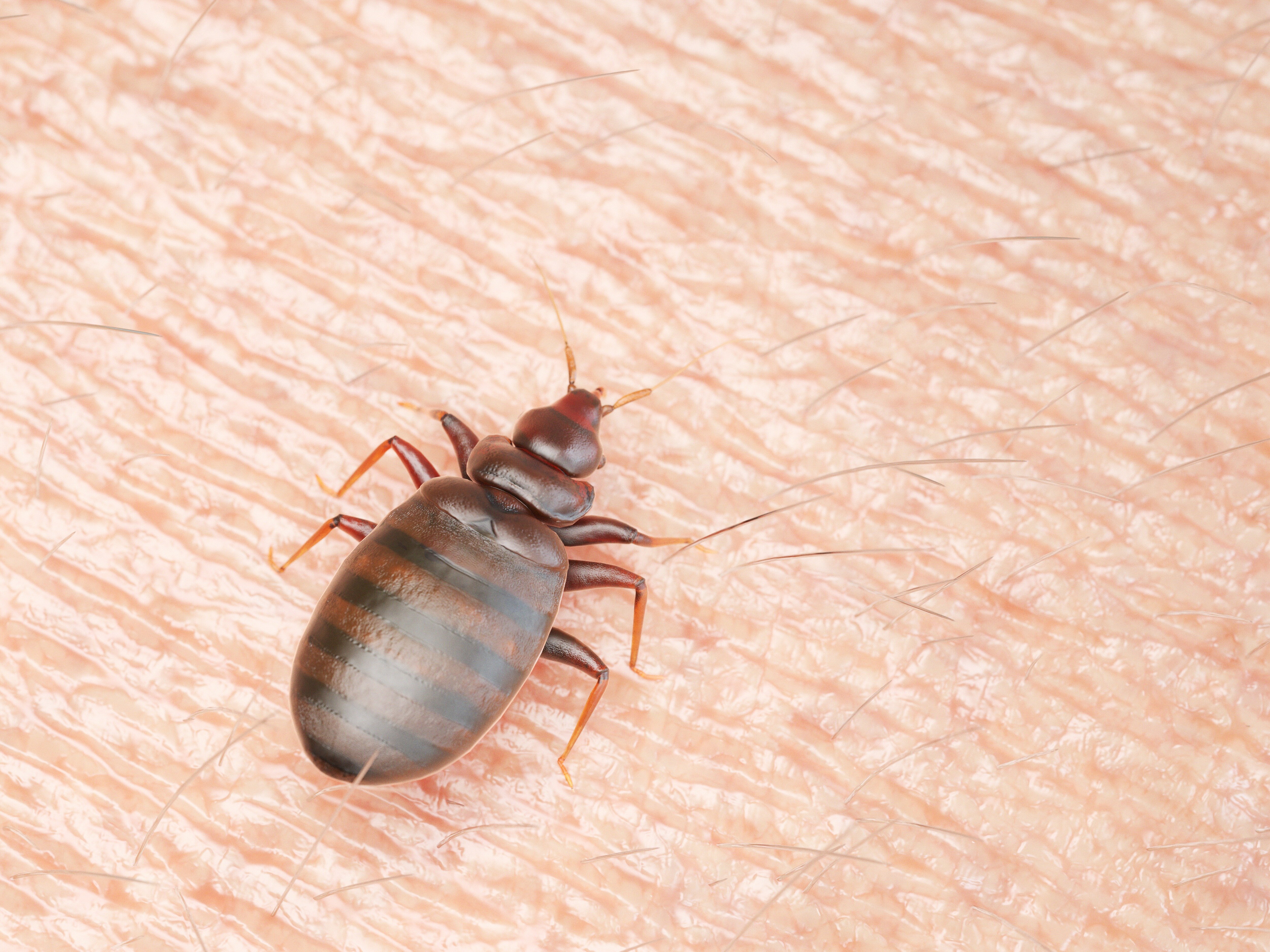
Recently, I haven’t been able to open a single app without being confronted with the menacing form of a bed bug. After taking hold of Paris’ mattresses, it seems the critters have started to establish their London stronghold, too (oh, good).
We know from personal experience how ridiculously disruptive the little bugs can be. So, we thought we’d reach out to the pros to find out how to protect ourselves while travelling.
Advertisement
HuffPost UK spoke to ecologist, conservation scientist, and entomologist Professor Adam Hart about the bed-based terrors. Here’s what he had to say:
1) Inspect, inspect, inspect
Whether you’re staying at a friend’s house or a hotel, it’s a good idea to get up close and personal with your mattress, Professor Hart told HuffPost UK. In fact, it was his first piece of advice.
“When travelling, the best thing to do is to inspect your bed carefully,” Hart says. He advises we “look online to find out what eggs, larvae and adults look like, and to see how bed bug droppings and blood marks look. That way you will be able to see if you might have a problem.“
2) Think outside the box
One of the many terrifying things about bedbugs is how good they are at hiding. Professor Hart advises we look a little further than our mattress and sheets when trying to find the beasties.
Advertisement
“Check other areas, like around and behind the headboard,” he says. Bed bugs may also hide in places like sofa and chair seams and old drawer joints.
3) Cover your clothes
Speaking of bed bugs’ many homes, you’ve likely already heard about their ability to cling to our clothes. So, it makes sense that Professor Hart advises us to keep our outfits securely covered while travelling.
“If you are worried then keep your clothes packed inside your closed bag. Some people even pack their clothes in Ziplock-style bags to keep any bed bugs out,” he says.
4) Wash everything the second you get home
If you’re worried about bringing bugs home, Hart says you should steam-clean or machine-clean your clothes (and bags, if possible) the second you get home.
“When you return home wash clothes at a high temperature and tumble dry; dry-cleaning and steam cleaning also kill bed bugs in fabrics that be washed or dried at high temperatures,” he says.
Advertisement
Heat is important here, so don’t lower the temps too much.
Jet2 has issued a warning to UK citizens travelling to Portugal, letting them know they may face disruption when they get there.
The airline told travellers industrial strike action is taking place in Faro Airport, based in southern Portugal’s Algarve region, starting October 6th.
Advertisement
Jet2 has urged customers to allow enough time to pass through security, and have also confirmed that all flights are currently due to depart on time.
“Please allow enough time to pass through security as all Jet2.com flights are due to take off on time. Check in desks will be open 2.5 hours before your flight,” they said.
They also reassured customers that had booked transfers with them to and from the airport would remain unaffected.
The warning comes after Jet2 just last week issued another alert regarding industrial strike action in Spain. Security workers at Alicante Airport will be participating in strikes from September until January next year, which means anyone headed to Spain in the following months could face congestion in security.
Advertisement
The strike in Spain is scheduled to take place for one hour in the morning and one hour in the evening on the following dates:
January 2024: 1, 2, 3, 4, 5, 6, 7, 8, 9, 10, 11, 12, 13 and 14
The Spanish government also added: “If you are on holiday in Gran Canaria, Lanzarote and Fuerteventura and needing to travel or use road transport, we encourage you to contact your tour operator or transport company as soon as possible for more information to understand how this strike may impact your travel arrangements.
There’s nothing like buying an airline ticket to launch cortisol levels into the stratosphere.
Should you use an aggregator or book directly with the airline? Will searching on a Tuesday afternoon score you a deal you couldn’t find shopping for a flight on a Saturday night? Does purchasing inside the legendary “Goldilocks window” really give you the best shot at securing the cheapest fare? And do you really need that trip insurance?
Basically … how do we save the most time and money without sacrificing our sanity?
That’s exactly what Raj Punjabi and I wanted to find out on this week’s episode of “Am I Doing It Wrong?” — HuffPost’s podcast that explores the all-too-human anxieties we have about trying to get our lives right.
To do so, we lovingly pummelled HuffPost senior reporter Caroline Bologna with all of our airline ticket-related questions, and she expertly separated travel facts from flight fiction so we — and you — can find the very best deals:
After you’ve had a listen above or wherever you get your podcasts, subscribe to “Am I Doing It Wrong?” so you don’t miss a single episode, including last week’s investigation of the ins and outs and tipping. Next week we’re tackling job interviews — including the one thing you never want to say.
Need some help with something you’ve been doing wrong? Email us at AmIDoingItWrong@HuffPost.com and we might investigate the topic in an upcoming episode.
When it comes to quintessential British family holidays, Center Parcs is up there – between the cute log cabins, wealth of things to do and picturesque settings, it’s got a lot going for it, especially as far as parents are concerned.
But one thing that can put some families off – especially given the current financial climate – is the price tag that comes with a week-long break.
Advertisement
Consumer champion Which? recently found that, on average, the cost of a UK Center Parcs stay is roughly £1,274. And that’s for a family of four to stay at a site for four nights during a peak period like half term.
But if you’re after a cheaper way to enjoy Center Parc’s outdoor adventure vibes, it might just be worth looking further afield.
A new report from Which? found families could more than halve the cost of a Center Parcs break by booking in Europe instead of the UK.
Oh, really?
Yup. The consumer group compared the cost of a four-night stay for a family of four at 16 Center Parcs sites across England, France and Belgium during four peak periods.
Advertisement
It found a UK stay came in at £1,274 on average, compared to £833 in France and £701 in Belgium.
Which? said the biggest price differences could be found for bookings over October half-term and Easter, partly due to differences between the school calendars here and in Europe.
On average, a family could save 55% opting for a Center Parcs resort in Belgium rather than the UK over October half term, with a four night break costing just £613, compared to £1,369 in the UK.
And the savings in France were almost as good, with the same stay costing £868 on average.
But don’t the travel costs make it more expensive?
Of course, with any trip abroad you need to factor in travel costs – and these can really rack up when the kids are off school, especially if you choose to fly.
That said, when Which? factored in travel costs – like taking a ferry and then driving – they still found families could save hundreds of pounds overall.
For example, Dunkirk is less than an hour’s drive from Center Parcs’ Park de Haan, in Belgium.
At the time of writing, a return ferry trip for a family of four from Dover to Dunkirk could be booked for approximately £170 during the October half-term.
Advertisement
Similarly, a return car ferry for a family of four from Dover to Calais could be booked for £125 return during October half term, and over Easter weekend a return journey via Le Shuttle can be booked for £179.
Venturing to European Center Parcs sites is something more and more parents are wising up to. One mum previously told The Sun how she took her family to Center Parcs in the Netherlands during the Easter holidays and saved hundreds of pounds.
For £680 she managed to bag a week in a three-bed cottage. She also suggested activities were cheaper in the Netherlands than in the UK.
And Which? also found this. Its analysis found archery costs between £19 and £26.50 at the UK’s Whinfell Forest park, while it costs £14 at Belgium’s Park de Haan. Similarly, Laser Battle games range in price from £24.50 to £34.50 at Whinfell Forest, and cost £15 at Park de Haan.
Jo Rhodes, deputy editor of Which? Travel, said: “Our research found that it’s well-worth casting your eye beyond the Channel to snap up some significant savings
Let’s be honest: the breakfast buffet is one of the best parts of going on holiday.
Those continental set-ups with the croissants, cheeses and delicious orange juice help set you up for the day in just the right way.
But if you’re watching your health then it might be good to know there are definitely more nutritious options to pick when you’re having breakfast.
Advertisement
Healthy-living advocate Michael Mosley can help you there, as he’s shared his list of foods to steer clear of when it comes to holiday breakfasts, as part of his Fast 800 programme.
His no-go list includes…
Fruit juices and dried fruit
Pastries
Cereals
Muffins and cake
Hash browns
Why? Well, recent research shows that processed foods such as muffins, cakes and pastries aren’t amazing for our long-term health.
And deep-fried foods like hash browns can contain a lot of saturated fat from the oil they’re cooked in, plus added salt.
So, what should you eat instead?
If you want to maintain energy levels and stay healthy while away, Mosley recommends these breakfast items instead:
Advertisement
Omelettes – some hotels have omelette stations where you can choose your own fillings, so don’t be shy with the vegetables. Eggs are particularly good for breakfast, at around 6g of protein per portion and packed with nutrients and minerals.
Greek yogurt – rich in protein, calcium and iodine, Greek yogurt with a side of fresh berries is a fab way to get your day started.
Veggies – you’ll often find veggies like spinach, tomatoes and mushrooms at the breakfast bar, which, luckily enough, pair really well with eggs (see above).
Cheese, nuts and avocadoes are great healthy fats to add to your plate as they’ll keep you fuller for longer.
With that all said, if you’re anything like me, holidays are the time to let loose and really enjoy yourself. So, I will be stacking my plate high with pasteis de nata when I visit Portugal later this year, thank you very much.
And maybe I’ll add some berries on the side… You know, for balance.
25% of Brits are considering a beach break abroad this year which means there will be plenty of flights leaving UK airports this summer and while we’re sure you’re a great passenger who has never annoyed the person sitting next to you, we thought it best to trawl the internet and find the best advice on flight etiquette. Just to be sure. Nothing personal.
Keep The FaceTime To A Minimum
According to Kirstie Koerbel, a flight attendant, “boarding an airplane is not the time for your goodbyes. It’s time for you to concentrate on finding your seat and stowing your bags as fast as possible so the people behind you can do the same thing.”
Advertisement
Realistically, though, you should be keeping the noise from phones and tablets to a minimum. You are flying in a metal tube across countries and oceans, squashed in with a lot of humans doing the same thing. The least you can do is not subject them to your music/movies/TikToks. Headphones are a MUST.
Keep Your Shoes On
A pilot speaking to the Daily Mail said, “The floor in the main cabin is vacuumed but not mopped. People vomit on these materials daily so it’s a good idea to wear shoes.”
BLEUGH. We’re sure it’s tempting, especially on long-haul flights, planes are actually very filled with germs and aren’t the kind of place you want to walk around barefooted. Often, flight attendants can provide you with disposable flip-flops but you might want to consider just wearing your comfiest shoes to fly in.
Respect The Boundaries Of Your Fellow Passengers
Lydia Ramsey, an etiquette expert says: “Acknowledge this person with a greeting as you’re starting off and then you can read the other person to see whether they want to talk or not but most people really want to find some peace and quiet. If the other person is chatty, politely excuse yourself.”
Advertisement
For some people, flying can be an intimidating experience and they might not be feeling as chatty as you are. In fact, 21 million Brits are afraid of flying. Instead of trying to force conversation with your seatmate, respect their boundaries and find ways to entertain yourself.
Be Considerate When Reclining Your Chair
Frequent flyers will know the struggle of somebody dramatically reclining their chair and, in turn, knocking your laptop/food/drink/last nerve. While everybody has the “right to recline”, speak to the person behind you to check that it’s okay with them and that you won’t be knocking anything over when you do so.
Don’t Argue Over Armrests
Koerbel said, “[the middle seat is] the consolation prize for being squished between two people with nowhere to lean. Case closed.”
The least you can do for the poor soul stuck in the middle is grant them both armrests.
UK tourists looking to travel to Spain in the coming months need to be aware of an outbreak of dengue fever in Ibiza.
The Spanish government has warned that cases of the virus, known as both dengue or dengue fever, transmitted by mosquitos, may spread at a higher rate during the busier summer months.
Advertisement
It comes after six German tourists were infected in Ibiza between May and November 2022. Health officials are warning there is a “moderate” risk people could catch it this summer.
The Spanish government thinks that an outbreak may have been spread by holidaymaker from Mexico who only developed symptoms upon arrival.
Most of the time, the infection is not too serious and can go away on its own.
Still, Spain’s ministry of health have made it clear that they want all holidaymakers to be aware of the potential infection.
The officials said in a statement: ”One of the potential vectors of dengue is the Aedes albopictus mosquito, present throughout the area, the Spanish Mediterranean and the Balearic Islands and also in some areas of the interior and north of the country.
Advertisement
“After learning about the cases, the authorities of the Balearic Islands have planned actions such as pertinent surveillance and vector control and also communication and information to the public, to be carried out before and during the start of the vector activity season.”
What are the symptoms of dengue fever?
The NHS website explains that symptoms start to show around four to 10 days after someone is bitten by an infected mosquito.
The symptoms are similar to flu:
A high temperature
Severe headache
Pain behind the eyes
Muscle and joint pain
Feeling or being sick
Swollen glands
A blotchy rash of flat or slightly raised spots
Dengue fever can also be deadly to the vulnerable, with more severe symptoms emerging a few days after the person first falls ill.
This can include repeated vomiting, bleeding gums or nose, severe stomach pain, fast breathing, extreme tiredness, being unable to relax, blood in vomit or your poo.
Advertisement
Key facts about catching dengue
The type of mosquito who transmits the virus tends to bite during the daytime.
You cannot get it from another person, and it is not found in the UK.
But in Spain and other parts of southern Europe like Croatia, France, Italy, Portugal and Madeira, you can get dengue between spring and November, when the weather is warmer.
It is very common in parts of Africa, Asia, Central and South America, Caribbean, Pacific islands and parts of North America.
We’re a few months away from summer which means it’s time to start planning our holiday getaways.
For most Brits, Spain is a popular holiday destination – it’s just a few hours on the plane, close to home and it has several beaches to choose from.
This is why you’ll be sad to know that there’s a list of Spanish hotspots that are trying to keep tourists away this year. Barcelona is part of the latest catalogue of Spanish destinations to publicly share that they’re receiving too many visitors and that they’re taking action to combat over-tourism.
Advertisement
Ada Colau, mayor of the city says that she wants to limit the number of cruise ships going to Barcelona.
This comes after a series of restrictions were introduced to ward off tourists visiting the city. This included restricting the number of hotel beds and new hotels opening in Barcelona.
The mayor has also campaigned for the scrapping of airport extension plans.
“The great challenge is tourism. Barcelona is a very densely populated city, hemmed in between the mountains and the sea, with restricted space,” Colau told The Times.
“We can’t take infinite numbers of tourists. There has to be a sense of limits and order.”
27 million people visit Barcelona each year – a number that is an eye-watering 16 times more people than its full-time population.
Advertisement
Deputy mayor Jaume Collboni has said Barcelona wants to attract “quality over quantity” when it comes to tourists visiting the city – meaning fewer people coming, but spending more money when they do visit.
Barcelona isn’t the only Spanish destination trying to change the type of tourists that it attracts. Majorca, Menorca, and Ibiza announced earlier this month how they’re planning to stop a high number of Brits visiting.
They will have an “absolute ceiling” when it comes to tourist numbers in the future, the government of the Balearic Islands says.
They will try and limit the impact of tourism by encouraging holidaymakers to visit at different times of the year, tourists chiefs say.