This Blinking Trick Could Help You Fall Asleep In Just 60 Seconds

I struggle to get to sleep at the best of times, an issue the recent onslaught of heatwaves hasn’t helped.

All the ‘pink noise’, delayed bedtimes, and even electricity changes have helped somewhat. But I’m always on the lookout for new tips – especially those that involve minimal effort.

Luckily, TikToker Helena Kennedy shared one of those in a recent clip, in which she revealed tips from her psychiatrist that helped her to defeat insomnia.

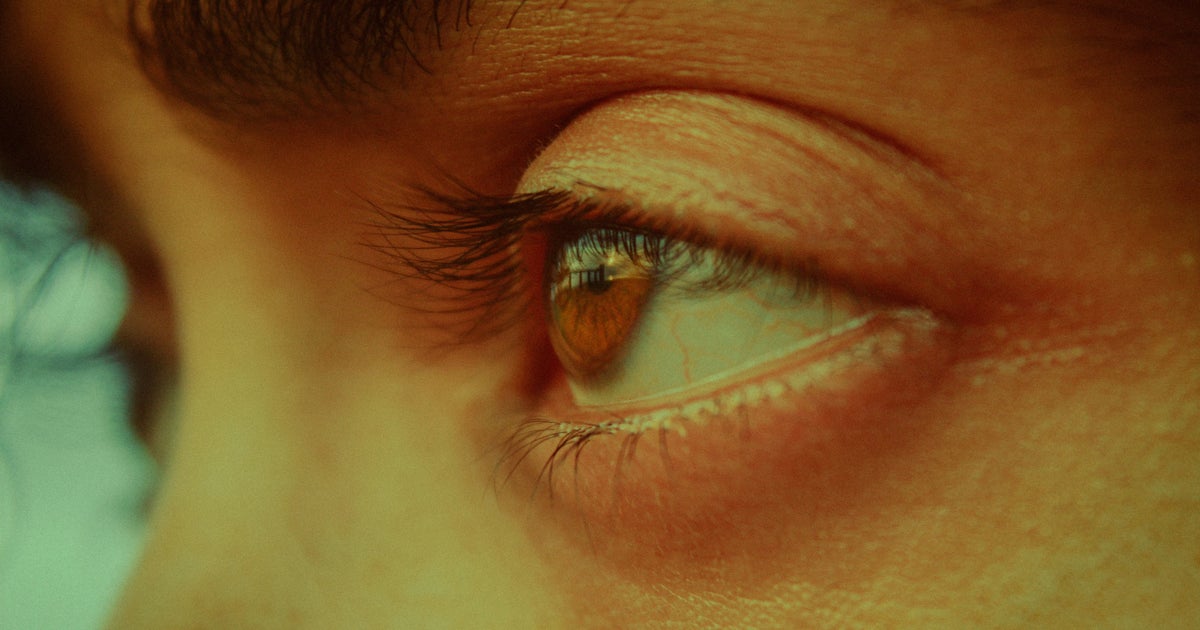
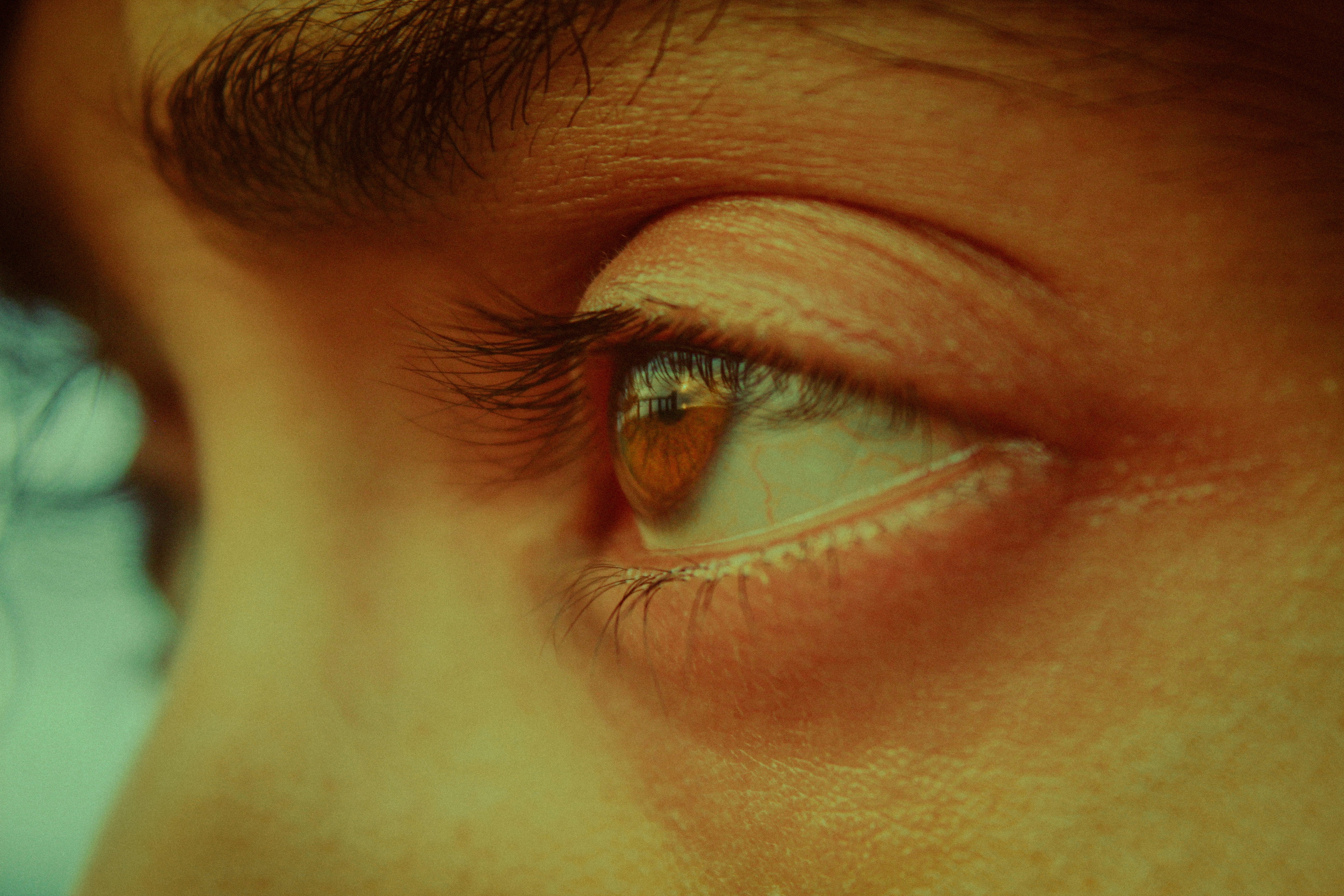
One of them involved blinking for a solid minute. So, we thought we’d find out whether it works.

How can blinking help you get to sleep?

Kennedy claimed blinking fast for 60 seconds means your eyes “get tired and trick your brain into sleep mode”.

A 2013 study found that blinking gives your brain a temporary “reset”, while 2017 research suggests blinking is treated “like a tiny nap” by your brain. It can decrease time perception by as much as 50-70%, researchers found.

But does that mean blinking will serve as a fast pass to the land of nod?

Well, speaking to Bustle, Livvi DiCicco, a sleep science coach with Sleepopolis, said it might, mostly because it serves as a distraction, which can be helpful if you’re lying in bed awake for more than 30 minutes.

Additionally, the expert said it can help to mimic your body’s natural sleeping cues, which may help your brain to realise it’s time to switch off.

How else can I get to sleep?

Morning light is uniquely helpful for orienting your body clock, which some researchers suggest is more important than actual sleeping hours for feeling reset. Therefore, going on a morning walk may help to get your Circadian rhythm in order.

Some studies suggest there could be some serious benefits to “clock blocking”, or refusing to look at the time when you get up in the middle of the night (I also swear by this trick).

And in a previous interview, sleep expert Dr Nerina Ramlakhan from Oak Tree Mobility told me “there’s a form of insomnia… called ‘orthosomia’, a term for the obsession with getting a good night’s sleep”.

In other words, try not to panic too much about your kip; it might paradoxically hurt you more than it helps.

Share Button

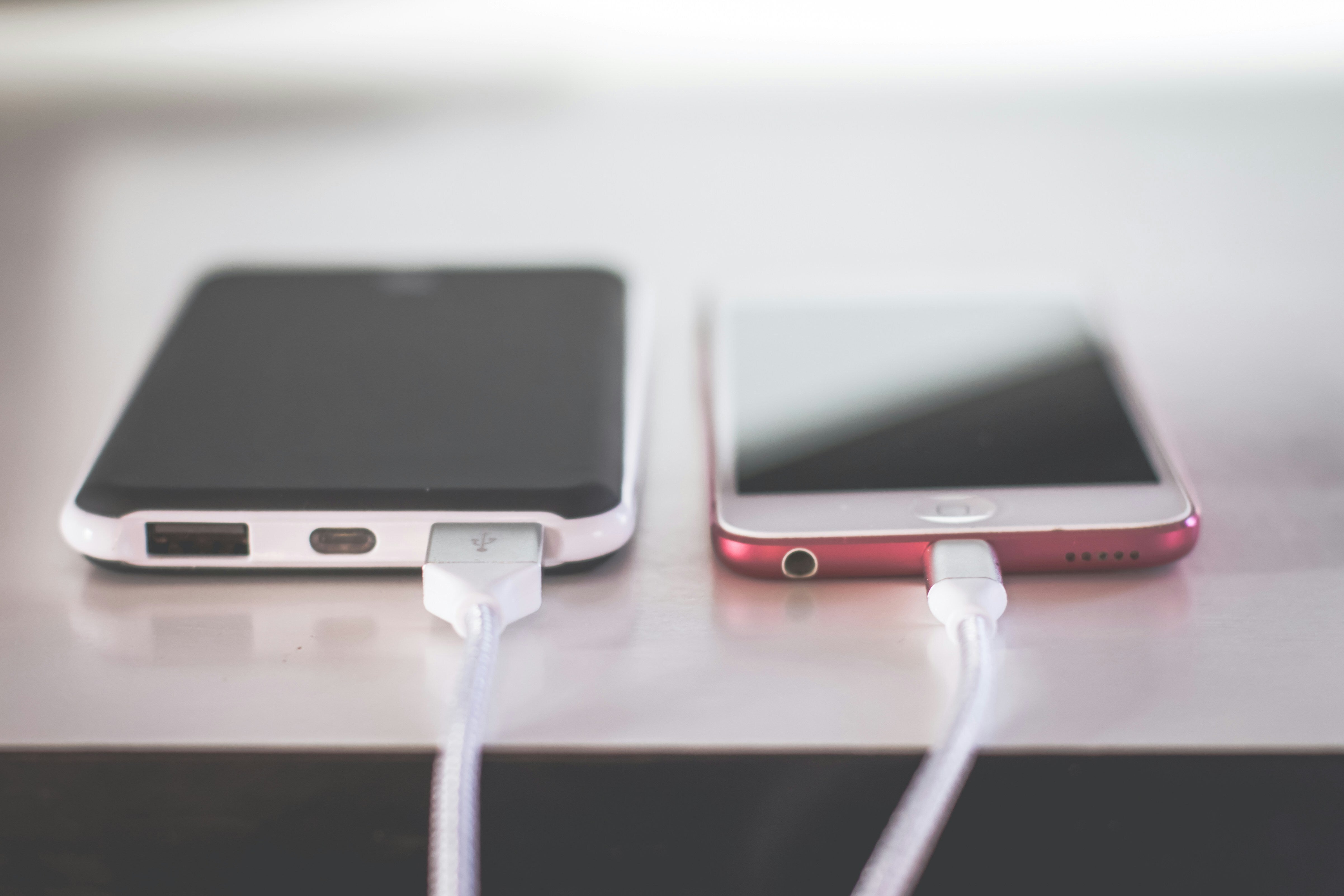
This Phone Charger Mistake Can Ruin Your Sleep In A Heatwave

As the third heatwave of the year begins in earnest, I’ve started to dread the night.

Like most of us, I find that boiling temperatures ruin my sleep.

Speaking to HuffPost UK, Dr Seeta Shah from PANDA London previously said that going to bed half an hour later might help you get some shut-eye (a 2012 paper found that heat affects slow-wave and rapid eye movement sleep, meaning the natural cycles you’re meant to go through when asleep are interrupted).

But the British Red Cross advised doing something a little simpler to control the temperature in your room at night.

Unplugging your electronics might reduce heat

The organisation suggested sleeping on the lower floors in your home, as heat rises, as well as staying hydrated and using some thin, breathable bedding.

So far, so predictable.

But I was surprised to read that “even when in standby mode, electrical items can generate heat”.

The British Red Cross therefore suggested switching them off entirely at night.

“Make sure any in the bedroom are turned off and unplugged,” the site said.

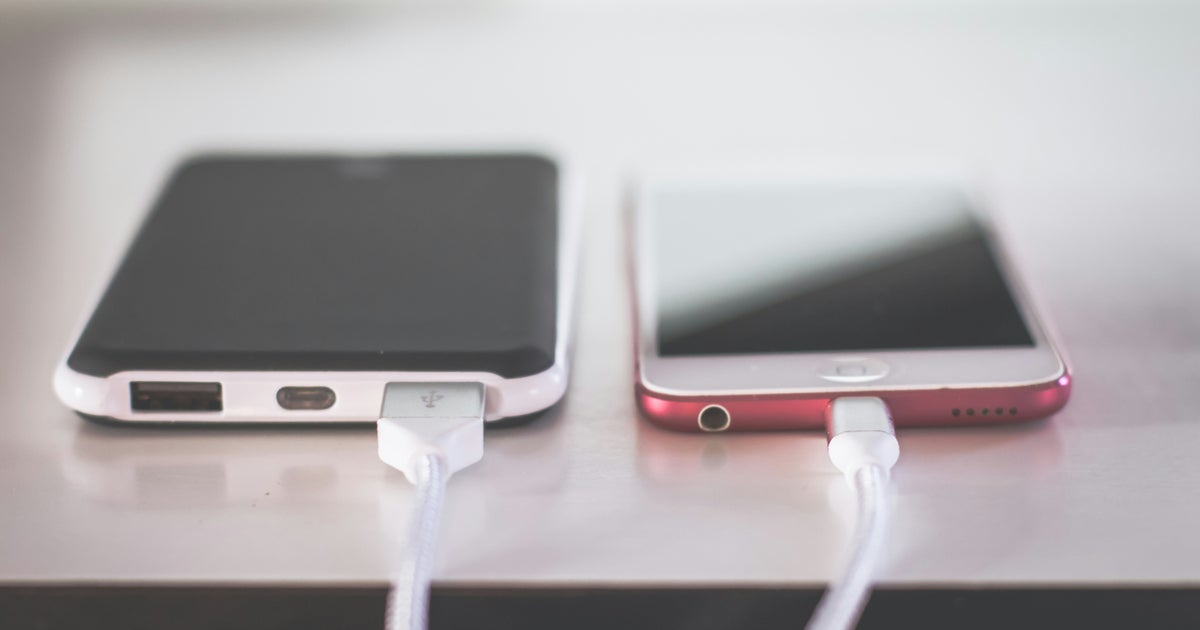
Speaking to Ideal Home, David Rees, an appliances expert from HomeSupply, explained that phone and headphone chargers might pose a particularly toasty risk.

These can “seriously overheat and use a lot of excess energy in the summer if not unplugged,” he warned, suggesting we power our devices “throughout the day, so that they can be unplugged as soon as they are fully charged… this will help to save money and prevent overheating in summer”.

Are there any other ways to keep cool?

Wearing cool socks, donning loose-fitting pyjamas, and maintaining a wind-down bedtime routine can all help, the Red Cross said.

“Many take a cold shower before bed in hot weather, but a shockingly cold shower can actually raise core body temperature as your body works to counteract the sudden cold,” Dr Shah warned.
Closing your windows and curtains or blinds at the hottest parts of the day, and opening them in the evening or early morning can help to keep your home cooler, too.
Share Button

This Is The Worst Position To Sleep In If Heartburn Wakes You Up At 3AM

As someone with insomnia, I struggle to get to sleep in the first place. I’m not alone – 21% of us find it hard to nod off at least once a week.

So when we do finally reach dreamland, it’s pretty unpleasant to be yanked out of it by heartburn or indigestion.

One paper called nighttime heartburn an “under-appreciated clinical problem that impacts sleep and daytime function” among adults with gastroesophageal reflux disease (GERD).

Meanwhile, some researchers think indigestion and acid reflux create a vicious cycle; they affect your sleep, which may in turn increase your risk of indigestion, and so on.

Though you should see a GP if you have indigestion often, if it comes alongside other symptoms (like iron deficiency anaemia, pain, trouble swallowing, and weight loss), doctors like GI surgeon Dr Karan Rajan say that sleeping on one side over another may help for one-off cases.

Don’t sleep on your right side

Your stomach is not a perfectly balanced or symmetrical organ.

Instead, it’s curved, with much of its bulk (which contains the acid that causes indigestion and heartburn) lying on the left-hand side.

That bend means that it’s harder for stomach acid to make its way into your oesophagus because it’s got a steeper curve to climb than your more gently sloping right-hand side.

Per the Gastrointestinal Society: “Due to gravity, the shape of the stomach, and the angle of the connection between it and the oesophagus, sleeping on your left side can greatly reduce reflux.”

“By the same principle, if you lie on your right-hand side, at this point the stomach and its contents are slightly higher than the lowest of your sphincter,” Dr Karan Rajan agreed.

That means “more chance of reflux back into the oesophagus,” which creates that horrid indigestion burn.

What else can I do to reduce the risk of nighttime indigestion?

The NHS says that indigestion is common and is usually “not a sign of anything more serious… you can treat it yourself.”

Solutions can include cutting down on coffee, tea, and booze, raising your stomach above your head when you sleep and avoiding eating closer than thre to four hours before bedtime.

Skip spicy, fatty foods if you’re struggling with indigestion, don’t smoke, and speak to your pharmacist about getting over-the-counter treatments if needed.

The health service adds you should see a GP if you:

  • keep getting indigestion
  • are in severe pain
  • have lost a lot of weight without meaning to
  • have difficulty swallowing (dysphagia)
  • keep being sick
  • have iron deficiency anaemia
  • feel like you have a lump in your stomach
  • have bloody vomit or poo.
Share Button

Keep Waking Up At 3AM? This Diet Change May Help Within 24 Hours

I’ve had insomnia for years, a condition which I know is bad for my brain and physical health.

But for some reason, very little sticks. I have tried getting out of bed if I can’t get back to sleep, “clock blocking,” getting some morning sunlight, and even “paradoxical intention” – some of those have been more successful than others. t

Still, a new paper published in Sleep Health has linked a better diet to improved sleep in just 24 hours.

It promises to decrease the likelihood of “fragmented sleep,” or shifting from heavy to lighter sleep. This is linked to waking up in the middle of the night and not being able to return to your slumber.

“Dietary modifications could be a new, natural and cost-effective approach to achieve better sleep,” one of the study’s senior authors, Dr Esra Tasali, director of the UChicago Sleep Centre, told the university.

Eating enough fruit and vegetables might prevent middle-of-the-night wake-ups

The researchers asked participants to wear wrist monitors which tracked their sleep patterns while also tracking and reporting their food intake.

After comparing the diets of participants to their sleep patterns, the scientists found that those who ate less sugar, stuck to the CDC-recommended consumption of five cups of fruits and veggies a day, and consumed more whole grains had less sleep fragmentation.

Those who reach the fruit and veg consumption may be as much as 16% more likely to enjoy continuous sleep, the scientists found. Improvements were seen among non-fruit and veg eaters who went on to consume enough of both in as little as a day.

“16% is a highly significant difference,” Dr Tasali shared.

“It’s remarkable that such a meaningful change could be observed within less than 24 hours.”

More research is needed to find the exact relationship between diet and sleep

Though this study is promising, more research is needed to find out why and how food appears to be linked to our sleep.

Still, Dr Marie-Pierre St-Onge, director of the Centre Of Excellence For Sleep And Circadian Research at Columbia, said it’s an encouraging reminder that “Small changes can impact sleep.

“That is empowering – better rest is within your control,” she added.

Share Button

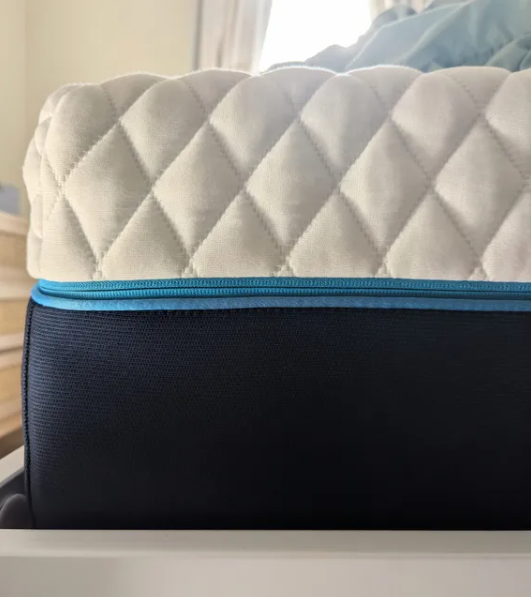
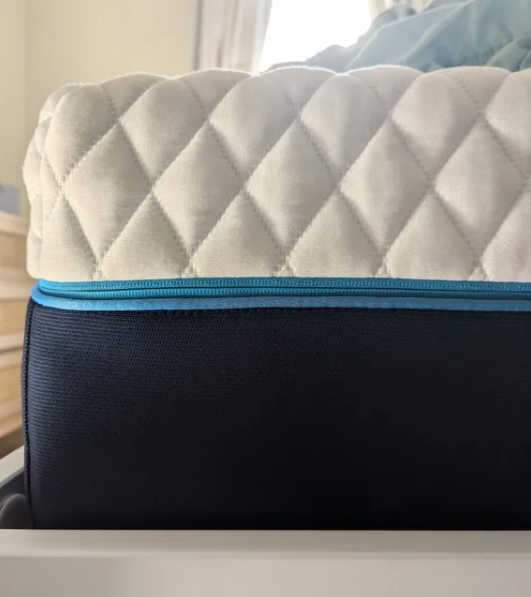
Nectar Duvet Review: Is This The Best All-Year Duvet For Hotel-Level Comfort?

We hope you love the products we recommend! All of them were independently selected by our editors. Just so you know, HuffPost UK may collect a share of sales or other compensation from the links on this page if you decide to shop from them. Oh, and FYI — prices are accurate and items in stock as of time of publication.

As I approach the big 3-0, I’ve found myself developing an unexpected obsession with my bedding. Gone are the days of just throwing on whatever’s clean; now, I genuinely care about having my sheets look sleek, elegant, and, dare I say, wrinkle-free.

Enter the Nectar Duvet, which has absolutely transformed my bed into a sanctuary of sophistication.

I’ve been sleeping with this duvet for just over a month now (tough gig, testing duvets), and I can confidently say it’s been a game-changer.

The Nectar Duvet has a way of elevating the entire aesthetic of my bedroom. No more waking up to creased sheets that make me feel like I’m living in university halls. The duvet is so smooth and perfectly puffed, giving my bed an effortlessly neat appearance. I don’t even have to break out the iron anymore (honestly, I was starting to consider it!).

The secret to this duvet is its Smartfil® technology and Modal fabric, which is derived from natural wood pulp. This combination makes it incredibly light, breathable, and soft, making it the perfect choice for the spring season.

Modal helps to wick moisture away from the body, allowing you to sleep in total temperature-controlled comfort and wake up feeling refreshed.

I’ve found it keeps me warm enough during cooler nights while still feeling light and fluffy enough that it doesn’t overheat me. It strikes the perfect balance for year-round comfort.

Aside from the duvet itself, the service and delivery were top-notch. I received the duvet within just two days of placing the order—impressive, considering the speed and efficiency of the delivery.

The whole process was smooth, with timely updates from the delivery service every step of the way. It made the experience all the more pleasant and hassle-free.
In short, I couldn’t recommend the Nectar Duvet more. It’s made my bed look elegant, kept me cozy, and saved me from ever considering ironing my sheets again. I can’t believe I even thought about it. This duvet is worth every penny and truly lives up to its promises.

Share Button

‘Pink Noise’ May Hold The Secret To Deeper Sleep

Though I’ve had insomnia for years, I’ve managed to find some tools to help me stay asleep at night.

Clock-blocking”, getting out of bed when I can’t get back to sleep, and even enjoying a morning stroll have all helped me recover from my 3am wake-ups.

So, too, does my Bluetooth eye mask, which allows me to play “white noise” as I slumber.

But speaking to HuffPost UK, sleep expert Dr Deborah Lee from Doctor Fox (who’s paired with Bed Factory Direct) said it shouldn’t be the only sound in my arsenal.

“Certain types of background noise, also known as coloured noise, can actually improve sleep quality, reduce overnight disturbances and also help you fall asleep quicker,” she told us.

One of those is “pink noise”, which the doctor revealed is best for deep sleep and even memories.

What is pink noise?

I’ll admit I’d never heard of the noise until Dr Lee told me about it.

But it turns out it’s a pretty technical term: pink noise, also known as 1/f noise, fractional noise, or fractal noise, contains all audible frequencies.

Though white noise offers the same range, pink noise decreases the intensity of sound at a rate of three decibels per octave.

Basically, that means “pink noise is a slightly deeper version of white noise,” Dr Lee said.

“An example of pink noise would be rustling leaves or ocean waves – some sounds that people find extremely relaxing.”

The doctor added: “Pink noise has been shown to enhance deep sleep, but also improve memory.”

A 2020 paper found that participants who listened to an increasingly quiet pink noise machine while falling asleep not only nodded off faster, but slept deeper.

Research from 2022 also suggested that older adults who fell asleep saw an increase in slow wave sleep, linked to memory consolidation.

What are some types of pink noise I can listen to at night?

You can find pink noise playlists or even buy a pink noise machine (though they’re harder to find than white noise options).

“Everyone’s brain responds differently to sounds,” Dr Lee said. “However, what is clear is that the right kind of noise, when used consistently, can make a huge difference in not just getting to sleep, but staying asleep too.

“It’s worth playing around with different sounds to find the right sound for you, as not everyone will have the same response.”

Share Button

Wake Up Sweating At 3am? This May Be Why

Try as I might (and believe me, I’ve tried), I constantly manage to wake up hot and sweaty at 3am.

I’ve always attributed that to my insomnia. But hormone and sleep specialists have shared my issues might be partly down to my biology.

We know it’s crucial to keep bedrooms cool (experts recommend 16-18°C) to be able to sleep well – and this is perhaps even more important for women.

When a study found rising temperatures are impacting sleep globally, it also revealed women were impacted more than men. The Guardian noted “women’s bodies cool earlier in the evening than men’s when going to sleep, meaning higher night time temperatures may have a bigger impact on women”.

Women’s slightly higher core body temperatures can also make us “feel” external cold and warmth more intensely, Dr Karan Rajan previously shared.

Women appear to wake up overheated more often than men – but why?

Dr Renee Young, an endocrinologist and founder of the Young Naturopathic Centre For Wellness, told Pretty You London that “hormones like oestrogen and progesterone play a central role in how the brain regulates body temperature”.

She added: “Even slight fluctuations can confuse the body into thinking it needs to cool down. That often looks like a hot flush or a sudden sweat episode, especially at night.”

These are not exclusive to menopause or perimenopause, though both of these can lead to similar symptoms.

Clinical dietitian Dr Colleen Fogarty-Draper said it’s not just hormones, though.

“Women in midlife often have a lower stress threshold… Higher cortisol levels, especially when they don’t follow their normal rhythm, can interfere with sleep and make overheating worse,” she shared.

How can I stop overheating at night?

Though you might be tempted to take a cooling shower before settling down, NHS GP Dr Hana Patel said this may not be the answer.

“A cold shower can cause your body to generate more heat as a response,” she advised, while the cool-down period following a warm shower “tells your brain it’s time to sleep”.

Wearing thinner pyjamas, avoiding heavy bedding, and even keeping your partner out of your bed (if needed) may help, The Sleep Foundation said.

Whatever the cause, though, you should see your GP if your sleep is consistently interrupted.

“Menopause and hormonal changes don’t have to steal your sleep,” Dr Fogarty-Draper stressed. “When we understand the cause, we can take back control.”

Share Button

Eating These 7 Fruits Before Bed Will Seriously Improve Your Sleep

According to Mental Health UK, 1 in 5 people in the UK aren’t getting enough sleep and a lack of quality sleep can lead to health problems such as lowered concentration, being more susceptible to illness and infection as well as contributing to the effects of anxiety and depression.

However, according to Panda London’s Sleep Expert Max Kirsten, there are some foods that can aid a better, more restful sleep. This is due to a multitude of benefits such as anti-inflammatory properties, melatonin, and potassium.

Which fruits can help you sleep bettter?

According to Kirsten, having one of these fruits before bed regularly will make a huge difference to your sleep:

Pineapples contain bromelain which has anti-inflammatory properties and helps with muscle relaxation, easing you into a gentle sleep.

Cherries, particularly tart cherries, can be particularly beneficial for sleep, as this viral TikTok beverage show. This is because they are a natural source of melatonin, a hormone that regulates sleep-wake cycles. According to Kirsten, eating tart cherries or even tart cherry juice can help increase melatonin levels in the body which can potentially improve sleep quality and duration.

Kirsten recommends having some tart cherries just a couple of hours before bed to trigger the sleepy feeling that helps you to drift off.

Thanks to the magnesium and potassium in bananas, the fruit can help relax muscle and promote better sleep. Kirsten adds that, “anything that contains magnesium can encourage relaxation, the best thing about eating bananas before bed is the tryptophan they contain can encourage sleepiness and aid a deep, restful sleep.”

This is because Tryptophan is an amino acid that plays a role in producing serotonin; a neurotransmitter associated with relaxation and mood regulation.

Speaking of serotonin, kiwis encourage higher levels of serotonin, which makes it ideal for just before bed. This is because you’ll find yourself more relaxed and, thanks to the vitamin C in kiwi fruit, the quality and duration of your sleep will be improved, too.

Oranges

Of course, oranges are also a great source of vitamin C. Kirsten says that the natural sugars in oranges can provide a gentle energy boost during the day and may improve moods, making it easier to unwind before bedtime.

An unlikely everyday fruit perhaps but papaya is rich in both vitamins C and E, as well as folate and potassium. Potassium, of course, helps to relax muscles and eating foods like papaya can encourage a deeper, higher quality rest. The nutrients within potassium can relax muscles and lower blood pressure, making dropping off much easier.

Finally, good old apples contain fibre and natural sugars which stabilise blood sugar levels. This helps to prevent nighttime wakefulness as well as improving general mood and wellbeing.

If you continue to have sleep problems, speak to your GP for support.

Share Button

This Is Officially The Worst Position To Sleep In, Expert Says

Side sleepers, take note: GI surgeon Dr Karan Rajan says that kipping on your left-hand side is way better for battling indigestion than your right.

The position “makes it harder for the contents [of your stomach] to leak into your oesophagus, meaning you’ll have a lower chance of acid reflux,” he explained.

If I was capable of actually falling asleep on my side, I’d consider taking that advice.

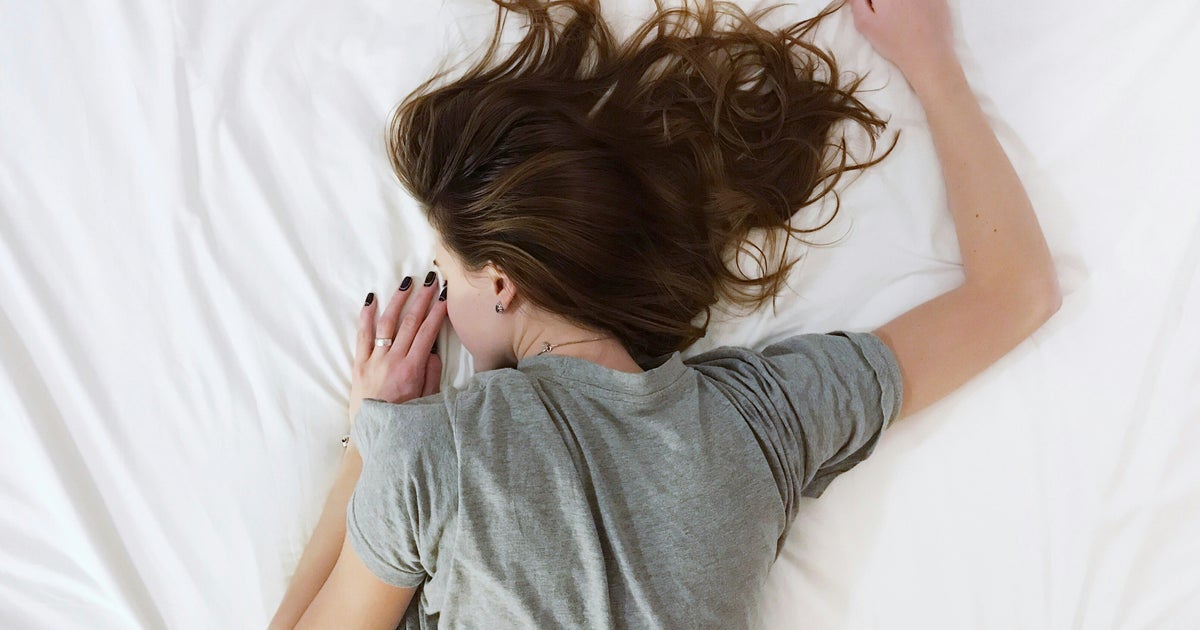
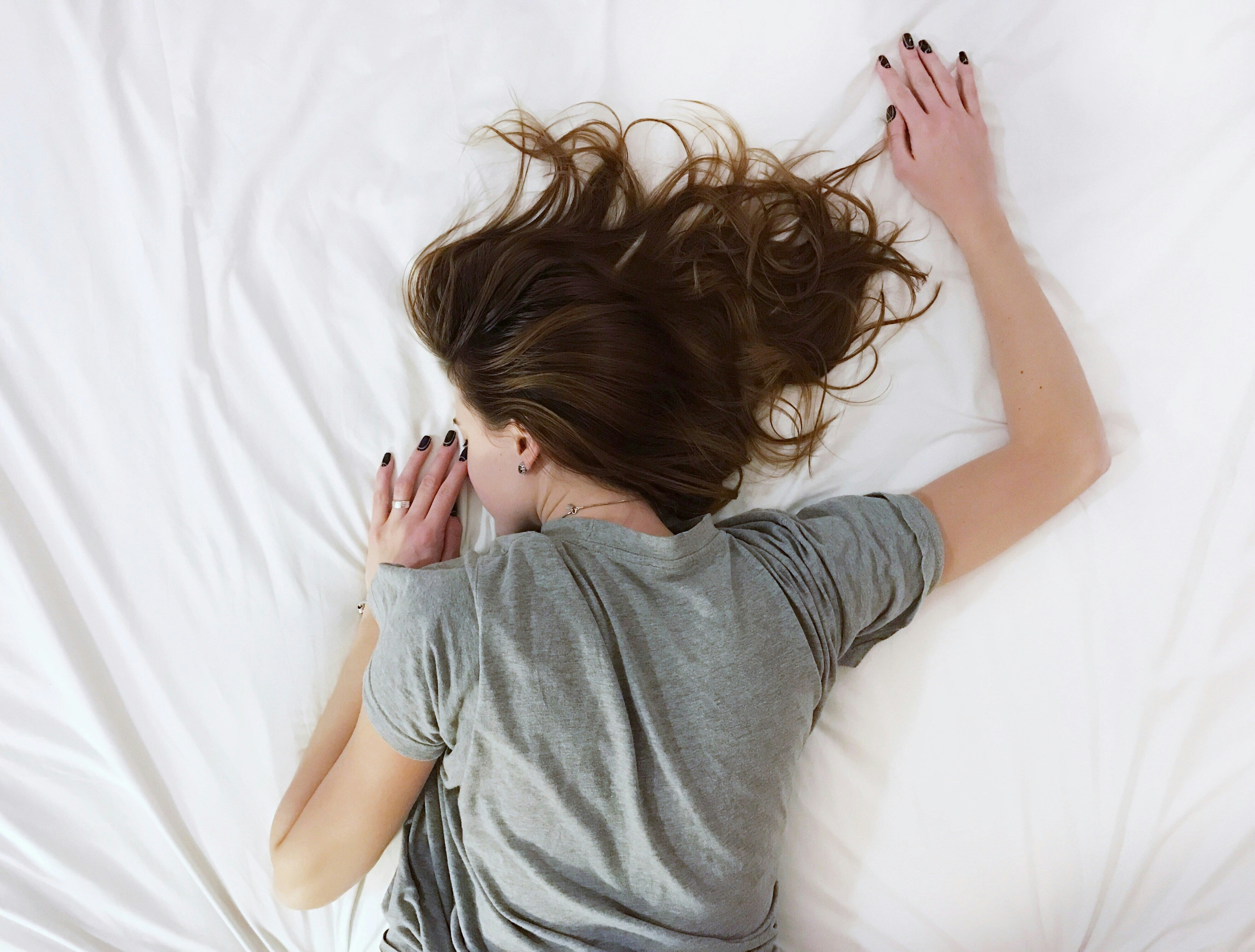
But I’m doomed to lie face-down, like a sloth ineffectively clinging to a too-big mattress trunk, if I plan on dozing at all.

The bad news continues: sleep coach James Wilson, also known as The Sleep Geek, says that’s the worst possible position to fall asleep in.

What’s wrong with sleeping on your front?

In an Instagram Reel, James said: “It is bad for your spine, your neck, your hips your knees, your whole body really.

Sleep on your side, preferably, or your back, (not great for snoring) to wake up less, and to spend less at the physio.”

He also recently told The Telegraph that the position is most likely to cause injury and added in his Instagram Reel that it will disrupt “both the quality and the quantity” of your sleep.

Sussex Community NHS Foundation Trust agrees, writing that the posse generally isn’t advised because “you are more likely to move out of the midline position and strain your neck.”

If it’s truly the only way you can settle down, they advise putting a pillow under your stomach to prevent back pain.

So… how should I sleep?

If you can at all, “Start sleeping on your side, put a pillow between your legs, and give the pillow a hug,” James advised.

Cardiologist and director of Mayo Clinic’s sleep facility Dr Virend Somers agrees that sleeping on your side is probably best, saying you should elevate your head a little if you can too.

Sigh… I suppose I need to make some life changes.

Share Button

I’m A GP ― Never Ignore These 3 ‘Normal’ Seeming Symptoms

Tiredness is common complaint in the UK, which can make it hard to work out when to actually see a GP about your sleep issues.

Other potential symptoms ― severe period pain, bruises, and even fingernail changes ― can seem like “normal” signs, but are sometimes worth a trip to the doctor too.

In a helpful TikTok, Dr Ahmed, a GP, shared some information which might make the “normal or not?” call easier to make.

He said: “Here are three symptoms you may think are normal, but they are not, and you need to see a doctor if you have them.”

1) Back pain that lasts longer than six weeks

Though the issue is “very, very common” and “can have many causes, and most of them are completely benign,“Dr Ahmed says you really ought to see your GP if it lasts longer than six weeks.

It doesn’t matter how harmless you think the issue is ― “go to your doctor to make sure there’s no serious underlying cause” after the time ends, Dr Ahmed advised.

2) A sudden increase in eye floaters

Of course, eye floaters are common and usually aren’t cause for alarm. They “look a bit like squiggly worms ― some may be see-through” while others might be opaque, Dr Ahmed shared.

“It’s generally much worse when you look at bright light.”

While they’re usually completely harmless, Dr Ahmed says that if you experience a “sudden increase in the number of floaters” or lots of dark spots in your vision, you should get it checked out.

This “could be signs of a serious problem with the back of your eye, which could permanently affect your vision if it’s not treated quickly,” the NHS warns.

3) Chronic fatigue

“A lot of people may have” this but “ignore” it, Dr Ahmed says.

“Now I don’t just mean feeling a little bit tired all the time or if you’ve got a very good reason for feeling tired,” he explained.

He’s talking instead about “extreme fatigue, where you can’t function when there’s no obvious reason or cause, especially when this has started relatively recently.”

Though there could be “hundreds” of reasons for the change, a lot of them are worth speaking to your doctor about, he continued.

Share Button