I Found My Perfect Match With The Help Of AI. Here’s What You Should Know.

Subject: You have a match!

I wanted to share some exciting news with you – we’ve found a match I think you’ll find intriguing. He’s a disciplined and driven entrepreneur with a wonderful sense of humor. He has many interesting ideas and is an excellent conversationalist. Our AI models suggest this is a great match for you. The next steps are simple…

My eyebrows raised slightly in surprise. They’d found someone.

Like most young women, I have been through my fair share of dating ― lots of fun, but lots of frustration. So three months ago, I’d decided to begin working with a matchmaking service that claimed to leverage AI models to find your perfect match.

The AI model allegedly would be able to digest my questionnaire answers and interpret all my desires in a deeper, more science-based way than any simple dating site ever could. Lisa, my matchmaker, would partner with the model to provide a human touch, using her expert judgment to validate its findings. With an “all your boxes checked” guarantee, the service seemed foolproof.

The process was rigorous and far more in-depth than any dating app I’ve ever used. I worked through the seemingly endless, mostly invasive questions about my life ― what I valued, my relationship with my family, whether I was willing to leave New York. I submitted everything from my philosophies on the afterlife to personality test results, stopping just short of giving them my blood type and mother’s maiden name.

I thought I had answered it all until I reached a line that stopped me in my tracks: “Please upload photos of your ex.” I racked my brain, sifting through all the frogs I’d kissed. Did that one guy I’d met on a whirlwind night in London and then never spoken to again count as an “ex”? The memory of his deep-set eyes convinced me that yes, he totally did.

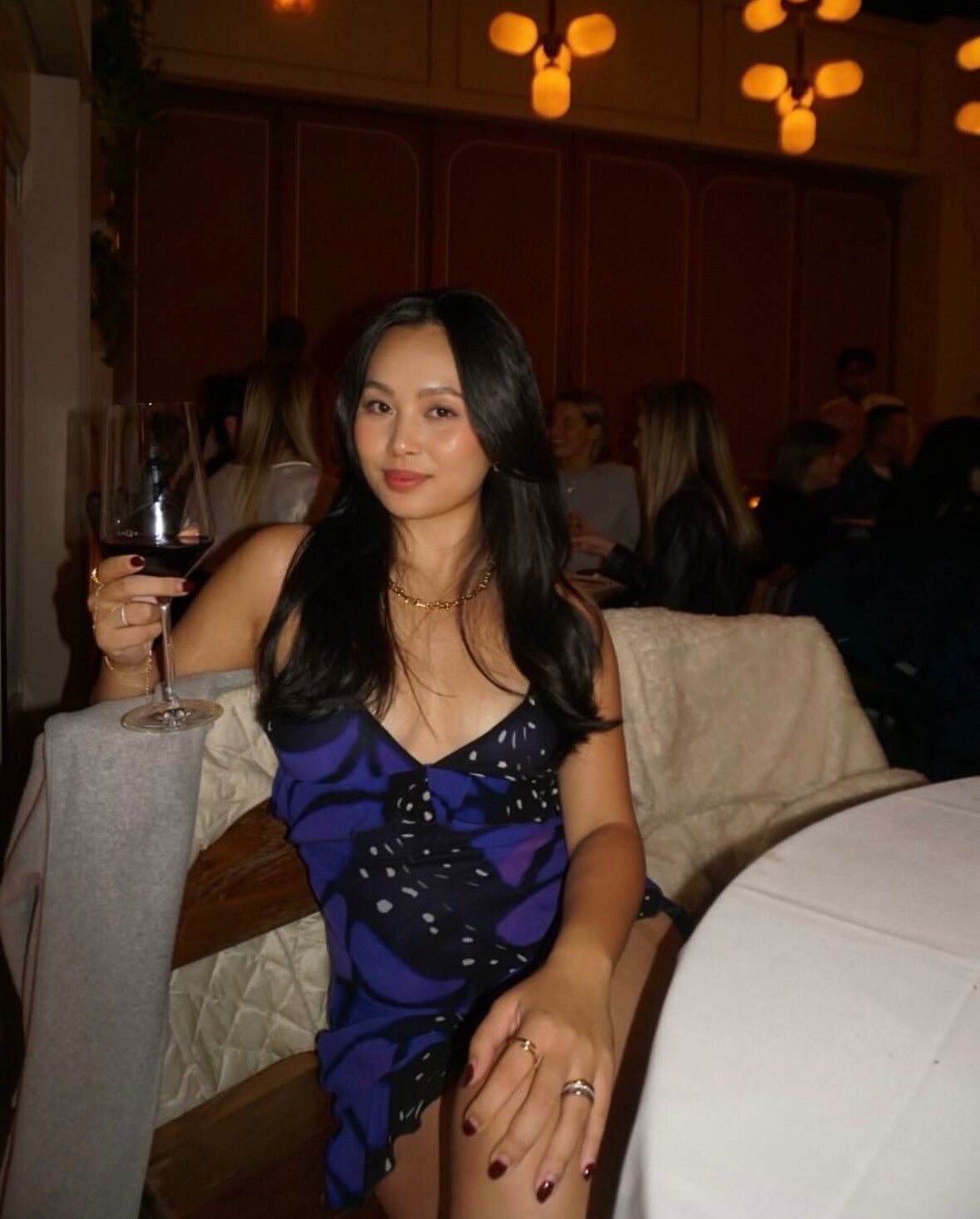
The author at dinner in New York City.

Photo Courtesy Of Katy Pham

The author at dinner in New York City.

There was something that felt revolutionary about inputting all my fantasies into Lisa’s “build-a-man” factory. I didn’t have to just wander Fifth Avenue blindly, hoping to bump into whoever was out there. Here, I could “Weird Science” a man: give him Andrew Garfield’s eyes, Chris Evans’ arms and Chace Crawford’s glistening smile. So long as my dream man existed, AI would connect the dots and bring him to me.

Somewhere between listing out dealbreakers and sending in photos of celebrity crushes for AI analytics, I thought to myself, Maybe this is the future.

And if it wasn’t the future, well, maybe it was mine.

“OK guys, just close your eyes and tell everyone where you see yourself in five years,” my friend Lexi gushed to the rest of “the council” — the four of us girlfriends who had been joined at the hip since college. Lex closed her eyes and saw California, gentle coasts touched by the waters she grew up in. So, she packed up her entire life, a full decade spent learning in the heart of New York City, and headed home.

I’ll never forget closing my own eyes against the salt air at the pier. Perhaps I was looking for a place, like she was. But it wasn’t what came to me. I sat in the dark behind my eyelids and was overwhelmed with the bittersweet loneliness that comes from living in a place like New York. It is a place built on comings and goings, on the guaranteed peace in the knowledge that nothing is permanent and the sadness over the same.

When my eyes closed, I did not see a place. I saw a home. A sense of belonging, not with a specific skyline to anchor me, but a person. That sense of homecoming people talk about when they find the person they want to build a world with.

I opened my eyes against the sun.

Dylan had messy hair. It wasn’t the kind that said he’d just rolled out of bed; it was the kind that said he’d spent time in front of the mirror to make it look that way. A little scar over his eyebrow made him look tougher than he really was. His dark brown and sharply intelligent eyes sparkled with wit, enthusiasm and passion.

Two of my previous matches hadn’t materialised, either due to distance or lack of interest, but this one had snagged something in my chest the moment I’d looked at his profile. Our values matched everywhere that mattered, our interests overlapped when they needed to and diverged just enough to give us space to teach each other new things. He seemed, as the digital model had promised, built for me.

Walking up to the quaint little wine bar he’d picked, right in the heart of West Village, I was insanely nervous – something about science and a matchmaker telling you they’d found you “the one” laid the pressure on thicker than Hinge ever did. And in person, he did not disappoint.

I’d thought the foreknowledge would make things easier. We could sweep aside little nothings like, “So, what do you do for a living?” and dive right into each other’s hopes and dreams and fears. But my hands were slick with the immediate worry and thrill of intimacy that I’d never known could exist between two people who hadn’t had so much as a conversation.

I could look into his eyes and know what no one else in this bar knew. I knew he studied film and loved the outdoors; I knew his childhood pet’s name, his low preference for pizza (or gluten in general). I knew what kind of parenting style he planned to use one day and for how many kids.

That little twinkle people have, when they’ve been together for years? The kind that has them communicating secrets across a crowded room? We had it. We knew everything. I spent half the date trying to determine whether I was supposed to go all in or pretend I didn’t know anything about him. But he knew I knew. It was unclear what rulebook we were supposed to be playing by.

Regardless, I remembered: Somewhere, some digital force of omniscience had rubber stamped the date, guided by a human hand. We were supposed to be here, meeting each other. It was green flags all the way down.

It turned out, of course, that there was more to learn. A person is more than a collection of ideas on a profile. Dylan had grown up in New York, the eldest of three kids. He was well spoken in a way that pointed to his privileged background, with the wild spirit (and resources) that meant that he could — and did — try out every single hobby that had ever piqued his interest. Still, he was impossibly down to earth.

Not enough glasses of wine into the date to be tipsy, he looked at me with an arched eyebrow and confessed, “I actually scored really high on my SATs. I know it’s been over a decade, but sometimes, I still try to work it into first date conversations.”

A laugh bubbled out of me. A man coming out on the first date with the exact size of his SAT score was something that, if I didn’t like him already, I might have been put off by. But I did like him, so the dorky flex was endearing. So much about him was, and as the first date jitters wore off little by little, we started to relax into each other.

Date one turned into date two. Which turned into three, and, well, you know the story.

“You’re colour blind? How did you find out?”

“Well, the fluorescent pink pants I brought home from the mall in middle school were hint number one.”

“If you were to be stuck in a time loop and had to pick one person to tell about it, who would it be?”

“My sister. We’ve always been close; she’s incredible. I can just trust her with anything. She’d drop anything to … uh … help me out of a time warp. Honestly, I also think she’s my best shot at getting back to reality.”

He was everything I had asked for, everything I believed a man should be ― kind, smart, funny, thoughtful and protective … all handed to me by an algorithm.

I’d started dreaming already — not of electric sheep, but of digitally borne boyfriends.

On our last date before I left the country to spend a couple weeks in Asia, we went bowling. I am not a great bowler, but I’m never afraid to fail. This one, I wanted to win, because we’d decided to make it interesting. If I won, he’d write me the story of how we met from his point of view. If he won, I simply had to plan our next date.

I got one strike. The love letter was not to be.

But I’d started planning the date the second I’d seen the final numbers. After all, what’s the point of loving if you are afraid to dive in with gifts and plans that say, “I listen, I care, and I want you to feel special.”

He kissed me.

I dreamt about tomorrow.

I got on the plane.

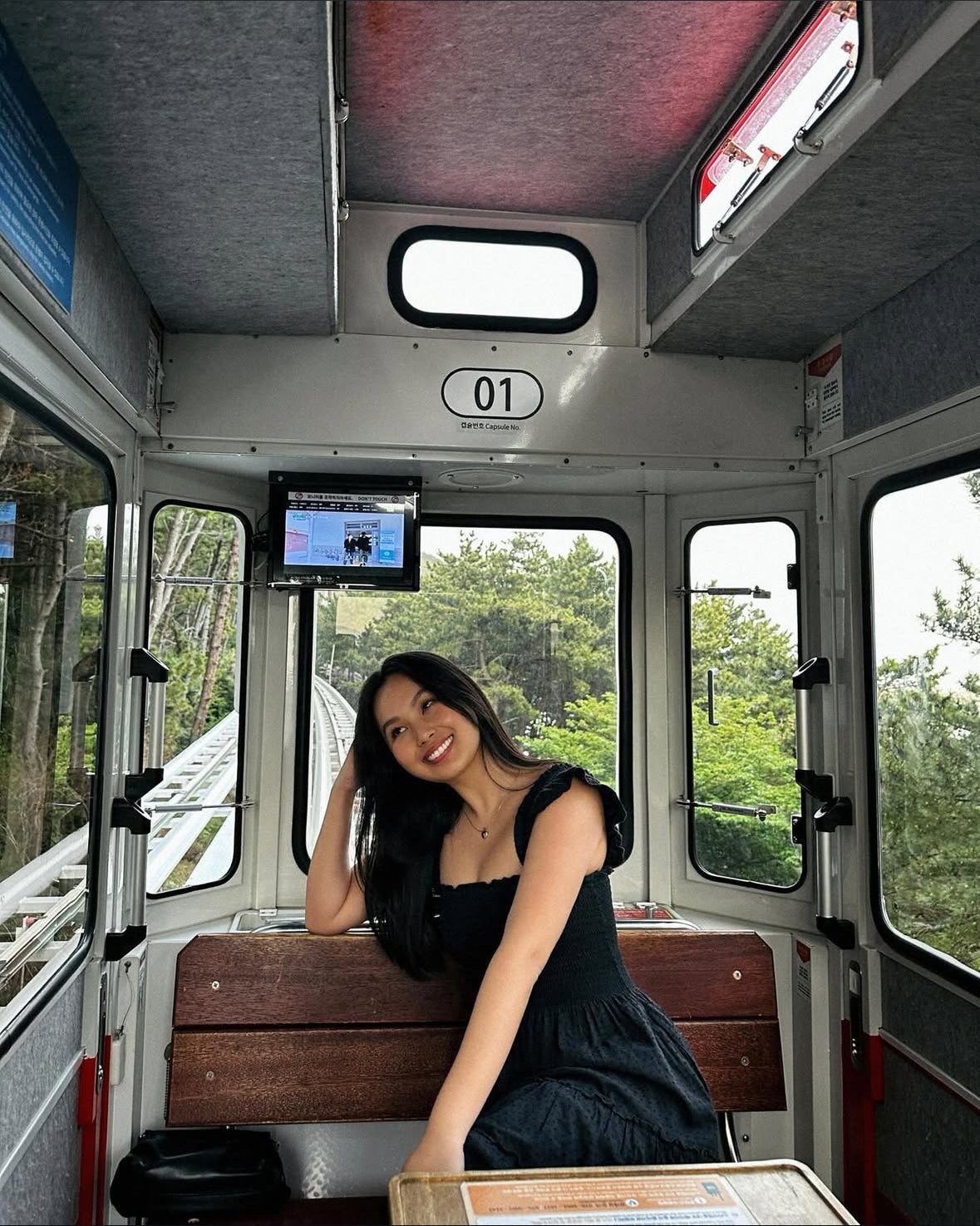
The author during her trip in Asia.

Photo Courtesy Of Katy Pham

The author during her trip in Asia.

The photo dumps came as we’d planned them — vibrant and fun and full of everything I’d started falling for Dylan over. This was a man who loved life and didn’t say no to new experiences. I responded in kind, with snapshots with friends, family, tasting exotic dishes and walking along the coast. Sets of images sent back and forth that reminded us of who we were and that we were in this.

I’m not sure exactly when the pictures started coming less often. Texts got sparse, fewer snapshots were traded from phone to phone, questions about the aforementioned special date went uncommitted to. The maybe embarrassingly detailed dreams I’d started having about tomorrows with him began to blur.

Things with Dylan died slowly, quietly, without fanfare or the need for hauntings. The modern solution I’d thought was going to revolutionise dating ― AI ― was eclipsed by another modern epidemic: ghosting. In the end, we were left with the substance of most ghost stories: unfinished business. But not the kind that needs to be tended to before each party can move on.

The connection with Dylan was gorgeous and real and temporary, like some things are. I suppose, when it comes to dating, when you’re not so worried about running into a match in a neighbourhood coffee shop or at a mutual friend’s party, it’s easy to just … log off. You don’t bid a website a lengthy farewell when you decide to stop playing; you simply don’t come back.

These days, it seems everywhere you turn, someone claims they have finally cracked the code, uncovered the hidden formula to our heart’s desire. The certainty is so contagious that for a fleeting moment, it feels like you can join them at the edge of some great revelation. But reality is their certainty is something we rent, not own, giving us a falsely fleeting sense of control in a world that remains stubbornly unpredictable.

I wonder, sometimes, if I’m wrong. Maybe my future won’t come to me generated by an all-knowing digital system. Maybe it will come via a chance meeting on the street, in line behind a stranger. Is it sillier to trust an algorithm or a fortune teller who claims they know the secrets of a chaotic universe? Or to trust the chaotic universe itself?

The tall man in front of me, with the lopsided grin, heather gray T-shirt, and worn paperback falling out of his bag, steps to the front of the line to order his coffee. He orders it the way I do.

My phone begs for my attention.

I look away from him and give it what it asks.

There’s an email in my inbox.

You’ve got a match!

Share Button

‘It Treats Us Like Children’ – What 5 Autistic People Think Of Netflix’s Love On The Spectrum

Love On The Spectrum season three recently hit Netflix, much to fans’ delight.

A family member of mine, who is autistic and whose dating dramas could honestly fuel a movie franchise, is among them; they got me into it as soon as it went live, and is hooked on the new season.

Speaking to Tudum, executive producer and co-creator Cian O’Clery said he enjoys how its participants “represent the diversity of the spectrum.”

But some autistic people feel that the show, of which the editing is sometimes seen as ‘infantilising’ the cast, is a little ‘patronising’, and actually may give a reductive view of autistic people.

So, we thought we’d ask some autistic people to give us their thoughts on the show.

Of course, these are just a few voices and far from a unified stance on the Netflix hit; people’s thoughts will naturally differ according to each individual.

“My experience as an autistic woman leads me to have conflicting emotions about Love on the Spectrum.”

Katherine Rundell, a writer at Academized.com, told us she had mixed feelings.

“I value the program’s approach to presenting autistic people’s experiences while they explore the deeply human and vulnerable aspects of dating,” she told us.

“Autistic people seldom receive portrayals with emotional depth and even less frequently demonstrate attempts at connection and intimacy therefore this show addresses a significant absence.”

Still, she says, she can’t help but find the show’s approach a little “patronising.”

“The narration seems to treat autistic individuals like children while targeting a neurotypical audience who might react with ‘oohs’ and ‘awws’ instead of focusing directly on the autistic people featured in the show,” she said.

“The show’s tone focuses too much on portraying individuals as endearingly quirky… We seem to be under study rather than being comprehended.”

And while Rundell acknowledges other dating shows use dating coaches, she thinks “their function in this program seems to suggest that autistic individuals require training to become attractive to neurotypical standards” and that it ignores “the legitimacy of neurodivergent ways of showing affection, attraction, or communicating.”

“The series contains beautiful intimate scenes where individuals authentically connect with each other in their unique ways which transcends the editing process,” she concluded.

“And when it’s good, it’s really good. I wish the show would dive deeper into its subjects while posing tougher questions and empowering autistic people to share their personal narratives.”

“I recommend everyone to watch it”

Jessica Whalley, author of The Autistic Mom, says she’s “obsessed” with the show.

“As an autistic person, I made it a priority to watch this from season one,” she added. Her favourite storyline is the one between Abbey and David.

“I tell everyone I know, neurotypical and neurodivergent, to watch the show – not only is it heartwarming, [but] it also shares that autistic adults want and need love and the realities, struggles and joys of that journey.”

“I see myself in the show”

Late-diagnosed mother Erin K Arceri told us she “was a high-masking autistic person most of my life – until my health collapsed about a decade ago, and I couldn’t hide it anymore.”

“I love Love on the Spectrum,” she continued.

“I see so much of myself in many of the people on the show. It’s helped me feel less alone and more seen.”

“I don’t feel fully represented”

Another anonymous source told HuffPost UK that while they enjoy the show, they feel it leaves a portion of the autistic experience out.

“Lots of the families [in the show] seem to have quite a lot of money. But lots of autistic adults are not well off.”

Still, they say, the “drama” of the show has been fun to watch, and they like how the show depicts autistic desire and affection.

“I have dated since I was a teenager and now people might understand that is normal,” they added.

“There’s still a long way to go”

Autistic psychotherapist and founder of The Sensitive Empowerment Community, which “supports sensitive and autistic individuals,” Julie Bjelland, says she also feels conflicted.

“I’ve watched Love on the Spectrum with a blend of appreciation and concern,” she shared.

“While I’m grateful that the show brings conversations about autism and dating into the public eye – and appreciate the inclusion of LGBTQ+ representation – I believe there’s still a long way to go in how autistic people are portrayed.”

One of her main concerns, she says, is that the show focuses on “surface-level depictions of autism, often reinforcing the idea that autistic people are childlike or incapable of independence.”

She says she’d “love to see greater representation of those of us who may not ‘look autistic’ by traditional standards but who are navigating dating, intimacy, and deep emotional connection through an autistic lens.”

Season one included Kaelynn Partlow, who has fewer support needs than other cast members and has since said she thinks she wasn’t included in season two because of her preference for a neurotypical boyfriend and her strong communication skills. Still, she shared on TikTok, “I get it.”

Bjelland, however, likes the inclusion of dating coach Jennifer Cook, who is herself autistic.

“I hope future seasons continue that momentum – by involving more autistic voices behind the scenes and expanding representation to include late-discovered adults, LGBTQ+ folks, and those whose communication and relational styles are more subtle or internal,” she said.

Share Button

9 Dating Horror Stories That’ll Make You Spit Out Your Tea

Dating apps have been going for years now, but it seems some users still don’t quite understand what is okay – and what’s totally inappropriate – to divulge to the people they’ve swiped right on.

Case in point, one Mumsnet user recently took to the platform to share her own “horror stories” from her time on dating apps which she says have put her off “for life”.

While calling on others to share their torrid tales, the user (with the extremely relevant username: stayawayyyyyfromdatingapps) said: “I got an absolute shiner off of tinder say to me ‘I really want you to be my girlfriend, so you can see to my trouser cannon every day’.”

The post, which featured a whole host of other dating stories, inspired others to share their own anxiety-inducing anecdotes and all we can say is… good grief.

1. Got to an organised drinks first date, and the guy had those white stringy bits all around his crusty lips.

I kept licking my lips in the hope he’d do the same and kept thinking fuck me if he kisses me I’m going to have to see the hygienist.

– stayawayyyyyfromdatingapps

2. I had one ask how much it would cost to put a baby in me…

When told where to go, he said he was genuinely asking as believed redheaded women produced superior babies.

I had no idea where to go with that lol. What an absolute creep.

– YouDeserveBetterSoAskForIt

3. He used his son’s photo who was about 27…

Turns out he was about 47 and he couldn’t figure out why I wasn’t interested. Hm I’m 23 pal.

– Packingcube

4. On a first date (and last) date with a man who asked me my nationality. When I said German, he said ‘oh yes, big feet small boobs’.

I couldn’t get out of there fast enough.

5. [My] Profile clearly said ‘have children, don’t want more’. Matched with a guy, chatted a bit then met for coffee. One of the first things he said was ‘is the no more children thing negotiable?’

I said ‘no, it isn’t.’ He said ‘really, even having met me now I still couldn’t persuade you to have my child’. So I said ‘well I have only met you for 10 mins, but I definitely don’t want more children with anyone.’ His response, ‘let’s have a proper date, you will be begging to have my babies before the nights out.’

Declined the offer of a proper date!!

– Everintroverte

6. He said ‘boom’ at the end of sentences. ‘I’m going into town – boom!’

Also used ‘I’m on fire’ a lot. Pity he wasn’t.

– witwatwoo

7. As I walked into the pub the first thing he said was ‘you’re actually quite pretty. We just need to sort out your hair and clothes’.

I turned around and walked out.

He had very little hair, was wearing a T-shirt that needed ironing and his profile photo must have been at least 10 years out of date!

– Smokesandeats

8. Not me but my friend went for a date with a bloke who paid for dinner with a 50% off voucher and told her it was his treat but she could only have a main course as that’s what the voucher covered.

When they walked to the car park, he asked is [sic] she wanted to get into the back seat of his car and unleash his beast – he was 56!!!

– TwistedWonder

9. I also had one guy move the time back and hour, show up with all his mates then disappear off for half an hour leaving me with his friends and returned to ask me if I wanted to go back to his.

When I said no he said he didn’t fancy me anyway and wanted to get back with his ex.

– OnlyFannys

Share Button

9 Dating Experts On How To End A Bad First Date Like A Pro

You’ve gotten past the dreaded talking stage, made plans and now finally, it’s here! The first date with someone new! And it’s going well! They’re exciting, they’re amazing, they’re… actually really, really boring and oh my fucking god I need to get out of here.

Yup, we’ve all been there when a date isn’t actually all we hoped it’d crack up to be – but cutting a first date short when things aren’t clicking isn’t always easy. You’ll often consider your date’s feelings above our own and no one wants to come out with some lame excuse about your dog needing a bath.

In an era of all or nothing dating, research from Tinder revealed that singles know within 30 mins whether the spark is there or not – so how do we get out when there’s not even a flicker?

Do we just grin and bear it? Well, as Paul Brunson, Tinder’s global relationship insights expert points out: “While it can feel uncomfortable to cut a date short, prolonging it when you’re not feeling it, might actually be less considerate in the long run.”

So what’s the right way to get out? We asked dating experts for their advice and they’ve come up with a plan so perfect, you’ll never find yourself having to get a friend to phone with an ‘emergency’ again.

It’s all in the preparation

When we sent out our questions (see: call for help) to dating experts, the same idea came back time and time again – organise a first date that won’t go on too long, so that you don’t find yourself in an awkward position where you might need to cut it short.

“For first dates where you don’t know the person well, it can be helpful to mention a time constraint as a backup, such as, ‘Thursday sounds great! I do have a deadline on Friday, so don’t keep me out too late!’,” clinical psychologist Dr Sarah Bishop tells us.

Rather than organise a dinner followed by drinks for your first encounter with someone new, opt instead for something low-key.

“Simple dates like meeting for a coffee or drinks are great options,” Sylvia Linzalone, FindingTheOne.com’s relationship guru says.

“And if it’s really going terribly, you won’t have to sit around forever – just drink up and say your goodbyes.”

Time frames are also a fail-safe way to make sure you don’t end up sitting wishing you’d never said yes in the first place – our favourite came from Jamie Johnston, founder of the neurodiverse friendly dating app Mattr, who suggested: “I have an hour free before meeting a friend if you would like to catch up.”

Westend61 via Getty Images

“You have given a clear time frame and also a commitment after which means they won’t try and lengthen the time,” he points out.

And if you’re actually quite enjoying the date? Well, as Dr Melissa Cook at FunWithFeet and Sofia Gray says: “If you do enjoy their company you can always say that you can stay longer.”

OK but I failed to prepare – GET ME OUT

OK, OK, don’t panic. It sounds cliché as hell, but it’s true – honesty is in fact the best policy.

We know it’s scary, but you owe it to yourself – AND the other person.

As dating Expert at Pure, Drew Wyllie puts it: “Now, cutting a first date short requires nerves of steel and (if you don’t want to go out with a bang) a good amount of tact and empathy. The thing is, as humans we are often scared of letting people down – especially when it comes to dating and meeting new people.

In the past within my dating life, I have stayed on the fence about not making my intentions clear and telling people that I’m not sure, and in the end this just makes the situation worse as you can lead the other person on and make them think romance is on the cards when in reality – it’s not.”

When it comes to saying ‘okay that’s enough now’, the main thing is HOW you deliver that honesty.

If the conversation has dried up, you feel a lack of chemistry or the date simply isn’t going anywhere, it’s okay to acknowledge that. Think about how you’re feeling in the moment and don’t be afraid to share it with your date,” Dr. Lalitaa Suglani, a relationship expert for eharmony advises.

Being polite doesn’t mean hiding your feelings. If you think it’s time to end a date, don’t make excuses or be overly apologetic. Instead, try a gentle yet straightforward approach. Say something like: ‘I’ve enjoyed getting to know you, but I don’t see this going any further romantically’. This sets a clear boundary without being hurtful, your date will appreciate the honesty and it avoids leaving things in limbo.”

And while we’re on the topic of being polite, letting the other person know that you appreciate their time is also a must according to Dr. Tara (yes, from Celebs Go Dating!).

She also shared the PERFECT framework for a post-date follow-up text for if you’re not in the market for a second date:

“Whether it’s in person or via text, we need to always use empathetic communication – you can do this in three different ways.

1. You can say thank you for your time, but I don’t feel a romantic connection.

2. You can say it has been lovely to meet you but I don’t think we have any chemistry.

3. if you want to remain friends because you like them as a person, but not romantically, then you can say I had so much fun today. I did not feel any chemistry, but if you would like it would be nice if we can remain friends.”

And finally, you don’t need to be polite if the person you’re on a date with is rude as hell – we’re allowed to put our feelings first.

“The situation is a bit different if the date is going poorly because the other person is being inconsiderate—like checking their phone constantly or not being present,” intimacy expert Magda Kay reminds us.

“In that case, I believe you owe it to yourself to speak up. It’s perfectly okay to be direct and say something like, ‘I don’t feel like you’re fully present, and I don’t think either of us is enjoying this. It’s probably best to end it now.’

“Being honest in situations where the other person isn’t showing respect is important, both for giving them feedback and for standing up for yourself. It’s about learning to speak up when you’re not being treated well.”

Consider us told!

Share Button

Daters, Meet “Pebbling” ― The Penguin-Based Dating Trend Social Media Loves

We’ve written before at HuffPost UK about “tolyamory,” where one or both partners silently permits the infidelity of another without ever explicitly addressing it.

We’ve covered the “orange peel” and “Dorito” dating tests, too. But what’s “pebbling” ― a penguin-inspired dating trend I keep seeing on my For You Page?

A viral TikTok from @jakeyboiarts describes it as giving “someone a bunch of something because you’re thinking about them, for example, a penguin that gives a pebble to another penguin they love.”

The video, which has earned over 640k views as of the time of writing, explained that “pebbling online is like someone who gets videos, memes, whatever, and you send them to someone.”

What’s that got to do with dating?

It doesn’t have to. Another TikTok video by autism-specialising therapist @myautistictherapist suggested that “the way [many autistic people] share love is through giving information” ― “pebbling” facts, as it were.

And that love can be for friends and family as well as partners. “A lot of the autistic people on this app are showing the world love by sharing what they know,” the therapist said; of course, the same goes for anyone else. It’s a little gift for those you love.

But seeing as the Gentoo penguin-based habit it’s based on is used for amorous avian couples, the trend has taken on a romantic hue on social media ― and the pros seem to approve.

Older forms of “pebbling,” like giving someone a gift, bringing them home a snack, or even telling them about a part of your day that made you think of them have existed for as long as love has, Psychology Today points out.

But relationship expert Gigi Engle told Metro.co.uk that the newer, online application is great for couples; “I think it’s the cutest thing ever because memes are a love language these days,” she said.

“Pebbling started with the advent of meme sending as a form of creating a connection with people… It can definitely strengthen a relationship because it’s similar to sending a message saying, ‘I saw this and thought of you,’” the romance expert added.

So… it’s always good?

As with anything else, you can have too much of a cute thing.

App user @jakeyboiarts’ TikTok references opening your phone to “hundreds” of notifications ― that might be overwhelming to some (it’s me, I’m ‘some’).

Engle also told Metro that, “Pebbling does have the potential to set an expectation of communication you’re going to have throughout your relationship, so that’s something to keep in mind.” Your partner may feel hurt if you’re unable to keep up the pebble pace for long.

And in the same article, dating expert Drew Wyllie of Pure dating app, advised that “What is deemed sweet and thoughtful for someone, may be irrelevant for someone else” and suggested pebblers “make a mental note of your partner’s likes and dislikes as well as their daily behaviours so you can make your presents more relevant.”

“Pebbling alone is not going to get you far,” Psychology Today adds, stating that the memes should be a jumping-off point for deeper connections and not your main romantic meeting point.

Still, though, if you are your beau have a sweet meme exchange going, then take it from the Gentoo gents and keep it rolling.

Share Button

All That Time You’re Spending Deciphering Men’s Texts Finally Has A Name

As Ellie Anderson approached 30, she started thinking about all the time she and her friends had wasted poring over conversations and texts they’d received from men they’d dated: Was that stray “K” over text cause for alarm? How long should you wait to say you had a great time on a date and want to do it again soon without coming on too strong?

“These conversations generally happened when one of us started dating a new guy. A lot of the time, we’d try to guess at what a guy wanted and how to avoid ‘freaking him out,’” said Anderson, an assistant professor of philosophy at Pomona College in Claremont, California.

Of course, the early days of a relationship are often a period of uncertainty. Still, it seemed to Anderson that the uncertainty usually worked in men’s favor. Meanwhile, it forced women to spend a lot of time trying to guess at men’s feelings because the men themselves were unwilling or unable to fully express themselves.

That kind of unspoken work deserved a definition, Anderson thought. On her popular philosophy podcast, “Overthink” ― and now in a recently published academic paper ― Anderson coined the phrase “hermeneutic labour” to describe the emotional work that goes into trying to decipher men’s often muddy communication. (It’s highfalutin sounding but hermeneutics is basically just the interpretation of language, whether written or spoken. It’s a word that’s often used in philosophy and religious studies.)

“Basically, men benefit from both having emotional needs they may not even be aware of met for them, and also not having to bear the burden of interpreting women partners’ emotions,” Anderson told HuffPost.

What we call “women’s intuition,” Anderson said, is actually a hard-won achievement that takes years to produce and sustain.

“It’s a euphemism for hermeneutic labour,” she said. “We tend to deny the substantial amounts of work that women do to maintain relationships, as well as the fact that a lot of this work is cognitive in character.”

Hermeneutic labour can be divided into three stages of emotional work, according to Anderson:

  • Interpreting your own feelings, desires and intentions
  • Interpreting the other person’s feelings, desires and intentions through their nonverbal cues or minimal communication
  • And lastly, comparing and contrasting both sets of feelings and intentions for the purpose of conflict resolution

Sounds laborious? That’s because it is.

Hermeneutic labour is a form of “emotional labour.”

Anderson’s theory ties in nicely to a more well-known concept: emotional labor, the idea that the effort of managing nearly everything at home ― especially the seemingly invisible jobs no one in your family acknowledges (making dentist appointments, managing temper tantrums) ― often falls on women’s shoulders. As outlined by sociologist Arlie Hochschild, emotional labor also involves having to suppress any negative emotions you might have around such thankless work.

“Emotional labor is the nurse suppressing her frustration toward a difficult patient and presenting a warm attitude of care,” Anderson said. “Hermeneutic labor is this same nurse considering, on her drive home, whether or not that way of interacting with the patient was the right one.”

Sometimes "it's helpful and fun to discuss your dating life with others and as long as you are getting the benefit of further insight, or at least a few giggles with friends," therapist Sarah Spencer Northey said.

Hinterhaus Productions via Getty Images

Sometimes “it’s helpful and fun to discuss your dating life with others and as long as you are getting the benefit of further insight, or at least a few giggles with friends,” therapist Sarah Spencer Northey said.

Anderson also likens the concept to something explored by feminist and critical theorist Mari Ruti in her book “Penis Envy.”

“In the book, Ruti looks at how sometimes men’s opacity about their own emotions lead to unethical behavior toward romantic partners,” Anderson said.

It’s not that men don’t involve themselves with hermeneutic labour, Anderson said, it’s just that it’s nowhere near to the same degree as women partners do.

Anderson’s research focuses on hetero- and cisgender couples because they overwhelmingly make up the participants in the empirical studies on which her argument draws. But a handful of studies have also focused on the emotional labour that cisgender women partners of trans men undertake, which Anderson said is in some ways similar to straight couples, but also involves some unique dynamics, such as emotionally supporting a partner during transition.

Therapists who work with women say “hermeneutic labour” comes up in their sessions.

Akua K. Boateng, a psychotherapist in private practice in south Philadelphia, sees hermeneutic labour as a rite of passage for young women, especially in the text-centric online dating era. Generally speaking, women often let men take the lead in such communication.

“If he is texting, she is texting ― even if she might desire to talk by phone ― while talking with her friends about what the frequency or tone of his texts might mean about his true intentions,” Boateng said.

Women are conditioned to do this, Boateng thinks. For some, this kind of close reading starts in childhood with decoding the emotional lives of fathers and male figures.

“Many women have a history of failed attempts to track the emotional impact of life on the men in their social world,” she said. “Dating is a repeat of this past.”

Jennifer Chappell Marsh, a marriage and family therapist in San Diego, California, often hears women lament hermeneutic labour when they bring up emotionally distant partners.

“In therapy, it often shows that she’s putting in a lot of effort to understand his feelings and needs by paying close attention to small things like how he moves, the tone of his voice, or the words he chooses,” she said.

"[Hermeneutic labour] can make the relationship stronger because it helps with communication, but it’s important to remember that this effort by women should be appreciated and not just expected," Chappell Marsh said.

georgeclerk via Getty Images

“[Hermeneutic labour] can make the relationship stronger because it helps with communication, but it’s important to remember that this effort by women should be appreciated and not just expected,” Chappell Marsh said.

As a marriage therapist, Chappell Marsh sees firsthand how men benefit from the proactive women they know: The wives who can read their husbands’ body language or tone of voice like a book. The girlfriends who psychoanalyze the punctuation of their boyfriends’ texts over dinner with the girls.

“All this work can make the relationship stronger because it helps with communication, but it’s important to remember that this effort by women should be appreciated and not just expected,” Chappell Marsh said.

Another therapist, Sarah Spencer Northey in Washington, D.C., said she’s seen hermeneutic labour play out with her clients, but not to a problematic level.

“As a therapist, I’m usually shutting down a long, drawn-out analysis by immediately emphasizing a need for clarity,” she said. “I would not want someone to give their therapy time away to someone who is being cryptic over text.”

Northey notes that there are times where analyzing texts with friends can be a lighthearted way of bonding for women. (If you’re a guy receiving a text back, it’s fair to expect that the response might have been dictated by a committee of five women you’ve never met, plus your date.)

“It’s helpful and fun to discuss your dating life with others and as long as you are getting the benefit of further insight, or at least a few giggles with friends,” Northey said.

Naming a process helps us tame a process, Spencer Northey said, so she appreciates that the concept has been named in academic study.

How to improve communication when hermeneutic labour is a problem

If you’re in a relationship where one partner does the heavy lifting communication-wise, therapists have some advice.

Ask for clarity.

If you’re the mind reader in the relationship, don’t just assume you know what your partner is getting at. Be direct, and lean in for more clarity.

For instance, if you’re only receiving texts in the morning and that’s causing communication problems, Boateng said to say something like, “It seems like mornings are the best time for you to connect, right? Is there a way for you to briefly respond to my more timely texts at night?”

If you’re the uncommunicative one, make a point to up your participation.

Clear communication doesn’t come naturally for any of us ― it’s something that needs to be honed and worked on, and there’s always room for improvement, Chappell Marsh said.

“If you’re bad at it, you really have to strive to express your feelings and thoughts more openly and clearly, reducing the burden on your partner to decode your emotions,” she said.

If you need more time to respond to a text because you can’t find the language to communicate your feelings, there’s no shame in sending a text that says, “Hey, I received this but just give me a little time to respond,” Boateng said.

And if you’re dating and realise that you’re sabotaging good connections because of poor communication, she recommends taking time to practice emotional expressivity with your friends and family, to get in the habit of it.

If you don't know what to say in the moment, there's no shame in sending a text that says, "Hey, I received this but just give me a little time to respond," Boateng said.

Compassionate Eye Foundation/Steven Errico via Getty Images

If you don’t know what to say in the moment, there’s no shame in sending a text that says, “Hey, I received this but just give me a little time to respond,” Boateng said.

Acknowledge and appreciate any quality communication.

Hermeneutic labour tends to go unacknowledged, which is fair ― it’s a newly coined concept! With that in mind, make a point to recognise when your spouse or partner is doing a particularly good job of communicating or interpreting the emotional world of the relationship.

“Show appreciation for her efforts and acknowledge the strain it can put on her ― or him,” Chappell Marsh said. “This recognition can be validating and can lead to a more balanced relationship dynamic.”

If you’re dating a hardheaded non-communicator, remember, you don’t have to be.

Unless the deciphering game is part of a flirtation and “a fun dance in the context of otherwise connected communication,” Spencer Northey thinks hermeneutic labour needs to be nipped in the bud and quick.

“The easiest way is for the confused party to refuse to play,” she said. “You can call, text, video, voice message, or contact the person through any number of ways and ask for clarification. If someone faults you for asking for clarity, that is a red flag. I hope I don’t have to explain why!”

Share Button

I Idolised My High School Teacher. Then I Dated Him.

At 15, I was his standout student and his kids’ occasional babysitter, unabashed in my adoration.

I looked forward to his classes with a thrill that could make me feel sick. I studied harder for his tests than I would ever study again. When he and his wife were out on dates, I would sit at his desk after their kids were asleep, beneath bookshelves full of thick spines, spillover stacks surrounding his computer, some volumes splayed open to pages littered with underlines, and think, Someday I’ll find someone like this.

I was in my late 20s and living in Brooklyn, nearly 3,000 miles across the country, when he left the desk and the house and the wife and stored all of his books in a shed outside a tiny rental cabin at the top of a cliff.

He came to New York and we got coffee and talked about God and I called him Mister. Then we exchanged writing, piles of it, and overnight knew more about each other than almost anyone.

From a distance we discussed meeting up again someday, this time for a beer.

“It’s difficult, isn’t it, to keep an imagination in check?” I asked at the end of a long email.

“A little imagination ain’t so bad,” he assured me with a winking face emoji, but any innuendo was subtle and carefully crafted ― and besides, I was never coming home.

Then the pandemic hit.

“How are you doing? Are things OK?” he texted one day in March.

“I actually came home,” I responded. And that was that.

Early on we agreed to keep it casual. We decided it was likely only for the lockdown, while the world fell apart and we were lonely. We asked “Why not?” and disregarded every answer.

We walked the woods, then the beach, then ― fancying ourselves quite quarantined in a place barely touched by the virus ― we went inside. From opposite couches, we passed a hundred hours just talking about everything: history and philosophy and the protests and Taylor Swift, later and later into the evenings, drinking my dad’s good wine from pint glasses.

When he asked if he could kiss me one night in July, sitting on the floor with our legs already touching, it felt only the tiniest bit taboo. The 20 years between us didn’t matter. He spent his life with high schoolers, and was more up to speed than I was on the trends and lingo of Gen Z. I felt desperate to reaffirm my autonomy and adulthood after moving into my parents’ guest room, and I liked confiding in a man with history, the years gathered at the edges of his eyes.

It seemed every woman my age was about to have a baby. I was behind, and now dating was against the rules and dangerous. But driving home from his house in the middle of the night, I felt interesting and boundless; I felt bad for all the women with the babies.

In August, we listened to Taylor Swift’s new album on repeat. I can see us twisted in bedsheets, August sipped away like a bottle of wine. We spent hours in bed. We took his boat out and jumped from the side. We sat close on a bench, watching constellations climb. But if what you want is a pop song, you can turn anything into a summery montage and fall in love with the lyrics. Mostly, we stayed inside doing nothing.

What started as a month-long lockdown swelled into a season, then two, then three. Our temporary tryst became less and less temporary. Trump was the president, then not the president. School was remote, then not remote. We were depressed, then not depressed, then depressed again.

At some point I bought a house, and on New Year’s Eve we lay on the floor on a mattress still covered in plastic, construction dust and power tools in disarray, fireworks popping, and it felt OK.

Looking back, it wasn’t that the student/teacher dynamic had truly dissolved; it had just gone dormant, as so many things did during the pandemic.

But it didn’t matter that I owned a house and he rented, or that my kitchen had actual wine glasses in it, or that I had dating history and he didn’t, or that I’d lived in cities around the world while he’d stayed in our small town. The badges of adulthood that confirmed we were equal weren’t enough.

As our community began to reopen, something was shifting between us. He was suddenly reiterating that he didn’t feel guilty about what we were doing, which of course meant he felt guilty about what we were doing. He was suddenly firming up boundaries. He was suddenly treating me like a child.

And more and more, I started to feel like a child. I stopped caring about whether he wanted to sleep with me. All I wanted was for him to be proud of me like he was at the beginning, from opposite couches, with no expectation. Or before that, even: when he was still Mister and we were meeting up in my city; when I was telling him about my work and he was beaming; when I was nothing but his precocious student who’d happened to grow up, and all we shared was admiration.

“There are few joys greater than witnessing a student surpass the teacher,” he’d written to me then. Now I was sitting with my legs over his, but I was flailing.

At the end of April, I stayed up straight through multiple nights reading the accounts of Blake Bailey’s gradual, insidious grooming of his young students, my throat clenched like a fist. It bothered me, even though there was no comparison to be made. The man I spent occasional evenings with had never, in my experience or to my knowledge, caused a student to feel uncomfortable.

Still, if there existed, in our community, a cult of the charismatic male teacher, he was its idol. And it did exist; I’d been a member for half my life.

The week after the news broke, I sat up in bed, arms around my knees. I couldn’t get it out of my head. We had done such a seamless job believing that our history didn’t matter, but what if we were wrong?

“What are you thinking about?” he asked, smoothing my hair. I was thinking about the comments I’d read from countless teachers about how students they met as children remained children in their minds, regardless of age ― about the indestructibility of the student/teacher dynamic. When I tried to talk to him about it, he laughed it off, then left early.

We never touched those dynamics in the bedroom. There was no shame or scandal between us, not ever, not even close, until there was. The secrecy that had been inevitable in a lockdown had come to feel illicit after it was over, and I was becoming increasingly aware of my nakedness, embarrassed. What had been irrelevant in private was not irrelevant in public.

Soon after, he invited me to a local vineyard for wine and music, and I was hopeful that it was a turning point. After so much isolation, we could finally prove that the thing we said wasn’t a secret wasn’t a secret.

The next day, my phone pinged with a follow-up text:

“OK, this is hilarious!” he started. The invite, he explained, hadn’t been for me. It was meant for someone else. “I am such a doofus,” he said.

“Fuck you,” I said.

I could have said anything else, something measured and mature, but I didn’t. It was the way it was a joke that broke me. A part of me wanted to be stabbing and juvenile because that’s how he’d made me feel, that’s what I was trying to throw back at him: Fine, you want to condescend, you want to treat me like a child? Watch how childish I can be.

I should have known that the post-pandemic public wouldn’t see us together ― that had been, after all, our expiration date from the beginning, back when the lockdown was fleeting and my life was elsewhere. But I didn’t anticipate how I’d come to rely on him, how bad it would feel to be denied by him, following the return of an external gaze.

I wanted him to be proud of me and instead he was ashamed. Both betrayed what was running molten beneath our feet, which was that, despite a year of intimacy, as soon as time was unsuspended and public life resumed, he was still my teacher; I was still his student.

And then he asked me to return his books ― not over coffee, not to his house, not in a neutral parking lot where we could hand off belongings and hug each other goodbye, but to the front office at the high school, a building I hadn’t been back to in over a decade.

He’d promoted me and now he was demoting me again, summoning me to the place where it started, where he still strolled the halls with a halo of admirers, and I was long forgotten.

Olivia Rodrigo’s debut album had just come out, and I decided to listen through it, as he and I had done with Taylor’s album the summer before. It was raining. When I got to the turnoff to my house, I kept driving. When I got to the high school, I slowed down but couldn’t bring myself to stop. Red lights, stop signs, I still see your face in the white cars, front yards… I’d gotten my driver’s license while I was in his class. I could still pick out the row where I used to park, near the track that lit up into a football field on Friday nights in the fall.

Can’t drive past the places we used to go to, ’cause I still fuckin’ love you, babe. I didn’t love him, which in a way was more disappointing than if I had. I’d loved him my whole life. Now there was a human where my hero had been.

Once upon a time, I was a child who adored a teacher for the way he challenged me. This past year, I was an adult grateful for the conversation and companionship of the same man. Now, wherever my life ambles next, I don’t need to take him with me.

Share Button

I Was On A Hookup Site Hunting For Revenge Sex. Instead, I Ended Up Donating A Kidney.

The last thing I expected to be doing a couple of weeks before a romantic getaway with my boyfriend was staring slack-jawed at his smiling face among a sea of dick pics and X-rated action shots in a seedy hookup site’s search results. Yet there he was on Adult Friend Finder with a hokey username below a clear picture of his face. For a smart man, he was a massive idiot.

The breakup was swift. He told me he was only on the site for porn and declared: “Either you believe me or you don’t.” Considering that his bio on the site started with ”I’m primarily looking for sex,” I didn’t believe him. Then he broke up with me.

Soon after, I was left alone with the Adult Friend Finder account I created to discover my ex’s. So, I did what any angry hot-blooded single woman would do. I started checking out profiles.

In no time, I was awash in a sea of lewd photos — limp dicks, hard dicks, spread-eagled men inexplicably displaying their assholes. Instantly, I had messages pouring in ― most of them so ridiculous they didn’t even deserve a reply. More than once, I asked myself what in the hell I was doing, but I didn’t delete my profile.

Eventually, after being disappointed and disturbed by the quality of gentleman callers, I decided to edit my profile and lay it out like I was on any regular dating site. I talked about enjoying music and the theatre, being a voracious reader of modern literature, and my desire to find someone intelligent and engaging. To prove I was totally over the semiliterate penis parade, I made the first line of my introduction: “Who’s got brains to go with their balls?”

This earned me some more refined suitors whose opening lines only hinted at the intent of the site instead of outright telling me all the gruesome and misspelled things they were going to do to me. What their messages lacked in overt vulgarity, they made up for with arrogance. Without fail, their lead foot was a profession they were sure would fill me with uncontrollable sapiosexual desire.

One example was the guy who bragged, ”Aerospace Engineer here. Big symphony lover. I read the New York Times every morning. Brains enough to go with my well-formed other parts.”

Of them all, my favourite self-promotion was, ”If critical thinking is your aphrodisiac, then I must be chocolate, oysters, and green M&Ms all rolled into one.”

I wasn’t nearly as impressed as they all hoped I would be. On the other hand, Mr. Engineer’s profile picture displayed some impressive muscles. My thirst for revenge on my ex (and thirst in general) led me to reserve a hotel room and agree to meet with him a couple of weeks later.

But right after I arranged my rendezvous, a surprising message landed in my inbox. A guy wrote me an email filled with questions. About me. After a little “I can’t even begin to say how gorgeous you are” and “Your beauty pales compared to your intellect” were some shockers like, ”What’s your favourite genre?” and “Who’s your favourite author?”

This new contender was a high school Latin teacher and the first guy to genuinely have manners without rambling on about how wonderful he was with three paragraphs’ worth of academic and career credentials.

“I’m Paul,” he ended his message, “and it’s a pleasure to meet you, I hope.”

We exchanged our email addresses. After a little correspondence, Paul won Mr. Engineer’s hotel room date.

In lieu of a cellphone exchange, the first nudes of our relationship were Roman statues at an art gallery. We wandered through the exhibits with Paul acting as both date and guide, entertaining me with the stories behind the mythological characters in the works on display.

Paul lacked all the bragging and preening of the other men who sent me messages. Rather, he was refreshingly normal: average build, a little on the short side, graying hair. His standout feature was a voice made for radio, deep and pleasant.

After our museum trip, we had dinner, then drinks, then we headed up to my hotel room. All told, a rather successful first date.

***

Not long into seeing each other, Paul mentioned that he was sick. An inherited condition had shut down his kidneys years before, and his body was currently working with one donated by his father.

His attitude was amazingly accepting about the whole thing. “I’m going to be bummed when this kidney runs out of steam,” he admitted. “I’m not looking forward to being on dialysis. But I’ve lived with this all my life, and it’s just another one of those things.”

I couldn’t believe someone could call end-stage renal disease “just another one of those things.”

“You have to get through it and get on with it,” he shrugged, “because otherwise what’s the point?”

In addition to being impressively resilient, Paul was interesting and respectful — a rare find among the creeps who had contacted me — and a catch by any other standards, as well. But I just didn’t have the energy after the whole blowup with my ex. I backpedaled our relationship to friend status, and over time, we mostly fell out of touch.

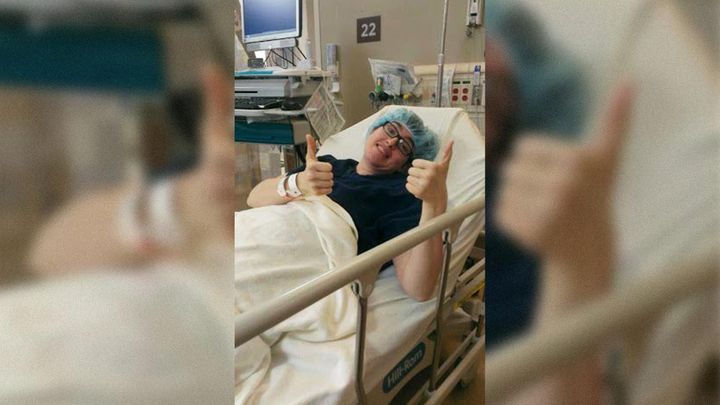
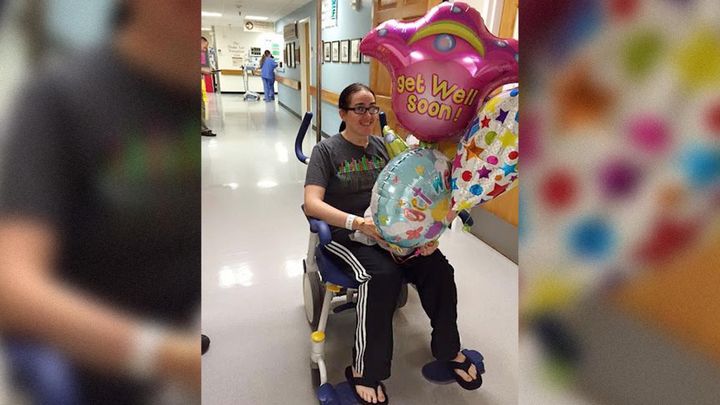
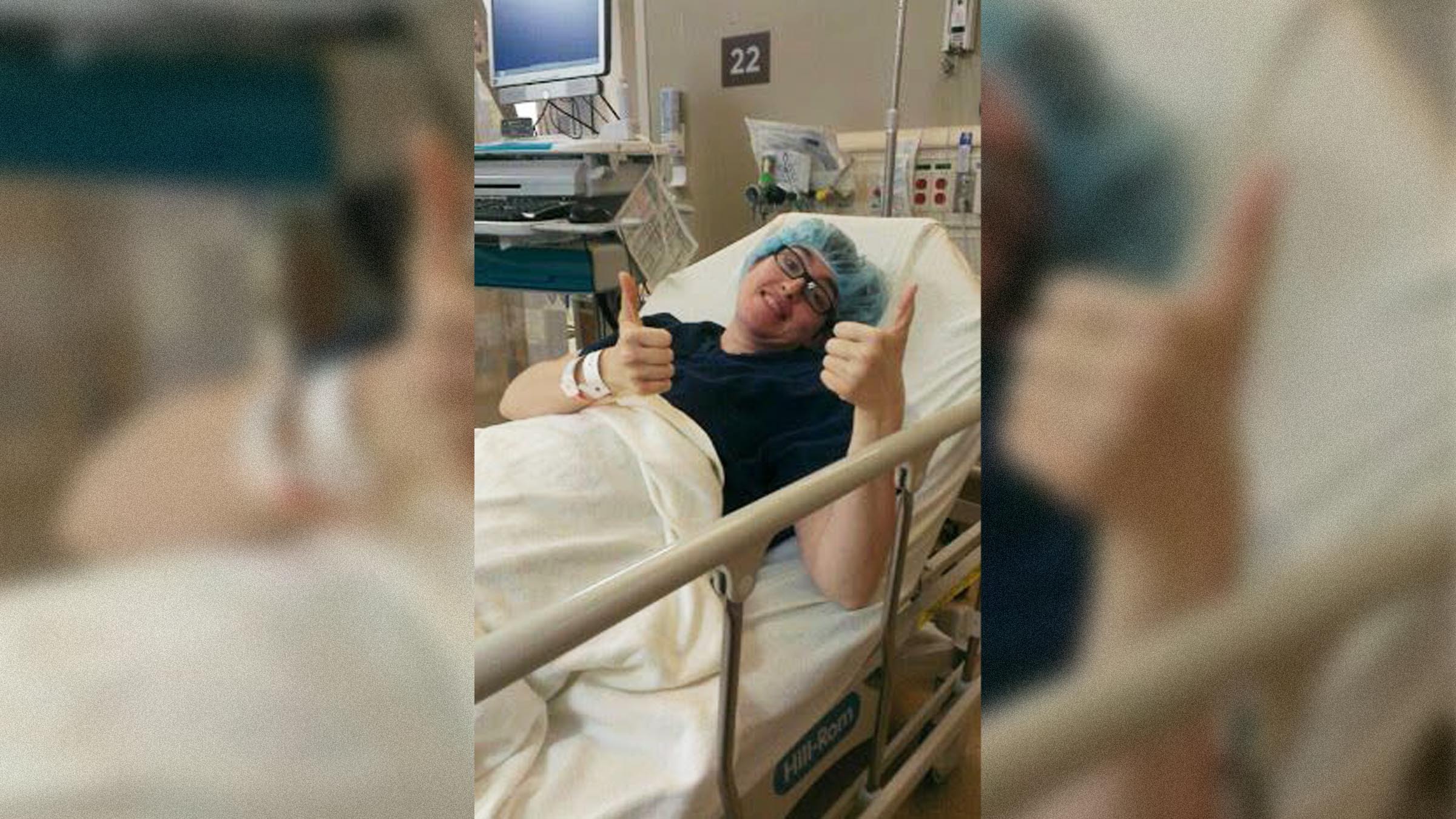
The author giving her mom the thumbs up after her surgery in October 2015.

Courtesy of Liz Armstrong

The author giving her mom the thumbs up after her surgery in October 2015.

Months passed. I eventually opted out of relationship attempts altogether and was spending lots of quality time with my cats. One day, an email showed up.

“Most of you know that my transplanted kidney has been declining for a while,” Paul wrote. “My doctors think that, within a year or so, I’ll need another transplant or dialysis. I’d like to avoid dialysis, though. It can lead to complications, and even when it goes well, I understand it’s kind of miserable. Also, living donor kidneys are more successful than cadaver organs. And so, my doctors have asked me to try to find a donor. ‘Bring us a warm body!’ was their specific instruction.”

It wasn’t a lack of desire to help that prevented me from responding ― it was the Army. I was enlisted at the time and doubted the military would be keen on the idea of a soldier getting an organ removed, even for a worthy cause. I reluctantly archived the email and crossed my fingers that someone else would come along who happened to be willing, able and Type O.

Around a year after our first date, we met to catch up and see a play. Though there were plenty of parts worth laughing at, the performance was pretty gloomy. As the main characters spiralled toward their inevitable ends, one grimly mused, “Dying is not romantic.” I looked over at Paul and saw that his eyes were bright with tears.

His dialysis had begun. He was paler, weaker, slower, and more miserable overall. He was “getting through it and getting on with it,” but it was taking a toll on him.

My friend was dying. It was not romantic.

***

I got home from the play and sent an email to Paul’s transplant coordinator. “I’m hesitant to jump in the potential donor pool because I’m in the military,” I wrote. “I’m not certain I could actually get approval to donate.” I begged her to keep it a secret from Paul, not wanting to get his hopes up.

Everything after that was a flurry of tests and paperwork. Physical, CT scan, EKG, chest X-ray. Psychiatrists from the civilian and military worlds both interviewed me to make sure I wasn’t too unstable to make my own decisions. Every time I turned in one document, I needed a signature on another.

Throughout the whole process, statistics constantly ran through my mind. The average wait time for a cadaver kidney is five years, and Paul had just been put on the national waiting list when he began dialysis. At any given time, the list has nearly 100,000 people on it.

My secret from Paul didn’t stay under wraps for quite as long as I wanted. Before I got a thumbs-up from the military, another of his friends who was going through testing heard from the transplant team that there was a strong contender waiting for the Army’s permission. She spilled the beans.

When he found out, Paul told me he immediately felt what he could only describe as pure joy. He was elated and relieved, but most importantly, “for the first time in months, hopeful.” I tried to feel confident that everything would work out, but was terrified of disappointing him if I ultimately couldn’t donate.

It took four nail-biting months of waiting. After getting medically cleared and pushing paperwork all the way to the Office of the Surgeon General in Washington, my request was finally approved.

When Paul and I met again in the hospital after the surgery, I was flooded with a relief there aren’t words for. I’ve been told I should be proud of myself. I’m not. I’m grateful. I gave a good man more time. He’s so much healthier now and off dialysis. My kidney is serving him well. With luck, it’ll hold out for many years to come.

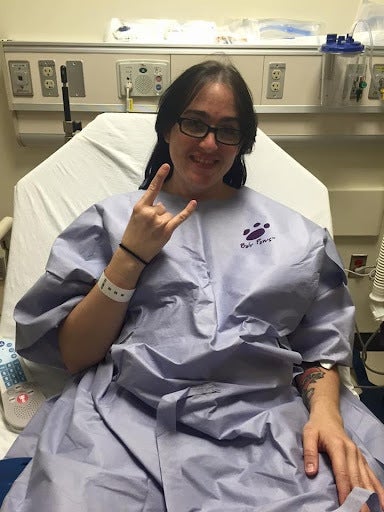
The author preparing to leave the hospital. “The man who wheeled me to the car asked, ‘Is it your first?’ assuming I had given birth. I responded that it was my first, and hopefully only, kidney donation."

Courtesy of Liz Armstrong

The author preparing to leave the hospital. “The man who wheeled me to the car asked, ‘Is it your first?’ assuming I had given birth. I responded that it was my first, and hopefully only, kidney donation.”

I often get asked why I was willing to donate to someone I hadn’t known for very long, even though any health complications could’ve jeopardised my Army career. Most people who would shell out an organ for someone are doing it for a family member. Many say they couldn’t do it, no matter what.

But here’s the thing: Paul was dying. It would’ve been a long, slow road of suffering while he waited for a cadaver kidney that probably wouldn’t have been as functional as my living one. People don’t need two kidneys to live a normal life. I wasn’t that likely to experience negative side effects and it turned out that I didn’t. Those who make it through the donor selection process are already healthy, so the surgery doesn’t usually affect them much. And I can’t stress this enough: Paul was dying. I wanted to save the life of my dying friend.

Realistically, Paul probably did me a service, too. Revenge-screwing some muscle from a hookup site wasn’t the safest life choice I could make. Paul was proof that there were still decent men in the world, but any other online rando might not have been one of them.

Since the surgery, we’ve remained friends. Though we don’t see each other very often, we talk online almost daily. A while back he married another Latin teacher, whom I’m sure he also wooed with Roman nudes.

If you’re considering becoming a living organ donor — and I strongly recommend you do — you can get more information here.

Liz Armstrong is finally wrapping up her undergraduate studies after spending eleven years in the Army and a handful more bobbing aimlessly through life. A student at the University of Maryland, College Park, she is pursuing degrees in English and Chinese, though how she will apply them remains a mystery. She lives with her wife and three cats.

Share Button

A Guy I Once Dated Is Now Famous, And It’s As Weird As You’d Imagine

My daughter was asleep in her room down the hall, and my husband and I gathered our bowls of popcorn and settled on the couch. I had my feet up on the coffee table, was comfortable in my sweatpants, and I relaxed into the cushions as my husband hit “play” on the newest episode of one of the most popular series on TV in recent years.

And just a few minutes into it, who should appear on screen but my ex-flame?

Let’s call him Mike. He always shows up when I least expect it ― and I really should expect it by now.

Every time it happens, I groan and ask my husband, “Is that Mike?” even though I already know it is.

“Yep,” he answers. He’s never as surprised as I am.

It all started with a commercial over a decade ago. I was watching the Detroit Red Wings back when they were good, and when the second period ended, there was Mike, laughing with some stranger on a couch. I don’t even remember what the ad was for because I was so shocked to see that familiar face staring back at me from my TV screen.

That was the first time I asked my husband, “Wait, is that Mike?”

They don’t know each other personally, but he’s known of Mike since he met me 15 years ago, when we used to go to my brother’s comedy shows and Mike was also onstage. My husband has always thought Mike is hilarious ― and he is, but still, it’s weird.

Then one night, we decided to watch a popular comedy, and there was Mike, only for a minute — but he was there, nonetheless. I’d know those rolling eyes and that crinkled forehead anywhere. I still asked, “Is that Mike?” I just couldn’t believe he had made it to Hollywood.

A few years later, while watching a highly anticipated remake of a popular movie from decades ago, guess who showed up in a pivotal scene, and guess who thought she might be seeing things? “Wow, he’s really made the big time,” I said out loud, astonished, more to myself than my husband.

Little did I know he was just getting started.

“Mike keeps popping up in my life in the most unexpected ways. I guess I should be used to it by now, but every time it happens, it feels like the first time.”

I have kissed many men. Most of them I haven’t seen in years. I know the possibility of running into them on the street is highly unlikely. And even if I did, there would be some I wouldn’t recognise or even remember. But Mike keeps popping up in my life in the most unexpected ways. I guess I should be used to it by now, but every time it happens, it feels like the first time.

I met Mike on spring break during my senior year of high school. I was with three of my girlfriends, and he was staying at the same hotel just down the hall from us with three of his guy friends. When we all bumped into each other, we learned that we all lived in the same state less than an hour away from each other.

We hung out with them the entire week, and by the end of the first day, I was already in love with Mike. He was funny and handsome. He had a suaveness to him. He was as smooth as the lines he used.

I felt like I was Sandy from “Grease” and Mike was my Danny. We played in the waves, kissed near the rocks, and I refused to believe that our romance would soon be over. Our brief affair felt more like a dream than reality and I didn’t want to return home, where I knew it would be difficult for things to continue. I may have been smitten but I wasn’t a fool ― we were 18, living an hour apart, committed to attending colleges on the opposite side of our state ― and I knew there was no real future there.

But, to my surprise, I later found out he was taking acting classes with my brother. What were the chances? So, after every show, we’d end up reconnecting. Ultimately, we couldn’t get past the distance, and eventually, he moved even further away to pursue his acting career.

There was a time when Mike and I weren’t all the different. We both liked acting and singing. We both liked “Rent” and the Barenaked Ladies. We both had big dreams for the future.

The day after Mike appeared at a major award show and I saw him onstage with so many other actors I greatly admire, I drove to my local community college campus and half-boasted, half-lamented to my composition students that someone I used to make out with had won.

There I was, making peanuts teaching 19-year-olds how to properly use a comma. It was hard not to compare myself to Mike — and easy to feel jealous of his fame and success — but then again, teaching college had been my big dream for the future. So why, when I saw him on that stage, did I feel so unsatisfied?

I had never really wanted fame ― not since I was in middle school, anyhow. And even then, I’m not sure I really wanted it. I mean, what 12-year-old doesn’t think they want to be famous? What I really wanted was to teach and write. I didn’t have dreams of moving to LA or New York. I loved the state where I grew up. And in addition to wanting a husband who was sweet and funny and kind, I also wanted one who was grounded, loyal and dependable ― things Mike could never really be while chasing an acting career. I wanted a family. I wanted stability.

And I’m happy to say I was lucky ― I got all of that. My life is much like many other middle-class Midwesterners: I have a job I care about, a modest home we’ve almost paid off, a wonderful, devoted husband, and a sweet kid I’m crazy about. Sometimes I write things that some people read, but for the most part, my life is quiet. And it’s exactly how I always wanted it to be.

After I wrote this essay, I ran to the grocery store and bought my daughter a new toothbrush. I couldn’t help thinking about Mike and how he doesn’t have to do his own grocery shopping anymore. He can probably pay people to do that. And I felt a twinge of jealousy again.

“There I was, making peanuts teaching 19-year-olds how to properly use a comma. It was hard not to compare myself to Mike — and easy to feel jealous of his fame and success.”

Mike’s life is filled with red carpets, designer suits and appearances on late-night talk shows — the exact opposite of quiet. The exact opposite of my life ― a life I love. So what’s the problem?

I guess it’s that these days ― maybe more than ever before ― we’re always comparing our lives to everyone else’s lives. And social media has made it even easier to measure how we’re doing against how someone else is doing ― or at least how they appear to be doing. We scroll through Instagram and see our friends ― or complete strangers ― boasting about their exotic vacations or fabulous home remodels or the good grades their children are getting, and we do our own boasting. We look at Twitter and see someone got a promotion or a book deal or a new car, and we share our own successes. But we all know that social media doesn’t always show the reality of someone’s life, and even if and when it does, should that make us feel any less worthy or that our lives are any less worthwhile? Of course not.

What we need to do ― what I’ve needed to do ― is remind ourselves that the grass is often greener and that we have our own blessings to count. There are always going to be people who have more, who have done more, who know more, but if we get and stay wrapped up in that game, we’ll never win ― or we’ll be too busy to realise that we’re already winning.

I followed Mike’s Instagram for a while. And I ooohed and ahhhed at some of his posts, but I also wondered if he would ooooh and ahhhh at any of mine if he were to see them. Maybe catching a glimpse of my adorable daughter or the family gatherings I cherish might make him a little jealous of my life. Who knows? In the end, it doesn’t really matter. Jealousy isn’t the point.

Even though I’m not (yet!) the bestselling author I hope to be one day and even though I’m not the Broadway star I dreamt of being when I was a kid, I’m happy, and that’s an incredible thing to be able to say.

It’s sometimes easy to forget that when the famous guy I once dated pops up on my TV, but hopefully, from here on out, whenever I see his face, I’ll be reminded that dreams come true ― both his and mine.

Jennifer Furner has essays in the anthologies “Art in the Time of Covid-19” and “A Teenager’s Guide to Feminism.” She has been published in Motherwell, Folks, Santa Fe Lit Review, Belmont Story Review, and others. She lives in Grand Rapids, Michigan, with her husband and daughter. For more of her writing, visit her website, jenniferfurner.com.

Share Button

Turns Out You Need More Than A Good Sense Of Humour To Bag ‘The One’

Listen, we all love to laugh. But according to new relationships research from the University of Queensland, being funny isn’t necessarily the key to bagging you a second date.

A team of researchers tested heterosexual couples to find out if humour really is as attractive as we think it is.

They tested two predictions. Firstly, that humour is an attractive trait and secondly that men are more attracted to how women receive their humour, and women are more attracted to men who make them laugh.

Henry Wainright, lead author of the research paper, said the results were quite surprising.

They found that irrespective of sex, participants who laughed more at their partner or people who received more laughs didn’t rate their partner as more or less attractive.

“It’s interesting that this result opposes the commonly held belief that women are more attracted to funny men and that men are more attracted to women who find them funny,” Wainright told PhysOrg.

He continues: “In the past, it was thought that being attracted to funny individuals was useful because your children were more likely to inherit beneficial characteristics, like intelligence.

“However, our results suggest that trying too hard to be funny on a date might be more counterproductive than helpful – you should just be yourself.”

Gigi Engle, a sex and relationships psychotherapist, says we put too much stock in believing that humour is the thing that people are on the lookout for when dating.

“I do think that a shared sense of humour, that shared value, can be really helpful. But what I think is more important for us to have is a sense of emotional connection and emotional safety,” she says.

“Some people might attribute a shared sense of humour to a shared sense of emotional connectedness.”

She suggests that while it’s true that a shared sense of humour can mean you’re on the same page, misunderstanding each other’s sense of humour can also cause rifts in relationships.

“There’s a big difference between thinking your partner is funny, and being safe in the knowledge that your partner understands you,” she adds.

In short: look for emotional connection and laugh away to your heart’s content – or don’t. Just be yourself.

Share Button