This smart catalyst cracks a challenge that stumped chemists for decades

Ketones appear throughout organic molecules, which is why chemists are eager to create new reactions that take advantage of them when forming chemical bonds. One reaction that has remained especially difficult is the one-electron reduction of ketones needed to generate ketyl radicals. These radicals are highly useful intermediates in natural product synthesis and pharmaceutical research, but most available techniques are designed for aryl ketones rather than simpler alkyl ketones. Although alkyl ketones are far more common, they are also naturally harder to reduce than their aryl counterparts. With this challenge in mind, a team of organic and computational chemists at WPI-ICReDD at Hokkaido University has developed a catalytic strategy that finally enables the formation of alkyl ketyl radicals. The study appears in the Journal of the American Chemical Society and is available open access.

In earlier work, WPI-ICReDD scientists showed that a palladium catalyst paired with phosphine ligands could drive light-activated (reaction activated by shining light) transformations of aryl ketones, but the same system did not work for alkyl ketones. Their data indicated that alkyl ketyl radicals did form briefly. However, these radicals immediately returned an electron to the palladium center, a phenomenon known as back electron transfer (BET), before any useful reaction could proceed. As a result, the starting material remained unchanged.

Similar to traditional palladium-based catalysis, the behavior of photoexcited palladium catalysts is highly dependent on the phosphine ligand attached to the metal. The team suspected that choosing the correct ligand might unlock reactivity with alkyl ketones. The difficulty was scale: thousands of phosphine ligands exist, and experimentally screening them for an unfamiliar reaction would be slow, labor-intensive, and generate unnecessary chemical waste.

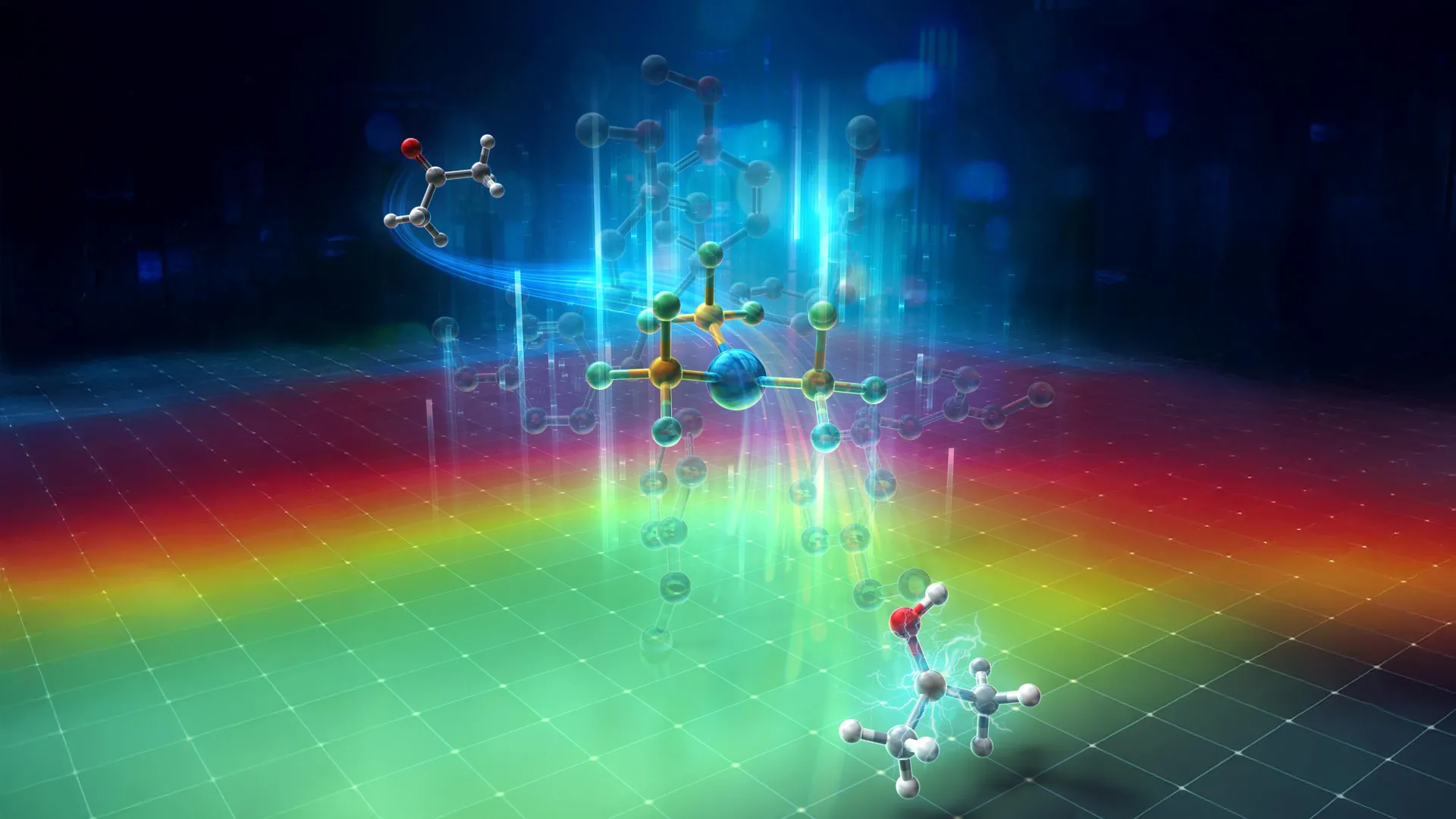
To overcome these limitations, the researchers turned to computational chemistry to narrow down the field of candidate ligands. They used the Virtual Ligand-Assisted Screening (VLAS) approach developed by Associate Professor Wataru Matsuoka and Professor Satoshi Maeda at WPI-ICReDD. Applying VLAS to 38 phosphine ligands, the method produced a heat map that predicted how well each ligand might promote the desired reactivity by analyzing electronic and steric properties.

Guided by these predictions, the team selected three ligands for laboratory testing and ultimately identified L4 as the most effective option — tris(4-methoxyphenyl)phosphine (P(p-OMe-C6H4)3). This ligand successfully suppressed BET, allowing alkyl ketones to generate ketyl radicals and participate in high-yield transformations.

The resulting method provides chemists with an accessible way to work with alkyl ketyl radicals and demonstrates how VLAS can rapidly guide the development and optimization of new chemical reactions.

Share Button

School shuts for deep clean after pupil sickness

Congleton High School wrote to staff and parents to inform them of the closure.

Share Button

A hidden brain energy signal drives depression and anxiety

A new JNeurosci study led by Tian-Ming Gao and colleagues at Southern Medical University examined how adenosine triphosphate (ATP) signaling might influence depression and anxiety in male mice. ATP is best known as the cell’s main source of energy, but it also acts as a chemical messenger that helps neurons communicate. Because healthy communication between brain cells is essential for regulating emotions, the researchers focused their work on the hippocampus, a region involved in memory, stress responses, and the development of depressive symptoms.

To better understand how ATP functions in this area, the team examined signaling patterns in the hippocampus and how they changed under stress. The hippocampus has long been associated with mood disorders, in part because it is sensitive to prolonged stress and is involved in shaping emotional behavior. disruptions in this region can affect how the brain processes stress, which may set the stage for depression or anxiety.

Stress, ATP Loss, and the Role of Connexin 43

The researchers found that male mice prone to developing depressive- and anxiety-like behaviors after long-term stress had lower levels of ATP. These mice also produced less of a key protein required for ATP release (connexin 43). Connexin 43 forms channels that allow ATP to move between certain cells, making it an important part of how the brain maintains healthy energy and signaling levels.

To test whether reduced ATP release contributed to mood-related symptoms, the team genetically decreased or removed connexin 43 in cells that normally release ATP. This experiment was done in another group of mice that had not been exposed to prolonged stress. Even without a stressful environment, lowering connexin 43 triggered depressive- and anxiety-like behaviors and reduced ATP levels. This finding suggested that disruptions in ATP release alone could influence emotional behavior.

When the researchers restored connexin 43 in the hippocampus of stressed mice, ATP levels returned to normal and the animals showed noticeable improvements in their behavior. This recovery helped reinforce the idea that ATP signaling plays a central role in regulating mood.

A Shared Biological Pathway for Depression and Anxiety

Gao explains, “This is the first direct evidence that deficient ATP release in [a region of the] hippocampus drives both depressive- and anxiety-like behaviors, revealing a shared molecular pathway [for these conditions].” Identifying such a pathway is important, as depression and anxiety often occur together and can be difficult to treat simultaneously with existing therapies.

Gao notes that the link between connexin 43 and ATP release highlights a possible target for future treatments. By improving or restoring ATP signaling, scientists may eventually be able to develop interventions that address both conditions at once. The research team also plans to include both male and female mice in upcoming studies to determine whether these mechanisms operate similarly across sexes, which could broaden the relevance of their findings.

Share Button

Man donates kidney to woman he met after crash

Transplant donor says “anyone with a heart would give something to keep someone else alive”.

Share Button

The body trait that helps keep your brain young

Researchers report that people who have more muscle and a lower visceral fat to muscle ratio tend to show signs of a younger biological brain age. This conclusion comes from a study that will be presented next week at the annual meeting of the Radiological Society of North America (RSNA). Visceral fat refers to the fat stored deep in the abdomen around key internal organs.

“Healthier bodies with more muscle mass and less hidden belly fat are more likely to have healthier, youthful brains,” said senior study author Cyrus Raji, M.D., Ph.D., associate professor of radiology and neurology in the Department of Radiology at Mallinckrodt Institute of Radiology at Washington University School of Medicine in St. Louis, Missouri. “Better brain health, in turn, lowers the risk for future brain diseases, such as Alzheimer’s.”

How MRI Measures Brain Age and Body Composition

Brain age is an estimate of how old the brain appears biologically, based on its structure as seen through MRI. Body MRI can track muscle mass, which serves as a marker for efforts to reduce frailty and strengthen overall health. Estimated brain age from structural scans may also shed light on risk factors for Alzheimer’s disease, including muscle loss.

“While it is commonly known that chronological aging translates to loss of muscle mass and increased hidden belly fat, this work shows that these health measures relate to brain aging itself,” Dr. Raji said. “It shows muscle and fat mass quantified in the body are key reflectors of brain health, as tracked with brain aging.”

Study Details: Imaging, AI Analysis, and Participant Profile

The study evaluated 1,164 healthy adults (52% women) across four research sites using whole-body MRI. Participants had a mean chronological age of 55.17 years. Imaging included T1-weighted MRI sequences, which highlight fat as bright and fluid as dark, providing a clear view of muscle, fat, and brain tissue. An artificial intelligence (AI) algorithm measured total normalized muscle volume, visceral fat (hidden belly fat), subcutaneous fat (fat under the skin) and predicted brain age.

The data indicated that individuals with a higher visceral fat to muscle ratio had higher predicted brain age. Subcutaneous fat showed no meaningful association with how old the brain appeared.

“The participants with more muscle tended to have younger-looking brains, while those with more hidden belly fat relative to their muscle had older-looking brains,” Dr. Raji said. “The fat just under the skin wasn’t related to brain aging. In short, more muscle and a lower visceral fat to muscle ratio were linked to a younger brain.”

Implications for Health, Prevention, and Future Interventions

Dr. Raji explained that focusing on building muscle and reducing visceral fat are realistic and actionable goals. Whole-body MRI and AI-based brain age estimates can offer clear benchmarks for programs designed to lower visceral fat while maintaining or increasing muscle.

He also noted that the results highlight the close connection between physical health and brain health.

“This research has validated widely held hypotheses about the association between body composition biomarkers and brain health and provides a foundation for those biomarkers to be included in future trials of various metabolic interventions and treatments,” he said.

What the Findings Mean for GLP-1 Weight Loss Drugs

Commonly prescribed glucagon-like peptide-1 (GLP-1) weight loss medications, including Ozempic, are effective at reducing body fat but may also contribute to muscle loss. Dr. Raji suggested that the study’s findings could help guide the development of next-generation therapies. These future treatments may aim to reduce visceral fat more than subcutaneous fat while protecting muscle mass.

“Losing fat — especially visceral fat — while preserving muscle volume would have the best benefit on brain aging and brain health based on insights from our work,” he said. “Thus, our study can inform future treatments by promoting research that quantifies MRI of body fat, muscle and brain age, which can help determine the optimal dosing regimens for GLP-1s to achieve the best outcomes in body and brain health.”

Co-authors are Somayeh Meysami, M.D., Soojin Lee, Ph.D., Saurabh Garg, M.Sc., Nasrin Akbari, M.Sc., Rodrigo Solis Pompa M.D., M.H.Sc., Ahmed Gouda, M.Sc., Thanh Duc Nguyen, Ph.D., Saqib Abdullah Basar, M.B.B.S., M.P.H., Yosef G. Chodakiewitz, M.D., David A. Merrill, M.D., Ph.D., Alex Exuzides, Ph.D., M.D., Amar P. Patel, M.D., Daniel J. Durand, M.D., M.B.A., and Sam Hashemi, M.Sc.

Share Button

‘People Love It’: 7 Ridiculously Easy Meals Guests Will Be Wowed By

As if thinking of what to eat in the week wasn’t hard enough, then comes the challenge of actually cooking the meals. When will the injustice end?!

Still, thanks to people like Redditor u/DanielQ_bu7, we can at least work out the least amount of effort we need to expend for the best possible results.

In a post shared to r/Cooking, the poster recently asked respondents to share meals which take next to no effort but which never fail to impress loved ones and guests.

Here are some of our favourite responses:

1) “Roast chicken. So easy and smells amazing when roasting.”

Marcella Hazan’s roast chicken with two lemons has never failed to come out juicy and delicious for me, and it always impresses. And it’s so damned simple,” u/Stuffandwhatnot agreed.

2) “Baked Brie.”

“Wrap [puff pastry] around a wheel of brie. You can top with preserves, honey, or just go bare. Serve with crackers or Melba toast.”

Credit: u/MiladyStarkX

“A friend of mine sautées mushrooms, then piles them on top of the brie and wraps it all in [clingfilm] and puts it in the fridge for a couple of days,” AndSomehowTheWine2 responded.

“Then unwrap the [clingfilm], wrap in puff pastry, and bake. The mushroom flavour just infuses [into] the brie, and it is all DELICIOUS.”

3) “Beef Bourguignon.”

Credit: u/LeRoiDeNord

“Julia Child’s recipe is my favourite. It’s really easy, and people LOVE it,” replied u/DaCouponNinja.

4) “Tiramisu.”

“My family thinks it is some sort of miracle that I make it. I think it’s amazing that it’s so simple (I guess it could be complicated if I made the ladyfingers myself).”

Credit: u/Darthsmom

5) “No knead bread.”

Writer’s note: My favourite focaccia recipe involves a no-knead overnight proof. I can never get over how good it tastes.

6) “Risotto or carbonara. Italian food in general is worth adding to your repertoire.”

Credit: u/Kathryn_sedai

“Once you get it right (took me about four tries), add cacio e pepe to that list,” said u/Skoalreaver.

7) “Dauphinoise potatoes. I make it for Christmas dinner, and it’s the one recipe everyone always asks for.”

Credit: u/Egedwards

Share Button

Review of unpaid carer debts announced after damning report

Former charity boss Liz Sayce found confusing guidance on Carer’s Allowance had left thousands with fines and surprise bills.

Share Button

Simon Cowell Reacts To Those Who ‘Blame’ Him For Liam Payne’s Death

Simon Cowell has responded to those critics who “blame” him for the sudden death of former One Direction singer Liam Payne.

The TV and music mogul mentored Liam during his and his One Direction bandmates’ time on The X Factor in 2011, and later signed them to his now-defunct Syco record label for the duration of their time together.

In October of last year, Liam died tragically at the age of 31 after falling from a hotel balcony in Argentina.

Prior to that, the chart-topping singer had spoken publicly about issues relating to his mental health and substance abuse, and a toxicology report found alcohol, cocaine and prescribed drugs in his system at the time of his death.

During a new interview with Rolling Stone, Simon was asked about Liam’s death, stating: “When I heard the news, it really hit me. I saw him a year before this happened. He came over to my house. We talked about his son and being a dad.

“I remember saying, ‘Music is not everything. Don’t let it run your life anymore. Find something else that you are passionate about’.”

Liam Payne pictured in 2017

via Associated Press

Simon continued: “You ask yourself that question: ‘Could I have done anything more? What would’ve happened to Liam if he hadn’t been in the band?’.

“Having spoken to his mum and dad recently, all they kept telling me was he was so proud of what he had achieved. I wish I could turn back the clock, of course. When I spoke to him that day, I felt really good about him. I thought, ‘Wow, you seem in a really good place’.”

Asked about those who would put the blame on him for the circumstances leading to Liam’s death, the Britain’s Got Talent judge insisted he doesn’t “read any of this stuff because if I did, you would just torture yourself”.

“The idea that you are essentially responsible for somebody’s life, 10 years after you’ve signed someone? You can’t do that,” he added.

Simon Cowell with One Direction in 2013

via Associated Press

Last year, Simon was among the guests at Liam’s funeral, where his four 1D bandmates were also in attendance.

Months before Liam’s death, Simon sparked controversy when he claimed that his “one regret” when it came to One Direction was not being made the legal owner of the group’s name, which even appeared to spark a response from members of the group at the time.

Share Button

Milkshakes and lattes to face sugar tax in UK

The tax on sugary drinks is being extended to include pre-packaged milk-based drinks.

Share Button

Strictly Come Dancing Announces Soap Star Nicholas Bailey For Christmas Special Line-Up

EastEnders star Nicholas Bailey has become the fourth celebrity confirmed for this year’s Christmas special of Strictly Come Dancing.

Nicholas is best known for his performance as Albert Square’s resident doctor Anthony Trueman, a role he’s played on and off for the last 25 years.

On Tuesday afternoon, it was announced he’d be performing alongside Strictly pro Luba Mushtuk – who was not given a celebrity partner on this year’s season – on the upcoming festive episode, which will air on Christmas Day.

He enthused: “I’m really excited to be doing this, almost as excited as my wife and daughters are! Hopefully I’ll do them, Albert Square and Luba proud.”

“Bring on the dance floor!” Nicholas added.

Nicholas joins a trio of celebrities already confirmed for the festive extravaganza, with the line-up currently made up of former I’m A Celebrity winner Scarlett Moffatt, All Saints singer Melanie Blatt and Gladiators fave Jodie Ounsley, better known to most of us under her alias Fury.

Outside of EastEnders, Nicholas has also appeared in shows like Coronation Street and the radio soap The Archers. He also competed on the talent show Soapstar Superstar back in 2006, finishing in eighth place overall.

This year’s Christmas Day episode of Strictly is a significant one, as it will mark Tess Daly and Claudia Winkleman’s final time presenting the show, after announcing last month that they were both stepping down as hosts at the end of the current series.

Before all that, though, there’s the ongoing regular series of Strictly, with six couples still left in the competition.

The remaining two celebrities left to be unveiled for this year’s Strictly Christmas special will be announced in the coming days.

Share Button