Harry Potter TV Series To Recast Ginny Weasley Due To ‘Unforeseen Circumstances’

The producers of the new Harry Potter TV series have announced that a major character is being recast ahead of its second season.

Child actor Gracie Cochrane is set to play Ginny Weasley in the latest adaptation of JK Rowling’s children’s stories, which will premiere at the end of this year.

However, when production on season two – in which the youngest Weasley sibling is featured more prominently – gets underway, the character will be recast for undisclosed reasons.

In a statement to Deadline, the young performer and her family said: “Due to unforeseen circumstances Gracie has made the challenging decision to step away from her role as Ginny Weasley in the HBO Harry Potter series after season one.

“Her time as part of the Harry Potter world has been truly wonderful, and she is deeply grateful to [casting director] Lucy Bevan and the entire production team for creating such an unforgettable experience.”

They added: “Gracie is very excited about the opportunities her future holds.”

US broadcaster HBO also said: “We support Gracie Cochrane and her family’s decision not to return for the next season of HBO’s Harry Potter series, and we are grateful for her work on season one of the show. We wish Gracie and her family the best.”

A new adaptation of Harry Potter was first confirmed to be in the works by HBO in 2023, with one season being dedicated to each of the seven books.

The project has faced some backlash due to the presence of Harry Potter author JK Rowling as an executive producer.

Rowling has become a divisive figure in recent years due to her stance on issues relating to transgender people, which has included deliberately and repeatedly misgendering trans public figures, and donating tens of thousands of pounds to the campaign group which raised the initial legal challenge that led to the UK Supreme Court’s ruling last year that the legal definition of a woman should include only those who were assigned female at birth.

Share Button

Scientists found a smarter Mediterranean diet that slashes diabetes risk by 31%

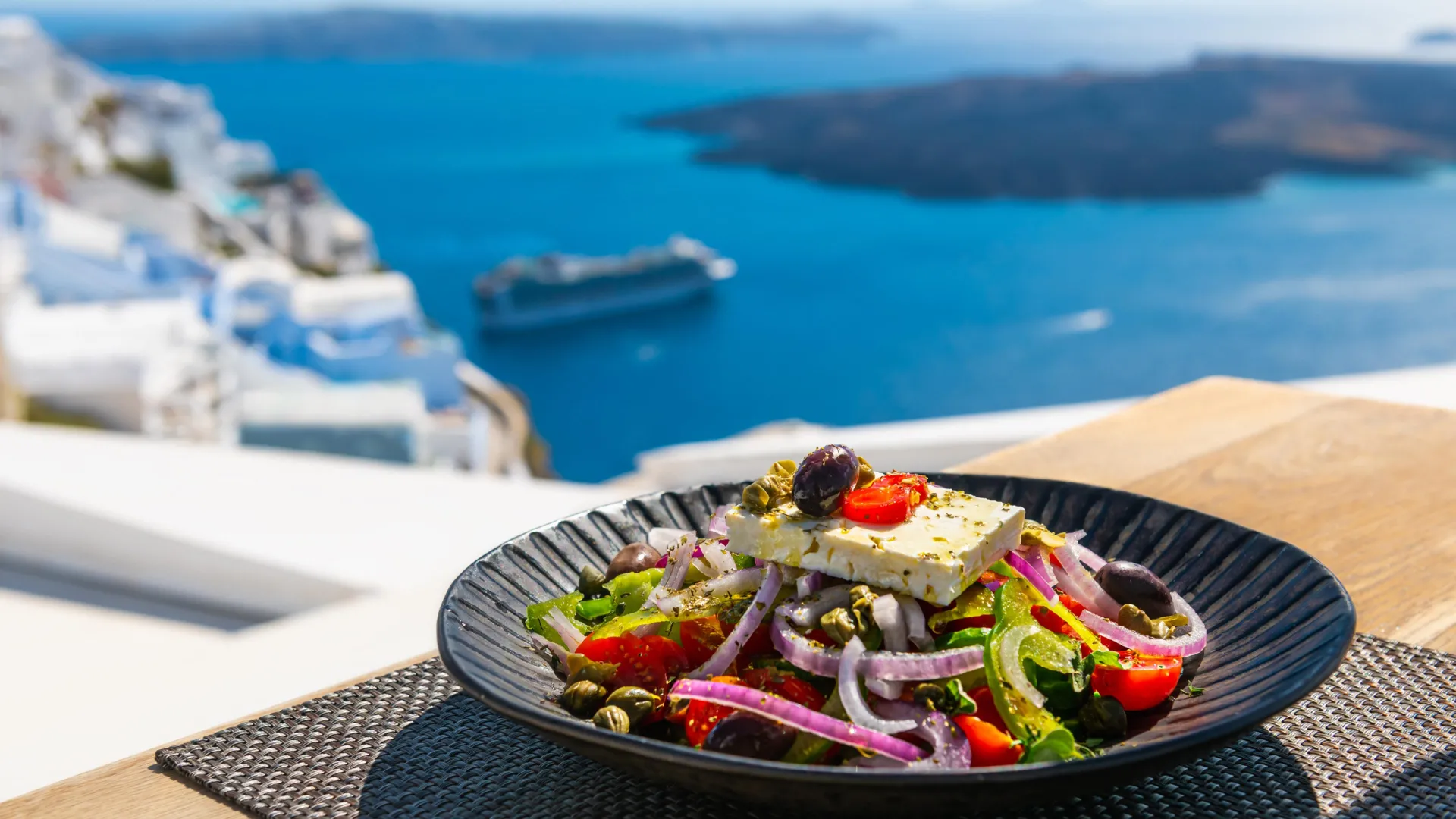
A Mediterranean diet is already famous for its heart and metabolic benefits. But a major Spanish clinical trial suggests it may work even better against type 2 diabetes when paired with three realistic upgrades: eating fewer calories, moving more, and getting professional support for weight loss.

The PREDIMED-Plus trial found that this more structured version of Mediterranean living reduced the risk of developing type 2 diabetes by 31%. The project is the largest nutrition trial conducted in Europe and involved the University of Navarra along with more than 200 researchers from 22 other Spanish universities, hospitals, and research centers. The work was carried out in more than 100 primary care centers within Spain’s National Health System.

A Smarter Version of a Famous Diet

PREDIMED-Plus began in 2013 after the University of Navarra received an Advanced Grant from the European Research Council (ERC) worth more than €2 million. Between 2014 and 2016, additional institutions joined, bringing total funding to more than 15 million euros. Most of that support came from the Carlos III Health Institute (ISCIII) and the Center for Biomedical Research Network through its areas of Physiopathology of Obesity and Nutrition (CIBEROBN), Epidemiology and Public Health (CIBERESP) and Diabetes and Associated Metabolic Diseases (CIBERDEM ).

The results, published in Annals of Internal Medicine, were based on 4,746 adults between ages 55 and 75. All had overweight or obesity and metabolic syndrome, but none had diabetes or cardiovascular disease at the start of the study. Researchers followed participants for six years to see whether a more intensive Mediterranean based lifestyle plan could offer stronger protection against type 2 diabetes than the traditional Mediterranean diet alone.

One group followed a calorie reduced Mediterranean diet (about 600 kcal fewer per day), added moderate physical activity (brisk walking, strength and balance training), and received professional guidance. The comparison group followed a traditional Mediterranean diet without calorie restriction or exercise advice.

Small Changes, Big Diabetes Protection

The difference between the two approaches was striking. Participants in the intervention group were 31% less likely to develop type 2 diabetes than those in the comparison group.

They also lost more weight and reduced abdominal fat more effectively. On average, the intervention group lost 3.3 kg and reduced waist circumference by 3.6 cm. The control group lost only 0.6 kg and trimmed waist size by 0.3 cm.

In real world terms, the researchers estimated that the program prevented about three cases of type 2 diabetes for every 100 participants. For a condition affecting hundreds of millions of people globally, that kind of prevention could add up quickly if applied broadly among people at elevated risk.

“Diabetes is the first solid clinical outcome for which we have shown — using the strongest available evidence — that the Mediterranean diet with calorie reduction, physical activity and weight loss is a highly effective preventive tool,” said Miguel Ángel Martínez-González, Professor of Preventive Medicine and Public Health at the University of Navarra, Adjunct Professor of Nutrition at Harvard University, and one of the principal investigators of the project. “Applied at scale in at-risk populations, these modest and sustained lifestyle changes could prevent thousands of new diagnoses every year. We hope soon to show similar evidence for other major public health challenges.”

Why This Matters for a Global Health Crisis

Type 2 diabetes is one of the world’s fastest growing chronic diseases. The International Diabetes Federation estimates that more than 530 million people worldwide now live with diabetes. The rise has been fueled by urbanization, less healthy diets, more sedentary lifestyles, reduced physical activity, population aging, and increasing rates of overweight and obesity.

Spain has about 4.7 million adults with diabetes (most of them type 2), one of the highest rates in Europe. Across Europe, more than 65 million people have diabetes. In the United States, about 38.5 million people are affected, and the country has one of the highest health care costs per patient in the world. Experts warn that prevention is essential because type 2 diabetes raises the risk of cardiovascular, kidney, and metabolic complications.

“The Mediterranean diet acts synergistically to improve insulin sensitivity and reduce inflammation. With PREDIMED-Plus, we demonstrate that combining calorie control and physical activity enhances these benefits,” explained Miguel Ruiz-Canela, Professor and Chair of Preventive Medicine and Public Health Department at the University of Navarra’s School of Medicine and first author of the study. “It is a tasty, sustainable and culturally accepted approach that offers a practical and effective way to prevent type 2 diabetes — a global disease that is, to a large extent, avoidable.”

Newer Research Adds More Context

Since the PREDIMED-Plus diabetes findings were prepared, related research has continued to strengthen the broader picture. A PREDIMED-Plus body composition analysis published in JAMA Network Open found that the energy reduced Mediterranean diet plus physical activity helped reduce total and visceral fat while slowing age related loss of lean mass in older adults with overweight or obesity and metabolic syndrome. That matters because visceral fat and declining muscle are closely tied to cardiometabolic risk.

More recent PREDIMED-Plus work has also explored how sedentary time may affect cardiovascular health. A 2026 study in BMC Cardiovascular Disorders reported that replacing sedentary time with physical activity was associated with favorable five year changes in high sensitivity troponin T, a blood marker related to heart stress, although the pattern was not consistent across all atrial fibrillation related biomarkers.

Other recent Mediterranean diet research continues to support the pattern’s broader cardiovascular value. A 2025 review in Cardiovascular Research described the Mediterranean diet as one of the best studied dietary patterns for cardiovascular prevention, citing large randomized trials including PREDIMED, PREDIMED-Plus, CORDIOPREV, and the Lyon Diet Heart Study.

A 2026 analysis from the original PREDIMED trial also highlighted the possible importance of food quality within the diet. Participants with higher cumulative intake of extra virgin olive oil had a lower risk of a broad cardiovascular outcome, while common olive oil showed weaker associations. The finding supports a practical message for readers: the Mediterranean diet is not only about eating less or eating more plants. The type and quality of fats may matter too.

A Practical Strategy, Not a Fad

Annals of Internal Medicine published the study alongside an editorial by Sharon J. Herring and Gina L. Tripicchio, nutrition and public health experts at Temple University (Philadelphia, USA). They praised the clinical importance of the intervention and its potential as a model for preventing type 2 diabetes.

At the same time, they cautioned that bringing the same strategy to places outside the Mediterranean region, including the U.S., would require more than individual willpower. Barriers such as unequal access to healthy food, urban environments that make physical activity harder, and limited access to professional guidance could all stand in the way. They argued that public policies should help create healthier and more equitable environments.

That point is especially relevant now, as drugs for obesity and diabetes continue to attract major attention. PREDIMED-Plus shows that medication is not the only path with power. Sustained lifestyle changes, when supported properly, can still produce major health gains.

Built on Decades of Mediterranean Diet Research

The PREDIMED-Plus project (2013-2024), which involves different patients, builds on the earlier PREDIMED study (2003-2010). That previous trial showed that a Mediterranean diet enriched with extra virgin olive oil or nuts reduced cardiovascular disease risk by 30%.

Researchers say the updated PREDIMED-Plus strategy could be used by primary care providers as a sustainable and cost efficient way to help prevent type 2 diabetes on a broad scale. The intervention does not rely on extreme dieting. It combines familiar foods, moderate activity, gradual weight loss, and professional support.

A Nationwide Research Effort

The PREDIMED-Plus trial brought together a large network of investigators from across Spain. In order of participant numbers, participating institutions included the University of Navarra and the Navarra Health Service (2 centers), Hospital Clínic de Barcelona (2 centers), University of Valencia, Rovira i Virgili University (Reus), IMIM-Hospital del Mar, Miguel Hernández University (Alicante), Son Espases Hospital (Palma de Mallorca), University of Malaga, Reina Sofía Hospital (Córdoba) and University of Granada.

Other participants included Bioaraba and the UPV/EHU (Vitoria), the University of the Balearic Islands, the Hospital Virgen de la Victoria (Malaga), the University of Las Palmas de Gran Canaria, the University of Leon, the Primary Health Care District of Seville, the Fundación Jiménez Díaz (Madrid), the Hospital de Bellvitge, the Hospital Clínico San Carlos (Madrid), the University of Jaen, and the IMDEA Food Institute (Madrid).

The project also included international collaboration with the Harvard T.H. Chan School of Public Health. Most participating researchers are affiliated with CIBEROBN, CIBERESP, or CIBERDEM.


Share Button

A strange ripple in spacetime could be the first fingerprint of dark matter

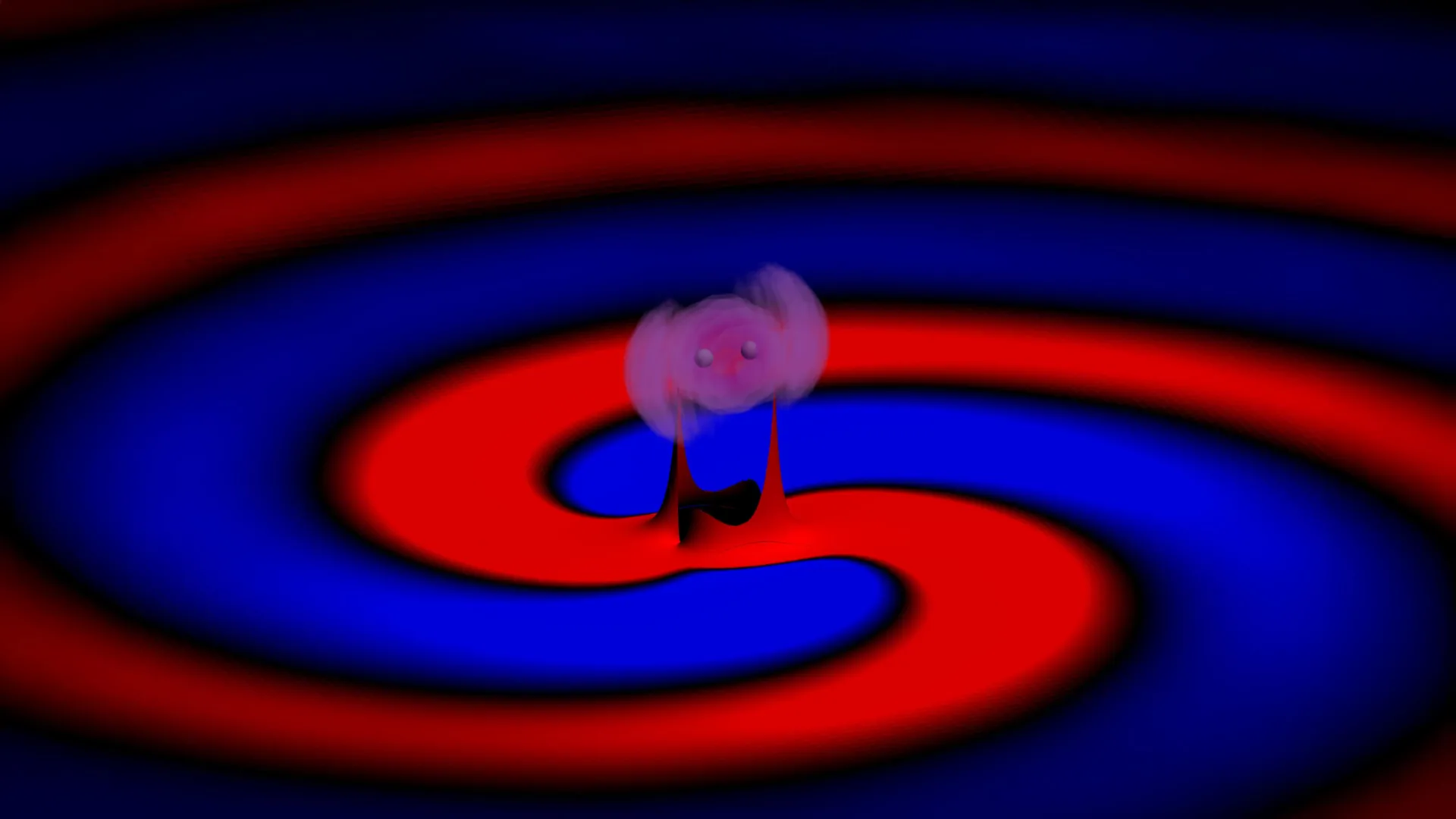
Dark matter is believed to make up most of the matter in the universe, yet scientists still cannot observe it directly. Unlike ordinary matter, dark matter does not interact with light or electromagnetic forces, making gravity the only known way to detect its presence. Now, researchers think colliding black holes could provide a new way to search for clues about this invisible substance.

Physicists at MIT and several European institutions have developed a method to identify possible signs of dark matter hidden within gravitational waves. These ripples in space and time are created when massive objects such as black holes spiral together and merge. If those black holes travel through dense clouds of dark matter before colliding, the resulting gravitational waves could carry subtle traces of that interaction.

The team tested their approach using publicly available data collected by LIGO-Virgo-KAGRA (LVK), the international network of gravitational wave observatories that monitors black hole mergers and other distant cosmic events.

Searching Gravitational Waves for Dark Matter Clues

The researchers analyzed signals gathered during LVK’s first three observing runs. They focused on 28 of the clearest gravitational wave events detected so far.

For 27 of those events, the signals matched what scientists would expect from black holes merging in empty space. But one signal, known as GW190728, appeared different. According to the team’s analysis, the pattern of that gravitational wave may contain evidence of an interaction with dark matter.

The researchers stress that this does not amount to a confirmed discovery of dark matter. Instead, the new technique provides a way to scan gravitational wave data for promising signals that could later be investigated further.

“We know that dark matter is around us. It just has to be dense enough for us to see its effects,” says Josu Aurrekoetxea, a postdoc in the MIT Department of Physics. “Black holes provide a mechanism to enhance this density, which we can now search for by analyzing the gravitational waves emitted when they merge.”

The findings appear in Physical Review Letters. Aurrekoetxea co-authored the study with LVK member Soumen Roy of Université Catholique de Louvain (UCLouvain) in Belgium, Rodrigo Vicente of the University of Amsterdam, Katy Clough of Queen Mary University of London, and Pedro Ferreira of Oxford University.

How Black Holes Could Amplify Dark Matter

Dark matter remains one of the biggest mysteries in physics. Scientists infer its existence because gravity around galaxies appears stronger than visible matter alone can explain. Observations of gravitational lensing, where light bends around galaxies, suggest an additional unseen source of mass is influencing space.

Current estimates suggest dark matter could account for more than 85 percent of the matter in the universe. However, researchers still do not know what dark matter actually consists of.

One proposed form involves extremely lightweight particles called “light scalar” particles. Theories suggest these particles can behave like coordinated waves near black holes.

Scientists believe that when these waves encounter a rapidly spinning black hole, the black hole’s rotational energy can transfer into the dark matter waves, dramatically increasing their density. This process, known as superradiance, has been compared to whipping cream into butter.

If the density becomes high enough, the dark matter could alter the gravitational waves produced when black holes collide.

Predicting Dark Matter Imprints in Space-Time

To investigate this possibility, the researchers built detailed simulations of black hole mergers under many different conditions. They varied factors including the masses and sizes of the black holes, the amount of surrounding dark matter, and the density of that matter.

Using those simulations, the team predicted how gravitational waves would appear if black holes merged inside a dense dark matter environment rather than in a vacuum.

The model also accounted for how those waves would change as they traveled across millions of light years before reaching detectors on Earth.

The researchers then compared their predictions with actual LVK observations. Out of the 28 strongest signals examined, GW190728 was the only event that showed agreement with the dark matter scenario.

GW190728 was first detected on July 28, 2019. Earlier studies determined that the signal came from two black holes with a combined mass about 20 times that of the sun. According to the new analysis, those black holes may have merged within a dense cloud of dark matter.

A Promising New Tool for Dark Matter Research

“The statistical significance of this is not high enough to claim a detection of dark matter, and further checks should be performed by independent groups,” Aurrekoetxea says. “What we think is important to highlight is that without waveform models like ours, we could be detecting black hole mergers in dark matter environments, but systematically classifying them as having occurred in vacuum.”

Researchers say the growing number of gravitational wave observations could make this approach increasingly useful in the coming years.

“We now have the potential to discover dark matter around black holes as the LVK detectors keep collecting data in the coming years,” says co-author Soumen Roy, who led the data analysis part of the work. “It is an exciting time to search for new physics using gravitational waves.”

“Using black holes to look for dark matter would be fantastic,” adds co-author Rodrigo Vicente, who developed the analytical model of the signal. “We would be able to probe dark matter at scales much smaller than ever before.”

The research was supported in part by the U.S. National Science Foundation and MIT’s Center for Theoretical Physics — a Leinweber Institute.

Share Button

String theory suddenly emerged from simple physics rules

If you kept dividing an apple into smaller and smaller pieces, you would eventually reach molecules, then atoms, and later the tiny particles inside atoms such as protons, quarks, and gluons. But according to string theory, the journey does not stop there. At scales roughly a billion billion times smaller than a proton, physicists propose that everything may be made of incredibly tiny vibrating strings.

String theory first emerged in the 1960s as a possible way to solve one of physics’ biggest problems: combining quantum mechanics, which governs the smallest particles, with general relativity, Einstein’s theory describing gravity and the large-scale structure of the universe. Scientists have long struggled to unite the two because the equations often spiral into mathematical infinities when gravity is included at quantum scales.

String theory offers a potential way around that problem. In the theory, every particle, including the hypothetical graviton that would carry the force of gravity, comes from different vibrations of tiny strings. The mathematics also requires the strings to exist in at least 10 dimensions rather than the four dimensions humans experience.

One major obstacle remains. Testing string theory directly would require energies so extreme that researchers would need a particle collider as large as a galaxy.

Bootstrap Physics and String Theory

Since direct experiments are impossible with current technology, physicists are exploring other methods. One promising strategy is known as the “bootstrap” approach. Instead of assuming a detailed theory from the start, scientists begin with a few broad principles they believe nature must obey and then determine what laws naturally emerge.

In a new study titled “Strings from Almost Nothing,” accepted for publication in Physical Review Letters, researchers from Caltech, New York University, and Institut de Fisica d’Altes Energies in Barcelona used this strategy to investigate particle behavior at extremely high energies. Starting from just a couple of assumptions about how particles scatter during collisions, they unexpectedly arrived at the core features of string theory.

“The strings just fell out,” says Clifford Cheung, professor of theoretical physics and director of the Leinweber Forum for Theoretical Physics at Caltech. “We didn’t start with any assumptions about strings at all, but then the solution contained the cornerstone signatures of strings.”

Although the findings do not prove string theory experimentally, Cheung says the results are striking because many different mathematical outcomes could have been possible. Instead, the calculations pointed toward only one solution.

The Infinite Tower of Particles

One of the most important features to emerge from the calculations is known as the string spectrum. In the late 1960s, Italian theoretical physicist Gabriele Veneziano at CERN developed a mathematical function describing a mysterious “tower” of particles seen in collider experiments. The particles appeared in a sequence where mass and spin increased in orderly steps.

“At Veneziano’s time, particle colliders were seeing this spray of junk come out of the collisions, particles of different masses. It was fascinating and nobody had any idea what was going on. Veneziano wrote down a function to describe all the masses, revealing an infinite tower of particles,” Cheung says.

Researchers later realized this pattern resembles the harmonics of a vibrating string. When a violin string is plucked, it produces a main tone along with a series of overtones. String theory proposes that particles arise from similar vibrational patterns.

In 1974, Caltech physicist John Schwarz and French physicist Joël Scherk recognized that string theory could also include gravity. That discovery created one of the first meaningful links between string theory and general relativity.

“Like all particle physicists in that era, we had no prior interest in gravity. String theories are well-behaved at very high energies, unlike Einstein’s general theory of relativity, which survives as a low-energy approximation. Therefore, even though much was not yet understood, we were very excited that some version of string theory could provide a unified quantum theory of everything,” Schwarz says.

According to string theory, different vibrational modes generate different particles. A photon, for example, comes from an open string vibrating in its simplest mode, while the graviton is thought to arise from a closed vibrating string.

Why Quantum Gravity Breaks Down

The new study focused on scattering amplitudes, mathematical expressions describing the outcomes of particle collisions. When scientists use general relativity to calculate collisions at extremely high energies near the Planck scale, the math stops working properly and produces infinities.

“If you take general relativity and scatter at very high energies at the so-called Planck scale — that is roughly 19 orders of magnitude greater than a proton’s mass — you get a result that makes no sense. Everything completely breaks down,” Cheung says.

String theory avoids these infinities through a property called ultrasoftness. At extremely high energies, the strings effectively spread interactions out, preventing the violent behavior that normally causes the equations to fail.

“In a string theory framework, as you increase the energy transfer between particles, you will see a swift fall off in the probability that the particles will scatter. It’s like the particles don’t even want to scatter off one another, but rather pass freely,” Cheung says. “The scattering amplitudes don’t go to infinity. It’s better behaved.”

The researchers used this ultrasoft behavior as one of their starting assumptions. They also included another condition called “minimal zeros,” which limits the number of points where scattering probabilities vanish.

“Remarkably, consistency requires scattering amplitudes not only to interact but also to not interact at special kinematic points called ‘zeros.’ The assumption of ‘minimal zeros’ demands the sparsest number of such vanishing points mathematically allowed by the equations,” Cheung says.

Using only these assumptions, the team showed that the resulting mathematics naturally reproduced the defining characteristics of string theory, including its famous spectrum of particle masses and spins.

“The precise details of string theory emerged automatically, including the infinite tower of massive spinning particles that form the ‘harmonics’ of the string that the theory is famous for,” says co-author Grant N. Remmen (PhD ’17), the James Arthur Postdoctoral Fellow at New York University.

Reviving an Old Idea With Modern Tools

Cheung compares the bootstrap approach to solving a sudoku puzzle. A few simple rules are provided at the start, and those rules eventually guide you to one unique solution.

“The deep irony is that this bootstrap idea that we’re pursuing now with modern tools and modern ideas is super retro. It’s an old idea,” Cheung explains. “The original discovery of the Veneziano spectrum, and John Schwarz’s work, took a similar approach. They didn’t start with string theory models but rather the solutions came out of basic principles.”

The study also builds on earlier work by Caltech physicist Steven Frautschi and UC Berkeley physicist Geoffrey Chew, who pioneered the bootstrap approach in particle physics during the 1960s. Their work provided some of the earliest hints of the infinite particle spectrum later connected to string theory.

“The bootstrap idea had become obsolete but now people like Cliff are reviving and modernizing it,” says Hirosi Ooguri, the Fred Kavli Professor of Theoretical Physics and Mathematics at Caltech and the Kent and Joyce Kresa Leadership Chair of the Division of Physics, Mathematics and Astronomy. “We now have a better understanding of the basic assumptions we can make, as well as stronger techniques for translating these assumptions into properties of scattering amplitudes and other observables.”

The study “Strings from Almost Nothing” received funding from the US Department of Energy, the Walter Burke Institute for Theoretical Physics, the Leinweber Forum for Theoretical Physics, the James Arthur Postdoctoral Fellowship at New York University, and the Next Generation EU. Additional authors include Francesco Sciotti of Institut de Fisica d’Altes Energies in Barcelona and Michele Tarquini, a graduate student at Caltech.

Share Button

Two Tube Strikes Are Due This Week: All Dates And Lines Affected

More Tube strikes are set to take place in London this week (18-24 May 2026), bringing fresh disruption to commuters.

Last April, Tube strikes took place as members of The National Union of Rail, Maritime and Transport Workers (RMT) expressed their unhappiness with a compressed work week that they claim Transport for London (TfL) are trying to “impose” on its members.

For their part, TfL said the four-day change was completely optional.

RMT’s latest strikes are planned in May and June, with the next ones being just days away. These “disruptions” have been planned for weeks.

When are the Tube strikes taking place this week?

They’re set for:

  • Tuesday, 19 May (midday) until Wednesday, 20 May (midday).
  • Thursday, 21 May (midday) until Friday, 22 May (midday).

On its website, TfL said to take those start and end times with a grain of salt.

It warned that disruptions are expected to continue into the afternoons and evenings following these periods.

On Tuesdays and Thursdays, services will finish early. Previous advice recommended trying to finish your journey by 8pm on these days.

Which Tube lines will be affected?

TfL said on its site that no service is expected on the:

  • Circle line,
  • Piccadilly line,
  • Metropolitan line between Baker Street and Aldgate, and
  • the Central line between White City and Liverpool Street

during the strikes.

Though “Service is expected on all other lines,” this will be reduced. The TfL added that “disruption to journeys” is expected; disruptions may continue later into the week.

What other transport links are open?

Services including buses, the Elizabeth line, the DLR, and the London Overground aren’t going to be on strike during these days. They are, however, predicted to be incredibly busy.

Why are these strikes happening?

It started with a four-day work week.

The Associated Society of Locomotive Engineers and Firemen (ASLEF), a train drivers’ union which represents thousands of Tube drivers, previously campaigned for a four-day work week, which the TfL recently began trialling on an optional basis in their Bakerloo line.

But RMT, a trade union covering the public transport sector more broadly, has said that they’re not on board with the “compressed” work week, claiming it packs five days’ work into four in a manner which could impact the safety of drivers and passengers.

RMT members are the ones striking in these upcoming cases.

The union also claimed it could mean drivers only get 24 hours’ notice before their shifts are announced and that TfL “U-turned” on negotiations.

In response, TfL pointed out that the four-day offering is completely optional and said it could help to make services more reliable and flexible.

We have shared the full statements the RMT, ASLEF, and TfL have released on the topic in a previous article.

Share Button

Six Personality Traits Psychologists Say Lead To A Longer Life

There isn’t an exact formula for a longer life yet, though researchers think they have some pretty good guesses.

Great genes, enough sleep, and a decent diet can go a long way if you want to reach 100, for instance.

But some factors are less strictly physical.

For instance, one paper found that people who had a positive view of ageing may be less likely to experience age-related decline.

And having a sense of purpose “appears to widely buffer against mortality risk across the adult years,” a 2015 paper found.

Yet another paper, this time looking at data from 22,000 participants, found that “Personality nuances were associated with mortality risk in four samples”.

Which personality traits might help you live longer?

1) Being active

This self-descriptor was most linked to a longer life in the 2025 paper (27% lower mortality risk).

Study author, psychologist Professor René Mõttus, told The Guardian: “The word ‘active’ was the most striking.

“Participants who described themselves this way were significantly less likely to die during the study period – with a 21% lower risk, even when age, gender and medical conditions were taken into account.”

2) Being lively

The trait, tied in this study to outgoingness, seemed te be another helpful self-description (12% lower risk) for those hoping to live long.

“The extraversion items active and lively were related to a lower mortality risk,” the paper reads.

Separate 2017 research linked higher levels of extraversion to a 14% reduction in mortality.

3) Being organised

The study also found that higher levels of conscientiousness, including describing yourself as organised, were linked to a longer life (14% lower mortality risk).

“Being ‘organised’ might help people stick to routines that improve health, but it may also reflect underlying psychological resilience or social habits that contribute to a longer life,” study author Professor Páraic O’Súilleabháin told The Guardian.

It’s not the only paper to link greater conscientiousness to a longer life, either.

4) Being responsible

Linked to a 12% lower risk of death in this paper, the term also falls in the “conscientiousness” bracket.

5) Being hardworking

Those who saw themselves as industrious had a 15% lower risk of mortality, as did those who self-described as “thorough”.

One 2016 paper found that those who worked even a year later than retirement age saw an up-to-11% lower risk of death in an 18-year follow-up period.

6) Being helpful

This personality trait, which fell into the broader category of “agreeableness”, has also been linked to a longer lifespan.

Another paper found that people who volunteered more often lived longer.

Share Button

Ncuti Gatwa Jokes That Even He Doesn’t Understand Doctor Who Twist In SNL Monologue

Ncuti Gatwa poked fun at his stint at the helm of Doctor Who during his opening monologue on Saturday Night Live UK.

On Saturday night, the three-time Bafta nominee guest hosted the SNL UK season finale, kicking things off with a monologue referencing his career so far.

“I am so lucky, I have had so many fantastic roles in my career,” he began. “Millions of you watched me as Eric in Sex Education. And then about 12 of you watched me in Doctor Who.”

“Hey, maybe that’s why I kept crying,” he quipped.

In 2022, it was announced that Ncuti would be the first Black actor in history to take over at the helm of the Tardis as the Fifteenth Doctor in Doctor Who.

Regrettably, during Ncuti’s stint as The Doctor, the show was met with something of a backlash from far-right critics upset about the supposed “woke” direction the show was taking, which coincided with a decline in viewing figures.

Later in his SNL UK monologue, Ncuti joked that even he didn’t understand the latest twist in Doctor Who’s most recent finale.

“I have since regenerated into Billie Piper,” he continued before turning to the camera and claiming: “I don’t understand it, either.”

<div class="js-react-hydrator" data-component-name="YouTube" data-component-id="1905" data-component-props="{"itemType":"video","isLiveblogEmbed":false,"index":11,"contentIndexByType":1,"contentListType":"embed","code":"

","type":"video","meta":{"author":"Saturday Night Live UK","author_url":"https://www.youtube.com/channel/UC6en775nhqTdmaZQi9uT16A","cache_age":86400,"description":"Saturday Night Live UK host Ncuti Gatwa dusts off some old skills for hosting.\n\nProudly Sponsored by eBay Live\n\nWatch Saturday Night Live UK, on Sky & NOW.\n\nSNL UK ON SOCIAL\nSNL UK Instagram: https://www.instagram.com/snluk\nSNL UK TikTok: https://www.tiktok.com/@snluk","options":{"_cc_load_policy":{"label":"Closed captions","value":false},"_end":{"label":"End on","placeholder":"ex.: 11, 1m10s","value":""},"_start":{"label":"Start from","placeholder":"ex.: 11, 1m10s","value":""}},"provider_name":"YouTube","thumbnail_height":720,"thumbnail_url":"https://i.ytimg.com/vi/9Zew-9ZI4d0/maxresdefault.jpg","thumbnail_width":1280,"title":"Ncuti Gatwa Monologue | SNL UK","type":"video","url":"https://www.youtube.com/watch?v=9Zew-9ZI4d0","version":"1.0"},"flags":[],"enhancements":{},"fullBleed":false,"options":{"theme":"news","device":"desktop","editionInfo":{"id":"uk","name":"U.K.","link":"https://www.huffingtonpost.co.uk","locale":"en_GB"},"originalEdition":"uk","isMapi":false,"isAmp":false,"isMobile":false,"isAdsFree":false,"isVideoEntry":false,"isEntry":true,"isMt":false,"entryId":"6a0ad58fe4b098065beac74d","entryPermalink":"https://www.huffingtonpost.co.uk/entry/ncuti-gatwa-billie-piper-doctor-who-saturday-night-live_uk_6a0ad58fe4b098065beac74d","entryTagsList":"we-love-tv,doctor-who,saturday-night-live,ncuti-gatwa,billie-piper","sectionSlug":"entertainment","deptSlug":null,"sectionRedirectUrl":null,"subcategories":"","isWide":false,"isShopping":false,"headerOverride":null,"noVideoAds":false,"disableFloat":false,"isNative":false,"commercialVideo":{"provider":"custom","site_and_category":"uk.entertainment","package":null},"isHighline":false,"vidibleConfigValues":{"cid":"60afc140cf94592c45d7390c","disabledWithMapiEntries":false,"overrides":{"all":"60b8e525cdd90620331baaf4"},"whitelisted":["56c5f12ee4b03a39c93c9439","56c6056ee4b01f2b7e1b5f35","59bfee7f9e451049f87f550b","5acccbaac269d609ef44c529","570278d2e4b070ff77b98217","57027b4be4b070ff77b98d5c","56fe95c4e4b0041c4242016b","570279cfe4b06d08e3629954","5ba9e8821c2e65639162ccf1","5bcd9904821576674bc55ced","5d076ca127f25f504327c72e","5b35266b158f855373e28256","5ebac2e8abddfb04f877dff2","60b8e525cdd90620331baaf4","60b64354b171b7444beaff4d","60d0d8e09340d7032ad0fb1a","60d0d90f9340d7032ad0fbeb","60d0d9949340d7032ad0fed3","60d0d9f99340d7032ad10113","60d0daa69340d7032ad104cf","60d0de02b627221e9d819408"],"playlists":{"default":"57bc306888d2ff1a7f6b5579","news":"56c6dbcee4b04edee8beb49c","politics":"56c6dbcee4b04edee8beb49c","entertainment":"56c6e7f2e4b0983aa64c60fc","tech":"56c6f70ae4b043c5bdcaebf9","parents":"56cc65c2e4b0239099455b42","lifestyle":"56cc66a9e4b01f81ef94e98c"},"playerUpdates":{"56c6056ee4b01f2b7e1b5f35":"60b8e525cdd90620331baaf4","56c5f12ee4b03a39c93c9439":"60d0d8e09340d7032ad0fb1a","59bfee7f9e451049f87f550b":"60d0d90f9340d7032ad0fbeb","5acccbaac269d609ef44c529":"60d0d9949340d7032ad0fed3","5bcd9904821576674bc55ced":"60d0d9f99340d7032ad10113","5d076ca127f25f504327c72e":"60d0daa69340d7032ad104cf","5ebac2e8abddfb04f877dff2":"60d0de02b627221e9d819408"}},"connatixConfigValues":{"defaultPlayer":"16b0ecc6-802c-4120-845f-e90629812c4d","clickToPlayPlayer":"823ac03a-0f7e-4bcb-8521-a5b091ae948d","videoPagePlayer":"05041ada-93f7-4e86-9208-e03a5b19311b","defaultPlaylist":"2e062669-71b4-41df-b17a-df6b1616bc8f"},"topConnatixThumnbailSrc":"data:image/png;base64,iVBORw0KGgoAAAANSUhEUgAAAAEAAAABCAQAAAC1HAwCAAAAC0lEQVR42mNkYAAAAAYAAjCB0C8AAAAASUVORK5CYII=","customAmpComponents":[],"ampAssetsUrl":"https://amp.assets.huffpost.com","videoTraits":null,"positionInUnitCounts":{"buzz_head":{"count":0},"buzz_body":{"count":0},"buzz_bottom":{"count":0}},"positionInSubUnitCounts":{"article_body":{"count":9},"blog_summary":{"count":0},"before_you_go_content":{"count":0}},"connatixCountsHelper":{"count":0},"buzzfeedTracking":{"context_page_id":"6a0ad58fe4b098065beac74d","context_page_type":"buzz","destination":"huffpost","mode":"desktop","page_edition":"en-uk"},"tags":[{"name":"we love tv","slug":"we-love-tv","links":{"relativeLink":"news/we-love-tv","permalink":"https://www.huffingtonpost.co.uk/news/we-love-tv","mobileWebLink":"https://www.huffingtonpost.co.uk/news/we-love-tv"},"section":{"title":"Entertainment","slug":"entertainment"},"topic":{"title":"We Love TV","slug":"we-love-tv","overridesSectionLabel":false},"url":"https://www.huffingtonpost.co.uk/news/we-love-tv/"},{"name":"Doctor Who","slug":"doctor-who","links":{"relativeLink":"news/doctor-who","permalink":"https://www.huffingtonpost.co.uk/news/doctor-who","mobileWebLink":"https://www.huffingtonpost.co.uk/news/doctor-who"},"relegenceId":3449739,"url":"https://www.huffingtonpost.co.uk/news/doctor-who/"},{"name":"Saturday Night Live","slug":"saturday-night-live","links":{"relativeLink":"news/saturday-night-live","permalink":"https://www.huffingtonpost.co.uk/news/saturday-night-live","mobileWebLink":"https://www.huffingtonpost.co.uk/news/saturday-night-live"},"relegenceId":3072856,"url":"https://www.huffingtonpost.co.uk/news/saturday-night-live/"},{"name":"Ncuti Gatwa","slug":"ncuti-gatwa","links":{"relativeLink":"news/ncuti-gatwa","permalink":"https://www.huffingtonpost.co.uk/news/ncuti-gatwa","mobileWebLink":"https://www.huffingtonpost.co.uk/news/ncuti-gatwa"},"url":"https://www.huffingtonpost.co.uk/news/ncuti-gatwa/"},{"name":"Billie Piper","slug":"billie-piper","links":{"relativeLink":"news/billie-piper","permalink":"https://www.huffingtonpost.co.uk/news/billie-piper","mobileWebLink":"https://www.huffingtonpost.co.uk/news/billie-piper"},"relegenceId":5741294,"url":"https://www.huffingtonpost.co.uk/news/billie-piper/"}],"isLiveblogLive":null,"isLiveblog":false,"signInUrl":"https://login.huffpost.com/login?dest=https%3A%2F%2Fwww.huffpost.com%2Fentry%2Fncuti-gatwa-billie-piper-doctor-who-saturday-night-live_uk_6a0ad58fe4b098065beac74d%3Fhp_auth_done%3D1","cetUnit":"buzz_body","enableIncontentPlayer":true,"bodyAds":["

\r\n\r\n HPGam.cmd.push(function(){\r\n\t\treturn HPGam.render(\"inline-1\", \"entry_paragraph_1\", false, false);\r\n });\r\n\r\n","

\r\n\r\n HPGam.cmd.push(function(){\r\n\t\treturn HPGam.render(\"inline\", \"entry_paragraph_2\", false, false);\r\n });\r\n\r\n","

\r\n\r\n HPGam.cmd.push(function(){\r\n\t\treturn HPGam.render(\"inline-2\", \"entry_paragraph_3\", false, false);\r\n });\r\n\r\n","

\r\n\r\n HPGam.cmd.push(function(){\r\n\t\treturn HPGam.render(\"inline-infinite\", \"repeating_dynamic_display\", false, false);\r\n });\r\n\r\n"],"adCount":0,"midArticleAdPartner":null},"isCollectionEmbed":false}”>

Billie claimed last year of her cameo: “All I can say is I was approached very last-minute, and I can’t talk about in what capacity, but I found it very emotional to film and I think it’s a really great ending.

“I found it quite moving, and it was really fun to film because it had such a sort of ‘cloak and dagger’ feeling about getting it made.

“So, yeah, I have to lie a lot about anything to do with Doctor Who, it seems.”

<div class="js-react-hydrator" data-component-name="YouTube" data-component-id="5521" data-component-props="{"itemType":"video","isLiveblogEmbed":false,"index":16,"contentIndexByType":2,"contentListType":"embed","code":"

","type":"video","meta":{"author":"BBC","author_url":"https://www.youtube.com/channel/UCCj956IF62FbT7Gouszaj9w","cache_age":86400,"description":"🔥 SPOILERS! 🔥 Watch the moment we said goodbye to the Fifteenth Doctor and hello to… #DoctorWho\n\n#SeasonTwo #TheRealityWar #NcutiGatwa \n\nSubscribe and 🔔 to the BBC 👉 https://bit.ly/BBCYouTubeSub\nWatch the BBC first on iPlayer 👉 https://bbc.in/iPlayer-Home","options":{"_cc_load_policy":{"label":"Closed captions","value":false},"_end":{"label":"End on","placeholder":"ex.: 11, 1m10s","value":""},"_start":{"label":"Start from","placeholder":"ex.: 11, 1m10s","value":""}},"provider_name":"YouTube","thumbnail_height":720,"thumbnail_url":"https://i.ytimg.com/vi/XgLpmL9p3Go/maxresdefault.jpg","thumbnail_width":1280,"title":"The Fifteenth Doctor Regenerates | Doctor Who – BBC","type":"video","url":"https://www.youtube.com/watch?v=XgLpmL9p3Go","version":"1.0"},"flags":[],"enhancements":{},"fullBleed":false,"options":{"theme":"news","device":"desktop","editionInfo":{"id":"uk","name":"U.K.","link":"https://www.huffingtonpost.co.uk","locale":"en_GB"},"originalEdition":"uk","isMapi":false,"isAmp":false,"isMobile":false,"isAdsFree":false,"isVideoEntry":false,"isEntry":true,"isMt":false,"entryId":"6a0ad58fe4b098065beac74d","entryPermalink":"https://www.huffingtonpost.co.uk/entry/ncuti-gatwa-billie-piper-doctor-who-saturday-night-live_uk_6a0ad58fe4b098065beac74d","entryTagsList":"we-love-tv,doctor-who,saturday-night-live,ncuti-gatwa,billie-piper","sectionSlug":"entertainment","deptSlug":null,"sectionRedirectUrl":null,"subcategories":"","isWide":false,"isShopping":false,"headerOverride":null,"noVideoAds":false,"disableFloat":false,"isNative":false,"commercialVideo":{"provider":"custom","site_and_category":"uk.entertainment","package":null},"isHighline":false,"vidibleConfigValues":{"cid":"60afc140cf94592c45d7390c","disabledWithMapiEntries":false,"overrides":{"all":"60b8e525cdd90620331baaf4"},"whitelisted":["56c5f12ee4b03a39c93c9439","56c6056ee4b01f2b7e1b5f35","59bfee7f9e451049f87f550b","5acccbaac269d609ef44c529","570278d2e4b070ff77b98217","57027b4be4b070ff77b98d5c","56fe95c4e4b0041c4242016b","570279cfe4b06d08e3629954","5ba9e8821c2e65639162ccf1","5bcd9904821576674bc55ced","5d076ca127f25f504327c72e","5b35266b158f855373e28256","5ebac2e8abddfb04f877dff2","60b8e525cdd90620331baaf4","60b64354b171b7444beaff4d","60d0d8e09340d7032ad0fb1a","60d0d90f9340d7032ad0fbeb","60d0d9949340d7032ad0fed3","60d0d9f99340d7032ad10113","60d0daa69340d7032ad104cf","60d0de02b627221e9d819408"],"playlists":{"default":"57bc306888d2ff1a7f6b5579","news":"56c6dbcee4b04edee8beb49c","politics":"56c6dbcee4b04edee8beb49c","entertainment":"56c6e7f2e4b0983aa64c60fc","tech":"56c6f70ae4b043c5bdcaebf9","parents":"56cc65c2e4b0239099455b42","lifestyle":"56cc66a9e4b01f81ef94e98c"},"playerUpdates":{"56c6056ee4b01f2b7e1b5f35":"60b8e525cdd90620331baaf4","56c5f12ee4b03a39c93c9439":"60d0d8e09340d7032ad0fb1a","59bfee7f9e451049f87f550b":"60d0d90f9340d7032ad0fbeb","5acccbaac269d609ef44c529":"60d0d9949340d7032ad0fed3","5bcd9904821576674bc55ced":"60d0d9f99340d7032ad10113","5d076ca127f25f504327c72e":"60d0daa69340d7032ad104cf","5ebac2e8abddfb04f877dff2":"60d0de02b627221e9d819408"}},"connatixConfigValues":{"defaultPlayer":"16b0ecc6-802c-4120-845f-e90629812c4d","clickToPlayPlayer":"823ac03a-0f7e-4bcb-8521-a5b091ae948d","videoPagePlayer":"05041ada-93f7-4e86-9208-e03a5b19311b","defaultPlaylist":"2e062669-71b4-41df-b17a-df6b1616bc8f"},"topConnatixThumnbailSrc":"data:image/png;base64,iVBORw0KGgoAAAANSUhEUgAAAAEAAAABCAQAAAC1HAwCAAAAC0lEQVR42mNkYAAAAAYAAjCB0C8AAAAASUVORK5CYII=","customAmpComponents":[],"ampAssetsUrl":"https://amp.assets.huffpost.com","videoTraits":null,"positionInUnitCounts":{"buzz_head":{"count":0},"buzz_body":{"count":0},"buzz_bottom":{"count":0}},"positionInSubUnitCounts":{"article_body":{"count":9},"blog_summary":{"count":0},"before_you_go_content":{"count":0}},"connatixCountsHelper":{"count":0},"buzzfeedTracking":{"context_page_id":"6a0ad58fe4b098065beac74d","context_page_type":"buzz","destination":"huffpost","mode":"desktop","page_edition":"en-uk"},"tags":[{"name":"we love tv","slug":"we-love-tv","links":{"relativeLink":"news/we-love-tv","permalink":"https://www.huffingtonpost.co.uk/news/we-love-tv","mobileWebLink":"https://www.huffingtonpost.co.uk/news/we-love-tv"},"section":{"title":"Entertainment","slug":"entertainment"},"topic":{"title":"We Love TV","slug":"we-love-tv","overridesSectionLabel":false},"url":"https://www.huffingtonpost.co.uk/news/we-love-tv/"},{"name":"Doctor Who","slug":"doctor-who","links":{"relativeLink":"news/doctor-who","permalink":"https://www.huffingtonpost.co.uk/news/doctor-who","mobileWebLink":"https://www.huffingtonpost.co.uk/news/doctor-who"},"relegenceId":3449739,"url":"https://www.huffingtonpost.co.uk/news/doctor-who/"},{"name":"Saturday Night Live","slug":"saturday-night-live","links":{"relativeLink":"news/saturday-night-live","permalink":"https://www.huffingtonpost.co.uk/news/saturday-night-live","mobileWebLink":"https://www.huffingtonpost.co.uk/news/saturday-night-live"},"relegenceId":3072856,"url":"https://www.huffingtonpost.co.uk/news/saturday-night-live/"},{"name":"Ncuti Gatwa","slug":"ncuti-gatwa","links":{"relativeLink":"news/ncuti-gatwa","permalink":"https://www.huffingtonpost.co.uk/news/ncuti-gatwa","mobileWebLink":"https://www.huffingtonpost.co.uk/news/ncuti-gatwa"},"url":"https://www.huffingtonpost.co.uk/news/ncuti-gatwa/"},{"name":"Billie Piper","slug":"billie-piper","links":{"relativeLink":"news/billie-piper","permalink":"https://www.huffingtonpost.co.uk/news/billie-piper","mobileWebLink":"https://www.huffingtonpost.co.uk/news/billie-piper"},"relegenceId":5741294,"url":"https://www.huffingtonpost.co.uk/news/billie-piper/"}],"isLiveblogLive":null,"isLiveblog":false,"signInUrl":"https://login.huffpost.com/login?dest=https%3A%2F%2Fwww.huffpost.com%2Fentry%2Fncuti-gatwa-billie-piper-doctor-who-saturday-night-live_uk_6a0ad58fe4b098065beac74d%3Fhp_auth_done%3D1","cetUnit":"buzz_body","enableIncontentPlayer":true,"bodyAds":["

\r\n\r\n HPGam.cmd.push(function(){\r\n\t\treturn HPGam.render(\"inline-1\", \"entry_paragraph_1\", false, false);\r\n });\r\n\r\n","

\r\n\r\n HPGam.cmd.push(function(){\r\n\t\treturn HPGam.render(\"inline\", \"entry_paragraph_2\", false, false);\r\n });\r\n\r\n","

\r\n\r\n HPGam.cmd.push(function(){\r\n\t\treturn HPGam.render(\"inline-2\", \"entry_paragraph_3\", false, false);\r\n });\r\n\r\n","

\r\n\r\n HPGam.cmd.push(function(){\r\n\t\treturn HPGam.render(\"inline-infinite\", \"repeating_dynamic_display\", false, false);\r\n });\r\n\r\n"],"adCount":0,"midArticleAdPartner":null},"isCollectionEmbed":false}”>