Caribou herd rebounds as Indigenous stewards lead conservation efforts

Despite recovery efforts from federal and provincial governments, caribou populations across Canada continue to decline, largely due to human activity.

But as a new UBC Okanagan study finds, in central British Columbia there is one herd of mountain caribou, the Klinse-Za, whose numbers are going in the opposite direction — all thanks to a collaborative recovery effort led by West Moberly First Nations and Saulteau First Nations.

In partnership with many organizations and governments, the Indigenous-led conservation initiative paired short-term recovery actions such as predator reduction and caribou guardians at maternal pens, with ongoing work to secure landscape-level protection in an effort to create a self-sustaining caribou population.

Their efforts paid off.

Dr. Clayton Lamb, a Liber Ero Fellow, along with Carmen Richter, a biology master’s student, and Dr. Adam T. Ford, Canada Research Chair in Wildlife Restoration Ecology, conduct research in the Irving K. Barber Faculty of Science. Their latest study shows Klinse-Za caribou numbers have nearly tripled in under a decade.

“We have an Indigenous-led conservation effort to thank for averting the looming extinction of this herd,” says Dr. Lamb. “The population was declining rapidly — a West Moberly Elder once described the herd as a ‘sea of caribou,’ but by 2013 it had declined to only 38 animals.”

Today, the herd count is more than 110 and numbers continue to rise.

“This work provides an innovative, community-led, paradigm shift to conservation in Canada,” Dr. Lamb says. “While Indigenous Peoples have been actively stewarding landscapes for a long time, this approach is new in the level of collaboration among western scientists and Indigenous Peoples to create positive outcomes on the land and put an endangered species on the path to recovery.”

Richter, who is a Saulteau First Nations member, says Indigenous communities have really come together for the good of the caribou.

“We are working hard to recover these caribou. Each year, community members pick bags and bags of lichen to feed the mother caribou in the pen while other members live up at the top of the mountain with the animals. One day, we hope to return the herds to a sustainable size,” she says.

Though the partnership has yielded great success, Dr. Ford is the first to acknowledge that more time and effort will be needed to fully recover the Klinse-Za.

“This work is also an important part of decolonizing the mindset of conservation, which has historically worked to exclude the views of Indigenous Peoples,” he adds.

With caribou declines exceeding 40 per cent in recent decades across Canada, many populations have already been lost. But Dr. Ford insists there is a brighter path forward, and this study proves it.

“This is truly an unprecedented success and signals the critical role that Indigenous Peoples can play in conservation,” he says. “I hope this success opens doors to collaborative stewardship among other communities and agencies. We can accomplish so much more when working together.”

This study was co-produced by western scientists and members of West Moberly First Nations and Saulteau First Nations. The work was recently published in Ecological Applications and is supported by a companion manuscript in Ecological Applications exploring the expeditious population growth.

Share Button

Brexit Is Largely To Blame For UK Exports Lagging Other Countries, Rishi Sunak Admits

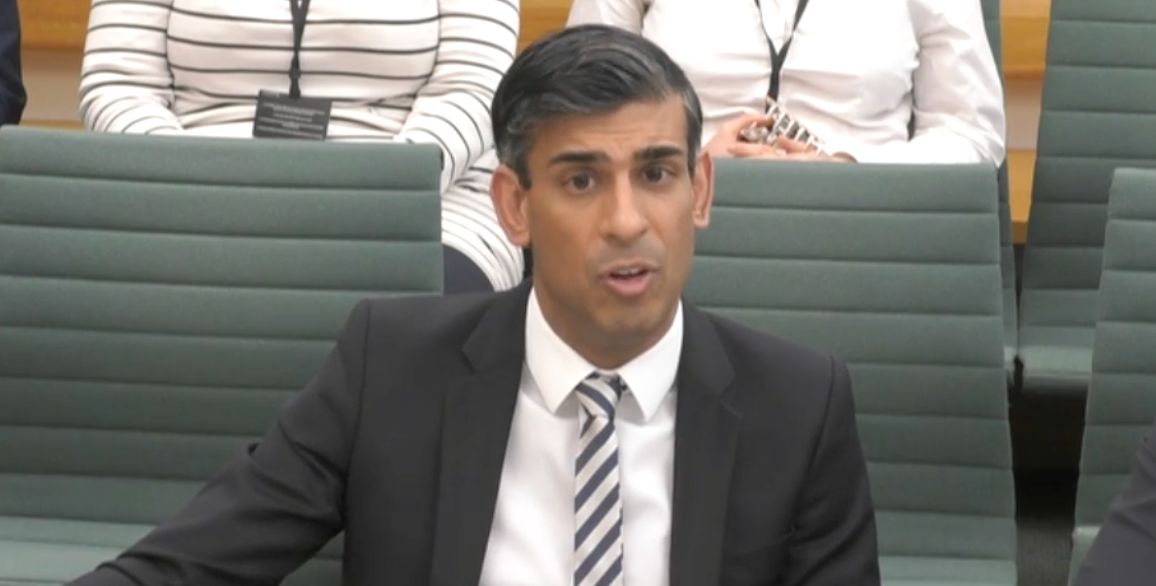
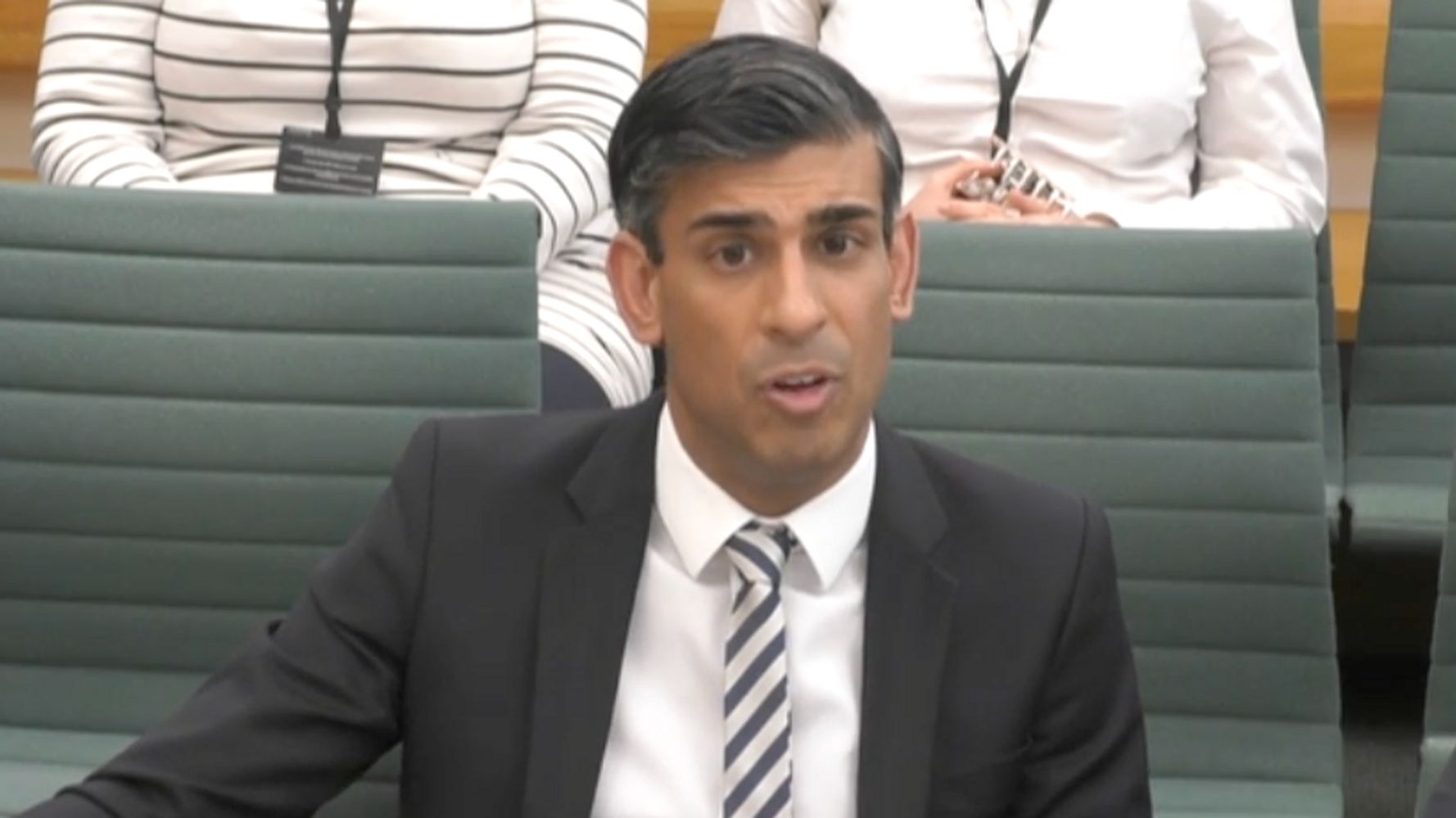
Brexit is largely to blame for UK exports lagging behind other countries, Rishi Sunak has admitted.

The chancellor was responding to data showing the amount of goods British companies are selling abroad has fallen since 2019 when compared to other advanced economies.

Asked about the worrying trend while appearing in front of the Treasury select committee, Sunak said it was “always inevitable that if you change the exact nature of your trading relationship with the EU, that was going to have an impact on trade flows”.

Committee chairman Mel Stride asked the chancellor whether he was concerned the UK was becoming “more of a closed economy post-Brexit”.

He added: “Why have we got the significant reduction in trade intensity that’s stayed low whereas other have come back?”

Sunak, who backed Brexit in the 2016 referendum, said: “Without a doubt we’re changing our trading relationship with the EU and that means a different set of controls and things that people will have to do and that will obviously have an impact and that, I’m sure, is a big part of the reason why this is happening.”

He added: “The benefit of new trading relationships take time, they don’t happen all overnight.”

Earlier, the chancellor had been forced to defend his widely-criticised spring statement, which failed to provide any extra help for those on benefits.

He said it would have been “irresponsible” for the government to have borrowed more to increase the welfare bill in the face of rising inflation.

Mel Stride said the chancellor had done “very little” for those who were out of work and relying on benefits.

But Sunak said: “If someone’s view is government can or should make everybody whole for inflation – particularly inflation at these levels caused by global supply factors – then that’s something that I don’t think is doable.”

He said that raising benefits by the current rate of inflation – which is forecast to rise to more than eight per cent – rather than what it was last September, would have added £25 billion to Government borrowing in the period up to 2026-27.

He said that “irresponsible” borrowing levels risked stoking inflation even further, adding to the pressure on living standards.

“We are already forecast to borrow in this coming year about 60% more as a percentage of GDP than our post-war average, 20% more as a percentage of GDP than we were forecast to borrow in October, so it is already a significant amount of borrowing,” he said.

“My view is an excessive amount of borrowing now is not the responsible thing to do.”

Sunak said his decision to announce he intended to cut the basic rate of income tax by a penny from 2024 would inject “discipline” into the debate about public spending levels.

“Now having something to aim for means that hopefully we can have a more disciplined conversation about incremental public spending at this point, which is already at very high levels,” he said.

“My priority at this point forward is to keep cutting taxes, not increased public spending.”

Share Button

Tory MP Suggests Cutting Energy Bills Will Encourage People To ‘Burn More Energy’

A Conservative MP has suggested the government helping people with the upfront costs of heating their homes could cause them to “burn more energy”.

Under Rishi Sunak’s plan to help with the cost of living crisis, households will receive a £200 rebate on their energy bills which will need to be repaid at a later date.

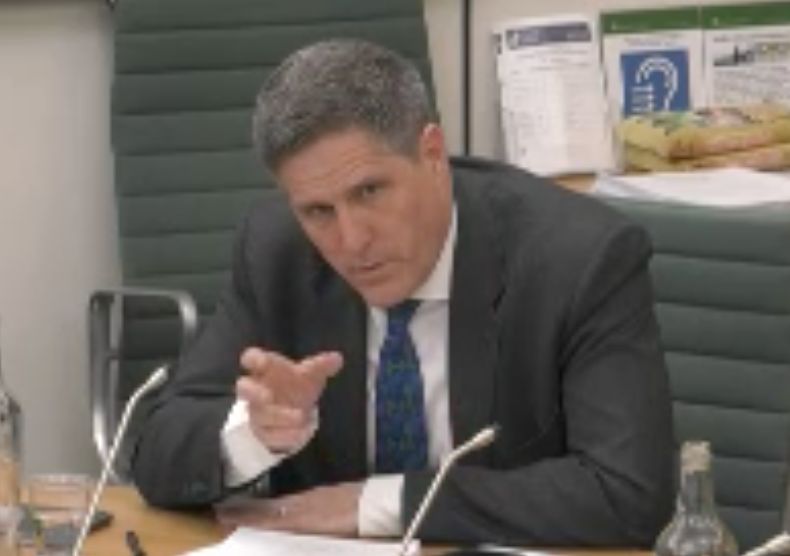
But quizzing the chancellor at the Commons Treasury committee on Monday, South Cambridgeshire MP Anthony Browne asked why the government had not instead cut taxes.

“Do you think it’s better to increase disposable incomes or to reduce energy bills?” he said.

“The risk of reducing energy bills obviously is you encourage people to burn more energy.”

Browne was heckled by one Labour MP on the committee who told him another impact of helping people pay for energy would be to “prevent hypothermia”.

Sunak defended his policy, which has been sharply criticised by opposition parties for not going far enough, as the best way to help.

“I think its right we have a targeted response. There’s one specific factor which is causing the bulk in the increase in people’s costs. I think having a direct response to that is sensible,” he said.

It comes after the Office for Budget Responsibility warned living standards face their biggest fall in a single year since records began in the mid-1950s.

Sunak is under pressure to do more to help struggling people coping with a spike in prices following his spring statement mini-budget last week.

The Resolution Foundation think tank has warned 1.3 million people – including 500,000 children – will be pushed into absolute poverty as soaring inflation outstrips increases in pay and benefits.

Share Button

Tory MPs call for home early abortion service to be made permanent

Three MPs have urged their colleagues to keep the pandemic policy in place so women can take tablets at home.

Share Button

Teenage social media use linked to less life-satisfaction for some

Survey suggests teenagers may be more vulnerable to social media at particular ages, with heavy use a risk.

Share Button

Slap Or No Slap, Did Jada Really Need Will Smith To ‘Defend Her Honour’?

Just moments after it happened, Chris Rock knew his altercation with Will Smith at this year’s Oscars was going to make headlines, calling it “the greatest night in the history of television”.

For those yet to watch the clip, Rock made a joke at the expense of Smith’s wife, Jada Pinkett Smith, when he said he was “looking forward to seeing GI Jane 2”.

Rock was apparently referencing the actress’ shaved head, which is a result of the hair loss condition, alopecia. Seconds later, Smith climbed onto the stage, slapped Rock and said: “Keep my wife’s name out of your fucking mouth.”

Some have excused Smith’s actions, saying he was simply “defending his wife’s honour” – but that phrase in itself has left others feeling uncomfortable.

Most of us will agree that there’s other ways to stand up for someone you love without resulting to physical violence. But it also raises the question: do women still need their “honour” defended by a man?

Plenty of people have praised the actor for stepping in to “defend” his wife.

But others have highlighted that Jada Pinkett Smith is a grown woman and perfectly capable of defending herself if she chooses to.

Jada Pinkett Smith arrives on the red carpet before the 2022 Oscars ceremony.

Future Publishing via Getty Images

Jada Pinkett Smith arrives on the red carpet before the 2022 Oscars ceremony.

Later in the evening, Smith won the Best Actor award for his portrayal of Richard Williams, the father of Venus and Serena Williams, in the biopic King Richard.

In his acceptance speech, he apologised to the Academy and his fellow nominees for his behaviour, adding: “I look like the crazy father, just like what they said about Richard Williams. But love will make you do crazy things.”

But his words only sparked further criticism.

A lot of people agree that both men were in the wrong in this scenario, calling out toxic masculinity on either side.

But one thing is clear: the headlines this morning are all focused on Chris Rock and Will Smith. The woman at the heart of this story, Jada Pinkett Smith, has been erased in all the drama.

Share Button

Alzheimer’s: Neil Kinnock supporting wife through disease

The ex-Labour leader says his wife Glenys, who has Alzheimer’s, has been “a continent of rocks”.

Share Button

Essex mental health services inquiry probes 1,500 deaths

England’s first public inquiry into a mental health service appeals for more people to come forward.

Share Button

Ukraine: Premature babies struggling for life in bombed cities

Doctors have begun seeing a sharp rise in the number of preterm births in some areas of Ukraine.

Share Button

BBC Breakfast Forced Off Air After Fire Alarm Goes Off During Interview With The Apprentice’s Harpreet Kaur

The Apprentice winner Harpreet Kaur’s interview on BBC Breakfast came to an abrupt end after the show was forced off air on Saturday.

The dessert store owner was appearing on the show to discuss her recent win on the reality series, but a fire alarm went off mid-way through the chat.

Presenters Roger Johnson and Rachel Burden had to bring the show to an early close when a siren could be heard going off, before a voice instructed people to evacuate the building.

“I’m so sorry, for the time being we’re going to have to leave the studios. We’ll see if we can come back and talk about cake,” she said, referring to Harpreet’s winning business idea.

Roger could then be heard saying: “We think we’ve gone off air, we don’t know if you’re watching,” before a title card then appeared.

Having fallen off air just shortly before the start of Saturday Kitchen at 10am, the show did not return to BBC One.

The Apprentice star Lord Sugar, who awarded Harpreet a £250,000 investment into her business after winning the final of the series on Thursday, later joked about the incident on Twitter.

“I hope the fire alarm didn’t go off because Harpreet left another batch of cakes in the oven,” he tweeted.

It turned out to be a false alarm and the BBC later tweeted that everyone was “safe and is back in the building.”

BBC Breakfast airs daily at 6am on BBC One and BBC News. The Apprentice is available to watch on BBC iPlayer.

Share Button