Kelly Brook Claims She Was ‘Shut Down’ By Idris Elba After ‘Embarrassing’ Party Encounter

HGL via Getty Images

Kelly Brook

Kelly Brook has revealed she was “shut down” by Idris Elba after trying to charm him at a party.

Speaking on her Heart radio show, Kelly admitted she’d been “taken aback” when she spotted the Luther star at an event back in 2014, and even ended up impersonating a bartender so she’d have a reason to speak to him.

“I was pretty tipsy, and I saw him, and like most women, was taken aback,” she explained.

“And I went behind the bar and I started pretending I worked there, and asked him if he wanted a drink.”

After going as far as making Idris a cocktail, the former Masked Dancer contestant said she woke up the next morning and slid into the actor’s DMs to try and clarify what happened the night before, joking: “I can’t believe I’m telling this story!”

Idris sent her a polite reply, telling her the cocktail was “awful” but it’s the “thought that counts though, babe”.

JMEnternational via Getty Images

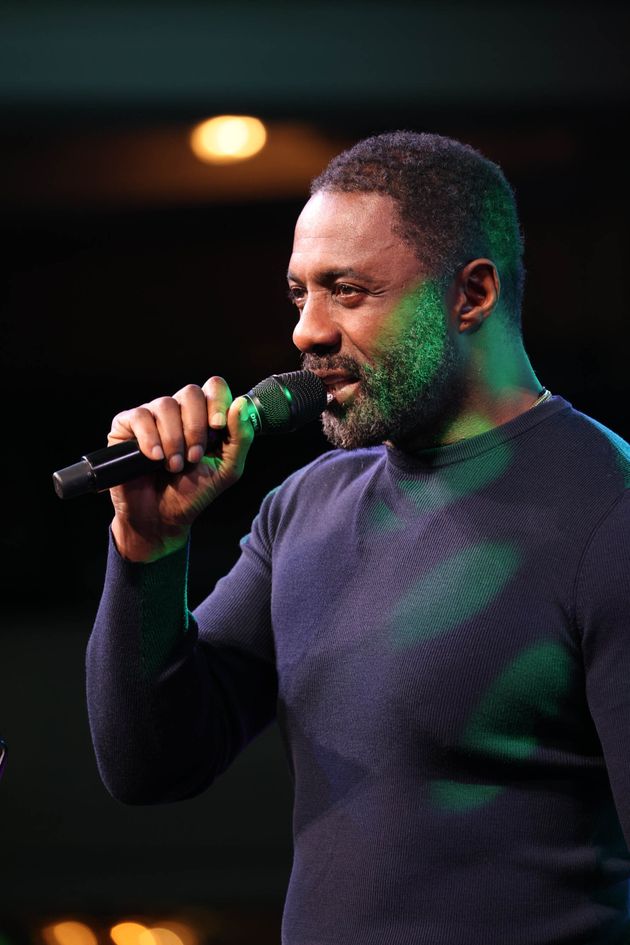
Idris Elba

Kelly added: “I said, ’Oh gosh, no, really well at least it looked pretty. Nice to meet you, by the way. I have a really bad hangover”.

“He went, ‘Haha! Just have a lie in,’ and that was it. That was the last I heard from him! How embarrassing. I got the message; he shut me down.”

However, this is far from Kelly’s only embarrassing A-list encounter.

Last year, the former model told of how her gas got the better of her during a dinner party at Madonna’s house, where Gwyneth Paltrow, Jason Bateman and Guy Ritchie were also in attendance.

And trust us, she left no detail spared.

“[Madonna] just kind of , she just turned her head away because obviously it went straight up her nose,” Kelly recalled. “It was like something had crawled up there and died.”

Lovely.

JK And Kelly Brook airs every weekday from 4pm on Heart.

Share Button

People Are Ignoring Signs Of Pancreatic Cancer. Could You Spot Them?

A leading charity is worried by the number of people who would put off seeking help for symptoms of pancreatic cancer.

A new survey conducted by Savanta Comres on behalf of Pancreatic Cancer UK found that 31% of people would delay seeking help for longer than usual because of the pandemic.

It also revealed that 28% of people would wait for around three months before seeking help when showing common symptoms of pancreatic cancer. Another 22% said they wouldn’t feel confident recognising jaundice – one of the key symptoms.

Other symptoms for pancreatic cancer include:

  • Back pain

  • Indigestion

  • Stomach pain

  • Weight loss

The charity said anyone should seek help from a GP if these common symptoms persist for more than four weeks.

But anyone with jaundice – yellowing of the skin or eyes – should seek help from A&E as soon as possible as it is one of the “red flag” symptoms of the disease.

Around four in five people who have pancreatic cancer are diagnosed when the cancer is at a late stage which means they’ve missed out on a chance of life-saving treatment.

Half of those with the disease die within three months of diagnosis, Pancreatic Cancer UK said. Each year more than 10,000 people are diagnosed with the disease. But early detection gives people better odds of survival, so the charity is urging the public to seek care if they have any symptoms.

Diana Jupp, chief executive of Pancreatic Cancer UK, said: “It is hugely worrying to hear that so many people would put off seeking help for so long. Pancreatic cancer has not gone away because of Covid-19 and I would urge anyone with persistent, unexplained symptoms to use the NHS.

“There is no time to wait with pancreatic cancer. Thousands of people a year are told it’s too late, that nothing can be done for them. It is vital that people are diagnosed as early as possible to give them the best chance of having life-saving treatment.”

Dame Cally Palmer, director of the NHS Cancer Programme, said: “This research confirms what we know – many people could be risking their lives by putting off medical attention for symptoms that could be cancer, even though it’s vitally important that cancer is discovered at an earlier stage, when it’s easier to treat.

“The NHS is open and ready to treat people with potential cancer symptoms, and cancer referrals and diagnosis are back to pre-pandemic levels – so, whether you or a loved one has a routine appointment, or a potential cancer symptom, please don’t delay and come forward to get yourself checked.”

Share Button

Will complacency damage Covid booster rollout?

Millions of over-50s and others have had a third jab – but could they have been rolled out more quickly?

Share Button

Covid-19: Sage scientist Sir Jeremy Farrar steps down from role

He says levels of Covid transmission in the UK are “concerning” as he leaves the advisory group.

Share Button

Artificial intelligence to detect colorectal cancer

A Tulane University researcher found that artificial intelligence can accurately detect and diagnose colorectal cancer from tissue scans as well or better than pathologists, according to a new study in the journal Nature Communications.

The study, which was conducted by researchers from Tulane, Central South University in China, the University of Oklahoma Health Sciences Center, Temple University, and Florida State University, was designed to test whether AI could be a tool to help pathologists keep pace with the rising demand for their services.

Pathologists evaluate and label thousands of histopathology images on a regular basis to tell whether someone has cancer. But their average workload has increased significantly and can sometimes cause unintended misdiagnoses due to fatigue.

“Even though a lot of their work is repetitive, most pathologists are extremely busy because there’s a huge demand for what they do but there’s a global shortage of qualified pathologists, especially in many developing countries” said Dr. Hong-Wen Deng, professor and director of the Tulane Center of Biomedical Informatics and Genomics at Tulane University School of Medicine. “This study is revolutionary because we successfully leveraged artificial intelligence to identify and diagnose colorectal cancer in a cost-effective way, which could ultimately reduce the workload of pathologists.”

To conduct the study, Deng and his team collected over 13,000 images of colorectal cancer from 8,803 subjects and 13 independent cancer centers in China, Germany and the United States. Using the images, which were randomly selected by technicians, they built a machine assisted pathological recognition program that allows a computer to recognize images that show colorectal cancer, one of the most common causes of cancer related deaths in Europe and America.

“The challenges of this study stemmed from complex large image sizes, complex shapes, textures, and histological changes in nuclear staining,” Deng said. “But ultimately the study revealed that when we used AI to diagnose colorectal cancer, the performance is shown comparable to and even better in many cases than real pathologists.”

The area under the receiver operating characteristic (ROC) curve or AUC is the performance measurement tool that Deng and his team used to determine the success of the study. After comparing the computer’s results with the work of highly experienced pathologists who interpreted data manually, the study found that the average pathologist scored at .969 for accurately identifying colorectal cancer manually. The average score for the machine-assisted AI computer program was .98, which is comparable if not more accurate.

Using artificial intelligence to identify cancer is an emerging technology and hasn’t yet been widely accepted. Deng’s hope is that the study will lead to more pathologists using prescreening technology in the future to make quicker diagnoses.

“It’s still in the research phase and we haven’t commercialized it yet because we need to make it more user friendly and test and implement in more clinical settings. But as we develop it further, hopefully it can also be used for different types of cancer in the future. Using AI to diagnose cancer can expedite the whole process and will save a lot of time for both patients and clinicians.”

Story Source:

Materials provided by Tulane University. Note: Content may be edited for style and length.

Share Button

An artificial material that can sense, adapt to its environment

Move over, Hollywood — science fiction is getting ready to leap off the big screen and enter the real world. While recent science fiction movies have demonstrated the power of artificially intelligent computer programs, such as the fictional character J.A.R.V.I.S. in the Avenger film series, to make independent decisions to carry out a set of actions, these imagined movie scenarios could now be closer to becoming a reality.

In a recent study published in Nature Communications, a journal of Nature, researchers at the University of Missouri and University of Chicago have developed an artificial material, called a metamaterial, which can respond to its environment, independently make a decision, and perform an action not directed by a human being. For example, a drone making a delivery might evaluate its environment including wind direction, speed or wildlife, and automatically change course in order to complete the delivery safely.

Guoliang Huang, Huber and Helen Croft Chair in Engineering, and co-author on the study, said the mechanical design of their new artificial material incorporates three main functions also displayed by materials found in nature — sensing; information processing; and actuation, or movement.

Some examples of these natural materials include the quick reaction of a Venus fly trap’s leafy jaws to capture an insect, chameleons changing the color of their skin to blend into their surroundings, and pine cones adjusting their shapes in response to changes in air humidity, Huang said.

“Basically, we are controlling how this material responds to changes in external stimuli found in its surroundings,” Huang said. “For example, we can apply this material to stealth technology in the aerospace industry by attaching the material to aerospace structures. It can help control and decrease noises coming from the aircraft, such as engine vibrations, which can increase its multifunctional capabilities.”

The material uses a computer chip to control or manipulate the processing of information that’s needed to perform the requested actions, then uses the electrical power to convert that energy into mechanical energy. The researchers’ next step is to implement their idea in a real-world environment.

“Realization of active metamaterials with odd micropolar elasticity,” was published in Nature Communications. Co-authors include Yangyang Chen and Xiaopeng Li at MU and Colin Scheibner and Vincenzo Vitelli at the University of Chicago.

Funding is provided by grants from the Air Force Office of Scientific Research (AF9550-18-1-0342 and AF 9550-20-0279), the Army Research Office (W911NF-18-1-0031 and W911NF-19-1-0268) and the National Science Foundation Graduate Research Fellowship (1746045). The content is solely the responsibility of the authors and does not necessarily represent the official views of the funding agencies.

Story Source:

Materials provided by University of Missouri-Columbia. Note: Content may be edited for style and length.

Share Button

Vast patches of glassy rock in Chilean desert likely created by ancient exploding comet

Around 12,000 years ago, something scorched a vast swath of the Atacama Desert in Chile with heat so intense that it turned the sandy soil into widespread slabs of silicate glass. Now, a research team studying the distribution and composition of those glasses has come to a conclusion about what caused the inferno.

In a study published in the journal Geology, researchers show that samples of the desert glass contain tiny fragments with minerals often found in rocks of extraterrestrial origin. Those minerals closely match the composition of material returned to Earth by NASA’s Stardust mission, which sampled the particles from a comet called Wild 2. The team concludes that those mineral assemblages are likely the remains of an extraterrestrial object — most likely a comet with a composition similar to Wild 2 — that streamed down after the explosion that melted the sandy surface below.

“This is the first time we have clear evidence of glasses on Earth that were created by the thermal radiation and winds from a fireball exploding just above the surface,” said Pete Schultz, a professor emeritus in Brown University’s Department of Earth, Environmental and Planetary Sciences. “To have such a dramatic effect on such a large area, this was a truly massive explosion. Lots of us have seen bolide fireballs streaking across the sky, but those are tiny blips compared to this.”

The glasses are concentrated in patches across the Atacama Desert east of Pampa del Tamarugal, a plateau in northern Chile nestled between the Andes Mountains to the east and the Chilean Coastal Range to the west. Fields of dark green or black glass occur within a corridor stretching about 75 kilometers. There’s no evidence that the glasses could have been created by volcanic activity, Schultz says, so their origin has been a mystery.

Some researchers have posited that the glass resulted from ancient grass fires, as the region wasn’t always desert. During the Pleistocene epoch, there were oases with trees and grassy wetlands created by rivers extending from mountains to the east, and it’s been suggested that widespread fires may have burned hot enough to melt the sandy soil into large glassy slabs.

But the amount of glass present along with several key physical characteristics make simple fires an impossible formation mechanism, the new research found. The glasses show evidence of having been twisted, folded, rolled and even thrown while still in molten form. That’s consistent with a large incoming meteor and airburst explosion, which would have been accompanied by tornado-force winds. The mineralogy of the glass casts further serious doubt on the grassfire idea, Schultz says. Along with researchers from the Fernbank Science Center in Georgia, Chile’s Universidad Santo Tomás and the Chilean Geology and Mining Service, Schultz and colleagues performed a detailed chemical analysis of dozens of samples taken from glass deposits across the region.

The analysis found minerals called zircons that had thermally decomposed to form baddeleyite. That mineral transition typically happens in temperatures in excess of 3,000 degrees Fahrenheit — far hotter than what could be generated by grass fires, Schultz says.

The analysis also turned up assemblages of exotic minerals only found in meteorites and other extraterrestrial rocks, the researchers say. Specific minerals like cubanite, troilite and calcium-aluminum-rich inclusions matched mineral signatures from comet samples retrieved from NASA’s Stardust mission.

“Those minerals are what tell us that this object has all the markings of a comet,” said Scott Harris, a planetary geologist at the Fernbank Science Center and study co-author. “To have the same mineralogy we saw in the Stardust samples entrained in these glasses is really powerful evidence that what we’re seeing is the result of a cometary airburst.”

More work needs to be done to establish the exact ages of the glass, which would determine exactly when the event took place, Schultz says. But the tentative dating puts the impact right around time that large mammals disappeared from the region.

“It’s too soon to say if there was a causal connection or not, but what we can say is that this event did happen around the same time as when we think the megafauna disappeared, which is intriguing,” Schultz said. “There’s also a chance that this was actually witnessed by early inhabitants, who had just arrived in the region. It would have been quite a show.”

Schultz and his team hope that further research may help to constrain the timing and shed light on the size of the impactor. For now, Schultz hopes this study may help researchers identify similar blast sites elsewhere and reveal the potential risk posed by such events.

“There may be lots of these blast scars out there, but until now we haven’t had enough evidence to make us believe they were truly related to airburst events,” Schultz said. “I think this site provides a template to help refine our impact models and will help to identify similar sites elsewhere.”

Other authors of the study were Sebastian Perroud, Nicolas Blanco and Andrew Tomlinson.

Share Button

Jeff Bezos Had The Audacity To Give A Speech On The Climate Crisis And No One Can Believe It

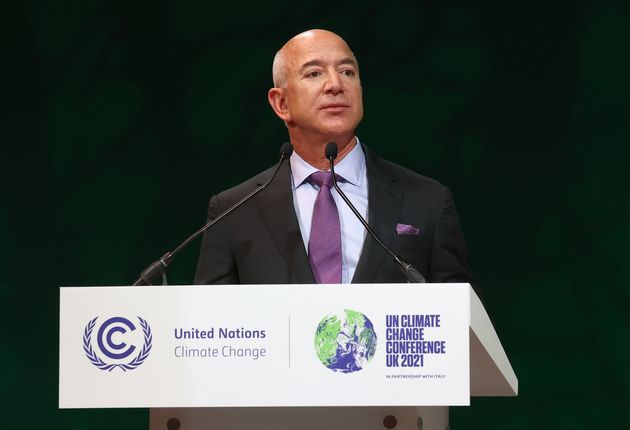
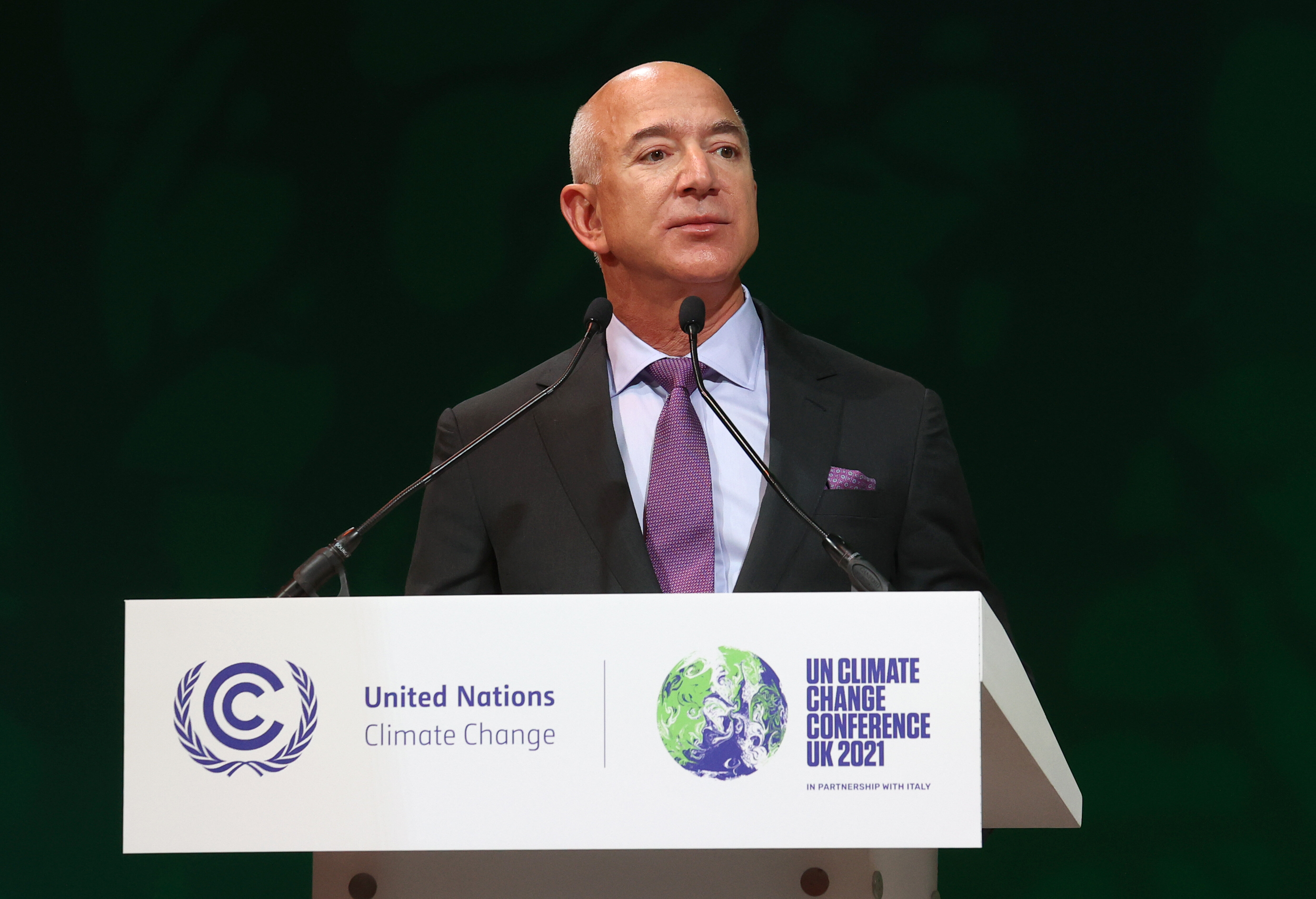
Chris Jackson via Getty Images

Bezos speaking at COP26 in Glasgow

The richest person in the world, Amazon founder Jeff Bezos, took to the stage to push for action on climate change on Tuesday – and people could not believe their eyes.

Bezos spoke at the UN’s climate summit COP26 about how his own adventures to space just earlier this year – enabled via his private company Blue Origin – made him realise how fragile the Earth and its atmosphere is.

“Looking back at Earth from up there, [in space] the atmosphere seemed so thin. The world so finite and so fragile,” the billionaire said.

“Now, in this critical year, in what we all know is the decision decade, we must all stand together to protect our world.”

He also announced a £2 billion pledge to restore nature as part of a £10 billion Bezos Earth fund.

But the irony of his declaration was not lost on viewers, who berated him for failing to implement green policies in his own companies.

The i’s Paul Waugh pointed out that just Bezos’ journey into space would have used up fossil fuels, culminating a significant portion of CO2 emissions.

The Guardian’s political correspondent Peter Walker noted that the billionaire was “explaining the obvious” after his “massively polluting ego trip into space” which lasted approximately 10 minutes.

Walker also pointed out the irony that Bezos even had a platform at the event, noting: “He’s not the saviour, he’s the problem.”

The Financial Times’ Tim Stanley dubbed the Amazon founder’s speech as “COP26′s Marie Antoinette moment” for its insensitivity.

Columnist Nick Timothy pointed out that Bezos still had significant work to do when it comes to making his own businesses more sustainable as well.

And the furious tweets from everyone who caught his speech just kept on coming.

Share Button

‘Shocking’ Inequality Is Still Behind Many Stillbirths And Premature Births

A quarter of stillbirths and a fifth of premature births across England are due to socio-economic inequalities, research suggests.

A review in the Lancet of more than a million births found that South Asian and Black women living in the most deprived areas experience the largest inequalities when it comes to what happens to their pregnancy.

Experts behind the review suggested that some factors, such as high body mass index (BMI) and whether a mother smokes, could be contributing to the risk, but also pointed to racism and economic issues.

Calculations for the study suggest that half of stillbirths and three quarters of births where the baby is smaller than expected in South Asian women living in the most deprived fifth of neighbourhoods would be potentially avoidable if these women had the same risks as white women living in the most affluent fifth.

Similarly, about two thirds of stillbirths and nearly half of births involving small babies in Black women from the most deprived neighbourhoods were potentially avoidable if they had the same risks as white women in richer areas.

SDI Productions via Getty Images

The NHS has set a target of halving stillbirth and neonatal death rates, and reducing levels of premature birth, by 25% by 2025.

An estimated 60,000 babies are born prematurely in the UK every year (before 37 weeks).

In 2019, around one in 255 births resulted in a stillbirth in England and Wales, alongside around one in 302 in Scotland.

In 2020, there were 2,429 stillbirths (167 fewer than 2019) in England and Wales, according to the Office for National Statistics (ONS).

In the new study, a team from the National Maternity and Perinatal Audit analysed birth records between April 1, 2015 and March 31, 2017, in NHS hospitals in England.

They worked out the impact of socio-economic factors, adjusting for whether women smoked, their BMI and other pregnancy risk factors.

Socio-economic status was measured for each local area and combined information on income, employment, education, housing, crime and the living environment.

In total, almost 1.2 million women with a birth of a single child were included in the study, of whom 77% were white, 12% South Asian, 5% Black, 2% mixed race/ethnicity, and 4% other race/ethnicity.

Overall, 4,505 women experienced a stillbirth (after 24 weeks), the study found, while of 1,151,476 liveborn babies, 69,175 were premature and 22,679 were births involving foetal growth restriction (smaller babies).

Risk of stillbirth was 0.3% in the least socio-economically deprived group and 0.5% in the most deprived group; risk of a premature birth was 4.9% in the least deprived group and 7.2% in the most deprived group; while risk of foetal growth restriction was 1.2% in the least deprived group and 2.2% in the most deprived group.

The experts found that 24% of stillbirths, 19% of live premature births and 31% of live births of smaller babies were attributed to socio-economic inequality and would not have occurred if all women had the same risks as those in the least deprived group.

But when experts adjusted for ethnicity, mothers smoking and BMI, these statistics were cut (to 12%, 12%, and 16%, respectively), which the authors suggested means these factors may explain a considerable part of the socio-economic inequalities in pregnancy outcomes.

Pregnancy complications were found to disproportionately affect Black and minority ethnic women – with 12% of all stillbirths, 1% of premature births and 17% of births with growth restriction attributed to ethnic inequality.

In this group, adjusting for deprivation, smoking, and BMI had little impact on these associations – suggesting factors related to discrimination based on ethnicity and culture may contribute to poor outcomes.

Co-lead author Dr Jennifer Jardine, from the Royal College of Obstetricians and Gynaecologists, said: “The stark reality is that across England, women’s socioeconomic and ethnic background are still strongly related to their likelihood of experiencing serious adverse outcomes for their baby.

“I think that people will be shocked to see that these inequalities are still responsible for a substantial proportion of adverse pregnancy outcomes in England.

“Over the past few decades, efforts to close the gap in birth outcomes focusing primarily on improving maternity care and targeting individual behaviours have not been successful.

“Birth outcomes don’t only represent a woman’s health during pregnancy but also reflect her health and wellbeing across her entire life.

“While we must continue to encourage healthy behaviours during pregnancy, we also need public health professionals and politicians to strengthen efforts to address the lifelong, cumulative impact of racism and social and economic inequalities on the health of women, families, and communities.”

Co-lead author Professor Jan van der Meulen from the London School of Hygiene & Tropical Medicine added: “There are many possible reasons for these disparities.

“Women from deprived neighbourhoods and Black and minority ethnic groups may be at a disadvantage because of their environment, for example, because of pollution, poor housing, social isolation, limited access to maternity and health care, insecure employment, poor working conditions, and stressful life events.

“National targets to make pregnancy safer will only be achieved if there is a concerted effort by midwives, obstetricians, public health professionals and politicians to tackle the broader socioeconomic and ethnic inequalities.”

Share Button

Why Did World Leaders Fly Hundreds Of Miles To Glasgow? The Environment Secretary Can’t Quite Explain

Twitter @LBC

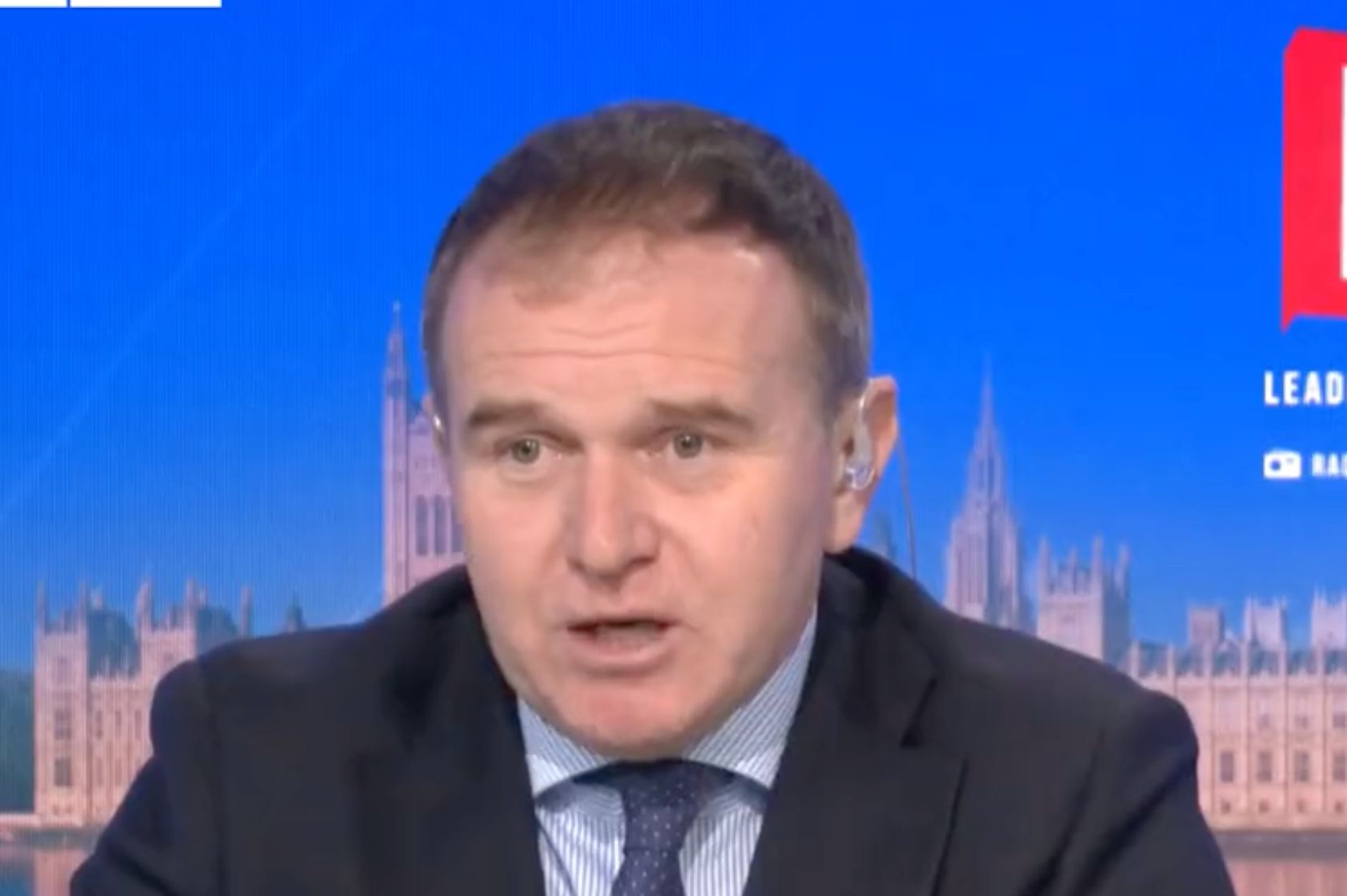
Environment secretary George Eustice put his foot in it on LBC

George Eustice struggled to justify why world leaders had flown from around the globe to attend COP26 on Tuesday.

The UN’s summit in Glasgow has been hailed as a last-gasp bid to stop catastrophic climate change – and yet hundreds of delegations flew into the city via private jets, one of the most damaging modes of transport, seemingly undermining the very message of the conference before it even began.

LBC’s Nick Ferrari asked the environment secretary: “Do we really need somewhere in the region of 200 to 300 private jets, a motor convey for the [US] president of 22 cars and a fleet of helicopters.

“This is rather hypocritical isn’t it, secretary of state?”

“Well, look, it’s always possible to see it in those sort of terms,” Eustice replied.

“I take a slightly bigger picture view on this. We’re only going to tackle this crisis if we can get governments around the world to make the right commitments and take the necessary steps to hit them.

“Having an event like this over two weeks where the world works together on a shared endeavour is an important thing to do and that does require people to travel.”

Ferrari persisted and pointed out: “But Mr Eustice – they [world leaders] seek to lecture us – they lecture the good people of Camborne and Redruth as they arrive in convoys of 22 cars, private jets which are gobbling out goodness knows how much CO2 emissions – and they lecture us.

“It’s ludicrous – isn’t it?”

Eustice still denied that the government is lecturing the public, claiming they were actually supporting technologies and decarbonising electricity to get to Net Zero CO2 emissions.

“It’s not really about lecturing people abut how they live their lives, but it is about having the policy agenda at government level,” the environment secretary claimed.

Ferrari then suggested there could be a danger that the government is turning people against it with “this level of hyperbole”.

Eustice’s colleague foreign secretary Liz Truss also fought back over questions about the methods world leaders had travelled to Glasgow on Monday.

She told Sky News that giving up flying is not the solution to reducing CO2 emissions – even though it is one of the most polluting activities out there.

She also claimed, “it’s really important that we do have people face to face”, when asking global leaders to make serious pledges about climate changes.

Share Button