University Of Oxford Made Me Feel ‘Totally Thick’ Says Labour MP

JUSTIN TALLIS via Getty Images

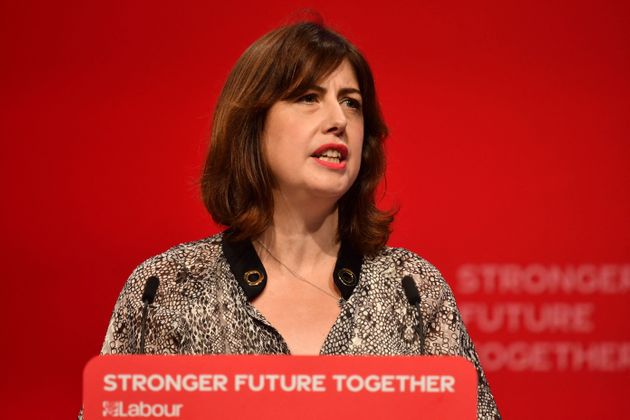
Shadow secretary of state for sousing Lucy Powell 

A Labour MP has revealed she dropped out of the University of Oxford after a year because it left her feeling “totally thick”. 

Shadow housing secretary Lucy Powell described herself as a “fish out of water” when she went to study Chemistry at the elite university nearly 30 years ago.

Powell told Gloria De Piero on GB News she was studying maths, physics and chemistry at her state sixth form when a teacher picked her out and said she should apply to Oxbridge. 

Powell said: “I went down for my interviews and I phoned my mum up just crying because I hated it so much. 

“It was just so awful. But then I got in, I got an offer. I cried when I got the offer, I didn’t want to go at all. 

“But what do you do? You get an offer from Oxford. You get into Oxford and everyone’s like oh that’s amazing. That’s great. 

“I just was like a fish out of water for most of it. I did make some really good friends there and I’m sort of glad I went to see how the other half live in a way. But I didn’t thrive there at all. So, I left after a year and then went to Kings.” 

Asked why she felt like a fish out of water, Powell replied: “I was a state educated, northern girl doing science. 

“It’s not an environment I was used to at all. I’d come from Hacienda Manchester.

“And I was sort of in Oxford with a load of books and there was no support. What I realised was everybody else had had a lot of coaching, a lot of extra tuition, a lot of support. 

“There was no teaching really, it’s just like here’s an exercise book get on with it. And so it just crushed my confidence immediately.”

Powell said she had gone from being picked out at her sixth form from two thousand children to “basically being made to feel like I was totally thick” and described the experience as “crushing”.

She added: “I sort of lost interest, I really struggled, I put on weight. Over that summer, after my first year when I came home, I just made the decision that I wasn’t going to succeed there and I hadn’t done very well.” 

Powell phoned around other universities and transferred straight into second year at King’s College in London. 

The MP for Manchester Central added: “Oxford and Cambridge are getting a bit better, but that was nearly 30 years ago. My experience, you don’t expect it to still be like that in 21st century Britain, do you? But I think unfortunately, it is still for too many.” 

Powell also revealed that she went clubbing at the age of 15 and used to go to the Hacienda nightclub that became famous during the “Madchester” years. 

She added: “I used to go clubbing on a school night and things I really shouldn’t have done that my parents really didn’t know I was doing.” 

But she also revealed that she never gets drunk now, adding: “I’ve become a lightweight and maybe I am a sort of control freak about it. 

“In my youth, as people who were at university or at school will testify, I was perfectly able to get completely paralytic drunk as lots of people were at that age. 

“But as I’ve got older, I don’t know when that kicked in, I’m very sensible I’m afraid. So I just have my two spritzers and that’s me done.”

The interview will be broadcast on GB News at midday on Thursday.

Share Button

Blink-182’s Mark Hoppus Reveals He’s ‘Cancer Free’ After Months Of Treatment: ‘Today Is An Amazing Day’

Blink-182 musician Mark Hoppus is celebrating being “cancer-free” after undergoing treatment throughout the last year.

The rock group’s bassist and singer revealed in June that he’d already had three months of chemotherapy, telling his fans at the time: “It sucks and I’m scared, and at the same time I’m blessed with incredible doctors and family and friends to get me through this.”

On Wednesday night, Mark shared a promising health update, telling his social media followers that he’d received the news he is now “cancer free”.

“Just saw my oncologist and I’m cancer free! Thank you God and universe and friends and family and everyone who sent support and kindness and love,” he wrote.

Scott Legato via Getty Images

Mark Hoppus on stage in 2019

Mark added that he still needs to have scans every six months, noting it will “take me until the end of the year to get back to normal”.

“But today is an amazing day,” he added. “And I feel so blessed.”

The 49-year-old rocker previously told fans during a Twitch stream that he had been diagnosed with “diffuse large B-cell lymphoma stage 4-A” in late April.

He explained that this means “it’s entered enough parts of my body that I’m stage 4, which is ― I think it’s the highest that it goes”. 

Mark has been with Blink-182 since the trio broke into the mainstream in the 1990s with their hit All The Small Things.

Over the years, the band has racked up a number of UK top 20 singles including What’s My Age Again?, The Rock Show and the ballad I Miss You.

In 2017, they were nominated for their first Grammy for the album California.

Share Button

Coming off anti-depressants may not cause relapse – study

Staying on them reduces the risk of depression recurring but there’s no guarantee, a study suggests.

Share Button

Researchers discover unknown childhood genetic condition and its potential cure

Describing a previously unknown genetic condition that affects children, researchers at University of California San Diego School of Medicine and Rady Children’s Institute for Genomic Medicine say they also found a potential method to prevent the gene mutation by administering a drug during pregnancy.

The findings publish in the September 30, 2021 issue of The New England Journal of Medicine.

The work involved researchers in Egypt, India, the United Arab Emirates, Brazil and the United States. “Although different doctors were caring for these children, all of the children showed the same symptoms and all had DNA mutations in the same gene,” said senior author Joseph G. Gleeson, MD, Rady Professor of Neuroscience at UC San Diego School of Medicine and director of neuroscience at the Rady Children’s Institute for Genomic Medicine.

The research team dubbed the condition “Zaki syndrome” after co-author Maha S. Zaki, MD, PhD, of the National Research Center in Cairo, Egypt, who first spotted the condition. Zaki syndrome affects prenatal development of several organs of the body, including eyes, brain, hands, kidneys and heart. Children suffer from lifelong disabilities. The condition appears to be rare, but future studies are required to determine prevalence.

“We have been perplexed by children with this condition for many years,” said Gleeson. “We had observed children around the world with DNA mutations in the Wnt-less (WLS) gene, but did not recognize that they all had the same disease until doctors compared clinical notes. We realized we were dealing with a new syndrome that can be recognized by clinicians, and potentially prevented.”

Co-author Bruno Reversade, PhD, a research director at the Agency for Science, Technology and Research (A*STAR) in Singapore, helped identify several families with members suffering from Zaki syndrome and investigate potential therapeutic intervention.

“While we have shown that it’s possible to mimic WNT-deficiency with dedicated drugs, the real challenge was to overcome, and possibly rescue, this congenital disease,” Reversade said.

Using whole genome sequencing, researchers documented mutations in the WLS gene, which controls signaling levels for a hormone-like protein known as Wnt (pronounced wint). Wnt signaling is a highly conserved group of protein pathways involved in embryonic development.

The scientists generated stem cells and mouse models for Zaki syndrome, and treated the condition with a drug called CHIR99021, which boosts Wnt signaling. In each mouse model, they found CHIR99021 boosted Wnt signals, and restored development. Mouse embryos grew body parts that had been missing and organs resumed normal growth.

“The results were very surprising because it was assumed that structural birth defects like Zaki syndrome could not be prevented with a drug,” said first author Guoliang Chai, PhD, a former postdoctoral fellow at UC San Diego School of Medicine now at Capital Medical University in Beijing, China. “We can see this drug, or drugs like it, eventually being used to prevent birth defects, if the babies can be diagnosed early enough.”

Co-authors include: Changuk Chung, Zhen Li, Lu Wang, Trevor Marshall, Nan Jiang, Xiaoxu Yang, Jennifer McEvoy-Venneri, Valentina Stanley, Paula Anzenberg and Nhi Lang, all at Rady Children’s and UC San Diego; Karl Willert, UC San Diego; Emmanuelle Szenker-Ravi, Muznah Khatoo and Vanessa Wazny, Genome Institute of Singapore; Jia Yu and David M. Virshup, National University of Sinapore; Rie Nygaard, Filippo Mancia, Rebecca Hernan and Wendy K. Chung, Columbia University; Rijad Merdzanic and Aida M. Bertoli-Avella, Centogene, Germany; Maria B.P. Toralles and Paula M.L. Pitanga, Laboratorio e Genetica Medica, Brazil; Ratna D. Puri, Sir Ganga Ram Hospital; and Nouriya Al-Sannaa, Dhahran Health Center, Saudi Arabia.

Share Button

ECMO life support offers sickest COVID-19 patients a chance to survive, but a slimmer one than once thought

The life-support system called ECMO can rescue COVID-19 patients from the brink of death, but not at the rates seen early in the pandemic, a new international study finds.

Where once about 60% of such patients survived at least 90 days in spring 2020, by the end of the year it was just under half.

The decreased survival over time might be due to a combination of factors, including which critically ill patients clinicians chose to place on ECMO as the pandemic went on, and the treatments the patients had received before they started on ECMO.

The new findings show how important it is for hospitals that offer ECMO to choose carefully which patients get access to this labor-intensive level of care, the authors say.

Hospitals should also make policies that can guide such choices when ECMO circuits are in high demand because of a pandemic surge, they advise.

The new findings are published in Lancet by an international team co-led by ECMO experts from the University of Michigan, Singapore and Columbia Universiity. The paper uses data from more than 4,800 patients over age 16 who were treated with ECMO for advanced COVID-19 in 41 countries during 2020.

The data for the study were contributed by ECMO centers to a registry run by ELSO, an international organization devoted to ECMO and other forms of advanced life support.

A last-chance options

ECMO, short for extracorporeal membrane oxygenation, has been used for decades in select hospitals to treat critically ill children and adults. It takes over for both the heart and lungs temporarily, circulating the blood outside the body under constant supervision of trained providers.

At the start of the pandemic, some experts had strong reservations about placing COVID-19 patients on ECMO, for fear of harming their lungs. As more centers began to try it, the survival rate mirrored that of ECMO’s use in other forms of acute lung failure, as the team behind the new paper reported a year ago.

But all the centers in that first study had begun offering ECMO before May of 2020, and most were highly experienced with providing ECMO in general, says Ryan Barbaro, M.D., M.S., co-first author of the new paper, associate professor at the U-M Medical School and intensive care physician at Michigan Medicine, U-M’s academic medical center.

The new study breaks the patients into three groups: those treated before May 1, 2020, those treated in these “early adopter” hospitals after May 1, and those treated with ECMO in other hospitals from May 1 through the end of 2020. May 1 was chosen because the evidence for how best to treat critically ill COVID-19 patients had evolved considerably by then.

“What we noticed right away is that the patients treated later in the pandemic were staying on ECMO longer, going from an average of 14 days to 20 days. They were dying more often, and these deaths were different,” said Barbaro. “This shows that we need to be thoughtful about who we’re putting on ECMO and when we’re making the decision to take patients off who aren’t getting better. Across the U.S. right now, we have places where ECMO is a scarce resource whereas in Michigan it’s not quite at that point, but we anticipate it might be.”

Within the “early adopter” centers, mortality rates increased from 37% in the months before May, to 52% after May. At the centers that didn’t start providing ECMO until at least May, 58% of the patients died within 90 days of being places on an ECMO circuit.

Patients treated with ECMO later in the pandemic were more likely to have received medications such as remdesivir and dexamethasone, and to have received non-invasive ventilation before being intubate for total breathing support.

Decisions and ethics during a surge

Having patients stay on ECMO for a longer time ties up many resources, including the machines and tubing that make up an ECMO circuit, and the specially trained nurses, respiratory therapists and other staff it takes to keep a circuit operating safely.

When a hospital has a large number of COVID-19 patients and others in intensive care, the team’s ability to provide the same level of care that they did before the surge can suffer, and mortality might increase.

If many hospitals in a region or collection of states are coping with a large number of critically ill COVID-19 patients, it can be hard to find an ECMO-capable hospital to transfer patients to. Sending more ECMO circuits — the pumps, tubes and controllers used in the treatment — to these hospitals is not sufficient; specially trained teams, adequate blood supply and other factors are all needed to support each ECMO patient.

So, the authors say, it’s important for ECMO centers to carefully consider which risk factors and personal characteristics might make a patient more or less likely to survive if placed on ECMO, especially if they might need to be on for a while. ELSO offers resources and guidelines can help.

The research team used methods developed by U-M School of Public Health statistician Philip Boonstra to adjust the data to make apples-to-apples comparisons. This allowed them to ensure, for instance, that the survival percentages were not affected by the fact that so many more patients were transferred out of their ECMO hospital later in the pandemic compared with at the start.

In addition to working on the ELSO COVID-19 registry, Barbaro is leading a clinical observational study called ASCEND that is tracking ECMO outcomes in children and adolescents at nearly 100 hospitals around the world. As the Delta variant of the novel coronavirus spreads rapidly, the research team has already noticed that the majority of pediatric patients being placed on ECMO at this time are needing it because of COVID-19.

“in these moments of crisis, our ability to meet demand presents ethical challenges, and COVID has drawn out the weaknesses in our system, as well as showing how those with resources and relatives who can advocate on their behalf are more able to find out about ECMO and seek the opportunity for their loved one to be treated,” Barbaro said. “Meanwhile, hospitals in non-surge areas need to reflect on what policies and procedures they’ll use if they experience another surge, to foster ethical allocation when resources are constrained.”

Share Button

What Is Better Motivational Fuel Than Stress or Anxiety?

If you don’t want to use stress or anxiety as your primary motivational fuel, what kind of fuel would you like to use instead? What can you say about your desired fuel source for taking action and getting results?

I like to think of spending a day at an amusement park as a good analogy for my ideal type of work motivation.

When Rachelle and I spend a few days together at Disneyland, we always take a lot of action and have days full of fun together.

We don’t need anxiety, fear, or worry to motivate us to act.

We virtually never go for just one day. We typically go for 3-4 days in a row. This eliminates any feelings of scarcity since whatever we miss one day, we could easily do on a different day. Especially when we go on weekdays, this gives a sense of time abundance, so we can go at a relaxed pacing and not feel stressed or pressured.

Our intentions are simple: Enjoy the day. Have experiences we’ll appreciate. Spend time outside. Walk a lot. Enjoy tasty vegan food. Play together. Be silly. Create beautiful memories. Help others have good experiences too.

I’ve probably spent close to 100 days of my life at Disneyland. I’ve been going there every decade since the 1970s. Not once have I ever just sat there and procrastinated. I always took lots of action. I always put many miles on my shoes. I always felt pleasantly motivated to keep taking action and having different experiences all day long.

That made me super curious. Why is it that Disneyland is so good at motivating me to take action – all day, every day… even for 30 days in a row without a day off and not feeling like I need a break?

As I looked more closely at pre-existing sources of motivation that I liked, I generalized and abstracted the patterns from them. Then I injected more of those successful patterns into other areas of life, like my creative projects. This included strengthening qualities like curiosity, exploration, immersion, playfulness, variety, stimulation, making projects social, etc. I gradually discarded the fuel sources that didn’t work well, such as old patterns I learned from school that involved dull assignments, time pressure, and a huge disconnection from meaning and purpose.

Have you ever had a day where you found yourself taking lots of action with ease? Have you ever encountered a source of motivation that felt very aligned and pleasant? If so, study the heck out of that. See if you can have similar experiences again, and observe those experiences from the inside. Discover why that works so well for you, even if such experiences have been rare in your life so far. Then do your best to abstract and transplant similar qualities into your approach to work and other parts of life.

In other words, instead of trying to force yourself to run on a misaligned fuel source, identify the best fuel sources you’ve found so far, and inject them into your life on a much grander scale. Isn’t this what we’d like the planet to do as well – to replace nasty and stinky fuel with green and clean fuel?

When I was a kid, there was a huge contrast between a day at school and a day at Disneyland. School was dreadfully boring but also fun. Disneyland days were fun but scarce. If I could have made a free choice back then, there’s no way I’d ever have chosen a day of school if I could have chosen Disneyland instead. Back then I didn’t have that option, but today I can discover and use whatever motivational fuel suits me best. I don’t have to settle for boring work days. I can do my work in a way that’s fun and engaging for me.

When I’m at Disneyland, I have no boss, so in my work life, I don’t have a boss either. It’s more fun and rewarding to make my own decisions about what to do next. Then I can follow my natural motivational flow wherever it takes me, just like I’d always do at Disneyland.

At Disneyland there’s no fixed schedule (except for some optional shows and parades). So I schedule very few items on my calendar. Most days my calendar is blank. I appreciate having most of my days free of any appointments.

At Disneyland I’m surrounded by a field of perpetual invitations. There are always plenty of interesting things to explore. So I like having a work life rich in interesting experiences to explore. I want to feel like there are plenty of good invitations present at all times.

At Disneyland I’m surrounded by playful people who are enjoying themselves. Is that so hard to create in one’s work life too? It starts by saying no to the opposite.

At Disneyland I get to make tons of micro-choices, most of which will turn out well no matter which direction I go. These kinds of conditions can be recreated in business too, starting at the level of intention.

Today I would often rather work than go to Disneyland or go on vacation. I enjoy a work life that includes lots of exploration and stimulating creative work. I get to engage with growth-oriented people in Conscious Growth Club every day. I work at a pacing that feels good to me, speeding up when I want to go faster and slowing down when I prefer a more relaxed pacing. That didn’t happen by itself, and I didn’t begin my entrepreneurial journey with this mindset. Mostly I learned this the hard way, eventually concluding that trying to get myself to work productively based on my initial default approach was just awful.

Discovering better motivational fuel required leaning away from what I learned about work and life when I was younger. I had to discard the expectations and assumptions that had taught me to motivate myself with stress, worry, anxiety, time pressure, fear, competition, satisfying others’ expectations, money, etc. That was not easy because a part of me was conditioned to think it was irresponsible or impossible to expect work to be interesting, engaging, and highly motivating most of the time. It was only by delving deeper into that zone of trouble and dropping the unnecessary shame and guilt about it that I found much better and longer lasting motivational fuel.

Does any of this ring true for you as well? Have you been socially conditioned to steer away from your best sources of motivation, so you can be controlled more easily?

Do you ever worry that if you really leaned into your best motivational fuel, it might create some negative social consequences for you? Have you ever thought about simply letting those consequences play out?

One question that really got to me was: What kind of life will I live if I regularly – instead of rarely – use the power of my sparkiest motivational fuel?

I find that there’s a certain wildness to my best motivational fuel. I don’t have full control of it. I can’t just lock it into a set of fixed rules. Sometimes it will cooperate with structure, but other times it will rebel against too much structure because it loves to go with the flow, wherever that leads.

Working with your most powerful motivational fuel takes practice and patience, and your ability to understand and predict its behavior will improve over time. Initially you may not trust it, worrying that it may be too wild, too reckless, or too irresponsible and that it might get you into trouble. And initially that may indeed seem to be true. But the more you dance with this fuel source, the more you may come to trust it.

I felt like I had to go through a transitional phase first where this fuel source pulled me well out of my comfort zone to get me further away from my old assumptions and habits. It crushed the parts of my life that weren’t working well anyway, even though I resisted such purging at the time.

This powerful fuel showed me glimpses of what life could be like through peak experiences, and that left me with an even bigger contrast when I tried to lean back on old fuel sources that were far less stimulating.

Do you have to do this perfectly to improve your results? Nope. Even making small tweaks to your motivational fuel can make a meaningful difference. But imagine what could happen if the easygoing flow of inspired action became your everyday experience?

While it may seem indulgent to delve into experiences that motivate you with ease, I highly recommend it. I had some insightful breakthroughs by doing more of what I found naturally fun and motivating – and learning to do that guilt-free. This enabled me to keep improving other aspects of life, such that there isn’t such a huge contrast between work days and fun days anymore. Now I tend to enjoy both about equally well, just in different ways. And I don’t have to lean on stress or anxiety to self-motivate.

When you get in tune with the flow of your best motivational fuel, life is much easier and more enjoyable. Long-standing problems finally get solved as if they were no big deal to begin with. Scarcity leaves, and abundance becomes your new reality.

Remember that more is possible. It doesn’t matter how long you’ve been stuck with weak motivational fuel. You can always switch to a different fuel source. Instead of using money as fuel, you could try meaning and purpose. Instead of using obligation, you could try heart-aligned service. Instead of using stress and worry, you could try fun and playfulness.

This is a deeply personal exploration. What fuels me may not fuel you. So don’t just assume you can copy my fuel sources and expect them to work for you equally well. Don’t look to Disneyland for motivational clues if you hate Disneyland. Look into your own past for the clues that life is giving you. Be grateful for the gift of those clues, and follow them to your own best sources of motivation.

Share Button

Boris Johnson Vows To Save Christmas (Again) And Everyone Made The Same Joke

Anna Moneymaker via Getty Images

Prime minister Boris Johnson is fighting to save Christmas…again

Boris Johnson promised the public that he was going to make sure supply chains “get through to Christmas and beyond” this year – a vow which felt very familiar to many of his critics.

The prime minister famously pledged to save Christmas last year by relaxing Covid rules for five days, only to scupper the country’s plans just before December 25 due to a spike in Covid infections.

Downing Street made a sudden U-turn on December 19, and Johnson told the public: “It is with a very heavy heart that I must tell you we cannot proceed with Christmas as planned.”

London and much of south-east England was put into tier four, meaning people could only mix with their own households and support bubbles, and no-one could travel.

Other parts of England were put in tiers one to three and asked to stay local. Only three households could come together for Christmas.

In Wales, only two households could unite for Christmas Day while in Scotland it was three households up to a maximum of eight people.

Johnson’s last minute U-turn did not impress many, considering Covid infections had been rising steadily for weeks.

It’s safe to say it was not the Christmas most people had in mind – and judging from the response on Twitter, few are looking for a repeat performance from the prime minister this year.

People were quick to compare the newspaper front pages of this year to those from November last year, when the public were told “Boris battles experts to save Christmas”.

Journalist and author Sathnam Sanghera tweeted: ”Boris battling to save Xmas seems to start earlier every year.”

Another Twitter critic joked: “Boris battles to save Christmas 2…..the sequel no one wanted. But a large chunk of the electorate would probably vote for.” 

Share Button

Bridgerton’s Nicola Coughlan Reveals Season One Twist Almost Played Out Very Differently

Warning: This article contains massive spoilers for the first season of Bridgerton.

Bridgerton star Nicola Coughlan has revealed that her character’s epic twist in the first season finale almost played out very differently.

The Irish star plays Penelope Featherington in the much-loved period drama, a character who is unveiled as the gossip columnist Lady Whistledown at the end of the Netflix show’s first run.

With the cast now gearing up for the release of Bridgerton’s second series, Nicola has admitted that producers had initially wanted to keep Penelope’s secret under wraps for a bit longer before spilling the beans to viewers.

“They had changed back and forward a few times,” she told cast members Simone Ashley, Jonathan Bailey and Charithra Chandran during Netflix’s Tudum event.

LIAM DANIEL/NETFLIX

Nicola Coughlan on the set of Derry Girls

Nicola went on to say that bosses initially wanted to end the series with a “red herring”, pointing towards Cressida Cowper as Lady Whistledown’s true identity rather than Penelope, before eventually settling on the current ending.

However, it turns out that unmasking Penelope early on in Bridgerton’s run has worked out well for the character in the forthcoming series.

Nicola added: “How do I say this without being a spoiler? It’s very satisfying, what happens with Penelope, in season two.”

David M. Benett via Getty Images

Nicola at a fashion event earlier this month

Share Button

Jennifer Aniston Reveals What She Is (And Isn’t) Looking For In Her Next Relationship: ‘Humour Please, I Beg Of You’

Jennifer Aniston is ready to find love again.

The former Friends star, who split from ex-husband Justin Theroux in 2017 and was previously married to Brad Pitt between 2000 and 2005, has revealed she is ready to resume dating.

And the 52-year-old knows exactly what she is – and isn’t – looking for.

“No-one of importance has hit my radar yet but I think it’s time,” Jen said on the Lunch With Bruce podcast. “I think I’m ready to share myself with another.”

Mario Anzuoni via Reuters

Jennifer Aniston

The actor said she had been in relationships for the best part of 30 years and had enjoyed time on her own in recent years.

“I didn’t want to for a long time and I loved really being my own woman without being a part of a couple,” she said.

“I’ve been part of a couple since I was 20 so there was something really nice about taking the time.”

However, you won’t be seeing Jen pop up on any dating apps anytime soon, because she’s “an old school girl”.

“No Tinders and no Rayas please,” she told said. 

“People don’t come up to people anymore,” she added. “People don’t do that. It’s weird.”

Ron Galella, Ltd. via Getty Images

Jennifer was previously married to Brad Pitt from 2000-2005

And if you fancy your chances with one of the most famous women on the planet, Jennifer has given potential partners some tips on what she looks for in a significant other, including a quality first kiss. “It’s pretty important,” she said.

“That, and also the ease at which the conversation flows the first time. That’s kind of a good indicator. Confidence, but not a cockiness. Humour, please I beg of you, beg of you. Generous. Kind to people.”

Oh, and couch potatoes move to the back.

“Fitness is important and not just about like how you look,” she noted. “I want to be around here for a long time and not be in a wheelchair when I’m 80.”

Share Button

Screen time making your eyes buggy?

Mayo Clinic does not endorse companies or products. Advertising revenue supports our not-for-profit mission.

Advertising & Sponsorship

Mayo Clinic Marketplace

Check out these best-sellers and special offers on books and newsletters from Mayo Clinic.

Share Button