Body size, digestive systems shape ungulate foraging

Research led by a University of Wyoming graduate student involving about 50 scientists from across the globe has provided new insights into the behavior of ungulates (hoofed animals) as it relates to forage conditions and water availability.

Saeideh Esmaeili, who graduated from UW’s Program in Ecology in December 2020 and is now a postdoctoral assistant at Colorado State University, is the lead author of a paper that appears in the journal Ecology Letters. It explores the foraging behavior of 30 species of ungulates across North America, Europe, Africa and the Middle East, ranging from elk and mule deer in Wyoming to gazelles, impalas, reindeer, wildebeest, wild asses and zebras.

“By combining GPS relocations with remotely sensed data on forage characteristics and surface water, we quantified the effect of body size and digestive system in determining movements of 30 populations of ungulates,” Esmaeili says.

Other UW researchers who participated are Shannon Albeke, Jeff Beck, Jake Goheen, Matt Kauffman and Jerod Merkle, along with Hall Sawyer, of Laramie-based Western EcoSystems Technology Inc. Goheen was Esmaeili’s Ph.D. adviser.

The research adds nuance to a long-held hypothesis that ungulates choose to forage on grasses and other plants when the vegetation is at an intermediate stage of growth, so as to maximize energy intake. This is called the “forage maturation hypothesis.” Plants are most digestible at the beginning of the growing season; however, because they are small during this time, biomass is low. As plants mature, they gain biomass, but they become harder to digest.

The ungulates that were part of this study include both ruminants, such as deer and elk, which acquire nutrients by fermenting plants in a specialized stomach prior to digestion; and equids, such as horses and zebras, which don’t have such specialized stomachs.

Most notably, the scientists found that smaller-bodied ruminants forage primarily for the highest energy intake, while equids — which tend to be larger — choose to forage in areas close to surface water, with less attention to forage condition. That’s likely because equids don’t conserve water as efficiently as ruminants and proportionally excrete more water. The research also confirmed that ruminants’ ability to process higher-biomass forage increases with the species’ size.

A primary conclusion of the research is that, while the forage maturation hypothesis largely holds true, there is some variation based upon ungulates’ body size and digestive systems.

“The forage characteristics that influence population persistence of free-ranging ungulates should differ according to body size and digestive system, such that access to a combination of resource gradients is key to maintaining viable populations of diverse free-ranging ungulates across the globe,” the scientists conclude.

Other institutions, organizations and agencies whose researchers participated in the project include Virginia Tech University; Yale University; the U.S. Geological Survey; Colorado State University; the University of Washington; the Wildlife Conservation Society; France’s University of Montpellier; South Africa’s University of Pretoria; Germany’s Senckenberg Biodiversity and Climate Research Centre; Mongolia’s Hustai National Park Trust; the Cary Institute of Ecosystem Studies; the University of British Columbia; the Minnesota Zoo; Iran’s Isfahan University of Technology; Japan’s Tottori University; the Norwegian Institute for Nature Research; Austria’s University of Veterinary Medicine; the Inland Norway University of Applied Sciences; the Mongolian Academy of Sciences; and the Smithsonian Conservation Biology Institute.

Story Source:

Materials provided by University of Wyoming. Note: Content may be edited for style and length.

Share Button

Labour Would Give Employees Legal Right To Work From Home

Dan Kitwood via Getty Images

Labour deputy leader Angela Rayner has said all workers should be allowed to enjoy the benefits of home working even once the Covid pandemic was over.

A Labour government would give employees a legal right to work from home, deputy leader Angela Rayner has announced.

Under a new package of reforms, all staff would also also be granted a “right to switch off” to avoid being contacted via phone or email by bosses outside working hours.

Rayner said that Labour would place on duty on employers to provide “flexible working” from day one of employment, where there was no reason a job could not be done with varying hours or remotely.

The shadow secretary for work said all workers should be allowed to enjoy the benefits of home working even once the Covid pandemic was over.

Home workers would also be encouraged to join trade unions to allow them to continue to collectively organise on terms and conditions of work.

The right to flexible working – including flexible hours, staggered hours and flexibility around childcare and caring responsibilities – was aimed at ensuring “work fits around people’s lives instead of dictating their lives”, she said.

Among the changes the party wants to see is flexibility around school runs for parents, as well as childcare during school holidays.

Labour is also calling for the end of “one-sided flexibility” that currently benefits bosses, so all workers have secure employment and regular and predictable working.

Anadolu Agency via Getty Images

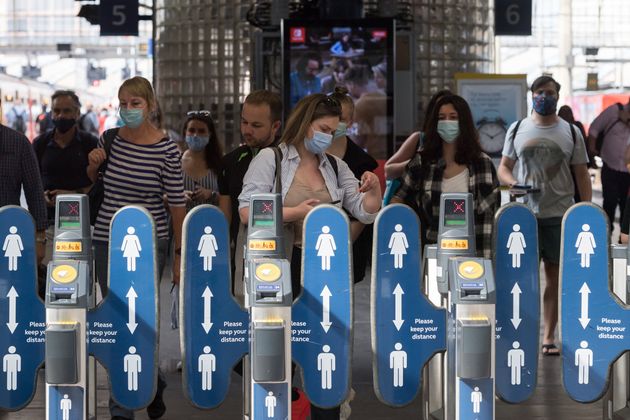
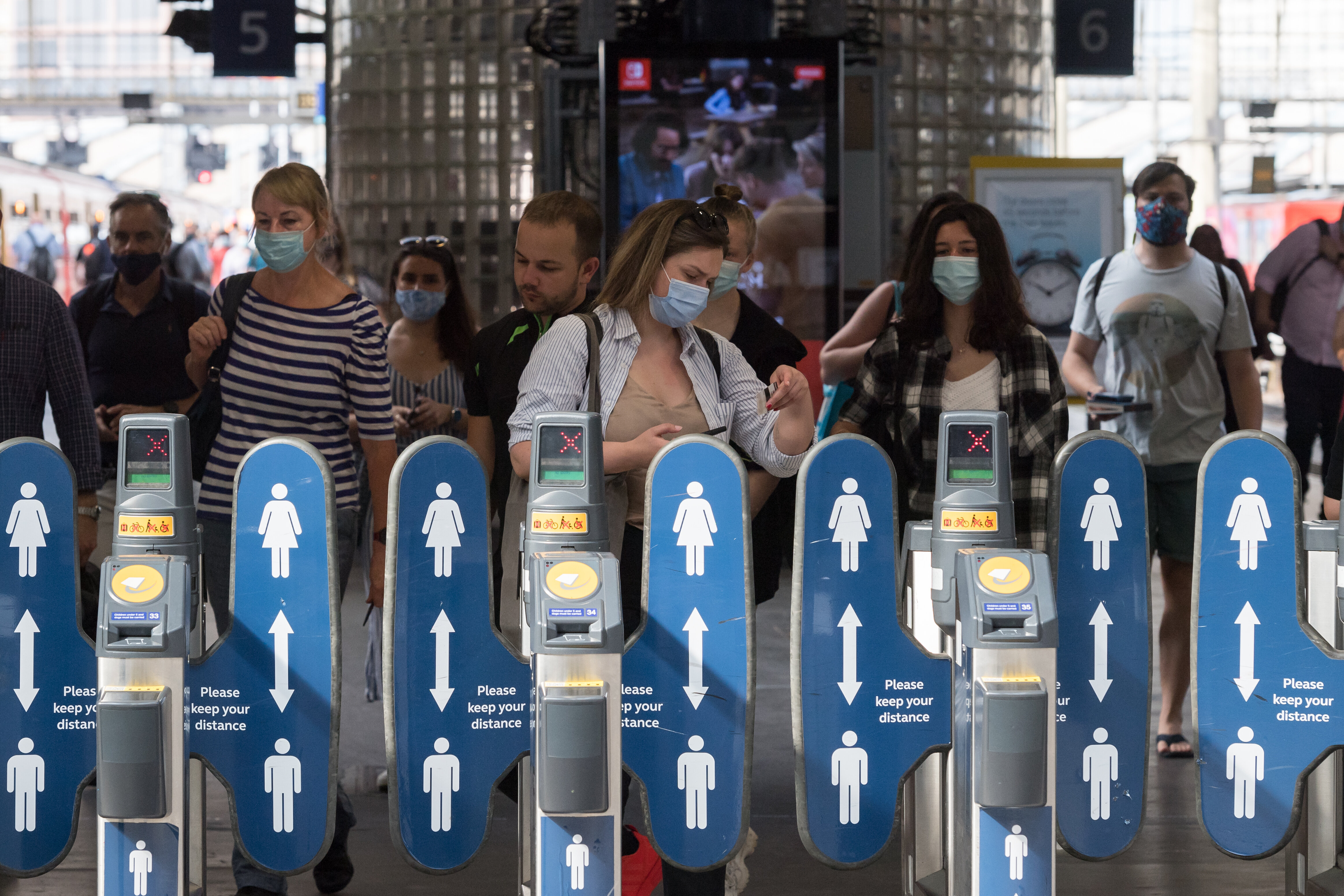
Commuters, most of them continuing to wear face masks, at Waterloo station

Unions would be granted greater access to workplaces, including to home workers, t”o ensure fair flexibility for all is delivered through a collective voice for all staff, including those who are working flexibly or remotely”.

“Labour will make flexible working a force for good so that everyone is able to enjoy the benefits of flexible working, from a better work-life balance to less time commuting and more time with their family,” Rayner said.

“The ‘new normal’ after this pandemic must mean a new deal for all working people based on flexibility, security and strengthened rights at work.

“The right to flexible working will change our economy and the world of work for the better, stop women losing out at work or even dropping out of the workforce altogether, end the sexist assumption of Dad being at work in the office and Mum looking after the kids at home and improve the lives of millions of workers.”

Boris Johnson pledged in the 2019 Conservative manifesto to make flexible working the “default” but appears to have shelved the plans along with an Employment Rights Bill.

Last month the Prime Minister’s spokesperson said: “We’ve asked people to work from home where they can during the pandemic, but there are no plans to make this permanent or introduce a legal right to work from home…It is important to stress that there are no plans to make working from home the default, or introduce a legal right to work from home.”

The TUC has found that 82% of workers want to work flexibly (87% for women workers), whereas the most popular form of flexible working, flexi-time, is unavailable to over half of the UK workforce.

Some 30% of flexible working requests are turned down because staff do not have a statutory right to work variable hours. The UK ranked 24th out of 25 countries on how often job demands interfere with family life.

Two-thirds of working mothers lack childcare during these summer holidays, and before Covid only 3.6% of eligible fathers took shared parental leave.

Share Button

DC Police Officer Smacks Table During Emotional Capitol Riot Testimony

Metropolitan Police Officer Michael Fanone, one of the most vocally critical law enforcement officers who responded to the Capitol riot, gave some fiery testimony Tuesday morning during the first congressional hearing on the events of January 6. 

Fanone described the harrowing and traumatic experience of being physically assaulted as he and other officers responded to the rioting, only to watch members of Congress downplay that trauma in the weeks and months afterward. 

“The indifference shown to my colleagues is disgraceful!” Fanone told lawmakers, shouting as he slammed a hand down hard on the table that held his prepared statement.

The officer was one of four law enforcement personnel to deliver prepared remarks and answer questions from the congressional panel convened by House Speaker Democrat Nancy Pelosi. The panelists include seven Democrats and two Republicans: Liz Cheney of Wyoming and Adam Kinzinger of Illinois. 

House Minority Leader Republican Kevin McCarthy withdrew all of his nominees to the commission last week after Pelosi rejected two of his picks; both of them had voted to overturn the results of the 2020 election in favour of President Donald Trump. 

In his remarks, Fanone explained how he and a partner ran over to the Capitol, even though they had not been assigned to work there, after hearing the desperate pleas of law enforcement over the radio. He recounted seeing one Metropolitan Police commander, Ramey Kyle, “struggling to breathe” in a thick cloud of chemical gas before Kyle picked himself up, straightened his uniform and returned to the line. 

“The fighting in the lower west terrace tunnel was nothing short of brutal,” Fanone recalled. “Here I observed approximately 30 police officers standing shoulder to shoulder, four or five abreast, using the weight of their bodies to hold back the onslaught of violent attackers.” When he and his partner offered to relieve some of the other officers of duty, Fanone said, none volunteered, choosing instead to help defend the building and those in it. 

At later points, Fanone said that he was grabbed, beaten, repeatedly electrocuted and was stripped of his badge and police radio. There was “a very good chance I would be torn apart or shot with my own weapon,” he said, until he made it known that he had children, soliciting the help of a small number of pro-Trump protesters to get himself to safety.

In the aftermath, Fanone said doctors told him he had experienced a heart attack at the Capitol, and was later diagnosed with post-traumatic stress disorder.

“What makes the struggle harder and more painful is to know so many of my fellow citizens, including so many of the people I put my life at risk to defend, are downplaying or outright denying what happened,” Fanone said.

“I feel like I went to hell and back to protect them, and the people in this room. But too many are now telling me that hell doesn’t exist, or that hell wasn’t actually that bad,” he added, before raising his voice at the “disgraceful” indifference shown to his colleagues.

He went on: “My law enforcement career prepared me to cope with some of the aspects of this experience. Being an officer, you know your life is at risk whenever you walk out the door, even if you don’t expect other law-abiding citizens to take up arms against you. But nothing — truly nothing — has prepared me to address those elected members of our government who continue to deny the events of that day, and in doing so, betray their oath of office.”

Share Button

Differences in financial risk preferences can make or break a marriage

While it is well known that fighting over money can lead couples to divorce court, new research from the University of California San Diego’s Rady School of Management finds that differences in risk preferences, especially when it comes to financial matters, are likely a root cause of marital separation.

The longitudinal study, appearing in The Economic Journal, measured the risk preferences of 5,300 couples in Germany from 2004 to 2017. Participants in the survey — conducted annually by the German Socio-Economic Panel — were asked how willing they were to take risks when it comes to careers, sports, driving and financial matters.

After controlling for an array of household characteristics, such as the wife’s and husband’s education level, religion, region of origin, cultural background and more, the author found differences in risk preferences are the biggest predictor of marital separation in the long run.

Couples who had the most dissimilar risk attitudes are twice as likely to divorce, compared to couples with the most similar preferences. Additionally, of all the risk categories listed in the survey, differences in financial risks were the strongest predictor of divorce.

“Arguing about money is typically cited as a reason for divorce, but a main potential driver of these fights is differences in risk attitudes,” said the study’s author, Marta Serra-Garcia, associate professor of economics and strategy at the Rady School. “Risk attitudes determine investment decisions, such as housing for the family. If spouses have different risk preferences, they will often disagree on common and very important investments in the marriage.”

The findings reveal that couples who differ on savings and investment decisions are less likely to own a home and/or have their home renovated.

Serra-Garcia points out with both parties pooling their resources, couples make significant gains from marriage.

“On one hand, households share common goods, such as housing, and for that similarity in risk attitudes is optimal,” she said. “On the other hand, households share two sources of income and income is typically risky. Since spouses pool their incomes, if one has a less a reliable stream than the other, differences in risk attitudes can be optimal because they can ‘insure’ each other, but this can also be a source of tension for marriages.”

The study also reveals that newly formed couples became more alike over time, demonstrating that within a household, attitudes are not fixed.

For example, in tough financial times, such as the great recession of 2009, most couples become more risk averse. The study finds that couples who became more similar during this time were less likely to divorce later.

“Preference assimilation could be a mechanism for resolving conflict within marriages,” Serra-Garcia said. “As a result, these couples have a stronger likelihood of staying together.”

The results from the study could have implications for the dating website industry. Over one third of couples in the U.S. meet online where users are able to learn about an individual’s characteristics before the dating process begins.

“Online dating websites often design algorithms that attempt to find the optimal match,” Serra-Garcia said. “If such websites suggested matches between individuals who are similar in their risk attitudes, that could decrease the likelihood that if a couple forms, it will dissolve in the future.”

Story Source:

Materials provided by University of California – San Diego. Original written by Christine Clark. Note: Content may be edited for style and length.
Share Button

Boris Johnson Under Fire From Business Chief Over Hi-Viz ‘Chain Gangs’ Plan

Boris Johnson has come under fire from a leading businessman over plans to humiliate offenders by making them work in “fluorescent-jacketed chain gangs”.

The prime minister unveiled plans to put more people doing community service into hi-viz jackets as they cleared rubbish and graffiti.

At the launch of his new crime crackdown plan, Johnson said that he wanted a more visible way of showing offenders working in the streets.

“If you are guilty of antisocial behaviour and you are sentenced to unpaid work, as many people are, I don’t see any reason why you shouldn’t be out there in one of those fluorescent-jacketed chain gangs visibly paying your debt to society,” he said.

“So you are going to be seeing more of that.”

But James Timpson, who runs the Timpson’s shoe repair and key cutting chain that is one of the largest employers of ex-offenders in the country, hit out at the PM’s plan on Twitter.

“Instead of making offenders wear high viz jackets in chain gangs, how about helping them get a real job instead?” he wrote.

“In my shops we employ lots of ex offenders and they wear a shirt and tie. Same people, different approach, a much better outcome.”

Timpson’s brother Edward is a Tory MP and the firm has frequently been cited by the government for its social enterprise work.

Campaigners and some Labour MPs also criticised the plan, which Johnson first floated when he ran for Mayor of London in 2008 but didn’t implement.

Civil rights group Liberty said the proposal would not make communities safer but was designed “to create more stigma and division” and was “a short-term stunt that will cause long-term generational harm”.

The Home Office itself had not used the phrase “chain gangs” in its announcement.

It preferred instead to say it would be “making unpaid work more visible by getting offenders to clean up streets, alleys, estates, and open spaces, and ensuring justice is seen to be done”

Johnson’s “Beating Crime” plan, which also included proposals to expand controversial Stop and Search powers, follows Labour’s own campaigns to highlight rising levels of anti-social behaviour across the UK.

During the launch, the PM appeared to admit that the problem was getting worse, but partly blamed Covid lockdowns.

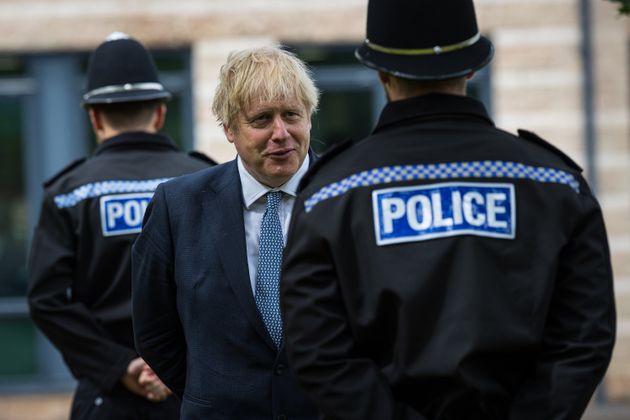
Speaking at Surrey Police HQ, he said: “I do think that the lockdown has driven some anti-social behaviour and we need to deal with it. That’s why we are backing the police in the way that we are.”

Share Button

Covid: UK cases fall for seventh day in a row

Despite falling numbers, the PM is urging people to “remain cautious” and “not jump to conclusions”.

Share Button

Contaminated-blood inquiry: Former Health Minister Clarke denies responsibility

Lord Clarke is the first senior health minister from the 1980s to testify on the NHS scandal.

Share Button

Covid: Alert over inaccurate thermometers bought in UK

Sales have increased in the pandemic but some products are not fit for purpose, UK regulator warns.

Share Button

Heat-Related Deaths in UK Could Triple In The Next 30 Years

Heat-related deaths in the UK could triple in the next 30 years, according to a new report by the British Red Cross.

The charity’s Feeling The Heat report looks at how prepared the UK is for rising temperatures and more frequent heatwaves, and warns of a dangerous perception gap when it comes to awareness of the risks posed by heat.

Heatwaves – defined as a period of extreme heat lasting three days or more – have increased in the UK, with 84 registered between 2000 and 2020, and will continue to do so, the report says, both in intensity and length.

“The average length of warm spells have more than doubled in length in the last few decades, and by 2050 the UK will be 50% more likely to experience hot summers, while heat-related deaths could more than triple, to around 7,000 per year,” the charity’s briefing says.

The report, which surveyed 2,000 UK adults in June, comes after another period of weather in the UK that prompted extreme heat warnings, and found the risks that can come from heatwaves are not matched by the level of public concern.

A man sunbathing in St James's Park, London on the hottest day of the year so far.

A man sunbathing in St James’s Park, London on the hottest day of the year so far.

Even the word heatwave has positive connotations for the public, and is seen as bringing good weather, with a survey suggesting more than a quarter (26%) of people see heatwaves as a good thing. Meanwhile, more than a third (37%) believe heatwaves will be a problem in the future, but not now.

However, August 2020 heatwaves caused a record 2,556 excess deaths in England, as well as significant disruption across the UK, it warns. A severe water shortage led to more than 300 households in West Sussex having no water for five days, and there were an estimated five million staff days lost, at a cost of approximately £770m to the UK economy.

The survey suggests the majority (60%) of UK adults have experienced at least one adverse effect of hot weather in the UK, most commonly headaches (33%), dizziness or feeling faint (22%), or heat rash (21%). However it found that 40% of adults have never seen information on how to protect themselves during a heatwave, and 9% said they’ve never had advanced warning of a heatwave.

People who are more vulnerable to heatwaves

Hot weather can impact us all, but the following groups can be more vulnerable, the report says:

  • Older people and people who live in care homes
  • Babies and children
  • People who are pregnant
  • People with chronic health conditions
  • People with mental health conditions
  • Those drinking to much or taking recreational drugs
  • People who live alone or are socially isolated
  • Homeless people and marginalised groups
  • Refugees and migrants
  • Outdoor workers

Despite those aged 75 and above being at high risk form these effects, more than half of this age group surveyed said they do not consider themselves as vulnerable to the impact of heatwaves, the research found.

“Through the British Red Cross’s work responding to emergencies here in the UK and abroad, we are already seeing the devastating impact of climate change, including hot weather,” the report says. “But we also know that extreme weather emergencies don’t need to be disasters.”

The charity is calling on the government to ensure the most vulnerable to heat have access to adequate information and support. Former TV weather presenter Sian Lloyd has joined the call for greater awareness and understanding of the risks associated with rising temperatures.

“The UK is getting hotter,” she says. “As a result of climate change, heatwaves are becoming longer and more extreme, and many people’s health and wellbeing will continue to suffer as a result.

“We already know that certain groups are more at risk from extreme heat, including people aged over 75, adults with underlying health conditions, children and babies, as well as people living in top floor flats and in built-up urban areas where temperatures are higher.”

Matthew Killick, director of crisis response and community resilience at British Red Cross, said: “Despite what many think, UK heatwaves can impact us all.

“But heatwaves don’t need to be deadly. From checking on your neighbours to providing first aid, simple early actions can keep you, your family and friends safe and well during hot weather.”

Share Button

Draconian Stop And Search Powers To Be Made Permanent In Crime Crackdown

CHARLOTTE GRAHAM via Getty Images

Draconian stop and search powers are to be made permanent under Boris Johnson’s latest crime crackdown.

So-called “Section 60” powers, which allow police to search in an area without having reasonable grounds for suspicion against an individual, will be made easier as part of the “Beating Crime” plan unveiled on Tuesday.

The powers have long been controversial because they have had a disproportionate impact on black communities, but the prime minister has decided to ramp up their use to combat knife crime.

The usual pre-conditions for such searches have been temporarily watered down in recent years and now Johnson wants to make permanent police forces’ ability to deploy them with fewer checks.

The major shift, which finally buries Theresa May’s policy as home secretary to cut the number of stop and searches, is part of a wider package of policies aimed at making the Tories look tougher on crime.

Other plans include:

  • expanding the use of 24-hour electronic tags for all burglars and thieves who leave prison
  • trialling “alcohol tags”, which detect alcohol in the sweat of offenders guilty of drink-fuelled crime
  • getting more offenders to clean up streets and open spaces
  • every neighbourhood having contactable, named police officers
  • league tables for 101 and 999 call answering times to be introduced for each police force

When Johnson was Mayor of London, his use of stop and search was curtailed by May as she drove through reforms aimed at boosting community relations with the police.

Backers of the tougher powers say they are a useful deterrent in response to incidents involving knives in a defined area and stress that safeguards are built into the system to ensure they are not based on race or ethnicity.

But critics argue that “no suspicion” stop and search powers are abused by police officers, with black people nine times more likely to be searched overall than white people.

Campaigners also point out there is little evidence to suggest that “draconian” stop and search provides an effective deterrent to offending, and most searches result in officers finding nothing.

Only around 20% of searches in 2019/20 resulted in a criminal justice outcome – an arrest and an out of court solution – linked to the purpose of the search.

Most stop and searches are used under ‘Section One’ powers, which require officers to have “reasonable grounds” to conduct the search.

Around 5% of searches are ‘Section 60’, often where police had no grounds for  suspicion but used them in a blanket fashion in a particular area for a limited time.

House of Commons – PA Images via Getty Images

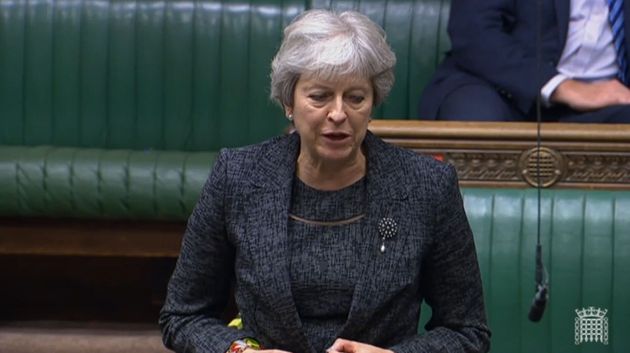
Theresa May reduced stop and searches as home secretary

In recent months, police forces in Wales and in London have used such “Section 60” powers to search an entire area after a particular violent incident or disturbance.

In London there were 11,412 searches under Section 60 by the Metropolitan Police in the year ending March 2020, government data shows.

A total of 530 people arrested following these searches, which is an arrest rate of 4.6%. This is compared to an arrest rate of 12.3% for other forms of stop and search.

Shadow home secretary Nick Thomas-Symonds told HuffPost UK: “The government must be transparent about any potential for disproportionality with these measures.

“It’s vital with any new powers comes proper oversight, especially as building community trust is so vital to tackling crime.

“They must also get on with implementing recommendations from the Lammy review and also look to learn from innovative work being done to improve trust in policing.”

Johnson said: “When I first stood on the steps of Downing Street as prime minister I promised to back the police and make people safer, because we cannot level up the country when crime hits the poorest hardest and draws the most vulnerable into violence.

“That is why my government has remained unstinting in its efforts to protect the British public and this plan delivers a fresh commitment, as we emerge from the impacts of the pandemic, to have less crime, fewer victims and a safer society.”

The Home Office said that it was important to remember that data showed that young black men are disproportionately more likely to be the victims of knife crime.

A spokesperson said: “Stop and search is a vital tool for tackling violence and saving lives.

“The Beating Crime Plan shows we are taking a twin-track approach which combines tough enforcement to get knives off our streets together with early intervention programmes that steer young people onto better paths for the future.

“An assessment of the pilot relaxing conditions on the use of section 60 stop and search showed it gave police officers greater confidence to make use of the power, better reflected the realities and uncertainties officers face on the ground around predicting serious violence, and acted as a deterrent.

“The government is giving the police these powers but ultimately it is an operational decision to use them and we expect officers to use their discretion.”

The pilot scheme assessment – which has yet to be published – covered both qualitative interviews with police officers and community scrutiny leads, and a bespoke data collection from forces including outcomes, authorisation rationale and geographical data.

Analysis of the geography of authorisations in London found “some correlation” between areas with high levels of hospital admissions for assault with a sharp object and section 60 authorisations.

Officers felt there was a deterrent effect of the use of section 60 as they communicate the authorisation to would-be offenders. 

Among safeguards to prevent disproportionate impact on minority groups are statutory codes of practice, the use of body worn video and College of Policing guidance ensuring accountability and guidance on fair use.

Share Button