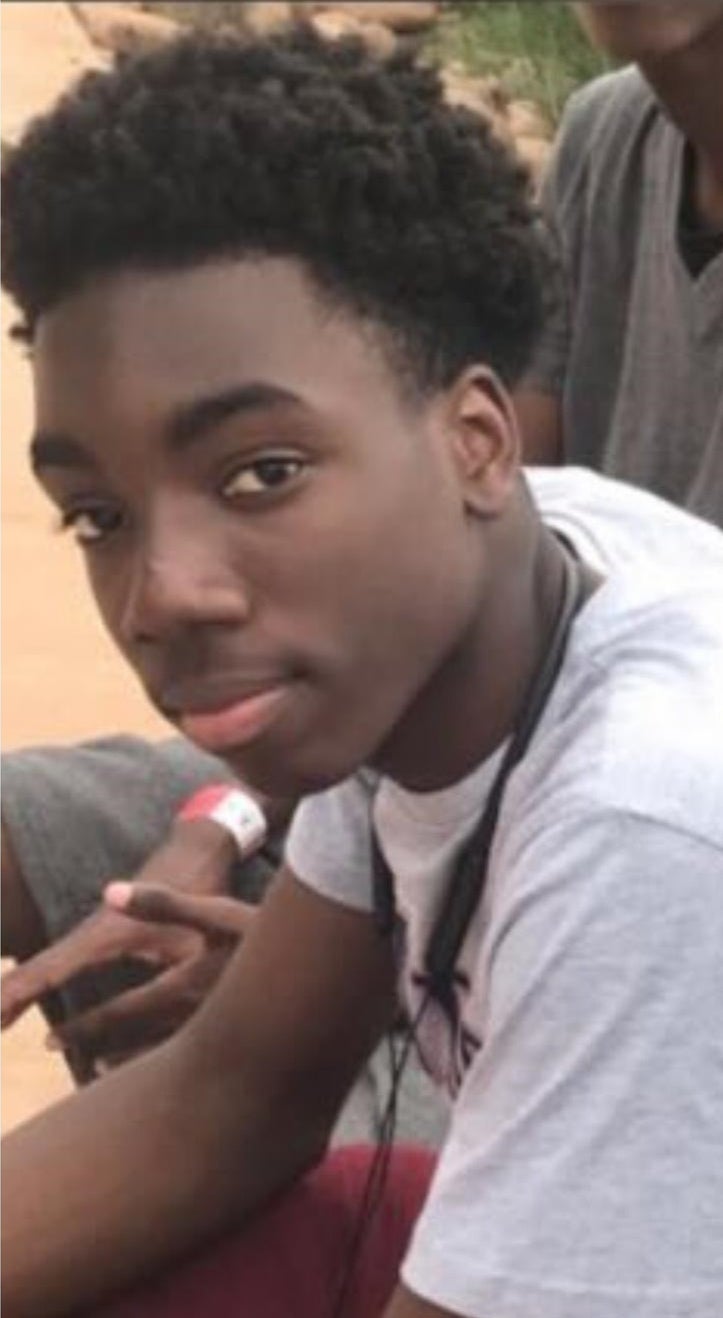
Few young adult men have gotten the HPV vaccine

The COVID-19 vaccine isn’t having any trouble attracting suitors.

But there’s another, older model that’s been mostly ignored by the young men of America: the HPV vaccine.

Using data from the 2010-2018 National Health Interview Surveys, Michigan Medicine researchers found that just 16% of men who were 18 to 21 years old had received at least one dose of the HPV vaccine at any age. In comparison, 42% of women in the same age bracket had gotten at least one shot of the vaccine.

The CDC’s Advisory Committee on Immunization Practices recommends two doses of the vaccine at 11 or 12 years old, but Americans can still benefit from the HPV vaccine if they receive it later, as long as they get three doses by age 26.

In the U-M study, however — even among those who were vaccinated after turning 18 — less than a third of men received all three vaccine doses, and about half of women did.

“Eighteen- to 21-year-olds are at this age where they’re making health care decisions on their own for the first time,” says Michelle M. Chen, M.D., a clinical lecturer in the Department of Otolaryngology-Head and Neck Surgery and the first author of the study. “They’re in a period of a lot of transition, but young adult men especially, who are less likely to have a primary care doctor, are often not getting health education about things like cancer prevention vaccines.”

The HPV vaccine was designed to prevent reproductive warts and cancers caused by the most common sexually transmitted infection in the United States. The FDA approved the vaccine for women in 2006 and expanded it to men in 2009.

Preventing cervical cancer was the primary focus at that time, so girls and women were more likely to hear about it from their pediatricians or OBGYNs. Yet oropharyngeal cancer, which occurs in the throat, tonsils, and back of the tongue, has now surpassed cervical cancer as the leading cancer caused by HPV — and 80% of those diagnosed with it are men.

“I don’t think that a lot of people, both providers and patients, are aware that this vaccine is actually a cancer-prevention vaccine for men as well as women,” Chen says. “But HPV-associated oropharyngeal cancer can impact anyone — and there’s no good screening for it, which makes vaccination even more important.”

Chen believes a dual-prong approach is necessary to up the HPV vaccination rate for those who are male, with renewed pushes from pediatricians to target kids and outreach from university health services and fraternity houses for the young adult population who may have missed getting the vaccine when they were younger. Pharmacists as well as urgent care and emergency room providers could also be helpful allies.

Story Source:

Materials provided by Michigan Medicine – University of Michigan. Original written by Mary Clare Fischer. Note: Content may be edited for style and length.


Share Button

New 2D superconductor forms at higher temperatures

New interfacial superconductor has novel properties that raise new fundamental questions and might be useful for quantum information processing or quantum sensing.

Interfaces in solids form the basis for much of modern technology. For example, transistors found in all our electronic devices work by controlling the electrons at interfaces of semiconductors. More broadly, the interface between any two materials can have unique properties that are dramatically different from those found within either material separately, setting the stage for new discoveries.

Like semiconductors, superconducting materials have many important implications for technology, from magnets for MRIs to speeding up electrical connections or perhaps making possible quantum technology. The vast majority of superconducting materials and devices are 3D, giving them properties that are well understood by scientists.

One of the foundational questions with superconducting materials involves the transition temperature — the extremely cold temperature at which a material becomes superconducting. All superconducting materials at regular pressures become superconducting at temperatures far below the coldest day outside.

Now, researchers at the U.S. Department of Energy’s Argonne National Laboratory have discovered a new way to generate 2D superconductivity at a material interface at a relatively high — though still cold — transition temperature. This interfacial superconductor has novel properties that raise new fundamental questions and might be useful for quantum information processing or quantum sensing.

In the study, Argonne postdoctoral researcher Changjiang Liu and colleagues, working in a team led by Argonne materials scientist Anand Bhattacharya, have discovered that a novel 2D superconductor forms at the interface of an oxide insulator called KTaO3 (KTO). Their results were published online in the journal Science on February 12.

In 2004, scientists observed a thin sheet of conducting electrons between two other oxide insulators, LaAlO3 (LAO) and SrTiO3 (STO). It was later shown that that this material, called a 2D electron gas (2DEG) can even become superconducting — allowing the transport of electricity without dissipating energy. Importantly, the superconductivity could be switched on and off using electric fields, just like in a transistor.

However, to achieve such a superconducting state, the sample had to be cooled down to about 0.2 K — a temperature that is close to absolute zero (- 273.15 °C), requiring a specialized apparatus known as a dilution refrigerator. Even with such low transition temperatures (TC), the LAO/STO interface has been heavily studied in the context of superconductivity, spintronics and magnetism.

In the new research, the team discovered that in KTO, interfacial superconductivity could emerge at much higher temperatures. To obtain the superconducting interface, Liu, graduate student Xi Yan and coworkers grew thin layers of either europium oxide (EuO) or LAO on KTO using state-of-the-art thin film growth facilities at Argonne.

“This new oxide interface makes the application of 2D superconducting devices more feasible,” Liu said. “With its order-of-magnitude higher transition temperature of 2.2 K, this material will not need a dilution refrigerator to be superconducting. Its unique properties raise many interesting questions.”

A strange superconductor

Surprisingly, this new interfacial superconductivity shows a strong dependence on the orientation of the facet of the crystal where the electron gas is formed.

Adding to the mystery, measurements suggest the formation of stripe-like superconductivity in lower doping samples where rivulets of superconducting regions are separated by normal, nonsuperconducting regions. This kind of spontaneous stripe formation is also called nematicity, and is usually found in liquid crystal materials used for displays.

“Electronic realizations of nematicity are rare and of great fundamental interest. It turns out that EuO overlayer is magnetic, and the role of this magnetism in realizing the nematic state in KTO remains an open question,” Bhattacharya said.

In their Science paper, the authors also discuss the reasons why the electron gas forms. Using atomic resolution transmission electron microscopes, Jianguo Wen at the Center for Nanoscale Materials at Argonne, along with Professor Jian-Min Zuo’s group at the University of Illinois at Urbana-Champaign, showed that defects formed during the growth of the overlayer may play a central role.

In particular, they found evidence for oxygen vacancies and substitutional defects, where the potassium atoms are replaced by europium or lanthanum ions — all of which add electrons to the interface and turn it into a 2D conductor. Using ultrabright X-rays at the Advanced Photon Source (APS), Yan along with Argonne scientists Hua Zhou and Dillon Fong, probed the interfaces of KTO buried under the overlayer and observed spectroscopic signatures of these extra electrons near the interface.

“Interface-sensitive X-ray toolkits available at the APS empower us to reveal the structural basis for the 2DEG formation and the unusual crystal-facet dependence of the 2D superconductivity. A more detailed understanding is in progress,” Zhou said.

Beyond describing the mechanism of 2DEG formation, these results point the way to improving the quality of the interfacial electron gas by controlling synthesis conditions. Being that the superconductivity occurs for both the EuO and LAO oxide overlayers that have been tried thus far, many other possibilities remain to be explored.

Share Button

Anesthesia doesn’t simply turn off the brain, it changes its rhythms

In a uniquely deep and detailed look at how the commonly used anesthetic propofol causes unconsciousness, a collaboration of labs at The Picower Institute for Learning and Memory at MIT shows that as the drug takes hold in the brain, a wide swath of regions become coordinated by very slow rhythms that maintain a commensurately languid pace of neural activity. Electrically stimulating a deeper region, the thalamus, restores synchrony of the brain’s normal higher frequency rhythms and activity levels, waking the brain back up and restoring arousal.

“There’s a folk psychology or tacit assumption that what anesthesia does is simply ‘turn off’ the brain,” said Earl Miller, Picower Professor of Neuroscience and co-senior author of the study in eLife. “What we show is that propofol dramatically changes and controls the dynamics of the brain’s rhythms.”

Conscious functions, such as perception and cognition, depend on coordinated brain communication, in particular between the thalamus and the brain’s surface regions, or cortex, in a variety of frequency bands ranging from 4 to 100 Hz. Propofol, the study shows, seems to bring coordination among the thalamus and cortical regions down to frequencies around just 1 Hz.

Miller’s lab, led by postdoc Andre Bastos and former graduate student Jacob Donoghue, collaborated with that of co-senior author Emery N. Brown, who is Edward Hood Taplin Professor of Medical Engineering and Computational Neuroscience and an anesthesiologist at Massachusetts General Hospital. The collaboration therefore powerfully unified the Miller lab’s expertise on how neural rhythms coordinate the cortex to produce conscious brain function with the Brown lab’s expertise in the neuroscience of anesthesia and statistical analysis of neural signals.

Brown said studies that show how anesthetics change brain rhythms can directly improve patient safety because these rhythms are readily visible on the EEG in the operating room. The study’s main finding of a signature of very slow rhythms across the cortex offers a model for directly measuring when subjects have entered unconsciousness after propofol administration, how deeply they are being maintained in that state, and how quickly they may wake up once propofol dosing ends.

“Anesthesiologists can use this as a way to better take care of patients,” Brown said.

Brown has long studied how brain rhythms are affected in humans under general anesthesia by making and analyzing measurements of rhythms using scalp EEG electrodes and to a limited extent, cortical electrodes in epilepsy patients. Because the new study was conducted in animal models of those dynamics, the team was able to implant electrodes that could directly measure the activity or “spiking” of many individual neurons and rhythms in the cortex and thalamus. Brown said the results therefore significantly deepen and extend his findings in people.

For instance, the same neurons that they measured chattering away with spikes of voltage 7-10 times a second during wakefulness routinely fired only once a second or less during propofol-induced unconsciousnesss, a notable slowing called a “down state.” In all, the scientists made detailed simultaneous measurements of rhythms and spikes in five regions: two in the front of the cortex, two toward the back, and the thalamus.

“What’s so compelling is we are getting data down to the level of spikes,” Brown said. “The slow oscillations modulate the spiking activity across large parts of the cortex.”

As much as the study explains how propofol generates unconsciousness, it also helps to explain the unified experience of consciousness, Miller said.

“All the cortex has to be on the same page to produce consciousness,” Miller said. “One theory about how this works is through thalamo-cortical loops that allow the cortex to synchronize. Propofol may be breaking the normal operation of those loops by hyper synchronizing them in prolonged down states. It disrupts the ability of the cortex to communicate.”

For instance, by making measurements in distinct layers of the cortex, the team found that higher frequency “gamma” rhythms, which are normally associated with new sensory information like sights and sounds, were especially reduced in superficial layers. Lower frequency “alpha” and “beta” waves, which Miller has shown tend to regulate the processing of the information carried by gamma rhythms, were especially reduced in deeper layers.

In addition to the prevailing synchrony at very slow frequencies, the team noted other signatures of unconsciousness in the data. As Brown and others have observed in humans before, alpha and beta rhythm power was notably higher in posterior regions of the cortex during wakefulness, but after loss of consciousness power at those rhythms flipped to being much higher in anterior regions.

The team further showed that stimulating the thalamus with a high frequency pulse of current (180Hz) undid propofol’s effects.

“Stimulation produced an awake-like cortical state by increasing spiking rates and decreasing slow-frequency power,” the authors wrote in the study. “In all areas, there was a significant increase in spiking during the stimulation interval compared to pre-stimulation baseline.”

Share Button

Teen girl footballers have double concussion risk of boys

But girls are less likely to be taken off the pitch and take longer to recover, a study finds.

Share Button

9 Roles You Totally Forgot Daniel Kaluuya Played Before His Oscar Win

Todd Wawrychuk/A.M.P.A.S./Shutterstock

Daniel Kaluuya accepting his Oscar during this year’s ceremony

After years of growing his profile in huge films like Get Out, Black Panther and Widows, Daniel Kaluuya has just achieved the ultimate acting accolade, when he won his first Oscar.

Pretty much cementing his national treasure status, Daniel was awarded Best Supporting Actor during this year’s ceremony for his performance in Judas And The Black Messiah.

As the London-born actor’s star continues to rise to even greater heights, we decided to take a look back at the roles he appeared in long before he became a worldwide star.

Along the way we unearthed long forgotten comedy characters, big-screen outings and, of course, a certain “Posh Kenneth”…

Skins (2007)

If you sat down to watch Get Out in 2017, only to get the distinct feeling you’d seen Daniel Kaluuya before, that could well be because you watched him in Skins back in the day.

Although not one of the main cast, Daniel played “Posh Kenneth” throughout the show’s first two series. And while Daniel’s Skins past has been raised several times since his rise to global fame, what you might not realise is that he also penned two episodes of the British teen drama, series two’s Jal and series three’s Thomas, which he co-wrote with Skins creator Bryan Elsley.

Doctor Who (2009)

Like many burgeoning British stars, one of Daniel’s earliest TV appearances was in the BBC’s long-running sci-fi show Doctor Who.

Daniel played Barclay in the 2009 special Planet Of The Dead, sharing the screen with David Tennant and – perhaps more excitingly – Victoria Alcock, otherwise known as Julie S from Bad Girls.

Psychoville (2009)

Daniel was one of several British actors to land a role in the black comedy mystery Psychoville, with Steve Pemberton (the show’s co-creator), Dawn French, Adrian Scarborough and Imelda Staunton also among the cast.

While much of the show’s humour derived from League Of Gentleman-esque surrealism and unpredictability, Daniel’s character, Tealeaf, was decidedly more rooted in reality than those surrounding him.

Ruddy Hell! It’s Harry And Paul (2010)

In 2010, Daniel appeared in a recurring sketch in the Harry Enfield and Paul Whitehouse comedy series Ruddy Hell! It’s Harry And Paul.

He played the overzealous traffic warden Parking Pataweyo in a somewhat questionable sketch intended to be a parody of Postman Pat.

Prior to this, he featured in David Mitchell and Robert Webb’s sketch comedy show, which also boasted future Oscar winner Olivia Colman among its cast. 

Johnny English Reborn (2011)

When Rowan Atkinson’s Johnny English character was resurrected in 2011 for a sequel almost a decade after the original film, the film brought in an all-star cast which included Gillian Anderson, Rosamund Pike and Dominic West.

Daniel was also among the new additions to the film, playing Colin Tucker, a young MI7 agent assigned to the same missions as the hero, who he assists along the way.

Black Mirror (2011)

A breakthrough moment in terms of Daniel’s profile was his leading role in the Black Mirror episode Fifteen Million Merits, a send-up of reality TV and instant fame, particularly off the back of Simon Cowell talent shows like The X Factor and Britain’s Got Talent.

Fifteen Million Merits was only the second episode of Black Mirror ever made, when the anthology series was still being shown on Channel 4, and saw Daniel playing Bing, who spends his inheritance on helping a friend realise her dreams of becoming a star. Black Mirror being Black Mirror, though, things don’t quite work out the way they hoped.

While still early in his career, Fifteen Million Merits allowed Daniel to show off his huge range as an actor, particularly in his character’s dramatic speech near the end of the episode.

Kick-Ass 2 (2013)

Universal

Daniel Kaluuya in Kick-Ass 2

Two years after winning critical acclaim for his performance in Black Mirror, Daniel appeared in the sequel to the superhero comedy Kick-Ass.

He plays a member of the villainous troupe The Toxic Mega C**ts, playing a UFC fighter known as Black Death. 

Babylon (2014)

Channel 4

Daniel in Babylon

In the police drama Babylon, Daniel played Matt Coward, a documentary filmmaker who aims to use his craft to highlight corruption in his local police force and bring them down.

Created by Danny Boyle, the show featured James Nesbitt, Bertie Carvel and Jill Halfpenny among its expansive cast.

Sicario (2015)

Richard Jr Foreman/Black Label Media/Thunder Road/Kobal/Shutterstock

Daniel as seen in Sicario

Sicario marked Daniel’s final on-screen role before Get Out and Black Panther launched him to global fame, earning him an Oscar nomination and Bafta Rising Star win.

In the action thriller, he plays an FBI agent who is the on-duty partner of Emily Blunt’s character. A sequel was later released in 2018, though Emily and Daniel did not return for it.

Share Button

This Workout Can Boost Health And Fitness In Just 10 Minutes

For some, exercise is addictive – a way to get that much-needed physical and mental boost. For others, it’s a necessary evil.

If you fall into the latter camp and don’t often find the time to move (whether because you’re super busy or simply cba), you’ll be pleased to know that researchers have discovered a 10-minute workout, which done three days a week could help you reap some proper fitness benefits.

A new study from the University of Texas found high-intensity cycling in extremely short (we’re talking four-second) bursts – followed by longer rests – can improve your health and performance, as well as endurance and power.

What’s the workout then?

Get on your bike. Young adult volunteers participated in high-intensity cycling three times a week for eight weeks.

They cycled at maximum effort for four seconds, then rested for 15 to 30 seconds – and then they’d begin another four-second sprint. Each sprint-rest bout was repeated up to 30 times in a single workout, for a total of 10 minutes.

By the end of the trial period, the participants had increased their maximum oxygen consumption, indicating a life in aerobic exercise endurance. Their anaerobic power (strength) and total blood volume increased as well.

Remzi Satiroglu, lead author of the study from the University of Texas at Austin, said both athletic performance and cardiovascular health can improve with a boost in blood volume.

The results may encourage people to exercise because the total workout time is so short, he explained. ″[People] often claim they don’t have enough time to squeeze it in. We offer people a workout that only take 10 minutes total and shows results when completed three times per week,” he said.

In the UK, people are advised to do at least 150 minutes of moderate intensity, or 75 minutes of vigorous intensity, activity a week. Even if you’re not doing that much activity, physiotherapists generally recommend that if anything is better than nothing – and you should build up your fitness over time.

These 10-minute bursts of cycling could be a great way to achieve that.

Share Button

Covid-19: Vaccine offered to 42-year-olds in England

Those who are due to turn 42 by 1 July can also book their jabs on the NHS website.

Share Button

India Covid: First UK aid arrives as coronavirus deaths mount

Oxygen equipment lands in Delhi but far more is needed to tackle a devastating Covid wave.

Share Button

Miscarriage rates over 40% higher in black women, study suggests

Everyone who has even one miscarriage should be offered tailored help and support, experts say.

Share Button

Richard Okorogheye: Watchdog To Investigate Whether Racism Hampered Police Search

The police watchdog is to investigate whether racism played a role in the way the Met handled Richard Okorogheye’s disappearance.

On Monday, the Independent Office for Police Conduct (IOPC) said it would investigate complaints made by Okorogheye’s mother, Evidence Joel.

She has said she was “disappointed” about the way she was initially treated by police, and how her reports about her son’s disappearance were handled.

Joel told Sky News that police had asked her: “If you can’t find your son, how do you expect police officers to find your son for you?”

“Maybe it’s the culture, my language barrier,” Joel told Channel 4 News, adding that she believed officers considered her to be “one of those African women who was being frantic” and did not immediate take action to find her son.

The 19-year-old, who had sickle cell disease, went missing from his home in Ladbroke Grove, west London, on the evening of March 22.

His mother contacted police the following day, but he was not officially recorded as missing until 8am on March 24.

Okorogheye’s body was found in Epping Forest, Essex, on April 5.

The IOPC will also look at the Met Police’s overall handling of the missing person report.

IOPC regional director Sal Naseem said: “Our thoughts are with Richard’s family and friends and all those affected by this tragic loss. We have spoken to his family and explained our role.

“Our investigation will establish whether the police responded appropriately to the concerns raised that Richard was missing.

“We will examine whether the force appropriately risk assessed those reports, and if the amount of resources the Metropolitan Police dedicated to its enquiries were suitable based on the information known by the police and the risks posed.

“As there is a mandatory requirement for police forces to refer to us incidents which result in a death or serious injury, we will examine the actions and decisions of the police when dealing with the missing person report made in respect of a vulnerable young man.

“We will also consider whether Richard’s or his mother’s ethnicity played a part in the way the initial reports of his disappearance were handled.”

Okorogheye left his family home at around 8.30pm on March 22 and headed in the direction of Ladbroke Grove.

Police said further inquiries have established that he then took a taxi journey from the W2 area of London to a residential street in Loughton, Essex.

He was last seen on CCTV in Loughton, walking alone on Smarts Lane towards Epping Forest at 12.39am on March 23.

Share Button