You may have lost the weight you wanted to lose – but now you’ve stopped the jabs, how easy is it to keep it off?


You may have lost the weight you wanted to lose – but now you’ve stopped the jabs, how easy is it to keep it off?
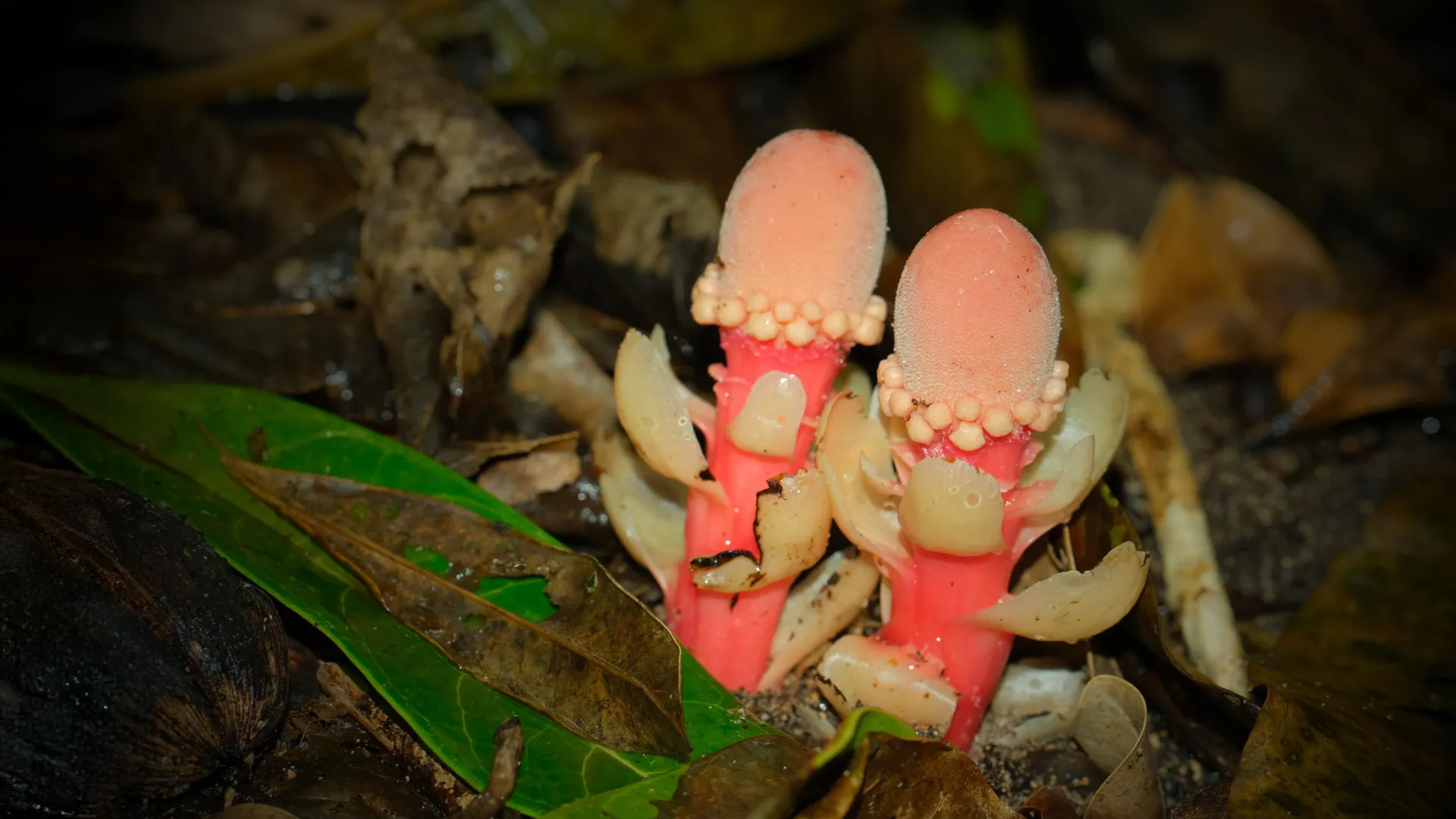
In the damp shade beneath moss-covered trees, high in the mountains of Taiwan and mainland Japan or deep within the subtropical forests of Okinawa, an unusual organism quietly grows. At first glance, it resembles a mushroom. In reality, it is a plant called Balanophora, and it possesses some of the smallest flowers and seeds known in the plant world.
Unlike most plants, Balanophora contains no chlorophyll and cannot perform photosynthesis. It also lacks a conventional root system to draw water from the soil. Instead, it survives entirely by attaching itself to the roots of specific nearby trees and stealing the nutrients it needs. Some species and populations take this strangeness even further by producing seeds without fertilization — a reproductive strategy that is extremely rare among plants.
Scientists uncover the secrets of a long-mysterious plant
The genus Balanophora takes its name from its acorn-like appearance (Greek: balanos, acorn; phoros, bearing), and it has puzzled scientists for generations. Because the plant is rare and restricted to highly specific habitats that are increasingly threatened by human activity, most research has been limited to isolated populations.
That is now changing. A collaborative team from the Okinawa Institute of Science and Technology (OIST), Kobe University, and the University of Taipei has conducted a broad survey of Balanophora across its scattered and hard-to-reach habitats. Their findings, published in New Phytologist, trace the plant’s evolutionary history, reveal how its internal structures have adapted to a parasitic lifestyle, and open new doors for future research into this unusual lineage.
As study lead author Dr. Petra Svetlikova, Science and Technology Associate at OIST, explains: “Balanophora has lost much of what defines it as a plant, but retained enough to function as a parasite. It’s a fascinating example of how something so strange can evolve from an ancestor that looked like a normal plant with leaves and a normal root system.”
Shrinking plastids and life without photosynthesis
Parasitic plants often undergo dramatic internal changes as they become more dependent on their hosts. One common trend is the reduction or loss of plastids — a category of plant organelles that includes chloroplasts, which enable photosynthesis in most plants.
Even though Balanophora relies completely on its host trees for nutrition, the researchers found that it has not eliminated its plastids. Instead, these structures have been pared down to a minimal form. While non-parasitic plants may use up to 200 genes to build and maintain plastids, Balanophora retains only about 20. Despite this extreme reduction, more than 700 proteins are still transported into these plastids from the surrounding cell, indicating that they continue to perform essential functions.
Professor Filip Husnik, head of the Evolution, Cell Biology, and Symbiosis Unit at OIST, notes the surprise of this discovery. “That Balanophora plastids are still involved in the biosynthesis of many compounds unrelated to photosynthesis was surprising. It implies that the order and timing of plastid reduction in non-photosynthetic plants is similar to other eukaryotes, such as the malaria-causing parasite, Plasmodium, which originated from a photosynthetic ancestor.”
An ancient lineage shaped by islands
By examining samples from many different populations, the team reconstructed the evolutionary tree of Balanophora and traced how it spread across subtropical regions of East Asia. The plant belongs to the family Balanophoraceae, one of the oldest known groups of fully parasitic plants.
This family began diversifying during the mid-Cretaceous period, roughly 100 million years ago — making it one of the earliest land plant lineages to abandon photosynthesis entirely.
Reproduction without sex and the risks of survival
Balanophora‘s reproductive strategies are just as unusual as its appearance and lifestyle. Reproductive methods vary widely between species and even between populations. Some require fertilization to produce seeds, while others can also reproduce without fertilization, a process known as facultative agamospermy. In the most extreme cases, some species are obligately agamospermous, meaning they never reproduce sexually at all.
“Obligate agamospermy is exceedingly rare in the plant kingdom, because it typically carries a lot of negative downsides — lack of genetic diversity, accumulation of bad mutations, dependence on specific conditions, higher extinction risk, and so on,” says Dr. Svetlikova. “Fascinatingly, we found that the obligately agamospermous Balanophora species were all island species — and we speculate that more Balanophora species may be facultative, or even obligate, agamosperms.”
One advantage of this reproductive approach is that a single female plant can establish a new population after reaching an island. This ability allows Balanophora to spread quickly into the narrow ecological niche it prefers: dark, moist forest undergrowth where few other plants can survive.
A fragile future for a highly specialized plant
Despite its ability to clone itself, Balanophora is extremely selective about its hosts. Each population typically parasitizes only a small number of tree species. This specialization makes the plant especially vulnerable to environmental change.
Dr. Svetlikova emphasizes the importance of collaboration and conservation. “We’re very thankful to our collaborators Dr. Huei-Jiun Su and Dr. Kenji Suetsugu, experts on parasitic plants, for their help in sampling the studied Balanophora species, and to local authorities in Okinawa that allowed us to study these extraordinary plants,” she says. “Most known habitats of Balanophora are protected in Okinawa, but the populations face extinction by logging and unauthorized collection. We hope to learn as much as we can about this fantastic, ancient plant before it’s too late. It serves as a reminder of how evolution continues to surprise us.”
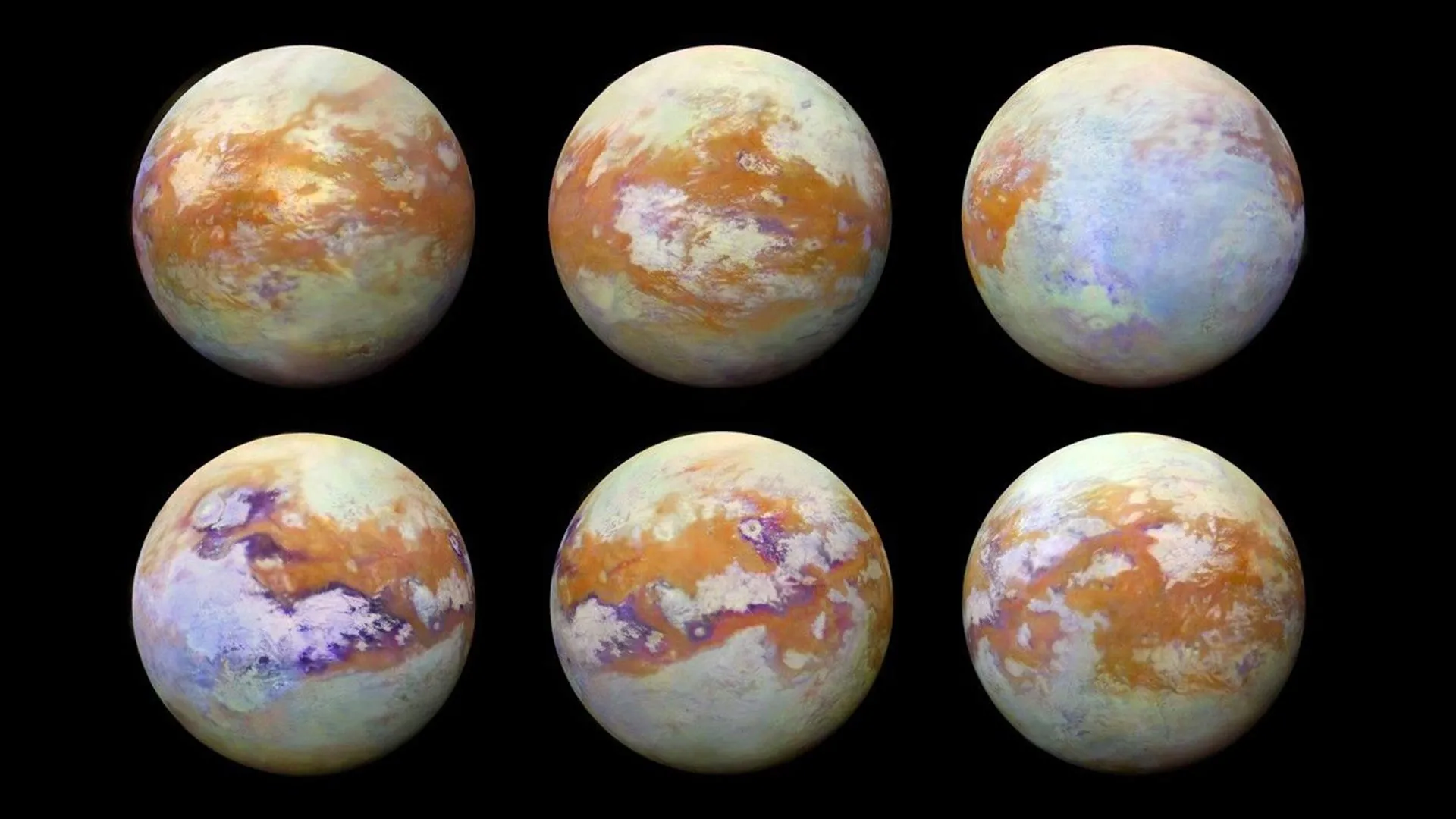
A new examination of spacecraft data collected more than ten years ago suggests that Saturn’s largest moon, Titan, probably does not contain a massive ocean beneath its frozen surface, as scientists once believed. Instead, moving downward through Titan’s icy shell would likely reveal additional layers of ice that gradually transition into slushy pathways and isolated pockets of liquid water closer to the moon’s rocky interior.
Earlier interpretations of data from NASA’s Cassini mission to Saturn led scientists to propose a deep ocean of liquid water hidden beneath Titan’s ice. When researchers tested that idea using computer models, however, the results did not align with the physical characteristics seen in the data. A closer reanalysis produced new — slushier — conclusions. These results may prompt scientists to revisit assumptions about other icy worlds and refine how they search for life on Titan.
“Instead of an open ocean like we have here on Earth, we’re probably looking at something more like Arctic sea ice or aquifers, which has implications for what type of life we might find, but also the availability of nutrients, energy and so on,” said Baptiste Journaux, a University of Washington assistant professor of Earth and space sciences.
The study, published Dec. 17 in Nature, was led by NASA, with contributions from Journaux and Ula Jones, a UW graduate student of Earth and space sciences in his lab.
Cassini’s Legacy and Titan’s Unusual Surface
The Cassini mission began in 1997 and continued for nearly two decades, gathering extensive information about Saturn and its 274 moons. Titan — shrouded by a hazy atmosphere — stands out as the only place besides Earth where liquid is known to exist on the surface. With temperatures near -297 degrees Fahrenheit, that liquid is methane, not water. Methane forms lakes on Titan and even falls from the sky as rain.
As Titan travels around Saturn in an elongated orbit, scientists noticed that the moon stretches and compresses depending on its position relative to the planet. In 2008, researchers argued that this pronounced flexing could only occur if a large ocean existed beneath Titan’s crust.
“The degree of deformation depends on Titan’s interior structure. A deep ocean would permit the crust to flex more under Saturn’s gravitational pull, but if Titan were entirely frozen, it wouldn’t deform as much,” Journaux said. “The deformation we detected during the initial analysis of the Cassini mission data could have been compatible with a global ocean, but now we know that isn’t the full story.”
A Subtle Time Lag Reveals a Slushy Interior
The new research adds an important factor that earlier studies did not fully consider: timing. Titan’s changes in shape lag roughly 15 hours behind the strongest pull from Saturn’s gravity. Moving a thick, sticky material requires more energy than shifting a free flowing liquid, similar to how stirring honey takes more effort than stirring water. By measuring this delay, scientists could estimate how much energy Titan absorbs as it deforms, offering insight into how thick or viscous its interior must be.
The amount of energy lost, or dissipated, inside Titan turned out to be far greater than expected if a global liquid ocean were present.
“Nobody was expecting very strong energy dissipation inside Titan. That was the smoking gun indicating that Titan’s interior is different from what was inferred from previous analyses,” said Flavio Petricca, a postdoctoral fellow at NASA’s Jet Propulsion Laboratory and lead author of the study.
Based on these findings, the researchers propose an interior made up largely of slush, with significantly less liquid water than previously assumed. This slushy material is thick enough to explain the delayed response to Saturn’s gravity, while still containing enough water to allow Titan to change shape.
Radio Signals and Extreme Physics Support the Model
Petricca reached these conclusions by analyzing the frequencies of radio waves transmitted from the Cassini spacecraft during close fly-bys of Titan. Journaux helped interpret the results using thermodynamics. His work focuses on how water and minerals behave under intense pressure, knowledge that is critical for understanding whether other planetary environments might support life.
“The watery layer on Titan is so thick, the pressure is so immense, that the physics of water changes. Water and ice behave in a different way than sea water here on Earth,” Journaux said.
At his planetary cryo-mineral physics laboratory at UW, researchers have spent years developing methods to recreate the extreme conditions found on other worlds. Using this work, Journaux provided Petricca and his colleagues with data describing how water and ice are expected to behave deep inside Titan.
“We could help them determine what gravitational signal they should expect to see based on the experiments made here at UW,” Journaux said. “It was very rewarding.”
What Slush Could Mean for Life on Titan
“The discovery of a slushy layer on Titan also has exciting implications for the search for life beyond our solar system,” Jones said. “It expands the range of environments we might consider habitable.”
While the idea of a vast ocean once fueled optimism about life on Titan, the researchers suggest the updated picture may actually improve the odds. Their analysis indicates that Titan’s freshwater pockets could reach temperatures as high as 68 degrees Fahrenheit. In these smaller volumes of water, nutrients would be more concentrated than in a large ocean, potentially making it easier for simple life forms to survive.
Although scientists do not expect to find fish swimming through Titan’s slushy channels, any life discovered there might resemble organisms found in Earth’s polar regions.
Journaux is also part of NASA’s upcoming Dragonfly mission to Titan, which is scheduled to launch in 2028. The findings from this study will help inform that mission, and Journaux hopes future data will provide both evidence of life and a definitive answer about the presence of an ocean beneath Titan’s ice.
Co-authors include Steven D. Vance, Marzia Parisi, Dustin Buccino, Gael Cascioli, Julie Castillo-Rogez, Mark Panning and Jonathan I. Lunine from NASA; Brynna G. Downey at Southwest Research Institute; Francis Nimmo and Gabriel Tobie from the University of Nantes; Andrea Magnanini from the University of Bologna; Amirhossein Bagheri from the California Institute of Technology and Antonio Genova from Sapienza University of Rome.
This research was funded by NASA, the Swiss National Science Foundation and the Italian Space Agency.

A new study suggests that falling participation in organized religion among middle-aged white Americans with lower levels of education may have contributed to the rise in so-called “deaths of despair.” These deaths include fatalities linked to drug overdoses, suicide, and alcoholic liver disease.
The researchers found a clear pattern at the state level. States that experienced the sharpest drops in church attendance between 1985 and 2000 also saw the largest increases in deaths from these causes during the same period.
A Trend That Began Before the Opioid Crisis
Deaths of despair are often associated with the arrival of OxyContin and other powerful opioids in the late 1990s. However, the new analysis indicates that the upward trend started earlier, at the same time religious participation began to decline.
“What we see in this study is the beginning of the story, before opioids became a major issue, and it shows rises in deaths of despair were already beginning to happen when the opioid crisis hit,” said Tamar Oostrom, co-author of the study and an assistant professor of economics at The Ohio State University.
Oostrom worked on the research with Tyler Giles of Wellsley College and Daniel Hungerman of the University of Notre Dame. The study was published online in the Journal of the European Economic Association.
Data Sources and Affected Populations
The research team combined survey data on religious involvement from the General Social Surveys with mortality records from the Centers for Disease Control and Prevention.
Their findings showed that the decline in religious participation was concentrated among white, middle-aged adults without a college degree. This was the same group that experienced the most pronounced increases in deaths of despair, Oostrom said.
The relationship between lower church attendance and higher mortality appeared consistently across genders and was seen in both rural and urban areas of the United States.
Blue Laws and Changes in Church Attendance
To strengthen their findings, the researchers examined the repeal of “blue laws,” which had previously restricted many businesses from operating on Sundays. These laws limited competition with church attendance by reducing alternative activities.
A major wave of repeals took place in 1985, when Minnesota, South Carolina, and Texas eliminated their blue laws. The researchers compared outcomes in those states with others that did not make similar changes at that time.
The analysis showed that repealing blue laws led to a 5- to 10-percentage-point drop in weekly attendance at religious services. In later years, those same states also experienced higher rates of deaths of despair.
Mortality Trends Before and After Opioids
Oostrom noted that deaths of despair among middle-aged white Americans had been steadily declining from the late 1970s through the early 1990s. That decline eventually stalled, a shift that aligns with both falling church attendance and the repeal of blue laws.
After OxyContin was introduced in 1996, mortality rates rose sharply.
“OxyContin and the opioid crisis made a bad situation worse, but the deaths of despair were already on the rise,” Oostrom said.
Why Churchgoing May Matter for Health
The study raises an important question: how could lower church attendance contribute to higher death rates?
Oostrom explained that people who stop attending religious services often lose social ties, which past research has shown play a crucial role in physical and mental health. However, the findings suggest that social connection alone does not fully explain the pattern.
The researchers did not observe similar declines in other types of social activities during the same period when church attendance was falling.
“Religion may provide some way of making sense of the world, some sense of identity in relation to others, that can’t easily be replaced by other forms of socialization,” Oostrom said.
She also emphasized that belief itself did not fade during the years studied.
“What changed is whether people identified as religious and whether they go to church. Those are the things that matter when it comes to deaths of despair,” she said.
Can Community Participation Reverse the Trend?
The findings raise the possibility that renewed involvement in religious organizations or even secular community groups might help counter rising mortality rates. However, the authors caution that existing evidence does not offer much optimism.
“To our knowledge, findings on this point have so far been pessimistic,” the researchers wrote.
Oostrom added that there is no clear sign that broader declines in community participation are reversing. She also noted that the positive effects of religious involvement on life satisfaction are difficult to reproduce through other forms of social engagement.
The growing role of social media in the 21st century may further reduce the likelihood of a meaningful reversal, she said.
“People are less religious now, and there hasn’t been a substitute that provides what religion provided to many people. And our paper suggests this could have long-term impacts on health and mortality,” Oostrom said.

Turns out the word “solstice” comes from a Latin term meaning “to stand still”. In the actual moment of the solstice, the sun lies exactly over the Tropic of Capricorn and appears to stall in the sky.
This event has been celebrated for thousands of years. Even the word “Yule,” which is used interchangeably with “Christmas” in many countries, has its origins in Jol, a pre-Christian solstice celebration held across northern Europe and Scandinavia.
Advertisement
Royal Museums Greenwich said that this year in the UK, the event will happen at roughly 93:03pm, December 21.
But the solstice sunrise is going to start between 8am and 9am in the UK, depending on your location. This is the event many won’t want to miss.
Here, we shared some ways to mark the occasion:
This year, parking spaces for the real-life Stonehenge have already sold out, though the stones are open to the public.
Advertisement
But if you’re not in the area, you can stream the moment the sun rises behind the monument’s “heel stone” and reaches into the centre of the ancient structure.
These are set to go live on December 21, with the YouTube one scheduled for 7:30am onwards.
Advertisement
Newgrange in the Republic of Ireland is an ancient burial tomb. Light hits the back of its passage every winter solstice, and while only those who win a lottery can see it in person on the day, the rest of us can watch the livestream on Heritage Ireland’s site.
Avebury, Glastonbury Tor, and the Calanais Standing Stones are also stunning sunrise locations for this time of year.
The festival of Juul, which we mentioned earlier, used to involve the burning of an entire tree. That’s why we call it a “Yule log”.
Advertisement
If that seems a bit dramatic, though, try burning a log in your fireplace instead. And to truly stick to tradition, try keeping the log burning all day ― and use the ashes for your garden to encourage a bumper crop.
The glutinous rice-covered dumpling is traditionally eaten at China’s Dōngzhì Festival, which celebrates the solstice.
It symbolises family togetherness.
One of the reasons people have celebrated the winter solstice for so long is because it signals the end of the darkest parts of winter. As a result, lights and fire are associated with multiple solstice celebrations.
Advertisement
Take part in the tradition by lighting a candle, if you like.
Another common thread throughout traditional solstice celebrations? Feasting (and gifting).
And while this later became linked to decadent Christmas dinners, I reckon it’s as good a reason as any to tuck into that delicious fare early.


Confession: I love Christmas Dinner but I am deathly afraid of cooking it. I’m actually a great cook (if I do say so myself…) but the thought of spending almost the entire day in a roasting hot kitchen cooking and keeping up with timers etc is frankly unbearable.
I am wholly grateful to my lovely partner who takes on the duty every year as I swan about the living room reading my festive books and watching Christmas flicks on tv.
Advertisement
Don’t worry, I am the cook throughout the year.
This year though, I am determined to play more of a part in my festive feast and spoke with two chefs about what can be prepped and frozen ahead of the Big Day.
Robbie Smith, head chef at Glasgow restaurant Zique’s says: “There are plenty of things you can do ahead of time to make Christmas dinner feel a lot less daunting. Making your stuffing in advance is a big one. Roll it in clingfilm, freeze it, then simply slice and cook it on the day.
“If you’re making gravy, the stock can also be done well in advance. Roast your bones and vegetables, simmer, strain and freeze it, then bring it straight back to the stove on Christmas Day, adding the resting juices from your meat, of course.”
Advertisement
UM. Who knew?!
As for veg, he advises: “Braised red cabbage and roast potatoes are also ideal for prepping ahead. Parboil the potatoes, cool and freeze them, then defrost on the day and put them straight into hot oil in the oven.
“If I’m cooking Christmas dinner, I also like to have a batch of croquettes in the freezer, cooked straight from frozen, so people have something to snack on and are not constantly asking when the turkey will be ready.”
Snacking croquettes is definitely something I can get behind…
Danny Carruthers, head chef at Sebb’s advises that changing your choice of meat could help: “Beef is a brilliant alternative to turkey, especially if you need something that can be pre-cooked without losing quality.
Advertisement
“Cuts like beef short rib, feather blade or ox cheek are rich in fat and collagen, which means they really come into their own when slow-cooked or braised, and they reheat beautifully in the oven or even the microwave in small portions.”
As for vegetables, he suggests a good slow roast: “For veg, keep things whole or in large pieces and roast them slowly. You’re aiming for a deep, caramelised crust, which helps protect the veg when thawing and re-roasting.
“Think slow-roast carrots with plenty of butter and salt, or even those viral glass parsnips from chef Adam Byatt.”
Advertisement
Gosh I’m hungry…

Sophie Claxton, from Burnley, was 16 when she was diagnosed with acute lymphoblastic leukaemia.
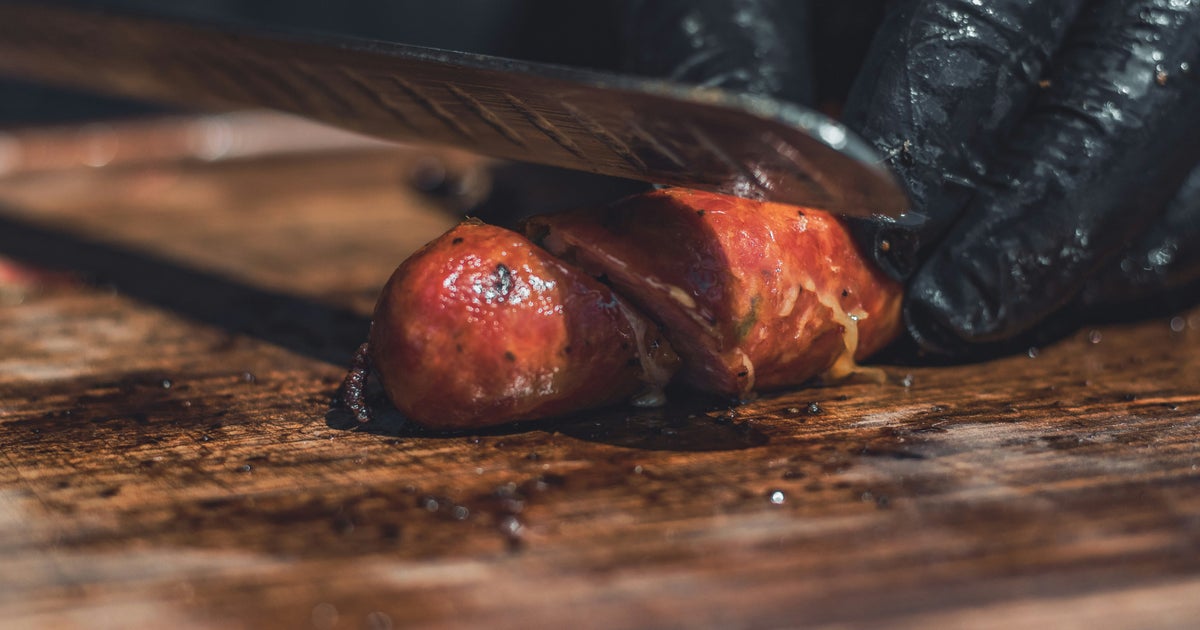
Call me a hypocrite: even though I toss and turn when I sleep, I hate when my sausage bigs in their bacon blankets wiggle out of their salty duvets as they cook.
I’m always left with tough, rubbery rashers and half-burnt, half-pale sausages, neither of which taste anything like as good as their combined selves.
Advertisement
But executive head chef Aaron Craig at The Milner York said I may be “making Christmas dinner harder than it needs to be” – preventing them from bursting is simpler than you might think.
It’s down to one factor, Craig said: your oven settings.
“If your pigs in blankets burst, it’s not the sausages – it’s the temperature,” he said.
“Once you’ve wrapped them, chill them. Pop them in the fridge for about 30 minutes or into the freezer for 10. It firms up the fat, so they cook evenly without splitting,” he explained.
Want even more delicious festive food? Try coating the pigs in blankets in a delicious dressing.
“Right before they go in the oven, brush them with a little honey and wholegrain mustard,” the chef said.
Advertisement
“You get a glossy, golden coating and a lovely sweet–savory kick.”
Yes. The chef said gravies really complete the Yuletide meal, but too many of us rush the process.
“Most home gravies end up way too pale,” he said.
“If you want proper rich flavour, don’t rush the roasting stage. Get your onions, carrots, celery, garlic and any poultry trimmings really deep brown ― not just lightly golden. That colour gives you depth.”
After you add your stock, simmer it gently.
“And here’s a little chef trick: a teaspoon of soy sauce or Marmite gives it an incredible umami boost without making it taste any less ‘Christmas’. It just rounds everything out,” he added.
Advertisement

We’ve been told we’re facing an unprecedented superflu. Is it?
After two years of Wham! at the top of the festive chart, the UK has a new Christmas number one in 2025.
On Friday evening, it was announced that Kylie Minogue’s latest single XMAS was number one on this year’s Christmas chart.
Advertisement
The accolade is noteworthy for a number of reasons, not least because XMAS is an Amazon Music exclusive, meaning it’s not available to stream on the most popular platforms like Spotify, Apple Music or Tidal.
Kylie is also celebrating her first UK number one in more than two decades, having last topped the charts in 2003 with Slow.

David Fisher/Shutterstock for Global
Advertisement
In response to her first solo Christmas number one – and her eighth overall – the Australian pop superstar enthused: “It’s hard to put into words how special this feels. Being Christmas number one really is the most wonderful gift!
“I’m so thankful to everyone who’s been listening and sharing the love and I’m wishing you all a very Merry Christmas!”
As for the rest of the chart, Wham!’s Last Christmas gets the silver medal for this week at number two, while Mariah Carey’s All I Want For Christmas Is You is at three.
Advertisement
Rounding off the top five are Brenda Lee’s classic Rockin’ Around The Christmas Is You and Together For Palestine’s new charity single Lullaby.
Kylie is now the only woman to have had number one in four different decades – the 1980s, 1990s, 2000s and 2020s – with only Elvis Presley, Elton John and Queen being able to boast the same.
XMAS is taken from the reissued version of Kylie’s seasonal album Christmas, which was revamped earlier this year in celebration of its 10th anniversary.
Advertisement
She was previously a featured vocalist on the oft-overlooked second version of Band Aid’s Do They Know It’s Christmas?, which was released in 1989 and topped the Christmas chart in the UK that year, though XMAS is her first festive number one as a solo performing.