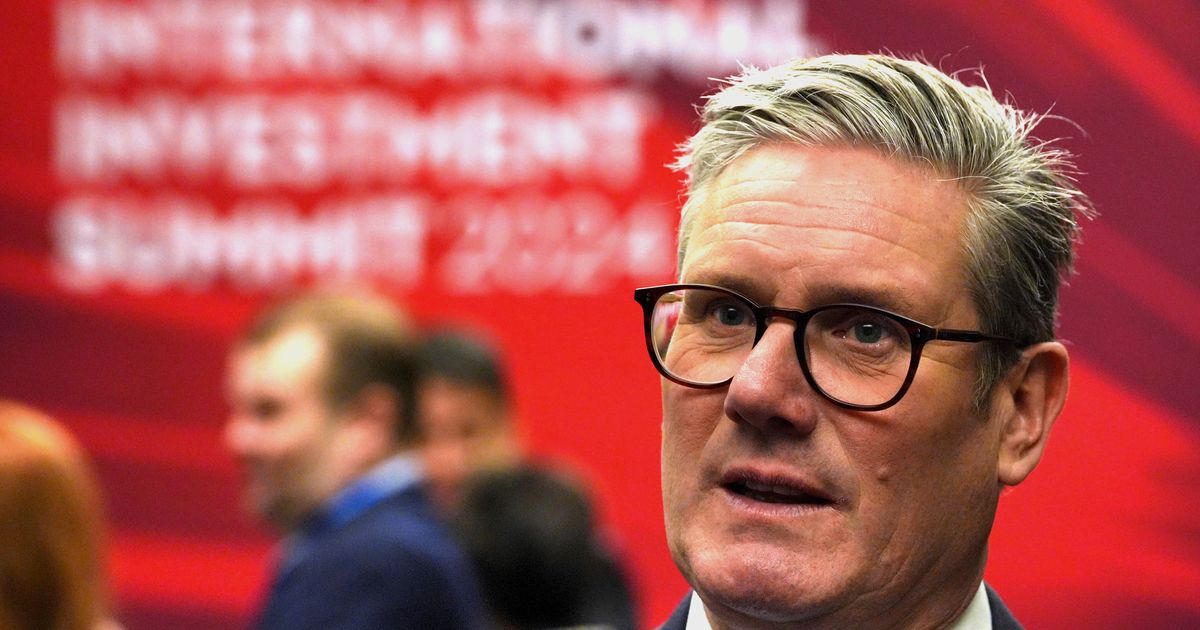
Drink spiking is to be made a criminal offence under Labour plans to halve violence against women and girls.
Keir Starmer will confirm the move as part of efforts to “reclaim our streets” from criminals.
The prime minister will meet with police chiefs, hospitality industry executives and transport bosses on Monday to discuss how best to crack down on the practice of putting drugs in drinks.
Advertisement
Thousands of staff working in the nighttime economy will be trained up on how to spot it happening.
A pilot scheme will be launched in December and then rolled out to 10,000 bars across the country by spring next year.
Starmer said: “My government was elected on a pledge to take back our streets, and we will never achieve this if women and girls do not feel safe at night.
“Today, I will bring together police chiefs, heads of industry and transport bosses to demand coordinated action to stop women being targeted, whether they are out with friends or simply travelling home.
“Cracking down on spiking is central to that mission.
“We know it can be incredibly difficult for victims to come forward to report this awful crime, and these cases can be very hard to prosecute. We must do more to bring the vile perpetrators who carry out this cowardly act, usually against young women and often to commit a sexual offence, to justice.
Advertisement
“That is why I made a promise that, if elected, I would make spiking a new criminal offence. Today, I am proud to have come good on that pledge.”
Home secretary Yvette Cooper said: “Spiking is a disturbing and serious crime which can have a damaging and long-lasting impact on victims.
“People shouldn’t have to worry about the safety of their drinks on a night out. These changes are about giving victims greater confidence to come forward, and ensuring that there is a robust response from the police whenever this appalling crimes take place”.
Kate Nicholls, chief executive of UK Hospitality, said: “Our pubs, bars, clubs and restaurants are where Brits go to enjoy themselves and our priority is to ensure everyone can do that safely.
“I’m pleased that we’re able to support the Home Office in its plans to roll out a nationwide training programme as part of these efforts, to help ensure all staff know how to prevent spiking and have the skills to act if they suspect someone has been spiked.”
The PM’s official spokesman said: “There’s no justification for comments like that and what we’ve seen in this country is organised illegal thuggery which has no place on our streets or online.”
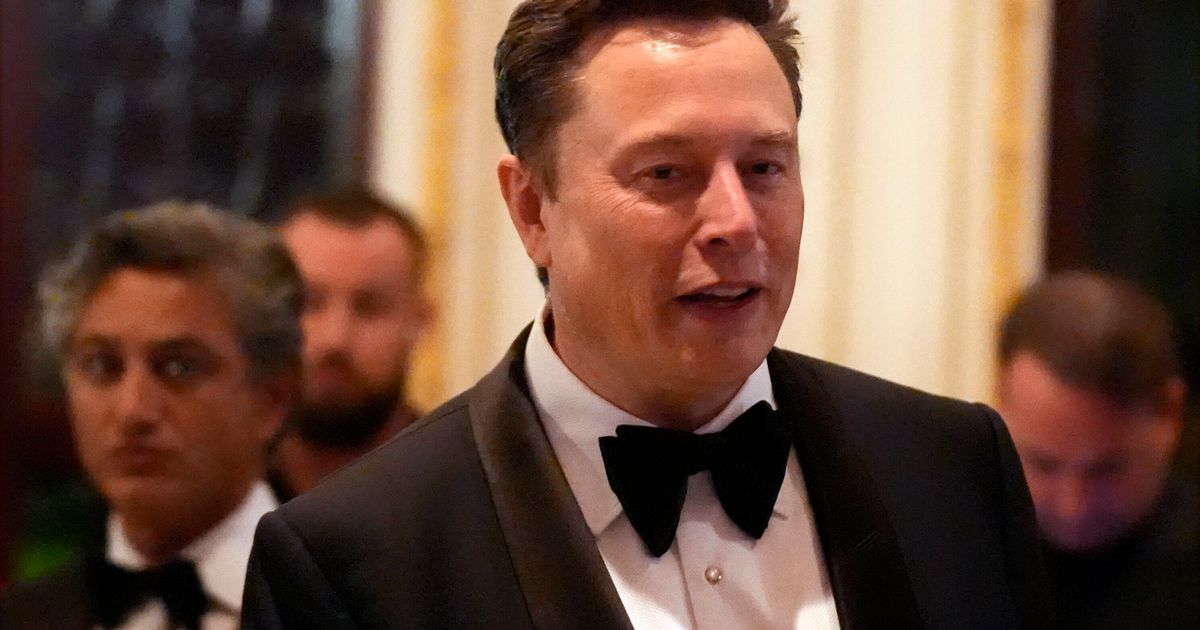
But responding to a video posted on X by Starmer in which he said the government “will not tolerate attacks on mosques or on Muslim communities”, Musk replied: “Shouldn’t you be concerned about attacks on all communities?”
Musk’s ongoing criticism of Starmer is a problem for the PM as he tries to strike up a good relationship with president-elect Trump.
The X owner was one of the Republican’s biggest supporters during the US election campaign and has been appointed to head up a new Department of Government Efficiency aimed at tackling waste and saving trillions of dollars.
The UN’s annual environment summit is meant to be a place where countries come together and agree to act on tackling the climate crisis.
But the 29th gathering of the conference of the parties (COP29) seemed more fractious than ever, with some representatives even walking out of the final negotiations.
Advertisement
Despite the UN secretary-general Antonio Guterres warning that “failure was not an option” last Thursday – and scientists fearing that 2024 may be the hottest year on record – many countries now feel betrayed by the final agreement of this year’s summit.
Described as “one of the most poorly led and chaotic COP meetings ever” with offerings from developed countries written off as mere “crumbs”, here’s a look at the issues which split the conference.
The big one: climate finance
The primary target of this year’s COP was to come up with a new sum for how much money should be sent to developing countries to help them recover from climate emergencies while also transition to cleaner energy systems.
COP previously agreed to offer those countries $100 billion (£79bn) per year, but that deal expires in 2025.
Advertisement
Experts believe the world now need to aim to raise around $1.3 trillion (£1.08trn) per year by the end of the decade to meet the needs of vulnerable countries.
But a draft of the final COP29 text shows the fund only reaching $250 billion a year by 2035 instead – a number most delegates from developing nations did not think was anywhere near enough.
After representatives from small island nations walked out of negotiations in fury, the number was increased to £300 billion – which is still a long way off the target.
That sum would also be given to the developing world in grants and low-interest loans from wealthier countries. It would only increase to the £1.3tn figure if private investors or extra taxes on fossil fuels were introduced for individual countries.
Advertisement
The deal eventually secured the approval of all attending nations on Saturday night, but the sum was dismissed as an “abysmally poor” amount by India’s negotiator Chandni Raina.
Claiming the decision was not reached by consensus, she said: “This document is little more than an optical illusion.”
The bloc of least developed countries (LDC) – constituting of 45 countries and 1.1 billion people – also claimed the agreement unpicked three years of negotiations on climate finance.
And Panama’s special representative for climate change, Juan Carlos Monterrey Gomez, said: “Developed nations always throw text at us at the last minute, shove it down our throat, and then, for the sake of multilateralism, we always have to accept it, otherwise the climate mechanisms will go into a horrible downward spiral, and no one needs that.”
Speaking before the deal was struck, he also slammed the suggested $250bn sum, saying it was a “spit on the face of vulnerable nations like mine”.
Advertisement
He added: “They offer crumbs while we bear the dead. Outrageous, evil and remorseless.”
Similarly, the charity ActionAid UK said: “There’s no sugarcoating it: this text is a complete catastrophe and a farce.
“With floods and droughts tearing through the Global South, the goal announced remains a drop in the ocean compared to the trillions needed to help climate-hit communities adapt and recover, especially women and girls who are among the worst impacted.”
But others still felt the overall sum was too high – and too much pressure was on developed countries to pay up.
One European negotiator told Reuters: “No one is comfortable with the number, because it’s high and (there is) next to nothing on increasing contributor base.”
“They offer crumbs while we bear the dead.”
– Panama’s special representative for climate change, Juan Carlos Monterrey Gomez
Advertisement
Some nations also raged that the funds would be shared with countries that had stronger economies, like India.
Others complained the offering was only a fraction of what was being spent on war globally in the last few years and pointed out that there was a lack of definition around what exactly they mean by climate finance.
What about the 1.5C limit?
The Paris Agreement, from COP21, saw 196 countries pledge to limit the global temperature increase to just 1.5C compared to pre-industrial levels.
A climate scientist at Berkeley Earth told Bloomberg that the 1.5C limit has been “deader than a door nail” for some time now.
Advertisement
There have therefore been some argument that COP’s ongoing goal of staying below 1.5C is pointless, because they believe it is no longer feasible.
However, it is still a symbol of the pressing climate crisis and so it remained a pivotal part of the talks.
As Imperial College London’s professor Professor Joeri Rogelj said: “Much has been said about whether limiting warming to 1.5C is still possible, and the odds are no longer in the world’s favour on this one.
“However, with every fraction of a degree of warming, life on earth will become much more dangerous. It doesn’t matter what the number is. Every country has to deliver emissions reductions that are as deep as they can possibly be.”
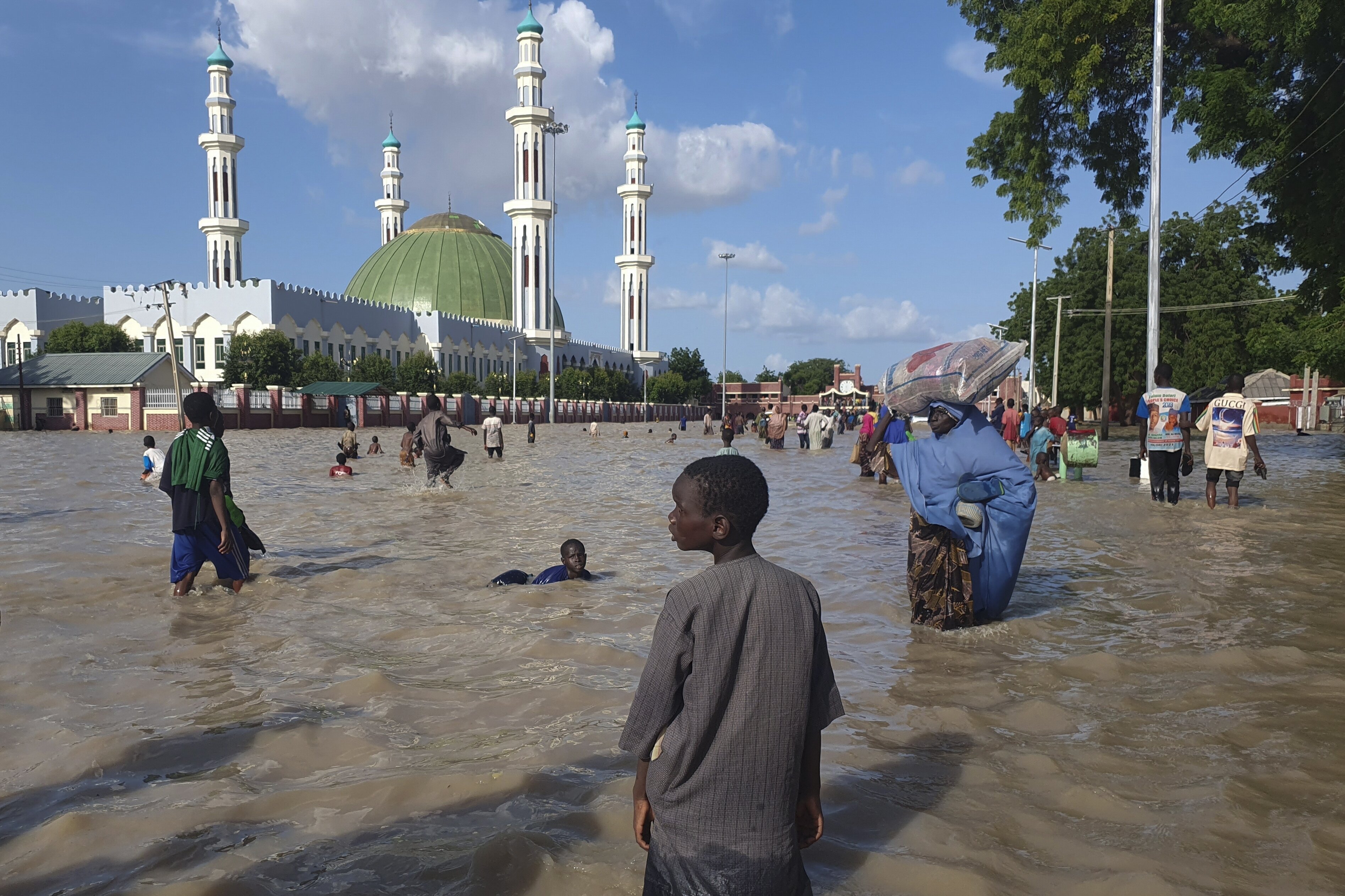
Extreme weather: People walk through floodwaters following a dam collapse in Maiduguri, Nigeria, Tuesday, Sept 10, 2024.
via Associated Press
Advertisement
The questionable hosts
Last year, COP was controversial because it was held in the UAE, which makes most of its money through fossil fuels.
This year, it had the same problem – oil and gas make up 90% of Azerbaijan’s exports and fossil fuel interests.
He also accused western nations of “double standards” for buying fossil fuels from his country while urging the world to go green.
So it is no surprise that Mohamed Adow, director of the climate and energy think tank Power Shift Africa, laid into the hosts of this year’s conference.
Advertisement
He said it was “one of the most poorly led and chaotic COP meetings ever”, saying this presidency is “one of the worst in recent memory”.
Speaking shortly before an agreement was reached, he said: “We only have a matter of hours remaining to save this COP from being remembered as a failure for the climate and embarrassment for the rich world.
“We need Mukhtar Babayev [COP29 president] to get his act together.”
Babayev is a veteran of the oil industry, and Azerbaijan’s ecology and natural resources minister.
Adow added: “No deal is better than a bad deal. Poor countries don’t need to be held hostage in Baku. If rich countries fail to deliver what they owe in climate finance, then they should be forced to come back next year in Brazil with a better plan.”
Fossil Fuels – are they in or out?
COP26′s president Alok Sharma was left in tears in 2021 when the wording on reducing dependency on coal was watered down in the 11th hour negotiations for the final agreement.
COP27 just kept the same wording – a promise to reduce dependency on coal – without expanding it to natural gas or oil, or offering a time frame.
Advertisement
COP28 managed to move the dial a bit more, so countries pledged to transition away from all fossil fuels.
But this year, the European states who want countries to promise to move away from the fossil fuel industry faced backlash from Arab states.
Then Saudi Arabia was even criticised for obstructing much of the final text, and allegedly tried to remove references to “transition away from fossil fuels”.
Still, Green Party co-leader Adrian Ramsay told HuffPost UK that COP itself remains a strong forum which “offers the chance to bring nations together to act and move away from the fossil fuel economies that are destroying our planet and making life intolerable for millions in the global South.”
Advertisement
He added: “A COP that excludes the fossil fuel companies and their lobbying arms while supporting representatives of countries and indigenous peoples most impacted by climate change can transform all our futures.”
An attendee reacts during a closing plenary session at the COP29 U.N. Climate Summit, Sunday, Nov. 24, 2024, in Baku, Azerbaijan. (AP Photo/Joshua A. Bickel)
via Associated Press
Where were all the major players?
There was a noticeable absence of major world leaders at this year’s COP.
Neither US president Joe Biden nor Chinese leader Xi Jinping turned up, despite leading the world’s two largest economies (which also have the largest carbon footprint.)
UK PM Keir Starmer was one of only two G7 leaders who spoke at the summit.
For an ambassador from One Young World – a youth forum which sent a delegation of activists to Baku this year – that was not enough.
Bodhi Patil, a climate “solutionist” from Canada and CEO of Inner Light said it was “deeply concerning” leaders from major polluting countries were absent this year, especially the when fossil fuel lobby had 1,700 representatives there – making it the fourth-largest delegation.
Advertisement
But he told HuffPost UK: “We can’t wait for global leaders to take action.
“It falls to grassroots movements, indigenous leaders, and local communities to drive change and hold the world accountable for climate finance commitments.”
The final lacklustre deal also meant even those who did attend were under fire for claiming to be climate leaders – like the British.
The UK’s nature representative Ruth Davis said “the UK continues lead the way” at COP29, prompting ActionAid to accuse the government of trying to put a “shine on a terrible deal”.
It said the agreement was a “far cry from [Labour’s] lofty claims of putting climate change at the heart of foreign policy only months ago.”
Corporations over indigenous voices
Before the deal concluded, scientist and chief executive of Climate Analytics, Bill Hare warned that it was a “step back” not to include small islands and the least developed countries more in negotiations.
Advertisement
Similarly, another One Young World ambassador told HuffPost UK his hope that this year’s summit could be different were dashed.
The founder of Barlig Rainforest Coffee Project and Indigenous Youth Eco-Cultural Warriors of Mountain Province, Daniel Maches said he wanted COP to bring “concrete solutions” while recognising indigenous rights.
“It is our ancestral domains that are looked upon as vital in combating GHG emissions, so they should be as loud as any others at a summit like COP,” he said.
However, he added: “There is a tendency for these events to focus on spectacle rather than impact. I was hopeful that COP would be different, but it’s shown that world leaders aren’t taking climate change seriously. How can they be when corporate players continue to lobby and control government initiatives?
“I am hopeful that things can improve, and young people in particular push to actualise effective climate policies.
Advertisement
“But COP29 hasn’t alleviated my fear that the climate crisis is slipping beyond our grasp, and that farmers and indigenous peoples – whose survival is inextricably linked with the land – will suffer the most.”
What about next year?
Donald Trump, who is returning to the White House in January, is expected to have a major impact on the overall fight against the climate crisis.
He pulled the US – which is world’s top historic greenhouse gas emitter – out of the Paris Agreement (1.5C limit) during his first term in office.
He is expected to have an even stronger impact on the global environmental challenge in his second term too, having already shown a preference for fracking.
Even away from the US’s impact, it looks like the next summit is already beset with its own challenges.
Advertisement
Set to be held in Belem’s Brazil, the impoverished city has been racing to prepare to host the next COP, trying to clean up its river filled with untreated sewage and garbage quickly before thousands of delegates descend.
There are also heavy expectations that COP30 will be a turning point, marking three decades of climate negotiation.
But perhaps that’s a reasonable expectation. After the disaster and division of COP29, things certainly can’t get too much worse.
If you’ve ever stepped out in what you thought were weather-appropriate clothes, only to find yourself soaked to the skin or sweating buckets, you’re likely very familiar with the feeling of being betrayed by weather apps.
It’s frustrating, especially when your friends tell you that the app that they rely on gave an entirely different forecast for the day. The absurdity! The outrage!
Advertisement
Thankfully, a team of researchers decided to set the record straight on exactly which app we should be using ahead of stepping outside, so that we can be more suitably prepared.
New research reveals the best weather app
In a move that adds another layer to the treasured British tradition of complaining about the weather, iNews commissioned University of Reading’s Department of Meteorology to identify which were the best sources to check, and the results actually revealed that it can differ, depending on the outlook you’re hoping for.
iNews asked Rosie Mammatt, a weather scientist at the University of Reading, to compare the performance of some of the country’s most popular weather apps.
Over a period of two weeks, Mammatt looked at BBC Weather, the Met Office, Apple Weather, the Weather Channel and AccuWeather over a two-week period.
Advertisement
Her research found that, as many of us know, forecasts are often wrong and surprisingly, it’s the BBC that often gives the least accurate forecasts on their app.
Mammatt reveaed that BBC Weather is often “too pessimistic” and repeatedly overestimated the amount of rainfall ahead.
So, who can we really rely on, then?
Well, if you’re heading out in the morning, you’re best to check Accuweather. If you’re going out in the afternoon, the Met Office is best.
The best overall forecaster, though, was Weather Channel, which can be relied on for any and all forecasts.
By the time you finish reading this sentence, there’s a good chance that you, too, have received yet another email about the new “Wicked”-themed cocktails, or the “Wicked” line of kids’ clothing or the “Wicked” high-top sneakers. Or, lest we forget, the “Wicked” Mattel dolls that were pulled from stores due to a misprint on the packaging that directed consumers to a porn site.
Even the movie’s marketing mishaps catapult to the top of its Google search page.
Each of Universal Pictures’ efforts to guarantee an audience for the movie before it hit theatres Friday have unquestionably worked in its favour. It’s predicted to make at least $120 million at the box office in its first weekend, and you can’t really step outside, especially now during holiday season, without seeing a “Wicked”-themed something or other in a store window.
Advertisement
Obviously many built-in fans of the same-titled, second-highest-grossing Broadway show ever, and of Gregory Maguire’s book that inspired it, have been devouring every morsel of the movie’s promotions. But there’s also an entire subset of people who are exhausted by all of it and its seemingly yearlong takeover.
On X, journalist Sophie Vershbow posted, “me to the Wicked marketing team” with a meme with the word “ENOUGH.” Another user on Bluesky sarcastically wrote, “I think just another dozen or so exposures to ‘Wicked’ marketing and I’ll be aware of it.”
Even self-proclaimed die-hard fans of “Wicked” and its star Ariana Grande are turned off by the studio’s excessive marketing. Someone on TikTok wrote, “As a massive ‘Wicked’ and Ari fan, I’m scared to admit that the overmarketing of this movie has given me the ick. Why is ‘Wicked’ collabing with literally every single brand? I’m tired of it being shoved in my face 24/7.”
And another on Threads posted, “This is no hate to all who love ‘Wicked’ (I’m happy for y’all), but OMG I’m excited for the day when my eyes aren’t subjected to their marketing campaigns everywhere I look. It’s too much!”
Advertisement
Does consumer fatigue affect Hollywood’s marketing approach to films like “Wicked” or last year’s “Barbie,” which was just as ubiquitous, and included driving fans to a website to create custom “Barbie” posters and a collaboration with Burger King Brazil on a pink burger?
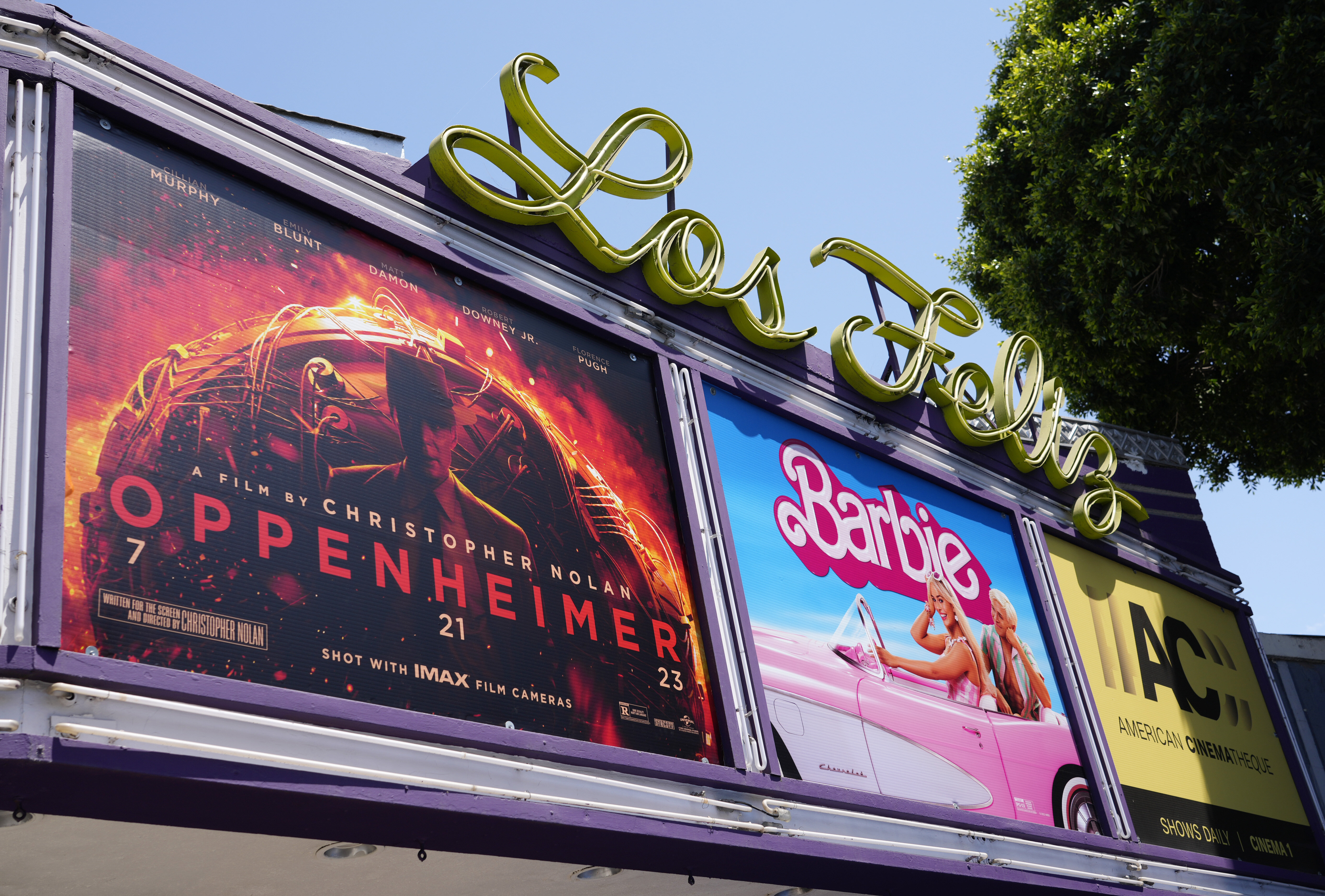
The marquee for the Los Feliz Theatre features the films “Oppenheimer” and “Barbie,” Friday, July 28, 2023, in Los Angeles. (AP Photo/Chris Pizzello)
via Associated Press
Yes and no, said Saleha Malik, co-founder of S-Squared, a boutique marketing agency. Hollywood is always going to do the thing that fills up their pockets, no matter how much it might annoy some audiences. But the bottom line is: This approach consistently drives ticket sales.
We saw that play out just last year with the twin releases of “Barbie” and “Oppenheimer” (or “Barbenheimer,” if you will).
“So, it’s not that these marketing strategies aren’t working,” Malik told me. “They definitely are, which is why you can see that for big, juggernaut films like ‘Barbie’ and ‘Wicked.’ They’re using the same playbook again and again.”
Advertisement
And while it seems like there’s been at least one of these sometimes portmanteau blockbuster marketing strategies for years now, this level of it, Malik said, is a fairly recent phenomenon. So, while audiences might be weary of it, Hollywood isn’t at all.
“Before ‘Barbie,’ you can’t really think of a lot of movies that took it to that scale,” Malik said. “So, I think they are going to continue to do this.”
Studios might be unfazed by consumer fatigue, even at a time when audiences’ interests are especially fickle, and they’re getting bombarded with ads online and IRL all the time, but Malik told me that any studio worth their salt would pay attention to that and adjust their efforts. Or else that bubble could burst.
“Once consumer fatigue starts setting in more and more, they’re going to have to pivot their strategies,” Malik said. “As marketers, you are always aware that the same strategy is not going to work every time. So you’ll pick and choose different aspects of it, but tailor it for the next one.”
Those consumers that currently have “the ick” from the marketing be damned then, I guess.
But they might not be the only ones the studios are not considering right now. Let’s look at this marketing a little more closely and who it’s actually targeting (beyond simply benefiting Hollywood’s pockets, of course). While certain apparel and branded cocktails can accommodate consumers across economic backgrounds, there is an overwhelming appeal to cater to households with larger incomes.
Advertisement
For instance, a pair of Glinda- and Elphaba-inspired collectible dolls can currently run parents up to $159+ on eBay. A Glinda-sequined bomber jacket is going for almost $90 at Lola and the Boys. Meanwhile, thanks to the “Wicked” partnership with fine jewellery brand Muse, a pair of hoop earrings designed in collaboration with the film’s star Cynthia Erivo costs $8,800.
While Malik maintains that the studio is still blanketing the audience with a wide range of merchandise that caters to a variety of households, she acknowledges that these higher-priced items almost strictly appeal to people within a higher economic bracket. Even more, they’re presented as wish items.
“You want the most people to come to your movies, to buy those limited edition dolls or anything of the sort — you want the most people to buy them,” she said. “So I don’t think this marketing strategy is, let’s exclude people on purpose. But with their strategies, they definitely are.”
The “Barbie” strategy, Malik added, was a prime example of that: “The primary economic demographic that I think was targeted by ‘Barbie’ was the middle- to upper-class audiences. Because, if you look at the merchandising, for example, there were a lot of high end collaborations.”
“It’s not your everyday person that can afford Christian Louboutin heels,” Malik said. “These are exclusive items. But they reinforce that aspirational and luxury positioning that went along with it. So, they appealed to that sort of audience with the mainstream, middle class families.”
Historically, though, “Barbie” has catered to a very exclusive audience that wasn’t diverse at all. While Malik, who is Pakistani, said she didn’t really play with Barbies growing up, she got a pretty good sense of who they were supposed to be for. She acknowledges that while the movie and its marketing tried to be inclusive, even coming out with a doll for Diwali, it often fell back on their tried-and-true audience.
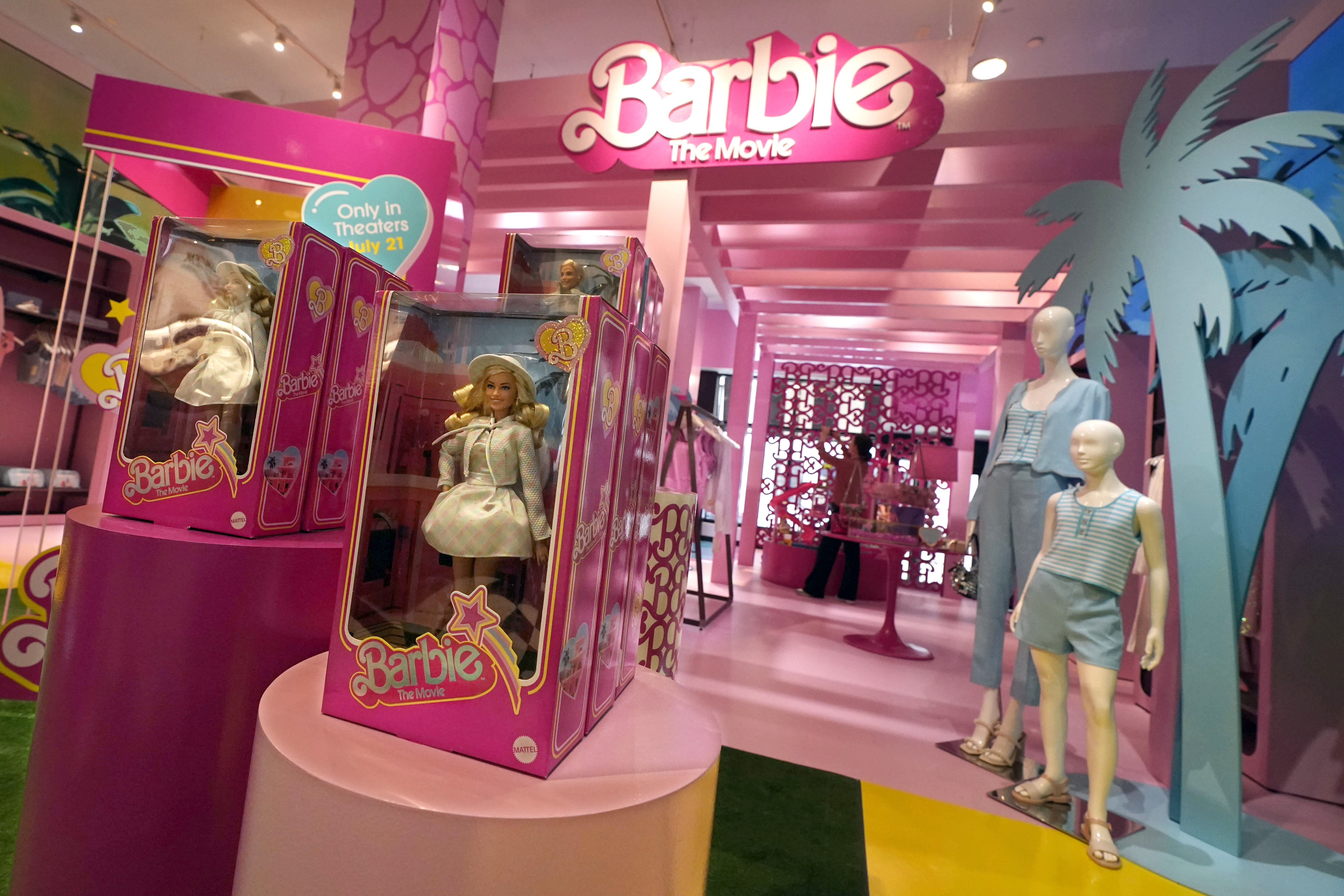
FILE – Barbie-themed merchandise is displayed at Bloomingdale’s, in New York, July 20, 2023.
via Associated Press
“They really did target white and affluent demographics,” Malik said. “So, a lot of the marketing efforts you can see still leaned into that aspirational image of the traditional blonde, which did not resonate that much with audiences of colour who’ve seen historically less representation.”
Concurrently, though, the marketing didn’t completely neglect, for instance, audiences from lower economic backgrounds, Malik quickly added: “They also did things like the ‘Barbie’ Happy Meal, so that it’s more accessible.”
Advertisement
“Wicked” has less of an issue reaching more racially diverse audiences, partly because its lead actor, Erivo, is a Black and queer woman. But that’s also because the essence of its story is about humanising, as Malik put it, those “who often feel misrepresented or underrepresented.”
“They’re highlighting that underdog narrative [that] centres around misunderstood characters,” she said, “and challenges the societal perceptions of good versus evil, which in today’s world is a valuable theme. Then also it aligns with the lived experiences of marginalised audiences.”
Still, while both “Wicked” and, previously, “Barbie” made admirable efforts to connect with diverse audiences in their marketing, there has been a sort of DIY component that has particularly resonated with online fans who go on to create fan art and their own costumes.
Those might invariably include some who aren’t able to afford to purchase their own merchandise or might feel so inclined to create a, for instance, “Wicked” world that they could be a part of — possibly one they might not be seeing in the marketing.
Malik described more of those efforts: “TikTok challenges, which invite younger audiences to engage with the campaign regardless of their social strata. It’s not things that they need to spend excessively on. There’s more focus on aesthetics, humour and relatability that resonates with someone that is more budget conscious.”
Advertisement
You can certainly look at that as a more democratised approach to marketing films like “Wicked” and “Barbie,” which obviously has its benefits like racial and economic diversity. But it also puts it on the audience to see themselves inside a movie’s marketing, perhaps because the powers that be in a white and largely affluent Hollywood either don’t have the range, foresight or desire to do that themselves.
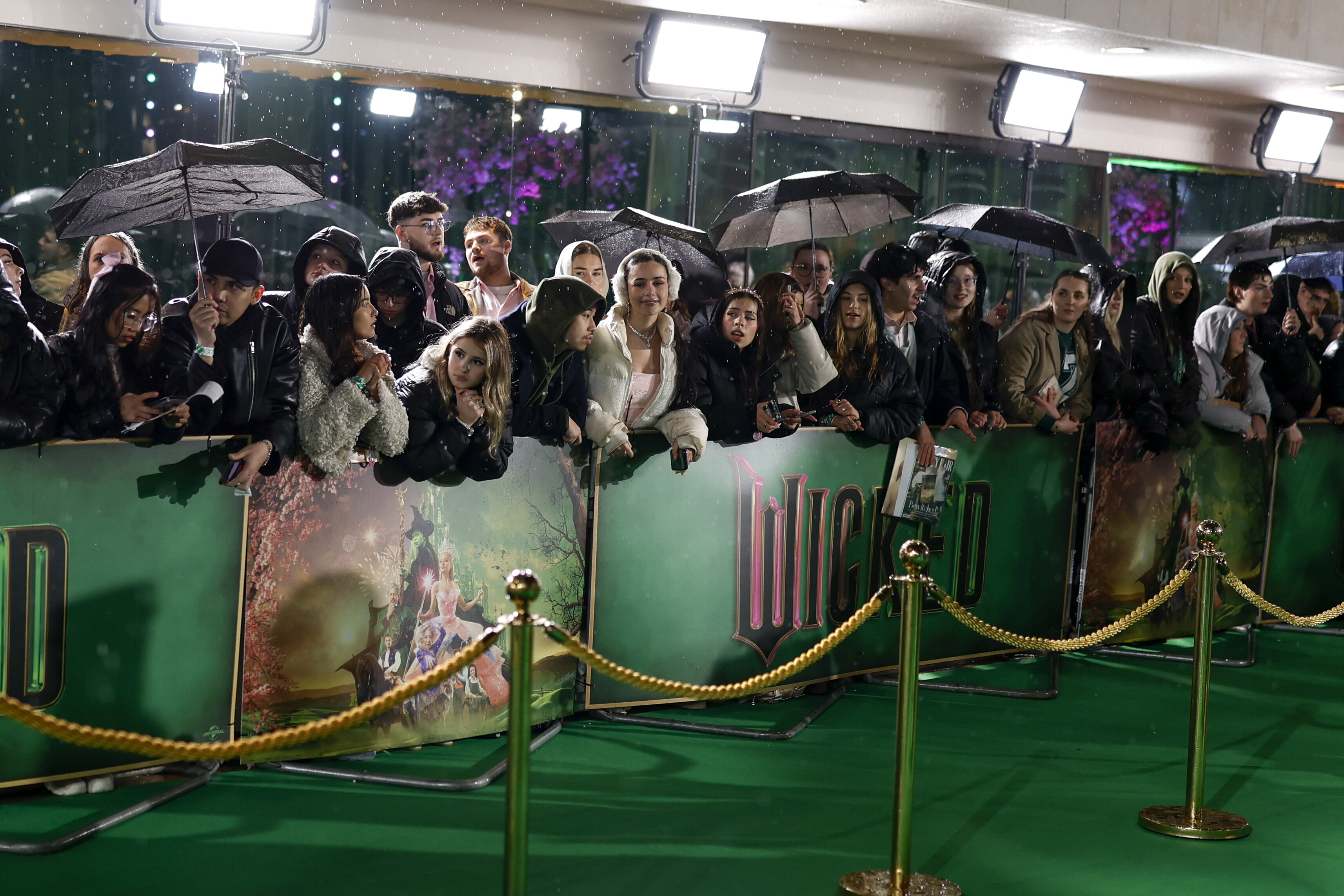
Fans stand in the rain waiting for the cast to arrive at the premiere of the film ‘Wicked’ on Monday, Nov. 18, 2024, in London. (Photo by Millie Turner/Invision/AP)
via Associated Press
This question of effort and exclusivity also makes you think about where smaller, independent films, many that amplify talent of colour, fit into this relatively recent level of movie marketing that largely eludes them in both budget and even the most modest effort.
For instance, a film like “Exhibiting Forgiveness” makes nary a sound as it tiptoes to the box office, while the marketing strategies behind those like “Wicked” and “Barbie” make it hard not to hear them coming from 100 miles away and a whole year out from release. It’s either barely anyone knows a film even exists, or they’re sick and tired of hearing about it all the time. There’s rarely any in between.
It can’t be expected for every movie to get, say, a $150 million marketing budget like “Barbie” reportedly did, but the alternative shouldn’t be barely anything at all, particularly when those films are desperately trying to reach even a moderate number of audiences of colour.
Advertisement
Here again, people are compelled to consider untraditional ways to connect with marginalised people without the help of a big studio.
Malik offered that some of the most successful marketing campaigns for independent films, while not a foolproof plan, revolve around less conventional strategies. “‘Everything Everywhere All at Once’ really focused on word of mouth and grassroots marketing,” she said, “to build authentic audience connections and really prove that smaller campaigns can still go viral.”
She went on to say that other small films have utilised the Academy and other awards circuits to get the word out about the film. While studios often use those press runs to primarily push certain talent or films into the running to win an award, it’s also to build audience awareness for these films when there were virtually no other marketing efforts.
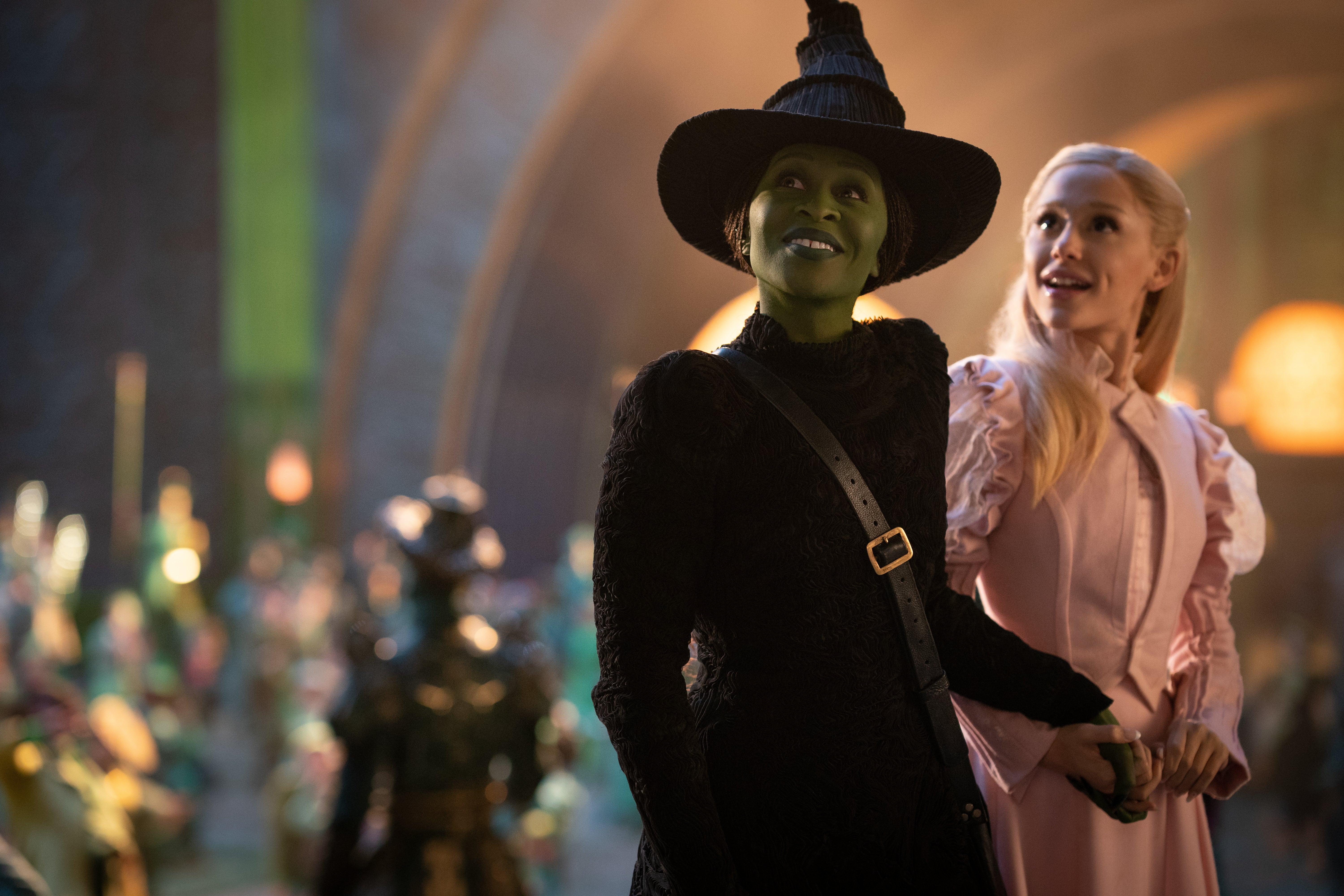
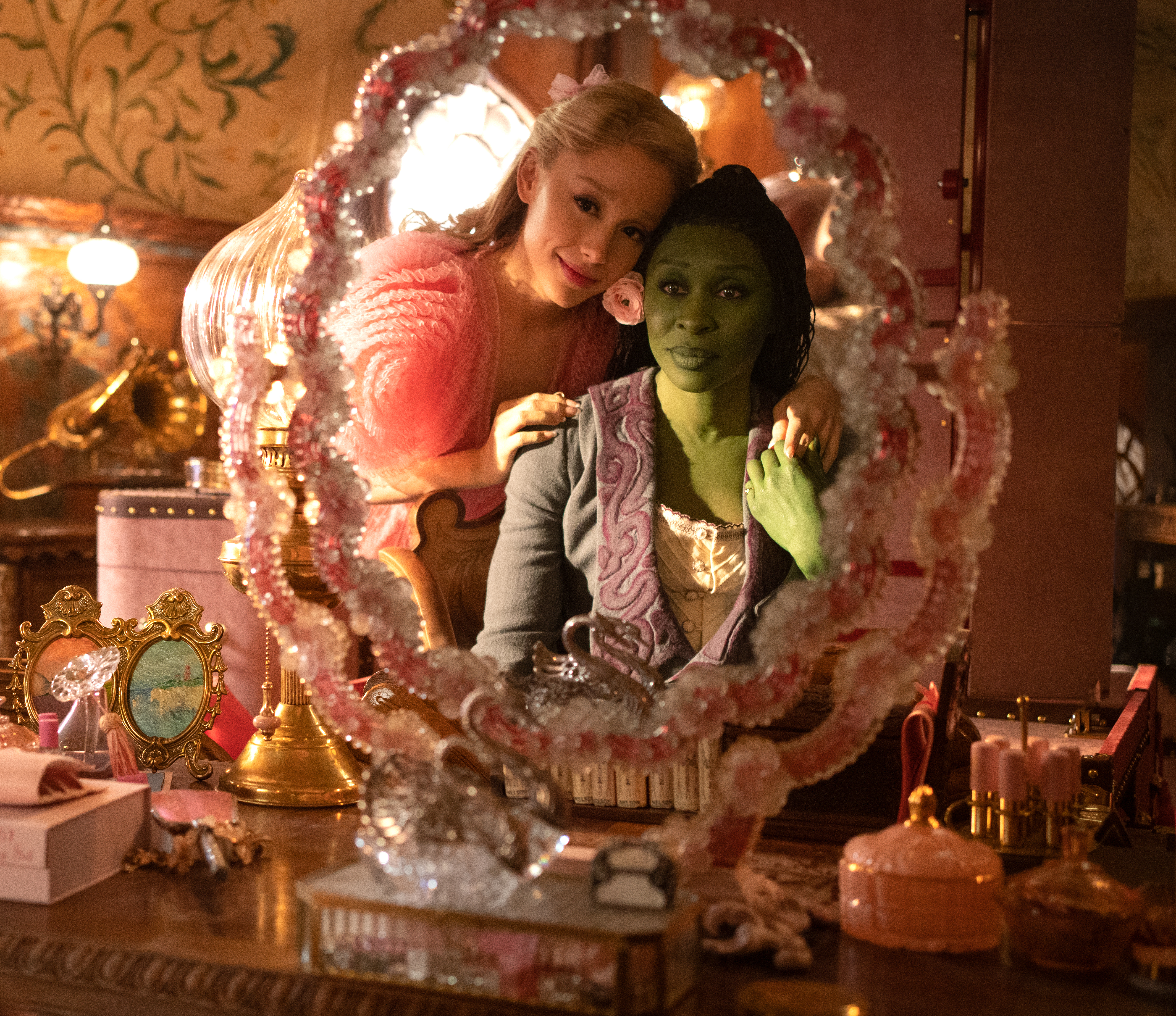
Ariana Grande and Cynthia Erivo in a scene from “Wicked.”
Giles Keyte/Universal Pictures
Another way is through partnering with streaming platforms like Netflix or Max, who generally have more marketing dollars that smaller studios could lean on to get the word out about their films and talent.
Advertisement
There’s also “cultural authenticity,” as Malik described it, with the storytelling in the film’s marketing that could propel a film directly to its intended audience like how Netflix did it with the Mexican 2018 drama “Roma.”
“They made sure to engage the Spanish-speaking audiences as well, and made advertisements and events that were bilingual,” Malik explained. “And then there’s that aspect of personal storytelling which became a central narrative to the campaign.”
None of this, obviously, amounts to even a fraction of the return films like “Wicked” and “Barbie” have, which Malik fully acknowledges. But it’s not nothing.
“Studios realistically are not going to invest that amount of time and money into smaller films which might be more representative of society,” Malik said. “But at the end of the day, it’s a business. They’re going to invest in movies that they think are going to bring the most return.”
Smaller or independent films, Malik added, “are more of a risk, they’re just not going to do that.”
I winced a bit at the use of “risk” there, not because what Malik said was untrue but because Hollywoodspeak often conflates that word with films that center talent of color, many of which are independent. It’s an exhaustive cycle that points to a longstanding question of whether smaller films are set up to fail while often white-led, corporate and capitalistic brands like the ones behind “Wicked” and “Barbie” are almost always poised to succeed.
Advertisement
Both of those films are wildly entertaining and have merit (though, more so “Wicked” than “Barbie”) and will, gratefully, bring audiences to the theater at a time when many have abandoned it for a variety of factors. They also serve the same Hollywood machine that, despite its purported advances, still prioritizes an exclusive demographic.
A hallmark of Donald Trump’s first presidency was the way major policy developments would sometimes get almost no attention, because they were competing with the flurry of higher-profile, mind-blowing controversies swirling around him and his team.
Evidently Trump’s second presidency is going to unfold in the same way.
For the past week, the political world has focused mostly on the controversies over Trump’s planned appointments for top positions in his administration. And that’s understandable, given his plan to put the nation’s health in the hands of a noted vaccine skepticand to hand the national intelligence apparatus over to someone who likes to repeat talking points from Russian propaganda.
Advertisement
But that conversation has left virtually no space for discussion about policy changes — including one that should raise a lot of questions about exactly whose interests Trump will represent in government and exactly who has influence over him.
The policy in question is a federal tax credit for buyers of new electric vehicles. It exists thanks to the 2022 Inflation Reduction Act, President Joe Biden’s signature legislative accomplishment, and is part of that law’s effort to reduce reliance on fossil fuels by promoting EV use.
Last week Reuters reported that Trump’s transition team was recommending he ask Congress to kill the tax credit. And while Trump has not said anything publicly, auto industry leaders and investors saw the report as a trial balloon and indicator of what the president-elect is likely to do.
It was not exactly a shocking development. Trump has been speaking out against Democratic support of EVs ― or what he has called, deceptively, an “electric vehicle mandate” ― for years. Especially when speaking in states like Michigan, cradle of America’s auto industry, he has portrayed the EV effort as elite Democrats imposing a tree-hugging agenda that will ruin the U.S. auto industry and, in the process, wipe out jobs for U.S. workers.
Advertisement
Still, Trump never said explicitly whether he’d actually seek to eliminate the tax credit. And there were reasons to think he might not pursue the idea after the election.
One is that a number of House Republicans support the EV incentives. Many come from places like Georgia, Ohio, Indiana and Nevada ― states that Trump won and where the EV effort has led to a boom in factory construction. The recent EV push has “created good jobs in many parts of the country — including many districts represented by members of our conference,” the House members wrote in a summer letter to House Speaker Mike Johnson (R-La.)
Then there are the feelings of the auto industry itself. Both Ford and General Motors, the two legacy car companies still based in Detroit, have supported the tax credit because they think a global shift towards EVs is inevitable. The real question now, they argue, is not whether there will be many more EVs in the future, but who will produce and sell them.
The U.S. carmakers are particularly worried about losing ground to Chinese companies. Thanks to two decades of financial support from their own government, Chinese carmakers can now produce EVs more cheaply and, as a result, are poised to dominate the worldwide market. The new federal tax credit, worth up to $7,500 per vehicle but only valid for EVs produced here in the U.S., is giving Ford and GM a chance to compete on a more even playing field among U.S. consumers.
Good jobs in the districts of House Republicans, a chance to help American industry compete with China ― those sure sound like ideas that might resonate with Trump.
Advertisement
But those aren’t the only appeals Trump is hearing. He’s also hearing from some of his biggest, and richest, allies. And they have a very different view.
Hamm, Musk And EVs
One of the co-leaders of the transition team on EV policy, according to Reuters, is Harold Hamm, a billionaire oil tycoon who was a prodigious Trump fundraiser during the campaign (and donated plenty of his own money, too). Hamm opposes support for EVs, whose growth over the long term would reduce demand for gasoline ― i.e., the financial lifeblood of his enterprises.
Elon Musk, another Trump megadonor, also has the president-elect’s ear. And although Musk is the CEO of Tesla, the nation’s top electric carmaker, Musk has said his company doesn’t need the subsidies because it’s not trying to retool from making gas-powered cars and isn’t at the same disadvantage internationally as the legacy Detroit automakers.
“I think it would be devastating for our competitors and for Tesla slightly,” Musk told investors over the summer. But he said that in the “long term, it probably helps” Tesla if Trump does away with the tax credit, since that could allow Tesla to more thoroughly dominate the U.S. market.
Corey Cantor, a senior auto industry analyst at BloombergNEF, told HuffPost he thinks Tesla sales benefit from the tax credits more than Musk lets on. But he agrees Tesla has “far more flexibility” and would suffer less.
Advertisement
One reason for that is that Musk has fought unionisation at his auto plants and, according to outside analysts, pays his workers less than competitors. A major goal of the Biden EV push was to support unionised companies in the U.S. and, in the process, guarantee better pay for manufacturing workers.
It’s impossible to know just how much Trump’s opposition to the EV tax credit reflects the influence of Hamm and Musk, given his own longstanding skepticism of measures to prevent climate change. But Trump has a lengthy, well-chronicled history of heeding or helping donors who want policy favors, or offering them positions in his administration.
And that’s to say of nothing of how Trump and his family profited personally when, for example, lobbyists and foreign dignitaries would stay at Trump’s Washington hotel. One watchdog group determined through public disclosures that his daughter, Ivanka, and her husband, Jared Kushner,made as much as $640 million in outside income during Trump’s first term.
Now Trump is on his way back to the White House, with a transition teamled by and stocked with billionaires. Musk, along with fellow billionaire Vivek Ramaswamy, areleading a so-called Department of Government Efficiency (“DOGE”) task force that, though not an official government entity, will identify targets for big cuts in government spending.
The Political Game
Lobbyists and analysts familiar with the transition told The New York Times they thought Ford and GM (and Stellantis, the other Detroit company, which is now part of a foreign conglomerate) still had a chance to save the tax credit, if they’re strategic enough.
Advertisement
As these sources explained it to the Times, part of Trump’s motivation for killing the tax credit was his grudge against the Detroit companies because of their past support for auto emissions policies he opposed. To get on Trump’s good side, the companies needed to make amends ― or, as the Times put it, “bow to Mr. Trump.”
Trump has always been unabashedly transactional. The variable is which kind of currency will get him to respond. Campaign contributions? Family enrichment? Personal abasement? Some combination of the above?
The future of EVs, like so many other issues in policy for the next four years, may depend on who figures out the answer.
Here’s lesson 4 for the free Engage course. It’s about how to use your power to create the reality you desire. This video especially focuses on how to shift from wanting something to actually experiencing it.
As I watched it, I really liked the vibe all the way through and opted not to do any internal cuts, edits, or effects this time, so the whole thing is one continuous take. I felt that any cuts or effects would detract from the nice flow of it, so I kept it minimalist this time.