Regulators have ordered the centre to halt any new procedures while an investigation continues.


Regulators have ordered the centre to halt any new procedures while an investigation continues.
Following a TikTok user pointing out that her partner received more aftercare following his vasectomy than she did after giving birth, Dr Karan Raj stepped in to explain why women are still getting the short straw when it comes to healthcare, and specifically pain relief.
Dr Raj said that this is down to a combination of systemic unconscious bias, a lack of research, as well as a failure to acknowledge biological differences in how women process pain.
Advertisement
All of that has led to pain being dismissed, misdiagnosed or undertreated which can have lethal consequences.
Love. That. For. Us.
The surgeon added that despite advances in healthcare, women are diagnosed ‘significantly’ later across over 700 diseases and in some cases, such as endometriosis, waiting up to 10 years for diagnosis.
Frustratingly, he also revealed that sometimes, women’s pain is wrongly attributed to psycological causes and the word ‘hysteria’ was only removed from the American Psychiatric Association’s DSM classification.
Advertisement
Additionally, women’s health and specifically pain-focused research is less likely to be studied in clinical trials which makes effective treatment difficult to find.
He admitted that to this day, we don’t know how women metabolise and react to various pain medications or how women experience or manifest pain.
Finally, he said that because there are so many knowledge and gender gaps when it comes to women’s pain, “It’s imperative that we treat the pain the patient has, not the pain we think the patient should have.”
According to the period health experts at Clue, these are the best ways to advocate for yourself at a doctor’s appointment:
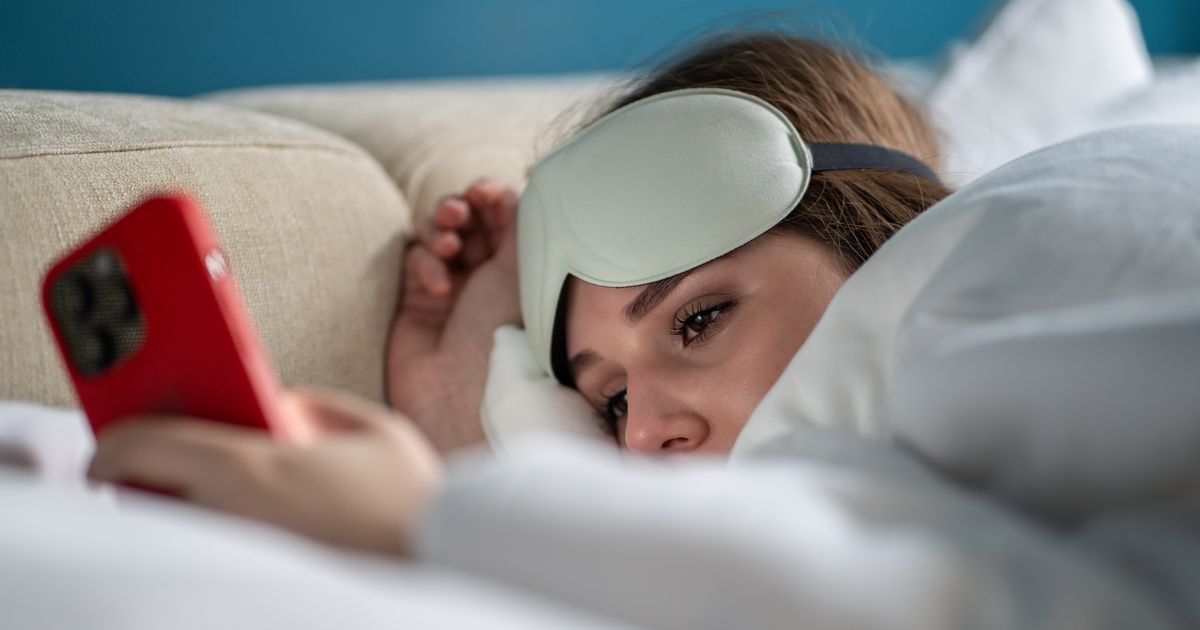
Do you ever find yourself putting off going to bed? It’s so strange, we complain about how tired we are all day, how much we’d love just a couple more hours in bed but when the time actually comes, suddenly there’s another episode we need to watch, another chapter to read, just one more scroll of social media.
We’re our own worst enemies.
According to Max Kirsten, Resident Sleep Expert for Panda London, this is actually something called ‘bedtime procrastination’ or ‘bedtime delay’ and it is the act of unnecessarily delaying going to bed despite having the intention to sleep.
Advertisement
According to Kirsten, there are several factors that contribute to bedtime procrastination:
Kirsten warns that stress, anxiety, and mood disorders can contribute to bedtime procrastination. Even just the thought of facing another day, unresolved issues at work or home, can make bedtime seem daunting, prompting sleep delaying as a temporary distraction.
If you’re prone to procrastination throughout the day, that is likely to seep into your evening, warns Kirsten. This can lead to people postponing bedtime in favour of completing tasks or indulging in leisure activities.
The convenience of phones and tablets means that it’s easier than ever to engage in stimulating activities late into the night. The blue light emitted from these screens can interfere with our sleep-wake cycle, making it harder to fall asleep, even once the devices have been put away.
Kirsten warns that consistently delaying bedtime can disrupt the body’s internal clock, making it harder to fall asleep and wake up at the same time each day. This inconsistency can then lead to sleep disturbances and contribute to insomnia and sleep deprivation.
Advertisement
Even if you do fall asleep after procrastinating, the quality of your sleep may be compromised. According to Kirsten, sleep that is fragmented or interrupted by frequent awakenings is less restorative and can leave individuals feeling groggy and unrefreshed upon waking.
Sleeping poorly can impact your mental health and emotional well-being, leading to irritability, mood swings, difficulty concentrating and heightened stress levels. Kirsten urges that over time, chronic sleep deprivation may contribute to the development or exacerbation of anxiety and depression.
Kirsten recommends that you establish a regular bedtime and wake-up time and ensure that you stick to it even on weekends as consistency helps to regulate the body’s internal clock and promotes better sleep quality.
Developing a calming bedtime routine signals to your body that it’s time to wind down. Kirsten recommends reading, taking a warm bath or trying some relaxation techniques such as deep breathing or meditation.
Avoid using electric devices for at least an hour before bed, as the blue light emitted from them can interfere with melatonin production and disrupt sleep.
Advertisement
If you feel that stress, anxiety, or mood disorders are the underlying cause of your procrastination, seek support from a mental health professional.

Every year, the Oscars ceremony features some of our favourite film stars, directors, writers and even musicians accepting one of the most prestigious cinema awards there is in front of their peers.
The 2023 Academy Awards gave us first-time victories for stars like Michelle Yeoh, Brendan Fraser and Jamie Lee Curtis – but sadly, there’s only space for one winner per category each year, meaning there are still many deserving actors who’ve missed out, time and time again.
Advertisement
Here are 24 of the living Hollywood stars who, surprisingly, still have an Oscar-shaped space on their mantelpiece (including a few of this year’s big contenders)…

Gregg DeGuire via Getty Images
Considered by many to be “the new Leonardo DiCaprio” when it comes to the Oscars, Amy Adams has been nominated for six Academy Awards, most recently in 2019, only to leave empty-handed every year.
The good news for Amy is that Leo got his win on his sixth nomination, so if she really is following in his footsteps, she shouldn’t have to wait too much longer.
Advertisement

Dan MacMedan via Getty Images
Glenn Close holds the dubious distinction of being the living actor who has the most Oscar nominations without a win.
As of 2024, the esteemed performer has been nominated for an Academy Award a whopping eight times, but has never come out on top.
Her most recent nomination came in 2021, with a nod in the Best Supporting Actress category for her performance in the divisive Netflix offering Hillbilly Elegy – a role that also landed the Fatal Attraction star a Razzie nomination for Worst Supporting Actress.

Jeff Kravitz via Getty Images
Advertisement
Despite over 50 years (!!!) in the entertainment industry, Samuel L Jackson has landed just one Oscar nomination in his career.
Back in 1994, he was on the Best Supporting Actor shortlist for playing Jules Winnfield in Pulp Fiction. He lost out to Martin Landau on the night, and hasn’t been nominated again since.
However, it’s worth pointing out that he did win an Honorary Academy Award in 2021, after being recognised as a “cultural icon whose dynamic work has resonated across genres and generations and audiences worldwide”.

Michael Buckner via Getty Images
Between acting, directing, producing and screenwriting, Bradley Cooper has scored a whopping 12 nominations – including two at the upcoming ceremony for his work on Maestro.
Advertisement
When it comes to acting, he’s been recognised for his performances in American Hustle, American Sniper, A Star Is Born and, most recently, Maestro, for which he’s also up for Best Original Screenplay.

George Pimentel via Getty Images
Lost In Translation star Scarlett Johansson is similarly yet to be awarded by the Motion Picture Academy, although she does have two Oscar nominations to her name – both of which came in the same year.
In 2020, Scarlett was nominated in both the Best Actress and Best Supporting Actress categories for her roles in Marriage Story and Jojo Rabbit, but was pipped to the win by Renée Zellweger and Laura Dern, respectively.

Ilya S. Savenok via Getty Images
Advertisement
As if the fact Angela Bassett has never won an Oscar isn’t galling enough – she’d actually only been nominated once before 2023.
Angela’s sole nomination came in 1993, following her portrayal of Tina Turner in the biopic What’s Love Got To Do With It?.
Thirty years later, she made history when she became the first star to receive an Oscar nomination for a performance in a Marvel film. Sadly, though, this resulted in a second loss.

Frank Trapper via Getty Images
Jake Gyllenhaal is another A-list actor we’re surprised to hear has been given only a small amount of love by the Oscars.
Advertisement
In fact, it’s been over 15 years since Jake last bagged an Academy Award nomination, earning his first and only nod for his supporting role in Brokeback Mountain.

Ian West – PA Images via Getty Images
The Oscars’ lack of recognition for David Oyelowo’s performance as Martin Luther King Jr Selma is one of the biggest snubs in recent history, sparking a major backlash at the time.
Despite a number of critically-acclaimed performances to his name, the British star is yet to be nominated for an Academy Award. Seriously, Oscars. Sort. It. Out.

David McNew via Getty Images
Advertisement
Off the top of our head, we can probably come up with six or seven Toni Collette performances that would have been deserving an Oscar win – and yet, the Australian star has just one nomination under her belt (for The Sixth Sense, if you’re wondering).
As one of the most versatile actors in the game, we’re confident that Toni’s time is coming… and when it does, it will be long overdue.

Vince Bucci via Getty Images
He might have Oliviers coming out of his ears (seven in total), but Sir Ian McKellen is yet to be awarded the biggest honour in the film industry.
Sir Ian does have two Oscar nominations, but neither of them translated to a win. He hasn’t fared any better on his home soil, either, with neither of his four previous Bafta nominations resulting in him taking home an award.
Advertisement

Kevin Mazur via Getty Images
Roles in acclaimed films like Dreamgirls and Cadillac Records led many fans to think that Beyoncé was setting her sights on Oscars glory.
Although neither ended in so much as a nomination, when she signed up to voice Nala in The Lion King (contributing a new song to the beloved soundtrack), it was thought she might get her win in the form of a Best Original Song victory. Sadly, this didn’t end up landing her a nomination, either.
We reckon she probably doesn’t need to lose sleep about that, though, as 2023 saw her becoming the most-awarded person in Grammys history.
In 2022, she finally landed her first ever nomination for her contribution to the King Richard soundtrack, although the award went to Billie Eilish for her James Bond theme No Time To Die.
Advertisement

ROBYN BECK via Getty Images
Like many musicians before her, Dolly Parton has made the transition into acting with roles in films like The Best Little Whorehouse in Texas, Steel Magnolias and, of course, 9 To 5.
While the Academy never recognised Dolly’s acting (the Golden Globes did, though!), she does have two Best Original Song nominations to her name.
In recent years, Dolly has continued contributing new music to films like Dumplin’ and the Netflix festive film Christmas On The Square, though, so a win could well be on the horizon if she keeps it up.

Jeff Vespa via Getty Images
Advertisement
One of Britain’s most highly-regarded exports, Sir Kenneth Branagh has received five Academy Award nominations for his acting, writing and directing.
Sadly, the gold statuette has alluded the multi-talented star each time.

Ian West – PA Images via Getty Images
Since 2006, Michelle Williams has earned Oscar nominations for her performances in Brokeback Mountain, Blue Valentine, My Week With Marilyn, Manchester By The Sea and, more recently, The Fabelmans.
In 2019, she did win an Emmy on her first nomination for Fosse/Verdon, so we reckon it won’t be long until the Academy catches up.

Kevork Djansezian via Getty Images
Advertisement
In a career spanning more than three decades, Michelle Pfeiffer has been nominated for an Oscar on three different occasions, but so far, the Academy Award has always eluded her.
Sadly, none of these nominations were for Grease 2, which we can only describe as a huge oversight.

Ian West – PA Images via Getty Images
Tom Cruise has been nominated for three Oscars over the course of his career (although it has been more than two decades since his last nod), but he’s never come out on top in his category.
In 2023, there was speculation he could pick up a fourth acting nomination for his role in the Top Gear sequel Maverick. While this didn’t materalise in the end, the film itself was recognised in the Best Picture category, meaning Tom is technically now a four-time nominee thanks to his producing role on the film.

Kevin Winter via Getty Images
Advertisement
While many of his films have received Oscars over the years, 2018 marked Christopher Nolan’s first ever Best Director nomination, thanks to Dunkirk.
He lost out to Guillermo Del Toro for The Shape Of Water, marking the Mexican filmmaker’s first time receiving an Academy Award.
It’s looking like 2024 could well be his year, though, after Oppenheimer triumphed throughout awards season.

Kevin Mazur via Getty Images
Sigourney Weaver has racked up three nominations over the years but sadly, the win has eluded her each time.
Advertisement
At the 1989 ceremony, she was up for both the Best Actress and Best Supporting Actress prizes, but lost out to Jodie Foster and Geena Davis, respectively.

Steve Granitz via Getty Images
“Is this the year Michael Keaton finally wins his Oscar?” Vanity Fair asked, hopefully, in 2016.
Sadly, it was not and, in fact, he didn’t even score a nomination for the movie sparking the question, The Founder.
His 2014 nomination, earned for his star turn in Birdman, remains Michael’s only Oscar-nominated role.

Steve Granitz via Getty Images
Advertisement
Annette Bening’s performances in The Kids Are Alright, Being Julia, American Beauty and The Grifters have all made the Academy’s shortlist – but she was pipped to the post each time.
In 2024, she was a somewhat surprising inclusion on the Best Actress shortlist, where she’s facing stiff competition from Lily Gladstone, Emma Stone, Sandra Hüller and Carey Mulligan.
Still, she’s continuing to win praise for recent films like 20th Century Women, Film Stars Don’t Die In Liverpool and The Report, so even if she doesn’t manage it this year, a future Oscar win is definitely not out of the question for Annette.

Jason Merritt/TERM via Getty Images
The British star is known for her quirky and offbeat roles, but despite Helena Bonham Carter’s bold choices when it comes to acting, the Academy is yet to reward her efforts with a win.
Advertisement
She does have two nominations, though, for The Wings Of The Dove and The King’s Speech.

Steve Granitz via Getty Images
In recent years, Hugh Jackman has been at the centre of Oscar buzz for films like The Front Runner, Bad Education and even The Greatest Showman, although none of them led to an actual nomination.
The Australian star did receive a nod back once, though, following his leading performance in Les Misérables in 2013.

Frazer Harrison via Getty Images
Are we ever going to get over the total snub that happened in 2017, when Taraji P Henson was missing from the Best Actress category?
Advertisement
Probably not, no.
The Hidden Figures star does one have Oscar nomination under her belt, thanks to her role in The Curious Case Of Benjamin Button.

Amy Sussman via Getty Images
For those not familiar with Diane Warren, she’s the songwriter behind hit movie soundtrack tunes like Nothing’s Gonna Stop Us Now, There You’ll Be and I Don’t Want To Miss A Thing.
Remarkably, she’s now been nominated for an Oscar 15 times without a win – and true to form, she’s in the running in 2024, so this could well be her year.

Dan MacMedan via Getty Images
Advertisement
HuffPost favourite John Travolta has become something of an Oscars staple in recent years, thanks to iconic moments like his “Adele Dazeem” gaffe, his after-party dance-off with Lady Gaga, his awkward pose with Scarlett Johansson and the fact he was the one to give Will Smith his award after the slap seen around the world.
John does have two Oscar nominations of his own, one for Saturday Night Fever and a second for Pulp Fiction, although neither ended up in a win for him.
But while he may not have any trophies to show for it, we’d still argue no one has won at the Oscars more times than Mr Travolta…


A health system “at breaking point” is causing delays in diagnosis and treatment, says ombudsman.

A team of physicists has developed a method to detect gravity waves with such low frequencies that they could unlock the secrets behind the early phases of mergers between supermassive black holes, the heaviest objects in the universe.
The method can detect gravitational waves that oscillate just once every thousand years, 100 times slower than any previously measured gravitational waves.
“These are waves reaching us from the farthest corners of the universe, capable of affecting how light travels,” said Jeff Dror, Ph.D., an assistant professor of physics at the University of Florida and co-author of the new study. “Studying these waves from the early universe will help us build a complete picture of our cosmic history, analogous to previous discoveries of the cosmic microwave background.”
Dror and his co-author, University of California, Santa Cruz postdoctoral researcher William DeRocco, published their findings Feb. 26 in Physical Review Letters.
Gravitational waves are akin to ripples in space. Like sound waves or waves on the ocean, gravitational waves vary in both frequency and amplitude, information that offers insights into their origin and age. Gravitational waves that reach us can be oscillating at extremely low frequencies, much lower than those of sound waves detectable with the human ear. Some of the lowest frequencies detected in the past were as low as one nanohertz.
“For reference,” Dror explained, “the frequency of sound waves created by an alligator roar are about 100 billion times higher than this frequency — these are very low-pitched waves.”
Their new method of detection is based on analyzing pulsars, neutron stars that emit radio waves at highly regular intervals. Dror hypothesized that searching for gradual slowdown in the arrivals of these pulses could reveal new gravitational waves. By studying existing pulsar data, Dror was able to search for gravitational waves with lower frequencies than ever before, increasing our “hearing range” to frequencies as low as 10 picohertz, 100 times lower than previous efforts that detected nanohertz-level waves.
While gravitational waves with frequencies around a nanohertz have been detected before, not much is known about their origin. There are two theories. The leading idea is that these waves are the result of a merger between two supermassive black holes, which, if true, would give researchers a new way to study the behavior of these giant objects that lie at the heart of every galaxy.
The other main theory is that these waves were created by some sort of cataclysmic event early in the universe’s history. By studying gravitational waves at even lower frequencies, they may be able to differentiate these possibilities.
“Looking ahead, the next step is to analyze newer data sets,” Dror said. “The datasets we used were primarily from 2014 and 2015, and a huge number of pulsar observations have been undertaken since that time.”
Dror also plans to run simulations on mock data using UF’s HiPerGator supercomputer to further unravel cosmic history. The supercomputer can efficiently run large, complex simulations, significantly reducing the time required to analyze data.
This study was supported in part by the National Science Foundation and the Department of Energy.
There is a popular GIF currently doing the rounds in Labour WhatsApp groups.
It shows Justin Timberlake miming for the camera in the video for the NSYNC song It’s Gonna Be Me.
The commonly misheard lyric, however, has been changed to ‘It’s Gonna Be May’ to indicate when they think the general election will be. Yes, that’s what passes for humour in the Westminster village.
Despite all of the apparent evidence that it won’t be, senior Labour figures firmly believe the country will be asked to go to the polls on May 2, coinciding with the local council elections being held on the same day.
Advertisement
With the party miles ahead of the Conservatives in the opinion polls, it’s easy to see why they want Rishi Sunak to get on with it.
But a surprising number of Tories also think that the PM should name the date for a little over seven weeks’ time.

If he does plump for May 2, the prime minister is going to have to get a move on and announce it.
Parliament would need to be dissolved by midnight on March 26, but time would be needed before then to deal with any outstanding legislation – a process known in the jargon as “wash up”.
Advertisement
One theory doing the rounds is that Sunak will wait until his flagship Safety of Rwanda Bill is passed by the MPs before firing the starting gun on the campaign.
“We’ve been working on the basis he’ll get the lectern out in Downing Street at lunchtime on Saturday, March 23, by which time the Rwanda Bill will be done and so there won’t be much else to wash up,” one senior Labour figure told HuffPost UK.
One Tory MP said he believed the PM would name the date even earlier.
“I’m convinced it’ll be on May 2,” he said. “My guess would be he does prime minister’s questions on the 20th and then calls the election at 3pm that day.”
Rumours abound that ministerial diaries have been cleared for April to leave them free to campaign, while the Tory whip – which tells the party’s MPs about upcoming Commons business – only goes up to the 19th of that month.
A Conservative proponent of a May poll told HuffPost UK: “I think we’ve got a few favourable winds at our back right now and Labour are in a bit of a mess, so May is a better option than October.
Advertisement
“It comes down to two questions: do you want the Conservatives or Labour to run the country, and who do you think has the best plan for the future.
“The truth of the matter is you’ve seen another tax cut in the Budget, while Labour are coming forward with more spending plans that will mean more taxes.
“We’ll also have got the Rwanda bill through, so that is where our strategic advantage lies – despite what the polls say.”
It is difficult to ignore the polls, however. Ipsos put support for the Conservatives at just 20% last week, while another poll yesterday had the Tories on 18%.
There are some Tories who think things could get even worse as the year goes on.
A former minister said: “The local elections in May will be really bad and cause lots of internal trouble for Rishi, so the way to avoid that is by having a general election on the same day.”
Advertisement
A Tory aide added: “He definitely has to go in May. It will only get worse the longer it limps on.”

WPA Pool via Getty Images
While Sunak has said his “working assumption” is that the election will take place towards the end of the year, he has also been careful not to rule out a May election, demonstrating that it is still in the mix as a possible date.
Given their healthy poll lead, Labour are understandably keen to get on with it.
“Staff in party HQ are being told every day that May is still alive,” said one Labour insider. “If the Tories don’t go for it, what is the point of them? It’ll just look like they’re sitting there waiting for something to turn up, rather than actually running the country.”
A Labour shadow cabinet member said: “We’ll also have another summer of small boat crossings, which would be a terrible election backdrop given Sunak promised to stop them.
“I just think he will conclude its better politically to go now rather than wait till the autumn.”
One leading pollster warned that going to the country now would be an act of “self-immolation” for the Tories, and that the PM might as well wait until the autumn in the hope that the political outlook is a bit brighter.
Advertisement
But the truth is that Sunak has now entered the zone where there are no good options.
Ripping the plaster off and going for May may be marginally preferable to the slow, lingering political death of an October or November poll.
Either way, a thumping Conservative defeat seems all-but inevitable.



Smaller class sizes in schools are failing to increase the resilience of children from low-income families, according to a study published in the peer-reviewed International Journal of Science Education.
Data on more than 2,700 disadvantaged secondary (high) school students shows that minimizing pupil numbers in classrooms does not lead to better grades. Reducing class sizes could even decrease the odds of children achieving the best results, say the study authors.
The quantity of teachers also does not increase the odds of pupils from the poorest backgrounds achieving academically, despite concerns over staff shortages in schools.
Instead, the researchers say that resilience is guaranteed by the quality of teachers such as those with high discipline standards and who use their expertise to improve learning.
The study authors, who looked at data from China and Japan, are now urging policymakers to invest more in high-quality teachers and not to waste resources on cutting down the number of children in each class.
“This study supports the view that the quality of teachers, rather than the quantity, is the primary guarantee of students’ resilience,” says lead author Professor Tao Jiang, of Taizhou University whose research team also included experts from his institution and other China-based universities Northwest Normal, and Southwest.
“Quality teachers who effectively used teaching methods and managed classroom discipline increased the odds that individuals became resilient students.
“On the other hand, emphasizing the reduction of class sizes in schools may not benefit resilience. Smaller classes either had no relevance to resilience or were disadvantageous for resilience.
“Excessive emphasis on reducing class sizes is unnecessary, as it is detrimental to the emergence of students with high levels of resilience. Instead of allocating financial resources to reduce class sizes, it would be more effective to invest in providing high-quality science teachers.”
Academic resilience is defined as an individual’s ability to resist adversity and do well in school. It’s not fixed, and therefore can be improved, and is linked to what happens in schools and classrooms.
The authors of this study set out to identify the qualities and characteristics of 1,594 disadvantaged science students in Japan and 1,114 in the Macau region of China. Ages ranged from 15 to 16 years approximately and class size from 15 pupils (or fewer) to more than 50.
The participants were grouped into low, medium, or high-level resilience. The researchers looked at what classroom factors, school resources and school culture increased the odds of being in the high-level group.
All students in the study had participated in the 2015 Programme of International Student Assessment (PISA), an international questionnaire-based survey. PISA measures a pupil’s ability to use their reading, mathematics, and science knowledge.
Teacher discipline and support levels were among the many issues assessed by PISA. Pupils were also scored on motivation and how anxious they became during exams.
Results showed overall that a third of students displayed high-level resilience, a quarter low, and the rest medium.
High-resilience students were very positive towards school, science, and their future careers. They also dedicated more time to learning science than others but did experience anxiety about exams.
Science teachers and their teaching methods ‘play a crucial role’ in building students’ resilience, according to the authors. The findings show that these students benefited from classroom discipline, teacher-directed instruction, inquiry-based teaching, and teacher support.
In Japan, the most robust predictor of high-level resilience was inquiry-based teaching, while in Macau, it was teacher-directed instruction.
As for the impact of class size, smaller classes either had no impact on resilience such as in Macau or had a negative effect as in Japan. Conversely, an increase in class size by just one rank raised the odds of disadvantaged pupils in Japan attaining the best rather than the lowest grades by 1.2 times.
Other findings from the study show that misbehavior in the classroom or school in general undermines resilience.
The messages from the study for teachers include the need to guide pupils to conform to rules, to maintain discipline and prepare lessons in line with the needs of students.
The study did not analyze changes in how classrooms are managed now compared with before the pandemic. On this basis, the authors suggest further studies are needed on how COVID-19 has affected teaching in the context of student resilience.

mRNA vaccines developed against the spike glycoprotein of severe acute respiratory syndrome type 2 coronavirus (SARS-CoV-2), displayed remarkable efficiency in combating coronavirus 19 (COVID-19). These vaccines work by triggering both cellular and humoral immune responses against the spike protein of the virus. Cellular immunity may play a more protective role than humoral immunity to variants of concerns (VOC) against SARS-CoV-2, as it targets the conserved regions of spike protein and possibly cross-reacts with other variants.
Since a single spike epitope is recognized by multiple T-cell clones, the mRNA vaccination-induced T-cell response may consist of multiple spike-reactive clones. Thus, it is important to understand the mechanism of mRNA vaccination-induced cellular immune response. However, to address this clonal-resolution analysis on T-cell responses to mRNA vaccination has not been performed yet.
To bridge this gap, a team of researchers, led by Associate Professor Satoshi Ueha, including Professor Kouji Matsushima from the Tokyo University of Science (TUS), Japan, Mr. Hiroyasu Aoki from the University of Tokyo, and Professor Toshihiro Ito from Nara Medical University, aimed to develop a kinetic profile of spike-reactive T-cell clones during repetitive mRNA vaccination. For this, they performed a longitudinal TCR sequencing on peripheral T cells of 38 participants who had received the Pfizer vaccine from before the vaccine to after the third vaccination and then analyzed the single-cell gene expression and epitope specificity of the clonotypes.
Their findings, published in Cell Reports on March 7, 2024, revealed that while the primary T-cell response of naïve T cells generally peaked 10-18 days after the first shot, expansion of “early responders” was detected on day 7 after the first shot, suggesting that these early responders contain memory T cells against common cold coronaviruses. They also found a “main responder” that expanded after the second shot and did not expand early after the first shot and a “third responder” that appeared and expanded only after the third shot.
By longitudinally tracking the total frequency of each response pattern, it was observed that, after the second shot, a shift among the clonotypes occurred, wherein the major population changed from early responders to main responders, suggestive of a shift in clonal dominance. A similar shift of responding clones was also observed in CD4+ T cells.
Expanding upon the research process, Prof. Ueha says, “We next analyzed the phenotype of main responders after the second and the third vaccination. The results showed that the main responders after the second and third shots mostly consist of effector-memory T cells (TEM), with more terminally differentiated effector memory-like phenotype after the third shot.”
The researchers then examined the repertoire changes of main responders, revealing that the expansion of main responders, which occurred after the second shot, diminished following the third shot, and the clonal diversity decreased and was partially replaced by the third responders. This may potentially mean that the third vaccination selected better-responding clones.
Due to the vaccination-induced shift in immunodominance of spike epitopes, the study supports the inter-epitope shift model. In addition, there were intra-epitope shifts of vaccine-responding clonotypes within spike epitopes.
Prof. Ueha explains the significance of these results, “Our analysis suggests that T cells can “re-write” themselves and reshape their memory populations after successive vaccinations. This re-writability not only maintains the number of memory T cells but also maintains diversity that can respond to different variants of pathogens. Moreover, by tuning the replacement of memory cells, more effective vaccines can be developed that can also be tailored to an individual’s unique immune response.”
Overall, this study provides important insights into mRNA vaccine-induced T-cell responses, which will be crucial for developing next-generation vaccines for more effective and broad protection against viruses.

The DNA carries the genetic information of all living organisms and consists of only four different building blocks, the nucleotides. Nucleotides are composed of three distinctive parts: a sugar molecule, a phosphate group and one of the four nucleobases adenine, thymine, guanine and cytosine. The nucleotides are lined up millions of times and form the DNA double helix, similar to a spiral staircase. Scientists from the UoC’s Department of Chemistry have now shown that the structure of nucleotides can be modified to a great extent in the laboratory.
The researchers developed so-called threofuranosyl nucleic acid (TNA) with a new, additional base pair. These are the first steps on the way to fully artificial nucleic acids with enhanced chemical functionalities. The study ‘Expanding the Horizon of the Xeno Nucleic Acid Space: Threose Nucleic Acids with Increased Information Storage’ was published in the Journal of the American Chemical Society.
Artificial nucleic acids differ in structure from their originals. These changes affect their stability and function. “Our threofuranosyl nucleic acid is more stable than the naturally occurring nucleic acids DNA and RNA, which brings many advantages for future therapeutic use,” said Professor Dr Stephanie Kath-Schorr. For the study, the 5-carbon sugar deoxyribose, which forms the backbone in DNA, was replaced by a 4-carbon sugar. In addition, the number of nucleobases was increased from four to six. By exchanging the sugar, the TNA is not recognized by the cell’s own degradation enzymes. This has been a problem with nucleic acid-based therapeutics, as synthetically produced RNA that is introduced into a cell is rapidly degraded and loses its effect. The introduction of TNAs into cells that remain undetected could now maintain the effect for longer.
“In addition, the built-in unnatural base pair enables alternative binding options to target molecules in the cell,” added Hannah Depmeier, lead author of the study. Kath-Schorr is certain that such a function can be used in particular in the development of new aptamers, short DNA or RNA sequences, which can be used for the targeted control of cellular mechanisms. TNAs could also be used for the targeted transport of drugs to specific organs in the body (targeted drug delivery) as well as in diagnostics; they could also be useful for the recognition of viral proteins or biomarkers.
