Everything you need to know about the decision on who should be screened for prostate cancer.


Everything you need to know about the decision on who should be screened for prostate cancer.

Each rocket launch sends valuable materials into the sky that cannot be recovered, while also releasing large amounts of greenhouse gases and chemicals that damage the ozone layer. A new paper published December 1 in the Cell Press journal Chem Circularity examines how familiar ideas like reducing, reusing, and recycling could be built into the way satellites and spacecraft are designed, repaired in orbit, and handled at the end of their service lives.
“As space activity accelerates, from mega-constellations of satellites to future lunar and Mars missions, we must make sure exploration doesn’t repeat the mistakes made on Earth,” says senior author and chemical engineer Jin Xuan of the University of Surrey. “A truly sustainable space future starts with technologies, materials and systems working together.”
Growing debris and the problem of abandoned satellites
The environmental toll continues long after launch. Most spacecraft and satellites are never recycled, which means that large amounts of material are permanently lost when missions end. Many older satellites are shifted into “graveyard orbits,” while others become drifting orbital debris that can disrupt the operation of active systems.
The authors argue that this approach cannot continue, especially with the increasing pace of private space missions. They highlight the need for a circular space economy, a model in which materials and equipment are created with reuse, repair, and recycling in mind. They also note that industries such as personal electronics and automotive manufacturing have already adopted similar ideas with considerable success.
“Our motivation was to bring the conversation about circularity into the space domain, where it’s long overdue,” says Xuan. “Circular economy thinking is transforming materials and manufacturing on Earth, but it’s rarely applied to satellites, rockets, or space habitats.”
Applying the 3 Rs to spacecraft, satellites, and space stations
According to the team, the foundation of a circular space economy lies in the 3 Rs: reduce, reuse, and recycle. Reducing waste would begin with building satellites and spacecraft that last longer and can be fixed more easily in space. They also suggest turning space stations into multifunctional centers where spacecraft can refuel, undergo repairs, or even have new components manufactured, which could cut down on the number of launches required.
The authors add that bringing spacecraft and space stations safely back to Earth for reuse would require better recovery systems, including technologies such as parachutes and airbags. They point out that equipment in space experiences significant wear because of extreme temperatures and radiation, so any part intended for reuse would need to pass strict safety checks.
Recovering orbital debris and using advanced technology for safer space operations
The researchers also recommend new efforts to gather orbital debris, such as using robotic arms or nets to collect fragments so the materials can be recycled. This would also help prevent collisions that create even more debris.
Data-driven tools will play an important role in this transition, the authors say. Information gathered from spacecraft could guide improvements in design and help limit waste, while simulation tools may reduce the need for expensive physical testing. They add that AI systems could help spacecraft and satellites avoid dangerous debris in real time.
Transforming the entire space system through innovation and global cooperation
The authors emphasize that a circular space economy represents a major shift in how the space sector works. Instead of focusing on single pieces of hardware, the entire system needs to be considered at once, from the materials used to how spacecraft are operated and retired.
“We need innovation at every level, from materials that can be reused or recycled in orbit and modular spacecraft that can be upgraded instead of discarded, to data systems that track how hardware ages in space,” says Xuan.
“But just as importantly, we need international collaboration and policy frameworks to encourage reuse and recovery beyond Earth. The next phase is about connecting chemistry, design, and governance to turn sustainability into the default model for space.”
This research received support from the UK Engineering and Physical Sciences Research Council, the Leverhulme Trust, and the Surrey-Adelaide Partnership Fund.
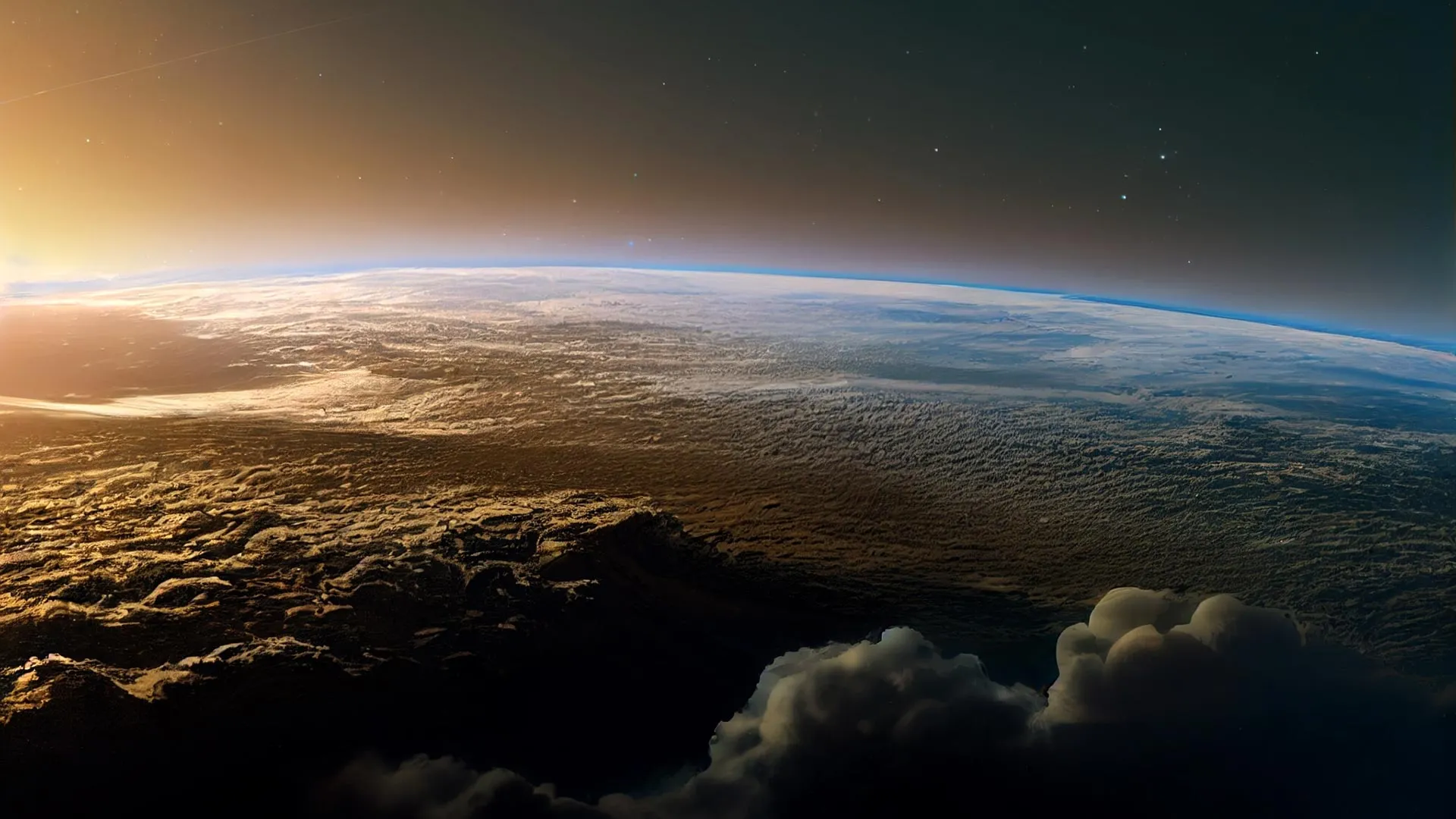
Earth’s ancient sky may have played a larger role in the beginnings of life than scientists once believed.
According to a study published Dec. 1 in the Proceedings of the National Academy of Sciences, researchers from CU Boulder and their collaborators report that billions of years ago, the young planet’s atmosphere may have been generating sulfur-based molecules that are known today as important components for life.
This discovery challenges the long-standing idea that these sulfur molecules formed only after life had already taken hold on Earth.
“Our study could help us understand the evolution of life at its earliest stages,” said first author Nate Reed, a postdoctoral fellow at NASA who conducted the research while working in the Department of Chemistry and the Cooperative Institute for Research in Environmental Sciences (CIRES) at CU Boulder.
Sulfur’s Importance and Why the Findings Matter
Sulfur, much like carbon, is a vital element found in every form of life, from bacteria to humans. It appears in certain amino acids, which serve as the basic building blocks of proteins.
Although sulfur was present in the early atmosphere, most scientists believed that organic sulfur molecules, such as amino acids, arose only after living organisms were already present and producing them.
Earlier attempts to simulate early Earth conditions often failed to generate meaningful amounts of sulfur biomolecules before life existed. When these molecules did appear, they formed only under unusual or highly specific conditions that were unlikely to have been common across the planet.
Because of this background, the scientific community reacted strongly when the James Webb Space Telescope detected dimethyl sulfide, a sulfur compound produced by marine algae on present-day Earth, in the atmosphere of an exoplanet called K2-18b. Many considered it a possible sign of life.
New Experiments Reveal Atmospheric Chemistry at Work
However, previous work by Reed and senior author Ellie Browne, a chemistry professor and CIRES fellow, showed that dimethyl sulfide could form naturally in the lab using only light and simple atmospheric gases. This indicated that the molecule might appear even on worlds without life.
In their latest experiment, Browne, Reed, and their team tested what Earth’s early sky might have been capable of producing. They illuminated a mixture of methane, carbon dioxide, hydrogen sulfide, and nitrogen to recreate atmospheric conditions from before life emerged.
Working with sulfur is challenging, Browne noted. The element sticks to laboratory equipment, and in the atmosphere, sulfur-based molecules are present at extremely low levels compared to CO2 and nitrogen. “You have to have equipment that can measure incredibly tiny quantities of the products,” she said.
Using a very sensitive mass spectrometer to identify and measure chemical compounds, the researchers discovered that their early Earth simulation produced a wide range of sulfur biomolecules. These included the amino acids cysteine and taurine, along with coenzyme M, which plays a key role in metabolism.
A Sky Capable of Supporting a Growing Ecosystem
The team then estimated how much cysteine an entire ancient atmosphere might generate. Their calculations suggested that early Earth’s sky could have produced enough cysteine to support about one octillion (one followed by 27 zeros) cells. By comparison, modern Earth contains roughly one nonillion (one followed by 30 zeros) cells.
“While it’s not as many as what’s present now, that was still a lot of cysteine in an environment without life. It might be enough for a budding global ecosystem, where life is just getting started,” Reed said.
The researchers propose that these atmospheric biomolecules may have fallen to the surface through rainfall, potentially delivering the chemistry needed to help life begin.
“Life probably required some very specialized conditions to get started, like near volcanoes or hydrothermal vents with complex chemistry,” Browne said. “We used to think life had to start completely from scratch, but our results suggest some of these more complex molecules were already widespread under non-specialized conditions, which might have made it a little easier for life to get going.”
BBC analysis shows cost to taxpayer is 50% higher than thought, with inquiry’s own costs at £192m.
While there are plenty of parents who are probably too maxxed out to be adding Elf On The Shelf to their daily routine (hi, hello, I am sadly one of them), the annual tradition remains hugely popular among families in the UK and across the pond.
In fact, just over one-third of parents (who have kids aged 10 and under) are thought to be taking part.
Advertisement
Whether you’re a seasoned veteran or are taking it up for the first time this year, here’s a quick recap of what it entails, as well as some inspiration for later in the week when you start to run out of steam…
Like many new events and traditions here in the UK (ahem, Black Friday), Elf on the Shelf originated in the US, as the story of an elf sent by Santa to watch over kids at Christmas time.
Carol Aebersold and her daughter Chanda Bell came up with the storybook in 2004. “We grew up with this tradition in our home,” Bell previously told HuffPost UK. “When we were children, our Scout Elf, Fisbee, would come to our home and look over our family each year. I have such wonderful childhood memories with Fisbee.”
Advertisement
After it was rejected by publishers, the pair decided to self-publish the book in 2005 and packaged it up with an elf toy. This way, parents could make the elf pop up at different places around the house (as he did in the book), reminding kids he was on the move, keeping an eye out for Santa.
Aabersold and Bell sold the books from the backs of cars and reached out to family and friends they thought might want to adopt the tradition. Then in 2007, a picture was taken of Jennifer Garner walking down the street holding her own Elf on the Shelf box set. The photo went viral and everyone wanted to know more. By 2008, Elf on the Shelf was in major retail stores.
In short, elves are “adopted” by families and named. On 1 December, they then pop up somewhere around the house – perhaps with a note saying hi to the kids.
Advertisement
Once children are in bed, parents then place the elf (or elves) in different locations around the house so they are somewhere new when they wake up each morning.
The elf then says goodbye on Christmas Eve.
OK, so we’ve established how it all works. Now, here’s some festive inspiration for when you run out of steam and have no idea where to put your elves…

Zoe Griffin / Elf On The Shelf
Advertisement

Zoe Griffin / Elf On The Shelf

Zoe Griffin / Elf On The Shelf

Zoe Griffin / Elf On The Shelf
Advertisement

Zoe Griffin / Elf On The Shelf
Advertisement






Sabrina Carpenter has hit out at US president Donald Trump’s administration after the White House used her song to soundtrack a video she has described as “evil and disgusting”.
Responding on the same platform on Tuesday afternoon, the Grammy winner wrote: “This video is evil and disgusting. Do not ever involve me or my music to benefit your inhumane agenda.”
“This post honestly makes me sick,” she responded. “My music is about love, unity, and spreading positivity – never about division or hate.”




Even though I have insomnia, I didn’t recognise that I had a problem for years.
That’s because I thought the condition only meant struggling to fall asleep. But I have sleep maintenance insomnia, which means I wake up in the middle of the night and then struggle to return to the land of nod.
I heard the phrase for the first time last year. But I only read the words “hormonal insomnia” this week.
Advertisement
Speaking to HuffPost UK, Dr Giuseppe Aragona, GP and medical adviser for Prescription Doctor, explained that those with the condition “often have trouble falling asleep initially, wake during the night and struggle to return to sleep, or wake too early in the morning”.
But what does the term mean, why does it happen, and what can you do if you have it?
The term “refers to difficulty sleeping that arises as a result of changes or imbalances in the body’s hormone levels,” Dr Aragona explained.
“Several hormones play a key role in regulating sleep, including melatonin, which signals to the brain that it is time to sleep, and cortisol, which promotes alertness and can interfere with sleep if elevated at night.”
Advertisement
Reproductive hormones, like oestrogen and progesterone, can also lead to the condition because they, too, affect our sleep patterns.
So perhaps it’s not surprising that the GP said: “Hormonal insomnia is most commonly observed during life stages when hormone levels are changing significantly, such as during the menstrual cycle, pregnancy, perimenopause, or menopause, and may also occur in thyroid disorders or other endocrine conditions.
“These hormonal shifts can disrupt the body’s temperature regulation, circadian rhythm, and mood, all of which contribute to sleep disturbance.”
Advertisement
They’re quite like those of “regular” insomnia, Dr Aragona said.
“People experiencing hormonal insomnia often have trouble falling asleep initially, wake during the night and struggle to return to sleep, or wake too early in the morning.
“Sleep may feel fragmented and of poor quality, leading to daytime fatigue, irritability, poor concentration, and low mood.”
Advertisement
If your hormonal insomnia is linked to hormonal changes like menopause, you might notice other symptoms keeping you awake, like hot flushes and night sweats.
If a GP were to check for hormonal, rather than general, insomnia, the doctor tolf HuffPost UK, they “would typically explore a person’s life stage, hormonal history, and the timing and pattern of symptoms.
“It is also important to consider associated symptoms such as mood changes, night sweats, or bladder issues, and to rule out other causes of insomnia such as stress, poor sleep hygiene, sleep apnoea, or pain.”
Advertisement
Blood tests can help to rule out thyroid issues or hormonal imbalances, too.
Dr Aragona recommends a blend of different strategies.
“Maintaining a consistent sleep routine, avoiding stimulants and screens in the evening, and keeping the bedroom cool, dark, and quiet can help,” he advised, while “Relaxation techniques such as mindfulness or breathing exercises can reduce stress and cortisol levels, making it easier to fall asleep.
“Addressing underlying hormonal symptoms, for example, through lifestyle strategies or, where appropriate, medical treatments for menopause-related symptoms, may also improve sleep.”
If your insomnia lasts for a long time ― some doctors put it at more than three nights a week, for three months or longer ― see a GP, said the expert.
Advertisement
Lastly, “General health measures, including regular exercise, a balanced diet, and avoiding excessive alcohol or nicotine, also support better sleep,” said Dr Aragona.
“Hormonal insomnia is usually multifactorial, so addressing lifestyle, behavioural, and medical factors together tends to be the most effective approach.”

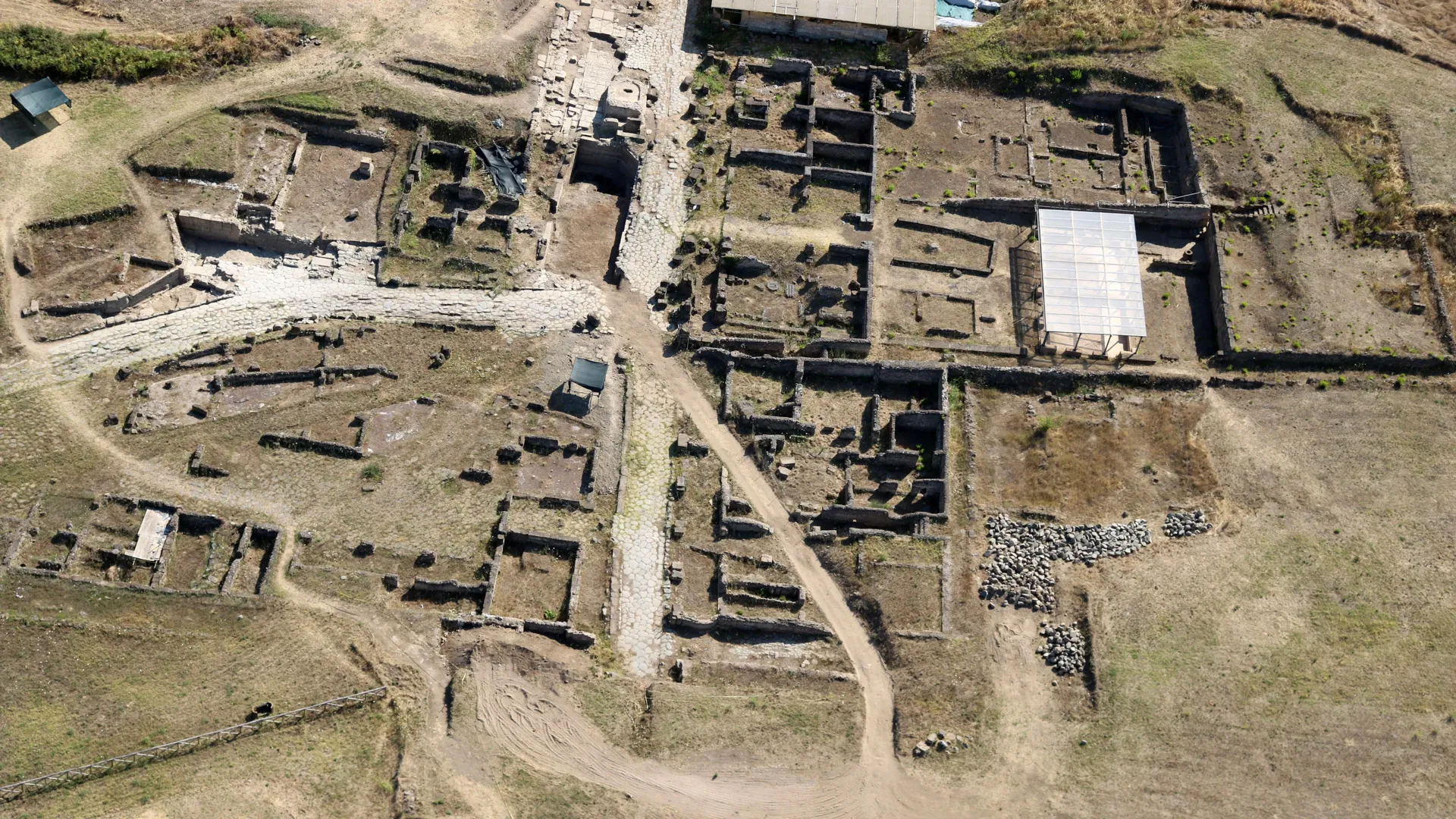
In the center of the ancient Roman city of Gabii, located about 11 miles east of modern Rome, a research team led by University of Missouri professor Marcello Mogetta has uncovered an extraordinary find: a huge stone-lined basin with portions cut directly into the natural bedrock.
Dating to around 250 B.C., and possibly earlier in some sections, the structure is believed to be one of the earliest known examples of large-scale Roman architecture outside of temples and defensive walls.
Mogetta, who chairs Mizzou’s Department of Classics, Archaeology and Religion, explained that monumental construction served purposes beyond practical use. He noted that it also functioned as a strong form of political messaging.
“This discovery gives us a rare look at how the early Romans experimented with city planning,” he said. “Its location — at the center of the city near the main crossroads — suggests it may have been a monumental pool that was part of the city’s forum, or the heart of public life in Roman towns. Since archaeologists still don’t fully know what the early Roman Forum truly looked like, Gabii provides an invaluable window into its development.”
Connections to Earlier Excavations and Greek Influence
This new basin builds on the team’s previous findings at Gabii. One earlier feature, known as the “Area F Building,” is a terraced complex carved into the slope of the ancient volcanic crater around which the settlement formed.
Taken together, these discoveries indicate that early Roman builders drew significant inspiration from Greek architectural traditions. Greek cities featured paved civic spaces, dramatic terraces and grand gathering areas that communicated both cultural prestige and political power. Early Romans appear to have adapted many of these ideas for their own urban centers.
Why Gabii Matters for Understanding Early Rome
Gabii occupies a unique place in the study of Roman history. Mogetta explained that “while Rome’s earliest layers were buried beneath centuries of later construction, Gabii — a once-powerful neighbor and rival of Rome, first settled in the Early Iron Age — was largely abandoned by 50 B.C. and later reoccupied on a much smaller scale.” Because of this, he said, the ancient city’s original layout and building foundations remain unusually intact, offering a clear view of early Roman urban life.
Italy’s Ministry of Culture has designated the area as an archaeological park, now managed as part of the Musei e Parchi Archeologici di Praeneste e Gabii. This status has allowed teams of researchers, including the international Gabii Project, to systematically excavate and study the site. Mogetta became the director of this research group last year.
Next Steps in Excavation and Investigation
Supported by the General Directorate of Museums in Italy, the Gabii Project plans to continue excavating the basin and the surrounding stone-paved zone next summer. Researchers also intend to study a nearby “anomaly” detected through thermal imaging. Early indications suggest it could be a temple or another large civic structure.
“If it’s a temple, it could help us explain some of the artifacts we’ve already found in the abandonment levels of the basin, such as intact vessels, lamps, perfume containers and cups inscribed with unusual markings,” Mogetta said. “Some of these objects may have been deliberately placed there as religious offerings or discarded in connection with the ritual closing of the pool around 50 C.E. — thus underscoring the crucial role played by water management in ancient cities.”
The continuation of the Gabii Project aims to protect the site’s heritage while allowing scholars and visitors to better understand its history.
Unanswered Questions About Early Roman Society
One major question researchers hope to address is whether civic areas were developed before religious buildings, or the other way around. The answer could shed light on whether political activities or spiritual practices held greater influence in shaping the earliest Roman monumental landscapes.
By gathering evidence from the basin and surrounding structures, Mogetta and his team aim to reconstruct the full story of Gabii, from its growth and height of power to its later decline. Their work also contributes to a broader understanding of early Roman architecture and how it helped shape the urban world that followed.

White dwarfs are the dense remnants left behind after a star stops producing energy through nuclear fusion, a stage our own sun will reach far in the future. These stellar remnants behave in unusual ways, since their internal structure makes them shrink as they gain mass, which is why they are known as degenerate stars.
White dwarfs frequently exist in binary systems, where two stars orbit each other. Most of these pairs are extremely old on galactic timescales and have cooled to temperatures near 4,000 degrees Kelvin. Recent observations, however, have uncovered a group of short period binaries in which the stars complete an orbit in less than an hour. These fast moving pairs do not match established predictions, since many appear to be roughly twice the expected size and have temperatures between 10,000 and 30,000 degrees Kelvin.
Investigating the Role of Tidal Heating
This unexpected behavior led a research team headed by Lucy Olivia McNeill of Kyoto University to examine the influence of tidal forces in these systems. Tides frequently distort objects that share close orbits, affecting how those orbits evolve over time.
“Tidal heating has had some success in explaining temperatures of Hot Jupiters and their orbital properties with their host stars. So we wondered: to what extent can tidal heating explain the temperatures of white dwarfs in short period binaries?” asks McNeill.
To explore this question, the researchers developed a theoretical model designed to estimate how much white dwarfs heat up in short period binaries. The model was built to be widely applicable, making it possible to estimate both the temperature history and the future orbital changes of white dwarfs in these systems.
Tidal Forces Reshape White Dwarf Evolution
The team’s analysis showed that tidal interactions can play a major role in how these stars evolve. In particular, the gravitational pull from a smaller white dwarf can raise internal heat within a larger but less massive companion. This added heat causes the star to expand and pushes its surface temperature to at least 10,000 degrees Kelvin.
Because of this expansion, the researchers propose that white dwarfs are likely to be twice the size predicted by standard theory at the point where they begin exchanging material, a stage known as mass transfer. As a result, these short period pairs may start interacting at orbital periods that are three times longer than scientists previously believed.
“We expected tidal heating would increase the temperatures of these white dwarfs, but we were surprised to see how much the orbital period reduces for the oldest white dwarfs when their Roche lobes come into contact,” says McNeill.
Implications for Stellar Explosions and Future Research
White dwarfs in extremely tight orbits will eventually interact and emit gravitational radiation. Systems of this kind are considered possible origins of type Ia supernovae and cataclysmic variables, two dramatic and scientifically important cosmic events.
Looking ahead, the team aims to apply their model to binary systems made of carbon-oxygen white dwarfs. Their goal is to better understand the potential pathways leading to type Ia explosions, especially whether realistic temperature predictions support the double degenerate (merger) scenario.

Around 12,000 years ago, the last Ice Age drew to a close. Global temperatures rose, the early Holocene began, and human communities gradually shifted toward more permanent settlements. A new study published in Nature Geoscience highlights how the Southern Ocean around Antarctica helped drive this major climate transition.
The research team, led by Dr. Huang Huang of the Laoshan Laboratory in Qingdao and including geochemist Dr. Marcus Gutjahr from GEOMAR, set out to reconstruct how far Antarctic Bottom Water (AABW) extended through the Southern Ocean over the past 32,000 years.
“We wanted to understand how the influence of Antarctic Bottom Water, the coldest and densest water mass in the global ocean, changed during the last deglaciation, and what role it played in the global carbon cycle,” says Huang, who completed his PhD at GEOMAR in 2019 and now works as a scientist in Qingdao, China.
Sediment cores and chemical fingerprints in the deep sea
To tackle this question, the scientists examined nine sediment cores collected from the Atlantic and Indian sectors of the Southern Ocean. The cores came from water depths between about 2,200 and 5,000 meters and from locations spread widely across the region. By analyzing the isotopic composition of the trace metal neodymium preserved in the sediments, which reflects the chemistry of the surrounding seawater, they could reconstruct how Antarctic Bottom Water changed through time on the scale of tens of thousands of years.
“Dissolved neodymium and its isotopic fingerprint in seawater are excellent indicators of the origin of deep-water masses,” explains Dr. Marcus Gutjahr. “In earlier studies, we noticed that the neodymium signature in the deep South Atlantic only reached its modern composition around 12,000 years ago. However, sediments from the last Ice Age showed values that are not found anywhere in the Southern Ocean today. Initially, we thought the method was flawed or that there was something wrong with the sediment core. But the real question was: What could generate such a signal? Such an exotic isotopic signature can only develop when deep water remains almost motionless for extended periods. In such circumstances, benthic fluxes — chemical inputs from the seafloor — dominate the isotopic imprint in marine sediments.”
Stagnant deep waters, carbon storage and the last Ice Age
During the last Ice Age, the cold and very dense deep water that currently forms around Antarctica did not spread as widely as it does today. Instead, much of the deep Southern Ocean was filled with carbon-rich waters that originated in the Pacific, a glacial precursor to today’s Circumpolar Deep Water (CDW). In the study, CDW is described as carbon-rich because it circulates in the deep ocean for long periods with limited contact with the surface. This isolation allowed large amounts of dissolved carbon to remain locked in the deep ocean, helping to keep atmospheric CO2 levels relatively low.
As Earth warmed and ice sheets retreated between roughly 18,000 and 10,000 years ago, the volume of Antarctic Bottom Water increased in two clear phases. These expansion phases occurred at the same time as known warming events in Antarctica. With more vertical mixing in the Southern Ocean, deep waters that had stored carbon for long periods were brought closer to the surface, allowing that carbon to escape into the atmosphere.
“The expansion of the AABW is linked to several processes,” explains Gutjahr. “Warming around Antarctica reduced sea-ice cover, resulting in more meltwater entering the Southern Ocean. The Antarctic Bottom Water formed during this transitional climate period had a lower density due to reduced salinity. This late-glacial AABW was able to spread further through the Southern Ocean, destabilizing the existing water-mass structure and enhancing exchanges between deep and surface waters.”
Previously, many scientists assumed that changes in the North Atlantic, particularly the formation of North Atlantic Deep Water (NADW), were the main drivers of shifts in deep-water circulation in the South Atlantic. The new results suggest that this northern influence was more restricted than earlier thought. Instead, the replacement of a glacial, carbon-rich deep-water mass by newly formed Antarctic Bottom Water appears to have been crucial for the rise in atmospheric CO2 toward the end of the last Ice Age.
Southern Ocean heat, Antarctic ice loss and today’s climate
“Comparisons with the past are always imperfect,” says Gutjahr, “but ultimately it comes down to how much energy is in the system. If we understand how the ocean responded to warming in the past, we can better grasp what is happening today as Antarctic ice shelves continue to melt.”
Because of its vast size and unique circulation, the Southern Ocean plays a major role in controlling the global climate. Over the past 50 years, waters deeper than about 1,000 meters around Antarctica have warmed significantly faster than much of the rest of the world’s oceans. To work out how this rapid deep-ocean warming affects the ability of the ocean to absorb and release carbon dioxide, scientists must track physical and biogeochemical changes over long timescales and incorporate them into climate models.
“I want to properly understand the modern ocean in order to interpret signals from the past,” Gutjahr says. “If we can trace how Antarctic Bottom Water has changed over the last few thousand years, we can assess more accurately how rapidly the Antarctic Ice Sheet may continue to lose mass in the future.”
Paleoclimate data obtained from sediment cores are indispensable for this, offering insights into past climates that were warmer than today and helping to improve projections of future climate change.
