The 1 Thing More People Wish They Knew About Before Giving Birth

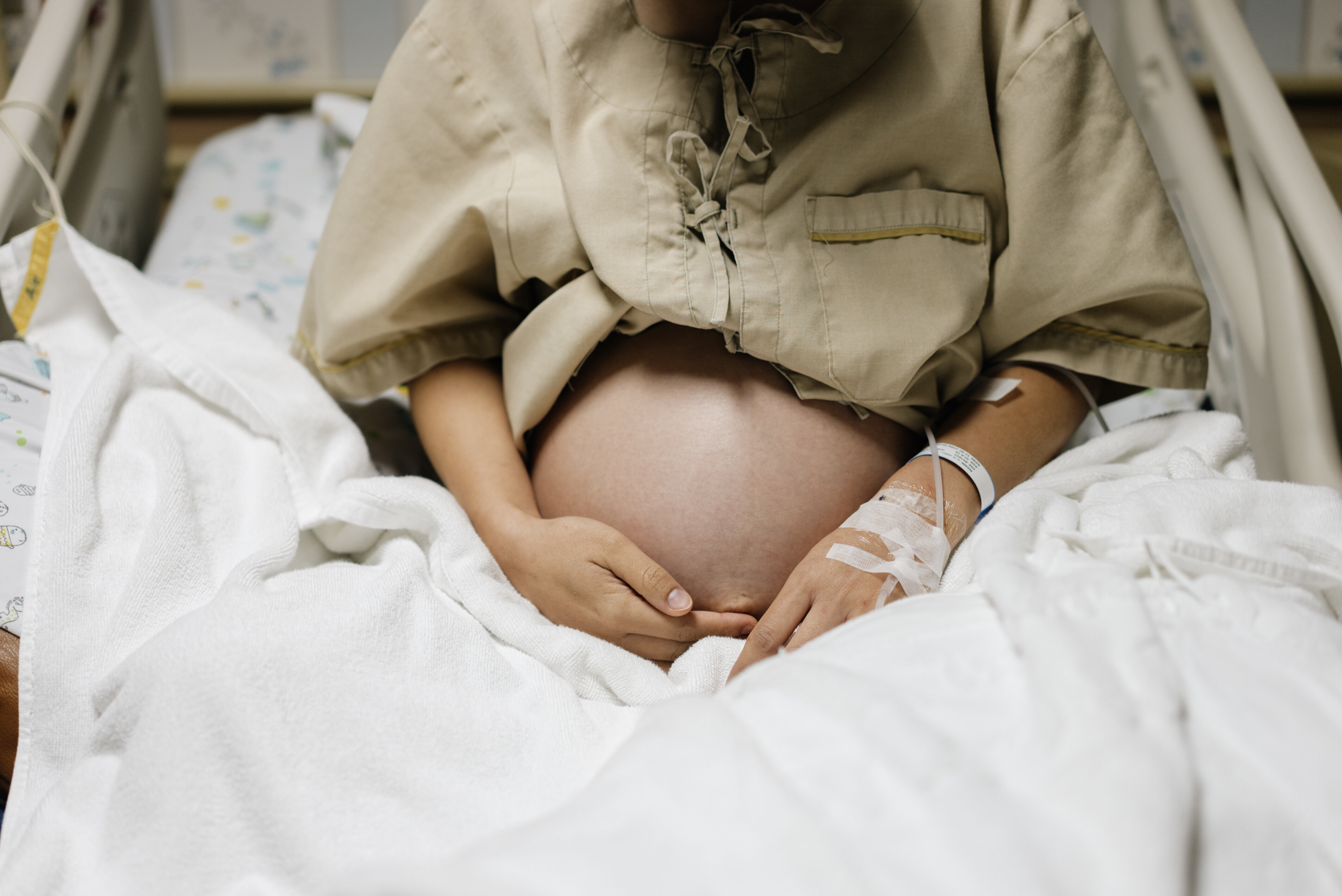
When it comes to birth, we tend to focus on the prize. Having a child emerge from your body is, obviously, the main event. It’s followed by delivering the placenta, sometimes referred to as the “afterbirth.” Luckily, this part is usually pretty quick and painless — you may barely register that it’s even happening.

But in the hours and days that follow, your body will experience another minor milestone: the first postpartum poop. If you’re lucky, this will also be fast and forgotten as soon as you flush. However, given what your body has been through, the buildup to this event can be anxiety-inducing.

Here’s what you need to know, as well as some tips to ease discomfort.

How this poop is different

There are a number of factors that may make this particular trip to the bathroom feel more significant.

First, you may not have had a bowel movement in a while. “If you had a long induction or a long labor, and you haven’t eaten in a long time, you probably don’t have a lot that needs to come out. It may take several days,” Dr. Andrea Braden, an OB-GYN who practices in Georgia, told HuffPost.

Constipation may also be a side effect of pain medications, fluctuating hormones, or simply your own hesitation.

If you’ve had a cesarean section or an assisted delivery (via vacuum or forceps), or you’ve had a tear or episiotomy repaired with stitches, you may be in pain from that, and understandably reluctant to do anything that might aggravate your discomfort. But holding in your stool can make things worse.

“Some people will actually try to hold it in and not have a bowel movement, which causes constipation,” Braden said.

Haemorrhoids, which are common during this time, can also cause pain when you go to the bathroom.

While this is all uncomfortable, it isn’t unexpected.

“In my 26 years of experience, at least 90% of my clients have had trouble using the restroom after birth,” Kali King, a doula in Virginia, told HuffPost.

Tips for a smooth move

Stool softeners or laxatives can help you get that first bowel movement out without straining, which you’ll want to avoid if you ended up with stitches after your delivery.

“The goal would be to not push when you have a bowel movement,” Braden said. “You want it to come out very easily, because the pushing can cause a lot more pain and pressure on the incision sites, no matter where the incision is.”

King recommended light exercise or abdominal massage, as well as a squat position to help get things moving more easily.

Lori Bregman, a doula in Los Angeles, noted that staying hydrated is another way to prevent constipation. If you’re looking for something other than water, she recommends coconut water, bone broth and electrolyte drinks (like sports drinks). Fibre-rich foods like fruits and vegetables help, too.

A tablespoon of coconut oil can act as a natural stool softener, Bregman said, and a foot stool such as a Squatty Potty can help you get into a comfortable position while you’re on the toilet.

You’ll also be given a peri-bottle, a little plastic bottle that you can use to squirt water on your nether regions to clean yourself after going to the bathroom. This is much more comfortable than dry toilet paper, particularly if you had stitches in that area.

Haemorrhoid help

Haemorrhoids are “swollen blood vessels in the rectal area that develop from the pressure [of] your growing uterus and increased blood flow. They can be itchy and painful,” Bregman said.

Unfortunately, if you have them at the end of a pregnancy, delivery can exacerbate the problem. “They are extremely common during pregnancy and can get a lot worse especially if you pushed for a long time,” Braden explained.

Studies show that about 40% of people who give birth suffer from hemorrhoids before, during or following delivery. Pushing for longer than 20 minutes is associated with haemorrhoids, as are assisted deliveries (forceps or vacuum). Your provider may mention that you have them when they examine you after delivery, and you can also ask them directly.

The good news is that haemorrhoids “usually resolve on their own,” King said.

There are many things you can do to reduce the discomfort of hemorrhoids. Bregman recommends:

  • chilled or frozen witch hazel pads with drops of vitamin E oil
  • frozen leaf of an aloe vera plant
  • sitting on a donut pillow
  • using a footstool while on the toilet
  • sitz baths
  • ice
  • comfrey root ointment
  • acupuncture

When to call the doctor

Hemorrhoids can cause bleeding in the rectal area, but if you don’t have them, or you’re uncertain, bloody stool is definitely something to report to your health care provider.

As far as constipation, it’s probably time to call the doctor “if you haven’t had a bowel movement in a week and you’re feeling quite constipated,” Braden said.

Other symptoms that you’d want to report to your provider include “pain, swelling not going away, infection, weird smell, lots of bleeding and an intuitive feeling that something doesn’t feel right — always trust and follow that,” Bregman said.

King recommends that you not allow your provider “to downplay your symptoms.” If you feel that this is happening, you can look for a second opinion.

Share Button

Easy Recipes To Cook With Kids: Sticky Chicken And Fruity Loaf Cake

Getting children involved in the kitchen is something mother and author Annabel Karmel is incredibly passionate about.

So it’s perhaps no surprise then that her latest (and 50th) recipe book My First Cookbook is jam-packed with simple yet nutritious recipes that adults and kids can both get involved with making.

As busy working parents it can be hard to find the time and creativity, not to mention ingredients, to devise nutritious home-cooked meals, which is where My First Cookbook can help.

Expect fun lunchbox ideas such as Caterpillar Sandwiches, big batch meals like Teddy Bear Pasta and seasonal specials like Monster Pizzas and Gingerbread Men.

The book helps children learn essential hands-on kitchen skills – from simple sandwich making all the way to cake baking.

If you’re stuck for mealtime inspiration this weekend – and have a bit of time to spare to get your kids involved in the kitchen – we’ve got two of her brand new recipes to share.

Sticky chicken with sweet potato fries

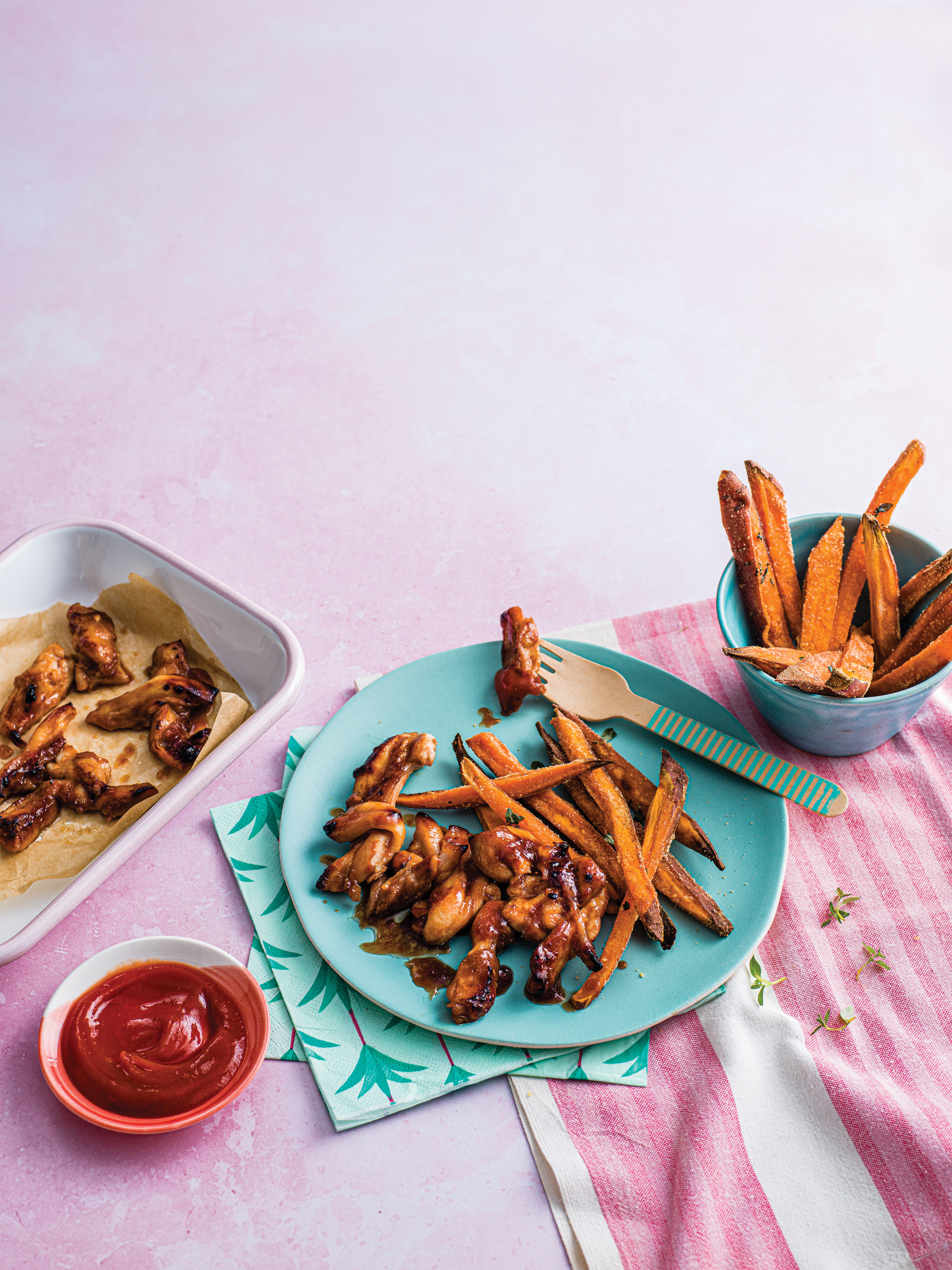
Nobody can resist this sweet, sticky chicken, especially with healthy baked fries.

Serves 4 | Prep time 40 mins | Cooking time 25 mins

You’ll need: baking tray, baking paper

Sticky chicken with sweet potato fries

Hachette / Annabel Karmel

Sticky chicken with sweet potato fries

Ingredients

  • 3 tablespoons ketchup
  • 3 tablespoons soy sauce
  • 2 tablespoons honey
  • 2 cloves of garlic, crushed
  • 500g (18oz) boneless chicken thighs, sliced into strips
  • 3 medium sweet potatoes, scrubbed
  • 2 tablespoons sunflower oil
  • 1 teaspoon chopped thyme
  • 3 tablespoons semolina

Method

Put the chicken into a medium mixing bowl. Add the ketchup, soy, honey and garlic, and mix together to coat the chicken. Leave for 30 minutes, then arrange on a baking tray lined with baking paper.

Preheat the oven to 200°C (400°F) Fan. Slice the sweet potatoes into thin chip shapes. Place on a baking sheet lined with baking paper. Add the oil and thyme. Season with salt and pepper, and coat with semolina to make them crispy. Mix everything up with your hands. Spread out on the baking sheet in a single layer.

Put both baking sheets into the oven. Cook for about 25 minutes, until the chicken is cooked and golden brown and the fries are lightly golden and cooked through.

Banana and blueberry loaf cake

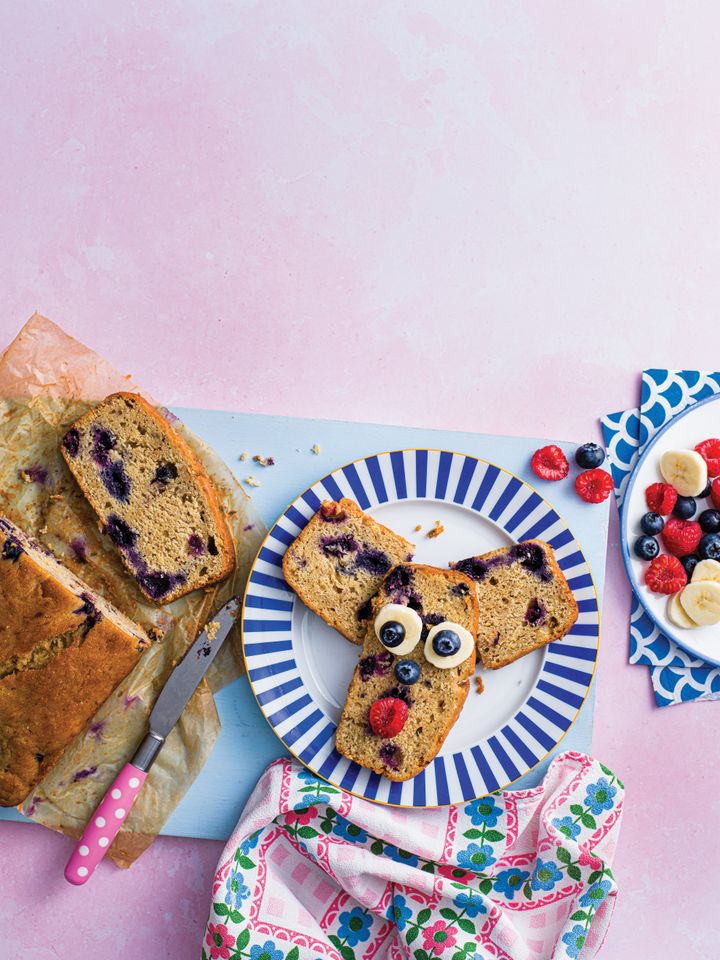
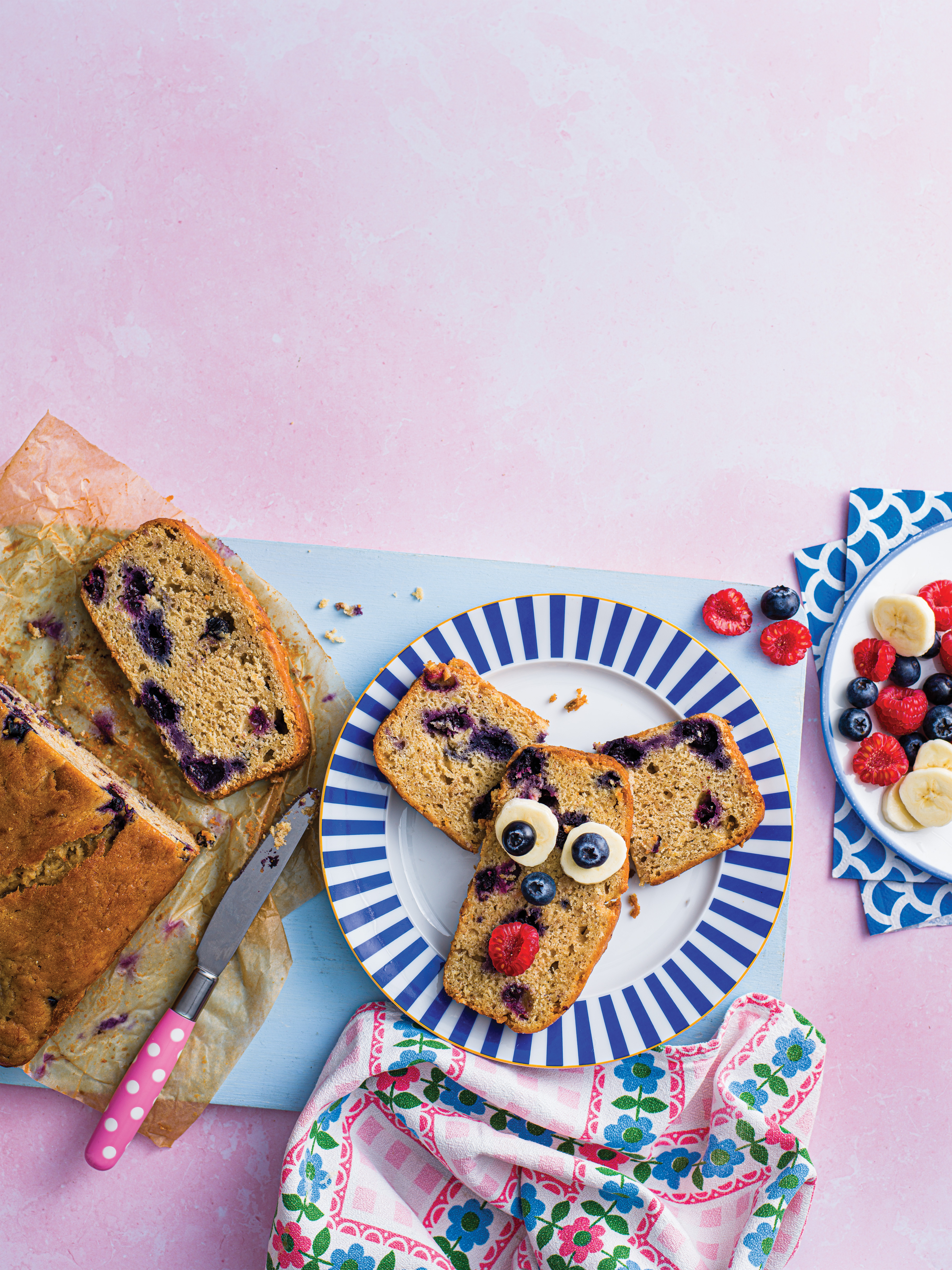
Slice up this fruit-filled loaf to make a delicious doggy face.

Serves 8 | Prep time 20 mins | Cooking time 60 mins

You’ll need: 900g (32oz) loaf tin, baking paper

Banana and blueberry loaf cake

Hachette / Annabel Karmel

Banana and blueberry loaf cake

Ingredients

  • 150g (2/3 cup) butter, softened
  • 125g (3/4 cup) light brown sugar
  • 2 eggs
  • 1 teaspoon vanilla extract
  • 200g (7oz) overripe bananas, mashed, plus extra slices
  • 225g (2 cups) self-raising flour
  • 1 teaspoon mixed spice
  • 100g (3.5oz) blueberries

To decorate

  • banana
  • a few blueberries
  • a few raspberries

Method

Preheat the oven to 160°C (325°F) Fan. Grease and line a loaf tin with non-stick paper.

Whisk the butter and sugar together in a mixing bowl until fluffy. Add the eggs, vanilla, bananas, flour and mixed spice. Whisk together using an electric hand whisk.

Fold in the blueberries and spoon into the loaf tin. Bake in the oven for 50 mins-1 hour until well risen and lightly golden.

Slice into slices and arrange on a plate to look like a dog’s face and ears. Add banana slices and blueberries for the eyes and nose, and a raspberry for the tongue.

My First Cookbook by Annabel Karmel is available to buy now for £12.99.

Share Button

11 Behind-The-Scenes Secrets You Didn’t Know About Love Is Blind

Little did we know when Love Is Blind first landed on our screens back in February 2020, that its concept of finding romance while in isolation would foreshadow the virtual dating trend that came about during lockdown.

Fast-forward three years, and the Netflix reality show is now one of the most popular dating formats on TV, with its fifth season having just launched on the streaming platform.

As we celebrate its return – and look forward the forthcoming UK version that is currently in the works – here are 11 well-kept secrets that might come as a surprise to even the biggest Love Is Blind fans…

Who pays for those engagement rings?

Chris Coelen – who created and produced Love Is Blind – told Variety that when it comes to rings, male contestants are given a choice of “10 or 12 different styles and colours”.

When Jackie from season four decided to keep her ring, despite breaking off her engagement with Marshall, she wrote on her Instagram: “As for the ring, Marshall did not pay for the ring, Love Is Blind paid for all the rings.”

However, other contestants brought rings to the pods with them that were passed down from their families, such as season two’s Kyle, who gave Shaina his mother’s engagement ring.

Season four's Brett poses with his engagement ring
Season four’s Brett poses with his engagement ring

SCOTT GREEN/NETFLIX

How far in advance is the show filmed?

There is a lengthy period between when the show is filmed and when it airs.

For example, speaking on his YouTube channel about the show, Cameron from season one said viewers regularly came up to his parents asking “Are you worried that Lauren is going to say no [to his proposal]?”

He added: “But they were already at the wedding a year and a half ago when it was filmed.”

Do all the couples make it on TV?

No, they do not.

During season one, the production team was shocked by the amount of engagements that occurred, and had to scale back due to budget and time restraints. Unfortunately, this meant two couples who got engaged in the pods didn’t make it on TV (although it’s worth pointing out that neither of them are together now).

The same thing happened when the second season saw two couples getting together, only for their stories not to make it onto the screen. In this case, both couples split before making it to the altar.

How are people cast for Love Is Blind?

Lexie from season one told Cosmopolitan: “I was contacted on Instagram about this new Netflix show, and it came at a time when I was just really fed up of dating.”

Meanwhile, Cameron from the same season, said: “Lauren and I did not apply for casting. Casting from Kinetic [Content] reached out to us for the show. For me, I got text messages.”

The stars of Love Is Blind season one

Is the show scripted?

Producer Chris Coelen has insisted the show is not scripted. In an interview with Entertainment Weekly, he said: “As a producer, I was kind of nervous, like, is anybody actually gonna get engaged? Is anyone going to make it to the altar?”

Adding to this, season one’s Cameron said most of the conversations held on the show were spontaneous and organic, and that there were no scripts involved.

The only artificial thing he saw was when a producer held an iPad in the background urging him to ask a fellow contestant how his date went.

“I don’t see that as a big deal, that’s a question I would have asked anyways,” Cameron added.

The boys debrief during season one of Love Is Blind

Are contestants banned from posting their relationship status online until the show is completely aired?

While the contestants are on the show, they are not allowed phone or computer access. After filming is wrapped, they all seem to keep their relationship status private online until the show is completely aired.

Chris told the LA Times that there isn’t a mandate in place prohibiting them from posting their relationship update or singleton status. However, they are suggested to hold off from sharing clues.

“People are going to do what they’re going to do. But I think generally people buy into the idea that this is something that they do not want to spoil for the audience,” he said.

Are the pods soundproof?

In order to have private and romantic conversations, the pods are soundproof, and only the contestants on the dates can hear what is being said.

“Even if you’re yelling in one pod, you can’t hear it in another,” Chris told Netflix Tudum. He added, “They’re also each fitted with a glass roof and are tall enough — about 40 feet high — that contestants can look up and daydream.”

The Love Is Blind pods are completely soundproof, and fitted with glass ceilings

Are the weddings legally binding?

The weddings on Love is Blind are real so if they break up they would have to get a divorce. Chris told Bustle, “If they choose to get married, yes, it’s a legally binding marriage.”

Bliss and Zach on their Love Is Blind wedding day

SCOTT GREEN/NETFLIX

How long are the contestants actually in the pods for?

The contestants only have 10 days to find their future partner in the pods. Usually, these dates last around 15 minutes at a time.

However, when sparks do start flying, they can range from around three to four hours, like they did for Cameron and Lauren. Typically the contestants go around 20 dates during their time in the pods.

Speaking with Netflix Tudum, Chris describes the period as “10 days of 24/7 intensive therapy”.

“They’re trying to identify every single thing that might be important to talk about before they choose to marry someone,” he added.

The pods are the most iconic part of any season of Love Is Blind

How long does it typically take them to get engaged?

Season one’s Cameron said he proposed to future wife Lauren in just nine days. However, he noted that Netflix made it seem like only four days.

After couples are engaged, they then have 28 days to decide whether they want to tie the knot. Within this period, the lovebirds will go on a couples retreat, after which they are returned to the real world to see how they fit into each other’s lives.

Cameron pops the question during season one of Love Is Blind

Which couples are still together?

From season one, Lauren and Cameron are still going strong, as are Amber and Barnett. When it comes to season two, all couples parted ways in the end.

From season three, Alexa and Brennon are still coupled up, and so are Colleen and Matt. From season four, the most recent season, three couples are still married – Bliss and Zac, Kwame and Chelsea and Brett and Tiffany.

The first four episodes of Love Is Blind season five are available to watch on Netflix now.

Share Button

Long Covid: MRI scans reveal new clues to symptoms

Further evidence emerges that a serious infection can leave some major organs with long-term damage.

Share Button

Fruit flies offer clues to how brains make reward-based decisions

Like many collectors of L.P. records, James Fitzgerald’s brother-in-law has a favorite store where he consistently finds the best vinyl for his collection. But there are times when he spends hours at the store and comes up empty. He also knows that occasionally he should venture to the record store on the other side of town, where he sometimes scores a hard-to-find gem that was stocked since his last visit.

Fitzgerald’s brother-in-law is making a calculation: weighing probable outcomes to guide his behavior. His favorite record store rewards him more frequently, so he visits that store the most. The second-tier store is less likely to reward him, so he visits that store only occasionally.

Glenn Turner, who like Fitzgerald is a neuroscientist and group leader at HHMI’s Janelia Research Campus, says this “record foraging” habit is a perfect example of a type of behavior called matching that is pervasive in the animal kingdom. Instead of vinyl, non-hipster animals like mice and flies forage for food, using sensory cues like odors to evaluate food quality from a distance.

But, while matching has been observed in everything from pigeons to mice to humans, it was unclear how the brain carried out this value-based decision-making. Researchers had previously proposed a theory for how that might happen, but the idea hadn’t been tested in the real world.

Now, a team of Janelia researchers that includes Fitzgerald, Turner, Janelia Graduate Scholar Adithya Rajagopalan, former Janelia Fellow Ran Darshan and Research Specialist Karen Hibbard has confirmed that the proposed theory works. Rajagopalan’s experiments showed that, like Fitzgerald’s brother-in-law, fruit flies can make decisions based on their expectations about the likelihood of a reward. The team also pinpointed the site in the fly brain where these value adjustments are made, enabling them to directly test this theory on the level of neural circuits.

“We found that flies are using expectation to assign value to their world,” Turner says. “It also really nicely connects back to this theoretical work that was so elegant and explains this widespread phenomenon.”

Uncovering how the fly brain carries out this ubiquitous behavior could help scientists better understand how similar decision-making happens in the brains of larger animals, including humans. Decision-making goes awry in diseases like addiction, so understanding how this process works in simpler brains has broad value, according to the researchers.

advertisement


“The kinds of ideas and the theoretical framework that we have identified in this paper feel like a seed for evolution to build on in larger organisms, where more layers are added to allow for more complex behaviors,” says Rajagopalan, the first author of a new paper describing the work.

Investigating matching behavior

Fruit flies, whose brains have been well studied and mapped, were an appealing choice for examining matching and its underlying mechanisms. But first, the team had to design a way to observe fruit fly decisions.

Rajagopalan, who came to the Turner Lab through a joint graduate program with Johns Hopkins University, spearheaded the project. He designed an experiment where a single fly enters one arm of a symmetrical Y-shaped arena. Odors are pumped into the other two arms of the Y. The fly chooses to follow one odor or the other and is rewarded — in this case by having its sugar-sensing neurons activated — but with different probabilities: One odor might translate into a reward 80 percent of the time, while the other odor might yield a reward 20 percent of the time.

The researchers found that the fly learned to expect the rewards in the same proportions they were presented and then made its choice based on those expectations. These actions give the matching behavior its name: 80 percent of the time, the fly chose the odor that gives 80 percent of the rewards. And 20 percent of the time, it chose the odor that yields 20 percent of the rewards.

The team tracked the behavior to specific synapses in the mushroom body, a region of the fly brain responsible for learning and memory. This enabled them to create a model of how the brain carries out this behavior, based on the theory of matching. In this theory, the values associated with different choices are learned through changes in synaptic strength: Synaptic connections are strengthened or weakened in proportion to the difference between expected and received reward. The team’s model based on this theory and the fly’s behavior allowed them to demonstrate how individual synapses are changing to enable value-based decision-making.

The new work emphasizes the important interplay between experiment and theory, converging on a description of the rules governing how an animal learns — an outcome that the researchers say is satisfying on both a conceptual and mechanistic level.

“To be able to see that you can get these sophisticated economic decisions through this simple mechanistic explanation about how synapses are changing is a great illustration of what mechanistic cognitive neuroscience can mean,” Fitzgerald says. “We’re taking this universal property and using the strengths of these small animals to really nail it mechanistically.”

Share Button

Probing the deep genetic structure of Africa

Using ancestry decomposition techniques an international research team has revealed a deeply divergent ancestry among admixed populations from the Angolan Namib desert. This unique genetic heritage brings the researchers closer to understanding the distribution of genetic variation in the broader region of southern Africa before the spread of food production.

Africa is the birthplace of modern humans and the continent with the highest level of genetic diversity. While ancient DNA studies are revealing some aspects of the genetic structure of Africa before the spread of food production, issues concerning DNA preservation have limited the insights from ancient DNA.

Hoping to find clues in modern populations, researchers from a Portuguese-Angolan TwinLab ventured into the Angolan Namib desert — a remote, multi-ethnic region where different traditions met. “We were able to locate groups which were thought to have disappeared more than 50 years ago,” states Jorge Rocha, a population geneticist from Centro de Investigação em Biodiversidade e Recursos Genéticos (CIBIO, University of Porto) who led the fieldwork, together with Angolan anthropologists Samuel and Teresa Aço from the Centro de Estudos do Deserto (CEDO).

Among the communities the team encountered are the Kwepe, a pastoral group who used to speak a language known as Kwadi. “Kwadi was a click-language that shared a common ancestor with the Khoe languages spoken by foragers and herders across southern Africa,” explains Anne-Maria Fehn, a linguist from CIBIO who participated in the fieldwork and was able to interview what may well be the last two speakers of Kwadi. “Khoe-Kwadi languages have been linked to a prehistoric migration of eastern African pastoralists,” adds Rocha, whose research focuses on southern African population history. In addition, the team contacted Bantu-speaking groups that are part of the dominant pastoral tradition of southwest Africa, as well as marginalized groups whose origins have been associated with a foraging tradition, distinct from that of the neighboring Kalahari peoples, and whose original language was supposedly lost.

Modern DNA research can complement ancient DNA studies

The team’s new study shows that the inhabitants of the Angolan Namib are quite divergent from other modern populations but also highly structured among themselves. “In agreement with our previous studies on the maternally-inherited DNA, most genome-wide diversity segregates according to socio-economic status. A lot of our efforts were placed in understanding how much of this local variation and global excentricity was caused by genetic drift — a random process that disproportionally affects small populations — and by admixture from vanished populations,” says Sandra Oliveira, a researcher at the University of Bern in Switzerland who worked with these populations during her PhD and post-doc studies with Rocha and Mark Stoneking at CIBIO and the Max Planck Institute for Evolutionary Anthropology (MPI-EVA) in Leipzig, Germany. The team demonstrated that besides the high impact of genetic drift, which contributed to differences among neighboring groups of different socio-economic status, the descendants of Kwadi speakers and the marginalized communities of the Namib Desert retain a unique Pre-Bantu ancestry that is only found in populations from the Namib desert.

Mark Stoneking, who contributed to the earliest genome-wide studies on southern African foragers and participated in this study, says: “Previous studies revealed that foragers from the Kalahari desert descend from an ancestral population who was the first to split from all other extant humans. Our results consistently place the newly identified ancestry within the same ancestral lineage but suggest that the Namib-related ancestry diverged from all other southern African ancestries, followed by a split of northern and southern Kalahari ancestries.” With this new information, the researchers could reconstruct the fine-scale histories of contact emerging from the migration of Khoe-Kwadi-speaking pastoralists and Bantu-speaking farmers into southern Africa. Moreover, the study demonstrates that modern DNA research targeting understudied regions of high ethnolinguistic diversity can complement ancient DNA studies in probing the deep genetic structure of the African continent.

Share Button

Family of ill teen say they were silenced by courts

The 19-year-old is named as Sudiksha Thirumalesh after legal restrictions are lifted.

Share Button

Jellyfish, with no central brain, shown to learn from past experience

Even without a central brain, jellyfish can learn from past experiences like humans, mice, and flies, scientists report for the first time on September 22 in the journal Current Biology. They trained Caribbean box jellyfish (Tripedalia cystophora) to learn to spot and dodge obstacles. The study challenges previous notions that advanced learning requires a centralized brain and sheds light on the evolutionary roots of learning and memory.

No bigger than a fingernail, these seemingly simple jellies have a complex visual system with 24 eyes embedded in their bell-like body. Living in mangrove swamps, the animal uses its vision to steer through murky waters and swerve around underwater tree roots to snare prey. Scientists demonstrated that the jellies could acquire the ability to avoid obstacles through associative learning, a process through which organisms form mental connections between sensory stimulations and behaviors.

“Learning is the pinnacle performance for nervous systems,” says first author Jan Bielecki of Kiel University, Germany. To successfully teach jellyfish a new trick, he says “it’s best to leverage its natural behaviors, something that makes sense to the animal, so it reaches its full potential.”

The team dressed a round tank with gray and white stripes to simulate the jellyfish’s natural habitat, with gray stripes mimicking mangrove roots that would appear distant. They observed the jellyfish in the tank for 7.5 minutes. Initially, the jelly swam close to these seemingly far stripes and bumped into them frequently. But by the end of the experiment, the jelly increased its average distance to the wall by about 50%, quadrupled the number of successful pivots to avoid collision and cut its contact with the wall by half. The findings suggest that jellyfish can learn from experience through visual and mechanical stimuli.

“If you want to understand complex structures, it’s always good to start as simple as you can,” says senior author Anders Garm of the University of Copenhagen, Denmark. “Looking at these relatively simple nervous systems in jellyfish, we have a much higher chance of understanding all the details and how it comes together to perform behaviors.”

The researchers then sought to identify the underlying process of jellyfish’s associative learning by isolating the animal’s visual sensory centers called rhopalia. Each of these structures houses six eyes and generates pacemaker signals that govern the jellyfish’s pulsing motion, which spikes in frequency when the animal swerves from obstacles.

The team showed the stationary rhopalium moving gray bars to mimic the animal’s approach to objects. The structure did not respond to light gray bars, interpreting them as distant. However, after the researchers trained the rhopalium with weak electric stimulation when the bars approach, it started generating obstacle-dodging signals in response to the light gray bars. These electric stimulations mimicked the mechanical stimuli of a collision. The findings further showed that combining visual and mechanical stimuli is required for associative learning in jellyfish and that the rhopalium serves as a learning center.

Next, the team plans to dive deeper into the cellular interactions of jellyfish nervous systems to tease apart memory formation. They also plan to further understand how the mechanical sensor in the bell works to paint a complete picture of the animal’s associative learning.

“It’s surprising how fast these animals learn; it’s about the same pace as advanced animals are doing,” says Garm. “Even the simplest nervous system seems to be able to do advanced learning, and this might turn out to be an extremely fundamental cellular mechanism invented at the dawn of the evolution nervous system.”

Share Button

Colorful primates don’t have better color vision, study finds

Primate species with better colour vision are not more likely to have red skin or fur colouration, as previously thought.

The findings, published this week in the Biological Journal of the Linnean Society, suggest that red skin and/or red-orange fur may be beneficial for use in social communication even in primate species that don’t have particularly good colour vision.

It’s long been assumed that primates’ colourful skin and fur is linked to their enhanced colour vision, and the results may have implications for understanding why these traits exist in different species.

Lead author Robert MacDonald from the University of Bristol explained: “There is a profusion of colour in the animal kingdom — think of the striking feathers of a bird of paradise, or the array of vivid hues on display in a coral reef.

“Mammals, though, don’t tend to be so colourful, and are usually quite muted shades of black, brown, or grey.

“Primates such as monkeys, apes and lemurs are the exception to this. Several primate species have really vibrant coloration, in particular bright red skin on the face or anogenital region which can change intensity to signal things like fertility or rank in the dominance hierarchy, or red-orange fur.

“Primates also happen to have unusually good colour vision in comparison to other mammals; while all other mammals are red-green colourblind, meaning red and green appear as the same colour to them, some primates (including humans) can differentiate between shades of red and green. This enhanced colour visual system is generally thought to have evolved in order to more easily spot ripe red fruit or nutritious young red leaves among foliage, but it also makes it easier to spot the vibrant red colours that some primates exhibit.”

Primates are known to use their red colour traits for communication with other members of their species, for example in signalling information about fertility or rank in the social hierarchy. It seems intuitive that having a better colour visual system that allows these traits to stand out more might have facilitated the evolution of these traits in the first place — it would make sense for a species with better colour vision to evolve to be more colourful to take advantage of this ability.

advertisement


The team set out to definitively investigate whether the evolution of enhanced colour visual system in some primates that allows the differentiation of red from green has facilitated the evolution of red colour traits.

Using photographs, the researchers categorised each species of primate in terms of having or not having particular colourful traits (e.g. red skin on the genital region or face, red-orange fur on different parts of the body). They then compared this colour information with each species’ colour visual ability, taking into account the primate family tree, as well as a few other factors which might also influence coloration or colour visual ability such as whether they’re nocturnal or diurnal and the size of the social group they live in. The aim was to find out whether species that have better colour vision are more likely to have red colouration, after controlling for other potential influencing factors.

Robert explained: “The fact that we didn’t find that species with better colour vision are more likely to be colourful contradicts some long-held assumptions about the origins of the striking variation in colour we see within primates, and means we might have to take a closer look about what colourful red skin or fur is being used for in individual species. It shows that despite the large amount of work that has gone into investigating primate colouration in recent years, we still don’t fully understand the pressures that have shaped the evolution of colour in our own closest relatives.”

Share Button

Trigonelline derived from coffee improves cognitive functions in mice

The search for functional natural compounds that can improve age-related cognitive decline has recently emerged as an important research focus to promote healthy aging. Trigonelline (TG), a plant alkaloid found in coffee, as well as in fenugreek seed and radish, was anticipated to possess cognitive enhancement properties.

In this study, researchers led by the University of Tsukuba investigated the effects of TG on memory and spatial learning (acquiring, retaining, structuring, and applying information related to the surrounding physical environment) from both a cognitive and molecular biology perspective in an integrated manner using a senescence-accelerated mouse prone 8 (SAMP8) model.

Following oral administration of TG to SAMP8 mice for 30 days, the Morris water maze test indicated a significant improvement in spatial learning and memory performance compared with SAMP8 mice that did not receive TG. Next, the researchers performed whole-genome transcriptomic analysis of the hippocampus to explore the underlying molecular mechanisms. They found that signaling pathways related to nervous system development, mitochondrial function, ATP synthesis, inflammation, autophagy, and neurotransmitter release were significantly modulated in the TG group.

Furthermore, the research team found that TG suppressed neuroinflammation by negatively regulating signaling factor Traf6-mediated activation of the transcription factor NF-κB. Additionally, quantitative protein analysis confirmed that the levels of inflammatory cytokines TNF-α and IL-6 were significantly decreased and the levels of neurotransmitters dopamine, noradrenaline, and serotonin were significantly increased in the hippocampus. These findings suggest the efficacy of TG in preventing and improving age-related spatial learning memory impairment.

This work was supported by DyDo DRINCO and Japan Science and Technology Agency (JST grant number JPMJPF2017)

Share Button