Adaptive, efficient multi-arm phase 2 clinical trial for glioblastoma

An innovative phase 2 clinical trial led by Dana-Farber Cancer Institute in collaboration with 10 major brain tumor centers around the country and designed to find new potential treatments for glioblastoma has reported initial results in the Journal of Clinical Oncology. While none of the three therapeutics tested so far improved overall survival of patients, this adaptive platform trial, the first of its kind in neuro-oncology, has the potential to rapidly and efficiently identify therapies that benefit patients.

The trial, called INSIGhT, is still underway testing additional therapies.

“There have been many failed attempts to find better therapies for glioblastoma,” says co-first author Rifaquat Rahman, MD, a radiation oncologist at Dana-Farber. “This new trial design meets a need for a more efficient and smarter way to find new therapies.”

Patients with glioblastoma, the most common primary brain tumor, have few effective treatment options. Those with a form of the disease called MGMT unmethylated glioblastoma fare the worst and rarely respond to the standard therapy of radiation plus chemotherapy.

Traditionally, investigational therapies for glioblastoma are tested either head-to-head against standard therapy, or on their own in a single-arm trial with no control arm.

In contrast, INSIGhT (Individualized Screening Trial of Innovative Glioblastoma Therapy) uses a shared control arm to test multiple investigational therapies at one time. So far, INSIGhT has tested a control arm of standard therapy against abemaciclib (a CDK4/6 inhibitor), neratinib (an EGFR/HER2 inhibitor), and CC-115 (a DNA-PK/mTOR inhibitor).

“This design is more economical and faster than the alternative of three separate randomized phase 2 trials, which would require many more patients and a lot more resources,” says co-senior author and principal investigator Patrick Wen, MD, Director of the Center for Neuro-Oncology at Dana-Farber.

advertisement


In this first analysis of results, the trial enrolled 237 patients with newly diagnosed MGMT unmethylated glioblastoma between 2017 and 2021. Initially, patients were randomly assigned to receive one of the four treatments. Each patient had an 25% chance of receiving any one of the four options.

Once underway, the trial adapts to new information. Dana-Farber statisticians led by Lorenzo Trippa, PhD, continuously apply complex statistics to learn from each patient whether the drug they are receiving is having a likely benefit. The randomization algorithms enables future patients joining the trial to have increased odds of getting the best drug for them personally.

For instance, if patients experienced toxicities or no signs of benefit from a treatment option, future patients would be less likely to receive that treatment. If another treatment option showed benefit to patients, future patients would be more likely to be assigned to that option. The algorithm also factors in biomarkers associated with a likely benefit from a given therapeutic.

This approach, called Bayesian Adaptive Randomization, reduces the number of patients exposed to therapies that are unlikely to be successful. It also helps researchers put resources into therapies with the most promise.

“We can quickly stop pursuing drugs that are not promising and at the same time find the effective drugs and move them into phase three testing,” says Wen.

At the same time, the trial has set up an infrastructure that helps researchers learn more about why patients respond or do not respond to the therapies. This is one of the first trials in neuro-oncology to require tumor genomic sequencing up-front for all patients, which helps researchers learn more about how genetic biomarkers influence responses.

advertisement


“It’s a very modern, science-enabling trial,” says co-senior author Keith Ligon, MD, PhD, a Dana-Farber pathologist and Chief of the Division of Neuropathology at Brigham and Women’s Hospital.

In this first readout of the trial, patients taking abemaciclib and neratinib experienced longer progression free survival than those receiving standard therapy or CC-115. None of the therapies extended overall survival.

The trial is designed to add new treatment arms. It is currently assigning new patients to either a novel brain penetrant chemotherapy (QBS10070S), an immunotherapy regimen consisting of a tumor vaccine VBI-1901 and a PD1 antibody, or standard therapy.

“This is a dynamic, evolving trial that will continue to test new therapies that could potentially benefit patients,” says Rahman.

Testing a drug that has the potential to benefit patients with glioblastoma may be easier to do in the context of this trial because the trial is already established. Each new arm of the trial is an amendment to the trial, not a new trial itself.

“This trial is more streamlined, but it’s also rigorous, which makes it more likely that it will produce more reliable answers about whether or not a drug is worth further investment,” says Rahman.

The study’s other co-first authors were Eudocia Quant Lee from Dana-Farber and Isabel Arrillaga-Romany from Massachusetts General Hospital, and the other co-senior author was Brian Alexander from radiation oncology.

Funding: National Brain Tumor Society, Accelerated Brain Cancer Cure, Burroughs Wellcome Fund, Celgene Corporation, Puma Biotechnology, Inc., Eli Lilly and Company, Bristol Myers Squibb/Celgene.

Share Button

Millions Can Book UK Covid Vaccines Online From Today

In light of the new Pirola variant, the UK Health and Safety Authority (UKHSA) recently announced their plans to move Covid-19 and flu vaccination dates forward.

“Health chiefs have ensured there is enough capacity to offer the flu and Covid vaccines to all those eligible by the end of October, reflecting the risk of the new variant,” the NHS said.

Millions of eligible people can book their Covid vaccines online from today, September 18.

Almost 5,000 sites ― more sites than ever before ― will be involved in the vaccine’s distribution.

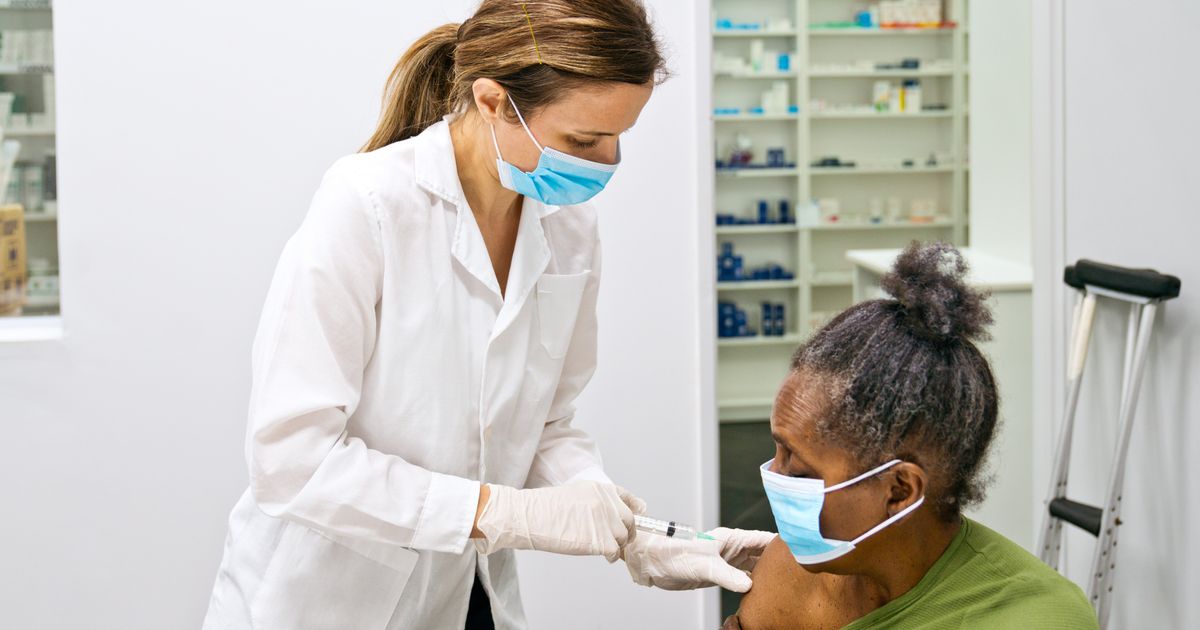
Eligible people, including “all aged 65 and over, pregnant women and those with an underlying health condition,” will be contacted by the NHS from this week to encourage them to arrange a booking. Many will also receive an invitation to receive a flu jab.

“Over 30 million people are eligible to receive a flu vaccine and over 20 million are able to get a Covid jab,” the NHS explained.

You can book your vaccine here via the National Booking System, on the NHS app, or by calling 119.

Care home residents and people who are housebound began receiving their vaccines from last Monday, September 11.

Experts urge those eligible to take both the Covid and flu vaccines

Dr Ranee Thakar, President of the Royal College of Obstetricians and Gynaecologists (RCOG), said: “We are urging all pregnant women to get their free Covid-19 and flu vaccines, to give themselves and their babies the best protection this winter.”

“Pregnant women are more vulnerable to Covid-19 and flu infection, and both viruses can cause severe illness in pregnancy.

“Covid-19 infection in pregnancy means you are more likely to develop severe illness and need hospital care compared to someone who is not pregnant,” the doctor explained.

Even if you’ve had a Covid or flu top-up jab before, immunity fades over time. And new viruses, like Priola, are mutations of the diseases you’ve already been vaccinated against ― so your body can’t recognise them.

“We are already seeing a slow rise in cases of Covid-19, as well as increases in hospitalisations, particularly among the over 75s. Older people and those in clinical risk groups remain at higher risk of severe illness, so it’s important all those eligible come forward when offered and get protected against flu and Covid,” said Dr Mary Ramsay, Head of Immunisation at UKHSA.

Covid vaccination dates for those 18 and under will start later in the year, and families will be alerted when this happens.

Flu vaccinations for those aged two to seventeen have begun, and the first invitations to parents of children aged two and three are also being sent today.

Share Button

Exclusive: Russell Brand Dropped From Jeremy Corbyn And Len McCluskey’s Poetry Book

Russell Brand has been dropped from a book of poetry by Jeremy Corbyn and Len McCluskey, HuffPost UK has learned.

The collection, called Poetry For The Many, is due to be published in November.

According to The Guardian, Brand was among those who had been lined up to contribute to the book.

The Sunday Times and Channel 4′s Dispatches programme reported at the weekend that the comedian and actor has been accused of rape and sexual assault. Brand has strongly denied the allegations.

A spokesman for former Labour leader Corbyn confirmed this morning that the poetry book will now be published by New York-based OR Books without Brand’s contribution.

Other contributors include the actor Maxine Peake, children’s author Michael Rosen, director Ken Loach and former Labour Party official Karie Murphy.

Jeremy Corbyn and Len McCluskey at a Unite policy conference in 2016.

Rob Stothard via Getty Images

Speaking when the publication of the book was announced, Corbyn said: “This book grew out of regular conversations Len and I hold about poetry: the enjoyment we get from it and the opportunity it provides for escape and inspiration.

“When putting it together, the hardest part was deciding what to leave out.”

“There is a poet in all of us and nobody should ever be afraid of sharing their poetry,” he added.

McCluskey, the former general secretary of the Unite union, said: “It should be mandatory on the national school curriculum to make poetry accessible to every child and student, so that the stigma in working-class communities about it being only for ‘posh people’ or ‘softies’ can gradually be eliminated.”

Share Button

Disability benefits cost could rocket, report says

The study says action needs to be taken to improve the health of people who are about to retire.

Share Button

Graham Norton Had The Best Reaction To Beating Piers Morgan At This Year’s NTAs

Earlier this month, both presenters were nominated for Best TV Interview at the National Television Awards, but it was The Graham Norton Show that ended up triumphing over Piers Morgan Uncensored.

During a recent appearance on Watch What Happens Live, the Irish host was asked during a Q&A about beating Piers “especially after he said on the red carpet that there was ‘no competition’” between them.

“I didn’t know that!” Graham said of his fellow nominee’s comment. “I just Zoomed in to accept the award, but it was worth Zooming in to see the expression on Piers Morgan’s face.”

Later in the interview, Graham was asked if he’d ever had Piers on his show, to which he sarcastically responded: “No, funnily enough! And I’ve never been on his! And we’re good.”

However, the five-time Bafta winner was more complimentary about one of his former guests, chart-topping singer Taylor Swift, who he said he “loves”.

“I don’t know how she can be as normal as she is, she seems so regular,” Graham claimed.

After being asked for his take on the British public’s views on Prince Harry and Meghan Markle, Graham went on to share an anecdote about meeting the Duke of Sussex while on a night out with the late Carrie Fisher.

Watch that for yourself in the video below:

Share Button

Doctors strike: NHS Gloucestershire warn of disruption

NHS Gloucestershire puts temporary changes in place while members of the BMA union walkout.

Share Button

Covid: Over-65s called for jabs as hospital cases rise

The rollout has been brought forward as a precaution against a highly-mutated new Covid variant.

Share Button

Kent woman called 999 from hospital over care concerns

Ava Stanley from Higham says she “thought she was going to die” when nurses ignored her heart monitor.

Share Button

‘He’s Wrong’: James Cleverly Condemns Boris Johnson Over Ukraine

The former prime minister launched an outspoken attack on western governments’ response to the ongoing Russian invasion in an article in The Spectator last week.

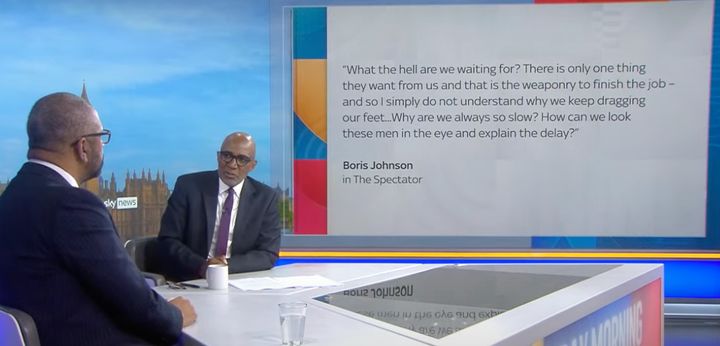
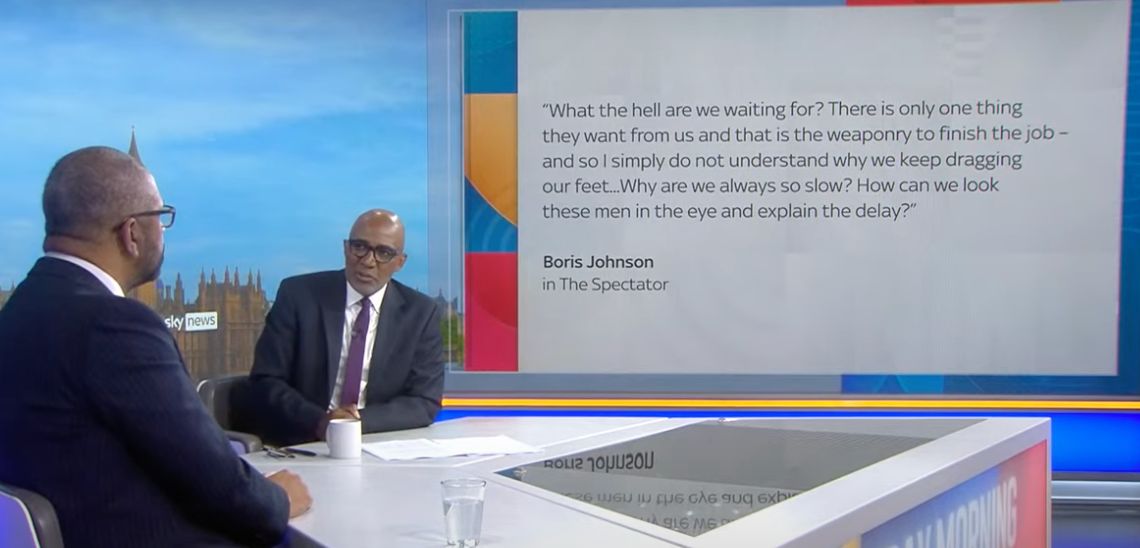
Johnson said: “I have asked it before, and I ask it again: what the hell are we waiting for?”

Shown Johnson’s comments by Trevor Phillips on his Sky News show this morning, Cleverly said: “He cannot be talking about the United Kingdom.

“Under his tenure, and I always pay tribute to his leadership on this, we supplied those NLAW anti-tank missile systems that were so instrumental in the defence of Kyiv, we supplied training.

“Under Rishi Sunak as prime minister we were the first in the world to commit main battle tanks, other countries in the world then followed our example.

“We were the first to commit to the training of fast jet pilots, then other countries followed our example.

“We were the first to commit to those long-range missiles that have been instrumental in helping the Ukrainians in their battle in the south and south-east of Ukraine. So we have led the world on all these issues.”

James Cleverly was showed Johnson's comments on Sky News
James Cleverly was showed Johnson’s comments on Sky News

But Phillips replied: “Surely [Boris Johnson] should know about the issue of pace? He was the fastest of western leaders to respond. And he now says that the momentum that he set is essentially being run into the ground by you guys. You’ve got to take this seriously.”

Cleverly said: “Of course I take his comments seriously, but I’ve just given you evidence of the fact that he is wrong on this issue.

“I speak to the Ukrainians very regularly on this. They remain incredibly grateful, not just for our donations but our leadership on this issue.”

Share Button

Do Opposites Really Attract? A New Study May Have Given Us The Answer

They say opposites attract, but a new study says, “Hold on a minute, maybe they don’t.”

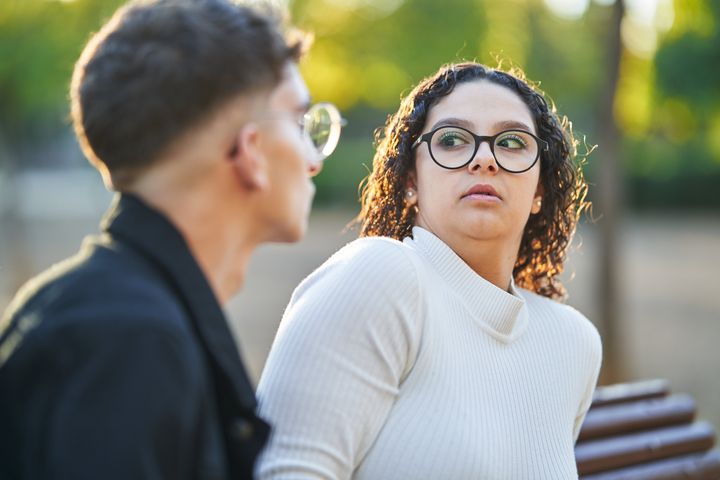
Researchers at the University of Colorado Boulder analysed research that included millions of couples over more than a century and took into account over 130 traits. They found that, more often than not, we end up with someone similar to them.

“Our findings demonstrate that birds of a feather are indeed more likely to flock together,” said first author Tanya Horwitz, a doctoral candidate in the Department of Psychology and Neuroscience and the Institute for Behavioral Genetics (IBG).

According to the study published in the journal Nature Human Behavior, 82% and 89% of traits examined were similar among partners, ranging from political leanings and the age you lost your virginity to nitty gritty physical traits like whether people needed to wear glasses or their waist circumference.

Other areas where couples tended to be similar? Religious attitudes, level of education, how likely a person was to drink or smoke and some measures of IQ all showed particularly high correlations.

“I think that the biggest takeaway is simply that the process of choosing a partner is not necessarily random and that certain traits may play a larger role in partner selection than others,” Jared Balbona, a postdoctoral data scientist and co-author of the study, told HuffPost.

Importantly, though, results can’t tell us exactly why partners might be similar on a given trait, Balbona said.

“For example, it’s possible that people with similar political values are actively seeking one another out, but it’s also possible that partner similarity on political values is due, at least partially, to them living in the same geographic area, as political values tend to congregate within certain regions,” he said.

There were a handful of categories where couples weren’t exactly alike; extroversion, for instance, was one category with little correlation ― meaning an extrovert is just as likely to end up with another extrovert as with an introvert.

“The correlation we found for extraversion was technically statistically significant in the positive direction (.08) but very slight, particularly when compared to a correlation of .58 for political values or .87 for age, where correlations further from 0 are stronger,” Horwitz said.

“Our findings demonstrate that birds of a feather are indeed more likely to flock together,” said first author Tanya Horwitz.

JohnnyGreig via Getty Images

“Our findings demonstrate that birds of a feather are indeed more likely to flock together,” said first author Tanya Horwitz.

The research isn’t just enlightening for understanding who we fall in love with; it has important implications for the field of genetic research.

“A lot of the standard models used in our field assume that ‘mating’ is random (i.e., that whether you smoke is completely independent of whether or not your co-parent smokes), but as we demonstrated, there are a lot of traits for which this just isn’t true in sample after sample,” Horwitz said.

How the researchers conducted the study.

For the study, the research team reviewed nearly 200 papers that studied trait similarities among millions of male-female couples, going as far back as 1903.

In addition, they looked at a set of data called the U.K. Biobank to study 133 traits across almost 80,000 opposite-sex pairs in the United Kingdom. (For instance, the data included many rarely studied traits, like whether someone was breastfed or not or played computer games.)

Same-sex couples were not included in the research. The authors are now exploring those separately since patterns may differ significantly.

Of the meta-analysis, Horwitz said there is “no compelling evidence” on any trait that opposites attract. However, in the U.K. Biobank sample, they found a small number of traits in which there seemed to be a negative correlation (albeit small).

Those characteristics included chronotype (whether someone is a “night owl” or a “morning lark”), hearing difficulty, having a twin, and handedness (whether your dominant hand is your right or left).

“I don’t think anybody has ever said, ‘I like them, but I just don’t know if I can see myself with somebody left-handed,’” Balbona joked.

A few aspects of people’s personalities and dispositions were uncorrelated, which surprised Balbona.

“For example, there was little evidence of partner correlations for irritability, nervousness, or being ‘high strung’ — characteristics which potentially could play an important role when deciding whether you want to enter into a relationship with somebody else,” he said.

One of the areas where there was little correlation? Whether someone was right-handed or left: “I don’t think anybody has ever said, ‘I like them, but I just don’t know if I can see myself with somebody left-handed,’” Balbona joked.

Daniel Lozano Gonzalez via Getty Images

One of the areas where there was little correlation? Whether someone was right-handed or left: “I don’t think anybody has ever said, ‘I like them, but I just don’t know if I can see myself with somebody left-handed,’” Balbona joked.

What are the social implications of the study?

Horwitz and Balbona said the study has far-reaching social and societal implications.

Epidemiologists may be interested in application for the studies on health and biological indicators, while couples therapists may be most interested in how partner resemblance may relate to relationship satisfaction and duration, Horwitz said.

The researchers said that economists may be interested to see how the findings tie into wealth distribution and the labor market.

“Significant partner similarity on things like income, education, and social status ― regardless of the underlying reason ― can lead to these resources being concentrated within certain groups, thus worsening economic, educational, and health disparities between groups and reinforcing existing social strata,” Balbona said.

Obviously, the solution to this problem is not to stop certain groups of people from being in relationships with one another, Balbona said ― that’s a question he’s semi-frequently asked when he discusses this study.

“Rather, I believe these implications can best be addressed by adopting policy measures that reduce discrimination, increase the accessibility of education/ healthcare to all individuals, and support mixed-income housing, among other things,” he said.

On the individual level, if we’re drawn only to those similar to us, Balbona said, “We can seek out more diverse representations in the media we consume and can actively try to maintain an awareness of our own biases when interacting with others.”

Share Button