New research shows stark North-South divide in hospital admissions for lung disease across the UK.


New research shows stark North-South divide in hospital admissions for lung disease across the UK.

In a new study, North Carolina State University researchers found they could separate blended cotton and polyester fabric using enzymes — nature’s tools for speeding chemical reactions. Ultimately, they hope their findings will lead to a more efficient way to recycle the fabric’s component materials, thereby reducing textile waste.
However, they also found the process need more steps if the blended fabric was dyed or treated with chemicals that increase wrinkle resistance.
“We can separate all of the cotton out of a cotton-polyester blend, meaning now we have clean polyester that can be recycled,” said the study’s corresponding author Sonja Salmon, associate professor of textile engineering, chemistry and science at NC State. “In a landfill, the polyester is not going to degrade, and the cotton might take several months or more to break down. Using our method, we can separate the cotton from polyester in less than 48 hours.”
According to the U.S. Environmental Protection Agency, consumers throw approximately 11 million tons of textile waste into U.S. landfills each year. Researchers wanted to develop a method of separating the cotton from the polyester so each component material could be recycled.
In the study, researchers used a “cocktail” of enzymes in a mildly acidic solution to chop up cellulose in cotton. Cellulose is the material that gives structure to plants’ cell walls. The idea is to chop up the cellulose so it will “fall out” out of the blended woven structure, leaving some tiny cotton fiber fragments remaining, along with glucose. Glucose is the biodegradable byproduct of degraded cellulose. Then, their process involves washing away the glucose and filtering out the cotton fiber fragments, leaving clean polyester.
“This is a mild process — the treatment is slightly acidic, like using vinegar,” Salmon said. “We also ran it at 50 degrees Celsius, which is like the temperature of a hot washing machine.
“It’s quite promising that we can separate the polyester to a clean level,” Salmon added. “We still have some more work to do to characterize the polyester’s properties, but we think they will be very good because the conditions are so mild. We’re just adding enzymes that ignore the polyester.”
They compared degradation of 100% cotton fabric to degradation of cotton and polyester blends, and also tested fabric that was dyed with red and blue reactive dyes and treated with durable press chemicals. In order to break down the dyed materials, the researchers had to increase the amount of time and enzymes used. For fabrics treated with durable press chemicals, they had to use a chemical pre-treatment before adding the enzymes.
“The dye that you choose has a big impact on the potential degradation of the fabric,” said the study’s lead author Jeannie Egan, a graduate student at NC State. “Also, we found the biggest obstacle so far is the wrinkle-resistant finish. The chemistry behind that creates a significant block for the enzyme to access the cellulose. Without pre-treating it, we achieved less than 10% degradation, but after, with two enzyme doses, we were able to fully degrade it, which was a really exciting result.”
Researchers said the polyester could be recycled, while the slurry of cotton fragments could be valuable as an additive for paper or useful addition to composite materials. They’re also investigating whether the glucose could be used to make biofuels.
“The slurry is made of residual cotton fragments that resist a very powerful enzymatic degradation,” Salmon said. “It has potential value as a strengthening agent. For the glucose syrup, we’re collaborating on a project to see if we can feed it into an anaerobic digester to make biofuel. We’d be taking waste and turning it into bioenergy, which would be much better than throwing it into a landfill.”
The study, “Enzymatic textile fiber separation for sustainable waste processing,” was published in Resources, Environment and Sustainability. Co-authors included Siyan Wang, Jialong Shen, Oliver Baars and Geoffrey Moxley. Funding was provided by the Environmental Research and Education Foundation, Kaneka Corporation and the Department of Textile Engineering, Chemistry and Science at NC State.

In 2020,bulevirtide (BLV) was conditionally approved for treating chronic hepatitis delta (CHD), an inflammation of the liver caused by hepatitis D virus (HDV). Now real-world studies of patients treated outside of clinical trials confirm that long-term suppressive therapy with BLV monotherapy has the potential to reduce viral replication and improve liver tests of these difficult-to-treat patients for the first time in 45 years, report investigators in the Journal of Hepatology and its companion journal JHEP Reports.
Two of the studies, led by Pietro Lampertico, MD, PhD, Division of Gastroenterology and Hepatology, Foundation IRCCS Ca’ Granda Ospedale Maggiore Policlinico, Milan, Italy, were designed to assess the effectiveness and safety of patients with advanced HDV-related compensated cirrhosis being treated with BLV 2mg monotherapy and the consequences of discontinuing this treatment.
“HDV is the most severe form of chronic viral hepatitis,” explained Dr. Lampertico. “For many years, the only therapeutic option was the off-label administration of pegylated-interferon-alpha (PegIFNa), an approach characterized by suboptimal efficacy, an unfavorable safety profile and several contraindications.”
In a study of 18 patients with HDV-related advanced cirrhosis treated with BLV 2 mg/day for 48 weeks, Dr. Lampertico and colleagues demonstrated significant virological, biochemical and combined response rates associated with improvement of liver function.
“The efficacy and safety of BLV monotherapy in patients with advanced compensated cirrhosis were unknown before this study. Virological and biochemical responses to BLV monotherapy that we observed in our difficult-to-treat patients with HDV-related compensated cirrhosis were similar to those shown in the phase III registration study,” Dr. Lampertico noted.
In a case report, Dr. Lampertico and co-investigators demonstrated that HDV could be successfully eradicated from both serum and liver following a three-year course of BLV monotherapy, despite the persistence of HBsAg, in a patient with HDV-related compensated cirrhosis and esophageal varices. During the 72-week off-BLV follow-up, liver biopsy, intrahepatic HDV RNA and hepatitis D antigen were undetectable, less than 1% of hepatocytes were HBsAg positive and all were negative for hepatitis B core antigen.
“We were surprised to demonstrate that HDV can be eradicated following a finite course of an entry inhibitor administered as monotherapy such as BLV 2mg/day, despite the persistence of HBsAg positivity,” commented Dr. Lampertico.
In a study in JHEP Reports led by PD Dr. med. Katja Deterding, MD, Department. of Gastroenterology, Hepatology and Endocrinology at Hannover Medical School, Hannover, Germany, investigators report the first data from the largest multicenter cohort of patients to date who were treated with BLV under real-world conditions, including 50 patients with signs of significant portal hypertension, elevated pressure in the major vein that leads to the liver.
The retrospective analysis of 114 cases covered 4,289 patient weeks of BLV treatment. Viral response was observed in 87 cases while hepatic inflammation improved, and treatment was well tolerated. More than 50% of patients showed a virologic response with less than 10% of patients not achieving an HDV RNA drop of at least 90% after 24 weeks. An improvement of biochemical hepatitis activity as measured by the liver enzyme alanine transaminase (ALT) values was observed regardless of virologic response. Investigators concluded that treatment was safe and well tolerated and associated with improvements in liver cirrhosis and portal hypertension with prolonged treatment.
“In line with other real-world cohorts and clinical trials our real-world study confirms the antiviral activity of BLV,” noted Dr. Deterding. “We were surprised to see an improvement in biochemical hepatitis activity even in cases without viral response. Potential explanations for this phenomenon include anti-inflammatory properties of BLV.”
“This is the first time that patients with HDV-related chronic advanced liver disease can be treated with an antiviral therapy since 1977 when HDV was discovered. Long-term suppressive therapy with BLV 2 mg/day has the potential to improve survival, of these difficult-to-treat patients for the first time in 45 years,” concluded Dr. Lampertico. “We also found that BLV treatment can be successfully discontinued in some HDV patients who achieved long-term viral suppression while on therapy.”
HDV infection occurs when people become infected with both hepatitis B and D virus either simultaneously (co-infection) or acquire the hepatitis D virus after first being infected with hepatitis B (super-infection). According to the World Health Organization, HDV affects nearly 5% of individuals with a chronic infection resulting from hepatitis B virus (HBV). Populations that are more likely to have HBV and HDV co-infection include indigenous populations, recipients of hemodialysis and individuals who inject drugs.

In a major breakthrough in the fields of nanophotonics and ultrafast optics, a Sandia National Laboratories research team has demonstrated the ability to dynamically steer light pulses from conventional, so-called incoherent light sources.
This ability to control light using a semiconductor device could allow low-power, relatively inexpensive sources like LEDs or flashlight bulbs to replace more powerful laser beams in new technologies such as holograms, remote sensing, self-driving cars and high-speed communication.
“What we’ve done is show that steering a beam of incoherent light can be done,” said Prasad Iyer, Sandia scientist and lead author of the research, which was reported in the current issue of the journal Nature Photonics. The work was funded by the Department of Energy’s Office of Science.
Incoherent light is emitted by many common sources, such as an old-fashioned incandescent light bulb or an LED bulb. This light is called incoherent since the photons are emitted with different wavelengths and in a random fashion. A beam of light from a laser, however, does not spread and diffuse because the photons have the same frequency and phase and is thus called coherent light.
In the team’s research, they manipulated incoherent light by using artificially structured materials called metasurfaces, made from tiny building blocks of semiconductors called meta-atoms that can be designed to reflect light very efficiently. Although metasurfaces had previously shown promise for creating devices that could steer light rays to arbitrary angles, they also presented a challenge because they had only been designed for coherent light sources. Ideally, one would want a semiconductor device that can emit light like an LED, steer the light emission to a set angle by applying a control voltage and shift the steering angle at the fastest speed possible.
The researchers started with a semiconductor metasurface that had embedded tiny light sources called quantum dots. By using a control optical pulse, they were able to change, or reconfigure, the way the surface reflected light and steer the light waves emitted from the quantum dots in different directions over a 70-degree range for less than a trillionth-of-a-second, marking a significant success. Similar to laser-based steering, the steered beam restrained the tendency of incoherent light to spread over a wider viewing angle and instead produced bright light at a distance.
Taming light
A feat previously considered impossible, the team’s proof-of-principle work paves the way for developments in the fields of nanophotonics and ultrafast optics. The ability to dynamically control incoherent light sources and manipulate their properties offers a wide range of applications.
One low-power use would be to brighten military helmet screens used to overlay maps or blueprints over ordinary vision. “In applications where space is valuable,” Iyer said, “steering light emission with low-size-and-weight metasurface-LED displays could be made possible in the future with this technology. We can use the light emitted in a better way rather than just turning them off and on.”
The technique could also provide a new kind of small display that can project holographic images onto eyeballs using low-power LEDs, a capability of particular interest for augmented and virtual reality devices. Other uses could be in self-driving cars where LIDAR is used to sense objects in the path of the car.
In terms of expressions of interest, the team has had several inquiries from commercial sources, said Sandia researcher Igal Brener, a paper author and lead scientist on the project. “A commercial product could be 5-10 years out, especially if we want to have all the functionality on-chip,” Brener said. “You wouldn’t use a control optical pulse to impart the changes in the metasurface needed to steer the light, but rather you would do this control electrically. We have ideas and plans, but it’s still early. Imagine an LED light bulb that can emit light to follow you. Then you wouldn’t waste all that illumination where there’s nobody. This is one of the many applications that we dreamed about with DOE years ago for energy efficiency for office lighting, for example.”
Similarly, tamed light may one day offer benefits in scenarios where focused illumination is only needed in a specific area of interest, such as surgery or in autonomous vehicles.
For incoherent light, the future is looking bright.
Sandia National Laboratories is a multimission laboratory operated by National Technology and Engineering Solutions of Sandia LLC, a wholly owned subsidiary of Honeywell International Inc., for the U.S. Department of Energy’s National Nuclear Security Administration. Sandia Labs has major research and development responsibilities in nuclear deterrence, global security, defense, energy technologies and economic competitiveness, with main facilities in Albuquerque, New Mexico, and Livermore, California.

The UK has officially dropped two places in the annual World Happiness Report compared to last year.
That means we only just make it into the world’s top 20 happiest countries, according to an annual league table of the almost 137 nations sponsored by the UN.
The scientists who analyse the data found that Finland came out on top for the sixth year in a row while Afghanistan is the most unhappy country in the league table.
Advertisement
1. Finland
2. Denmark
3. Iceland
4. Israel
5. Netherlands
6. Sweden
7. Norway
8. Switzerland
9. Luxembourg
10. New Zealand
11. Austria
12. Australia
13. Canada
14. Ireland
15. US
16. Germany
17. Belgium
18. Czechia
19. UK
20. Lithuania
The UK was in 17th last year, while the US has climbed up the ranks this year from 16th to 15th.
France, on the other hand, dropped out of the top 20, placing 21st while Lithuania took its place.
Ukraine actually ranked 92nd, rather than 98th as it did in 2022 – analysts believe this increase is due to a shared purpose among the population within the war-torn nation.
The report, which has been released annually for 11 years, is based on 100,000 people’s own assessments of their happiness combined with economic and social data.
For this year’s summary, data from social media was used to assess people’s feeling before and after Covid.
Advertisement
Each country is given a happiness score between one to 10 on an average of data over a three-year period – so this year’s looked back to 2020.
There actually wasn’t much of a gap between different scores within those in the top 20 with No.1 Finland scoring 7.804 out of 10, and No.20 Lithuania scoring 6.763.
The report, produced by the UN-backed Sustainable Development Solutions Network and Centre for Sustainable Development at Columbia University in New York, also found most countries remained pretty stable over the last three years in the ranks.
Surprisingly, the Covid pandemic did not make us all unhappier, with people around the world remaining “remarkably resilient” – in fact, there’s been a higher level of acts of kindness reported by individuals since the pandemic.

We hope you love the products we recommend! All of them were independently selected by our editors. Just so you know, HuffPost UK may collect a share of sales or other compensation from the links on this page if you decide to shop from them. Oh, and FYI — prices are accurate and items in stock as of time of publication.
Transformer Table is one – if not the – furniture brand to have on your radar.
Best known for its namesake product, the Transformer Table is an extendable dining table perfect for anyone who loves to host, no matter how big, or small, your home space is.
Advertisement
The Canadian brand first launched in 2016, but it wasn’t until a few years later the modular furniture became an internet sensation.
Just last year Instagram creator Rasha Abdel Reda put the brand, and the signature Transformer Table, on the map.
Rasha shared a video of her assembling, and dismantling, the Transformer Table, which amassed over 300 million views across numerous social media platforms, including over four million likes on Instagram alone. It has since been reported this clip was one of the most viewed videos on the online platform of all time.
Advertisement
The Transformer Table is not only an internet sensation, but a top-rated product with over 1100 glowing reviews, and a sell out success, as thousands of the innovative design sold in 24 hours alone during last year’s Black Friday sale.
The company has created an array of home furnishings in addition to the Transformer Table and Bench, including modular couches and outdoor furniture, which save space, yet look stylish.
According to the brand, every Transformer product is constructed to save space, giving you the freedom to adjust it to any size room and any social occasion.
The signature Transformer Table has been such a popular hit because it can expand from just 18 inches up to 10 ft long with ease.
It can become either a side table, or a coffee table with no panels, or be fully extended with five panels to make a dining table to seat 12 people comfortably.
Advertisement
It is a sustainable creation, as the table and benches have been created using FSC-certified wood, which has been sourced from responsibly managed forests.
The heavy-duty telescopic mechanism makes it easy to extend, even on your own, and enables this sturdy design to hold up to 340kg of weight.
Shoppers can also choose to add however many panels may suit their needs or space – for example, just one panel will transform the table into a four-seater.
Advertisement
The best part is the table has already been fitted, so no assembly is needed. All you have to do is extend the table to your designated size, fit the panels on top, and host.
Once assembled, customers can leave as is to make a permanent feature, extend for when guests arrive, or tuck away, to create a worktop or coffee table, if you are tight for space – it really is a fuss-free, practical and stylish item of furniture, you’ll be amazed you ever lived without.
The Transformer Table comes in five colours; a classic American Mahogany, Siberian Birch, which is a grey hue; Canadian Dark Oak that verges on a deep black; as well as lighter options, such as the Australian Acacia and Farmhouse White, perfect for those opting for a muted colour palette in the home.

Transformer Table
Advertisement
If you are looking for a stylish storage option to keep any panels you don’t need out of sight, the Transformer Coffee Table Panel Storage Unit and Coffee Table, which retails for £699, is a gamechanger.
Transformer Table has heard our cries for expertly curated bundles to help us save more, and ensure we have all the essential items for our next family gathering.
The four packages include the Practical, the Host, the Gathering and The Family, which feature different seating options, from one extendable bench to two, the table and individual chairs, or a combination of both.
The fun doesn’t stop there as Transformer Table has created a modular couch, which can fetch from £899 for a single coach piece to £7,199 for a 10-piece sofa, as well as a variety of outdoor living furniture to while away the hours on with an Aperol Spritz in hand this summer.
As part of the Transformer Table’s sale, shoppers can claim a free bench, which could save you over £1000.
Advertisement
Transformer Table now offers free shopping to over 35 countries worldwide, on orders over $999 (£831).
Whether you live in a studio flat, or five-bedroom mansion, Transformer Table has something to suit every interior style, space and budget.
All that’s next is to arrange your next house party, and we think the arrival of the Transformer Table is a worthy cause for celebration.


Drinking is a big part of dating culture. Most dates take place at bars or pubs because they’re the perfect place to meet and speak to someone. Additionally, you might be able to calm your first-date nerves with a drink or two – but the price of those drinks can rack up!
Brits spend almost £500 (£454) on first dates per year, according to credit card brand Aqua. This figure could be cut massively if you let go of the booze on your next dates. So much so, that 17% of those surveyed said they’re going to opt for cheaper coffee or lunch dates and 23% of British singles plan to stop dating completely!
Advertisement
When asked how much Brits believe should be spent on a first date, Aqua found that the average expected cost of a first date sits at £37.85.
However, it turns out that men have much higher expectations than women when it comes to first-date spending. The average response from men came in at £43.24, whereas the average response for women came in at £32.26, which is almost an £11 difference per date.
It appears that men are still quite traditional as only 15% of men believe the cost of a first date should be split equally. However, nearly 40% of women believe that the bill for a first date should be split equally.
But bills being at an all-time high, everyone is looking for ways to spend less money including dates.
Advertisement
Aqua has shared tips that will help singletons navigate their love life without worrying too much about their finances.
Have a movie night at home
This is probably one to do when you feel comfortable with the person you’re dating. So when you feel ready to welcome that special someone into your home, why not host your own movie night? With a few DVDs or a streaming subscription, you can recreate the magic of the cinema from the comfort of your own home without spending a load of money at the cinema.
Visit a free museum or gallery
Attending a free exhibition together is another great option as the only cost you need to cover is transport to and from the museum or gallery. The British Museum, The Tate Modern, and the National Gallery are a few London-based attractions offering free admission, but you’ll be able to find something to do wherever you’re based.
There are plenty of free events like food markets, street fairs, or open mic nights advertised in local papers and on social media. More often than not, they’re free to attend and they provide a casual environment for you to get to know each other.
With lighter evenings and longer days, it is now more pleasant to walk around outside – why not grab a coffee with your companion, go for a lovely woodland walk and enjoy the sunset? Better yet, make your coffee at home ‘to-go’ for a real budget-friendly date.
Advertisement

Henry Dimbleby says the reluctance of government to intervene will cause “huge problems” for the NHS.
A trust accused of institutional racism has said its initial investigation into the incident fell short.
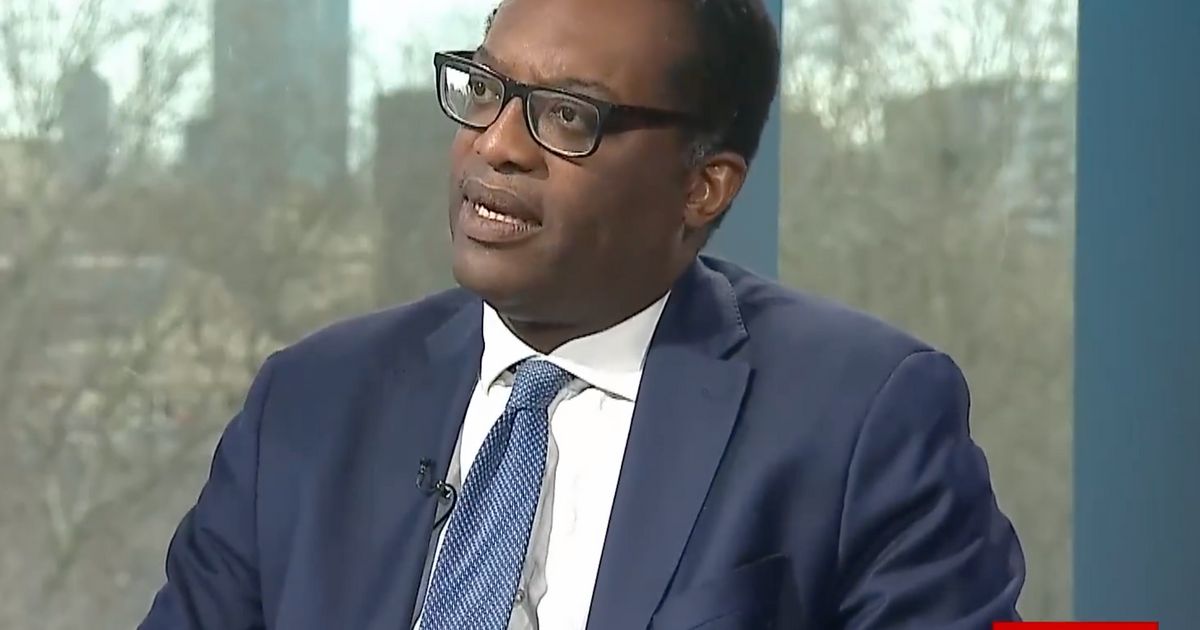
Kwasi Kwarteng has said what he got “wrong” in his mini-Budget that triggered market chaos and led to the downfall of Liz Truss’ government was not being “methodical” enough.
The former chancellor said his successor Jeremy Hunt had delivered a “good Budget” last week.
Hunt was appointed chancellor by Truss after she fired Kwarteng, her closest political ally, in a last ditch attempt to save her failing premiership.
Advertisement
Speaking to GB News on Sunday morning, Kwarteng said Hunt had “rightly perhaps” adopted a more “cautious” approach than he had.
“What we can’t do is pretend that last October didn’t happen, last September didn’t happen,” he said.
“I don’t understand what it means to be a Conservative if you don’t believe, ultimately, in lower taxes, broadly. That’s a strategic goal.
Advertisement
“There is a question about how you get there and there are different approaches.
“Now, I’d like to see things maybe done more quickly. But you do have to be methodical, you have to carry institutions with you, and I think that’s what they’re trying to do.”
He added: “That’s where I think I and Liz got it wrong. I think we should have had a more methodical and more process-driven way of getting to that strategic goal, which is lower taxes and incentivising economic activity.”
Kwarteng also acknowledged there was “too much” in his mini-Budget and it was “very bold” not to have Office for Budget Responsibility (OBR) forecasts or measures on spending restraint at the same time.
He also said that suggesting more tax cuts could come in the aftermath of his statement “probably was a mistake”.
Kwarteng’s decision to tell BBC One’s Sunday with Laura Kuenssberg programme that even more taxes could be cut, shortly after he axed the 45p top rate, was widely seen to have been a big factor in spooking the markets.
Advertisement