BAAPS commented on the study, saying: “The findings underscore the hidden costs and potential risks of bargain procedures abroad, with Turkey emerging as a prominent destination.”
Advertisement
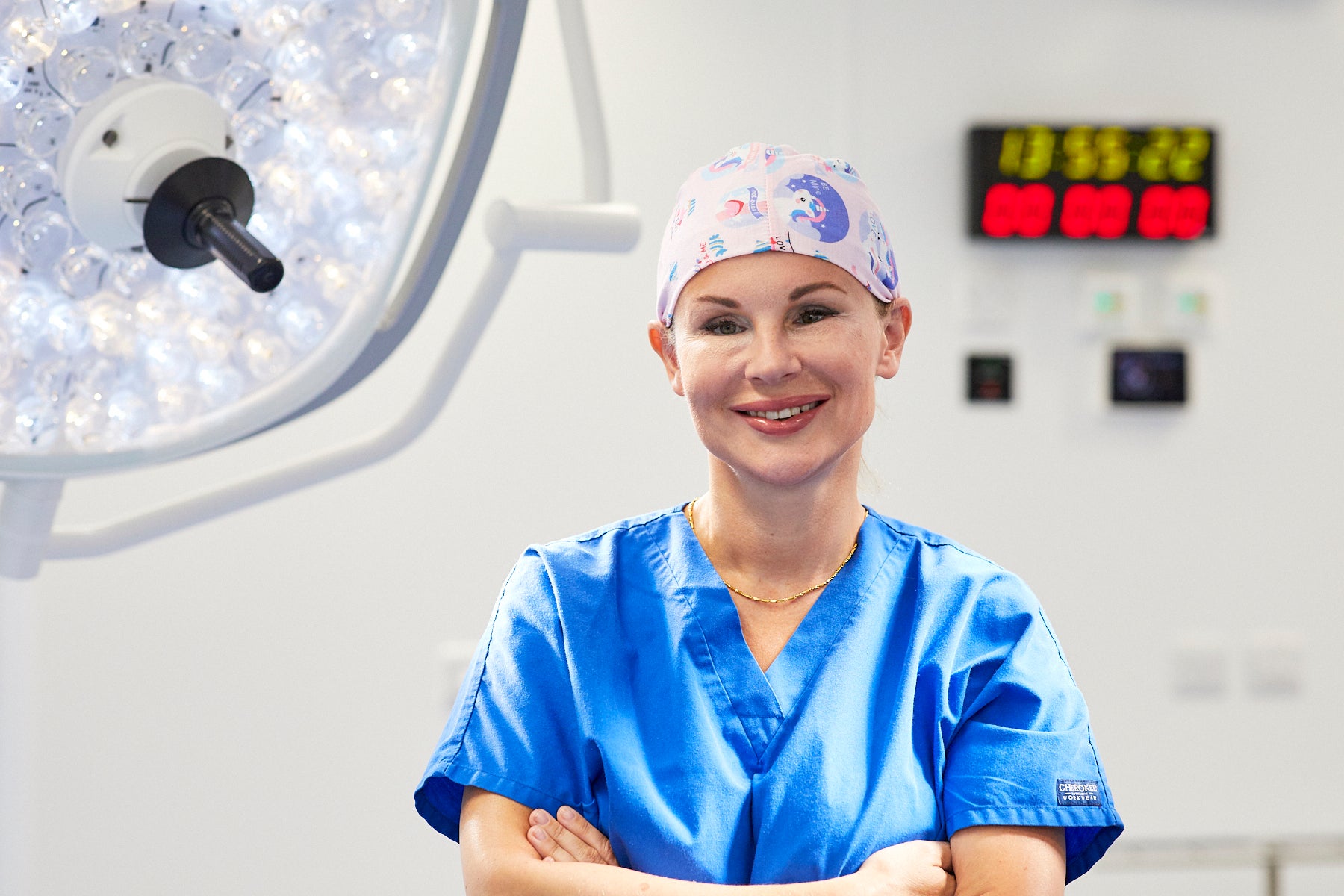
To learn more about this high regret rate and the issues people face when heading abroad for cosmetic surgery, HuffPost UK spoke with leading consultant plastic surgeon Elena Prousskaia.
The results of cheap cosmetic surgery can be harmful to our health
Prousskaia says: “As a consultant plastic surgeon with almost 20 years of experience, I regularly see patients dealing with the consequences of low-cost cosmetic procedures performed overseas.
“Many return home with results that are not only disappointing but, in some cases, medically concerning – requiring urgent or complex revision surgery.”
Advertisement
These complications aren’t simple, either.
The consultant reveals: “The complications I most often treat include infection, poor scarring, asymmetry, and, occasionally, permanent tissue damage.
“Commonly, these are for breast augmentation and body contouring surgery. These outcomes aren’t just bad luck – they’re frequently the result of inadequate preoperative screening, rushed consultations and trying to fit in too many patients.”
Undergoing surgery – cosmetic or not – is no small feat, and Prousskaia warns that doing so right after travelling is not advised: “In some cases, patients undergo surgery within 24 hours of landing, without time to recover from travel or receive thorough medical evaluations.”
Advertisement
Postoperative care is often overlooked, too
Proussakaia says: “When it comes to postoperative care, this can be lacking. This could include not having enough time to properly recuperate before discharge, being given inadequate advice to carry on recovery at home and not being properly schooled about how to spot complications.
“Often, when surgery goes wrong, this is during the aftercare – it is such a critical time to be well supported and informed.”
Getting cosmetic surgery in the UK can be more difficult, but with good reason
In the UK, she reveals, we are held to stringent regulatory standards.
“Surgeons are GMC-registered, facilities are inspected, and patients must be given sufficient time and information to make informed decisions. Overseas, standards vary widely. Some clinics prioritise volume over safety, and patients may not meet their surgeon until the day of surgery.
Advertisement
“Revision surgery is not straightforward. Operating on already-compromised tissue increases the risk of further complications, and the psychological impact – from regret to anxiety – can be profound.”
What to do if you’re considering cosmetic surgery abroad
If you are still considering heading overseas for cosmetic treatment, the surgeon recommends following these steps:
Verify credentials – Your surgeon should be listed on a specialist register, such as the GMC in the UK or equivalent in other countries. Ask about their training and how often they perform the procedure you’re considering.
Ask about aftercare – Safe surgery doesn’t end in the operating room. Make sure you’ll receive proper follow-up care and know what support is available if something goes wrong after you return home.
Take your time – Avoid any clinic that rushes you into surgery. You should have time to ask questions, reflect, and fully understand the risks before committing.
“Cosmetic surgery should never be rushed or treated as a ‘bargain’. It’s still surgery — with all the risks that entails. Always choose safety over savings.”
When the “Bold Glamour” filter on TikTok was created in early 2023, people were shocked by how seamless it looked, and that it wasn’t glitching like other face-altering filters. Despite everyone admiring its technological improvement, it led to an uproar online and offline, with celebrities like Katherine Heigl showing the shocking difference it made.
It’s been widelyreported that filters on social media can create a disconnect between online and real life and lower one’s self-esteem. The issue doesn’t just affect teens — it can negatively affect anyone. The curation of social media leads many people to use filters in order to receive positive feedback, which then reinforces the belief that we should be relying on them, explained Natalie Buchwald, a therapist and founder of Manhattan Mental Health Counseling.
Advertisement
You can, of course, still use filters and have a healthy self-image, but experts advise considering the reasons you use filters in the first place.
“While occasional use of filters doesn’t inherently indicate low self-esteem, dependence on them can be problematic,” Buchwald said. “Maintaining a healthy self-image involves recognizing one’s intrinsic worth without relying on digital enhancements.”
Long-term exposure to a filtered image of yourself may create issues in your self-image, even leading to seeking cosmetic surgery to achieve that image of yourself. “Often called ‘Snapchat dysmorphia,’ it describes individuals seeking cosmetic surgery to replicate their filtered selfies. This can manifest in body insecurity and dysmorphia,” Buchwald added.
Advertisement
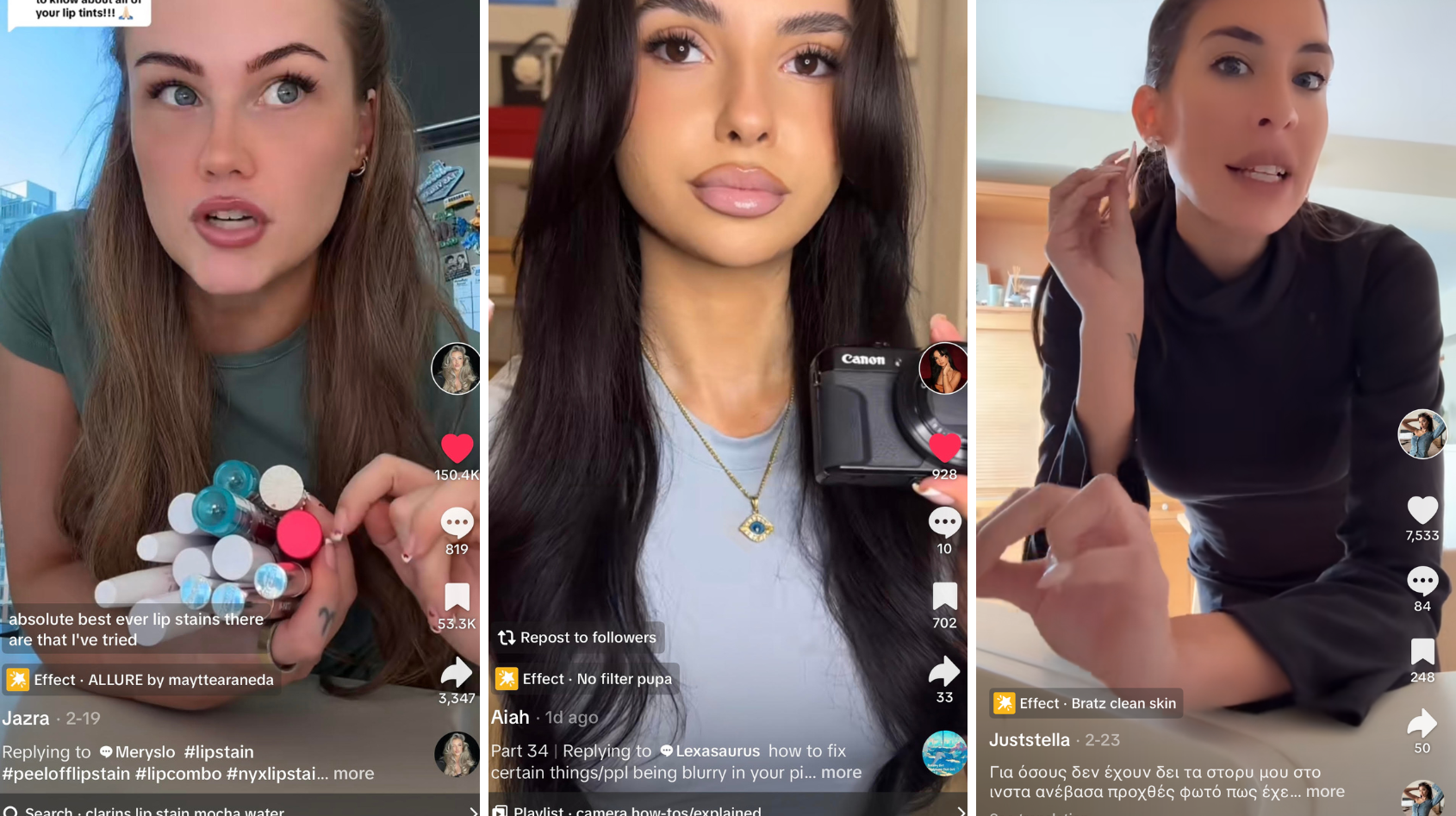
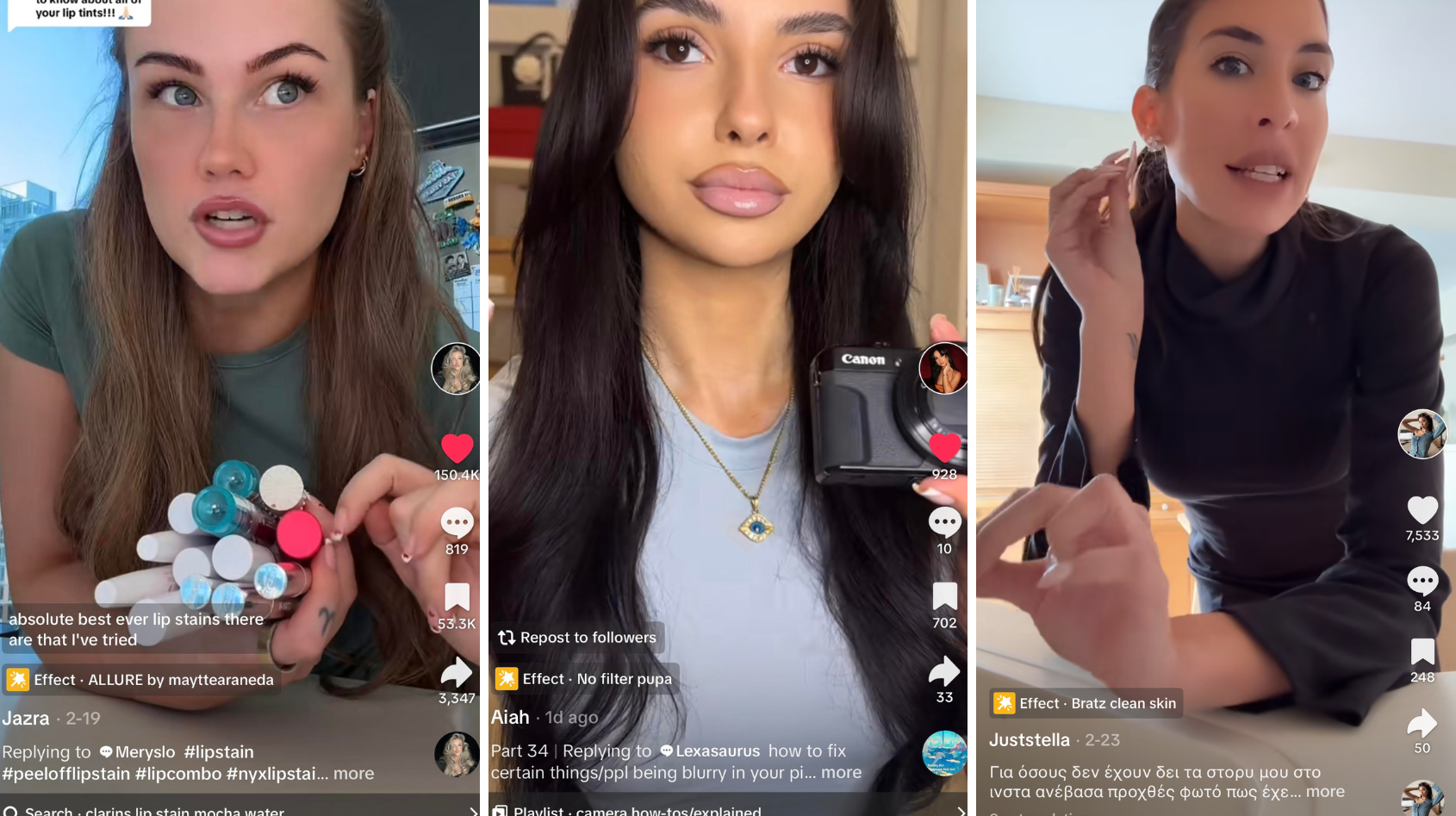
HuffPost spoke to threeinfluencers who regularly use beauty filters to understand why and how these filters affect their self-esteem.
“I’m super open about beauty standards, filters and treatments on my page. I use beauty filters pretty often! Most of the time, while filming on TikTok I’m using one because of ease, and sometimes TikTok automatically puts them on your face.
“I prefer filters that don’t make me look like a completely different person. I try to remind myself that skin texture, blemishes, redness, undereye bags are all normal. Most things you see online are very unrealistic and you shouldn’t compare yourself to them.
Advertisement
“Filters did change how I saw myself. Social media is so unrealistic, so when you look at yourself in a mirror and you don’t have a smooth foundation filter on, it will look different. A few years back when the filters were heavier, I would wear a lot more makeup in real life to really smooth out my skin or contour my face, and I also ended up getting lip filler and Botox done because I was comparing myself to a filter that made my lips bigger or my skin smooth. Seeing myself with plumper lips or no wrinkles has influenced the treatments I’ve done. I still get minimal lip filler to this day. I’ve always been super transparent about getting procedures done online, even back then. Now I’m pretty confident in myself with or without makeup.
“Looking at the ‘perfect’ version of yourself can make you a bit critical of your natural features. Generally, being a content creator can make you critical about yourself and your appearance; with or without filters, I’m staring at my face all day long editing videos. This often will make you notice things most people probably don’t see.
Advertisement
“If social media removed beauty filters, it wouldn’t affect my content at all! I’m super open on my page, with and without filters, and always will be. I think I might put a little bit of makeup on before I film some of my content to make myself more presentable than I do now, but I would be totally fine with that. I think it would make social media a healthier space for everyone, including myself.”
“I use beauty filters occasionally when filming my TikTok videos, usually ones that enhance smoothness subtly without drastically changing my features. Without a filter, I feel just as confident. For me, it’s less about changing how I look and more about maintaining a particular style, visually.
“I wouldn’t say I’m addicted to using filters. They don’t necessarily make me criticize myself, but more aware of how different enhancements can affect one’s perception. I don’t rely on them to define my self-image.
Advertisement
“Filters can certainly influence beauty standards and make people more self-critical. I think that’s all a byproduct of being on social media. Unless people are openly mentioning they are using filters, it’s hard to tell. As consumers, we may assume these creators are like this in real life, too.
“Personally, using filters hasn’t influenced me to get cosmetic treatments, but I can see how constant exposure to ‘perfect’ images can create unrealistic expectations, which is why I make it known to my audience when I use beauty filters, rather than hide the fact that I am using them. I do have lip filler, and in hindsight, I may have been influenced by the ‘perfect’ images we see on social media.”
“I use filters that smooth out the skin very often. I initially started using them out of curiosity, and now it has become a habit — I do it automatically. Honestly, I have no issue with how I look without filters. The only reason I use light filters is because I used to have acne, and it used to bother me.
“I have created content without a filter many times, and I have no problem with that, nor does it make me uncomfortable.
Advertisement
“I wouldn’t say filters make me critical of my natural features, just that I liked how my skin looked without blemishes and acne marks when I had acne. Many women have been influenced by filters, trying to achieve this smooth image in real life. I know from some doctor friends that people ask to look like their filtered selves [via medical intervention]. However, that has never happened to me.”
What’s the best way to navigate filters?
Of course, users aren’t necessarily to blame; the platforms have to take responsibility, noted Buchwald. “Similar to how certain posts are highlighted as #Advertisement, the social media platforms need to demand users who edit their photos to add a similar #filtered tag to avoid skewing the public perception of what is normal.”
There may be some changes soon on that front, as TikTok is said to be banning face-altering filters like “Bold Glamour” for teen use, as these can have dramatic effects on the self-esteem of impressionable young people.
Advertisement
“Young people and parents saw the benefit in being authentic online and recognised the positive impact of belonging and connecting online,” wrote Christine Grahn, head of public policy and government relations for TikTok in Europe, in a recent newsroom statement.
Comparing yourself to online filtered images can trigger social comparison, explained Buchwald. “This can lead to feelings of inadequacy and diminished self-worth, as one’s unfiltered reality may not match the enhanced images presented online. It’s a competition where no one can win as there’s always ‘something else you can improve,’ which can be a very toxic mentality to have about your self-image.”
There are ways to combat negative self-image created by one’s online presence. Buchwald recommends a few different ways; seeking professional advice like therapy to foster self-acceptance, mindfulness practices and spending time in nature as a way to ground yourself and distance yourself from the bubble of the online world. Finally, avoid consuming content that makes you feel bad about yourself or even limit your social media usage until these feelings don’t consume you.
Advertisement
Interviews have been condensed and edited for clarity and length.
Help and support:
Mind, open Monday to Friday, 9am-6pm on 0300 123 3393.
Samaritans offers a listening service which is open 24 hours a day, on 116 123 (UK and ROI – this number is FREE to call and will not appear on your phone bill).
CALM (the Campaign Against Living Miserably) offer a helpline open 5pm-midnight, 365 days a year, on 0800 58 58 58, and a webchat service.
The Mix is a free support service for people under 25. Call 0808 808 4994 or email help@themix.org.uk
Rethink Mental Illness offers practical help through its advice line which can be reached on 0808 801 0525 (Monday to Friday 10am-4pm). More info can be found on rethink.org.
Jameela Jamil, an actor and host of body positivity podcast I Weigh, is pretty well-known for sharing her thoughts on the pressures women face to look a certain way.
So perhaps it’s not surprising that she recently wrote an Instagram post about “how weird it’s going to be when soon all women on television look the same but men have so much variety.”
Advertisement
The post said that women are getting “the same nose, the same cheekbones, the same jaw, the same eyes, the same eyebrows, the same eyelids, the same lips and are starting to aim for the same forever age and body.”
This sounds similar to other body positivity advocate’s concerns about “Instagram face,” an identikit appearance a lot of women on social media seem to share.
“Can you imagine a world in which every man feels RESPONSIBLE to have to save up for painful, expensive surgery to look exactly like Cillian Murphy?” she asked.
Though she stresses she respects women’s choice to pick whatever look they like, she asked “how much choice is it when you’re being bombarded with a ‘beauty standard’?”
“I’m jealous that so many men are so embraced and celebrated for what makes them different,” Jameela continued. “I want that for us.”
The actor also said she’s annoyed at the amount of money being made off of women’s insecurities, often by men, adding she noticed the beauty standard narrowing during lockdown.
Advertisement
“Variety is choice. Variety is agency. Variety is freedom,” she shared before a carousel of beauty trend-based images and a picture of Lindsay Lohan’s “done” face.
“100% agree. And why are everyone’s teeth neon white lately?” one commenter wrote.
“My 10-year-old told me I should get Botox on my jaw to look sharper, the other day. I hate social media. It is ruining our kids,” another lamented.
“You’re not alone. This conversation needs to be loud. A new trend every year, cosmetic surgeries are normal now!! It’s so sad thinking women feel pressured to get them to be considered beautiful,” yet another Instagram user opined.
Still, some thought the actor was a little off the mark.
“I feel like this exact conversation was had over 20 years ago and was a way to bash women for what they wanted to do with their bodies,” a comment reads.
“I disagree. I don’t think Kate Winslet looks like Davina McCall. Or that Dawn French or Oti Mabuse look the same,” someone else shared.
Advertisement
Still, most of the comments seem to be in line with a top response, which simply says “PREACH!”.
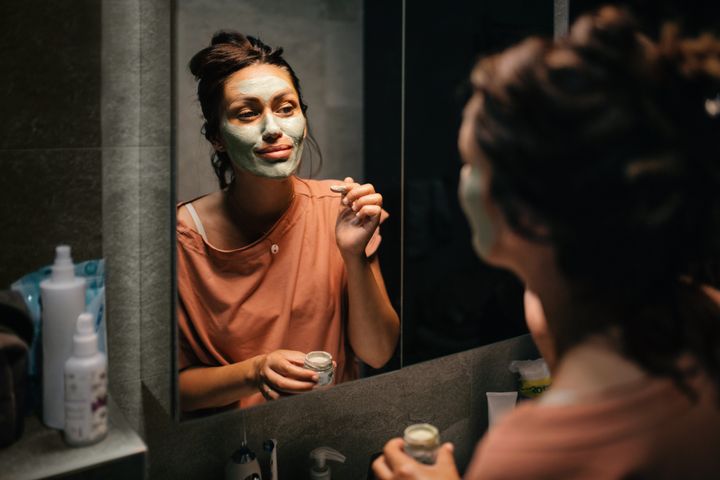
There’s so much that your body does to reset and refresh while you’re sleeping, and your skin is no exception.
“Just like our entire body, the skin has a circadian rhythm,” said dermatologist Dr.Helen M. Torok. “It repairs at night and protects during the day. The skin works hard to renew itself from the damage done throughout the day. Your skin cells regenerate at night, recovering from high levels of cortisol, the stress hormone, that can wreak havoc on your body during the day.”
Advertisement
As such, it’s important to make the most of the money you’re spending on skin care during the overnight hours, when it can work its magic most effectively. Essentially, it’s your chance to undo everything that you did to your skin throughout the previous day.
“The repair of damage from UV exposure, pollution and other environmental stressors occurs at night, when the skin’s blood flow increases,” said dermatologist Dr. Sonia Badreshia. “This is also when collagen production is boosted and harmful free radicals are neutralised.” Dermatologist Dr.Blair Murphy-Rose added, “It’s believed that the rate of skin renewal doubles at night.”
Your skin absorbs products better when you’re sleeping.
As productive as the skin is at night, you can make it even more so with the application of products it can really drink in and use. “If you aren’t doing targeted nighttime care, you’re missing the opportunity to support skin’s natural repair mechanisms,” Badreshia said.
“Your nighttime skin care routine should facilitate repairs and regeneration,” Murphy-Rose said. “The nighttime skin care product you apply can boost the skin’s hydration overnight or target cell turnover while you rest,” Wolinsky said.
Advertisement
There’s one thing you MUST do at night.
Each of the experts revealed what they believe to be the biggest non-negotiable for nighttime skin care.
Murphy-Rose insists on using an eye cream. “Our skin undergoes significant water loss through the skin at night if we don’t take measures to prevent it,” Murphy-Rose said. “While some will tell you that an eye cream is unnecessary, the truth is that an undereye cream, which is typically richer than your facial moisturiser, can help to prevent water loss through this very thin skin while sleeping. Dehydrated eyes are more tired-appearing eyes, so I do recommend applying an undereye cream before bedtime.”
Aja Koska via Getty Images
Skip the 12-step routine.
Wolinsky suggests using your most potent products at night. “Night is a good time to use any products that may have a slight odour, or may bleach clothing, like benzoyl peroxide, or which may be deactivated by the daytime UV rays, like tretinoin and some other retinoids,” Wolinsky said.
Retinol gets another vote: “My opinion is that with the exception of people with rosacea or overly sensitive skin, everyone should be using a retinol, and they’re ideal for nighttime use,” said dermatologist Dr. Corey L. Hartman. “The benefits are numerous and unparalleled and are arguably the most important step that you can take for overall skin health and anti-aging after sun protection factor. Retinols regulate cell turnover, promote effective exfoliation, prevent acne, even discolouration, control oil, smooth fine lines and wrinkles, unclog pores and so much more.”
Advertisement
And if you can’t even with the idea of slathering something on, at least wash the dirt off, experts said. “The biggest mistake people make is not washing their faces,” Hartman said. “The one thing you must do is wash your face at night before you go to sleep. You want to remove makeup, oil and other impurities that are “stuck” to the face from the day. If you go to bed with your face unwashed, you are asking for a breakout, or oily skin.”
KISS = Keep it simple, skin.
If the thought of caring for your skin is the last thing you want to do most nights, know that these dermatologists understand the struggle is real. One way to ensure that you’ll follow through is to simplify this one part of your life. “The majority of patients tell me that they are more consistent with their morning routine versus their nighttime routine, as a result of being tired from the day and just wanting to crawl into bed out of sheer exhaustion,” Torok said. “Others find their nighttime routine overwhelming and are not confident on how to layer their nighttime skin care routine.”
“Patients tend to overdo skin care and add unnecessary steps,” Wolinsky chimed in. “My recommendation is to cleanse the skin with a gentle cleanser and then follow with a small amount of a retinoid if tolerated and a hydrating thicker moisturiser. If skipping retinoid that evening, then just moisturise.”
“Consistency is key,” Badreshia said. “The benefits of nighttime skin care accumulate over time, and a consistent, targeted approach can lead to significant improvements in skin health and appearance. Listening to your skin and adjusting your routine as needed can also help address emerging issues before they become more significant concerns.″
Many people use the month of January to try out lifestyle changes, like going alcohol-free for “Dry January” or abstaining from animal products for “Veganuary.” But one January movement you might be less familiar with is “Januhairy.”

A portmanteau of “January” and “hairy,” Januhairy is a movement that encourages people to put their razors down and let their body hair grow out for the month ― and then perhaps year-round if they enjoy the experience. While Movember and No Shave November aim to raise awareness around men’s health and cancer, Januhairy is about challenging societal beauty norms, especially for women and femme-presenting people.
Advertisement
“It’s a way for us to question body hair standards and why we follow these societal norms that make us feel like body hair isn’t beautiful or feminine or acceptable on a woman’s body — despite being acceptable on a man’s body — and it challenges the feeling that our body hair is innately gross when it’s just hair,” Esther Calixte-Bea, a body hair activist and visual artist, told HuffPost.
Indeed, Januhairy founder Laura Jackson launched the movement just before January 2019 to raise money for a body-image-focused organisation called Body Gossip, and to empower women to stop shaving, waxing and lasering ― or at least question why they might feel they have to.
“I think it’s an interesting way for women to try to grow out their hair in a collective way, as a form of resistance, as a form of self-experimentation, and as a playful and fun form of rebellion,” said Breanne Fahs, a professor of women and gender studies at Arizona State University and author of “Unshaved: Resistance and Revolution in Women’s Body Hair Politics.”
Advertisement
In many ways, Januhairy serves as a reminder that women removing their body hair is a relatively recent phenomenon.
“It came about in the early 1920s as a result of several different factors: the advent of fashion photography, the end of WWI and men coming home with their (mandatory) razor kits, the 1918 pandemic moved bathing from communal settings to individual household bathrooms for middle-class households, and the Gillette razor company making a conscious decision to market razors to women and sell them on the ‘grossness’ of body hair in order to make money,” Fahs explained. “Prior to the 1920s, women mostly did not remove their body hair voluntarily. This occurred only in the context of colonial conquest, etc.”
As fashion trends evolved toward sleeveless tops that showed women’s underarms and skirts that revealed a little more leg, Gillette released its “Milady Decoletté” razor for women in 1915 and marketed it as a product that “solves an embarrassing personal problem.” Although there is evidence of ancient Romans, Greeks and Egyptians removing body hair, women around the early 20th century were not so focused on hairlessness.
Keystone-France via Getty Images
Women shaving their legs with mechanical razors in New York City in 1927.
“As a Black woman, I was interested to read an article that shared how it was mostly white women who propagated the idea of a woman being hairless as the ideal,” Calixte-Bea said. “I’ve also heard from women from African countries that they didn’t feel obligated to shave their legs until they arrived in America or Canada. My hairiness mostly comes from my Ivorian side, and I’ve learned that in my ancestors’ time, body hair was seen as something beautiful. So i think my body hair tells the story of my family and my ancestors.”
Advertisement
While marketers might have made women see body hair as “an embarrassing personal problem,” the practice of removing it generally has no basis in medical or hygiene concerns.
“In reality, hair is normal, and having hair or choosing not to shave your hair is actually embracing what is normal,” said Dr. Susan Massick, a board-certified dermatologist at The Ohio State University Wexner Medical Center. “Not shaving and leaving hair to grow in places like the armpits, bikini area and legs is not unhygienic. Believe it or not, pubic hair, for example, serves a protective purpose, particularly for women’s vaginal health. If people choose or prefer to shave, that is fine to do. Keep in mind that for some people, shaving can actually be irritating to the skin, causing bumpy, painful breakouts and rashes.”
In recent years, there have been some shifts toward body hair acceptance in Western culture, but for the most part, the changes haven’t been as significant as many would hope.
“We’re seeing some more body hair on-screen, and some companies have even figured out how to sell razors with body-hair-positive marketing,” Conger said. “But I don’t think that’s translated into full-blown norm shifting since the vast majority of cisgender women regularly shave our legs and pits.”
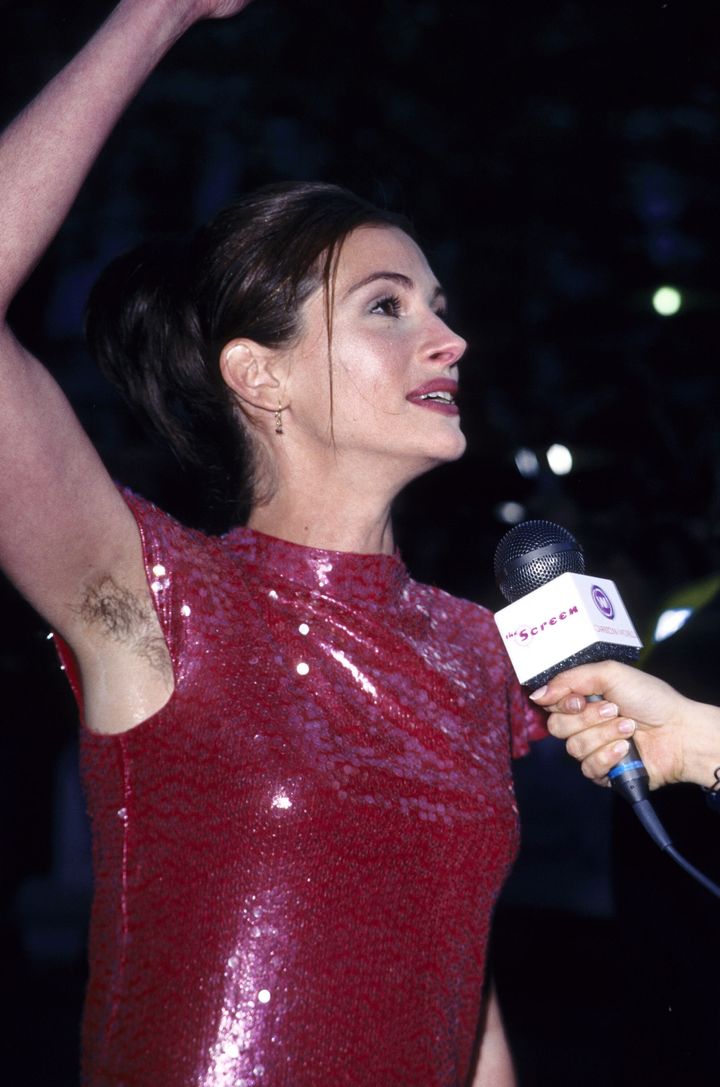
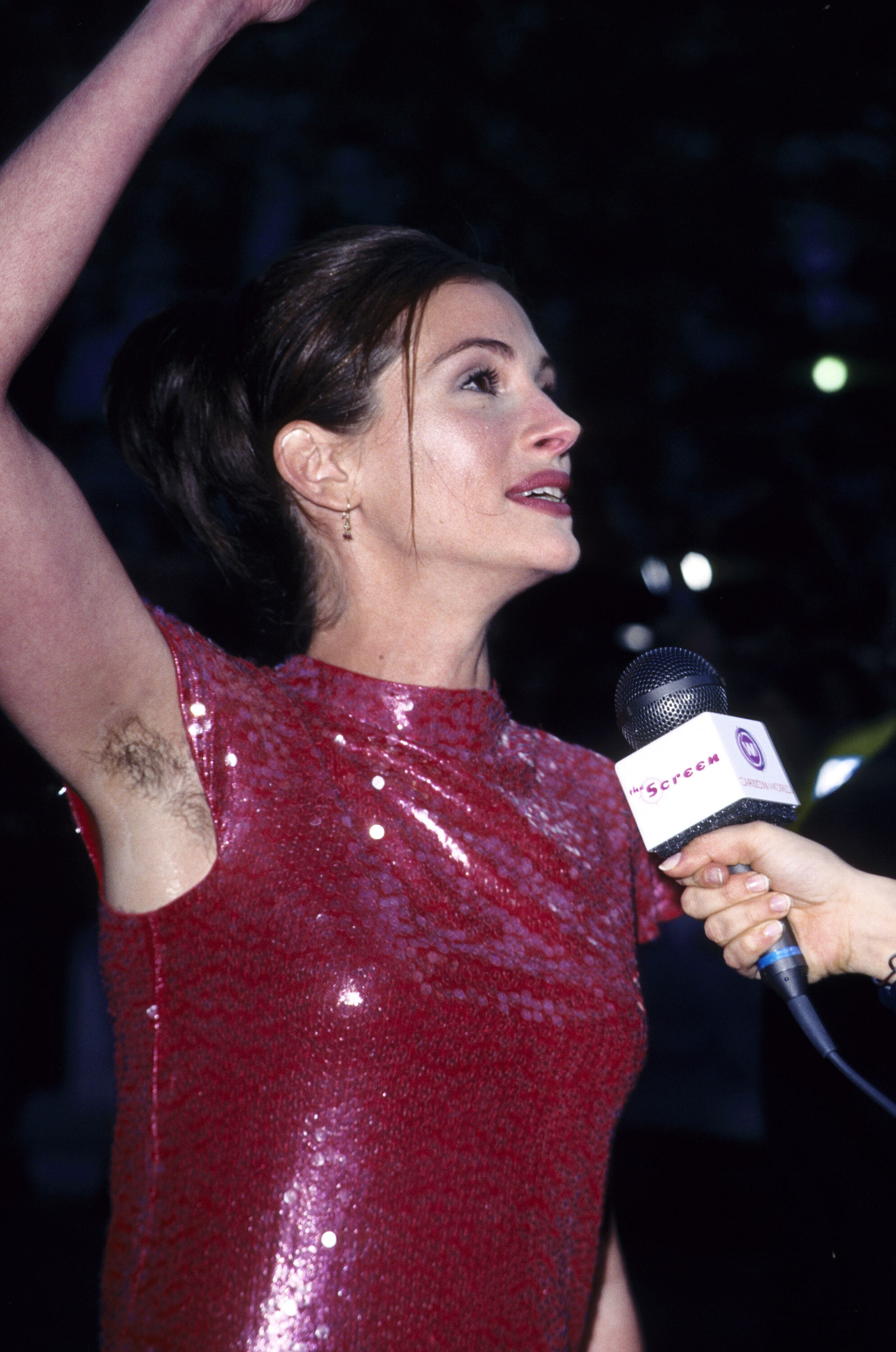
She pointed to the moment when Julia Roberts revealed her unshaved armpit hair at the 1999 premiere of “Notting Hill” and the subsequent media frenzy (though the actor later admitted that it was not intended as any sort of statement).
Advertisement
Fred Duval via Getty Images
Julia Roberts at the premiere of “Notting Hill” in London in April 1999.
“She forgot to shave once, and pop culture will never un-remember it,” Conger said. “Almost 25 years later, if say, Taylor Swift hit a red carpet with visible pit hair, the internet would probably cave in on itself. I think body hair removal is still so persistent partly because the hair-free pressure starts young, and it often comes from peers and parents alike. As long as we expect girls to start shaving, women won’t be ‘allowed’ to stop.”
Fahs agreed that notions of the norm shifting have been overstated, with some estimates saying that over 95-99% of women in the U.S., Australia and England still remove their body hair. She finds it encouraging, however, to see women use opportunities like Januhairy to try to grow out their body hair and see how it feels.
“It’s always better to see the power of a norm by breaking it, and it’s a great way to understand your body better!” Fahs said, sharing what she would say to someone considering taking part in Januhairy. “Go for it! It can teach you many things about who thinks they have a say in your body and how you present your body in the world. It can also teach you about your own biases about grooming and femininity related to body hair. Body hair is a powerful site of gender and power!”
Conger echoed this sentiment, applauding the movement’s impact in making folks reconsider this “this time-consuming, sometimes painful and expensive femininity maintenance.”
Advertisement
“Januhairy is an opportunity to opt out of a beauty norm, but more importantly, it’s a chance to check our own reactions to women’s body hair and understand how it’s different for people with polycystic ovarian syndrome, for instance, or Sikh women who keep kesh,” she added.
January is also a particularly good time of year for people to experiment with their body hair if they’re hesitant.
“If you live somewhere with a cold winter like I do in Canada, you get to grow out your body hair while covering it outside and not feeling like anyone is going to judge you,” Calixte-Bea said.
Conger believes that “Januhairy” is a catchier way to describe what many women and femme people already do during cold weather months.
“That’s the thing about body hair, right?” she said. “It’s only ‘taboo’ when other people can see it.”
Advertisement
Growing out your body hair for yourself in a cold season provides a type of safe space to push back against the norms and discourse that make us see ourselves in a negative light.
“Once you get home, you can see yourself as you are,” Calixte-Bea added. “It’s a very liberating experience to see your body as it naturally is and not once you’ve changed it. Working in retail, I’ve seen women of all ages talk about the things they hate about their bodies, but that’s not something I want for myself and other women.”
Of course, everyone is welcome to try growing out their body hair at any time of year. And if you don’t enjoy how it feels, you aren’t obligated to continue.
“I think it is important to normalise hair and having body hair in much the same way society should embrace all body types,” Massick said. “My philosophy is ‘you do you’ ― do what feels right.”
The temperatures are plummeting, we’re trying to keep nice and cozy and for some reason… we seem to be losing more hair than normal?
While we sometime notice changes to our hair growth and thickness at certain points in the year (hello summer shine amirite?), it can be alarming and distressing when unexplained.
Advertisement
So what the heck is going on with this winter hair loss? We spoke to Dr Sara Perkins, Advisor of Dermatology for Hims – the digital health platform connecting patients to licensed healthcare professionals in the UK – to get the lowdown on seasonal hair loss.
The good news? Although it’s incompletely understood, there is some data to support the notion of seasonal hair loss.
Changing levels of ultraviolet radiation or temperature may shift follicles from the growth phase into the resting, and subsequent shedding, phase.
One study found the highest number of follicles in the telogen (resting) phase in July, with another smaller peak in April. Hairs are typically shed at the end of the telogen phase, roughly 100 days after it begins, corresponding to the shedding in autumn that many people anecdotally notice.
Advertisement
According to Dr Perkins, seasonal hair shedding, and most cases of telogen effluvium, are self-limited and new hair re-grows.
However, if you’re noticing prolonged shedding, or start to see thinned hair density across the scalp, it’s important to seek an evaluation to consider other potential explanations, including genetic and hormonal factors, as in androgenetic alopecia.
Androgenetic alopecia can progress slowly and subtly at first, but may become more noticeable after a shedding event occurs.
Is there anything I can do?
If you want to be an active part of solving the problem, there are treatments available.
Topical minoxidil helps to shift follicles from the resting phase back into the growth phase, and also stimulates increased blood flow or circulation to the follicles themselves to support healthy growth.
Dihydrotestosteron (DHT) can damage hair follicles by shrinking them down, resulting in thinner, finer hairs. Finasteride blocks the conversion of testosterone to DHT, preventing further damage and stimulating healthy hair growth.
Advertisement
Because they work differently, combination products, like this topical finasteride and minoxidil formulation, allow people to benefit from both treatments at the same time.
Day-to-day hair care practices and exposures can also vary seasonally and impact the hair’s appearance. In summer, it’s all about protecting your hair from the sun’s harmful UV radiation.
Exposure can damage proteins like keratin and disulfide bonds, leading to increased fragility and frizz.
And sorry swimming lovers, but chlorine exposure from swimming can dissolve lipids within the hair shaft as well.
In the winter months, wearing hats and scarves may create friction, which can contribute to strand fragility and breakage. Finding the perfect balance between weather protection and a vibrant appearance is the key to conquering winter hair blues.
Advertisement
Understanding seasonal hair shedding provides valuable insights into the dynamic relationship between environmental factors and hair health. While some shedding is a natural and cyclical process, persistent or excessive shedding, or visible hair thinning, may require more attention and professional consultation.
If niacinamide were a person, it would already have earned a Nobel Peace Prize. As a skin care ingredient, it can go pretty much everywhere, calm things down right away and get everything working well together. But until they start awarding global honours for skin creams (and really, why not?), mighty niacinamide continues to prove there’s little it can’t do for beleaguered, stressed and irritated skin.
What It Is And How It Helps Skin
Niacinamide is a form of vitamin B3, a water-soluble vitamin that’s a powerful antioxidant everyone needs to support a number of cellular processes. “It’s not produced naturally by the body, so you must use skin care products specifically formulated with niacinamide to experience the ingredient’s benefits,” Tom Allison, senior vice president and global head of professional marketing atCeraVe, told HuffPost.
Advertisement
It appears in products intended to alleviate fine lines and wrinkles, acne, eczema, discolouration, rosacea, large pores, oily skin and sun damage, among other things. If that seems like a tall order for one ingredient to address all those issues, niacinamide is up to the job, experts say.
Erin Greer, executive director of education and training at Alastin Skincare, explained that one of the ingredient’s superpowers is restoring the moisture barrier function of the skin. “As we get older, we can lose the lipid barrier that makes skin radiant and luminous. Niacinamide produces ceramides that help to restore that barrier, reduce dehydration and help skin look better.”
In a sign of our overstressed times, dermatologist Dhaval Bhanusali said, “In general, there’s a trend toward ‘calming’ ingredients. Niacinamide is a popular option since it’s so well-tolerated. It’s truly a star ingredient and one I recommend often.”
Good For Dry Skin, Oily Skin — Pretty Much Good For Skin In General
You knew we couldn’t get this far into a skin care article without talking aboutfree radicals, those pesky molecules with unpaired electrons that can build up and cause oxidative stress, which harms other cells and speeds up aging symptoms like wrinkles. “As a true multitasker, niacinamide neutralizes free radicals and helps to address the slowing of skin aging through repair and rejuvenation,” dermatologist Melissa Kanchanapoomi Levin said. But wait, she said, there’s more: “Because it’s also been shown to regulate oil secretion and cell skin turnover, it’s recommended for both dry, sensitive skin and oily, acne-prone skin types, too.”
Advertisement
It might be hard to find a skin care ingredient that plays so well with others. “Niacinamide tends to complement and work well when layered with several other active ingredients that compose a typical skin care regimen,” said dermatologist Janiene Luke, co-chair of the Skin of Color Society technology and media committee and associate professor and director of the dermatology residency program at Loma Linda University. “It typically can be used in people who also use retinoids, salicylic acid and other chemical exfoliants, as well as hydrating ingredients such as hyaluronic acid.”
How To Get Started And When You’ll See Results
“Most people can tolerate niacinamide, but I’d suggest looking for concentrations that range from 2% to 10%, since higher concentrations sometimes can cause irritation,” Luke said.
“With my patients, I’ve seen them do well with up to 6% niacinamide,” Bhanusali said. “If it’s higher than that, you should spot treat first and make sure you tolerate well before applying all over.”
If you like the results you’re seeing on your face, try using it all over your body, Deanne Mraz Robinson, dermatologist and assistant clinical professor of dermatology at Yale New Haven Hospital, told HuffPost. “Look for it as an ingredient in body lotion, as well. It’s a helpful ingredient for dry, itchy skin.” She did note some caveats: “It shouldn’t be used simultaneously with skin care products that contain vitamin C. When combined with vitamin C, it turns into niacin, which can cause redness and irritation in sensitive skin.”
Once you begin regular applications, you’ll need to be patient. “Niacinamide typically takes eight to 12 weeks to work if you’re using it regularly,” dermatologistEllen Marmur said. “But in some cases, you will see almost immediate improvement.”
Advertisement
And, as always, use common sense: avoid it if you’re allergic to it, of course. And go slowly. “Some people do get irritated by higher concentrations of niacinamide, so you can get too much of a good thing,” said Michelle Wong, the chemistry Ph.D. behind the Lab Muffin Beauty Science blog.
The research has been launched in time for Skin Cancer Awareness Month and highlights how our neglectful approach to SPF is putting our bodies at risk.
Five Or More Sunburns Puts You At A Higher Risk Of Melanoma
According to the Skin Cancer Foundation, five or more sunburns can put you at a higher risk of melanoma – the third most common skin cancer in the UK. This is especially concerning given that the LifeJacket Skin Protection and Melanoma UK research found that, on average, UK adults have burnt themselves 15 times in a lifetime. Additionally, 20% of adults say that they never use SPF.
Ultraviolet light (UV) is a form of non-ionising radiation that is emitted by the sun and artificial sources, such as tanning beds and is responsible for 80% of premature skin ageing and 90% of melanoma skin cancers. This is strong enough to affect you even on grey, cloudy days and it’s recommended by Melanoma UK that sun protection is applied on a daily basis.
Of the UK adults who shared that they don’t use SPF every day:
21% said this was because they rarely burn and just tan
1 in 5 said they only use it when they feel like they’re burning
20% of people only remember when prompted by a friend or family member
16% will only use it abroad
10% only when the dial goes over 40 degrees celsius
Speaking on the data, Professor Christian Aldridge, a dermatologist who specialises in skin cancer said, “This new data correlates with what I’m seeing every day in my surgery… In many cases, it’s causing skin cancer which is almost totally preventable. We need a sharp change in attitudes to tanning and protection in order to slow down the rise in skin cancer cases.”
How To Effectively Protect Your Skin From Sun Damage
To effectively protect your skin, Professor Aldridge recommends:
Daily use of SPF of at least 30, especially between April to September
Wear Ultraviolet Protection Factor (UPF) clothing, especially if you have fair skin. Skin Cancer Foundation created a guide on UPF clothing if you’re unsure of what it includes
Monitor your skin and if you have lesions that aren’t healing or are newly-pigmented for more than six weeks, especially in sun-exposed areas, keep an eye on them. He recommends monitoring for crusting, bleeding, and re-forming again or not improving with time. If this occurs, seek medical attention.
If you’re overdoing it with your skincare products, you might want to dial things back a notch or two, for the sake of both your budget and your face.
You could be wasting some serious cash by slathering on a product that’s already getting absorbed as much as possible. What’s more, you could be clogging up your pores.
Advertisement
And products like retinoids can have even more serious issues, since applying too much carries the risk of skin irritation.
“I always tell my patients that overusing retinol, either in the amount applied or in the frequency of application, will not bring about anti-aging benefits any faster nor reduce acne quicker,” warns dermatologist and Mount Sinai clinical instructor Dr. Rachel Westbay. “It will only lead to dryness, redness, peeling or burning.”
If a little bit of something is good for your skin, why isn’t more better? According to chemist and science educator Michelle Wong, the “depot effect” comes into play.
“This means that ingredients will absorb into the top layers of your skin and slowly absorb into the lower layers over time. And once the top layers are saturated, any extra won’t add much,” says Wong, the founder of Lab Muffin Beauty Science, a resource explaining the science behind beauty products.
Advertisement
“This doesn’t happen with stronger retinoids, since they’re already very irritating before the saturation point is reached. But with a lot of other products, it means that applying something five times a day isn’t going to bring much more benefit than applying it twice.”
Take it easy with retinoids
If you’re concerned about over-applying retinols in particular, dermatologist Dr. Karyn Grossman offers a helpful visual. “We’re often told to limit application to a ‘pea size,’ but some people have no idea how big or small a pea is. So I tell them to think about the size of a mechanical pencil eraser,” says Grossman, who co-founded the skincare company Raf Five.
“I recommend placing a small dot on the palm, then using the finger to tap this dot and blend tiny amounts on the forehead, cheeks, nose and chin.”
Westbay points out that it’s good to start slowly. “Begin using a retinol product just one or two nights a week at first and work up to greater frequency,” she advises.
The Mount Sinai instructor also notes that acne spot treatments are often over-applied. “Unless the product has been designed specifically to cover an entire area, like a roll-on, it should be applied in a microdot amount, like the tip of a ballpoint pen,” she says.
Advertisement
Advice for moisturisers, toners and serums
Other products, even moisturisers, require careful application as well. “If you use occlusive moisturisers that may clog pores, applying a very thick layer could lead to acne or other issues with occlusion of the skin,” notes dermatologist Dr. Jeremy Fenton.
Toner, which can be drying, should similarly be applied in the correct amount. “I usually advise using enough product to moisten a cotton round that can then be swiped over the desired areas,” says Dr. Courtney Rubin, a dermatologist and co-founder of skincare brand Fig.1. “If you aren’t using a cotton pad, probably a dime- or nickel-sized amount in the palm of the hand can then be pressed into the skin.”
Artem Varnitsin / EyeEm via Getty Images
She shouldn’t be dropping that directly on her face — find out why.
Joie Tavernise, a medical aesthetician and the founder of company JTAV Clinical Skincare, cautions that a little bit of toner goes a long way. “If you see that the cotton pad is dirty after going over your face once, you can apply more to a second cotton pad. Continue until it looks clean after wiping your face,” she says.

Serums don’t require very much product to be effective, says dermatologist Dr. Nkem Ugonabo, so save your money by applying with a light touch. “I usually tell my patients that a little goes a long way,” she says. “Typically only a couple of drops are needed for the entire face. Also, I recommend applying it with your hands, rather than using the dropper and touching it directly on your face.”
Advertisement
But wait… there’s sunscreen
The one exception to these guidelines is sunscreen, which calls for a heavier application than you probably realise.
“Most people only apply 25 to 50% of the recommended amount of sunscreen,” says dermatologist Dr. Hadley King. “For our body, apply about a shot glass worth, and use a nickel-sized dollop to the face.”
But if you overdo it a bit, that’s totally OK, according to Tavernise. “This is the only product that you can’t use too much of” when protecting your skin from the sun’s damaging rays, “and you should reapply it throughout the day,” she says.
Layer up and pay attention
As long as you’re considering how much to apply, it also makes sense to think about the order of application, experts say. “Start with double-cleansing, then toner, then a treatment product like serum and finally moisturiser that has SPF [sun protection factor] for the day or without SPF at night,” suggests aesthetician Rachel Roff, who is the founder and CEO of the brand Urban Skin Rx.
Another good rule of thumb came from Jennifer Weiss, a physician assistant at dermatology practice Marmur Medical, who says: “A skincare routine should always start off with the thinnest to thickest products. To prevent potential irritation, sandwich the retinol with moisturiser before and after application.”
Advertisement
Many experts offered a “your mileage may vary” caveat, suggesting that you pay attention to each product and how your skin responds to it. “With very nourishing products, you might not need too much. And other times it’s important to apply liberally, taking extra time to massage a nourishing blend into the skin,” says aesthetician Tammy Fender. “I like to observe how a product absorbs as I massage it in, giving it time and making sure that the skin is taking in the benefits. Otherwise you risk over-application.”
Being cautious and paying attention can save you money in the long run, experts say. Dermatologist Dr. Kseniya Kobets offers this suggestion: “Of course, companies want you to use up their products faster so you can buy more. But often if you are pumping out eye serum or cream, you can do a half a pump and see if it spreads over both eyes. If there’s extra product that doesn’t absorb after a few minutes, you may be over-applying. And if you notice new bumps, whiteheads or breakouts, reconsider how much you’re using.”
Dermatologist Dr. Michelle Henry agrees. “If you’ve just applied moisturiser and your skin feels very tacky, slimy and somewhat oily, then chances are you’ve used too much,” she says. “Your skin should feel rejuvenated and not weighed down by your skincare products.”
She also suggests adding a dollop of patience to your routine. “On average, our skin need around two to four weeks to show positive or negative reactions to new skincare products,” Henry says. “If you notice new breakouts, irritated skin or dry patches, these may be the signs that you are using too much or even the wrong products.”
Slow and steady wins the skincare race
Make sure to read the label before applying anything. “Only use products that have been clinically tested in the listed amount, and follow the product’s directions,” says facial plastic surgeon Dr. Amir Karam.
Advertisement
“It’s all about finding the right skincare regimen that works best for you and your skin,” Henry says. “Just be patient, listen to your skin and look for specific ingredients that work well on your skin type. Start with one new product and advance slowly.”
If you’re wondering whether all this effort is worth it, the experts HuffPost spoke to were absolutely positive about the long-term rewards of a well-planned, well-applied skincare regime. DermatologistDr. Ellen Marmur, who founded the brand MMSkincare, offers this inspiration: “Reward yourself with a ‘virtual’ $50 bonus every time you moisturise your skin. A happy skin barrier will be radiant and younger looking, which is like money in the bank, so you won’t need to spend as much on makeup or laser treatments later on.”
We hope you love the products we recommend! All of them were independently selected by our editors. Just so you know, HuffPost UK may collect a share of sales or other compensation from the links on this page if you decide to shop from them. Oh, and FYI — prices are accurate and items in stock as of time of publication.
There are three areas many of us strive to perfect when it comes to health and beauty: our skin, hair and sleep. Often the secret to all round good health is a restful snooze, but there are a number of factors that can disrupt your slumber, and have a knock on effect on your physical and mental health.
Advertisement
But Silvi has become a bit of an internet sensation to combat all of the above, in the form of its anti-acne silk pillowcase.
Silk pillowcases have seen a surge in populariy in recent years, thanks to celeb advocates such as Queer Eye’s Jonathan Van Ness, but Silvi has gone one step further with a triple threat in the bedding and beauty game: a pillowcase that aims to prevent hair damage, achieve blemish-free skin, and act as a sleep aid.
Maybe it’s understandable that this pillowcase has gone viral on TikTok, racking up more than 20 million views after a video testing the product proved no nasties grow from, or on, this design, in over a week. Genius, right?
Advertisement
The science behind Silvi’s anti-acne silk pillowcases is that they are treated with silver ions, clinically proven to eliminate up to 99.7% bacteria that contribute to breakouts, within a week.
Not only is the gentle and lightweight fabric antibacterial, it’s hypoallergenic too, and free from any chemicals, making it a good bet if you’ve got sensitive skin, suffer from allergies, or are prone to breakouts – as well as shoppers on the lookout for anti-ageing solutions.
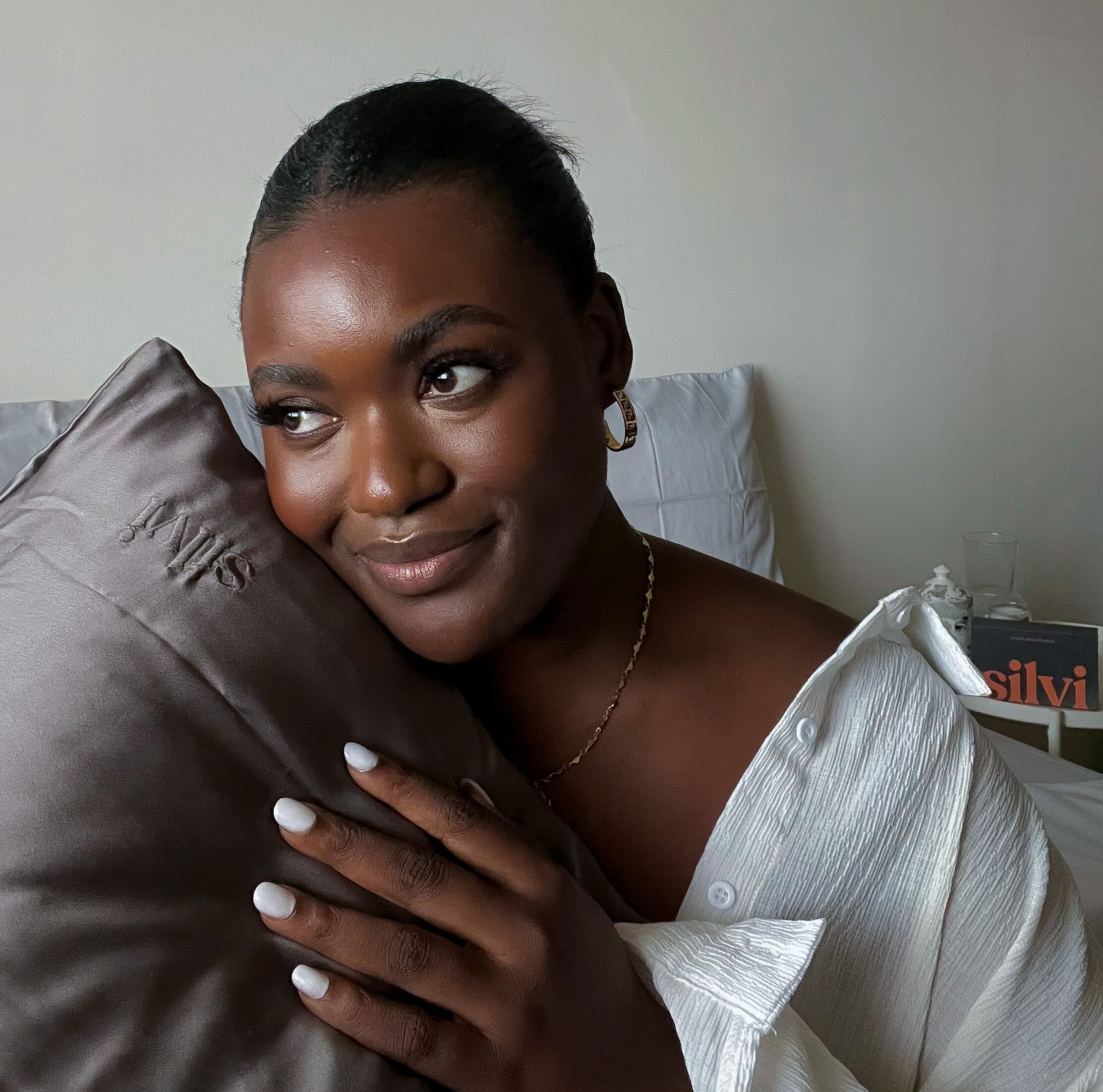
And then there’s the hair benefits. The mulberry silk fabric is soft to the touch, which is ideal for those wanting to prevent hair breakage when tossing and turning through the night. Plus, the gentle fabric means a comfortable surface to lay your head on, which inevitably encourages a better night’s sleep.
Silvi’s pillowcase is also temperature regulating, meaning no more night sweats, or sleepless slumbers leaving you tired and groggy come the morning. In fact, the brand says the fabric is “4.5 times more breathable and cooling than cotton”, making it popular with pre and perimenopausal women, too.
ROSS CAMPBELL
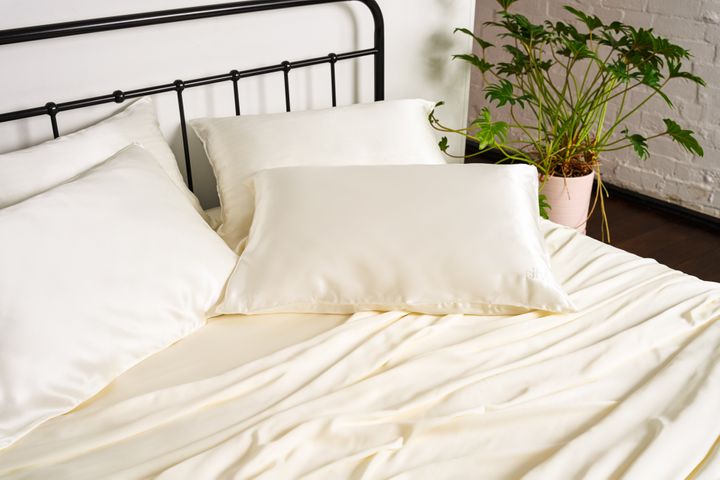
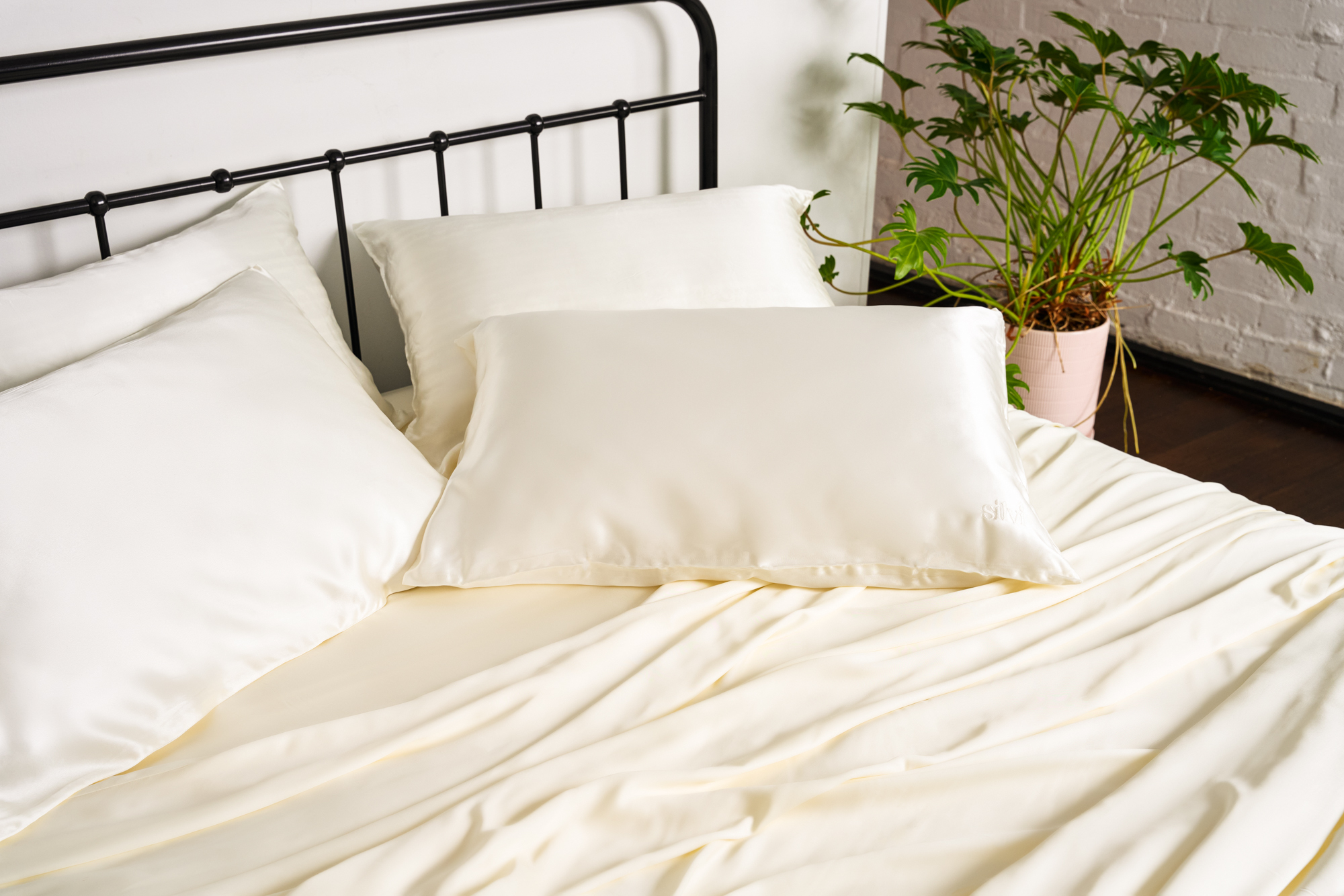
The Silvi silk pillowcase in white
Advertisement
The Anti-Acne Silk Pillowcase comes in two sizes (standard and king size), as well as two colours (white and charcoal grey), to match your bedroom style. It also features a zip fastening so there’s no fear of your pillow slipping out.
Silvi’s pillowcase has been ethically certified cruelty free as it’s not tested on animals. And while the innovative design is machine washable – on a delicate setting with a neutral pH detergent – the silver treatment keeps it fresher for longer, so the pillowcase only needs washing every 10 to 14 days. Fewer washes means this purchase is more eco friendly, too. Every little helps.
Each pillowcase retails for £49, but fans say it’s an investment work making, considering the benefits to your hair, skin, sleep, and washing come laundry day. Buy for yourself, a friend, relative or loved one, and know that if you aren’t quite satisfied with your purchase, Silvi offers shoppers a 100-night guarantee, which means unsatisfied customers are eligible for a full refund.
But, with 100,000 pillowcases sold to happy customers in the first year alone, we don’t expect you’ll be using it any time soon. Sweet dreams!