Abiraterone will be available in a matter of weeks and will be offered to 7,000 men a year.


Abiraterone will be available in a matter of weeks and will be offered to 7,000 men a year.

TikTok users are ‘becoming Chinese’ this month by embracing traditional cultural habits to level up their modern beauty and wellness routines. If you haven’t heard of this, you may need to get working on your algorithm as there have been 3.2 million views of this topic on the clock app.
The practice that they’re all racing to take part in is formally known as Yang Sheng (meaning “nourishing life”) and users are joking that they are ‘turning Chinese’ by taking part. The most common practice, and the one that has gone wild in the app is drinking hot water before bed which promises glowing skin and a healthier body.
Advertisement
The trend focuses on removing “internal dampness” and aiding digestion by moving away from iced drinks in favour of thermal flasks. That’s right. Iced coffees are finally out of fashion. I never thought I’d see the day, either.
But, does it work? And how does introducing this to your night time routine affect your sleep? To answer this, nutritionists and sleep experts at Mattress Online explain the benefits and potential drawbacks of this practice.
Helen Ruckledge, Registered Nutritionist at Mattress Online advises: “There is no consistent research that suggests hot water aids digestion or reduces bloating more than cold water. It is certainly not the case that hot water speeds up the metabolism or makes you wake up with a flat stomach.
Advertisement
“Hydration is fundamental to many aspects of health. For example, it is well established that being dehydrated can increase your risk of constipation.”
Ruckledge assures that whatever works best for you when it comes to drinking water is what you should stick to, saying: “The key to hydration is to drink water in whichever way you enjoy the most, to encourage you to drink plenty. There is certainly no research to suggest that cold water is detrimental. Many people find it more refreshing when cold.
“Others find hot drinks comforting and prefer drinking water hot. Just a cautionary note, if you opt for hot, do boil the water and cool it rather than taking it out of a hot tap. And of course, ensure the water is not scalding hot when you drink it.”
Advertisement
Hannah Shore, Head of Sleep Science at Mattress Online says: “Drinking a cup of hot water before bed probably won’t directly affect your sleep; however, it could have some benefits. Taking the time to sit and drink a hot cup of water could be the perfect thing to build into your wind-down routine.”
She emphasises that the habit of slowing down before bed with a hot drink may be more beneficial than the drink itself, saying: “As adults, we often forget the importance of a wind-down routine, which should help relax the mind and body, prompting us that it’s time for sleep.
“In turn, if this is done in the right environment, it can prompt the body to create sleep-promoting hormones, such as melatonin, helping you to drift off to sleep more easily.”
Advertisement
Stay hydrated and rested wherever possible, basically.


Not all lust is the same, licensed sexologist, relationship therapist, and author at Passionerad, Sofie Roos, told HuffPost UK.
Sure, there’s the better-known spontaneous desire ― a sudden, proactive urge that can cause the spark that initiates sex.
Advertisement
But Roos said that though “many people have gotten the idea of the lust being something that ‘just should pop up’… this is rarely the reality”.
Instead, she explained, a lot of us experience “reactive desire”.
For those with “reactive desire,” lust only, or mostly, kicks in in response to another’s expression of attraction.
That can be “someone taking the initiative to [create] closeness, physical touch and a flirty atmosphere,” she said.
Advertisement
Desire can kick in once those with “reactive desire” feel sexually wanted she explained.
There is nothing wrong with feeling this way, Roos added; it’s “common”.
Roos gave three signs:
On the plus side, “responsive desire tends to make the sex more focused on the foreplay, the emotional connection and pleasure, not performance,” Roos said.
This is especially true if you’re both aware of your lust types.
But if you don’t communicate about your desires, the sexologist added, “A partner can also misread your lack of initiative as you not being interested or attracted anymore, or that you’re rejecting them”.
Advertisement
Additionally, “you can start doubting yourself and wonder if you actually want sex anymore, which can lead to pressure and stress that becomes a downward spiral”.
Your partner might have a responsive desire type too, in which case, “your sex life is at risk of slowing down”.
Advertisement
Communication, as ever, is key.
“Explain that you not taking initiative isn’t is because you’re not interested in and attracted to your partner, and to set words on how your lust works, for example, by saying ‘I often get in the mood first when we already have started to get intimate, which makes it difficult for me to be the one who initiates intimacy,’” Roos told us.
Mention what gets you going, whether it’s your partner expressly communicating that they want to have sex with you or engaging in physical touch.
“Don’t forget to [affirm] your partner and show appreciation when they are taking the initiative… that will increase the chance of them keeping doing so!”
Advertisement
It’s “way more common than people might think” for both partners to have a responsive desire type, said Roos.
In fact, it’s sometimes “the reason behind a dead bedroom despite both of you actually being interested in sex.
“I recommend starting with relieving the initiative by deciding that it mustn’t mean ‘I want sex now,’ but instead is a way of saying, ‘I want to open up for intimacy.’”
Advertisement
Deciding to create low-pressure intimacy plans ahead of time or having romantic rituals that naturally build lust can help, too, she added.
“Get a table at a restaurant and go for a romantic dinner, decide on having a massage session at home this weekend, have a routine of showering together one day a week or go to sleep at the same time, and do so naked,” she suggested.
Lastly, she ended, “be curious instead of judging yourselves or each other. See the lust as something that can grow, develop and change with time.
Advertisement
“When two people with responsive desires work together as a team to find the ways that work for you, you can create a safe, playful, passionate and living sex life together!”


Keir Starmer chalked up 18 months as prime minister earlier this month, but there has been little cause for celebration in Downing Street.
The most notable event of the past week was his decision to ditch plans for the introduction of mandatory digital ID cards – Labour’s 13th major policy U-turn since the party’s landslide election victory in July, 2024.
Advertisement
What made this climbdown so damaging was the fact that it came just four months after Starmer himself had announced the policy with great fanfare.
“MPs are livid,” one disgruntled backbencher told HuffPost UK. “It’s another case of us being made to look like utter fools.”
The mood inside No.10 was not helped by more manoeuvring by health secretary Wes Streeting, who implored the government to “get it right first time” rather than announcing policies only to end up ditching them.
Advertisement
Chris Hopkins, political research director at pollsters Savanta, said voters are usually more forgiving of government U-turns than MPs and journalists.
But he added: “The sheer number of Starmer’s U-turns means this is no longer.
“What is worse is the political capital he tends to waste defending usually contentious policies, only to row back weeks later. It makes him look weak, indecisive and like he is very easily influenced by external noise.
“None of these characteristics are what people want from their politicians, let alone their prime minister, whose popularity stands no chance of recovering if the image he gives to the public is one of cluelessness.”
Advertisement
Elections in Scotland, Wales and in councils across England are now just 16 weeks away, and remain the moment of maximum danger for Starmer, should the opinion polls be proved right and Labour is hammered.
“The mood among MPs is febrile. I wouldn’t put tuppence on an outcome in any direction,” one veteran Labour figure said when asked if a challenge to Starmer’s leadership was now inevitable.
Against this inauspicious backdrop, senior Labour politicians are now rallying behind the PM in an attempt to see off any attempts to replace him.
Advertisement
His long-term ally and attorney general Lord Hermer went out to bat for his old pal at a meeting of the Tribune group of soft left Labour MPs on Tuesday night, telling them to “not throw away” the government’s achievements so far by ditching their leader.
HuffPost UK understands Hermer will continue this pro-Starmer outreach work to the Parliamentary Labour Party (PLP) in the months ahead, making the case for keeping the PM as someone who has known him personally for more than 30 years.
He will also stress that Starmer wants to deliver long-term change, therefore getting rid of him after just two years makes no sense.
Advertisement
Not everyone is convinced, however. A Labour MP said: “Hermer’s message seems to be ‘we’ve spent the last three years being as anti-soft left as we can possibly be, Keir doesn’t know any of your names, but please don’t dump him’.”
Transport secretary Heidi Alexander made clear her backing for Starmer at a meeting of the political cabinet this week.
She told her colleagues they needed to form a “Praetorian guard” around the prime minister to protect him from his opponents.
Advertisement
However, one senior figure pointed out: “The real Praetorian guards killed a dozen Roman emperors.”
Supporters of the PM believe that Robert Jenrick’s defection from the Conservatives to Reform UK presents Labour with a huge strategic opportunity.
With the right of British politics at war itself, they argue that Starmer is best placed to unite progressive voters who want to keep Nigel Farage out of Downing Street at all costs.
“What Jenrick’s defection shows is the contrast between the chaos on the right and the stability and consistency of the Labour government,” said one government insider. “Why would you throw away that big strategic advantage?
Advertisement
“The next election is going to be about who is most effective at winning over two voting blocs – the progressives and the right wing.
“There was a concern that Reform and the Tories could reach some accommodation before the election, but there’s no chance of that now because there’s so much bad blood between them.
“So there’s an opportunity for the PM and Labour to unite our voting bloc while the Tories and Reform are killing each other.”
Advertisement
A Labour source added: “It doesn’t matter what rosette they wear, these are the same people who failed Britain and took money out of people’s pockets, made them less safe and stoked division in our country.
“While the latest soap opera unfolds on the Tory and Reform benches, this Labour prime minister is delivering on the cost of living, bringing down waiting lists and keeping women and girls safe online.”
A cabinet minister said Starmer needs to focus on “getting on with the job”.
“What we’ve seen with Jenrick is another chapter in the chaos on the right that caused so much damage to the country under the Tories,” the MP said.
Advertisement
“In circumstances like that, our job is to get on with it. We’ve had higher than expected economic growth, good NHS waiting list figures, and Keir has stood up to Elon Musk on Grok. We do have a good story to tell.”
A shake-up inside No.10 has also delivered results, according to senior Labour figures, most notably the appointment of Amy Richards as Starmer’s political director.
A senior party source said: “Amy has really improved the political operation, which you can see through things like having trade union delegations and groups of MPs in to No.10.
Advertisement
“She’s also reached out to some of the overlooked shadow ministers in the Commons and Labour grandees in the Lords.”
There is no doubt, however, that Starmer still faces an uphill battle to hang on to his job.
One gloomy MP said: “Keir is already off my leaflets and my social media and I won’t even bust a gut to defend a government policy because what’s the point when he’ll probably U-turn on it?”
Starmer’s outriders are on the march – but is it already too late to save the PM?

A judge says the hospital chiefs’ changing room policy created a “hostile” environment for women.

You slept eight hours, drank adequate water, and yet it still appears as if you just pulled an all-nighter. Sound familiar? As it turns out, that perpetually “tired” look has way less to do with exhaustion — and everything to do with the way your face is being visually pulled downward, dulled and flattened by subtle makeup and skin care mistakes you probably don’t even realize you’re making.
From concealer placement to foundation undertone, tiny missteps can quietly drain the life out of your face. The good news? A few pro-level tweaks can make you look instantly brighter, lifted and well-rested.
Advertisement
According to Nikki DeRoest, a celebrity makeup artist and CEO and founder of Ciele Cosmetics, makeup can only do so much if the skin underneath isn’t prepped properly. “When skin is dehydrated or overworked, makeup tends to sit on top instead of melting in, which instantly makes the complexion look tired — even when everything else is applied correctly,” she said.
Start with a gentle cleanser so your skin feels balanced, not tight, then layer on a hydrating serum and moisturizer to help makeup melt in instead of sitting on top. Also, don’t skip the eye area — hydrated under-eyes means your concealer is less likely to crease.
“Undertone mismatch is one of the biggest reasons makeup can look dull or off,” DeRoest said. “If your foundation pulls too yellow, too pink or too gray for your skin, it’ll actually exaggerate shadows and make you look more exhausted rather than brighten.”
Advertisement
One way to decipher your undertone is to look at the veins on your wrist: blue or purple veins usually mean cool undertones, while greenish veins point to warm undertones — and a mix of both suggests neutral. That said, many color analysts and makeup artists point out that this test isn’t always reliable, especially on deeper or olive-toned skin where vein color can be affected by skin depth and lighting.
You can also try paying attention to how your skin reacts when your skin is exposed to the sun. People with cooler undertones tend to burn or turn pink before they tan, while warmer undertones usually tan more easily and develop a golden or olive cast. If you burn first but eventually tan, or if your skin doesn’t fit neatly into either category, you likely fall somewhere in the neutral or olive range.
When testing foundation, DeRoest suggests swiping a few shades along your jawline in natural light. “The right shade shouldn’t change the color of your face or neck — it should disappear into the skin,” she said.
Advertisement
Concealer application can completely change whether you look rested or run-down. “One of the most common mistakes I see is over-concealing under the eyes,” DeRoest said. “Applying too much product across the entire area can drag the face down and emphasize fatigue.”
Instead, she suggested placing the concealer only where you can actually see darkness — usually the inner corner and outer corner — to lift and brighten. The goal isn’t to erase your under-eyes with a thick layer, but to strategically neutralize shadows so your skin looks awake, smooth and refreshed.
When it comes to finding your perfect concealer shade, one shade lighter than your foundation is usually the sweet spot — bright enough to lift the under-eye, but not so light that it turns gray or emphasizes fine lines.
Advertisement
Undertone is also important: If you have cool or pink-leaning skin, your under-eye darkness is likely to show up as bluish or violet, so a concealer with a soft peach or salmon tone will neutralize shadows better than a straight beige. If you’re warm or golden, your under-eye circles often look more brown or gray, which means a golden-peach or apricot-toned concealer will brighten more naturally.
“When everything on the face is the same tone — foundation, concealer, powder — the skin can look flat and washed out,” DeRoest said. “What brings the face back to life is subtle contrast, dimension and strategic highlights.”
Enter highlighting and contouring. Natural skin has highs and lows — light naturally hits the tops of your cheekbones, the bridge of your nose and the center of your forehead, while shadows fall under the cheekbones and along the jaw.
Advertisement
DeRoest suggested using a slightly brighter concealer on the high points of the face, such as the outer corners of the eyes for lift and around the mouth where shadows tend to form. “Those small highlights can completely change how awake someone looks,” she said. When it comes to contour, the most important areas are right under the cheekbones, starting near the ear and stopping before the middle of the eye. This creates the illusion of higher, more lifted cheeks, which makes you look more well-rested.
The inner corner of the eye is one of the most powerful — and most overlooked — areas when it comes to looking awake. This spot naturally falls into shadow, which can make eyes appear smaller, deeper-set and more tired, even if you’re well-rested. “A small amount of brightening concealer there instantly opens up the eyes and makes you look more awake,” DeRoest said.
Choose a shade that’s one to two shades lighter than your under-eyes, but not starkly white — think soft brightness, not highlighter. A thin, creamy formula with a luminous or satin finish (not flat matte) is key here, as it helps reflect light out of that natural hollow and creates the illusion of bigger, more open eyes.
Advertisement
You can also layer a subtle shimmer or satin highlight on top — think champagne or soft pearl, not glitter — with a tiny brush or your fingertip. Keep the product concentrated in the inner corner rather than dragging it across the whole lid. This targeted pop of brightness reflects light back into the eyes.

NASA’s SpaceX Crew-11 mission has successfully concluded with a safe splashdown in the Pacific Ocean early Thursday morning, just off the coast of San Diego. The landing brought to a close a mission that lasted more than five months aboard the International Space Station.
The returning crew included NASA astronauts Zena Cardman and Mike Fincke, JAXA (Japan Aerospace Exploration Agency) astronaut Kimiya Yui, and Roscosmos cosmonaut Oleg Platonov. Their SpaceX Dragon capsule touched down at 12:41 a.m. PST, after which recovery teams aboard SpaceX vessels quickly secured the spacecraft and assisted the astronauts.
Science Success and International Collaboration
“I couldn’t be prouder of our astronauts and the teams on the ground at NASA, SpaceX, and across our international partnerships,” said NASA Administrator Jared Isaacman. “Their professionalism and focus kept the mission on track, even with an adjusted timeline. Crew-11 completed more than 140 science experiments that advance human exploration. Missions like Crew-11 demonstrate the capability inherent in America’s space program — our ability to bring astronauts home as needed, launch new crews quickly, and continue pushing forward on human spaceflight as we prepare for our historic Artemis II mission, from low Earth orbit to the Moon and ultimately Mars.”
Over the course of the mission, the crew devoted hundreds of hours to scientific research, station maintenance, and testing new technologies. They also marked a historic milestone on Nov. 2, 2025, celebrating 25 years of uninterrupted human presence aboard the orbiting laboratory. Research conducted on the space station continues to expand scientific understanding while supporting future missions beyond Earth orbit.
Early Return Due to Medical Concern
Crew-11 returned to Earth about one month earlier than planned after teams identified a medical concern involving one crew member. NASA confirmed the individual remains stable but did not release further details to protect medical privacy.
Ahead of the return, NASA arranged for all four astronauts to be transported to a local hospital following splashdown. This allowed the crew to receive additional medical evaluation using Earth-based resources. After a planned overnight stay, the astronauts will travel to NASA’s Johnson Space Center in Houston, where they will begin standard postflight evaluations and physical reconditioning.
Mission Timeline and Time in Orbit
The Crew-11 mission began on Aug.1, 2025, with a launch at 11:43 a.m. EDT from Launch Complex 39A at NASA’s Kennedy Space Center in Florida. Approximately 15 hours later, the SpaceX Dragon spacecraft docked with the International Space Station at 1:27 a.m. CDT on Aug. 2.
During their 167 days in space, the crew completed more than 2,670 orbits of Earth and traveled nearly 71 million miles. The mission marked the fourth spaceflight for Mike Fincke and the second for Kimiya Yui, while Zena Cardman and Oleg Platonov flew their first missions. Fincke has now accumulated 549 total days in space, placing him fourth among NASA astronauts for cumulative time spent in orbit.
Commercial Crew Program and Future Missions
NASA’s Commercial Crew Program continues to provide consistent access to space by partnering with private U.S. companies, including SpaceX. These collaborations allow astronauts to travel to and from the International Space Station while maximizing the station’s role as a hub for research and technology development.
The successful return of Crew-11 highlights the program’s ability to support complex missions, respond to unexpected challenges, and keep human spaceflight moving forward as NASA prepares for future exploration of the Moon and Mars.

Newly published research finds that tropical forests can rebound up to twice as fast after deforestation when their soils contain enough nitrogen. The study shows that what happens below ground plays a major role in how quickly forests return after land has been cleared.
Scientists led by the University of Leeds launched the largest and longest experiment ever designed to examine how nutrients shape forest regrowth. The work focused on tropical areas previously cleared for activities such as logging and agriculture.
Tracking Forest Regrowth Over Decades
The researchers selected 76 forest plots across Central America and monitored them for as long as 20 years. Each site differed in age and size, allowing the team to follow how trees grew and died as forests recovered over time.
To test the role of nutrients, the plots received different treatments. Some were given nitrogen fertilizer, others phosphorus fertilizer, some received both nutrients, and some were left untreated. This approach allowed the scientists to directly compare how forests responded under different soil conditions.
Nitrogen Emerges as a Key Driver
The results showed that soil nutrients strongly influence how quickly tropical forests regrow. During the first 10 years of recovery, forests with adequate nitrogen rebounded at about twice the rate of those lacking it. Phosphorus alone did not produce the same effect.
The study included researchers from the University of Glasgow, the Smithsonian Tropical Research Institute, Yale University, Princeton University, Cornell University, the National University of Singapore, and the Cary Institute of Ecosystem Studies. The findings were published on January 13 in the journal Nature Communications.
Implications for Climate and Reforestation
Lead author Wenguang Tang, who carried out the research while completing his PHD at the University of Leeds, said: “Our study is exciting because it suggests there are ways we can boost the capture and storage of greenhouse gases through reforestation by managing the nutrients available to trees.”
Although nitrogen fertilizer was used in the experiment, the researchers do not recommend fertilizing forests. Widespread fertilizer use could lead to harmful side effects, including emissions of nitrous oxide, a powerful greenhouse gas.
Instead, the team suggests practical alternatives. Forest managers could plant trees from the legume (bean) family, which naturally add nitrogen to the soil. Another option is restoring forests in areas that already have sufficient nitrogen due to the effects of air pollution.
Why Faster Regrowth Matters for the Climate
Tropical forests are among the world’s most important carbon sinks. They help slow climate change by removing carbon from the atmosphere and storing it in trees, a process known as carbon sequestration.
The researchers estimate that if nitrogen shortages affect young tropical forests worldwide, about 0.69 billion tonnes of carbon dioxide may be failing to be stored each year. That amount is roughly equal to two years of carbon dioxide and other greenhouse gas emissions in the U.K.
Policy Relevance After COP 30
The study is released just weeks after the close of COP 30 in Brazil, where the Tropical Forest Forever Facility (TFFF) fund was announced. The initiative aims to help tropical forest countries protect existing forests and restore those that have been damaged.
Principal investigator Dr. Sarah Batterman, an Associate Professor in Leeds’ School of Geography, said: “Our experimental findings have implications for how we understand and manage tropical forests for natural climate solutions.
“Avoiding deforestation of mature tropical forests should always be prioritized, but our findings about nutrient impacts on carbon sequestration is important as policymakers evaluate where and how to restore forests to maximize carbon sequestration.”
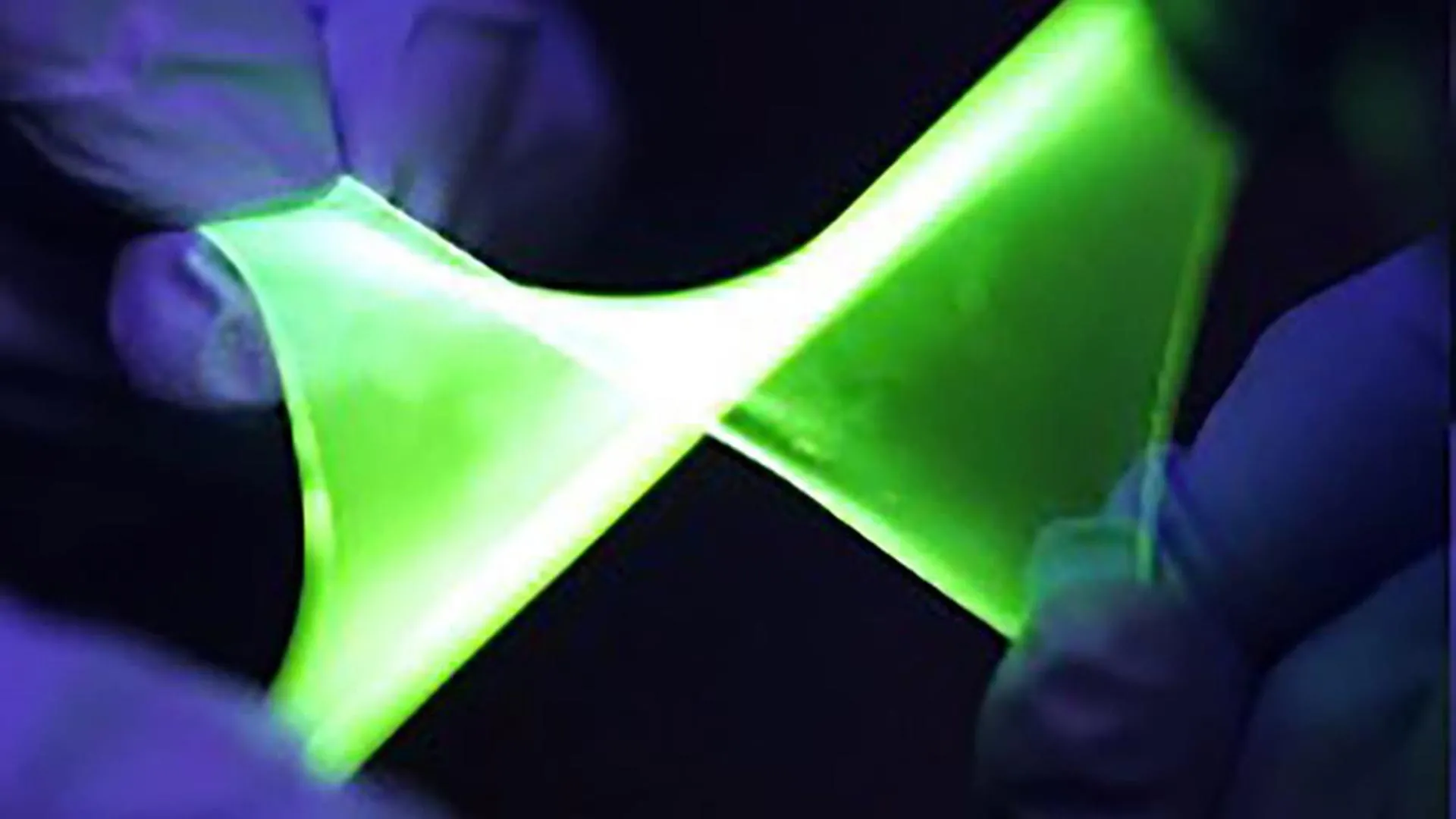
The OLED technology found in flexible smartphones, curved computer monitors, and modern televisions may eventually be used in wearable devices that sit directly on the skin. These future systems could display real-time information such as changes in temperature, blood flow, or pressure. An international research team led by scientists from Seoul National University in the Republic of Korea and Drexel University has now developed a flexible and stretchable OLED that could move this idea closer to real-world use and unlock new applications.
The research, recently published in Nature, introduces a redesigned OLED that combines a flexible phosphorescent polymer layer with transparent electrodes made from MXene nanomaterial. This approach allows the display to stretch up to 1.6 times its original length while retaining most of its brightness.
“This study addresses a longstanding challenge in flexible OLED technology, namely, the durability of its luminescence after repeated mechanical flexion,” said Yury Gogotsi, PhD, Distinguished University and Bach professor in Drexel’s College of Engineering. “While the advances creating flexible light-emitting diodes have been substantial, progress has leveled off in the last decade due to limitations introduced by the transparent conductor layer, limiting their stretchability.”
Why OLEDs Lose Performance When Bent
OLEDs generate light through a process known as electroluminescence. When electricity flows through the device, positive and negative charges move between electrodes and pass through an organic polymer layer. When these charges meet, they release light and form a particle called an exciton before settling into a stable electrical state. Adjusting the chemical composition of the organic layer determines the color of the emitted light.
Flexible OLEDs are made by depositing these layers onto bendable plastic substrates, allowing them to function while folded, bent, or rolled. The technology was first developed in the 1990s and became widely visible in the 2010s when Samsung incorporated flexible displays into shatter-resistant devices and curved-edge phones. Over time, however, it became clear that repeated bending caused OLED brightness and flexibility to decline due to gradual damage in the electrodes and organic materials.
“Imparting conducting materials with flexibility usually involves incorporating an insulating but stretchable polymer that hinders charge transport and, as a result, reduces light emission,” said Danzhen Zhang, PhD, a co-author and postdoctoral researcher at Northeastern University, who conducted early work on transparent conductive MXene films as a PhD student in Gogotsi’s lab at Drexel. “In addition, the material most commonly used in electrodes can become brittle and more likely to break the longer the OLED is flexed and stretched. This issue was addressed by using MXene-contact stretchable electrodes, which feature high mechanical robustness and tunable work function, ensuring efficient hole or electron injection.”
A New Light-Emitting Layer
To overcome these challenges, the researchers redesigned the light-emitting portion of the OLED. Their solution uses a specialized organic layer that increases how often electrical charges combine to form excitons, leading to stronger light output.
This material, called an exciplex-assisted phosphorescent (ExciPh) layer, is naturally stretchable and engineered to adjust the energy levels of moving charges. By making it easier for charges to meet and form excitons, the layer boosts light production, similar to slowing a spinning ride so more people can step on safely.
More than 57% of excitons created in the ExciPh layer are converted into light. In comparison, the polymer-based emissive layers commonly used in today’s OLEDs achieve only a 12-22% conversation efficiency rate.
To further improve flexibility, the team incorporated a thermoplastic polyurethane elastomer matrix into the ExciPh layer. They also focused on improving how electrical charges move through the device by redesigning the electrodes.
MXene Electrodes Boost Durability and Brightness
The new electrodes combine MXene, a highly conductive two-dimensional nanomaterial developed by Drexel researchers in 2011, with silver nanowires. Together, these materials form a conductive network that helps electrical charges reach the light-emitting polymer layer more efficiently before forming excitons.
This structure improves charge injection and allows the OLED to maintain its brightness even while being bent and stretched.
“Owing to their exceptional conductivity and layered form, MXenes provide an exceptional electrode material for flexible OLEDs,” Gogotsi said. “We have demonstrated the performance of flexible, transparent MXene electrodes in multiple applications; thus, including them in efforts to improve OLED technology is a natural step for our research.”
Testing OLEDs Under Repeated Strain
Using these combined improvements, the researchers produced flexible green OLED displays, including one shaped like a heart and another showing numerical digits. They measured the charge-to-exciton conversion rate — a measure of the OLEDs’ ability to efficiently produce light — along with performance during repeated stretching.
To demonstrate broader potential, researchers at Seoul National University also built a full-color, fully stretchable OLED display using four dopant materials within the ExciPh layer. In addition, they created fully stretchable passive-matrix OLEDs that showcase a simple, low-power design suitable for wearable electronics.
Compared with previous designs, the new OLEDs showed higher brightness and better energy efficiency. When stretched to 60% of their maximum strain, performance dropped by only 10.6%. After 100 cycles of repeated stretching at 2% strain, the displays retained 83% of their light output, indicating significantly improved durability.
Toward Wearable and Deformable Displays
“We anticipate the success of this approach to designing flexible, high-efficiency optoelectronic devices will enable the next generation of wearable and deformable displays,” said Teng Zhang, PhD, a co-author and former post-doctoral researcher in Gogotsi’s lab. “This technology will play an important role in real-time health care monitoring and wearable communications technology.
Future work may involve testing alternative flexible substrates, fine-tuning organic layers to produce different colors and brightness levels, and simplifying the manufacturing process to support large-scale production of stretchable OLED devices.
After a decade of trying for a baby, Caroline and her husband decided they needed to build a different future.
