Did Donald Trump’s New Nuclear Threats Alarm Vladimir Putin?

Donald Trump suddenly announced he was moving two of America’s nuclear submarines closer to Russia after “highly provocative statements” from a senior Kremlin official last week.

The declaration was quite a surprise, especially considering the US president has previously spoken of his fond friendship for Vladimir Putin and even expressed sympathy for his invasion of Ukraine.

As Kyiv’s most powerful ally – and the only major Western figure to show leniency towards Putin – Trump’s words matter.

So how did we get here? And just how concerned is the Kremlin about what might happen next?

Why did US nuclear rhetoric suddenly ramp up?

The US president has been trying to pressure Putin to end his war in Ukraine for months, even offering to oversee a peace deal which would reward the Russian president for his brutal invasion with Ukrainian territory.

But the Russian president has consistently dragged his feet.

So Trump has gradually amped up his rhetoric.

Last week, while in Scotland, he said he was going to reduce his previous 50-day deadline for Russia to end the war down to 10 or 12 days – or the US would hit Russia with more sanctions.

Former Russian president, close Putin ally and the deputy chair of Russia’s Security Council, Dmitry Medvedev, lashed out at the news on social media.

He claimed Trump was “playing the ultimatum game with Russia” and said “each new ultimatum is a threat and a step towards war”.

The president responded: “Tell Medvedev, the failed former Russian president who thinks he is still in power, to be careful what he says. He is entering very dangerous territory.”

Hours later, he posted: “Based on the highly provocative statements of the Former President of Russia, Dmitry Medvedev … I have ordered two Nuclear Submarines to be positioned in the appropriate regions, just in case these foolish and inflammatory statements are more than just that.

“Words are very important, and can often lead to unintended consequences, I hope this will not be one of those instances.”

He did not mention if the submarines were nuclear armed or nuclear powered, or where the “appropriate regions” are.

How did Russia respond?

After a weekend of silence, the Kremlin’s press secretary Dmitry Peskov finally addressed Trump’s shifting stance on Monday, telling reporters: “In this case, it is obvious that American submarines are already on combat duty. This is an ongoing process, that’s the first thing.

“But in general, of course, we would not want to get involved in such a controversy and would not want to comment on it in any way.

“Of course, we believe that everyone should be very, very careful with nuclear rhetoric.”

He also claimed Moscow did not see Trump’s remarks as an escalation in nuclear tension, adding: “We do not believe that we are talking about any escalation now. It is clear that very complex, very sensitive issues are being discussed which, of course, are perceived very emotionally by many people.”

So, what does all this mean? HuffPost UK spoke to several experts to find out.

Not so chummy now: Trump, left, and Putin in 2018.

via Associated Press

‘Russia understands this is a serious step’

“In a way, Trump is trying to play a game,” the director of International Security at the Royal United Services Institute (RUSI) Dr Neil Melvin said.

Melvin suggested Trump was trying to call out Moscow for rattling the nuclear saber over the last three years.

“He tried to put a kind of baseline underneath the escalation conversation with Russia around nuclear weapons,” the expert told HuffPost UK. “This is why the Russians haven’t responded because they’ve actually understood that this is quite a serious step.”

“Trump is the first US president I think to openly challenge this new position of Russia,” he said, explaining that the he two countries are now looking to re-establish a conversation about just what escalation looks like.

Melvin said this was a very different place to where the world was during the Cold War, when the US and the USSR were also in a standoff over nuclear weapons – and everyone used “careful language”.

He pointed out that Trump’s post on TruthSocial was without its usual capital letters or exclamation marks, perhaps indicating it was a more serious and a “calculated response by the United States”.

The specialist said Moscow’s delay in reply probably stemmed from Russia being unable to decide whether to escalate or just make a rhetorical statement.

“Russia has been anxious to avoid direct confrontation with the US, even though they basically talk about being in a war with the States,” he said.

Melvin claimed other western leaders will “will broadly support” Trump’s latest comments, because “there has been some concern that Russia has been blurring the line between conventional wars and nuclear”.

“This is actually a step towards re-imposing a stronger distinction,” he noted.

This is not a ‘sensible or coherent’ strategy

Meanwhile, Keir Giles, a senior consulting fellow from Chatham House’s Russia and Eurasia programme, suggested these were mainly empty words from the US president – and so Moscow will not be intimidated at all.

He said: “With the submarine comment, Trump has discovered another means of appearing ‘tough on Russia’ without actually doing anything that would be of concern to Moscow – and there are plenty of other reasons why he might be seeking headlines that suggest he is taking a firmer line with Putin.”

The specialist said: “Trump has taken every possible step to pressure Russia, short of actually doing something.”

He concluded: “Whatever Trump’s latest verbal salvo at Moscow may be, there’s one thing it isn’t: a strategy for dealing with Russia, let alone a sensible or coherent one.”

Giles claimed the Kremlin will be watching Trump closely, but “perhaps as much out of curiosity as of concern as to what he will do next.”

‘The Kremlin was unprepared’

Russia analyst from the Institute for the Study of War, Christina Harward, told HuffPost UK that Russia’s response has been “incredibly limited thus far”.

She pointed out that there’s been no response from the Russian Ministry of Foreign Affairs or the Russian Ministry of Defence.

“High-ranking Russian officials very often parrot the same phrases as each other, telling us that Russian officials’ public rhetoric is highly coordinated within the Kremlin itself,” she said.

“The Kremlin is also known to disseminate manuals to Russian state media with clear instructions about how to cover certain current events.

“The fact that we didn’t see a coordinated response over the weekend to Trump’s announcement indicates that the Kremlin was unprepared for this move and is likely still working on how to publicly react. We may start to see a more unified official reaction in the coming days.”

What now?

While the specialists seem split over just how much impact Trump’s comments will have on the Kremlin, only one thing seems certain right now: Putin still has no plans to withdraw from Ukraine any time soon.

US special presidential envoy Steve Witkoff is set to visit Moscow this week to discuss peace talks, days before Trump’s new tariffs against Russia are set to kick in (August 9).

But Russia continues to target Ukraine almost every single night with drone and missile attacks, while Putin is still pushing to gain control over four Ukrainian regions to which Moscow currently occupies, and a promise from Kyiv will never join Nato.


Share Button

Scientists reexamine 47-year-old fossil and discover a new Jurassic sea monster

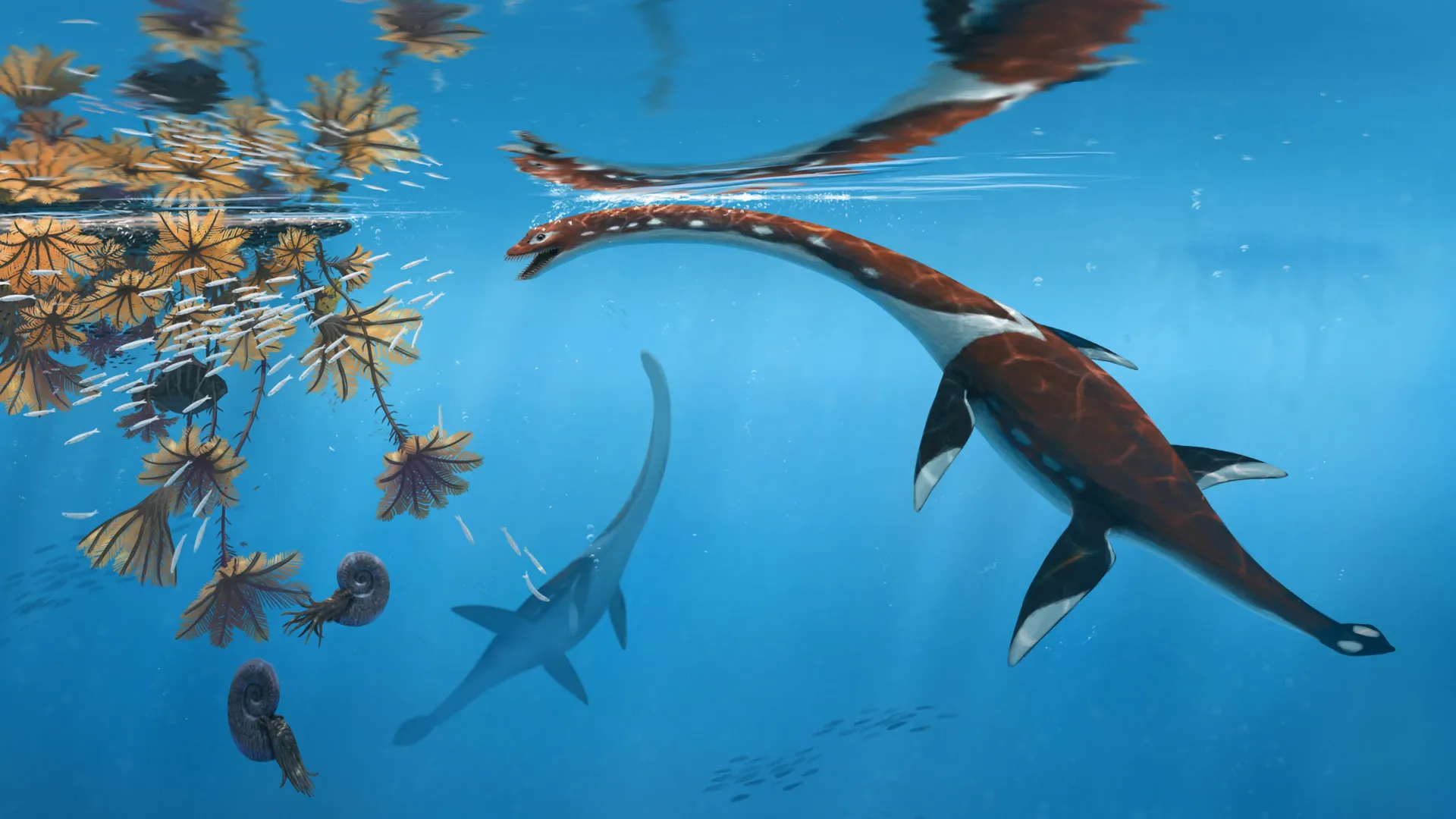
Paleontologists have identified a new species of ancient marine reptile from Germany’s world-renowned Posidonia Shale fossil beds, expanding our understanding of prehistoric ocean ecosystems that existed nearly 183 million years ago.

The newly classified species, named Plesionectes longicollum (“long-necked near-swimmer”), represents a previously unknown type of plesiosauroid — the group of long-necked marine reptiles that inhabited Earth’s oceans during the age of dinosaurs. The specimen is a nearly complete skeleton that even preserves remnants of fossilized soft tissue. It was originally excavated in 1978 from a quarry in Holzmaden, Southwest Germany, but its unique anatomical features have only now been fully recognized through comprehensive scientific analysis.

“This specimen has been in collections for decades, but previous studies never fully explored its distinctive anatomy,” said Sven Sachs of the Naturkunde-Museum Bielefeld, the study’s lead author. “Our detailed examination revealed an unusual combination of skeletal features that clearly distinguish it from all previously known plesiosaurs.”

The research, published by Sven Sachs and co-author Dr. Daniel Madzia from the Polish Academy of Sciences, demonstrates that the Posidonia Shale — already famous for its exceptionally preserved fossils — contained even greater marine reptile diversity than previously recognized.

The Plesionectes specimen is particularly significant as it represents the oldest known plesiosaur from the Holzmaden area. Despite being an immature individual, its distinctive anatomical characteristics were not significantly affected by its developmental stage, warranting classification as an entirely new genus and species.

“This discovery adds another piece to the puzzle of marine ecosystem evolution during a critical time in Earth’s history,” explained Dr. Madzia. “The early Toarcian period when this animal lived was marked by significant environmental changes, including a major oceanic anoxic event that affected marine life worldwide.”

The fossil is permanently housed at the Staatliches Museum für Naturkunde Stuttgart (Stuttgart State Museum of Natural History) where it is cataloged as specimen SMNS 51945.

The Posidonia Shale at Holzmaden has previously yielded five other plesiosaur species, including representatives from all three major plesiosaur lineages. This new addition further cements the formation’s status as one of the world’s most important windows into Jurassic marine life.

Share Button

This star survived its own supernova and shined even brighter

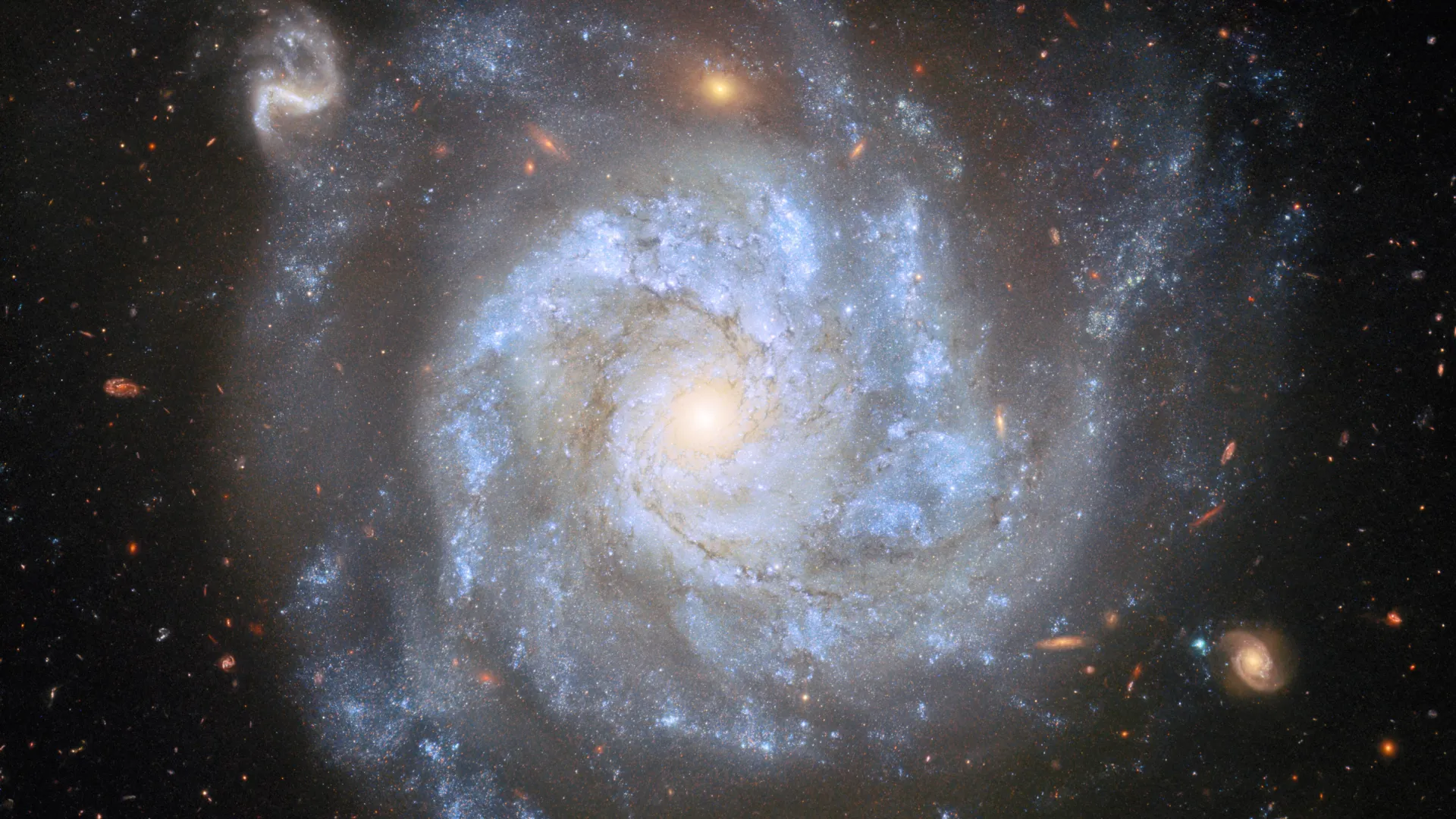
Rich with detail, the spiral galaxy NGC 1309 shines in this NASA/ESA Hubble Space Telescope Picture of the Week. NGC 1309 is situated about 100 million light-years away in the constellation Eridanus.

This stunning Hubble image encompasses NGC 1309’s bluish stars, dark brown gas clouds and pearly white centre, as well as hundreds of distant background galaxies. Nearly every smudge, streak and blob of light in this image is an individual galaxy. The only exception to the extragalactic ensemble is a star, which can be identified near the top of the frame by its diffraction spikes. It is positively neighborly, just a few thousand light-years away in the Milky Way galaxy.

Hubble has turned its attention toward NGC 1309 several times; previous Hubble images of this galaxy were released in 2006 and 2014. Much of NGC 1309’s scientific interest derives from two supernovae, SN 2002fk in 2002 and SN 2012Z in 2012. SN 2002fk was a perfect example of a Type Ia supernova, which happens when the core of a dead star (a white dwarf) explodes.

SN 2012Z, on the other hand, was a bit of a renegade. It was classified as a Type Iax supernova: while its spectrum resembled that of a Type Ia supernova, the explosion wasn’t as bright as expected. Hubble observations showed that in this case, the supernova did not destroy the white dwarf completely, leaving behind a ‘zombie star’ that shone even brighter than it did before the explosion. Hubble observations of NGC 1309 taken across several years also made this the first time the white dwarf progenitor of a supernova has been identified in images taken before the explosion.

Share Button

NASA’s most advanced radar ever will track earthquakes, landslides, and ice loss from space

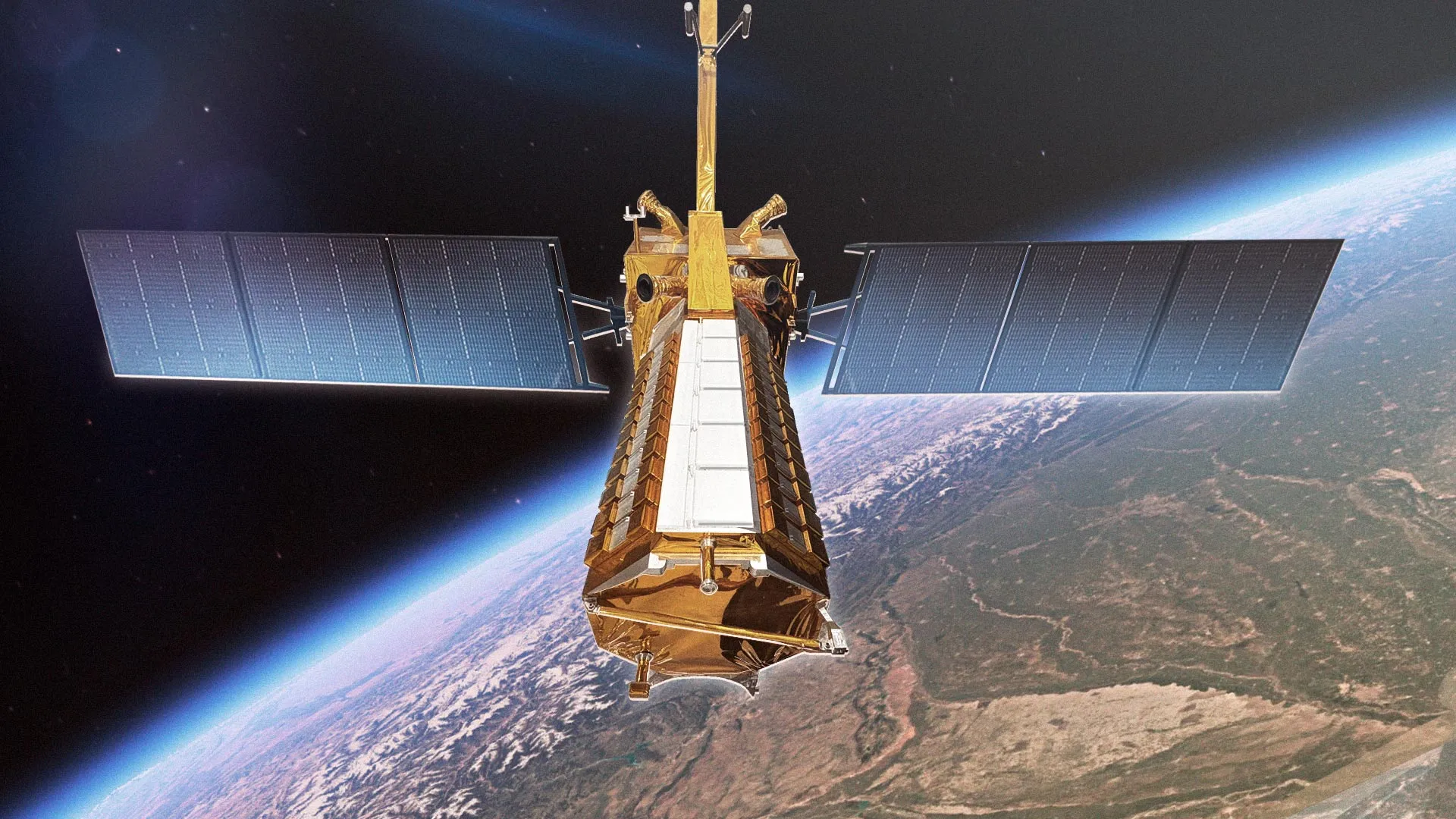
Following a successful launch on July 30, the NISAR satellite will orbit Earth for at least three years, using its sophisticated radar systems to scan nearly all the planet’s land and ice surfaces twice every 12 days. NASA and the Indian Space Research Organisation (ISRO) will jointly operate the spacecraft and gather science of high priority to both the United States and India.

Short for NASA-ISRO Synthetic Aperture Radar, NISAR will help scientists better understand processes involved in natural hazards and catastrophic events, such as earthquakes, volcanic eruptions, and landslides. In addition, it will support monitoring of infrastructure, such as dams, bridges, and roadways. What’s more, the satellite’s cloud-penetrating ability will help urgent-response communities during weather disasters such as hurricanes, storm surges, and floods. And NISAR will provide key global Earth observations, such as changes in ice sheets, glaciers, and sea ice, as well as improve understanding of how deforestation, permafrost loss, and fires affect the carbon cycle.

Along with providing an unprecedented amount of data, the mission breaks new ground with its collaboration between teams of scientists and engineers separated by more than 9,000 miles and 13 time zones.

The first-ever hardware collaboration between NASA and ISRO on an Earth-observing mission, NISAR will carry the most advanced radar system ever launched as part of a NASA or ISRO mission.

About the length of a pickup truck, the satellite’s main body contains engineering systems and a first-of-its-kind dual-radar payload — an L-band system with a 10-inch (25-centimeter) wavelength and an S-band system with a 4-inch (10-centimeter) wavelength. Each system’s signal is sensitive to different sizes of features on Earth’s surface, and each specializes in measuring different attributes, such as moisture content, surface roughness, and motion. These characteristics are important for studying a variety of natural surface conditions, such as the amount of soil moisture available for vegetation to thrive or if land has subsided over time.

When operating together, the satellite’s two radars will collect data synchronized in time and location, extending the sensitivity of the measurements to objects on the surface in a broad range of sizes. For example, S-band data will allow more accurate characterization of shorter plants, such as bushes and shrubs, while L-band data will sense taller vegetation, like trees.

The spacecraft will operate in a Sun-synchronous orbit, with its radar antennas pointed in a configuration that will also offer unprecedented coverage of Antarctica. This is crucial for studying the motion, deformation, and melting of the Antarctic ice sheet as it breaks up and deposits fresh water into the ocean.

Share Button

NHS in England told to keep Welsh patients waiting

One woman says the Welsh NHS “can’t be bothered” to send letters to patients to explain.

Share Button

World-first gonorrhoea vaccine rollout begins in UK as infection rates soar

Doctors say the jabs could save the NHS millions of pounds over the next decade.

Share Button

Scientists just recreated the Universe’s first molecule and solved a 13-billion-year-old puzzle

Immediately after the Big Bang, which occurred around 13.8 billion years ago, the universe was dominated by unimaginably high temperatures and densities. However, after just a few seconds, it had cooled down enough for the first elements to form, primarily hydrogen and helium. These were still completely ionized at this point, as it took almost 380,000 years for the temperature in the universe to drop enough for neutral atoms to form through recombination with free electrons. This paved the way for the first chemical reactions.

The oldest molecule in existence is the helium hydride ion (HeH+), formed from a neutral helium atom and an ionized hydrogen nucleus. This marks the beginning of a chain reaction that leads to the formation of molecular hydrogen (H2), which is by far the most common molecule in the universe.

Recombination was followed by the ‘dark age’ of cosmology: although the universe was now transparent due to the binding of free electrons, there were still no light-emitting objects, such as stars. Several hundred million years passed before the first stars formed.

During this early phase of the universe, however, simple molecules such as HeH⁺ and H2 were essential to the formation of the first stars. In order for the contracting gas cloud of a protostar to collapse to the point where nuclear fusion can begin, heat must be dissipated. This occurs through collisions that excite atoms and molecules, which then emit this energy in the form of photons. Below approximately 10,000 degrees Celsius, however, this process becomes ineffective for the dominant hydrogen atoms. Further cooling can only take place via molecules that can emit additional energy through rotation and vibration. Due to its pronounced dipole moment, the HeH⁺ ion is particularly effective at these low temperatures and has long been considered a potentially important candidate for cooling in the formation of the first stars. Consequently, the concentration of helium hydride ions in the universe may significantly impact the effectiveness of early star formation.

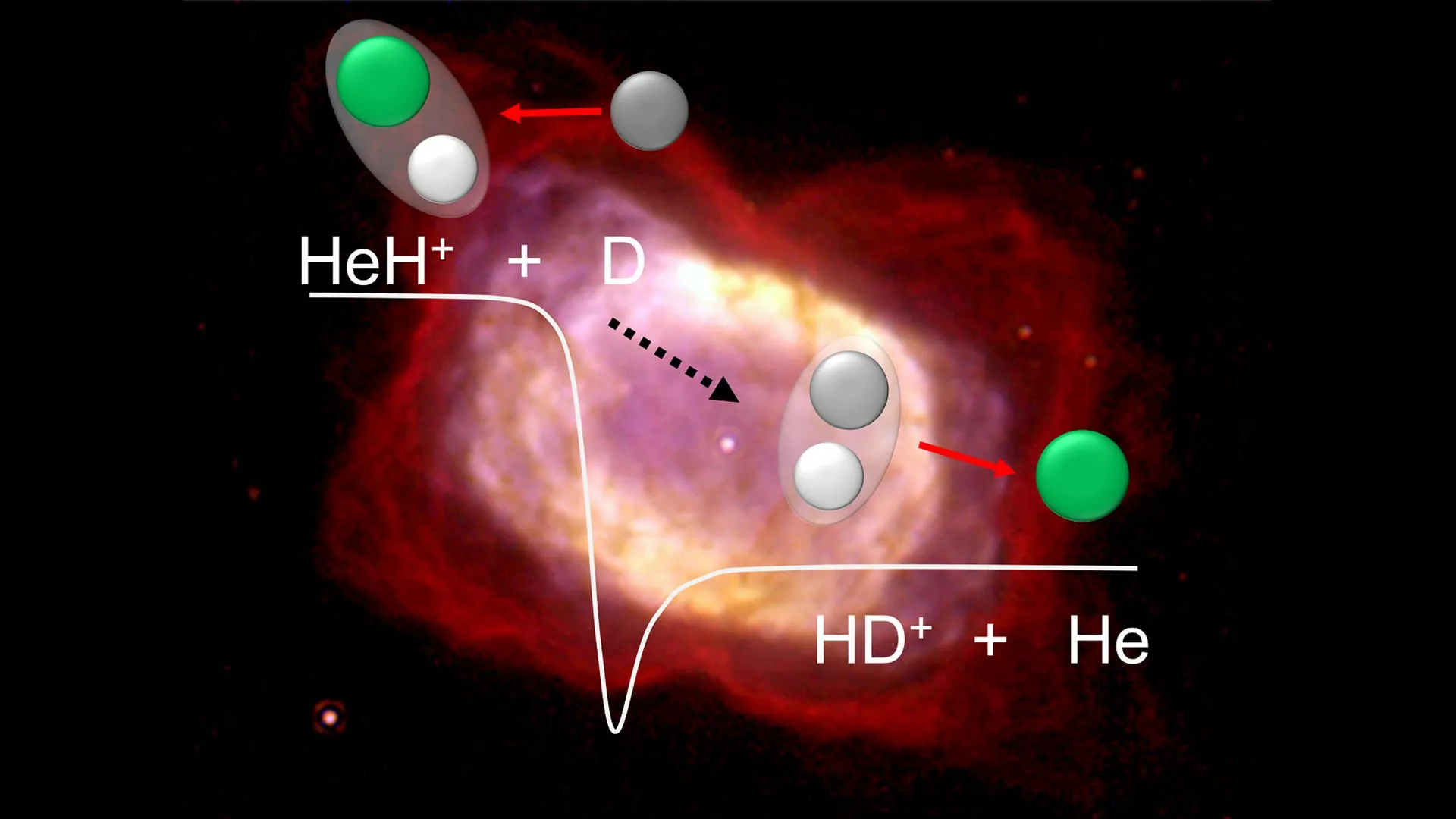
During this period, collisions with free hydrogen atoms were a major degradation pathway for HeH⁺, forming a neutral helium atom and an H2⁺ ion. These subsequently reacted with another H atom to form a neutral H2 molecule and a proton, leading to the formation of molecular hydrogen.

Researchers at the Max-Planck-Institut für Kernphysik (MPIK) in Heidelberg have now successfully recreated this reaction under conditions similar to those in the early universe for the first time. They investigated the reaction of HeH⁺ with deuterium, an isotope of hydrogen containing an additional neutron in the atomic nucleus alongside a proton. When HeH⁺ reacts with deuterium, an HD⁺ ion is formed instead of H2⁺, alongside the neutral helium atom.

The experiment was carried out at the Cryogenic Storage Ring (CSR) at the MPIK in Heidelberg — a globally unique instrument for investigating molecular and atomic reactions under space-like conditions. For this purpose, HeH⁺ ions were stored in the 35-metre-diameter ion storage ring for up to 60 seconds at a few kelvins (-267 °C), and were superimposed with a beam of neutral deuterium atoms. By adjusting the relative speeds of the two particle beams, the scientists were able to study how the collision rate varies with collision energy, which is directly related to temperature.

They found that, contrary to earlier predictions, the rate at which this reaction proceeds does not slow down with decreasing temperature, but remains almost constant. “Previous theories predicted a significant decrease in the reaction probability at low temperatures, but we were unable to verify this in either the experiment or new theoretical calculations by our colleagues,” explains Dr Holger Kreckel from the MPIK. ‘The reactions of HeH⁺ with neutral hydrogen and deuterium therefore appear to have been far more important for chemistry in the early universe than previously assumed,’ he continues. This observation is consistent with the findings of a group of theoretical physicists led by Yohann Scribano, who identified an error in the calculation of the potential surface used in all previous calculations for this reaction. The new calculations using the improved potential surface now align closely with the CSR experiment.

Since the concentrations of molecules such as HeH⁺ and molecular hydrogen (H2 or HD) played an important role in the formation of the first stars, this result brings us closer to solving the mystery of their formation.

Share Button

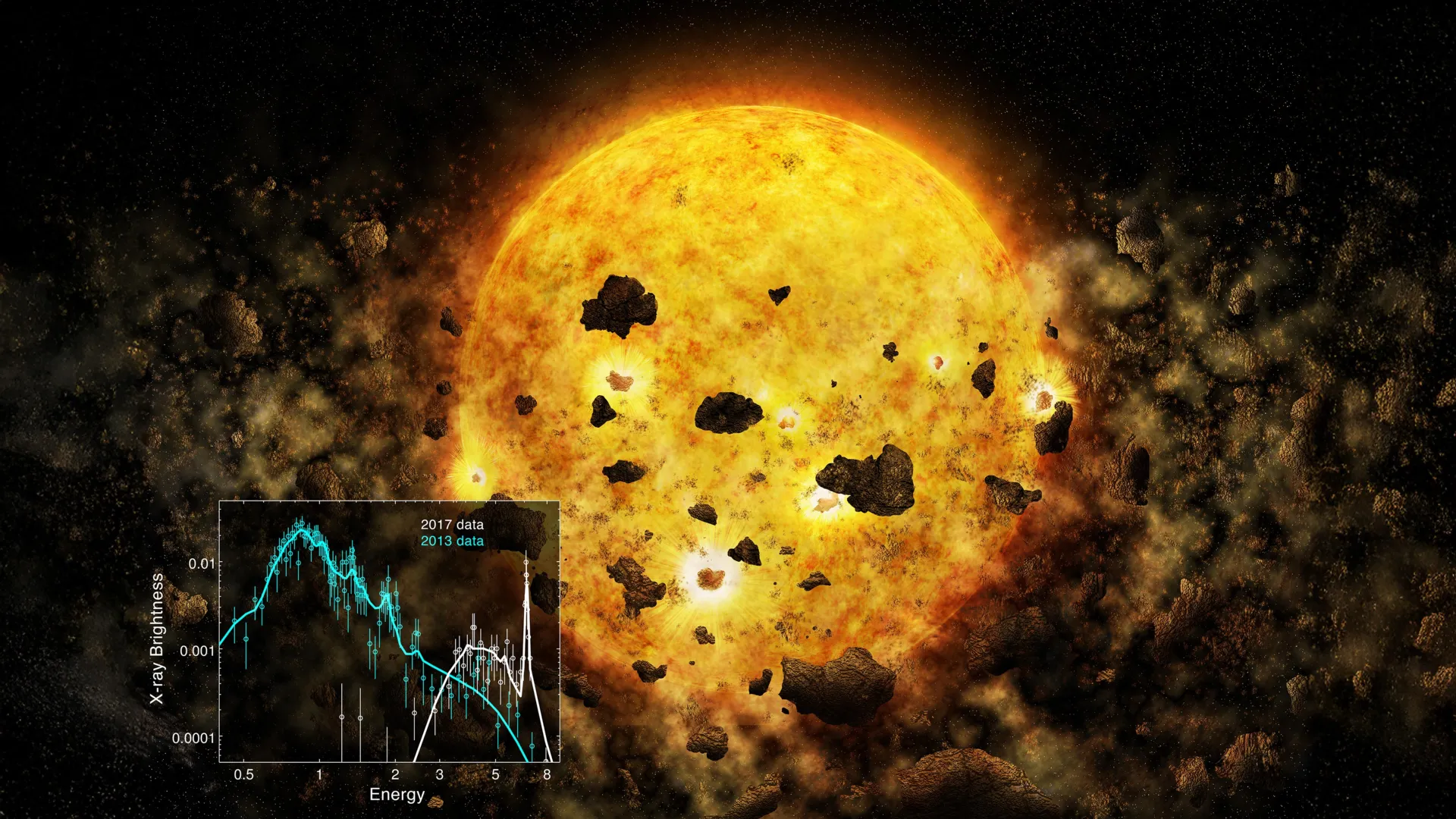
Ultra-hot Jupiter in death spiral may reveal how rocky worlds are born

Macquarie University astronomers have tracked an extreme planet’s orbital decay, confirming it is spiralling towards its star in a cosmic death dance that could end in three possible ways.

The ultra-hot Jupiter exoplanet TOI-2109b, located 870 light-years from Earth, completes an orbit around its star in just 16 hours – making it the closest hot Jupiter ever discovered.

With a mass nearly five times that of Jupiter and almost twice Jupiter’s size, TOI-2109b orbits even closer to its star than Mercury does to our Sun.

“Just to put it into context – Mercury’s mass is almost 6,000 times smaller than Jupiter, but it still takes 88 days to orbit our Sun. For a huge gas giant such as TOI-2109b to fully orbit in 16 hours – it tells us that this is a planet located super-close to its star,” says Dr Jaime A. Alvarado-Montes, a Macquarie Research Fellow who led the international study published on July 15 in The Astrophysical Journal.

By analysing transit timing data from multiple ground-based telescopes, NASA’s TESS mission and the European Space Agency’s CHEOPS satellite spanning 2010 to 2024, the team detected subtle changes in the planet’s orbit.

Both theoretical models and observations independently calculated that the planet’s orbital period would decrease by at least 10 seconds over the next three years – confirming the planet may be spiralling towards its star.

The researchers identified three possible fates for TOI-2109b: it could be torn apart by tidal forces, plunge directly into its star, or have its gaseous envelope stripped away by intense radiation, leaving only a rocky core.

“This planet and its interesting situation could help us figure out some mysterious astronomical phenomena that so far we really don’t have much evidence to explain,” Dr Alvarado-Montes says. “It could tell us the story of many other solar systems.”

The findings suggest some rocky planets in other solar systems might be the stripped cores of former gas giants – a possibility that could reshape our understanding of planetary evolution.

With continued monitoring over the next three to five years, astronomers will detect the predicted orbital changes, providing real-time observation of a planetary system in its death throes.

Share Button

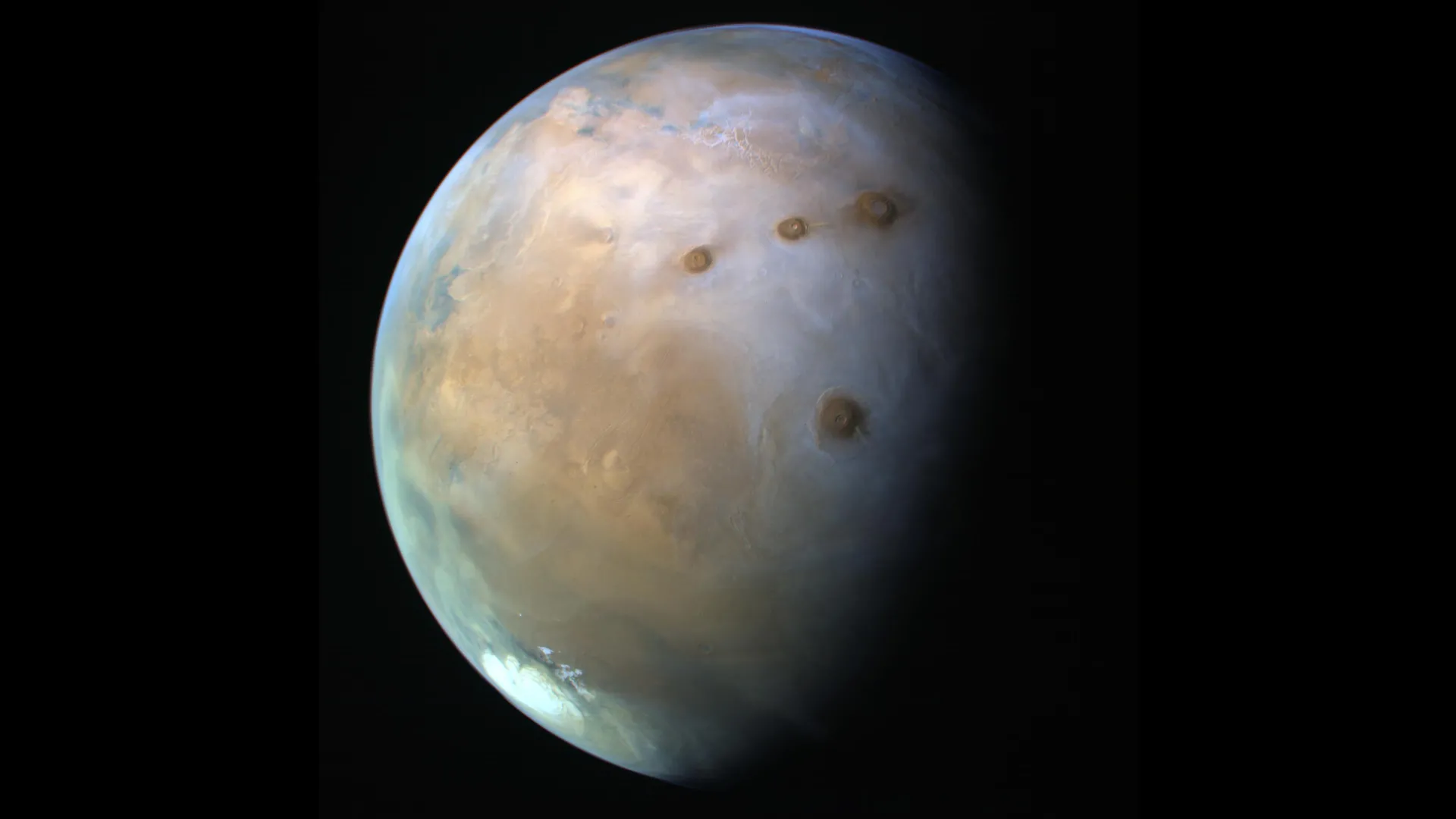
Underground life on Mars? Cosmic rays could make it possible

A new study from NYU Abu Dhabi has found that high-energy particles from space, known as cosmic rays, could create the energy needed to support life underground on planets and moons in our solar system.

The research shows that cosmic rays may not only be harmless in certain environments but could actually help microscopic life survive. These findings challenge the traditional view that life can only exist near sunlight or volcanic heat. Published in the International Journal of Astrobiology, the study is led by the Principal Investigator of the Space Exploration Laboratory at NYUAD’s Center for Astrophysics and Space Science (CASS), Dimitra Atri.

The team focused on what happens when cosmic rays hit water or ice underground. The impact breaks water molecules apart and releases tiny particles called electrons. Some bacteria on Earth can use these electrons for energy, similar to how plants use sunlight. This process is called radiolysis, and it can power life even in dark, cold environments with no sunlight.

Using computer simulations, the researchers studied how much energy this process could produce on Mars and on the icy moons of Jupiter and Saturn. These moons, which are covered in thick layers of ice, are believed to have water hidden below their surfaces. The study found that Saturn’s icy moon Enceladus had the most potential to support life in this way, followed by Mars, and then Jupiter’s moon Europa.

“This discovery changes the way we think about where life might exist,” said Atri. “Instead of looking only for warm planets with sunlight, we can now consider places that are cold and dark, as long as they have some water beneath the surface and are exposed to cosmic rays. Life might be able to survive in more places than we ever imagined.”

The study introduces a new idea called the Radiolytic Habitable Zone. Unlike the traditional “Goldilocks Zone” — the area around a star where a planet could have liquid water on its surface — this new zone focuses on places where water exists underground and can be energized by cosmic radiation. Since cosmic rays are found throughout space, this could mean there are many more places in the universe where life could exist.

The findings provide new guidance for future space missions. Instead of only looking for signs of life on the surface, scientists might also explore underground environments on Mars and the icy moons, using tools that can detect chemical energy created by cosmic radiation.

This research opens up exciting new possibilities in the search for life beyond Earth and suggests that even the darkest, coldest places in the solar system could have the right conditions for life to survive.

Share Button

Your Fail-Safe Guide To What To Eat While Camping With Kids This Summer

The summer holidays are now in full-swing and for some parents across the UK, that can only mean one thing: a camping holiday to enjoy a hearty dose of nature and, let’s be honest, tire the kids out in time for bedtime.

You have the equipment ready, the car is packed and the kids are suitably excited for the opportunity to go absolutely feral on a campsite. There’s only one issue: what do you eat every day?!

Of course, going out for dinner is an option but heading out for every single meal kind of defeats the point of camping and can make this relatively affordable holiday quite pricey after a few days.

Thankfully, there are plenty of options to choose from.

The best foods to eat when camping

Sandwiches

I know, I know, what an obvious suggestion. However, these handy snacks are ideal for throughout the day, are very easy to store and if they’re wrapped in tinfoil, can last a little longer than usual. They’re popular for a reason!

Pasta

Whether it’s tuna pasta, tomato and cheese pasta or even just pesto pasta, this delicious dinner is great hot or cold. You can make it ahead of time to reheat once you’re camping or you can simply tuck into it cold.

Pasta salads are also a delicious go-to, just keep the components separate until you’re eating to save anything going soggy.

Breakfast burritos

The camping experts at The Adventure Bite say: “Camping Breakfast burritos are easy to put together and full of delicious sausage, eggs, crispy fried potatoes, and melted shredded cheese. It’s the ultimate lazy camping breakfast if you put them together at home and toss them on the fire in foil.”

YUM. Perfect for filling tummies ahead of a day of adventures.

Cereals

Keep milk in your cooler bag and take with you a box of cereal or muesli. Quick, simple and cheap. Plus, kids never tire of cereal.

Tinned fruits

BBC Good Food recommends: “When it comes to camping desserts, it’s often a case of assembling rather than cooking. Tinned fruit can be mixed into an instant salad, but if you want to add a special touch, melt some chocolate to drizzle over tinned pears, then sprinkle with hazelnuts.

“Sweet, shiny canned peaches with cream are a retro winner, too.”

Pre-seasoned meats

In the /r/camping community on Reddit, user RedJessa says: “I like to pre-season steak, chicken breasts or pork chops and seal them in vacuum sealer bags. Just throw them on whatever grill type you please. I also will pre-chop potatoes and veggies, seasoned and sealed.

“Ready to sautee or cook in foil packs over the grill. The vacuum sealer thing is great for prepping camp food and I re-use the bags until I can’t anymore to reduce waste. I pre-cooked bacon last time so we only had to throw it on to heat and crisp, so much easier and less mess.”

Who said camping couldn’t be bougie?

Finger foods

Eat Sleep Wild suggests: “Another favourite option is a sort of lunch mezze of breads, olives, cured meat, cheeses, and hummus. All of these options travel well, are high in calories and good fats, and are super tasty!”

Happy camping!

Share Button